With an Eye on China, India Cuts Iran Loose & Embraces the US
By Salman Rafi Sheikh – New Eastern Outlook – 06.11.2020
India, tied as it to the US apron strings, has suffered a major strategic set-back in Iran where not only has it potentially lost exclusive development rights and control of the strategically important port of Chabahar, but has also been kicked out of Farzad-B gas field project. This has potentially meant a physical death of the ambitious 2013 ‘Tehran Declaration’, which had supposedly tied India and Iran in a strong strategic relationship. While India’s deliberate move away from Iran has taken place against the backdrop of US sanctions on Iran, imposed in the wake of Trump’s decision to force-scrap the JCPOA, these moves are fundamentally rooted in a strategic consensus with the US over Iran. It is for this reason that India has not pumped enough money even into the Chabahar port, which otherwise is exempted from US sanctions.
For India, getting close to the US was/is more important in the wake of its on-going military tensions with China than pursuing relatively low-level strategic interests in Iran. The path that the Indian policy makers chose to confront China at a broader level required sacrificing their interests in Iran. As it stands, Indian companies previously involved in Farzad-B are now engaged in a similar gas exploration project in Israel, indicating how India has largely moved to the anti-Iran camp.
India’s move away from Iran has allowed it to deepen its strategic relations with the US. Indeed, the immediate result has been the signing of “Basic Exchange and Cooperation Agreement” (BECA), the third so-called “foundational pact” after the “Logistics Exchange Memorandum Of Agreement” (LEMOA) and “Communication Compatibility and Security Agreement” (COMCASA) which collectively improve these countries’ military interoperability.
As an Indian news report explained, the BECA will help India get real-time access to American geospatial intelligence that will enhance the accuracy of automated systems and weapons like missiles and armed drones. Through the sharing of information on maps and satellite images, it will help India access topographical and aeronautical data, and advanced products that will aid in navigation and targeting.
While one may think that India’s close ties with the US have roots in Trump’s own aggressive China policy, the US policy towards India and India’s relevance for the US against China are unlikely to change even if Trump loses and Biden wins. Let’s not forget that Biden, when he was Obama’s vice president, was one of the main architects of the so-called “Asia Pivot” policy. India was as relevant to the “Asia Pivot” as it is to Trump’s “Indo-Pacific” strategy. “Indo-pacific” strategy is very much a continuation of “Asia Pivot” in as much as it aims at confronting and containing China and Russia in Asia and beyond.
According to Indian defense experts, the agreement signed will directly help India fight China in Ladakh, and Pakistan in Kashmir. Indian experts have been reported to have said that if the deal had been signed earlier, the situation at the Northern border of India could have been different.
Indeed, Mark Esper said that defense agreements between the US and India call for military cooperation and is a check on ‘Chinese aggression’, adding that “Based on our shared values and common interests, we stand shoulder-to-shoulder in support of a free and open Indo-Pacific for all, particularly in light of increased aggression and destabilizing activities by China.”
“Our leaders and our citizens see with increasing clarity that the [Chinese Communist Party] is no friend to democracy, the rule of law, transparency, nor to freedom of navigation, the foundation of a free and open and prosperous Indo-Pacific,” said Pompeo.
Pompeo further categorically said that America would “stand by India” in the fight against China, and paid tribute to the soldiers killed in Ladakh.
With China, rather than Modi-Trump bromance, being the central pillar of US-India strategic relations, it is, therefore, unlikely that the prevalent spirit of deep direct defense ties will die out even if Trump is voted out of the White House.
As India’s former army chief General Nirmal Chander Vij explained, “Over this period we have realized that Indian interests and American interests are [going] in the same direction and for the same purpose – and for that very reason, India has gone ahead and signed the foundational military agreements.”
What is more important for India in the wake of its on-going military tensions with the US is the realization about its lack of military preparedness vis-à-vis China. With no significant arms industry at home, the Indian policy makers see in the US a natural anti-China ally, one they would not find in Russia or anywhere else, and a key source of advanced military hardware.
To maintain and even deepen this alliance and to further the scope of the so-called 2+2 dialogue, Indian policy makers were not reluctant to tell Iran that their country wouldn’t be able to maintain the spirit of the ‘Tehran Declaration.’ It is for this reason that two consecutive visits of India’s foreign and defense ministers to Iran were quickly followed by Iran’s decision to kick India out of the Farzad-B gas project, realizing that India’s strategic realities are clearly at odds with its previously widely propagated and ambitious ‘look East’ policy, an idea that imagined a greater Indian reach to Central Asia and Afghanistan via Iran.
Salman Rafi Sheikh is a research-analyst of International Relations and Pakistan’s foreign and domestic affairs.
Iran finally brings desalinated Persian Gulf water to its arid desert
Press TV | November 5, 2020
Iranian President Hassan Rouhani has opened a mega project for transferring desalinated sea water to arid deserts in the Iranian Plateau, the first in the history of a country where water shortage has always been a major impediment to economic development.
Rouhani used a video conference call on Thursday to supervise the start of water transfer from desalination facilities off the Persian Gulf in southern Hormozgan province to water-intensive industries in southeastern province of Kerman.
The transfer line, which includes dozens of tunnels, pumping stations and storage facilities, takes desalinated water some 305 kilometers to one of Iran’s largest mining and metals plants in Sirjan.
The first phase of the project has cost nearly 165 trillion rials (over $600 million). The Iranian Energy Ministry said that around a third of the total water desalinated in the project, some 150 million m3 per year from a total of 450 million m3 of sea water, would be purchased on a guaranteed basis for household consumption in two coastal cities.
The transfer line is planned to continue another 500 kilometers in the next phases of the project to take water to copper smelters in Sarcheshmeh, in north of Kerman, and further into the heart of the Iranian desert in Yazd province where the sprawling Chadormalu mining complex, the largest iron ore producer in the Middle East, is located.
The desalinated water will also be consumed for irrigation, said Rouhani during the inauguration ceremony, as he insisted that the project would relieve a huge burden from underground water resources and would boost environmental conditions in the Iranian Plateau and along the Persian Gulf coast.
“This project had been deemed unimaginable and it materialized in the Government of Discretion and Hope,” Rouhani said making a reference to a phrase routinely used to distinguish his two four-year terms in office that began 2013.
The Iranian president hailed the launch of key infrastructure projects in recent years in Iran as a sign that a series of unprecedented sanctions imposed by the United States have failed to dent the country’s resolve for development.
“We have managed to take these big steps despite sanctions, despite the pressure and despite the fact that a terrorist government was in office in America” he said.
Sorry, Google and World Bank, but Middle Eastern Crops Keep Thriving
By H. Sterling Burnett | ClimateRealism | November 4, 2020
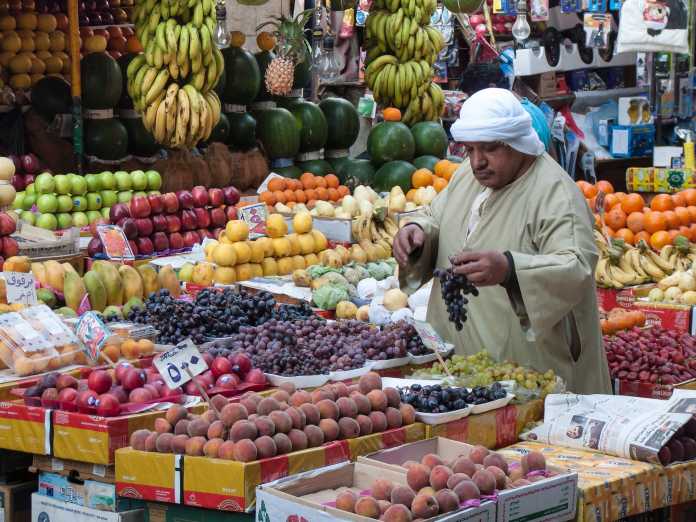
Google News today is promoting articles (see the Google-promoted PhysOrg article here, for example) about a speculative World Bank “study” claiming climate change is threatening crop production in the Middle East. The World Bank study is full of speculation but short on facts. Real-world data show crop yields per acre and total crop production are consistently and dramatically rising in each of the Middle East countries examined by the World Bank study.
In its study, titled “Water in the Balance,” the World Bank says, “[w]hile information about water scarcity at present and in the future is available there is little knowledge of what this increasing scarcity means for Middle Eastern … food security. Agriculture will suffer because of climate change and water scarcity….”
In particular the World Bank asserts water scarcity caused by climate change will reduce farm production in Iran, Iraq, Jordan, Lebanon, Syria, and Turkey. The available evidence strongly suggests that will not happen.
Had the study’s authors examined real-world data concerning crop production in the Middle Eastern countries, they would have found, even amidst substantial strife in the region, crop yields and overall production have increased dramatically. More food is being produced even as thousands of acres of agricultural lands have been abandoned during regional conflicts.
Data from the U.N. Food and Agriculture Organization show during the period of modest warming since 1989:
- Cereal crop production in Iraq increased 91 percent, even as the acreage being harvested fell 5 percent.
- Cereal crop production in Iran increased 187 percent, while the acreage harvested increased by just 2.6 percent.
- Cereal Crop production in Jordan increased 15 percent, even as the acreage harvested declined 30 percent.
- Cereal Crop production in Lebanon increased 115 percent, while acreage harvested increased 30 percent.
- Cereal Crop production in Syria increased 22 percent, even as acreage harvested declined 66 percent.
- Cereal Crop production in Turkey increased 46 percent, even though acreage harvested declined 19 percent.
It is clearly good news – and not a climate crisis – that Middle Eastern countries have increased crop production despite the fact that many of them have been embroiled in internal political strife, outright civil warfare, and external conflicts. That good news is ignored in the World Bank’s doom-and-gloom report.
Global warming lengthens growing seasons, reduces frost events, and makes more land suitable for crop production. Also, carbon dioxide is an aerial fertilizer for plant life. In addition, crops also use water more efficiently under conditions of higher carbon dioxide, losing less water to transpiration. The latter fact should have allayed the World Bank’s concern about climate change induced water shortages leading to crop failure.
The benefits of more atmospheric carbon dioxide and a modestly warming world have resulted in 17 percent more food being available per person today than there was 30 years ago, even as the number of people has grown by billions. Indeed, the last 20 years have seen the largest decline in hunger, malnutrition, and starvation in human history.
Sorry, World Bank, Google, and PhysOrg, but that does not equate to a climate crisis.
H. Sterling Burnett, Ph.D. is managing editor of Environment & Climate News and a research fellow for environment and energy policy at The Heartland Institute. Burnett worked at the National Center for Policy Analysis for 18 years, most recently as a senior fellow in charge of NCPA’s environmental policy program. He has held various positions in professional and public policy organizations, including serving as a member of the Environment and Natural Resources Task Force in the Texas Comptroller’s e-Texas commission.
Tehran Summons Swiss Envoy over US’ Anti-Iran Claims
Al-Manar | October 22, 2020
Iranian Foreign Ministry summoned Swiss Ambassador to Tehran, representing US Interest Section in Iran, over remarks of US officials against Iran.
Ministry Spokesman Saeed Khatibzadeh said that Islamic Republic of Iran advises the United States to “refrain from useless projections,” as quoted by Mehr news agency.
“Swiss envoy to Iran was summoned by Assistant and Director General of Iranian Foreign Ministry for American Affairs on Thursday following some baseless allegations raised by US officials about interference of other countries in the upcoming 2020 Presidential Election in the United States,” the spokesman said.
While rejecting the repeated claims and “false, clumsy and fraudulent reports of the US officials,” Khatibzadeh emphasized once that it does not matter for Tehran which of the two current candidates will run for the White House.
“The US regime and its intelligence and security services, which have a long history of interfering and creating chaos in the elections of other countries, make baseless claims on the eve of the US elections to advance their undemocratic project and predefined scenario with some projections,” he said.
“It is not far-fetched that the designers of such childish scenarios seek to divert public attention and suspicious provocations in the run-up to the elections.”
Khatibzadeh, meanwhile, advised the United States to refrain from “useless projections, baseless accusations and suspicious scenarios, and try to act like a normal country in the field of international relations and in relation to other countries.”
Director of National Intelligence John Ratcliffe claimed late Wednesday that voter registration information had been obtained by Iran and Russia in an attempt to undermine confidence in the 2020 election.
Ratcliffe claimed Iran sought to sow unrest in the US in an attempt to damage the candidacy of President Donald Trump.
Russia weighs military cooperation with Iran after arms embargo expiration: Foreign Ministry
Press TV – October 16, 2020
The Russian Foreign Ministry spokeswoman says Moscow will consider military technical cooperation with Iran in line with mutual interests after the expiration of a United Nations arms embargo on Tehran.
“We are convinced that all possibilities stemming from the expiration of the provisions of United Nations Security Council Resolution 2231 that are linked with military technical cooperation with Iran will be duly taken into account and used on the basis of mutual benefit and in the interests of the peoples of our two states,” Maria Zakharova said on Thursday.
She was referring to the resolution that endorsed a multilateral 2015 nuclear deal between Iran and major world powers, including Russia.
All the parties to the talks about Iran’s nuclear program were aware from the very beginning that there is no link between restrictions on weapons supplies to Tehran and the settlement of issues pertaining to its nuclear program, added Zakharova.
She emphasized that the United Nations Security Council did not impose a weapons embargo on Iran in 2015, but the country “voluntarily undertook a number of restrictions.”
“It was done in the interests of the soonest successful outcome of the talks on the Joint Comprehensive Plan of Action (JCPOA) to settle the situation around the Iranian nuclear program,” the Russian diplomat said.
She noted that the term of the corresponding provisions has expired.
Zakharova stressed that Iran was a “reliable partner” for Russia in many areas of cooperation.
On August 14, the UN Security Council almost unanimously refused to support a US-sponsored draft resolution on extending the arms embargo against Iran, which is due to expire on October 18 under the JCPOA.
During the 15-member Security Council vote, the US received support only from the Dominican Republic for its anti-Iran resolution, leaving it far short of the minimum nine ‘yes’ votes required for adoption.
The following month, Washington suffered another embarrassing loss as it failed to trigger the so-called snapback provision in the JCPOA aimed at re-imposing all UN sanctions against Iran.
The UN Security Council member states challenged the US’s rationale that it was still a participant state to the nuclear accord, citing its unilateral withdrawal in May 2018.
Speaking during a cabinet meeting on Wednesday, Iranian President Hassan Rouhani said the country will be free to trade weapons as of Sunday after the United States failed in its attempts to secure an extension of the embargo.
Moscow had earlier said “new opportunities” will emerge in cooperation with Iran the UN embargo expires, and that any agreements with Tehran will have “nothing to do with the unlawful and illegal actions of the US administration, which is trying to intimidate the entire world.”
Russia’s Foreign Minister Sergei Lavrov said late last month that Moscow and Tehran roundly reject efforts by the US to permanently extend an arms embargo against the Islamic Republic.
Speaking at a joint press conference that followed a meeting with his visiting Iranian counterpart Mohammad Javad Zarif in Moscow, Lavrov added, “We stressed that Moscow and Tehran, like the entire international community, categorically reject US ambitions to impose some kind of indefinite arms embargo.”
Press TV’s website can also be accessed at the following alternate addresses:
Iran to use funds in Iraq for basic goods imports: CBI governor
Press TV – October 12, 2020
Iraq has agreed to release Iranian funds blocked in the Arab country because of American sanctions for Iran’s purchase of staples and basic goods, the Central Bank of Iran (CBI) governor Abdolnasser Hemmati said after meetings with senior Iraqi officials in Baghdad on Monday.
Hemmati said in a post on his Instagram page that some “good agreements” had been reached on the issue in a trilateral meeting involving him and his Iraqi counterpart as well as the CEO of Trade Bank of Iraq (TBI) where the Iranian funds are blocked.
Iran has billions of dollars in a TBI account which processes Iraq’s payments for imports of natural gas and electricity from Iran.
However, the funds have been blocked because of US sanctions on Iran which restricts the use of dollar for transactions involving Tehran.
Hemmati said Iraqi Prime Minister Mustafa Al-Kadhimi had welcomed the agreement to use the funds to reimburse Iran’s basic goods imports.
“In the meeting with the Iraqi premier … he issued the required orders to the Iraqi central bank and the TBI to speed up the implementation of the agreement,” said Hemmati, adding that Kadhimi had vowed to personally follow up the case on a weekly basis.
Hemmati made a first visit to Baghdad in June to pursue the case of blocked funds in Iraq. The CBI governor had expressed optimistic remarks about the release of funds in Iraq on that occasion but a final decision on the issue has been waiting reportedly because of growing American pressure on Baghdad.
A high-ranking trade and banking delegation accompanied Hemmati in his Monday trip to Iraq. The top banker said the visit would bolster the already growing trade relations between the two countries.
Iraq is only second to China in purchase of goods and services from Iran with recent figures showing Iranian exports to the Arab country reached $565 million in value terms in the Persian calendar month to September 21.
Israel sets its sights on the Red Sea and Bab El-Mandeb
Dr Adnan Abu Amer | MEMO | October 6, 2020
Day after day, the magnitude of the Israeli benefits from normalisation with the Gulf become clearer, especially on the military and strategic levels. The latest benefit is talk about establishing Israeli military bases in the Gulf, the Red Sea and Bab El-Mandab, or benefiting from the Emirati bases scattered in these areas, and the military benefits for Israel brought about by controlling these international seaports.
The Emirati-Israeli agreement included many clauses with security and military aspects, which stipulate bilateral cooperation in these areas, and their commitment to take important measures to prevent the use of their territories to carry out a hostile or “terrorist” attack targeting the other party, and that each side will not support any hostile operations in the territory of the other party. It also stipulates bilateral security coordination and strengthening the military security relationship.
These carefully worded texts have increased the assumptions regarding the possibility of Israel benefitting from the Emirati military bases in the region, whether in the Gulf, Bab El-Mandab, or the Red Sea. This may lead to the establishment of Israeli military base in the Emirates, as well as its use of Emirati waters, and the possibility that it will continue down this path to increase its foothold in Socotra, the Bab El-Mandab Strait and Djibouti.
It is worth noting that the possibility of establishing Israeli military bases in the Gulf, or Israel benefiting from the Emirati military bases, is not easy, but very dangerous. This is because as much as it may give hope to the Gulf states, and the UAE in particular, to defend itself against the threat of any imagined attack from Iran, it, at the same time, exposes it to danger. This is because the fulfilment of this premise means that Israel can strike Iranian targets in the Gulf waters, or in the heart of Iran itself, which will be matched by Iran targeting these Israeli bases in the Gulf.
The agreement allows Israel to get geographically closer to Iran and allows it to improve ties with the Gulf which is a strategic area in terms of trade and oil.
Iran will not stand idly by and remain silent regarding the Emirati-Israeli move, which means the situation in the Gulf region is likely to grow tense and suffer. Iran is present everywhere through the Revolutionary Guard and its sleeping armed cells.
Security of maritime navigation in the Gulf is a purely Israeli interest within the strategy of “curbing the Iranian threat” and strengthening the relationship with the Gulf states, former Israeli Foreign Minister, Yisrael Katz, has said.
Israel aims to gain control over the most important sea straits in the region, which belong to the Emirati and Saudi bases, which enhances the expansion of Israel’s military and strategic influence.
A document by the Israeli Ministry of Intelligence revealed that the agreement with Abu Dhabi paves the way for intensifying military cooperation between them in the Red Sea. This is because it is interested in expanding security cooperation in the region, leading to strengthening the military alliance between them. This includes intensive Israeli military movement, especially through the countries of the Horn of Africa, most notably Ethiopia, at a time when Israeli arms companies are seeking to increase their exports to the Emirates.
US Secretary of State, Mike Pompeo, announced that the UAE and Israel had agreed to build a security and military alliance against Iran to protect American interests and the Middle East, and to increase security and intelligence cooperation to confront what he referred to as “terrorism”.
But Israel has not left Yemen out of its view, the country offers a gateway to the Bab El-Mandab Strait. Tel Aviv aims to crack down on the Palestinian resistance to prevent it from receiving the weapons that reach it from Iran through the Red Sea, reaching the Sinai, and then the Gaza Strip.
As long as the most important provisions of the Emirati-Israeli agreement are related to security and military relations, Israel will work to exploit the agreement to increase its influence in the Gulf. Meanwhile, the UAE is looking for control in the Gulf with the support of the US and Israel, so there is joint Israeli and Emirati work in Yemen to establish joint military bases and areas of influence, specifically on the island of Socotra, which would allow it to completely control the path that passes from India to the West, and penetrates into Africa, which is a strategic location for Israel.
Iran Does Not Care about US Election Result: Spokesman
Al-Manar | October 5, 2020
It does not matter for Iran who will win the upcoming presidential election in the US, Iran’s Foreign Ministry spokesperson said, noting that there is a clear path for Washington to reverse its hostile policies against Tehran.
“It is not important at all what is said inside the election campaigns in the US. Our criterion is the (UNSC) Resolution (2231) and the JCPOA,” Saeed Khatibzadeh told Tasnim at a press conference on Monday, when asked about the reports that the election campaign of US Democratic candidate Joe Biden has cited a change in the timing of the JCPOA articles after the US’ withdrawal from the deal.
Trump has pulled the US out of the JCPOA and has brazenly displayed his signature on the withdrawal order, the spokesman deplored. “It does not make much difference which party takes the power (in the US). If the US intends to return to the correct path, the road is clear.”
Washington must admit to making a mistake, stop the economic war and terrorism against Iran, return to its JCPOA commitments, and make up for the damages caused by its withdrawal from the 2015 nuclear deal, the Iranian spokesman added.
In remarks in September, Iran’s permanent representative and ambassador to the United Nations Majid Takht-Ravanchi said it does not matter to the Islamic Republic who wins the US presidential election as long as Washington has not shifted its unlawful policy of sanctions.
In July, Iranian Foreign Minister Mohammad Javad Zarif said no matter who wins the 2020 presidential election in the US, the next American administration must compensate the Islamic Republic for the losses that its predecessor has inflicted on the Iranian people.
“It is not important for us who will win the upcoming election in the US, but it is important for us to see Washington rectify its approach towards Tehran,” Zarif said.
Russian Envoy Says Moscow Has No Problem Selling Iran S-400
Al-Manar | October 4, 2020
Russia’s ambassador to Iran said Moscow is open to the delivery of S-400 air defense missile system to Tehran.
In an interview with Resalat daily, Levan Jagarian said Russia has no problem in delivering S-400 missile system to Iran.
The envoy emphasized that the US’ threats would “by no means affect” Russia’s arms cooperation with Iran, according to Tasnim news agency.
“As already announced by the Russian deputy foreign minister, Moscow is not afraid of Washington’s threats, honors its commitments, and is prepared to carefully consider Iran’s proposals for arms purchases after October 18,” Jagarian stated.
He was referring to the date when the UN arms embargo on Iran is going to terminate under the 2015 nuclear agreement and the UNSC Resolution 2231.
Earlier in August, the United Nations Security Council rejected a proposal to indefinitely extend the arms embargo on Iran.
The embargo on conventional arms is due to expire on October 18 under the terms of the Iran nuclear deal, signed in July 2015 and officially known as the Joint Comprehensive Plan of Action (JCPOA).
The Time of Troubles in Transcaucasia – Part 1
By M. K. BHADRAKUMAR | Indian Punchline | October 1, 2020
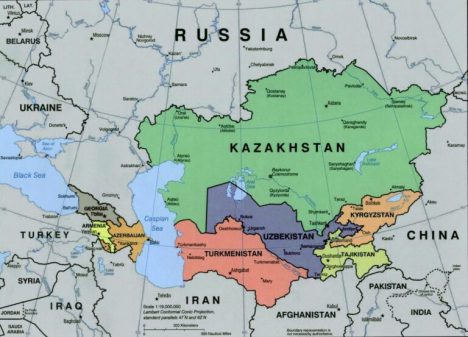
Three days into the renewed conflict in Nagorno-Karabakh in the Transcaucasian region — also known as South Caucasus — it is becoming clear that the binary narrative dished out by western commentators of this being a Turkish-Russian clash of wills and strategies is either simply naive or purposely deceptive. The point is, Russia and Turkey — and Iran in a somewhat supportive role — are already proactively talking of negotiations involving the warring sides.
September 30 has been a turning point of sorts. Tehran had on the previous day called on Azerbaijan and Armenia to settle the differences peacefully and offered that along with Turkey and Russia, it can help the two countries to resolve their differences.
President Hassan Rouhani since repeated this offer in a phone conversation with Armenian Prime Minister Nikol Pashinyan. According to the Iranian account, Pashinyan responded positively that “any tension and conflict would be to the detriment of all countries in the region and welcomed any practical initiative to stop the violence.”
Armenia is a land-locked country and it depends on Iran to provide a vital transportation route to the outside world. On its part, Tehran kept up a warm relationship with Armenia (although its rival Azerbaijan is a Muslim country), even supplying it with natural gas.
Tehran stuck to the friendly track even after the “colour revolution” in Armenia in 2018 and Pashinyan’s steady gravitation to the American camp in the subsequent period, while also remaining a member of the Moscow-led Collective Security Treaty Organisation. (See my articles in Asia Times — A color revolution in the Caucasus puts Russia in a dilemma dated May 9, 2018 and a second piece dated August 8, 2018 titled Color Revolution in the Caucasus rattles Russian leaders.)
Iran has profound security concerns over Pashinyan’s recent diplomatic exchanges with Israel (at the initiative of the White House), which of course has brought the famed Israeli intelligence apparatus Mossad right on to Iran’s northern borders (in addition to the potential Mossad presence in the UAE, Bahrain and Oman on Iran’s southern flank.)
Turkey too has reason to be concerned over Israel’s activities in Transcaucasia. Israel is virtually piggy-riding the US-sponsored colour revolutions in Transcaucasia. Following the US-sponsored colour revolution in Georgia in 2003, Israel overnight made its appearance in Tbilisi. And the Israel-Georgia ties have since become very close.
Despite the failure of the colour revolution in Azerbaijan in mid-2005 and the sporadic attempts since then, Israel has developed close “security cooperation” with that country. Further north, Israel has developed special relations with Ukraine, another progeny of the colour revolution, which also has a president who is an ethnic Jew who is actively involved also in the ongoing colour revolution in Belarus. (The strange part is that notwithstanding the company that Israel keeps in the Black Sea region, which is virulently anti-Russian, it still enjoys exceptionally close ties with Russia!)
Both Turkey and Iran understand perfectly well why Israel attributes such excessive importance to the three small countries of Transcaucasia (total population 11 million) to establish security presence in that region with a view to create a “second front” against its regional enemies — Ankara and Tehran. (Israel has a record of links with Kurdish separatist groups too who have ethnic links with Transcaucasia.)
Iran openly voiced its disquiet over Pashinyan’s decision to open Armenia’s embassy in Israel , which in turn inspired then National Security Advisor to travel all the way to Yerevan where he openly took aim at Iran (and Russia.) By the way, the Armenian Diaspora in the US is an influential constituency that Pashinyan cannot ignore, either.
At any rate, demonstrations broke out in front of the Armenian embassy in Tehran soon and senior Iranian officials cautioned Pashinyan. An Iranian commentary wrote, “Tehran’s considerations… must be taken into account… On the other hand, Russia will undoubtedly oppose the idea of using Armenia to promote security and economic influence. It had already severely criticised Israel’s arms deal with Georgia and the Republic of Azerbaijan.”
Clearly, western analysts are obfuscating the US-Israeli nexus at work in Transcaucasia. Both Ankara and Tehran have cause to worry that the US would be using the Israeli proxy in the Transcaucasia region — as has been the case in the Middle East for decades — to weaken and roll back the rising aspirations of the two regional powers.
Turkey-Iran axis in the making
With the destruction of Iraq and Syria and the weakening of Egypt, Turkey (under President Erdogan) and Iran are the only two authentic regional powers left standing in the Muslim Middle East to defy the US regional strategies and to challenge Israel’s military pre-eminence.
Significantly, the surge of the US-Israeli nexus in Transcaucasia comes in the wake of the recent US-sponsored “peace agreements” between Israel and three Gulf Arab states (UAE, Bahrain and Oman.) Indeed, both Turkey and Iran have reacted strongly to the development in the Gulf.
Just this week, the Chief of Staff of the Iranian Armed Forces Major General Mohammad Hossein Baqeri explicitly warned the UAE that Tehran will view that country as an “enemy” and will act accordingly if Abu Dhabi allowed any Israeli security presence on its soil.
Within a month of the Israel-UAE agreement, Turkish President Recep Erdogan held a video conference with Rouhani where he made a big opening statement that “Turkey and Iran dialogue has a decisive role in the solution of many regional problems. I believe that our cooperation will return to its previous levels as the pandemic conditions alleviate.”
Rouhani responded that Turkish-Iranian relations are built on solid foundations throughout history and the border between the two “friendly and brotherly countries” has always been “the borders of peace and friendship.” He stated that especially in the past seven years, both governments had made great efforts based on bilateral, regional and international cooperation.
Significantly, Rouhani added that the two countries are located in a “sensitive region” of the Middle East and they are “the two great powers of the region. There was hostility and vindictiveness towards both countries. It also exists today. There is no way to be successful against such conspiracies other than by reinforcing friendly relations between the two countries.”
Sure enough, Israel has taken note of the nascent Turkey-Iran axis (which also includes Qatar.) A commentary in the Jerusalem Post noted that in the recent years Turkish-Iranian ties have “grown closer due to joint opposition to the US and also Israel. Iran and Turkey both back Hamas, for instance.” It wryly observed that the Middle Eastern geopolitics built around the Shia-Sunni sectarian strife may have outlived its utility!
Again, the Turkish state news agency Anadolu featured a commentary last week titled New strategic design of Middle East, which pointed out that the peace agreements in the Gulf bring out the schism between the UAE, Saudi Arabia and Bahrain one side and Qatar and Kuwait on the other side. (Qatar is an ally of Turkey while Kuwait has friendly ties with Iran.) The commentary noted, “Arab countries seem to have lost both confidence and a sense of unity; when the sense of confidence is seriously damaged, it will be easier to put them at odds, and this regional division, as everywhere, makes Arab countries and their leaders dependent on external forces for their security and existence.”
The Anadolu commentary then warmed up to its main theme, namely, that the so-called “normalisation” agreement between the UAE and Israel “may be a veiled effort not only to expand the imperial space but also to form a bloc against Iran and Turkey in the Middle East.”
“Iran is a non-Arab country and seems an arch-enemy of the US and Israel; Iran collaborates with Russia and China, the US’ arch-rivals, and sometimes with Turkey, which may threaten both the US imperial interest and Israeli security in the region. Hence Iran’s regional power and influence should be jettisoned and driven into a corner.”
“Turkey is a NATO country and seems a close US ally, (but) US policy towards Turkey in the region is ambivalent, unclear, and elusive in the sense that the US still continues to support the (Kurdish) YPG/PKK terrorist group in Syria that has been carrying out terrorist acts against Turkey and killing civilians for decades.”
“Moreover, the US and Israel, though they seem friendly, do not want a strong Turkey because a strong Turkey may influence Arab countries particularly using Islam and then turn them against the exploitation of the Middle East and its oil and resources by neo-imperial powers, yet the US and other imperial powers will never allow Turkey to easily stand on its feet in the region. What they may prefer is that a weak and fragile Turkey, grappling with its internal conflicts, will always serve their purpose.”
In the chronicles of the great game, seldom it is that the protagonists speak up and opt for public diplomacy. The game, historically, is played out quietly in the shade outside the pale of public view. Turkey and Iran have decided otherwise. Can it be a mere coincidence that the conflict in Transcaucasia, a faraway region that borders both Turkey and Iran where Israel is consolidating a security presence against them, erupted in such a backdrop of new alignment that promises to redraw the geopolitics of the Middle East?
IRGC Chief Rules Out Possibility of US War
Al-Manar | September 29, 2020
The US is unable to take military action against Iran, Commander of the Islamic Revolution Guards Corps Major General Hossein Salami said, warning that reconciliation would not stop the US from trying to harm the Islamic Republic.
In an address to the Iranian parliament on Tuesday, Major General Salami said there is no possibility of a US war against Iran, since the road to military action on the country is closed.
“We have prepared the capacities for military victory over the enemy, and have sometimes imposed our tactical resolve on them,” the commander said.
Pointing to the enemy’s economic and psychological war against Iranian people, the IRGC commander said the US is neither able nor willing to settle the problems in Iran.
“Even if we make up with the US, it will harm us again,” he stated, describing the notion of compromise with Washington as a “political deception”.
Leader of the Islamic Revolution Imam Sayyed Ali Khamenei has announced repeatedly that Iran will not hold talks with the US, either bilaterally or multilaterally.
“If the US backs off from its call, repents, and returns to the nuclear treaty it has breached, then it will be able to join the gathering of the parties to the deal (JCPOA) who hold meetings and talk with Iran, otherwise no negotiations will take place between the officials of the Islamic Republic and the Americans at any level, not in New York and not anywhere else,” Ayatollah Khamenei said in September 2019.
Iran rejects Saudi Arabia’s claim on terror cell, advises kingdom to embrace honesty
Press TV – September 29, 2020
Tehran has roundly dismissed Saudi Arabia’s claim of breaking up a “terrorist cell” trained by Iran, advising authorities in Riyadh to choose the path of honesty and wisdom instead of fabricating worthless scenarios.
“The recent Saudi officials’ allegations against the Islamic Republic of Iran are in line with the country’s worthless and repetitive positions over the past years,” the Spokesman for the Iranian Foreign Ministry Saeed Khatibzaden said in a statement released on Tuesday.
Earlier, Saudi Arabia claimed to have taken down a “terrorist cell” that had received training from Iran.
A statement published on the state-run Saudi Press Agency on Monday said three of those arrested had been trained in Iran while the rest were “linked to the cell in various roles.”
“Having abandoned political rationality, Saudi rulers have chosen to fabricate fake cases against Iran, this time as part of a mediocre show, as a weapon to divert public opinion and a method to cover up their failures.”
The Iranian diplomat highlighted that repetitive, cliché and worthless accusations will lead nowhere, advising the kingdom’s officials to “choose the path of honesty and wisdom instead of [fabricating] worthless and commissioned scenarios.”
The allegations came days after Saudi King Salman bin Abdulaziz used his statement to the 75th UN General Assembly (UNGA) to deliver a blistering attack against Iran, blaming the Islamic Republic for much of the Middle East’s instability.
Iranian officials hit back at the Saudi monarch, saying the kingdom was the real source of instability in the region.
“By accusing others, Saudi Arabia is desperately trying to divert attention from its dark and long history of widely supporting terrorism, spreading extremist beliefs, sowing the seeds of discord and hatred, taking destabilizing actions in the region, and committing crimes during the aggression on Yemen over the past six years,” said Iran’s Ambassador to the United Nations Majid Takht-Ravanchi on September 24.
Featured Video
The Board For Peace – Whitewashing Ethnic Cleansing and Genocide
or go to
Aletho News Archives – Video-Images
From the Archives
Inside Job? Inside What?
By Prof. Tony Hall | American Herald Tribune | July 28, 2016
The Kevin Barrett-Chomsky Dispute in Historical Perspective – Sixth part of the series titled “9/11 and the Zionist Question”
In his chapter on “Left Gatekeepers” and the “Shame of Noam Chomsky,” Barrie Zwicker refers to the the “New World Order” as the “diaboligarchy’s” directing agency. Less compelling is Zwicker’s reference to the “New World Order” as the “diaboligarchy’s” directing agency. To me this unfortunate choice of words is much too closely associated with the often crude and chauvinistic populism of Alex Jones and his Infowars media network. Many have come to see Jones’ lucrative media operation as a limited hangout set in place by handlers trying to hold the activities of the 9/11 Truth Movement within manageable constraints.
Due to the important findings over fifteen years of the citizens’ investigation into 9/11, the culprits most deeply implicated in the crime can be identified with much more specificity than an entity vaguely described as a “New World Order.” As Kevin Barrett and many others insist, the time has come to name the names of the probable culprits, Noam Chomsky prominent among them.
While Alex Jones ultimately serves the same masters as Chomsky, the former’s media product is often much closer to the mark of what is really going on than the content of Noam Chomsky’s more magisterial pronouncements. Jones goes at least part of the way into realities of the deep state politics of the twenty-first century. Chomsky, however, sacrificed his capacity to contribute cogently to sensible discourse on contemporary geopolitics by making himself a primary instrument of the most consequential deep state deception of recent times. As a leading agent of disinformation in the psychological trenches of the ongoing Global War of False Flag Terrorism, Chomsky has reduced himself to the level of skeptic pretender Michael Shermer. In the style of Shermer, the elder Chomsky has become an establishment TV professor readily available on Netflix. … continue
Blog Roll
Recent Comments
loongtip on Trump wanted to play peacemake… Coronistan on EU member to sue bloc over ‘su… loongtip on Vicious loongtip on EU turns to India for defense… Coronistan on Donald Trump Is No Peace … seversonebcfb985d9 on French court jails pro-Palesti… eddieb on Fourteen Incredible Facts Abou… Bill Francis on European leaders’ shift in the… seversonebcfb985d9 on Villains of Judea: Philip Esfo… loongtip on Report warns that ‘Jewish terr… Craig Nelms on New study shows that toxic gas… loongtip on A Funny Thing Happened on the…


 Aletho News
- UN experts alarmed by prosecution of students protesting ETH Zurich’s Israel-linked research ties
- Exposed – How the UAE Became Central to Gaza’s Concentration Camp Plot
- How South Korea’s gas ambitions sustain the occupation of Gaza
- “Leaked document” exposes US blueprint for total control over Gaza
- Trump wanted to play peacemaker, Netanyahu made sure he failed
- Idea of limited, fast strike on Iran misjudges our capabilities: IRGC
- US Military Buildup on Land, Air, and Sea Raises Fears of Imminent Attack on Iran – Expert
- Russia reiterates demand to Germany over Nazi crimes
- France and EU clash over UK missiles for Ukraine – Telegraph
- EU member to sue bloc over ‘suicidal’ ban on Russian gas
- If Americans Knew
- Israel to seek new security deal from US, official says
- Leaked “Board of Peace” Resolution Outlines U.S.-Led Plan to Rule Over Gaza
- Jonathan Greenblatt Rolls Out Plan to Activate Hispanic Evangelical Golems
- Violence against hundreds of Gazan remains to find one Israeli – Not a ceasefire Day 109
- Greenpeace Demonstrator Exposes Folly of Protest Restrictions
- From CBS to TikTok, Pro-Israel Ellison is now in the driver’s seat
- Israel pays for UK advertisements attacking Doctors Without Borders
- Israel accused of extracting billions from Gazan people to pay for their own genocide
- ‘Deliberate Assassination’: 3 Journalists Among 11 Killed by Israeli Forces in Gaza
- In Gaza, We’re Struggling to Reintroduce Foods to Bodies Adjusted to Starvation
- No Tricks Zone
- New Study Affirms Rising CO2’s Greening Impact Across India – A Region With No Net Warming In 75 Years
- Germany’s Natural Gas Crisis Escalates … One Storage Site Near Empty …Government Silent
- Polar Colding…Antarctica Saw Its Coldest October In 44 Years!
- New Study: Sea Levels Rose 20 Times The Modern Rate During The Roman Warm Period
- As German Gas Storage Dips Dangerously Low…Shortage Hardly Avoidable
- New Study: Brazil’s Relative Sea Level Was 2+ Meters Higher And SSTs 3-4°C Warmer 6000 Years Ago
- Philosopher Schopenhauer: Climate Science Certainty Stems From Stupidity, Ignorance
- New Study: Species Extinction Rates Declining Since 1980 – ‘Climate Change Is Not An Important Threat’
- Denmark Places Climate Protection Above Animal Welfare, Poisoning And Culling Cows
- New Study: Greenland Was 3-7°C Warmer And Far Less Glaciated Than Today 6000-8000 Years Ago
 Aletho News