Iraqi PM approves reopening al-Qa’im border crossing with Syria
Press TV – September 28, 2019
Iraqi Prime Minister Adil Abdul-Mahdi has authorized the reopening of the al-Qa’im border crossing with Syria as both countries manage to restore security to the region.
The Iraqi state news agency INA quoted the Arab country’s border agency chief as saying on Friday that the crossing will be opened for travelers and trade on Monday.
The crossing, which connects the town of al-Qa’im in Iraq’s Anbar Province to the Syrian city of Bukamal in Syria’s Dayr al-Zawr Province, was closed in 2013 to support Iraqi forces in their fight against al-Qaeda militants and later Daesh terrorists.
Al-Qa’im and Bukamal lie on a strategic supply route and the crossing between them had only been open to government or military traffic.
The planned opening of the border crossing comes at a time that both Syrian and Iraqi governments have mostly purged their countries of Takfiri terrorist outfits.
In October 2018, the Nassib crossing border crossing between Jordan and Syria opened to people and goods after being closed for three years.
In recent weeks, however, Israel has launched attacks on the pro-government Iraqi military force Popular Mobilization Units (PMU), or Hashd al-Sha’abi, which has been protecting the Arab country’s border from infiltration attempts by foreign-backed Syria Takfiri terrorists.
On Friday, sources in Iraq reported that an unmanned aerial vehicle (UAV) struck targets within a base belonging to the Hashd al-Sha’abi on the Syrian border.
Similar attacks have been reported in Bukamal, where members of the Lebanese resistance movement Hezbollah are allegedly helping the Syrian army to secure the crossing and its surrounding areas.
The Israeli attacks are considered an attempt by the regime to prop up Takfiri terrorist outfits that have been suffering heavy defeats in the region.
Iraq Denies Report Drones Attacking Saudi Oil Facilities Were Launched From Its Territory
Sputnik – September 15, 2019
On Saturday Saudi Arabia’s oil facilities were attacked by two drones, causing major fires and disrupting oil production in Abqaiq in the eastern part of the country and in Khurais, northeast of Riyadh. The attacks were claimed by Yemen’s Houthi movement but the US put the blame on Iran. Tehran has refuted the allegations.
Iraq has denied media reports claiming that its territory was used to launch the drones that attacked Saudi Arabia’s oil facilities on Saturday night, a statement from the Iraqi Prime Minister’s press-service released on Twitter says.
“Iraq denies reports in the press and on social media that its territory was used to attack oil facilities in Saudi Arabia using drones”, the statement reads.
It also says that the constitution of Iraq does not allow the use of its territory for aggressive actions towards its neighbours. The Iraqi authorities have set up a committee to monitor reports and the latest events relating to the drone attack on Saudi Arabia’s oil facilities.
Iraq also urges the warring sides in Yemen to find a peaceful solution to the conflict and refrain from “mutual attacks that cause a huge damage to facilities and claim people’s lives,” according to the statement.
Two drones attacked Saudi Arabia’s oil facilities on Saturday night, causing major fires and disrupting oil production. Yemen’s Houthis claimed responsibility for the attacks but the US has blamed Iran for the incident. Tehran has rejected the allegations.
Iraq will respond to Israeli attacks, sees itself in war against Zionist entity: Iraqi MP
Press TV – September 14, 2019
All options are on the table in response to Israel’s recent drone strikes targeting Iraq’s Popular Mobilization Units (PMU), also known as the Hashd al-Sha’abi, according to a leading Iraqi parliamentarian.
Speaking to the Lebanese al-Mayadeen television channel on Saturday, Ahmed al-Asadi, Iraqi Lawmaker and spokesman of the Iraqi Fatah alliance said that Israel’s attacks were certainly “a declaration of war”.
The lawmaker said that Iraq viewed Israel as an occupying entity and as its enemy, adding that no treaty could halt what Iraq saw as its war against the illegitimate state.
Al-Asadi added that the pro-government PMU was part of Iraq’s security establishment and that it would surely have a role in any response to Israel.
He added that the PMU forces were on high alert against drone strikes, adding that the organization is currently negotiating with Russia, China and Iran on obtaining air defense systems in order to defend Iraq’s airspace.
The comments come as the PMU has been the target of a number of aerial strikes attributed to Israel.
Israeli authorities have openly suggested that the Tel Aviv regime may be conducting operations in Iraq, an issue which has been confirmed by American and European officials.
Speaking on Saturday, al-Asadi stressed that investigations into certain recent attacks have revealed the drones’ flight path and where they have been launched from, adding that the attacks had been clearly done with Washington’s oversight.
Referring to American military presence, the Iraqi lawmaker added that the Iraqi parliament is due to discuss foreign troop presence in the country later today.
Al-Asadi suggested that American advisory troop presence could be replaced by forces from other countries, such as Russia, China or European and Latin American countries.
‘Iran is center of regional stability’
Speaking about Iran’s role in Iraq, Al-Asadi said that Iran has a pivotal role in guaranteeing regional stability.
Referring to prominent Iraqi Shia cleric Muqtada al-Sadr’s recent visit to Tehran, al-Asadi said, that as “part of the Resistance, we are pleased to see Sadr alongside Leader of the Islamic Revolution Ayatollah Seyyed Ali Khamenei and Major General Qassem Soleimani”, who commands the Quds Force of Iran’s Islamic Revolution Guards Corps (IRGC).
The Iraqi parliamentarian also lauded the Lebanese resistance movement Hezbollah for its resistance against Israel, saying that it was a “source of inspiration” for all resistance movements in the region.
Both Washington and Tel Aviv have for long been seeking to counter the emergence of a united front of forces, usually known as the “Resistance Axis”, in the region.
The resistance movement was formed gradually countering foreign-backed terrorism and the US and its allies’ interventions in the region.
‘Hostile news policy’: US-funded Arabic channel exposé unites Iraqi Sunnia & Shia v foreign meddling
RT | September 4, 2019
Iraq’s sectarian political scene is having a rare moment of unity, driven by an unlikely culprit. Recent reporting by a US-funded Middle Eastern news outlet has piqued claims of American meddling in Iraq’s internal affairs.
Alhurra, a US-based and -funded television channel that broadcasts to the Arab world, has landed in hot water with Iraq’s official media watchdog, as well as religious and political leaders, over a report alleging misuse of government funds among Sunni and Shia officials.
Rivals united in outrage
In a 12-minute documentary broadcast this weekend – titled “The Holy Persons of Sacred Corruption in Iraq” – Alhurra reported that Iraqi political figures were personally benefiting from the administration of religious sites and real estate deals involving state funds. The report also posited that Iraq’s highest religious authorities were involved in the corruption, including the Sunni Grand Mufti, Sheikh Mahdi al-Sumaidaie, as well as Shia leader Grand Ayatollah Ali al-Sistani.
Responding to the exposé on Monday, Iraq’s media watchdog, the Communication and Media Commission (CMC), suspended Alhurra’s operations for three months, arguing the report “caused angry reactions in Iraqi public opinion, both official and popular,” and that the outlet sought to “undermine the position” of “highly respected” institutions.
The CMC also slammed Alhurra for reporting “accusations … as credible facts without corroboration from other impartial sources,” and threatened “a tougher punishment” if the “offense is repeated.”
Alhurra stood by its work in a statement on Monday, insisting the report was “fair, balanced and professional,” and added that individuals named in the report were given a chance to respond, “which they declined.”
But religious and political figures both Sunni and Shia lashed out at Alhurra, with some arguing the outlet’s reporting reflects American hostility toward Iraq.
Head of the powerful Shia militia Asaib Ahl al-Haq, Qais al-Khazali, said the Alhurra piece is “a dangerous indication of US foreign policy,” while the largely Shia paramilitary umbrella group Hashd al-Shaabi slammed the outlet for “a hostile news policy,” according to the Lebanese Daily Star.
Parliamentary speaker Mohammed al-Halbousi, who belongs to the Sunni Al-Hal political alliance, also accused the outlet of “abusing state and religious intuitions without checking for accuracy or facts,” according to the National.
Though none of the high profile figures presented any substantial factual challenge to Alhurra’s reporting, this is not the first time the outlet has come under scrutiny.
Perception mismanagement
Founded in 2004 by the US government to combat “negative images” of the United States in the Middle East, Alhurra has more often been a disaster of mismanagement than a slick propaganda outfit. A project of the US Agency for Global Media (USAGM), Alhurra survives on over $112 million in US government funding annually.
The USAGM – which has been described as the “US propaganda arm” – oversees a number of American-backed media projects, including several outlets intended for exclusive foreign consumption, such as Radio Free Europe, Radio Free Asia and Radio y Televisión Martí, which transmits in Spanish to Cuba. Until 2013, many of those stations were forbidden from broadcasting within the United States in order to protect US citizens from government disinformation disseminated abroad.
A joint report by 60 Minutes and ProPublica in 2008 found that American taxpayers had already dropped nearly $500 million propping up Alhurra in its first four years of operation, despite the fact that the outlet’s “reporters and commentators operate with little oversight.”
Alhurra’s first president, Brian Conniff, did not speak a word of Arabic – and therefore could not understand what his own agency was broadcasting – and had no prior experience in journalism, working previously as a government auditor. Conniff was finally replaced in 2017 by former American diplomat Alberto Fernandez, who reportedly does speak the language.
Before taking the job, Fernandez slammed Alhurra for putting “radical Shi’a Islamists” on its payroll, many of them not even Iraqi, and noted the US Embassy in Baghdad complained about the outlet year after year.
The joint investigation also found that Alhurra consisted of “largely foreign staff with little knowledge of the country whose values and policies they were hired to promote,” even as the US federal government continued to pour millions into its coffers. Starting with a $67 million budget in 2004, by 2009 the outlet was taking in $112 million, which it continues to receive every year, despite ongoing mismanagement.
Whether a sophisticated media shop designed to advance US interests in the Middle East, or a poorly-functioning, over-funded wreck of a government program, Alhurra, much like the USAGM’s other foreign media projects, is stirring up trouble abroad. Perhaps it is serving its purpose after all.
Behind Israel’s Bombing in Iraq’s Heartland
By Giorgio Cafiero – Consortium News – August 28, 2019
Iraq has felt the heat from escalating tensions between the U.S. and Iran this summer as the White House moves ahead with its “maximum pressure” campaign against the Islamic Republic. Also clear is that Israel and Iran’s proxy wars in the region have spilled into Iraq too. Last month, Israel carried out its first attacks on targets in Iraq since Operation Opera on June 7, 1981.
On July 19, Israel struck a target in the Salahuddin governorate, three days before another attack against Camp Ashraf, located within close proximity to Iran. According to al-Ain, the attack against Camp Ashraf killed 40 members of Iran’s Islamic Revolutionary Guard Corps (IRGC) and Iranian-sponsored Iraqi Shi’a militiamen. On Aug. 12, a blast occurred at a Popular Mobilization Units (PMU) arms depot in the Iraqi capital, allegedly carried out by an Israeli aircraft and resulting in one death and 29 injuries. Other Israeli attacks followed on the 19 and 25 of August. Several days ago, U.S. officials confirmed that Israelis were indeed behind the July 19 attack in Salahuddin governorate, which was suspected from the beginning.
Such actions highlight how Israel seeks to expand its theater of confrontation with the Iran to Iraq. Put simply, the Israelis are reacting with increasing aggression against the extent of Iranian-sponsored militias in Iraq and elsewhere in the Middle East that provide Tehran greater leverage vis-à-vis Israel.

Pompeo: Not against further Israeli strikes. (YouTube)
Important questions surround the U.S. role in these Israeli attacks against PMU targets in Iraq. It is difficult to imagine how the Trump administration could have not given Israel the green light to carry out these attacks. As Karim al-Alwei, an Iraqi parliamentarian, explained, “the U.S. controls Iraqi air space” thus “no planes, including Iraqi jets or helicopters, can overfly the area without U.S. knowledge or permission.” Only seven months ago, U.S. Secretary of State Mike Pompeo reportedly raised the topic of Iranian missiles in the hands of PMU forces in Iraq while meeting with Iraq’s Prime Minister Adel Abdul-Mahdi, stating that Washington would not be against any future Israeli military operations targeting such facilities.
Unclear is whether the Israelis used Syrian, Turkish, or Saudi airspace to reach their targets in Iraq. Regardless, it is a safe bet that the Saudi leadership, which maintains a tacit partnership with Israel largely based on a common perception of Tehran as a threat to its interests, welcomes such Israeli action in Iraq. As Saudi and Israeli officials see Iranian-sponsored Shi’a militia in Iraq, Syria, and Lebanon as a major threat, the Israeli strikes in Iraq will likely push the Israelis and Saudis even closer together.
Other Targets of Israel
Tel Aviv has dramatically increased the intensity and reach of its military campaign to weaken Tehran-backed militias in the region, waging attacks not only in Iraq, but also in Syria and Palestine too, as well as recently sending two drones into Lebanon. Into the chaos of Syria the Israelis have carried out many strikes against Iran-related targets since the civil war began in 2011. Yet by attacking targets in Iraq, Israel is showing its determination to expand the theater of its proxy war with Iran.
Although difficult to predict the long-term ramifications of these blasts in Iraq, their impact will likely be destabilizing, given Iraq’s fragile security. A major concern for officials in Baghdad is that in the days, weeks, and months ahead Iraq—as well as its airspace—could be the location of intensified violence as the U.S., Israel, and Iran challenge each other’s actions. Iraq will have a difficult time staying neutral between Washington and Tehran.
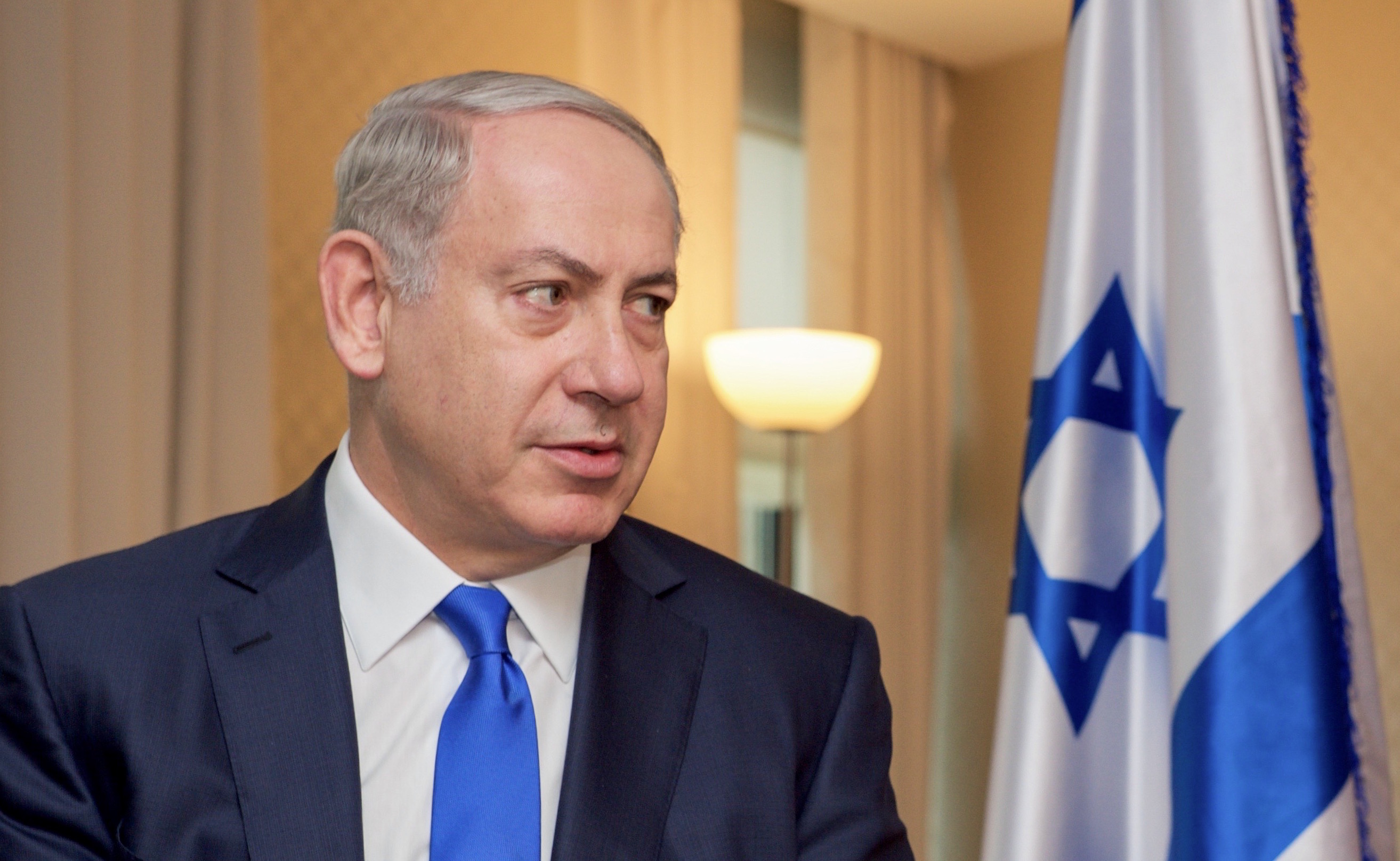
Netanyahu: More coming. (Wikimedia Commons)
Prime Minister Benjamin Netanyahu said Aug 19, “Iran has no immunity, anywhere… we will act and currently are acting against them, wherever it is necessary.” Three days later the Israeli leader went further, suggesting his country was perhaps involved in these attacks in Iraq, declaring, “We are operating in many areas against a state that wants to annihilate us.”
By making such bold moves, Israel is taking major risks. If such attacks continue in Iraq against Tehran-sponsored non-state actors near the Iranian border, Iran will likely respond. Perhaps the Iranians will put air defense capabilities in the hands of Iraqi Shi’a militias to enable such factions to fend off future Israeli attacks. Also possible is that Tehran would carry out limited strikes in retaliation at a time and place of the Iranian leadership’s choosing, perhaps targeting Israeli positions in the occupied Golan Heights of Syria.
Israeli strikes, which constitute a flagrant violation of Iraq’s sovereignty, may come with major costs for U.S. interests in Iraq. Given that an influential Iran-based Shi’a cleric, Grand Ayatollah Kazim al-Haeri, reacted to such Israeli attacks with a fatwa forbidding America’s military presence from continuing in Iraq, and the fact that many in Iraq and other Arab countries see the U.S. as responsible for Israeli actions against PMU targets, the roughly 5,000 American troops in the country could find themselves in the crosshairs of what has quickly become an escalating Israeli-Iranian proxy war waged in Iraq.
Israel’s bombing of Iraq will have major implications for the Washington-Baghdad relationship too, particularly given that the Iraqi government is attempting to bring the heavily armed Shi’a militias under its control. If the U.S. administration fails to prevent Israel from turning Iraq into more of a battleground in Tel Aviv’s proxy wars with Tehran, Iraq’s fragile stability will be further undermined. Under such circumstances, Iran could quickly capitalize on such conditions to bring Baghdad closer to Tehran at a time in which U.S. influence in Iraq—and the region at large—continues to wane.
Unquestionably, perceptions across Iraq that the U.S. is to blame for Israel’s actions will push more Iraqis to the conclusion that the White House’s “maximum pressure” agenda against Iran is directly undermining Iraq’s basic interests in upholding sovereignty and moving toward a more stable future in which the country is not implicated in greater regional crises involving multiple nations.
Giorgio Cafiero (@GiorgioCafiero) is the CEO of Gulf State Analytics (@GulfStateAnalyt), a Washington-based geopolitical risk consultancy.
Iraq would face ‘wrath of US’ if oil pipeline projects with Iran go ahead
RT | August 27, 2019
Washington would do anything to prevent an Iran-Iraq oil pipeline from ever being built, even if the Europeans were in favor, policy researchers told RT.
“Iraq would feel the wrath of the US” should it pursue a cross-border pipeline project with its neighbor Iran, believes the head of the British-based consultancy firm Alfa Energy, John Hall.
According to a recent report, Tehran talked with Baghdad about building an oil pipeline through Iraq into Syria. The sides have also reportedly discussed reviving the existing pipeline connecting Kirkuk in Iraqi Kurdistan with the city of Baniyas on Syria’s Mediterranean coast. The pipeline was heavily damaged by US airstrikes in 2003 and has remained defunct since. The proposed project is said to be aimed at providing an alternative route for Iranian oil should the Strait of Hormuz be closed in case of a direct conflict with the US.
Hall said Washington would be “upset” by this idea and will do all it can to dissuade Baghdad, as well as the EU, from participating.
Although European countries would be happy to buy oil from Iran, they won’t do so because of the threat of retribution from the United States. When you’ve got someone like Donald Trump as the president of the US, it’s very difficult knowing what may follow if Europeans try to engage with Iran across the sanctions.
The situation in civil war-torn Syria “has somewhat stabilized,” Iran and Iraq see “serious opportunities” to explore their energy ties, said Irina Fyodorova, a senior Middle East researcher at the Institute of Oriental Studies at the Russian Academy of Sciences.
“It is not the US’ interest to have a pipeline that would be independent from them and their allies in the Persian Gulf,” she told RT.
It is also against US interests to have an Iran-Iraq cooperation that is outside of their control. So there will be actions aimed at hampering the implementation of this project.
One of the steps Washington and its allies could take is boosting their support for anti-government groups in Syria, she said. The researcher added that another problem for the pipeline would be the US-backed Kurdish forces, should it go from Kirkuk.
EU countries, on the other hand, would like to see new ways to bypass US sanctions on Iranian oil, Fyodorova noted, as “getting the oil through a pipeline would be cheaper than having it delivered by tankers.”
“The Europeans love balancing the books. Moreover, it would be a wonderful alternative to the oil the EU is buying from the US.”
Will Bibi’s War Become America’s War?
By Pat Buchanan • Unz Review • August 27, 2019
President Donald Trump, who canceled a missile strike on Iran, after the shoot-down of a U.S. Predator drone, to avoid killing Iranians, may not want a U.S. war with Iran. But the same cannot be said of Bibi Netanyahu.
Saturday, Israel launched a night attack on a village south of Damascus to abort what Israel claims was a plot by Iran’s Revolutionary Guards’ Quds Force to fly “killer drones” into Israel, an act of war.
Sunday, two Israeli drones crashed outside the media offices of Hezbollah in Beirut. Israel then attacked a base camp of the Popular Front for the Liberation of Palestine-General Command in north Lebanon.
Monday, Israel admitted to a strike on Iranian-backed militias of the Popular Mobilization Forces in Iraq. And Israel does not deny responsibility for last month’s attacks on munitions dumps and bases of pro-Iran militias in Iraq.
Israel has also confirmed that, during Syria’s civil war, it conducted hundreds of strikes against pro-Iranian militias and ammunition depots to prevent the transfer of missiles to Hezbollah in Lebanon.
Understandably, Israel’s weekend actions have brought threats of retaliation. Hezbollah Secretary-General Hassan Nasrallah has warned of vengeance for the death of his people in the Syria strike.
Quds Force General Qassem Soleimani reportedly tweeted from Tehran, “These insane operations will be the last struggles of the Zionist regime.” Lebanese President Michel Aoun called the alleged Israeli drone attack on Beirut a “declaration of war.”
Last Friday, in the 71st week of the “Great March of Return” protests on Gaza’s border, 50 Palestinians were wounded by Israeli live fire. In 16 months, 200 have died from gunshots, with thousands wounded.
America’s reaction to Israel’s weekend attacks? Secretary of State Mike Pompeo called Netanyahu to assure him of U.S. support of Israel’s actions. Some Iraqi leaders are now calling for the expulsion of Americans.
Why is Netanyahu now admitting to Israel’s role in the strikes in Lebanon, Syria and Iraq? Why has he begun threatening Iran itself and even the Houthi rebels in Yemen?
Because this longest-serving prime minister in Israeli history, having surpassed David Ben-Gurion, is in the battle of his life, with elections just three weeks off. And if Netanyahu falls short — or fails to put together a coalition after winning, as he failed earlier this year — his career would be over, and he could be facing prosecution for corruption.
Netanyahu has a compelling motive for widening the war against Israel’s main enemy, its allies and its proxies and taking credit for military strikes.
But America has a stake in what Israel is doing as well.
We are not simply observers. For if Hezbollah retaliates against Israel or Iranian-backed militias in Syria retaliate against Israel — or against us for enabling Israel — a new war could erupt, and there would be a clamor for deeper American intervention.
Yet, Americans have no desire for a new war, which could cost Trump the presidency, as the war in Iraq cost the Republican Party the Congress in 2006 and the White House in 2008.
The United States has taken pains to avoid a military clash with Iran for compelling reasons. With only 5,000 troops left in Iraq, U.S. forces are massively outmanned by an estimated 150,000 fighters of the pro-Iran Popular Mobilization Forces, which played a critical role in preventing ISIS from reaching Baghdad during the days of the caliphate.
And, for good reason, the aircraft carrier Abraham Lincoln, with its crew of 5,600, which Trump sent to deter Iran, has yet to enter the Strait of Hormuz or the Persian Gulf but remains in the Arabian Sea off the coast of Oman, and, at times, some 600 nautical miles away from Iran.
Why is this mighty warship keeping its distance?
We don’t want a confrontation in the Gulf, and, as ex-Admiral James Stavridis, former NATO Supreme Allied Commander, says:
“Anytime a carrier moves close to shore, and especially into confined waters, the danger to the ship goes up significantly. … It becomes vulnerable to diesel submarines, shore-launched cruise missiles and swarming attacks by small boats armed with missiles.”
Which is a pretty good description of the coastal defenses and naval forces of Iran.
Netanyahu’s widening of Israel’s war with Iran and its proxies into Lebanon and Iraq — and perhaps beyond — and his acknowledgement of that wider war raise questions for both of us.
Israel today has on and near her borders hostile populations in Gaza, Syria, Lebanon, Iran and Iraq. Tens of millions of Muslims see her as an enemy to be expelled from the region.
While there is a cold peace with Egypt and Jordan, the Saudis and Gulf Arabs are temporary allies as long as the foe is Iran.
Is this pervasive enmity sustainable?
As for America, have we ceded to Netanyahu something no nation should ever cede to another, even an ally: the right to take our country into a war of their choosing but not of ours?
Copyright 2019 Creators.com.
Iraq’s Hashd al-Sha’abi downs spy drone
Press TV – August 25, 2019
Forces from the Popular Mobilization Units (PMU) in Iraq have shot down a spy drone in the country’s northern Province of Nineveh.
The al-Sumaria television reported on Sunday that the unmanned aerial vehicle (UAV) was targeted by the air defenses of the 50th Brigade of Hashd al-Sha’abi while it was approaching PMU bases in Nineveh.
It was not immediately clear who was operating the drone.
The Iraqi forces had shot down another spy drone on Thursday as it was flying in the vicinity of the 12th Brigade of Hashd al-Sha’abi and over the outskirts of the capital, Baghdad.
Last week, a number of powerful blasts rocked a position held by the PMU, next to the strategic Balad airbase, which hosts US forces and contractors and which is located about 80 kilometers north of Baghdad.
Hashd al-Sha’abi commanders confirmed that the intended target of the attack was the group’s position near the Balad base.
Hashd al-Sha’abi forces played a major role in the liberation of Daesh-held areas to the south, northeast, and north of Baghdad ever since the terrorists launched an offensive in the country in June 2014.
Some Iraqi officials have said the strikes were conducted by the Israeli regime.
Earlier, senior Iraqi cleric Ammar al-Hakim called on Iraqi Prime Minister Adel Abdul-Mahdi to adopt effective measures to defend the country’s sovereignty and territorial integrity in the face of strong indications that the US and Israel were involved in the series of recent attacks on PMU positions.
Two PMU fighters killed in drone strikes near Syria border
Later in the day, Iraqi popular forces issued a statement, saying that two of their fighters, including a field commander, were killed in strikes by an unidentified drone close to the Syrian border in Anbar Province.
According to Almayadeen news website, the statement added that the strike, which targeted the PMU’s 45th brigade, took place 15 km (9 miles) from the border.
An unspecified number of PMU fighters were also injured in the attack.
Reuters quoted a security source as saying that there were two air strikes. One struck the local headquarters of the brigade while the other struck a convoy of cars leaving the building.
There has been no immediate claim of responsibility for the attacks.
US-Israeli attacks on PMU meant to revive Daesh in Iraq: Kata’ib Hezbollah
Press TV – August 24, 2019
An Iraqi resistance group says the recent airstrikes on the positions of pro-government Popular Mobilization Units (PMU) are an attempt by the US and Israel to revive the Daesh Takfiri terrorist group in the Arab country.
In an interview with Lebanon’s Arabic-language al-Ahed news website published on Friday, Kata’ib Hezbollah spokesman Mohammed Muhyee said the air raids on Hashd al-Sha’abi positions are actually meant to weaken Iraqi resistance factions, empty their weapons stores and end their role in maintaining security in Iraq.
He added that the next stage, which has been planned by the US, is to return thousands of foreign-backed Daesh terrorists to the Iraqi-Syrian border.
The recent attacks “were not accidental,” but rather planned in advance after continued monitoring operations by Israeli and American drones, Muhyee pointed out.
He also accused Washington of trying to get Israel to conduct the strikes in a bid to prevent reactions from Iraqi resistance groups.
Muhyee further warned of a tough response to any future attack on Iraqi forces.
Earlier this week, a PMU ammunition depot was exploded in Iraq, the fourth in recent months. The attacks began on July 19 when a drone dropped explosives onto a PMU base near the town of Amerli, in Salahuddin Province, killing at least one resistance fighter and injuring four others.
Unnamed American officials confirmed that Israel had been behind the attacks.
Israeli Prime Minister Benjamin Netanyahu hinted on Thursday at possible Israeli strikes in Iraq.
“We are operating – not just if needed, we are operating in many areas against a state (Iran) that wants to annihilate us. Of course I gave the security forces a free hand and instructed them to do anything necessary to thwart Iran’s plans,” he said when asked whether Tel Aviv was considering operations in Iraq.
Daesh unleashed a campaign of death and destruction in Iraq in 2014, overrunning vast swathes in lightning attacks. Iraqi army soldiers and allied fighters then launched operations to eliminate the terror outfit and retake lost territory.
The PMU had a prominent role in flushing Daesh out of the areas it had occupied in Iraq.
In December 2017, Iraq declared the end of the anti-Daesh campaign. The group’s remnants, though, keep staging sporadic attacks across Iraq.
US officials confirm Israel behind Iraq air strikes
MEMO | August 23, 2019
US officials have confirmed that Israel was behind recent airstrikes on alleged weapons depots in Iraq, which were ostensibly being used by Iran to transfer arms to Syria.
Senior US officials yesterday told the New York Times that Israel has carried out “several strikes [in Iraq] in recent days”, the most recent of which took place on Monday near the Balad Airbase, north of Iraqi capital Baghdad.
The US-based newspaper also quoted a “senior Middle Eastern intelligence official” who said that Israel had struck a separate base north of Baghdad on 19 July. The official claimed that the base was being used by Iran’s Revolutionary Guards Corp (IRGC) to transfer weapons to Syria, where Iranian-backed groups are engaged in the country’s protracted civil war.
He added that a “cargo of guided missiles with a range of 125 miles” was destroyed during the attack.
The same official also revealed that the 19 July strike was launched from “within Iraq”, raising questions as to how Israeli aircraft were based in a country with which they currently have no formal diplomatic relations.
The US officials’ comments confirm weeks of speculation that Israel was responsible for the multiple attacks on Iraqi targets which have taken place in recent months.
In the past three months, four attacks on weapons depots have taken place. Three of these bases were being used by the Popular Mobilisation Forces (PMF), an umbrella organisation of Shia paramilitary groups technically under the authority of the Iraqi Security Forces, though many operate semi-autonomously.
Meanwhile the fourth was being used by Iraq’s federal police, the New York Times explained.
On Wednesday the PMF blamed the US and Israel for attacking its bases in Iraq, saying in a statement that the US had allowed four Israeli drones to enter Iraq. The statement added that the group has “accurate information” which proves the US brought the Israeli drones into Iraqi territory to work as part of the US fleet stationed in the country.
The US Pentagon, however, strenuously denied its involvement in the affair, dismissing the PMF’s statement entirely.
Israeli Prime Minister Benjamin Netanyahu further added to speculation of US-Israeli involvement yesterday, saying that he had given the armed forces a “free hand” to deal with the alleged Iranian threat.
In an interview with Israel’s Russian-language outlet Channel 9, Netanyahu was asked whether Israel would operate against Iranian targets in Iraq if needed. The prime minister replied: “We are operating – not just if needed, we are operating in many areas against a state that wants to annihilate us. Of course, I gave the security forces a free hand and instructed them to do anything necessary to thwart Iran’s plans.”
The attacks represent a new front for Israel, having previously focused on targeting Iranian positions in Syria. Though Israel has maintained an official policy of non-intervention in the Syrian civil war and often remained silent in the face of air strike accusations, in January then Chief of Staff of the Israeli army Gadi Eisenkot admitted Israel had in fact struck Syria “thousands of times”.
Israel’s military intelligence threatened in February to expand its operations to Iraq, claiming “Iran may use Iraq as a launching pad to target Israel” after its positions in Syria were destroyed. This, Israel claimed, “would call for a response from Tel Aviv”. US President Donald Trump also expressed similar ideas, telling American news station CBS that he would keep US personnel in Iraq to “keep an eye” on Iran.
Former Iraqi prime minister Haider Al-Abadi slammed these suggestions, stressing that “Iraqi sovereignty must be respected [since] we are not proxies in conflicts outside the interests of our nation”. Iraq’s President Barham Salih echoed this sentiment, calling on the US not to pursue its own policy priorities because “we live here”.
READ ALSO:
Iraqi Paramilitary Force Accuses US of Military Base Attacks
Sputnik – August 21, 2019
An ammunition depot at Iraq’s al-Saqr military base was hit by an explosion on 12 August, killing one person and leaving 13 injured. Weeks earlier, a similar blast took place at Amerli base.
Iraqi paramilitary force Hashd al-Shaabi has stated that Washington is responsible for the attacks on the country’s military bases, according to AFP.
“We announce that the first and last entity responsible for what happened are American forces, and we will hold them responsible for whatever happens from today onwards,” the paramilitary group said in a statement.
Earlier, a member of the Security and Defence Committee in the Iraqi Parliament, Karim Alaiwi, told Lebanese broadcaster al-Mayadeen that the explosions that rocked two Iraqi military bases held by the country’s Shi’ite paramilitaries were the result of unmanned Israeli airstrikes.
“We have proof that Israeli air forces hit several targets in Iraq, including the al-Saqr and Amerli bases. Israel claims that the Popular Mobilisation Forces have connections to Iran and Lebanon’s Hezbollah,” the lawmaker claimed.
According to Alaiwi, the Jewish state is vying to weaken the militias through such airstrikes and even kill their members. He noted that Iraqi airspace is controlled by the US Air Force, indicating that Israel could not have struck the bases without Washington knowing it.
However, the Iraqi planes failed to detect drones in the sky over the bases, the official noted.
Previously, al-Mayadeen reported, citing sources familiar with the matter, that three unmanned aerial vehicles were spotted just before the explosion at the al-Saqr base.
On Tuesday, several blasts rocked a position held by Iraqi Shi’ite paramilitaries next to Balad airbase.
On 12 August, an ammunition depot at al-Saqr military base, controlled by the Iraqi militia, was hit by a blast which left 1 dead and 13 more injured. The specially-protected “green zone”, where government buildings and diplomatic missions are located, was struck. A source in the Iraqi security forces revealed that residential areas had also been put in harm’s way. On July 19, similar explosions occurred at Amerli’s base, with a number of media reporting a drone strike.
Subsequently, the Prime Minister of Iraq ordered the removal of all ammunition depots outside the Iraqi capital.
Featured Video
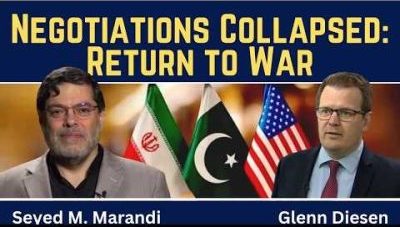
Seyed M. Marandi: Negotiations Collapsed – Return to War
or go to
Aletho News Archives – Video-Images
From the Archives
The US-Iran Scenario That Most Scares Israel
By Ali Haydar | Al-Akhbar | October 9, 2013
Israeli Prime Minister Benjamin Netanyahu issued a series of threats toward Iran and its interlocutors in the West, including the US, as serious negotiations on Iran’s nuclear program seem more plausible.
As a possible rapprochement looms between the US and Iran, Netanyahu has attempted to impose impossible Israeli conditions on the negotiators, such as the full dismantling of Iran’s nuclear program, not to mention threatening military force.
Whatever the deal that could materialize between Iran and the West, Israel is going to find itself before an open-ended path. One can foresee three possible scenarios… continue
Blog Roll
 Aletho News
- Most Israelis oppose Iran ceasefire, reject talks: Poll
- Iran to charge ships from ‘hostile’ nations to cross Hormuz – security chief
- UK, Spain reject Trump’s new scheme to blockade Hormuz Strait
- Russian frigate ‘resurfaces’, chases off NATO pirates days after Kiev ‘sank’ it
- Ukraine Targets Russian Merchant Fleet With NATO Intel Support – Presidential Aide
- Russia’s ‘shadow fleet’ makes mockery of UK naval power
- Ukraine plans to attack Russian ships with Norwegian support
- US’s ‘Very Foolish’ Double Blockade of Hormuz Strait Makes Absolutely No Sense: Here’s Why
- China issues rules on countermeasures against foreign states’ unlawful extraterritorial jurisdiction
- Seyed M. Marandi: Negotiations Collapsed – Return to War
- If Americans Knew
- Israeli prison authorities are blocking hundreds of solidarity postcards being sent to female Palestinian prisoners
- ‘I wished for death’: Sexual violence in Israel’s prisons is an ‘organized state policy’
- Israeli army shoots, kills 9-year-old girl in her Gaza classroom
- Israel is attacking Lebanon to sabotage the Iran ceasefire, but the media is hiding its true motivation
- Israel’s restriction of aid into Gaza leads to critical shortages in bread, baby formula, and water
- Critical shortages in Gaza, Lebanon in ruins, “piracy” in Iran – Daily Update
- US-Iran ceasefire negotiations make zero progress – Daily Update
- Pro-Israel ‘Thinktanks’ and Individuals who Influence U.S. Foreign Policy
- Mearsheimer reveals how Israel dictates US policies on Iran, Gaza – video
- After killing 350+, Israel still has a “score to settle” with Lebanon before ceasefire – Daily Update
- No Tricks Zone
- Cave Discovery Reveals Today’s Desert Climates Were Recently Far Warmer, Wetter, Teeming With Life
- German Expert: Heat Dome Led To Record Temps In Western USA…Warmer In 1934, 1936
- New Study: No Linear Warming Or Glacier Retreat Along Northern Antarctic Peninsula Since 1980s
- An Inconvenient Tree: Uncovered In Alps… Europe Much Warmer Than Today 6000 Years Ago
- New Study Reports A 60% Slowdown In Greenland’s Ice Loss Rate In The Last Decade
- Low Intensity Tornado Wrecks Major Solar Farm, Creating A Potential Toxic Dump
- New Study Finds Warming Saves Lives…Cold Temperatures 12 Times More Deadly Than Excess Heat
- German Science Blog Accuses PIK Climate Institute Of Hallucinating Climate Tipping Points
- Devastating Assessment Of Comirnaty Vaccine By Former Senior Pfizer Europe Toxicologist
- New Study: CO2 Is ‘Effectively Negligible’ As An Explanatory Climate Change Factor Since 2000
 Aletho News