Nobel Peace Prize-Winner Obama Dropped 23,144 Bombs in 2015
Sputnik – January 11, 2016
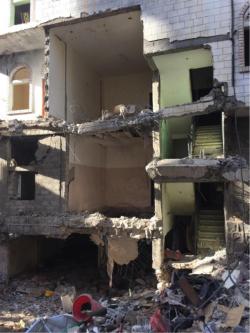 The United States in the past year dropped more than 20,000 bombs on Muslim-majority countries Iraq, Syria, Afghanistan, Pakistan, Yemen and Somalia, according to a study by the Council on Foreign Relations (CFR).
In an article published January 7, Micah Zenko, a senior fellow at CFR, states that since January 1, 2015, the United States has dropped an estimated 23,144 bombs in those six countries: 22,110 in Iraq and Syria; 947 in Afghanistan; 58 in Yemen; 18 in Somalia; and 11 in Pakistan.
“This estimate is based on the fact that the United States has conducted 77 percent of all airstrikes in Iraq and Syria, while there were 28,714 US-led coalition munitions dropped in 2015. This overall estimate is probably slightly low, because it also assumes one bomb dropped in each drone strike in Pakistan, Yemen, and Somalia, which is not always the case,” Zenko writes.
Despite dropping tens of thousands of bombs over the past 17 months, Washington’s strategy has failed to defeat Daesh and other Islamic militant groups, Zenko observed.
In Afghanistan, the Taliban control more territory than at any point since the 2001 US invasion, according to a recent analysis in Foreign Policy magazine.
Zenko notes that the primary focus of Washington’s counter-terrorism strategy is to kill extremists, and that far less attention is paid to prevent a moderate individual from becoming radicalized.
As a result, “the size of [Daesh] has remained wholly unchanged,” Zenko writes.
In 2014, the Central Intelligence Agency estimated the size of Daesh to be between 20,000-31,000 members. On Wednesday, Colonel Steve Warren, a spokesman for the US-led coalition, estimated the group at 30,000 members, despite Pentagon claims that 25,000 Daesh members have been killed in US air strikes.
At the same time, the Pentagon claims that only six civilians have “likely” been killed in the course of the bombing campaign.
Well-Armed, Well-Funded: Iraqi Leader Reveals Daesh’s Deep Pockets
Sputnik – 11.01.2016
Sheikh Akram Al-Kaabi, the leader of Hezbollah al-Nujaba, a major Iraqi Shiite resistance movement fighting Daesh (ISIL/ISIS) in the region, has revealed that the jihadist group receives lavish amounts of money from Saudi Arabia and Qatar and modern weaponry from 120 countries around the world, according to the Iranian news agency FARS.
“Saudi Arabia and Qatar are extensively supporting the Takfiri (Daesh and radical Islamist) terrorists financially but surely victory belongs to the resistance groups,” the agency quoted Sheikh Akram al-Kaabi as saying at a meeting with Iranian Shiite cleric Ayatollah Alavi Gorgani in the Iranian city of Qom (also known as Ghom) on Saturday night.
“In the Syria war, 120 countries throughout the world are supplying the terrorists with state-of-the-art equipment and weapons,” added the Iraqi leader.
He voiced concern about the dire humanitarian situation in the besieged towns of Kafria and Foua’a regions in Idlib province, and said sending aid to these two towns is difficult due to the presence of terrorist groups.
Kaabi said that the Takfiri terrorists are still attacking the two Shiite-populated towns and despite the resistance forces’ operations to break the siege of the two towns, they are still under the militants’ control.
Similar concerns have been earlier voiced by Leader of the Lebanese Orthodox Party Masarik Roderick Khoury, who named Turkey as the main sponsor of terrorist groups in Syria.
“Turkey is the first and main power which funds and supplies weapons to terrorist groups. We believe the fight against terrorism should begin with pressuring Turkey. Now Turkey is the main sponsor of terrorism in the region,” Khoury said at a press conference in Moscow in December.
“The name of the real leader of the terrorists is Tayyip Erdogan [Turkish President]. The others like Abu Bakr al-Baghdadi [Daesh/ISIL leader] and al-Qaeda are just his servants. Al-Nusra Front also carries out orders from Turkey,” he then pointed out.
The Lebanese politician said there was real exidence to the allegations: after the city of Kassab, near Latakia, was liberated from terrorists Turkish ambulance vehicles, clothes and weapons were found there.
Khoury also added that when the terrorists take Syrian or Lebanese hostages they only can be released after negotiations with Turkey.
Saudi execution aimed at provoking regional bloodbath
By Finian Cunningham | RT | January 4, 2016
The furious reaction across the Middle East to the Saudi execution of a prominent Shiite cleric strongly suggests that the killing is a deliberate provocation by the ruling House of Saud.
That provocation would appear to be aimed at inflaming sectarian tensions and fomenting conflict in various regional countries – already near flashpoint – in order to further Saudi geopolitical interests. Central to those interests is, as always, the bitter rivalry with the region’s Shiite powerhouse, Iran.
Following the announcement at the weekend by the Saudi Interior Ministry that Shiite cleric Sheikh Nimr al-Nimr had been executed, along with 46 other prisoners, there was predictable outrage from across the region, especially among countries where there is a large Shiite following, such as Iran, Iraq, Lebanon and Bahrain. Iran denounced the radical Sunni Saudi rulers as “criminal” and accused them of carrying out an act that is “the depth of imprudence and irresponsibility.”
Iran’s Supreme Leader, Ayatollah Khamenei, compared the House of Saud with Daesh, the extremist terror group (also known as Islamic State, and previously ISIS/ISIL). Of note is the way that the kingdom executes opponents by beheading according to a similar stringent interpretation of Islamic Sharia law known as Wahhabism – shared by both the Saudi regime and the cadres of Daesh.
Former Iraqi Prime Minster Nouri al-Maliki said that the imposition of capital punishment would lead to the downfall of the Saudi rulers, with other Iraqi politicians saying that it would “open the gates of hell” across the volatile and religiously fraught region.
The United States and European Union also responded with alarm at the execution of al-Nimr, both warning of deepening sectarian tensions being exacerbated by the Saudi death penalty.
Sheikh al-Nimr was executed on Saturday, along with 46 other prisoners in what is believed to have been the biggest mass execution in Saudi Arabia for over three decades. The death sentences were carried out in 12 prison locations by decapitation or firing squad, according to reports. Most of those sentenced were alleged members of the Al-Qaeda terror group, who had been accused of carrying out deadly attacks against Western interests in Saudi Arabia between 2003 and 2006.
Nimr al-Nimr was among four Shiite activists who were executed at the weekend. They were convicted on several charges of subversion and terrorism in trials that were dismissed by international rights groups as a travesty of judicial process. Sheikh al-Nimr was arrested in 2012 and accused of inciting violent protests, but supporters point out that the respected cleric always publicly endorsed peaceful protest. One of his best-known statements was: “The power of the word is mightier than the roar of bullets.”
In October, al-Nimr lost a judicial appeal against his death sentence. There then followed several international appeals for clemency. The Iranian government in particular issued several statements calling for the cleric’s life to be spared.
The widely seen miscarriage of justice against al-Nimr and the chilling determination to carry out his execution in spite of appeals for clemency is what makes the case so incendiary.
Lebanese Shiite resistance movement Hezbollah condemned Saudi Arabia’s conduct as “an assassination,” while Iran’s Revolutionary Guards Corps vowed that the Saudi rulers would meet with “harsh vengeance.”
In Yemen, where Saudi Arabia and a coalition of other Sunni Arab states have been carrying out airstrikes for the past nine months, the mainly Shiite Houthi rebels also condemned the execution of al-Nimr and promised retribution for his death. At the weekend, it was reported that 24 Saudi troops were killed in a Houthi rocket attack on the Saudi border province of Jizan. It is not clear if the attack preceded the announced execution of al-Nimr.
The Saudi regime has previously accused Iran and Hezbollah of fueling the Houthi rebellion in Yemen. Tehran has rejected claims of militarily supporting the insurgents. But it would be a fair assumption that Iran and Hezbollah will henceforth step up military intervention in Yemen as a way of striking back at the Saudis.
The same response is envisaged for Iranian and Hezbollah involvement in Syria, where the Saudis have bankrolled and armed various anti-government militia, primarily so-called radical Islamist groups with a shared Wahhabi fundamentalist ideology. These groups include Jaish al Islam (Army of Islam), whose leader Zahran Alloush was killed in a Syrian airstrike near Damascus on December 25. The Saudi regime publicly rebuked the killing of Alloush, saying that it jeopardized the forthcoming UN-sponsored peace talks in Geneva on Syria.
The House of Saud, led by King Salman, is known to be not in favor of the Geneva talks, which Washington and Moscow have both endorsed. The Saudis are dismayed by the seeming compromise made by Washington towards the Russian position, which is that the political future of Syria must be decided by the Syrian people through elections. The erstwhile demand by Washington that Syria’s President Bashar Assad must stand down as a precondition for peace talks has been abandoned – leaving the Saudis, Turkey and the extremist militia groups in Syria as the only parties persisting with the call for Assad to go.
It is perhaps significant that Turkish President Recep Tayyip Erdogan held a “strategic summit” with Saudi King Salman in Riyadh only days before the execution of Nimr al-Nimr.
Russia’s military intervention in Syria, from the end of September, has been a resounding success in terms of stabilizing the Syrian government of Bashar Assad. Even the Obama administration has recently acknowledged the strategic success for Russian President Vladimir Putin in Syria.
That military success can also be attributed to Iran and Hezbollah, as well as to Iraq, which have all contributed to the gains made by the Syrian Arab Army on the ground.
The biggest loser is the axis for covert regime change in Syria, led by Washington, London and Paris, together with their regional allies in Saudi Arabia, Qatar and Turkey. While Washington and the other Western powers have the nous to switch tactics from backing a covert insurgency to belatedly trying a political process for eventual regime change in Syria, it would appear that the Saudis and Turks are still committed to the covert war agenda.
In that way, the Russian-backed military alliance in Syria is a particularly damaging broadside to Saudi Arabia and Turkey.
From the Saudi point of view, one way of trying to salvage their losses in Syria and ongoing setbacks in Yemen would be to blow up the region with an explosion in sectarian conflicts. For many people, of course, such a gambit is insane. But if the House of Saud can provoke a firestorm between Sunnis and Shiites, that would in turn polarize relations between Washington and Moscow, leading to a wider war across the region.
Having lost in their Machiavellian schemes for regime change in Syria, the House of Saud seems to want to inflict a plague of chaos and bloodshed on everyone else’s house.
The execution of renowned Shia cleric Nimr al-Nimr is such a gratuitous barbaric killing, one is left with the conclusion: the unadulterated madness of the slaying betrays an altogether pathological calculation aimed at inciting mayhem in the region.
Saudi Arabia is on such a losing streak over Syria, Yemen, Iraq, Lebanon and elsewhere that its autocratic rulers probably figure that they don’t have much else to lose by going for broke – and thus provoking a regional bloodbath.
‘Saudis seek Muslim division by Nimr execution’
Press TV – January 3, 2016
Press TV has conducted an interview with political analyst Ibrahim Mousavi to talk about the Al Saud regime in Saudi Arabia’s execution of Shia cleric Sheikh Nimr Baqir al-Nimr.
Below is a rough transcription of that interview:
Press TV: Let’s start with one of the main points of [secretary general of Lebanon’s resistance movement Hezbollah] Seyyed Hassan Nasrallah’s speech which basically he is talking about how all Muslims should be diligent and not to basically play the game that the Saudis have initiated, trying to ignite division in the Muslim community and that everyone must remain united.
Mousavi: Indeed this is a very important message at this juncture of history and this sensitive moment when Seyyed Nasrallah talks we hear the voice of reason, we hear the voice of wisdom, we hear the voice of responsibility. Those who are responsible for the Ummah, for the nation, for the people, they should be very aware of what they say, when they say it, and to who they say. The message that should be sent is that this unjust ruling of the Saudi dynasty, those supporters of Takfiri groups, the oppression against the Saudis whether Shia Muslims or non-Shia Muslims—and we know very well that when we talk about the Saudis who are outside the country—you go to Europe, you see how many have applied for political asylum. So we are talking here about a national crisis that is taking place when the Saudi rulers are oppressing their own people.
They are trying at the same time to say that this is a conflict between the Shias and the Sunnis. The execution of Sheikh Nimr Baqir al-Nimr and the execution of every single Yemeni individual regardless of his age, regardless of his belonging on the factional and conventional level, tells you that this is a kind of attack against humanity.
That’s why it is very important to highlight the direction of the message. The message that we should not be misled by what they are trying to do. They are trying to sow the seeds of discord and sedition among the people, among the Arabs, among the Muslims. We should not be in any way under the pressure or under the impact of the Saudi propaganda.
Press TV: And Mr. Mousavi, another point, basically that Seyed Hasan Nasrallah also talked about the desperation of the Saudi regime and that with the spilling of the blood of Sheikh Nimr al-Nimr and other innocent people, it is the beginning of the end of the Saudi regime. Your perspective on that point sir.
Mousavi: This is again, a very clear point and a very evident point. We know very well that when you are strong enough you can handle your problems and go through. When a kingdom, when a dynasty that has tens and hundreds of billions of dollars that they spend in order to annihilate Yemen and the civilization in Yemen and the Yemeni people. When they have all these F-16s that are being supplied to them by the Americans. Why would they go and execute Sheikh Nimr if they are afraid of the voice of one man when they wage wars against their neighbors? When they go and invade Bahrain against the will of the Bahraini people, trying to support the regime of Al Khalifa? When they go and send booby-trapped cars to Iraq? When they interfere in here and there. When they try to topple the authorized and legitimate government in Syria by supporting Takfiri groups?
This all tells you that when they go to these wars and try to execute a man who had always been preaching for change, for political rights, via peaceful means, via political means, this tells you that they are very weak. And yes indeed this is a very important indicative, this is very important and evident reason that proves that they are very weak and they are accumulating more and more mistakes that is going to bring their end in a more hasty way than expected.
Middle East leaders lash out at Saudi Arabia over Shiite cleric’s execution, protests erupt
RT | January 2, 2016
Shiite leaders are up in arms over Saudi Arabia’s execution of prominent cleric Nimr al-Nimr on terror charges. A senior Iranian Ayatollah called it a “crime,” while Tehran’s Foreign Ministry accused Riyadh of supporting terrorists.
“The Saudi government supports terrorists and takfiri [intolerant Sunni] extremists, while executing and suppressing critics inside the country,” Foreign Ministry spokesman Hossein Jaber Ansari was quoted as saying by state news agency IRNA.
According to a lawmaker from Iraq’s ruling Shiite coalition, Saudi Arabia’s execution of al-Nimr was intended to fuel Sunni-Shiite strife and “set the region on fire.”
“This measure taken by the ruling family [of Saudi Arabia] aims at reigniting the region, provoking sectarian fighting between Sunnis and Shiites,” Mohammed al-Sayhud told al-Sumaria TV.
Prominent Iraqis have called on the government in Baghdad on Saturday to cut ties with Riyadh over Sheikh Nimr al-Nimr’s execution, al-Sumaria TV reported.
“It’s a big crime that has opened the gates of hell,” Qasim al-Araji, the head of the Badr Organization in Iraq said, calling on Baghdad to cut diplomatic ties “immediately,” according to the channel’s website.
Another Iran-backed militia group, Asaib Ahl al-Haq, has accused Saudi Arabia of seeking to provoke Sunni-Shiite strife, according to the TV’s website. “What’s the use of having a Saudi embassy in Iraq?” it reportedly said.
Al-Nimr’s death has already added fuel to the fire in the boiling sectarian tensions in the Middle East.
Police in Bahrain fired tear gas at several dozen people protesting al-Nimr’s execution and carrying pictures of the cleric in a standoff in the Shi’ite Muslim village of Abu-Saiba, west of the capital Manama, an eyewitness told Reuters.
Scores of Shiite Muslims have come out to protest in Qatif, one of the oldest settlements in eastern Saudi Arabia, against the government’s execution of al-Nimr on Saturday, Reuters reported.
The protesters reportedly chanted, “down with the Al Saud,” referring to the name of the ruling Saudi royal family. They marched from al-Nimr’s home village of al-Awamiya to the region’s main town of Qatif, the only district in Saudi Arabia where Shiites are a majority.
One of the most senior clerics in Shiite-majority Iran, Ahmad Khatami, said that al-Nimr’s execution reflected the “criminal” character of the Saudi ruling family.
“I have no doubt that this pure blood will stain the collar of the House of Saud and wipe them from the pages of history,” Khatami, a member of the Assembly of Experts, was quoted as saying by the Mehr news agency.
He added: “The crime of executing Sheikh Nimr is part of a criminal pattern by this treacherous family … the Islamic world is expected to cry out and denounce this infamous regime as much as it can.”
Kataib Hezbollah’s leader, Abu Mahdi al-Mohandes, hailed the execution of Sheikh al-Nimr as “a crime that is added to the criminal record of Al Saud,” he said, according to al-Ahd TV.
Yemen’s Houthi movement has also mourned the prominent Shiite cleric, executed on Saturday.
“The Al Saudi family executed today the holy warrior, the grand cleric Nimr Baqr al-Nimr after a mock trial … a flagrant violation of human rights,” an obituary on the Houthis’ official Al Maseera website stated.
According to Lebanon’s Supreme Islamic Shiite Council, al-Nimr’s capital punishment was a serious “mistake.”
“The execution of Sheikh Nimr was an execution of reason, moderation and dialogue,” the council’s vice president, Sheikh Abdel Amir Qabalan said in a statement.
The brother of the executed cleric said he hopes that any reaction to al-Nimr’s killing will be peaceful.
“Sheikh Nimr enjoyed high esteem in his community and within Muslim society in general and no doubt there will be reaction,” Mohammed al-Nimr told Reuters by telephone. “We hope that any reactions would be confined to a peaceful framework. No one should have any reaction outside this peaceful framework. Enough bloodshed.”
Saudi Arabia executed Sheikh Nimr al-Nimr on Saturday, along with 46 other people. Authorities said most of those executed were involved in a series of attacks carried out by Al Qaeda between 2003 and 2006. Al-Nimr, along with six others, were accused of orchestrating anti-government protests between 2011 and 2013 in which 20 people died. Earlier this year, Saudi Arabia’s Supreme Court rejected an appeal against the death sentence passed on the Shia cleric.
Losing Ground: 2015 Proved a ‘Lost Year’ for Turkey
Sputnik – 01.01.2016
In an interview with CNBC, Unicredit Bank AG’s Chief Economist for Central and Eastern Europe Lubomir Mitov said that Ankara could derive enormous benefit from the situation in Europe and capitalize on low oil prices, but instead it had lost all its economic advantages, quarreled with all its neighbors, and spoiled ties with Russia.
According to Mitov, 2015 was a “lost year” for Turkey, which missed many opportunities because of the deterioration of the geopolitical situation.
He said that in particular, Turkey could have “benefited tremendously” from the current situation in Europe, where the Central Bank has increased asset purchases to try to keep the economy afloat. Still, those gains were never achieved due to internal political strife and geopolitics, Mitov recalled.
“Turkey is underperforming [and] has been underperforming for the full year…it’s even underperforming after the elections,” he said.
He also pointed out that “Turkey is probably 3 to 4 percent weaker than it should have been after the elections, but for these geopolitical problems.”
Even though the previous government tried to develop friendly relations with its neighboring states, Turkey now has “almost no neighbors left, according to Mitov, who recalled that Ankara earlier sparked rows with Iraq, Egypt and Syria.
The situation is further exacerbated by Turkey’s increased tensions in relations with Russia after Ankara’s downing of the Russian Su-24 bomber. In response, “Moscow clamped down on agricultural imports, set stringent visa limits, and restricted tourism to Turkey,” according to Mitov.
He was echoed by Peter Toogood, an investment director at City Financial Investment Company Limited, who was quoted by CNBS as saying that a lack of structural reforms has stopped Turkey from capitalizing on “the full benefits of economic boons like low oil prices.”
“The lira continues to decline, it has had no meaningful impact … the oil price has come down, [and] it should be the absolute example of a beneficiary, and it hasn’t been,” Toogood said.
Turkey rejects Iraq’s warning against Ankara troop deployment
Press TV – December 31, 2015
Turkish Prime Minister Ahmet Davutoglu has dismissed Baghdad’s warning of military action to defend Iraqi sovereignty if Ankara does not pull its troops out of northern Iraq.
“If Baghdad wants to use force, they should use it against Daesh, get rid of Daesh from Mousul. If they do so… why we would risk our army, we would withdraw to our country,” Davutoglu said in an interview with Turkish broadcaster NTV.
He made the remarks in response to Iraqi Foreign Minister Ibrahim al-Jaafari, who called on Turkey Wednesday to withdraw its troops or risk the use of military action.
Baghdad and Ankara are locked in a war of words over the presence of Turkish troops in northern Iraq.
On December 4, Turkey deployed some 150 soldiers, equipped with heavy weapons and backed by 20 to 25 tanks, to the outskirts of Mosul, the capital of Iraq’s Nineveh Province.
Ankara claimed the deployment was part of a mission to train and equip Iraq’s Kurdish Peshmerga forces in the fight against Daesh.
Baghdad has strongly condemned the presence of the Turkish battalion on the Iraqi territory, branding the uncoordinated act as a violation of Iraq’s national sovereignty.
Elsewhere in his remarks, Davutoglu claimed that Turkish troops were in northern Iraq in a bid to prevent terrorist infiltration into Turkey.
“I wish Iraq can control this area (northern parts) so that we don’t need to launch air operations there to prevent the leak of terrorists into Turkey.”
On Wednesday, Iraqi Prime Minister Haider al-Abadi held a phone conversation with Davutoglu, calling on Ankara to respect the territorial integrity of Iraq and withdraw its troops from the Arab country.
Syria: Has Anyone Stepped Back from the Brink?
By Michael Jabara CARLEY | Strategic Culture Foundation | 26.12.2015
John Kerry, the US Secretary of State, recently visited Moscow to discuss the Syrian crisis with his colleague Sergei Lavrov and President Vladimir Putin. Journalists observed handshakes, smiles, even hearty laughter, between Kerry and his Russian counterparts. Syrian President Bashar al Assad does not have to resign immediately, Kerry declared, and the United States is not trying to isolate Russia. What good news, and what a surprise for the Russians. The Moscow show seemed a great success. Kerry strolled along Stariy Arbat Street, met smiling Russian pedestrians and bought souvenirs to take home. A few days later the UN Security Council passed a resolution, calling for a ceasefire and negotiations. Russian and western journalists alike now say there is some hope to avoid the worst in Syria. And as you may already know, if the United States wants a ceasefire, it’s because their «moderate» Jihadist allies are getting beaten up now by the Syrian Arab Army backed by Russian air support.
Is cautious optimism warranted about a Syrian peace? It is hard to see how. Kerry may say whatever he wants in Moscow, but when he gets back to Washington, he sings a different song, or his colleagues do. His boss, President Obama, said «Assad has to go» only a few days after Kerry returned home. And then there is the new phantasmagorical story published by Seymour B Hersh, the muckraking US journalist, who has revealed that not everyone inside the US government is brain dead. It’s a remarkable discovery when you think about US foreign policy. Some military officials, and no less than the former Chief of Staff, General Martin Dempsey, were actually indirectly, and very secretly, passing military intelligence to the Syrian government to help it fight Daesh, Al-Qaeda and allied Jihadist forces operating in Syria. At the same time, the CIA, with Obama’s support, was sending arms hither and thither in Syria to help the Jihadists overthrow the Assad government.
General Dempsey left office in September 2015 and was replaced by General Joseph Dunford, a true blue Russophobe, who says Russia is an «existential threat» to the United States. It is a classic Washington response: the US aggressor accuses its intended victim of aggression. Just the other day (22 December), the United States slapped on gratuitous new sanctions against Russia. It’s the same old pretext: Russian «aggression» in the Ukraine.
Yet another US provocation, you might think, as Russia searches for a peaceful settlement of the Syrian war. The Russian government is taking a sensible position, but in the present circumstances, is a negotiated peace a real possibility? If the war in Syria were simply a civil war, as is often repeated in the media, you could encourage the belligerents to put on suits and ties and sit down at a table to negotiate a settlement. Unfortunately, the war in Syria is not a civil war: it is rather a proxy war of aggression led by the United States, Britain, and France (until the Paris massacre in November), and pursued vigorously in the region by Turkey, Saudi Arabia, Qatar, Jordan, and Apartheid Israel.
Turkey is playing a dirty, evil role. It provides arms and supplies across its borders for Daesh in Syria. Oil taken from Syrian wells by Daesh travels in the opposite direction, sold at cut rate prices, to provide revenue to the Jihadists for their war against Assad. It is estimated that Daesh was obtaining $40 millions a month from exported oil (before Russian intervention), but this is a bagatelle in terms of the money necessary for the Jihadists to wage war against Syria. Hundreds of millions are required. Saudi Arabia and Qatar are important suppliers and financiers of the Salafi Jihadist movement. Jordan permits training of Jihadists on its territory and allows passage across its frontiers into Syria. Israel also provides support from the occupied Golan territory, even providing medical care to wounded Jihadists. A coalition of states, four of which are NATO members, is waging a war of aggression against Syria. Against this array of deadly enemies, the Syrian government and the Syrian Arab Army, in a remarkable feat of arms, has been able to hold out for more than four years. President Assad has proven his courage and tenacity as a leader by refusing US summons to resign and by staying in Damascus to share the personal danger which all Syrians must endure simply to live in their country. No wonder Obama wants to get rid of Assad before talk about Syrian elections for he would almost certainly win them.
Sputnik in Moscow has estimated that there are as many as 70,000 foreign Jihadists fighting in Syria.

These forces appear for the most part are well motivated, supplied largely with US weapons and deeply entrenched in various parts of Syria. Since the Russian intervention on the side of the Syrian government, progress has been made in rooting out Jihadist forces, but as long as supply routes remain open across Turkey, Iraq, Jordan, Israel, even Lebanon, the war in Syria is not going to end.
Turkey’s role is particularly dangerous. It is a NATO member and it uses this privileged position to commit acts of aggression against Iraq and Syria. It shot down a Russian warplane in a well-planned ambush, likely with US connivance, and then ran to hide in NATO’s skirts. Apparently, the Turkish government hoped to sabotage budding European cooperation with Russia against Daesh, or to provoke a NATO-Russian war, as insane as that might seem. Other NATO members, the United States, France, and Britain, have also been deeply involved in the proxy war against Syria. Indeed, after the destruction of Libya, it has been reported that NATO planes were secretly used to transport Jihadists and Libyan arms to other Middle Eastern fronts. NATO members are effectively allied with Daesh and its Al-Qaeda derivatives against the Syrian government.
To be sure, the United States and its European vassals have attempted to cover up their links to the Jihadist war in Syria by launching make-believe air attacks on Daesh targets, occasionally bombing a caterpillar tractor here or there and blowing up a lot of sand in people’s eyes. Russian intervention exposed the double game of the United States and changed the balance of military forces in Syria.
Even now however, the US air force sends warning messages to Jihadist truck drivers to get away from their vehicles before it attacks them. Or it refuses altogether to attack trucks carrying Daesh oil, claiming it’s private civilian property. How preposterous! Since World War II, when has the United States hesitated to attack civilian targets? It is understandable that Obama and the CIA, having been caught red-handed in Syria, are furious with Putin for exposing them. Nevertheless, the Russian government has offered the United States, a porte de sortie, pushing for an anti-Jihadist alliance and peace talks to settle the war.
Peace is a marvelous idea and the US escape route, a practical gesture, but how is Foreign Minister Lavrov going to get Saudi Arabia, Turkey, Qatar, Jordan, and Israel, not to mention the United States and Britain, to stop supporting the Jihadist movement in Syria and Iraq? Talk about an impossible alliance: it’s like taking a writhing nest of asps to your breast and hoping they won’t bite you. Are such hopes realistic? «Maybe not but that’s diplomacy,» Lavrov might respond: «we have to try nevertheless». These days it takes infinite patience and great theatrical skills to be a Russian diplomat. Russia is trying to finesse the United States into dropping its support of «moderate» Jihadists. In fact, such moderates do not exist.

Neither does the so-called Free Syrian Army (FSA). The Jihadists decapitate a few hapless victims, and FSA volunteers run away in horror leaving their arms for Daesh. Or, they laugh at the infidels’ stupidity and go over, arms in hand, to the Jihadist side.
Even if Russia could get real commitments from the United States, which is as yet quite uncertain, what is to be done about Turkey, Saudi Arabia and the Gulf states? And what is to be done with all the foreign Jihadists in Syria? Are these terrorists and war criminals going to be encouraged to return to the 40+ different countries whence they came to stir up violence there? And what is to be done about the Syrian Jihadists, though there is no open source information about their numbers? Will they be allowed to remain at large, or worse, will they be recognised as a legitimate Syrian opposition?
Even an anti-Jihadist coalition of willing members will have hard work rooting out Daesh and its allies. But the coalition of asps which Russia is trying to organise is composed of Daesh supporters. How is that going to work? One fears not at all well since the would-be alliance members, with the possible exception of France, have not abandoned their backing of Daesh, whatever one hears to the contrary notwithstanding. The United States remains the chief culprit continuing to pursue its two-faced, dangerous policies.

«The four core elements of Obama’s Syria policy remain intact today», Seymour Hersh says: «an insistence that Assad must go; that no anti-IS (Islamic State) coalition with Russia is possible; that Turkey is a steadfast ally in the war against terrorism; and that there really are significant moderate opposition forces for the US to support».
Policy based on false premises invariably leads to failure. Obama’s policy is no exception. Assad is a courageous leader of Syrian resistance against the Jihadist invasion. The only possible successful coalition against Daesh, Al-Qaeda and their affiliates is with Assad and with Russia. Turkey is a dangerous provocateur, playing with matches amongst open kegs of gunpowder, trying to drag NATO into a deeper de facto alliance with Daesh or even war with Russia. Finally, there are no «moderate» Jihadist forces in Syria. The Free Syrian Army barely exists at all, and the so-called moderates are no less murderous than their Daesh allies.
One cannot fault the Russians for trying to organise an anti-Jihadist alliance in Syria, but their potential allies, apart perhaps from the apparently repentant French, are all snakes in the grass. And Obama, the Nobel Peace Prize winner, is the biggest snake of all. «Do you realise what you have done?» Putin asked at the UN in September. Not yet apparently, reports to the contrary notwithstanding. But then, as we know, there are none so blind as those who will not see.
Featured Video

Ukraine & Europe Can’t Out Wait Russia
or go to
Aletho News Archives – Video-Images
From the Archives
British propaganda campaign incited mass slaughter of communists in Indonesia in 1960s, declassified papers reveal
RT | October 17, 2021
British spies played a part in the mass murder of Communist Party of Indonesia (PKI) members in the 1960s, urging locals, including army generals, to “cut out” the “communist cancer,” declassified papers have revealed.
The Indonesian Army’s brutal clampdown on the PKI in 1965 and 1966 is considered to be one of the worst mass murders of the 20th century. Between 500,000 and three million supporters of the Communist Party were slaughtered, according to various estimations.
Declassified Foreign Office documents, which were recently released by Britain’s National Archives and seen by The Guardian newspaper, indicate that the UK isn’t without fault in those shocking events.
The British Foreign Office had always denied the country’s involvement in the brutal clampdown on those blamed of communist links in Indonesia. … continue
Blog Roll
Recent Comments
loongtip on Showdown loongtip on New York Bans Israel-Linked Te… loongtip on Trump tells India to stop purc… eddieb on The Old Testament and the Geno… papasha408 on Trump’s war posturing against… Coronistan on This is How We Should Have Res… Coronistan on NO MANDATES, NO PROFITS: MODER… Lutz Barz on Russia Vows to Protect Its Oil… loongtip on Russia Vows to Protect Its Oil… loongtip on Hamas never agreed to lay down… eddieb on Conspiracy Denial eddieb on WEF Calls for ‘Cultural Revolu…


 Aletho News
- Ukraine & Europe Can’t Out Wait Russia /Alexander Mercouris & Lt Col Daniel Davis
- IRGC drone completes lawful recon mission before contact lost
- Spain announces major social media crackdown
- Newly surfaced Epstein email ties him to Israel–UAE strategy targeting Qatar
- Focus on Panama’s ‘port case’ must not be misplaced
- ‘No nuclear program, no ballistic missiles, no support for resistance’: Israel sets red lines ahead of Iran–US talks
- Turkiye pulls out from defense pact with Saudi Arabia, Pakistan: Report
- Iran riots 2026: How the Erfan Soltani “execution” story went viral – and fell apart
- US and European forces could deploy to Ukraine under Zelensky plan – FT
- Showdown
- If Americans Knew
- The Truth About Gaza’s Dead – Part 1: How We Got Here
- They were forced to hand one son over to the Israeli army in return for another. Eight months later he was dead in prison
- Exclusive: New owner of CBS coordinated with former Israeli military chief to counter the country’s critics, according to leaked emails
- AIPAC Gears Up for Midterm Election Cycle With $95 Million War Chest
- Official US gov’t reports contradict Mike Waltz’s rants against UNRWA
- Israel lets just 5 patients out of 20,000 exit Gaza – Not a ceasefire Day 116
- Trump Again Bypasses U.S. Congress to Push $6 Billion in Arms Sales to Israel
- One side emerged from a tunnel; the other side killed 31. Both must “exercise restraint” – Not a ceasefire Day 115
- “Leadership Would Like Your Help”: Indian Billionaire Tapped Jeffrey Epstein Before Modi’s Visits to U.S. and Israel
- FBI memo concludes Trump ‘compromised’ by Israel, new Epstein Files show
- No Tricks Zone
- Climate Scientist Who Predicted End Of “Heavy Frost And Snow” Now Refuses Media Inquiries
- Polar Bear Numbers Rising And Health Improving In Areas With The Most Rapid Sea Ice Decline
- One Reason Only For Germany’s Heating Gas Crisis: Its Hardcore-Dumbass Energy Policy
- 130 Years Later: The CO2 Greenhouse Effect Is Still Only An Imaginary-World Thought Experiment
- New Study Affirms Rising CO2’s Greening Impact Across India – A Region With No Net Warming In 75 Years
- Germany’s Natural Gas Crisis Escalates … One Storage Site Near Empty …Government Silent
- Polar Colding…Antarctica Saw Its Coldest October In 44 Years!
- New Study: Sea Levels Rose 20 Times The Modern Rate During The Roman Warm Period
- As German Gas Storage Dips Dangerously Low…Shortage Hardly Avoidable
- New Study: Brazil’s Relative Sea Level Was 2+ Meters Higher And SSTs 3-4°C Warmer 6000 Years Ago
 Aletho News