Is ‘Israel’ using small nuclear weapons in Gaza and South Lebanon?

Dr. Christopher Busby is part a mixed crew of investigative reporters and commentators from Lebanon and some film-makers investigating “Israel’s” use of enriched uranium in strikes on Gaza on Lebanon, and aim to follow up on the strange illnesses that are appearing on the battlefield.
By Robert Daly and Christopher Busby | Al Mayadeen | September 6, 2024
The American Peace Information Council (APIC) and Green Audit (UK) are conducting an investigation of “Israel’s” possible use of small nuclear weapons in Gaza and South Lebanon. Dr. Christopher Busby—Scientific Secretary, European Committee on Radiation Risk; once Member, UK Committee Examining Radiation Risk from Internal Emitters; once Member, UK Ministry of Defence Depleted Uranium Oversight Board—presents the scientific and social background of the case below.
APIC and Green Audit ask people who drive ambulances down in the South, or live there, to come forward with engine air filters from ambulances driven in bombed areas, samples of long hair (at least 10 cm in length) if they live in bombed areas, and Geiger counter readings and soil samples from bomb craters. Please send these samples and evidence to Al Mayadeen who will forward them to us. One would think that the easiest way to obtain ambulance air filters would be from the Lebanese Red Cross, but its General Secretary, Mr. Georges Kitanneh, refuses to assist this investigation.
Dr. Robert Daly
‘Israel’ in Gaza: Red Mercury
Dr. Christopher Busby
In 2021, a scientific report in the prestigious journal Nature confirmed what I had been saying since 2006. “Israel” has, since its attacks on Lebanon in 2006 and those on Gaza in 2008 and 2014, used a new nuclear weapon, one which kills with a high temperature radiation flash and with neutrons. This weapon, which leaves an identification footprint, but no fission products like Caesium-137, we now know was also employed by the USA in Fallujah, Iraq in 2003, and previously in Kosovo also.
The residues, inhalable Uranium aerosol dust, together with the neutron damage to tissues, cause a range of serious and often fatal health effects that puzzle doctors and defy treatment. Without knowing what caused such effects, which often mimic other illnesses or result in fungal infections that kill, doctors are powerless to help and just watch the exposed individuals die.
In the cases of direct exposures to the flash, parts of the body, arms, legs, places that were not behind significant shielding are burned to blackened sticks. The aerosol Uranium dust is inhaled, destroys the lungs through fibrosis, is translocated to the lymphatic system, and later causes cancers, not only lymphomas and leukemias, but pretty much any cancer as a result of localisation of the Uranium particle in the organ, for example the breast, which has extensive lymphatic vessels. If the particle is coughed up and swallowed, it can end up immobilised in the colon and cause cancer there.
Downstream results in exposed populations include genetic effects, unexplained infant mortality, congenital malformations, miscarriages, sex ratio perturbations at birth, and fertility loss, all of which were found in epidemiological studies I helped carry out in Fallujah from 2010-2011.
This is not science fiction or arm-waving. I have acted as an expert witness in two successful legal cases, one in England and one in Australia, where the judge and coroner court concluded that the particles caused colon cancer. I am helping a US DU veteran at the moment in his case against the military. He has a pituitary tumour (the small gland is located behind the nose where the particles lodge).
I began this investigation in 2006 when an article appeared in a Lebanese newspaper reporting that an Israeli bomb crater in Khiam was radioactive. A Dr. Ali Khobeisi had taken a Geiger counter to the crater and found a 20-times background radiation level in the crater relative to nearby. By 2006, I had become something of an alternative authority on Depleted Uranium weapons (DU). I had given evidence to the US Congressional Committee on Veterans Affairs on the effects of DU and Gulf War syndrome, I had visited Iraq and also Kosovo, and I was a member of the UK government Depleted Uranium Oversight Board (DUOB); I had written articles, including for the United Nations, I had given evidence to the Royal Society.

Dr Ali Khobeisi (right) taking Geiger counter readings at a bomb crater in Khiam, Lebanon 2006
I asked a colleague to go to Lebanon and get samples from the crater, and also an ambulance air filter. When they were analysed, using two separate methods, they showed the presence not of Depleted Uranium, but of Enriched Uranium (EU). Now this is impossible, unless the weapon was made from EU or created EU from neutron irradiation of U-234 and U-238.

Ambulance that provided air filter for 2006 investigation
To follow the explanation of the problem, you need some science. Natural Uranium, as mined, has three isotopes, U-238 U-234 and U-235. Most of this Uranium by mass is U-238 (99.7%). The 0.3% of U-235 is important for nuclear bombs and nuclear energy and is extracted in various ways to make EU. What is left behind is less radioactive U-238, and this is what is termed Depleted Uranium (DU).
When U-238 decays, it changes into Thorium-234, which rapidly changes into Protoactinium-234 and this turns into Uranium-234. Then you get a long list of progeny, but these do not concern us. All this happens quite quickly, and the process releases some gamma rays which make DU a gamma radiation hazard, contrary to the statements of the military that DU is not a handling hazard. It is. But this is not important in this story.
The main issue here is this. Was the enriched Uranium in the Lebanon bomb a real finding? Could it have been a laboratory error? The answer is No. We used two different laboratories and two different Uranium analysis methods, ICPMS and alpha spectrometry.
What we found was picked up by the reporter Robert Fisk, who put the story into The Independent in October 2006: The Mystery of “Israel’s” Secret Uranium Bomb.
Until we found EU, I had focused on the health effects of DU. Everyone did. But in 2006 I was contacted by an eminent Italian nuclear physicist, Emilio Del Guidice. I met him in London, where he told me that the source of the EU was a new weapon which used Hydrogen or heavy hydrogen, Deuterium dissolved in Uranium and when this warhead, as small as a baseball, was fired at a solid object, the hydrogen suffered Cold Fusion to form Helium with the emission of a powerful gamma ray which cause the U238 to convert to an unstable U-239 which decayed to U-235 and a neutron.
I am not a nuclear physicist, though I have my own ideas about this explanation but at that time I accepted that he knew what he was talking about. At least it explained the source of the enrichment.
In 2008 I was approached by some doctors in Egypt who wondered if the Israelis were bombing Gaza with DU. With some difficulty, I obtained samples from Gaza, again soil samples and an air filter, and analysis showed the presence of EU. In 2010, as part of our study of the congenital malformations in Fallujah, we analysed the hair of the mothers for 52 elements to try and identify the cause of the birth defects. We found EU in the mothers’ hair.
Further support for the existence of an EU-containing or EU-producing weapon came from a study of a Kosovo war Veteran whose mysterious illnesses were investigated thoroughly by some doctors in Liverpool and Manchester. The man’s kidneys contained Enriched Uranium.
Emilio del Guidice had not stood still in this Sherlock Holmes investigation. Together with reporters from Italian TV (Rai News) he had visited the father of Cold Fusion, Prof Martin Fleischmann, whom I had also previously worked with when I was at the University of Kent in 1980. Fleishmann added to the intriguing scientific puzzle, but was unwilling to get involved. It seemed that scientists looking at cold fusion were dying under suspicious circumstances. Fleischmann himself had seemingly been poisoned with something that caused multi-site cancer and passed away on August 3, 2012. A cold fusion colleague developed the same multi-site cancer and didn’t survive.
Del Guidice and the Rai News producer following up the story wrote a book: The Secret of the Three Bullets, published in 2014. It is still in print and contains their side of the story. I am in the book under various names. But a few months before its publication, del Guidice unexpectedly died when alone in his house. I am told that the Rai News co-author editor of the book, Maurizio Torrealta has gone into hiding after having been posted three real bullets in an envelope.
Fast forward to 2021. The Nature paper gave the results of analyses of 65 samples of soil, sand, cement, and building materials from Gaza. Using gamma spectrometry (where you use the whole sample and look at the identifiable peaks from U-235 and Th-234 = U238) the authors identified some significantly high levels of Enriched Uranium in all the samples, but mostly in the soil samples. The levels of enrichment had become greater than those that we found in our earlier studies. The natural isotope mass ratio in nature (U238/U235) is 138. In Lebanon we found 116. In Gaza 108. The 2021 paper found about 85. Since this was before the recent bombing, this contamination must date to the 2014 Israeli bombing. What should we expect to find now?
In March of this year, I wrote to the International Atomic Energy Agency (IAEA), the official UN watchdogs for the use of nuclear weapons. My colleague from Fallujah, Dr. Mohamad Al-Darraji also sent my letter under his name. Nothing happened. No reply. He was to organise a Press Conference in Vienna to draw attention to the use of this weapon in Fallujah, and the cover up of the residual high levels of radiation by the Iraqi Ministry of Science. I made a video to be presented at this conference (it is online). But he couldn’t get a venue.
I followed the letter up with a second version in July, demanding that the IAEA respond. I wrote a paper about the issue and submitted it to two journals, putting the pre-print online. It was rejected on the basis that the reviewers didn’t believe the Nature analysis results. Eventually, Al-Darraji got a reply from the IAEA (naturally, I didn’t). The IAEA didn’t believe the Nature results. Nothing to investigate. No problem.
The UK Green Party House of Lords member, Baroness Jenny Jones (who I know) asked a question in UK Parliament. The government said they didn’t have anything to say about it. About the high level of Enriched Uranium in Gaza.
So that’s it. What can we do? “Israel” and the USA (at least) have developed what is almost certainly a mini-neutron bomb. “Israel” is using it in Gaza. And may be using it in Lebanon (again). In fact, there is evidence for the development of such a bomb having been tested as long ago as October 1962, in the final US atmospheric test in the Dominic series in the Pacific. This was the test named “Housatonic” which achieved 9.96Mt yield but reportedly had zero fallout. That means it had no fission primer in the first stage, a necessary requirement for all the hydrogen bombs before it.
The significance of this appears to have been overlooked, but, astonishingly, you can find details on Wikipedia. The UK government put all that stuff under the Official Secrets Act and when I was representing the Test Veterans in the Royal Courts of Justice from 2010 to 2016, I was refused access to these details. The new bomb was successfully detonated just before the Kennedy Kruschev test ban, and just before Kennedy was assassinated. Could there be a link?
I have joined a mixed crew of investigative reporters and commentators from Lebanon and some film-makers to seek out the solution to this conundrum. We aim to follow up on the strange illnesses that are appearing on the battlefield. We aim to look for Enriched Uranium and also neutron activation products like Cobalt-60, Tritium and Carbon-14. In a new development, the laboratories that I used to examine the earlier samples have all suddenly closed their doors. One of them was shut down altogether after the first Gaza analysis. One of them was threatened. But we can do a lot with what we have.
What we want is for people to obtain Geiger Counters to check out the impact sites soon after the explosion, and if it is radioactive to get us samples of dust and dirt. We want women’s hair samples, especially long hair, cut from the nape of the neck, from women who were near or lived in areas that were bombed. You can buy a simple Geiger Counter now for about 60 euros. You can even get a low-resolution portable gamma spectrometer for about 350 euros.
We would like anyone with comments or information to contact us. This is a big deal.
The weapon will certainly be used in future exchanges, and will make local nuclear war possible, since the scary scenarios involving fallout may not materialise. I have named the device Red Mercury because that is what it probably is (remember the red mercury story: written off officially by science (haha) as a fraud, as a phony). Red Mercury was Stalin’s code for Enriched Uranium. Clearly, from the Dominic Housatonic test, the USA also developed the weapon. Since it kills without leaving fission products, it is invisible to the global nuclear explosion detection systems and the IAEA watchdogs.
But there is no doubt the IAEA know about it. Their latest report on Uranium in the Environment completely ignores Enriched Uranium. When I asked one of the report authors why, I was told they were short of money. They only had enough to look at Depleted Uranium. Can you believe this stuff?
“Our” Man in Israel

By Ted O’Keefe | The Occidental Observer | July 7, 2024
The issue of dual loyalty is an ancient one. As noted in a previous TOO article,
[Stephen] Walt points out that [Dennis] Ross has a long involvement with pro-Israel activist organizations, such as being director of WINEP [Washington Institute for Near East Policy, a pro-Israel think tank headquartered in Washington, DC].
But Ross’s ties to Israel are even deeper than that. Until his appointment as Middle East envoy in the Obama Administration, from 2002–2009 Ross was Chairman of the Board of Directors of the Jewish People Policy Planning Institute. This organization has assumed the role of long term planning for the Jewish people, not only in Israel but also the Diaspora. The JPPPI is an independent think tank that reports to the Israeli government and has close ties with other Jewish organizations. Its mission is “to promote the thriving of the Jewish people via professional strategic thinking and planning on issues of primary concern to world Jewry. JPPPI’s work is based on deep commitment to the future of the Jewish people with Israel as its core state.”
The JPPPI’s report Facing Tomorrow 2008 is interesting because it focuses on the threat of Iran and but also because it sees people like Stephen Walt as a threat to Israel:
The Jewish people must, as the highest priority, develop an appropriate response to the Iranian nuclear threat to Israel and to global stability as a whole. While there is no ambiguity about the need to do so in Israel, it is necessary to mobilize Jewish opinion around the world as well. The American Jewish community cannot be intimidated either by a post Iraq syndrome in the United States, or by the false and pernicious allegations of Professors Walt and Mearsheimer, or former President Carter.
In other words, Jews around the world are encouraged to mobilize to combat the threat to Israel represented by Iran. The assumption is that Jews have common interests as Jews no matter what country they happen to live in. Dennis Ross is doing his best to promote exactly this view within the Obama administration.
One might think that such a view would leave Jews in the Diaspora open to the charge of disloyalty, but the problem is easily finessed: Jews in the Diaspora are told to frame Israel’s concerns about Iran as a global threat, not simply as a threat to Israel.
Of course, that’s what we are seeing now. But we needn’t be naïve. Jews like Dennis Ross are clearly far more loyal to Israel than to the US. Speaking as a psychologist, they wouldn’t be able to see a conflict of interest between the US and Israel if it was staring them in the face. Indeed, as Gore Vidal said of Norman Podhoretz, they are unregistered agents of a foreign government.
In a sane society, there would be a huge groundswell of public opposition to Ross’s appointment–as there has been for a number of Obama’s appointments. But that won’t happen.
Since there has been no groundswell of media or public opposition to pro-Israel operatives like Ross at the highest levels of the U.S. government, it’s not surprising that the practice continues. Amos Hochstein is a good contemporary example. Israel and the powerful Lebanon-based Shiite Hezbollah militia are on the brink of open warfare, conflict that could trigger U.S. intervention and escalate to a regional or even a world war. To date these dangers have attracted little notice from the American mass media, ever eager to divert and dissemble from the direr consequences of the Washington regime’s one-sided support for Israel. Small wonder, then, that the media should evince the same reluctance in investigating the shadowy past and dubious allegiance of Hochstein, the emissary the U.S. recently dispatched to “mediate” between Hezbollah and Israel. The following is a brief foray into the workings of the Israel Lobby in the Biden Administration, as well as a primer on the perks of being Jewish in America.
Hochstein’s importance
To be sure, media reports have not slighted Hochstein’s great influence in the Biden White House or his meteoric career. He has been described as “one of President Biden’s closest confidantes [who] has worked with him for many years,” while another Washington insider calls Hochstein “the person who bridges State, Treasury, the White House and Energy”
Fittingly, one of Hochstein’s titles is “Special Presidential Coordinator.”
Yet the media have underplayed, and often ignored, a key fact about Hochstein in his role as an impartial arbiter between Hezbollah and Israel: his birth, youth, and military service in Israel.
Beyond those bare facts about his origins, Hochstein has been remarkably unforthcoming about his life before he arrived in the United States in 1974. While nearly every successful denizen of the D.C. is eager to brandish Ivy League/Seven Sisters (or the equivalent) educational credentials, one may scour the internet (including his page on the usually resume-rich LinkedIn job-hunting site) without finding anything about Hochstein’s education, college or secondary.
Just as murky are the circumstances by which Adam Hochstein, a 21-year-old immigrant with unknown credentials, became a congressional staffer within a year of his arrival in this country, working for Rep. Sam Gejdenson (D-CT) who, like Hochstein, is a Jew.
Despite his youth and inexperience, Hochstein carried out important assignments for Gejdenson. Not yet 25, he traveled to North Korea in 1997 to report on its economic and military situation; still in his twenties, he undertook negotiations with the Iraqi government (against the advice of the U.S. State Department) aimed at “resettling” thousands of Palestinians there in exchange for loosening some of the crippling sanctions then in force there.
Well before 9/11, Hochstein advocated acting against Iraq for harboring “weapons of mass destruction” in a press release issued by Congressman Gejdenson, and soon afterward he was serving as senior advisor to a senator and a governor. Like many members of the permanent government, Hochstein has used hiatuses between his party’s dominance to work in lobbying and industries close to government, in his case capitalizing on energy policy expertise that he seems to have acquired with no expertise in the field. He’s evidently done well, at some point becoming a partner in two D.C. restaurants and a movie theater.
Under Obama, Hochstein (without known diplomatic training or experience) rapidly climbed the ladder at the State Department to become America’s chief energy negotiator, deeply involved in efforts to block Russian natural gas from Europe and to facilitate Israeli access to energy.
During the Trump presidency, Hochstein served on the board of Ukraine’s natural gas company, Naftogaz.
Hochstein’s knowledge of the ins and outs of Ukraine’s shady corrupt energy industry is evidently considerable. In his testimony to the U.S. House of Representatives, Hunter Biden stated that Hochstein had advised him merely to be “very careful” in serving on the board of the notoriously corrupt Burisma corporation.
Hochstein also seems to have had a role in the “whistle blowing” that led to Trump’s first impeachment resulting from a phone call interpreted by Democrats as pressuring Zelensky to investigate Biden family corruption in Ukraine, and to have been advising Zelensky before his election.
It’s also interesting that there is a lack of definitive information on Hochstein’s current citizenship:
According to one report, a State Department source has claimed that he is “not a dual national,” but refused to state if he has renounced his Israeli citizenship, and in fact gave no [details as to Hochstein’s American citizenship.] So the question raised, unanswered— Hochstein’s citizenship is evidently a “carefully guarded secret.” Not acknowledging Hochstein’s Israeli citizenship would be useful because, for example, in Lebanon, where Hochstein has been involved as an American negotiator on the Israeli conflict with Hezbollah, “it is normally illegal for an Israeli” to visit Lebanon.
Even Hezbollah at the time did not comment on the mediator’s nationality or military past, with leader Hassan Nasrallah saying they will “not express an opinion or position related to the demarcation of borders”.
Given all this, it’s hard to disagree with this quote originally from Ha’aretz:
… the American brokerage farce, whose players are almost all American Jews, some of them former or future Israelis. If the United States is a side in the conflict, then it should say so and conduct the negotiation as though Israel is its protégé. And if it really wants to be an honest broker, then come on – Amos Hochstein?…
Made in America: The ISIS conquest of Mosul
The Cradle | July 2, 2024
Ten years ago this month, the notorious terror group ISIS improbably conquered Mosul, Iraq’s second-largest city. In only two days of fighting, a few hundred ISIS militants captured the city, forcing thousands of Iraqi soldiers and police to flee in chaos and confusion.
The western media attributed the city’s fall to the sectarian policies of then-Iraqi prime minister Nouri al-Maliki, suggesting that local Sunnis welcomed the ISIS invasion. US officials claimed they were surprised by the rapid rise of the terror organization, prompting then-US president Barack Obama to vow to “degrade and ultimately destroy” the group.
However, a close review of events surrounding the fall of Mosul and discussions with residents during The Cradle’s recent visit to the city shows the opposite.
The US and its regional allies used ISIS as a proxy to orchestrate the fall of Mosul, thereby terrorizing its Sunni Muslim inhabitants to achieve specific foreign policy goals. Says one Mosul resident speaking with The Cradle:
There was a plan to let Daesh [ISIS] take Mosul, and the USA was behind it. Everyone here knows this, but no one can say it publicly. It was a war against Sunnis.
‘Salafist principality’
As the war in Syria raged in August 2012, the US Defense Intelligence Agency (DIA) authored a now well-known memo providing the broad outlines of the plan that would lead to Mosul’s fall.
The memo stated that the insurgency backed by the US and its regional allies to topple Bashar al-Assad’s government in Damascus was not led by “moderate rebels” but by extremists, including Salafists, the Muslim Brotherhood, and Al-Qaeda in Iraq (Islamic State of Iraq).
The DIA memo stated further that the US and its allies, “the western powers,” welcomed the establishment of a “Salafist principality” by these extremist forces in the Sunni majority areas of eastern Syria and western Iraq. The US goal was to isolate Syria territorially from its main regional supporter, Iran.
Two years later, in June 2014, ISIS conquered Mosul, declaring it the capital of the so-called “Caliphate.”
Though the terror group was portrayed as indigenous to Iraq, ISIS only made the “Salafist principality” predicted in the DIA memo a reality with the help of weapons, training, and funding from the US and its close allies.
US and Saudi weapons
In January 2014, Reuters reported that the US Congress “secretly” approved new weapons flows to “moderate Syrian rebels” from the so-called Free Syrian Army (FSA).
In subsequent months, the US Army military and Saudi Ministry of Defense purchased large quantities of weapons from Eastern European countries, which were then flown to Amman, Jordan, for further distribution to the FSA.
After an exhaustive three-year investigation, EU-funded Conflict Armament Research (CAR) found that the weapons funneled to Syria by the US and Saudi Arabia in 2014 were quickly passed on to ISIS, at times within just “days or weeks” of their purchase.
“As far as our evidence shows, the diverters [Saudi and the US] knew what was going on in terms of the risk of supplying weapons to groups in the region,” Damien Spleeters of CAR explained.
The US-supplied weapons and equipment quickly reaching ISIS included the iconic Toyota Hilux pickup trucks, which became synonymous with the ISIS brand.
The Kurdish role
Another way US and Saudi-supplied weapons reached ISIS was through Washington’s main Kurdish ally in Iraq, Masoud Barzani. Discussing the secret funding for weapons approved by the US Congress in January 2014, Reuters noted that “Kurdish groups” had been providing weapons and other aid financed by donors in Qatar to “religious extremist rebel factions.”
In the following months, reports emerged that Kurdish officials from Barzani’s Kurdistan Democratic Party (KDP) were providing weapons to ISIS, including Kornet anti-tank missiles imported from Bulgaria.
Further evidence of Barzani’s support for ISIS comes from a lawsuit currently being litigated in the US District Court for the District of Columbia on behalf of the Kurdistan Victim’s Fund.
The expansive lawsuit, led by former US Assistant Attorney James R Tate, cites testimonies from sources with “direct clandestine access” to senior ranking officials in the KDP, alleging that Barzani’s agents “purposefully made US dollar payments to terrorist intermediaries and others that were wired through the United States,” including through banks in Washington, DC. These payments “enabled ISIS to carry out terrorist attacks that killed US citizens in Syria, Iraq, and Libya.”
Further, the agents made use of “email accounts serviced by US-based email service providers to coordinate and carry out elements of their partnership with ISIS.”
It is unthinkable that Barzani regularly arranged payments to ISIS from the heart of the US capital without the knowledge and consent of US intelligence.
An explicit agreement
In the spring of 2014, reports emerged of a deal between Barzani and ISIS to divide the territory in Iraq between them.
French academic and Iraq expert Pierre-Jean Luizard of the Paris-based National Centre for Scientific Research (CNRS) reported there was “an explicit agreement” between Barzani and ISIS, which “aims to share a number of territories.”
According to the agreement, ISIS would take Mosul, while Barzani’s security forces, the Peshmerga, would take oil-rich Kirkuk and other “disputed territories” he desired for a future independent Kurdish state.
According to Luizard, ISIS was given the role of “routing the Iraqi army, in exchange for which the Peshmerga would not prevent ISIS from entering Mosul or capturing Tikrit.”
In an unpublished interview with prominent Lebanese security journalist and The Cradle contributor Radwan Mortada, former Iraqi prime minister Nuri al-Maliki claimed that meetings were held to plan the Mosul operation in the Iraqi Kurdistan capital, Erbil, which were attended by US military officers.
When US officials denied any involvement, Maliki responded by telling them:
These are pictures of American officers sitting in this meeting … you are partners in this operation.
The UK pipeline
A resident from Mosul speaking with The Cradle states that many of the ISIS members he encountered during the group’s three-year occupation of the city were English-speaking foreigners, in particular the ISIS commanders.
But where did these English-speaking ISIS members come from?
In 2012, UK intelligence established a pipeline to send British and Belgian citizens to fight in Syria. Young men from London and Brussels were recruited by Salafist organizations, Shariah4UK and Shariah4Belgium, established by radical preacher and UK British intelligence asset Anjam Choudary.
These recruits were then sent to Syria, where they joined an armed group, Katibat al-Muhajireen, which enjoyed support from UK intelligence. These British and Belgian fighters then joined ISIS after its official establishment in Syria in April 2013.
Among these fighters was a Londoner named Mohammed Emwazi. Later known as the infamous Jihadi John, Emwazi kidnapped US journalist James Foley in October 2012 as a member of Katibat al-Muhajireen and allegedly executed him in August 2014 as a member of ISIS.
Made in America
The commander of Katibat al-Muhajireen, Abu Omar al-Shishani, also later joined ISIS and famously led the terror group’s assault on Mosul. Before fighting in Syria and Iraq, Shishani received US training as a member of the country of Georgia’s special forces.
In August 2014, the Washington Post reported that Libyan members of ISIS had received training from French, UK, and US military and intelligence personnel while fighting in the so-called “revolution” to topple the government of Muammar al-Qaddafi in 2011.
Many of these fighters were British but of Libyan origin and traveled to Libya with the encouragement of UK intelligence to topple Qaddafi. They then traveled to Syria and soon joined ISIS or the local Al-Qaeda affiliate, the Nusra Front.
“Sometimes I joke around and say that I am a fighter made by America,” one of the fighters told the Post.
There is no indication that the relationship between these fighters and US and UK intelligence ended once they joined ISIS.
‘Maliki must go’
US support for the ISIS invasion of Mosul is evident through the actions Washington refused to take. US planners monitored the ISIS convoys traveling across the open desert from Syria to assault Mosul in June 2014 but took no action to bomb them.
As former US secretary of defense Chuck Hagel acknowledged, “It wasn’t that we were blind in that area. We had drones, we had satellites, we had intelligence monitoring these groups.”
Even after Mosul fell, and as ISIS was threatening Baghdad, Washington planners refused to help unless Maliki stepped down as prime minister.
Maliki claimed in his interview with Mortada that US officials had demanded he impose a siege on Syria to assist in toppling Assad. When Maliki refused, they accused him of sabotaging the Syria regime change operation and sought to use ISIS to topple Iraq’s government.
American sources all but confirm Maliki’s claim. The US military-funded Rand Corporation noted that the US–Iraqi relationship at this time had become strained “because of the willingness of the Maliki government to facilitate Iranian support to the Assad regime despite significant American opposition.”
As Obama’s foreign policy advisor, Philip Gordon explained:
The president was clear he didn’t want to launch that campaign [against ISIS] until there was something to defend, and that wasn’t Maliki.
New York Times journalist Michael Gordon reported that Secretary of State John Kerry traveled to Baghdad two weeks after ISIS captured Mosul to meet with Maliki. Desperate for help, Maliki asked Kerry for airstrikes against ISIS to protect Baghdad, but the latter explained that the US would not help unless the former gave up power.
In July 2014, ISIS fighters were moving captured US artillery and armored vehicles back to Syria across the open desert. Gordon reports further that the ISIS convoys were “easy pickings for American airpower.”
However, when US Major General Dana Pittard requested authorization to conduct the airstrikes to destroy the convoys, the White House refused, saying the “political prerequisites” had not been met. In other words, Maliki was still prime minister.
Geopolitical gains
While claiming to be enemies of ISIS, the US planners and their allies deliberately facilitated the terror group’s rise, including its capture of Mosul.
ISIS relied on US and UK-trained fighters, US and Saudi-purchased weapons, and Kurdish-supplied US dollars – rather than popular support from the city’s Sunni residents – to conquer Mosul.
When self-proclaimed caliph and leader of ISIS, Abu Bakr al-Baghdadi, announced the establishment of the so-called Caliphate at the city’s historic Nuri Mosque, he set up the very Salafist principality outlined in the DIA document by US intelligence heads.
This orchestrated rise of ISIS not only destabilized the region but also served the geopolitical interests of those who claim to be combating terrorism.
Iraqi resistance vows to assist Hezbollah if new Israeli war on Lebanon waged
Press TV – June 22, 2024
Fighters from Iraqi anti-terror resistance groups have expressed their full solidarity with Hezbollah, stressing they will fight alongside their comrades in the Lebanese group in case the Tel Aviv regime decides to wage a new war on Lebanon.
Lebanon’s Arabic-language al-Akhbar daily newspaper, citing unnamed sources at the Islamic Resistance in Iraq – an umbrella group of anti-terror fighters, reported that Kata’ib Hezbollah, Kata’ib Sayyid al-Shuhada and Harakat Hezbollah al-Nujaba groups have announced their readiness to participate alongside Hezbollah in confronting any possible Israeli aggression against Lebanon.
The sources added that the Iraqi resistance groups are awaiting Hezbollah’s approval.
Kadhim al-Fartousi, the spokesman for the Kata’ib Sayyid al-Shuhada anti-terror resistance group, stated that Hezbollah enjoys great prowess, powerful and effective weapons, and large numbers of fighters, which are sufficient to repel Israeli aggression irrespective of its extent.
“Should the need arise for Iraqi fighters in southern Lebanon, we will be the first to face up to the Zionist enemy’s act of aggression [alongside Hezbollah]. This is a Muslim and Arab issue,” he pointed out.
On Wednesday, Hezbollah Secretary-General Sayyed Hassan Nasrallah warned that “no place” in the Israeli-occupied territories would be spared from the group’s weapons in case of a full-blown war.
Nasrallah emphasized that an incursion into the Galilee region remains an option on the table should Israel invade southern Lebanon.
He also said they would attack any other country in the region that assisted Israel in the war effort, citing Cyprus, which has hosted Israeli forces for training exercises.
Hezbollah has been carrying out almost daily rocket attacks on Israeli positions in retaliation for the regime’s aggression against Lebanon and in solidarity with Palestinians.
The genocidal war in Gaza has killed at least 37,551 Palestinians, predominantly women and children so far.
At least 455 people have also been killed on the Lebanese border, including more than 80 civilians, according to a tally by AFP.
Two Israeli wars waged against Lebanon in 2000 and 2006 were met with strong resistance from Hezbollah, resulting in the retreat of the regime in both conflicts.
Israel Can’t Win All Out War Against Lebanon’s Hezbollah: Here’s Why
By Ilya Tsukanov – Sputnik – 08.06.2024
Israel’s embattled prime minister has dropped hints that he doesn’t feel he has enough on his plate with the faltering war in Gaza and protests inside his own country demanding his resignation, threatening to expand the Gaza conflict into Lebanon against Hezbollah. A leading Lebanese political observer tells Sputnik why that’s a very bad idea.
Israel is “prepared for an extremely powerful action in the north” against Hezbollah, Prime Minister Benjamin Netanyahu warned Wednesday, citing the recent dramatic escalation of cross-border skirmishes, which have included Hezbollah drone attacks inside Israel and the shootdown of a heavy Israeli drone over Lebanese airspace last week.
“Anyone who thinks that they can harm us and that we will sit on our hands is sorely mistaken,” Netanyahu warned, speaking to media in the northern Israeli city of Kiryat Shmona, which has been evacuated of most of its civilian population amid the fighting.
“Iran is trying to choke us and encircle us and we are fighting back directly and with its proxies. We can’t accept the continuation of the situation in the north, it won’t continue. We will return the residents to their homes and bring back security,” Netanyahu assured, referencing the Iran-led Axis of Resistance alliance, which includes Hezbollah in Lebanon, Syria, Iraqi Shia militias, and Yemen’s Houthi fighters.
Israeli Army Radio reported this week that the government had approved the call-up of an additional 50,000 reservists in preparation of a possible escalation with Hezbollah. US and Middle Eastern media have braced for a full-scale all-out conflict between Israel and the Lebanese militia.
But whatever superficial similarities may appear to exist between Hezbollah and Palestinian militant group Hamas, which has managed to bog down Israel’s army using a Spartan combination of rifles, man-portable anti-tank missiles and simple rockets assembled in underground garages, political and military observers the world over agree that the Lebanese group is far, far stronger.
Hardened by years of running battles against the Israeli military and with US-sponsored terrorist proxies in Syria beginning in 2012, Hezbollah, unlike Hamas, also has access to an array of sophisticated missiles and rockets, which observers in Washington estimate to number up to 200,000 – enough to overwhelm Israel’s powerful air and missile defense network.
“Israel has threatened to start a military operation on the border with Lebanon because Hezbollah has been demonstrating growing sophistication and surprising capacities, driving Israel increasingly at unease and confusion about expectations on the northern front,” Dr. Imad Salamey, an associate professor of political science and international affairs at the Lebanese American University, told Sputnik, commenting on the rising tensions between Israel and the militia.
Israel can attack many Hezbollah targets at once and cause significant damage, but cannot remove or even dramatically reduce the militia’s capabilities, “which are widespread and mobile,” the observer noted.
“If Israel aims to seriously undermine Hezbollah, it would involve many years of operations to destroy infrastructure and weapons, push fighters out of the south, and cut off supply routes from Syria. Israel will not be able to achieve this fully,” Salamey stressed.
On top of that, the academic warned that “the threat of spillover is quite high, potentially implicating much of the Quds Brigade in Syria and Iraq, resulting in Israel fighting on multiple and wide fronts.”
That’s not the outcome Tel Aviv would hope for, according to Salamey, with Israeli officials and military leaders typically looking “for a quick military achievement with ambitious goals,” which, if that fails, prompts the IDF to resort to “collective punishment targeting civilians, which is the most likely scenario in this case.”
“The potential conflict will result in major losses on both sides without a decisive victory. However, Iran will likely emerge as a major winner, asserting its regional role in any future political settlements,” Dr. Salamey believes.
Hezbollah and Israel fought their last major war in July-August 2006, during which the IDF leveled much of Beirut’s infrastructure and caused up to $5 billion in direct war damage and lost output and income. Hezbollah emerged largely unscathed, however, with about 1,000 of its fighters facing off against between 10,000-30,000 Israeli troops in southern Lebanon, losing about 250 men while killing 121 Israeli servicemen and injuring over 1,200 others.
That conflict has been described even by Western mainstream observers as a loss for Israel, with Israel’s armed forces said to have been given a “bloody nose” and suffering reputational costs which Tel Aviv has proven unable to recover from to this day.
US-Waged Middle East Wars Were ‘Pointless and Genocidal,’ Reflects Navy Veteran
By Svetlana Ekimenko – Sputnik – 08.06.2024
Whether it is Joe Biden, the current incumbent of the White House, or those preceding him, like 44th president Barack Obama, manipulative militaristic rhetoric results in senseless wars waged and paid for by the US, a US Navy veteran told Sputnik, recalling his own rueful experience.
Joe Biden slipped into his default mode of manipulating historical facts and crowd emotions in his D-Day anniversary remarks on Friday.
Russia was typically presented as ‘the enemy’, while the US on the ‘right side of history’ as it continues to fuel the Ukraine proxy conflict.
Biden had no qualms about drawing a cynical comparison: if we do not help Ukraine against Russia, we will betray the memory of our grandfathers who fought the Nazis.
“We will not walk away. Because if we do, Ukraine will be subjugated and it will not end there. Ukraine’s neighbors will be threatened, all of Europe will be threatened,” claimed Biden. The Democrat added that to “surrender” would mean “forgetting what happened here on these hallowed beaches. Make no mistake, we will not bow down. We will not forget.”
At the same ceremony, US Defense Secretary Lloyd Austin was more blunt, saying that, “if the troops of the world’s democracies could risk their lives for freedom then surely the citizens of the world’s democracy can risk our comfort for freedom now.”
Austin is an old hand at dissimulating when it comes to Washington’s true goals in pursuing the Ukraine ‘project.’ Testifying in front of the House Armed services Committee, he claimed the long-term strategy for propping up the neo-Nazi regime in Kiev was to make sure Ukraine remains “a democratic, independent, sovereign country.” He served up the batch of outright lies without batting an eye.
With his recent rhetoric, Biden may as well have taken a page from the pretentious and meaningless language used by former president Barack Obama in his speech at West Point Military Academy in May 2010. Obama explained why it was necessary to send 30,000 more US troops to Afghanistan without any clear strategy.
“We toppled the Taliban regime, now we must break the momentum of a Taliban insurgency and train Afghan security forces. We have supported the election of a sovereign government, now we must strengthen its capacities,” he said. We know only too well when and how the Afghan debacle ended for the US, with America’s humiliating withdrawal from Kabul in August 2021.
The US launched its invasion of Afghanistan in October 2001, weeks after the 9/11 terrorist attacks. At the time, Washington justified the move on the basis that Osama bin Laden had masterminded the attacks, and that the Taliban had offered sanctuary to members of al-Qaeda. The US invasion and occupation claimed the lives of thousands of US soldiers, and more than 100,000 Afghan troops, police, and civilians.
Before entering the White House, then-Senator Obama had campaigned on a vow to give the US military a new mission: ending the war in Iraq.
The US-led coalition invaded Iraq in 2003 without a UN mandate, falsely accusing then-Iraqi president Saddam Hussein of possessing weapons of mass destruction. That war cost the lives of over 4,700 US and allied servicemen, and hundreds of thousands — or even millions — of Iraqis.
One of those who fell for Obama’s campaign rhetoric has regretted it for the rest of his life.
Mike James, a navy veteran and a Mass Communication Specialist Petty Officer who served in Iraq in 2008, told Sputnik he was “inspired by all of Obama’s rhetoric” to join the military.
“I was 25 years old when I joined the military. So I was a little bit older than most of my peers,” he recalled.
“Leading up to that time was the end of the Bush presidency, and Obama was campaigning as the president who was going to end the wars, … on drawing down the war [in Iraq],” James said. “So I thought that it would be a good time to join the military. And I was inspired by all of Obama’s rhetoric. I joined the military.”
The gullible young man who set off to boot camp in 2008 was in for a rude awakening. He ended up witnessing both of the “pointless, genocidal wars.”
“I thought, man, both of these wars that I participated in were stupid and pointless,” James said. “And all the Iraqis and all the Afghans that I met were nice people, gracious people, hospitable people. And for me to show up as an Imperial stormtrooper was wholly inappropriate and, frankly, genocidal.”
While he “never fired a shot in combat,” instead using his camera to document what was going on around him, the former naval officer said he felt “complacent,” an “actor in these imperial genocidal projects.”
“I fundamentally regret it. It’s embarrassing. I don’t brag that I’m a veteran. I don’t talk to people about my veteran status unless they ask,” said James.
‘Complacent actor’ in US’ ‘imperial genocidal projects’
To this day, Navy veteran Mike James regrets ending up being complacent in senseless wars waged by the US in Afghanistan and Iraq.
Turning to Washington’s current belligerent stance amid the ongoing NATO proxy war in Ukraine, James speculated that the “age of the American military hegemony is over”. Furthermore, he noted that from what he could see around him, the Western economy, “built on its ability to inflict violence anywhere in the world at any given time” was on a cliff edge.
“Everything is propped up on that… I mean, there’s very little industry around me of all the people I know. I don’t see factory workers like I don’t see people going out and getting jobs and doing well,” James noted. “Everybody I know, everybody I see is, is just barely hanging on in this economy. Everybody’s piled on with debt with loans and car bills and just trying to get by.”
“The true believers within the Pentagon and the military brass and the contractors, all these fascistic private contractors that are ruling the world right now, once they realize… that it’s over, I can just see the bottom dropping out on this thing and the economy really changing for the worse,” he concluded.
Strategic setbacks for US, Israel as the Resistance Axis gains ground in Syria
Recent resistance operations in eastern Syria have established new rules of engagement that constrain both Washington and Tel Aviv

By Khalil Nasrallah | The Cradle | May 14, 2024
For several years, the presence of the region’s Axis of Resistance forces in Syria has remained vulnerable to US and Israeli attacks across the country, from east to west. The US has persistently attempted to disrupt the communication routes along the Tehran–Beirut axis, through which Damascus plays an important link.
Starting in 2017, after eliminating ISIS from this key border crossing, Axis forces have safeguarded passage of vehicles through the vital Al-Qaim–Al-Bukamal road and effectively established rules of engagement in eastern Syria, gradually limiting Washington’s tactical flexibility and dominance. This was a strategically important development – maintaining a foothold west of the Euphrates River to the far southeast of Syria continues to be essential for both state and non-state actors in the resistance.
A shift in tactical approach
Since the Palestinian resistance’s Operation Al-Aqsa Flood last October, many new shifts have emerged on the ground in eastern Syria. With an uptick in Iraqi resistance activities targeting US bases in both Syria and Iraq, a sort of tentative peace emerged in early February, coinciding with Kataib Hezbollah’s temporary suspension of operations.
During this period, the resistance forces secured new advancements that solidified their position, primarily because Washington had to grudgingly acknowledge the new ground realities – a fait accompli, if you will.
Although the US continued to carry out “retaliatory” strikes targeting the Iraqi resistance, which, to many, seemed to restore some level of peace, this came with significant compromises.
According to information obtained by The Cradle, the resistance groups have not only established a more pronounced military and political stance during this period of relative calm but have also forced the US to accept crucial losses in the field.
In short, not only has Washington retreated from its provocative operations against regional resistance forces, but Tel Aviv has likewise shown reluctance to launch further raids – so far – in eastern Syria to assassinate fighters affiliated with Lebanon’s Hezbollah.
The Israeli retreat is not a unilateral decision but a result of US recalibration of these risks. The occupation army cannot launch operations without the American green light and intelligence data, and Washington is currently reluctant to cover Israeli actions that will draw the US deeper into the morass in Syria and Iraq. It also seeks to avoid further resistance attacks on US bases and occupied Syrian oil fields, especially now that it has experienced direct blows from targeted munitions.
It is also not insignificant that the Iraqi resistance has directly targeted key Israeli ports. Tel Aviv cannot afford opening up further military fronts eight months into a conflict in which it is incapable of winning on a single front, in Gaza.
Rules of engagement in Eastern Syria
The rules of engagement in eastern Syria are distinct from those governing interactions in the western and central regions of the country, which primarily involve the Israeli entity and Resistance Axis forces alongside Damascus.
In the east, the main opposition to the resistance forces is the illegal US military occupation and its Kurdish allies.
This region, stretching across the Euphrates River to Albu Kamal, which abuts Iraq’s Al-Qaim crossing, represents a strategic foothold for the Resistance Axis established in 2017. This was achieved during the “Great Dawn” operations, a series of offensives in three stages led by resistance forces, the Syrian army, and their Russian allies.
These operations enabled the Syrian and Iraqi resistance forces to reach and secure the Al-Qaim crossing, effectively reconnecting the two countries for the first time since 2011, which offered the Axis a world of new tactical advantages.
The establishment of this route, known as the Tehran–Beirut road, was perceived by the US and Israelis as a strategic geopolitical setback to their goal of severing relations and routes between Iran and the Mediterranean. In response, Washington intensified its efforts to destabilize this area through raids and pressures and by supporting attacks by ISIS cells and other militant groups, aiming to prevent the resistance forces from cementing their positions and achieving stability.
These tensions would escalate significantly towards the end of 2019 and into early 2020, following US claims that its forces in Kirkuk were targeted in a rocket attack attributed to the Iraqi resistance.
Washington responded provocatively by launching heavy strikes against an Iraqi resistance faction in Al-Qaim, killing at least fifty fighters in an operation closely followed by the targeted assassinations of Iranian Quds Force Commander General Qassem Soleimani and Iraq’s Popular Mobilization Units (PMU) Deputy Head Abu Mahdi al-Muhandis.
One key goal of this unprovoked US escalation was to prevent the resistance connectivity project, specifically cutting off the roads of communication between Tehran–Baghdad–Damascus–Beirut, which is seen as threatening both the US presence and Israel’s security.
Following the strike on the Ain al-Assad airbase earlier this year, resistance forces moved to intensify their targeting of US military bases using missiles and drones, conducted multiple operations in the Syrian Desert to safeguard transit routes against Washington-backed terror groups, and established protective measures around the US occupation base in Al-Tanf, located near the Syrian–Jordanian–Iraqi border intersection.
Through these coordinated efforts, the Axis of Resistance imposed new rules of engagement, effectively balancing the scales by linking their actions at Albu Kamal and Al-Qaim with significant retaliatory strikes against US bases.
This approach led to a noticeable reduction in direct US military engagements – which, interestingly and unsurprisingly, coincided with a spike in ISIS cells attempting infiltrations in both Syria and Iraq.
This state of affairs persisted until the Iraqi resistance increased its operations against US troops in both Syria and Iraq, partly in solidarity with the Palestinian resistance in the Gaza Strip.
West Asia’s new reality
Between the rules of engagement that preceded the events of 7 October and those that followed the targeting of US bases, significant changes have occurred, especially after Iraqi resistance operations showcased the vulnerabilities of the American deterrence strategy.
The illegal US bases have been exposed as unsafe, not only in Syria and Iraq but also extending to Jordan. The results of the resistance operations can be summarized as follows:
The Axis has successfully established and strengthened its ground presence in areas Washington once viewed as its own stomping ground and has achieved a de facto truce that benefits long-term resistance goals across military, economic, and political domains.
Consequently, resistance troops are now more effectively pursuing the remnants of US-backed ISIS cells within the depths of the Syrian Desert. These terror cells, though engaged in continuous disruptive operations, are no longer seen as posing a strategic threat.
The Axis’ efforts can also now more effectively concentrate on the main front, against Israel, in support of the Palestinian resistance there. The rules of engagement with the US have been reinforced and are poised for further development in future stages, with plans to pose a more formidable challenge to the US presence across West Asia.
A Warped View of Patriotism on Pat Tillman
By Jacob G. Hornberger | FFF | April 24, 2024
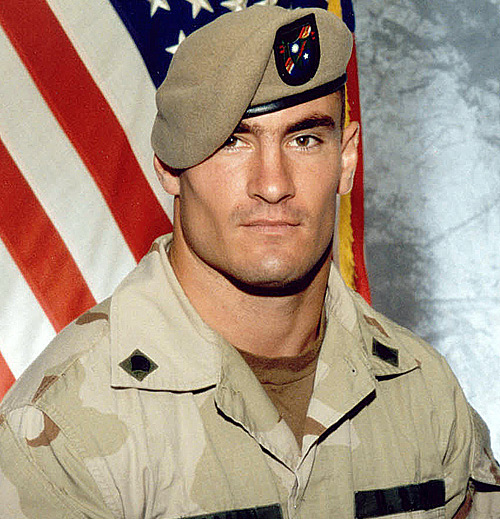
A recent op-ed in the Los Angeles Times demonstrates what is a warped interpretation of the term “patriotism.” The op-ed is about former football player Pat Tillman, who was killed in Afghanistan twenty years ago. It’s written by Bill Dwyre, a former sports editor for the Times.
Dwyre reminds us that Tillman was motivated to join the military after the 9/11 attacks. He gave up a $3.6 million football contract to join the U.S. military and was hoping to be sent to Afghanistan to fight the terrorists.
Dwyre writes, “It was a can’t-miss story of patriotism. Americans applauded from the safety and comfort of our homes and communities.” (Since he uses the pronoun “our,” presumably Dwyre fell into the “safety and comfort” group rather than the “patriot” group.)
Unfortunately, however, Dwyre doesn’t explain why Tillman’s act was one of “can’t miss” patriotism. Apparently for him it’s a self-evident truth.
No declaration of war
The U.S. Constitution is the supreme law of the land. It is the higher law that we the people impose on government officials. We are expected to obey their laws, and they punish us when we fail to do so. By the same token, they are supposed to obey our law, the Constitution.
The Constitution requires a congressional declaration of war as a prerequisite to a president’s waging war against any other nation-state. If a president and his army wage war without a congressional declaration of war, they are acting in violation of the law.
It is undisputed that President Bush did not secure a congressional declaration of war from Congress before he ordered his military to invade Afghanistan. That made their war illegal under our form of government.
How can participating in an illegal war be considered “patriotic”? Dwyre doesn’t explain that.
The U.S. was the aggressor under Nuremberg
Moreover, the common perception is that Bush invaded Afghanistan because the Taliban regime, which was governing the country, had been complicit in the 9/11 attacks by having knowingly harbored Osama bin Laden, who U.S. officials suspected had orchestrated the attacks.
Not so. Bush initiated his war because the Taliban regime refused to comply with his unconditional demand to deliver bin Laden into the hands of the Pentagon and the CIA. Yet, there was no extradition treaty between Afghanistan and the United States and, therefore, Afghanistan was operating within its rights under international law to refuse Bush’s unconditional extradition demand.
Nonetheless, knowing that the Pentagon and the CIA would torture bin Laden into confessing to the crime, Afghanistan offered to deliver him to an independent nation for a fair trial. In making the offer, Afghanistan sought the same amount of proof that would be required in a normal extradition hearing. The U.S. government refused the offer, perhaps because it was unable to provide such proof.
Therefore, given that Afghanistan had the authority under international law to refuse Bush’s extradition demand, that makes Bush’s invasion illegal under the war-of-aggression provision of the Nuremberg War Crimes Tribunal.
How can participation in an unconstitutional and illegal war be considered “patriotic”? Unfortunately, Dwyre fails to explain.
If one assumes that the 9/11 attackers were the ones who did the attacking (as compared to the attacks being an “inside job,” as some believe), it’s worth pointing out that they were motivated by the death and destruction that the U.S. government’s foreign policy had wreaked in the Middle East. But of course, a real “patriot” does not bring up that discomforting fact and instead blindly supports the government’s claim that the terrorists attacked us out of hatred for our “freedom and values.”
Tillman’s opposition to the Iraq War
One of the fascinating aspects of Dwyre’s op-ed glorifying Tillman’s patriotism is what he leaves out of the op-ed. Tillman was an outspoken opponent of Bush’s invasion and war of aggression against Iraq. Dwyre doesn’t even mention that, which is revealing.
Keep in mind, after all, that Bush’s war on Iraq was also waged without a congressional declaration of war, making it illegal under our form of government. Bush’s claim that he was waging to war to enforce UN resolutions falls flat because only the UN can enforce its resolutions. The fact is that the U.S. war on Iraq was an even clearer case of a war of aggression under the Nuremberg principles than the U.S. war on Afghanistan.
Despite Tillman’s fierce objections to the U.S. war on Iraq, the U.S. military nonetheless ordered him to “serve” in Iraq, which he did. Keep in mind though that every U.S. soldier takes an oath to support and defend the Constitution and is under a legal and moral obligation to refuse to obey unlawful orders. Tillman chose to obey the unlawful order to deploy to Iraq.
U.S. government lies
After his “service” in Iraq, Tillman was deployed to Afghanistan, where he continued to speak out against the U.S. war on Iraq. It was there that he was killed. As Dwyre points out, the U.S. military initially lied about his death, claiming falsely that he was killed by enemy fire. In fact, what actually happened is that he was killed by his own men in what was described as “friendly fire.”
In 2006, Tillman’s brother, Kevin Tillman, wrote a scathing op-ed on truthdig.com, in which he echoed his brother Pat’s view of the Iraq war: “Somehow American leadership, whose only credit is lying to its people and illegally invading a nation, has been allowed to steal the courage, virtue and honor of its soldiers on the ground.”
Why would’t Dwyre mention Pat Tillman’s (and his brother’s) fierce opposition to the U.S. war on Iraq in his op-ed? My hunch is that it’s because he considers opposition to U.S. wars to be unpatriotic and, therefore, Tillman’s apparent lack of “patriotism” with respect to Iraq doesn’t fit conveniently within his patriotism narrative. Under Dwyre’s warped interpretation of patriotism, apparently it’s only those who blindly support the U.S. national-security state’s foreign wars and its interventionist foreign policy who should be considered “patriots.” Apparently, those who reject such wars and choose instead to remain in the “safety and comfort” of their homes instead of fighting them should be considered non-patriots.
Abu Ghraib survivors to get their day in court
RT | April 12, 2024
Twenty years on from reports that the US military was torturing prisoners at Iraq’s Abu Ghraib prison, three survivors will finally get a chance to bring their claims before an American jury.
A trial in the civil lawsuit filed by former Abu Ghraib inmates against the US military contractor that they blame for their suffering is scheduled to begin on Monday in a federal court near Washington. The private security contractor, CACI International, has strung the case along for 16 years by making over 20 unsuccessful attempts to have the lawsuit dismissed.
CACI, which supplied the interrogators who worked at Abu Ghraib, has insisted that its employees weren’t accused of abusing detainees. The Virginia-based company also has argued that as a Pentagon contractor, it should be protected by the government’s sovereign immunity against the torture allegations.
However, the plaintiffs claimed that CACI set the conditions for their torture by directing or encouraging abuses by military guards, at least partly to “soften up” prisoners for interrogations. All three of the former detainees are Iraqi civilians who were held at Abu Ghraib until eventually being released without charges.
The trial will be “an exceedingly rare opportunity for accountability for the egregious harms suffered by Iraqis after the US invasion in 2003,” according to a statement earlier this month by the Center for Constitutional Rights, a US group that is representing the plaintiffs. “In fact, this is the first lawsuit where victims of US post-9/11 torture will get their day in court.”
The Abu Ghraib scandal first came to public attention in April 2004, when photos of abused prisoners and their smiling US guards were published. At the time, CBS News aired a report describing the abuse and showing American soldiers taunting naked prisoners. The abuses included stacking nude prisoners in pyramids or dragging them by leashes around their necks. Others were threatened by dogs or hooded and attached to electrical wires.
One of the plaintiffs, former Al-Jazeera reporter Salah Al-Ejaili, claimed he was forced to wear women’s underwear, terrorized by dogs, deprived of sleep, and put in stress positions that caused him to vomit black liquid. Another survivor, Suhail Al-Shimari, has claimed that he suffered beatings, electrical shocks, and sexual assaults.
CACI has argued that its employees weren’t in a position to give orders to military police and that the US government was responsible for setting the conditions at Abu Ghraib. The company has continued to receive lucrative US government contracts for the past two decades, and only low-level soldiers were criminally prosecuted for the abuses.
A Pentagon investigation found that acts of “brutality and purposeless sadism” occurred at the prison at the hands of military police and US intelligence agency personnel. Retired US Army General Antonio Taguba, who led the investigation, concluded that at least one CACI interrogator should be held accountable for directing military police to set the conditions that led to abuses. Taguba will reportedly testify at the Abu Ghraib trial.
Iraq’s Islamic Resistance strikes Israel’s air base in occupied Golan with drones
Press TV – March 18, 2024
The Islamic Resistance in Iraq says it has carried out another anti-Israeli operation, targeting the regime’s air base in the occupied Golan Heights with drones.
The Islamic Resistance in Iraq, which is an umbrella group of the country’s anti-terror movements, made the announcement in a statement on its Telegram channel early Monday without naming the Israeli air base.
“The fighters of the Islamic Resistance in Iraq, at dawn today, Monday, 3/18/2024, targeted with drones an air base for the Zionist occupation’s drones in the occupied Golan,” the statement said.
It added that operations against the occupying entity will continue and double during the holy month of Ramadan in order to destroy more enemy strongholds.
The Islamic Resistance in Iraq asserted that the new strike was part of the second phase of its operations against the Israeli regime and in support of the Palestinian people in Gaza, amid the regime’s ongoing genocide across the territory.
Israel’s military aggression against Gaza has so far killed at least 31,645 Palestinians and injured 73,676 others.
The regime has also imposed a complete siege on the territory, cutting off fuel, electricity, food, medicine and water to more than two million Palestinians living there.
The new operation came almost a week after the Iraqi resistance struck Israel’s main airport in support of Palestinians in the Gaza Strip.
“The fighters of the Islamic Resistance in Iraq … targeted Ben Gurion Airport deep within the usurping entity by drone,” it said in a statement.
Earlier this month, the Iraqi resistance announced it had targeted the Haifa Airport in the northern part of the occupied territories in another pro-Palestinian operation.
The group has also staged numerous attacks against bases housing American occupation forces in Iraq and neighboring Syria in protest at the United States’ unreserved political, military, and intelligence support for the Israeli genocide in Gaza.
‘Gates of hell will open’: Iraqi resistance issues ultimatum on ouster of US forces
By Wesam Bahrani | Press TV | March 17, 2024
After weeks of strategic silence, one of the biggest units within Iraq’s Popular Mobilization Forces (PMF) has made its position emphatically clear on key national security issues.
Kata’ib Hezbollah (KH) reminded the government, the largest bloc in parliament (the Coordination Framework) as well as officials in the committee tasked with overseeing the withdrawal of foreign forces that they “should not grant immunity to the occupying forces, or else the gates of hell will open.”
By “occupying forces”, the resistance group referred to the US military, which has more than 2,500 troops deployed in bases across Iraq and thousands of others stationed at the US embassy in Baghdad.
The remarks by Abu Ali Al-Askari, the head of the KH Security Bureau, were directed at Iraqi authorities and the warning was aimed at Washington – it’s high time to pack up and run.
That’s important to highlight, as some have rightly noted, that Americans are telling the government in Baghdad one thing and telling certain other Iraqi factions something else.
More than a month ago, the Iraqi resistance suspended attacks on US bases in Iraq and Syria, which were staged in solidarity with Gaza and to expel American forces for complicity in the Gaza genocide.
The decision to halt the attacks (despite deadly US airstrikes against PMU positions and commanders) was to allow breathing space for talks between Baghdad and Washington over the US military exit.
The government is believed to have assured the Iraqi resistance factions that if talks proceed uninterrupted, there is a better chance of US forces leaving without further foot-dragging. And that the process of negotiations would be faster than the operations on US bases.
Since then, as KH states, the US occupation forces “have not changed their movements and behavior on the ground and in the sky so far” and “even their statements indicate evasion to gain time and to keep their occupying forces in the country.”
There is a simple formula (which almost all Iraqis can agree on now) over whether the US military presence is an occupation, as large segments of Iraqi society say, or is “advising and training Iraqi forces to fight Daesh (ISIS)” as Washington claims.
When the US military returned to Iraq in 2014 on the pretext of fighting Daesh, it openly declared its position as a “combat mission”, which went unnoticed at the time since the wider focus was on defeating Daesh terrorism.
After the PMU defeated Daesh in 2017 and the Iraqi parliament voted for the withdrawal of all foreign “combat” forces in early 2020, the US transitioned its mission from a “combat” role to an “advisory” role in a bid to avoid being categorized as an “occupation”.
At least that’s what it said on paper in Washington.
In practice, violating Iraqi airspace, forbidding Iraqi forces to inspect US military bases, bombing PMF positions in Baghdad or the Syrian border, or killing top Iraqi commanders is far from an “advisory” role.
That is a purely “combat” role, which makes the US military presence in the Arab country an occupation. Many, however, argue that it’s been an occupation since 2017.
What’s happening now is that the PMF has realized that something isn’t quite right.
Sources say the US is in no position to defeat the PMF, which has become a formidable democratic force, without which there would be no Iraqi government today, but the US is pressuring certain parties within the country’s political system to replace PMF commanders.
Before even speaking about “opening the gates of hell”, Abu Ali al-Askari warned that “removing leaders or replacing others must be decided by the PMF internally, and acting otherwise and at this inappropriate time would be a significant mistake.”
This is why al-Askari addressed the government and the coordination framework who are pretty much allies of the PMF and which KH essentially notes as having good intentions for national security but is advising them to be very cautious of a fifth column.
Who could that be? The PMF warns that “controversial figures should not be brought in to lead the parliament, to avoid creating division within the legislative institution,” and that “the Iraqi parliament speaker should be chosen according to previous agreements and customary practices.”
The Kurds oversee parliament procedures, as they always have done. The parliament speaker has always been a Kurd, and the method of selecting the speaker has been the same since 2003.
Are Kurdish elements trying to influence parliament or switch tactics to change the PMF leadership? The same PMF leadership that is leading the calls for an end to the US occupation? Changes to KH and the PMF that were both in part set up by late anti-terror commander and PMU deputy chief Abu Mehdi al-Muhandis (assassinated by the US) by Kurdish factions?
With Reuters citing a senior Iraqi official on “condition of anonymity” as saying that talks to end the US occupation may not conclude until after the US presidential election in November, al-Askari connected the dots.
“Our brothers in the field of gathering information should start presenting documents and confessions confirming that Erbil is a conspiratorial espionage hub that works to harm Iraq’s security and is an advance base for the Zionist entity,” he stressed.
The northern Iraqi Kurdish city is increasingly and openly being used by some Iraqi Kurds as a meeting center for Mossad agents.
In particular now with the genocide in Gaza going on, the Israelis are more fearful of the Axis of Resistance and the damage it is capable of inflicting on the illegitimate entity in Tel Aviv.
The Islamic resistance in Iraq has shown no fear. It has entered phase two of its operations involving direct attacks against vital Israeli interests and enforcing a “blockade in the Mediterranean Sea on Israeli ships”.
At this rate, the PMF, with all its factions, may enter the fray against US bases in Iraq. What the PMF and its commanders sacrificed for the Iraqi people and the state is not something that Baghdad can ignore.
The successful battles to defeat Daesh terrorism in what was the biggest security challenge that faced the country in modern history require Iraqi leaders to show some respect to the PMU leadership.
Wesam Bahrani is an Iraqi journalist and commentator.
Featured Video

Chinese jet fuel and the myth of energy independence
or go to
Aletho News Archives – Video-Images
Book Review
Former Insiders Criticize Iran Policy as U.S. Hegemony
By GARETH PORTER | CounterPunch | February 27, 2013
“Going to Tehran” arguably represents the most important work on the subject of U.S.-Iran relations to be published thus far.
Flynt Leverett and Hillary Mann Leverett tackle not only U.S. policy toward Iran but the broader context of Middle East policy with a systematic analytical perspective informed by personal experience, as well as very extensive documentation.
More importantly, however, their exposé required a degree of courage that may be unparalleled in the writing of former U.S. national security officials about issues on which they worked. They have chosen not just to criticise U.S. policy toward Iran but to analyse that policy as a problem of U.S. hegemony. … continue
Blog Roll
 Aletho News
- NATO’s Slow Fracture: How Trump’s Iran War Exposed the Instrument of Hegemony
- Chinese jet fuel and the myth of energy independence
- Ukraine Sea Drone Fired From Libya Hit Russian Tanker in Mediterranean
- IRGC: Iranian forces launched no attacks during ceasefire hours
- Trump Administration Moves To Automate U.S. Military Draft Registration
- Spain orders reopening of Tehran embassy, condemns Israel’s carpet bombing of Lebanon
- Israel faces ‘unsustainable’ strategic crisis following 40-day war against Iran: Analyst
- Iran restricts Hormuz access to 15 vessels per day under ceasefire terms: Report
- The ‘Opposition Party’ Has Done Nothing to Stop the Iran War and Much to Goad Trump Into Continuing It
- Moscow backs Tehran on status of Lebanon in US-Iran deal
- If Americans Knew
- Amnesty: Urgent – Protect Lebanese civilians from brutal escalation in Israeli attacks
- Is The War Against Iran Over?
- Inside the Israeli army’s propaganda wing
- Hundreds of Gaza Amputees Stranded in Legal Limbo
- The gallows law: Israel moves toward executing Palestinian children
- Tucker Carlson: The Path to Peace requires ending ‘special alliance’ with Israel
- This is ceasefire? Israel’s biggest massacre yet in Lebanon, another journalist killed in Gaza – Daily Update
- Tucker Carlson on Israel: This Is the Behavior of an Ally? Really?
- Gazans face a triple crisis: severe shortages of water and bread, healthcare in tatters
- NY Times reports how Netanyahu took the US into Iran War
- No Tricks Zone
- An Inconvenient Tree: Uncovered In Alps… Europe Much Warmer Than Today 6000 Years Ago
- New Study Reports A 60% Slowdown In Greenland’s Ice Loss Rate In The Last Decade
- Low Intensity Tornado Wrecks Major Solar Farm, Creating A Potential Toxic Dump
- New Study Finds Warming Saves Lives…Cold Temperatures 12 Times More Deadly Than Excess Heat
- German Science Blog Accuses PIK Climate Institute Of Hallucinating Climate Tipping Points
- Devastating Assessment Of Comirnaty Vaccine By Former Senior Pfizer Europe Toxicologist
- New Study: CO2 Is ‘Effectively Negligible’ As An Explanatory Climate Change Factor Since 2000
- Former Pfizer Toxicologist Dr. Helmut Sterz Tells Bundestag Hearing Pfizer Vaccine Should Have Never Been Approved
- Energy Expert: Germany’s Nuclear Phaseout Was A “500 Billion Euro Mistake”
- New Research: South Australia’s Mid-Holocene Sea Surface Temperatures Were 4°C Warmer Than Today
 Aletho News