The Infamous Video of an Aircraft Exploding in Air at High Altitude and the “Big Chutzpah” Construct
By Doug E. Steil | Aletho News | November 7, 2015
Only a day after the Russian Metrojet airliner Flight 9268 went down, killing 224 people, a short video went onto the Internet on YouTube, purporting to show the explosion of the Airbus 321-200 aircraft in mid-air, at roughly 30 thousand feet elevation. This video was immediately ridiculed because the group claiming responsibility for bringing down the airliner, ISIS, which was said to have presented the video as proof, did not have the sophisticated military capacity, according to intelligence analysts, to shoot down any aircraft at such an altitude. Yet the video did not show a missile approaching the jet, nor did the group claim to have shot it down in such a manner. It simply showed an explosive burst, consistent with a bomb being detonated, and heavy black smoke trailing the aircraft as it subsequently descended.
Even though a civilian style aircraft, with two engines mounted below its wings, can be discerned, and no such video had previously been seen — nor were there reports of any civilian aircraft with such features having exploded in mid-air during daytime — the video was denounced as a fake (computer generated imagery) nonetheless, perhaps because the video quality was poor or not sufficiently specific, which was suspiciously indicative of an attempt to obfuscate any confirmatory information.
A dose of skepticism is certainly legitimate when being presented with such videos, which may be intended to convey false political propaganda. However, since no compelling proof of the imagery not possibly showing what was claimed has yet been presented, the authenticity cannot be completely discounted. Indeed, this question is currently a point of discussion on some technical forums. What appears to be the case is that the shaky nature of both embedded videos — a second version appears at 20 seconds in the 32 second video — both came from two mobile phone camera recordings that were taken of a screen playback of the explosion. It has also been suggested that the imagery was actually shot from another aircraft following the fateful jet from farther below. Though this was likely the case, it would not necessarily invalidate the claimed authenticity of this particular jet being shown.
It should be noted that a professional quality video recording, filmed through a heavy zoom lens mounted upon a camera on a stationary tripod, would provide investigators with sufficient information to calculate a small circle on the ground from where the shots were most probably taken, which would likely not be in the interest of the perpetrators or co-conspirators. If, for the sake of argument, one presumes the authenticity of what was being filmed, then the most interesting and compelling proof of a desire to obfuscate and mislead comes from the obvious image reversal, which is particularly evident during the first second. The sky to the left of the screen is bright whereas, in stark contrast, it is dark on the right side, though exactly the opposite should be the case because the jet was then flying northward at a track of 340° in the morning, shortly after sunrise.
The ground track in the eastern portion of the Sinai peninsula during the final minutes of flight was exactly parallel to and 40 km away from the border between Israel and Egypt. The mid-air explosion occurred west of the highest mountain in the Negev Desert (Har Raman, 1035 meters), not hard to make out on a topographic map of the area. The impulse of the explosion and its aerodynamic effects then changed the heading of the aircraft by more then 15°. When viewing the video through a mirror to correct the image reversal, one sees that the vantage point of the camera is behind, below, and to the right (east) of the aircraft’s flight path. When one accepts the notion that the incident was filmed from another aircraft, pursuing the Airbus in roughly the same direction, then one must logically conclude that the video was taken from within — or just slightly outside of — Israeli airspace, likely by a surveillance drone, operating in the southern region, north of Eilat. One would expect Israeli surveillance drones to operate here on a regular basis because this region, at the northernmost part in the Gulf of Aqaba, is strategically important; the borders of Saudi Arabia, Jordan, Israel, and Egypt nearly converge here.
While the notion of a military drone operating near this particular region on a Saturday morning may not be unusual, what certainly should raise some questions is that the Russian Metrojet aircraft — assuming, as before, that the video is not a fake but authentic — would have been pursued and filmed (surveillance operations would be more interested in what happens on the ground rather than pursuing a civilian airliner emitting its tracking data by beacon and not posing a potential threat). Even more worthy of question or inquiry is that these modified (second-hand) video versions of the on-board explosion and descent of the aircraft would be loaded onto the Internet the next day, allegedly by the ISIS terrorist group, which has been publicly exposed to be in an alliance with Israel, the United States, and Saudi Arabia in the Syrian battleground.
While the concept of the “Big Lie” is based on the idea that (nearly) everyone will believe a major fabrication that is completely untrue because these heavily conditioned people couldn’t possibly imagine that their government would dare lie to them so blatantly about something so important, viewers of the video may have been subjected to the opposite phenomenon, namely “Big Chutzpah”, the raw truth presented right in your face in such a brazen way that (nearly) everyone will still refuse to believe it because these people cannot possibly imagine that the Israeli government would dare to actually do something like that.
Is Israel Bombing Syrian Military to Benefit ISIS Near Lebanon?
By Daniel McAdams | Ron Paul Institute | November 2, 2015
The neoconservative Washington Free Beacon is reporting that the Israeli air force has attacked a Syrian government-controlled missile base near Syria’s border with Lebanon. The Beacon cites a pro-rebel website that claims:
Israeli planes breached Lebanese and Syrian airspace and bombed the Syrian regime’s 155th Brigade [base] in the Qutayfa area, destroying a number of missile warehouses.
If the report is accurate it would suggest that Israel is attacking military facilities of the Syrian government to the benefit of ISIS and the al-Qaeda franchise in Syria, at least according to the latest battle map released by the Institute for the Study of War (when coordinated with a Google map search for Qutayfah, Syria).
Israel has routinely violated Syrian airspace to bomb Syrian territory and uses any stray rocket fire into Israel-occupied Golan Heights as a pretext to hit Syrian government positions inside the country.
Recently Israel has been forced to back down from its routine flights over Syrian airspace by the arrival of Russian fighters, and after at least one Israeli close call with sophisticated Russian fighter jets a hotline was reportedly set up for the two countries to avoid any clashes in the area.
Though these reports of Israel hitting Syrian government assets to the benefit of ISIS in the area should be taken with a grain of salt, if true this would mark yet another very volatile variable in an already very complicated and dangerous part of the world. If the Russians are busy bombing ISIS and al-Nusra positions in the area north of Damascus toward Aleppo, how will Moscow take to Tel Aviv making it difficult for Syrian ground forces to take advantage on the ground of their operations in the air?
West Secretly Elated Over Downed Russian Airliner
By Ulson Gunnar – New Eastern Outlook – 05.11.2015
A Russian airliner bound for St. Petersburg crashed while flying over Egypt’s Sinai Peninsula, killing all on board. With the peninsula seeing fierce fighting recently as the presence of foreign-backed terrorist organizations has grown, immediate suspicion was raised regarding a potential terror attack involving either a bomb brought on board or a missile fired from below.
As Russia carries out its investigation of the disaster, the rest of the objective world waits for answers. For others, they have already begun drawing up narratives to use the disaster to serve their purposes. One such individual is John Bradley, a frequent contributor for The Economist, The Forward, Newsweek, The New Republic, The Daily Telegraph, Prospect, and The Independent.
He has also lectured at the Washington-based policy think-tank, the Washington Institute for Near East Policy, and for over 2 years, was given almost unlimited access across Saudi Arabia while writing his establishment-lauded book, “Saudi Arabia Exposed: Inside a Kingdom in Crisis.”
His most recent work is an unsavory op-ed for the UK Spectator titled, “The Russian plane crash could undermine Putin’s Syria strategy.” In it, Bradley conveniently answers the most important question that will be asked if investigators determine the plane’s destruction was an act of terrorism, “cui bono?”
Bradley describes not only how the disaster helps further undermine Egypt, (a nation struggling to balance between placating Western interests and averting a “Libya-style” collapse within its own borders) but also how the incident would undermine Russia’s efforts in Syria.
Bradley states:
It now seems fairly likely that an explosion brought down the Russian passenger airline over Egypt’s Sinai Peninsula over the weekend. One Metrojet official has already suggested that the ‘only explainable cause is physical impact on the aircraft’ and they have ruled out technical failure or human error. If the ongoing investigation proves that to be the case, it will obviously have an immediate and catastrophic impact on Egypt’s already decimated tourism industry.
Regarding Russia in particular, he states:
But it would also be the most unwelcome news possible for Vladimir Putin, who sold military intervention in Syria to the Russian people as a way of making them safer. In turn, opponents of Russian intervention – the US, Turkey and the Gulf Arab despots – would be privately elated. For does this not prove their argument that Russian intervention only complicates the situation on the ground while increasing the threat of terror attacks?
But should the downed airliner turn out to be the victim of terrorism, not only would “the US, Turkey and the Gulf Arab despots” be “privately elated,” it also appears that ISIS would have provided them a much needed card to play during future negotiations regarding the conflict in Syria. After noting that ISIS took credit for the downed airliner as it was closing in on a motorway used to resupply Syrian forces operating in Aleppo, Bradley explains:
All [at the negotiations], of course, realise that it is only worth negotiating from a position of strength. The anti-Assad allies will be hoping that Putin now fears a new Afghanistan, and will therefore be more flexible on the question of Assad’s departure. They will also be determined to ramp up support for the so-called ‘moderate rebels’, especially given that Washington has recently sent in Special Forces to ‘advise’ them (or, in other words, act as human shields against Russian bombs).
Bradley sums up his op-ed by almost celebrating the fact that those who assumed Russia’s entry into the Syrian conflict would spell its quick conclusion were “sadly mistaken.”
Should it turn out that terrorists brought down the Russian airliner, it certainly would fulfill Bradley’s summary regarding “cui bono?” Bradley himself admits that US special forces are simply serving as “human shields” for Western backed militants against Russian strikes. These same militants have in recent days, been coordinating with ISIS openly in the advances mentioned by Bradley along the Syrian motorway. It is clear that ISIS is not a third team competing in this regional conflict, but rather a member of the very team that has been reaping the most benefits from its existence, “the US, Turkey and the Gulf Arab despots.”
Hobby Lobby Owners Suspected of Illegally Importing Looted Iraqi Artifacts
By Cassius Methyl – ANTIMEDIA – October 29, 2015
Hobby Lobby is a self-proclaimed “deeply Christian” chain of craft stores run by the wealthy Green family that made headlines in 2014 when a landmark Supreme Court ruling in their favor extended religious freedom rights to corporations.
A strange situation with the infamous craft chain store hit the headlines Wednesday as it was revealed the Green family is being investigated for importing hundreds of ancient artifacts from Israel that rightfully belong to Iraq.
According to the Daily Beast, “For the last four years, law enforcement sources tell The Daily Beast, the Greens have been under federal investigation for the illicit importation of cultural heritage from Iraq.”
In 2011, 200-300 thousand-year-old cuneiform clay tablets on their way to an Oklahoma City Hobby Lobby compound from Israel were seized by U.S. customs in Memphis. The tablets were destined to join the wealthy family’s private collection of 40,000 priceless, ancient artifacts already amassed in their $800 million Museum of the Bible — a “giant” museum set to open in Washington D.C. in 2017.
It’s unclear how the artifacts were suspected to have been looted, but they likely came from ISIS pillagers or Iraqi smugglers taking advantage of the current instability in the region.
Although inarguably disrespectful, the Greens’ attempt to smuggle artifacts might not be as offensive as the objects’ questionable future: it’s not clear to whom they should be returned — or if they will be returned at all.
White Helmets: War by way of Deception Part II ~ “If it looks like an executioner…”

By Vanessa Beeley | thewallwillfall | October 27, 2015
“If there is any doubt concerning the nefarious undertones of subversiveness in these NGO dealings, [National Endowment for Democracy] NED founder reportedly said the following in the 1990s: ‘A lot of what we do today was done covertly 25 years ago by the CIA.’ What was once done at night under the cloak of ‘imperialism’ is now done during the day under the guise of ‘humanitarianism.” ~ The Wrong Kind of Green
Hindsight is a generous provider of absolution from the guilt of falling for the Government or State propaganda and media sleights of hand that deceive us into believing the narrative presented to us, designed, in many cases to justify military intervention. Invariably this is a narrative that ensures the massacre of innocent people under the pretext of liberating them or introducing Democracy that promises to erase their perceived grievances by cutting a swathe through their society & culture either via proxy armies of mercenaries under the guise of various terrorist factions or with an onslaught of bombs and assorted mass destruction or chemical weapons that render their land barren for decades and result in birth defects, increased cancer rates and a multitude of devastating side effects for generations after.
Despite such hindsight and the universally accepted knowledge that it was pure fiction that took us to war in both Iraq and Libya there is still a huge degree of cognitive dissonance at play over the Syria commentary.

Disbelief is invariably registered when it is demonstrated that Syria is undergoing the same truth laundering process as Libya and Iraq or that Syria’s resistance of regime change attempts for almost 5 years is the reason for spikes in propaganda or focus on a particular narrative at any given moment, when Syria persistently thwarts the Colonialist vision for the region.
The NGO soft power complex is now one of the most destructive global forces. It is employed as an interface between civilians of a target nation and the Government, economic or military structures of the colonialist force intent on harnessing any given nation’s resources or undermining its geopolitical influence. The Democratization process or the path to regime change is facilitated by these undercover Government proxy employees who, once embedded into a society, set about producing the propaganda that will justify intervention, either economically, politically or militarily.
They know that the general public has an inherent faith in their perceived integrity and this gives them tremendous sway over public opinion. The perception of a “non profit” complex working for the betterment and improvement of Humanity is a hard nut to crack… but it must be done.
Along with military invasions and missionaries, NGOs help crack countries open like ripe nuts, paving the way for intensifying waves of exploitation and extraction” ~ Stephanie McMillan
SYRIA
As Paul Larudee states in his article, Mythology, Barrel Bombs and Human Rights Watch:
“The Syrian army relies on loyal soldiers defending their country and their homes from a heavily subsidized, markedly foreign incursion, including many mercenaries paid by the Gulf monarchies and trained by the US. And the army is loyal because they know that although great sacrifices will be asked of them, they will be defending, not sacrificing, their families and loved ones. The rest of the world that supposedly cares about Syria can start by making it unnecessary for them to make such sacrifices.”
Much of the propaganda surrounding Syria and the “conflict” is indeed, mythology. A mythology created and disseminated by the NGO complex working diligently on the ground in Syria and remotely in the labyrinths of power to ensure a steady flow of misinformation designed to alter our perception and drive us towards making the same mistakes in Syria that we made in Iraq and Libya.
It is no error or oversight that the media barely mention Libya these days as it is plunged deeper and deeper into the terror vacuum created by the NATO intervention of 2011. Perhaps if people were confronted by images of the daily horrors endured by the people of Libya they would be more reticent about passive-aggressively re-creating the same scenario in Syria.
The White Helmet Myth
The NGO hydra has no more powerful or influential serpentine head in Syria than the Syria Civil Defence aka White Helmets who, according to their leader and creator, James Le Mesurier, hold greater sway than even ISIS or Al Nusra over the Syrian communities. In a speech given by Le Mesurier in Lisbon June 2015, entitled “ Act 1: Witnesses to history in the making”, Le Mesurier informed his rapt audience that in a recent US Government survey conducted across a “diverse spectrum” of Syrian communities, 67% of those asked, nominated the White Helmets as the most influential community organisation.
This, despite, their non-inclusion in the 15 respondents to the survey, that comprised ISIS, Al Nusra, & other political or armed groups. This is a bizarre claim on two fronts. 1. That the White Helmets should be included, by James Le Mesurier, in group that is obviously politically biased and armed when they promote themselves to be “unarmed”, apolitical and neutral. 2. That the White Helmets can lay claim to this influence, despite the fact that when asked, the majority of Syrian people have never heard of them, except perhaps for those in Al Nusra, ISIS or [the dwindling] Free Syrian Army held territory.
It is important to analyse the White Helmet mythology, all generated by an incredibly slick and high gloss media and marketing apparatus, overseen and driven by Soros partnered PR company Purpose.
Direct quote from the White Helmet website:
“The volunteers save people on all sides of the conflict – pledging commitment to the principles of “Humanity, Solidarity, Impartiality” as outlined by the International Civil Defence Organisation. This pledge guides every response, every action, every life saved – so that in a time of destruction, all Syrians have the hope of a lifeline”
And:
“The White Helmets mostly deal with the aftermath of government air attacks. Yet they have risked sniper fire to rescue the bodies of government soldiers to give them a proper burial”
In fact, the White Helmet members who are repetitively described as “ordinary” people ~ “bakers, tailors, engineers, pharmacists, painters, carpenters, students” are also relentlessly depicted as heroes, miracle workers, saints and super-humans scaling the “mount Everest” of war zones with impartiality and neutrality. “Unarmed and unbiased” they sacrifice themselves for the “Syrian People”. Those same Syrian people who have never heard of them.
“When I want to save someone’s life I don’t care if he’s an enemy or a friend. What concerns me is the soul that might die” ~ Abed, the White Helmets.
“After the bombs rain down, we rush in to dig for survivors. Our motto, “to save one life is to save all humanity,” is what drives us on.” ~ Raed Saleh, White Helmet leader and UN spokesperson.
The Myth exposed
Neutrality
In previous articles we have exposed the White Helmet associations with Al Nusra and their presence in known ISIS strongholds in Syria. We have also explored, in depth, their donor base and demonstrated how impartiality is a hard claim to justify when taking into account that their finance sources consist of hard-line regime changers, hell-bent on removing the Syrian Government and portraying President Bashar al Assad as the devil incarnate. These donors include, the British Government, known US regime change facilitators USAID, and the Syrian National Council a known Syrian opposition entity.
 This is discussed in depth in: White Helmets: War by way of Deception Part I
Time now to observe the White Helmets in action and question their impartiality on the ground in Syria.
This video reveals a White Helmet operative describing the “throwing of Shabiha bodies in the trash.”
Shabiha is a derogatory term for Syrian Government militia or security forces but is liberally applied by terrorist aka “rebel” factions to any member of the Syrian military, irrespective of if they are Alawite, Sunni, or Shia.
I remind you: the White Helmets “have risked sniper fire to rescue SAA bodies to give them a proper burial.”
This same neutral White Helmet operative goes on to pledge allegiance to the terrorist forces in the region.
“They are our role models, the best of people and we have the honour to serve them”
“SERVE THEM [armed terrorists, Al Nusra/Al Qaeda]” ~ curious turn of phrase for a neutral, impartial humanitarian organisation?
He also congratulates the Mujahadeen for liberating Jisr al Shugour from Assad’s forces.
“Glad tidings have reached us in Jisr al Shugour by the hands of our Mujahadeen brothers. May Allah strengthen them and make them steadfast on the correct way and soon, insh’Allah, the strongholds of the Assad regime in Latakia and Damascus will be liberated.”

Moving on, another video, this time revealing White Helmet operatives standing on the discarded bodies of SAA [Syrian Arab Army] soldiers and giving the victory sign. This display of support for the Al Nusra terrorists who have just massacred these soldiers once again demonstrates where their true allegiances lie.
We also know via reports from within Aleppo city that it was the Al Nusra terrorists who massacred hundreds if not thousands of civilians before dumping their bodies into the River Queiq: The Truth from inside Syria’s Terrorist Underworld rendering the water supply to Aleppo’s civilian population toxic and undrinkable.
Were these SAA bodies, piled unceremoniously one on top of the other and trampled upon by these White Helmet “saints and neutral saviours”, added to others flung before them, into the disease infested waters of the River Queiq?
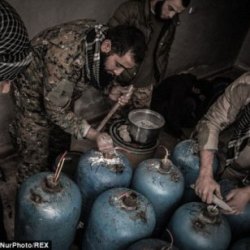 Where is the neutrality in the White Helmet reporting of the conflict in the areas where they are embedded? We hear incessantly of the “regime barrel bombs”, but we never hear one mention of the flesh tearing hell cannon fired indiscriminately upon Aleppo civilians, the hail of mortars and rockets being rained down upon Damascus civilian areas from suburban terrorist cells. We are never told about the car bombs that have devastated civilian areas in Homs and Lattakia, including schools and hospitals.
When do we hear about the tunnels dug under civilian homes and streets by the terrorists that are detonated as a distraction to lead the SAA into sniper fire or ambush.
Do these neutral humanitarians talk about the terrorist snipers who kill and maim civilians on a regular basis?
Do they even discuss the atrocities committed against the legitimate Syrian army?
For example: Al Houta Abyss, Raqqa: Terrorist dumping ground for the dead & the living.
A genuinely neutral report or analysis should surely take all of these factors into account, or are these “other” Syrian civilians not to be registered as such in the western electorate minds and hearts? If not, why not?
“The UN estimates 220,000 deaths thus far in the Syrian war. But almost half are Syrian army soldiers or allied local militia fighters, and two thirds are combatants if we count opposition fighters. Either way, the ratio of civilian to military casualties is roughly 1:2, given that the opposition is also inflicting civilian casualties. Compare that to the roughly 3:1 ratio in the US war in Iraq and 4:1 in the Israeli attack on Gaza in 2008-9. (The rate of Palestinian to Israeli casualties was an astronomical 100:1.)” ~ Paul Larudee. Mythology, Barrel Bombs and Human Rights Watch.
“In April and June 2014, I spent a cumulative month in Syria, in various areas of Damascus, with visits to Latakia, Homs, and Ma’aloula. At the time, Damascus was being intensely shelled by mortars, frequently in my vicinity, including just behind the hotel housing the Peace Delegation which I accompanied for the first week (photo). This attack killed three civilians and one Syrian soldier. We saw some of the 60 plus children injured in the April 15 shelling of a school, not an isolated occasion, an attack which also killed one child. Mortars rained down at close-proximity on many occasions in different areas of the Old City where I had then found lodging.” ~ Eva Bartlett
This is a statement from an Aleppo citizen. Another Syrian civilian who has never heard of the White Helmets.
“The terrorists are using mortars, explosive bullets, cooking-gas cylinders bombs and water-warming long cylinders bombs, filled up with explosives and shrapnel and nails, in what they call “Hell Canon”. Google these weapons or see their YouTube clips. The cooking-gas cylinder is made of steel, and it weighs around 25 kg. Imagine it thrown by a canon to hit civilians? And imagine knowing that it’s full with explosives?… Yet, the media is busy with the legendary weapon of “barrel bombs”! They came to spread “freedom” among Syrians! How dare they say that Syrian army shouldn’t fight them back?” ~ from Syria, welcome to Hell.

How can the White Helmets make a claim of neutrality while providing simplistic, largely unverified, biased and prejudicial reports that reflect only a percentage of the reality of this complex conflict and blatantly further the objectives of their donors in the region while ignoring the sacrifice being made by the Syrian Arab Army to defend their families and homeland from the invading NATO death squads.
“The Syrian Army is the Syrian people.” ~ Mother Agnes Mariam
From our same civilian contact in Aleppo:
“Aleppo city has shrunk to a fifth of its original size, and became so crowded with refugees that fled their areas after they fell into terrorist hands. I walk everyday in the city. I see children, young girls without limbs because of a terrorist mortar or shrapnel that targets them randomly and causes terrible wounds and horrific memories that will never leave them. The girl who lost one leg is standing on her good leg and selling bread, while the little boy who lost one arm is selling chewing gum. Those are the “injured” people who are mentioned fleetingly in the news, just numbers in one line of a report, after each attack from the terrorists. “Injured” doesn’t mean scratched or having a bleeding finger; it means someone lost his eyes or her limbs.”
Finally, this photo was taken shortly after Russia had legally entered the conflict in Syria at the request of the Syrian Government. Does it not seem a strange message to be conveyed by a neutral, unbiased humanitarian organisation with a self- proclaimed mandate to protect ALL Syrian people? The White Helmets will not kneel? They are neutral are they not, to whom would they kneel or not kneel if indeed they serve all Syrians regardless of “race, religion, gender or political affiliation”

White Helmets: Execution facilitators
There is an entire library of White Helmet propaganda images that have been proven to be recycled, fake or at best, inaccurate but perhaps the most shocking and most widely publicised was the footage of their suspected participation in an Al Nusra execution of a civilian in Hreitan, Northern Aleppo.
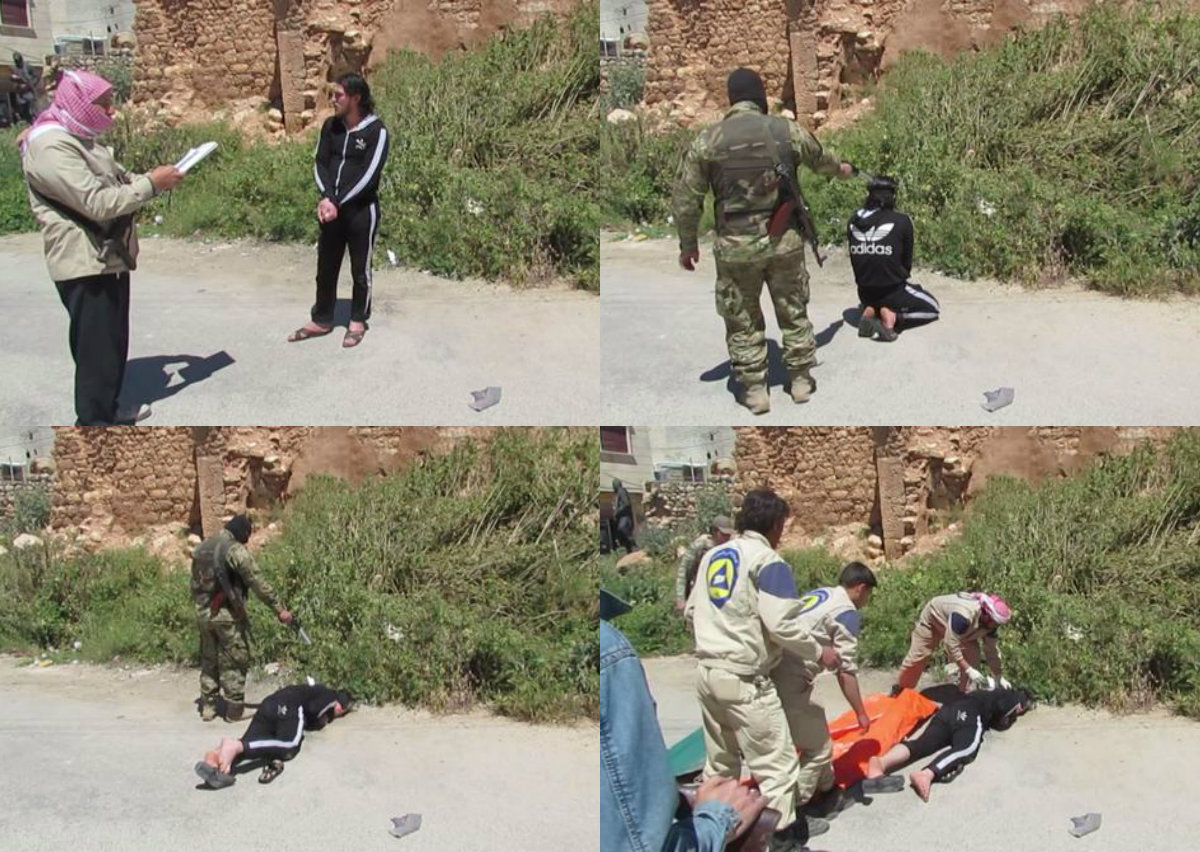
This video was wiped from most channels by the White Helmets immediately after its release, however Liveleak managed to keep a protected copy which has escaped censorship.
WARNING: GRAPHIC CONTENT
http://www.liveleak.com/view?i=fd8_1430900709
Sequence of events on the day, 5th May 2015. Al Nusra called the White Helmets 25 minutes prior to the execution. White Helmets arrived on the scene at 11.35 am, 5 minutes BEFORE the execution was carried out at 11.40. These impartial humanitarian workers did NOTHING to prevent this execution, they appear a full 5 minutes prior to this murder at the behest of the executioners and they are ushered into shot immediately after the victim is shot twice at close range in the head, to collect the body. These are the neutral humanitarians at work saving every Syrian civilian “irrespective of race, religion, gender or political affiliation.”
This is taken from the White Helmet official statement AFTER their execution facilitation had gone viral on social media.
“We unequivocally condemn the killing of civilians no matter who the perpetrator.”
So where is their condemnation of this and countless other executions of civilians by Al Nusra in their reports to the UN?
“The discussion over the video from Hreitan has highlighted the absence of a published code of conduct to which civil defence volunteers can be held accountable. The leaders of Syria Civil Defence commit to the development and publication of a code of conduct for members and its public posting on the www.SyriaCivilDefence.Org website in English and Arabic within one month.”
We are now coming up to November and there has still been no amendment to their “Execution code”. These Humanitarians upon whose testimony, hangs the entire Western intervention policy in Syria, have not been officially investigated or even questioned over their suspected role in the “clean up” of a summary execution of a Syrian civilian by terrorist groups in Syria.
Armed or Unarmed?
“Unpaid Unarmed Lifesavers in Syria.” ~ New York Times headline Feb 2015.
“The White Helmets are unpaid and unarmed, and they risk their lives to save others…….. Wearing simple white construction helmets as feeble protection from those “double-tap” bombings, the White Helmets are strictly humanitarian. They even have rescued some of the officers of the regime of President Bashar al-Assad who are bombing them.”
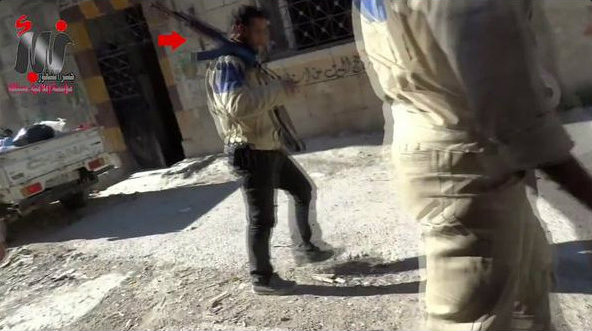
Video clearly showing armed White Helmets on the streets of Aleppo:
Meet another confused impartial, unarmed White Helmet, Muawiya Hassan Agha based in Sarmine, Idlib [scene of the recent alleged Russian Air Force bombing of a civilian hospital].

It appears that Agha plays a dual role in Syria’s conflict, White Helmet by day and Al Nusra armed terrorist by night, posing on board an Al Nusra tank, gun in hand. Here is a very clear case of the lines between unarmed humanitarian and armed mercenary being more than a little blurred. In one photo Agha is seen clearly celebrating with Al Nusra wearing his White Helmet tabard. In the stills taken from the alleged Russian hospital bombing in Sarmine, Idlib, he is spotted emerging from the “bombed” building. His association with Al Nusra and his brazen show of armed affiliation leaves no doubt as to his role in this conflict and it is far removed from that of an impartial, unarmed Humanitarian.
In fact, the immortal words of Russian Foreign Minsiter, Sergei Lavrov, spring to mind:
“If it looks like a terrorist, if it acts like a terrorist, if it walks like a terrorist, if it fights like a terrorist, it’s a terrorist, right?”

A very cursory scroll down Agha’s Facebook page also reveals very recent photos of SAA corpses accompanied by a number of celebratory comments.
I have only touched on a tiny percentage of the available archives of White Helmets deception and prejudiced propaganda campaigns, but the examples I have presented should begin to confront the highly effective Purpose built marketing campaign that has portrayed these paid mercenaries, impostors and agents for regime change as benign, unprejudiced saviours of beleaguered civilians in areas known to be terrorist strongholds and often, virtually devoid of civilian populations. As Mother Agnes Mariam stated unequivocally, in her recent interview, 90% of IDPs [internally displaced persons] in Syria have taken refuge in Government held areas.
The success of the White Helmet and NGO complex propaganda is dependent upon the skewing of our moral compass by the media and government institutions that are experts at “nudging” public opinion. If we really want to support Syria in this battle against such a complex array of interventionist forces, we must locate that compass and allow it to point us squarely towards the truth, however hard that truth is to assimilate and however remote it is from the mainstream narrative. In fact I would go as far as to say, the further away you get from the mainstream, the closer you get to the truth.
One final example of White Helmet propaganda at work:
“White Helmets claim to have rescued an SAA soldier who had in reality been captured by Al Nusra terrorists 10 days previously. In the Al Nusra version, this soldier is described as a “Shia pig” and was most probably summarily executed as an apostate according to Wahabi doctrine. Hard to imagine how the White Helmets then rescued him, unless of course they dug up his body for publicity purposes.”

END OF PART II
In Part III we will analyse the recent speeches given by the White Helmet leaders, James Le Mesurier, Raed Saleh and Farouq al Habib, in particular, who has been doing the rounds of Western media trying to regain lost propaganda ground, including guest speaker spot at the prestigious Frontline club last week.
Recep Tayyip Erdoğan: Terrorist Unleashed
By James Petras | October 20, 2015
The October 12, 2015 terror bombing in Ankara, resulting in the death of 127 trade unionists, peace activists, Kurdish advocates and progressives, has been attributed either to the Recep Tayyip Erdoğan regime or to ISIS terrorists.
The Erdoğan regime’s ‘hypothesis’ is that ISIS or the Kurdish Workers Party (PKK) was responsible for the terrorist attack, a position echoed by all of the NATO governments and dutifully repeated by all of the Western mass media. Their most recent claim is that a Turkish member of ISIS carried out the massacre – in a ‘copy-cat action’ after his brother, blamed by the Turkish government for an earlier bombing which left 33 young pro-Kurdish activists dead in July in Suruc, on the Syrian border.
The alternative hypothesis, voiced by the majority of the Turkish opposition, is that the Erdoğan regime was directly or indirectly involved in organizing the terrorist attack or allowing it to happen.
In testing each hypothesis it is necessary to examine which of the two best accounts for the facts leading up to the killing and who benefits from the mayhem.
Our approach is to examine those behind various acts of violence preceding, accompanying and following the massacre in Ankara. We will examine the politics of both the victims and the Erdoğan regime, and their conception of political governance, especially in light of the forthcoming November 2015 national elections.
Antecedents to the Ankara Terror Bombing
Over the past several years the Erdoğan regime has been engaged in a violent crackdown of civil society activity. In 2013, massive police action broke-up a major social protest in the center of Istanbul, killing 8 demonstrators and injuring 8,500 environmental and civil society activists defending Taksim Gezi Park from government-linked ‘developers’. In May 2014, over 300 Turkish coal miners in Soma were killed in an underground explosion in a mine owned by an Erdoğan supporter. Subsequent demonstrations were brutally suppressed by the state. The formerly state-owned mine had been privatized by Erdoğan in 2005 – many questioned the legality of the sale to regime cronies.
Prior to and after these violent police actions against civilian demonstrators, thousands of officials and public figures were arrested, fired, and investigated by the Erdoğan regime for allegedly being supporters of a legal Islamic social organization – the so-called Gülen movement.
Hundreds of journalists, human rights activists, publishers and other media workers were arrested, fired, and blacklisted at the behest of the Erdoğan regime, for criticizing high level corruption in the Erdoğan cabinet.
The Erdoğan regime escalated its domestic repression of the secular opposition in order to concentrate power in the hands of an Islamist cult-ruler. This was particularly the case after the government deepened its support of thousands of foreign jihadi extremists and mercenaries streaming into Turkey on their way to the Syrian jihad.
From the beginning of the armed uprising in Syria, Turkey became the main training ground, arms depot and entry-point for armed Islamist terrorists (AIT) entering Syria. The Erdoğan regime directed the AIT to attack, dispossess and destroy the Syrian and Iraqi Kurds whose fighters had liberated a significant section of northern Syria and Iraq and served as an ‘example of self-government’ for Turkish Kurds.
The Erdoğan regime has joined the brutal Saudi monarchy in financing and arming AIT groups and especially training them in urban terror warfare against the secular government in Damascus and the Shiite regime in Baghdad. They specialized in bombing populated sites occupied by Erdogan’s enemies or the Saudi targets especially secular Kurds, leftists, trade unionists and Shiites allied with Iran.
The Erdogan regime’s intervention in Syria was motivated by its desire to expand Turkish influence (neo-Ottomanism) and to destroy the successful Kurdish autonomous government and movement in Northern Syria and Iraq.
To those ends, Erdoğan combined four policies:
(1) He vastly expanded Turkish support for and recruitment of Islamic terrorists from around the world, including Libya and Chechnya.
(2) He facilitated their entry into Syria, and encouraged them to attack villages and towns in the ethnic Kurdish regions.
(3) He broke off peace negotiations with the PKK and re-launched a full-scale war against the militant Kurds.
(4) He organized a covert terrorist campaign against the legal, secular, pro-Kurdish electoral party, the People’s Democratic Party (HDP).
The Erdoğan regime sought to consolidate dictatorial powers to pursue and deepen its ‘Islamization’ of Turkish society and to project his version of Turkish hegemony over Syria and the Kurdish regions inside and outside Turkey. To accomplish these ambitious and far reaching goals, Erdoğan needed to purge his Administration of any rival power centers.
He started with the jailing and expulsion of secular, nationalist Kemalist military figures. He continued with a purge of his former supporters in the Gülen organization.
Failing to gain a majority in national elections because of the growth of the HDP, he proceeded with a systematic terror campaign: organizing street mobs made up of his followers in the ‘Justice and Development Party’, who burned and wrecked HDP offices and beat up activists. Erdoğan’s terror campaign culminated with the July 2015 bombing of a leftist youth meeting in Suruc whose activists were aiding Syrian Kurdish refugees and the beleaguered fighters resisting Islamist terrorists in Korbani, a large Syrian town across the border controlled by the Erdoğan-backed ISIS. Over 33 activists were murdered and 104 were wounded. Two Turkish covert intelligence officers or ‘policemen’, who knew in advance of the bombing, were captured, interrogated and executed by the PKK. This retaliation for what was widely believed to be a state-sponsored massacre provided Erdoğan with a pretext to re-launch his war on the Kurds. Erdoğan immediately declared war on both the armed and unarmed Kurdish movements.
The Erdoğan regime trotted out the claim that the Suruç terrorist attack was committed by ISIS suicide bombers, ignoring the regime’s ties to ISIS. He announced a large-scale investigation. In fact it was a perfunctory round up and release of suspects of no consequence.
If ISIS was involved in this and the Ankara massacres, it did so at the command and direction of Turkish Intelligence under orders of President Erdoğan.
The Suruç Massacre: A Dress Rehearsal for Ankara
Suruç was a ‘dress rehearsal’ for Erdoğan’s terrorist attack in Ankara, three months later.
Once again the main target was the Kurdish opposition electoral party (the HDP) as well as the major progressive trade unions, professional associations, and anti-war activists.
Once again Erdoğan blamed ISIS, without acknowledging his ties to ISIS. Certain facts point to Turkish state complicity:
1) Why were the bombs placed in the midst of the unarmed demonstrators and not next to the police and intelligence headquarters within a block of the carnage?
2) Why did Erdoğan’s police attack and prevent emergency medical assistance to the demonstrators in the immediate aftermath of the bombing?
3) Why did he block popular leaders, independent investigators and representatives from targeted groups from examining the bombing site?
4) Why did Erdoğan immediately reject a cease-fire offer from the PKK and launch a vast military operation while promoting rabidly chauvinistic street demonstrators against Kurds engaged in legal political campaigning?
5) Why did the police attack mourners at the subsequent funerals?
Who Benefited from the Terror Attacks?
The terror attacks benefited Erdoğan’s immediate and long-range strategic political goals – and no one else!
First and foremost, they killed activists from the HDP party, anti-war leftists and trade unionists. The violent government attacks against the HDP in the aftermath of the massacre has increased Erdoğan’s chances of securing the electoral majority that he needs in order to change the Turkish constitution so he can assume dictatorial powers.
Secondly, it was aimed at (1) reducing the ties between the Turkish and Syrian Kurds; (2) breaking the ties between progressive Turkish trade unions, secular professionals, peace activists and the Kurdish Democratic Party; (3) mobilizing the right-wing ultra-nationalist Turkish street mobs to attack and destroy the electoral offices of the HDP; (4) intimidating pro-democracy activists and progressives and silencing dissent to Erdoğan’s domestic power grab and intervention in Syria.
To the question of who is responsible for serial violent attacks on civil society organizations, opposition political parties, and purges and arrests of independent officials in the lead-up to the terror attack? The answer is Erdoğan.
Who was behind the campaign of violence and bombing in Kurdish neighborhoods in Istanbul and elsewhere leading up to the Suruç and Ankara terrorist attacks? The answer is Erdoğan.
Conclusion
We originally counter-posed two hypotheses regarding the terrorist attack in Ankara: The Erdoğan regime’s hypothesis that ISIS – as a force independent of the Turkish government – or even the PKK were responsible for brutally killing key activists in Turkish and Kurdish civil organizations; and the opposite hypothesis that the Erdoğan regime was the mastermind.
After reviewing the motives, actions, beneficiaries, and interests of the two hypothetical suspects, the hypothesis, which most elegantly and thoroughly accounts for and makes sense of the facts is that the Erdoğan regime was directly responsible for the planning and organization of the massacres through its intelligence operatives.
A subsidiary hypothesis is that the execution – the placing of the bombs – may have been by an ISIS terrorist, but under the control of Erdoğan’s police apparatus.
Faking the Terrorist Threat
And demonizing Russia at the same time
By Philip Giraldi • Unz Review • October 20, 2015
A short-lived story appeared in the mainstream media two weeks ago describing how the United States government is working hard to keep everyone safe. The Associated Press (AP) original coverage was headlined “Smugglers busted trying to sell nuclear material to ISIS.” The Boston Herald’s version of the AP story reported it as “Nuclear Material Sellers Target U.S.: Nuclear Material Shopped to ISIS.” The article was also picked up worldwide including by the CNN and the BBC and was replayed in Israel as “ISIS Looking to Build Nuclear Weapons, Turning to Moldovan Gangs for Materials.”
The story is focused on Moldova, a relatively impoverished former Soviet republic, where the mainstream western media is unlikely to have a regular correspondent. The original AP version includes interviews with some of the participants in the police operation while also reviewing the documents and photos relating to the case. Nevertheless, one has to suspect that AP did not just happen to come across the story. The news agency might have been tipped off to pursue it through a leak arranged by the Federal Bureau of Investigation (FBI) or White House, intended to inform the public that there is a major threat coming from terrorists seeking weapons of mass destruction but U.S. law enforcement is aware of the danger and is working effectively against it.
The media account of what took place goes something like this: Eastern European smugglers have somehow obtained access to nuclear materials from the former Soviet Union weapons arsenals and labs and have been trying to sell them to terrorists, most particularly to ISIS, for use against the United States. There have been multiple attempts in the past five years, all of which were thwarted though the key players were not arrested and the presumed stolen material was not recovered by the authorities. The FBI worked closely with the Moldovan authorities throughout, providing technical services and other support for an undercover sting operation that was instrumental in producing a relatively successful outcome.
As I read the story it occurred to me that something was not quite right. The various security and police organs of the United States government have long faced a public relations dilemma. On one hand, they have sought to exaggerate the threat coming from international terrorism because it is good for the morale of their employees to be seen fighting a formidable enemy while it also induces Congress and the public to support substantial increases in budgets and other funding. But, at the same time, too much cheerleading emphasizing the ability of the bad guys to innovate rather suggests that national security is being undermined or, worse still, that the police and intelligence agencies are not doing their jobs very well to “keep us safe.” This has meant in practice that a fine balance has to be obtained in reporting the threat while at the same time making clear that everyone in government is working hard and very effectively to counter it.
This article about Moldova might indeed be one such story floated to reassure the public but, as it was not current news, its appearance at the present time would seem to be somewhat contrived and possibly even agenda driven. According to the article, there have been four attempts to sell smuggled radioactive material in the past five years, none of them recent, the latest one dating to February. One clue to a possible secondary agenda was the linkage of the criminals in the story to Russia, a country very much seen in adversarial terms by Washington at the present time. The article states that some of the criminal gangs in Moldova have “ties to the Russian KGB’s successor agency,” that Russia has a “vast store of radioactive material – an unknown quantity of which has leached into the black market,” and that the goods were offered by a “shadowy Russian named Alexandr Agheenco, ‘the colonel’ to his cohorts, whom Moldovan authorities believe to be an officer with the Russian FSB, previously known as the KGB.”
So the story is possibly about casting Russia in a negative light as it is about bombs or terrorists. And the bombs themselves are somewhat elusive. The article states that there is a “thriving black market in nuclear materials” in Moldova but it does not indicate where the contraband wound up and who bought it. One version of the AP story claims that a small amount of weapons grade enriched uranium was produced as bona fides prior to an attempt transaction in 2010 but that is contradicted by a Moldovan police assertion that only “one vial [of radioactive cesium was] ultimately recovered” from the smugglers. The article concedes that the cesium was not suitable for building a nuclear weapon and was not even radioactive enough to construct a so-called “dirty bomb.” Cesium, it should be noted, is used in its radioactive form in medical and laboratory applications. A dirty bomb uses nuclear waste or biological and chemical agents combined with conventional explosives to produce widespread contamination. It can be deadly and nasty, but it is not Hiroshima and it is not technically related to an atom bomb.
So the sting operation arrested some low level criminals who claimed to have access to weapons grade nuclear materials but the alleged materials were not actually found. Could it be that it was all a scam, seeking to sell something that the scammers assumed to be in demand but which they did not actually possess? And as for the final point that produced the alarming headlines, what was the role of ISIS in all of this? The article provides no evidence to indicate that ISIS was actually seeking nuclear materials, nor that it desires to do so linked to intentions to attack the United States. Constructing an actual nuclear weapon would be well beyond its engineering and technical capabilities in any event and if it wanted to build a dirty bomb it already has the nuclear waste from hospitals in the area that it controls to do so as well as chemical weapons stocks captured in Iraq.
The article states that “ISIS has made clear its ambition to use weapons of mass destruction” even though no evidence is presented confirming that to be the case. Nor is there any suggestion that the Moldovan smugglers actually contacted ISIS or that ISIS in any way sought to contact the Moldovans.
One smuggler, who allegedly repeatedly “ranted his hatred for America,” said in a wiretapped conversation that he “really want[ed] an Islamic buyer because they will bomb the Americans.” But since the middleman smuggler was trying to sell his product to what he thought to be an ISIS buyer it would be a no brainer for him to express his anti-American animus. And that evidence, such as it is, is far from a solid case that ISIS was seeking a nuclear weapon or dirty bomb to use against Washington, presumably to be detonated within the United States which is what the article implies. In fact, it does not necessarily mean anything at all.
So the alarming story of ISIS’s seeking a nuclear weapons to attack America turns out to be something considerably less, a bit of propaganda to justify continuation and even expansion of the U.S. war on terror. And there is a bit of evil Russia thrown in to explain how it is all happening. In reality, the United States and Russia were cooperating quite well on securing the former Soviet nuclear arsenal until the U.S. Congress in a January 2015 fit of pique cut off funding for the program. As is often the case, if there is a problem developing anywhere in the world, in this case over possible nuclear proliferation to terrorist groups, it is because the woefully ignorant elected officials representing us Americans have consistently failed to act responsibly.
US refuses to receive PM Medvedev’s delegation to coordinate anti-terrorist actions in Syria
RT | October 14, 2015
Washington has refused to receive a Russian military delegation, headed by Prime Minister Dmitry Medvedev, to discuss coordinated action on the fight against terrorism in Syria, Foreign Minister Sergey Lavrov has said.
“We have proposed to Americans what President Vladimir Putin informed the public about yesterday, namely, to send a delegation of military experts to Moscow to agree on a whole number of joint steps, afterwards we would be ready to send a high delegation led by Prime Minister Medvedev to Washington,” Lavrov told the Russian Parliament on Thursday.
“Today we were told that they will not be able to send a delegation to Moscow. At the same time, they are unable to receive our delegation in Washington,” he added.
The top Russian diplomat also said that when Moscow invited partners to join Baghdad-based anti-terrorism center it got unconstructive response
“We invited our other partners to take part in activities of the information center so that everyone could see the full picture, so that everyone is on the same page to avoid any misunderstanding. The response was unconstructive. They said why in Iraq? It is not safe there. We explained that according to our estimates, this center can operate in quite favorable conditions. But if there is a wish to coordinate actions in some other place, we are ready for this,” Lavrov said.
“The agreement on the military-technical measures to prevent incidents in the air, which has been practically achieved, will start working from day to day, I hope. Today the finishing touches will be given to coordinate all of its points,” Lavrov told the State Duma.
“And then we are ready to sit down and discuss things, with all the cards in our hands: where THEY think terrorists are, where WE think they could be… I’m sure that if we work honestly, those evaluations will coincide.”
“We should all start with showing our cards, both in direct and indirect sense,” the minister stressed. Then our actions would speak louder than words, calling on the fight against terrorism. I don’t see any reason why we shouldn’t sit down and discuss [these] things.
“Perhaps, the West thinks that Islamic State [IS, formerly ISIS] and Assad should just deplete each other,” he said. But I wouldn’t like to think that our Western colleagues are being guided by such ‘simplified’ logic.”
On British role in Syria and plans for FT reported ‘safe zones’
By Dr Alexander Yakovenko, Russian Ambassador to the United Kingdom | RT | October 8, 2015
Will Damascus request the British to assist in the same way, I don’t know. But there is another way for the British, and, in fact, everybody else, to carry out airstrikes against ISIS and other terrorists legitimately. It means a UN Security Council mandate, provided in response to the request of the Syrian Government. That is what we are now working on in New York. That is how the British could have their finger in the bombing pie in Syria. Russia is far from pulling this blanket upon herself. We want to work together.
There are other advantages of this course, besides establishing clear-cut objectives and terms of such collective intervention by the international community in Syria. We could agree, in the text of this resolution, on realistic and flexible enough modalities of a political settlement in Syria, which would allow those who left their country to come back and take part in its post-war reconstruction. The latter, by the way, could be a major source of economic growth in the region. What is equally important, this settlement will make it unnecessary for the EU to provide asylum to refugees from Syria.
I’ve read the said FT material. Some would say that it is very much in line with the backstabbing tradition of Western politics. I hope those plans were not serious on the part of our Anglo-American partners, who were able to see our preparations for airstrikes in Syria. The British have a signals intelligence post in Cyprus, just opposite our naval supply station in Syria, an equivalent of a 19th century coaling station. Perhaps, they just couldn’t say ‘no’ to their regional allies. But had it been true, it would have raised a host of serious issues. Because it would have been done behind our backs and in circumvention of the UN Security Council. Some seem eager to get NATO involved. The Alliance, until now, has been out of the picture in Syria, and for good reasons. Those plans, if implemented, would have brought about a de facto partition of Syria. More than that, our partners would have well found themselves in the position of protecting the terrorists.
It is a very dangerous idea. Some players might have harbored it. At least this would explain, why all of a sudden and from nowhere the tide of refugees in Europe this year. Quite likely it was meant to bring the EU on board as regards ‘safe zone’ plans. Now the migration crisis factor works for more realistic assumptions in Europe in respect of the political process in Syria, which cannot proceed while ISIS is there.
But let’s discuss things positively. Among those I can see close cooperation between the Russian and British military. Making common cause in Syria creates mutual trust, establishes mutual control, and provides incentives for both sides to be effective in doing its part of the job. We have just requested our Western partners provide us with their intelligence on the terrorist infrastructure in Syria, if they really think that we strike the wrong targets. We have also requested contact numbers of the Free Syrian Army to help bring it into a united effort to defeat terrorists.
And initial results of our strikes prove that they can be very effective if delivered in earnest, with no other objectives at the back of one’s mind. It also shows that the terrorists took their impunity for granted. In fact, it could be said that the anti-ISIS coalition of 60 (!) states presided over this outfit’s expansion for a whole year, rather than tried hard to stop and destroy it.
I am sure that thus there will be all the conditions in place for us to have a common view of the situation and make joint efforts on that basis. Among other things, it would have provided a welcome opportunity for our and the British military to be allies like we were in WWII. It would drastically change the terrorists’ calculus while doing the same to our relationship, which is in a very bad shape indeed.
Dr Alexander Yakovenko, Russian Ambassador to the United Kingdom of Great Britain and Northern Ireland, Deputy foreign minister (2005-2011). Follow him on Twitter @Amb_Yakovenko
Assad: ‘West uses terrorism as new instrument to subjugate Middle East’
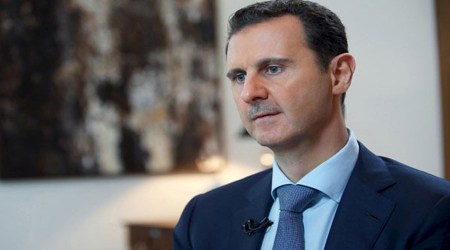
Syria’s President Bashar al-Assad © SANA / Reuters
RT | October 4, 2015
Western countries are using terrorism as an instrument of control, Syrian President Bashar Assad said in a recent interview. He also said that he is ready to step down if his departure is the solution to the four-year-long conflict.
“From the beginning it was clear to us that there were foreign hands behind terrorism in Syria,” Assad said in interview with Iran’s Habar TV.
President Assad thinks that the US-led coalition against Islamic State (IS, formerly ISIS/ISIL) is ineffective because the West does not want to defeat terrorist groups. In fact, it wants to preserve the balance between the warring sides to “perpetuate the process of erosion in Syria and Iraq and later other countries of the region, so that we all remain weak for decades and maybe generations.”
“How can the United States and its allies fight terrorism or ISIS in Syria and Iraq while their closest allies in the government of Erdogan and Davutoglu are supporting terrorists and enabling them to cross the borders and bring weapons, money and volunteers through Turkey?” he asked.
Since the US-led coalition was formed, terrorism expanded geographically and its recruits multiplied, the Syrian president said.
“God willing it [Syria, Iran and Hezbollah] will be able to defeat terrorism which is a new instrument for subjugating the region,” he stressed.
Unlike the US-led coalition, Russia together with Iran, Iraq and Syria have “great chances of success.”
“It must succeed. Otherwise, the whole region, not only one or two countries, will be destroyed,” Assad said.
Russia, as well the Soviet Union in the past, “[has] never tried to impose anything on Syria, especially in this crisis,” he said stressing that, as opposed to the US, Russia is against interference, hegemony and violations of the UN Charter.
‘If my departure is the solution, I will never hesitate to do that’
President Assad once again stated that he is ready for political dialogue with all Syrians – but not with foreign powers. “Any talk about the political system or the officials in this county is an internal Syrian affair,” he said.
“When the Syrian people decide that a certain individual should stay, he will stay; and when the Syrian people decide that he should go, he will go immediately,” the president said. “If my departure is the solution, I will never hesitate to do that,” he added.
Assad stressed that no state in the world conducts dialogue with terrorists and that they should be subject to the laws and brought to justice.
“However, the state might conduct dialogue with terrorists in one case, when the objective of the dialogue is for the individuals who carried out terrorist acts to lay down their arms and embrace the state and the law,” he added, noting that this has actually happened in Syria, with the government having held talks with various reconciliation-seeking groups, granting them amnesty and giving them an opportunity to go back to their normal lives.
Despite Brutal Irony, US Accuses Russia Of ‘Pouring Gasoline On Fire’ In Syria
By Jon Queally | Common Dreams | October 1, 2015
At an afternoon press conference, U.S. Defense Secretary Ashton Carter claimed evidence may show that Russia airstrikes were hitting areas where there were not Islamic State (ISIS/ISIL) forces and charged that Moscow’s bolstering of President Bashar al-Assad could backfire if that meant the targeting of what the U.S. considers “legitimate” opposition forces aligned against the Syrian government.
“By supporting Assad and seemingly taking on everyone who is fighting Assad, you’re taking on the whole rest of the country of Syria,” Carter said. “That is not our position. At least some parts of the anti-Assad opposition belong in the political transition going forward. That’s why the Russian approach is doomed to fail.”
With no hint of irony, given that the U.S. has been widely criticized for its bombing of the country, Carter equated Wednesday’s airstrikes by Russian warplanes as “pouring gasoline on the fire” in Syria.
Though Putin has made it plain in previous comments that he would act to defend Assad from the various militias aligned against him, the Foreign Ministry in Moscow rejected claims that the strikes were not focused on ISIS, saying in a statement that all the bombings hit “territory of the international terrorist group Isil.”
Warplanes struck eight targets, the ministry said, including “caches of weapons and ammunition, fuel and oil materials, command centers, and means of transport used by the Isil militants. All the targets were struck.”
Update (12:26 PM EDT):
As U.S. Secretary of State John Kerry and Russian Foreign Minister Sergei Lavrov both spoke during a meeting of the UN Security Council on Wednesday, confirmation came that Russian warplanes have, in fact, launched airstrikes inside Syria and that U.S. officials were given advanced warning about the operations.
The State Department said that U.S.-led coalition forces were continuing their activities “as normal” despite a request from Russia that coalition aircraft stay out of Syrian airspace.
“A Russian official in Baghdad this morning informed U.S. Embassy personnel that Russian military aircraft would begin flying anti-ISIL missions today over Syria,” State Dept. spokesperson John Kirby told reporters at a morning briefing. “[The official] further requested that U.S. aircraft avoid Syrian airspace during these missions.”
Speaking before the UNSC, Kerry said the U.S. would welcome a “genuine commitment” by Russia to combat the Islamic State (ISIS/ISIL), but said “we must not and will not be confused in our fight against Isil with support for Assad.” The Obama administration, he added, has told Moscow that it “would have grave concerns should Russia strike targets where ISIL and al-Qaida affiliated targets [are not] operating.”
After Putin and Obama met briefly in New York on Monday on the sidelines of the UN General Assembly, Kerry reiterated that the U.S. is prepared to hold “deconfliction talks” with their Russian counterparts as early as “this week,” if possible.
Subsequent to Kerry’s remarks, Lavrov said the Russian government has told U.S. officials and its coalition allies that Moscow stands ready “to forge standing channels of communication to ensure the maximum effective fight against the terrorist groups”—an apparent reference to ISIS but also perhaps other military groups aligned against the Assad government.
Lavrov also said that Russia will now back UN efforts to get the Syrian parties talking and intends to circulate a draft resolution which will aim to foster “an inclusive and balanced outside assistance for the political process” that Syria’s warring factions so desperately need.
Lavrov said the international group should include Russia, the United States, Saudi Arabia, Iran, Turkey, Egypt, the United Arab Emirates, Jordan, Qatar, the European Union and China.
“We believe that such a composition of outside sponsors acting in a united way are in a position to assist Syrians in reaching agreement based on common objectives to prevent the creation of an extremist caliphate,” Lavrov said.
Meanwhile, U.S. Secretary of Defense Ashton Carter is now scheduled to brief reporters at the Pentagon at 2:00 PM ET.
Earlier:
Just hours after the Upper House of the Russian Parliament on Wednesday gave President Vladimir Putin the permission he sought to use the nation’s air force to conduct missions against the Islamic State targets inside Syria, news outlets are reporting that the first Russian airstrikes inside Syria may have now taken place.
Both the New York Times and CNN, citing anonymous U.S. officials who were not authorized to speak with the press, report that strikes have been carried out. The Times reports Russian warplanes dropped bombs near the central city of Hom, though further details were not provided.
Wednesday’s vote authorizing the strikes came just two days after Putin spoke to the General Assembly of the United Nations in New York City where he also held a 90-meeting meeting with U.S. President Obama in which the main topic was the ongoing civil war in Syria and how the two world leaders might find a way to get past their differences and help find a possible solution to the crisis which has embroiled the Middle East.
Whereas the U.S. Congress has yet to formally authorize the ongoing U.S. military actions in both Syria and Iraq, Obama has claimed authority to conduct airstrikes in those countries based on previous authorizations of military force (AUMFs) granted in the wake of 9/11 to fight Al-Qaeda. While at the UN, Putin called for an international coalition to come together under the auspices of a new UN Security Council resolution which would give legal sanction to a joint military campaign against ISIS militants.
In comments on Wednesday, Putin’s chief of staff, Sergei Ivanov, said that Russia’s plans at the moment would only include airstrikes, not ground forces engaged in combat inside Syria.
“You all know well that in the territory of Syria and Iraq … a number of countries are carrying out bombing strikes, including the United States,” Ivanov told reporters. “These actions do not conform with international law. To be legal they should be supported either by a resolution of the UN security council, or be backed by a request from the country where the raids are taking place.” What would make Russia’s action legitimate, explained Ivanov, is that the elected president of Syria, Bashar al-Assad, has asked for and now welcomes this Russian assistance.
Even as policy experts continue to throw up warnings that there is no military solution to the civil war in Syria and that the introduction of more weapons, additional airstrikes, and new soldiers will only increase the suffering of civilian populations, the main sticking point between the U.S. and Russia remains whether Assad stays or goes as possible attempts at a diplomatic settlement form. Putin has made it clear that as the legitimate leader of Syria—and given the chaos that ensued in both Libya and Iraq after their governments were toppled by force—it would be short-sighted and irresponsible to exclude Assad from negotiations while ISIS and other radical factions stand at the ready to fill the vacuum.
Though the U.S. has maintained an active program to support military factions opposed to Assad, recent statements by both President Obama and U.S. Secretary of State John Kerry have appeared to soften their strict position on regime change in Syria.
Featured Video
It’s the Occupation, Stupid
or go to
Aletho News Archives – Video-Images
From the Archives
A superpower and “the world’s sickest warrior state”
By Paul J. Balles | March 8, 2010
Living through five or six major wars has hardened me to what I thought were the extremes of inhuman cruelty and brutality.
Two things made those extremes almost bearable: the brutality always revealed – at least according to the media coverage – the viciousness of the enemy. It was therefore quite understandable when our “brave men and women” pulverized the enemy.
Films of Japanese torturing captive Americans somehow justified holding Japanese Americans in internment camps during World War II; and only a small percentage of Americans found the bombing of Hiroshima and Nagasaki unreasonably vengeful at best, at worst, depraved.
The media giants in America portrayed the North Koreans as barbaric beasts with their captives, quite unlike their southern counterpoints – our allies during the Korean War. No one ever felt the need to explain how the South Koreans were a civilized breed while the North Koreans were absolute savages, at least according to the official line.
In Vietnam, our warriors justifiably (or so the media made us believe) dropped napalm on the North Vietnamese who had the gall to hide in villages and tunnels to ravage our invaders. At least it was accepted practice until some rogue photojournalist filmed a young girl screaming down a Vietnamese road in flames. … continue
Blog Roll
 Aletho News
- Pro-Palestinian French member of European Parliament denied entry to Canada
- Pakistan to Host US-Iran Talks
- How Indonesia’s tilt toward the US left it stranded in the Strait of Hormuz
- US has no choice but to retreat from Iranian borders: Top commander
- Iran Retaliation Strikes Chemical Plant Near Dimona
- AWACS’ Destruction is a Major Loss for US Military – Ex-DoW Analyst
- Israel’s Iran Strategy Uses US Military & Gulf States as Its Pawns
- Iran: Trump wanted regime change, now just begging for Hormuz to open
- IRGC: Israeli, US universities in region legitimate targets after strikes on Iranian university
- Trump admits Iran hit USS Ford carrier: ‘We ran for our lives’
- If Americans Knew
- Israeli police block Catholic cardinal from entering Church of the Holy Sepulchre on Palm Sunday
- Israel is assassinating journalists again, more than any other nation, anywhere, ever – Not a ceasefire Day 170
- Over 300 US service members wounded, majority have brain injuries – Not a ceasefire Day 169
- Researchers at Human Rights Watch Resign Over Blocked Report on Palestinian Refugee Return
- Jewish Groups Are Backing a War Americans Don’t Want
- Eric Fingerhut Thinks He’s the President of the Jews
- Top Jewish Philanthropists, Rabbis Urge Israeli President to Take Action Against ‘Jewish Extremists’
- Don’t Be Fooled. Zionist Leaders Have Always Wanted to Control Southern Lebanon
- Israel’s widespread use of torture is a core element of its genocide against the Palestinian people
- In Israel’s War on Iran, Many Middle East US Bases Rendered “All But Uninhabitable”
- No Tricks Zone
- German Science Blog Accuses PIK Climate Institute Of Hallucinating Climate Tipping Points
- Devastating Assessment Of Comirnaty Vaccine By Former Senior Pfizer Europe Toxicologist
- New Study: CO2 Is ‘Effectively Negligible’ As An Explanatory Climate Change Factor Since 2000
- Former Pfizer Toxicologist Dr. Helmut Sterz Tells Bundestag Hearing Pfizer Vaccine Should Have Never Been Approved
- Energy Expert: Germany’s Nuclear Phaseout Was A “500 Billion Euro Mistake”
- New Research: South Australia’s Mid-Holocene Sea Surface Temperatures Were 4°C Warmer Than Today
- Storing Green Energy To Last Germany 10 Days Would Require A 60-Million Tonne Battery
- New Studies: UK Sea Levels Were 4 Meters Higher Than Today During The Mid-Holocene
- Destructive Green New Deal: German Energy And Metal Group Warns Of Drastic Crisis
- New Study Documents A 20-Year Pause In Arctic Sea Ice Decline – Driven By Internal Variability
 Aletho News