I’m confused, can anyone help me? Part 5
RT | September 9, 2015
I’m confused about quite a lot of things going on in the world. The West is supposed to be fighting ISIS, yet seems keener on toppling a government which is fighting ISIS. A refugee crisis caused by Western interventions is being used as a pretext for more Western wars.
Elite media commentators keen to stress their humanitarianism, cry ‘something must be done’ about Syria, yet appear not to notice the on-going humanitarian catastrophe in Yemen.
There are violent anti-government protests again in Ukraine, but the reaction from the US is very different to when there were violent anti-government protests in Ukraine eighteen months ago. What on earth is going on? Perhaps you can help me sort out my confusion…
The first thing I’m confused about is the refugee crisis currently affecting Europe.
The vast majority of refugees are coming from countries e.g. Syria, Libya, Afghanistan, Iraq, which were targeted by the West for ‘regime change’ and which experienced bombing/invasion or destabilization by NATO powers and their regional allies.
We’re told by the West’s political elite and much of the media that in order to stop the influx of refugees to Europe we need to do more bombing.
But if bombing solves the problem of refugees, why are people fleeing from countries, such as Iraq and Afghanistan and Libya that the West has already bombed?
How can more bombs and intervention solve a problem caused by bombs and intervention? And how can the imposition of a no-fly zone in Syria stop ISIS, which doesn’t have an air force?
I’m confused. Can anyone help me?
On the subject of Syria I’m confused about the West’s obsession with toppling President Assad and his government. The secular Syrian government does not and did not threaten the West, and its sworn enemies are the groups- such as Al-Qaeda and its affiliates, which we are supposed to have been fighting ‘a war on terror’ against. If radical Islamist terror groups such as Al-Qaeda and ISIS are such a danger, why are we still trying to topple a government which has been fighting them? Why does UK Chancellor of the Exchequer George Osborne say that the British Parliament’s refusal to support US-led air-strikes on the Syrian government in 2013 was “one of the worst decisions the House of Commons has ever made” when voting ‘Yes’ would have put the RAF on the same side as ISIS – a group which claimed responsibility for the killing of 30 British tourists on a beach in Tunisia earlier this summer? Surely if our leaders really wanted to defeat ISIS, they would be working with countries in the region that have a vested interest in defeating ISIS – like the government in Syria – and not working to overthrow them, which would only help ISIS.
I’m confused. Can anyone help me?
I’m confused about the Transatlantic Trade and Investment Partnership (TTIP).
It’s the proposed free trade deal between the free, open democracies of Europe, and that bastion of democracy the US, but the deal itself is shrouded in secrecy and can only be read by politicians in a secure reading room in Brussels.
If TTIP is so great- as its supporters claim, why can’t we see its terms and provisions? Why in ‘democratic’ Europe, where our leaders all claim to support public participation in the political process, are we being kept in the dark over a deal which is likely to have a major impact on our daily lives? I’m confused. Can anyone help me?
I’m confused too about events in Yemen, and the lack of concern from Western ’humanitarian interventionists’ over what is happening in the country.
A Saudi-Arabian led alliance has been bombing Yemen since March – yet despite Amnesty International reporting that the bombing campaign has left a “bloody trail of civilian death and destruction paved with evidence of war crimes”- the West‘s “Something Must Be Done” brigade have been strangely silent.
“The civilian population is bearing the brunt of the conflict: a shocking four out of five Yemenis require humanitarian assistance and nearly 1.5 million people are internally displaced,” says Stephen O’Brien, the UN Under-Secretary-General for Humanitarian Affairs and UN Emergency Relief Coordinator.
In Libya in 2011 we had a no-fly zone imposed to prevent massacres that might happen- in Yemen, we’re seeing large scale casualties as a result of airstrikes but this time there’s no calls for NFZs from Western leaders or ‘liberal interventionists’ in the media.
Why was there a ‘Responsibility to Protect’ civilians in Libya in 2011, but not a ‘Responsibility to Protect’ civilians who are being killed in Yemen in 2015?
I’m confused. Can anyone help me?
I’m confused about US policy towards anti-government protests in Ukraine which involve violence from ultra-nationalists.
In early 2014, there were violent protests against the democratically elected government of Viktor Yanukovich, protests in which ultra-nationalists played a prominent role. The US and its allies told the Ukrainian government that it was not allowed to use force against protestors, even though some of them smashed into government buildings and threw Molotov cocktails at police.
“We unequivocally condemn the use of force against civilians by security forces and urge that those forces be withdrawn immediately,” said Secretary of State Kerry.
But last week, when there were fresh anti-government protests involving ultra-nationalists in Kiev which also involved violence, the US’s line was rather different. “Law enforcement agencies need to exercise restraint, but there’s an obligation on the protestors to behave in a peaceful manner”- a State Department spokesman said. Why was there criticism of violent ultra-nationalist protestors in August 2015, but not criticism of violent ultra-nationalist protestors in February 2014? And why was the Ukrainian government given a fierce warning in 2014, but not one this time?
I’m confused. Can anyone help me?
I’m also confused about the continuation of the sanctions war between the US and its allies and Russia. The OSCE report that things are calming down in eastern Ukraine.
Its Special Monitoring Mission report of 5th September said there were “few ceasefire violations in the Donetsk region and none in Lugansk.”
But despite this, the US and Britain are not talking about the easing of sanctions. On the contrary, there have been calls for sanctions to be extended. The economic damage of the sanctions war to EU economies has been put at $100 billion-with 2 million jobs at risk. Surely, seeing how things have calmed down in the Donbass region, and the damage that the sanctions war is doing to Europe, the sensible thing is for the sanctions to be eased or lifted altogether?
Or is there another agenda at work here, that has nothing to do with events in eastern Ukraine and which we’re not being told about?
I’m confused. Can anyone help me?
I’m confused about photographs of dead children and why some seem to affect the Western elites more than others. The photograph of poor little Aylan Kurdi, the three-year-old Syrian refugee washed up on the shore in Turkey, has been used to drum up support for bombing Syria.
Yet photographs of dead Palestinian children, killed in the Israeli offensive against Gaza last year, brought no such response. On the contrary, this week the Prime Minister of Israel Benjamin Netanyahu is visiting Britain and can expect to receive the red carpet treatment. Among the 539 killed by Israeli forces in Gaza were four children, aged between 9 and 11, who were killed while playing on the beach. Why did their deaths not lead to a political/media campaign for ‘action’ to be taken, as the death of Aylan Kurdi has?
The general public certainly cares: a petition calling for Netanyahu to be arrested for Israeli war crimes when he visits Britain received over 100,000 signatures, meaning that it has to be debated in Parliament. But government minister Eric Pickles dismissed the petition as ‘completely absurd’. Why is it ‘completely absurd’ to care about dead Palestinian children as well as dead Syrian ones?
I’m confused. Can anyone help me?
White House: Russian Military Action Against ISIS in Syria Would be ‘Destabilizing’
By Daniel McAdams | Ron Paul Institute | September 4, 2015
Today’s lesson in how propaganda works: The rumor mill turns a trickle of a story early this week about “thousands” of Russian soldiers deploying to Syria any day — a wholly unsourced story originating on an Israeli website — into a torrent of hyperventilating about the “Russian invasion” of Syria.
Today neocon convicted felon Eliot Abrams took to the Council on Foreign Relations website to amplify the Israeli article (again with no sources or evidence) to a whole new and more dramatic article ominously titled “Putin in Syria.” Abrams adds “reporting” by Michael Weiss, who has long been on the payroll of viscerally anti-Putin oligarch Michael Khodorkovsky, without revealing the obvious bias in the source. Never mind, all Weiss adds to Abrams’ argument is that the Pentagon is “cagey” about discussing Russian involvement in Syria before again referencing the original (unsourced) Israeli article.
See how this works? Multiple media outlets report based on the same totally unsourced article and suddenly all the world’s writing about the Russian invasion of Syria.
Now the White House has gotten into the game. According to an article by Agence France Press, the White House is “monitoring reports” that the Russians are active in Syria.
What reports? The article does not say nor does the White House. Presumably the White House is referring back to the original (unsourced) Israeli article.
But in the category of never let a good “crisis” go to waste, the White House, which began bombing Syria last August in violation of both international and US law, has declared that any Russian involvement in the Syria crisis would be “destabilizing and counterproductive.”
Apparently a year of US bombs is not “destabilizing.”
This is where the hypocrisy is so thick you could cut it with a knife. The US is illegally bombing Syria, illegally violating Syrian sovereignty, illegally training and equipping foreign fighters to overthrow the Syrian government, and has backed radical jihadists through covert and overt programs.
ISIS and al-Qaeda in Syria were solely the products of the 2003 US invasion of Iraq under false pretenses — the lies of the neocons — and after a year of US bombing ISIS seems as strong as ever while scores of civilians are killed by US attacks.
All of this is perfectly fine and should never be questioned. But even the hint that the Russians, who have had to contend with their fair share of radical Islam and are much closer to Syria than the US, may have an interest in joining the fight against ISIS is met with hysterical reproaches by a White House that admits it has no evidence.
What is the White House afraid of? While the stated goal of the Obama Administration is to defeat ISIS, the real, long-term goal is to overthrow Assad. The Russians disagree with the US insistence that Assad’s departure must be the starting point of any political settlement of the crisis. The Russians have long ago come to understand that Assad may be key to saving Syria from the kind of jihadist chaos that has engulfed Libya after its “liberation” by the US and its allies.
That is why the US government is flirting with the (unsourced Israeli) rumors of a massive Russian invasion of Syria. Regurgitated cries that the Russians are coming may serve to divert attention from another failed US intervention in the region.
One might think that if the US was serious about defeating ISIS it would welcome involvement from Russia and Iran, both of which would like nothing more than to see the back of the Islamic State. One might think if the US was serious about defeating ISIS it would rethink its “Assad must go” policy and allow the one force that has the most incentive to defeat ISIS — the Syrian Arab Army.
Yet the US will only work with the same states that have trained, funded, and turned a blind eye to the radical Islamic fighters as they have poured into Syria over the past four years — Saudi Arabia, Qatar, Turkey, etc.
Conspiracy-minded people must be wondering why the US is so reluctant to accept assistance from forces that so earnestly and with such military capacity seek the end of ISIS while partnering with those forces that have done so much to create ISIS.
‘Unacceptable’: Lavrov blasts Biden idea on splitting Iraq into parts
RT | August 24, 2015
The idea of partition for Iraq would never be agreed by Moscow, Russian FM Sergey Lavrov said, stressing that this kind of ‘state structure manipulation’ is obsolete and Iraqis should define the future of their country themselves.
“We would never adopt a position voiced without any constraint by US Vice President Joe Biden, who said directly that Iraq should be split into Shia and Sunni parts and that the Kurds should be given what they want,” Lavrov told the participants of the youth forum ‘Territory of meanings’ near Moscow.
Lavrov labeled Biden’s position as “highly irresponsible and what’s more important – unacceptable,” because someone from overseas is lecturing Iraqi people on what to do with their country.
“We won’t commit to such things, telling Sunnis to get out today and urging Shia to move on next time. This is ‘social engineering,’ state structure manipulation from far outside,” Lavrov said, stressing that the destructiveness of such a plan is obvious.
“We believe that Iraqis – Shia, Sunnis and Kurds – should decide for themselves how to live together,” said the head of the Russian Foreign Ministry.
Lavrov’s remarks come following reports that Vice President Joe Biden is “seriously deciding whether to jump into the Democratic presidential race.”
The idea of decentralizing Iraq was voiced by Biden as early as 2006, in his ‘Unity Through Autonomy in Iraq’ article for the New York Times.
In this article, Biden proposed the idea of Iraq’s federalization and autonomous regions in Iraq for Sunnis, Shia and Kurds.
In April 2015, the Office of the Vice President published Biden’s article ‘Remarks by Vice President Joe Biden on Iraq’ on the White House’s official website.
“We want what Iraqis want: a united, federal, and democratic Iraq that is defined by its own constitution where power is shared among all Iraqi communities, where a sovereign government exercises command and control over the forces in the field. And that’s overwhelmingly what the Iraqis want,” Biden wrote.
The US together with an international coalition waged war in Iraq in 2003, under the pretext of eliminating weapons of mass destruction developed by Saddam Hussein’s regime. After the regime was brought down, WMD were never found and the former ruler was hanged by the new Iraqi authorities on December 30, 2006.
The Iraqi war lasted until 2011 and claimed the lives of nearly 1.5 million Iraqis and at least 6,000 coalition soldiers. Many more were wounded on each side.
The civil war in Iraq that started immediately after the withdrawal of the occupation forces is still going on. Many thousands have perished in terror acts and skirmishes.
Today the situation in Iraq is deeply aggravated by the advancement of Islamic State (IS, formerly ISIS/ISIL). The militant group is steadily capturing Iraqi territory. A significant part of Islamic State’s military backbone reportedly consists of former high-ranking Iraqi soldiers, who lost their careers and jobs following the fall of the former regime.
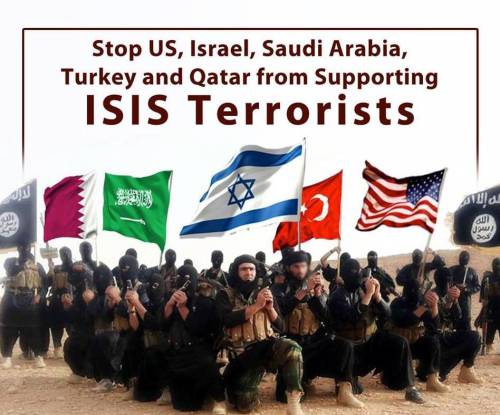
The Age of Imperial Wars
From Regional War, “Regime Change” to Global Warfare
By Prof. James Petras | Global Research | August 22, 2015
2015 has become a year of living dangerously.
Wars are spreading across the globe.
Wars are escalating as new countries are bombed and the old are ravaged with ever greater intensity.
Countries, where relatively peaceful changes had taken place through recent elections, are now on the verge of civil wars.
These are wars without victors, but plenty of losers; wars that don’t end; wars where imperial occupations are faced with prolonged resistance.
There are never-ending torrents of war refugees flooding across borders. Desperate people are detained, degraded and criminalized for being the survivors and victims of imperial invasions.
Now major nuclear powers face off in Europe and Asia: NATO versus Russia, US-Japan versus China. Will these streams of blood and wars converge into one radiated wilderness drained of its precious life blood?
Living Dangerously: The Rising Tide of Violent Conflicts
There is no question that wars and military threats have replaced diplomacy, negotiations and democratic elections as the principal means of resolving political conflicts. Throughout the present year (2015) wars have spread across borders and escalated in intensity.
The NATO allies, US, Turkey and the EU have openly attacked Syria with air strikes and ground troops. There are plans to occupy the northern sector of that ravaged country, creating what the Erdogan regime dubs a ‘buffer zone’ cleansed of its people and villages.
Under the pretext of ‘fighting ISIS’, the Turkish government is bombing Kurds (civilians and resistance fighters) and their Syrian allies. On Syria’s southern border, US Special Forces have accelerated and expanded operations from their bases in Jordan on behalf of the mercenary terrorists – funded by the monarchist Gulf States.
Over 4 million Syrians have fled their homes as refugees and over 200,000 have been killed since the US-EU-Turkey-Saudi-sponsored war against the secular Syrian government was launched four years ago.
Dozens of terrorist, mercenary and sectarian groups have carved up Syria into rival fiefdoms, pillaged its economic and cultural resources and reduced the economy by over ninety percent.
The US-EU-Turkish military intervention extends the war into Iraq, Lebanon and…. Turkey – attacking secular governments, ethnic minority groups and secular civil society.
The feudal, monarchist Saudi Arabia and the United Arab Emirates have invaded Yemen with tanks, launching air strikes against a country without any air defenses. Major cities and towns are devastated. Saudi ground troops and armored carriers are killing and wounding thousands – mostly civilians. The brutal Saudi air and sea blockade of Yemen’s ports have led to a humanitarian crisis, as ten million Yemenis face starvation deliberately imposed by a grotesque and obscenely rich monarchy.
The Yemeni resistance fighters, driven out of the major cities, are preparing for prolonged guerrilla warfare against the Saudi monsters and their puppets. Their resistance has already spread across the frontiers of the absolutist Saudi dictatorship.
The brutal Israeli occupation troops, in collaboration with armed ‘settler’ colonists, have accelerated their violent seizure of Palestinian lands. They have stepped up the ethnic cleansing of Palestinians, Bedouins, Druze and Christian inhabitants replacing their communities with racist ‘Jews-only’ colonial settlements.
Daily assaults against the huge ‘concentration camps’ of Gaza accompany an armed blockade of land, air and water, preventing the reconstruction of the tens of thousands of homes, schools, hospital, factories and infrastructure, destroyed by last year’s Israeli blitzkrieg.
Israel’s continued annexation and ethnic cleansing of Palestinian territory precludes any diplomatic process; colonial wars have been and continue to be Israel’s policy of choice in dealing with its Arab neighbors and captive populations.
Africa’s wars, resulting from earlier US-EU interventions, continue to ravage-the Continent. Somalia, Sudan, Kenya, Libya are riven by bloody conflicts between US-EU backed regimes and armed Islamic and nationalist resistance movements.
Throughout North and Sub-Sahara Africa, US-EU backed regimes have provoked armed upheavals in Libya, Nigeria (Boko Harem), Egypt (ISIS, Moslem Brotherhood et al), Chad, Niger, South Sudan, Somalia and elsewhere.
Imperial client Egyptian and Ethiopian dictators rule with iron fists – financed and armed by their EU and US sponsors.
Imperial wars rage throughout the Middle East and South Asia. Hundreds of experienced Baathist Iraqi military officers, who had been expelled or jailed and tortured by the US Occupation army, have now made common cause with Islamist fighters to form ISIS and effectively occupy a third of Iraq and a strategic swath of Syria.
There are daily bombings in Baghdad undermining its US client. Strategic advances by ISIS are forcing the US to resume and escalate its direct combat role
The US-Baghdad retreat and the defeat of the US-trained Iraqi military in the face of the Baathist-Islamist offensive is the opening salvo of a long-term, large-scale war in Iraq and Syria. The Turkish air-war against the Kurds in Iraq will escalate the war in Northern Iraq and extend it into southeast Turkey.
Closer to ‘home’, the EU-US-backed coup (‘regime change’) in Kiev and the attempt to impose dictatorial-pro-West oligarchic rule in Ukraine have detonated a prolonged civil-national war devastating the country and pitting NATO’s proxies against Russian-backed allies in the Donbas.
US, England, Poland and other NATO powers are deeply committed to pushing war right up to Russia’s borders.
There is a new Cold War, with the imposition of wide-ranging US-EU economic sanctions against Russia and the organizing of major NATO military exercises on Russia’s doorsteps. It is no surprise that these provocations are met with a major counter-response – the Russian military build-up. The NATO power grab in Ukraine, which first led to a local ethnic war, now escalates to a global confrontation and may move toward a nuclear confrontation as Russia absorbs hundreds of thousands of refugees from the slaughter in Ukraine.
The US puppet regime in Afghanistan has faced a major advance of the Taliban in all regions, including the capital, Kabul.
The Afghan war is intensifying and the US-backed Kabul regime is in retreat. US troops can scarcely advance beyond their bunkers.
As the Taliban military advances, its leaders demand total surrender of the Kabul puppets and the withdrawal of US troops. The US response will be a prolonged escalation of war.
Pakistan, bristling with US arms, faces a major conflict along its borders with India and permanent war in its semi-autonomous Northwest frontier states with Islamist and ethnic Pashtu guerrilla movements backed by mass regional political parties. These parties exercise de facto control over the Northwest region providing sanctuary and arms for Taliban militants operating in Afghanistan and Pakistan.
Armed ethno-religious conflicts persist in western China, Myanmar and northern India. There are large-scale popular resistance movements in the militant northeast Thailand opposed to the current military-monarchist dictatorship in Bangkok.
In the 21st century, in South and Southeast Asia, as in the rest of the world, war and armed conflicts have become central in resolving ethnic, social, tribal and regional differences with central states: diplomacy and democratic elections have been rendered obsolete and inefficient.
Latin America – On the Verge
Burgeoning violent extra-parliamentary right-wing movements, intent on overthrowing or ‘impeaching’ elected center-left Latin American governments face major confrontations with the state and its mass supporters.
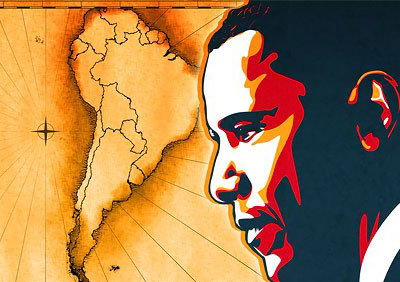 In Ecuador, Venezuela and Brazil, US-backed opposition groups are engaged in violent demonstrations, directed toward ousting the elected regimes. In the case of Ecuador, ‘popular sectors’, including some indigenous leaders and sectors of the trade union movement, have called for an ‘uprising’ to oust President Correa. They seem oblivious of the fact that the hard-right oligarchs who now control key offices in the three principal cities (Guayaquil, Quito and Cuenca) will be the real beneficiaries of their ‘uprisings’.
The resurgent Right envisions violent ‘regime change’ as the first step toward ‘wiping the slate clean’ of a decade of social reforms, independent regional organizations and independent foreign policies.
‘Civil war’ may be too strong a word for the situation in Latin America at this time – but this is the direction which the US-backed opposition is heading. Faced with the mess and difficulty of dislodging incumbent regimes via elections, the US and its local proxies have opted for the choreography of street violence, sabotage, martial law and coups – to be followed by sanitized elections – with US-vetted candidates.
War and violence run rampant through Mexico and most of Central America. A US-backed military coup ousted the popularly elected, independent President Zelaya in Honduras. The ensuing US-proxy regime has murdered and jailed hundreds of pro-democracy dissidents and driven thousands to flee the violence.
The 1990’s US-brokered ‘Peace Accords’ in El Salvador and Guatemala effectively blocked any agrarian reform and income redistribution that might have led to the rebuilding of their civil societies. This has led to over two decades of mass disaffection, the rise of armed ‘gangs’ numbering over 100,000 members and an average of six to ten thousand homicides a year with El Salvador becoming the ‘murder capital of the hemisphere’ on a per capita basis. The annual murder toll under the US-brokered ‘Peace Accords’ now exceeds those killed each year during the civil war.
The real ‘carnage capital’ of the hemisphere is Mexico. Over 100,000 people have been murdered during the decade-long, US-backed ‘war on drugs’ – a war which has become a state-sponsored war on the Mexican people.
The internal war has allowed the Mexican government to privatize and sell the crown jewels of the national economy – the petroleum industry. While thousands of Mexicans are terrorized and slaughtered, the US and EU oil companies are curiously shielded from the drug lords. The same Mexican government, its police, officials and military, who collaborate with the drug lords in dividing up the billions of drug dollars, protect foreign oil companies and their executives. After all, narco-dollars are laundered by banks in New York, Miami, Los Angeles and London to help fuel the speculation!
From Regional to Nuclear Wars
Regional and local wars spread under the shadow of a looming world war. The US moves its arms, planes, bases and operations to the Russian and Chinese borders.
Never have so many US troops and war planes been placed in so many strategic locations, often less than an hour drive from major Russian cities.
Not even during the height of the Cold War, did the US impose so many economic sanctions against Russian enterprises.
In Asia, Washington is organizing major trade, military and diplomatic treaties designed to exclude and undermine China’s growth as a trade competitor. It is engaged in provocative activities comparable to the boycott and blockade of Japan which led to the Second World War in Asia.
Open ‘warfare by proxy’ in Ukraine is perhaps the first salvo of the Third World War in Europe. The US-EU-sponsored coup in Kiev has led to the annexation of Western Ukraine. In response to the threat of violence toward the ethnic Russian majority in Crimea and the loss of its strategic naval base on the Black Sea, Russia annexed Crimea.
In the lead-up to the Second World War, Germany annexed Austria. In a similar manner the US-EU installed a puppet regime in Kiev by violent putsch as its own initial steps toward major power grabs in Central Asia. The military build-up includes the placement of major, forward offensive military bases in Poland.
Warsaw’s newly elected hard-right regime of President Andrzej Duda has demanded that Poland become NATO’s central military base of operation and the front line in a war against Russia.
Wars and More Wars and the Never-ending Torrents of Refugees
The US and EU imperial wars have devastated the lives and livelihoods of scores of millions of people in South Asia, North and Sub-Sahara Africa, Central America, Mexico, the Balkans and now Ukraine.
Four million Syrian refugees have joined millions of Afghan, Pakistani, Iraqi, Yemeni, Somali, Libyan, Palestinian and Sudanese refugees fleeing US-EU bombs, drones and proxy mercenaries ravaging their countries.
Millions of war refugees escape toward safety in Western Europe, joining the millions of economic refugees who have fled free market destitution in Lithuania, Latvia, Estonia, Bulgaria, Romania, Poland, the Balkans and other EU satellites.
Panic among the civilian population of Western Europe sets in as hundreds of thousands cross the Mediterranean, the Aegean and the Balkans.
Droves of refugees perish each day. Tens of thousands crowd detention centers. Local labor markets are saturated. Social services are overwhelmed.
The US builds walls and detention camps for the millions trying to escape the harsh consequences of imperial-centered free markets in Mexico, narco-terror and the fraudulent ‘peace accord’-induced violence in Central America.
As Western wars advance, the desperate refugees multiply. The poor and destitute clamber at the gates of the imperial heartland crying: ‘Your bombs and your destruction of our homelands have driven us here, now you must deal with us in your homeland’.
Fomenting class war between the refugees and ‘natives’ of the imperial West – may not be on the agenda . . . for now, but the future for ‘civil’ society in Europe and the US is bleak.
Meanwhile, more and even bigger wars are on the horizon and additional millions of civilians will be uprooted and face the choice of starving, fleeing with their families or fighting the empire. The ranks of seasoned and infuriated resistance fighters are swelling in Afghanistan, Iraq, Libya, Yemen, Ukraine and elsewhere.
The US and EU are becoming armed fortresses. US police deal with the marginalized citizenry as an occupying army, assaulting African-Americans, immigrants and dissidents – while looting poor communities . . . and protecting the rich…
Conclusion
War is everywhere and expanding: No continent or region, big or small, is free from the contagion of war.
Imperial wars have spawn local wars . . . igniting mass flights in a never-ending cycle. There are no real diplomatic success stories! There are no enduring, viable peace accords!
Some pundits may protest this analysis: They point to the recent US – Cuba rapprochement as a ‘success’. They conveniently forget that the US is still subverting Cuba’s biggest trading partner, Venezuela; that Washington’s major regional proxies are demanding regime change among Cuba’s allies in Ecuador, Brazil and Bolivia and that Washington is increasingly threatening Cuba’s alternative markets in Russia and China. The vision of the US flag flapping in the breeze outside its embassy in Havana does little to cover Washington’s iron fist threatening Cuba’s allies.
Others cite the US – Iran peace accord as a major ‘success’. They ignore that the US is backing the bloody Saudi invasion of neighboring Yemen and the massacre of Shiite communities; that the US has provided Israel with a road map detailing Iran’s entire defense system and that the US [Israel] and EU are bombing Iran’s Syrian ally without mercy.
As for the US – Cuba and Iranian agreements– are they enduring and strategic or just tactical imperial moves preparing for even greater assaults?
The war epidemic is not receding.
War refugees are still fleeing; they have no homes or communities left.
Disorder and destruction are increasing, not decreasing; there is no rebuilding the shattered societies, not in Gaza, not in Fallujah, not in the Donbas, not in Guerrero, not in Aleppo.
Europe feels the tremors of a major conflagration.
Americans still believe that the two oceans will protect them. They are told that placing NATO missiles on Russia’s borders and stationing warships off China’s shores and building electrified walls and laying barbed wire along the Rio Grande will protect them. Such is their faith in their political leaders and propagandists.
What a packet of lies! Inter-continental missiles can ‘rain down’ on New York, Washington and Los Angeles.
It is time to wake up!
It is time to stop the US – EU headlong race to World War III!
Where to start? Libya has been irrevocably destroyed; it is too late there! Syria, Iraq and Afghanistan are aflame. We are being plunged deeper into war while being told we are withdrawing! Ukraine sucks in more guns and more troops!
Can we really have peace with Iran if we cannot control our own government as it dances to the Israelis tune? And Israel insists on war – our waging war for them! As the Israeli war criminal General and Prime Minister Ariel Sharon once told some worried American Zionists: “Trouble with the US? We lead them by the nose…!”
Just look at the terrified families fleeing carnage in the Middle East or Mexico.
What is to be done?
When will we cut our losses and shake off the bonds of these war makers – foreign and domestic?
‘Radicalizing radicals’: US military aid landing in hands of ISIS
RT | August 13, 2015
Foreign powers are meddling within Syrian political affairs not to defeat ISIS as they claim, but to get rid of a regime they don’t approve of to replace it by God knows what, Catherine Shakdam from the Beirut Centre for Middle East Studies told RT.
RT: The rebels and government forces are fighting not only each other but Islamic State [IS, formerly ISIS/ISIL] at the same time. How is this multiple-front conflict affecting attempts to prevent terrorism?
Catherine Shakdam: That’s the main problem. It’s not just that they are fighting each other. I think that there are very different goals as to what foreign powers are trying to achieve in Syria. And for now when it comes to the US for example all Washington seems to want to do is to neutralize and get rid of President Bashar Assad in Syria rather than really fight IS. That’s the main problem. We have foreign powers meddling within Syrian political affairs not to defeat IS as they claim, but rather to get rid of a regime that they do not approve of to replace it by God knows what, because they created a situation and a power vacuum which would essentially allow for Islamist radicals to take over Damascus and I don’t think that anyone would want that.
RT: Iran and Turkey brokered a 48 hour ceasefire between the Insurgents, Assad’s army and Hezbollah. How significant is their diplomatic intervention? Could this move be helpful in resolving the crisis long-term?
CS: There is a real effort here to try to breach differences and to look towards. I’m hoping, diplomacy will actually pave the way for a resolution rather than resort to military intervention. That’s the message that is coming out of Iran and Russia as well. They are all trying to calm the situation, defuse it and try to find a way which would be acceptable for everyone. I think that if indeed the fight of IS takes precedence over everything else then there is no reason why a diplomatic solution could not take place.
The problem is until now Washington’s intent on getting rid of the Syrian president, even though it’s not really their business to decide whether the Syrian people should have him as a president or not. It’s really up to the Syrians to decide for themselves. That’s the main problem – we see foreign powers trying to decide what people should do or shouldn’t do in this case.
RT: The US and its allies are stepping up their support for so-called moderate rebel groups. How could that change what’s happening in your country?
CS: Whenever I hear the US or even Britain talking about supporting moderate Islamists in Syria or anywhere else I tend to cringe. Who are those moderates really? We know those moderates are not so moderate after all. Most of the military aid which actually landed in Syria or even in Iraq landed in the hands of the likes of IS and that’s a worry, because what we are seeing is radicalization of the radicals. And whenever you attempt to fuel, by adding more military power to the situation which is already unacceptable and very volatile, you are making the problem worse here. And they are not trying to go after the ideology, what they are trying to do is militarize the ideology of terror which is of course very dangerous and it’s leading people to wonder who it is that they are serving and who it is they are really trying to support and help because the assistance is going to ISIS as far as I can see.
READ MORE: Ousting Assad militarily would enable ISIS to seize Syria – Lavrov
Iran nuclear deal: Why Empire blinked first
By Sharmine Narwani | RT | August 5, 2015
We’ve now spent three weeks watching American politicians argue needlessly over the Iran nuclear deal. For or against, they all miss this one salient point: It is the US that needed to end this standoff with Iran – not the other way around.
For years we have been hearing that US sanctions “were biting” and had “teeth.” Sanctions, it was said, would “change Iranian behaviors,” whether in regards to the Islamic Republic’s “support of terrorism,” its “calculations” over its nuclear program, or by turning popular Iranian sentiment against its government.
Here is US President Obama spinning the fairytale at full volume:
“We put in place an unprecedented regime of sanctions that has crippled Iran’s economy… And it is precisely because of the international sanctions and the coalition that we were able to build internationally that the Iranian people responded by saying, we need a new direction in how we interact with the international community and how we deal with this sanctions regime. And that’s what brought President Rouhani to power.”
There is, of course, scant evidence that any of this is true.
If anything, on the economic front, the net effect of sanctions has been to rally Iranians behind domestic production and thrift – establishing both the discipline and policy focus necessary to sustain the country indefinitely. A 2013 Congressional Research Service (CRS) report explains this unintended consequence of sanctions:
“There is a growing body of opinion and Iranian assertions that indicates that Iran, through actions of the government and the private sector, is mitigating the economic effect of sanctions. Some argue that Iran might even benefit from sanctions over the long term by being compelled to diversify its economy and reduce dependence on oil revenues. Iran’s 2013-2014 budget relies far less on oil exports than have previous budgets, and its exports of minerals, cement, urea fertilizer, and other agricultural and basic industrial goods are increasing substantially.”
Sanctions didn’t succeed on the political front either. By in large, Iranians did not hold their leadership responsible for sanctions-related economic duress, nor did they seek rapprochement with the West as a way out. The US continues to flog the narrative that Iranians elected President Hassan Rouhani in a bid to “moderate” foreign policy stances, but a survey conducted by US pollster Zogby Research Services in the immediate aftermath of Rouhani’s election turns that premise on its head:
Ninety-six percent of Iranians surveyed agreed with the statement that “maintaining the right to advance a nuclear program is worth the price being paid in economic sanctions and international isolation.” Of those polled, a mere five percent of Iranians felt that improved relations with the US and the West were their top priority.
No, sanctions have not worked in any of the ways they were intended.
So if the Iranians were not ‘dragged’ to the negotiating table, then what was the sudden incentive behind a multilateral effort to forge a deal in 2015 – 36 years after the first US non-nuclear sanctions were levied against the Islamic Republic, and nine years after the UN Security Council first issued nuclear-related sanctions?
Keep in mind that both the Iranians and the permanent members of the UNSC have offered up proposals to end the nuclear deadlock since 2003. So why, this deal, now?
Could it be that the Americans had simply blinked first?
And the world turned
It must be understood that much of this nuclear brouhaha has nothing to do with Iran actually possessing or aspiring to possess nuclear weapons. The Islamic Republic neither has nuclear weapons, nor does it profess to want them.
US intelligence agencies, over the years, have conceded that Iran has not even made the “decision” to pursue weaponization, and the IAEA has repeatedly stated in 52 periodic assessment reports that there has been “no diversion” of nuclear materials to a weapons program.
In short, all the fuss has really only ever been about containing, isolating and taming a developing nation with aspirations that challenge Empire’s hegemony. Iran was never going to be able to change the rules of the game single-handedly. That is, until the game itself shifted hands and direction.
In 2012, cracks in the global economic and political power structures started to shift dramatically. We started to see the emergence of the BRICS, in particular Russia and China, as influential movers of global events. Whether it was a shift in trading currencies from the conventional dollar/euro to the rupee/yuan/ruble, or the emergence of new global economic/defense institutions initiated by BRICS member states, the world’s middle powers began to assert themselves and project power on the international stage.
But it was in the vast and complicated Middle East arena that old power and new power came to clash most ferociously.
In November 2011, the year of the Arab uprisings, the BRICS announced their first collective foreign policy statement, urging the rejection of foreign intervention in Syria’s internal affairs.
By 2012, it started becoming clear that the crisis in Syria was being heavily fomented by external players, including the three UNSC Western permanent members, the US, UK and France and their regional allies, Saudi Arabia, Qatar and NATO-member Turkey.
In 2012, it also became clear that Al-Qaeda and other militant Islamist fighters were dominating the opposition inside the Syrian military theater and that these elements were being backed by the United States and its allies.
The American calculus, at this point, was to allow and even encourage the proliferation of fighters prepared to unseat the government of Syrian President Bashar Assad, anticipating that at some future date they could then reverse the gains of radicals.
Assad did not fall, but extremism – fueled by funding, arming and training from US allies – entrenched itself further in Syria.
This did not go unnoticed in Washington, which has always struggled to make a coherent case for its Syria strategies. The rise of ISIS (IS, formerly ISIS/ISIL) and the flood of jihadists into the Syrian theater began to change the American calculations. The US began to work on hedging its bets… and that is when Iran began to factor significantly in America’s Plan B.
That Plan B began in mid-2012, just as Saudi Arabia’s incoming intelligence chief Bandar bin Sultan was preparing for a violent escalation in Syria, one that would exacerbate the Islamist militancy in the Levant exponentially.
That July, secret backchannel talks between the United States and Iran were established in Oman, kicked off, according to the Wall Street Journal, by “a pattern of inducements offered by Washington to coax Tehran to the table.”
Take note that the Americans initiated this process, not the allegedly “sanctions-fatigued” Iranians, and that this outreach began when Iranian President Mahmoud Ahmadinejad was at the helm, not his successor Rouhani.
Iran – or bust
Iran’s elite Quds Force Commander Qassem Soleimani said a few months ago: “Today, there is nobody in confrontation with [IS] except the Islamic Republic of Iran, as well as nations who are next to Iran or supported by Iran.”
If you look at the array of ground forces amassed against Islamist radicals from Lebanon to Iraq, they consist almost entirely of elements allied with the Islamic Republic, or are recipients of weapons and sometimes training provided by the Iranians.
There are no combat forces from Western states and none from their Arab or Turkish allies within the region.
‘Boots on the ground’ are essential in asymmetrical warfare, but the US military will continue to oppose inserting its troops into direct combat situations in Syria and Iraq.
In a Telegraph op-ed on the eve of the Vienna nuclear agreement, Britain’s influential former ambassador to Washington Christopher Meyer wrote:
“Whether we like it or not, we are in de facto alliance against ISIL with Assad of Syria and with Iran, the implacable foe of our long-standing ally, Sunni Saudi Arabia…. if ISIL is able to expand further in the Middle East, won’t this unavoidably lead to the conclusion that our strategic ally in the region for the 21st century must be Iran?”
This is the conundrum Washington began facing in 2012. And so it set in motion a face-saving strategy to enable itself to “deal” with Iran directly.
The Vienna Agreement
Here’s what the Iran nuclear deal does – besides the obvious: it takes the old American-Iranian “baggage” off the table for the US administration, allowing it the freedom to pursue more pressing shared political objectives with Iran.
The Iranians understood full well in Vienna that they were operating from a strong regional position and that the US needed this deal more urgently. The Americans tried several times to get Iran to expand discussions to address regional issues on a parallel track, but the Iranians refused point-blank. They were not prepared to allow the US to gain any leverage in various regional battlefields in order to weaken Iran’s position within broader talks.
Although the Iranians are careful to point out that the Vienna agreement is only as good as the “intentions” of their partners, this deal is essentially a satisfactory one for Tehran. It ensures rigorous verification that Iran is not pursuing a nuclear weapons program, which is great for a country that doesn’t seek one.
It also provides Iran with protections against ‘over-inspection’ and baseless accusations, dismisses all UNSC resolutions against the Islamic Republic, recognizes the country’s enrichment program, provides extensive international sanctions relief, binds all UN member-states to this agreement (yes, Israel too) and nails down an end-date for this whole nuclear saga.
The deal also frees up Iran to pursue its regional plans with less inhibitions.
“What the president (Obama) and his aides do not talk about these days — for fear of further antagonizing lawmakers on Capitol Hill who have cast Iran as the ultimate enemy of the United States — are their grander ambitions for a deal they hope could open up relations with Tehran and be part of a transformation in the Middle East,” reads a post-Vienna article in the New York Times.
US Secretary of State John Kerry, commenting after the deal, said: “I know that a Middle East that is on fire is going to be more manageable with this deal and opens more potential for us to be able to deal with those fires, whether it is Houthi in Yemen or ISIL in Syria and Iraq than no deal and the potential of another confrontation with Iran at the same time.”
“The Iran agreement is a disaster for ISIS,” blares the headline from a post-agreement op-ed by EU foreign affairs chief Frederica Mogherini. She explains:
“ISIS is spreading its vicious and apocalyptic ideology in the Middle East and beyond… An alliance of civilizations can be our most powerful weapon in the fight against terror… We need to restart political processes to end wars. We need to get all regional powers back to the negotiating table and stop the carnage. Cooperation between Iran, its neighbors and the whole international community could open unprecedented possibilities of peace for the region, starting from Syria, Yemen and Iraq.”
Clearly, for Western leaders Iran is an essential component in any fight against ISIS and other like-minded terror groups. Just as clearly, they have realized that excluding Iran from the resolution of various regional conflicts is a non-starter.
That is some significant back-tracking from earlier Western positions explicitly excluding Iran from a seat at the table on Mideast matters.
And stay tuned for further policy revisions – once this train gets underway, it will indeed be “transformative.”
As for the Iran nuclear deal… except for some hotheads in Congress and the US media, most of the rest of the world has already moved on. As chief US negotiator and undersecretary for political affairs, Wendy Sherman said recently: “If we walk away, quite frankly we walk away alone.”
The balance of power has shifted decisively in the Middle East. Washington wants out of the mess it helped create, and it can’t exit the region without Iran’s help. The agreement in Vienna was reached to facilitate this possibility. Iran is not inclined to reward the US for bad behavior, but will also likely not resist efforts to broker regional political settlements that make sense.
It was not a weak Iran that came to the final negotiations in Vienna and it was not a crippled Iran that left that table.
As New York Times columnist Thomas Friedman (for once) aptly observed: “It is stunning to me how well the Iranians, sitting alone on their side of the table, have played a weak hand against the United States, Russia, China, France, Germany and Britain on their side of the table. When the time comes, I’m hiring (Iran’s Supreme Leader) Ali Khamenei to sell my house.”
Iran just exited UNSC Chapter 7 sanctions via diplomacy rather than war, and it’s now focusing its skill-sets on unwinding conflict in the Middle East. If you’re planning to challenge Empire anytime soon, make sure to get a copy of Iran’s playbook. Nobody plays the long game better – and with more patience.
~
Sharmine Narwani is a commentator and analyst of Middle East geopolitics. She is a former senior associate at St. Antony’s College, Oxford University and has a master’s degree in International Relations from Columbia University. You can follow her on Twitter at @snarwani
Featured Video

NEW FAUCI EMAILS EXPOSE ATTACK ON NATURAL IMMUNITY
or go to
Aletho News Archives – Video-Images
From the Archives
Fourteen Incredible Facts About 9/11
By Kevin Ryan | Dig Within | August 8, 2015
… What is known about 9/11 is that there are many incredible facts that continue to be ignored by the government and the mainstream media. Here are fourteen.
- An outline of what was to become the 9/11 Commission Report was produced before the investigation began. The outline was kept secret from the Commission’s staff and appears to have determined the outcome of the investigation.
- The 9/11 Commission claimed sixty-three (63) times in its Report that it could find “no evidence” related to important aspects of the crimes.
- One person, Shayna Steiger, issued 12 visas to the alleged hijackers in Saudi Arabia. Steiger issued some of the visas without interviewing the applicants and fought with another employee at the embassy who tried to prevent her lax approach.
Blog Roll
Recent Comments
eddieb on Fourteen Incredible Facts Abou… Bill Francis on European leaders’ shift in the… seversonebcfb985d9 on Villains of Judea: Philip Esfo… loongtip on Report warns that ‘Jewish terr… Craig Nelms on New study shows that toxic gas… loongtip on A Funny Thing Happened on the… loongtip on EU free trade pact on hold as… John Edward Kendrick on Regime Change In Iran Is The F… Bill Francis on Australia Passes New Hate Spee… seversonebcfb985d9 on Australia Passes New Hate Spee… Bill Francis on Britain’s AI Policing Plan Tur… loongtip on Miami Beach Resident Questione…


 Aletho News
- Israel moves to restrict Palestinian re-entry to Gaza, ‘encourage outflow’: Report
- Trump aims to create new UN and own it, Brazil’s Lula warns
- UN rapporteur says Israeli demolition of UNRWA compound reflects broader attack on UN system
- From Proxy to Disposable: The US Betrayal of the Syrian Kurds
- Six injured in stabbing spree at Kurdish rally in Antwerp, victims stabbed ‘indiscriminately’
- US pledges to ‘starve’ Iraq of oil revenue if pro-Iran parties join new government
- Is China a threat to Greenland?
- South Korea’s Prime Minister Proposes US Send Special Envoy to North Korea — Report
- Pentagon downgrades China threat, shifts focus to homeland, hemisphere
- Ireland Moves to Legalize Spyware Use by Police
- If Americans Knew
- Another Gaza baby freezes to death on Netanyahu’s watch – Not a ceasefire Day 106
- Oppose Israel’s Abuses While You Still Can
- UNRWA Heads Tell Ha’aretz: ‘We Don’t Radicalize Palestinians – Their Lived Existence Does’
- Plans Call for “New Rafah” Built in Israel’s Image — Without Palestinians
- Posing as priest, reporter is spat at many times, highlighting anti-Christian sentiment in Israel
- Leaked Documents: “Planned Community” in Rafah Would Force Palestinians Into Israeli Panopticon
- ‘Permits of Humiliation’: How Israel Strangles Christian Education in Jerusalem
- “The world sees death, destruction and injustice – and they see dollar signs” – Not a ceasefire Day 105
- War criminal Netanyahu kills 11 in Gaza, joins Board of Peace – Not a ceasefire Day 104
- Another baby dies of cold in Gaza, as Rafah crossing remains locked down – Not a ceasefire Day 103
- No Tricks Zone
- Polar Colding…Antarctica Saw Its Coldest October In 44 Years!
- New Study: Sea Levels Rose 20 Times The Modern Rate During The Roman Warm Period
- As German Gas Storage Dips Dangerously Low…Shortage Hardly Avoidable
- New Study: Brazil’s Relative Sea Level Was 2+ Meters Higher And SSTs 3-4°C Warmer 6000 Years Ago
- Philosopher Schopenhauer: Climate Science Certainty Stems From Stupidity, Ignorance
- New Study: Species Extinction Rates Declining Since 1980 – ‘Climate Change Is Not An Important Threat’
- Denmark Places Climate Protection Above Animal Welfare, Poisoning And Culling Cows
- New Study: Greenland Was 3-7°C Warmer And Far Less Glaciated Than Today 6000-8000 Years Ago
- German Media Report That Current Frigid Weather Can Be Explained By Arctic Warming!
- Berlin Blackout Shows Germany’s $5 Trillion Green Scheme Is “Left-Green Ideological Pipe Dream”
 Aletho News