Hamas denounces New York Times distortion of Marzouk’s comments on Op Al-Aqsa Flood
Press TV – February 25, 2025
Hamas has rejected a report by the American daily newspaper The New York Times that has misrepresented recent remarks by a senior official of the Palestinian resistance movement, emphasizing that the comments are “inaccurate” and “taken out of context.”
In a statement released on Monday, the Gaza-based group said the interview conducted with Moussa Abu Marzouk, a senior member of its political bureau, and published several days ago did not contain the full content of the answers, and his exact remarks were quoted out of context.
Hamas stressed that the published interview did not include the true remarks made by Abu Marzouk, and did not convey the true meaning of what he had said.
On Monday, The New York Times ran an article titled: “Hamas Official Expresses Reservations About Oct. 7 Attack on Israel” claiming that Abu Marzouk voiced doubts regarding the October 7 attack.
According to the article, Abu Marzouk admitted he would not have endorsed the assault had he been aware of the destruction it would cause in Gaza.
Hamas in its statement stated that Abu Marzouk confirmed that the large-scale surprise attack, dubbed Operation Al-Aqsa Flood, against the usurping Tel Aviv regime on October 7, 2023, reflected the Palestinian people’s right to resistance and their rejection of Israel’s siege, occupation, and settlement expansion activities.
Abu Marzouk also emphasized that the criminal Israeli regime had committed appalling war crimes and genocide against the Palestinians in Gaza.
Abu Marzouk told the New York Times that Hamas would not give up its positions and Palestinian people’s right to use all forms of resistance, including armed resistance, to fight off the Israeli occupation and liberate their land.
“The resistance weapon belongs to our people and its purpose is to protect our people and our holy sites, so it is not permissible to drop or surrender it as long as the [Israeli] occupation exists on our land,” the high-ranking Hamas official told the newspaper.
Backed by the United States and its Western allies, Israel launched the war on Gaza, after Hamas and other Gaza-based Palestinian resistance movements carried out Operation Al-Aqsa Flood against the Israeli regime in response to its decades-long campaign of oppression against Palestinians.
Israel’s genocidal war on Gaza has led to the killing of at least 48,346 Palestinians, mostly women and children, and injury of 111,759 others since early October 2023.
A ceasefire and prisoner exchange agreement went into effect in Gaza on January 19, halting Israel’s aggressive campaign against the coastal region.
Israel says army to stay ‘for next year’ in Palestinian refugee camp in occupied West Bank
MEMO | February 23, 2025
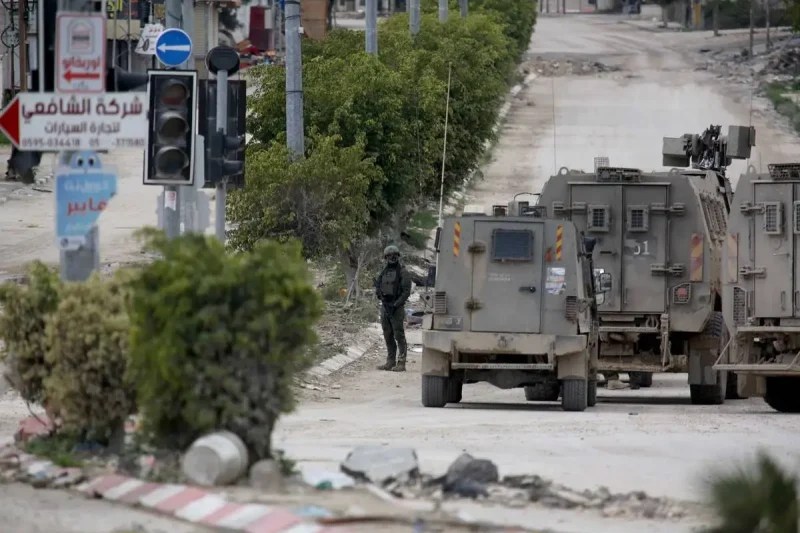
Israeli Defense Minister Israel Katz said Sunday that the army will remain in Palestinian refugee camps in the northern West Bank for the next year to prevent Palestinian residents from returning, Anadolu reports.
The Israeli army deployed tanks in the northern West Bank early Sunday, marking the first time since 2002 amid military escalation in the occupied territory.
“The Israeli army is expanding its operations in the northern West Bank, and starting tonight, it will also operate in the town of Qabatiya,” Katz said in a statement.
The defense minister said 40,000 Palestinians have been evacuated from Jenin, Tulkarem, and Nur Shams refugee camps.
“UNRWA activity in the camps has also been stopped,” he said. “I instructed the IDF (army) to prepare for a long stay in the camps that were cleared, for the coming year, and not allow residents to return.”
The army has been conducting military operations in the northern West Bank since last month, killing at least 60 people and displacing thousands.
The raids were the latest in Israel’s ongoing military escalation in the West Bank where at least 923 Palestinians have been killed and nearly 7,000 injured in attacks by the Israeli army and illegal settlers since the start of the onslaught against the Gaza Strip on Oct. 7, 2023, according to the Palestinian Health Ministry.
The International Court of Justice declared in July that Israel’s long-standing occupation of Palestinian territories is illegal, demanding the evacuation of all settlements in the West Bank and East Jerusalem.
Tel Aviv bus bombings: False flag or Netanyahu’s luck?
By Robert Inlakesh | The Cradle | February 23, 2025
At 8:30 PM on Thursday night, an Israeli firefighting department said that “a report was received about a bus explosion in a bus parking lot” on Ha’amal Street in Bat Yam, southern Tel Aviv. Later reports suggested that a passenger had notified the bus driver that a suspicious package had been left inside the vehicle, triggering an emergency evacuation, after which an explosive device detonated the backside of the bus.
The event occurred in a parking lot only a few hundred meters away from two buses, dozens of meters apart, that had also exploded shortly prior in the parking lot for the Bat Yam Stadium and Bat Yam Country Club. The two vehicles were parked in open areas, not beside the other buses that were parked next to each other, exploding at a time when nobody was within distance.
Following this, it was reported that the Israeli authorities had discovered two more bombs planted on buses. One explosive device was said to have been neutralized on a bus near the Wolfson Hospital in the industrial hub of Holon, located over 4 kilometers away from the previous explosions. Another explosive device was also announced to have been on a bus in Yimit 2000, before it was later ruled out as unconnected.
Soon after, there were reports of suspicious activity at Israel’s Haganah train station and suspicious cargo on the light rail that was soon ruled out but didn’t stop a shutdown of all transportation by 10PM that same night. However, it was reported that a “suspect” in the bombing case was pursued at Tel Aviv’s Haganah station and had even fled onto the train tracks to avoid arrest.
A photo of an improvised explosive device (IED) located on a bus in the Holon area was quickly published in the Hebrew media and, in Arabic, said “Revenge for Tulkarem.” The entire event ended without a single casualty, not even a light injury.
A series of “miracles”
The explanation that the Israeli authorities have offered as to why the bombs went off prematurely is that the timers were incorrectly set. This conclusion was drawn within hours and communicated to the Hebrew media, claiming that the intended time of detonation was 9 AM on Friday, but instead, they were programmed for 9 PM on Thursday night. Yet, the incident was first reported at 8:30 PM, as noted above, which calls into question this explanation.
The passenger who noticed the bomb on the third bus that was blown up – on Ha’amal Street in Bat Yam – told the media that, following the evacuation of the bus, “as everyone was moving away, the explosion occurred.” This has widely been accepted by Israelis as a “miracle.”
Another “miracle” was that the first two buses also happened to not only detonate when nobody was around, but both happened to be parked several meters away from other buses that were clearly lined up next to each other. This made it so that no other buses were blown up, and the overall damage costs were kept to a minimum.
The assailant/s who planted the bomb that was neutralized also happened to write a note in Arabic that left a possible motive. This IED was not only laced with a clue, that would have disappeared had it exploded, but is indicative of someone who wanted their work to be known. Yet, no group has actually claimed the attack.
Israel’s ongoing invasion of the northern West Bank, which began in January, has led to the murder of around 100 Palestinians, and in the Tulkarem Refugee Camp in particular, some 75% of its residents have been forced from their homes. However, the Israeli army’s campaign is yet to inflict a defeat on the armed groups operating there.
Another strange development was two vague statements released on Telegram by the Qassam Brigades’ Tulkarem branch, hinting at what occurred in Tel Aviv and threatening painful blows in the future. This has served as evidence of Hamas’s involvement in the bombings.
The Cradle was informed by a senior figure in the Hamas movement that it has not issued any statements claiming responsibility and that reports otherwise are false.
The current Israeli assessment points the finger at Hamas, claiming that Iran was behind the planned attack and had coordinated it with a Hamas cell operating in the occupied West Bank. This is the current narrative that is making headlines in Israeli Hebrew media.
Intriguingly, two Israeli suspects were arrested by Israeli intelligence in connection with the bombings. According to a Channel 12 News report, one of the Jewish Israeli suspects is said to have helped transport those who planted the explosive devices. The detained Israeli citizen is allegedly set to appear behind closed doors at the Tel Aviv Magistrate’s Court and is being denied access to a lawyer, while interrogations are ongoing to determine whether the “Israeli Jew from Gush Dan” knew about the intentions of who he was transporting.
Responding to the accusations, Bassem Naim, a leading member of the Hamas politburo, told The Cradle the following:
“Based on the timing and the way in which it happened, the first possibility for me is that Netanyahu or members of his government escaped from their obligations in the ceasefire agreement and created an external enemy to relieve the increasing internal pressure. Anyone who reads the history of the Zionist movement will find dozens of proven events that were planned and executed by Zionist elements against Jews themselves.”
Lending credit to the allegations of the Hamas official are the apparent issues with the coordination of the bombings. The armed groups inside the West Bank have not proven themselves capable of pulling off these kinds of attacks before, showing minimal military sophistication. On the other hand, by Israel’s own admission, this was a well-planned operation that evaded detection by the Israeli army and Shin Bet, hence the blame being placed on Tehran.
At the same time, it was also so poorly executed that it left a letter of intent, as if expecting one of the explosives to fail upon detonation, also messing up the timing so terribly that three IEDs exploded prematurely, and all were placed on buses that just so happen to have been isolated from anything else. On top of this, there’s no group that has actually claimed responsibility.
Netanyahu’s favourable coincidences
Israeli Prime Minister Benjamin Netanyahu has emerged from the bus bombings to push for harsher military measures inside the occupied West Bank, ordering the deployment of more army battalions into the territory. He has also taken the opportunity to weaponize the incident against the Gaza ceasefire.
The internal blame for Israel’s failure to thwart the attack is now also being placed upon the Shin Bet, the head of which is Ronen Bar and has been at loggerheads with PM Netanyahu for some time and was even recently demoted from his role in managing the Gaza ceasefire talks.
The Israeli Premier has also announced a “massive counter-terror operation” in the West Bank, right as the current invasion of the northern West Bank, dubbed “Operation Iron Wall,” was said to be coming to an end.
Also, on Thursday, an anonymous figure was cited by Israeli media as claiming that Benjamin Netanyahu will not allow the Gaza ceasefire to enter into its second phase. The goal of the Israeli leader has been to extend the first phase of the tripartite ceasefire agreement in a bid to save his political career.
In a rather bizarre media stunt, Netanyahu gave one of his three public addresses this Friday from inside a Palestinian family’s home in Tulkarem. After forcing Palestinians out of their house, it was taken over to be used as a military position, from which the Israeli PM stated that “we are entering the terrorist strongholds, clearing entire streets used by terrorists, their homes. We are eliminating terrorists and commanders.”
The bus bombings in Tel Aviv granted Netanyahu the ability to attack his internal opposition while blaming Hamas, Iran, and the West Bank’s armed resistance groups. The attack itself resulted in minimal material damage, not even so much as a light injury, granting a mandate for military escalation based upon the premise that if the bombings were successful, there would be hundreds of casualties.
An accumulation of coincidences, holes in the official narrative, and what Israeli media call “miracles” have all led to accusations of the incident being a false-flag attack. There is still no conclusive evidence to prove this assertion, yet with Israel imposing censorship on the issue, various outstanding questions are yet to be answered.
Good treatment of Israeli prisoners by the Palestinians dismantles Zionist propaganda
By Lucas Leiroz | Strategic Culture Foundation | February 23, 2025
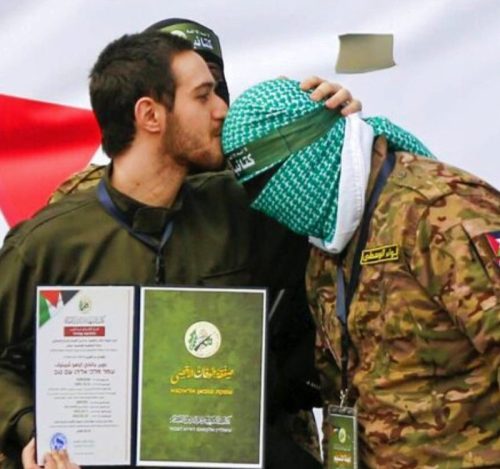
Recently, an image that captured global attention revealed an Israeli prisoner of war kissing the forehead of Hamas members during a prisoner exchange in Gaza. This gesture, filled with humanity and tenderness, is an example of how even in the most extreme circumstances of war, special moments can break the barriers of hatred and dehumanization. The symbolic act reflects a broader phenomenon experienced by several Israeli prisoners, including women, who, after being freed, expressed their gratitude for the respectful and humane treatment they received from the Palestinians while in captivity.
These prisoners, after spending time in the hands of Hamas, contrast with the narrative of dehumanization imposed by years of conflict. In a region where historical tensions have shaped relations violently, the humane treatment that many Israeli prisoners received seems to contradict the image of “cruel” enemies often associated with Palestinian fighters by Zionist media. The act of affection witnessed in this recent case and in the testimonies of other freed individuals not only subverts these expectations but also challenges the narratives that, since childhood, shape the perception of the people in Occupied Palestine.
In Israel, the indoctrination and education of a large part of the population is focused on seeing Palestinians as a constant threat, devoid of humanity. This aligns with the racist foundations of Zionist ideology, which guides all decisions of the Israeli state. However, the humanitarian treatment given to these prisoners, which included medical care and respect for their physical and emotional integrity, revealed a facet of the conflict that is often ignored. The behavior of the prisoners upon being released, with gestures of affection and even expressions of joy for the experience they went through, also shows that it is possible, even in the most adverse scenario, to dismantle stereotypes and find humanity in those once seen as the “enemy.”
In fact, it must have been extremely shocking for Israelis to discover that the people they have been taught to hate since childhood can, in fact, treat them with a level of dignity and humanity never seen in Zionist prisons. The comparison between the treatment given to prisoners by each side clearly shows how each actor in this conflict views the enemy. While Palestinians care for their prisoners and return them in perfect physical and mental conditions, in Israel, public discussions legitimize the rape of captured Palestinians. In practice, Palestinians see ordinary Israelis, outside of hostilities, as human beings worthy of fair treatment. But Zionists see Palestinians as less than animals.
This brainwashing of hatred and misanthropy has created a phenomenon of true collective sociopathy among many Israelis. In the IDF, the torture and killing of Palestinian civilians is almost a rule to be followed. Besides ideological and pseudo-religious fanaticism, official propaganda plays its role, always describing Palestinians as inhuman enemies, exaggerating the actions of Hamas on October 7, and sometimes even lying blatantly, as when portraying Operation Al Aqsa Flood as a “massacre” or “collective rape.”
What is destroying Zionist propaganda and changing public opinion in Israeli society itself – and across the entire West – is the practical experience of Israeli citizens who were held captive by Hamas. The good treatment and humanitarian dignity, admitted by the freed prisoners themselves, is showing the world that Palestinians do not act like Zionists. The Israelis are simply returning to their homes aware that there is more respect for human life among Palestinians than among ordinary Israeli soldiers.
In practice, Palestinian resistance is neutralizing Zionist propaganda with truth and respect for human life. By acting as benevolently as possible with the weak and defenseless, Palestinians are curing Zionist brainwashing and showing the world that it is possible to overcome barbarism.
Israel prevents Palestine prisoners’ families from travelling to Egypt to welcome them
MEMO | February 22, 2025
Jerusalem: Jewish man attacks Israeli woman with axe, mistaking her for a Christian
MEMO | February 21, 2025
An Israeli man attacked an Israeli woman with an axe in Jerusalem on Wednesday, mistakenly believing she was Christian, Anadolu reported yesterday, citing Israel’s Channel 13.
According to the media reports, police suspect that the attack, which took place in Jerusalem’s Old City, was motivated by “hatred of Christians”.
Eyewitnesses told the channel that the suspect shouted “Christian” at the victim before violently attacking her inside her home, leaving her with severe injuries.
The suspect then fled the scene.
The woman, who is around 70 years old and resides in the Old City, sustained serious injuries and remains in hospital for treatment, the reports added.
No statement has been issued by Israeli authorities regarding the incident.
In recent years, attacks against Christians in Jerusalem, including clergy members and tourists, have increased. Settlers frequently spit at and verbally abuse priests, while Israeli police have also been seen physically assaulting them.
Good Jihadi, bad Jihadi: Al-Qaeda’s Sharaa vs Sinwar’s resistance
The Cradle | February 19, 2025
“Even the pages of the New York Times now include regular accounts distinguishing good from bad Muslims: good Muslims are modern, secular, and Westernized, but bad Muslims are doctrinal, antimodern, and virulent.” – Mahmood Mamdani, Good Muslim, Bad Muslim: America, the Cold War, and the Roots of Terror
In his seminal work, Good Muslim, Bad Muslim: America, the Cold War, and the Roots of Terror, Mahmood Mamdani dissects how the west constructs and weaponizes distinctions between “good” and “bad” Muslims to suit its geopolitical objectives. He argues that these labels are not inherent but imposed, shaped by the shifting demands of western foreign policy.
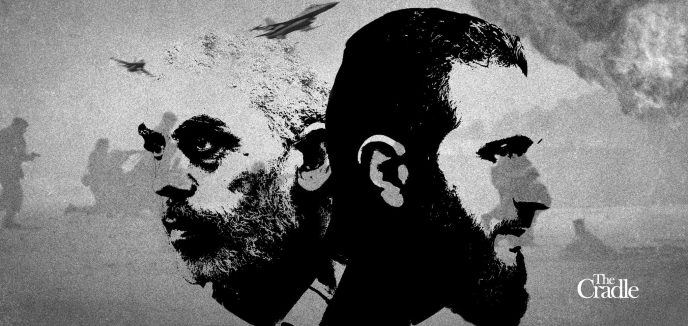
Nearly two decades after its publication, his thesis remains alarmingly relevant. Nowhere is this clearer than in the stark contrast between the west’s treatment of Yahya Sinwar, the martyred Palestinian resistance leader of Hamas, and Ahmad al-Sharaa, better known as Abu Mohammad al-Julani, the head of Al-Qaeda-linked Hayat Tahrir al-Sham (HTS) in Syria.
A tale of two leaders
While Sinwar has spent the past year in the war-ravaged ruins of Gaza, constantly evading Israeli and NATO surveillance while leading the Palestinian resistance against a brutal Israeli occupation and aggression, Sharaa moved freely through Idlib, and now Damascus, attending public events and meeting western diplomats without significant security measures.
This is despite the fact that the US had placed a $10 million bounty on Sharaa’s head as a so-called terrorist. The incongruence is striking: an internationally recognized Palestinian resistance leader hunted and vilified, while a former Al-Qaeda affiliate leader rebrands himself as a legitimate political actor with western complicity.
Back in 2021, TRT World noted how Sharaa was “remodeling” himself as a peacemaker, enjoying unimpeded mobility even as western coalition forces actively hunted other jihadist leaders linked to ISIS and Al-Qaeda.
Turkish Foreign Minister Hakan Fidan later confirmed that Sharaa had been collaborating with Ankara for years in eliminating those classified by NATO as “terrorists.” The reality, however, is that Sharaa has been part of a western-backed laundering process for years, at least since 2012, but certainly since 2017, when with Qatari backing, he began rebranding his Al-Qaeda-linked Nusra Front as a Syrian liberation force opposing Russian and Iranian influence.
Media whitewashing and political legitimacy
The western media’s embrace of Sharaa was made explicit when The Times described his return to Damascus as that of “‘Polite’ Syrian leader heads home.” This was not an isolated occurrence but part of a broader effort to frame him as a liberator from foreign influence. His past crimes, including war crimes against civilians, enslavement of Yazidi women, and sectarian violence, were conveniently brushed aside.
When Sharaa’s group took control of Damascus last December, the alignment with western interests became clearer. Israeli airstrikes systematically dismantled Syria’s military infrastructure, particularly in and around the capital, yet Sharaa himself moved through the city undisturbed.
While the Israeli Air Force bombed military sites near Umayyad Square, Sharaa was seen casually driving through the same areas. His silence on these attacks was deafening – especially given that his administration’s official stance on Israel marked a complete break from Syria’s historic anti-Zionist policies.
Statements from his government indicated no intention to reclaim the occupied Golan Heights or other lost territories, signaling a de facto truce with Tel Aviv.
The west’s legitimization of Sharaa reached its peak when his Foreign Minister, Asaad al-Shaibani, was invited to attend the World Economic Forum annual meeting in Davos, sharing a stage with figures like former British prime minister Tony Blair.
His rhetoric was tailored for a western audience: peace, counterterrorism, privatization, and economic liberalism – all buzzwords signaling a willingness to operate within the neoliberal world order.
Demonizing resistance: Sinwar’s struggle
Meanwhile, Israel continued its relentless campaign against Yahya Sinwar, branding him a “butcher,” a “war criminal,” and a “child killer” – a narrative eagerly parroted by western media despite its lack of substantiation.
Even as the alleged war crimes attributed to Hamas fighters on 7 October 2023 were later exposed as Israeli propaganda, Sinwar’s image remained demonized. In his final moments, as an Israeli drone executed him in Gaza, Sinwar did not cower. He fought until his last breath, cementing his status as an icon of Palestinian resistance. Yet even in death, the western narrative denied him any form of legitimacy.
Julani’s convenient redemption
Conversely, Sharaa’s past was erased. His involvement with the Islamic State in Iraq, his position as deputy leader of ISIS under Abu Bakr al-Baghdadi, his group’s mass executions, and his forces’ role in the enslavement of women were all conveniently overlooked.
Western journalists competed to polish his image, portraying him as a pragmatic leader rather than the war criminal he is. His forces still operate brutal prisons in Idlib, where opponents disappear indefinitely, yet he remains a media darling.
This contrast illustrates Mamdani’s thesis with unsettling precision: Sharaa is the “good jihadist” because he aligns with western-Israeli interests, while Sinwar is the “bad jihadist” because he defies them.
Sinwar’s crime was not terrorism – it was successfully challenging the occupation’s military, exposing the vulnerabilities of an Israel long perceived as invincible. His resistance resonated across the Arab and Muslim world, cutting across sectarian lines and threatening western interests.
Sharaa, on the other hand, poses no threat to Israel. He remains focused on the sectarian score-settling within Syria, making him a useful pawn rather than an adversary. His group does not challenge Western influence in the region, nor does it resist the ongoing occupation of Palestinian land. This is the fundamental reason why he is embraced rather than demonized.
Sinwar may have fallen, but as the Quran reminds us: “And do not say about those who are killed in the way of Allah, ‘They are dead.’ Rather, they are alive, but you perceive it not.” (Quran 2:154). His legacy endures, living on in the hearts of those who continue his struggle.
Sharaa, despite his crimes, remains alive and politically relevant. In the western geopolitical playbook, obedience is rewarded while defiance is crushed.
Oracle’s TikTok bid under fire for censoring pro-Palestine voices
Al Mayadeen | February 19, 2025
In a new report, The Intercept sheds light on the complex interplay of geopolitics and corporate power in Silicon Valley.
As Oracle, which has secret partnerships with “Israel”, steps into the spotlight in the wake of the US Supreme Court’s decision to uphold a law banning TikTok, the company has emerged as a leading candidate to take over the embattled platform.
However, the tech giant’s unwavering support for “Israel”, particularly in light of the ongoing genocide in Palestine, has raised serious concerns. Questions surrounding Oracle’s political allegiances and their impact on global discourse have never been more urgent.
Pro-Palestine voices in Oracle suppressed
The broader campaign to ban TikTok, driven by US political figures critical of China, has gained added momentum from pro-“Israel” activists.
While the push to ban TikTok has been driven largely by US lawmakers critical of China, pro-“Israel” activists have played a key role in amplifying the campaign, exposing the intersection of technology, politics, and global conflicts in Silicon Valley.
The company’s pro-“Israel” stance, led by CEO Safra Catz, has led to accusations of suppressing pro-Palestinian voices within Oracle.
According to an investigation by The Intercept, Oracle has faced internal backlash from employees who feel their pro-Palestinian views are being repressed. One employee shared that there is a culture of fear, with some workers leaving the company due to its stance. Last year, 68 employees signed an open letter criticizing Oracle’s partnership with “Israel”, and one worker was reportedly fired for creating a pro-Palestinian symbol.
Oracle’s longstanding ties with “Israel” have been pivotal. The company has not only partnered with the Israeli government but also provided technological support to military projects. These collaborations have extended from cloud services to high-profile secretive initiatives like Project Menta, which has worked with the Israeli Air Force. Employees have also expressed concern over Oracle’s involvement in a PR initiative called “Words of Iron” aimed at boosting the Israeli narrative on social media platforms, including TikTok, as per the report.
The company has notably restricted donations to Palestinian causes and banned some charities from its employee donation matching program. Catz, in her statements, referred to pro-Palestinian rights groups as “brainwashing organizations” and dismissed any concerns about Oracle’s involvement with “Israel” during the Gaza conflict. As Yael Har Even, Oracle “Israel’s” deputy CEO, stated, “Safra always says — the U.S. first, the second country is Israel, and after that the whole world.”
The pressure on employees to align with Oracle’s stance has drawn criticism, highlighting the broader influence of political and military alliances in Silicon Valley’s tech giants.
Interview: ‘Not A Far-Off Goal’ — Palestinian Scholar Salman Abu-Sitta on the Right of Return
Pitasanna Shanmugathas | University of Windsor Faculty of Law, CA | January 14, 2025
Dr. Salman H. Abu-Sitta, a Palestinian academic, is renowned for his extensive work documenting Palestine’s land and people, as well as developing a practical return plan for Palestinian refugees. He founded the Palestine Land Society (PLS), accredited by the UN Committee on the Exercise of the Inalienable Rights of the Palestinian People (CEIRPP), and established the Palestine Land Studies Center at the American University of Beirut (AUB), housing over 40 years of his research.
Author of more than 400 articles and several landmark atlases — including the Atlas of Palestine 1948 and the Atlas of Palestine 1871-1877 — he has also created a series of poster maps related to Al Nakba. His memoir, Mapping My Return, offers a personal account of Al Nakba in southern Palestine. A former member of the Palestine National Council, Abu-Sitta has participated in numerous international forums on Palestinian rights and delivered a notable address, A Palestinian Address to Balfour, at the University of Edinburgh in 2022.
Abu-Sitta spoke to JURIST’s Senior Editor for Long Form Content, Pitasanna Shanmugathas, about his childhood in Palestine before the establishment of the state of Israel in 1948 on his land, how he and his family survived the Nakba, his family’s current situation in Gaza, and his detailed proposal for implementing the Palestinian Right of Return.
Pitasanna Shanmugathas: Dr. Abu-Sitta, you were born in Palestine in 1937, in the Beersheba district. Could you describe what life in Palestine was like during your childhood, before the establishment of the state of Israel in 1948?
Dr. Salman Abu-Sitta: I was born in 1937 in al-Ma’in Abu-Sitta, a 6,000-hectare area in the Beersheba district that my family had owned for over 200 years. Al-Ma’in, named after my family, was part of a vibrant agricultural community. We cultivated wheat, barley, grapes, figs, and almonds, and raised sheep, camels, and cattle. My father built a school in 1920, a flour mill, with four silos for our wheat and barley, reflecting our self-sufficient and prosperous ways of life. Education was highly valued in my family — my father built the first school in 1920 at his expense, by the 1930s, my brothers were pursuing high school in Jerusalem and by 1944, four of them were in university in Cairo.
Palestine at that time was a land of established communities, rich culture, and resilience. However, British policies under the Mandate, such as facilitating Jewish immigration and land acquisition, began to destabilize the country. My father and relatives resisted, fighting the British in World War I, including at the Suez Canal, and later during the Arab Revolt of 1936-1939. My brother led the Revolt in the Beersheba district, where we expelled British forces for a year and even established a local government.
This resilience was met with brutal suppression by the British, who bombed Palestinian villages and supported the growing Zionist movement. By 1948, the situation reached a devastating climax. On May 14, 1948, the Zionist militia Haganah attacked our land with 24 armored vehicles, burning our homes, destroying the school my father built, and expelling us from al-Ma’in. That day, coinciding with the declaration of the state of Israel, marked the beginning of my life as a refugee — a status I have endured for over 28,000 days.
I never saw a Jew in my life before. I never knew who they were. As a child, I could not comprehend how strangers could come from distant lands to take what was ours, displacing a people with over 4,000 years of recorded history. This tragedy shaped my life’s mission: to document and preserve Palestinian history and advocate for our right of return. I’ve published several works, including the Atlas of Palestine and the Return Journey Atlas, which chronicle our land’s transformation and provide a blueprint for reclaiming it.
Our history and connection to the land remain deeply ingrained in my identity and my work, as I strive to ensure that the world recognizes the truth of what happened and the injustice that Palestinians continue to seek.
Shanmugathas: Talk about what was Israel’s purpose behind the Nakba.
Abu-Sitta: The Nakba was a deliberate effort to erase all traces of Palestinian existence. Even the roads that connected al-Ma’in to other towns like Beersheba, Gaza, and Rafah were obliterated and replaced with new roads designed to serve the settlers. It was as though they sought to rewrite the geography itself, erasing not just our physical presence but also our history. My family, along with thousands of others, was forced to seek refuge in the Gaza Strip. I was just 10 years old, witnessing the complete destruction of my home and community — a trauma that shaped my identity and my lifelong commitment to documenting and preserving our history.
After finding refuge in the Gaza Strip, not yet Israeli-occupied, my family’s priority was survival and education. My father sent me to Cairo, where my older brothers were already studying. I completed my schooling there and earned a degree in civil engineering. Later, I pursued a PhD in civil engineering at University College London, which shaped my career as a professor and later as an international engineer. Yet, no matter how far my journey took me, I was haunted by questions about what happened to al-Ma’in after we were forced to leave.
When I began investigating, I discovered that settlers had built four kibbutzim on our land — Nirim, Ein Hashlosha, Nir Oz, and Magen. These weren’t organic communities but part of a military strategy. The kibbutzim were constructed on elevated points for strategic advantage and surrounded by trenches, barbed wire, and fortifications. Their goal was clear: to prevent us, the refugees, from returning. They knew that we were just a kilometer away in the Gaza Strip and would always dream of going home.
This militarized transformation of our land starkly contrasted with the organic way our community had developed over centuries. Where our lives had been intertwined with the natural landscape — fields, orchards, and wells — the kibbutzim were built with cold, calculated precision. Aerial photos from the 1950s to the 1970s show how the destruction of our homes and the construction of settlements unfolded step by step. The settlers built huts first, then fortifications, and eventually brought Jewish immigrants from Europe and other places to inhabit them.
Shanmugathas: You mentioned that as a result of the Nakba you and your family became refugees in the Gaza Strip. Do you currently have family in Gaza, and if so, how have they been affected by Israel’s assault on Gaza following the October 7 attacks?
Abu-Sitta: Yes, most of my family still lives in Gaza, and their suffering is indescribable. The ongoing assault on Gaza has turned life into an unimaginable horror. Communication with them is almost impossible — telephones are often down, and when I do manage to speak to someone, the news is always devastating. For instance, in Khan Yunis, their homes have been completely destroyed, leaving them with no choice but to flee to Al Mawasi, a coastal area. There, they are living in makeshift tents, exposed to the elements. The tents are drenched in water from the rain, and with the harsh winter temperatures, the situation has become life-threatening. Seven children have already frozen to death from the cold. Now eight.
Sending them any form of aid is nearly impossible. Banks have been destroyed, making money transfers unfeasible. Even if money could reach them, it would do little, as basic necessities are unavailable or exorbitantly expensive. For example, a kilogram of tomatoes now costs 10 to 20 times its normal price. The scale of suffering is unimaginable. Some 200,000 people in Gaza — 10% of its population — have been killed or injured. To put that into perspective, that would be the equivalent to 34 million Americans being affected in a similar manner.
This is a genocide happening in real-time, visible to the world through the screens of our phones and televisions. It’s not a distant historical event — it’s unfolding now. UN agencies like UNICEF and OCHA have documented the atrocities extensively. The evidence is undeniable. Yet, despite this, the world remains paralyzed. Over 160 member states of the United Nations have called for a ceasefire, but their efforts have been vetoed multiple times by the United States. The U.S., in turn, provides Israel with the bombs, financial resources, and political cover necessary to sustain this assault.
As a historian and someone deeply familiar with global injustices, I find it astonishing that such atrocities can occur with the world watching and yet so little action being taken. No one can claim ignorance. Those who speak out — students, activists, and scholars — are silenced, often with severe repercussions. The question now is how individuals and nations will respond, knowing what is happening and understanding the consequences of inaction.
Shanmugathas: To our readers at JURIST who might be unaware, could you explain the concept of the Palestinian right of return?
Abu-Sitta: The concept of the right of return is, first and foremost, a universal and inalienable right for everyone. You may recall that on December 10, 1948, the Universal Declaration of Human Rights was adopted by the United Nations. Article 13 states that everyone has the right to leave their country and to return to it.
The very next day, on December 11, 1948, the United Nations General Assembly passed the famous Resolution 194, which affirmed that refugees must be allowed to return. This resolution contained three key elements:
- First, refugees must be allowed to return to their homes
- Second, they must receive relief until this happens.
- Third, mechanisms must be created to facilitate their return.
Israel refused to allow the refugees to return but permitted relief efforts, as it was their responsibility to provide for the refugees they had displaced. However, Israel soon abdicated this responsibility, which was then transferred to the United Nations and managed by the United Nations Reliefs and Works Agency (UNRWA). Now, not only does Israel refuse to implement the right of return, but it is also attempting to dismantle UNRWA altogether.
The third element in resolution 194 was the establishment of UNCCP to plan the return of the refugees. It is still in existence but Israel does not allow its action.
Since its passage, Resolution 194 has been reaffirmed by the United Nations 135 times, making it one of the most repeatedly endorsed resolutions in UN history. This repeated affirmation effectively elevates it to the status of customary international law. No other resolution in UN history has been reaffirmed as frequently as this one.
People often ask whether the right of return is both legal and feasible. To address this, I conducted a study to demonstrate how it could be practically implemented.
Shanmugathas: Yes, and I want to get into the specifics of your proposal for the right of return. Before doing so, how would you respond to the argument that the Palestinian right of return is not binding under international law? Critics often claim that UN General Assembly Resolution 194 is merely a recommendation without legally binding force, as only UN Security Council Resolutions have binding authority.
Abu-Sitta: That argument is incorrect for two reasons. First, the right of return is enshrined in the Universal Declaration of Human Rights as an inalienable right. While it is true that UN General Assembly resolutions are non-binding, this case is an exception because Resolution 194 has been reaffirmed by the United Nations 135 times. This repeated affirmation has elevated it to the status of customary international law.
No other resolution in the history of the United Nations has been reaffirmed so frequently. Legal experts, such as John Quigley and Mallison, have extensively argued that Resolution 194 has transcended the usual limitation of General Assembly resolutions and now constitutes customary international law. Moreover, it is important to note that Resolution 194 did not create the right of return; it simply reaffirmed this inalienable right.
Second, it is contrary to the principles of justice to argue otherwise. You cannot justify bringing people via smuggler ships, arming them with foreign support, allowing them to dispossess, kill, and displace an existing population, and then claim that such actions are acceptable. This defies both legal and moral standards.
Shanmugathas: You gained international attention for formulating a proposal to implement the Palestinian right of return without displacing Israel’s existing population. When did you first release this proposal, and how would the right of return work in practice?
 Abu-Sitta: I think I first presented this proposal in 1998 at a conference in London. The essence of my proposal is that Palestinians can return to their homeland without displacing the Israeli population. Many of my European friends, who support the Palestinian cause, argue that the return of Palestinians would lead to displacement of Jews who now live there. They suggest that if Palestinians return, it will create a “Jewish Nakba,” forcing Jews to leave and return to Europe. I challenge this reasoning, as it is both morally and legally flawed.
This argument suggests that we, the displaced Palestinians, have fewer rights to our land than the foreign settlers who arrived with military support, committed atrocities, and took our land. To me, this is not only a racist argument, but an illegal one. The logic is akin to saying that if a burglar enters your home, kills half your family, forces you into a shed, and claims your house as his own, the argument would be that the burglar has the right to remain simply because he has been there for some time. This reasoning is utterly unjustifiable.
Even if we take this argument at face value, the situation is far simpler than many believe. I’ve collaborated with institutions like Forensic Architecture at Goldsmiths College, using aerial photographs, maps, and historical records to trace the process of destruction and rebuilding. What struck me most in my research was the emptiness of the land. In my research, I found that 88% of Israel’s Jewish population resides in only 12% of the land, specifically in three major areas: Tel Aviv, Haifa, and West Jerusalem. The rest of the land is either militarized or occupied by kibbutzim, which were deliberately planted not as organic farming communities, but as fortified military outposts designed to keep Palestinian refugees from returning. These settlements were surrounded by trenches, barbed wire, and machine guns, particularly near Gaza, West Jerusalem, and the Lebanese border. The land outside of these concentrated areas is largely uninhabited, which presents a clear opportunity for the return of Palestinians without displacing anyone.
Despite the portrayal of densely populated Israeli settlements, vast stretches of former Palestinian land are nearly uninhabited. The reality is that most of the land is not occupied in the way people might think.
The key to implementing the right of return lies in the legal status of the land. No Israeli living in what is now called Israel has a title deed to the land they occupy. All the land in Israel is controlled by the Israel Land Administration (ILA), which holds the land of all Palestinian refugees and leases it out to kibbutzim and settlements. These settlers are not landowners — they are renters, leasing the land from the Israeli government, which acts as a landlord. But, for example, if the Israel Land Administration were transformed into the Palestinian Land Administration, Palestinians could return to their land, reclaiming what is legally theirs based on the documentation they hold.
In practical terms, the return of Palestinians could be achieved swiftly. I have mapped out the return routes for each refugee camp, detailing where each person originally came from in Palestine and how they can return. The distances are short — no more than 50 kilometers at most and in some cases, as little as 1 kilometer for those in Gaza. Refugees could easily walk home, and for others, buses could be arranged, with travel times of no longer than 40 minutes. This is not a complicated or far-off goal; the logistics are simple and feasible.
The real barrier to implementing this solution is not logistics, but the political factors that prevent its realization. The international community, particularly the United States and European powers, continues to block any meaningful action to secure the right of return. These countries provide military and political support to Israel, which prevents the United Nations and other international bodies from enforcing international law. The tragedy is that the solution is already clear, yet it is being blocked by powerful interests that prioritize political alliances over justice.
I would also like to point out that our case is actually simpler than many historical examples, such as the situation in Bosnia. When the Serbs attacked Bosnia and took over homes, the situation was far more difficult, as many people had settled into those homes, and there were complex issues of property rights and ownership. In contrast, the case of Palestine is much simpler. The majority of the land is either uninhabited or controlled by the Israeli government, and the rightful Palestinian owners still have legal documentation for their land.
The return of Palestinians to their homes could be done much more easily and quickly, and I am confident that it could be achieved within less than a month if the political will existed.
 Shanmugathas: In your proposal, you divide Israel’s demography into three categories, Area A, Area B and Area C. Your proposal mentions that Area C would have a majority Palestinian population, Area B would be a mixed population, and Area A would remain predominantly Jewish. Currently, there are about 8 to 9 million displaced Palestinian refugees, while Israel’s Jewish population is approximately 7 million. Could you elaborate on the specifics of how these 9 million refugees would be allowed to return without significantly displacing Israel’s existing population?
Abu-Sitta: Drop the idea of A, B, C. I used that framework 15 years ago when it was a very approximate concept. Now, I approach it place by place, kilometer by kilometer. It is much, much simpler than that. The Israeli population occupies only 12% of the area currently called Israel. If you exclude open spaces, roads, and public areas, they actually live on just 2% to 2.5% of Israel, which itself constitutes 78% of historical Palestine.
We have no difficulty identifying where the 9 million displaced Palestinians live today and where they originally came from. Palestine is divided into 1,200 villages and cities, each with clearly defined land areas. We know exactly where the people from each village or city are, as these communities remain intact and connected. They can return to their specific lands without any issue.
The obstacles they would face fall into two groups: the first group is the Israeli army, which, in the future, should no longer exist. I envision — and hope — that the Israeli army will eventually be brought to the Hague, to the International Criminal Court, for its extensive war crimes. There isn’t a single member of the Israeli army who is free from such crimes.
Assuming the Israeli army is removed from the equation and held accountable at the Hague, the remaining obstacle is the kibbutzim. As I’ve explained the kibbutzim were established with the aim of holding refugee lands and preventing Palestinians from returning. If the kibbutz residents want to remain on a small portion of the land where their houses are located, I offer them the option to rent that space. However, they must return the rest of the land to its rightful owners. According to international law, this process would involve restitution and possibly compensation, principles that have been well established over the past 76 years.
It is not my duty to compensate settlers who have caused the disruption of Palestinian lives for 76 years. That duty falls to them — the perpetrators of these crimes. Restitution, whether material or non-material, is their responsibility. International law categorizes several types of restitution. Material restitution includes compensation for the use of land and property over time. The United Nations has already addressed this issue. There is a specific resolution, known as the Refugees’ Revenue Resolution, which obliges Israel to record the benefits it derived from refugee lands. This has already been documented, and we have the figures.
Non-material restitution, on the other hand, pertains to losses such as the deprivation of nationality, the destitution faced by refugees worldwide, the loss of identity, and the disruption of families. These elements are also well established under international law. Both forms of restitution — material and non-material — are essential for justice and the restoration of Palestinian rights.
Shanmugathas: In your proposal, you highlight the economic difficulties faced by the kibbutzim and the limited contribution of agriculture to Israel’s GDP. You suggest that the return of Palestinian refugees could help revitalize these areas and restore agricultural productivity. Could you elaborate on how this would work, how you envision the economic integration of Palestinian refugees into these areas, and how it would contribute economically?
Abu-Sitta: Most Palestinian refugees are rural people, as Palestine in 1948 was 70% rural and 30% urban. For thousands of years, these rural communities thrived and built a rich history. In contrast, Israelis who seized the land were reluctant farmers, resulting in agriculture contributing only 1% to Israel’s GDP.
Today, Israel’s economy relies heavily on technology, with 75% of its income derived from Silicon Valley industries that require minimal land — about 4 to 10 square kilometers could house all Israeli industry without impacting production. If necessary, they could even relocate their operations, perhaps to Cyprus.
The real issue lies with the kibbutzim, which control vast tracts of land and serve as extensions of the Israeli military. These lands are used for aggression, wars, and military camps, which would be unnecessary in the absence of conflict.
Another issue is water. Israel consumes 2,000 million cubic meters of water annually, three-quarters of which is stolen from Arab countries, including Palestine, Syria, and Lebanon. Yet, despite diverting massive amounts of water, agriculture contributes just 1% to the GDP, an egregious misuse of resources.
This inefficient, artificial economy underscores that the right of return is entirely feasible. The obstacles are not logistical but political, driven by the same powers that repeatedly veto international efforts to address these injustices.
Shanmugathas: Your proposal implicitly advocates for a one-state solution, diverging from the longstanding international consensus of a two-state solution. Critics argue that the unconditional return of eight to nine million Palestinian refugees, as you propose, would result in Jews no longer being the majority in the Israeli state and thus is not practically feasible as Israel would perceive it as an existential threat to its survival. Academic Noam Chomsky once asserted that if Israel were ever put in a position where it was forced to accept the right of return, Israel would not hesitate to use nuclear weapons to prevent it from happening. How do you respond to this?
Abu-Sitta: I know your good intentions, otherwise I would not answer this question. I will not justify a crime or ask the victim to accept it. The two-state solution is inherently flawed, and history proves this. Since 1948, dozens of so-called peace plans — designed by the West to legitimize Israel’s actions — have all failed. Why? Because they attempt to normalize the theft of Palestinian land.
What does a two-state solution mean? It means taking land from Palestinians and giving it to settlers from abroad. Imagine telling a Palestinian refugee to remain in a tent while someone from Poland, like Netanyahu, occupies their home and land. For example, Netanyahu lives in Caesarea, [a town in present-day Israel] originally home to the Bushnak family, to which my brother is married. Should my sister-in-law be expected to give up her ancestral home to someone who arrived from Poland?
The answer is clear: no one would accept this. The issue isn’t about coexistence but justice. If any Israeli or Zionist can justify this theft logically or legally, I would willingly concede my land. But they cannot. Justice demands the right of return and the restoration of stolen homes and land.
Shanmugathas: The Geneva Initiative, negotiated in 2003 by former Israeli Minister Yossi Beilin and former Palestinian Authority Minister Yasser Abed Rabbo, presents a detailed two- state solution framework with specific attention to the refugee issue. The Geneva Initiative proposes an international commission to oversee implementation, including a valuation process for property claims using United Nations Conciliation Commission for Palestine (UNCCP) and Custodian for Absentee Property records, with a dual-track system for small and large claims under strict timelines. Refugees must apply for property claims within two years and resolve them within five, with oversight from the UN, UNRWA, Arab host countries, and international donors.
The initiative offers five resettlement options: relocation to a Palestinian state, land swap areas, third-country resettlement, limited return to Israel, or remaining in host countries. By contrast, your proposal focuses on the direct physical return of refugees, emphasizing that 88% of Israel’s Jewish population resides on only 12% of the land. How would you respond to arguments that the Geneva Initiative’s compromise-based approach might be more feasible and politically viable with Israeli leaders and international stakeholders?
Abu-Sitta: The Geneva Initiative is just one of the dozens of so-called peace proposals that have all failed. Where is it now? In the dustbin of history. And where is Yasser Abed Rabbo, one of its architects? Politically irrelevant. These proposals fail because they are built on fundamental injustice, forcing victims to accept their victimhood while ignoring their rights. The Geneva Initiative is no different. It violates basic principles and prioritizes compromise over justice.
Shanmugathas: Many point to the absence of a strong, principled Palestinian leadership as a critical challenge to establishing a just solution to the conflict. The Palestinian Authority (PA) is often criticized for corruption and acting as an enforcer of Israel’s occupation of the West Bank. There is division between political factions like Fatah in the West Bank and Hamas in Gaza. Figures like Marwan Barghouti are seen by some as a potential incorruptible leader. What do you think needs to happen for Palestinians to have principled, effective leadership?
Abu-Sitta: This is a vital question to end on. As a Palestinian, I oppose the PA, which was essentially created by Israeli occupation forces to suppress its own people, akin to Quisling’s role during the Nazi occupation of Denmark. The PA has lost legitimacy, as its leadership has not been re-elected in over 15 years, and it functions as a Western-funded tool to stifle Palestinian resistance.
For decades, I have called for new elections for the Palestinian National Council, representing all 14 million Palestinians globally. Starting with Edward Said in 2000, we pushed for such elections in 2003, 2007, and at international conferences, including one I organized in 2017 in Istanbul with 6000 attendees. Despite our efforts, colonial powers and financial support for the PA have undermined these calls, ensuring a leadership that prioritizes external interests over the Palestinian people’s will.
Elections must be held, allowing Palestinians to freely choose their leaders. Whether it’s Marwan Barghouti, who has shown resilience and principle during his years in Israeli detention, or others, it’s the people’s choice. Personally, I prefer younger leaders—highly qualified, articulate, and in their 30s—who can bring fresh energy and lead for decades. These individuals, many of whom I know from Europe and Arab countries, are well-educated in law, politics, and global affairs.
While elders like me can offer guidance and share experience, it’s time for the next generation to lead.
Israel forcibly removes students and shuts down UNRWA school in occupied Jerusalem
MEMO | February 18, 2025
The Israeli authorities have forcibly removed students and shut down a school run by the UN Relief and Works Agency (UNRWA) in occupied Jerusalem, Wafa news agency has reported.
The Jerusalem governorate reported that Israeli occupation forces stormed the UNRWA-affiliated Jerusalem Boys’ Elementary School in Wadi Al-Joz district, and ordered staff to close the institution after forcibly removing students.
The move follows an order by Israeli Prime Minister Benjamin Netanyahu to enforce the ban on UNRWA operations in the city. Under the new restrictions, UNRWA activity within “areas under Israeli sovereignty” is now prohibited, including the operation of representative offices and providing services. Israelis are also prohibited from having any contact with the agency. Jerusalem was annexed by the occupation state in the 1980s, in a move which is not recognised by the majority of countries as annexation of territory acquired by force of arms is illegal under international law.
In May 2024, the UNRWA management was forced to close the headquarters under the pressure of attacks by illegal settlers, which reached the point of its buildings being set on fire twice in one week. The Israel Lands Authority announced on 10 October last year the seizure of the land on which the UNRWA headquarters is located in the Sheikh Jarrah neighbourhood of occupied East Jerusalem, and the transformation of the site into an illegal settlement outpost containing 1,440 housing units. All of Israel’s settlements and the settlers who live on them are illegal under international law.
The occupation regime also targeted the UNRWA Kalandia Training Centre (KTC), with the Israel Lands Authority issuing a decision on 14 January 2024 demanding that UNRWA vacate it and pay retrospective occupancy fees of 17 million shekels (about $4.76 million), on the pretext of constructing and using buildings without a permit.
UNRWA provides essential services, including humanitarian aid, healthcare and education, to more than 110,000 registered Palestinian refugees in Jerusalem alone. The UN agency operates two refugee camps, Shuafat and Kalandia, in the occupied city.
Featured Video

Rewriting the risk? Inside the government’s vaccine safety messaging
or go to
Aletho News Archives – Video-Images
From the Archives
‘Israel sees Iran as obstacle to its policies’
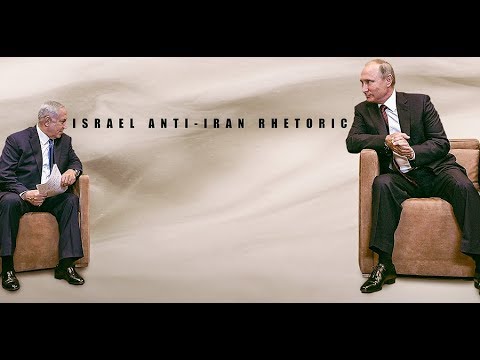
Press TV – August 25, 2017
Prime Minister Benjamin Netanyahu has said that Israel felt threatened by Iran’s growing influence in the Middle East. Netanyahu expressed his Iranophobic view in a meeting with Russian President Vladimir Putin in Russia’s Black Sea resort of Sochi on Wednesday. Press TV has asked Scott Rickard, former American intelligence linguist from Tampa, Florida, and Brent Budowsky, a columnist at The Hill from Washington, to give their thoughts on the issue.
Rickard said Tel Aviv is concerned about the fact that the regime could not carry out its old project to spread sectarian divisions and pave the way for dismemberment of the countries in the Middle East region because of the Iranian-led resistance against Israeli policies, not only in the occupied territories of Palestine but also in the whole region.
“Iran is not a threat to Israel whatsoever. The threat that Israel sees is the fact that their Oded Yinon Plan is being put to a hold by Iran,” the intelligence linguist said on Thursday night.
“They (the Israelis) look at Iran as a threat only because they have no influence on their governments and Iran is autonomous and is not under the Zionist influence,” he added.
Since the victory of the Islamic Republic of Iran in 1979, Tehran has been critical of Israel’s policies in the region, whereas “no leaders [of other states] even dared to speak out against Zionism,” Rickard argued. … continue
Blog Roll
 Aletho News
- What’s Behind U.S./Israeli Strikes On Iranian Pistachio Factories?
- Seyed M. Marandi: U.S. Military DIVIDED? Iran’s Secret Defense EXPOSED
- How I fell foul of the BBC thought police
- The End of NATO
- 37 days of war on Iran cost US staggering $42bln, tracker shows
- Baghdad tells Asian refiners, traders to begin loading Iraqi crude amid Iranian exemption
- Under fire, Moscow and Tehran close ranks
- Iran, US receive Pakistan-mediated plan for ceasefire then final deal
- Iran submits demands for end to war as mediators scramble ahead of Trump deadline
- Iran Threatens Retaliatory Strike on Stargate AI Project in UAE
- If Americans Knew
- U.N. experts demand Israel release prominent Gaza doctor after reports of ‘severe torture’
- Israel’s Latest Genocide Is Against the Shias of Lebanon. Why Is the World Silent?
- How Eliot Cohen’s influence over U.S. war-making paved the way for Trump’s war crimes in Iran
- Israelis don’t pay for the weapons we ‘sell’ to them — US taxpayers do
- While Distancing from AIPAC, Most 2028 Democratic Hopefuls Are Still Embracing Israel
- A brief history of the Israeli nuclear program, the open secret at the heart of the Iran war
- Israeli Settlers Killed a Palestinian Farmer on His Own Land, in Front of His Father. Yes, Again
- The US-Israeli War on Science is an Assault on our Future
- 100+ International Law Experts Say US Strikes on Iran Violate UN Charter, Could Be War Crimes
- ‘Vile, Horrifying, Evil’: Trump Threatens to Bomb Nation of 90 Million People ‘Back to the Stone Ages’
- No Tricks Zone
- An Inconvenient Tree: Uncovered In Alps… Europe Much Warmer Than Today 6000 Years Ago
- New Study Reports A 60% Slowdown In Greenland’s Ice Loss Rate In The Last Decade
- Low Intensity Tornado Wrecks Major Solar Farm, Creating A Potential Toxic Dump
- New Study Finds Warming Saves Lives…Cold Temperatures 12 Times More Deadly Than Excess Heat
- German Science Blog Accuses PIK Climate Institute Of Hallucinating Climate Tipping Points
- Devastating Assessment Of Comirnaty Vaccine By Former Senior Pfizer Europe Toxicologist
- New Study: CO2 Is ‘Effectively Negligible’ As An Explanatory Climate Change Factor Since 2000
- Former Pfizer Toxicologist Dr. Helmut Sterz Tells Bundestag Hearing Pfizer Vaccine Should Have Never Been Approved
- Energy Expert: Germany’s Nuclear Phaseout Was A “500 Billion Euro Mistake”
- New Research: South Australia’s Mid-Holocene Sea Surface Temperatures Were 4°C Warmer Than Today
 Aletho News