35,000 ‘Partially or Completely’ Deaf in Gaza Due to Israeli Bombings – Report

The Palestine Chronicle | January 9, 2026
An estimated 35,000 children and adults “have partially or completely” lost their hearing due to bombings during Israel’s two-year genocidal assault on the Gaza Strip, according to a Le Monde report, citing a survey by a local non-profit organization.
“Hearing loss can result from injuries to the head or neck, brain trauma causing ruptured eardrums and damage to the auditory system. But it can also be caused by exposure to sound waves, even if a person was not physically injured,” Dr. Ramadan Hussein, an audiologist working with the Atfaluna Society for the Deaf, reportedly said.
“These hearing disorders are, most often, irreversible,” he stressed.
‘Power of Explosion’
One such child whose hearing was affected by the bombings is a 12-year-old girl by the name of Dana. She was resting in her room in Gaza City when an Israeli missile hit the building just across from hers, the report said.
Dana’s father stressed that the explosion “was extremely violent”, with the door to her room torn off and the windows blown out. Although she survived the blast, Dana lost her hearing.
Specialists at the Atfaluna organization confirmed that Dana is suffering from “a very severe hearing loss”.
They said that “Because of the power of the explosion, the auditory nerve was severely damaged, perhaps even completely destroyed.”
Five-Day-Old Baby
In another case, a baby who was just five days old was thrown and buried under the sand when an Israeli missile struck one meter from his family’s tent in the al-Mawassai area of Khan Yunis, the report said.
His mother, Safa al-Qara, said, “We found him thanks to his feet sticking out. He was in a terrible state; we thought he was going to die.” Four months after his birth, his mother noticed that “something was wrong.”
She said that only movement “got his attention, not sounds.” He was subsequently diagnosed with a zero level of hearing.
The report stated that he urgently requires a hearing aid or cochlear implant to avoid sever developmental delays – an impossible task in the besieged enclave with Israel having blocked the entry of some medical equipment and medicines.
“For nearly a year, not a single hearing aid has entered the Gaza Strip,” Dr. Hussein warned, adding that “even those who already have them will soon be unable to use them, because batteries are also banned.”
Infrastructure Destroyed
In addition to the shortages, laboratories to make custom ear molds and much of the infrastructure needed to treat hearing disorders has been destroyed by Israel’s ground offensive, the report stated. Many specialists in this field have also already left the enclave due to the genocidal war.
Dr. Hussein warned that “Forced displacements, continuous bombings, famine and the lack of medicine affect pregnant women and fetuses and can lead to the birth of children with disabilities, including hearing loss.”
At the same time, with the worsening conditions in displacement camps, malnutrition and the lack of primary care, there is the risk of infections.
Fady Abed, the director of Atfaluna, warned that even minor infections, “like ear infections, can cause permanent hearing loss if not treated in time,” the report stated.
Staggering Death Toll
Starting on October 7, 2023, the Israeli military, with American support, launched a genocidal war against the people of Gaza. This campaign has so far resulted in the deaths of over 71,300 Palestinians, with more than 171,000 wounded. The vast majority of the population has been displaced, and the destruction of infrastructure is unprecedented since World War II. Thousands of people are still missing.
In addition to the military assault, the Israeli blockade has caused a man-made famine, leading to the deaths of hundreds of Palestinians—mostly children—with hundreds of thousands more at risk.
Despite widespread international condemnation, little has been done to hold Israel accountable. The nation is currently under investigation for genocide by the International Court of Justice, while accused war criminals, including Prime Minister Benjamin Netanyahu, are officially wanted by the International Criminal Court.
Russia carries out three evacuation flights from Israel in under 24 hours
MEMO | January 9, 2026
Russian authorities have reportedly carried out three evacuation flights from Israel in less than 24 hours, transporting officials and their families to Russia, according to Hebrew and regional media.
Israel’s Channel 14 reported on Thursday that the flights were conducted without any official explanation from Moscow. Separate reports in Russian and Iranian media said the evacuations were carried out under what appeared to be an urgent mandate, involving officials and their families.
The reports suggested that the pace of the evacuations was faster than usual, fuelling speculation that Moscow may have received sensitive or significant information prompting the move. However, no details were provided regarding the nature of the alleged information or the identities of those evacuated.
The Kremlin has not issued any official statement clarifying the reasons behind the evacuation flights, and Russian authorities have so far declined to comment on the reports.
Israel authorises electronic tracking of Palestinians

MEMO | January 7, 2026
Israel has authorised the use of electronic tracking devices on Palestinians in the occupied West Bank, formalising real-time surveillance of civilians who have not been charged, tried or convicted of any crime, according to a new directive issued by the Israeli army.
The order allows Israeli authorities to compel Palestinians placed under administrative movement restrictions to wear or carry electronic monitoring devices and criminalises any attempt to tamper with them. The measure embeds electronic tagging within Israel’s system of military rule over the occupied territory, further expanding the regime of surveillance imposed on the Palestinian civilian population.
Significantly in another example of the Israel’s apartheid rule, defence minister, Israel Katz, has explicitly excluded illegal Jewish settlers in the West Bank from the directive, underscoring the discriminatory nature of the policy and its application along ethnic and national lines. The order was issued following coordination between the Israel Defense Forces, the Israel Security Agency, Israel Police, the Ministry of Justice and the military’s legal authorities responsible for the occupied West Bank.
Human rights observers note that the policy applies to civilians subjected to Israel’s system of administrative control, a framework that routinely denies Palestinians due process and relies on secret evidence. Palestinians placed under such measures often face severe movement restrictions, prolonged surveillance and the constant threat of detention without trial.
The new directive reflects what journalist and filmmaker Antony Loewenstein has described as Israel’s “Palestine Laboratory”, a system in which Palestinians are used as testing grounds for advanced military and surveillance technologies later exported abroad. In his work, Loewenstein argues that Israel exports not only weapons but a comprehensive model for controlling what it labels “difficult populations”, combining military force, mass surveillance and spatial domination.
This model is explored in Al Jazeera’s latest documentary How Israel tests military tech on Palestinians, part of The Palestine Laboratory series. The film documents how Israeli checkpoints function as experimental sites for so-called “frictionless” technologies, including AI-enabled remotely operated weapons that fire stun grenades, tear gas and sponge-tipped bullets. These systems are deployed at checkpoints where Palestinians are routinely subjected to intrusive searches and data collection.
The documentary also details Israel’s extensive use of biometric surveillance systems such as Red Wolf and Blue Wolf. Blue Wolf operates on soldiers’ mobile phones, enabling them to photograph Palestinians and instantly access personal data, movement histories and profiling information.
Red Wolf is installed at checkpoints and control rooms, scanning faces and assigning individuals a colour-coded risk score. Palestinians labelled as “red” are flagged for increased scrutiny, harassment or restriction, including journalists and non-violent human rights defenders. According to testimony featured in the film, Palestinians are categorised without consent and subjected to constant monitoring that shapes every aspect of daily life.
The documentary further exposes the close and often opaque partnerships between Israel’s military and private technology firms. Israeli companies have tested facial recognition, behavioural analysis software, CCTV networks, drones and invasive spyware on Palestinians before marketing these systems internationally as “battle-tested”.
Human rights groups warn that the expansion of electronic tracking and biometric surveillance in the occupied West Bank constitutes a serious violation of international law. Under the Fourth Geneva Convention, an occupying power is prohibited from imposing collective punishment or discriminatory measures on a protected population.
Syria is Normalizing Ties With Israel, Here’s Why – Analysis
By Robert Inlakesh | The Palestine Chronicle | January 7, 2026
On January 6, 2026, a joint statement was published by the US State Department, affirming that the Israelis and Syrians had established a “joint fusion mechanism”. Despite being labeled an official normalization deal, this mechanism works as a soft normalization arrangement.
As the topic of Syrian normalization is often one that triggers a rather aggressive reaction from all sides, it is important to cut through the propaganda to establish what just happened.
As a product of a direct meeting between Israeli and Syrian officials in Paris, with the participation of the United States, both Damascus and Tel Aviv have agreed to a quasi-normalization deal of sorts.
The joint statement that was published on the US State Department website makes the issue extremely clear: a “joint fusion mechanism”, or “dedicated communication cell”, has now been established. This mechanism includes facilitating Israeli-Syrian cooperation in the following arenas:
- Intelligence sharing
- Diplomatic engagement
- Commercial opportunities
- Military de-escalation
Some supporters of Syrian President, Ahmed al-Shara’a, have been adamant that what was reached and is being pursued is solely to do with security issues and the issue of southern Syria. Today’s joint statement thoroughly debunks any such claims.
At the same time, no formal normalization agreement has yet to be reached. However, if Syria is directly opening up such communications and striving towards “commercial opportunities” with Israel, it may not be sealed with a signed agreement and ceremony that brings Damascus directly into the so-called “Abraham Accords”, but this would be, for all intents and purposes, a normalization agreement.
There is no longer any space in which reasonable people can argue that Syria’s current leadership has not become a US-aligned force that seeks further cooperation with the Israelis. It is a fact that the US runs the show. The reason why this issue has become so taboo to speak about is that there are many who simply do not want to accept this reality.
According to polling data published by the Foreign Policy political journal on December 6, 2025, only 14% of Syrians said that they support the normalization of ties with Israel.
92% of Syrians also answered that Israel’s illegal occupation of territory in the region was a critical threat to their security. Another telling statistic was that a whopping 66% said they had favorable views of the United States.
These statistics are very telling and can help explain a lot about what is happening publicly, as opposed to privately, when it comes to Syrian-Israeli relations.
For a start, the vast majority of the Syrian people are opposed to normalization, meaning that if President Ahmed al-Shara’a were to publicly attend a signing with Israeli PM Benjamin Netanyahu, it would certainly cause a stir.
In other words, in the interests of stability, reaching a normalization agreement with Israel is best kept out of the spotlight. On the Israeli side, this could also work to their benefit. Netanyahu understands that in the event of signing a formal normalization deal, he may enjoy a propaganda victory, but will also have to make small concessions on his ambitions in southern Syria.
By establishing ties with the Syrian leadership, in the absence of an official normalization agreement, it will provide the Israelis with the ability to maintain freedom of action inside Syria. Meanwhile, the loyalists to the Hayat Tahrir al-Sham government in Damascus will be able to deny the deep ties established between both sides and sell it as a deal comparable to the previous disengagement understandings that Israel tore up in December of 2024.
Another takeaway from the polling data is that a large percentage of Syrians view the US favorably, which explains the rather contradictory takes of some Syrians you may be seeing online. A popular view is that siding with the US is actually a smart idea and that Washington will help Syria rehabilitate itself.
Despite the US overtly being Israel’s closest ally and fueling the genocide in Gaza, which most Syrians oppose, many still manage to delude themselves into believing that in the new Syria that has emerged, the US role is unique in how it has behaved historically and continues to behave in every other country on earth. This is simply a case of mass self-deception and is, in some cases, a protective mechanism that enables people to live safely under a totally illogical worldview.
Where Is This Going?
At this current moment, the Israelis view the government of al-Shara’a as weak and are even anticipating its sudden collapse. Tel Aviv and Washington-based think tanks are also becoming more critical of the current regime in Damascus, after previously celebrating its rise to power. This is largely due to the inability of Ahmed al-Shara’a to bring his own forces and allied militias under control.
From the Syrian military parades late last year, it is very clear that a large contingent of fighters on the side of the Syrian leadership are in favor of a clash with the Israelis and were even filmed chanting for Gaza. Although this won’t result in the HTS leadership backing a defensive war, it is meaningful insofar as it applies enormous pressure and sends strong signals.
This deal is also meaningless to the Israelis, beyond what they are able to force the Syrian side to deliver for them. In all likelihood, we should expect the regime in Tel Aviv to treat the new mechanism like it does its ceasefire with Lebanon. By this, it means that the Israelis will demand that their requests be met by Damascus, some of which won’t be possible, while they continue to act with impunity, whenever and wherever they choose.
There are a number of key components to any security deal that may be signed in the near future between both sides, one of which will be the demand that the south of Syria be demilitarized. Damascus will agree to this, but is incapable of actually achieving such an outcome. The Bedouin tribes will not disarm as long as the Druze militias are armed, the villages and local militias of Dara’a will also refuse to give up their weapons, and so on.
In fact, if the Syrian authorities try to disarm their own people, who are under the direct threat of the Israeli occupation forces, it could even cause major destabilizing clashes. All throughout the country, organized militant groups, separatist movements, and local armed factions have refused to disarm.
The best the Syrian authorities have been able to do is to try to integrate many fighters into the ranks of their own security forces, which has already resulted in major issues for them; in one case, the killing of three US service members late last year.
There were even indications that an assassination attempt had just failed in the past week against Ahmed al-Shara’a, right before the latest round of direct talks with the Israelis was announced last Sunday.
Syria is also on the verge of a major conflict erupting to its northeast, with the Kurdish-led Syrian Democratic Forces (SDF), with both the Alawites and Druze minorities now calling for federalism. While foreign powers have influence within these minority communities, they genuinely do not seem able to coexist in the current Syrian State, which is one that not only fails to protect their rights, but whose security forces themselves are filled with fighters who seek to exterminate them.
It is clear that Syria’s civil war is far from over; the only difference is that the Syrian Arab Army (SAA) no longer exists, and Bashar al-Assad has been removed from the picture. Damascus used to be ruled by a leadership backed by Russia and Iran; now it’s ruled by a leadership that is backed by the US and Türkiye.
Ankara does have power in Syria, yet it has become clear that the US currently holds the major cards. So far, the Turkish government has failed to establish red lines and contest Israel inside the country, something that it needs to do in order to wield serious power. The US, UK, and even Israelis are the ones with the major sway at this current time, none of whom care to see Syria succeed for its own people.
All of this is relevant to the new Israeli-Syrian mechanism, as this deal is not one that the HTS leadership entered into from a position of strength. In fact, Damascus is being bullied by the United States and forced to accept realities imposed on it by the Israelis.
For Israel, it is a win-win deal. Either Syria fails to implement its side of the bargain and Zionism can continue to pursue its expansionist agenda; or, Syria succeeds and becomes more stable, plus it is on Tel Aviv’s side against its enemies in Lebanon and Iran.
For the Syrians, it’s a lose-lose deal. If they fail, the Israelis will batter them and they may even find the agreement further destabilizing the country; if they succeed in implementing their side, the Israelis will still act with impunity where they choose and instead of protecting their homeland, the Syrian people of the south will have no means of defending themselves.
Anyone framing this in a positive way is either lying to their audiences, lying to themselves, or both.
– Robert Inlakesh is a journalist, writer, and documentary filmmaker. He focuses on the Middle East, specializing in Palestine.
Somaliland and the ‘Greater Israel’ project
By Robert Inlakesh | Al Mayadeen | January 7, 2026
More than a simple recognition of Somaliland, “Israel” is hatching a scheme alongside its Emirati allies aimed at a regional expansion agenda. For the so-called “Greater Israel” vision to come alive, dominance must be secured not only across West Asia and North Africa, but also throughout the Horn of Africa.
The recent decision by the occupying entity in “Tel Aviv” to recognize Somaliland as a State has triggered outrage across Africa and much of the Islamic World, while drawing condemnations from most Arab capitals, with the notable exception of Abu Dhabi.
For the most part, analysts have pointed to “Israel’s” desire to use Somaliland as a staging ground for aggression against Yemen as a primary motivation behind the move. Some have further noted that officials of the Zionist regime have expressed interest in ethnically cleansing Gaza’s people and forcibly transferring them to Somaliland. While these factors evidently inform Israeli decision-making, they do not exhaust its strategic calculus; yet the conspiracy goes much deeper.
On November 24, 2025, the influential Israeli think-tank Institute for National Security Studies (INSS) released a report detailing both the benefits and drawbacks of recognizing Somaliland. While the report acknowledged multiple strategic incentives for such a move, it ultimately advised against proceeding before the United States had done so.
The INSS had advocated against the move, hedging that such a declaration would further isolate “Israel” within the framework of the so-called “Abraham Accords”, triggering backlash on the international stage regarding the issue of Palestinian statehood.
So what changed since the Israeli think tank report?
Understanding the Israeli thinking here, such a move would not be made if they saw it as a net negative. Instead, the recognition was offered in a very public and brazen manner. In order to make sense, we therefore have to look at the broader picture.
To begin with, the normalization drive [“Abraham Accords”] has clearly stalled, at least in terms of any major developments in this regard. The last country to enter into the fold of the broader Trump administration-led normalization movement was Kazakhstan. For context, Astana already normalized ties with the Zionist regime back in 1992.
Although US President Donald Trump announced Kazakhstan’s declaration as a development of great significance, the move was clearly seen as a weak attempt at keeping the normalization project alive amid the conspicuous absence of Saudi Arabia. In parallel, an increasingly desperate Israeli entity has launched what it calls the “Isaac Accords”, a separate normalization project with Latin American nations that are client regimes of the US.
In other words, the Israelis were not actually in a position where they necessarily viewed recognition of Somaliland as an impediment to their normalization agenda. In fact, through projecting power in the Horn of Africa, they may even see it as an advancement of this project, especially given that some 6 million people who identify as belonging ethnically to Somaliland are Muslims.
Another element of the move is to assert their dominance and to lash out internationally over the wave of recognition, last September, for the state of Palestine.
In addition, the elephant in the room here is that the Israelis are currently pursuing a joint agenda with the United Arab Emirates, particularly in both the Horn of Africa and Northern Africa. This alliance seeks to co-opt sectarian movements, separatist groups, and to weaponize warlords in order to reshape the continent as a whole.
The Emirati and Israeli agendas are one in this regard. They are inseparable and connected on almost every conceivable level, this is to the point that the de facto head of intelligence operations for the UAE has long been a man named Mohammed Dahlan, well known for his alleged involvement with Mossad and the CIA; particularly in Africa.
The UAE’s proxy in Yemen, the Southern Transitional Council (STC), seized the Hadhramaut and al-Mahra provinces from Saudi-backed forces in early December, bringing around 80% of Yemen’s oil resources under their control. The STC’s militants have even been trained by “Israel”. The UAE’s move, which would not have come without Zionist backing, now threatens the stability of the Arabian Peninsula and triggered major backlash from Riyadh.
While “Israel” is reportedly seeking to build up a military presence near the strategically located port of Berbera in Somalia’s Somaliland, the UAE began constructing the Berbera airbase as early as 2017, securing access to it for a period of 25 years. Similarly, the UAE–Israeli alliance has extended to the establishment of a joint military presence on Yemen’s strategically located island of Socotra.
It is speculated that the Emirati-backed STC, in southern Yemen, may launch an offensive aimed at capturing the Ansar Allah-controlled port city of Hodeidah, likely receiving Israeli aerial support. The coastline of Somaliland lies only 300 to 500 kilometers from Ansar Allah-controlled lands, making such an air campaign much more manageable than launching strikes from occupied Palestine.
Furthermore, turning to “Israel’s” agenda in Somalia itself, it is clear that this is a calculated move that targets Türkiye. Ankara maintains enormous influence in Somalia and remains a strong proponent of the “One Somalia” agenda. Therefore, at a time of heightened regional tensions, especially in Syria, where both Turkish and Israeli forces are seeking to carve out zones of influence and establish red lines, “Tel Aviv’s” move appears to be another attempt to land a strategic blow on Ankara.
Together, the Emiratis and Israelis are adamant about combating the Muslim Brotherhood and any Islamic governments or groups that voice their concerns for the Palestinians, which is why they are lobbying Western governments so hard on these issues and running non-stop propaganda campaigns against so-called “radical Islam”.
In reality, the Israeli-UAE-backed militias in Yemen are riddled with al-Qaeda-linked fighters and hardline Takfiri Salafists. The STC’s toughest fighting force, known as the Southern Giants Brigades, is reportedly led by the core of experienced militants who are former al-Qaeda fighters. In Gaza, meanwhile, the UAE and the Zionist Entity are also backing five separate proxy militias with alleged links to ISIS.
The Emiratis and Israelis are huge fans of these Salafist militants, who are totally obedient to them and adopt a mass Takfir doctrine that they use to justify the mass slaughter of Muslims. This was the same exact strategy adopted inside Syria by the Zionists, using Wahhabi extremists to do their bidding, while dividing the Muslim World and paving the way for their expansionist agenda.
If the Zionist Entity is to achieve “Greater Israel”, the common misconception is that they wish to directly occupy the entire region between the River Nile and the Euphrates. According to the Zionist vision, they would rule as an empire instead, whereby they enter into formal alliances with countries broken up into ethno-regimes and sectarian rump States. Divide and conquer.
So, dividing Somalia, in order to help the Emirati proxy-militias secure a southern Yemeni State, is precisely in line with the Zionist agenda. They will attempt to rule these territories through proxy support, using their puppets to destroy the Palestinian cause. In the case of Somaliland, if they are to succeed, they would also certainly attempt to ethnically cleanse the population of Gaza there. In other words, Somaliland recognition isn’t a small, isolated move; it is a piece being strategically positioned on their wider chessboard.
Israel is Having a Party After the Capture of Nicolás Maduro
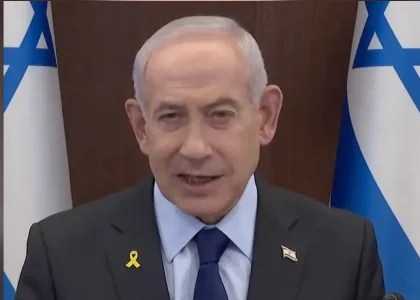
José Niño Unfiltered | January 4, 2026
The recent capture of Nicolás Maduro served as a stark reminder that the true center of gravity in Western power politics is not the White House or the Pentagon, but the interests of a globally dispersed Zionist network that views nation-states as mere instruments in their quest to make the world safe for Jewish supremacy.
Israeli officials across the political spectrum rallied behind President Donald Trump’s successful operation to extract Maduro, with government ministers and opposition figures in the Israeli political establishment celebrating the move as a devastating blow to Iran’s global influence operations.
Prime Minister Benjamin Netanyahu led the praise, posting congratulations on social media that saluted Trump’s “decisive resolve and the brilliant action of your brave soldiers.” Netanyahu’s statement referenced “bold and historic leadership on behalf of freedom and justice” without explicitly naming the Venezuela operation, though the timing left little doubt about his message.
In another press conference, Netanyahu continued to praise the United States’ operation in Venezuela. He proclaimed:
“I express the full support of the Israeli government for the determined decision and decisive action of the United States regarding Venezuela.
This is about restoring freedom and justice to another region of the world.
Across Latin America, we are witnessing a historic shift — countries returning to the American axis and renewing ties with Israel.”
As previously recorded by this author, the strategic reorientation Netanyahu has mentioned is nowhere more evident than in the Isaac Accords, an initiative whose underlying objective is the normalization of a regional order that guarantees Jewish primacy in the Western Hemisphere.
Foreign Minister Gideon Sa’ar issued the most comprehensive endorsement from Tel Aviv, commending what he called America’s role as “leader of the free world” in executing the operation. Sa’ar specifically expressed hope for renewed diplomatic relations between Israel and Venezuela, which Caracas severed in 2009 over Israel’s Operation Cast Lead in Gaza.
“Israel commends the United States’ operation, led by President Trump, which acted as the leader of the free world,” Sa’ar wrote. “At this historic moment, Israel stands alongside the freedom-loving Venezuelan people, who have suffered under Maduro’s illegal tyranny.”
The foreign minister continued with pointed language about regional security threats. “Israel welcomes the removal of the dictator who led a network of drugs and terror and hopes for the return of democracy to the country and for friendly relations between the states,” he stated. “The people of Venezuela deserve to exercise their democratic rights. South America deserves a future free from the axis of terror and drugs.”
Diaspora Affairs Minister Amichai Chikli from the ruling Likud Party drew the most explicit connections between Maduro’s capture and threats facing Israel, framing the operation as a direct message to Iran’s Supreme Leader Ali Khamenei.
“The capture of Nicolás Maduro is not only good news for the people dwelling in Caracas; it is also a devastating blow to the global axis of evil and a clear message to Khamenei,” Chikli declared. He elaborated on Venezuela’s alleged role in funding Iranian proxy networks. “Maduro did not run a country; he ran a criminal and drug empire that directly fueled Hezbollah and Iran.”
Chikli praised Trump’s approach as validation of hardline foreign policy. “President Trump’s decisive steps have once again proven that strong leadership is the only way to subdue dictators,” he wrote. “This is a direct battle between the values of freedom and the West and the dangerous alliance of radical Islam and communism.” He concluded simply that “the world is a safer place today.”
Opposition leader and former Prime Minister Yair Lapid of the Yesh Atid Party joined the chorus with his own warning to Tehran. “The regime in Iran should pay close attention to what is happening in Venezuela,” Lapid posted, issuing what analysts interpreted as a veiled threat amid ongoing protests in Iran over economic collapse.
Israeli security analysts view Maduro’s removal as potentially restricting Iranian Revolutionary Guard operations against Israeli targets throughout Latin America, cutting off weapons flows to the continent, and disrupting extensive oil smuggling operations between Venezuela and Iran that have helped Tehran evade sanctions.
The American political establishment, whose policies are demonstrably subservient to world Jewry, responded with equally fervent praise, viewing the capture of Nicolas Maduro as a significant strategic victory for the state of Israel.
U.S. Ambassador to Israel Mike Huckabee delivered some of the most forceful American praise for the operation, explicitly linking the Venezuela action to security concerns in his diplomatic posting. Speaking on Newsmax, Huckabee opened his reaction with religious fervor. “Well, my first reaction was to say, praise the Lord and thank you, President Trump,” the ambassador stated.
He then explained why Americans should view Venezuela through a Middle Eastern security lens. “A lot of people may not make the connection as to why this matters to us in the Middle East,” Huckabee said. “What they don’t know is that Hezbollah is very active in Venezuela.” The ambassador detailed the Iran connection that Israeli officials had emphasized. “There has been a 20-year partnership between Iran and Venezuela,” he explained. “The ties are deep, and Hezbollah operates in 12 different countries throughout South America.” In his conclusion remarks, Huckabee contended that the operation represented a global victory. “Good news for America, good news for the world,” he declared.
Welcome to Empire Judaica.
The chorus of approval from Israel and its advocates lays bare the grim reality for the American people: they are not citizens of a sovereign nation but unwitting actors in a geopolitical drama where they play supporting roles in a global imperium built for and by organized Jewry.
Israeli police shoot dead Palestinian from Bedouin village in Negev
MEMO | January 4, 2026
Israeli police shot dead a Palestinian from the Bedouin village of Al-Tarabin in the Negev early Sunday, local media reported.
Al-Tarabin is an unrecognized Palestinian Bedouin village located in the Negev Desert in southern Israel.
According to the daily Yedioth Ahronoth, a special police unit and soldiers from the “National Guard” raided the village to arrest Mohammed Hussein Tarabin for his alleged involvement in acts of vandalism against property in nearby Israeli settlements.
The National Guard is a security force formed by far-right National Security Minister Itamar Ben-Gvir and is viewed by the Israeli opposition as a militia under his direct authority.
The newspaper quoted Tarabin’s family as saying that police shot their son “without cause.”
“He is an ordinary man with seven children. There was no need to kill him,” the family said.
“For them (the police), this is a great achievement to please Ben-Gvir, who dances on Arab blood. The situation is dangerous, the behavior of the police is unacceptable, and they must leave the area or they will bear responsibility for anything that happens.”
Ben-Gvir, for his part, said on the US social media company X that he supported the police’s conduct in Al-Tarabin village, claiming that “Mohammed Tarabin” was a “dangerous criminal.”
The Negev Bedouin Leadership condemned the killing and called for Ben-Gvir’s dismissal.
It called for an investigation into the circumstances of the killing and bringing those responsible to justice.
Tens of thousands of Bedouins live in dozens of unrecognized villages in the Negev, with Israeli authorities denying them access to water, electricity, infrastructure, schools and medical clinics.
Israel and the politics of fragmentation: The hidden hand behind secessionist projects in Yemen, Somalia, and Libya
By Ahmed Asmar | MEMO | January 3, 2026
Israel’s malicious, meddling role in the Arab countries has long extended beyond direct military confrontation, as seen in Palestine, Lebanon, and Syria. For long, Tel Aviv has pursued a quieter yet dangerous strategy of encouraging fragmentation, weakening central states, and cultivating ties with separatist actors in fragile and war-torn countries. Today, this pattern is increasingly clear and visible in Yemen, Somalia, and Libya; three countries that suffer from prolonged conflicts, administrative collapse, and foreign interference. In each case, Israel’s footprint is not accidental; it serves a broader strategic doctrine aimed at dividing Arab countries, controlling critical waterways, and reshaping the regional balance of power to its advantage and dominance.
Yemen: secession as a gateway to normalisation
In Yemen, Israel’s indirect involvement surfaces through its alignment with the so-called Southern Transitional Council (STC), a secessionist entity seeking to reestablish an independent state in southern Yemen. While the Yemeni conflict is often framed as a regional proxy war, the STC’s leader, Aidarous al-Zubaidi, has openly, and on several occasions, signaled willingness to normalize relations with Israel. He publicly declared that recognizing Israel is not an obstacle if southern Yemen’s independence is achieved; an extraordinary statement that was slammed by many Yemeni public figures and politicians.
This declaration is not merely rhetorical. Yemen’s southern geography grants access to some of the most sensitive maritime corridors in the world, particularly near the Bab al-Mandeb Strait. For Israel, influence over forces operating near this chokepoint aligns with its long-standing objective of securing Red Sea navigation and countering its perceived regional adversaries. Supporting or encouraging secessionist forces in southern Yemen offers Israel a strategic foothold without formal military deployment, turning internal Yemeni fragmentation into a geopolitical asset, and posing a direct threat against the Arab countries, especially the littoral countries of the Red Sea – Egypt and Saudi Arabia.
Somalia: Somaliland and the militarisation of recognition
Somalia presents an even clearer case of Israel exploiting separatism for strategic gain. The self-declared Republic of Somaliland, unrecognised by the international community, has actively sought foreign backing to legitimise its secession. Israel’s contacts and recognition of Somaliland’s de-facto authorities mark a dangerous precedent in international relations, and against the international law and the UN charter.
The strategic motivation is transparent. Somaliland’s coastline also overlooks the Bab al-Mandeb Strait and the Gulf of Aden, one of the world’s most critical maritime corridors. Somalia’s President Hassan Sheikh Mohamud warned of the Israeli malicious plan behind such recognition, where he said that Israel seeks from recognising Somaliland to resettle Palestinians from Gaza, who experienced a two-year genocide, and most importantly, to host an Israeli military or intelligence base. These plans are added to the dangers of undermining Somalia’s territorial integrity and encouraging further fragmentations across the Horn of Africa.
Israel’s move to recognize a secessionist entity reflects how Israel exploits weak entities and divided states to move ahead with its expansionist and dominance strategies at the expense of the region and its people.
Libya: Haftar and the normalisation through the back door
Not far from the examples in Yemen and Somalia, in Libya, Israel’s role is more discreet but visible too. General Khalifa Haftar, who controls eastern Libya and has long sought international legitimacy, reportedly maintained contacts with Israeli officials as part of efforts to secure external backing. These interactions fit within a wider pattern of covert normalization between Israel and authoritarian or factional actors seeking foreign support in exchange for political concessions.
Libya’s fragmentation has turned it into fertile ground for foreign manipulation. Israel’s engagement with Haftar is surely not about peace or stability, but about influence, leverage, and having a close foot near its surrounding Arab countries.
Fragmentation as a strategic doctrine
Altogether, Yemen, Somalia, and Libya illustrate a consistent Israeli strategy: exploiting internal conflicts to advance a regional agenda based on fragmentation. This approach intersects with Israel’s ongoing territorial expansion and military aggression, from its occupation of Palestinian land to its violations of sovereignty in Syria and Lebanon. Fragmented Arab states are less capable of resisting Israeli policies and more exposed to normalization under opportunistic conditions.
Israel’s encouragement of secessionist movements is not about supporting self-determination; it is about redrawing the region into weaker, smaller entities incapable of collective action. This strategy directly threatens Arab national security as a whole, adding a new dimension to Israel’s expansionism.
At a time when the Arab world faces unprecedented challenges, recognising and confronting this hidden hand of fragmentation is essential. While ignoring Israel’s role in these secessionist projects risks allowing instability to become permanent, solely in favor of Israel in the region and beyond.
U.S. Ambassador To Israel, Mike Huckabee, Boasts That Regime Change In Venezuela Is Good For Israel.
The Dissident | January 3, 2026
On a recent appearance on Newsmax, the American Christian Zionist ambassador to Israel, Mike Huckabee, boasted that Trump’s recent kidnapping of Venezuela’s president, Nicolas Maduro, was good for Israel.
In the interview, Huckabee boasted, “A lot of people may not make the connection as to why this matters to us in the Middle East, what they don’t know is that Hezbollah is very active in Venezuela, there has been a 20-year partnership between Iran and Venezuela… the ties are deep.”
Huckabee boasted that Trump’s regime change operation “Is going to make life for us much safer in the Middle East.”
Israel’s support for American wars in the Middle East is well known, but its support for war in Venezuela is often less discussed.
But just as Israel wants to take out states in the Middle East that were too sympathetic to Palestinians, they have also wanted to take out Venezuela due to the country’s support for Palestinians and Palestinian resistance under Hugo Chavez and his successor, Nicolas Maduro.
As Middle East Eye noted in 2019, “Israel wants to see Maduro overthrown in Venezuela”.
The outlet noted that, “the US-Israeli support for overthrowing Maduro is part of a larger agenda to cement an anti-Palestinian campaign in Latin America at the expense of the Venezuelan people.”
The outlet noted that this was because “Solidarity with the Palestinian struggle for self-determination was at its height during the Chavez years up until today, with the leadership making outspoken criticism of Israel’s flagrant violations of international law. Venezuela severed diplomatic ties with Israel in 2009 over its military campaign in Gaza.”
A recent article in the outlet Israel Hayom, an Israeli newspaper funded by Zionist mega donor Miriam Addison- who Trump recently boasted “gave my campaign $250 million”- explained why Israel wants regime change in Venezuela, writing, “Since Hugo Chávez’s rise to power, Venezuela has become one of the most hostile countries to Israel and Zionism in Latin America” adding that Chavez, “severed diplomatic relations with Israel during Operation Cast Lead in 2009, accused Israel of ‘genocide against the Palestinian people’ and compared its policies to Nazi conduct”.
The outlet added that Maduro, “continued the anti-Israeli line with even more intensity. Thus, Venezuela, which previously maintained warm relations with Israel and even purchased security technologies from it, became a center of hostile propaganda toward Zionism”.
For this reason, Israel long cultivated a close relationship with Maria Corina Machado the U.S. asset in Venezuela who was used as a tool to advance Trump’s recent kidnapping of Maduro, and who hoped to be installed by the U.S. and Israel, only to be snubbed by Trump who said after the operation that she, “doesn’t have the support” to be installed as the leader of Venezuela.
Israel’s ruling Likud party, as far back as 2020, signed a cooperation agreement with Machado’s Vente Venezuela party, which promised to “bring the people of Israel closer to the people of Venezuela while advancing, together, the Western values to which both parties subscribe: freedom, liberty, and a market economy.”
In the aforementioned article in Israel Hayom, Machado promised that Venezuela will be “Israel’s closest ally in Latin America” if Maduro is removed and even heavily implied that Israel was directly taking part in the regime change operation, saying, “We rely on Israel’s support in dismantling Maduro’s crime regime”.
When asked by Israel Hayom how “Israel can support freedom movements in Venezuela without being accused of interference,” Machado signalled that Israel was already interfering in Venezuela and taking part in the regime change operation, saying, “Defending freedom, individual liberties, and democracy isn’t interference … Israel understands this”.
While oil is the most obvious motivation behind the kidnapping of Maduro, getting rid of one of the” hostile countries to Israel and Zionism in Latin America” and returning Venezuela to when it “maintained warm relations with Israel and even purchased security technologies from it” has undoubtedly played a role as well.
More Freedom Flotilla Members Confirm They Faced Rape And Torture While In Israeli Captivity
The Dissident | January 2, 2026
Recently, the German journalist Anna Liedtke, who was part of the Freedom Flotilla initiative, which broke the Israeli starvation siege of Gaza and brought aid, revealed that she was raped when she was detained by Israeli authorities.
At a conference, Liedtke revealed that, “I was part of the Freedom Flotilla as a journalist, and I was on the journalist and medical boat … around 100 nautical miles away from the coast of Gaza, we were intercepted and we were put into prison for five days, we were transferred from one prison to another, and during the strip search, I was raped”.
Since her testimony, the Freedom Flotilla Coalition has revealed that, “Anna is not the only flotilla participant to have suffered sexual violence at the hands of Israeli police and prison officials. Italian journalist Vincenzo Fullone, who was also aboard the Conscience, was subjected to repeated sexual violations amounting to rape while unlawfully detained, as was Australian activist Surya McEwen.”
The coalition provided testimony from the three victims of Israeli rape and sexual torture, writing that Anna Liedtke said, “After I was kidnapped by Israeli forces, I was subjected to repeated physical and sexual abuse. During a forced strip search, I was raped by Israeli female guards. I am coming forward not for myself, but for all the women who have endured sexual violence and sexual torture in Israeli prisons—for those who did not survive these attacks, for those who are experiencing this abuse now, and for those who cannot speak about it”.
The report also quoted Italian journalist Vincenzo Fullone saying, “In three separate occasions, I was ordered to enter a small, specially arranged room where I was completely stripped and subjected to invasive and painful anal searches. I remained silent each time to avoid provoking further violence and to deny the guards the satisfaction of my suffering. During the third search, the pain became unbearable and was compounded by mockery, verbal abuse—including the words, ‘Don’t you like it, Hamas whore?’—and the photographing of my body. I am still unable to find peace because if they were willing to do this to me, I can’t imagine what they’ve done – and continue to do – to the Palestinians under their complete control.”
The report quoted Australian activist Surya McEwen saying, “I was stripped naked and sexually assaulted by Israeli officers while being held hostage. One held a gun to my head, angrily threatening that he would kill me, while the other yanked and pulled on my genitals, perversely and almost gleefully. While there is a psychic cost to this experience, I absolutely refuse to feel shamed, lessened, or stained by it, as these all belong solely to the perpetrators. This small taste of the sadism that Zionist colonisers inflict en masse on Palestinians has not weakened my commitment, but rather strengthened my resolve to work toward liberation”.
As the Freedom Flotilla Coalition noted, “The horrific assault on flotilla volunteers must be understood in the broader context of an entrenched system of violence in which Israeli soldiers, police, and prison guards have long operated with impunity. Sexual violence, including rape, gang-rape, humiliating strip searches, and other forms of sexual torture, has been repeatedly committed against Palestinians in Israeli custody and documented by Israeli, Palestinian, and international human rights organizations. While we are committed to offering care and support for flotilla volunteers who have suffered sexual violence, we recognize that Palestinians–activists, children, women, men, and elderly detainees– have endured far more pervasive and systematic sexual violence and torture by Israel, with no credible accountability mechanisms.”
Indeed, the testimony from the Freedom Flotilla Coalition members matches harrowing testimony that has emerged from released Palestinian hostages from Israel’s torture dungeons.
Testimony taken by the Palestinian Centre for Human Rights reveals an “organized and systematic practice of sexual torture, including rape, forced stripping, forced filming, sexual assault using objects and dogs, in addition to deliberate psychological humiliation aimed at crushing human dignity and erasing individual identity entirely.”
The new testimony from the Freedom Flotilla Coalition provides further evidence that Israel and Israeli authorities have used rape and sexual torture as official policy against detainees as a broader part of the overall genocide in Gaza.
Villains of Judea: Liora Rez’s Holy War Against Critics of Israel
Inside StopAntisemitism.org’s quest to make life miserable for those who dare criticize Israel
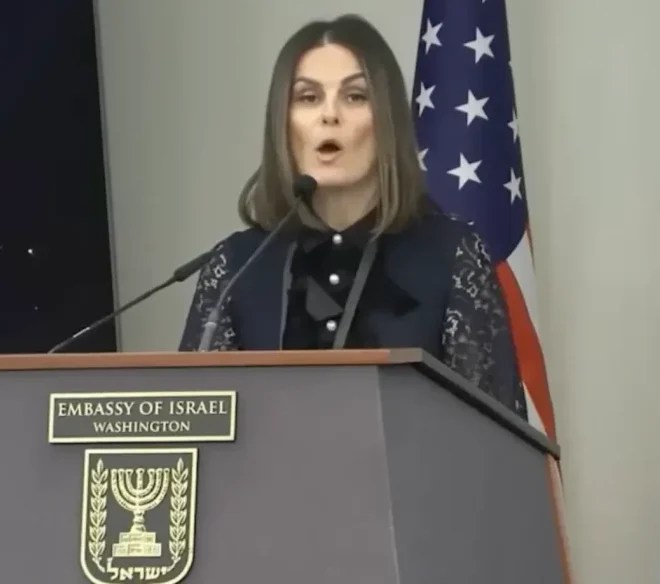
José Niño Unfiltered | January 2, 2026
Liora Rez, a professional Jewish agitator funded by shadowy donors, has built a lucrative career by branding critics of Israel as hate-filled bigots.
She emigrated to the United States as a Jewish refugee from what she describes as a thoroughly antisemitic environment in the Soviet Union. That early experience would become the foundation of her later activism against antisemitism.
But before Rez became one of the most controversial figures in pro-Israel activism, she had a very different public persona. Around 2012, she founded Jewish Chick Media Inc., a lifestyle brand focused on fashion and Jewish identity. As researcher Karl Radl documented, Rez pivoted from being a Jewish fashion and lifestyle influencer to a full-time pro-Israel activist following a 2016 trip to Israel with the Jewish Women’s Renaissance Project, now known as Momentum. At the time, she was navigating a contentious divorce in Connecticut, and the combination of circumstances prompted her decision to reinvent herself entirely.
In October 2018, Rez launched StopAntisemitism.org, an organization that would gain her great notoriety The group focuses on publicly calling out individuals it regards as antisemitic, using digital networks including the Internet, direct mail, and social media to reach millions. The organization’s stated mission is to publicly expose antisemitic behavior and ensure repercussions for those who, in their view, advocate hatred and violence against Jewish people.
Rez’s philosophy is blunt. She firmly believes that “antisemitism thrives when there are no consequences,” so her organization aims to create those consequences, which include job loss, suspensions, and public shaming for individuals they target. In testimony before Congress and numerous op-eds, Rez claims her group is “nonpartisan” and “grassroots,” mobilizing networks of activists to identify alleged antisemites and pressure institutions to discipline them.
The results, by Rez’s own account, have been dramatic. In an interview with the Jewish News Syndicate, she claimed that since the Hamas attacks of October 7, 2023, StopAntisemitism has “profiled more than 1,000 antisemites” and “over 400 of them have been fired” thanks to their pressure campaigns.
Harassing Israel critics is no cheap endeavor. Rez’s organization enjoys substantial financial backing from the Jewish community. The Milstein Family Foundation, led by real estate investor Adam Milstein and his wife Gila, is a key funder of StopAntisemitism.org. Tax records from 2022 reveal that the Merona Leadership Foundation—with Gila Milstein serving as president—compensated Rez with a $125,633 salary while allocating approximately $270,000 toward the organization’s operational costs.
At the core of Rez’s activism lies the premise that anti-Zionism and antisemitism are essentially identical. In a Jerusalem Post profile, she stated unequivocally: “Anti-Zionism is a contemporary form of antisemitism. We must fight this hate’s influence, especially on younger generations, to secure the future of the Jewish people in the US, in Israel and around the world.”
In her writing, Rez frequently emphasizes that Jews comprise just over 2% of the US population but are victims of “almost 60% of all US religious hate crimes,” using this statistic to justify an expansive definition of antisemitism. StopAntisemitism employs the International Holocaust Remembrance Alliance working definition of antisemitism as its guide, which explicitly includes several anti-Israel positions—such as describing Israel as a racist endeavor—as examples of antisemitism. For Rez, hostility toward Israel functions as the primary vehicle for contemporary anti-Jewish hatred.
She views the “global wave of Jew hatred” that surfaced after Hamas’ October 7 attacks as justification for intensive monitoring of campuses, corporations, unions, hospitals, and government agencies. Rez identified college campuses as one of the most troubling environments, citing cases of Jewish students being singled out in libraries, professors openly celebrating Hamas and Hezbollah militants, demonstrators blocking building access, and university leadership remaining passive. “We stepped in,” she stated, adding a stern message: “If you target Jewish students, your actions won’t remain unseen.”
Her approach advocates aggressive public exposure of students and faculty, often tagging employers and prospective employers on social media to maximize professional consequences.
Perhaps nothing illustrates StopAntisemitism’s controversial approach better than its annual “Antisemite of the Year” competition, where the organization nominates a slate of figures and invites the public to vote. The contest has featured a mix of figures from the right, Holocaust deniers, and high-profile pro-Palestinian or anti-Zionist public figures, reinforcing critics’ claims that Rez collapses political opposition to Israel into the category of antisemitism.
Conservative commentator Tucker Carlson was named the 2025 “Antisemite of the Year” on December 21, 2025, marking the second consecutive year that StopAntisemitism selected a right-wing figure–Candace Owens was the recipient of this distinction in 2024–for this designation after years of predominantly awarding the title to left-wing personalities. Carlson competed against a diverse slate of nominees including UFC fighter Bryce Mitchell, social media personality Stew Peters, beloved children’s YouTuber Rachel Anne Accurso (“Ms. Rachel”), and “Sex and the City” star Cynthia Nixon.
Although Ms. Rachel did not receive StopAntisemitism’s designation, in 2025, StopAntisemitism launched what became one of its most controversial campaigns against her. The Jewish advocacy organizations went on the offensive after she posted about children in the Gaza Strip, called for an end to the blockade, and hosted Palestinian journalist Motaz Azaiza.
“Since 10/7, Ms. Rachel has pushed Hamas propaganda to millions – sharing debunked images, inflated casualty claims, and almost entirely ignoring Israeli child victims,” StopAntisemitism published on X. “She also hosted Motaz Azaiza, a terrorist sympathizer who celebrated the 10/7 massacre & openly idolizes Yahya Sinwar.”
Accurso publicly rejected the label, emphasizing her commitment to children’s well-being. Rep. Ro Khanna (D-CA) condemned the nomination, saying, “Ms. Rachel is a preschool teacher who speaks up for starving children in Gaza. That is not antisemitism. I hope thousands will join me in standing up for her.”
More recently, Rez has joined a right-wing Zionist campaign against newly-sworn New York City mayor Zohran Mamdani. She has warned that his election as NYC mayor would be “catastrophic” and portrayed him as part of a rabid anti-Israel left that would “take over every inch of NYC.”
Through her fanatic advocacy for Israel, Rez has gained substantial recognition within certain segments of the Jewish community. She testified before the U.S. House Small Business Committee in January 2024, where her official bio stressed her status as a Soviet Jewish refugee and described StopAntisemitism’s efforts to hold antisemites “accountable for their hateful actions.”
The Jewish newspaper Algemeiner has repeatedly listed her among the “Top 100 People Positively Influencing Jewish Life,” highlighting StopAntisemitism’s social media reach and their ability to deliver severe economic and social consequences against those who criticize the Jewish state.
The ultimate lesson of StopAntisemitism.org is that the movement’s true goal is not mutual respect, but total domination, enforcing a code of silence where gentile criticism is treated as a thought crime worthy of punishment.
Featured Video
Dr. Tony Martin – The Jewish Role in the African Slave Trade
or go to
Aletho News Archives – Video-Images
In Memoriam
James Petras, In Memoriam
 02.13.2026
Professor James Petras, 89, world-renowned sociologist, public intellectual, and scholar of Latin American politics and global economics, died peacefully on January 17, 2026, in Seattle, WA, surrounded by family.
A prolific scholar and activist, he devoted his life to challenging power, imperialism, and inequality. … continue
Blog Roll
 Aletho News
- Lawyers ask police to investigate Elbit Systems UK for alleged war crimes complicity
- Israel ready to strike Iran-backed armed groups – media
- Behind US war drums against Iran: No goals, no plan, no off-ramp
- With Ukraine blamed for cutting oil flows to Hungary, Croatia also refuses to transfer Russian oil in violation of EU law
- Friedrich Merz’s Push to End Online Anonymity Has a Troubling Subtext
- Macron: French citizens fighting for Israel cannot be labeled ‘genociders’
- US eyes Gaza security force drawn from armed gangs
- The Only Motive Behind The ‘Imminent’ U.S. War With Iran Is The Zionist Lobby
- Trump eyes 350-acre US military base housing 5,000 troops in Gaza
- Israel Pushing US Toward a Big and Damaging War With Iran – Ex-Pentagon Analyst
- If Americans Knew
- ‘Christians Out’: Jerusalem Church Tagged With Hate Graffiti, Police Investigating
- Israeli Settlers Kill American Teen
- ‘We returned from hell’: Palestinian journalists recount torture in Israeli prisons
- No mercy for Gaza in Ramadan – Not a ceasefire Day 133
- The Israeli Government Installed and Maintained Security System at Epstein Apartment
- Tucker Carlson interrogated in Israel, has passport seized after interviewing US ambassador
- 6,000 Amputees in Gaza Face Impossible Recovery amid Israeli War Ultimatum
- The Lancet: Gaza death toll far higher than reported – Not a ceasefire Day 132
- Compliant aid: Who are the Israel-approved NGOs scaling up in Gaza?
- Why won’t Trump’s “Board of Peace” bring peace? – Not a ceasefire Day 131
- No Tricks Zone
- Coal Power Back In Trend As Globe Tries To Keep Pace With Growing Demand For Power
- New Study: A 4°C Warmer Beaufort Sea Had ‘No Sea Ice’ 11,700 – 8200 Years Ago
- Unfudging The Data: Dutch Meteorological Institute Reinstates Early 20th Centruy Heat Waves It Had Erased Earlier
- German Gas Crisis…Chancellor Merz Allegedly Bans Gas Debate Ahead of Elections!
- Pollen Reconstructions Show The Last Glacial’s Warming Events Were Global, 10x Greater Than Modern
- Germany’s Natural Gas Storage Level Dwindles To Just 28%… Increasingly Critical
- New Study Rebuts The Assumption That Anthropogenic CO2 Molecules Have ‘Special’ Properties
- Climate Scientist Who Predicted End Of “Heavy Frost And Snow” Now Refuses Media Inquiries
- Polar Bear Numbers Rising And Health Improving In Areas With The Most Rapid Sea Ice Decline
- One Reason Only For Germany’s Heating Gas Crisis: Its Hardcore-Dumbass Energy Policy
 Aletho News