Lawyer visits Dr. Abu Safiya, reveals his exposure to torture and abuse

Palestinian Information Center – February 12, 2025
GAZA – Al-Mezan Center for Human Rights said its lawyer was able on Tuesday to visit Dr. Hussam Abu Safiya for the first time since he was kidnaped from the Gaza Strip 47 days ago.
“Around 3:00 p.m. today, al-Mezan’s lawyer visited Dr. Abu Safiya in Ofer prison, located in the unlawfully occupied West Bank. During the visit, Dr. Abu Safiya detailed the various forms of torture and abuse to which he has been subjected both during his unlawful arrest and throughout his arbitrary detention by Israeli forces and authorities,” al-Mezan explained in a statement on Tuesday.
“When he was captured from Gaza and transferred to the Sde Teiman military detention camp, he was subjected to various forms of torture and inhuman and degrading treatment — methods that are emblematic of Israeli mass arrest operations in Gaza,” al-Mezan said.
Dr. Abu Safiya told the lawyer that he was being forcibly stripped, having his hands tightly shackled, and being made to sit on sharp gravel for approximately five hours by Israeli forces.
He was also subjected to severe physical abuse, including beatings with batons and electric shock sticks, as well as repeated blows to the chest, according to the lawyer.
“In Ofer prison, where he was transferred on January 9, 2025, he was held in solitary confinement for 25 days — a period so prolonged as to constitute a form of torture in itself. During this time, he endured nearly continuous interrogation for 10 days. At one point, he lost consciousness in his cell due to severe breathing difficulties,” the lawyer said.
“During interrogation, Dr. Abu Safiya was confronted with accusations that he firmly denied, stressing that he is a doctor whose sole duty is to provide medical care to patients and the wounded,” the lawyer added.
The detained doctor also reported a severe decline in his health, with his weight dropping from 96 kilograms to 84 kilograms, a 12-kilogram loss in less than two months — further evidence of Israel’s systematic starvation policies against Palestinian prisoners and detainees.
Additionally, Abu Safiya disclosed that he suffers from heart muscle enlargement. Despite repeatedly requesting medical attention from Israeli authorities, he has been systematically denied access to a specialist examination and deprived of essential care, further endangering his already deteriorating condition.
Al-Mezan has unequivocally condemned “the torture and other grave human rights abuses inflicted upon Dr. Abu Safiya by Israeli forces and authorities.”
Al-Mezan has urged the international community, particularly Israel’s allies, to take immediate action to demand the immediate and unconditional release of Dr. Abu Safiya, as well as of all Palestinians who have been unlawfully and arbitrarily detained by Israeli authorities, including hundreds of healthcare workers.
Gaza ceasefire in peril as Israel’s non-compliance sparks diplomatic crisis with Qatar
MEMO | February 12, 2025
Qatar has issued a stark warning to Israel that Prime Minister Benjamin Netanyahu’s conduct is jeopardising the current hostage deal, as mounting evidence reveals multiple violations of the ceasefire by the occupation state.
According to Haaretz, Qatar has conveyed “angry messages” to Israel after Netanyahu’s controversial statements about ethnically cleansing Palestinians from the Gaza Strip and his failure to send a high-level delegation to Doha for negotiations. The Qataris emphasised that their role is guarantors of the agreement and they are not merely intermediaries between Israel and Hamas.
Israel’s violations of the ceasefire terms are extensive and well-documented. The agreed humanitarian aid target of 12,000 trucks has fallen dramatically short, with only 8,500 reaching Gaza. The shelter crisis continues as Israel has delivered just 10 per cent of the promised 200,000 tents, while none of the pledged 60,000 mobile homes have materialised.
The medical evacuation programme has largely failed, with only 120 patients permitted to leave Gaza instead of the anticipated 1,000. Gaza’s Health Ministry reports ongoing Palestinian casualties during the ceasefire period, while Israel continues to block both the return of displaced persons to northern Gaza and the entry of essential equipment needed for the removal of debris and the recovery of dead bodies. At least 48,000 Palestinians have been killed by Israel, mainly women and children, and thousands more are missing, believed dead, under the rubble.
Israel’s violations of the ceasefire agreement have been confirmed by three Israeli officials and two mediators. Speaking anonymously to the New York Times they said that Hamas’s claims about Israel’s non-compliance with the agreement terms were accurate.
Qatar’s Foreign Ministry has taken the unusual step of publicly condemning Netanyahu’s recent television interview proposing the transfer of Gaza’s Palestinian population to Saudi Arabia, describing it as “a flagrant violation of international law.” The diplomatic crisis deepens as Hamas threatens to pause the implementation of the agreement which in turn has been met with threats by US President Donald Trump and Netanyahu.
US Middle East Envoy Steve Witkoff is scheduled to visit the region, including stops in Israel and Doha, to assess the deteriorating situation first hand. Sources suggest that without swift progress in negotiations for the second stage, further delays in hostage releases could lead to a complete collapse of the agreement’s first phase.
Gaza Under Siege: Aid Cut off as US President Trump’s Remarks Threaten Ceasefire
Al-Manar | February 11, 2025
As the drained Gaza Strip faces severe restrictions on humanitarian aid, including the blocking of vital fuel supplies, US President Donald Trump’s recent statements add further tension to an already volatile situation.
An article in the Israeli Haaretz newspaper describes Trump’s recent statements and interventions as ‘tempting fate’, warning that they could derail the ceasefire agreement in Gaza and disrupt the prisoner exchange process.
Zionist analyst Amos Harel, writing for Haaretz, refers to Trump as an “unpredictable force” whose actions risk intensifying the crisis. Trump’s call for the release of prisoners in a single batch, diverging from the previously agreed incremental approach, represents a radical shift in negotiations that could have dangerous consequences.
While many in the Zionist entity, particularly those supporting the prisoner exchange deal, had placed their hopes on Trump, Harel notes that they now share the “painful frustration” previously felt by critics, especially those from the right-wing factions.
Rising Right-Wing Optimism and Potential Fallout
The article further highlights how right-wing factions in the Zionist entity have embraced Trump’s remarks, seeing them as an opening for Zionist Prime Minister Netanyahu to retract his commitments and take military action against Hamas. However, Harel cautions that such action could lead to the deaths of dozens of prisoners still held in Gaza.
In conclusion, Harel dismisses the right-wing optimism surrounding Trump’s intervention, stressing that military force is unlikely to change Hamas’s stance, particularly as the group has nothing left to lose.
He suggests that Trump’s motivations may include securing a significant regional achievement, such as ending the Gaza conflict, facilitating normalization with the Israeli enemy’s regional neighbors, or even securing a Nobel Peace Prize.
Limited Aid and Severe Shortages
In a blatant escalation of restrictions, Israeli occupation forces have blocked the entry of commercial fuel into Gaza, despite clear stipulations in the humanitarian protocol.
Sources within Gaza confirmed to Al-Jazeera that the occupation has also halted the supply of fuel for essential services, including civil defense and municipal vehicles required for crucial road repairs and debris removal.
Additionally, no commercial fuel has been allowed to enter the enclave, exacerbating the ongoing humanitarian crisis.
The same sources revealed that only around 53,000 tents have been allowed into Gaza out of the agreed 200,000, and none of the 60,000 caravans required for shelter have been delivered. They also noted that only 4 heavy vehicles have been permitted to enter for debris removal and body retrieval, despite the sector’s need for 500 such vehicles.
In addition, the Israeli occupation has prevented the entry of construction materials needed for rebuilding hospitals and civil defense centers. Gaza’s Rashid Street remains closed to vehicles, and crossing checks continue on Salah Al-Din Street following the expiration of the 22-day deadline. No power station equipment has been allowed to enter, hindering repairs and the restoration of the power grid.
Israel establishes nine ‘permanent’ occupation bases in south Syria
The Cradle | February 11, 2025
Israeli occupation forces have discreetly established a security zone within Syrian territory, with nine sites already under advanced construction within the occupied buffer zone, beyond it, and on Mount Hermon, Israeli Army Radio reported on 10 February.
The army has established nine bases extending from Mount Hermon and through Quneitra until Deraa governate, which “appeared to be permanent.”
There is currently no set timeline for how long Israel will maintain control over this security zone, but the army has confirmed that it will remain until it is certain that there are “no threats to Israel.”
The army has also established “security cooperation with Jordan for mutual issues including against factions in south Syria and possible Hamas cells.”
Three army brigades currently operate on Syrian territory, an increase from the one-and-a-half battalions stationed in the occupied Golan Heights before 7 October 2023, the Army Radio added.
Israeli troops have attempted to minimize their contact with Syrians residing in villages now under Israeli occupation.
Israel first occupied parts of the Syrian Golan Heights during the Six-Day War in 1967. After the October War in 1973, Syria and Israel struck a ceasefire agreement that established a demilitarized zone in the Golan.
After the fall of former Syrian president Bashar al-Assad on 8 December, Israeli troops immediately occupied additional land in the demilitarized zone and beyond, including on strategic Mount Hermon.
The Israeli Air Force also launched hundreds of airstrikes to destroy Syrian army air and naval bases, as well as aircraft, air defense systems, and missile stores.
The Syrian Observatory for Human Rights (SOHR) reported at the time that about 80 percent of Syria’s military capabilities had been completely destroyed.
Leader of Hayat Tahrir al-Sham (HTS) and ex-Al-Qaeda chief Ahmad al-Sharaa (formerly known as Abu Mohammad al-Julani) appointed himself as Syria’s president after Assad was ousted.
HTS previously received support from Israel, and Sharaa has stated he does not seek confrontations with Israeli forces occupying the country.
Instead, fighters from HTS and other armed factions have focused efforts on disarming and carrying out sectarian killings of Alawites in the countryside regions of Homs and Hama, and attacking Lebanese tribes operating smuggling rings along the Lebanese–Syrian border.
From Gaza to the West Bank: Israel’s unyielding war machine
By Ramzy Baroud | MEMO | February 10, 2025
Trump to ‘clean out’ and own Gaza?
Seyed Mohammad Marandi, Alexander Mercouris & Glenn Diesen
Glenn Diesen | February 9, 2025
I had a conversation with Alexander Mercouris and Prof. Seyed Mohammad Marandi (advisor to Iran’s nuclear negotiation team) about Trump’s recent comments about ethnically cleansing Gaza and the US seizing ownership over the territory. It is said that Trump should not be taken literally as much of his talk is either a negotiation tactic or he is simply improvising. Trump’s comments could have been aimed to ensure Israeli compliance with the ceasefire, to keep Netanyahu in power, or to have been part of a wider retrenchment strategy as the US must appear strong at a time when it is pulling back and shifting priorities.
Hamas delays next release of Israeli captives over ‘violations’ of Gaza ceasefire
Press TV – February 10, 2025
The Palestinian resistance movement Hamas says it will postpone the next release of Israeli captives under a ceasefire deal in Gaza until further notice as the Israeli regime continues to violate the terms of the agreement.
In a post on the social media platform X, Abu Obeida, spokesman for the Qassam Brigades, Hamas’ armed wing, said the handover of the captives “who were scheduled to be released next Saturday… will be postponed until further notice, and until the occupation commits to and compensates for the entitlements of the past weeks retroactively.”
He added, “We affirm our commitment to the terms of the agreement as long as the occupation commits to them.”
The spokesman for the Qassam Brigades stated that over the past three weeks violations had included “delaying the return of the displaced to the northern Gaza Strip, and targeting them with shelling and gunfire.”
In response to Hamas’ announcement, Israeli minister of military affairs Israel Katz said he has instructed the military to “prepare at the highest level of alert for any possible scenario in Gaza.”
Hamas released three Israeli captives on Saturday as part of the fifth phase of the prisoner exchange deal under the ceasefire agreement with the Tel Aviv regime that took effect last month.
In exchange, Israel released 183 Palestinian prisoners, of whom 18 were serving life sentences. The majority had been detained in Gaza since the onset of the Israeli genocidal war on October 7, 2023, and had no public charges against them.
A total of 16 Israeli captives and 566 Palestinian prisoners have been freed so far under the ceasefire agreement.
The next Israel-Hezbollah war is now unavoidable – and it will be worse
By Robert Inlakesh | RT | February 10, 2025
Another round of violence between Lebanon and Israel is not a matter of if, but when. Israel managed to extract a series of tactical victories from the war so far, but did not possess the capacity to defeat Hezbollah decisively. Now that Israel seeks to maintain freedom of action inside Lebanon, it threatens a much more violent outbreak than what was stopped by the November 27 ceasefire.
Much of the analyses offered on the conflict between Lebanon and Israel, which erupted into a paroxysmal battle in September 2024, trace its origins back to October 8, 2023. However, this take is limited in its scope and also often misses key lessons from the history of the conflict.
Understanding what shaped the Lebanon-Israel war
A day after the Hamas-led October 7 attack against Israel, it became clear, through the public statements and actions of the Israelis, that the war they sought to launch was intended to inflict maximum collective punishment on the civilian population of Gaza. Although it often goes unrecognized due to the shocking effects of the Hamas raid, at least 413 Palestinians were killed inside Gaza that day, most of them civilians. The next day, the Lebanese group Hezbollah began opening fire on Israeli monitoring equipment set up in the illegally occupied Shebaa Farms area.
After Israel conducted airstrikes in southern Lebanon and killed four Hezbollah members, the Lebanese armed group responded by opening fire on Israeli military sites and surveillance equipment on October 9. That same day, former Israeli Defense Minister Yoav Gallant declared a “complete siege” on Gaza and that “we are fighting against human animals” to justify blocking all food, water, and electricity from entering the territory.
Understanding the gravity of what had just happened, Hezbollah’s secretary general, Seyyed Hassan Nasrallah, understood that they were going to have to play a supporting role for the Palestinian armed groups in Gaza. However, the group did not want to drag Lebanon into a comprehensive war and repeatedly stressed this point. The one pledge that Nasrallah made was “Hamas will win,” offering no other red lines.
From October 8, 2023 to September 20, 2024, Israel was responsible for around 81% of all attacks between both sides, killing 752 people in Lebanon, while Hezbollah’s attacks killed 33 Israelis. The last time a war was fought between Lebanon and Israel was in 2006, which began when Hezbollah conducted a raid and kidnapped Israeli soldiers. The war was well planned by Hezbollah and resulted in a victory for the group, as Israeli forces retreated from Lebanese territory.
What made Hezbollah the first Arab force to claim a real victory over Israel in 2006 was down to the absolute power imbalance, in which a stalemate combined with tactical victories and a well executed plan made it a defeat of the Israeli military. After this, while Israeli forces committed thousands of violations of Lebanese sovereignty – by land, sea, and air – occasionally assassinating Hezbollah fighters in Syria that caused some brief border skirmishes, the two sides veered away from all-out war.
In 2019, however, the Israelis began working on a new security fence/wall along the Lebanese border, which cut into and annexed land clearly demarcated to be on Lebanon’s side of what is known as the Blue Line. In 2023, the most significant land grab was of the northern Ghajjar village, which was cut off from Lebanon and opened for Israelis to visit. In addition, Israeli forces repeatedly entered Lebanon in order to clear land between the fence and Lebanese farm lands, resulting in repeated standoffs.
During the period from 2006 to 2023, Israel had been working at infiltrating Hezbollah and spying on the political party, while the Lebanese group significantly strengthened its military power. This is of great significance to the conflict that has taken place over the past 16 months, because Hezbollah in 2006 was somewhat comparable in power to Hamas at the start of the war in October 2023.
Hezbollah was also born out of the conflict between the Palestine Liberation Organization (PLO) and Israel, when the Israelis launched their invasion of Lebanon in 1982. The Israelis killed around 20,000 Palestinians and Lebanese in that war, which ended with a ceasefire due to the PLO’s surrender and acceptance of deportation to Tunisia.
Yet, after the PLO’s fighters and leadership left, Israel did not leave Lebanese territory and instead occupied the south of the country, while deploying its allied militias, including the Phalange Party, to massacre thousands of civilians in and around the Palestinian refugee camps. The lesson learned here for all future movements that would emerge to fight Israel, was that you never surrender your weapons; hence the Hamas slogan ‘victory or martyrdom’. The single biggest achievement that Hezbollah recorded in its history was forcing Israel to withdraw from Lebanese lands and give up on their occupation.
Why war is inevitable
It is clear that the war between Lebanon and Israel, which lasted nearly two months, was not one that Hezbollah was prepared for. Even after Israel’s booby-trapped pager attacks, which injured thousands across Lebanon, including many civilians, the Lebanese group still sought to fight a limited battle, as evidenced by the speech given by Nasrallah at the time. However, Israel did not stop there and decided to kill most of Hezbollah’s senior leadership, including Nasrallah, making a war unavoidable.
As early as October 8, 2024, Israeli Prime Minister Benjamin Netanyahu was threatening Lebanon with the kind of destruction wrought on Gaza. While the assault that the Israelis launched was certainly devastating to the civilian population, killing nearly 2,000 people, it was clear that it had not decided to launch a Gaza-style attack. Meanwhile, Hezbollah began using heavier missiles from its vast arsenal, but was tame in its approach and was careful to make much of its strikes symbolic or aimed at military facilities. This had nothing to do with what either side may have liked to do, but there was strategic constraint, which appeared to be deteriorating into the final week prior to the ceasefire.
By late November, Israel had failed to make meaningful advances on the ground in southern Lebanon and did not achieve its objective of reaching the Litani River area. Meanwhile, Hezbollah was not capable of equaling the level of destruction that Israel was committing against Lebanese cities using their missile strategy, it was also fighting essentially blindfolded and standing on one leg after the blows it suffered. Both sides realized that the inevitable result would be a stalemate, so in order to stop further devastation, a ceasefire was reached.
After suffering a major disruption to its supply line through Syria, the loss of its leadership and many commanders, also battling to solve the issues of infiltration, Hezbollah was severely wounded, but not destroyed. While the Israeli tactical victories have now shifted the propaganda war to make Hezbollah appear to be on its last legs, it is far from done. In fact, it still maintains a formidable ground force of around 100,000 fighters, a domestic weapons production capacity, and an abundance of ammunition, which the Israeli military understands well.
The loss of Nasrallah is not a small thing and still lingers in the minds of each and every supporter inside the country, many of whom still yearn for revenge after what was just committed against their nation. Israel proved incapable of beating Hamas after 15 months of all-out devastation, committing one of the worst atrocities since the Second World War. Hezbollah is still a much more capable fighting force than Hamas, yet there are a number of constraints on it due to the domestic political/economic/social situation inside Lebanon.
If Israel chooses to stay inside Lebanese territory, for whatever reason, it will only be a matter of time before action is taken. The next round will also likely be much more bloody, and the death toll will make the conflict last year seem relatively insignificant in comparison. This may not happen in the immediate future and could even take over a year, but the conflict is far from over and that is because there isn’t really a ceasefire in effect as of now.
On November 27, Israel made a point of not only violating it from the first moments and later advancing further into southern Lebanon, it committed hundreds of violations of the ceasefire. Israel has made it very clear that the new reality is that it has full freedom of action and can remain inside pockets of southern Lebanon for as long as it chooses. Therefore, there will have to be a war to ensure that a real ceasefire is reached and Lebanese territory will not be open season for the Israeli military to bomb, shoot at, and kidnap civilians.
Netanyahu is now bragging about changing the map of the surrounding region, while his new army chief of staff, Eyal Zamir, recently declared “2025 will continue to be a year of combat.” Israel is acting aggressively, expanding its borders, and does not appear to be backing down from its warmongering with Iran, which will lead to even greater chaos. Hezbollah will have to carefully navigate Lebanon’s domestic terrain and when it acts, implement a well oiled plan if it chooses to retaliate against Israel’s daily assaults on its country. All of the signs point to a dangerous escalation brewing.
Robert Inlakesh is a political analyst, journalist and documentary filmmaker currently based in London, UK. He has reported from and lived in the Palestinian territories and currently works with Quds News. Director of ‘Steal of the Century: Trump’s Palestine-Israel Catastrophe’.
Israel expands shooting orders in West Bank, adding to Palestinian death toll
Press TV – February 10, 2025
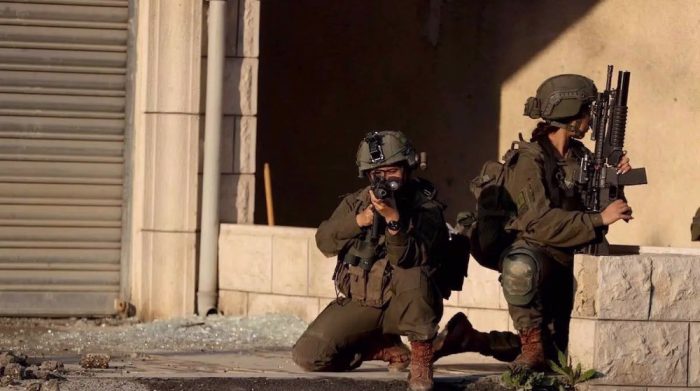
Israel has expanded shooting orders for its soldiers in the occupied West Bank in a move that has generated a high Palestinian death toll.
According to Haaretz newspaper, the so-called central command decided to implement the same shooting policy used during the campaign of genocide in Gaza to kill any unarmed Palestinian in the West Bank.
The Israeli soldiers taking part in the ongoing military assault said commander Avi Blot permitted them to shoot with the intent to kill Palestinians without resorting to arresting them.
“The orders made it easier for soldiers to pull the trigger at the behest of Central Command Commander Avi Blot.”
The head of the West Bank Division Yaki Dolf ordered soldiers to shoot at any vehicle “coming from a combat zone” and heading toward a checkpoint.
On Sunday, two Palestinians were killed in the West Bank when Israeli soldiers opened fire on a car approaching a military checkpoint.
Israeli forces earlier shot and killed an eight-month Palestinian pregnant mother and her unborn baby during a raid in the Nur Shams refugee camp.
According to the Israeli daily, soldiers used Palestinian civilians as human shields while searching buildings for explosives, the same tactic used by the military in Gaza.
Since January 21, the Israeli regime has conducted military operations in Jenin, Tulkarm and Tammun in the northern West Bank. The regime has killed more than 30 Palestinians, according to the Health Ministry.
Israeli soldiers had earlier revealed appalling accounts of the notorious “kill zone” in the Netzarim corridor of the besieged Gaza Strip.
Hamas says ‘Israel’ plotting to derail Gaza ceasefire deal
Al Mayadeen | February 10, 2025
The Islamic Resistance Movement Hamas believes “Israel” is actively working to derail the ceasefire agreement, a senior Palestinian official told Al Mayadeen on Monday.
The official stated that Israeli statements regarding the second phase of the deal signal an unwillingness to commit to a lasting ceasefire.
Moreover, Hamas, as per the official, sees “Israel” as relying heavily on US President Donald Trump’s reckless decisions to justify its policies and actions in the next phase.
Hamas says that if “Israel” does not adhere to the second phase of the agreement, it will pay a heavy price, the Palestinian official underscored.
Netanyahu moves to sabotage ceasefire talks: Israeli media
Israeli media on Sunday suggested that Prime Minister Benjamin Netanyahu is deliberately obstructing the ongoing ceasefire negotiations with Hamas, aiming to derail the agreement before its next phase.
Reports suggest that the Israeli delegation sent to Qatar lacks real authority, signaling Netanyahu’s unwillingness to move forward with a deal that would secure the release of more Palestinian detainees and a permanent ceasefire in Gaza.
Haaretz cited sources stating that the delegation’s presence in Doha is merely for show.
“Netanyahu is signaling quite clearly that he does not want to move on to the next phase,” one source said, adding that he views the ceasefire as politically damaging.
The reports indicate that Netanyahu is more concerned about appeasing “Israel’s” far-right factions than securing the freedom of Israeli captives.
“Right-wing voters see on the ground that we have not defeated Hamas and its operatives continue to walk around with weapons,” one source explained, referencing a sign at a Hamas-organized captive release event in Gaza that mocked Netanyahu‘s claim of achieving “total victory.”
Efforts to undermine the agreement
According to Haaretz, Netanyahu’s obstructionist tactics could lead to the ceasefire breaking down entirely. Analysts warn that Hamas, recognizing “Israel’s” refusal to honor its commitments, may halt further captive releases.
“Hamas is not stupid,” a source said. “They see the politicization of the negotiations, the placement of Netanyahu confidants Ron Dermer and Gal Hirsch [at the helm of negotiations], the threats by [Finance Minister Bezalel] Smotrich and the right-wing ministers that they will dissolve the government. They understand where this is going.”
Channel 12 confirmed that Netanyahu sent the delegation only to discuss technicalities and not to negotiate the second phase of the ceasefire. Officials stated, “This delegation has no real mandate. It will not deal with anything related to the second phase.”
Among the delegation members was government captive negotiator Gal Hirsch, along with a Shin Bet official replacing the security agency’s head, Ronen Bar, who was removed from the process by Netanyahu.
Hamas officials have warned that “Israel’s” bad-faith approach could reignite hostilities. In an interview with AFP, Hamas politburo member Basem Naim criticized “Israel’s” failure to fulfill its obligations. “The delay and lack of commitment in implementing the first phase,” as well as the attempts to “pressure the Palestinian negotiators upon entering the second phase, certainly exposes this agreement to danger and thus it might stop and collapse,” he said.
Agreement in jeopardy
The first phase of the ceasefire, set to last 42 days, stipulates that Hamas will release 33 women, children, and elderly captives in exchange for the freedom of hundreds of Palestinians, many of whom have been detained without charge.
The next phase, if honored, would require “Israel” to release additional Palestinian detainees, halt military aggression, and withdraw from Gaza in exchange for the release of remaining captives.
Following the latest release, 73 captives out of the 251 taken on October 7 remain in Gaza, while at least 34 have been confirmed dead.
Hamas has so far handed over 21 captives under the current ceasefire, while 105 were released during a brief truce in November.
Under the deal, which came into effect on January 19, 17 more captives should be released before the end of the first 42-day phase of the truce.
Meanwhile, “Israel” continues to hold thousands of Palestinian prisoners and detainees, including children, journalists, and activists, many of whom have been subjected to inhumane treatment.
Trump claims US will ‘buy and own’ Gaza, says Palestinians have ‘no alternative’
The Cradle | February 10, 2025
US President Donald Trump said he is “committed to buying and owning” the Gaza Strip and expelling the two million Palestinians living there, amid condemnation from Palestinians and the UN.
“I’m committed to buying and owning Gaza. As far as us rebuilding it, we may give it to other states in the Middle East to build sections of it. Other people may do it through our auspices. But we’re committed to owning it, taking it, and making sure that Hamas doesn’t move back,” Trump said while speaking to reporters during a flight on Air Force One on 9 February.
Trump did not explain who he would buy Gaza from or how the US would own it.
“There’s nothing to move back into. The place is a demolition site … The remainder will be demolished … But we’ll make it into a very good site for future development by somebody,” the US president declared.
Trump promised to “take care of the Palestinians.”
He said, “We’re going to make sure they live beautifully and in harmony and peace and that they’re not murdered … They don’t want to go back to Gaza. They only go back because they have no alternative.”
Trump did not mention who might murder Palestinians or why they might not have an alternative to return to their lands and destroyed homes.
Israeli Prime Minister Benjamin Netanyahu praised Trump’s proposal as “revolutionary and creative” despite the plan being met with severe international backlash.
Israel relentlessly bombed Gaza for 15 months, killing at least 48,000 Palestinians, before the ceasefire went into effect on 19 January. Some estimates suggest Israeli forces may have killed over 200,000 Palestinians, largely with the help of US-supplied bombs.
As part of the so-called Generals’ Plan beginning in October, Israeli forces attempted for several months to besiege, starve, and bomb hundreds of thousands of Palestinians in north Gaza to forcibly expel them to the strip’s south.
Trump stated that people from all over the world would be able to move to Gaza, adding that he might allow regional countries to be involved in rebuilding parts of the territory and that he would make sure the Palestinian refugees would “live beautifully.”
The US president’s political allies in Israel, Finance Minister Bezalel Smotrich and former national security minister Itamar Ben Gvir, openly advocate ethnically cleansing Gaza of Palestinians, confiscating the strip’s land, and relocating Jewish settlers there.
Both the Palestinian Authority (PA) and the resistance movement Hamas condemned Trump’s plan.
“The rights of our people and our land are not for sale, exchange or bargaining,” the PA Foreign Ministry said, adding that “The Israeli government and Prime Minister Netanyahu are trying to cover up the crimes of genocide, forced displacement, and annexation which they have committed against our people.”
Hamas political official Izzat al-Rishq affirmed that “Gaza is not a property to be sold and bought. It is an integral part of our occupied Palestinian land.”
The UN Human Rights Office warned that any forcible transfer in, or deportation of, people from occupied territory was strictly prohibited under international law.
US voters are also skeptical of Trump’s plan. A CBS poll showed that 47 percent of US citizens believe that US control of the Gaza Strip is a “bad idea,” only 13 percent think it is a good idea, and 40 percent say they are not sure.
Trump also told journalists while flying on Air Force One that he was “losing patience” with the ceasefire deal between Israel and Hamas after seeing footage of the resistance movement releasing Israeli captives over the weekend.
“They look like Holocaust survivors. They were in horrible condition. They were emaciated … I don’t know how much longer we can take that … at some point, we’re going to lose our patience.”
At the same time, freed Palestinian prisoner Sami Jaradat told Anadolu Agency that he and other Palestinian prisoners were terrorized and subjected to humiliation, severe beatings, and deliberate starvation.
“I have lost more than 30 kilograms of my weight,” Jaradat said.
Palestinian prisoners and detainees are also often tortured and raped by their Israeli captors.
The International Criminal Court (ICC) alleges that Prime Minister Netanyahu and former defense minister Yoav Gallant have committed war crimes by using starvation as a weapon against Palestinians.
The ICC issued arrest warrants for the Israeli leaders in November, who imposed a “total siege” on Gaza at the beginning of the war in October 2023, blocking food, water, and fuel from entering the enclave.
Featured Video
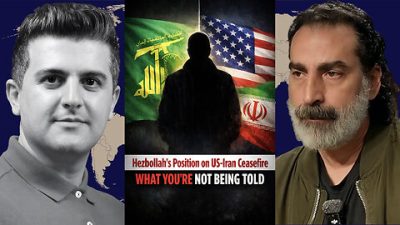
Laith Marouf: Hezbollah’s position on US-Iran ceasefire
or go to
Aletho News Archives – Video-Images
From the Archives
Is Israel to blame for the Iraq War?
American Goy | March 10, 2008
I am so tired of this old canard that “Israel had nothing to do with USA’s war with Iraq – in fact, it officially advised America against it”.
Bullshit. … continue
Blog Roll
 Aletho News
- Laith Marouf: Hezbollah’s position on US-Iran ceasefire: What you’re not being told
- Israel’s priority lies in destroying chances of peace between Iran, US: Ex-UN nuclear chief
- Ceasefire for all or for none: Iran shuts Hormuz over Lebanon attacks
- Strait of Hormuz is Iran’s ‘nuclear weapon’ that forced US retreat: Medvedev
- Energy crisis will last for months – Kremlin envoy
- Europe’s quiet role in the war on Iran
- Forty days that shook the Empire: How Iran turned the tables on US and prevailed
- Netanyahu unilaterally declares Lebanon outside of ceasefire deal
- Israeli leaders: ‘Not a single goal’ achieved in war with Iran
- What on earth just happened? Trump, Iran, and the unlikely ceasefire
- If Americans Knew
- Gazans face a triple crisis: severe shortages of water and bread, healthcare in tatters
- NY Times reports how Netanyahu took the US into Iran War
- A sigh of relief over Iran, but Gaza and Lebanon in dire straits – Daily Update
- Thousands dead and neighborhoods razed to the ground: Aid agencies fear southern Lebanon is becoming the new Gaza
- The war the US is fighting for Israel could cost trillions
- ‘Cigarette Burns, Nail Wounds’: Toddler Tortured in Gaza to Coerce Father
- Trump Says US Sent ‘a Lot of Guns’ to Protesters in Iran
- Israeli forces destroy 17 UN peacekeeper cameras in south Lebanon
- US-Israeli strikes ‘completely destroy’ synagogue in Tehran
- Archbishop for US Military Says Iran War Is Unjust Under Catholic Teaching
- No Tricks Zone
- An Inconvenient Tree: Uncovered In Alps… Europe Much Warmer Than Today 6000 Years Ago
- New Study Reports A 60% Slowdown In Greenland’s Ice Loss Rate In The Last Decade
- Low Intensity Tornado Wrecks Major Solar Farm, Creating A Potential Toxic Dump
- New Study Finds Warming Saves Lives…Cold Temperatures 12 Times More Deadly Than Excess Heat
- German Science Blog Accuses PIK Climate Institute Of Hallucinating Climate Tipping Points
- Devastating Assessment Of Comirnaty Vaccine By Former Senior Pfizer Europe Toxicologist
- New Study: CO2 Is ‘Effectively Negligible’ As An Explanatory Climate Change Factor Since 2000
- Former Pfizer Toxicologist Dr. Helmut Sterz Tells Bundestag Hearing Pfizer Vaccine Should Have Never Been Approved
- Energy Expert: Germany’s Nuclear Phaseout Was A “500 Billion Euro Mistake”
- New Research: South Australia’s Mid-Holocene Sea Surface Temperatures Were 4°C Warmer Than Today
 Aletho News