Israeli Settlers Attack One of the Oldest Christian Churches in Palestine
By James Rushmore | The Libertarian Institute | July 9, 2025
Israeli settlers attacked the West Bank town of Taybeh on Monday, causing extensive damage to a fifth-century church and a cemetery. The vandals started a series of fires near the ancient Church of Saint George, one of the oldest Christian churches in Palestine. Local residents were able to extinguish the fires. The attack marks the latest effort by Israeli settlers to intimidate the Palestinian inhabitants of Taybeh, which is the only remaining village in the territory with an exclusively Christian population.
The attack prompted three local priests to issue a statement. Fathers Daoud Khoury, Jack-Noble Abed, and Bashar Fawadleh called upon “local and international actors” to launch an investigation into the settler attacks, put pressure on Israeli authorities, and send delegations directly to Taybeh. They also urged people to provide the villagers with economic and legal assistance. Munther Isaac, a Palestinian pastor who was interviewed by Tucker Carlson in April 2024, shared the priests’ appeal on X. He also criticized U.S. Ambassador to Israel Mike Huckabee, a Christian Zionist, for pursuing policies that enable settler violence in the West Bank.
Huckabee toured the West Bank last week. During his visit, he expressed his support for the settler movement and referred to the territory as “Judea and Samaria,” saying that it would be “a historical injustice and a denial of the Bible” to use any other terminology. He also said that the settlers “represent God’s presence and His choice of this land.”
Huckabee’s trip came days after every Likud minister in the Israeli government sent Prime Minister Benjamin Netanyahu a letter urging him to annex the West Bank before the end of the Knesset’s summer session on July 27. The letter argues that the “strategic partnership, backing, and support of the U.S. and President Donald Trump have made it a propitious time to move forward with [the annexation] now, and ensure Israel’s security for generations.” It also said that a Palestinian state would represent an “existential danger to Israel.”
The attacks mark the latest assault on Taybeh. In June, settlers built an outpost on the eastern edge of the village, atop a key agricultural zone that’s home to thousands of Palestinian olive trees. Local farmers were denied access to the area, and settlers attacked residents who tried to enter the zone. The Israeli settlers have also been allowing their livestock to graze on Palestinian farmlands as part of an effort to push the villagers out.
At least 1,000 Palestinians, including over 200 children, have been killed in the West Bank since Israel began its genocide in the Gaza Strip. In addition to raiding refugee camps and displacing thousands of native civilians, IDF forces have provided settlers with semi-automatic weapons. In 2024, Israel seized control of more Palestinian land in the West Bank than in the previous 20 years combined.
France, Italy, Greece must explain allowing ‘safe passage’ to ICC-wanted Netanyahu to US: UN expert
Press TV – July 9, 2025
UN Special Rapporteur Francesca Albanese says Rome Statute member states—France, Italy, and Greece—must explain why they provided “safe passage” to Israeli Prime Minister Benjamin Netanyahu en route to the United States.
Netanyahu is an internationally wanted suspect under an arrest warrant issued by the International Criminal Court (ICC) for war crimes and crimes against humanity committed in Gaza.
In a post on X, Albanese said the three European countries — all signatories to the Rome Statute, which established the International Criminal Court (ICC) in 2002 — violated the international legal order by allowing Netanyahu to transit through their airspace despite an active ICC arrest warrant.
As ICC members, she said, they were theoretically “obligated to arrest” Netanyahu.
“Italian, French, and Greek citizens deserve to know that every political action violating the international legal order weakens and endangers all of them. And all of us,” she wrote.
Albanese was responding to a post by human rights lawyer Craig Mokhiber, who said the countries had “breached their legal obligations under the treaty [Rome Statute], have declared their disdain for the victims of genocide, and have demonstrated their contempt for the rule of law.”
Netanyahu is currently on his third US visit since President Donald Trump took office on January 20.
During a previous trip in February, his plane was forced to take a detour to avoid flying over countries that might enforce the ICC arrest warrant. The United States is not a party to the Rome Statute and therefore not bound by its provisions.
In June, Trump’s administration imposed sanctions on four judges at the International Criminal Court over the war tribunal’s issuance of an arrest warrant for Netanyahu.
US Will Spend Over $1 Billion Building Military Bases for Israel
By Kyle Anzalone | The Libertarian Institute | July 7, 2025
The US is spending hundreds of millions of dollars to upgrade and build new military bases for Israel. The total cost of the facilities could exceed $1 billion.
Haaretz reports, “The US military aid construction program for Israel includes ongoing projects valued at more than $250 million, with future projects expected to exceed $1 billion.” The new bases will accommodate refueling aircraft and helicopters.
An additional project is building a new headquarters for an Israeli naval commando unit.
Washington provides Tel Aviv with a massive amount of military assistance. The US government has an agreement to send Israel $3.8 billion in security aid every year. Since October 7, 2023, Washington has provided Tel Aviv with an additional $18 billion in assistance.
The US military has also spent billions on operations to benefit Israel. The US fought a war against Ansar Allah in Yemen in an attempt to break the Red Sea blockade on Israeli-linked shipping. Washington has also spent billions of dollars on interceptors to shoot down Iranian missiles.
The military support for Israel has given Tel Aviv a blank check for genocide, multiple invasions, and provoking aggressive wars. Washington’s weapons, diplomatic support at the UN, and the US military shooting down Iranian missiles have insulated Israel from almost all conquest of its attacks on Gaza, the West Bank, Syria, Lebanon, Yemen, and Iran.
Riyadh realigns: Tehran over Tel Aviv
The Cradle | July 8, 2025
The recent confrontation between Iran and Israel marked a decisive shift in regional power equations, particularly in the Persian Gulf. Iran’s direct and calibrated military response – executed through the Islamic Revolutionary Guard Corps (IRGC) – exposed the strategic vulnerabilities of Tel Aviv and forced Gulf capitals, chiefly Riyadh, to reassess long-standing assumptions about regional security.
The Saudi-led recalibration did not emerge in isolation. Years of cumulative political, military, and diplomatic failures under the umbrella of US-Israeli tutelage have pushed Persian Gulf states to seek more viable, non-confrontational security arrangements. What we are witnessing is the slow dismantling of obsolete alliances and the opening of pragmatic, interest-driven channels with Tehran.
Iran’s war strategy resets Gulf expectations
Tehran’s handling of the latest military clash – with its reliance on precision strikes, regional alliances, and calibrated escalation – demonstrated a new level of deterrence. Using its regional networks, missile bases, and sophisticated drones, Tehran managed the confrontation very carefully, avoiding being drawn into all-out war, but at the same time sending clear messages to the enemy about its ability to deter and expand engagement if necessary.
The message to the Gulf was clear: Iran is neither isolated nor vulnerable. It is capable of shaping outcomes across multiple fronts without falling into full-scale war.
Speaking to The Cradle, a well-informed Arab diplomat says:
“This war was a turning point in the Saudi thinking. Riyadh now understands Iran is a mature military power, immune to coercion. Traditional pressure no longer works. Saudi security now depends on direct engagement with Iran – not on Israel, and certainly not under the receding American security umbrella.”
At the heart of Saudi discontent lies Tel Aviv’s escalating aggression against the Palestinians and its outright dismissal of Arab peace initiatives, including the Riyadh-led 2002 Arab Peace Initiative. Israeli Prime Minister Benjamin Netanyahu’s intransigence – particularly the aggressive expansion of settlements in Jerusalem and the occupied West Bank – has alarmed the Saudis.
These provocations not only sabotage diplomatic efforts but strike at the kingdom’s pan-Islamic legitimacy, forcing a reassessment of Israel’s utility as a strategic partner. As the diplomatic source notes:
“This Israeli political stalemate pushes Saudi Arabia to reconsider its regional bets and view Iran as a regional power factor that cannot be ignored.”
Riyadh turns to Tehran: containment over confrontation
Behind closed doors, Saudi Arabia is advancing a strategy of “positive containment” with Iran. This marks a clear departure from the era of proxy wars and ideological hostility. Riyadh is no longer seeking confrontation – it is seeking coordination, particularly on issues of regional security and energy.
Diplomatic sources inform The Cradle that the reopening of embassies and stepped-up security coordination are not mere side effects of Chinese mediation. They reflect a deeper Saudi conviction: that normalization with Israel yields no meaningful security dividends, especially after Tel Aviv’s exposed vulnerabilities in the last war.
Riyadh’s new path also signals its growing appetite for regional solutions away from Washington – a position increasingly shared by other Persian Gulf states.
For its part, the Islamic Republic is moving swiftly to convert military leverage into political capital. Beyond showcasing its missile and drone capabilities, Iran is now actively courting Arab states of the Persian Gulf with proposals for economic cooperation, regional integration, and the construction of an indigenous security architecture.
Informed sources reveal to The Cradle that Iran is pursuing comprehensive engagement with Saudi Arabia, the UAE, Qatar, and Oman. This includes economic partnerships and alignment on key regional files, from Yemen to Syria and Iraq.
Tehran’s position is consistent with its long-stated view: The Persian Gulf’s security must be decided by its littoral states and peoples – not by foreign agendas.
A new Gulf alliance is taking shape
This is no longer a Saudi story alone. The UAE is expanding economic cooperation with Tehran, while maintaining open security channels. Qatar sustains a solid diplomatic line with Iran, using its credibility to broker key regional talks. Oman remains the region’s trusted bridge and discreet mediator.
An Arab diplomat briefed on recent developments tells The Cradle :
“Upcoming Gulf–Iran meetings will address navigation in the Strait of Hormuz, energy coordination, and broader regional files. There is consensus building that understanding with Iran [will] open the door to a more stable phase in the Gulf.”
Amid these realignments, Israel finds itself regionally sidelined – its project to forge an anti-Iran axis has crumbled. The US-brokered Abraham Accords – once trumpeted as a strategic triumph – now elicit little more than polite disinterest across the Gulf, with even existing Arab signatories walking back their engagement.
Riyadh’s political elite now openly question the utility of normalization. As Tel Aviv continues its war on Gaza, Gulf populations grow more vocal and Saudi leaders more cautious.
The Saudi position is unspoken but unmistakable: Tel Aviv can no longer guarantee security, nor can it be viewed as the gatekeeper to regional stability any longer.
Pragmatism trumps ideology
This Saudi–Iranian thaw is not ideological – it is hard-nosed realpolitik. As another senior Arab diplomat tells The Cradle :
“Riyadh is discarding illusions. Dialogue with neighbors – not alliance with Washington and Tel Aviv – is now the route to safeguarding Saudi interests. This is now about facts, not old loyalties. Iran is now a fixed component of the Gulf’s security equation.”
The binary of “Gulf versus Iran” is fading. The last war accelerated a trend long in motion: the collapse of Pax Americana and the emergence of multipolar regionalism. The Gulf is charting a new course – one less beholden to US-Israeli diktats.
Today, Saudi Arabia sees Tehran not as a threat to be neutralized, but as a power to be engaged. Regional security frameworks are being built from within. Israel, meanwhile, despite its many pontifications about a Tel Aviv-led, Arab-aligned “Middle East,” is struggling to stay relevant.
If these dynamics hold, we are on the cusp of a historic transition – one that may finally allow the Persian Gulf to define its own security and sovereignty, on its own terms.
This is not an ideal future. But it is a strategic upgrade from decades of subservience. Saudi Arabia is turning toward Iran – not out of love, but out of logic.
US must rebuild trust for diplomacy to resume, says Iran’s FM
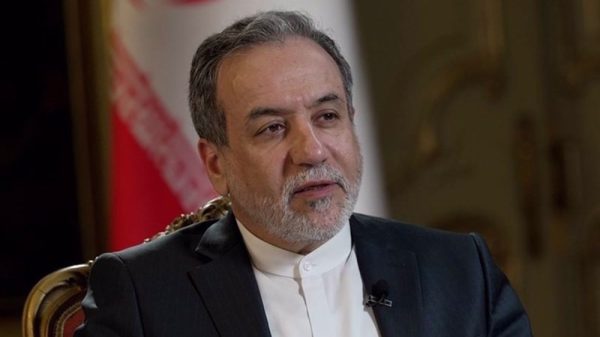
Iranian Foreign Minister Abbas Araghchi
Press TV – July 8, 2025
Iran’s foreign minister has issued a call for the United States to revive diplomacy following a breakdown in indirect talks, warning that further engagement will only be possible if Washington demonstrates a genuine commitment to a fair resolution.
“Iran remains interested in diplomacy, but we have good reason to have doubts about further dialogue,” Abbas Araghchi wrote in an article published by the Financial Times. “If there is a desire to resolve this amicably, the US should show genuine readiness for an equitable accord.”
The foreign minister referred to his five rounds of talks with US special envoy Steve Witkoff, saying that the two sides had made progress in those meetings.
According to Araghchi, discussions covered sensitive issues, including Iran’s uranium enrichment program and a potential end to US sanctions, with proposals from both sides and mediation by Oman.
The talks, he suggested, could have laid the foundation for an economic partnership potentially worth trillions, offering Iran development opportunities while addressing US President Donald Trump’s ambitions to revive struggling US industries.
But, Araghchi said, hopes for a breakthrough were shattered when Israel launched an unprovoked assault on Iran just 48 hours before a planned sixth round of talks in a move to derail diplomatic progress.
“Israel prefers conflict over resolution,” he wrote, arguing that the bombardment was not about stopping Iran from developing nuclear weapons but about sabotaging dialogue.
Araghchi reaffirmed that Iran remains committed to the Nuclear Non-Proliferation Treaty (NPT) and operates under UN monitoring.
He warned that while Iran seeks to prevent a wider regional war, its restraint should not be mistaken for weakness.
“We will defeat any future attack on our people,” he said, cautioning that Iran would reveal its true defensive capabilities if provoked again.
Araghchi placed the blame for the collapse of the talks on “an ostensible ally of America” and on Washington for its “fateful decision” to join in the strikes, thereby violating international law and the NPT framework.
While noting recent messages from US intermediaries suggesting a possible return to the table, Araghchi questioned whether Tehran could trust any future American overtures, citing the US withdrawal from the 2015 nuclear deal and Iran’s experience of being attacked during active negotiations.
“Negotiations held under the shadow of war are inherently unstable, and dialogue pursued amid threats is never genuine,” he wrote.
Still, Araghchi stopped short of closing the door entirely.
Iran, he insisted, remains interested in diplomacy, but only if it is based on mutual respect and free from external sabotage.
The top diplomat warned that Washington’s continued alignment with Israel risks dragging the US into another costly and avoidable conflict in the region.
“The American people deserve to know that their country is being pushed towards a wholly avoidable and unwarranted war by a foreign regime that does not share their interests,” Araghchi wrote, in reference to Israeli influence in Washington.
He ended with a stark choice for the United States: “Will the US finally choose diplomacy? Or will it remain ensnared in someone else’s war?”
Iran ‘rapidly’ beefs up air defenses with Chinese help: Report
The Cradle | July 8, 2025
Iran has been beefing up its air defenses with help from China since a truce ended the 12-day war between Tel Aviv and Tehran last month, according to sources cited by Middle East Eye (MEE).
“Iran has taken possession of Chinese surface-to-air missile batteries,” the report said, adding that Tehran is moving “rapidly” to rebuild air defense capabilities targeted by Israel during the war.
An Arab official told the outlet that the Chinese batteries were delivered to Iran following the ceasefire.
Another Arab official said that US allies in the Gulf were aware of Iranian efforts to “back up and reinforce” air defenses, adding that the White House has been briefed on the matter.
The officials did not reveal the number of surface-to-air missiles that Iran has received from China since the end of the war. One official claimed Tehran was paying for the deliveries with oil shipments.
“The Iranians engage in creative ways of trading,” one of the officials said.
According to ship tracking data, Chinese imports of Iranian oil witnessed a significant jump in the month of June. Beijing is the world’s leading importer and biggest purchaser of Iranian crude oil.
Iran operates the locally produced Khordad and Bavar 373 air defense systems, which are capable of engaging drones, but have a limited ability to shoot down F-35 jets used by Israel.
The Bavar 373 is an Iranian-developed version of the Russian S-300. Iran is also believed to possess older Chinese systems such as the HQ-9.
Iranian air defenses shot down scores of drones during the 12-day war in June, including both drones launched from Israel and locally produced “small drones” operated by Mossad agents inside the country.
Unconfirmed reports of Israeli fighter jets being downed were never verified.
Israel said it launched strikes targeting Iranian air defenses across the country throughout the war, claiming “complete control” over Iran’s skies. It also said it was striking Iran’s missile capabilities.
The Israeli army said it would prevent Iran from being able to fire ballistic missiles at Israel, but failed to achieve that goal.
Iran’s missiles caused widespread destruction across Israel. Key universities, research centers, and technological hubs were struck.
Several military bases were also hit, yet media censorship has prevented details from being released.
The MEE report comes as there has been concern over a potential renewal of fighting between Israel and Iran.
Axios reported on Monday that Israel is preparing for additional military operations if Iran attempts to restart its nuclear program. Israeli officials cited in the report said that US President Donald Trump may approve renewed Israeli strikes.
In late June, Israeli Defense Minister Israel Katz said he had instructed the Israeli army to prepare a military plan targeting Iran’s nuclear and missile programs, as well as its regional alliances.
In a post on X, Katz said the “enforcement plan” would focus on “maintaining Israel’s air superiority, preventing nuclear advancement and missile production, and responding to Iran for supporting terror activity against Israel.”
“We will act regularly to thwart such threats,” he added, warning Iranian leaders to “understand and beware: Operation Rising Lion was only the preview of a new Israeli policy, after 7 October, immunity is over.”
Speaking separately to Israel’s Channel 12, Katz elaborated that the plan would be implemented regardless of the current ceasefire.
Iran has vowed a severe response to any Israeli ceasefire violations.
US Patriot Missiles Stockpile a Fraction of What the Pentagon Needs
By Kyle Anzalone | The Libertarian Institute | July 8, 2025
The ongoing wars in the Middle East and Ukraine have depleted the US stockpiles of missile interceptors. The Pentagon has just a quarter of the Patriot missiles it needs.
According to the Guardian, “The United States only has about 25% of the Patriot missile interceptors it needs for all of the Pentagon’s military plans after burning through stockpiles in the Middle East in recent months, an alarming depletion that led to the Trump administration freezing the latest transfer of munitions to Ukraine.”
US weapons manufacturers can only produce approximately 500 Patriot missiles per year. The US used dozens of interceptors to defend Israel from Iranian retaliatory attacks last month. Additionally, the Pentagon engaged in its largest Patriot battle in history to repel a symbolic Iranian missile attack on the US airbase in Qatar.
The US stockpile of air and missile defenses has been drained to aid Ukraine during the war with Russia. Missile interceptors are in short supply in the West. In May, Secretary of State and National Security Advisor Marco Rubio told Congress that “The Ukrainians asked for air defense systems – Patriot systems, which, frankly, we don’t have.”
It is unclear if Trump reversed the Pentagon order to halt some arms transfers to Ukraine, including Patriot Missiles. During Monday’s dinner with Israeli Prime Minister Benjamin Netanyahu, Trump told reporters that he would “send some more weapons” to Ukraine.
Patriot systems have been a crucial part of Ukraine’s air defenses. However, Russia has developed missiles to counter Patriot interceptors with increasing effectiveness.
American emergency doctor, Dr. Mimi Syed on her work in Gaza under ongoing Israeli genocide
“I had 18 documented cases of children that came in with gunshots to the head, neck, abdomen, chest”
Dr. Mimi Syed is an American emergency doctor who has twice worked in Gaza during the ongoing Israeli genocide of Gaza: she spent four weeks each in the Gaza Strip in August and in December 2024.
She spoke to me about her child patients, many of whom were shot in the head or chest by the Israeli army; about Israel’s preventing doctors from bringing aid or vital medical equipment with them into Gaza, hindering doctors’ ability to save Palestinian lives; about the (preventable) malnutrition and starvation she saw amongst Palestinian civilians, as well as the preventable water and sanitation-related diseases contributing to “indirect deaths” in Gaza.
Also on ODYSEE
Follow her:
On Instagram: drmimier
On X: https://x.com/Memers1st
Related Links:
[over 80% of my patients were children ]
https://x.com/Memers1st/status/1939417407296270396
[Mira whom I treated when I was in Gaza who had a bullet lodged in her head. When I showed the CT image to the world, I was accused of fabricating it.
https://x.com/Memers1st/status/1940278942604398678 ]
[Against all odds, she is ok but is now being starved due to the blockade. Her story was featured on Al Jazeera Fault Lines “kids under fire”. I recommend any tax paying American watch this film.]
~5 min, Mira shown
https://www.youtube.com/watch?v=t-0zrQZWwDE
https://x.com/Memers1st/status/1940443774850891902
Ala’a Wafi is a 9-year-old girl I treated during my last trip to Gaza. Her skull was blown off by shrapnel. Against all odds, she survived, but there are thousands like her who didn’t. This is not self-defense. This is who we treated in Gaza: children.
https://x.com/Memers1st/status/1940664281798005142
Tom Barrack’s project to destabilize Lebanon
The Cradle | July 7, 2025
“A century ago, the west imposed maps, mandates, penciled borders, and foreign rule. Sykes-Picot divided Syria and the broader region for imperial gain-not peace. That mistake cost generations. We will not make it again.”
–Tom Barrack, US ambassador to Turkiye and special envoy to Syria
When US Envoy to Turkiye and Syria Tom Barrack made this declaration last month in Ankara, it suggested Washington was repudiating the colonial-era borders imposed on the Levant by Britain and France. But Barrack’s actual meaning was far more insidious: The Sykes-Picot agreement may be dead, but now the US intends to redraw the region’s frontiers to suit one purpose only – Israeli expansionism.
US envoy’s agenda: Redrawing the region by dismantling resistance
Lebanon’s fate remains tightly interwoven with that of Syria and occupied Palestine. Any imposed resolution to the so-called Israeli-Palestinian conflict will inevitably reverberate through both Damascus and Beirut, forcing their governments to make existential choices. Chief among these is the surrender of arms and capabilities, a demand embedded in the US-led effort to transform the region’s balance of power.
Enter Barrack, the Lebanese-American billionaire and close confidant of US President Donald Trump, now repurposed as a roving envoy to Lebanon and Syria. He has since positioned himself as a chief advocate of pulling both Syria and Lebanon into the Abraham Accords, a euphemism for normalizing ties with the occupation state.
Barrack met with top officials in Beirut today, where he was expected to peddle this political reconfiguration under the guise of regional peace.
Maximum pressure and the threat of force
Lebanon is at the sharp end of a US-Israeli campaign to disarm Hezbollah at any cost and within months. The escalation is not a reaction to local dynamics, but rather a consequence of Washington’s regional failures: from the quagmire in Ukraine to its inability to deter Iran or check Israel’s war crimes in Gaza.
With nothing substantive to offer, the US is leaning on coercion to twist arms at the top. Israeli military threats serve as a blunt instrument to corner Lebanese officials into signing off on the resistance’s disarmament – a fantasy the US is now aggressively chasing.
Trump, seeking a legacy boost, is betting on a high-stakes foreign policy gambit: force Lebanon – the last Levantine Arab state still tethered to the Axis of Resistance – into surrender, and break its last defensive stronghold against Israeli expansion.
A new kind of envoy, a new kind of threat
Barrack’s mission departs from the playbook of previous US envoys who, for all their meddling, took Lebanon’s fragility seriously. Not so today. Barrack, who also serves as US ambassador to Turkiye and envoy to Syria, represents a new breed of imperial proxy, unconcerned with sectarian fault lines or civil strife.
Washington now believes Hezbollah is vulnerable. The plan is to crush it politically, and if needed, militarily, even if that means weaponizing the Lebanese army against its own citizens. The Trump administration has made clear it will trade Lebanese stability for US-Israeli hegemony.
According to a Lebanese official cited by Anadolu Agency, Barrack handed Beirut a five-page proposal in June that centered on three main objectives. The first is the monopolization of all weapons under the Lebanese state’s control. The second involves enacting fiscal and economic reforms, including tighter border controls, anti-smuggling efforts, and boosted customs revenues. The third demands a reconfiguration of ties with Syria by demarcating borders and expanding trade.
No timeline is spelled out in the document, but US pressure suggests an expectation for full implementation by year’s end. Lebanon, the official claims, is drafting a unified response based on the ministerial statement and President Joseph Aoun’s inaugural address.
But Beirut has its own demands, including an end to Israeli violations, a full withdrawal from occupied territories, and the launch of reconstruction efforts in the south.
For now, Hezbollah’s official position remains undisclosed. Its response is expected to surface in the coming days, as Barrack returns to Beirut.
After meeting with President Aoun, Prime Minister Nawaf Salam, and Speaker of Parliament Nabih Berri in Beirut today, Barrack announced that he is “satisfied” with the Lebanese authorities’ response to Washington’s request regarding the disarmament of Hezbollah. At the same time, he warned that Lebanon “will be left behind” if it does not move in line with the ongoing regional changes. Barrack also stated that “Hezbollah is a political party, and it also has an armed wing. Hezbollah needs to see that there is a future for them, and that this path is not meant to be only against them, and that there is an intersection between peace and prosperity for them as well.”
Empty promises, no Israeli restraint
During his last visit, Barrack met Lebanon’s three top officials to pitch a phased disarmament plan, divided by time and geography. He hinted at possible US pressure on Tel Aviv to vacate recently occupied points. But when pressed, he admitted there were no guarantees that Israel would halt its aggression.
This is no peace deal. It is an ultimatum.
Barrack’s push marks the culmination of a decades-long campaign to dismantle the region’s anti-imperialist front. With Egypt and Jordan long co-opted, Syria’s Baathist era gutted, and Iraq’s factions fragmented, apart from Yemen’s Ansarallah-aligned army, Hezbollah remains the last major armed deterrent to Israeli expansion.
Washington and Tel Aviv understand this. Disarming Hezbollah clears the path for diplomatic normalization not only with Beirut, but also with Syria’s so-called interim government under de facto President Ahmad al-Sharaa, a former ISIS chief who went by the nom de guerre Abu Mohammad al-Julani, now edging closer to normalization with Tel Aviv.
Capitulation without compensation
The US demands everything and offers nothing. There are no guarantees of Israeli withdrawal. No prisoner releases. No end to airstrikes or assassinations. Not even arms for the Lebanese army or funds for reconstruction.
Instead, Washington continues to throttle the army by blocking weapons transfers and targeting seized stockpiles, cementing its subservience.
Barrack’s so-called solution is a trap. It further strips Lebanon of sovereignty, invites more Israeli strikes across the south, the Bekaa, and even Beirut, and paves the way for sectarian fragmentation under the guise of national reform.
With some domestic factions parroting US-Israeli talking points, the threat is no longer just foreign. Western-backed, right-wing Lebanese elements are gaining narrative traction, openly adopting Tel Aviv’s discourse on resistance weapons. These forces could soon coordinate directly with the occupation state, becoming internal agents of destabilization.
Meanwhile, the proposal ignores the Palestinian refugee question, omits border security mechanisms, and offers no path to deter Israeli incursions. In effect, it sets the stage for a sectarian, security-driven partition of Lebanon.
Divide and conquer: Disarming in stages
Washington’s strategy is clear. It aims to isolate and disarm resistance factions one by one. Last month, the target was Palestinian groups. Now, Hezbollah. The aim is to prevent a unified front by cutting off cross-sectarian solidarity and picking off targets individually.
If these pressures are not absorbed and neutralized, the risks are existential. A major Israeli assault on Lebanon or a manufactured civil conflict is likely. At the same time, extremist groups are resurging in Syria under Sharaa’s watch, a man eager to appease Washington and Tel Aviv at all costs.
Hezbollah and its supporters face a stark choice. They must either surrender to foreign diktats or entrench their defenses and refuse to even entertain a debate on arms as long as threats persist.
This may be the gravest threat to Lebanon’s post-war existence. With the US shedding all pretense of neutrality and openly advocating for a new regional map, the country faces a binary future: resist, or be dismembered.
Lebanon’s salvation hinges on one truth. Only a united front behind the resistance can preserve its sovereignty and shield it from the vultures circling overhead.
Israeli forces arrest Al Mayadeen bureau chief Nasser al-Lahham in West Bank
By Al Mayadeen | July 7, 2025
Israeli occupation forces arrested Nasser al-Lahham, director of Al Mayadeen’s bureau in occupied Palestine, on Monday, during a pre-dawn raid on his home in Beit Lahm, southern West Bank.
Local sources reported that the arrest was accompanied by deliberate acts of vandalism, as soldiers stormed al-Lahham’s residence, smashing furniture and seizing personal mobile phones belonging to him and his family.
Exclusive sources informed Al Mayadeen that the Israeli security service, Shin Bet, is directly responsible for the arrest of al-Lahham in the occupied West Bank.
According to the sources, Shin Bet officers specifically targeted al-Lahham’s broadcasting studio during the raid and actively searched for electronic equipment and media devices linked to his journalistic work.
In a related development, the Israeli occupation extended al-Lahham’s detention until Thursday and has referred his case to the Ofer military court, located west of Ramallah, for a detention hearing. The move signals a potentially prolonged legal process against one of Palestine’s most prominent media figures.
Wider context
The arrest sparked widespread condemnation from Palestinian political and media circles. Palestinian political activist Sinan Shaqdeh told Al Mayadeen that “the arrest of journalist Nasser al-Lahham carries several implications, most notably an effort to target Al Mayadeen Network for conveying a narrative that challenges the Israeli version of events surrounding the ongoing genocide (in Gaza).”
This latest move comes as part of a broader, systematic campaign targeting journalists and media operations in occupied Palestine. In late October 2023, Israeli forces raided al-Lahham’s home, assaulting his wife and children, conducting an intrusive search, and detaining his two sons, Basil and Basel.
Meanwhile, Al Mayadeen’s correspondent Hanaa Mahamid continues to face repeated threats by Israeli authorities in an attempt to suppress independent media coverage from the occupied territories.
The Israeli government has renewed its ban on Al Mayadeen’s operation in occupied Palestine, confiscated its broadcasting equipment, and blocked its websites, in a crackdown against the network, amid the continued genocide in the Gaza Strip and the broad assault on the West Bank.
Al-Lahham’s arrest is an attempt at suppressing the press: Fatah
Munther al-Hayek, spokesperson for the Fatah Movement, told Al Mayadeen that the Israeli occupation’s arrest of Nasser al-Lahham aims to suppress press freedom and intimidate journalists.
Al-Hayek added, “What Israel is doing in the Palestinian territories is happening with a green light from the United States.”
He also emphasized that the free press’s coverage of Israeli massacres in Gaza has unsettled Netanyahu’s government, prompting it to resort to repressive and terror tactics.
What Trump Should Tell Netanyahu
By Ron Paul | July 7, 2025
A few weeks ago I urged President Trump to make a deal with Iran that would satisfy his stated goal of no nuclear weapons production and would allow Iran to continue its lawful pursuit of civilian nuclear energy. The deal on the table, as described by the Iranian foreign minister himself, was a win-win “update” of Obama’s JCPOA “nuclear deal” that he could have avoided a costly and counter-productive war with Iran.
Unfortunately, the negotiations were cut short by an Israeli sneak-attack on Iran that led to a 12-day war that did not turn out as Israel imagined. This often happens in war, especially wars of aggression. After a day or so, Israel found itself overwhelmed by an Iran that proved to be more than capable of defending itself and Netanyahu called up Uncle Sam begging for assistance.
The resulting US bombing run on Iran’s nuclear sites did not lead to the end of that country’s capabilities, but to the expulsion of the UN monitoring organization and the emergence of Iranian “strategic ambiguity” regarding its program. In short, the bombing has blinded the world to what Iran may do in the future. That is not a win for Trump.
In a recent interview with Tucker Carlson, the Iranian president confirmed what most people understood at the time: President Trump promised Iran that while they were engaged in negotiations the United States would not allow Israel to attack the country. With the sixth round of negotiations just two days away, however, Israel thumbed its nose at the United States and launched an attack on Iran anyway.
Considering that Israel’s “military capabilities” are almost entirely provided by the United States, this betrayal of its benefactor will surely go down as one of the most brazen acts of ingratitude of all time.
This week Israeli Prime Minister Benjamin Netanyahu is in Washington DC for the third time in Trump’s short second term in office. While we do not know what President Trump is telling him this time around, this might be the time to finally give Israel some “tough love” that many parents practice with their teenagers.
Donald Trump may be the most “pro-Israel” president we’ve ever had, but if he really wanted to help Israel he would make clear to Netanyahu that US support does Israel no favors. Continuing to spend tens of billions of dollars a year financing Israel’s war machine and backing up Israel’s attacks on its neighbors has not produced peace or security – much less prosperity – for Israel.
In fact, as soon as Israel attacked Iran so many Israelis tried to leave the country that Tel Aviv forbade its own citizens from leaving the country. Israelis are desperate to escape the wars of their own government’s making.
If President Trump really wanted to help Israel he would inform Netanyahu this week that not another US dollar would be sent to prop up his government. Not another missile or bomb would be sent. Not another American bullet would be available for Israeli soldiers to attack their neighbors or to shoot Palestinian civilians.
If Israel had to face the hard reality that it must learn to live with its neighbors instead of attacking them, the country may actually start seeing some peace and prosperity. Whatever the case, it is not our responsibility to finance the war machine of any foreign country. Time to put America first.
Yemeni air defenses confront Israeli aggression on Hodeidah
Al Mayadeen | July 7, 2025
At least 20 Israeli airstrikes struck the city of Hodeidah in Yemen early Monday, Al Mayadeen’s correspondent reported, while Yemeni air defenses managed to repel a significant portion of the assault.
The attacks targeted key locations including the ports of Hodeidah, Salif, and Ras Issa, as well as the Ras Qatif power station. Israeli media confirmed that these infrastructures had been hit by Israeli occupation forces on three previous occasions.
Additionally, our correspondent noted that one of the strikes hit the Galaxy Leader vessel, linked to “Israel” and captured by the Yemeni Armed Forces on November 19, 2023.
In a related statement, Israeli Security Minister Israel Katz declared that Israeli forces are “vigorously attacking” targets at Yemeni ports, the Ras Qatif power plant, and the Galaxy Leader ship.
Yemeni air defenses repel major part of Israeli aggression
Israeli media outlets reported that 53 projectiles were used in the operation, while our correspondent revealed that the Yemeni Armed Forces worked to repel the aggression, thwarting a substantial part of it.
Yemeni military sources told Al Mayadeen that air defenses launched the first wave of surface-to-air missiles, forcing 10 Israeli aircraft out of Yemeni airspace before they could carry out their attacks.
Sources also revealed that Israeli warplanes had to turn back and were not able to execute planned strikes on other Yemeni governorates.
Previously, the spokesperson for the Yemeni Armed Forces, Brigadier General Yahya Saree, had announced that the Yemeni Air Force “is currently confronting the Zionist aggression against our country.”
“Our air defenses are ready and prepared to confront Israeli attacks on our country with full force and power,” Saree underlined.
Yemen vows continued support for Gaza, launching missile
At around 3:45 am (local time), two missiles were launched from Yemen toward Israeli targets in occupied Palestine. The missiles were reportedly intercepted by Israeli occupation forces, sounding sirens in several areas in the southern occupied West Bank and near the Dead Sea.
Chairman of the Board of Directors of the Yemeni News Agency (SABA), Nasruddin Amer, said that operations in support of Gaza “will not cease until the aggression stops and the blockade is lifted,” in a post on X.
“The Zionist aggression has not and will not be able to stop the Yemeni strikes deep inside its territory,” Amer explained.
“Not a single ship will pass through our armed forces’ area of operations,” he added.
Meanwhile, Brigadier General Saree stressed that the Yemeni Armed Forces are “fully prepared and capable” of confronting the Israeli aggressors.
He stressed that the Israeli attacks will not affect Yemeni military capabilities, emphasizing that the country’s support for Palestine “will continue at a high pace.”
Featured Video

Bombing Hitler’s Hometown
or go to
Aletho News Archives – Video-Images
From the Archives
‘Conspiracy Theory’ Now Fact: Greater Israel Has Arrived
By Kit Klarenberg | Mint Press News | January 28, 2025
Ever since Tel Aviv’s 1948 creation, much has been said and written about ‘Greater Israel’ – the notion Zionism’s ultimate end goal is the forcible annexation and ethnic cleansing of vast swaths of Arab and Muslim lands for Jewish settlement, based on Biblical claims this territory was promised to Jews by God. The mainstream media typically dismisses this concept as antisemitic conspiracy theory, or at most the fringe fantasy of a minuscule handful of extremist Israelis.
In reality … continue
Blog Roll
 Aletho News
- IRGC: Israeli, US universities in region legitimate targets after strikes on Iranian university
- Trump admits Iran hit USS Ford carrier: ‘We ran for our lives’
- Battle for Hungary: EU attacks on Orban are a sign of worse things to come
- Iraqi resistance conducts drone strike on US-run base in Syria
- Failing to Defeat Hezbollah, Israel & US Pressure Syria’s Ahmed al-Sharaa to Join War
- US-Israeli war on Iran drives global fertilizer prices up 40%
- Hezbollah’s Surprise Weapons Redefine Ground Battle with Israel
- Yemen joins fight against US, Israel by firing missiles at occupied territories
- Seizing the Kharg: Washington’s path to defeat in the Persian Gulf
- Iran reports 500 US casualties in strikes on covert US military sites
- If Americans Knew
- Over 300 US service members wounded, majority have brain injuries – Not a ceasefire Day 169
- Researchers at Human Rights Watch Resign Over Blocked Report on Palestinian Refugee Return
- Jewish Groups Are Backing a War Americans Don’t Want
- Eric Fingerhut Thinks He’s the President of the Jews
- Top Jewish Philanthropists, Rabbis Urge Israeli President to Take Action Against ‘Jewish Extremists’
- Don’t Be Fooled. Zionist Leaders Have Always Wanted to Control Southern Lebanon
- Israel’s widespread use of torture is a core element of its genocide against the Palestinian people
- In Israel’s War on Iran, Many Middle East US Bases Rendered “All But Uninhabitable”
- ‘Burn the lawn’: Israel pursues ‘Rafah model’ in southern Lebanon
- A genocide here, an amputation there
- No Tricks Zone
- Devastating Assessment Of Comirnaty Vaccine By Former Senior Pfizer Europe Toxicologist
- New Study: CO2 Is ‘Effectively Negligible’ As An Explanatory Climate Change Factor Since 2000
- Former Pfizer Toxicologist Dr. Helmut Sterz Tells Bundestag Hearing Pfizer Vaccine Should Have Never Been Approved
- Energy Expert: Germany’s Nuclear Phaseout Was A “500 Billion Euro Mistake”
- New Research: South Australia’s Mid-Holocene Sea Surface Temperatures Were 4°C Warmer Than Today
- Storing Green Energy To Last Germany 10 Days Would Require A 60-Million Tonne Battery
- New Studies: UK Sea Levels Were 4 Meters Higher Than Today During The Mid-Holocene
- Destructive Green New Deal: German Energy And Metal Group Warns Of Drastic Crisis
- New Study Documents A 20-Year Pause In Arctic Sea Ice Decline – Driven By Internal Variability
- Wake-up Call: Survey Shows Majority Of Germans Now Favor Postponing Climate Targets!
 Aletho News