‘Act of terrorism’: Iran urges formation of fact-finding group for 1982 abductees in Lebanon
Press TV – July 5, 2025
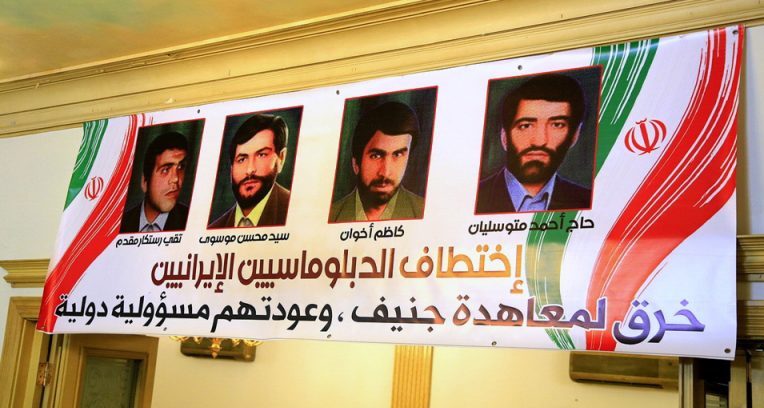
The Iranian Foreign Ministry has decried as an “act of terrorism” the 1982 kidnapping of four Iranian diplomats in Lebanon, reiterating the Islamic Republic’s call for the formation of a fact-finding group to determine the fate of the abductees.
The ministry said in a statement on the occasion of the 43rd anniversary of the abduction of the Iranian diplomats that the Israeli regime is responsible for the abduction and hostage-taking of its citizens, and continues to seriously pursue the matter with relevant international authorities.
On July 4, 1982, Ahmad Motovasselian, a military attaché at Tehran’s Embassy in Beirut, Mohsen Mousavi, the Iranian chargé d’affaires in Lebanon, Taqi Rastegar Moqaddam, an employee of the Embassy, and Kazem Akhavan, a photographer for the Islamic Republic News Agency (IRNA), were abducted by Israeli-affiliated armed groups.
“There is ample evidence, as repeatedly stated, and copious indications proving that the Iranian diplomats were abducted by an armed group inside Lebanon during the occupation of Lebanese soil by the Zionist regime, handed over to the occupying forces, and transferred to the occupied territories,” the statement said.
“The abduction of Iranian diplomats on July 4, 1982, in Beirut was not only an act contrary to international law and a flagrant violation of the 1961 Vienna Convention on Diplomatic Relations, but also constitutes an act of terrorism according to the Convention Against the Taking of Hostages (1979).”
The statement also expressed Tehran’s gratitude for the Lebanese government’s cooperation in following up on the status of the four abducted Iranian diplomats, including Beirut’s registration of the issue through correspondence with the then secretary-general of the United Nations in September 2008.
The Iranian Foreign Ministry, as the statement said, once again calls on the authorities of the Lebanese government, as well as the Secretary-General of the United Nations and the International Committee of the Red Cross and other competent international bodies, to fulfill their legal and humanitarian responsibilities in pursuing the case and to exert all their efforts to clarify the status of the abducted Iranian diplomats.
“In this framework, the proposal for the formation of a joint fact-finding committee between Iran and Lebanon, with the cooperation of the International Committee of the Red Cross, to pursue the matter and clarify the status of the abducted Iranian diplomats is once again emphasized,” the statement said.
The Iranian Foreign Ministry has repeatedly called for the Lebanese government, the UN, and the International Committee of the Red Cross to investigate the incident and determine the fate of the missing diplomats.
Lebanese militiamen from the Lebanese Forces Group admitted to the 1982 kidnapping of the four Iranian nationals who were on a diplomatic mission in North Lebanon. Investigations show that they were last handed to Israel at the time.
Although there is information about those who abducted the Iranian diplomats and their whereabouts, the fate of these Iranians is still shrouded in mystery, with their families and Iranian authorities believing they are still alive and languishing in Israeli jails.
How Israeli propaganda mills recycled fabricated claims of intercepting Iranian missiles
By Ivan Kesic | Press TV – July 5, 2025
For the third time, the Israeli regime has declared an implausible success rate in intercepting Iranian ballistic missiles, this time touting a fanciful figure of 86 percent, a claim parroted with little scrutiny by much of the Western mainstream media.
This week, Israeli media outlets relayed statements from the regime’s war ministry claiming that 86 percent of Iranian missiles and 99 percent of drones were intercepted during the June 2025 Israeli war against Iran.
The figures, they said, were drawn from 12 days of the war, during which Iran launched 532 ballistic missiles in approximately 42 barrages targeting the occupied Palestinian territories. According to the same sources, about 300 missiles landed in “open areas,” while 200 were allegedly intercepted by Israeli and American air defense systems.
The interception systems credited include Israel’s David’s Sling, Arrow 2 and 3, along with the US-supplied THAAD and Aegis systems, altogether costing around 5 billion shekels, or nearly $1.5 billion.
In a triumphant assessment, the Israeli war ministry claimed their interception prevented over $15 billion in potential property damage and “saved countless lives.”
Some Zionist officials went even further, asserting that only 25 to 31 Iranian ballistic missiles actually struck targets within the occupied territories.
Despite the glaring inconsistencies in these numbers, and their defiance of both available evidence and basic mathematics, Western media repeated the claims almost reverently, offering little in the way of critical examination.
A pattern of fabricated success
This is not a one-off occurrence. It marks the third time the Israeli regime has released clearly falsified data on interception success rates, only to see these narratives absorbed uncritically into Western discourse.
After Iran’s Operation True Promise 1 and 2 in April and October last year, Israeli regime officials boasted a now-familiar “99 percent” interception rate. In the second operation alone, they claimed 200 Iranian ballistic missiles were launched, implying that only two managed to bypass Israeli defenses.
Yet satellite imagery tells a vastly different story. At Nevatim Airbase, one of the three key Iranian targets (alongside Tel Nof Airbase and Mossad headquarters), 33 Iranian missiles made direct contact, 26 of which caused severe structural damage, including to five hangars.
These figures alone debunk Israel’s exaggerated claims, as does independent footage from civilian sources, which recorded dozens of strikes, far more than the “three” the regime was willing to admit.
Tel Nof Airbase saw direct hits that triggered secondary explosions among stored munitions. At least two missiles impacted areas near Mossad’s headquarters. In total, over 40 Iranian missiles successfully penetrated much-hyped Israeli defenses during Operation True Promise 2, twenty times more than Israeli officials conceded.
Their missile launch count was also exaggerated. Visual evidence confirms that 53 missiles were launched in three waves: 25 from Kermanshah, 18 from Tabriz, and 10 from Shiraz. This suggests that over 75 percent of Iranian missiles struck their intended targets, an accuracy rate far closer to Iranian estimates of 90 percent than the Israeli claim of 1 percent success.
The same distortions appeared after Operation True Promise 1, with Israel again insisting it intercepted “99 percent of 300 missiles and drones”—a figure clearly contradicted by publicly available footage capturing numerous impacts.
Latest round of deception
As with the previous two retaliatory operations, the latest Israeli claims, of an 86 percent interception rate, 300 harmless impacts in open areas, and only 30 successful Iranian strikes, lack any verifiable evidence.
Most Iranian retaliatory strikes and Israeli interception attempts occurred at night and were recorded in numerous public videos. These show luminous streaks of incoming missiles, and often, impact explosions, across the occupied territories.
All Israeli systems engaged, David’s Sling, Arrow 2/3, and THAAD use hit-to-kill technology, designed to intercept missiles at long ranges and high altitudes. When successful, these intercepts generate massive hypersonic collisions that produce blinding explosions visible across the region.
If Israel had indeed intercepted 200 ballistic missiles, as claimed, there would be a flood of corroborating footage from personal and security cameras, all time- and date-stamped.
But such evidence is conspicuously absent. Even the Israeli military, known for showcasing its “successes,” has failed to release convincing proof.
Nor is there any physical evidence of widespread missile debris in Iraq or Jordan, which should exist if large numbers of missiles had been intercepted in those areas.
Conversely, hundreds of videos document Iranian missiles piercing Israeli defenses and detonating across the occupied territories. If most Iranian missiles were truly falling into uninhabited open zones, as claimed, the regime would be eager to release images proving it. Instead, photo and video censorship has been rigorously enforced.
In fact, the scale of destruction suggests widespread strikes on Israeli military infrastructure, not craters in farmland. Israeli media themselves have pegged total damage at $12 billion, with projections reaching $20 billion when indirect costs are counted.
These staggering figures are inconsistent with the claim that only 25–31 missiles hit, unless one believes each missile inflicted $500, 800 million in damage, an implausible notion.
The official 86 percent success rate also contradicts a statement by a senior Israeli intelligence officer to American media, who admitted that by the seventh day of fighting, only 65 percent of Iranian missiles were being intercepted.
He attributed this drop in effectiveness to Iran’s deployment of faster, more maneuverable, and more sophisticated missiles.
Initially, Iran had used older liquid-fueled ballistic missiles, such as Shahab-3, known for their slow speed and predictable trajectories, making them easier to intercept. However, these outdated models were paired with decoys, confusing air defense systems and draining interceptor stockpiles.
Despite the extensive documentation of missile attacks, no comprehensive analysis has yet detailed how many Iranian missiles and Israeli interceptors were deployed, or what the true interception rate was.
Open-source analysts have attempted estimates using nighttime footage from Jordanian photographer Zaid M. al-Abbadi, but his recordings cover only a fraction of the conflict, nighttime only, with limited geographical and vertical scope.
Nonetheless, they point to a clear trend: Iranian missiles breached Israeli air defenses far more often than official figures admit, and did so with a frequency higher than the number of interceptors deployed.
Diversions and disinformation
In addition to exaggerating interception figures, the Israeli regime employs a range of propaganda tactics to conceal its failures and downplay Iranian achievements.
During Operation True Promise 1, iconic images of glowing Iranian missiles above Al-Aqsa Mosque and the Dome of the Rock in occupied Jerusalem al-Quds stunned the world, symbolizing Iran’s reach and resolve.
In response, Israeli regime officials, most notably UN ambassador Gilad Erdan, offered the bizarre narrative that Israel was “protecting Al-Aqsa from Iranian missiles,” attempting to sow discord between Iran and the wider Muslim world.
In truth, those missiles were aimed at Nevatim Airbase, located 65 kilometers south of occupied Jerusalem al-Quds.
Similarly, during Operation True Promise 3, Israeli propagandists claimed Iran had deliberately struck the Al-Jarina Mosque in Haifa. In reality, a missile hit the Sail Tower regime building complex 50 meters southeast, with the mosque sustaining only minor facade damage from shockwaves.
Israel also falsely alleged Iranian attacks on schools and homes. But released images show damage consistent not with Iranian warheads, but with malfunctioning Israeli interceptors.
Perhaps the most egregious example was the claim that Iran targeted Soroka Hospital. In fact, the damage was from a strike on a nearby C4I military intelligence HQ. The regime routinely positions military infrastructure adjacent to civilian areas, then manipulates resulting collateral damage as evidence of Iranian wrongdoing.
Facilities like the Kirya military base in Tel Aviv and the military-linked Weizmann Institute are presented as “civilian” in official narratives. Moreover, videos of Iranian missile strikes on these sites are heavily censored, and sharing such footage risks severe legal punishment.
Finally, Israeli propaganda claims that missile victims are mostly “non-Israelis”—while failing to mention that non-Jewish residents are often banned from entering bomb shelters.
During the recent war, Palestinians, Chinese workers, and Turkish journalists all testified to being denied shelter access, highlighting both systemic discrimination and the hypocrisy of Israeli victimhood narratives.
Sy Hersh Says Lack of Radiation Means Iran Moved Uranium Before US Attack
Sputnik – 05.07.2025
No signs of radioactive contamination have been detected since US airstrikes on Iranian nuclear facilities in June, suggesting that enriched uranium may have been removed from key sites before the attack, Pulitzer Prize-winning journalist Seymour Hersh says.
Veteran US investigative journalist Seymour Hersh says Iran moved highly-enriched uranium from key sites before attacks ordered by US President Donald Trump.
The US Air Force and US Navy targeted deeply-buried Iranian nuclear sites, including those in Fordow and Isfahan, in the June 22 operation codenamed ‘Midnight Hammer’.
Trump and his Defense Secretary Pete Hegseth both claimed the targets had been “obliterated.” But Hersh’s sources say Iran had already removed large quantities of uranium enriched to up to 60% of the fissile isotope U235.
“450 pounds of enriched uranium had been moved from Fordo to the reprocessing site at Isfahan prior to the US attack there” Hersh wrote on his Substack blog.
The attack on Isfahan — a site believed to be involved in further uranium enrichment and processing — used cruise missiles launched from a US Navy submarine.
While the official objective of the strike was the “complete dismantlement” of Iran’s nuclear program, Hersh argues it was merely aimed at a temporary disruption and the destruction of critical infrastructure.
His sources say the destruction of Fordow and Isfahan has set Iran’s nuclear development back by several years, but did not eliminate the program entirely.
“Results? Glass is half-full,” Hersh writes. “a couple of years of respite and uncertain future. Critics? Half-empty. Reality? Half-full. There you are.”
He stresses that Israel was the main beneficiary of the operation, while the risk remains that Iran could restore its nuclear infrastructure and eventually resume the program.
31 Israeli soldiers killed by friendly fire in Gaza ground war: Report
MEMO | July 4, 2025
At least 31 Israeli soldiers have been killed by friendly fire during the ongoing ground offensive in the Gaza Strip, Israeli Army Radio reported Friday.
According to the broadcaster, 72 soldiers have died in total due to “operational incidents” since Israel launched its ground invasion of Gaza on Oct. 27, 2023, representing about 16% of the 440 Israeli soldiers killed in ground operations.
The breakdown of operational deaths includes 31 killed by friendly fire, 23 in ammunition-related incidents, seven run over by armored personnel carriers, and six in unspecified shooting incidents, the report said.
Since the resumption of Israel’s military assault on Gaza on March 18, two soldiers have been killed in operational incidents out of 32 total deaths recorded during that period, according to the broadcaster.
Five additional deaths were attributed to workplace accidents, including falls and mishandling of engineering tools, Army Radio added. One of those incidents occurred Thursday night, though no further details were provided.
Israeli military data shows 882 soldiers have been killed and 6,032 injured since the start of the war on Oct. 7, 2023.
Despite international calls for a ceasefire, Israel has continued its genocidal war on Gaza, which has killed more than 57,000 Palestinians, most of them women and children, according to health authorities in the enclave.
Last November, the International Criminal Court issued arrest warrants for Israeli Prime Minister Benjamin Netanyahu and former Defense Minister Yoav Gallant for war crimes and crimes against humanity in Gaza.
Israel also faces a genocide case at the International Court of Justice over its actions in the enclave.
‘Israel’ faces massive economic fallout from its war on Iran

Al Mayadeen | July 4, 2025
Israeli media sounded the alarm over $14 billion in losses, a surging defense budget, and tens of thousands of compensation claims, as economic strain deepens in the aftermath of the 12-day war on Iran.
According to a report by the Israeli daily Maariv, the war has inflicted severe financial damage on the Israeli economy, with the total impact estimated at over 52 billion shekels (approximately $14 billion USD). The report noted that the war has delivered a major blow to “Israel’s” total economic activity and threatens broader budgetary stability.
“It’s no longer just about rebuilding damaged buildings, it’s about rebuilding the economy,” Maariv reported, highlighting that daily life during the war was “nearly impossible” due to constant sirens, rocket fire, destroyed infrastructure, and casualties.
Even under optimistic recovery scenarios, the paper noted that half of the damage is unlikely to be recuperated, leaving a net loss of 26 billion shekels, or 1.3% of GDP, a substantial economic blow.
Defense budget grows into a ‘bottomless pit’
The financial strain is further compounded by the ballooning costs of the Israeli occupation’s defense spending. Maariv reports that the 2025 defense budget, recently approved by the Knesset, stands at 135 billion shekels, or 21.8% of the national budget. This includes 75.7 billion shekels in debt repayments to the National Insurance Institute.
The newspaper described both the security establishment and debt servicing as “a bottomless economic pit,” given the continued war-related expenditures.
Of the allocated defense budget, 67 billion shekels had already been spent within the first five months of 2025. Now, the Israeli military is reportedly requesting an additional 55–60 billion shekels to fund recent wartime expenses, further straining fiscal resources.
Infrastructure damage, compensation soar
In parallel to military spending, the Israeli entity faces rising compensation obligations. According to Maariv, more than 36,000 compensation claims have been filed with the Property Tax Authority and the Compensation Fund at the Tax Authority, with an estimated added cost of 5 billion shekels.
The claims include:
- 3,392 for destroyed vehicles
- 3,758 for household damage
- 10,996 from evacuated settlers
- Nearly 4,000 settlers were forced to relocate to their relatives’ residential units
Thousands more claims are still being submitted, the paper added, warning that the financial toll on “Israel” is rapidly escalating and may continue to rise sharply in the coming months.
This report follows earlier findings from Calcalist, which estimated the total cost of direct damage at over 5 billion shekels (approximately $1.3 billion), though thousands of cases remain under review or are yet to be formally filed.
Israeli censorship hindering assessment of damage from Iranian strikes
“Israel” has admitted to being struck by more than 50 missiles during its 12-day war on Iran, but the full scope of the damage may never be revealed due to strict press censorship.
Such media restrictions are long-standing in “Israel”, where any content, written or visual, considered potentially harmful to the vaguely defined notion of “national security” can be legally suppressed.
Recently, the Israeli entity has further tightened its grip on wartime reporting.
Israeli special forces launch massive raid in southern Syria
The Cradle | July 4, 2025
Israeli occupation forces carried out a large-scale raid near the Syrian capital Damascus late on 3 July, lasting several hours and involving the use of helicopters and armored vehicles.
With three helicopters, Israeli special forces carried out a landing operation in the Yaafour area located around 10 kilometers from Damascus, local sources told Al Mayadeen.
The troops raided a site belonging to the Republican Guard of Syria’s former military.
“The search operation lasted for five hours before the force departed via helicopter,” Al Mayadeen’s sources added. “Another Israeli force entered the village of Saysoun in the Yarmouk Basin area of the western Deraa countryside, with six military vehicles,” the sources went on to say.
Simultaneously, Israeli troops launched ground incursions into Rakhlah in the western Damascus countryside.
Additional forces reportedly entered Ayn Dhakar in the Yarmouk Basin area. “This was the first incursion of its kind into the area,” Al Mayadeen’s sources noted.
Since the fall of former Syrian president Bashar al-Assad’s government last year, Israeli forces have established a widespread occupation across southern Syria.
Israeli troops have set up a new base on Eastern al-Ahmar hill in Quneitra governorate in southern Syria, local sources told Al-Akhbar newspaper on 1 July.
The hill lies adjacent to a nearby Israeli base established months earlier on the western side of the same ridge.
Israeli forces are “rapidly working to turn it into a key operational hub,” the sources said.
Israel’s continued expansion in Syria comes amid negotiations between Tel Aviv and Damascus, and talk of a potential normalization agreement between them.
The Syrian government claims the negotiations are indirect. However, Israeli National Security Advisor Tzachi Hanegbi confirmed on 24 June that Israel is engaged in direct, daily communication with Syria’s interim authorities, with the aim of exploring normalization.
Speaking to Israel Hayom, Hanegbi said he personally leads the talks “at all levels” with political officials in Damascus.
According to Israeli media reports, a potential meeting between Syrian interim President Ahmad al-Sharaa and Israeli Prime Minister Benjamin Netanyahu is being considered for the upcoming UN General Assembly meeting in New York.
Russia warns of Israeli ‘war party’ seeking to reignite aggression against Iran
Press TV – July 4, 2025
Russia has warned about various Israeli officials’ efforts to trigger the resumption of aggression against Iran.
Foreign Minister Sergei Lavrov made the remarks during a press conference alongside his visiting Saudi counterpart Faisal bin Farhan in Moscow on Friday.
“We sincerely hope that the so-called 12-day war is indeed over,” the Russian top diplomat said.
He was referring to the Israeli regime’s launching attacks against the Islamic Republic’s nuclear, military, and civilian targets on June 13. The assaults claimed the lives of at least 935 Iranians, including senior military officials and nuclear scientists, the latter group being targeted inside their residential buildings.
The Islamic Republic responded with decisive defensive maneuvers and counterstrikes, hitting critically sensitive nuclear, military, and industrial infrastructure across the occupied Palestinian territories. The retaliation forced the regime to request a ceasefire.
Lavrov, however, warned, “We intend to stay vigilant, as the ‘war party’ remains highly active in the Middle East.”
“We keep hearing a variety of statements from some representatives of the Israeli leadership,” he added, suggesting that those officials were persistently agitating for the resumption of aggression against the Islamic Republic.
Iran has, on many occasions since the cessation of the attacks, cautioned that its next reprisal against potential renewed aggression would be of far more intensity and magnitude to the extent that it would take Tel Aviv and its allies by surprise.
‘European states role in war’
Elsewhere in his remarks, Lavrov criticized some European states’ “aggressive” anti-Iranian efforts, which saw them force the International Atomic Energy Agency (IAEA)’s Board of Governors to issue its most recent anti-Iranian resolution.
He pointed out how the European countries “unnecessarily and aggressively pushed through anti-Iranian resolutions, which did nothing to ease tensions or advance negotiations, but instead created a pretext for forceful measures.”
The Israeli regime used the resolution as a pretext to launch the war. The resolution was also used by the United States, the regime’s biggest ally, as a plea to join it in attacking Iran towards the end of the warfare.
“I sincerely hope that European nations will come to recognize their responsibility and their share of the blame,” Lavrov said.
For his part, the Saudi foreign minister also underlined that differences with the Islamic Republic had to be resolved through diplomatic processes.
‘Israel’ establishes 10th military outpost in Syria
Al Mayadeen | July 3, 2025
“Israel’s” occupation forces have constructed a new forward military outpost within Syrian territory, marking the tenth such site since the fall of then-President Bashar al-Assad’s control, according to Israeli media outlet i24.
The i24 report states that these outposts are distributed between two positions on Mount Hermon and eight across the occupied Syrian Golan Heights. The latest position was reportedly completed on Tuesday.
The 7006th Battalion of the Israeli military is responsible for building and maintaining this latest outpost, as part of broader efforts to entrench “Israel’s” military presence in the occupied territories.
Consistent Israeli-Syrian engagement
According to a report by Axios, “Israel” is engaging with Syria through at least four communication channels. These include Tzachi Hanegbi, the national security advisor to Prime Minister Benjamin Netanyahu; David Barnea, director of the Mossad; Foreign Minister Gideon Sa’ar; and ongoing military coordination through the Israeli army.
Al-Sharaa reportedly held a covert meeting with senior Israeli intelligence officials in the United Arab Emirates earlier this year, marking a dramatic departure from Syria’s historic rejection and refusal to submit to “Israel”.
Moreover, a source cited by i24NEWS reported that the April 13 meeting in Abu Dhabi was mediated by the UAE and attended by top Israeli representatives from the Mossad, National Security Council, and IOF intelligence.
Additionally, previous reports have indicated that Netanyahu is interested in initiating negotiations for a broader security agreement with Syria, which could serve as a preliminary step toward a comprehensive “peace” accord.
New outposts signal long-term Israeli occupation
On a related note, earlier in March this year, The New York Times reported that the Zionist regime is entrenching its military presence in Syria and Lebanon by building a network of outposts and infrastructure that signaled a potential long-term occupation of neighboring lands.
Satellite imagery, eyewitness accounts, and UN sources confirm the establishment of fortified positions, roads, surveillance towers, and military housing in illegally occupied lands. In the Syrian town of Jubata al-Khashab, heavy machinery has been spotted alongside new barriers and defensive walls, underscoring the scale of the ongoing land grab.
The Israelis moved aggressively to fortify their hold in Syria, establishing at least nine outposts across the south. Citing distrust in Syria’s newly formed government, Tel Aviv expanded its reach into formerly demilitarized zones, backed by continued airstrikes.
Even though Al-Sharaa reaffirmed Damascus’ commitment to the 1974 cease-fire, Netanyahu dismissed the agreement, declaring it void and calling for the “complete demilitarization” of southern Syria.
Hezbollah: Israel poses strategic threat to region and beyond
Press TV – July 3, 2025
Sheikh Naim Qassem, the leader of Hezbollah, declared Israel not only an occupier of Palestine but a strategic threat to Lebanon, Egypt, Syria, Jordan, the broader region, and global stability.
In a televised address on Wednesday, Qassem emphasized that Israel’s ideology, actions, and ambitions endanger Muslims, Christians, and Jews alike, destabilizing both regional and global peace.
He noted that the regime’s ideology, behavior, and vision endanger both regional stability and global peace.
Qassem said that since the ceasefire agreement between Lebanon and Israel took effect, the regime has not stopped its aggression and has violated the agreement more than 3700 times.
He stressed that the regime must adhere to the terms it agreed upon with Lebanon and stop its acts of aggression.
The Hezbollah leader said the movement will not be swayed by threats, nor will it accept surrendering its weapons to Israel.
Qassem firmly rejected calls for Hezbollah to disarm, asserting that Lebanon’s defense and sovereignty are internal matters, immune to external pressures.
“We will not submit to humiliation, abandon our land, or compromise under threats,” he stated, stressing that discussions about Hezbollah’s weapons are a domestic issue, with no role for Israel in dictating terms.
Qassem said Hezbollah’s resistance is a defense against a strategic threat impacting multiple nations, including Palestine, Lebanon, Egypt, Syria, and Jordan.
Describing Israel as an existential danger, Qassem noted, “Israel’s threat is not limited to Muslims; it endangers Christians and Jews as well.”
He criticized the regime’s ideology and actions as a risk to global peace and called on those who avoid confronting Israel to resist on humanitarian grounds.
“Coexisting with an expanding, invasive danger is impossible,” he warned, emphasizing Hezbollah’s resistance as rooted in human, Islamic, and national values for future generations.
Lebanese state must address ongoing violations
In late June, Qassem stated that Israel’s continued aggression, including attacks on Nabatieh, the targeting of civilians in southern Lebanon, and strikes on the money exchange sector, is now the Lebanese state’s responsibility to address.
“The state must apply pressure and fulfill its duties,” he urged, rejecting claims that Hezbollah provides pretexts for Israeli attacks.
He cited Israel’s occupation of 600 km² of Syrian territory, destruction of capabilities, and attacks on Iran as evidence of unprovoked aggression.
“You must understand this cannot continue,” Qassem told the public. “Do you imagine we will remain silent forever? All of this has limits.”
Qatari-backed Gaza ceasefire proposal: What does it include?
Al Mayadeen | July 3, 2025
Baruch Yadid and Amichai Stein, analysts at the Israeli outlet i24NEWS, have revealed the terms of a proposed ceasefire agreement brokered by Qatar, aimed at stopping the Israeli war on Gaza.
According to the report, the proposal is essentially a modified version of the earlier Witkoff Plan. “Israel”, the United States, and intermediary nations are now awaiting Hamas’ response after “Israel” reportedly conditionally agreed to the outline.
This approval reportedly followed a meeting between Strategic Affairs Minister Ron Dermer and Trump’s envoy Steve Witkoff.
Multiple sources confirmed that “Israel” has agreed, with certain conditions, to resume negotiations on ending the war even after the 60-day ceasefire period. A source further stated that the Trump administration made it clear the ceasefire would be extended beyond 60 days if talks were deemed serious.
During this time, the US President would commit to ensuring the continuity of the ceasefire. However, the report notes that “Israel” has not pledged to end the war, but rather to engage in dialogue aimed at ending it. Regarding the scope of Israeli withdrawal during the ceasefire, two sources indicated that negotiations are still ongoing over the scale of the withdrawal and the future deployment of Israeli forces.
The plan includes the release of 10 captives held by Hamas, eight on the first day and two on the 50th day, as well as the return of 18 bodies. In return, a two-month ceasefire would be implemented, during which negotiations would be held to reach a permanent end to the war, with each side presenting its demands.
Captive exchange, withdrawal schedule
The release schedule for captives and bodies is as follows:
- Day 1: Release of 8 live captives
- Day 7: Return of 5 bodies
- Day 30: Return of 5 additional bodies
- Day 50: Release of 2 live captives
- Day 60: Return of 8 additional bodies
Humanitarian aid will flow immediately upon Hamas’ acceptance of the proposal, in line with the January 9 agreement, with sufficient quantities and oversight from the UN and the Red Crescent.
On day one, following the release of the eight captives, “Israel” is expected to begin withdrawal from northern Gaza according to pre-agreed maps. By day 7, after the return of five bodies, withdrawal from southern Gaza is to commence. Additionally, technical teams will work on delineating withdrawal boundaries in swift follow-up negotiations.
Long-term negotiations
Phase five of the agreement initiates negotiations for a permanent ceasefire, beginning on day one of the truce. On Day two, arrangements will be launched across four key areas:
- Criteria for exchanging remaining prisoners
- Declaration of a permanent ceasefire
- Long-term security arrangements in Gaza
- Commitment to international guarantees
The United States, under the Trump administration, has pledged to guarantee the ceasefire for the full two months and potentially beyond, should serious negotiations continue. There will be no official ceremonies or public displays during prisoner exchanges.
Information sharing on prisoners, captives
On day 10, Hamas will provide full information (proof of life, medical records, or confirmation of death) for all remaining captives. In return, “Israel” will share comprehensive data on Palestinian prisoners detained since October 7, 2023.
Mediators, including Qatar, Egypt, and the United States, will be responsible for ensuring the negotiations progress sincerely. Should the talks require more time, the ceasefire may be extended according to agreed-upon protocols.
If a final agreement is achieved, the remaining captives will be released.
US President Donald Trump is expected to announce the agreement, with the United States reaffirming its commitment to fostering good-faith negotiations. Also, Special Envoy Steve Witkoff is expected to lead the dialogue aimed at bringing the war to a conclusion.
Hamas says mediation efforts ongoing
On another note, the Palestinian resistance movement Hamas confirmed on Wednesday that mediators are exerting intense efforts to bridge gaps between negotiating parties and lay the groundwork for a potential framework agreement to end the ongoing war on Gaza.
In an official statement, Hamas said it was approaching the current phase of talks with a high sense of responsibility, holding national consultations to evaluate the proposals received from mediators.
The movement emphasized that its primary objective in these discussions is to achieve a deal that guarantees a complete end to Israeli aggression, ensures the withdrawal of the occupation forces, and enables the urgent delivery of humanitarian aid to the Palestinian people in the Gaza Strip.
The Best-Selling Apps Made By Israeli Spies
A new frontier for the BDS movement
Nate Bear – ¡Do Not Panic! – July 2, 2025
The developers behind hundreds of Android and iPhone apps with billions of downloads are former Israeli spies whose apps are generating significant revenues for Israel’s genocidal war economy.
The apps I’ve identified range from innocuous image and video editing apps to casual games, and most users won’t be aware they’re installing Israeli products on their phones. Many of these app developers operate under the radar, their ownership structures are opaque and the identity of their owners isn’t commonly known.
The identification of these apps should add another frontier to the boycott, divest, sanctions movement, as it provides a straightforward way for ordinary people to avoid Israeli products that contribute to apartheid, genocide and ethnic cleansing.
The proliferation of these apps on Apple’s App Store and the Google Play Store also raises questions over privacy and the harvesting of personal data, given the reputation of Israeli technology and past scandals involving spyware being smuggled onto devices by apps made in Israel.
One of the most significant Israeli app holding companies and developers is ZipoApps, whose model is to buy-out and monetise apps at a large scale. The apps owned by Zipo (which also goes by the name Rounds.com) include a suite of photo and video editing apps that have received hundreds of millions of total installs. Individual apps include Collage Maker Photo Editor and Instasquare Photo Editor: Neon, both of which have received more than 50 million downloads from the Google Play Store. Other ZipoApps products include baby photo editing and retouching tools. In 2022, the founder and CEO of Zipo, Gal Avidor, told an interviewer (in his only interview to date), that all the founders of the company are former Unit 8200 Israeli intelligence personnel. On Reddit, users have complained about ZipoApps approach to privacy and data mining. One popular group of tools known as Simple Gallery went from free and open source to a paid product with ads and trackers just one week after ZipoApps acquired it.
Another Israeli-owned photo editing app on the Play Store is the AI-powered Bazaart, which was founded by Dror Yaffe and Stas Goferman, two former IDF intelligence officers. Goferman far exceeded his mandatory service, spending a decade in the IDF up to 2011.
Facetune, made by the developer Lightricks and available for Android and iPhones, is another Israeli photo editing app with over 50 million installs. Users on the Apple Store have called Facetune, which demands access to unique identifiers and your location, a scam. The co-founder of Lightricks, Yaron Inger, spent five years in Unit 8200.
If you’re into mobile gaming, or if you create mobile games to sell, you will have come across Israeli company Supersonic from Unity, probably without knowing it. With billions of downloads in recent years, Supersonic is one of the largest mobile game publishers in the world with revenues estimated at around $23 million per year. Earlier this year the company reported that they owned three of the top ten most downloaded casual player mobile games in the world: Build a Queen, Going Balls, and Bridge Race. Trash Tycoon is another popular title. The company also has a game called ‘Conquer Countries’ which has been downloaded millions of times and on its advertising tile features a cartoon version of Donald Trump. The founder of Supersonic, Nadav Ashkenazy, spent seven and a half years in the IDF where he rose to become the head of operations for the Israeli air force, managing almost half the full-time staff. You can see all Supersonic’s games here.
A better-known Israeli mobile game app maker whose revenues we don’t have to estimate is Playtika. Listed on the NASDAQ, Playtika brings in revenues of more than $2.5 billion, generating significant taxes for Israel’s mass slaughter machine. Playtika, which builds gambling apps, is firmly enmeshed in the genocidal Israeli war machine. The company was founded by Uri Shahak, son of the former head of the IDF, Amnon Lipkin-Shahak, and last year its annual report revealed that 14% of its staff had been called up as reservists to participate in the genocide in Gaza. Current CEO Robert Antokol says the company has a “responsibility” to Israel and the taxes paid by its staff are “wonderful for the Israeli economy.”
Another Israeli company whose apps have been downloaded billions of times is Crazy Labs. With an estimated company value of around $1 billion and sales estimated at up to $200 million, Crazy Labs is another app maker integral to the Israeli economy. Its best-selling titles are Phone Case DIY, Miraculous Ladybug & Cat Noir, and Sculpt People. You can see the full list of the Crazy Lab apps on the Google Play Store. The founders of Crazy Labs are all ex-IDF, including Sagi Schliesser, who well exceeded his mandatory service by staying in the IDF and helping build the digital architecture of apartheid for eight years.
An app you may have heard of, but not have known is Israeli, is Moovit. The urban transport app was founded by a number of ex-IDF including Nir Erez who spent years at the IDF’s specialist computing centre known as Mamram, which Israeli propaganda says creates ‘cyber warriors.’ As the unit which runs the military’s intranet, Mamram is central to Israel’s genocide of Gaza. Moovit, which has close to one billion users and delivers significant revenues to Israel, has been an official partner of the Olympic Games, the European football championships and also partners with Microsoft.
With hundreds of millions of installs, Call App, which screens phone calls for spam, is another product of Israel’s military economy. The founder and CEO of Call App, Amit On, spent three years in Unit 8200 in the 2000s. The app has over 100 million users.
On the ride-hailing front, Gett, which is focused on corporate passengers and is particularly popular in London as a way to hail black cabs, was founded by ex-Unit 8200 Roi More and Shahar Waiser. A notable mention for GPS navigation app Waze, probably the most famous Israeli app of the last decade, acquired by Google in 2013 for $1.3 billion and also founded by ex-Unit 8200 spies.
Another fast-growing Israeli app which has been featured on Oprah, in the New York Times and on CNN is Fooducate, whose founder, Hemi Weingarten, flew bombing missions for the Israeli air force.
This expose, which follows my investigations into former IDF and Unit 8200 working in AI for the big tech giants, and those working at Meta and Google, further confirms how deeply and insidiously embedded Israel is in our digital lives.
These investigations also reveal how Israel is foundationally reliant on being in a permanent state of dominance over the Palestinians, because the only thing of value the country produces are tech companies founded by ex-IDF. Without being able to train their citizens as spies and soldiers, and butcher Palestinians at will, Israel’s economy would collapse.
Yet most people who use these apps will have downloaded them in good faith with little idea they are contributing to Israel’s occupation-apartheid-genocide economy. In addition, these apps will be gathering information and data, including large amounts of personal images, and delivering them to devotees of Israel committed to maintaining the country as an apartheid state.
So check your phone and please spread the word.
Delegitimising, defunding and deleting Israeli products is one easy step we can all take to help dismantle Israel’s machinery of genocide.
$1.5bn up in smoke: US THAAD missile stockpile dries up defending Israel against Iran
By Ivan Kesic | Press TV | July 2, 2025
According to American media, defense news outlets, and independent analysts, the 12-day Israeli military aggression against Iran significantly depleted the US stockpile of THAAD (Terminal High Altitude Area Defense) interceptor missiles.
Citing official sources, American magazine Newsweek reported on Friday that the US transferred a substantial portion of its advanced missile defense capabilities to support the Israeli regime, an effort with questionable results and a critical impact on US strategic reserves.
THAAD, developed by Lockheed Martin arms manufacturing company, is a key component of Israel’s multi-layered air defense architecture. It is designed to intercept medium-range ballistic missiles, including those launched from Iran and Yemen.
The US-made system is capable of targeting short-, medium-, and intermediate-range ballistic missiles during their terminal phase, whether inside or outside Earth’s atmosphere.
THAAD uses a “hit-to-kill” method, relying on kinetic energy rather than explosive warheads to destroy incoming threats, intercepting at altitudes of up to 150 km and ranges between 150-200 km.
Operated exclusively by American personnel, the US military maintains eight THAAD batteries with an estimated 350–400 interceptors in total. The eighth battery was activated during the June 20 Israeli aggression against Iran and is capable of intercepting hypersonic missiles.
Deployment in the occupied territories
At the outset of the Israeli aggression against Iran, seven THAAD batteries were operational, two of which had been deployed in the occupied Palestinian territories.
The first THAAD battery was stationed there in October 2024, following Iran’s “True Promise 1 and 2” operations, during which Israel’s domestic air defense systems, David’s Sling, Arrow 2, and Arrow 3, suffered notable failures. A second battery was deployed in April 2025.
These US-operated systems played a crucial role during the June 2025 confrontation with Iran, although their exact deployment locations remain classified for military reasons.
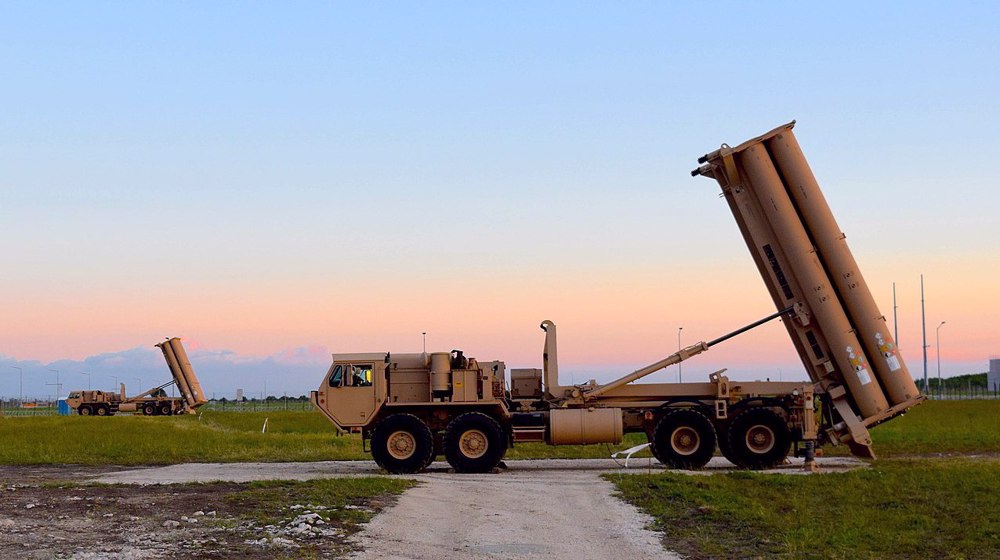
THAAD air defense system
Based on available information, of the remaining US THAAD batteries, two are deployed within the United States, one in Texas and another in Guam.
The rest are stationed overseas in South Korea, Saudi Arabia, and the United Arab Emirates (UAE), with the UAE being the only country to have formally purchased its own THAAD systems.
A THAAD battery is a mobile, self-contained missile defense unit. Each battery typically comprises six truck-mounted launchers, with each launcher carrying eight interceptor missiles, amounting to a total of 48 interceptors per battery.
In addition, the system includes an AN/TPY-2 radar for long-range detection and tracking (up to 2,000-3,000 km), a fire control and communication system for coordinating intercepts, along with support equipment and approximately 100 personnel to operate the unit.
Given the deployment of two batteries in the occupied Palestinian territories, it can be estimated that the Israeli regime had access to at least 96 interceptor missiles.
However, the actual number was likely higher due to frequent resupply efforts during engagements with Yemeni ballistic missiles and in preparation for the broader conflict with Iran.
Mixed performance against Yemeni missiles
Despite being touted as one of the most advanced missile defense systems in the world, THAAD’s performance against Yemeni ballistic missile attacks has been mixed, even according to Israeli and Western sources.
While some interceptions have been claimed as successful, there have been notable failures.
By the end of March 2025, six successful interceptions of Yemeni missiles had been reported. However, on May 4 and May 9, THAAD failed to intercept missiles targeting Ben Gurion Airport.
In both instances, Israeli sources asserted that the incoming missiles were ultimately intercepted by the Arrow missile defense system instead.
This claim has been met with skepticism, as the Arrow system typically engages threats at far greater distances, tens or even hundreds of kilometers away, yet the airport was struck directly.
The Israeli regime’s own admission that multiple systems were used against the same class of Yemeni missiles suggests that the interception cost is significantly higher than commonly assumed. Rather than a one-to-one missile-to-interceptor ratio, several interceptors, possibly from different systems, may be required to ensure a successful shootdown.
Despite ongoing claims by American and Israeli officials about the effectiveness and reliability of both THAAD and Arrow systems, Yemen has continued to target Ben Gurion Airport as part of its retaliatory operations. The continued threat and perceived vulnerability led nearly all international airlines to suspend flights to and from Israel.
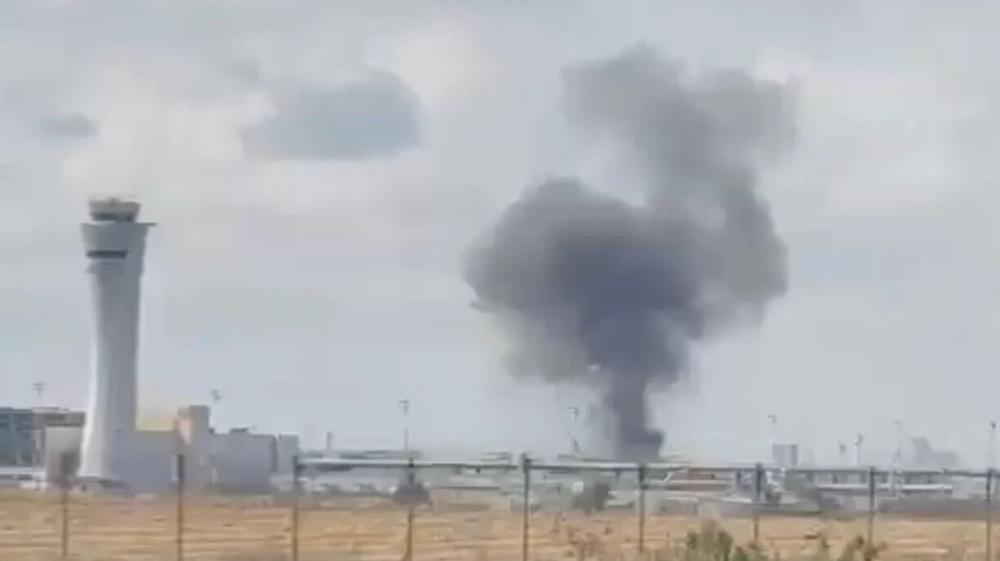
Yemeni missile hits Ben Gurion Airport on May 4, after unsuccessful interception with THAAD
The most commonly used long-range weapon in the Yemeni arsenal is the Palestine-2 – a two-stage hypersonic ballistic missile capable of reaching speeds up to Mach 16 and equipped with a maneuverable warhead. This type of missile poses a significant challenge to traditional missile defense systems, including THAAD.
Technologically, THAAD faces several limitations. These include radar difficulties in distinguishing between actual warheads and decoys, vulnerability to saturation by large-scale missile barrages, and diminished effectiveness against newer hypersonic and maneuverable missile designs.
The system also relies exclusively on US personnel for its operation, which can limit rapid adaptability in dynamic combat scenarios.
THAAD has experienced test failures in the past, raising concerns about its reliability and operational readiness. These failures have been linked to software bugs, mechanical faults, and targeting system errors, factors that cast doubt on its real-world performance under pressure.
Failures against Iranian missile strikes
During the 12-day war of aggression against Iran, THAAD’s performance deteriorated significantly, highlighted by its low interception rate and the rapid depletion of US and Israeli interceptor stockpiles.
On the eve of the Israeli aggression, approximately 100 THAAD interceptor missiles were positioned in the occupied Palestinian territories. In response, Iran launched between 370 and 500 ballistic missiles during its retaliatory operations, a volume that far exceeded available THAAD capacity.
While Israel also relied on other systems such as David’s Sling, Arrow-2, and Arrow-3, the sheer scale and intensity of Iran’s response shifted the strategic balance. The damage inflicted throughout Israeli-occupied territories underscored this imbalance.
In the initial days of the war, Iran deliberately used older liquid-fueled ballistic missiles to exhaust enemy air defenses. More advanced and maneuverable missiles were introduced only after Israel’s interceptor supply had been significantly drained.
Although no official statistics have been released regarding the number of THAAD interceptors used or their success rates, available evidence suggests a poor performance.
High-altitude kinetic interceptions, hallmarked by bright explosions visible across the region, were rare, and many may have involved Arrow systems instead of THAAD.
A particularly telling open-source analysis, based on video footage by Jordanian photographer Zaid M. Al-Abbadi, missile ignition signatures, and geolocation data, estimated that Israel used 39 THAAD, 34 Arrow-3, and 9 Arrow-2 interceptors during just one of more than 20 Iranian missile barrages.
Given such high rates of interceptor use, analysts believe THAAD batteries likely exhausted their missile supply within the first four to five days of the conflict.
This rapid depletion, combined with underwhelming interception success, highlights the system’s limitations in a high-intensity, multi-wave missile war.
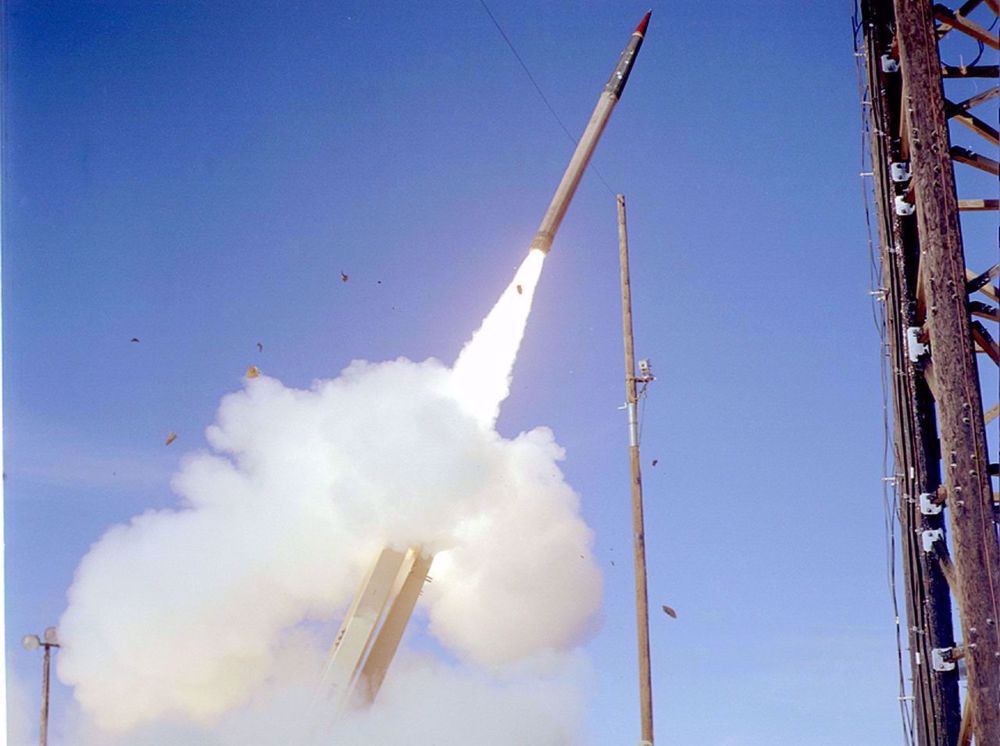
THAAD interceptor launch
Exhausted stockpiles and soaring costs
Estimates from military experts and news outlets place the unit cost of a single THAAD interceptor between $12 million and $15 million. However, other sources suggest the real cost is significantly higher.
In a statement to Newsweek, Sidharth Kaushal of the Royal United Services Institute (RUSI) noted that while the production cost of a THAAD interceptor is approximately $18 million, the total cost rises to $27 million when research, development, testing, and evaluation (RDT&E) expenses are factored in.
Estimates of total THAAD-related spending during the recent conflict vary. Analysts suggest that between $500 million and $800 million worth of interceptors may have been expended, corresponding to the use of 40 to 60 missiles.
On Tuesday, the Israeli newspaper Haaretz, citing Israeli military sources, reported that approximately 200 American and Israeli interceptor missiles were launched in total, at an estimated cost of 5 billion shekels – nearly $1.5 billion.
What all sources agree on is that the THAAD interceptor stockpile has been significantly depleted. At least one full battery’s worth, 48 interceptors, is believed to have been expended.
Considering the two THAAD batteries deployed and the high operational tempo due to prior Yemeni missile attacks, the actual figure may be closer to 96 interceptors. This would represent a reduction of roughly 30 percent of the entire US THAAD interceptor stockpile.
Open-source analysts also highlight the limited pace of US procurement: only 41 THAAD interceptors have been ordered over the past three years, including units designated for export customers. This slow replenishment rate underscores the vulnerability of even advanced missile defense systems when faced with sustained, high-volume missile warfare.
In stark contrast, Iran and China maintain vast ballistic missile arsenals, numbering in the thousands, making the rapid depletion of the US inventory, largely to defend Israeli territory, all the more striking.
Newsweek contacted the Pentagon for comment regarding the depletion and cost implications. The Department of Defense declined to elaborate, stating only that it had “nothing to provide.”
Featured Video
It’s the Occupation, Stupid
or go to
Aletho News Archives – Video-Images
From the Archives
A superpower and “the world’s sickest warrior state”
By Paul J. Balles | March 8, 2010
Living through five or six major wars has hardened me to what I thought were the extremes of inhuman cruelty and brutality.
Two things made those extremes almost bearable: the brutality always revealed – at least according to the media coverage – the viciousness of the enemy. It was therefore quite understandable when our “brave men and women” pulverized the enemy.
Films of Japanese torturing captive Americans somehow justified holding Japanese Americans in internment camps during World War II; and only a small percentage of Americans found the bombing of Hiroshima and Nagasaki unreasonably vengeful at best, at worst, depraved.
The media giants in America portrayed the North Koreans as barbaric beasts with their captives, quite unlike their southern counterpoints – our allies during the Korean War. No one ever felt the need to explain how the South Koreans were a civilized breed while the North Koreans were absolute savages, at least according to the official line.
In Vietnam, our warriors justifiably (or so the media made us believe) dropped napalm on the North Vietnamese who had the gall to hide in villages and tunnels to ravage our invaders. At least it was accepted practice until some rogue photojournalist filmed a young girl screaming down a Vietnamese road in flames. … continue
Blog Roll
 Aletho News
- IRGC: Israeli, US universities in region legitimate targets after strikes on Iranian university
- Trump admits Iran hit USS Ford carrier: ‘We ran for our lives’
- Battle for Hungary: EU attacks on Orban are a sign of worse things to come
- Iraqi resistance conducts drone strike on US-run base in Syria
- Failing to Defeat Hezbollah, Israel & US Pressure Syria’s Ahmed al-Sharaa to Join War
- US-Israeli war on Iran drives global fertilizer prices up 40%
- Hezbollah’s Surprise Weapons Redefine Ground Battle with Israel
- Yemen joins fight against US, Israel by firing missiles at occupied territories
- Seizing the Kharg: Washington’s path to defeat in the Persian Gulf
- Iran reports 500 US casualties in strikes on covert US military sites
- If Americans Knew
- Over 300 US service members wounded, majority have brain injuries – Not a ceasefire Day 169
- Researchers at Human Rights Watch Resign Over Blocked Report on Palestinian Refugee Return
- Jewish Groups Are Backing a War Americans Don’t Want
- Eric Fingerhut Thinks He’s the President of the Jews
- Top Jewish Philanthropists, Rabbis Urge Israeli President to Take Action Against ‘Jewish Extremists’
- Don’t Be Fooled. Zionist Leaders Have Always Wanted to Control Southern Lebanon
- Israel’s widespread use of torture is a core element of its genocide against the Palestinian people
- In Israel’s War on Iran, Many Middle East US Bases Rendered “All But Uninhabitable”
- ‘Burn the lawn’: Israel pursues ‘Rafah model’ in southern Lebanon
- A genocide here, an amputation there
- No Tricks Zone
- Devastating Assessment Of Comirnaty Vaccine By Former Senior Pfizer Europe Toxicologist
- New Study: CO2 Is ‘Effectively Negligible’ As An Explanatory Climate Change Factor Since 2000
- Former Pfizer Toxicologist Dr. Helmut Sterz Tells Bundestag Hearing Pfizer Vaccine Should Have Never Been Approved
- Energy Expert: Germany’s Nuclear Phaseout Was A “500 Billion Euro Mistake”
- New Research: South Australia’s Mid-Holocene Sea Surface Temperatures Were 4°C Warmer Than Today
- Storing Green Energy To Last Germany 10 Days Would Require A 60-Million Tonne Battery
- New Studies: UK Sea Levels Were 4 Meters Higher Than Today During The Mid-Holocene
- Destructive Green New Deal: German Energy And Metal Group Warns Of Drastic Crisis
- New Study Documents A 20-Year Pause In Arctic Sea Ice Decline – Driven By Internal Variability
- Wake-up Call: Survey Shows Majority Of Germans Now Favor Postponing Climate Targets!
 Aletho News