$1.5bn up in smoke: US THAAD missile stockpile dries up defending Israel against Iran
By Ivan Kesic | Press TV | July 2, 2025
According to American media, defense news outlets, and independent analysts, the 12-day Israeli military aggression against Iran significantly depleted the US stockpile of THAAD (Terminal High Altitude Area Defense) interceptor missiles.
Citing official sources, American magazine Newsweek reported on Friday that the US transferred a substantial portion of its advanced missile defense capabilities to support the Israeli regime, an effort with questionable results and a critical impact on US strategic reserves.
THAAD, developed by Lockheed Martin arms manufacturing company, is a key component of Israel’s multi-layered air defense architecture. It is designed to intercept medium-range ballistic missiles, including those launched from Iran and Yemen.
The US-made system is capable of targeting short-, medium-, and intermediate-range ballistic missiles during their terminal phase, whether inside or outside Earth’s atmosphere.
THAAD uses a “hit-to-kill” method, relying on kinetic energy rather than explosive warheads to destroy incoming threats, intercepting at altitudes of up to 150 km and ranges between 150-200 km.
Operated exclusively by American personnel, the US military maintains eight THAAD batteries with an estimated 350–400 interceptors in total. The eighth battery was activated during the June 20 Israeli aggression against Iran and is capable of intercepting hypersonic missiles.
Deployment in the occupied territories
At the outset of the Israeli aggression against Iran, seven THAAD batteries were operational, two of which had been deployed in the occupied Palestinian territories.
The first THAAD battery was stationed there in October 2024, following Iran’s “True Promise 1 and 2” operations, during which Israel’s domestic air defense systems, David’s Sling, Arrow 2, and Arrow 3, suffered notable failures. A second battery was deployed in April 2025.
These US-operated systems played a crucial role during the June 2025 confrontation with Iran, although their exact deployment locations remain classified for military reasons.
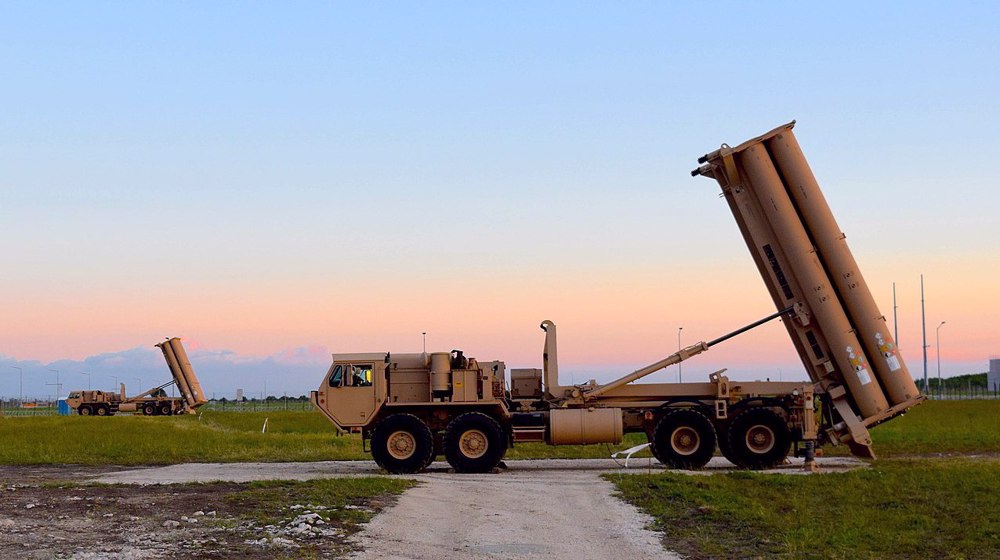
THAAD air defense system
Based on available information, of the remaining US THAAD batteries, two are deployed within the United States, one in Texas and another in Guam.
The rest are stationed overseas in South Korea, Saudi Arabia, and the United Arab Emirates (UAE), with the UAE being the only country to have formally purchased its own THAAD systems.
A THAAD battery is a mobile, self-contained missile defense unit. Each battery typically comprises six truck-mounted launchers, with each launcher carrying eight interceptor missiles, amounting to a total of 48 interceptors per battery.
In addition, the system includes an AN/TPY-2 radar for long-range detection and tracking (up to 2,000-3,000 km), a fire control and communication system for coordinating intercepts, along with support equipment and approximately 100 personnel to operate the unit.
Given the deployment of two batteries in the occupied Palestinian territories, it can be estimated that the Israeli regime had access to at least 96 interceptor missiles.
However, the actual number was likely higher due to frequent resupply efforts during engagements with Yemeni ballistic missiles and in preparation for the broader conflict with Iran.
Mixed performance against Yemeni missiles
Despite being touted as one of the most advanced missile defense systems in the world, THAAD’s performance against Yemeni ballistic missile attacks has been mixed, even according to Israeli and Western sources.
While some interceptions have been claimed as successful, there have been notable failures.
By the end of March 2025, six successful interceptions of Yemeni missiles had been reported. However, on May 4 and May 9, THAAD failed to intercept missiles targeting Ben Gurion Airport.
In both instances, Israeli sources asserted that the incoming missiles were ultimately intercepted by the Arrow missile defense system instead.
This claim has been met with skepticism, as the Arrow system typically engages threats at far greater distances, tens or even hundreds of kilometers away, yet the airport was struck directly.
The Israeli regime’s own admission that multiple systems were used against the same class of Yemeni missiles suggests that the interception cost is significantly higher than commonly assumed. Rather than a one-to-one missile-to-interceptor ratio, several interceptors, possibly from different systems, may be required to ensure a successful shootdown.
Despite ongoing claims by American and Israeli officials about the effectiveness and reliability of both THAAD and Arrow systems, Yemen has continued to target Ben Gurion Airport as part of its retaliatory operations. The continued threat and perceived vulnerability led nearly all international airlines to suspend flights to and from Israel.
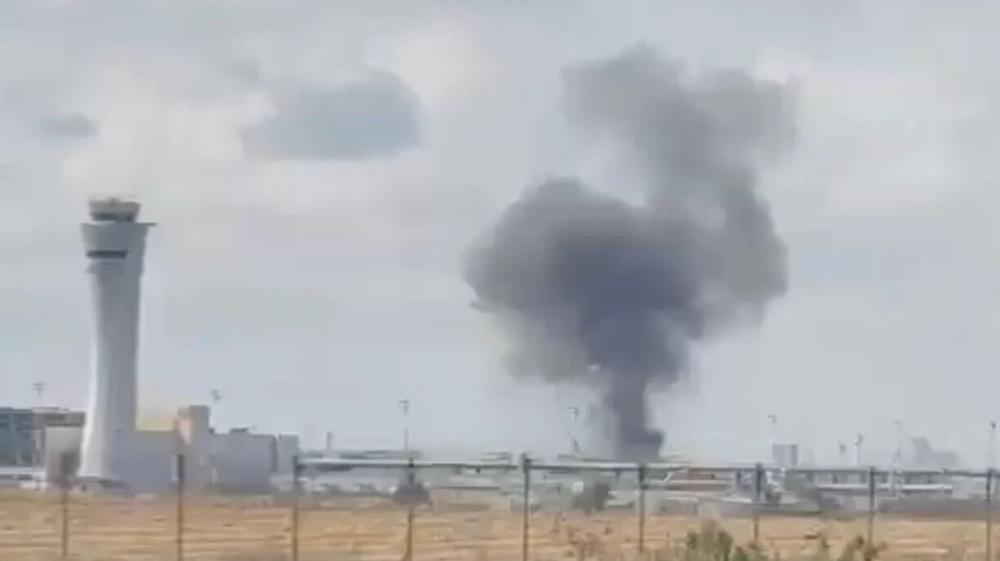
Yemeni missile hits Ben Gurion Airport on May 4, after unsuccessful interception with THAAD
The most commonly used long-range weapon in the Yemeni arsenal is the Palestine-2 – a two-stage hypersonic ballistic missile capable of reaching speeds up to Mach 16 and equipped with a maneuverable warhead. This type of missile poses a significant challenge to traditional missile defense systems, including THAAD.
Technologically, THAAD faces several limitations. These include radar difficulties in distinguishing between actual warheads and decoys, vulnerability to saturation by large-scale missile barrages, and diminished effectiveness against newer hypersonic and maneuverable missile designs.
The system also relies exclusively on US personnel for its operation, which can limit rapid adaptability in dynamic combat scenarios.
THAAD has experienced test failures in the past, raising concerns about its reliability and operational readiness. These failures have been linked to software bugs, mechanical faults, and targeting system errors, factors that cast doubt on its real-world performance under pressure.
Failures against Iranian missile strikes
During the 12-day war of aggression against Iran, THAAD’s performance deteriorated significantly, highlighted by its low interception rate and the rapid depletion of US and Israeli interceptor stockpiles.
On the eve of the Israeli aggression, approximately 100 THAAD interceptor missiles were positioned in the occupied Palestinian territories. In response, Iran launched between 370 and 500 ballistic missiles during its retaliatory operations, a volume that far exceeded available THAAD capacity.
While Israel also relied on other systems such as David’s Sling, Arrow-2, and Arrow-3, the sheer scale and intensity of Iran’s response shifted the strategic balance. The damage inflicted throughout Israeli-occupied territories underscored this imbalance.
In the initial days of the war, Iran deliberately used older liquid-fueled ballistic missiles to exhaust enemy air defenses. More advanced and maneuverable missiles were introduced only after Israel’s interceptor supply had been significantly drained.
Although no official statistics have been released regarding the number of THAAD interceptors used or their success rates, available evidence suggests a poor performance.
High-altitude kinetic interceptions, hallmarked by bright explosions visible across the region, were rare, and many may have involved Arrow systems instead of THAAD.
A particularly telling open-source analysis, based on video footage by Jordanian photographer Zaid M. Al-Abbadi, missile ignition signatures, and geolocation data, estimated that Israel used 39 THAAD, 34 Arrow-3, and 9 Arrow-2 interceptors during just one of more than 20 Iranian missile barrages.
Given such high rates of interceptor use, analysts believe THAAD batteries likely exhausted their missile supply within the first four to five days of the conflict.
This rapid depletion, combined with underwhelming interception success, highlights the system’s limitations in a high-intensity, multi-wave missile war.
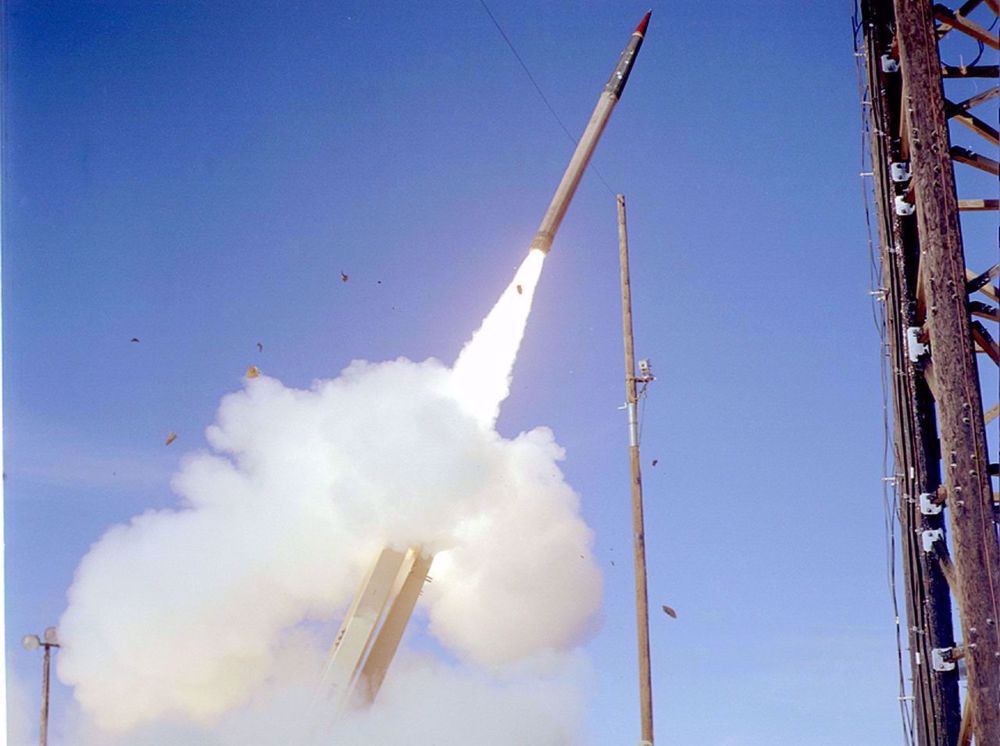
THAAD interceptor launch
Exhausted stockpiles and soaring costs
Estimates from military experts and news outlets place the unit cost of a single THAAD interceptor between $12 million and $15 million. However, other sources suggest the real cost is significantly higher.
In a statement to Newsweek, Sidharth Kaushal of the Royal United Services Institute (RUSI) noted that while the production cost of a THAAD interceptor is approximately $18 million, the total cost rises to $27 million when research, development, testing, and evaluation (RDT&E) expenses are factored in.
Estimates of total THAAD-related spending during the recent conflict vary. Analysts suggest that between $500 million and $800 million worth of interceptors may have been expended, corresponding to the use of 40 to 60 missiles.
On Tuesday, the Israeli newspaper Haaretz, citing Israeli military sources, reported that approximately 200 American and Israeli interceptor missiles were launched in total, at an estimated cost of 5 billion shekels – nearly $1.5 billion.
What all sources agree on is that the THAAD interceptor stockpile has been significantly depleted. At least one full battery’s worth, 48 interceptors, is believed to have been expended.
Considering the two THAAD batteries deployed and the high operational tempo due to prior Yemeni missile attacks, the actual figure may be closer to 96 interceptors. This would represent a reduction of roughly 30 percent of the entire US THAAD interceptor stockpile.
Open-source analysts also highlight the limited pace of US procurement: only 41 THAAD interceptors have been ordered over the past three years, including units designated for export customers. This slow replenishment rate underscores the vulnerability of even advanced missile defense systems when faced with sustained, high-volume missile warfare.
In stark contrast, Iran and China maintain vast ballistic missile arsenals, numbering in the thousands, making the rapid depletion of the US inventory, largely to defend Israeli territory, all the more striking.
Newsweek contacted the Pentagon for comment regarding the depletion and cost implications. The Department of Defense declined to elaborate, stating only that it had “nothing to provide.”
Iran presidential decree officially suspends cooperation with IAEA
Al Mayadeen | July 2, 2025
Iranian President Masoud Pezeshkian has issued a decree suspending the country’s cooperation with the International Atomic Energy Agency (IAEA), according to a report by Tasnim news agency on Wednesday.
The decision comes amid heightened tensions surrounding Iran’s nuclear program and follows recent legislative developments from the Iranian parliament.
Last week, Iranian Parliament Speaker Mohammad Bagher Ghalibaf announced that lawmakers had enacted a law mandating the suspension of cooperation with the IAEA, which he described as “Israel’s protector and servant.”
Ghalibaf argued that continued cooperation with the IAEA was untenable as long as the security of Iran’s nuclear facilities remained unresolved, claiming the agency’s impartiality had been compromised by its ties to “Israel”.
Grossi barred from Iran’s nuclear facilities
Meanwhile, Deputy Speaker of the Iranian Parliament, Hamid Reza Haji Babaei, announced on Sunday that IAEA Director-General Rafael Grossi has been barred from accessing Iranian nuclear facilities or placing surveillance cameras there, after Iran suspended all cooperation with the nuclear watchdog.
“We will no longer give Grossi permission to be present at [Iran’s] nuclear facilities and install cameras [there] because we saw information about our facilities in documents received from … the Israeli regime,” Haji Babaei told ISNA news agency.
The Islamic Republic further exposed profound cooperation between the IAEA and the Israeli occupation, which prompted Iran to obtain, through a major intelligence operation, a vast trove of highly classified strategic documents and information tied to “Israel”, well-informed sources told Al Mayadeen last month.
The sources told Al Mayadeen that the data included “thousands of documents related to the Israeli occupation’s projects and its nuclear facilities.”
According to the sources, the operation took place some time ago, but the enormous volume of documents and the need to safely transport the entire haul into Iran “required keeping the matter under secrecy.”
Aid as ambush: The horrifying new face of Israel’s Gaza war
By Eva Bartlett | RT | June 30, 2025
For nearly 630 days, the world has watched the Israeli slaughter of Palestinians in Gaza, primarily by bombing, sniping, and starvation. Off-camera, we’ve read about the rape and torture of Palestinian hostages, including the torturing to death of three doctors from the enclave.
For the last 100 days, Israel has reinforced a full blockade on Gaza, depriving starving Palestinians of food, drinking water, medicines, and fuel – meaning ambulances cannot function. This is following prior blockades last year, and the overall blockade of the strip, which has lasted over 17 years.
Since late May, we’ve been seeing horrific video footage of skeletal Palestinians lined up hoping for food aid being gunned down by US mercenaries and Israeli soldiers.
Israel has endlessly bombed Palestinians, destroyed hospitals and abducted doctors and patients. It has bombed churches, schools, UN centres and tents housing displaced Palestinians – in supposed “safe zones” where they were ordered by the Israeli army to flee to. It has killed over 200 journalists and deliberately targeted medics. To those only paying attention recently, these crimes go back decades, and extend to the Israeli army and illegal colonists’ crimes against Palestinian civilians, including children, in the West Bank. Add to this the Israeli bombardment of civilian areas of Lebanon and Syria over the years, and now Israel’s recent unprovoked bombings of Iran.
Suffice it to say that when Israel came under the barrage of Iranian retaliatory missiles, reports of some 30 Israeli civilians suffering panic attacks garnered little sympathy.
Again, those who have been paying attention for longer than two years would also recall previous Israeli wars on Gaza, like in 2014, when Israelis gathered with drinks and snacks on hillsides to rejoice in the bombing of the enclave, or the 2009 t-shirts celebrating snipers killing pregnant women with the phrase “one shot, two kills”.
In 2010, when writing about a traumatized 10 year old I’d met who could no longer walk normally nor speak after the terror of having Israeli tanks shelling his home, I cited a study by the Gaza Community Mental Health Programme which stated that “91.4 percent of children in Gaza displayed symptoms of moderate to very severe PTSD.”That was fifteen years and numerous Israeli wars on Gaza ago.
The US-Israeli “humanitarian” death traps
The killing of Palestinians in Gaza didn’t stop when Israel attacked Iran. The most insidious new invention is the recently-created US-Israeli “aid” group, the Gaza Humanitarian Foundation (GHF). The Israeli authorities accuse Hamas of stealing aid, and based on this unproven accusation, have deemed that long-established UN aid agencies could no longer operate in Gaza, insisting instead that a group staffed with armed combat veterans (mercenaries is a better word) is better equipped to ensure that food reaches famished Palestinians.
It is outrageous that in spite of some media coverage, Israel has been allowed to for months (over a year, really) block the entrance of thousands of aid trucks amassed outside of Gaza, only to then dictate that hired gunmen would be in charge of “distributing aid.”
The massive irony and duplicity is that even Israeli and Western media have reported on the actual thieves of aid in Gaza: not Hamas, but an ISIS-linked group under the protection of the Israeli army.
As the independent media outlet The Cradle reported, the group’s leader, Yasser Abu Shabab, “is a known leader of armed gangs linked to ISIS and involved in looting aid under Israeli protection… Multiple reports, including from Haaretz and The Washington Post, confirm that these gangs have been seen looting in full view of Israeli forces, who neither intervene nor prevent the theft.”
In a subsequent post, The Cradle cited the Israeli Army Radio as reporting: “Israel has transferred weapons to members of the militia…The militia operates mainly in the Rafah area, which the Israeli army has occupied and cleared. The militia’s tasks include preventing humanitarian aid from entering Gaza and fighting Hamas.”
What is apparently happening is that starved Palestinians, after walking many kilometres to the distribution sites, are then corralled into tight enclosures and fired upon by the “aid” mercenaries.
Jonathan Whittall, the Head of the UN Office for the Coordination of Humanitarian Affairs in the Occupied Palestinian Territory (OCHA) described the situation as “conditions created to kill, carnage, weaponized hunger, a death sentence for people just trying to survive.”
In a clip posted on June 23, Whittall said, “Israeli authorities are preventing us from distributing through these systems that we’ve established and that we know work. We could reach every family in Gaza, as we have in the past, but we’re prevented from doing so at every turn.”
More recently, UN Secretary-General Antonio Guterres echoed Whittall, saying: “Any operation that channels desperate civilians into militarized zones is inherently unsafe. It is killing people. People are being killed simply trying to feed themselves and their families. The search for food must never be a death sentence.” The UN’s own humanitarian efforts are being “strangled” by Israel, he said, and even the aid workers themselves are starving.
The aid-seeking civilians are reportedly being shot in the head and chest, in what looks more like execution than “warning shots” or “crowd control”.
The victims include an 18-month old girl whose X-ray shows a bullet lodged in her chest. According to Ramy Abdu, Chairman of the non-profit Euro-Med Human Rights Monitor, the girl was shot while in her mother’s arms on the way to a GHF aid point.
As far back as last July, an article in The Lancet warning that the total number of Palestinian civilian deaths caused directly and indirectly by Israeli attacks since October 2023 could reach “up to 186,000 or even more.”Other estimates were even more grim, include that of Norwegian Dr. Mads Gilbert, who has worked extensively from Gaza over the years, who said the number of those dead or soon to die could be over 500,000.
Fast forward to a recent report by Yaakov Garb of Ben-Gurion University, published via the Harvard Dataverse. It describes the false aid distribution design as, “all adjacent to Israeli military installations… manned by armed combat veterans backed by Israeli soldiers. The design creates a ‘chokepoint’ or ‘fatal funnel’ – a predictable movement path from a single entry to a single exit with no cover or concealment.”
It is the graphic on page five which caught people’s attention. From a population of 2.2 million before the genocide, the graph only accounts for 1.85 million, leaving many asking, where are the remaining 350,000 people? This makes the concerns voiced a year ago more valid.
In his report, Yaakov Garb wrote, “The Israeli military has an obligation, as the occupying power in Gaza, to supply the population with humanitarian relief… If an attacker cannot adequately and neutrally feed a starving population in the wake of a disaster it is ongoingly creating, it is obligated to allow other humanitarian agencies to do so.”
But instead, every day we see new horrors of emaciated Palestinian civilians desperately braving death in hopes of securing food for their families… and being gunned down by the Israeli army and the mercenaries it backs.
It seems, at least, that these actions are finally catching up with Israel, meaning a lack of support for or trust in the state or its representatives, and a global demand for justice for Palestinians.
To cite Craig Mokhiber, a human rights lawyer and former senior UN Human Rights official, who posted recently on X:
“The (Israeli) regime is on trial for genocide. Its leaders are indicted for crimes against humanity. Israel is isolated. The regime is now almost universally despised, just as the Nazi and apartheid regimes were despised. People across the world stand overwhelmingly with Palestine. You don’t come back from apartheid & genocide.”
Eva Bartlett is a Canadian independent journalist. She has spent years on the ground covering conflict zones in the Middle East, especially in Syria and Palestine (where she lived for nearly four years).
Syria’s Jolani is a US-Israeli ‘intelligence tool’ working to advance their interests: Activist
By Sally Ahmed | Press TV | July 1, 2025
Abu Mohammed al-Jolani, the head of the Hay’at Tahrir al-Sham (HTS)-led regime in Damascus, is a US-Israeli “intelligence tool” working to advance their interests, according to a Syrian political activist.
In an interview with the Press TV website, activist Mohammed al-Jajeh described the situation in Syria roughly six months after the collapse of the Assad government as “catastrophic by all measures” and said “no one” in the country, including ethnic and religious minorities, is safe.
The country, he said, has descended into “a dangerous slide into chaos,” marked by “ethnic and sectarian purges,” particularly targeting minorities such as Alawites, Christians, Ismailis, Shias, and even moderate Sunni Muslims.
Al-Jajeh noted that members of the former Syrian president’s Alawite sect have been subjected to a “fierce campaign of revenge,” citing reports of “horrific” massacres in Syria’s western coastal region.
Among the incidents he referenced was the killing of more than 70 civilians in the village of Ain al-Tinah, adding that thousands of Alawites have been forcibly displaced, with their homes and properties seized in the provinces of Tartus and Latakia.
‘Minorities as easy targets’
In reference to pledges made by the HTS regime to uphold the rights of religious and ethnic minorities, the Sweden-based Syrian political activist dismissed those promises as “empty.”
“Christians have become easy targets for militias and extremist Salafi groups,” he said, referring to the latest attack on Mar Elias church in Damascus.
On June 22, a man with a rifle entered the church and shot at worshippers, killing 25 people and wounding dozens of others, before blowing himself up.
The activist said Christians’ homes have been ransacked and monasteries have been looted, adding that cases of abductions among Christians and mass exodus from towns like Maaloula and Sednaya have been reported, due to the inaction of the Jolani regime.
Al-Jajeh noted that people from the Ismaili sect have also been a target for kidnappings and attacks since Assad’s fall, adding that a civil activist named Hilal Samaan was assassinated “just for calling for coexistence”.
Speaking about the violence targeting Shia Muslims, al-Jajeh said that sectarian killings have become routine. Individuals are often questioned about their religious affiliation at checkpoints, and in some cases, he noted, they are killed solely because of their names or how they pronounce certain words.
He added that even moderate Sunni Muslims, who make up the majority of Syria’s population, are not spared from violence and intimidation.
According to al-Jajeh, religious scholars and preachers who oppose extremism or foreign intervention have been either assassinated or forcibly removed from their mosques.
Stressing that the state “has collapsed”, al-Jajeh said “the institutions are absent, the law is not enforced, and power is divided among warring factions, some of which are loyal to Turkey and some others to the [Persian] Gulf [Arab] states and foreign militant groups of various nationalities.”
Since Assad’s fall, the activist said, rights groups have recorded “more than 1,200 sectarian violations”, “over 30,000 people” have been trapped in prisons with an unknown fate and “more than 5,000” abducted girls have been taken as captives.
“Syria after Assad: No one is safe,” he emphasized.
‘Jolani is a trained agent’
Amid Israel’s expansion of its occupation into Syrian territories beyond the already-occupied Golan Heights following the fall of the Assad government, al-Jajeh said this further proves Jolani is merely an American-Israeli intelligence asset, positioned in Syria to advance a broader agenda.
Referring to Jolani’s public statements expressing a willingness to normalize relations with Israel and declaring that his top priority is fighting the former Syrian government.
“This is the language of a trained agent who knows what the West wants to hear, and sends reassuring messages to Tel Aviv,” he stated.
Al-Jajeh emphasized that Jolani, who was previously affiliated with al-Qaeda and Daesh, is ultimately “just a tool” and “a minor detail” in what he described as the U.S.-led project for a “new Middle East.”
“Abu Mohamad al-Jolani is neither a revolutionary, a rebel, nor a warlord. He is a carefully trained American-Israeli intelligence tool, speaking in measured language and acting within defined boundaries,” he remarked.
Despite Jolani’s offer to normalize ties with Israel, the activist noted that the regime continues to attack Syria because it “knows its real size and continues to strike Syria because it simply despises the agents even if they serve it.”
‘It’s a gang, not an army’
Commenting on the Jolani regime’s plan to incorporate thousands of foreign Takfiri militants into the country’s new military, al-Jajeh said this move is aimed at tightening Jolani’s grip on power, slamming it as “the most dangerous, unannounced demographic change process”.
The activist said the decision comes as the new ruler “doesn’t trust the Syrian people” and seeks to recruit foreigners “who don’t speak Arabic, don’t know the geography [of the country] and have not any belonging to the territory” to just carry weapons and “obey his orders without question”.
He described those militants as “tools ready for killing, in exchange for salaries, housing and insurance”.
“This army is not built to protect Syria, but to protect the ruler from the Syrians themselves.”
To stay in power, the activist said Jolani aims to create “a personal army that owes him complete loyalty” and “does not hesitate to open fire at Syrians simply because they are not ‘one of them’.”
“Whoever brings in strangers to rule over their people does not run a state; rather, they run a gang, that’s waiting for the moment of explosion,” he added.
‘Syria as part of new regional deal’
Commenting on recent remarks by Turkey’s defense minister where he announced that Ankara has no immediate plans to withdraw from Syria, al-Jajeh said this is “a declaration of actual occupation and a direct message stating: ‘This land is no longer yours, but it has become part of the new regional deal’.”
The activist referred to the role played by Turkey in the foreign-backed militancy that erupted in Syria in 2011, saying Ankara “was not a ‘supporter of the revolution’ as it claimed, but rather one of its architects”. This was “tailored to its national interests”, he added.
Al-Jajeh noted that Turkey facilitated the passage of thousands of foreign militants into Syria in the very early days of the militancy, allowed the entry of weapons to the al-Nusra Front, trained the Takfiri militants in camps on its territory, and provided them with medical and logistical support.
“What is happening today is a clear implementation of a soft partition plan,” he stated.
Al-Jajeh also referred to “the imposition of Turkish education” in the schools of Idlib, Afrin and al-Bab, the raising of Turkish flags in institutions, the changing of streets names to Turkish names, the issuance of temporary identity cards to residents, the use of Turkish language in administrative dealings, and the establishment of large military bases in Aleppo.
“These are not emergency measures to protect ‘the borders’, but rather complete practices of political and administrative occupation,” he said.
The security situation in Syria remains tenuous after militant factions, led by HTS, toppled President Assad’s government and took control of Damascus on December 8, 2024.
Israeli army expands Syria occupation with new base in Quneitra
The Cradle | July 1, 2025
Local sources in southern Syria say Israeli forces have established a new base on Eastern al-Ahmar hill in Quneitra governorate, according to a report by Lebanese daily Al-Akhbar published on 1 July.
The hill lies adjacent to a nearby Israeli base established months earlier on the western side of the same ridge.
Local tribal sources told Al-Akhbar that Israeli forces are “rapidly working to turn it into a key operational hub,” prompting fears among residents of a repeat of the destruction in al-Hamidiyah, where on 17 June, troops demolished 16 homes.
A UN Disengagement Observer Force (UNDOF) patrol arrived ten days later only to assess the damage.
Israeli troops have also begun building a new outpost near Beer Ajam and stepped up patrols inside Syrian villages, including Abu Madrah farm near Saida al-Golan.
Roads connecting villages within the Quneitra buffer zone have been destroyed, raising concerns that Israel intends to impose de facto borders. Residents now face the choice of fleeing or living under occupation.
The occupation has spread to other parts of southern Syria, including Hader and Mount Barbar, while UN forces remain confined to passive observation. The fate of 22 detained Syrians remains unknown, with UNDOF reportedly telling local officials that their release “depends on broader peace negotiations.”
The expansion comes as Israeli officials openly link normalization with Syria to retaining control of occupied territory, with Foreign Minister Gideon Saar declaring on 30 June that Tel Aviv “will not withdraw from the Syrian [Mount] Hermon (Jabal al-Sheikh).”
This followed National Security Advisor Tzachi Hanegbi’s admission of ongoing daily talks with the Damascus government.
A day earlier, US President Donald Trump lifted most sanctions on Syria, citing the “positive actions” of the new government under Ahmad al-Sharaa, formerly the leader of Al-Qaeda’s Syrian branch. Conditions reportedly included normalization with Israel and the expulsion of Palestinian factions.
According to Israel’s Channel 12, an imminent Israeli-Syrian security agreement is expected to include several key components: an update to the 1974 disengagement agreement signed following the 1973 October War, intelligence coordination between Syria and Israel aimed at countering Iranian and Hezbollah activity in southern Syria, an Israeli acknowledgment of the Syrian identity of the Shebaa Farms, and a potential trilateral arrangement involving Jordan regarding the waters of the Yarmouk Basin.
Settlers as human shields: Israel’s militarization of civilian areas in Tel Aviv and Haifa
Press TV | July 1, 2025
The recent Iranian retaliatory strikes against the Israeli regime as part of Operation True Promise III have cast a spotlight on a longstanding and notorious military strategy: the placement of critical military facilities deep within densely populated ‘civilian’ areas.
Reports and field evidence from the retaliatory strikes that inflicted heavy and irreparable blows on the regime again point to the fact that the regime uses settlers as human shields.
In a report published Sunday, the Israeli newspaper Haaretz acknowledged that Iranian missile strikes during the 12-day war imposed by the regime targeted only Israeli military installations.
However, the report noted that many of these facilities are deeply embedded within civilian areas, referring to illegal settlements mostly in Tel Aviv and Haifa.
One key example cited was the Kirya, Israel’s central military headquarters in Tel Aviv.
Tel Aviv: The Kirya Complex in a ‘civilian’ maze
The Kirya military-intelligence complex in central Tel Aviv was among the first and most significant targets hit by Iranian missiles late on June 13, hours after the Israeli regime carried out an unprovoked and unlawful aggression on Iranian soil, leading to the assassination of many senior military commanders, scientists and ordinary civilians.
Often referred to as the “Israeli Pentagon,” the Kirya houses the ministry of war affairs, military intelligence offices, and various covert installations used in war against Iran, Lebanon and Gaza.
These are concealed in high-rise buildings that are civilian or semi-civilian in nature.
Despite being heavily fortified and protected by multilayered Israeli-American air defense systems, the Kirya was struck early during Iran’s True Promise III operation.
Foreign journalists confirmed damage to towers in the area, even as Israeli media censored coverage under regime pressure. Leaked footage from an Israeli settler showed plumes of smoke and audible panic – “They hit the Mossad!” exclaimed the witness.
Military facilities in settlements
Kirya is located in one of Tel Aviv’s most densely populated districts. Beneath its surface lie numerous underground military facilities, identified by Iranian intelligence following Tehran’s acquisition of sensitive Israeli military and intelligence data in early June.
The district includes:
- Matcal Tower – Headquarters of top Israeli military leadership
- Marganit Tower – Home to strategic communications operations
- The Bor (“The Pit”) – A heavily fortified underground command center.
These installations are surrounded on all sides by settler infrastructure, including residential buildings, schools, and commercial zones, blurring any clear separation between military and non-military zones, as a deliberate strategy to use settlers as civilian shields.
Haifa: Ports, bases, and civilians intertwined
As in Tel Aviv, Haifa’s strategic military assets are tightly interwoven with ‘civilian’ life.
The most prominent is the Haifa Naval Base, home to the regime’s Mediterranean fleet and submarine corps. Located on the northwest side of Haifa’s busy port complex, the base sits amid one of Israel’s most important economic and ‘civilian’ hubs.
Recent months have seen most maritime traffic rerouted from Eilat to Ashdod and Haifa, further increasing the ‘civilian’ presence around these strategic assets.
Residential conversion of military zones
The Bahad 600 naval training base has undergone rapid conversion into a residential area, with new apartment blocks and even a children’s hospital constructed adjacent to operational military facilities. This proximity exemplifies the ongoing militarization of ‘civilian’ areas.
To the north lies the Rafael Advanced Military Systems complex, covering several square kilometers. It produces Iron Dome and David’s Sling missile systems, cruise missiles, and armored vehicle solutions.
Surrounding this are major industrial zones, Kiryat Nahum, Kiryat Ata, and Nesher, which combine military functions with chemical, cement, and energy industries. For example:
- Haifa refinery: Processes two-thirds of the Israeli regime’s oil supply.
- Nesher cement plant: Supplies 60 percent of the regime’s domestic cement needs.
- Communications antenna at Giv’at HaHagan: A key hub linking northern military commands with Tel Aviv.
Mount Carmel’s militarized natural reserve
The most notorious site is the Mishmar military base, constructed within the protected Mount Carmel National Park. It features visible radars and Iron Dome missile platforms.
The base lies just 300 meters from the University of Haifa’s student dormitories. borders archaeological sites and sanctuaries and is built amid sensitive ecological zones and hiking trails.
Among these historical and religious sites is Derech HaDorot (Road of the Millennia), an open-air museum with Bronze Age and Roman structures and Hurshat HaArba’im (Grove of the Forty), a sacred site for the Druze community.
Despite its cultural and environmental sensitivity, the Mishmar site is now heavily militarized, showcasing the regime’s prioritization of military over the safety of settlers or heritage preservation.
OPCW members condemn Israeli attack on Iran’s chemical facilities
Press TV – July 1, 2025
A majority of the member states of the Organization for the Prohibition of Chemical Weapons (OPCW) has condemned Israel’s recent acts of aggression against Iranian chemical and industrial facilities.
The condemnation was issued during a special session of the OPCW Executive Council in The Hague, convened at Iran’s request.
At the session, Hadi Farajvand, Iran’s ambassador to the Netherlands and permanent representative to the OPCW, highlighted the killing of women and children, scientists, and civilians, as well as the targeting of research centers, including petrochemical facilities and chemical research centers.
He cited the harm to civilians, the risk of chemical substance release, environmental damage, and threats to critical infrastructure.
Farajvand underscored a series of violations by the Israeli regime, including breaches of humanitarian law, disregard for international legal norms, violations of peremptory norms (jus cogens), failure to adhere to any treaties or conventions on weapons of mass destruction, and a record of attacks on chemical facilities in Syria and Lebanon.
During the session, Iran’s ambassador proposed that the OPCW Executive Council establish a working group aimed at adopting binding decisions to prevent attacks on chemical facilities during conflicts and called for appropriate measures to be taken in this regard.
During the 12-day aggression by the Israeli regime against Iran, several chemical facilities and fuel storage sites were targeted, resulting in significant environmental damage.
Iran unity foils West plans for regime change: Responsible Statecraft

Al Mayadeen | July 1, 2025
Washington is now looking into dividing Iran, with neo-conservative think tanks openly promoting the Balkanization of Iran, a strategy that is bound to destabilize Iran and the region, according to Responsible Statecraft on Tuesday.
United States foreign policy has a troubling tendency to promote the fragmentation of nations it deems adversarial.
Now, neoconservative think tanks like the Foundation for Defense of Democracies (FDD) and their allies in the European Parliament are openly pushing for Iran’s disintegration, a reckless strategy that would further destabilize the Middle East, trigger catastrophic humanitarian crises, and provoke fierce resistance not only from Iranians but also from US partners in the region.
Think tanks push for fragmentation based on ethnicity
Amid the war “Israel” waged on Iran in mid-June, FDD analyst Brenda Shaffer posited that Iran’s ethnically diverse population structure presented an exploitable strategic weakness.
According to Responsible Statecraft, Shaffer advocated for the disintegration of Iran along ethnic divisions, drawing parallels to the breakup of Yugoslavia, while concentrating significant efforts on fostering separatist movements in Iranian Azerbaijan, home to Iran’s largest ethnic minority group, the Azeris. However, she consistently failed to acknowledge her ties to the Azeri state oil company SOCAR.
Her position mirrors a recent Jerusalem Post editorial that, during the initial wave of triumphalism following “Israel’s” strikes in this month’s war on Iran, urged Trump to publicly endorse the dismemberment of Iran.
The editorial specifically advocated for forming a “Middle East coalition for Iran’s partition” while proposing “security guarantees for Sunni, Kurdish and Balochi minority regions seeking independence,” in addition to previously endorsing US and Israeli support for the secession of northwestern Iran’s Azeri-majority areas referred to as “South Azerbaijan” from Iran.
Popular uprising or scenarios for regime change?
Meanwhile, a foreign affairs spokesperson representing a centrist liberal faction within the European Parliament organized a discussion forum titled “The Future of Iran,” which while framed as an examination of potential pathways for what they termed a “successful” uprising against the current Iranian government, appeared to focus primarily on scenarios for regime change.
The panel’s composition featured only two Iranian speakers, both ethnic separatists from Azerbaijan and Ahwaz, revealing the organizer’s true agenda: promoting regime change.
Since unilaterally cutting ties with Iran’s official institutions in 2022, the European Parliament has become a platform for fringe exiled groups. These include monarchists, the controversial MEK (Mujahedin-e Khalq), and ethnic separatists, all of whom now operate with growing visibility in EU political spaces.
Delusions of division
What these think tanks and organizations forget, Responsible Statecraft highlighted, is that Iran is not a fragile country on the brink of collapse; it is a 90-million-strong country with a deep sense of historical and cultural identity.
While the proponents of the Balkanization of Iran focus on the ethnicities in Iran, they underestimate the unifying effect of Iranian nationalism on these diverse groups.
Shervin Malekzadeh, a scholar who recently wrote in the Los Angeles Times, observed that academic research overwhelmingly recognizes Iranian politics as fundamentally rooted in a profound, enduring national identity.
This identity transcends the country’s internal ideological divides, which means Iran’s political dynamics unfold within this unifying framework of nationalism, which has shaped all major factions, from monarchists to Islamists to leftists.
Foreign pressure only made Iran more united
Moreover, decades of foreign pressure, sanctions, covert ops, and war have only hardened Iran’s unity, making the separatist approach dangerously naive; this approach, pushed heavily by pro-“Israel” neocons, already failed in Iraq and Syria, leaving chaos instead of victory.
This approach further demonstrates its advocates’ glaring disregard for actual conditions, as seen with Shaffer, a leading proponent of Azerbaijani irredentism, who even applauded Israeli strikes on Tabriz, the cultural and economic center of Iranian Azerbaijan.
Beyond being morally reprehensible, this strategy fundamentally misreads Iran’s domestic realities, with Shaffer and like-minded advocates operating under the flawed assumption that increased external pressure on Tehran would spark rebellions among Azeris and other minority groups against the central government.
Contrary to separatist expectations, “Israel’s” recent attack produced the same rally-around-the-flag effect seen across Iran, demonstrating how deeply Iranian Azerbaijanis are woven into the national fabric, as evidenced by the fact that both the country’s highest officials, Iranian Leader Sayyed Ali Khamenei and President Massoud Pezeshkian, are of Azeri heritage.
Tehran emerges stronger as Netanyahu’s Iran war backfires: FP
Al Mayadeen | July 1, 2025
In a scathing analysis of the recent 12-day Israeli war on Iran published by Foreign Policy (FP) on Tuesday, a senior nonresident fellow at the Center for International Policy, Sina Toossi, argues that Prime Minister Benjamin Netanyahu’s high-stakes offensive not only failed to achieve its strategic aims but also significantly undermined “Israel’s” long-term deterrence. The war ended swiftly, leaving behind no decisive victory.
The operation began with a wave of covert actions, decades of intelligence work culminating in drones assembled inside Iran, sleeper cells launching bombings, and high-profile assassinations. These were soon followed by a series of conventional airstrikes on military and nuclear sites, including Natanz and Fordow. But as Toossi notes, the campaign extended far beyond strategic targets: residential areas, prisons, media offices, and police stations were also struck, indicating a broader attempt to incite chaos and unrest.
According to the FP, the human cost was staggering. At least 610 Iranians were killed, including 49 women, 13 children, and five healthcare workers, with nearly 5,000 more injured. Medical facilities and emergency services were also hit. In response, Iranian missile and drone strikes on “Israel” killed at least 28 settlers, injured over 3,200, and displaced more than 9,000. Public infrastructure and buildings sustained extensive damage.
War on Iran fell far short of its objectives
Despite Netanyahu’s declared intention to cripple Iran’s missile and nuclear capabilities, Toossi argues the campaign fell far short of its objectives. Iran’s retaliation was swift and calculated, targeting Israeli settlements and strategic assets, reported FP. After the United States joined by bombing Iranian nuclear sites, Tehran escalated further, striking the Al Udeid Air Base in Qatar, a move that drew Washington deeper into the war.
Just 12 days after “Israel’s” initial strikes, a cease-fire was reached under undisclosed terms, leaving the regional balance precariously unresolved.
While “Israel” managed to inflict tactical damage on Iranian command and scientific infrastructure, Toossi stresses that strategic outcomes are what truly matter, and by that measure, the war was a failure.
Iran’s nuclear infrastructure appears largely intact. Intelligence reports suggest sensitive materials may have been moved ahead of the attacks. Moreover, Iran had already initiated construction of a fortified, undisclosed enrichment facility, possibly untouched.
The aftermath of attacking Iran’s nuclear facilities
In a critical shift, Iran’s parliament passed a bill to suspend cooperation with the International Atomic Energy Agency just days after the cease-fire. One Iranian lawmaker stated, “Why was our nuclear facility attacked, and you remained silent? Why did you give the green light for these actions?”
As Toossi warns, by attacking nuclear sites while demanding oversight, the US and “Israel” may have inadvertently legitimized the pursuit of a nuclear deterrent.
The FP argues that its ballistic arsenal successfully pierced both Israeli and US air defenses, targeting refineries, military bases, and research centers. Though censorship in “Israel” limited public data, over 41,000 compensation claims were reportedly filed due to war damage. Meanwhile, “Israel” expended an estimated $500 million worth of US-supplied THAAD missile interceptors.
A ceasefire was necessary to ‘save Israel’
Economic disruption was also severe. Ben Gurion Airport was shut down, financial activity slowed, and capital outflows surged. Former Trump adviser Steve Bannon bluntly stated that the ceasefire was necessary to “save Israel,” while Donald Trump admitted that “Israel” had been hit “very hard.”
In a revealing statement, Trump also announced that China would be permitted to buy Iranian oil to help Iran “get back into shape.”
That said, Toossi highlights how Iran’s retaliatory strategy was calibrated and symbolic. After an Israeli drone strike on an Iranian refinery, Iran responded by hitting a refinery in Haifa. After “Israel” attacked suspected nuclear research centers, Iran struck the Weizmann Institute of Science near Tel Aviv, long believed to be part of “Israel’s” nuclear research apparatus. These strikes demonstrated Tehran’s capacity for restrained but potent retaliation.
On the domestic front, instead of sparking internal collapse, the war triggered a surge of national unity across Iran. As Toossi observes, the strikes unified a polarized society in resistance to foreign aggression. Civil society, from Gen Z activists to artists and athletes, mobilized in solidarity. Citizens opened their homes to the displaced, and the indiscriminate loss of civilian life only deepened collective resilience.
Crucially, this war erupted just as Iran was re-engaging in nuclear negotiations with the Trump administration. Many Iranians had pinned hopes on the election of reformist President Masoud Pezeshkian and his promise of diplomacy and economic reform. Instead, they watched their country being bombed during peace efforts.
Netanyahu’s war boosts Iran’s unity and deterrence
Toossi contends that the long-standing belief in Washington that Iran’s government is one blow away from collapse has now been discredited. Far from eliminating the threat posed by Iran, Netanyahu’s war has exposed “Israel’s” vulnerabilities and rallied Iranian nationalism, the author stressed.
In a paradoxical outcome, the war may enhance Iran’s diplomatic leverage. Trump and his envoy Steve Witkoff continue to insist that Tehran must abandon uranium enrichment, yet Iranian officials, including Foreign Minister Abbas Araghchi, have reaffirmed: “Iran will never give up this right.” Meanwhile, Trump has floated lifting sanctions and allowing Chinese oil purchases as part of “great progress” toward de-escalation.
Israel kills more Palestinian journalists in Gaza
Press TV – June 30, 2025
Israel continues to target Palestinian journalists covering the regime’s atrocities in Gaza, killing a number of them in Gaza City.
“Several Palestinian journalists were killed and others injured in an Israeli airstrike targeting al-Baqa Café in western Gaza City, where they had been working to upload news reports,” Rami Abdu, the founder of Chairman of Euro-Med Human Rights Monitor, said in a tweet on Monday.
Medical sources said at least 33 people were killed and dozens of others injured in the attack.
Most of the victims were “journalists, artists, and social media activists”, as the place is one of the few remaining internet access points in the strip,” Abdu added, amid internet blackout.
“It’s increasingly clear that Israel is deliberately targeting data upload hubs used by journalists to transmit reports and images.”
Among the victims was Ismail Abu Hatab, a photojournalist who worked with several media platforms and various outlets, Gaza’s Government Media Office said on Telegram.
The office “condemned in the strongest terms the systematic targeting, killing, and assassination of Palestinian journalists by the Israeli occupation”.
Since this morning, hospital sources said at least 80 people have been killed in Israeli strikes on Gaza.
Sources told Al-Jazeera that those killed include 57 Palestinians in northern Gaza, and 15 aid seekers near the so-called aid distribution centers north of the southern city of Rafah.
Israel launched the campaign of genocide in Gaza on October 7, 2023. It has killed over 56,530 Palestinians there so far, according to the health ministry of Gaza.
Pakistan won’t remain silent if US, Israel target Ayatollah Khamenei: Senator
Press TV – June 30, 2025
A Pakistani senator has condemned a threat by the US and Israel to target Leader of the Islamic Revolution Ayatollah Seyyed Ali Khamenei, saying it will trigger a response from all Muslim nations, including Pakistan.
Allama Raja Nasir Abbas Jafari, a member of the Pakistani Senate, described Ayatollah Khamenei as a religious leader and a Marja (religious authority), who is also a political leader.
Religious authorities issued a fatwa (religious decree) that says anyone who threatens the Leader is an enemy of God, whose punishment is death in Islam, he noted.
Between June 13 and 24, Israel waged a blatant and unprovoked aggression against Iran, assassinating many high-ranking military commanders, nuclear scientists, and ordinary civilians.
On June 22, the United States also jumped on the bandwagon and bombed three Iranian nuclear sites in a grave violation of the United Nations Charter, international law, and the Nuclear Non-Proliferation Treaty (NPT).
During the 12-day war, US President Donald Trump claimed that Ayatollah Khamenei was “an easy target.”
Benjamin Netanyahu of Israel also ranted that the assassination of Ayatollah Khamenei would “end” the war.
The Pakistani senator said Trump and Netanyahu should know that if an attack is carried out, it will not just be an attack on Iran, and all Muslims in the world will respond to it.
“We will respond in Pakistan as well; if such an action is taken, no American will remain in Pakistan. We will not remain silent when they (Trump and Netanyahu) do not abide by any law,” he added.
On Sunday, senior Iranian clerics Grand Ayatollah Nasser Makarem Shirazi and Grand Ayatollah Hossein Nouri-Hamedani issued religious decrees against any attack or threat to Ayatollah Khamenei.
They said that any person or regime that threatens or attacks the leadership and religious authority to harm the Islamic Ummah and its sovereignty is subject to the ruling of confrontation.
Agent of Chaos: Lindsey Graham’s Power Depends on War
By Ekaterina Blinova – Sputnik – 30.06.2025
Hawkish Senator Lindsey Graham got President Donald Trump to strike Iran, according to the Wall Street Journal. What’s he gaining from the Middle East war?
Darling of Jewish Lobby
- The Republican Jewish Coalition was Graham’s top donor in his 2020 re-election, giving $111,000 (OpenSecrets).
- Over $1 million more came via RJC, according to RJC’s executive director Matt Brooks.
- Brooks: “There is nobody more important in the US Senate” for the US-Israel partnership.
- He raised $109 million in total.
RJC: Longtime Supporter of Graham
- RJC leaders Larry Mizel and Sam Fox backed Graham’s 2014 re-election.
- Fox gave $50,000 and Mizel $100,000 to his super PAC, West Main Street Values.
- RJC board member Sheldon Adelson co-hosted a fundraiser for Graham’s 2016 presidential bid.
AIPAC is Another Backer
- Graham major backer, billionaire Mizel, also sits on AIPAC’s board — the top pro-Israel lobby in the US.
- Haaretz calls Mizel a key booster of pro-Israel Republicans who opens doors in Israel’s power circles for GOP politicians.
More Wars – More Defense Contractors Backing
- Lockheed Martin gave Graham $102,000 in 2020, according to OpenSecrets
- Boeing added $80,700 in 2024.
- The Intercept notes most cash comes from defense-linked individual donors — like Humvee mogul Ron Perelman, who gave $500,000 to Graham’s 2016 run.
Graham’s 2026 Senate Bid at Stake
- Graham’s hawkish Iran stance apparently ties to his 2026 ambitions – he needs big donor cash.
- RJC backs him as “one of the strongest advocates for the US Jewish community.”
- Defense firms will pay too—if he keeps the bombs dropping.
Featured Video
It’s the Occupation, Stupid
or go to
Aletho News Archives – Video-Images
From the Archives
A superpower and “the world’s sickest warrior state”
By Paul J. Balles | March 8, 2010
Living through five or six major wars has hardened me to what I thought were the extremes of inhuman cruelty and brutality.
Two things made those extremes almost bearable: the brutality always revealed – at least according to the media coverage – the viciousness of the enemy. It was therefore quite understandable when our “brave men and women” pulverized the enemy.
Films of Japanese torturing captive Americans somehow justified holding Japanese Americans in internment camps during World War II; and only a small percentage of Americans found the bombing of Hiroshima and Nagasaki unreasonably vengeful at best, at worst, depraved.
The media giants in America portrayed the North Koreans as barbaric beasts with their captives, quite unlike their southern counterpoints – our allies during the Korean War. No one ever felt the need to explain how the South Koreans were a civilized breed while the North Koreans were absolute savages, at least according to the official line.
In Vietnam, our warriors justifiably (or so the media made us believe) dropped napalm on the North Vietnamese who had the gall to hide in villages and tunnels to ravage our invaders. At least it was accepted practice until some rogue photojournalist filmed a young girl screaming down a Vietnamese road in flames. … continue
Blog Roll
 Aletho News
- Israel’s Iran Strategy Uses US Military & Gulf States as Its Pawns
- Iran: Trump wanted regime change, now just begging for Hormuz to open
- IRGC: Israeli, US universities in region legitimate targets after strikes on Iranian university
- Trump admits Iran hit USS Ford carrier: ‘We ran for our lives’
- Battle for Hungary: EU attacks on Orban are a sign of worse things to come
- Iraqi resistance conducts drone strike on US-run base in Syria
- Failing to Defeat Hezbollah, Israel & US Pressure Syria’s Ahmed al-Sharaa to Join War
- US-Israeli war on Iran drives global fertilizer prices up 40%
- Hezbollah’s Surprise Weapons Redefine Ground Battle with Israel
- Yemen joins fight against US, Israel by firing missiles at occupied territories
- If Americans Knew
- Israel is assassinating journalists again, more than any other nation, anywhere, ever – Not a ceasefire Day 170
- Over 300 US service members wounded, majority have brain injuries – Not a ceasefire Day 169
- Researchers at Human Rights Watch Resign Over Blocked Report on Palestinian Refugee Return
- Jewish Groups Are Backing a War Americans Don’t Want
- Eric Fingerhut Thinks He’s the President of the Jews
- Top Jewish Philanthropists, Rabbis Urge Israeli President to Take Action Against ‘Jewish Extremists’
- Don’t Be Fooled. Zionist Leaders Have Always Wanted to Control Southern Lebanon
- Israel’s widespread use of torture is a core element of its genocide against the Palestinian people
- In Israel’s War on Iran, Many Middle East US Bases Rendered “All But Uninhabitable”
- ‘Burn the lawn’: Israel pursues ‘Rafah model’ in southern Lebanon
- No Tricks Zone
- German Science Blog Accuses PIK Climate Institute Of Hallucinating Climate Tipping Points
- Devastating Assessment Of Comirnaty Vaccine By Former Senior Pfizer Europe Toxicologist
- New Study: CO2 Is ‘Effectively Negligible’ As An Explanatory Climate Change Factor Since 2000
- Former Pfizer Toxicologist Dr. Helmut Sterz Tells Bundestag Hearing Pfizer Vaccine Should Have Never Been Approved
- Energy Expert: Germany’s Nuclear Phaseout Was A “500 Billion Euro Mistake”
- New Research: South Australia’s Mid-Holocene Sea Surface Temperatures Were 4°C Warmer Than Today
- Storing Green Energy To Last Germany 10 Days Would Require A 60-Million Tonne Battery
- New Studies: UK Sea Levels Were 4 Meters Higher Than Today During The Mid-Holocene
- Destructive Green New Deal: German Energy And Metal Group Warns Of Drastic Crisis
- New Study Documents A 20-Year Pause In Arctic Sea Ice Decline – Driven By Internal Variability
 Aletho News