US strikes on Yemeni ceramics factory leave dozens of casualties
The Cradle | April 14, 2025
A US attack on a ceramics factory near Yemen’s capital, Sanaa, late on 13 April has killed and injured dozens of civilians, with the toll expected to rise in the coming hours.
“Six citizens were martyred and 20 others were injured, including critical injuries. Civil defense and ambulance teams are working hard to search for victims and extinguish the fires,” a spokesman for the Yemeni Health Ministry, Dr Anis al-Asbahi, told SABA news agency.
Video footage showed heavy destruction and teams attempting to extinguish large fires at the Al-Sawari factory in the Sanaa governorate’s Bani Matar district.
US warplanes also “launched two raids on the Al-Yatmah area in the Khabb wal Shaaf district, northeast of Al-Jawf governorate,” according to Al Mayadeen’s correspondent.
Washington’s latest deadly attack comes as the Yemeni Armed Forces (YAF) and Ansarallah movement continue their operations despite a US campaign of daily airstrikes which aim to stifle Sanaa’s military capabilities – but have instead only taken a heavy toll on civilians.
The YAF announced on Sunday evening that it downed a US MQ-9 Reaper drone – worth tens of millions of US dollars – in the airspace of Yemen’s Hajjah governorate. This was the fourth MQ-9 shot down within two weeks and the 19th since the start of the war in Gaza.
“The Armed Forces reiterate that their military capabilities have not been affected and that the ongoing US aggression against our country will only bring more disappointment and failure,” the YAF said in a statement.
The US has been bombing Yemen every day since 15 March, when US President Donald Trump renewed – with severe intensity – the campaign which was started by the former administration of US president Joe Biden.
Dozens of people have been killed in the attacks, including women and children.
US Defense Secretary Pete Hegseth vowed last week that the campaign against Yemen is “about to get worse.”
The violent attacks come in response to Yemen’s reimposition of a ban on Israeli shipping in the Red Sea and elsewhere, as well as its renewal of drone and missile attacks on Israel after Tel Aviv restarted the war on Gaza last month.
The YAF has been responding to Washington’s attacks with operations targeting US warships in the Red Sea – including the USS Harry S. Truman aircraft carrier.
According to sources cited in US media recently, Washington has burned through massive amounts of munitions and has spent close to $1 billion, but has failed to significantly impact the YAF and Ansarallah – which are merged.
US, Iran take a leap forward in trust building
By M. K. BHADRAKUMAR | Indian Punchline | April 13, 2025
With the foreplay over and US-Iranian talks commencing in Muscat on Saturday, a constructive engagement has begun in right earnestness. The sure sign of it is that Iran’s currency rose nearly 6 percent on Sunday. The Tehran bazaar, the weathervane of Shia politics, has spoken.
Most important, the two key negotiators in Muscat Steve Witkoff and Abbas Araqchi have decided to return to the talks on April 19 in exactly a week’s time after reporting back to their principals in Washington and Tehran respectively and seeking fresh guidelines going forward.
The White House said the talks were positive and constructive and appreciated that “direct communication was a step forward in achieving a mutually beneficial outcome.” Witkoff described the talks as “very positive and constructive.”
Iran’s foreign ministry said the talks were held in “a constructive atmosphere based on mutual respect. Araqchi also described the negotiations as “promising and constructive.” Significantly, Araqchi told the Iranian national television that the talks brought the two sides closer to establishing “the basis of negotiations” for future discussions.
He added cryptically that while Oman will continue to act as mediator in the upcoming round on April 19, the venue for the next session may change.
Signalling to Witkoff and addressing the domestic audience, Araqchi gave an insightful perspective. He said the discussions aimed to create a structured agenda for the negotiations based on a timeline. The following remarks by Araqchi must be noted carefully:
- “We agreed to hold a second round next Saturday, and in the next session, we will delve into the overall framework that a deal can take to see how far this process can advance.”
- It is important to set a basis for the talks; “If we can finalise the basis in the next meeting… we can begin real discussions based on that basis.”
- The talks were conducted in a “calm and very respectful atmosphere. No inappropriate language was used. Both sides demonstrated their determination to advance the talks until an agreement is reached that is desirable for both parties and is based on an equal footing.”
- Neither Iran nor the US wants to “negotiate for the sake of negotiating” and does not favour protracted “attritional talks.” Both sides voiced their keenness to achieve an agreement “at the shortest time. This, however, will not be easy and requires full determination of the two sides.”
- “When leaving, the two delegations encountered each other, and we talked for a few minutes. This is a completely accepted issue. We have always observed diplomatic courtesy when dealing with American diplomats, and this time, too, an initial greeting was exchanged, and then we left the place. It was nothing extraordinary.”
Dr Mohammad Jafar Qaempanah, President Masoud Pezeshkian’s trusted chief of staff who holds the position of vice-president for executive affairs — and, incidentally, a medical doctor by profession with research papers and foreign citations to his credit — that the negotiations “were conducted well with dignity, prudence, expediency, and in line with the interests of the Iranian people.”
President Donald Trump reined himself in his early comments to the media from Air Force One, “Nothing matters until you get it done, so I don’t like talking about it, but it’s going OK. The Iran situation is going pretty good, I think.”
Elsewhere, Trump added, “I want Iran to be a wonderful, great, happy country, but they can’t have a nuclear weapon.” But that is Iran’s strategic choice, too.
That said, both in the US and in Iran, the hardliners are straining at the leash to throw stones. Then there are also the third parties with their own agenda. If the Iranians spurned the initial US attempt to have the UAE mediate, and instead also bypassed Qatar and opted for Oman as their preferred mediator for the talks, it tells a tale by itself of the complex regional alignments in the Gulf as well as Tehran’s need to keep Israelis miles away from messing around.
The crux of the matter is that the initial round of talks in Muscat represents a turning point in the challenging dynamics between Tehran and Washington. According to the Tehran grapevine, the talks focussed on two intertwined contentious issues — sanctions relief and the nuclear issue — as in the past negotiations.
Reaching a mutually agreeable framework for dialogue could pave the way for reducing tensions and returning to a diplomatic path. It is doable today from all indications. The game changer is that both sides have shown willingness to reduce tensions and seek a middle ground. Araqchi’s positive spin on the atmospherics at the Muscat talks signalled that the enduring mutual distrust notwithstanding, both sides acknowledge the necessity of continuing discussions, and are determined to avoid deadlock and explore new opportunities.
This is not to overlook that the path ahead remains challenging and fraught with obstacles. Sensitive issues need to be sorted out such as the the timing of sanctions relief, the scope of nuclear commitments, and verification mechanisms. Nonetheless, the bottom line is that the return to diplomacy after such high spiralling of tensions in recent months provides an opportunity to rebuild relative trust and recalibrate US-Iran relations—at least on technical and substantive levels.
Indeed, Witkoff and Araqchi are just the negotiators with the temperament not to succumb to the temptations of oneupmanship and grandstanding and instead proceed with precision, patience, and creativity in an all-out attempt to capitalise on the good start.
Witkoff already signalled an openness to compromise when he told Wall Street Journal that “our position today” starts with demanding that Iran completely dismantle its nuclear program. “That doesn’t mean, by the way, that at the margin we’re not going to find other ways to find compromise between the two countries.
“Where our red line will be, there can’t be weaponisation of your [Iran’s] nuclear capability,” Witkoff added underscoring that any deal must include extensive oversight measures to guarantee Iran is not developing an atomic weapon. Nuclear experts from the US state department are assisting Witkoff.
Iran has consistently denied seeking to acquire nuclear weapons. On Friday, foreign ministry spokesman Esmaeil Baqaei said in Tehran that Iran is “giving diplomacy a genuine chance in good faith and full vigilance. America should appreciate this decision, which was made despite their hostile rhetoric.”
READ MORE: Steve Witkoff’s Iran mission holds seamless possibilities, Indian Punchline, April 11, 2025
Israeli Airstrikes Across Gaza Kill, Injure Dozens
IMEMC | April 11, 2025
On Thursday, Israeli forces intensified bombing and shelling across the destroyed, besieged, and starved Gaza Strip, causing dozens of casualties, including women and children.
In Gaza City, a building in the city center was targeted, killing at least five Palestinians and injuring many others. Six more Palestinians lost their lives, and several were wounded when the army struck the Abu Al-Awn family’s home in the Shuja’iyya neighborhood.
Among the injured was a Palestinian infant whose arm had to be amputated following the attack.
In Deir Al-Balah, central Gaza, the army launched missiles at the Abu Al-Ajeen area, killing two Palestinians and wounding several others. Homes in Qizan Najjar, south of Khan Younis, were also shelled by Israeli forces.
Further south, in Khan Younis, a missile targeted the Abu Doqqa family’s home in the Shahayda area, north of Abasan town, killing two Palestinians, including a child.
In another incident, a displaced family sheltering near Nasser Hospital was struck by a missile fired from an Israeli helicopter, killing one Palestinian and injuring others.
Additional strikes in Khan Younis led to the death of a woman and injuries to several residents at the Al-Farra family’s home in the Sheikh Nasser area.
In Mawasi Rafah, the southernmost part of Gaza, a Palestinian was killed when soldiers fired live rounds at displaced residents in the Shakoush area.
On the political front, Israeli Channel 13 reported ongoing indirect discussions regarding a prisoner exchange deal, which include proposals for the release of more than five Israeli captives. Kan News stated that Israeli Prime Minister Benjamin Netanyahu conducted a situation assessment with military officials and negotiation teams about the Egyptian-mediated proposal.
According to reports, the Egyptian plan includes releasing eight captives alive, implementing a 50-day ceasefire, allowing humanitarian aid to enter Gaza, and commencing negotiations for a second phase aimed at ending the war and facilitating an Israeli withdrawal from Gaza.
Sources reveal that the proposal, considered “serious” by Arab media, includes the release of eight or nine Israeli captives, among them an American-Israeli soldier named Aidan Alexander, along with eight bodies. In return, Israel would release 300 Palestinian detainees, including 150 serving life sentences, and 2,200 detainees from Gaza.
The plan also outlines a 70-day extension of the ceasefire in Gaza, during which the second phase of negotiations would proceed. This phase includes facilitating the delivery of fuel and humanitarian aid to Gaza, reopening border crossings, and providing Hamas with detailed information about the status of remaining hostages.
Medical sources cited by Al Jazeera reported that Israeli attacks since dawn on Thursday have claimed the lives of at least 29 Palestinians, with additional casualties being reported amid ongoing strikes. Tedros Adhanom Ghebreyesus, Director-General of the World Health Organization (WHO), expressed alarm over the escalating humanitarian crisis. He warned of worsening health conditions and rising fatalities resulting from Israel’s blockade on aid shipments, emphasizing the urgent need for medical evacuations for over 10,000 individuals in Gaza.
To date, Israeli bombardments have claimed the lives of at least 50,886 Palestinians, including 12,365 women and 17,954 children. Approximately 11,000 individuals remain missing, largely believed to be under the rubble of bombed homes and buildings. The total number of wounded has now surpassed 115,875, primarily affecting children, women, and the elderly.
Steve Witkoff’s Iran mission holds seamless possibilities
By M. K. BHADRAKUMAR | Indian Punchline | April 11, 2025
The rubric of the US-Iranian talks slated for Saturday in Muscat turned into a vanity fair of sorts — whether the talks should be called ‘indirect’ or ‘direct’. The US President Donald Trump sought direct talks and claimed that Iranians conveyed through back channel that they had no objection to it. Furthermore, Trump disclosed that indirect talks already started. While maintaining publicly that the talks will be ‘indirect’, Iranians didn’t call out Trump.
Accordingly, Trump nominated his trusted aide and longstanding friend Steve Witkoff to represent him at the talks. Tehran reciprocated with Abbas Araqchi, a veteran nuclear negotiator and brilliant diplomat, and currently the foreign minister.
Trump noted with satisfaction that Tehran has fielded a negotiator at the highest possible level. Interestingly, Trump made the announcement on the talks from the Oval Office in the presence of Israeli prime minister Benjamin Netanyahu.
Such hyper activism on the optics may create a surreal impression. After all, there is also a military build-up going on in the US base in Diego Garcia, including B-52 heavy bombers with a range of 10000 kms. But the Russian assessment is that the US’ mobilisation of military assets falls way short of the level of force strength required to start a war with Iran.
The presence of Araqchi and Witkoff at the talks in Muscat underscores that both sides are approaching the talks in all seriousness conscious of the real risk of a dangerous escalation of the present precarious situation around the Iran nuclear issue if concrete progress is not achieved in the negotiations by mid-2025.
The clock starts ticking for the E3 (France, Germany, and Britain) to move to restore the UN Security Council sanctions on Iran by invoking the JCPOA’s veto-proof ‘snapback’ mechanism for which the cutoff date is the month of October. Snapback also restores Security Council ban on uranium enrichment, further reactor development, and ballistic missile activities.
Tehran has warned that if the UN sanctions are restored, it may withdraw from the NPT in response and if that happens, it is no longer obligated to retain IAEA safeguards. But there is a gestation period of 3 months before Iran’s exit from NPT gets formalised.
Enter Russia. According to the 1992 nuclear cooperation agreement between Moscow and Tehran, “nuclear material, equipment, special non-nuclear-material, and related technology” as well as nuclear materials produced by the result of transferred technology “shall be under the International Atomic Energy Agency safeguards” during their “entire period” of stay in Iran.
The agreement further stipulates that these materials “shall be used only for declared purposes that are not connected with activities of manufacturing nuclear explosive devices” and “shall not be used to carry out activities in the field of nuclear fuel cycle” that are not under IAEA safeguards.
Suffice to say, at the very least, Iran’s nuclear cooperation agreement with Russia may obligate Tehran to retain some IAEA presence. Russia’s economic interests in nuclear cooperation with Iran will also play a part. Besides, the recent Russian-Iranian treaty on strategic cooperation explicitly affirms Tehran’s commitment to nuclear non-proliferation. Russia also tends to prioritise a constructive engagement of the US in its foreign policies and its moderating influence on Iran lest it goes the North Korean way will be a significant factor in the US-Iranian negotiations. The situation around Iran has already figured more than once in the recent US-Russia exchanges since February including at the highest level between Trump and Russian President Vladimir Putin.
During this week, against the backdrop of the talks in Muscat, President Masoud Pezeshkian made certain significant remarks. It is entirely conceivable that he was speaking for Supreme Leader Ayatollah Ali Khamenei.
First, Pezeshkian said Khamenei is “not opposed to US entities investing capital” in the Iranian economy. Succinctly put, this is a radical departure from Iran’s traditional stance.
Second, Pezeshkian said, “We are open to dialogue, but with dignity and pride, we will not compromise on our achievements and we will not make deals (on them).” In effect, Pezeshkian has notified that any suggestions that the only acceptable deal with Iran must include complete dismantlement of the country’s nuclear program will be a non-starter.
Third, Pezeshkian not only reiterated Iran’s rejection of nuclear weapons but stated its willingness to be subject to robust safeguards. As he put it, “We are not looking for an atomic bomb. Who is setting policy above the Leader of the Islamic Revolution who has officially announced that we are not looking for a nuclear bomb? Check it a thousand times. You can verify a thousand times that we don’t have atomic bombs, but we need nuclear science and nuclear energy.”
Fourth, Pezeshkian also had a message of sorts for Israel. He said, “We are not looking for war, but we will stand strong against any aggression with the knowledge and power that our scientists have created. The more they harm us, the more powerful we will become, and the stronger we will stand against any threat they pose to us.”
Taken together, these remarks by Pezeshkian would give a fair idea of what the contours of a possible settlement of the nuclear issue could be as the talks proceed.
Most importantly, Iran seeks an economic partnership with the US and implicit in it is the unspoken readiness for political and diplomatic ties. Iran’s approach bears an uncanny resemblance to what Russia has adopted in its nascent dialogue with the Trump administration. Trump’s choice of Witkoff as the negotiator for Iran can be seen as a signal that the US is open to explore opportunities of economic cooperation with Iran as an underpinning to the normalisation process. (By the way, the Washington Post has reported that Witkoff is willing to travel to Tehran, if invited.) Certainly, Tehran pins hopes on Witkoff bringing new thinking into the paradigm. Do not be surprised if he travels to Tehran in the near future.
That said, the Trump administration must appreciate that Iran lives in a tough security environment and is attempting to use its nuclear threshold status as a deterrent. Therefore, what is possible is a combination of limits and monitoring that can adequately reduce proliferation risks.
The onus is on Witkoff to articulate behind closed doors realistic US objectives for a nuclear deal, bearing in mind that politics is the art of the possible. This involves refraining from calls for the complete dismantlement of the Iranian nuclear program, and, equally, the projection of ideas as to how Tehran will benefit from an agreement with the United States.
When I visited Tehran last June to observe the presidential election, a topic that came up in almost all conversations and TV interviews was: What to expect from a Trump administration? What I could sense was that contrary to what Israeli media management strives to project to muddy waters, Tehran has no revenge mentality and instead senses that Trump’s priorities in a second term are not about projection of power but the regeneration of America. As a civilisational state that was never colonised through millennia, Iranian culture is highly pragmatic but it will never surrender its legitimate interests or compromise under pressure. In this respect, it is a unique country in the region. (See an outstanding policy brief by Washington-based Arms Control Association titled The Art of a New Iranian Nuclear Deal in 2025.)
Iran’s relevance to the regeneration of the American economy (MAGA) is self-evident. Apart from vast mineral resources, Iran’s human resources can give a solid underpinning to economic and technological partnership with American business and industry. An enduring nuclear deal with Iran is best achieved through an overarching relationship to reengage with Iran as a partner after over four decades.
Prof. John Mearsheimer: Trump, Netanyahu, and Iran.
Judge Napolitano – Judging Freedom | April 10, 2025
Israel’s hawkish minister, husband accused of sexual abuse by daughter
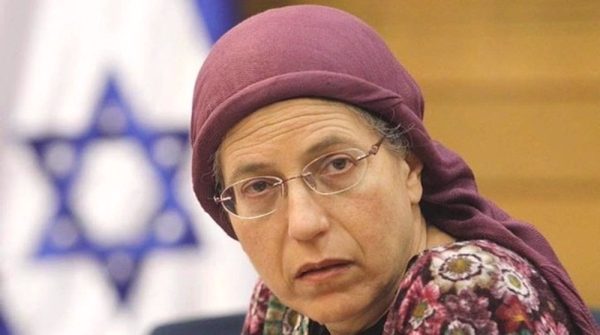
Shoshana’s mother, Orit Strook — the minister of settlements — is a staunch supporter of Israeli settlements in the occupied West Bank.
Press TV – April 10, 2025
A hawkish Israeli minister known for her extreme right-wing politics and support for illegal settlements is facing serious allegations of sexual abuse by her daughter.
Shoshana Strook, the daughter of Israeli Minister Orit Strook, filed a police complaint in Italy alleging sexual assault by both of her parents and a brother.
She stated that resurfacing memories prompted her decision to report the abuse, which she hopes will help her heal from emotional trauma.
She made the allegations in a statement posted on social media, revealing that she had filed a formal complaint and was seeking justice and relief.
“I’m currently in Italy and recently filed a report with the police,” she said. “I hope to find a place where I can get some relief.”
“After a long period of doubt, extreme emotional states, and a lot of guilt, I wanted to share that I experienced sexual abuse by both of my parents and one of my brothers,” Shoshana wrote.
She also said that her parents physically harmed her three younger brothers, stating: “After years of beatings and guilt, I finally spoke out. The memories are overwhelming, but I need justice.”
Shoshana also said that the memories coming up to her lately are “becoming too overwhelming”, recalling one in which she hit three of her younger brothers.
She didn’t reveal which brother sexually assaulted her. However, one of her brothers, Zviki Strook, has been reportedly charged with kidnapping and torturing a Palestinian boy in 2007.
Shoshana’s mother, Orit Strook, is a staunch supporter of Israel’s settlements in the occupied West Bank.
Ironically, Orit relentlessly pushed prime minister Benjamin Netanyahu’s baseless narratives and unsubstantiated claims that Palestinian resistance group Hamas committed sexual assault on October 7, 2023.
She now faces grave allegations of having abused her own children.
The Strook family has been in the spotlight before. In 2007, Orit’s son, Zviki Strook, was reportedly charged with kidnapping and torturing a Palestinian minor.
The Palestinian boy was found severely beaten and bleeding after escaping an alleged torture session.
Orit was born into a Jewish family of Hungarian lawyers. She married Avraham Strook and the couple chose to live in illegal settlements on Palestinian land.
Their first home was in the settlement of Yamit in the Sinai Peninsula. However, following the 1982 evacuation of Yamit after the Sinai was returned to Egypt in 1979, the Strook family relocated to the occupied West Bank city of al-Khalil—again, settling illegally.
Since 2013, she has continued to live in the Avraham Avinu settlement in al-Khalil.
In 2024, Orit stated that Israel should maintain a “long-term military presence in Gaza and annex the occupied West Bank”. She also argued that there should be no exit strategy from Gaza.
Orit made headlines after posting a video to her X account from a Knesset session in which she argued that a Palestinian state would be an “existential threat” to Israel.”
In May 2024, she opposed a proposed ceasefire agreement in Israel’s war on Gaza. Orit also criticized the United States for its efforts to broker a ceasefire deal, stating that the US “doesn’t deserve to be called a friend of Israel.”
Hamas launches legal case in Britain to remove ‘terror’ label
Press TV – April 9, 2025
The Palestinian resistance movement Hamas has filed a legal appeal in the United Kingdom in an unprecedented move, challenging the British government’s decision to designate the group as a “proscribed terrorist organization.”
The case, submitted on Wednesday, seeks to overturn the classification, with Hamas asserting that it is a legitimate movement advocating for Palestinian self-determination and liberation, not a “terrorist entity.”
Mousa Abu Marzouk, a prominent leader of the group and its head of international relations, is spearheading the appeal.
He has vehemently rejected the UK’s characterization of Hamas in those terms, reminding that the group’s goal is to liberate Palestine from Israeli occupation, not to target Western nations.
Marzouk has stressed that the resistance movement’s struggle was against Zionism, a colonial project targeting Palestine, while underlining that the group has never harbored any plans to harm Jewish people.
“We are not fighting against Jews, we are fighting against the Zionist regime, which is an illegitimate entity in Palestine,” he stated.
He also denounced the UK for rendering support for Zionism and the establishment of the Israeli regime in 1948, and regretted that the regime continues the legacy of colonialism in the region.
Drawing comparisons to global liberation struggles, Marzouk likened Hamas to South Africa’s African National Congress (ANC) and Ireland’s Sinn Féin, stressing that like these movements, Hamas represents a legitimate resistance force against foreign occupation.
Legal team: Hamas sole effective force resisting genocide
Hamas’ legal team, led by two British barristers from Riverway Law, a law firm based in South London, underscores that the proscription not only misrepresents the group, but also obstructs freedom of speech and stifles open dialogue.
The lawyers also contend that by labeling Hamas as a “terrorist group,” the British government violates international obligations related to the prevention of genocide and crimes against humanity — which the Israeli regime has been indulging in across the Gaza Strip, where the movement is headquartered.
They assert that Hamas is the sole effective force resisting the ongoing genocide being committed by the Israeli regime in Gaza.
The British government first proscribed Hamas’ military wing, the Ezzedine al-Qassam Brigades, as a “terrorist organization” in 2001.
In 2021, the political wing of Hamas was also added to the proscription list. The Home Office tried to defend its decision, claiming that Hamas operated as a “unified terrorist entity.”
However, Hamas’ lawyers strongly contest this characterization, clarifying that the group functions as a broad-based resistance movement with political and social dimensions.
In his witness statement, Marzouk has provided a personal perspective on the issue of the Israeli regime’s Western-backed occupation of Palestine and aggression towards Palestinians.
He rejected the so-called legitimacy of the regime and reaffirmed Hamas’ commitment to full liberation of Palestine, with the holy occupied city of al-Quds as its capital, and establishment of a sovereign Palestinian state along its borders before 1967, when the regime went on to grab more Palestinian land with more Western support.
The case’s potential
The UK Home Secretary, Yvette Cooper, has 90 days to respond to the petition. If the case is rejected, it will proceed to a tribunal for further legal proceedings.
If successful, it could lead to a reevaluation of Hamas’ designation.
Addressing the issue, observers say the case could have a far-reaching impact on how resistance movements are viewed in the political and legal arenas amid growing international opposition against the Israeli regime’s genocidal, expansionist, and other criminal efforts.
London’s likely reversal of the designation, they further note, could potentially shift the international discourse surrounding Palestinian liberation efforts.
Marzouk, meanwhile, commented on Hamas’ members and their fellow Gaza-based resistance fighters’ historic Operation al-Aqsa Storm against the occupied Palestinian territories. The operation saw the fighters venture deep into the territories, encircle strategic Israeli bases, and ensnare 240 Zionists.
He called the development a military operation targeting the Israeli regime’s Southern Command rather than a deliberate assault on civilians as Tel Aviv and its backers have claimed.
Exposing the UN’s hypocrisy of humanitarian aid and ceasefires
By Ramona Wadi | MEMO | April 10, 2025
UN Secretary General Antonio Guterres told the Security Council this week that, “As aid has dried up, the floodgates of horror have re-opened. Gaza is a killing field – and civilians are in an endless death loop.” With not a single mention of the word genocide in his entire speech, Guterres stated, towards the end, “The world may be running out of words to describe the situation in Gaza, but we will never run away from the truth.”
A correction is needed here. The world is not running out of words to describe the situation in Gaza — “genocide” will do for the moment — and the UN is indeed running away from the truth.
Guterres’s statement is evidence of this, as is over a year of prioritising Israel’s security narrative and purported concern about the hostages, while Israel itself bombs them along with Palestinian civilians in Gaza. “Certain truths are clear since the atrocious 7 October terror attacks by Hamas,” said Guterres.
But he uttered not a single word about Israel bombing the Gaza Strip.
As expected, because the international community follows its own trends rather than the facts on the ground, Guterres maintained the rhetoric of ceasefires and humanitarian aid shamelessly. Ceasefires work, said the UN Secretary General, allowing for the release of hostages and the delivery of humanitarian aid. “That all ended with the shattering of the ceasefire,” he added, without bringing Israel’s culpability into the equation. The ceasefire just “shattered”.
It is the UN’s tactic of portraying the delivery of humanitarian aid as a form of neutrality that has enabled this façade of helplessness for so long. Humanitarian aid is highly politicised, which is one reason why there is always less money for it than there is for arms and ammunition. It is the reason why corrupt power remains at the helm; starving people need nourishment and they are forced to wait for it in the name of human rights. Meanwhile, the politics of liberation, of decolonisation, of autonomy, are not only marginalised but eliminated altogether.
Why? Because international law is forced to revolve around the demands of the oppressor and its accomplices.
Guterres should say something about this. Some truths from the halls of power would clarify why Gaza has been abandoned in the name of humanitarian aid and ceasefires.
In the absence of truth, though, Guterres would have the world believe that all that Gaza needs is linked to the delivery of humanitarian aid, and that the hostages can be released if a ceasefire is maintained. However, humanitarian aid can no longer even gloss over colonial violence; the Gaza Genocide is too visible to ignore. Negotiations for ceasefires take months due to Israel’s insistence on completely wiping out Palestinians from Gaza — more talks give the occupation state more time to finish the job — which make the correlation between ceasefires and the hostages’ release very minimal.
To further his humanitarian paradigm, Guterres reminded Israel of its obligations under international law which, of course, Israel will ignore. Again, however, the travesty of reminding a colonial enterprise – “an occupying power” as Israel is usually described to avoid describing its occupation as colonialism – to be mindful of its humanitarian duties is the way the UN pretends to make international law work.
But how about a reminder from Guterres that the colonised people are entitled to decolonisation under international law, instead of ensuring – against international law – that colonial entities are apparently entitled to commit genocide?
Gulf-backed genocide: How Arab monarchies fuel Israel’s war machine
By Mawadda Iskandar | The Cradle | April 10, 2025
The Persian Gulf states’ silence – and in many cases, complicity – during Israel’s ongoing war on Gaza has not come as a shock. These governments, long detached from the Palestinian struggle, have for years cultivated warm, if discreet, ties with Tel Aviv.
While Bahrain and the UAE made normalization of ties with Tel Aviv official through the US-brokered 2020 Abraham Accords, other states like Saudi Arabia and Qatar have played quieter but equally pivotal roles. Riyadh, often described as the architect behind normalization, and Doha, hiding behind its “mediator” label, have each aided the occupation state in crucial ways.
Though much of this assistance remains behind the scenes, it has been repeatedly acknowledged by US and Israeli officials. During his first term, US President Donald Trump once warned that “Israel would be in big trouble without Saudi Arabia,” while Israeli Prime Minister Benjamin Netanyahu has said that Arab leaders now view Israel “not as their enemy, but their greatest ally,” adding that they “want to see us defeat Hamas.”
Such statements offer a glimpse into the vast, opaque network of regional cooperation propping up the occupation state’s war machine.
Economic complicity
Despite overwhelming popular support throughout the Arab world for Palestine, and growing calls for grassroots boycotts, Persian Gulf–Israeli trade has only surged. The UAE now ranks as Israel’s top Arab trade partner, while Bahrain’s commerce with Tel Aviv spiked by a staggering 950 percent during the first 10 months of the Gaza war.
Even amid war and boycott efforts, “kosher-certified” goods from Arab countries continue to enter Israeli markets. UAE-based brands like Al Barakah Dates and Hunter Foods, along with Saudi Arabia’s Durra (a sugar supplier), have maintained trade channels.
Qatar has exported crude materials for plastics used in Israeli industries. Bahrain went so far as to officially recognize goods produced in illegal West Bank settlements as Israeli in origin.
More insidiously, Persian Gulf investments are directly fueling Israeli settlement expansion. Saudi Arabia, the UAE, and Qatar have funneled money into Avenue Partners, a firm chaired by Trump’s son-in-law Jared Kushner, who remains involved in advising the Trump administration from afar.
That money flows into Phoenix Holdings, which finances key banks involved in settlement construction – Leumi, Hapoalim, and Discount Bank – as well as telecom firms like Cellcom and Partner, and construction companies like Electra and Shapir, all of which operate inside occupied Palestinian territory.
When Yemen’s blockade disrupted shipping lanes for Israeli-linked cargo in the Red Sea, cutting off 70 percent of Tel Aviv’s food imports, it was the Persian Gulf states that rushed to patch the breach. The UAE created an overland logistics corridor from Dubai to Tel Aviv via Saudi Arabia and Jordan, and Bahrain repurposed its ports to serve as alternate shipping hubs for Israeli goods arriving from India and China.
Military ties beneath the surface
From the earliest days of Israel’s onslaught on Gaza, the UAE has doubled down on its strategic military relationship with the occupation state. In 2024, Balkan Insight revealed that a UAE-linked firm, Yugoimport-SDPR, exported $17.1 million worth of weapons to Israel via military aircraft directly involved in bombing Gaza.
But the arms trade is only part of this treacherous picture. The UAE’s state-owned defense giant EDGE holds shares in Israeli military contractors like Rafael and Israel Aerospace Industries (IAI), companies that retrofit Emirati planes into military freighters. Abu Dhabi has also welcomed offices from Israeli weapons manufacturers like Bayt Systems and Third Eye Systems, and proudly hosted 34 Israeli defense firms at IDEX 2025 – a major arms expo used to secure deals with the occupation army.
Though not formally normalized, Saudi Arabia is militarizing its ties with Israel through indirect channels. One method: purchasing Israeli systems like the TOW missile through US-based subsidiaries of Elbit Systems. Another: acquiring surveillance drones from South Africa, which are disassembled and reassembled in the kingdom to mask their Israeli origins.
A recent anti-drone system – suspected to be designed by Israeli firm RADA – was spotted at the Royal Saudi Air Defense base in Tabuk, near King Faisal Air Base.
Meanwhile, Qatar has quietly boosted its military coordination with Tel Aviv. Doha continues to source spare parts for tanks, armored vehicles, and aerial tankers from Israeli suppliers, and its military has participated in joint drills involving Israel and other Persian Gulf states – including exercises in Greece held just over a week ago.
Logistical lifelines to Tel Aviv
Beyond military and economic ties, Persian Gulf states have facilitated the flow of weapons to Israel through logistical support channels. As the US ramped up its “unprecedented airlift” of tens of thousands of missiles, munitions, and Iron Dome components, the Gulf’s airspace and bases became critical.
US arms shipments passed through Saudi Arabia, Bahrain, Jordan, and especially Qatar, where the Al-Udeid Air Base – home to US Central Command – served as a hub for at least 18 documented transfers. Several were routed through Cyprus to avoid direct flight tracking.
In the UAE, Dubai International Airport became a waypoint for Israeli reservists flying in from Asia. Coordinated through the Israeli consulate in Dubai, these flights funneled soldiers into the war in Gaza. Emirati authorities also arranged leisure retreats for Israeli troops between deployments and allowed Jewish organizations in Dubai to send care packages to the occupation military.
Pipeline diplomacy and energy normalization
Earlier this month, as Trump prepared to visit Saudi Arabia seeking investment in US infrastructure, Israeli Energy Minister Eli Cohen unveiled plans for a regional oil pipeline stretching from Ashkelon to Saudi Arabia via Eilat.
The project falls under the India-Middle East-Europe Economic Corridor (IMEC), a US-backed alternative to China’s Belt and Road Initiative (BRI), with links running through the UAE, Jordan, and occupied Palestinian lands.
In a related move, Nasser bin Hamad Al Khalifa – son of the Bahraini king and chair of Bapco Energy – announced the sale of a pipeline stake to BlackRock, the US investment giant notorious for its financial ties to Israeli settlements. This deal cannot be separated from the broader normalization agenda.
Spycraft and surveillance
In one of the clearest signs of deepening security cooperation, Axios revealed a secret 2024 meeting in Bahrain between Israeli army chief Herzi Halevi and senior military officials from Bahrain, Saudi Arabia, the UAE, Jordan, and Egypt.
Overseen by US Central Command, the summit focused on countering Iranian retaliation and disrupting weapons flows to Gaza from resistance forces in Iraq and Yemen – operations that often transit through Persian Gulf-controlled airspace.
Bahrain’s role was particularly overt: Nasser bin Hamad openly declared his country’s commitment to disrupting Iranian response operations in coordination with the US Fifth Fleet stationed in Manama. Analysts now speculate that Tel Aviv could be granted permanent naval access to strategic Gulf waters.
This growing security convergence has also opened the door for Israeli tech to penetrate Persian Gulf infrastructure. Bahrain now relies on Israeli firms for anti-drone systems, satellite surveillance, and cybersecurity. One notable collaboration involves Bahraini company Crescent Technologies and Israeli cyber defense powerhouse CyberArk.
The UAE is pushing the envelope even further. Emirati firms have signed deals with XM Cyber – co-founded by a former Mossad chief – to secure national energy infrastructure. XM Cyber works in tandem with Rafael and other elite Israeli military firms as part of a consortium targeting sensitive Gulf markets, including oil, energy, and data. Meanwhile, Orpak Systems, another Israeli company, has quietly entered Arab oil sectors under nondescript branding to avoid detection.
Despite their public posturing and periodic statements of support for Palestine, the Persian Gulf states have quietly entrenched themselves in Tel Aviv’s war effort. Through investment flows, arms deals, intelligence cooperation, and energy infrastructure, they have become vital enablers of the genocide in Gaza.
This alliance – crafted in backrooms and sealed with economic interests – has allowed Israel to prosecute its war on Gaza with Gulf assistance at every logistical and financial juncture.
Far from being passive actors, these states are now active partners in a conflict that has devastated an entire people.
Hamas says statements and condemnations are no longer acceptable from Arab and Islamic countries
MEMO | April 10, 2025
The Palestinian Islamic Resistance Movement has said that it is “no longer acceptable” for Arab and Islamic countries simply to make “timid statements and condemnations”, at a time when Israel is intensifying its killing in Gaza before the eyes and ears of the world.
“It is also inconceivable that our Palestinian people are being left alone in this fateful confrontation, without real support that rises to the challenge and the magnitude of the crime,” added Hamas in a press statement on Wednesday. The movement pointed out that the Israeli occupation army committed another massacre — described as “one of the most heinous crimes of the genocide” — by bombing a residential area crowded with civilians and displaced persons in the Shujaya district east of Gaza City.
By giving the occupation state its full support, said Hamas, the US is regarded as being complicit as a partner in the aggression against the Palestinians. “This is a stain on the international community, which stands helpless and silent in the face of the most heinous acts of mass murder and genocide. These brutal crimes, committed in full view of the world against innocent, defenceless civilians, with the aim of genocide and sadistic revenge, will not go unpunished, nor will they be forgotten with the passage of time.”
History, said the resistance movement, will hold accountable all of those who remained silent and colluded with the Zionist war criminals. It called on the leaders of Arab and Islamic countries to perform their historical and humanitarian responsibilities and to put every possible pressure on the occupation state and its supporters in Washington to immediately halt the aggression, lift the siege and hold the “war criminals” accountable for their crimes.
Furthermore, Hamas called on countries that still maintain relations with the Zionist occupation state to sever ties and close the embassies of the “Nazi entity” in solidarity with the Palestinian people, who are being subjected to a “brutal Zionist war of annihilation”.
The movement also called on the masses in the Arab and Islamic nations and the free people of the world to continue their support for Gaza, and even escalate and intensify it until the Gaza Genocide ends.
US cares about human rights only to target adversaries: Former State Department analyst
Press TV – April 10, 2025
A former US State Department analyst, who resigned over American complicity in the Gaza genocide, says the US government ignores human rights issues when it comes to weapons sales to allies.
In an article for Quincy Institute for Responsible Statecraft, Annelle Sheline outlined how the US uses human rights as a tool against adversaries while ignoring such issues for friendly governments.
“American leaders have consistently instrumentalized human rights concerns to target perceived adversaries while tossing aside such concerns when they apply to US partners” Sheline wrote.
Sheline also said the US government’s desire for global military primacy and weapon sales overrides concerns for human rights and even US law.
“[US] law stipulates that the United States will not provide security assistance to any country whose government engages in a “consistent pattern of gross violations of internationally recognized human rights.” Yet this law, Section 502B of the Foreign Assistance Act, which Congress passed in 1976, has never been applied.”
Sheline worked for the US State Department’s Bureau of Human Rights, Democracy, and Labor’s Office of Near Eastern Affairs (DRL/NEA) from March 2023 until March 2024, when she resigned in protest over US complicity in the Gaza genocide.
In the article, Sheline described how the Democratic and Republican parties both similarly disregard human rights for military and own foreign policy goals.
“To the extent that a partisan divide exists, it is primarily rhetorical. Democratic administrations usually talk more about human rights than Republican administrations… but neither party has upheld America’s legally binding commitment to not sell to governments that engage in gross violations of human rights.”
Sheline said President Donald Trump’s new foreign policy is not fundamentally different from that of previous administrations.
“President Trump nakedly pursues what he sees as US self-interest, while previous presidents largely preferred to cloak similar decisions in the language of morality and mutual benefit.”
The former State Department analyst also said that the United States has given full support to Israel’s genocide in Gaza.
“The decision by the US government to directly enable Israel’s genocide of Palestinians in Gaza has severely damaged American credibility. Although Israel’s destruction of Gaza represents the most egregious example, the American government has almost never applied laws intended to punish human rights abusers in Israel.”
Sheline believes the US support for Israel is influenced by the pro-Israel lobby, in addition to being driven by foreign policy and military exports concerns.
On the other hand, according to Sheline, the US frequently uses human rights as a tool to apply pressure against governments that it sees as adversaries.
“The US primarily highlights human rights abuses by adversarial governments. As a result, human rights concerns tend to factor only into policies designed to counter perceived US enemies. The US government does not sell weapons to hostile powers, so criticizing these governments does not endanger weapon sales.”
Sheline outlined how US foreign policy shaped its human rights rhetoric in West Asia.
She said Israel’s human rights abuses receive “special dispensation” on the part of the US, which, ironically and in the absence of the lack of an existing relationship with certain governments like Iran, frequently criticizes and imposes sanctions on them for alleged human rights abuses.
“This suggests that human rights concerns did not drive US foreign policy, but rather were used as a means of justifying the policy the administration already wished to pursue.”
Max Blumenthal: Banning Protests Against Israel
Glenn Diesen | April 9, 2025
The editor-in-chief of The Grayzone, Max Blumenthal is an award-winning journalist and the author of several books, including best-selling Republican Gomorrah, Goliath, The Fifty One Day War, and The Management of Savagery. He has produced print articles for an array of publications, many video reports, and several documentaries, including Killing Gaza.
Follow Prof. Glenn Diesen: Substack: https://glenndiesen.substack.com/
Featured Video
The Board For Peace – Whitewashing Ethnic Cleansing and Genocide
or go to
Aletho News Archives – Video-Images
Book Review
Conspiracy Denial

Lies are Unbekoming | January 27, 2026
In honour of Michael Parenti (1933–2026), who passed away on 24 January 2026 at the age of 92. He spent his life naming what power prefers to leave unnamed.
In 1837, Abraham Lincoln remarked: “These capitalists generally act harmoniously, and in concert, to fleece the people.”
Today, he would be dismissed as a conspiracy theorist.
That dismissal—reflexive, automatic, requiring no engagement with evidence—is not a mark of sophistication. It is a tell. The question worth asking is not whether conspiracies exist (they are a matter of public record and a recognised concept in law) but why acknowledging their existence provokes such reliable hostility. What work does the label “conspiracy theorist” actually do?
The late political scientist Michael Parenti spent decades answering that question. His conclusion was blunt: “’Conspiracy’ refers to something more than just illegal acts. It serves as a dismissive label applied to any acknowledgment of ruling-class power, both its legal and illegal operations.” The term functions not as a descriptor but as a weapon—a thought-terminating cliché that protects the powerful from scrutiny by pathologising those who scrutinise them.
Conspiracy denial, in Parenti’s analysis, is not skepticism. It is the opposite of skepticism. It is credulity toward power dressed up as critical thinking. As he wrote in Dirty Truths: “Just because some people have fantasies of conspiracies does not mean all conspiracies are imaginary.” … continue
Blog Roll
Recent Comments
eddieb on WEF Calls for ‘Cultural Revolu… loongtip on Trump wanted to play peacemake… Coronistan on EU member to sue bloc over ‘su… loongtip on Vicious loongtip on EU turns to India for defense… Coronistan on Donald Trump Is No Peace … seversonebcfb985d9 on French court jails pro-Palesti… eddieb on Fourteen Incredible Facts Abou… Bill Francis on European leaders’ shift in the… seversonebcfb985d9 on Villains of Judea: Philip Esfo… loongtip on Report warns that ‘Jewish terr… Craig Nelms on New study shows that toxic gas…


 Aletho News
- Davos and Abu Dhabi: How the Ukrainian Endgame Exposed Western Decline
- AfD co-leader states the obvious: Pouring money into the Ukraine war is killing the German economy
- Britain’s return to piracy to stop Russian ships – desperate attempt to demonstrate power
- Czech coalition rules out higher defense spending, says 2% of GDP is enough
- G7 Hands Ukraine $40Bln Generated From Frozen Russian Assets
- Conspiracy Denial
- Ukraine expects to join EU next year – Zelensky
- Here’s what’s behind the US shift on EU allies
- UN experts alarmed by prosecution of students protesting ETH Zurich’s Israel-linked research ties
- Exposed – How the UAE Became Central to Gaza’s Concentration Camp Plot
- If Americans Knew
- “The Gaza ceasefire is a minefield” – Not a ceasefire Day 110
- Israel to seek new security deal from US, official says
- Leaked “Board of Peace” Resolution Outlines U.S.-Led Plan to Rule Over Gaza
- Jonathan Greenblatt Rolls Out Plan to Activate Hispanic Evangelical Golems
- Violence against hundreds of Gazan remains to find one Israeli – Not a ceasefire Day 109
- Greenpeace Demonstrator Exposes Folly of Protest Restrictions
- From CBS to TikTok, Pro-Israel Ellison is now in the driver’s seat
- Israel pays for UK advertisements attacking Doctors Without Borders
- Israel accused of extracting billions from Gazan people to pay for their own genocide
- ‘Deliberate Assassination’: 3 Journalists Among 11 Killed by Israeli Forces in Gaza
- No Tricks Zone
- New Study Affirms Rising CO2’s Greening Impact Across India – A Region With No Net Warming In 75 Years
- Germany’s Natural Gas Crisis Escalates … One Storage Site Near Empty …Government Silent
- Polar Colding…Antarctica Saw Its Coldest October In 44 Years!
- New Study: Sea Levels Rose 20 Times The Modern Rate During The Roman Warm Period
- As German Gas Storage Dips Dangerously Low…Shortage Hardly Avoidable
- New Study: Brazil’s Relative Sea Level Was 2+ Meters Higher And SSTs 3-4°C Warmer 6000 Years Ago
- Philosopher Schopenhauer: Climate Science Certainty Stems From Stupidity, Ignorance
- New Study: Species Extinction Rates Declining Since 1980 – ‘Climate Change Is Not An Important Threat’
- Denmark Places Climate Protection Above Animal Welfare, Poisoning And Culling Cows
- New Study: Greenland Was 3-7°C Warmer And Far Less Glaciated Than Today 6000-8000 Years Ago
 Aletho News