Palestinian arrested after filming settlers throwing stones
International Solidarity Movement | August 17, 2014
Occupied Palestine – Yesterday at approximately 5:30 PM in the old city in al-Khalil (Hebron) settlers from the illegal settlement of Beit Hadassah threw rocks and water at Palestinians living on Shalala Street. This is a regular occurrence for Palestinian families living close to illegal settlements in al-Khalil. The majority of the time the Israeli military watches from a distance and does not do anything to intervene in the violence and property damage.
One Palestinian, a 35-year old man, documented the stone throwing only to be detained and then arrested by the Israeli military. The man was taken through a yellow gate to an area from which Palestinians are restricted, where the soldiers pushed him around.
The soldiers threw several stun grenades at Palestinians and internationals standing behind the yellow gate who were trying to document what was happening through holes of the gate.
Two internationals walked through the checkpoint at the Ibrahimi mosque and down Shuhada street in attempt to find the Palestinian. A group of ten soldiers and an army jeep stood with two Palestinian men, the man who had been arrested was in handcuffs. A nearby soldier told the internationals that neither of the men was arrested but they were only bringing the handcuffed man in for questioning, to gather evidence about the settlers who threw stones. After approximately five minutes the solders blindfolded the Palestinian and started walking with him to a nearby army base, Beit Romano. When internationals asked why the man was being blindfolded an Israeli soldier stated, “Because I want to.”
The man was released earlier this morning.

Palestinian dies after being hit by Jewish settler’s car near Salfit
Ma’an – 14/08/2014
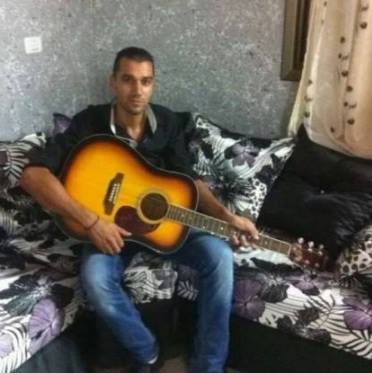
SALFIT – A Palestinian man was killed on Thursday after being knocked down by a settler car near the illegal settlement of Barkan in Salfit.
Palestinian security sources told Ma’an that Muhammad Abd al-Karim Muhammad Abu Isleim, 23, was hit while trying to cross a street near the settlement.
Israeli police officers and ambulances arrived at the scene and tried to save the victim, but he was pronounced dead.
Palestinian police are investigating the incident to determine whether the settler deliberately hit the victim.
Month of attacks on Palestinians in Jerusalem increases tension; exposes racist policies
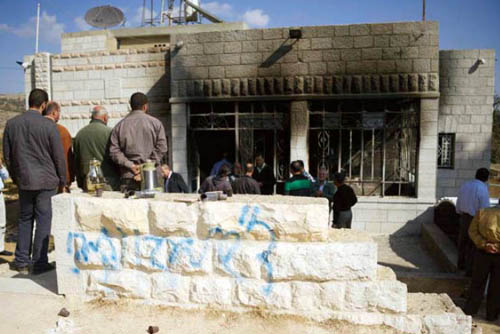
By Chris Carlson | International Middle East Media Center | August 11, 2014
As the Israeli Central Court of Jerusalem releases three youth accused in the recent homicide of 16-year-old Muhammad Abu Khdeir, another young Palestinian is found stabbed to death in Silwan, while a 13-year-old child is arrested under the pretext of carrying a knife.
Over the past month, during Israel’s relentless and bloody aggressions on the Gaza Strip, the Jerusalem area has become a crucible of violent confrontations between Palestinians and colonial Jewish settlers and police, with numerous reports of multiple raids and ensuing arrests continuing to surface throughout the West Bank region.
Just following the Israeli Central Court’s decision not to hold three youth who admittedly conspired in the brutal torture and burning of 16-year-old Muhammad Abu Khudeir, in early July, local media reported that the police found the body of another young Palestinian in Silwan, south of the Old City of Jerusalem.
PNN sources say that the body had several visible stab wounds but that the Israeli police have declared that the motive behind the crime is not clear.
Meanwhile, Silwanic has reported that Israeli police took into custody one 13-year-old Daoud Sawalha, Thursday night, while he was at the barber shop, in the neighborhood of Ein Al-Lozeh, under the pretext of carrying a knife.
Each year, around 500-700 Palestinian children, some as young as 12, are arrested, detained and prosecuted in the Israeli military detention system, with the majority of Palestinian child detainees being held on charges of throwing stones.
The same day, Silwanic reported that three Israeli settlers attempted to run over a Jerusalemite woman named Ola Alayan, as she was going home to her Bet Safafa residence, south of Jerusalem.
She was verbally assaulted by the settlers but was able to escape the area and safely reach the entrance of the village.
As in the case of Muhammad Abu Khdeir, who was also chosen at random and not for personal reasons, not all Jerusalemite Palestinians are so lucky.
On Thursday, July 31st, a young Palestinian man from Ras Alamoud was reported to have been assaulted by a group of Israeli settlers who attempted to kidnap him after tying him and dragging him to their car.
When the group failed to drag him to their vehicle, they assaulted 21-year-old Ali Mohammed al-Abbasi with a large amount of pepper spray.
Ali’s father confirmed that a fellow co-worker took his son to the hospital, after ambulance and police failed to respond.
The week prior, Amir Shwiki and Samer Mahfouz, both 20 years old and from Beit Khanina, were attacked by settlers with iron bars and baseball bats while walking to a Light Rail station, following the evening Ramadan meal.
The two were seriously wounded and lost consciousness during the beating, upon which they were hospitalized in Hadassah University Hospital, Ein Karem, Jerusalem.
Violence by Israeli settlers against Palestinians and their property is not new to the region, but has been in a state of extreme escalation since the beginning of Israel’s renewed series of attacks on Gaza’s civilian population, with mass solidarity protests resulting in further violent confrontations.
Reports of vandalism, including that of agricultural lands, homes and vehicles, as well as both Christian and Muslim holy sites frequently surface from numerous locations all across Israel and occupied Palestine, with the majority of such acts being perpetrated by colonial settlers, and often with the backing of Israeli military and/or police.
A recent statement by Israeli human rights organization B’Tselem reveals that 60-80,000 Palestinian Jerusalem residents have been without running water for months, with no further reports appearing in regard to appeals made to Hagihon and the Jerusalem Municipality.
Israeli policies against Palestinians have isolated entire communities and turned them into fragmented, isolated ghettos, leaving what remains of the occupied Palestinian territories to now appear as little more than large open-air prisons, from which militant resistance and defiance is the only defense.
See also : Special Report: “800,000 Palestinians Imprisoned By Israel Since 1967”
10-year-old child shot in chest with live ammunition
International Solidarity Movement | August 6, 2014
Hebron, Occupied Palestine – In al-Khalil (Hebron) on Sunday August 3rd, a 10-year-old Palestinian boy was walking to his home near the illegal settlement of Kiryat Arba when the Israeli military shot him in the chest with live ammunition.

The following day, ISM volunteers went to visit the young boy in al-Mezan hospital. The young boy was in critical condition, and although doctors were able to save his life, the bullet remains in his left lung, as it is too dangerous to remove it.

His father told the ISM volunteers that a relative of the boy witnessed the shooting and that it had been a man in a soldiers’ uniform that shot him, without any visible motive. His father also pointed out that even if there had been a motive, such as if the boy would have been throwing stones, nothing could have justified this shot, which was clearly aimed at the heart of this 10-year-old child.
A funeral for a soldier that died in Gaza was held in the Tel Rumeida area of al-Khalil between 1 AM and 3 AM last Sunday evening. The area was under heavy military presence, shop owners were forced to close down their shops early and Palestinians living in the area received orders stay in their homes and turn the lights off. Doctors at al-Mezan hospital have reported that in recent weeks there has been an increase in the number of bullet wounds resulting from live ammunition. Many of these wounds have been in the chest and abdomen, seemingly aimed to kill.
AL-KHALIL (HEBRON): Settlers break into Palestinian shops
CPTnet | August 4, 2014
On 30 July 2014, Israelis entered into Palestinian shops in Hebron’s Old City near Beit Hadassah with industrial tools, using cutting blades and torches to open the doors, despite the presence of Israeli military security who were overlooking the shops.
Christian Peacemaker Teams and the International Solidarity Movement volunteers made several attempts to advise the Israeli military and police to intervene on the breaking and entering into the Palestinian shops. Despite showing the Israeli military video evidence of the account, the police failed to show up and intervene.
The following day, Israeli settler children during the afternoon threw rocks down from the Beit Hadassah settlement onto Palestinians walking on the street below the settlement. Later on that night, settlers again re-entered the property despite the Israeli military having designated the area a closed military zone for Israeli settlers and Palestinians alike.
 |
| Settler jumps on awning after throwing stones at Palestinians and internationals |
This incident is not an isolated event, but rather represents a larger strategy to occupy and claim ownership of Palestinians’ shops and expand the Jewish settlements in Hebron, as happened when the settlements of Tel Rumeida, Beit Hadassah, Kiryat Arba, the Al Rajabi building, Avraham Avinu and Givat Ha’avot expanded.
Currently, Palestinians are at risk of losing their property at over twenty-three geographic areas across the H2 section of Hebron. The locations start from Palestinian land on top of Tel Rumeida where the Israeli Antiquities Authority has allocated seven million shekels to build a tourist attraction—followed by another “Israeli” only by-pass road that is slated to connect the Tel Rumeida settlement to Shuhada Street. They represent the Israeli settlers’ master plan to segment off a crescent shape from the Jewish cemetery to the west of the Old City of Hebron to the settlement of Kiryat Arba, which will enclose Palestinians in an apartheid labyrinth. Palestinian Bantustans that already exist will expand, adding to the system of over one hundred military check points, pathway closures, additional annexations of Palestinian shops, and Israeli-only roads in Hebron.
[Note: According to the Fourth Geneva Convention, the Hague Regulations, the International Court of Justice, and several United Nations resolutions, all Israeli settlements and outposts in the Occupied Palestinian Territories are illegal.]
Two Palestinian teenagers murdered by Israelis in separate West Bank incidents
International Solidarity Movement | July 27, 2014
Huwwara, Occupied Palestine – On Friday, July 25, an Israeli settler murdered a Palestinian teenager in the village of Huwwara, which lies approximately 10 km south of Nablus in the northern half of the West Bank. Two hours later, an Israeli sniper killed another Palestinian teenager in the same village.
After Friday prayers at the mosque in Huwwara, villagers began marching in solidarity with the victims of the Gaza massacre. The protest included many children, some of whom were carrying signs in support of their Gazan brothers and sisters. Two Israeli military jeeps were along the route, and some of the soldiers were taking pictures of the peaceful protest. As the procession wound its way back to the mosque, a settler suddenly raced alongside and slammed on the brakes.
“He was about a meter away from the kids and just started firing out the window of his car,” stated a witness. “It was clear he was trying to kill people.” The settler managed to shoot four people before fleeing the scene. 19-year-old Khalid Owda died from a gunshot wound to his abdomen, while Tarik Dmadi was shot in the chest and remains in critical condition. Hassan Dmadi was shot in the hip, while Jihad Owda was shot in the hand and has been released from the hospital.
“Had he had more ammunition, he would have kept on shooting and killed more people,” said a witness. “Killing Palestinians is no big deal for the settlers, because there is no punishment. And what about the soldiers? They were just standing there, doing nothing.”
Tragedy struck the town of Huwwara a second time two hours later, when an Israeli sniper gunned down 18-year-old Tayeb Shohaada, who, like Khalid Owda, was a student at an-Najah University in Nablus. Israeli forces were shooting tear gas at Tayeb and roughly ten other young men, who were throwing stones in their direction from a distance of approximately 100 meters. According to Red Crescent medic, Ahmed Owda, a female Israeli sniper shot Tayeb in the face. Her sergeant then congratulated her and clapped her on the shoulder. Ahmed subsequently attempted to reach Tayeb but was unable to do so because of Israeli fire. Tayeb was eventually taken to Rafidia hospital in Nablus, where he was declared clinically dead.
The attending surgeon revealed that the damage to Tayeb’s brain was consistent with that caused by expanding bullets. Expanding bullets are banned according to the 1899 Hague Convention, but Israel has frequently been accused of employing them against Palestinians.

Memorial ceremony for both Khalid and Tayeb (photo by ISM)
The Gaza greenhouse effect
The Hasbara Buster | December 1, 2009
Every now and then the subject of the greenhouses left behind by Israeli settlers eradicated from Gaza is brought up by Israel apologists as proof of several things. It is claimed that Gazans don’t suffer from malnutrition: if they did, they wouldn’t have destroyed the greenhouses when the Israelis left. Therefore, there’s nothing wrong with Israel’s blockade of Gaza, because it doesn’t actually harm them. It is also claimed that the destruction of the greenhouses proves how hateful Gazans are: they prioritized wiping out every vestige of Jewish presence over keeping a valuable source of nutrients and income. Finally, it is asserted that a people that got the result of heavy investment and destroyed it can’t be trusted ro run anything, much less a state.
Much of this is bullshit, and the part that isn’t is highly distorted.
When Israel decided its unilateral withdrawal from Gaza, the settlers expected to be paid handosmely for the productive infrastructure they had created. Of course this was a display of chutzpah, because it had been heavy state subsidizing that had allowed them to create that infrastructure in the first place. As Haaretz noted:
The Gaza settlers had been inundated by perks from all directions. They received subsidized lands, subsidized water, assured wages from the public sector, “risk bonuses” and lower tax on their higher wages, subsidized daycare, cheap Arab labor, what didn’t they get. The benefits they received touched on every area of their lives and they became accustomed to higher standards they can’t forgo even now.
As the date of the withdrawal approached with no deal in sight, however, the settlers began to destroy the greenhouses. The New York Times reported:
About half the greenhouses in the Israeli settlements in Gaza have already been dismantled by their owners, who have given up waiting to see if the government was going to come up with extra payment as an inducement to leave them behind, say senior officials working on the coordination of this summer’s Israeli pullout from Gaza.(…)
Of the roughly 1,000 acres of agricultural land that were under greenhouses in the 21 Israeli settlements in Gaza, only 500 acres remain – creating significant doubts that the greenhouses could be handed over to the Palestinians as “a living business,” the goal cited by the Israeli coordinator of the pullout, Eival Giladi.
Finally, a last-minute effort by American Jewish philantropists raised $14 million and the remainder of the greenhouses was bought and turned over to the Palestinians.
However, since there had been no coordination with the Palestinians, there was no security plan to protect the greenhouses from looters. AP reported:
Palestinians looted dozens of greenhouses on Tuesday, walking off with irrigation hoses, water pumps and plastic sheeting in a blow to fledgling efforts to reconstruct the Gaza Strip.(…)
Palestinian police stood by helplessly Tuesday as looters carted off materials from greenhouses in several settlements, and commanders complained they did not have enough manpower to protect the prized assets. In some instances, there was no security and in others, police even joined the looters, witnesses said.
“We need at least another 70 soldiers. This is just a joke,” said Taysir Haddad, one of 22 security guards assigned to Neve Dekalim, formerly the largest Jewish settlement in Gaza. “We’ve tried to stop as many people as we can, but they’re like locusts.”
As can be seen, the theft was carried out by individuals, and in no way was it encouraged by the Palestinian Authority. Quite on the contrary, there was a conscious PA effort to prevent the lootings, which was however hindered by lack of resources.
Two reflections arise from the stories above.
On the one hand, it’s true that some of the greenhouses were destroyed by Palestinian individuals. There’s nothing remarkable about that. Beggars can’t be choosers, as the saying goes, and looting is what normally happens when two conditions are met: 1) an impoverished populace; and 2) a situation of lack of control by an established authority. Gazans stole the hardware and materials contained in the greenhouses not in a drive to erase the Jews’ memory from the territory, but to satisfy their personal needs. There was a rationale to their theft.
The destruction of part of the greenhouses by the settlers, however, can only be explained by animosity. They spent time, effort and probably even money to dismantle the facilities so that the Palestinians wouldn’t be able to use them. There’s a big difference between he who damages property in order to derive a benefit and he who damages it only to harm another person.
Many other related points could be made. For instance, that even in the Zionists’ twisted logic the looting of the facilities would justify the ban on vegetable imports into Gaza, but not that on livestock (cows can’t be raised in greenhouses). Or that the 350 Arab villages that disappeared from Israel’s map were not looted by vandals; they were razed by the State in a clear drive to eliminate any trace of Arabness from their respective landscapes. But without getting into those intricacies, and just focusing on the destruction of the greenhouses by both Jews and Palestinians, it’s clear who was moved by necessity and who by hate.
Jewish settlers attack Palestinian villages in Nablus, Ramallah
Ma’an – 07/07/2014
RAMALLAH – Settlers attacked Palestinian villagers in Ramallah and Nablus late Sunday and early Monday, locals said.
Witnesses told Ma’an that settlers began hurling stones at Palestinian vehicles traveling near the illegal Halamish settlement, located opposite the village of Deir Nidam.
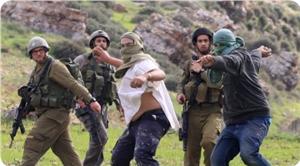 Dozens of settlers then raided the village, but were confronted by Palestinian villagers, who threw stones and empty bottles.
Israeli forces were present at the scene and opened fire at the villagers, locals said.
On Sunday, settlers from Halamish attempted to raid the nearby Nabi Saleh village but were blocked by locals.
Meanwhile, fierce clashes broke out late Sunday between Palestinians and settlers in the Nablus village of Einabus.
Dozens of settlers from Yizhar raided the village and attempted to attack houses, but were chased away by villagers.
Israeli military vehicles arrived at the scene and fired tear gas canisters at Palestinian residents, lightly injuring several people.
In 2013, there were 399 incidents of settler violence against Palestinians in the occupied West Bank, according to the UN Office for the Coordination of Humanitarian Affairs.
Nearly all settler attacks go unpunished by Israeli authorities.
See also:
Jewish Mob in Jerusalem: ‘Death to Arabs!’
Palestinians protest the murder of Mohammed Abu Khdeir and destroy apartheid tramway
International Solidarity Movement | July 6, 2014
Shu’afat, Occupied Palestine – On the 4th July 2014, at least 2,000 Palestinian mourners gathered in Shu’afat for the funeral of Mohammed Abu Khdeir, who was kidnapped last week.
His mutilated body was later found in a forest on the outskirts of Jerusalem. The autopsy indicates that he was burnt alive. It is widely believed that the murder was carried out by extremist Israeli settlers.
Mourners gathered by the mosque and marched carrying the body to the burial ground. Initially the funeral organisers formed a human chain to separate mourners and the police to prevent violence. Later on, Israeli police clashed with Palestinians for around 12 hours.
It has been reported that at least 30 Palestinians were hurt by rubber-coated bullets while dozens more were treated for the effects of tear gas. 13 Israeli police officers were also injured. A field of wheat was also partly destroyed by fire, probably caused by tear gas canisters.
Throughout the demonstration, undercover police agents, who were also acting violently towards the police, abducted and violently assaulted at least 11 Palestinians, including Tarek Abu Khdeir, Mohammed’s cousin, who was filmed being beaten by police.
Later in the evening, local Palestinian residents took steps to remove the illegal light rail system which runs through their neighbourhood. Two French companies, Veolia and Alstom, are subject to an international boycott and divestment campaign due to their involvement in the project. The tram primarily services illegal Israeli settlements in Occupied East Jerusalem and thereby facilitates Israel’s illegal policies of colonization and ethnic cleansing.
Local Palestinian’s pulled up bricks and cement that hold the tracks in place and damaged the tracks using an angle grinder. Many local residents gathered round to express their support for this act of civil disobedience. One Palestinian resident in his 60′s said that the tram “is for the illegal settlements. Israel takes our land and kills our people…we want them [the Palestinian protesters] to rip it up and take it away completely…we want rid of it”.
Autopsy shows Palestinian youth burnt alive
By Chris Carlson | International Middle East Media Center | July 5, 2014
Initial autopsy reports reveal that 16-year-old Muhammad Hussein Abu Khdeir, was still breathing when he was burnt after being assaulted by his Israeli kidnappers.
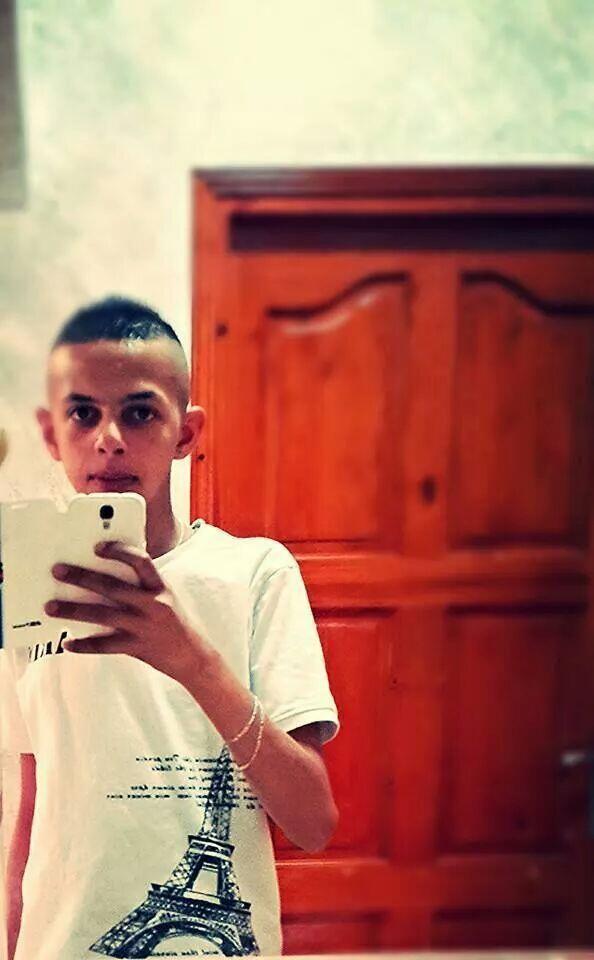 General Palestinian Prosecutor, Mohammad Abul-Ghani al-Oweiwy, attended the West Bank autopsy after body was handed over to a medical team.
Forensic studies found chars in the lungs, indicating that Muhammad was still breathing while he was being burned, according to WAFA. 90% of the child’s body was burned, varying from 1st to 4th degree in severity.
The child was also beaten on the head, as signs of beating and concussion were clear.
The Palestinian Forensic Center has taken samples and tissues from the body, to be submitted for further analysis before a final detailed report can be revealed, according to Arabs48.
16-year-old Muhammad Hussein Abu Khdeir was abducted from outside his home, in the Shu’fat district of occupied East Jerusalem, by a group of Israelis who forced him into a car and sped off.
The teen’s burned body was found hours later in a vacant lot in another part of the city, sparking protests in his home neighborhood which are ongoing at the time of this report.
Over 200 Palestinians have been injured by Israeli army fire in ongoing clashes with Israeli soldiers, in different parts of occupied Jerusalem and nearby towns, following the abduction.
His funeral was held Friday, amidst further clashes with Israeli forces.
Ecostream campaign victorious
By Tom Anderson | Corporate Watch | July 1, 2014
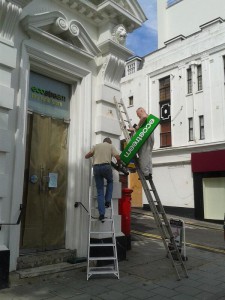 Brighton’s Ecostream store has closed down after a two year campaign of demonstrations, street actions and direct action.
Ecostream issued the following statement this morning: “SodaStream confirms that the EcoStream store, located on Western Road in Brighton, closed earlier this week. Following the two year test period, the company has decided to focus its business efforts on other channels, specifically on retail distribution partnerships.”
John Lewis have also informed Corporate Watch today that they will no longer be stocking Sodastream products. According to John Lewis’ Senior Press officer: “John Lewis has stocked Sodastream for the past four years but in light of declining sales we’ve taken the decision to no longer stock the range”. Campaigners have demonstrated repeatedly outside John Lewis stores calling for the chain to discontinue its Sodastream range and for consumers to boycott Sodastream products.
The background
In 2012, Israeli company Soda Club, which owns the Sodastream brandname, opened a new store called Ecostream on Western Road in Brighton.
Sodastream, a manufacturer of machines and refills for making fizzy drinks at home, has a factory in the Mishor Adumim settlement industrial zone. Mishor Adumim is an industrial area attached to the residential settlement of Ma’ale Adumim, East of Jerusalem in the Israeli occupied West Bank.
In 2013, Corporate Watch conducted interviews with Palestinian Bedouin who had been displaced from their land to make way for Mishor Adumim. One of them told us:
“We are not allowed to go near them [the factories]. They took our livelihood to build them and we got evacuated for them to build their factories. After they built them there were no resources to live from for us. The gains are nothing compared to what was lost. They destroyed our lives and then gave a few people a job. It is nothing”.
The campaign
Since the store opened there have been demonstrations outside its doors on a weekly or bi-weekly basis. Activists from Brighton and Hove Palestine Solidarity Campaign, Brighton Jordan Valley Solidarity, Jews for Boycotting Israeli Goods, local trade unionists, university students from Palestine solidarity groups and more joined together with the aim of closing the shop down. As well as the weekly pickets, campaigners took the oppurtunity to use the space outside the store to highlight the daily aggression against Palestinians. They talked to the public about Israeli house demolitions, the illegal apartheid wall erected on Palestinian land and Israel’s use of drones to attack people in Gaza.
Mass marches have been held in Brighton against the store. During an Israeli attack on Gaza in 2012 one activist locked himself to the doors of the shop forcing them to close. Last week activists unfurled a huge ‘Free Palestine’ on the wall opposite the shop.
It soon became clear that the pressure was taking its toll and the store remained largely empty even on the busiest of shopping days.
The demonstrations against the store led the Israeli embassy to contact Sussex Police asking them to take measures against the demonstrators. A group called Sussex Friends of Israel formed and has been holding a counter-picket every Saturday. The Zionist and Christian Zionist demonstrators regularly shouted racial abuse at Muslim, Palestinian and Jewish activists opposing the shop. They regularly chanted that there was “no such thing as a Palestinian” and called Jewish activists “self-hating Jews”. In short, SFI used bullying tactics to intimidate people who attended the demonstrations. Their antics caused chaos outside the store every weekend and made it even less likely that people would do their shopping there.
The closure of the Ecostream store is a victory for people power against a corporation profiting from human suffering and shows that the movement for boycott, divestment and sanctions against Israeli apartheid, militarism and occupation is continuing to gather momentum.
Brighton & Hove Palestine Solidarity Campaign today issued the following statement:
“This campaign has taken the message about human rights abuses in occupied Palestine to the people of Brighton, and their response has been fantastic. They have made it clear that they do not want businesses from illegal Israeli settlements trading in their town. The closure of SodaStream’s so-called flagship UK store in Brighton is just one step in a campaign to send a clear message to the Israeli government and the international community that, at the grassroots level, people of conscience are taking action to force Israel to comply with international law and to bring about justice for the Palestinian people. We give notice to the other stockists of SodaStream products in the city that we will continue to take the message about SodaStream to the people of Brighton on behalf of the Palestinian people. Congratulations to the people of Brighton and Hove, who can tell the difference between ethical and unethical.”
Featured Video

Stanislav Krapivnik: Russia-Iran Cooperation & Escalation in Ukraine
or go to
Aletho News Archives – Video-Images
Frlom the Archives
Are the Jews indigenous to Palestine?
By David Miller | Al Mayadeen | August 3, 2022
There is a rising tide of claims from apologists for the crimes of Zionism that they have been misunderstood. Palestinians might be indigenous to Palestine, but the Jews definitely are. What is called the ‘Israel-Palestine’ conflict, they say, is competition over the same small piece of land by two rival groups of indigenous people. But are the Jews indigenous to the Levant? And what are the consequences of the argument?
In fact, most of the power structure of the Zionist state is dominated by Ashkenazi Jews who have no ancestral link to Palestine. Overall despite very significant financial and infrastructural contributions from Western European countries (especially the US, UK and France, for example via the Rothschild family), Eastern European Ashkenazim have been at the centre of the Zionist power structure since the early years of the 20th Century. … continue
Blog Roll
 Aletho News
- Iran Red Crescent says 6,668 civilian sites targeted in US-Israeli attacks
- Maybe Attacking Iran Was Not Such A Good Idea
- UK readies deployment of Prince of Wales carrier amid war on Iran
- Iran warns of consequences after US strike on water plant
- US Bases in Middle East Fail to Secure Nations & Become Safety Risk – Expert
- Iranian Crisis Becomes Embarrassment for US Military That Can’t Protect Anyone – MidEast Analyst
- IAEA Never Had Reasons to Forgo Talks With Iran — Russian MFA Spox
- Iran pledges to ‘respect sovereignty of neighbors’, declares US-Israel assets ‘primary targets’
- USA and Israel: Who is the lord and who is the colony?
- Indian journalist reveals severe Israeli censorship after escape from occupied territories
- If Americans Knew
- US, Israel ravage Iran and Lebanon; 4 killed in Gaza – Not a ceasefire Day 148
- US troops were told war on Iran was ‘all part of God’s divine plan’, watchdog alleges
- Trump wants to run the show in Iran, but doesn’t know what he’s doing – Not a ceasefire Day 147
- ‘Dirty Work’ :The truth about how Israel was founded
- Mass Expulsion in Lebanon as Israel Expands War: “We Don’t Know Where to Go”
- Lies, distortions, and propaganda: how the U.S. mainstream media coverage on Iran hides the truth
- Palestinians in Gaza fear famine returning as Israel cuts off food amid Iran war
- AIPAC, other pro-Israel groups enter midterms with $100 million to spend
- Iranian girls killed by ‘double-tap’ strikes on Minab school
- Bari Weiss Is Going Full ‘Propaganda-Palooza’ With the Iran War
- No Tricks Zone
- Televised! Leading German Political Candidate Tells Schoolchildren CO2 Makes Sun Hotter!
- New Study: A Century Warming Of 1.1°C Is ‘Commonplace’ And ‘Not Unusual’ During This Interglacial
- New Study: ‘Internal Noise’ And Volcanic Forcing Can Trigger 10-15°C Warming Within Decades
- Glaciers Worldwide Are Suddendly Surging, Experts Blame Warming!
- Surprising Discovery: Sahara Is Greening…Billions Of Trees Where Once Thought To Be Barren
- New Research Reaffirms Clouds, Aerosols, And Surface Solar Radiation Are ‘Driving The Climate System’
- Germany: Electric Car Catches Fire At Charging Station, Sets Off Local “Inferno”, Widespread Damage
- New Study: Canada’s New Brunswick Was 1°C Warmer Than Today During The Medieval Warm Period
- Coal Power Back In Trend As Globe Tries To Keep Pace With Growing Demand For Power
- New Study: A 4°C Warmer Beaufort Sea Had ‘No Sea Ice’ 11,700 – 8200 Years Ago
 Aletho News