Russia warns West against seizing assets
RT | December 22, 2023
The seizure of Russian assets by Western countries would be “illegal” and “extremely dangerous” for the global finance system, Kremlin spokesman Dmitry Peskov warned on Friday.
The US and EU are reportedly considering using Russian assets frozen in the West to rebuild Ukraine, or even fund Kiev’s ongoing military efforts. According to the New York Times, the administration of US President Joe Biden is said to have made the latest proposal to do so as the White House struggles to greenlight a new $60 billion aid package for Ukraine.
An estimated €260 billion ($285 billion) in Russian central bank assets was immobilized in G7 countries, the EU, and Australia following the launch of Moscow’s offensive in Ukraine in February 2022, with most of the reserves being held in Europe.
Speaking to journalists on Friday, Peskov noted that the issue of confiscating the frozen funds continued to be raised in both Europe and the US.
“This topic is, first of all, unacceptable,” Peskov said, adding that the potential seizure of Russian assets would deal “a very serious blow to the international financial system.”
The Kremlin spokesman stressed that any country considering the move must understand that Russia would “never leave those who did this alone,” and would take wide-ranging legal steps.
The EU and US must also understand that the seizure of Russian assets would be followed by a proportionate response from Moscow, Peskov added. “If something is confiscated from us by someone, then we will see what we can confiscate in response. And if this something is found, we will, naturally, [confiscate] it immediately,” the spokesman said.
Russian Finance Minister Anton Siluanov previously issued a similar warning to the West, promising a tit-for-tat response, while State Duma Speaker Vyacheslav Volodin claimed last month that the G7’s assets in Russia were “more numerous than Russia’s frozen funds [in the West].”
The Financial Times reported on Wednesday that a number of EU members, including France, Germany and Italy, have been “extremely cautious” over the idea of seizing Russian assets. According to the newspaper, these countries are worried that the move would be seen as “cross[ing] a line,” and may cause concern in Asia and the Middle East that sovereign assets held in Western currencies are not safe.
Italy Becomes First EU Country to Ban Production, Sale of Synthetic Food
Sputnik – 16.11.2023
ROME – The Italian parliament on Thursday passed a law prohibiting production and sale of synthetic food and feed, making Italy the first EU country to introduce such a ban.
The law was supported by 159 members of the Italian lower house, while 53 voted against the measure and 34 abstained. The upper house of the parliament approved the law, which was developed at the initiative of the Italian Ministry of Agriculture, Food and Forestry and the Ministry of Health, back in June.
The new regulation prohibits the use in production, sale, import, export manufacturing and distribution of “food or feed consisting of, separated out or produced from cell cultures or tissues derived from vertebrate animals.” Violators face a fine ranging from 10,000 euros ($10,858) to 60,000 euros. However, if the law is violated by a large-scale enterprise, the fine may be increased to up to 10% of the company’s annual turnover and confiscation of the produced goods.
Ex-Italian PM: France Likely Downed Passenger Plane Trying to Kill Libya’s Gaddafi
© AP Photo / Saris
Sputnik – 02.09.2023
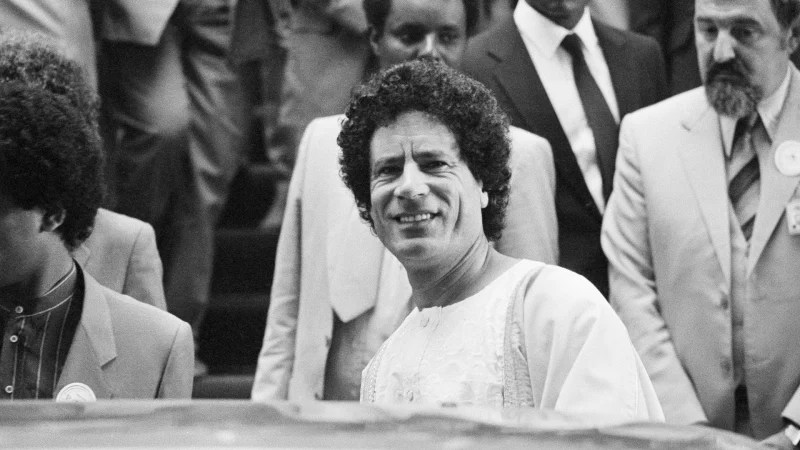
ROME – Former Italian Prime Minister Giuliano Amato has alleged that France and its US allies were likely responsible for the mysterious passenger plane crash off Sicily in June 1980, and that the incident was the result of a plot to assassinate late Libyan leader Muammar Gaddafi.
“The most credible version is about the responsibility of the French Air Force with the complicity of the Americans and those who participated in the air war over our skies on the evening of June 27,” Amato said in an interview with Italian newspaper la Repubblica on Saturday, recounting the June 27, 1980 crash of Itavia Flight 870, in which all 81 passengers and crew onboard were killed.
“A plan had been launched to hit the plane on which Gaddafi was flying,” Amato said, referring to reports of a dogfight taking place in the area between French and Libyan jets on the day the Italian passenger plane went down, and rumors that Gaddafi was on board one of the Libyan Air Force MiG jets.
The plan was to “simulate NATO drills involving many aircraft” during which a missile would have been fired – passed off as an accident – at the plane carrying Gaddafi, Amato said. However, Gaddafi got a warning from then-Italian Prime Minister Bettino Craxi, Amato’s former rival, and never boarded the jet, with the French missile allegedly intended for him ending up hitting the Itavia plane instead.
The Itavia McDonnell Douglas DC-9 passenger jet crashed into the Tyrrhenian Sea off the western Italian coast, between the islands of Ponza and Ustica en route from Bologna to Palermo.
In 2015, the Palermo Court of Appeal ruled that the crash was caused by a missile hitting the DC-9, and that the missile was fired by another aircraft that crossed the passenger plane’s route. The court ruled out previously claimed versions about a bomb being planted on board the civilian airliner.
In his interview on Saturday, Amato said the Elysee should admit its responsibility, so that it can “wash away the shame that weighs down on Paris.”
“After forty years, the innocent victims [of the crash] have not received justice. Why continue to hide the truth? The time has come to shed light on this terrible state secret. [French President Emmanuel] Macron could do it. And NATO could do it,” he said.
France and its US allies have long denied any involvement in Itavia Flight 870’s crash.
Commenting on Amato’s allegations, Italian Prime Minister Giorgia Meloni called on the politician to disclose any materials he may have related to the incident.
“Taking into account that the materials concerning the DC-9 tragedy are not classified, and that the judicial authorities and parliamentary commissions have done a lot of work over decades, I ask Amato to understand whether, in addition to his conclusions, he has other elements that allow him to review the decisions of the judiciary and the parliament, and possibly to make them available, so that the government can take all possible and consistent steps,” Meloni was quoted as saying in a statement released by her office.
Conflict in Ukraine Reveals EU Leaders’ Subordination to Washington: Ex-Italian PM
Al-Manar | August 27, 2023
NATO’s strategy for the conflict in Ukraine, based on military supplies and the logic of escalation, has failed, while the crisis itself has exposed the EU’s inability to show leadership and underlined its subordination to the US. Giuseppe Conte, former Prime Minister of Italy, now the leader of the Five Star Movement opposition political party, expressed this opinion on Saturday.
“The strategy pursued so far in NATO, based on constant military supplies to Ukraine and the logic of escalation, did not lead to a military defeat for Russia: there was no defeat of the Russian army in Bakhmut, there was no collapse [of] its military units, there was no retreat during the Ukrainian counteroffensive. The economic and financial sanctions imposed on Russia did not lead to its bankruptcy and did not bring down its economy,” Conte wrote on his Facebook page.
“The isolation of Russia has by no means become a reality. On the contrary, the 15th summit of the BRICS group has just ended with a concrete prospect of its further expansion in 2024, which will cover 45% of the world’s population and 38.2% of world GDP,” Conte went on.
According to Conte, “the conflict in the heart of old Europe has revealed the inability of the European Union to develop an effective common strategy and show independent political and economic leadership, highlighting, on the contrary, the subordination of [European] rulers to the United States.” As the former Italian prime minister noted, his party has always “been convinced of the fallacy of the desire to inflict a military defeat on the Russian Federation.”
Conte has repeatedly called for the start of peace talks on Ukraine. In particular, he said that he was in favor of a “breakthrough in the negotiation process” with the participation of the Vatican and “all other players in the international community.” The former prime minister noted that he “would not leave” President of Ukraine Vladimir Zelensky “the right to decide how, when and under what conditions to sit down at the negotiating table.”
The Five Star Movement has long opposed sending weapons to Ukraine. This position indirectly caused it to leave the previous ruling coalition, which led to the fall of the previous government of Mario Draghi in the summer of 2022.
Italy’s forgotten concentration camps in Libya
By Dr Mustafa Fetouri | MEMO | June 29, 2023
On 30 August 2008, Italy and Libya signed their Treaty of Friendship, Cooperation and Partnership, ending their awkward past of feuding and diplomatic tensions over Italy’s colonisation of Libya from 1911 to 1943. Libya was seeking compensation, recognition of suffering of its people and, above all, an apology. Rome, as is the case with all former colonial powers, tried for years to close the matter without offering anything. The treaty, a success for Libya, might have ended the political and diplomatic struggle over the colonial past, but it will not wipe it out from history and people’s memories.
The idea of invading Libya came during the colonial rush that saw major colonial powers like France, United Kingdom and others divide the dying Ottoman Empire possessions in North Africa, the Middle East and southern Europe itself. Libya was part of that empire, very close to Italy across the Mediterranean Sea and, above all, Libyans lacked effective means to fight back after the Ottoman military garrison left the country.
The rise to power of the Republican Fascist Party, led by Benito Mussolini in 1922, gave the occupation of Libya another nostalgic dimension as the fascists strongly believed in the deceptive idea that modern Italy was the rightful heir to the Roman Empire and, therefore, they were responsible for recovering the possessions of the bygone empire. Another reason that made Libya more attractive to fascist Italy is the fact that Italy, united just 50 years earlier, became overcrowded and its farmers, particularly in the south, were eager to own land of which Libya has plenty. Mussolini used to call Libya the “fourth shore of Rome”.
Italians thought that the taking over of Libya would not be more than a few days’ sea trip and the entire country would be conquered. However, once the first amphibious forces tried to land on Tripoli shores in 1911, they were faced with stiff resistance from the locals, who rushed to defend their country with the little means they had.
As the invaders increased their numbers and widened their presence, the resistance shifted to new tactics, using the guerrilla tactics of hit-and-run. Outnumbered and out-gunned, the Libyans, mostly nomads and shepherds, figured out that direct confrontation with one of the most modern armies at the time was suicidal and destructive.
Instead of facing the Italian army directly, they waged rather small battles, mostly at night time. Benefitting from their detailed knowledge of the land and its geography, the Mujahidin, as they were called, managed to make life really difficult for the Italian army wherever it went. Facing a ghost enemy fighting on horseback, the Italian army started to use unheard of methods of war, scoring many firsts.
For instance, Italy was the first country to use air war and Libya became the first country to be bombed from the air. An Italian pilot named Lieutenant Giulio Gavotti, in a letter to his father, described how he threw the first bomb at an Arab [Libyan] camp in November 1911, just a month into the invasion. The young pilot wrote “today I have decided to try to throw bombs from the aeroplane”, before pointing out that it was “the first time that we [Italian army] will try this and if I succeed, I will be really pleased to be the first person to do it.”
Pilot Gavotti, indeed, succeeded in throwing the first ever bomb from an aeroplane, ushering in the age of air war for the first time in the history of mankind. He wrote “and after a little while, I can see a small dark cloud in the middle of the encampment” in Ain Zara, today a town, but at the time just an oasis south-east of Tripoli. Ain Zara became the first place on earth to be bombed from the air. The Italian pilot did not realise what he had just done and had no idea what his bomb had done to people, mostly civilians, below. He returned to base, overwhelmed by his success in hitting “the target” and went straight to report to General Caneva that he just registered his name in history as the first person to bomb a target from the air. Carlo Caneva was the first Italian commander to announce that “Tripoli will be Italian”, as his forces launched the first attacks on Libya. He led the earlier brutal stages of the invasion before being replaced later by another, crueler General Rodolfo Graziani in 1930.
In the same year, the Italian army scored another world first when Benito Mussolini authorised, for the first time, the use of sulphur mustard to subdue Libyans. Bombing formations of fighters and civilian villages suspected of supporting the Mujahidin from the air but, this time, using poisonous gas, besides explosives.
In the 1920s, Libyan resistance intensified, particularly in eastern Libya with the rise of Omar Al-Mukhtar, a septuagenarian who suffered old age and chronic back pain, who became the national leader of the Mujahidin against fascist Italian occupation.
This forced General Graziani to revert to using collective punishment against entire civilian communities by forcing them into concentration camps across Eastern Libya. At one point, there were some 16 different camps in the Sirte desert and further east in which thousands of civilians including women, children, the elderly and young men were forced to live with their animals in desert plots surrounded by barbed wire and guarded, around the clock, by armed soldiers.
Despite this brutality, Al-Mukhtar and his colleagues fought for 20 years, until he was captured on 11 September 1931, after suffering an injury in a village called Slonta, south of Al-Bayda town in Libya’s eastern Green Mountain region.

After a quick trial, he was sentenced to death by hanging on 16 September. Hundreds of civilians, including women and children were forced to watch as Al-Mukhtar was hanged in Suluq concentration camp, one of the most infamous, south-west of Benghazi. By staging such a gruesome show, the Italian authorities wanted to terrify Libyans who might think of following in his footsteps and fight them.
Modern Libya, before the NATO invasion of 2011, used to commemorate 16 of September as a national day of mourning to remember Al-Mukhtar and remind younger generations of what happened in Libya, decades before. New Libya, however, has forgotten the mourning day, while fascist concentration camps are never really mentioned outside academic circles.
Declassified files expose British role in NATO’s Gladio terror armies

By Kit KLARENBERG | THE GRAYZONE | JUNE 19, 2023
Newly declassified British Foreign Office files have added disturbing details to the history of Operation Gladio. The covert operation was uncovered in 1990, when the public learned that the CIA, MI6 and NATO trained and directed an underground army of fascist paramilitary units across Europe, deploying its assets to undermine political opponents, including through false flag terror attacks.
Among them was a young Silvio Berlusconi, the media oligarch who served as Italian Prime Minister in four separate governments between 1994 and 2011. Listed as a member of the P2, the secret Cold War-era cabal of political elites devoted to Gladio’s aims, Berlusconi undoubtedly took some weighty secrets to the grave when he died this June 12th.
It is almost impossible to believe that inconvenient truths were not weeded from Britain’s documentary record on Operation Gladio prior to declassification. Nonetheless, the recently released material is highly illuminating. Covering a fraught twelve month period after the first public disclosure of Gladio’s existence, the papers illustrate how London’s foreign intelligence apparatus kept a keen eye on the continent as events unfolded.
The papers not only shed fresh light on the conspiracy, they underline Gladio’s relevance as British intelligence joins its America counterparts in contemporary plots involving secret partisan forces from Syria to Ukraine.
Various passages dotted across the tranche strongly suggest the British knew much more than they publicly admitted about egregious criminal deeds, including the attempted overthrow of an allied Italian government and the kidnap and murder of its leader.
A ‘clandestine resistance network’ goes to work
Gladio consisted of a constellation of “stay behind” anti-communist partisan armies whose ostensible mission was to fend off the Red Army in the event of Soviet invasion. In reality, these forces committed countless violent and criminal acts as part of a “strategy of tension” designed to discredit the left and justify a security state clampdown.
As Vincenzo Vinciguerra, a Gladio operative jailed for life in 1984 for a car bombing in Italy that killed three police officers and injured two, explained:
“You were supposed to attack civilians, women, children, innocent people from outside the political arena. The reason was simple, force the public to turn to the state and ask for greater security… People would willingly trade their freedom for the security of being able to walk the streets, go on trains or enter a bank. This was the political logic behind the bombings. They remain unpunished because the state cannot condemn itself.”
The scandal triggered in Western capitals by the exposure of Gladio dominated mainstream headlines for months. The European parliament responded by passing a resolution condemning the existence of a “clandestine parallel intelligence and armed operations organization [which] escaped all democratic controls, may have interfered illegally in the internal political affairs of member states [and] have at their disposal independent arsenals and military resources… thereby jeopardizing the democratic structures of the countries in which they are operating.”
The resolution called for independent judicial and parliamentary investigations into Gladio in every European state. But aside from inquiries in Belgium, Italy, and Switzerland, nothing of substance materialized. What’s more, investigators heavily redacted their findings while avoiding having them translated them into English. This may help explain why the historic scandal has been largely forgotten.
In this context, the newly declassified documents may be one of the most valuable primary sources to date offering new insights into the origins and internal workings of NATO’s secret terror militias in Italy.
Take for example an aide-mémoire (see it here) prepared by Francesco Fulci, Italy’s permanent representative to the UN, which was shared at a “super-restricted” November 6th 1990 meeting of the North Atlantic Council, NATO’s principal political decision-making body, then forwarded to senior British officials at home and abroad.
Based on a note provided by Rome’s then-premier Giulio Andreotti to “the Head of the Italian Parliamentary Commission investigating terrorist incidents,” the aide-mémoire begins by noting that following World War II, Western intelligence agencies devised “unconventional means of defence, by creating in their territories a hidden network of resistance aimed at operating, in case of enemy occupation, through information gathering, sabotage, propaganda and guerrilla warfare.”
According to the aide-mémoire, authorities in Rome began laying the foundations of such an organization in 1951. Four years later, Italian Military Intelligence (SIFAR) and “a corresponding allied service” – a reference to the CIA – then formally agreed on the organization and the activities of a “post-occupation clandestine network”:
“[Gladio] was; formed by agents active in the territory who, by virtue of their age, sex and activities, could reasonably avoid eventual deportation and-imprisonment by the foreign occupiers; easy to manage even from a command structure outside the occupied territory; at a top secret level and hence subdivided into ‘cells’ so as to minimize any possible damage caused by defections, accidents or network penetration.”
The “clandestine resistance network” was subdivided into separate branches, covering information operations, sabotage, propaganda, radio communications, cypher, reception and evacuation of people and equipment. Each of these structures was to operate autonomously, “with liaison and coordination ensured by an external base.”
SIFAR established a dedicated, secret section to recruit and train Gladio operatives. Meanwhile, it maintained five “ready deployment guerrilla units in areas of special interest” across Italy which awaited activation on a continuous basis.
“Operational materials”, including a wide variety of explosives, weapons – such as mortars, hand grenades, guns and knives – and ammunition were stashed in 139 secret underground caches across the country. In April 1972, “to improve security,” these arsenals were exhumed, and moved to offices of the Carabinieri, Rome’s military police, near the original sites.
Only 127 of the weapons storehouses were officially recovered. The aide-mémoir states that at least two “were very likely taken away by unknown persons” at the time they were buried, in October 1964. Who these operatives were and what they did with their stolen arms is left to the imagination.
British involvement in the coup effort
Fulci was eventually quizzed by attendees of the North Atlantic Council summit “as to whether Gladio had deviated from its proper objectives.” In other words, beyond operating strictly as a “stay behind” force, to be activated in the event of Soviet invasion. While “he could not add to what was in the aide-mémoire,” Fulci confirmed “weapons used in some terrorist incidents had come from stores established by Gladio.”
This may reflect the fact that political violence was one of Gladio’s “proper objectives.” A June 1959 SIFAR report unearthed by historian Daniele Ganser confirms guerrilla action against “domestic threats” was hardwired into the operation from its inception. In the Italian context, this entailed systematically terrorizing the left.
As the Italian Communist party surged in polls ahead of the country’s 1948 election, the CIA pumped money into the coffers of the Christian Democrats and an attendant anti-communist propaganda campaign. The cloak-and-dagger effort was so successful in preventing the outbreak of a left-wing government in Rome that Langley secretly intervened in every one of Rome’s elections for at least the next 24 years.
Yet the covert CIA operations were insufficient to prevent Italians from occasionally electing the wrong governments. The 1963 general election saw the Christian Democrats prevail again, this time under the leadership of left-leaning politician Aldo Moro, who sought to construct a coalition with the Socialists and Democratic Socialists. Over the next year, protracted disputes erupted between these parties over what form their administration would take.
In the meantime, SIFAR and CIA black ops specialists such as William Harvey, known as “America’s James Bond,” cooked up a plot to prevent that government from taking office. Known as “Piano Solo,” it dispatched Gladio operatives for a false flag assassination attempt on Moro that would deliberately fail.
According to the plan, the kidnapper was expected to claim they were ordered to kill Moro by communists, thereby justifying the violent seizure of multiple political party and newspaper headquarters, along with the imprisonment of troublesome leftists at the Gladio chapter’s secret headquarters in Sardinia. The plan was ultimately aborted, though it remained on the table throughout 1964.
Moro became Prime Minister without incident and governed until June 1968. Piano Solo fell under official investigation four years later, yet the results were not published until the public first learned of Gladio’s existence. Though the findings omitted any reference to Britain’s role in the planned coup, the newly released documents strongly suggest London’s involvement. (Read them here).
Italy’s then-President Francesco Cossiga requested the ministry hand over “details of UK stay behind measures in 1964,” according to a detailed February 1991 Foreign Office memo on recent developments in the scandal.
Cossiga apparently made this enquiry as a result of a judge “whose investigations into unsolved terrorist attacks first brought Operation Gladio to light,” and who took the “unprecedented step” of demanding the president testify about the conspiracy under oath. By this point, Cossiga had admitted learning of the “stay behind” force while serving as a junior Defense Minister in 1966.
His Foreign Office query strongly suggests British intelligence played a role in Piano Solo, and that the Italian President was well-aware of the plot.

Doomed Italian PM Aldo Moro’s photo while in captivity of the Red Brigades
“One or more of Moro’s kidnappers was secretly in touch with the security apparatus”
On March 16th 1978, a unit of the leftist militant Red Brigades kidnapped Moro. He was on his way to a high-level meeting where he planned to give his blessing there to a new coalition government that relied on communist support, when the kidnappers violently extracted him from his convoy. Five of Moro’s bodyguards were murdered in the process.
After almost two months in captivity, when it became clear the government would neither negotiate with the Red Brigades nor release any of its jailed members in return for Moro, the kidnappers executed the former Italian Prime Minister. His bullet-riddled corpse was left in a car trunk to rot, and for authorities to find.
Moro’s murder has inspired widespread and well-founded suspicions that Gladio operatives infiltrated the Red Brigades to push the group to commit excessively violent acts in order to foment popular demand for a right-wing law-and-order regime. More than perhaps any other incident, his killing fulfilled the objectives of the security state’s strategy of tension.
Whether or not Moro was a casualty of Gladio, a declassified November 5th 1990 Foreign Office memo authored by Britain’s then-ambassador to Rome, John Ashton, makes it clear that London knew much more about the case than has ever been disclosed publicly by any official source. (Read the full Ashton note here).
“There is circumstantial evidence one or more of Moro’s kidnappers was secretly in touch with the security apparatus at the time; and that the latter deliberately neglected to follow up leads which might have led to the kidnappers and saved Moro’s life,” Ashton declared.

What’s more, according to the British diplomat, the presidential crisis committee responsible for attempting to rescue Moro was part of the notorious P2 – the “subversive Masonic lodge” composed of political elites loyal to Gladio.
According to Ashton, P2 was just one of many “mysterious right wing forces” striving “by terrorism and street violence to provoke a repressive backlash against Italy’s democratic institutions” under the “strategy of tension.” And President Cossiga was completely unaware it had infiltrated his crisis committee.
In April 1981, magistrates in Milan raided the villa of Licio Gelli, an Italian financier and self-identified fascist who founded P2. There, they uncovered a list of 2,500 members which read like a “Who’s Who” of Italian politicians, bankers, spooks, financiers, industrialists, and senior law enforcement and military officials. Among the cabal’s most prominent members was Silvio Berlusconi.

Future Italian Prime Minister Silvio Berlusconi’s P2 file
Moro’s “historic compromise,” under which the communists “made possible Andreotti’s government”, would be the party’s “final step before their own entry into government.” Ashton stated that this development “was anathema to P2,” which was “then in virtual control of [Italy’s] security apparatus,” and also to many non-P2 establishment politicians, and also to the US,” and sought to “eliminate once and for all any possibility that the Communist Party… might achieve national power.”
Ashton acknowledged “circumstantial evidence” of “US support for P2.” In reality, P2 founder Gelli was so well-connected to Washington’s national security and intelligence apparatus, the CIA’s Rome station had explicitly charged him with establishing an anti-communist parallel government in Rome.
Subsequent investigations showed how Henry Kissinger helped oversee the recruitment of 400 high-ranking Italian and NATO officers as P2 operatives in 1969. The US was so grateful for Gelli’s anti-communist purge that it made him a guest of honor at the inauguration ceremonies of US Presidents Gerald Ford, Jimmy Carter and Ronald Reagan.
Ashton concluded his revealing note by noting the truth about Washington’s involvement in Rome’s bloodspattered “Years of Lead” would “probably never be known.” The full extent of Britain’s involvement in terrorist attacks, government overthrows, destabilization campaigns and other heinous skullduggery under the aegis of Operation Gladio, not merely in Italy but throughout Europe, will almost certainly remain a secret as well, and by design.
It was not until 1993 that the public learned how the US and British gifted munitions to Gladio operatives to foment bloody acts of terror across Italy. As Francesco Fulci told his NATO friends at the “super-restricted” meeting, Washington and London supplied the perpetrators of mass casualty attacks including the 1980 bombing of Bologna Centrale railway station, which killed 85 people and wounded over 200.
Those responsible for these hideous crimes have eluded justice in almost every case. Several of the Bologna massacre’s chief suspects, including committed fascist and confirmed MI6 asset Robert Fiore, escaped to London. Britain refused to extradite him and his co-conspirators despite their convictions in absentia for violent crimes.
The extensive experience British intelligence obtained in Operation Gladio raises questions about the lessons the MI6 has applied to current covert operations in theaters of conflict. As The Grayzone revealed in November 2022, British military and intelligence veterans have trained and sponsored a secret partisan terror army in eastern Ukraine to carry out acts of sabotage in Crimea and other majority-Russian areas. The plan called for the training of cells of ideologically dedicated Ukrainians to “shoot, move, communicate, survive.”
THE DURHAM REPORT, THE SPYGATE AND THE INEXTRICABLE TIE WITH THE ITALIAN DEEP STATE
By Cesare Sacchetti | The Eye Of The Needle | June 2, 2023
Fraud and treason. These are the first two words that come up to our mind when we read the Durham report.
In the report written by the special prosecutor appointed in 2019 by the then AG William Barr is narrated the plot to overthrow the Trump presidency.
When President Trump claims that this was the most subversive plot in the history of America, he’s certainly right.
An institution like the FBI, which was supposed to guard the regularity of the election, was the one who instead conspired to frame one of the candidates.
After the publication of the Durham report, the image of the FBI is definitely tainted.
And the most outrageous thing that shows how the FBI is a politicized institution is the fact that the latter acted on the orders of Hillary Clinton.
At page 98 of the report, we find the beginning of this conspiracy against Donald Trump.
Everything dates back to April 2016 when a legal firm that was working for the Clinton campaign was assigned a specific task.
Find, or better cook up, dirt to discredit Donald Trump. The legal firm hired Perkins Coie, a Washington based investigative agency.
Perkins Coie was tasked to find compromising information about Donald Trump in order to show that the Republican candidate was a sort of “Putin’s agent”.
This is the birth of the infamous Steele’s dossier named after his creator, Christopher Steele. Christopher Steele was a former agent of the British secret services, which apparently did not want to do anything with him.
Steel wrote a bogus dossier where he claims that Trump had intercourse in a Moscow hotel with Russian prostitutes whom were asked also to pee on the bed where Obama had supposedly slept years before.
This is the kind of outlandish garbage that was put into the dossier and this shows us, once again, the stunning proportions of this farce.
However, this “material” was the basis that allowed the FBI to launch the infamous Crossfire Hurricane probe.
Crossfire Hurricane is the beginning of the investigation where Trump was suspected of “Russian collusion”.
After the probe started, the FBI illegally wiretapped Carter Page, Trump’s former foreign consultant, and Paul Manafort, former director of Trump’s campaign.
And the Special Prosecutor is very clear in pointing out how their surveillance would have not been authorized without the Steele report.
The FBI and the intelligence community failed to do the proper due diligence of this information and the report, at page 96 of his report, points out this as well.
Durham writes that “neither U.S. law enforcement nor the Intelligence Community appears to have possessed any actual evidence of collusion in their holdings at the commencement of the Crossfire Hurricane investigation.”
Evidence against Trump could not be founded because it was simply not there. And the institutions that were supposed to check Steele’s claims basically took his allegations at face value.
However, Crossfire Hurricane was launched also through the involvement of a foreign actor, which is Italy in this case.
In May 2016, George Papadopoulos, a former Trump consultant made some incautious revelations to Alexander Downer, an Australian diplomat close to the Clintons.
Papadopoulos said to Downer that he had received some compromising information about Hillary Clinton from Joseph Mifsud when he had met him in Italy two months before.
Joseph Mifsud is an enigmatic character. He is a Maltese professor at the Link Campus University in Rome, which is a university known to be quite close to the Anglosphere environment.
Actually, Papadopoulos took the bait of Mifsud who is close to the American Democratic party as well.
The Maltese professor has disappeared ever since. Some sources claim that the Italian secret service are hiding him because of his crucial role in the conspiracy against Trump.
However, we will come back later on the role played by the Italian deep state.
Now we must go back to Crossfire Hurricane.
Obama green lighted Spygate
Once the investigation against Trump was launched, President Obama was immediately informed about it.
In the summer of 2016 the word was spread in the intelligence community about the “Clinton Intelligence plan”.
Obama was briefed by then CIA director, Joseph Brennan, who said to the President how the Clinton campaign was working to frame Trump by falsely associating him with the Russian government.
Obama did not stop the plot nor he tried to halt the illegal FBI investigation. On the contrary, he gave a green light to it.
The conspiracy against Donald Trump had the blessing of Barack Obama who chose to help Hillary Clinton in her plan.
Some months later after this summit, in October, former Italian PM, Matteo Renzi, paid a visit to Obama in the White House.
In that period, Renzi was busy in supporting his failed Yes referendum campaign to reform the Italian constitution and he was also seeking endorsements from international relevant figures, like Obama.
Obama backed Renzi’s constitutional reform with a public statement that it clearly looked a meddling into Italy’s political affairs.
However, according to Papadopoulos, when Obama hosted Renzi at the White House asked him to play a part in the conspiracy against Donald Trump.
And here we have to meet new characters, who are the Occhioneros siblings, Giulio and Francesca Maria.
In that period, the Occhioneros were accused of illegal espionage against Italian institutional figures. The probe launched by the DA of Rome is called “EyePyramid” and it floods the pages of the Italian media.
The two were arrested and they later started denouncing a plot against them.
Giulio Occhionero is a nuclear engineer with advanced IT skills. He wrote to the then US Ambassador, Lewis Eisenberg, and to the US Congress.
Mr. Occhionero in his letters reveals the plot of the Italian authorities against him. According to him, his servers were hacked by the Italian postal police along with their respective IT division, the CNPAIC.
The goal of this operation was to plant some of Clinton’s email on the servers of his firm in the United States and then trying to associate these emails to Trump because of Occhionero’s relations with the Republican party.
So Occhionero in this story played the role of the classical patsy, chosen to frame someone else.
If his version is correct, the plot against Trump proceeded on two parallel ways: on the one hand, there was the American side of the FBI that was illegally spying on Trump campaign; on the other, there were the Italian authorities that were acting jointly with the US institutions to associate Trump with the Russian government.
In the first months of the conspiracy, we find tangible trace of this collaboration between the US and Italian authorities.
In April 2016, Kieran Ramsey, former legal attaché of the US embassy, wrote a letter to Nunzia Ciardi, director of the Italian postal police.

Ramsey’s letter to the Italian postal police
Ciardi is an interesting character because her name surfaced in the Italian mainstream media in 2021 when she was interviewed about the surveillance of the “no vax” activists.
It is still not clear to this day what was the extent of this surveillance and who authorized it considering the fact that the “no vax” activists were not committing any crime.
However, Ramsey wrote to Ciardi and he thanked her for the collaboration of her office in identifying the location of Occhionero’s emails.
It was April and Occhionero was still not investigated by the DA of Rome. Nevertheless, his name was in an official letter signed by the legal attaché of the American embassy and addressed to the Italian authorities.
The Italian engineer thinks that the kind of cybernetic attack that was enforced against his servers could not be operated without an ISP, Internet Service Provider, TIM, in this case.
And only a government could force to participate an ISP in this kind of hacking operation.
This also explains the visit paid by William Barr in Rome. Barr came to Italy to investigate Italy’s role in the Spygate case.
And here we can see once again the deep tie between the American and the Italian deep state. A “special relationship” that dates back to 1945 when after the loss of WW2, Italy has been living in a condition of limited sovereignity.
Italy has not been enjoying an autonomous foreign policy like the other countries who joined NATO. Italy’s foreign policy was mostly dictated by Washington and when Rome did not want to comply was threatened and harassed like what happened to former Italy’s PM, Aldo Moro, who was warned by Henry Kissinger to halt his policy.
Therefore, the Italian deep state finds itself in a condition of subordination to Washington. US governments used Italy as a strategic platform to keep up the old unipolar order of the past century.
This probably explains why Washington chose Italy to carry out its subversive plans against Trump. The Italian deep state is a sort of rogue agent, or just muscle for the US side to use in these kinds of “tricky” situations.
This also explains why Italy, once again, played a fundamental role in another subversive plot against Trump whose name is “Italygate”, which we exposed in this blog in December 2020.
After all, the Italian establishment can rule Italy only with the protection of the Washington guarantor and it must execute the orders of the latter.
When Trump stepped into the political arena, both sides saw a lethal treat. Trump had no interest in pursuing that relationship with the Italian establishment.
His mission was to free America from the rule of the Washington lobbies, which had been controlling Italy for decades.
Trump ended this axis. He severed the umbilical cord that tied the Italian deep state to the American one.
This is why the Durham report closed a cycle. A cycle where the walls were closed in on those who committed treason against the President of the United States.
Although the report does not explicitly mention Italy’s role, Trump has probably the proof about the involvement of everyone in this coup d’état. And this not only haunts the nights of the several people in Washington.
It haunts the nights of several people in Rome too.
EU in crisis: Eurosceptism persists in Italy, Greece, France, and Poland
By Ahmed Adel | April 17, 2023
Although Euroscepticism has existed since the inception of the European Union, the UK’s departure from the bloc in 2020, the only sovereign country to have left, demonstrated to other member states that it is possible to leave. Many member states are frustrated by forced immigration quotas, scandals such as Qatargate, and a lack of strategic depth by the bloc as it prioritises the interests of the US instead of Europe. Seemingly, it appears that Italy, Greece, Poland, and France are the most Eurosceptic countries.
This lack of strategic depth led to the decline of European economies because sanctions against Russia have been self-sabotaging. When paired with the aforementioned scandals and migration issues, as well as the loss of legislative control, it is understandable why Eurosceptism persists across the bloc.
According to OddsChecker, an online bookie comparison site, Italy was ranked as the country which is most likely to leave the EU,” specifically with odds of 3/1 or 33 percent. It is recalled that in the September 2022 election, the former president of the European Central Bank (ECB), Mario Draghi, was ousted from power by the right-wing populist Brothers of Italy party. In the same manner, Italian Prime Minister Giorgia Meloni had previously condemned the hostility by Brussels against the UK’s decision to leave the EU, describing its actions as an effort to “humiliate the British people who have freely chosen Brexit.”
The next likely country after Italy is Greece, with odds of 6/1 or 16.67 percent. Although Eurosceptism has always been prominent in Greece, it especially accelerated during the sovereign debt crisis, with discussions of a possible “Grexit” entering the mainstream.
Eurosceptic party SYRIZA lost power to the liberal-conservative New Democracy party in 2019, but Greeks are returning to the polls this May. Although it is expected the ruling party will maintain power, the gap between the two parties has now narrowed from ten to five percent over the past year as Greeks are angered by having to pay the most expensive energy bills in Europe and in their majority are against weapon transfers to the Ukrainian military.
Poland comes in third place, with odds of 7/1 or 14.3 percent. President Andrzej Duda, of the ring-wing Law and Justice (PiS) party, has been continuously criticised for limiting freedom of expression and LGBTQ+ rights. However, since Poland positioned itself as a regional player in the context of the war in Ukraine, much of the criticism from Brussels has alleviated.
None-the-less, although Brussels might have quietened its criticisms of Poland, there is still a high degree of eurosceptism within Polish society, something which will grow as the negative effects of the war in Ukraine are crippling the country, resulting in war weariness.
War weariness has set in so much so that Poland, and neighbouring Hungary, took unilateral action to ban grain and other food imports from Ukraine. This is to protect their local agricultural sector, something which still received the wrath of the EU.
“In this context, it is important to underline that trade policy is of EU exclusive competence and, therefore, unilateral actions are not acceptable. In such challenging times, it is crucial to coordinate and align all decisions within the EU,” said a spokesperson of the European Commission.
Poland’s ruling nationalist PiS party are seeking re-election in the 2023 parliamentary election, and people in rural areas, where support for PiS is usually high, are angered about large quantities of Ukrainian grain, which is cheaper than that produced in the European Union, staying in Central Europe due to logistical problems, thus making prices and sales for local farmer’s plummet.
Meanwhile, the fourth most likely country to leave the EU is France, with a 12.5% chance. French President Emmanuel Macron, another liberal like his Greek counterpart Kyriakos Mitsotakis, has been facing endless largescale protests against pension reform. Protestors have sworn to not stop until Macron backtracks on his plans.
At the same time, the French President was branded a “madman” and accused of insisting on a “political coup de force” by Boris Vallaud, leader of the PS deputies in the National Assembly.
When speaking about Macron, Vallaud told LCI and Le Figaro : “When you discredit social dialogue, when you step on the social partners (…), when you do not respect the parliamentary institution, when you brutalise it (…), when in the street you have people demonstrating by the hundreds of thousands, by the millions, yes, it is a democratic coup because you are diminishing democracy.”
What makes eurosceptism all the more interesting is that it spans across different political ideologies, with only liberals in support of the failed European project. In the case of France, it is mostly comprised by anti-Macron elements, whilst in Greece it is represented mostly by SYRIZA, a radical Left party. This is contrasted by Italy and Poland, where right-wing politics prevails.
With Brussels failing to deal with migration issues in Italy, Greeks having a general tendency to be Russophile, Poland being lambasted for not implementing liberal policies, and the French having a desire to be an independent country in the vision of Charles de Gaulle, Eurosceptism is not only a persistent issue, but one that will continue to deepen.
Ahmed Adel is a Cairo-based geopolitics and political economy researcher.
No More Double Standards and Impunity. West Provokes Russia. Result: Nukes in Belarus on NATO’s Borders
Strategic Culture Foundation | March 31, 2023
The historic – and unacceptable – deployment of U.S. nuclear weapons in several European NATO states as well as the recent announcement by Britain of supplying depleted uranium weapons to Ukraine is the prologue to Russia’s decision to place tactical nukes in Belarus. The Western outcry following Russia’s decision is absurd and hypocritical.
The pattern is familiar and speaks of incorrigible arrogance. The United States and its NATO allies make reckless escalatory moves that are unprecedented in their aggression toward Russia; then Moscow makes a reciprocal move, and yet the Western governments and their dutiful news media become apoplectic with rage over Russia’s “threatening conduct” and nuclear blackmail.
Maybe one day, Western leaders will eventually choke on their own illogical apoplexy.
This week there was frothing and fuming in the West about Moscow’s decision to deploy tactical nuclear weapons in Belarus, despite the move being fully in accord with the Minsk government, a longtime ally of Russia and fellow member of the Collective Security Treaty Organization. The CSTO is organically comparable with the North Atlantic Treaty Organization (NATO), having a shared defense commitment between allied states that were formerly members of the Soviet Union.
In ratifying the deployment, Russian President Vladimir Putin was accused by Western powers of jeopardizing international security, threatening European neighbors and violating the Non-Proliferation Treaty. Belarus borders three NATO members: Poland, Lithuania and Latvia.
But the decision by Russia to install tactical nuclear weapons in Belarus (which Moscow would reportedly retain control over) was in response to the NATO move to supply its anti-Russian Kiev proxy with depleted uranium (DU) weapons. Britain announced last week that Challenger 2 battlefield tanks sent to Ukraine would be equipped with DU shells. It is understood that the United States is also ready to supply depleted uranium armor-piercing munitions to Ukraine with its Abrams tanks. Video footage from London’s Ministry of Defence shows Ukrainian troops being trained by British and American officers in handling DU shells.
Depleted uranium is a high-density metal – much denser than lead – which can penetrate modern armor. It ignites after penetration and turns into vapor at extreme temperature. While DU shells are not explosively fissile and do not cause nuclear blasts, they do release harmful radioactive contamination into the environment. Arguably, the munitions are therefore a form of nuclear weapon in the same manner as a low-yield “dirty bomb”.
The United States and Britain fired tonnes of depleted uranium shells during their decade-long illegal war in Iraq. NATO forces also used DU weapons in their war of aggression against former Yugoslavia. In both cases, the resultant radioactive contamination was correlated with high rates of cancer and birth defects in the civilian populations.
The Americans and British have never been held to account for their war crimes. That impunity partly explains their arrogance in regard to pumping weapons into Ukraine against Russia and in particular the latest iteration of radioactive uranium shells.
For the British regime to claim that DU weapons are “normal” munitions and acceptable to deploy potentially for hitting Russian territory is a demonstration of its depraved deception and utter lawlessness. It also shows that London and its NATO partners are willing to recklessly escalate the conflict in Ukraine against Russia by breaching a dangerous threshold regarding nuclear weapons.
Under Russia’s defense doctrine, it may use nuclear weapons if its national security is threatened by either nuclear forces or conventional forces. The U.S.-led NATO alliance is pushing the envelope in a way that is seemingly incorrigible, or tantamount to psychopathic behavior.
Perversely, this abysmal situation is distorted as somehow Russia taking a provocative step in placing tactical nuclear weapons in Belarus.
What Moscow is demonstrating is that the Anglo-American-led NATO alliance has no longer the presumption of impunity. The decades of unchecked aggression from NATO expansionism and criminal Anglo-American subterfuges in foreign countries are over. Moscow offered a diplomatic channel to create a security treaty in Europe, but that was haughtily dismissed by the arrogant imperialist powers. The result was the military-technical measures that Russia undertook with its intervention in Ukraine on February 24, 2022.
Arguably, Russia could take additional reciprocal measures that go further. The involvement of NATO members in massively arming the NeoNazi Kiev regime should, it could be contended, be met with military defensive action to destroy supply chains entering Ukraine.
This is the perspective for a proper understanding of the deployment of tactical nuclear weapons in Belarus. It is not Russia upping the ante to jeopardize security and peace. It is NATO powers that are erasing the boundaries in a way that they are accustomed to doing for several decades.
Let’s recall that it is the United States that has rescinded several arms-control treaties including the Anti-Ballistic Missile treaty, the Intermediate-range Nuclear Forces treaty, and the Open Skies treaty, and it is Washington that has chronically undermined the last-existing one, the New START governing strategic weapons.
There is also the existing anomaly of the United States storing nuclear weapons on the territory of five NATO members. They are Belgium, Germany, Italy, Netherlands and Turkey. These countries are signatories to the Non-Proliferation Treaty, so arguably the basing of nuclear weapons in these states is a gross violation of the NPT, which is what the West is accusing Russia of in regard to Belarus.
Last year, too, Poland offered to house American nuclear weapons on its soil. That offer was not taken up but is presumably still on the table. Why is there not an outcry over that egregious destabilizing of arms control?
As usual there is a surfeit of Western double-think to go along with rank hypocrisy. The illogical mentality is a product of arrogance and hubris.
Furthermore, two NATO members Britain and France have their own national nuclear arsenals supposedly separate from Washington’s command. These two powers are actively hostile toward Russia through their arming of the Kiev regime.
Additionally, all 30 members of the NATO alliance are committed to assisting the United States in deploying nuclear forces with their conventional militaries under the alliance’s provision called Support of Nuclear Operations With Conventional Air Tactics (SNOWCAT).
In sum, clearly, the issue of arms control and security is badly out of balance, but it is the conduct of the United States and its NATO partners that has led to the imbalance. The arrogant presumption of impunity held by Washington and London in particular is a destabilizing factor that creates double standards that are completely unacceptable in a world supposedly under the rule of international law and the United Nations Charter.
The conflict in Ukraine can be solved if Western powers were to abide by international law and halt the weaponizing of the Kiev regime. Going forward, Ukraine must be a neutral state and NATO must halt its aggressive expansion. A serious policy of nuclear arms control must involve the withdrawal of such weapons from European NATO member states and the inclusion of British and French arsenals as part of a wider detente framework. Note, however, that the conditionalities for peace are in large part an onus on Washington and its Western allies to do the right and reasonable things. The disturbing question is though, can Washington and its imperialist lackeys be reasonable?
Until enlightened conduct prevails, Russia is quite correct to be intolerant of any double standards that the Americans, British and their NATO minions presume. Every aggressive move must be boldly and smartly reciprocated. Without that countervailing action, there is impunity, which is even more dangerous.
Holding Western powers to account is a powerful weapon of attrition because it exposes their corruption and fraud, their duplicity, and their fatal arrogance. Increasingly, the Western public is seeing the endemic bankruptcy of their supposed rulers.
Russian tactical nuclear weapons in Belarus – escalation or legitimate response?
By Drago Bosnic | March 27, 2023
On March 25, Russian President Vladimir Putin announced that Russia will start deploying its tactical nuclear weapons in Belarus. Construction of designated storage facilities for the weapons is planned to be completed by July 1. The decision to transfer nuclear weapons to Belarus was made after Minsk issued a formal request, essentially mirroring Washington DC’s nuclear sharing agreements with several NATO member states. And while the decision was officially made after the United Kingdom announced it would supply depleted uranium munitions to the Kiev regime, the actual reasoning might have to do with much more sinister plans by the United States.
Namely, Warsaw and Washington DC have been floating the idea of transferring some of the US nuclear weapons stockpiled in Europe to Poland. The move has been mentioned several times in recent years, including in early October last year, when Polish President Andrzej Duda mentioned it in an interview with Gazeta Polska. The US has nuclear sharing agreements with the Netherlands, Belgium, Germany, Italy and Turkey, with approximately 100 (mainly air-launched) tactical nuclear weapons deployed in all five countries. Greece also took part in the program, but discontinued its participation in 2001, although it’s widely believed Athens still keeps the necessary storage facilities functional.
President of Belarus Alexander Lukashenko advised against UK plans to deliver depleted uranium munitions to the Kiev regime and warned that Russia would soon supply Belarus with “munitions with real uranium”. However, Putin himself stated that “even outside the context of these events”, Belarus still has legitimate security concerns and that “Alexander Grigoryevich [Lukashenko] has long raised the question of deploying Russian tactical nuclear weapons on the territory of Belarus”. This clearly implies that threats to Minsk transcend the immediate danger of depleted uranium munitions deliveries to the Neo-Nazi junta in Kiev.
“There is nothing unusual in such a decision, as the United States has been doing this for decades. They have long placed their tactical nuclear weapons on the territories of their allies, NATO countries, and in Europe. In six states – the Federal Republic of Germany, Turkey, the Netherlands, Belgium, Italy and Greece – well, not in Greece now, but there is still a storage facility,” Putin stressed, further adding: “[Russia and Belarus] will do the same, without violating our international obligations on the non-proliferation of nuclear weapons”.
He added that Russia is indeed mirroring the United States in this regard and that it’s not transferring the ownership of its tactical nuclear weapons to Belarus, but that it’s simply deploying them to the country and training the Belarussian military to operate and use them in the case of a wider escalation by the US and NATO. The Russian military has already provided Belarus with the necessary upgrades to be able to deliver tactical nuclear warheads. At least 10 (presumably Belarussian Air Force) jets have been assigned and equipped to carry such weapons, although neither side specified what type of aircraft received the said upgrades.
Belarus operates several types of nuclear-capable fighter jets, including the recently acquired Su-30SM and the Soviet-era MiG-29. In addition to air-launched nuclear weapons, Russia already deploys ground-based assets in Belarus, including the “Iskander” systems capable of launching nuclear-tipped hypersonic and regular cruise missiles. Minsk also operates its own “Iskander” units, meaning that those too could be equipped with tactical nuclear warheads, further bolstering the country’s deterrence capabilities. This is particularly important as Belarus has also been targeted by US/NATO covert/black operations in recent years, including an attempted Maidan-style color revolution in 2020.
“We have handed over to Belarus our well-known and very effective ‘Iskander’ system that can carry [nuclear weapons],” Putin stated, adding: “On April 3, we will start training the crews and on July 1 we will complete the construction of a special storage [facility] for tactical nuclear weapons on the Belarussian territory.”
In addition to the “Iskander”, Belarus still maintains a number of Soviet-era nuclear-capable assets, including a substantial arsenal of “Tochka-U” tactical ballistic missiles. These could serve as a secondary delivery option given their shorter range and inferior accuracy when compared to the “Iskander” which boasts a 500 km range, high precision, extreme maneuverability at every stage of flight, as well as a hypersonic speed estimated to be at least Mach 5.9, although military sources indicate that it can go up to Mach 8.7. This makes the “Iskander” virtually impossible to intercept, as evidenced by its performance during the SMO (special military operation). The system also provides a significant advantage over NATO forces in Eastern Europe.
President Lukashenko strongly indicated that Minsk could host Russian nuclear weapons as soon as NATO implied it could deploy US B61 nuclear bombs to Poland, highlighting that his country’s Soviet-era infrastructure for such weapons remains intact despite US pressure to destroy it during the 1990s. Belarus is home to a growing arsenal of state-of-the-art Russian military units and equipment, including strategic assets such as the S-400 SAM (surface-to-air missile) systems, as well as the advanced Su-35S air superiority fighter jets and MiG-31 interceptors, including the K/I variants capable of deploying the already legendary “Kinzhal” hypersonic missiles, which are also nuclear-capable.
Drago Bosnic is an independent geopolitical and military analyst.
Russian governor’s son flees house arrest in Italy
RT | March 23, 2023
Artyom Uss, son of the governor of Russia’s Krasnoyarsk Region, Aleksandr Uss, has fled house arrest near the Italian city of Milan, the ANSA news agency has reported.
The Carabinieri – an Italian law enforcement agency that also acts as the military police – is searching for the alleged fugitive, the agency added.
According to ANSA, Uss is believed to have broken his electronic tag before fleeing his home on Wednesday afternoon.
The developments come just days after a court of appeals in Milan approved the 40-year-old’s extradition to America. Uss was detained last October at Milan’s Malpensa Airport on allegations of sanctions evasion and money laundering. The New York district attorney had earlier issued an international arrest warrant for him.
Uss, who had been held under house arrest since his initial detention, denied the allegations and his lawyer had told TASS that they intended to appeal the extradition decision. According to ANSA, Uss was preparing to contest the court’s decision when he disappeared.
The US has claimed that the governor’s son allegedly purchased American military technology before selling it to sanctioned Russian entities. He is also accused of smuggling oil from Venezuela to customers in China and Russia.
In October, a Russian court ordered Uss’s arrest on money laundering charges. Moscow has since demanded that he be extradited to his homeland.
Governor Aleksandr Uss has claimed that the charges against his son are politically motivated. Lawyers for Artyom Uss have also suggested that Washington may want to use him in potential prisoner exchanges with Moscow.
Featured Video

Meet The Ellisons: Zionists, Technocrats, Moguls
or go to
Aletho News Archives – Video-Images
Frlom the Archives
The Doctrine of ‘Superior People’: The Bond between Israel and World Zionism
By James Petras :: 09.04.2015
Introduction
The single greatest feat of Israel and its overseas missions has not been material success, or the military conquest of millions of unarmed Palestinians, it has been ideological – the widespread acceptance in the US of a doctrine that claims ‘Jews are a superior people.’
Apart from small extremist rightwing sects who exhibit visceral anti-Semitism and denigrate everything Jewish, there are very few academics and politicians willing to question this supremacist doctrine. On the contrary, there is an incurable tendency to advance oneself by accepting and embellishing on it.
For example, in August 2015, US Vice-President Joseph Biden attributed ‘special genius’ to Jews, slavish flattery that embarrassed even New York’s liberal Jewish intellectuals.
Israel’s dominant role in formulating US Middle East policy is largely a product of its success at recruiting, socializing and motivating overseas Jews to act as an organized force to intervene in US politics and push Israel’s agenda.
What motivates American Jews, who have been raised and educated in the US to serve Israel? After all, these are individuals who have prospered, achieved high status and occupy the highest positions of prestige and responsibility. Why would they parrot the policies of Israel and follow the dictates of Israeli leaders (a foreign regime), serving its violent colonial, racist agenda?
What binds a majority of highly educated and privileged Jews to the most rabidly rightwing Israeli regime in history – a relationship they actually celebrate?
What turns comfortable, prosperous American Jews into vindictive bullies, willing and able to blackmail, threaten and punish any dissident voices among their Gentile and Jewish compatriots who have dared to criticize Israel?
What prevents many intelligent, liberal and progressive Jews from openly questioning Israel’s agenda, and especially confronting the role of Zionist zealots who serve as Tel Aviv’s fifth column against the interest of the United States?
There are numerous historical and personal factors that can and should be taken into account to understand this phenomenon.
In this essay I am going to focus on one – the ideology that ‘Jews are a superior people’. The notion that Jews, either through some genetic, biologic, cultural, historical, familial and/or upbringing, have special qualities allowing them to achieve at a uniquely higher level than the ‘inferior’ non-Jews.
We will proceed by sketching the main outline of the Jewish supremacist ideology and then advance our critique.
We will conclude by evaluating the negative consequences of this ideology and propose a democratic alternative. … continue
Blog Roll
 Aletho News
- Meet The Ellisons: Zionists, Technocrats, Moguls
- US failures in Iran reveal Russia is key to South Korea’s strategic security
- ‘All ports in Persian Gulf will be legitimate targets if Iranian ports are attacked’
- 40 Years of Endless War, Data Point by Data Point
- Department of War Using Palantir AI to Pick Targets in Iran
- American bases do not protect – they attack the peoples of the Persian Gulf
- ‘We’ve Obliterated Their Missiles’
- Syrian president vows ‘absolute support’ to disarm Hezbollah
- Ukraine attacking Russian gas pipeline to stop deliveries to Europe – Defense Ministry
- ‘Heinous crime’: Iran denounces Israeli assassination of 4 Iranian diplomats in Lebanon
- If Americans Knew
- Israeli strategic plans to “remake the Middle East” from the 1950s and since
- Honoring Gaza’s women who refused to let the world look away
- 97% of victims of war on Iran are Iranian, 98% of victims in war on Gaza are Gazans – Not a ceasefire Day 152
- Early Iran strikes cost $5.6 billion in munitions, Pentagon estimates
- Israel Decided the War, But Trump’s America Fights and Pays the Bill
- Conscientious Objector Group: Phone ‘Ringing Off Hook’ As Huge Mobilization Underway
- U.S. support for Israel continues to plummet, despite media’s best efforts
- Threats and missiles fly, death tolls soar in Iran, Lebanon, Gaza – Not a ceasefire Day 151
- Lebanon: Israel’s White Phosphorous Use Risks Civilian Harm
- Corporate Media Go All Out To Support The US-Israeli War On Iran
- No Tricks Zone
- Destructive Green New Deal: German Energy And Metal Group Warns Of Drastic Crisis
- New Study Documents A 20-Year Pause In Arctic Sea Ice Decline – Driven By Internal Variability
- Wake-up Call: Survey Shows Majority Of Germans Now Favor Postponing Climate Targets!
- Televised! Leading German Political Candidate Tells Schoolchildren CO2 Makes Sun Hotter!
- New Study: A Century Warming Of 1.1°C Is ‘Commonplace’ And ‘Not Unusual’ During This Interglacial
- New Study: ‘Internal Noise’ And Volcanic Forcing Can Trigger 10-15°C Warming Within Decades
- Glaciers Worldwide Are Suddendly Surging, Experts Blame Warming!
- Surprising Discovery: Sahara Is Greening…Billions Of Trees Where Once Thought To Be Barren
- New Research Reaffirms Clouds, Aerosols, And Surface Solar Radiation Are ‘Driving The Climate System’
- Germany: Electric Car Catches Fire At Charging Station, Sets Off Local “Inferno”, Widespread Damage
 Aletho News