Is there a Problem with the Lopez-Medina, Colombia-based Study Implicating Ivermectin?
Major Pharma Companies Including Merck Funding the Trial Site during the Study
By Michael B. Goodkin MD, FACC | TrialSite News | June 9, 2021
Although a great majority of ivermectin-based studies have indicated real promise, one particular study conducted by a small trial site in Colombia received unprecedented media attention when the study results indicated negligible impact. What hasn’t been disclosed by media is the seriously questionable pharmaceutical industry support of this one trial site. During the study, a handful of some of the largest drug companies in the world gave this site money. What’s not clear is why this occurred and whether the funds are correlated to some nefarious agenda. This author suggests that the publisher should have scrutinized this industry funding perhaps more carefully.
On March 4th, 2021, an article appeared in JAMA titled, “Effect of Ivermectin On Time To Resolution of Symptoms Among Adults With Mild COVID.” It concluded, “The findings do not support the use of ivermectin for treatment of mild COVID-19, although larger trials may be needed to understand the effects of ivermectin on other clinically relevant outcomes.”
Dr. Eduardo Lopez-Medina et al. from Cali, Colombia, randomized 400 mildly ill patients, averaging 37 years old, to ivermectin 0.3 mg/kg or placebo. The time to resolution for ivermectin-treated patients was 10 days and placebo patients 12 days, which was not statistically significant.
Much has been written about the methodologic problems of the study but few read to the bottom of the article to see this:
Conflict of Interest Disclosures: Dr. López-Medina reported receiving grants from Sanofi Pasteur, GlaxoSmithKline, and Janssen as well as personal fees from Sanofi Pasteur during the conduct of the study. Dr. Oñate reported receiving grants from Janssen and personal fees from Merck Sharp & Dohme and Gilead outside the submitted work. Dr. Torres reported receiving nonfinancial support from Tecnoquímicas unrelated to this project during the conduct of the study. No other disclosures were reported.
Considerable press outlets noted this study, we suspect due to the fact that the ivermectin results were negligible, but none of the media addressed the possibility of conflict with industry.
Absolutely nothing has been written about the fact that the study was sponsored by Centro de Estudios en Infectogía Pediatrica and the authors were paid by 3 drug companies making COVID vaccines–Sanofi Pasteur, GlaxoSmithKline, and Janssen– and two making COVID therapeutics–Gilead and Merck.
We have some questions about this. Why did the authors disclose that they were receiving industry sponsor funds during the conduct of the study? Were these funds to actually direct the ivermectin study? That would most certainly be a conflict of interest material.
Merck’s expressed their intent on competing against the ivermectin generic approach. Why would this company be funding this small trial site operation in Colombia?
How could JAMA even think about publishing an article sponsored by 5 drug companies centering on a study targeting a generic competitor? Any layperson seeing this could think that this was highly suspect.
The potential conflict of interest was so severe that no journal should have published it.
Why would anyone do this study?
Was there a pressing need to know if 37-year-old patients got better sooner with ivermectin than placebo? There were a lot of resources put into this study. The only possible reason to do the study was for drug companies to have a vehicle to publish negative data about ivermectin. Is there anyone who believes the study was sponsored to add to the scientific knowledge about ivermectin for the treatment of COVID?
On February 4th, 2021, Merck, who had the original patent on ivermectin, put out a statement regarding ivermectin for COVID:
• No scientific basis for a potential therapeutic effect against COVID-19 from pre-clinical studies;
• No meaningful evidence for clinical activity or clinical efficacy in patients with COVID-19 disease; and
• A concerning lack of safety data in the majority of studies.
If Merck believed these statements to be true, why would they feel the need to go public with them?
Merck’s vaccine had failed. Merck had bought a company, Oncoimmune, for $425 million and gotten $356 million from HHS in taxpayer money to develop a therapeutic agent, CD24c. They had a material conflict of interest. Later, the European Medicines Agency and World Health Organization both quoted Merck’s statement while ignoring the conflict of interest and science in recommending against the use of ivermectin for COVID, other than for research. Were they influenced by Merck? CD24c was dropped, and Merck has oral antiviral molnupiravir in a phase II-III trial. Why would Merck sponsor a trial of ivermectin?
Why would JAMA publish an article showing that young patients who are expected to recover quickly don’t get better much more quickly with ivermectin?
This article did not warrant publication in JAMA. The only possible reason to publish it was to present false, negative information about ivermectin to readers.
Why was the age of the patients not mentioned in the key findings or conclusions?
The age of the patients made the article irrelevant. It could not have been an accident that the age was not mentioned in the key findings and conclusions. That would never happen at JAMA. The authors anticipated that many readers would miss the age of the patients and conclude that ivermectin is ineffective in early COVID. Dr. Adfarsh Bhimraj at Cleveland Clinic who heads the committee writing COVID recommendations for the Infectious Disease Association of America spoke with Helio Medical News on ivermectin. He had a similar observation in the Washington Post.
“This was a well-done, but small trial in patients with mild or moderate disease,” Bhimraj said. He suggested that this is a negative study for a non-mortality outcome, but because the numbers were small, it might not have produced a statistically significant difference in effect size. The evidence is not enough to warrant a recommendation for the use of ivermectin. Other US experts who commented on the article have failed to notice the age of the patients and drug company sponsorship. It has crossed few American physicians’ minds that JAMA could be corrupted and knowingly publish a study with deceptive results in order to help drug companies.
Was the data fraudulent?
If the purpose of the article was to make it appear that ivermectin was ineffective in mild COVID, there is no reason to believe the data was real. There is no published randomized data for comparison. In the Dominican Republic, Dr. Jose Natalio Redondo reported that in 1300 patients with all degrees of illness, the length of illness went from 21 days to 10 days with ivermectin treatment.
Was JAMA aware that there was concern they had been corrupted and the article unreliable?
Sixteen members of the AMA Board of Directors were emailed that it appeared that JAMA had been infiltrated and the article fraudulent on March 10th, 2021. Eleven JAMA editorial board members were emailed about it April 12th. And one was spoken to. The same email was sent to executive editor Dr. Phil Fontanarosa April 13th. This reply was sent:
“Your message was brought to my attention.
I will look into these issues as outlined in your letter.
Please bear with me, as this will take some time, given the number of issues and the complexity of the concerns you raise, as well as other urgent issues and priorities we are addressing right now.”
As of 6/8/21, the article has been read online 759,000 times. How many of those readers concluded that ivermectin is ineffective for mild COVID and, as a result, did not prescribe it for their patients? To put things in perspective, Uttar Pradesh, India, with 210 million people, started ivermectin in August. By December, their mortality rate was 0.26 per 100,000. In the US, in December, it was 11 times higher at 2.8 per 100,000. Admissions in Mexico are down 75% due to ivermectin.
The JAMA article of 3/4/21 was a cleverly devised drug company creation designed to create the false impression that ivermectin was ineffective in mild COVID by claiming it didn’t shorten the duration of illness significantly. They knew people would miss the age of the patients and not read to the bottom of the article to see that it was sponsored by 5 drug company competitors. They knew people would leap to the conclusion that ivermectin was completely ineffective for COVID, not realizing that the article could not address its effects on hospitalization and death. An infectious disease doctor friend sent it to me as proof that ivermectin does not work. Drug companies would not have gone to these lengths if they did not fear ivermectin as a competitor.
JAMA reviewers could not possibly have missed the obvious conflict of interest. It was obviously their intention to spread misinformation. Leaving out the age of the patients was intentional to make readers think it was ineffective in everyone. The article has not only led to patient care being adversely affected but the article has been widely quoted as evidence against the use of ivermectin. WHO says it is the number one article in support of its position.
Doctors should contact JAMA to understand what is going on with the investigation. JAMA should report on their findings as they committed to this author to undertake an investigation.
Featured Video
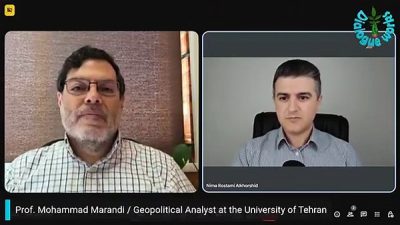
Seyed M. Marandi: U.S. Military DIVIDED? Iran’s Secret Defense EXPOSED
or go to
Aletho News Archives – Video-Images
From the Archives
‘Israel sees Iran as obstacle to its policies’
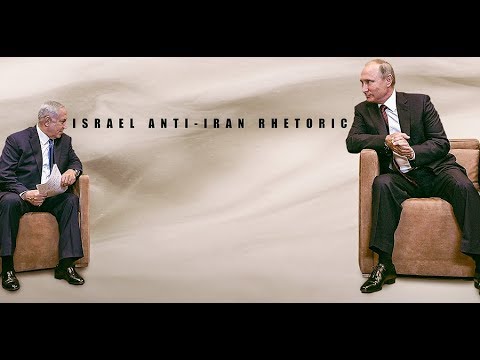
Press TV – August 25, 2017
Prime Minister Benjamin Netanyahu has said that Israel felt threatened by Iran’s growing influence in the Middle East. Netanyahu expressed his Iranophobic view in a meeting with Russian President Vladimir Putin in Russia’s Black Sea resort of Sochi on Wednesday. Press TV has asked Scott Rickard, former American intelligence linguist from Tampa, Florida, and Brent Budowsky, a columnist at The Hill from Washington, to give their thoughts on the issue.
Rickard said Tel Aviv is concerned about the fact that the regime could not carry out its old project to spread sectarian divisions and pave the way for dismemberment of the countries in the Middle East region because of the Iranian-led resistance against Israeli policies, not only in the occupied territories of Palestine but also in the whole region.
“Iran is not a threat to Israel whatsoever. The threat that Israel sees is the fact that their Oded Yinon Plan is being put to a hold by Iran,” the intelligence linguist said on Thursday night.
“They (the Israelis) look at Iran as a threat only because they have no influence on their governments and Iran is autonomous and is not under the Zionist influence,” he added.
Since the victory of the Islamic Republic of Iran in 1979, Tehran has been critical of Israel’s policies in the region, whereas “no leaders [of other states] even dared to speak out against Zionism,” Rickard argued. … continue
Blog Roll
 Aletho News
- Iran declares ‘historic victory’ over US, says enemy forced to accept its proposal
- Trump Claims Ceasefire, Reopening of Strait of Hormuz Agreement with Iran
- Israeli tank fire killed UN peacekeeper in Lebanon, UNIFIL investigation finds
- Russia, China block Bahrain-sponsored UN resolution on Strait of Hormuz
- The US-Israeli War on Science is an Assault on our Future
- Trump’s Promise to Bomb Iran ‘Like Never Before’ Faces Brutal Logistics — Expert
- Germany seeks to restrict stays abroad for men of fighting age – Berliner Zeitung
- Evidence points to Ukraine being behind TurkStream attempted sabotage, but that should come as no surprise
- Sri Lanka secures supplies of Russia oil – minister
- Nations across Asia strike direct deals with Iran for Hormuz passage
- If Americans Knew
- Thousands dead and neighborhoods razed to the ground: Aid agencies fear southern Lebanon is becoming the new Gaza
- The war the US is fighting for Israel could cost trillions
- ‘Cigarette Burns, Nail Wounds’: Toddler Tortured in Gaza to Coerce Father
- Trump Says US Sent ‘a Lot of Guns’ to Protesters in Iran
- Israeli forces destroy 17 UN peacekeeper cameras in south Lebanon
- US-Israeli strikes ‘completely destroy’ synagogue in Tehran
- Archbishop for US Military Says Iran War Is Unjust Under Catholic Teaching
- Iranian leaders’ Open Letters to the American People
- Trump says Iranians appreciate bombs, WHO warns of nuclear risks – Daily Update
- U.N. experts demand Israel release prominent Gaza doctor after reports of ‘severe torture’
- No Tricks Zone
- An Inconvenient Tree: Uncovered In Alps… Europe Much Warmer Than Today 6000 Years Ago
- New Study Reports A 60% Slowdown In Greenland’s Ice Loss Rate In The Last Decade
- Low Intensity Tornado Wrecks Major Solar Farm, Creating A Potential Toxic Dump
- New Study Finds Warming Saves Lives…Cold Temperatures 12 Times More Deadly Than Excess Heat
- German Science Blog Accuses PIK Climate Institute Of Hallucinating Climate Tipping Points
- Devastating Assessment Of Comirnaty Vaccine By Former Senior Pfizer Europe Toxicologist
- New Study: CO2 Is ‘Effectively Negligible’ As An Explanatory Climate Change Factor Since 2000
- Former Pfizer Toxicologist Dr. Helmut Sterz Tells Bundestag Hearing Pfizer Vaccine Should Have Never Been Approved
- Energy Expert: Germany’s Nuclear Phaseout Was A “500 Billion Euro Mistake”
- New Research: South Australia’s Mid-Holocene Sea Surface Temperatures Were 4°C Warmer Than Today
 Aletho News