Those “damn emails.”
Watching the new Bernie Sanders, distracted by his “awkward dance” to the tune of that damn Platform, one might think him unaware that he had his last best chance to win the Democratic nomination snatched from him in broad daylight. Republicans appear far more disturbed than Sanders is about Clinton sewing up the nomination by beating her secret server rap on dubious legal grounds. Since polls have consistently shown Sanders, not Clinton, to be the strongest candidate to beat their guy, one might expect not Republicans, but Sanders, to be out front on this issue. But its 2016, when the “progressive” revolutionary is endorsing the establishment plutocrat.
In last Thursday’s “emergency” congressional oversight hearings, FBI Director James B. Comey was questioned about his unprecedented Tuesday, June 5, press conference Statement justifying the Bureau’s mutually contradictory factual and legal conclusions from its long-pending investigation of Hillary Clinton’s “servergate” problem. Republicans under committee Chair Jason Chaffetz (R-UT) conducted a professional, informed and fair interrogation of Comey that contributed to the debate. Comey’s less than convincing legal justification for his decision opened as many lines of inquiry as it closed.
Trey Gowdy, (R- SC), a former federal prosecutor, walked Comey through the false statements that Clinton told his Benghazi Committee in October. This evoked a sworn on-the-record FBI endorsement of what amounted to several counts of a potential criminal indictment of Clinton for lying under oath. One wonders if the FBI will investigate the question whether Clinton intentionally lied to Congress as gingerly and at the same level of competence as the FBI’s first limited investigation, which even non-lawyers on the Oversight Committee were able to effectively criticize.
Having virtually framed the indictment of Clinton for lying to Congress, Gowdy then delivered a Socratic lesson to Comey on the subject of how such “false exculpatory statements” by Clinton, along with Clinton’s pervasive and “complex scheme that was designed for the very purpose of concealing the public record” could have been used in the “servergate” case to prove her requisite criminal intent, the supposedly key element of the crime which Comey claimed he could not find.
Gowdy completed his attack on Comey’s central evasion for not indicting Clinton by instructing him that intent is rarely proven by direct evidence, such as Comey seemed to suggest was needed. “You have to do it with circumstantial evidence,” Gowdy said. Gowdy outlined in less than five minutes for Comey what the FBI was somehow incapable to piece together over many months.
Circumstantial evidence has been used in similar cases. In the notorious case of Jeffery Sterling, DoJ was able to imprison a CIA agent on the sole basis of circumstantial evidence amounting to no more than speaking to a reporter, a case that was partially motivated by retribution for Sterling’s racial duscrimination claim against the agency. Another entirely circumstantial case was made against a mid-level bureaucrat for talking with a reporter without direct proof of intent, let alone transfer of any particular information.
This initial examination of Comey by Gowdy and other Republican committee members supports the suggestion that Comey’s formal statement denying Clinton’s criminal intent, quoted below, constitutes one of a series of “coincidental shams and deceptions deeply rooted in a corrupt political system.” This sham includes a) the extended delay and timing of what appears to have been a superficial and artificially limited investigation designed to exculpate, b) the unethical ex parte meeting between Comey’s boss and Bill Clinton at the Phoenix airport, c) AG Lynch’s refusal to recuse herself for that ethical lapse, and d) instead abdicate the DoJ’s prosecutorial judgment to a political FBI Director, e) Clinton (who “believes in gestures”) making anonymous leaks that “she may decide to retain Ms. Lynch,” f) Obama’s endorsement of and North Carolina campaign stop with Clinton timed to deflect attention from the FBI’s criticism of her lies and “extremely careless” conduct in high office, g) unprecedented signature of non-disclosure agreement for agents on this case, and then h) the very nature of the Statement itself, both the unprecedented PR exercise of its being made public and the FBI’s straying well beyond its proper duties and expertise to make and announce the operative legal decision not to prosecute. Reciting some these coincidences Rep. Mica observed “what’s come down, it almost looks like a choreography.”
It may be only a coincidence that Lynch was appointed attorney general by Obama very shortly after Clinton started deleting her “servergate” files in February 2015. And it may be a coincidence that Comey was appointed around the time in 2013 that Clinton’s potential crime was coming to light. But was it a coincidence that Obama failed to appoint a State Department inspector general during all four years of Clinton’s tenure as Secretary of State?
Selling a Technical Fix for a Political Problem
The FBI does not prosecute, and does not evaluate or fire prosecutors. It investigates federal crime, which is a technical and not political process. It is not the FBI’s job to tell prosecutors how to do theirs, but rather to provide the investigation needed for prosecutors to make legal decisions based on reliable and thorough facts. Jason Chaffetz (R- UT) called out (3:34) how unprecedented it was for Comey to go public with such a statement, and then also to do so about more than just the facts discovered by the FBI, but also to publicly pre-judge the legal questions involved in a possible prosecution, indictment, and trial. Rep, Mulvaney also repeated this criticism as a question: “It is unprecedented that an FBI Director gave the type of press conference that he did and took a position that an unreasonable prosecutor would only take this case forward. Why would do you that?” Comey agree, :Yes, it’s a great question.”
Comey’s opinion was that commission of the crime detailed in the FBI’s investigation should nevertheless not be prosecuted because of insufficient “intent” by Clinton. This opinion was not only based on a failure to marshal available evidence, as Rep. Gowdy pointed out, but also a misinterpretation of well-settled law, as discussed below. It also prejudices any future prosecution the Justice Department might have decided, or may decide to pursue in the future, unless discredited as an abuse of the FBI Director’s authority
As Matthew Miller, a former Justice Department official, judged, Comey’s performance was “a gross abuse of his own power,” in part because he “substituted his judgment for that of prosecutors.” The FBI’s autocratic legend who was not shy about expanding the powers of the Bureau, J. Edgar Hoover, himself decreed: “We are a fact gathering organization only. We don’t clear anybody.” sixty years later, Comey has now added a corollary to this rule: “except a Clinton” when it’s time to determine the next president.
This unprecedented FBI polemic about Clinton’s intent violated the general rule that one does not ever speak publicly about a pending investigation or litigation because it can distort due process. It was dramatically improper conduct for political purposes. It is one reason why Comey should be at least fired, if not formally reprimanded or impeached by Congress.
The argument for impeaching Comey is that if Comey does not suffer serious consequences in public, the Clinton case cannot be effectively prosecuted. He has spoiled the case, and failed to faithfully execute “the Laws.” (Art. II, Sec. 3.) He has also established a dangerous precedent for abuse of FBI power that needs to be soundly rebuked. That is difficult to do in any other politically responsible manner than the constitutional process for checking inappropriate executive action, an impeachment vote by the House of Representatives. (Art. II, Sec. 4.) His errors in stating the governing law on which he based his institutionally improper opinion provide yet other reasons for disciplinary action.
This impropriety of the chief federal investigator acting as prosecutor, grand jury, judge, and jury arose out of the context where Comey’s boss Loretta Lynch had said she would abdicate to the FBI her duty to make the legal and political decision on the Clinton case, rather than simply recuse herself for her ethical lapse in holding a secret ex parte meeting with a potential target and surrogate of the main target of the investigation.
By making the legal decision himself rather than properly leaving it to senior Justice Department lawyers and the attorney general, Comey clearly did a political favor not only for Lynch but also for President Barack Obama, who also has a flair for improperly prejudging pending cases, as he did this one. Both of them would otherwise have had to take political responsibility, with an historically dissatisfied electorate, for an unpopular and controversial partisan political decision, the first of its kind in U.S. history, based on a distorted legal analysis. Both had conflicts of interest as political partisans of the same stripe as Clinton. Obama would have effectively pardoned his endorsed successor for preserving his plutocratic legacy. Lynch would be exonerating her potential future employer, who may well eventually appoint her to be the first black woman on the Supreme Court much has her husband appointed Lynch to be US Attorney.
Both the ethical lapse at the airport and the ensuing abdication, rather than recusal, deserve separate reprimand. In her hearings the barest scent of impeachment was in the air. Rep. Goodlatte (31), lawyer and Chairman of the powerful House Judiciary Committee, and not known to make such accusations lightly, charged that Lynch’s abdication was “not [a]… responsible way to uphold [her] constitutionally sworn oath.” The hearing established that “servergate” was the first time Lynch had announced such an abdication of duty ahead of time, that she would follow recommendations of a committee rather than make her own decision. This abdication of responsibility under the pretense that it would remedy her ethical lapse, according to Rep. Jordan (2:13) actually “made a bad situation worse.” AG Lynch’s rehearsed, run-out-the-clock, stonewall demonstration before the Committee of “prodigious dissimulation skills” (Franks,1:50) in furtherance of her abdication bordered on contempt of Congress. On the merits, Rep. Gowdy who knows how to conduct cross-examination could not get a straight answer from Lynch to the simple question of why a specific intent standard was applied by the DoJ when the statute does not demand it, which is the central issue. Her riposte to nearly every question is that her sole decision was to in effect abdicate her duty and that questions on the details should be referred to Comey.
Comey’s highly improper public recitation of facts sufficient to indict, while denying Clinton, for his own political reasons, the opportunity to controvert those facts in court by indicting her was undoubtedly the price Comey had to pay to prevent mutiny from the professionals inside his Bureau. One former spy who is closely following the case predicted that “there are high-ranking spies who [we]re perfectly willing to leak the sordid details of …. exactly what Hillary Clinton did,” had Comey failed to make a credible accounting. But FBI investigators take institutional responsibility solely for delivering the facts, not for Comey’s personal venture into political fixes at the presidential level, nor for his idiosyncratic legal conclusions that Lynch improperly allowed him to make, with some cover provided by unnamed DoJ attorneys on a committee.
Evidence of Intent: looking in all the wrong places
Comey was able to make a political decision appear to be a technical decision by basing it upon his peculiar views of the evidence necessary to prove intent, at least in this one case. But as Rep. Gowdy explained to Comey, this technical decision about intent failed to take proper account of the inferences to be drawn from the circumstantial evidence that shows Clinton’s intent to break the law. For example, Clinton clearly intended to give classified information to her lawyers who lacked security clearances, as well as to allow her uncleared tech support to have access. Comey had no good answer for such facts.
Among the many lapses of judgment that Comey defended, he did not think it germane to an assessment of her intent that Clinton, and nine of her former top aides, refused to be interviewed by the State Department inspector general. A person of innocent intent would have no reason to avoid such an interview by her former employer on a matter within the scope of her employment.
Comey’s refusal to comment on the existence or not of a related Clinton Foundation investigation suggests that, contrary to speculation, those very public allegations of Clinton’s handling of systemic conflicts of interest was not part of the secret server investigation. Such a joint investigation of the two potentially related matters would have justified the FBI’s delay. Not taking into account the Clinton Foundation line of inquiry would exclude consideration of a potential motive for Clinton’s prioritizing over keeping the nation’s secrets keeping secret from the government her “private” emails. About half of the total were allegedly private, representing a quite intensive “private” life for someone in such a high public office. Investigator Greg Palast points out that notionally private communications because addressed to her family, did involve official business. That potential motive would have been far more nefarious than the motives that Comey does approve for prosecution in other cases, such as whistleblowing on matters of mismanagement or torture.
The damage done may also have been greater. William Binney, a former high-ranking NSA official, claimed that the “rather devastating compromise of technical capability and a commensurate loss of high value intelligence” from just one 2011 Clinton email released by the State Department may be “difficult for the public to understand and comprehend, but it is … much worse than what Julian Assange or Chelsea Manning or any of the other whistleblowers have done.” The email wasn’t redacted because it was sent to Clinton by Sid Blumenthal, a private citizen with no security clearance. But as shown in many other emails he sent to Clinton, he somehow had access to the latest top secret NSA information that revealed the NSA’s sources and collection methods.
As it turned out, such a motive of keeping corrupt activities private from government security officials and Freedom of Information Act (FOIA) investigators might have been ineffective in any event. On the same day Comey gave his presentation clearing Clinton, the D.C. Circuit ruled that government email records on private equipment are subject to FOIA if they are not held under a claim of private right. See Competitive Enterprise Institute v. Office of Science and Technology Policy (2016) (“If a department head can deprive the citizens of their right to know what his [sic] department is up to by the simple expedient of maintaining his departmental emails on an account in another domain, that purpose [of FOIA] is hardly served.”)
After reciting facts that have long been known by the public, and that contradicted exculpatory public statements by Clinton, the FBI’s operative finding delivered by Comey was that “we did not find clear evidence that Secretary Clinton or her colleagues intended to violate laws governing the handling of classified information.” In the oversight hearing on July 7th, Comey did not demonstrate a full grasp of facts, such as who paid for Clinton’s server. He did not personally interview Clinton nor did he talk with all of the “five or six” agents who did. Another painfully obvious example was when Comey was asked by Rep, Meadows “did [Clinton] contradict some of [her] public statements in private? Because you said she didn’t lie to the FBI, but it’s apparent that she lied to the American people. So did she change her statements in [her] testimony with you last Saturday?” Comey’s incredibly ignorant response was “I haven’t gone through that to parse that…” Rep. Meadows requested “Can you do that and get back to this Committee?” When asked again by Rep. Mulvaney: “why she told y’all one thing and told us another?” Comey replied “I don’t know as I sit here. I mean, I can — I’ll figure that out” even though he agreed “that [could] have been of interest to you in helping to establish intent?”
This is Congress asking the FBI to apply one of its most common enforcement tools, trapping people into making false statements, as if it were some novel enforcement tool they had not thought of before. It will be important to monitor whether Congress will insist that Comey satisfy Rep. Meadows’ request, and Comey’s promise, to “figure that out” why Clinton is not being prosecuted for false statements to the FBI.
Due to repeated professions of ignorance of this kind, Comey’s formula that he did not “find clear evidence” was less than convincing that he looked in the right places.
Comey’s finding was not that Clinton’s conduct did not possibly violate the law, but an inference from Clintons’ “Whoops, sorry, didn’t mean to, won’t do it again:” Voila! No intent; no crime. As Gowdy’s questioning suggested, if when Comey used the word “clear” to describe the quality of evidence of intent that he was looking for he actually meant “direct,” that kind of evidence almost never happens in the real world. The evidence of intent, unless confessed, is always inferential, circumstantial, and indirect, not “clear” in the possible colloquial use of that term that Comey seemed to employ.
Since “clear evidence” is not a legal term, the country is left to guess what Comey’s subjective meaning for the term is. The impression left by Comey, which Gowdy forcefully challenged, was that indirect and inferential evidence was not considered by Comey to be “clear” evidence, and therefore Clinton could only be indicted if she confessed. Indeed, Comey distinguished the Deutch case on the grounds that Deutch “admitted, ‘I knew I wasn’t supposed to be doing this.” The idea that no prosecution can be maintained without a confession is of course the most arrant nonsense. Rep. Duncan reported that when he was a judge he “saw many cases where the evidence of criminal intent was flimsier than the evidence in this case.” But Comey has so far gotten away with asserting the contrary.
The kind of clarity that Comey was seeking would have to dispel his opinion about, among other things, Clinton’s apparent denial that she understood classification markings within a text of a document: “I think it’s possible — possible that she didn’t understand what a “c” meant.” But then, in response to a question by Rep. Meadows whether it is reasonable to doubt such a denial, i.e., “wouldn’t a reasonable person think that someone who has the highest job of handling classified information would understand that?” Comey replies “I think that’s the conclusion a reasonable person would draw. It may not be accurate.” One can observe Comey retreat here from applying the legal reasonable doubt standard into some subjective standard of his own concerning “clear evidence.”
Provided Clinton insisted on her own ignorance which no jury would likely accept, if Comey was looking for other “clear” evidence of intent, he was looking for some abstraction that does not exist, and which the law does not require. No matter how much one looks no other direct evidence will be found without extraordinary investigatory measures. Comey was apparently not looking for it by using such measures. He did not disclose the existence of wiretaps to monitor Clinton’s private conversations for which he clearly did have probable cause. But the inferential and circumstantial kind of evidence that Gowdy recited, and which is commonly sufficient to convict of the intent element of all ordinary crimes where the issue might arise, was not discovered under Comey’s leadership because it was apparently not “clear.”
Comey’s “Reasonable Prosecutor”
Comey’s flawed approach to assessing the element of intent is discussed in further detail below. First, it should be pointed out that Comey offered this opinion, one that departed from the traditional standard of reasonable doubt in favor of some unknown subjective standard of his own, to support his “judgment … that no reasonable prosecutor would bring … a case” for Clinton’s “potential violations of the statutes regarding the handling of classified information.” As mentioned, this judgment went beyond Comey’s position as FBI director to give, and it was given on the basis of his own idiosyncratic legal test.
In his July 5th statement, Comey explained:
“Prosecutors necessarily weigh a number of factors before bringing charges. There are obvious considerations, like the strength of the evidence, especially regarding intent. Responsible decisions also consider the context of a person’s actions, and how similar situations have been handled in the past. In looking back at our investigations into mishandling or removal of classified information, we cannot find a case that would support bringing criminal charges on these facts. All the cases prosecuted involved some combination of: clearly intentional and willful mishandling of classified information; or vast quantities of materials exposed in such a way as to support an inference of intentional misconduct; or indications of disloyalty to the United States; or efforts to obstruct justice. We do not see those things here.”
Again, Comey probably did not “see those things” because he did not look, mainly because he was looking for the wrong thing. Clinton’s server did involve “vast quantities of materials exposed in such a way as to support an inference of intentional misconduct.” It was not just a mistaken channeling of a few emails through her separate personal email. It was systemic and vast removal of her routine official email traffic from secure government channels to her insecure private server domain used for her “hdr22@clintonemail.com” address.
This pervasive arrangement was therefore all but certain to expose national secrets.
Clinton deliberately commingled the personal and the public, permitting her to later delete the public’s communications under the unverifiable, and apparently inaccurate, excuse that she only deleted her personal communications. There is no reliable way of knowing what she deleted because the data was wiped nearly clean.
A fiduciary who commingles financial assets is guilty of crime. Clinton commingled real assets, national secrets owned by the public, with her private information, and put them both in her private insecure server. This violates several federal statutes.
What would be enough evidence of intent for a “reasonable prosecutor” to pursue a conviction for this violation is again left to Comey’s own subjective standard. An objective standard would be met, first, by restraining the FBI Director within the proper scope of his duties, then appointing a professional unbiased special prosecutor to separately assess the legal implications of the facts the FBI produced. The prosecutor should be free of political ties and conflicted interests, such as job retention or promotion in a new administration. Then the case should be presented to a grand jury for possible indictment to determine its objective validity.
That is the constitutional process to achieve objectivity in prosecutions of this political kind of matter. But as mentioned above, the case cannot now be prosecuted unless Comey himself suffers consequences for his improper and unprecedented conduct that relegated the legal and policy decision of whether to prosecute to his own subjective standards under the pretext of being a technical decision backed by the prestige of the FBI.
Before anyone searching for such an independent prosecutor takes Comey’s word about his standard for “reasonable” prosecutors, they might want to first check with his FBI Sacramento office about whether they would agree with Comey that Assistant United States Attorney Jean M. Hobler should be considered unreasonable for successfully prosecuting the case of a reservist named Bryan Nishimura for “removing and retaining” on his private computer classified material acquired when he was serving as a Naval Engineer in Afghanistan.
The FBI investigated this case as a violation of 18 U.S.C. §1924, and published a press release just one year ago lacking any suggestion that the FBI considered Hobler to be anything but a “reasonable prosecutor” for winning this case. Though not nearly as significant as Clinton’s similar crime, this case was virtually identical as far as the element of intent goes. Intent was not an issue. In fact, the investigation of the Nishimura case found no motive “to distribute classified information to unauthorized personnel,” which is not quite true of the Clinton case. But lack of wrongful motive was not a problem for the prosecution of Nishimura. Comey contended the Nishimura case could be distinguished when it was raised by a committee member at the hearing, but he did not actually say how.
Congress needs to ask the Director to put together a dossier of similar cases that the FBI has investigated, and that Comey might have thought could be distinguished although their relevant facts are similar to Clinton’s case. Since in his July 5th presentation Comey said “we cannot find a case that would support bringing criminal charges on these facts,” we need to know if his definition of “these facts” include only relevant facts, or if he considers distinctions that are political or otherwise legally unpersuasive.
Congress needs to ask Comey for all the available legal memoranda distinguishing such cases as the Nishimura case, or the John Deutch case, and others, so people can determine whether these cases really are so different in principle from Clinton’s case after they have a “complete accounting of the facts” which Comey claimed they do not now have, but which he does have. It is almost certain that none of the cases prosecuted under the relevant statutes prohibiting mishandling of government records could be distinguished with respect to the element of intent.
Many commentators, including Representatives Gowdy, Chaffetz, and other oversight committee members concluded that Comey is operating within the framework of a two-tiered system of justice by providing an evasive justification of insufficient intent. The elite political class has one kind of law and everyone else has another. See Matt Taibbi, The Divide: American Injustice in the Age of the Wealth Gap (2014). At the same time that police are murdering people on the streets with impunity, the political elite in the capital is placed above accountability to the law.
Confusing motive with intent
Comey has not only misled the public by his demand for evidence that Clinton’s violation of the law was “clearly intentional and willful” according to some subjective evidentiary standard of his own. More importantly, in his discussion of precedents, quoted above, he deliberately confuses these terms relating to intent with the separate concept of motive. Comey’s description of his search for precedent suggests that he was not really looking for intent, but rather different varieties of motives involved in cases where forbidden material had been placed on private computer devices, or otherwise compromised.
As Supreme Court justices Alito and Thomas said in another context, Comey’s quoted statement about controlling Justice Department precedent “confuses two fundamentally distinct concepts: intent and motive…. [O]ur cases have recognized that a lawful motive (such as necessity, duress, or self-defense) is consistent with the mens rea necessary to satisfy a requirement of intent.” Rosemond v. United States (2014).
Any motive whatsoever, innocent or otherwise, can be used as evidence of intent, but rarely, if ever, can be used to disprove intent for purposes of determining guilt. From the defense perspective, the Supreme Court observed: “Motives are most relevant when the trial judge sets the defendant’s sentence …” Wisconsin v. Mitchell, 508 U.S. 476, 485 (1993) (hate crime). Thus motive might affect punishment, but ordinarily not guilt, except for proving the element of intent or as circumstantial evidence for identifying the culprit of proven bad acts, which is not in question here.
In the Sterling Espionage Act case, proof of an alleged motive for disloyalty to the CIA was virtually substituted for the lack of any direct evidence linking the defendant to the crime. Such trumped up cases invite a jury to illegitimately convict a person for imputed bad thoughts when there is insufficient evidence of the defendant’s bad acts. But where motive is not an element of the crime, evidence that one does not have bad thoughts cannot be used for defensive purposes, to exculpate, as Comey has used it.
In the end, Comey’s argument amounted to little more than an opinion about the success of such a “bad thoughts” case against Clinton. But it ignored that Clinton’s “bad acts” was all he needed to prove, and Clinton’s connection to those acts, unlike the Sterling case, are virtually unquestioned. By cleverly diverting his legal analysis of intent to the issue of motive, Comey made an inherently arbitrary political distinction between motives that the administration can tolerate by its friends and motives it disapproves. This is a violation of the rule of law which does recognize such political preferences but rather defines a crime applicable to everyone irrespective of their friends in high places or the kinds of motives their friends find politically unthreatening to themselves.
This highly limited, solely evidentiary, role of motive in all ordinary criminal prosecutions is shown to be violated by Comey’s reference to the kind of “intent” that he said was defined by Justice Department precedent concerning “disloyalty to the United States; or efforts to obstruct justice.” Such categories clearly involve motives for committing a crime and not the element of intent to commit the underlying crime of mishandling the nation’s secrets, and other government information. Whether it was done for reasons of disloyalty, obstruction, or any other motive in not necessary to proof of intent. These “fundamentally distinct concepts” of motive and intent are jumbled up here on Comey’s list of precedents together with his discussion of “intentional mishandling” or “intentional misconduct,” instead of focusing on the actual element of intent to commit the acts which constitute a crime.
In this context of Comey’s description of the precedent he consulted, each of these formulations appear to share a concern more about the motive of the accused to accomplish some specific purpose by means of violating the law, rather than looking to the intent simply to violate a law. Again, intent is an element of a criminal offense, but motive – with very rare and particular exceptions – is not. Comey has let Clinton off because he did not find evidence of a motive sufficiently evil by his subjective standards, even though under the relevant statutes motive is not even an element of the crime that needs be proven at all. It is not necessary to unpack Clinton’s motives in order to convict her of the crime. Her professions of innocent motive does not obviate that she had the necessary intent to commit the acts that constitute several crimes.
There is evidence, of course, that Clinton did reveal her motive by saying to a confidant, “I don’t want any risk of the personal being accessible.” This is evidence of her intent to make her own rules that would better protect her own inordinate interest in personal privacy rather than to follow the State Department rules for her communications to protect the public’s interests in security. Her publicly expressed motive for having a secret server was different. She told the public it was for her own “convenience” that she risked making accessible to foreign countries and hackers the nation’s secrets entrusted to her, along with “the personal.”
Clinton said it was for this interest of convenience that she wanted to use only one communications device, which is a somewhat less suspect motive than an unprecedented and unauthorized obsession with secrecy. It was Clinton’s decision, intent, to put both “the personal” and the public information equally at risk through her insecure server rather than risk some disclosure of “the personal” to the internal processes of the State Department. This judgment raises questions about whether she might be hiding from the public (although not from foreign hackers) information as important to her as the nation’s secrets.
An unnamed former NSA official familiar with the effort to get Clinton to obey the rules, now asks, “What did she not want put on a government system, where security people might see it?” She must have known that her own server was not only less secure than the government’s, it was also “less secure than,“ Google’s ordinary Gmail account, according to Comey.
The alleged motive of Clinton wanting to use only one mobile device for convenience appears to be a lie in any case, because the FBI found she actually had used more than one device. Apparently, Clinton bought an iPad in 2010, just one year into her tenure as Secretary of State, while continuing to use her BlackBerry. If Comey’s sworn testimony does disprove Clinton’s convenience motive, that she wanted to have the personal and the public communications all on one device, then as the former prosecutor Rep. Gowdy pointed out to Comey, lying about her motives would be highly probative evidence of her intent. Rep. Gowdy also contends “if it were convenience Director, she wouldn’t have waited two years to return the documents and she wouldn’t have deleted them four years after they were created” to which Comey made no coherent response.
A person lacking any intent to break a law would not need to invent motives for breaking the law, in order to disguise other more nefarious motives. A person with no intent lacks the state of mind to have a motive. Satisfying the legal element of intent only requires that Clinton acted deliberately, not that she acted with an particular subjectively evil motive.
Comey’s use of the term “willfully” in his “precedent” argument quoted above, as if it, like Comey’s subjective term “clear,” required some proof of motive, otherwise known as specific intent, is legally outdated. The Supreme Court long ago rejected the idea that, without more, the term “’willfully’ requires proof of any motive other than an intentional violation of a known legal duty.” United States v. Pomponio, 429 U.S. 10, 11-12, (1976). The sole question that “willfully” can raise is whether Clinton knew she had a legal duty not to “remove and retain” confidential or other national defense information, or otherwise mishandle the public’s information.
It is not necessary to parse Supreme Court decisions to understand the fundamental difference between motive and intent that Comey confused, since the distinction is embedded deeply in criminal law. A popular nineteenth century legal handbook, for example, stated quite clearly that “motive with which an act was done is immaterial in deciding the question of criminality. A crime can be committed with a good motive…” “Motive may … sometimes be shown in evidence; but it is merely as evidence of intent. Motive must not be confounded with intent.” May’s Criminal Law (Beale, ed., 2d Ed.: 1893) 18.
Comey, in violation of these black-letter law principles, precisely did “confound [motive] with intent.” In saying that Clinton lacked sufficient criminal intent according to the precedent he described, what he was actually saying was that the FBI did not have clear evidence of the kind of motive that he himself found sufficiently offensive, not what Congress required to prosecute her violation of the law. His argument, discussed further below, was that the unprecedented nature of the professed motives for a Secretary of State to commit the crime of systematically mishandling the nation’s secrets about foreign affairs that were entrusted to her was an excuse for exonerating the crime.
It was not Congress that created such a hierarchy of motives in the relevant statute, a hierarchy that would exonerate the unprecedented motives of corrupt elites but not the quotidian motives of those without power. In order to achieve the political aim of exonerating Clinton, it was her executive branch political allies, on delegation to the FBI Director, who reinterpreted the law to insert a motive element of the crime, where none exists.
Intent is Presumed
Even more important than Comey’s confusion of motive and the ordinary intent element of a crime is his related view of the amount of evidence needed for its proof. The fact of motive, being subjective, may be difficult to prove. The legal element of intent, once properly disentangled from motive, is nowhere near as difficult to prove as Comey wants us to believe. Again, it has been long established in criminal law that, “one [who] does an unlawful act … is by the law presumed to have intended to do it, and to have intended its ordinary and natural consequences.” Id. 19.
When Clinton arranged to have her public business conducted on an unauthorized private email server in her basement against the rules of the State Department, and therefore in violation of a number of federal laws – that act alone was sufficient to prove the intent element of the crime, the same as it would be for any mentally competent, sane, adult. The burden is on Clinton, not Comey, to prove by persuasive evidence that she peculiarly lacked the capacity to have the same intent any reasonable person would have in taking the actions she did. Comey therefore misled the public and Congress when he claimed that as a general rule prosecutors are concerned about “the strength of the evidence, especially regarding intent.” Intent is ordinarily the least “especial” element of a crime.
Comey justified the fix by saying, “I don’t think our investigation established she was particularly sophisticated with respect to classified information.” A predecessor of Clinton as Secretary of State, Madeleine Albright, lectured her employees that “if you are not professional about security, you are a failure.” Even if the kind of ignorance and failure in dealing with the nation’s secrets that apparently persuaded Comey about Yale Law School graduate Clinton’s motive were ever to be believed by a jury, or anyone other than Comey, ignorance of laws (not to mention Comey’s new standard of “lacking sophistication” about laws) concerning such matters is normally not a defense. When Comey was challenged by Rep. Farenthold on this point, Comey’s reply that “you must be aware of the generally wrongful nature of your conduct” did not exclude the case of Clinton. Comey acquitted her because of lack of very specific knowledge, not lack of general awareness that her server would contain classified information. Her ignorance defense would be even more difficult to sustain in view of signed documents where she acknowledged her understanding under oath, for example, that “classified information is marked or unmarked classified information.”
There are some obvious exceptions to the general rule that evidence of motive is unnecessary to proof of the crime, such as for hate crimes, civil rights violations, and treason where evil motive is an express element of the crime. There are also some less obvious exceptions where “Congress may decree otherwise” by expressly adding a “willful” element for criminalizing “not inevitably nefarious” regulatory offenses, such as involving taxation, or currency structuring. See Ratzlaf v. United States, 510 U.S. 135 (1994). Neither has Congress generally created such a motive element for the laws intended to protect the government’s interest in secure communications, nor are such laws normatively neutral regulatory measures of the kind that do require specific intent. Moreover the government has not treated these laws as requiring a nefarious specific intent, in cases like the Deutch case where the motive was similarly simply one of convenience.
One writer who offers legal credentials as authority for rendering political opinion has supported the FBI’s decision to exonerate Clinton. He claims it was justified by “a legal concept called mens rea. As a general rule, most crimes require prosecutors to prove that an individual acted with a particular state of mind before they can be convicted of a specific crime.” First, this statement is misleading to the extent it suggests that “most crimes” require specific (“particular”) intent, or motive. As mentioned above, very few crimes do. “As a general rule,” intent is presumed from the commission of the illegal act, and prosecutors have little concern about difficulties with proving intent.
Second, criminal laws do not necessarily require prosecutors to prove intent. For example, a Florida drug-law was held constitutional that provided “knowledge of the illicit nature of a controlled substance is not an element of any offense under this chapter. Lack of knowledge of the illicit nature of a controlled substance is an affirmative defense,” meaning that the defendant has to disprove the element of intent, with evidence that rebuts the common-sense presumption that people know what is in containers they control, whether it may be illegal drugs or classified information.
Third, this writer, like Comey, expressly limits his analysis to laws involving classified information, though other laws listed below were also implicated by Clinton’s secret server that go beyond just classified information to include all public records, or at least records involving national defense and foreign relations, without regard to their classification. On the assumption that only mishandling of classified information is prohibited, the mentioned writer thus draws the conclusion: “She had to have acted with knowledge that specific information was classified when it was transmitted. There is little, if any, evidence that Clinton possessed this state of mind.”
This statement, which reproduces the premise for Comey’s fix, can only be called nonsense in light of the description of the general presumption of intent from setting up insecure private communication that would inevitably include routing classified materials and materials about national defense and foreign relations through an insecure private server. No such specific information about any one particular communication was required by any law. Executive Order 13526, Sec. 1.4(d) (2009) defines “classified,” in part, as information relating to “foreign relations or foreign activities of the United States” which “could reasonably be expected to cause identifiable or describable damage to the national security.” Almost any information that a Secretary of State would be handling could have such an impact, some more credibly than others, since the Executive Order further provides that any “foreign government information is presumed to cause damage to the national security.”
It is the job of a Secretary of State to deal with “foreign government information” for the nation on a daily basis. Comey was unable to disagree with Representative Chaffetz’ observation that Clinton would reasonably expect to be communicating classified information through her insecure server on a regular basis. Chaffetz pointed out, “She’s not the head of Fish and Wildlife.”
Unlike the Espionage Act, 18 U.S.C. § 793(a), which applies to anyone and not just public officials, those few laws that Comey selected as within the scope of the FBI inquiry regarding Clinton’s emails, for example § 793(f), do not require a specific motive that the mishandled information was “to be used . . . to the advantage of any foreign nation.” Under § 793(f) the material itself only needed to relate to national defense, which does not concern motive but rather describes the kind of information protected by that particular statute.
Neither statute mentions classification. The statute concerning classification is 18 U.S.C. § 1924 which applies when “an officer, …of the United States … by virtue of his office … becomes possessed of documents or materials containing classified information … knowingly removes such documents or materials without authority and with the intent to retain such documents or materials at an unauthorized location.” This is the statue which reduces intent to gross negligence, presumably because the classification requirement is designed to place officials on notice of the material’s importance. Similarly, the only specific intent statute of this nature is one that applies to the general public which cannot be expected to know what officials can be expected to know.
Clinton did not have “authority” for removing her materials from the State Department communications system and did intend to retain them at an unauthorized location, which she did until she was forced to return them nearly two years after she left office. There is certainly circumstantial evidence of intent to retain and never return the material, had the existence of her server not been discovered. Asked about whether “keeping the servers at home … obviously is not in compliance with the department’s policies,” Comey answered “Yes.” In response to Rep. Buck’s proposition: “that [Clinton] knew that she didn’t have authority to have this server in her basement?” Comey replied: “Yes, that’s true.” Any reasonable person would have known that classified information would be “removed and retained” by Clinton’s secret server operation. Rep. Buck established this fact by asking: “as secretary of state, she also knew that she would be receiving classified information.” Comey replied, “Yes, in general.”
No Precedent, or Bad Precedent?
Representative Gowdy concluded his questioning by attacking the lack of precedent excuse that Comey gave for recommending against prosecution. Lack of precedent resulted from the fact that no prior Secretary of State had systematically removed their communications including the nation’s secrets from the State Department to their basement where secrets were insecure. Over their lifetime of scandals and corruption, such as the engine for global conflicts of interest labeled “The Clinton Foundation,” the Clinton’s atrophied ethics have always tended to break new ground. The sleaze that led to Bill Clinton’s historic impeachment was also unprecedented. The fact that there are no precedents for Clinton’s particular motive for secrecy resulted in her extraordinary conduct in pursuit of that secrecy.
Both Gowdy and Chaffetz turned the “no precedent” claim around against Comey, suggesting that instead of lack of precedent being an excuse not to prosecute, that Comey was himself making bad precedent by failing to prosecute on the ground of lack of intent. There is now no disincentive for Clinton or her staff or anyone else not to operate the same privatized communications system whether in the presidency or in any other high position of trust, provided they have the political clout to fix the FBI Director.
Artificially limited scope of investigation
Comey reported only three possible charges that could have been brought against Clinton or her aides: intentional or grossly negligent mishandling of “classified information,” both felonies under § 793(f); and knowingly removing and retaining classified information from appropriate systems, a misdemeanor under § 1924.
Comey indicated that his recommendation was limited to “laws governing the handling of classified information,” although the statute governing two of his possible charges, § 793(f,) does not mention classified information. He didn’t mention the various other laws implicated by Clinton’s mishandling of her emails, nor by her misstatements about it in various venues.
The FBI apparently did not record or take sworn testimony of its interview with Clinton, one of the most important interviews in the history of the FBI. So Comey’s subjective judgment that there was no evidence that she made false statements to the FBI, a charge the FBI can usually gin up in such a case, cannot be objectively tested because the interview was not recorded and there is no transcript of the interview. Rep. Mica requested the “302” account of the interview from Comey and this must be made public.
Comey admitted to the Chairman of the House Oversight Committee that the FBI did not investigate lies told to the Benghazi Committee under oath because it did not have a “referral” from Congress. Committee chair Chaffetz responded: “You’ll have one in the next few hours.” Will the FBI also need a referral to investigate the other possible crimes committed by Clinton with respect to her email practices? These would include possible violations of 18 U.S. Code § 641 (one who “disposes of any record … of any department or agency”); 18 U.S.C. § 1030 (1) (exceeding authorized access to computer to obtain government information “unauthorized [for] disclosure for reasons of national defense or foreign relations”); 18 U.S. Code § 1512(c) (one who “destroys, mutilates, or conceals a record … with the intent to impair … availability for use in an official proceeding,” such as a FOIA proceeding, perhaps?); 18 U.S. Code § 1519 (the same, evidence tampering, to “influence the investigation or proper administration of any matter within the jurisdiction of any department or agency of the United States,” like the Clinton Foundation charity conflicts of interest or bribery, perhaps?); 18 U.S. Code § 2232 (“Destruction or removal of property to prevent seizure”); and 18 U.S. Code § 2071 (punishing one who “takes and carries away any record … in any public office”).
The FBI’s “thorough” investigation, taking 3 years of workhours, did not cover Clinton’s associates who sent her classified information and who clearly did have specific intent about particular messages, as revealed when Rep. Massie inquired about “someone down the chain being investigated.” They also seemed to miss the State Department inspector general’s finding that Clinton “did not comply with the Department’s policies that were implemented in accordance with the Federal Records Act” and were therefore punishable under § 2071. See n. 41 and 44 U.S. Code § 3105(2). This potential violation was not within the scope of the FBI’s inquiry. Cf. Lynch (1:30)(“not under purview”) with Comey (Q: “did Secretary Clinton in fact comply with the department’s policies or the Federal Records Act?” Comey: I don’t think so.”)
Another matter raised at the hearings that Comey didn’t pursue was that Clinton may have had on her insecure secret server the names of covert CIA officers, the disclosure of which is a felony under the Intelligence Identities Protection Act.
Gross negligence
Bernie Sanders has been preoccupied with convincing his followers that the Democratic Party platform is relevant, by performing his new role in the Kabuki theatre of the corporate Democrats. He is too busy acting out a supposedly important public debate over the irrelevant platform to get involved in this real and personal “servergate” example of impunity for plutocrats. Instead of leading his followers in calling for fair application of the law to his FBI-certified “extremely careless” rival, he was planning to endorse her for the Democratic Party nomination that was stolen from him, without effectively demanding party rules that would prevent current and future such election theft, and/or any other valuable bargaining chip in return.
Therefore, with the newly docile Bernie silenced from any effective action, it was left to Green Party candidate Jill Stein to point out, along with many others, that — aside from the above analysis of Comey’s legalistic obfuscation of the true legal meaning of and limited proof necessary for the element of intent – there was one violation that could be easily understood and accepted by all. “All the elements necessary to prove a felony violation were found by the FBI investigation, specifically of Title 18 Section 793(f) of the federal penal code…. Director Comey said that Clinton was ‘extremely careless’ and ‘reckless’ in handling such information. Contrary to the implications of the FBI statement, the law does not require showing that Clinton intended to harm the United States, but that she acted with gross negligence.”
Section 793(f) punishes anyone “entrusted with … any … information, relating to the national defense, [who] through gross negligence permits the same to be removed from its proper place of custody or delivered to anyone in violation of his trust, or to be lost, stolen, abstracted, or destroyed.” No one disputes that the FBI’s “extremely careless” and “reckless” factual findings, which Comey described as common-sense terms that mean “real sloppiness,” precisely satisfy this statute’s reduced intent standard of “gross negligence.” Comey explained that he did not want to apply these literal terms of a statute that reduces the ordinary element of intent to this lower standard, He asserted some institutional disagreement with the statute, although it matches the precise factual findings of the FBI and the law remains on the books to be used to intimidate others.
This stand by Comey. if legally mistaken, would risk violating the constitutional obligation of the executive branch to “take Care that the Laws be faithfully executed.” (Art. II, Sec. 3.) Unless Comey can now produce a cogent constitutional argument that requiring lesser intent in this statute is a violation of due process, then his refusal to indict presents a separation of powers crisis. There is no governing precedent permitting the Justice Department not to enforce this law because it disagrees with it. Congress should either amend the statute to conform it to constitutional principles or alternatively insist that it be enforced on pain of impeachment for failure to execute a valid law so the Supreme Court can decide the issue. Leaving an invalid law on the books after Congress has been formally told that the Justice Department refuses to enforce it is itself of constitutional concern.
Beyond the response of requiring the Justice Department to produce a fully articulated argument for unconstitutionality of the “gross negligence” standard to Congress, one capable of convincing Congress to repeal the law, this gross negligence issue is something of a red herring from the real issue that Comey has dodged: the existence of objective evidence necessary to prove the element of intent, by his confusion of intent with motive. As Rep. Gowdy accurately pointed out, the problem is that Comey is “reading a specific intent element into a gross negligence statute, not even general intent.” In other words Comey is using the standard deception technique of setting up a false dichotomy between specific intent, which none of the statutes support, and gross negligence, which Sec. 1924 supports. Comey is thereby trying to ignore the fact that what Gowdy calls “general intent” or the ordinary intent element of most crimes can be easily proven by the evidence of Clinton’s conduct. Comey has in fact invented his own statute that would require not just specific intent of some important factor, but specific intent with respect to each separate instance of mishandling of classified material rather than general intent for a pattern and practice that any reasonable person would understand would result in mishandling of classified information. No reasonable legislator would write such a statute.
It is unlikely that Comey’s highly flawed legal explanation for the FBI’s institutionally inappropriate spiking of the prosecution of Hillary Clinton will escape the political verdict rendered by Trump and others that it was “rigged.” Whether the motive for rigging was more anti-Sanders or pro-Clinton, Trump will be its main beneficiary. He would almost certainly lose to Sanders, while it is likely he will now be conveniently pulling ahead of Clinton in the final polls prior to his next hurdle, the July 18 Republican Convention. As the Wall Street Journal wrote, “Washington rewards officials who are best at currying public favor, best at surviving, best at creating unfounded legends.” Such an official who has “spent a lifetime with one eye on politics and one eye on his résumé would have behaved exactly as Mr. Comey did.”
It is clear that by eliminating Sanders’ last best hope for nomination Comey has significantly helped elect his future boss, of either party. But Clinton’s history suggests that there is more to this deal yet to be uncovered.
Rob Hager is a public interest litigator who filed an amicus brief in the Montana sequel to Citizens United and has worked as an international consultant on anti-corruption policy and legislation.
July 15, 2016
Posted by aletho |
Corruption, Deception, Timeless or most popular | Bernie Sanders, FBI, Hillary Clinton, James Comey, United States |
Leave a comment
“Some people think they can lie and get away with it,” said former Defense Secretary Donald Rumsfeld with feigned outrage. And, of course, he has never been held accountable for his lies, proving his dictum true.
The question today is: Will former Secretary of State Hillary Clinton’s Teflon coat be as impermeable to deep scratches as Rumsfeld’s has proven to be?
With the “mainstream media” by and large giving Hillary Clinton a pass on her past, few Americans realize how many Pinocchio faces need to be tacked onto many of her statements. Clinton is said to be “unquestionably” the frontrunner for the Democratic nomination, essentially the presumptive nominee. That is unquestionably true – but only because she has not been questioned with much rigor at all. And on those few occasions when she has been asked hard questions, she has often ducked them.
For example, at the March 9 debate in Miami, Jorge Ramos, the longtime anchor for Noticiero Univision, asked Secretary Clinton whether she would quit the presidential race if she were indicted for putting classified information on her private email server.
She replied: “Oh, for goodness sake, it’s not going to happen. I’m not even answering that question.” [See Consortiumnews.com’s “Is Hillary Clinton Above the Law?”]
Not so fast, Madame Secretary. It is looking more and more as if you will, after all, have to answer that question.
Those “Damn Emails” Again
On Wednesday in Washington, DC, a federal judge issued an order that may eventually require Clinton to testify under oath in a lawsuit related to the private email server she used while Secretary of State.
The judge gave Judicial Watch, a conservative watchdog group, permission to take sworn testimony from close Clinton aide Huma Abedin and others over the next eight weeks. It is possible that Clinton herself will have to testify under oath on the serious email issue before arriving at the Democratic convention in July.
One key issue in question is whether all relevant documents have been provided to Judicial Watch. My guess is that – given lawyers’ propensity, and often their incentive, to secure delay after delay in such proceedings – there may not be much likelihood of all this happening that quickly.
More precarious for Secretary Clinton, in my view, is the possibility that FBI Director James Comey will be allowed to perform a serious investigation and pursue Clinton on sworn testimony she has already given; for example, on whether she was aware of an operation run out of Benghazi to deliver Libyan weapons to rebels in Syria.
During her marathon testimony on Oct. 22, 2015, to the House Select Committee on Benghazi chaired by Rep. Trey Gowdy, R-South Carolina, Rep. Mike Pompeo, R-Kansas, was very specific in his questioning, leaving Clinton little wiggle-room:
Pompeo: Were you aware or are you aware of any U.S. efforts by the U.S. government in Libya to provide any weapons, directly or indirectly, or through a cutout, to any Syrian rebels or militias or opposition to Syrian forces?
Clinton: No.
Pompeo: Were you aware or are you aware of any efforts by the U.S. government in Libya to facilitate or support the provision of weapons to any opposition of Gadhafi’s forces, Libyan rebels or militias through a third party or country?
Clinton: No.
Did Secretary Clinton think we were “born yesterday,” as Harry Truman used to say? From what is already known about the activities of the U.S. “mission” and “annex” in Benghazi and the role played by the late Ambassador Christopher Stevens there, it seems quite likely that Clinton perjured herself in answering No.
And I believe this will become quite clear, if the FBI is allowed to pursue an unfettered investigation – and even clearer if the National Security Agency shares the take from its dragnet surveillance.
But those are big IFs. If I read President Barack Obama correctly, he will be more inclined to tell Attorney General Loretta Lynch to call off the FBI, just as he told former Attorney General Eric Holder to let retired General (and CIA Director) David Petraeus off with a slap on the wrist for giving his mistress intelligence of the highest classification and then lying about it to the FBI.
As for Clinton, perjury is not the kind of rap that she would welcome as she pursues the presidency. Trouble is, not only FBI investigators but also NSA collect-it-all snoopers almost certainly have the goods on whatever the truth is, with their easy access to the content of emails both classified and unclassified. [See Consortiumnews.com’s “Hillary Clinton’s Damning Emails.”]
Sadly, Comey and his counterparts at NSA are likely to cave in if the President tells them to cease and desist. Indeed, like legendary FBI Director J. Edgar Hoover, they may relish the prospect of being able to hold their knowledge of Hillary Clinton’s possible perjury and other misdeeds like a sword of Damocles over her head if she becomes president.
Whistleblower Needed
Thus, unless another patriot with the courage of an Edward Snowden or a Daniel Ellsberg recognizes that his primary duty is to honor his/her oath “to support and defend the Constitution of the United States against all enemies foreign and domestic,” and acts accordingly, the country could end up with a compromised President beholden to Hoover’s successors and the NSA sleuths who “collect everything,” including the emails of the Secretary of State – and those of the President.
Those at the FBI and NSA with the courage to consider whistleblowing need to be aware of the proud tradition they would be joining. The first recipient of the Sam Adams Award for Integrity in Intelligence (2002) was Coleen Rowley of the FBI, and in 2004 the award was given to FBI analyst and translator Sibel Edmonds.
As for signals intelligence, no fewer than four Sam Adams whistleblower awardees have come from NSA and its British counterpart GCHQ: the UK’s Katharine Gun (2003), and three from NSA itself – Thomas Drake (2011), Edward Snowden (2013), and William Binney (2015).
More distinguished company among people of integrity would be difficult – if not impossible – to find. In a few months, we will be considering nominations for the award to be given in 2017.
May 6, 2016
Posted by aletho |
Aletho News | CIA, FBI, Hillary Clinton, James Comey, NSA, United States |
Leave a comment
People Are Waking Up to the Darkness in American Policing, and the Police Don’t Like It One Bit
If you’ve been listening to various police agencies and their supporters, then you know what the future holds: anarchy is coming — and it’s all the fault of activists.
In May, a Wall Street Journal op-ed warned of a “new nationwide crime wave” thanks to “intense agitation against American police departments” over the previous year. New Jersey Governor Chris Christie went further. Talking recently with the host of CBS’s Face the Nation, the Republican presidential hopeful asserted that the Black Lives Matter movement wasn’t about reform but something far more sinister. “They’ve been chanting in the streets for the murder of police officers,” he insisted. Even the nation’s top cop, FBI Director James Comey, weighed in at the University of Chicago Law School, speaking of “a chill wind that has blown through American law enforcement over the last year.”
According to these figures and others like them, lawlessness has been sweeping the nation as the so-called Ferguson effect spreads. Criminals have been emboldened as police officers are forced to think twice about doing their jobs for fear of the infamy of starring in the next viral video. The police have supposedly become the targets of assassins intoxicated by “anti-cop rhetoric,” just as departments are being stripped of the kind of high-powered equipment they need to protect officers and communities. Even their funding streams have, it’s claimed, come under attack as anti-cop bias has infected Washington, D.C. Senator Ted Cruz caught the spirit of that critique by convening a Senate subcommittee hearing to which he gave the title, “The War on Police: How the Federal Government Undermines State and Local Law Enforcement.” According to him, the federal government, including the president and attorney general, has been vilifying the police, who are now being treated as if they, not the criminals, were the enemy.
Beyond the storm of commentary and criticism, however, quite a different reality presents itself. In the simplest terms, there is no war on the police. Violent attacks against police officers remain at historic lows, even though approximately 1,000 people have been killed by the police this year nationwide. In just the past few weeks, videos have been released of problematic fatal police shootings in San Francisco and Chicago.
While it’s too soon to tell whether there has been an uptick in violent crime in the post-Ferguson period, no evidence connects any possible increase to the phenomenon of police violence being exposed to the nation. What is taking place and what the police and their supporters are largely reacting to is a modest push for sensible law enforcement reforms from groups as diverse as Campaign Zero, Koch Industries, the Cato Institute, The Leadership Conference, and the ACLU (my employer). Unfortunately, as the rhetoric ratchets up, many police agencies and organizations are increasingly resistant to any reforms, forgetting whom they serve and ignoring constitutional limits on what they can do.
Indeed, a closer look at law enforcement arguments against commonsense reforms like independently investigating police violence, demilitarizing police forces, or ending “for-profit policing” reveals a striking disregard for concerns of just about any sort when it comes to brutality and abuse. What this “debate” has revealed, in fact, is a mainstream policing mindset ready to manufacture fear without evidence and promote the belief that American civil rights and liberties are actually an impediment to public safety. In the end, such law enforcement arguments subvert the very idea that the police are there to serve the community and should be under civilian control.
And that, when you come right down to it, is the logic of the police state.
Due Process Plus
It’s no mystery why so few police officers are investigated and prosecuted for using excessive force and violating someone’s rights. “Local prosecutors rely on local police departments to gather the evidence and testimony they need to successfully prosecute criminals,” according to Campaign Zero . “This makes it hard for them to investigate and prosecute the same police officers in cases of police violence.”
Since 2005, according to an analysis by the Washington Post and Bowling Green State University, only 54 officers have been prosecuted nationwide, despite the thousands of fatal shootings by police. As Philip M. Stinson, a criminologist at Bowling Green, puts it, “To charge an officer in a fatal shooting, it takes something so egregious, so over the top that it cannot be explained in any rational way. It also has to be a case that prosecutors are willing to hang their reputation on.”
For many in law enforcement, however, none of this should concern any of us. When New York Governor Andrew Cuomo signed an executive order appointing a special prosecutor to investigate police killings, for instance, Patrick Lynch, president of the Patrolmen’s Benevolent Association, insisted: “Given the many levels of oversight that already exist, both internally in the NYPD [New York Police Department] and externally in many forms, the appointment of a special prosecutor is unnecessary.” Even before Cuomo’s decision, the chairman of New York’s District Attorneys Association called plans to appoint a special prosecutor for police killings “deeply insulting.”
Such pushback against the very idea of independently investigating police actions has, post-Ferguson, become everyday fare, and some law enforcement leaders have staked out a position significantly beyond that. The police, they clearly believe, should get special treatment.
“By virtue of our dangerous vocation, we should expect to receive the benefit of the doubt in controversial incidents,” wrote Ed Mullins, the president of New York City’s Sergeants Benevolent Association, in the organization’s magazine, Frontline. As if to drive home the point, its cover depicts Baltimore State Attorney Marilyn Mosby under the ominous headline “The Wolf That Lurks.” In May, Mosby had announced indictments of six officers in the case of Freddie Gray, who died in Baltimore police custody the previous month. The message being sent to a prosecutor willing to indict cops was hardly subtle: you’re a traitor.
Mullins put forward a legal standard for officers accused of wrongdoing that he would never support for the average citizen — and in a situation in which cops already get what former federal prosecutor Laurie Levenson calls “a super presumption of innocence.” In addition, police unions in many states have aggressively pushed for their own bills of rights, which make it nearly impossible for police officers to be fired, much less charged with crimes when they violate an individual’s civil rights and liberties.
In 14 states, versions of a Law Enforcement Officers’ Bill of Rights (LEOBR) have already been passed, while in 11 others they are under consideration. These provide an “extra layer of due process” in cases of alleged police misconduct, according to Samuel Walker, an expert on police accountability. In many of the states without a LEOBR, the Marshall Project has discovered, police unions have directly negotiated the same rights and privileges with state governments.
LEOBRs are, in fact, amazingly un-American documents in the protections they afford officers accused of misconduct during internal investigations, rights that those officers are never required to extend to their suspects. Though the specific language of these laws varies from state to state, notes Mike Riggs in Reason, they are remarkably similar in their special considerations for the police.
“Unlike a member of the public, the officer gets a ‘cooling off’ period before he has to respond to any questions. Unlike a member of the public, the officer under investigation is privy to the names of his complainants and their testimony against him before he is ever interrogated. Unlike a member of the public, the officer under investigation is to be interrogated ‘at a reasonable hour,’ with a union member present. Unlike a member of the public, the officer can only be questioned by one person during his interrogation. Unlike a member of the public, the officer can be interrogated only ‘for reasonable periods,’ which ‘shall be timed to allow for such personal necessities and rest periods as are reasonably necessary.’ Unlike a member of the public, the officer under investigation cannot be ‘threatened with disciplinary action’ at any point during his interrogation. If he is threatened with punishment, whatever he says following the threat cannot be used against him.”
The Marshall Project refers to these laws as the “Blue Shield” and “the original Bill of Rights with an upgrade.’’ Police associations, naturally, don’t agree. “All this does is provide a very basic level of constitutional protections for our officers, so that they can make statements that will stand up later in court,” says Vince Canales, the president of Maryland’s Fraternal Order of Police.
Put another way, there are two kinds of due process in America — one for cops and another for the rest of us. This is the reason why the Black Lives Matter movement and other civil rights and civil liberties organizations regularly call on states to create a special prosecutor’s office to launch independent investigations when police seriously injure or kill someone.
The Demilitarized Blues
Since Americans first took in those images from Ferguson of police units outfitted like soldiers, riding in military vehicles, and pointing assault rifles at protesters, the militarization of the police and the way the Pentagon has been supplying them with equipment directly off this country’s distant battlefields have been top concerns for police reformers. In May, the Obama administration suggested modest changes to the Pentagon’s 1033 program, which, since 1990, has been redistributing weaponry and equipment to police departments nationwide — urban, suburban, and rural — in the name of fighting the war on drugs and protecting Americans from terrorism.
Even the idea that the police shouldn’t sport the look of an occupying army in local communities has, however, been met with fierce resistance. Read, for example, the online petition started by the National Sheriffs’ Association and you could be excused for thinking that the Obama administration was aggressively moving to stop the flow of military-grade equipment to local and state police agencies. (It isn’t.) The message that tops the petition is as simple as it is misleading: “Don’t strip law enforcement of the gear they need to keep us safe.”
The Obama administration has done no such thing. In May, the president announced that he was prohibiting certain military-grade equipment from being transferred to state and local law enforcement. “Some equipment made for the battlefield is not appropriate for local police departments,” he said. The list included tracked armored vehicles (essentially tanks), bayonets, grenade launchers, camouflage uniforms, and guns and ammo of .50 caliber or higher. In reality, what use could a local police department have for bayonets, grenade launchers, or the kinds of bullets that resemble small missiles, pierce armor, and can blow people’s limbs off?
Yet the sheriffs’ association has no problem complaining that “the White House announced the government would no longer provide equipment like helicopters and MRAPs [mine-resistant ambush-protected vehicles] to local law enforcement.” And it’s not even true. Police departments can still obtain both helicopters and MRAPs if they establish community policing practices, institute training protocols, and get community approval before the equipment transfer occurs.
“Helicopters rescue runaways and natural disaster victims,” the sheriff’s association adds gravely, “and MRAPs are used to respond to shooters who barricade themselves in neighborhoods and are one of the few vehicles able to navigate hurricane, snowstorm, and tornado-strewn areas to save survivors.”
As with our wars abroad, think mission creep at home. A program started to wage the war on drugs, and strengthened after 9/11, is now being justified on the grounds that certain equipment is useful during disasters or emergencies. In reality, the police have clearly become hooked on a militarized look. Many departments are ever more attached to their weapons of war and evidently don’t mind the appearance of being an occupying force in their communities, which leaves groups like the sheriffs’ association fighting fiercely for a militarized future.
Legal Plunder
In July, the American Civil Liberties Union and the ACLU of Arizona sued law enforcement in Pinal County, Arizona, on behalf of Rhonda Cox. Two years before, her son had stolen some truck accessories and, without her knowledge, fitted them on her truck. When the county sheriff’s department arrested him, it also seized the truck.
Arriving on the scene of her son’s arrest, Cox asked a deputy about getting her truck back. No way, he told her. After she protested, explaining that she had nothing to do with her son’s alleged crimes, he responded “too bad.” Under Arizona law, the truck could indeed be taken into custody and kept or sold off by the sheriff’s department even though she was never charged with a crime. It was guilty even if she wasn’t.
Welcome to America’s civil asset forfeiture laws, another product of law enforcement’s failed war on drugs, updated for the twenty-first century. Originally designed to deprive suspected real-life Scarfaces of the spoils of their illicit trade — houses, cars, boats — it now regularly deprives people unconnected to the war on drugs of their property without due process of law and in violation of the Fifth and Fourteenth Amendments. Not surprisingly, corruption follows.
Federal and state law enforcement can now often keep property seized or sell it and retain a portion of the revenue generated. Some of this, in turn, can be repurposed and distributed as bonuses in police and other law enforcement departments. The only way the dispossessed stand a chance of getting such “forfeited” property back is if they are willing to take on the government in a process where the deck is stacked against them.
In such cases, for instance, property owners have no right to an attorney to defend them, which means that they must either pony up additional cash for a lawyer or contest the seizure themselves in court. “It is an upside-down world where,” says the libertarian Institute for Justice, “the government holds all the cards and has the financial incentive to play them to the hilt.”
In this century, civil asset forfeiture has mutated into what’s now called “for-profit policing” in which police departments and state and federal law enforcement agencies indiscriminately seize the property of citizens who aren’t drug kingpins. Sometimes, for instance, distinctly ordinary citizens suspected of driving drunk or soliciting prostitutes get their cars confiscated. Sometimes they simply get cash taken from them on suspicion of low-level drug dealing.
Like most criminal justice issues, race matters in civil asset forfeiture. This summer, the ACLU of Pennsylvania issued a report, Guilty Property, documenting how the Philadelphia Police Department and district attorney’s office abused state civil asset forfeiture by taking at least $1 million from innocent people within the city limits. Approximately 70% of the time, those people were black, even though the city’s population is almost evenly divided between whites and African-Americans.
Currently, only one state, New Mexico, has done away with civil asset forfeiture entirely, while also severely restricting state and local law enforcement from profiting off similar national laws when they work with the feds. (The police in Albuquerque are, however, actively defying the new law, demonstrating yet again the way in which police departments believe the rules don’t apply to them.) That no other state has done so is hardly surprising. Police departments have become so reliant on civil asset forfeiture to pad their budgets and acquire “little goodies” that reforming, much less repealing, such laws are a tough sell.
As with militarization, when police defend such policies, you sense their urgent desire to maintain what many of them now clearly think of as police rights. In August, for instance, Pinal County Sheriff Paul Babeu sent a fundraising email to his supporters using the imagined peril of the ACLU lawsuit as clickbait. In justifying civil forfeiture, he failed to mention that a huge portion of the money goes to enrich his own department, but praised the program in this fashion:
“[O]ver the past seven years, the Pinal County Sheriff’s Office has donated $1.2 million of seized criminal money to support youth programs like the Boys & Girls Clubs, Boy Scouts, YMCA, high school graduation night lock-in events, youth sports as well as veterans groups, local food banks, victims assistance programs, and Home of Home in Casa Grande.”
Under this logic, police officers can steal from people who haven’t even been charged with a crime as long as they share the wealth with community organizations — though, in fact, neither in Pinal County or elsewhere is that where most of the confiscated loot appears to go. Think of this as the development of a culture of thievery masquerading as Robin Hood in blue.
Contempt for Civilian Control
Post-Ferguson developments in policing are essentially a struggle over whether the police deserve special treatment and exceptions from the rules the rest of us must follow. For too long, they have avoided accountability for brutal misconduct, while in this century arming themselves for war on America’s streets and misusing laws to profit off the public trust, largely in secret. The events of the past two years have offered graphic evidence that police culture is dysfunctional and in need of a democratic reformation.
There are, of course, still examples of law enforcement leaders who see the police as part of American society, not exempt from it. But even then, the reformers face stiff resistance from the law enforcement communities they lead. In Minneapolis, for instance, Police Chief Janeé Harteau attempted to have state investigators look into incidents when her officers seriously hurt or killed someone in the line of duty. Police union opposition killed her plan. In Philadelphia, Police Commissioner Charles Ramsey ordered his department to publicly release the names of officers involved in shootings within 72 hours of any incident. The city’s police union promptly challenged his policy, while the Pennsylvania House of Representatives passed a bill in November to stop the release of the names of officers who fire their weapon or use force when on the job unless criminal charges are filed. Not surprisingly, three powerful police unions in the state supported the legislation.
In the present atmosphere, many in the law enforcement community see the Harteaus and Ramseys of their profession as figures who don’t speak for them, and groups or individuals wanting even the most modest of police reforms as so many police haters. As former New York Police Department Commissioner Howard Safir told Fox News in May, “Similar to athletes on the playing field, sometimes it’s difficult to tune out the boos from the no-talents sipping their drinks, sitting comfortably in their seats. It’s demoralizing to read about the misguided anti-cop gibberish spewing from those who take their freedoms for granted.”
The disdain in such imagery, increasingly common in the world of policing, is striking. It smacks of a police-state, bunker mentality that sees democratic values and just about any limits on the power of law enforcement as threats. In other words, the Safirs want the public — particularly in communities of color and poor neighborhoods — to shut up and do as it’s told when a police officer says so. If the cops give the orders, compliance — so this line of thinking goes — isn’t optional, no matter how egregious the misconduct or how sensible the reforms. Obey or else.
The post-Ferguson public clamor demanding better policing continues to get louder, and yet too many police departments have this to say in response: Welcome to Cop Land. We make the rules around here.
Matthew Harwood is senior writer/editor of the ACLU. His work has appeared at Al Jazeera America, the American Conservative, the Guardian, Guernica, Salon, War is Boring, and the Washington Monthly. He is a TomDispatch regular.
Copyright 2015 Matthew Harwood
December 21, 2015
Posted by aletho |
Civil Liberties, Corruption, Subjugation - Torture | FBI, Human rights, James Comey, Law Enforcement Officers’ Bill of Rights, LEOBR, Philadelphia Police Department, Ted Cruz, United States |
Leave a comment
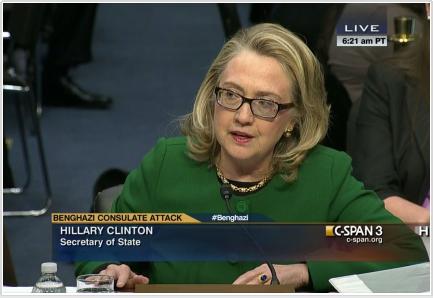
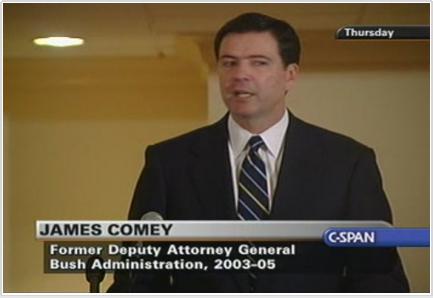


 Aletho News