Joe Biden Fears for the Democratic World Order!
By Phil Butler – New Eastern Outlook – 04.03.2017
“The progressive democratic world order is at risk of collapse”, former Vice President Joe Biden spoke these words in his last speech to a waiting public. This is the same man whose son took up an executive role in Ukraine before the embers of revolution had stopped smoldering. In this same speech Biden also named Russia as the prime antagonist of this new global order. Here’s a look at one of the world’s top public enemies.
Joe Biden loves Bill and Hillary Clinton, he loves them so much he wants to be just like them. Why he’s already started his own money machine, The Biden Foundation, which looks like the spitting image of the Clinton Foundation. Like the Clinton Foundation, Biden’s new NGO is into all those things that people are most concerned about. It’s also into all those things people donate money for, like lobbying. The sparkling new Biden endeavor professes care for women’s issues, health, protecting little kids and equality too, just like Bill’s and Hillary’s altruism. The ex-Vice President’s new site drips with lovingkindness. It’s amazing, hopeful, and chock full of smiling faces to take your heart, breath, and money away. It’s even got “Pillars” like one of those ancient Greek temples of wisdom! And knowing what Joe Biden is really about, it makes my stomach churn.
Domestic Hypocrisy
The first thing Joe and Dr. Jill Biden did on launching their new foundation was to make a statement. It went something like this, with Joe quoting his father:
“My dad used to have an expression: “It’s a lucky person who gets up in the morning, puts both feet on the floor, knows what they’re about to do and thinks it still matters.” Jill and I have been very lucky these past decades.”
Indeed. But for the lowest income people in America the Obama-Biden White House brought nothing but more misery. Despite the juggled numbers this Administration and the “new order” cooked up, poverty in America is far worse. In the richest country on Earth there are 36% more people on food stamps than when these “saviors” took office. The Federal debt in America has more than doubled too, as pork barrel and military spending that helped only the banks prevailed. Corporate profits under Obama and Biden rose to 144% over previous wins, while home ownership and other key metrics for most Americans fell dramatically. The America Donald Trump inherited is a socio-economic piñata with deadly candies tucked away inside now, and he has said as much.
A look at the division in attitudes shows one divide, but the deeper scars of this nation may soon be weighed in catastrophe. Biden, the poster boy of hypocrites in the swamp of Washington, represents a more clear and present danger to Americans now, than he did as VP. Biden and his wife are lucky, when many Americans feel blessed to have a bed to get up out of, or even a roof over their heads. As is the case with any set of statistics, how one slices the numbers determines the reality. For Biden and the elites, this new Democratic order has been a boom. But for those who are not elites, the distribution of wealth shows a different truth. Put in a nutshell, Biden and his ilk feathered the beds of the upper-middle class and the ultimate elites, with the proceeds of a lower class fleeced once again. Don’t take my word, do you own research starting here. The “have nots” paid for Joe and Jill’s beautiful American Dream, and for Joe’s Dad’s deep, deep vision too. And as to copy-cat NGOs, Biden Foundation is already on the pharma scene for an upcoming medical conference. I am reminded of Bill and Hillary and how they started the speaking bonanza we heard so much about. This from MedCity:
“Now that Biden has decided to set up shop — at least part-time — at the University of Pennsylvania as head of the new Penn Biden Center for Diplomacy and Global Engagement, the Philadelphia health tech community sees him as a unique asset. Several health IT and digital health interests in Southeast Pennsylvania are trying to get the former VP down to HIMSS17 in Orlando, Florida.”
Foreign Policy Fun
It is interesting for me that the first category listed on the Biden Foundation website under “Our Pillars” is Foreign Policy. Cancer nor kids are not first in these people’s minds, the Freudian slip has hit them between their beady little eyes too. The ideas and endeavors of the Bidens is not thought out alphabetically even. If this were the case, then “Community Colleges and Military Families” would be first, even though I cannot figure out why those two are lumped together. So, it is foreign policy issues this spanking new NGO intends to address first! The dogma for Biden Foundation foreign policy is tough talking too! It goes something like this:
“The Biden Foundation will find new ways to build upon Joe Biden’s longstanding commitment to preserve the liberal international order.”
How does Joe Biden intend to accomplish his stated mission? One way will be through the longstanding strategy of integrating a man and a mission inside institutions worldwide. The first such institution the prestigious University of Pennsylvania, where Biden will lead the Penn Biden Center for Diplomacy and Global Engagement. This new center in Washington D.C. will focus on “diplomacy, foreign policy, and national security.” Like the malignancy that former National Security Adviser Zbigniew Kazimierz Brzezinski has been, Biden follows the entrenchment path to foreign policy fame. Unfortunately for Biden, he has nowhere near the evil genius of Carter’s policy adviser.
However feeble his strategic mind might be, Biden has tentacles in other academic halls like the University of Delaware, and connections with a vast network of hyper-liberals from California to Florida. The Bidens have even secured a famous talent agency to get their show on the road. The scary thing about Biden and his feet in foreign policy is the fact he handled the Ukraine portfolio for the same White House that made a war zone where none existed. Who can forget when Biden’s son joined the biggest natural gas company in Ukraine only weeks after the Euromaidan set the country alight? The fact Ukraine’s ruler/oligarch Petro Poroshenko and Joe Biden are personal friends only adds further dismay alongside any idea the Biden Foundation will do more than make matters worse. Only if the price (or donation) were right, could any kind of sane détente come from such an NGO.
No Shame In the NWO
Finally, news Joe and Jill Biden have officially given their blessing to a controversial relationship (affair) between the widow of their deceased son Beau, and their son Hunter, it punctuates the hypocrisy and circus lunacy of the Biden circle. Even the announcement of this “blessing” oozes Biden drama, as it frames Joe Biden as the “president who never was”, owing continually to his love and devotion to family. Watching these people and Washington the last 8 years has been a continual soap opera. Joe Biden appears to those with open eyes, as the laughing hyena among jackals with no shame. This is Trump’s “Washington Swamp” at the utter bottom.
An article entitled, “Behind the Putin Fantasies” makes the rest of my argument for keeping away from anything Joe Biden is involved in. As we know, several Trump campaign advisers had business ties to Russia, and there’s been no end to the upheaval over this in Washington. However, the visits of Joe Biden and his boss Barack Obama to Russia have gotten zero press these last few weeks. But Biden continuing to side with Poroshenko and Kiev muddles the mind. “The Donald Trump administration should be a strong supporter and partner of Ukraine”, Biden told Trump last month after a visit to see his pal Poroshenko. Strangely, the New York Times and CNN failed to accuse the former administration of regime change and under the table business deals on the suggested innuendo? This is the fantasy land that the Obama administration created! Or was it created by Bill and Hillary Clinton? I cannot say truthfully, for this New Democratic Order is an enigmatic and powerful beast – one we should all hope is in dire danger of collapsing!
Phil Butler, is a policy investigator and analyst, a political scientist and expert on Eastern Europe.
Phony ‘Corruption’ Excuse for Ukraine Coup
By Robert Parry | Consortium News | November 2, 2016
If Ukraine becomes a flashpoint for World War III with Russia, the American people might rue the day that their government pressed for the 2014 overthrow of Ukraine’s allegedly corrupt (though elected) president in favor of a coup regime led by Ukrainian lawmakers who now report amassing, on average, more than $1 million each, much of it as cash.
The New York Times, which served as virtually a press agent for the coup in February 2014, took note of this apparent corruption among the U.S.-favored post-coup officials, albeit deep inside a story that itself was deep inside the newspaper (page A8). The lead angle was a bemused observation that Ukraine’s officialdom lacked faith in the country’s own banks (thus explaining why so much cash).
Yet, Ukraine is a country beset by widespread poverty, made worse by the post-coup neoliberal “reforms” slashing pensions, making old people work longer and reducing heating subsidies for common citizens. The average Ukrainian salary is only $214 a month.
So, an inquiring mind might wonder how – in the face of all that hardship – the post-coup officials did so well for themselves, but Times’ correspondent Andrew E. Kramer treads lightly on the possibility that these officials were at least as corrupt, if not more so, than the elected government that the U.S. helped overthrow. Elected President Viktor Yanukovych had been excoriated for a lavish lifestyle because he had a sauna in his residence.
Kramer’s article on Wednesday tried to explain the bundles of cash as a sign that “many of the lawmakers and officials responsible for inspiring public trust in Ukraine’s economic and banking institutions have little faith that their own wealth would be safe in the country’s banks, according to recently mandated financial disclosures. …
“Prime Minister Volodymyr Groysman, for example, declared over one million dollars in savings in cash — $870,000 and 460,000 euros — apparently shunning Ukraine’s ever-wobbly banking system. The top official in charge of the country’s banks, Valeriya Gontareva, who is responsible for stabilizing the national currency, the hryvnia, maintains most of her money in American dollars — $1.8 million.
“A tally of the declarations filed by most of Parliament’s 450 members compiled by one analyst, Andriy Gerus, found that the lawmakers collectively held $482 million in ‘monetary assets,’ of which $36 million was kept as cold, hard cash. …
“Some politicians seem to have approached the declaration as a sort of amnesty, revealing everything they have earned from decades of crooked dealings, in an effort to come clean. … One minister reported a wine collection with bottles worth thousands of dollars each. Another official declared ownership of a church. Yet another claimed a ticket to outer space with Virgin Galactic. …
“Another theory making the rounds in Kiev — where people generally acknowledge the inventive, venal genius of their politicians — suggests that the public servants are padding their declarations,” so they can hide future bribes within their reported cash holdings and thus offer plausible excuses for luxury cars and expensive jewelry.
Accessing More Money
Ironically, passage of the law requiring the disclosures of what appears to be widespread corruption among Kiev’s officials unlocked millions of euros in new aid money from the European Union that then flowed to the same apparently corrupt officials.
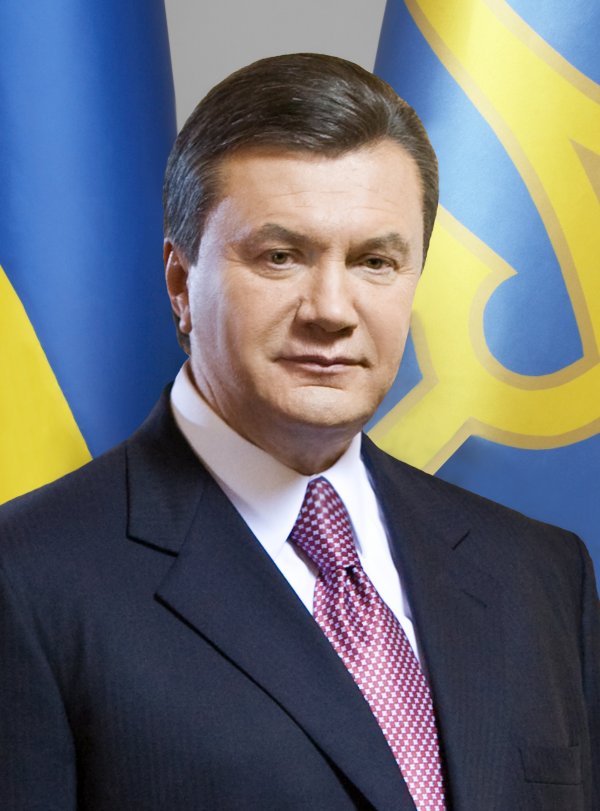
Ousted Ukrainian President Viktor Yanukovych
However, because the Ukraine “regime change” in 2014 was partly orchestrated by U.S. and E.U. officials around the propaganda theme that elected President Yanukovych was corrupt – he had that sauna, after all – the continued corruption in the post-coup regime has been a rarely acknowledged, inconvenient truth. Indeed, some business people operating in Ukraine have complained that the corruption has grown worse since Yanukovych was overthrown.
Yet, only occasionally has that reality been allowed to peek through in the mainstream U.S. media, which prefers to deny that any “coup” occurred, to blame Russia for all of Ukraine’s problems, and to praise the post-coup “reforms” which targeted pensions, heating subsidies and other social programs for average citizens.
One of the rare deviations from the happy talk appeared in The Wall Street Journal on Jan. 1, 2016, observing that “most Ukrainians say the revolution’s promise to replace rule by thieves with the rule of law has fallen short and the government acknowledges that there is still much to be done.”
Actually, the numbers suggested something even worse. More and more Ukrainians rated corruption as a major problem facing the nation, including a majority of 53 percent in September 2015, up from 28 percent in September 2014, according to polls by International Foundation for Electoral Systems.
So, as the hard lives of most Ukrainians got harder, the elites continued to skim off whatever cream was left, including access to billions of dollars in the West’s foreign assistance that has kept the economy afloat.
There was, for instance, the case of Finance Minister Natalie Jaresko, who was regarded by many pundits as the face of Ukraine’s reform before departing last April after losing out in a power struggle.
Yet, Jaresko was hardly a paragon of reform. Prior to getting instant Ukrainian citizenship and becoming Finance Minister in December 2014, she was a former U.S. diplomat who had been entrusted to run a $150 million U.S.-taxpayer-funded program to help jump-start an investment economy in Ukraine and Moldova.
Jaresko’s compensation was capped at $150,000 a year, a salary that many Americans – let alone Ukrainians – would envy, but it was not enough for her. So, she engaged in a variety of maneuvers to evade the cap and enrich herself by claiming millions of dollars in bonuses and fees.
Ultimately, Jaresko was collecting more than $2 million a year after she shifted management of the Western NIS Enterprise Fund (WNISEF) to her own private company, Horizon Capital, and arranged to get lucrative bonuses when selling off investments, even as the overall WNISEF fund was losing money, according to official records.
For instance, Jaresko collected $1.77 million in bonuses in 2013, according to a WNISEF filing with the Internal Revenue Service. In her financial disclosure forms with the Ukrainian government, she reported earning $2.66 million in 2013 and $2.05 million in 2014, thus amassing a sizeable personal fortune while investing U.S. taxpayers’ money supposedly to benefit the Ukrainian people.
It didn’t matter that WNISEF continued to hemorrhage money, shrinking from its original $150 million to $89.8 million in the 2013 tax year, according to the IRS filing. WNISEF reported that the bonuses to Jaresko and other corporate officers were based on “successful” exits from some investments even if the overall fund was losing money.
Though Jaresko’s enrichment schemes were documented by IRS and other official filings, the mainstream U.S. media turned a blind eye to this history, all the better to pretend that Ukraine’s “reform” process was in good hands. [See Consortiumnews.com’s “How Ukraine’s Finance Minister Got Rich.”]
Biden’s Appeal
Worried about the continued corruption, Vice President Joe Biden, who took a personal interest in Ukraine, lectured Ukraine’s parliament on the need to end cronyism.
But Biden had his own Ukraine cronyism problem because three months after the U.S.-backed overthrow of the Yanukovych government Ukraine’s largest private gas firm, Burisma Holdings, appointed his son, Hunter Biden, to its board of directors.
Burisma a shadowy Cyprus-based company also lined up well-connected lobbyists, some with ties to Secretary of State John Kerry, including Kerry’s former Senate chief of staff David Leiter, according to lobbying disclosures.
As Time magazine reported, “Leiter’s involvement in the firm rounds out a power-packed team of politically-connected Americans that also includes a second new board member, Devon Archer, a Democratic bundler and former adviser to John Kerry’s 2004 presidential campaign. Both Archer and Hunter Biden have worked as business partners with Kerry’s son-in-law, Christopher Heinz, the founding partner of Rosemont Capital, a private-equity company.”
According to investigative journalism inside Ukraine, the ownership of Burisma has been traced to Privat Bank, controlled by the thuggish billionaire oligarch Ihor Kolomoysky, who was appointed by the U.S.-backed “reform” regime to be governor of Dnipropetrovsk Oblast, a south-central province of Ukraine (though Kolomoisky was eventually ousted from that post in a power struggle over control of UkrTransNafta, Ukraine’s state-owned oil pipeline operator).
In a speech to Ukraine’s parliament in December 2015, Biden hailed the sacrifice of the 100 or so protesters who died during the Maidan putsch in February 2014, which ousted Yanukovych, referring to the dead by their laudatory name “The Heavenly Hundred.”
But Biden made no heavenly references to the estimated 10,000 people, mostly ethnic Russians, who have been slaughtered in the U.S.-encouraged “Anti-Terror Operation” waged by the coup regime against eastern Ukrainians who resisted Yanukovych’s violent ouster. Nor did Biden take note that some of the Heavenly Hundred were street fighters for neo-Nazi and other far-right nationalist organizations.
But after making his sugary references to The Heavenly Hundred, Biden delivered his bitter medicine, an appeal for the parliament to continue implementing International Monetary Fund “reforms,” including demands that old people work longer into their old age.
Biden said, “For Ukraine to continue to make progress and to keep the support of the international community you have to do more, as well. The big part of moving forward with your IMF program — it requires difficult reforms. And they are difficult.
“Let me say parenthetically here, all the experts from our State Department and all the think tanks, and they come and tell you, that you know what you should do is you should deal with pensions. You should deal with — as if it’s easy to do. Hell, we’re having trouble in America dealing with it. We’re having trouble. To vote to raise the pension age is to write your political obituary in many places.
“Don’t misunderstand that those of us who serve in other democratic institutions don’t understand how hard the conditions are, how difficult it is to cast some of the votes to meet the obligations committed to under the IMF. It requires sacrifices that might not be politically expedient or popular. But they’re critical to putting Ukraine on the path to a future that is economically secure. And I urge you to stay the course as hard as it is. Ukraine needs a budget that’s consistent with your IMF commitments.”
However, as tough as it might have been for Ukraine’s parliament to slash pensions, reduce heating subsidies and force the elderly to work longer, that political sacrifice did not appear to extend to the officials making financial sacrifices themselves.
Biden pledges Ukraine additional $335mn in military assistance
RT | April 1, 2016
The US has promised Kiev an additional $335 million in security aid to help Ukraine boost its military strength. Washington also made it clear to the Ukrainian president that to unlock the next tranche of IMF money, Kiev should push ahead with political reforms.
US Vice President Joe Biden held a luncheon with Ukrainian President Petro Poroshenko, who is currently visiting Washington as part of a nuclear summit comprising more than 50 world leaders. Poroshenko seized the rare opportunity to touch base with Obama administration officials.
According to an official statement on Poroshenko’s website, Biden has indicated Washington’s readiness to provide Kiev with additional $335 million in security assistance, which would be used to reform Ukraine’s Armed Forces, National Guard and border control.
Last year, the House Armed Forces Committee suggested providing some $300 million aid on the Ukrainian government and offered to “provide appropriate security assistance and intelligence support, including training, equipment, and logistics support, supplies and services, to military and other security forces.”
At the same time, Kiev also heavily relies on a financial assistance from the International Monetary Fund (IMF). Having received $6.7 billion from the fund’s $17.5 billion bailout package in 2015, the third tranche has now been stalled.
Plagued by corruption and deep political crisis, Kiev has been failing to fulfill reforms to unlock the next tranche of the loans worth $1.7 billion. To secure its lenders’ confidence, Ukraine must implement reforms and made scant progress in stamping out corruption.
Meeting with Poroshenko Thursday, Biden reminded that Kiev would not receive international economic assistance unless it forms a new government, “oriented on reforms and cooperation with the IMF,” Poroshenko’s office said.
For his part, Poroshenko responded that setting up “an effective anti-corruption system” was his government’s priority.
Ukraine’s corruption was one of the main topics of Biden’s trip to Kiev in December 2015.
“Corruption siphons off resources. We know this. You know this,” he told Ukrainian MPs, saying that “corruption eats Ukraine like cancer.” At the time, he assured Kiev of the Washington’s support and announced allocation of additional $190 million from the US budget to help conduct structural reforms in Ukraine and fight corruption in the first place.
While in Washington, Poroshenko also tried to lure more investment to his country’s economy while meeting with US Secretary of Commerce Penny Pritzker.
Read more:
Obama signs NDAA, approving $800 million aid to ‘moderate’ Syrians, Kiev
‘Unacceptable’: Lavrov blasts Biden idea on splitting Iraq into parts
RT | August 24, 2015
The idea of partition for Iraq would never be agreed by Moscow, Russian FM Sergey Lavrov said, stressing that this kind of ‘state structure manipulation’ is obsolete and Iraqis should define the future of their country themselves.
“We would never adopt a position voiced without any constraint by US Vice President Joe Biden, who said directly that Iraq should be split into Shia and Sunni parts and that the Kurds should be given what they want,” Lavrov told the participants of the youth forum ‘Territory of meanings’ near Moscow.
Lavrov labeled Biden’s position as “highly irresponsible and what’s more important – unacceptable,” because someone from overseas is lecturing Iraqi people on what to do with their country.
“We won’t commit to such things, telling Sunnis to get out today and urging Shia to move on next time. This is ‘social engineering,’ state structure manipulation from far outside,” Lavrov said, stressing that the destructiveness of such a plan is obvious.
“We believe that Iraqis – Shia, Sunnis and Kurds – should decide for themselves how to live together,” said the head of the Russian Foreign Ministry.
Lavrov’s remarks come following reports that Vice President Joe Biden is “seriously deciding whether to jump into the Democratic presidential race.”
The idea of decentralizing Iraq was voiced by Biden as early as 2006, in his ‘Unity Through Autonomy in Iraq’ article for the New York Times.
In this article, Biden proposed the idea of Iraq’s federalization and autonomous regions in Iraq for Sunnis, Shia and Kurds.
In April 2015, the Office of the Vice President published Biden’s article ‘Remarks by Vice President Joe Biden on Iraq’ on the White House’s official website.
“We want what Iraqis want: a united, federal, and democratic Iraq that is defined by its own constitution where power is shared among all Iraqi communities, where a sovereign government exercises command and control over the forces in the field. And that’s overwhelmingly what the Iraqis want,” Biden wrote.
The US together with an international coalition waged war in Iraq in 2003, under the pretext of eliminating weapons of mass destruction developed by Saddam Hussein’s regime. After the regime was brought down, WMD were never found and the former ruler was hanged by the new Iraqi authorities on December 30, 2006.
The Iraqi war lasted until 2011 and claimed the lives of nearly 1.5 million Iraqis and at least 6,000 coalition soldiers. Many more were wounded on each side.
The civil war in Iraq that started immediately after the withdrawal of the occupation forces is still going on. Many thousands have perished in terror acts and skirmishes.
Today the situation in Iraq is deeply aggravated by the advancement of Islamic State (IS, formerly ISIS/ISIL). The militant group is steadily capturing Iraqi territory. A significant part of Islamic State’s military backbone reportedly consists of former high-ranking Iraqi soldiers, who lost their careers and jobs following the fall of the former regime.
Ukraine’s Oligarchs Turn on Each Other
By Robert Parry | Consortium News | March 24, 2015
In the never-never land of how the mainstream U.S. press covers the Ukraine crisis, the appointment last year of thuggish oligarch Igor Kolomoisky to govern one of the country’s eastern provinces was pitched as a democratic “reform” because he was supposedly too rich to bribe, without noting that his wealth had come from plundering the country’s economy.
In other words, the new U.S.-backed “democratic” regime, after overthrowing democratically elected President Viktor Yanukovych because he was “corrupt,” was rewarding one of Ukraine’s top thieves by letting him lord over his own province, Dnipropetrovsk Oblast, with the help of his personal army.
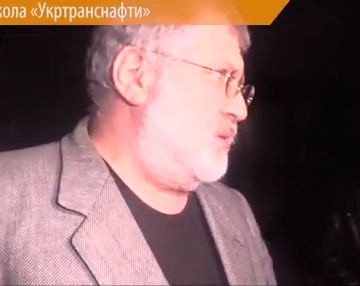
Ukrainian oligarch Igor Kolomoisky confronting journalists after he led an armed team in a raid at the government-owned energy company in Kiev on March 19, 2015.
(Screen shot from YouTube)
Last year, Kolomoisky’s brutal militias, which include neo-Nazi brigades, were praised for their fierce fighting against ethnic Russians from the east who were resisting the removal of their president. But now Kolomoisky, whose financial empire is crumbling as Ukraine’s economy founders, has turned his hired guns against the Ukrainian government led by another oligarch, President Petro Poroshenko.
On Thursday night, Kolomoisky and his armed men went to Kiev after the government tried to wrest control of the state-owned energy company UkrTransNafta from one of his associates. Kolomoisky and his men raided the company offices to seize and apparently destroy records. As he left the building, he cursed out journalists who had arrived to ask what was going on. He ranted about “Russian saboteurs.”
It was a revealing display of how the corrupt Ukrainian political-economic system works and the nature of the “reformers” whom the U.S. State Department has pushed into positions of power. According to BusinessInsider, the Kiev government tried to smooth Kolomoisky’s ruffled feathers by announcing “that the new company chairman [at UkrTransNafta] would not be carrying out any investigations of its finances.”
Yet, it remained unclear whether Kolomoisky would be satisfied with what amounts to an offer to let any past thievery go unpunished. But if this promised amnesty wasn’t enough, Kolomoisky appeared ready to use his private army to discourage any accountability.
On Monday, Valentyn Nalyvaychenko, chief of the State Security Service, accused Dnipropetrovsk officials of financing armed gangs and threatening investigators, Bloomberg News reported, while noting that Ukraine has sunk to 142nd place out of 175 countries in Transparency International’s Corruptions Perception Index, the worst in Europe.
The see-no-evil approach to how the current Ukrainian authorities do business relates as well to Ukraine’s new Finance Minister Natalie Jaresko, who appears to have enriched herself at the expense of a $150 million U.S.-taxpayer-financed investment fund for Ukraine.
Jaresko, a former U.S. diplomat who received overnight Ukrainian citizenship in December to become Finance Minister, had been in charge of the Western NIS Enterprise Fund (WNISEF), which became the center of insider-dealing and conflicts of interest, although the U.S. Agency for International Development showed little desire to examine the ethical problems – even after Jaresko’s ex-husband tried to blow the whistle. [See Consortiumnews.com’s “Ukraine Finance Minister’s American ‘Values.’”]
Passing Out the Billions
Jaresko will be in charge of dispensing the $17.5 billion that the International Monetary Fund is allocating to Ukraine, along with billions of dollar more expected from U.S. and European governments.
Regarding Kolomoisky’s claim about “Russian saboteurs,” the government said that was not the case, explaining that the clash resulted from the parliament’s vote last week to reduce Kolomoisky’s authority to run the company from his position as a minority owner. As part of the shakeup, Kolomoisky’s protégé Oleksandr Lazorko was fired as chairman, but he refused to leave and barricaded himself in his office, setting the stage for Kolomoisky’s arrival with armed men.
On Tuesday, the New York Times reported on the dispute but also flashed back to its earlier propagandistic praise of the 52-year-old oligarch, recalling that “Mr. Kolomoisky was one of several oligarchs, considered too rich to bribe, who were appointed to leadership positions in a bid to stabilize Ukraine.”
Kolomoisky also is believed to have purchased influence inside the U.S. government through his behind-the-scenes manipulation of Ukraine’s largest private gas firm, Burisma Holdings. Last year, the shadowy Cyprus-based company appointed Vice President Joe Biden’s son, Hunter Biden, to its board of directors. Burisma also lined up well-connected lobbyists, some with ties to Secretary of State John Kerry, including Kerry’s former Senate chief of staff David Leiter, according to lobbying disclosures.
As Time magazine reported, “Leiter’s involvement in the firm rounds out a power-packed team of politically-connected Americans that also includes a second new board member, Devon Archer, a Democratic bundler and former adviser to John Kerry’s 2004 presidential campaign. Both Archer and Hunter Biden have worked as business partners with Kerry’s son-in-law, Christopher Heinz, the founding partner of Rosemont Capital, a private-equity company.”
According to investigative journalism in Ukraine, the ownership of Burisma has been traced to Privat Bank, which is controlled by Kolomoisky.
So, it appears that Ukraine’s oligarchs who continue to wield enormous power inside the corrupt country are now circling each other over what’s left of the economic spoils and positioning themselves for a share of the international bailouts to come.
As for “democratic reform,” only in the upside-down world of the State Department’s Orwellian “information war” against Russia over Ukraine would imposing a corrupt and brutal oligarch like Kolomoisky as the unelected governor of a defenseless population be considered a positive.
~
Investigative reporter Robert Parry broke many of the Iran-Contra stories for The Associated Press and Newsweek in the 1980s. You can buy his latest book, America’s Stolen Narrative, either in print here or as an e-book (from Amazon and barnesandnoble.com).
War in Ukraine: Who Wants War? And Who Doesn’t?
By William Boardman | Reader Supported News | February 10, 2015
“Russian aggression” – the bad faith mantra of dishonest brokers
Just as NATO allies Germany and France were undertaking a peace initiative with Russia and Ukraine, U.S. Secretary of State John Kerry turned up in Kiev at the same time, seeking to poison the talks before they started by spouting yet again the ritual U.S. accusation of “Russian aggression.” The incantation is meaningless without context. Its purpose is mesmerize a false consciousness. “Russian aggression” may or may not exist in the events of the past year, just like “Russian self-defense.” Reporting on the ground has been too unreliable to support any firm analysis, never mind the provocative “Russian aggression” the U.S. brandishes as a virtual call for war.
Western aggression, political and diplomatic more than military, is a cold reality and has been for two decades. The West, and especially the U.S., has yet to accept responsibility for 20 years of anti-Russian aggression, much less pull back from such perennial hostility. The Obama administration (parts of it at least, given the incoherence of the “administration”) has acted as if its pulling off an only-slightly-violent coup in Kiev in 2014 was a grand triumph. Worse, having grabbed a government on Russia’s borders, the Obama hawks carry on as if the only reasonable choice for Russia is to accept the success of this Western aggression.
Rarely is this context acknowledged in discussions of the natural fissures in Ukraine that feed sectarian civil war. Rather the issues are over-simplified – falsified – by the U.S. Secretary of State, consistent with a hidden agenda of provoking a military confrontation (at the very least) with Russia and eastern Ukrainians. That’s the subtext that makes sense of Kerry’s otherwise seeming blithering in Kiev on February 5:
We talked about the largest threat that Ukraine faces today, and that is Russia’s continued aggression in the east. There’s no other way to call it. We’re not seeking a conflict with Russia. No one is. … The president is reviewing all of his options. Among those options, obviously, is the possibility of providing defensive — defensive — assistance to Ukraine. And those discussions are going on. The president will make his decision, I am confident, soon.
Note the lie: “We’re not seeking a conflict with Russia. No one is.”
When Kerry said that, he was lying, he almost surely knew he was lying, and the question is whether his lie represents only the rogue war-faction in the U.S., or is part of a dicey good-cop/bad-cop routine out of Washington. The only way it’s true that “we’re not seeking a conflict” is that the U.S. is already engaged in conflict with Russia, decades-long and currently escalating. The lie of not seeking a conflict already engaged is used to mask the lie of “defensive weapons,” a military-diplomatic oxymoron of long standing. So the most obvious answer to the question of who wants war in Ukraine is elements of the U.S. government whose immediate challenge is to persuade its Kiev client that it’s a good idea to risk turning its country into more of a battlefield than it already is.
Kiev’s desire is more obscure, and likely divided. Having taken power in something of a slow-motion coup d’etat last spring, the government faced a restive-to-defiant population in eastern Ukraine. Rather than seeking to negotiate legitimate grievances with the eastern region, the Kiev government chose instead to escalate quickly, from political hostilities into civil war. When that didn’t work out militarily, when Kiev started losing what it started, it agreed on September 5 to terms of a ceasefire that it then failed to honor with consistency (as did the separatists). Now the Ukrainian president has been to Moscow for early peace talks, but only after he staked out a preposterous public position seeking to win with a losing negotiating hand what Kiev has already lost on the ground.
Ukrainian President Petro Poroshenko met with German Chancellor Angela Merkel and French President François Hollande in Kiev on February 5 (when Kerry was in town but not part of the meeting). In his public statement, Poroshenko referred self-servingly to September’s Minsk Agreement signed by Ukraine, Russia, and the break-away Ukrainian states that call themselves the People’s Republic of Donetsk and the People’s Republic of Luhansk. The only other Minsk signatory was the Organization for Security and Co-operation in Europe (OSCE), giving the agreement the tacit endorsement of Europe without any individual European nation signing on. The United States was not directly involved in the Minsk Agreement, but a week later expressed its support for finding a peaceful solution by sending American troops to take part in NATO military exercises in Ukraine’s western provinces.
Understood in its actual context, Poroshenko’s February 5 statement is ludicrously disingenuous:
The Minsk plan is very simple: immediate ceasefire; releasing all the hostages; closing the border, or renew the internationally recognized border on Ukrainian (side); withdrawal all of the foreign troops from the Ukrainian territory; launching very important process of the political regulation by the election on the municipal election, local election, under Ukrainian legislation in the territory of Donetsk and Luhansk.
All signatories must take Minsk accord seriously to avoid war
It’s hard to find anyone who doesn’t urge compliance with the Minsk Agreement, even if that means different things to different people. Neither side in Ukraine has come close to significant compliance for any length of time. Poroshenko calls for the ceasefire, but omits the international monitoring called for in the agreement. He calls for closing the border with Russia, which is NOT part of the agreement. When he calls for the withdrawal of foreign troops, he omits mention of NATO. When he refers to elections, he omits Kiev’s failure to pass the legislation it promised, and he omits the elections that have already been held in the Republics of Donetsk and Luhansk [see “Election Note” at the end of this article]. Poroshenko also omits amnesty for separatists, improving humanitarian conditions in the region, and the recovery program, all of which are part of the Minsk Agreement.
Nevertheless, Poroshenko went to Moscow with his German and French colleagues to take part in peace talks with Russian President Vladimir Putin there on February 6, at Russia’s initiative. When similar talks had been proposed for mid-January, Chancellor Merkel had been instrumental in making sure they didn’t happen. This time her public posture going in was appropriately statesmanlike:
It is a question of peace and preserving the European peace order. It is a question of free self-determination of the people as part of this European peace order. And we are doing what we believe to be our duty at this time, namely trying to do everything in our power to end the bloodshed.
Merkel’s reference to “free self-determination” is diplomatically murky and allows for a wide range of possible solutions for the self-proclaimed Republics in eastern Ukraine, and even hints at a resolution for Crimea. Her focus on peace serves all the parties’ best interest, seeking to avoid a war that would, inevitably, cause much more suffering for Europe than the United States.
U.S. policy seems designed to turn Ukraine into the “European Iraq”
Presumably none of the parties meeting in Moscow on February 6 wants to see Ukraine become “another Iraq,” even if Ukraine is already part way there. Where Iraq had been a coherent, modern state with cultural cohesion despite its dictatorship, Ukraine has a long history of quasi-chaos, internal squabbling, and corruption. Where it took an American invasion and occupation to reduce Iraq to a near-failed state, the U.S. sees an opportunity now to manipulate proxies into destroying Ukraine (and even Russia) for the next generation or so.
Germany, France, Russia, and especially Ukraine must be acutely tuned to the potential horrors they face. After meeting for four hours, the parties were generally low key and discreet in what they said about the substance discussed. This reality produced European coverage by the BBC and others characterized by cautious hopefulness. U.S. media more typically characterized uncertainty as failure, offering the talismans of magical thinking and instant gratification in place of accuracy or analysis.
Whatever they were, the four-way talks in Moscow were not a failure. All sides called them “constructive,” which is diplo-speak for: there’s still a chance for a settlement. The parties are continuing the negotiations with apparent openness to a range of solutions. Hollande called this process “one of the last chances” to settle eastern Ukraine peacefully. Poroshenko has expressed hope for an early agreement to an “unconditional ceasefire” and one step toward reducing tensions. An unconditional ceasefire is beyond what was agreed to at Minsk in September, but creates no barrier to implementing the agreement later. Moscow’s tactful obliqueness leaving room for the parties to maneuver was in sharp contrast to the bloviating cries for war coming mostly from U.S. Senators and the vice-president at the simultaneous regional security gathering in Munich.
The lesson of Munich for 2015: “War in our time”?
Meeting for the 51st year in Munich during February 6-8, the Munich Security Conference (MSC) provided a setting for mostly U.S. hawks to try to undermine the chances for peace in Ukraine. Founded in 1963, the Munich conference identifies itself as
… a key annual gathering for the international ‘strategic community’… an independent forum dedicated to promoting peaceful conflict resolution and international cooperation and dialogue in dealing with today’s and future security challenges.
What the Munich conference seems to be is something of a foreign policy free-for-all to which almost anyone from anywhere can come and pontificate regardless of whether they hold any actual decision-making authority. The American delegation, including a dozen war-minded congress members, seems not to have gotten the memo about “promoting peaceful conflict resolution,” like the British lapdog also barking loudly for war.
Like any good multinational circus, the Munich show offered a variety of clown acts and sideshows to distract from the U.S. rush to war. The Turks decided not to take part rather than share a panel with Israelis. Non-office-holder Arnold Schwarzeneggar stumped to action on climate change. Some European Union members ganged up on Greece (again), this time for opposing some sanctions on Russia, while support for Greece (and peace) came from Cyprus, Austria, Hungary, Italy, Luxembourg, Slovakia, Slovenia, and the Czech Republic – most of which are closer to the likely war zone than those brave distant states ready to start a fight. In the Munich streets, some 2,000 peaceful protestors demonstrated against NATO, otherwise known as an American sphere of influence (if not a Trojan horse).
Joe Biden toes the official line, smoothly riffing on official lies
Other members of the American delegation included Kiev coup supporters Vice President Joe Biden, Secretary of State Kerry, and assistant secretary of state Victoria Nuland, none of whom showed any public willingness to look at the realities of the present or the past 20 years. Like a good apparatchik of the American war party, Biden’s address to the conference included a subtle version of the requisite “Russian aggression” trope, along with 45 minutes of neo-Cold-War boilerplate propaganda. In one of the more hilarious highlights of this taken-very-seriously by the media speech, Biden quoted himself from the same conference in 2009:
Six years ago at this podium, I said and I quote, ‘To paraphrase President Obama, it is time to press the reset button and reinvest in the many areas where we can and should be working together with Russia.’
That’s what everybody remembers. But they don’t often repeat what I then said.
I said, ‘We will also not recognize any nation having a sphere of influence. We will remain — it will remain our view that sovereign states have the right to make their decisions and choose their own alliances.’
I meant it when I said it then, and America means it as I repeat it now.
The “reset button” rhetoric did not include changing U.S. support for the relentless push for NATO to include countries on Russia’s border, a form of blatant – and mindless – political aggression. NATO, the European Union, Europe itself are all U.S. spheres of influence, no matter what the Biden-shills of the world may say. Even as he lied sanctimoniously about spheres of influence in 2009, his country was engaging in its half-century of punishing Cuba for not being a loyal and subservient of the American hemisphere of influence.
And when Biden claimed, “it will remain our view that sovereign states have the right to make their decisions and choose their own alliances,” an honest audience would have laughed as derisively at that as the same audience laughed at perceived absurdity from Russian Foreign Minister Sergey Lavrov during his address to the Munich conference.
Having destabilized Ukraine, the U.S. blames Russia for piling on
Remember how the present Ukraine crisis came about? In the fall of 2013, Ukraine was weighing a political, economic choice between a European proposal requiring exclusivity (and implying future NATO membership) and a somewhat more open Russian proposal (with no military alliance component). In Ukraine, as politically divided as ever, the western population yearned for Europe, the eastern population was content with Russia. When the legitimate, democratically-elected Ukraine government rejected the European offer, protesters mostly from western Ukraine launched the months-long Euro-Maidan demonstrations in Kiev (presumably with the connivance of the U.S. and others). In time, including on the scene visits from Biden (whose son reportedly has significant economic interests in Ukraine) and Nuland (with her cookies for the mob), the Maidan evolved into the coup d’etat that produced the current Ukraine government.
So when Biden says “that sovereign states have the right to make their decisions and choose their own alliances,” he lying. He’s lying about Ukraine and he’s lying about U.S. behavior in the present and the recent past (and the not so recent past as well, to be sure).
Somewhat measured language from the White House
On February 5, as the flurry of events in Kiev, Moscow, and Munich was beginning, the White House expressed some awareness that military escalation might only make matters worse in Ukraine. White House Press Secretary Josh Earnest said, in part:
… the United States has been saying for some time that it’s a diplomatic negotiation that is required to bring this conflict in Ukraine to an end, that this is not something that’s going to be solved or resolved militarily, but rather through diplomatic negotiations. So we certainly are encouraging and supportive of ongoing efforts to try to find a peaceful diplomatic resolution to the conflict in Ukraine…. [But] we need serious engagement from the Russians and the separatists, the likes of which we’ve not seen before….
… the President is going to make a decision [on weapons to Ukraine] that he believes is in the broader national security interests of the United States…. But certainly the President takes very seriously the views of our allies and is going to consult very closely as we evaluate any needed strategic changes ahead…. [But] this conflict was not going to rise to the level of a military confrontation between the United States and Russia. The President has been very clear about that. So there are things that we are going to continue to avoid.
But one of the concerns that we have about providing military assistance is it does contain the possibility of actually expanding bloodshed, and that’s actually what we’re trying to avoid. The whole reason that we are trying to encourage both sides to sit down and hammer out a diplomatic agreement is to end the bloodshed and end the escalating conflict in that country.
The press secretary made no effort to offer a balanced analysis of the Minsk Agreement, blaming the separatist Republics and Russia for virtually all the problems. He did allow that Ukraine had not lived up to all its commitments under the agreement.
Who actually speaks for the United States?
The same day the White House offered this view, NATO ministers in Brussels adopted a plan to ring Russia’s European perimeter with a network of command centers and rapid reaction forces. According to NATO Secretary General Jens Stoltenberg, this plan is NATO’s biggest reinforcement of collective defense since the end of the Cold War. He added that the first six multinational command and control units would be established immediately in Estonia, Latvia, Lithuania, Poland, Romania, and Bulgaria. Estonia and Latvia border on Russia. Poland and Romania border on Ukraine.
The Secretary of State is carrying on as if he believes that this might be his legacy moment. He’s acting as if he’s thinking: Hillary Clinton led the charge on Libya and made magnificent regional chaos there, so why shouldn’t I be able to top that, and make a mess of Ukraine, and possibly create global chaos?
But what if “Russian aggression” is real? As matters stand now, U.S. policy aggression for two decades has served as a self-fulfilling prophecy that creates “aggression” in response. What would happen if the U.S. especially, and the West in general, sent a clear signal that western aggression was over? How long would it take for Russia (or China) to trust that as reality? And would that persuade the Russians to relax what we now call their aggression? (We don’t hear much about “Chinese aggression” these days, but chances are that Kerry or Biden or someone already has that speech written.)
The course the U.S. has been on since 1990 has no good ending, unless one assumes that the Russians (or the Chinese) will fold under pressure. That seems unlikely. Nor does the result seem worth the risk. But also unlikely is a U.S. course change as long as we remain enamored of our own exceptional face in the magic mirror that keeps telling us we’re indispensable and can do no wrong. In Ukraine, today, probably the most dispensable nation is the U.S.
As this is written February 9, President Obama and Chancellor Merkel have met at the White House and offered vague public assurances that diplomatic efforts will continue to try to settle Ukraine issues peacefully. It’s not reassuring that Obama’s companions in his meeting with Merkel were committed aggressors: Biden, Kerry, and national security advisor Susan Rice. We don’t know if this President is strong enough to be in control of his administration as it speaks with conflicting voices. What we know pretty surely is that this is a moment when President Obama could actually earn his Nobel Peace Prize by calling off “American aggression.”
Or he could just follow the lead of the mindless, bi-partisan weapons-gaggle in Congress and elsewhere. The president could do the bidding of all those shrill demagogues who cry for escalating bloodshed, those grandstanding testosterone puffs who will never accept responsibility for the death and dismemberment they advocate. In that event, the President would once again ignore his own earlier wisdom when he once said: “Don’t do stupid stuff.”
Election Note [see above]: The Donetsk and Luhansk elections held November 2 were supported by Russia and rejected as illegitimate by Ukraine, as well as spokespersons for the European Union, Germany and others in the west. The election results mostly confirmed the local authority already in place, including the chief executive and parliamentary majorities in both Republics, which were popularly approved in referendums in May. An OSCE spokesperson called the November elections a violation of the spirit and letter of the Minsk Agreement, which seemed to contemplate such elections taking place on December 7, under Ukrainian law. Ukraine had excluded Donetsk and Luhansk from its presidential election in May and its parliamentary election in October. The last apparently legitimate presidential election held in Ukraine chose Viktor Yanukovych president in February 2010. Yanukovych, whose support reached 90% of the vote in some districts of Donetsk and Luhansk, was forced from office in February 2014 by the coup that emerged from the Maidan protest. Ukraine has almost 34 million voters in all, of which more than 5 million are (or were) in Luhansk and Donetsk. Another 1.8 million voters in Crimea have not taken part in the 2014 elections outside Crimea.
Love Me, I’m a Liberal!
By Kevin Carson | Center for a Stateless Society | November 18, 2013
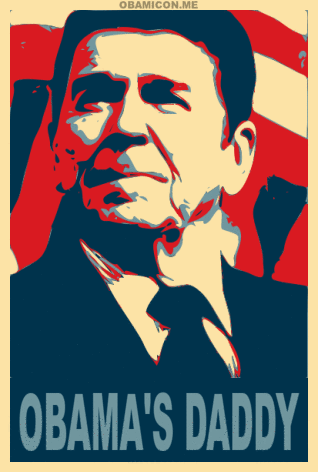 Nothing like starting out your day with a laugh — and today I have Matthew Lynch (“12 Reasons Why Obama is One of the Greatest Presidents Ever,” Huffington Post, November 15) to thank for it.
About half of Lynch’s points boil down to, “Obama is for x, because he makes speeches talking about x all the time.” He starts out with the best one of all:
“Unlike the many presidents who preceded him, he cares about what is best for the greater good. He truly does represent The People. His actions have always been motivated by a sincere desire to do what is best for the majority, even if it meant losing ground with the wealthy, influential or powerful minority.”
Um, yeah. That’s why he adopted a Republican “universal healthcare” proposal to require everybody to buy private health insurance — and give taxpayer money to the ones who can’t afford it. That should be popular with “The People,” all right — at least those who own stock in insurance companies. That’s why he quietly promised the drug companies he wouldn’t use Medicare’s bargaining power to negotiate lower drug prices. That’s why Joe Biden conducts copyright enforcement policy out of Disney’s corporate headquarters and the administration backs draconian copyright legislation dictated in secret by proprietary content industries.
Among my favorite other howlers:
“2. He is for civil rights. He has consistently spoken on behalf of the disenfranchised, the underdog and the most controversial members of society …”
Yeah, I know he said a lot of stuff about gay marriage and ending Don’t Ask Don’t Tell. But he refused to actually stop prosecuting gays in the military before the law was repealed, or to put enforcement on the back burner, even when he was fully capable of using his executive authority to do so.
And notice Lynch doesn’t say “civil liberties.” Obama said a lot of stuff about them, too — back in 2008. Since then he’s expanded unconstitutional wiretapping, run interference for the telecoms that help out with it and given amnesty to people who systematically ordered and engaged in torture. Holding war criminals accountable would be “divisive,” you see. He owes the late Nuremberg defendants an apology — they were only following orders, too.
4. Healthcare. I think we already covered that.
“5. He is for the middle class. Here are just a few of the comments made by President Barack Obama in recent months …”
A lot of presidents were for a lot of stuff, if you stick to reading their collected speeches. In practice, Obama’s farm policies are written by ADM and Monsanto, and the office of Secretary of the Treasury is permanently reserved for Goldman-Sachs alumni, just as under his predecessors.
Obama’s actual economic policy is classic Hamiltonianism: Responding to technologies of abundance that reduce the need for capital and labor by using Rube Goldberg mechanisms to artificially prop up the demand for those inputs — even if it means giving people tax breaks for throwing stuff away and replacing it. The stomach-churning irony is that most of the same greenwashed Whole Foods liberals who applaud this also condemn planned obsolescence and the Military-Industrial Complex, which were designed to accomplish exactly the same result. The proper approach to technologies of abundance is to make sure their benefits are fully internalized by workers and consumers, by ceasing to enforce monopolies, artificial scarcities and rents of all kind. If it takes only fifteen hours of labor a week to produce our standard of living, it should only take fifteen hours of labor to enjoy that standard of living. But that would annoy Obama’s Big Business friends.
My favorite, though, is this:
“10. He is for peace. Let us never forget that Barack Obama was awarded the Nobel Peace Prize in 2009 …”
Yeah, he uses that Peace Prize as a paperweight to hold down his drone kill list. Obama didn’t end the war in Afghanistan — he transformed it into a remote-control video game war in which wedding parties can be massacred at the push of a button. And of course, Lynch can’t resist throwing in a mention of the Zero Dark Thirty crap about killing Bin Laden.
I can’t help picturing someone fifty years ago breathlessly gushing “I love JFK because he’s the Peace President” — while ignoring the Bay of Pigs, the Diem assassination and Green Berets in Vietnam.
Lynch’s points, edited for substance, are basically on the same level as a guy in a bar decked out in Full Cleveland thirty years ago saying “I feel comfortable with Reagan.” Obama’s the Reagan of moderate center-left NPR liberals who shop at Whole Foods. If you’re satisfied with the image of peace and social justice, while government in substance continues to serve the same powerful interests, keep right on voting — that’s what it’ll get you.
Related articles
- Obama, Starving Africans and the Israel Lobby
- 12 Reasons Why Obama Is Not The Greatest President Ever – A Rebuttal
Related videos
Featured Video
Chinese jet fuel and the myth of energy independence
or go to
Aletho News Archives – Video-Images
Book Review
Former Insiders Criticize Iran Policy as U.S. Hegemony
By GARETH PORTER | CounterPunch | February 27, 2013
“Going to Tehran” arguably represents the most important work on the subject of U.S.-Iran relations to be published thus far.
Flynt Leverett and Hillary Mann Leverett tackle not only U.S. policy toward Iran but the broader context of Middle East policy with a systematic analytical perspective informed by personal experience, as well as very extensive documentation.
More importantly, however, their exposé required a degree of courage that may be unparalleled in the writing of former U.S. national security officials about issues on which they worked. They have chosen not just to criticise U.S. policy toward Iran but to analyse that policy as a problem of U.S. hegemony. … continue
Blog Roll
 Aletho News
- What is fueling unrest across the EU?
- Why no power can undermine Iran’s eternal dominance over the Strait of Hormuz
- Is The War Against Iran Over?
- Iran war will leave long-term ‘scar’ on Wall Street, investors warn
- How Iran decimated US power projection in West Asia: Military lessons of 40-day war
- Iran’s report details US-Israeli war crimes in targeting schools, hospitals, livelihoods
- NATO’s Slow Fracture: How Trump’s Iran War Exposed the Instrument of Hegemony
- Chinese jet fuel and the myth of energy independence
- Ukraine Sea Drone Fired From Libya Hit Russian Tanker in Mediterranean
- IRGC: Iranian forces launched no attacks during ceasefire hours
- If Americans Knew
- Military aid to Israel emerges as the latest political litmus test for Democrats
- The only Palestinian children’s rights organization closes following years-long Israeli campaign against it
- ‘I Can’t Forget the Smell’: Lebanese Reel After Israel Kills Over 300 in Single Day
- DNC Shoots Down Resolutions Calling Out AIPAC and Limiting Arms to Israel
- TCN: Is Israel Blackmailing President Trump?
- Israel killed at least 303 Lebanese yesterday – who were they? Daily Update
- Amnesty: Urgent – Protect Lebanese civilians from brutal escalation in Israeli attacks
- Is The War Against Iran Over?
- Inside the Israeli army’s propaganda wing
- Hundreds of Gaza Amputees Stranded in Legal Limbo
- No Tricks Zone
- New Study: No Linear Warming Or Glacier Retreat Along Northern Antarctic Peninsula Since 1980s
- An Inconvenient Tree: Uncovered In Alps… Europe Much Warmer Than Today 6000 Years Ago
- New Study Reports A 60% Slowdown In Greenland’s Ice Loss Rate In The Last Decade
- Low Intensity Tornado Wrecks Major Solar Farm, Creating A Potential Toxic Dump
- New Study Finds Warming Saves Lives…Cold Temperatures 12 Times More Deadly Than Excess Heat
- German Science Blog Accuses PIK Climate Institute Of Hallucinating Climate Tipping Points
- Devastating Assessment Of Comirnaty Vaccine By Former Senior Pfizer Europe Toxicologist
- New Study: CO2 Is ‘Effectively Negligible’ As An Explanatory Climate Change Factor Since 2000
- Former Pfizer Toxicologist Dr. Helmut Sterz Tells Bundestag Hearing Pfizer Vaccine Should Have Never Been Approved
- Energy Expert: Germany’s Nuclear Phaseout Was A “500 Billion Euro Mistake”
 Aletho News