Israel has found new golems to exploit on the Dark Continent
In October 2025, hundreds of Kenyans marched through Nairobi’s Central Business District carrying banners reading “Israel Belongs to God”. Bishop Paul Karanja declared to the crowd, “We are here to declare that Israel is not alone. We will continue to stand with them.” The demonstration commemorated the second anniversary of the October 7, 2023 Hamas attacks, but it represented something far more significant than a single day of solidarity. It revealed a geopolitical quirk that has left analysts scrambling for explanations.
According to a June 2025 Pew Research Center survey covering 24 countries, Kenya showed 50% favorable views toward Israel with 42% unfavorable. Nigeria registered 59% favorable and 32% unfavorable. These were the only two nations with majority positive sentiment toward Israel. In 20 of the 24 countries surveyed, majorities held negative views. Kenya and Nigeria, in addition to India, stand virtually alone in their enthusiasm for the Jewish state at precisely the moment when global opinion has turned sharply against it.
This pro-Israel shift among the populations in Kenya and Nigeria is not a sudden development born from the Gaza war. It represents years of cultivation, theological indoctrination, security partnerships, and strategic maneuvering that transformed two African nations into some of Israel’s most promising partners in the post-October 7 age.
The most fundamental explanation behind this rise in pro-Zionist sentiment lies in the explosive growth of evangelical and Pentecostal Christianity across both countries.
Nigeria houses one of the world’s largest evangelical populations, with Operation World estimating the country ranks either third or fourth globally in total evangelical numbers, trailing only the United States and potentially Brazil or China depending on methodology. Pew Research Center puts Nigeria’s total Christian population at 93 million as of 2020, a 25% increase from 2010, making it the sixth-largest Christian nation in the world and the largest on the African continent.
Pentecostalism has become deeply embedded in Nigerian Christianity, though its precise share remains debated. The U.S. State Department’s International Religious Freedom Report, citing the Christian Association of Nigeria, places Pentecostals at approximately 30% of the Christian population, with an additional 10% identifying as evangelical Christians in non-Pentecostal traditions and African-instituted charismatic churches accounting for another 5 to 10%. When Pentecostal and charismatic Christians across all denominations are counted together, researchers at the Center for the Study of Global Christianity at Gordon-Conwell Theological Seminary place the combined Pentecostal and charismatic share of Nigerian Christianity significantly higher, reflecting the deep penetration of charismatic practice even within mainline churches. That figure has exploded in recent decades, driven by aggressive evangelization, media expansion and the global reach of Nigerian-founded movements like the Redeemed Christian Church of God and Deeper Life Bible Church.
Kenya presents a different evangelical landscape but one equally conducive to pro-Israel theology. According to the 2019 national census, evangelicals comprise 20.4% of Kenya’s total population out of 47.6 million residents — roughly 9.6 million by the census’s strict denominational count. Broader estimates that apply a wider evangelical definition, including researcher Sebastian Fath’s figures cited by Lifeway Research, place Kenya’s evangelical population closer to 20 million. An estimated 30 to 35% of Kenya’s population identifies as Pentecostal, indicating significant overlap between evangelical and Pentecostal identities.
Together, Nigeria and Kenya account for approximately 78 million evangelicals under the broader definitional framework, representing over 42% of Africa’s estimated 185 million evangelical population. This concentration reflects broader patterns of African Christianity’s expansion and the global southward shift of Christian demographics.
The theological framework binding these believers to Israel rests on Christian Zionism, a dispensationalist interpretation that views the modern state of Israel as fulfillment of biblical prophecy. Genesis 12:3 serves as the foundational text. “I will bless those who bless you, and whoever curses you I will curse.”
The International Christian Embassy Jerusalem, a global evangelical organization, has actively cultivated ties with Nigerian churches, organizing pilgrimages and promoting pro-Israel narratives. Pastor Rex Ajenifuja of I Stand With Israel has mobilized grassroots campaigns emphasizing that “Nigeria loves Israel” and framing solidarity as a spiritual obligation. Prominent Nigerian pastors have explicitly connected pro-Israel theology to national prosperity. During visits to Israeli settlements in the Occupied Palestinian Territories, Adeboye explained, “The problems that we are seeing between the Jews and the rest of the world, is because they are the favorites of God. When you are special to God, then automatically the devil wouldn’t like you either.”
In Kenya, the theological stance intersects directly with political power. Current President William Ruto’s administration has deepened ties with evangelical leaders who have publicly endorsed Israel as part of their eschatological worldview. During prayer services, Ruto and First Lady Rachel Ruto — a devout evangelical known for her faith diplomacy program that enlists clergy in matters of state — have woven Israel into Kenya’s spiritual identity. Ruto himself prayed at Jerusalem’s Western Wall during a 2023 state visit, with the site’s rabbi noting it was the longest prayer by any world leader he had witnessed there. At a faith rally convened by Rachel Ruto, crowds waved Kenyan and Israeli flags together while praying for both nations. Influential evangelical figures have openly equated support for Israel with national blessing.
Bishop Dennis Nthumbi, Africa Director of the Israel Allies Foundation, has described Kenya’s bond with Israel as a “covenantal, long-standing relationship” that no politician can sever. Bishop Mark Kariuki, the presiding bishop of Deliverance Church Kenya and former chairman of the Evangelical Alliance of Kenya, has aligned himself with the broader conservative evangelical political theology that underpins pro-Israel sentiment across the continent. The Kenyan government provided active support for the October 2025 pro-Israel march. Speaking in a televised interview on Kenya’s Elevate TV ahead of the march, Africa-Israel Initiative president Bishop Joshua Mulinge confirmed that the government had granted permits and provided police escorts throughout the route. “The Kenyan government has been very supportive,” he said. “We thank God for our head of state and for the entire government.”
The Times of Israel reported that the October 2025 march aimed to call Kenyan Christians “out of the prayer closet and into the streets” to publicly express solidarity with Israel beyond private prayer. Speakers emphasized that “Christianity originated in Jerusalem and that the Church remains spiritually rooted in Israel.” A Norwegian representative of the Africa Israel Initiative stated, “I believe that anybody who blesses Israel, as the Bible says, is blessed. I think it should be in every Christian’s heart to support Israel.”
The political dimensions of evangelicalism in both countries reveal important patterns of religious influence on governance. In Nigeria, evangelical and Pentecostal movements have shaped political discourse around moral conservatism, prosperity theology, and spiritual warfare against corruption, even as the country’s Christian-Muslim demographic balance remains contested. Pew Research places Muslims at 56.1% and Christians at 43.4% as of 2020, though Afrobarometer surveys of adults have found Christians in the majority. Kenya’s evangelical community has achieved more direct political influence, particularly through President Ruto’s administration, which explicitly appeals to evangelical constituencies and employs religious rhetoric in governance.
A 2024 study by the French Institute for Research in Africa described Ruto as the first born-again president in what it called “the making of a born-again republic,” documenting how key evangelical leaders including Bishop Mark Kariuki of Deliverance Church Kenya, Bishop David Oginde of CITAM, and evangelist Teresia Wairimu of Faith Evangelism Ministries described Ruto as God’s appointed ruler during his 2022 campaign. This theological stance embraced by Ruto has been used to justify the suppression of pro-Palestinian activism, as evidenced by Kenyan police’s arrest of Kenyans displaying Palestinian flags in 2023.
Theology alone does not explain the depth of Kenya and Nigeria’s alignment with Israel. Strategic security cooperation provides pragmatic reinforcement for religious sentiment.
Nigeria’s fight against Boko Haram and Kenya’s struggles with al-Shabaab have led to intelligence sharing agreements and military training programs facilitated by Israel. These partnerships, while pragmatic, are often justified through evangelical rhetoric that conflates Islamist extremism with broader anti-Israel sentiment. Nigerian evangelicals have long portrayed Boko Haram’s insurgency as evidence of jihadist violence targeting Christians, reinforcing theological solidarity with Israel as a fellow victim of Islamist terrorism. That narrative, however, is contested by researchers including Brookings and conflict-monitoring group ACLED, which has found that the majority of Boko Haram’s victims have been Muslim, with religion-targeted attacks against Christians accounting for only 5% of civilian-targeting events recorded in its data.
In November 2011, Israeli Prime Minister Benjamin Netanyahu met with Kenyan Prime Minister Raila Odinga in Jerusalem and declared that “Kenya’s enemies are Israel’s enemies so we should be able to help,” pledging to build a coalition against fundamentalism that would bring together Kenya, Ethiopia, South Sudan and Tanzania. The meeting produced a memorandum of understanding on homeland security cooperation, with both Netanyahu and Israeli President Shimon Peres committing to help Kenya secure its borders against militant threats.
Similarly, Israeli ambassador Gil Haskel stated, “Israel is willing to send consultants to Kenya to help Kenya secure its cities from terrorist threats and share experience with Kenya because the operation in Somalia is very similar to Israel’s operations in the past, first in Lebanon and then in Gaza Strip.”
In February 2016, President Uhuru Kenyatta traveled to Jerusalem to strengthen counterterrorism cooperation, with discussions focused on combating al-Shabaab following the 2013 Westgate Mall attack and the 2015 Garissa University massacre. Nadav Peldman, Israeli deputy ambassador to Kenya, stated that Israel was “ready and willing to assist Kenya” in fighting terrorism, calling it “a heinous crime that should be confronted with the same force it projects.”
That defense relationship has since deepened under President William Ruto, who negotiated a $26 million Israeli government-backed loan in July 2025 to acquire the SPYDER surface-to-air missile system manufactured by Rafael Advanced Defense Systems. The system, delivered in December 2025, accounted for roughly 70% of Kenya’s Ministry of Defence development budget for FY2025/26. The partnership spans counterterrorism operations, cybersecurity infrastructure, intelligence sharing, and joint military training.
Israeli-Kenyan relations have an economic dimension to them as well. In Kenya, Israeli drip irrigation technology — including low-pressure systems distributed through MASHAV — has been deployed to boost food security, alongside a 2016 Jerusalem Declaration in which Kenya and Israel committed to a 10-point water and irrigation cooperation framework. On the digital side, Kenya and Israel launched the Cyber-Dome Initiative between Israel’s National Cyber Directorate and Kenya’s Communications Authority, and have held Cyberweek Africa in Nairobi annually since 2023 to expand cybersecurity capacity-building across the continent.
The Israel-Nigeria partnership followed a parallel trajectory, with Nigeria’s Ministry of Defence reaffirming in April 2025 its commitment to “enhancing military cooperation with the State of Israel” following a meeting between Permanent Secretary Ambassador Gabriel Aduda and Israeli Ambassador Michael Freeman. The two sides discussed joint operations, knowledge exchange, defense industry development, and plans to finalize a new bilateral defence agreement, with Aduda pledging that Nigeria would “engage in strategic initiatives to replicate successful Israeli military cooperation frameworks.”
Nigeria, meanwhile, hosts over 50 Israeli companies operating across construction, infrastructure, hi-tech, communications and IT, and agriculture and water management. Cultural ties have also deepened: in 2021 the Israeli ambassador to Nigeria and the country’s vice president initiated a collaborative film co-production between Israeli and Nollywood filmmakers to mark 60 years of diplomatic relations. Israel’s MASHAV agency, established in 1958, provides agricultural training, water management, and health programs across East Africa, with Kenya, Uganda, Tanzania, Malawi, and Seychelles identified as its primary African partners for capacity-building.
None of the growing pro-Zionist sentiment in Kenya and Nigeria is a coincidence. Well-funded pro-Israel organizations have systematically cultivated African Christian support through parliamentary lobbying, church mobilization, and faith-based diplomacy.
The Washington, D.C.-based Israel Allies Foundation maintains a global parliamentary network of more than 1,500 pro-Israel lawmakers, coordinating faith-based caucuses in Kenya, Nigeria, and across Africa. Bishop Scott Mwanza of Zambia served as the foundation’s inaugural Africa Director, coordinating existing caucuses across the continent. He was succeeded by Rev. Dennis Nthumbi, who currently oversees 16 Israel Allies Caucuses as Africa Director and has been a leading voice in mobilizing Christian parliamentary support for Israel across the region.
In September 2024, 25 African lawmakers from 19 countries gathered in Addis Ababa for the first Pan-Africa Israel Parliamentary Summit, where they signed the “Addis Ababa Declaration of Africa-Israel Cooperation and Partnership.” The declaration, which included lawmakers from Kenya and Nigeria among others, affirmed Jerusalem as “the legitimate, undivided, and eternal capital of the Jewish State of Israel,” condemned anti-Zionism as antisemitism, and called for strengthening bilateral ties and supporting Israel’s observer status at the African Union.
Key Kenyan organizations include the Africa-Israel Initiative, launched in Zambia in April 2012 by a coalition of African church leaders including Bishop Joshua Mulinge of Kenya, who now serves as its president and leads the movement across more than 20 African nations. The Israel Allies Foundation Africa Division is led by Rev. Dennis Nthumbi. King Jesus Celebration Church Worldwide, chaired by Bishop Paul Karanja, co-convened the 2025 “March for Israel” through Nairobi’s Central Business District alongside the Africa-Israel Initiative and the Israel Allies Foundation. The Evangelical Alliance of Kenya serves as the national umbrella body for evangelical churches.
Nigerian organizations include the Lagos-based I Stand with Israel International Friendship Organization, led by Pastor Rex Ajenifuja; Christians United for Israel Nigeria Chapter, part of the global CUFI network founded by American pastor John Hagee; and the Africa for Israel Christian Coalition, founded by South African Israel lobbyist Luba Mayekiso, whose Nigerian affiliates have mobilized over 3,000 pastors across 22 states.
Prominent Nigerian evangelical leaders include Pastor Chris Oyakhilome, founder of Christ Embassy; Pastor Enoch Adeboye, General Overseer of the Redeemed Christian Church of God, who has visited Israel multiple times and donated two ambulances to Magen David Adom, Israel’s emergency blood services organization; and the late Prophet TB Joshua, founder of Synagogue Church of All Nations, who was named “Tourism Goodwill Ambassador for Israel” by Minister of Tourism Yariv Levin following a 2019 evangelical crusade in Nazareth.
Nigerian Christian pilgrimages to Israel have become a significant phenomenon. According to the Nigerian Christian Pilgrim Commission, approximately 18,000 Christian pilgrims from Nigeria travel to holy sites in Israel and Jordan each year on average, with the NCPC targeting around 10,000 pilgrims annually for its organized exercises. The NCPC organizes multiple pilgrimage cycles throughout the year — including Easter, Women’s, Youth, and General pilgrimages — with participants praying for Nigeria’s leaders and offering intercessory prayers at holy sites. The 84,000 figure in the original text is not supported by Israeli tourism data; Israel Central Bureau of Statistics figures show Nigerian tourist arrivals peaked at 12,700 in 2019, while a 2025 analysis of the decade from 2015 to 2025 estimated over 80,000 total Nigerian Christian pilgrimages over that entire ten-year span.
Former President Goodluck Jonathan — a practicing Pentecostal Christian who, as sociologist Ebenezer Obadare documented in Pentecostal Republic, cultivated strong ties with Nigeria’s Pentecostal constituency — played a pivotal role in what might be called “pilgrimage diplomacy.” In October 2013, he became the first sitting Nigerian president to undertake a pilgrimage to Israel, leading a delegation that included six state governors — including Governors Elechi of Ebonyi, Obi of Anambra, Akpabio of Akwa Ibom, Suswam of Benue, Jang of Plateau, and Orji of Abia — along with ministers and church leaders including CAN President Pastor Ayo Oritsejafor.
Initial pre-trip reports of 19 governors and 30,000 pilgrims proved to be overblown. Jonathan visited holy sites, met with President Shimon Peres and Defense Minister Bogi Ya’alon, and signed bilateral agreements on aviation. He made a second private pilgrimage in 2014, meeting Prime Minister Netanyahu with an entourage of about 20 political and religious leaders.
Jonathan expressed security solidarity when he wrote to Prime Minister Netanyahu during the search for three Israeli teens abducted by Hamas in 2014, stating, “I assure you that we are in solidarity with you, as we believe that any act of terrorism against any nation or group is an act against our common humanity.”
These visits had diplomatic consequences. In December 2014, when the UN Security Council voted on a Jordanian-tabled resolution calling for Israeli withdrawal from occupied territories and Palestinian statehood within three years, Nigeria abstained — a last-minute reversal that left the resolution one vote short of the nine needed to pass. The Guardian reported that both Israeli Prime Minister Netanyahu and U.S. Secretary of State John Kerry had phoned President Jonathan to ask him not to support the resolution. Nigeria’s abstention, alongside those of the UK, Lithuania, South Korea, and Rwanda, meant the US and Australia’s opposing votes were sufficient to defeat the measure without Washington needing to invoke its veto — a significant diplomatic victory for Israel given Nigeria’s historical support for the Palestinian cause.
Kenyatta played a particularly instrumental role in the diplomatic warming between Kenya and Israel. In February 2016, he visited Jerusalem for counterterrorism talks with Netanyahu. Netanyahu then reciprocated with a historic visit to Kenya in July 2016 — the first visit by an Israeli prime minister to sub-Saharan Africa in nearly 30 years. It was during that Nairobi press conference, not during Kenyatta’s Jerusalem visit, that Netanyahu declared: “Israel is coming back to Africa, and Africa is coming back to Israel.” Kenyatta in turn pledged to help Israel regain observer status at the African Union.
Following the October 7, 2023 Hamas attacks, President William Ruto posted on X that “Kenya joins the rest of the world in solidarity with the State of Israel and unequivocally condemns terrorism and attacks on innocent civilians in the country. The people of Kenya and their government hereby express their deepest sympathy and send condolences to the families of all victims… Kenya strongly maintains that there exists no justification whatsoever for terrorism, which constitutes a serious threat to international peace and security. All acts of terrorism and violent extremism are abhorrent, criminal and unjustifiable, regardless of the perpetrator, or their motivations.”
The statement also called for de-escalation and a ceasefire — context omitted from early reporting — and drew sharp criticism from Kenya’s Muslim leaders and some opposition figures. Ruto subsequently softened his position at a November 2023 Arab-African summit in Riyadh, where he stated that “terrorism cannot be an answer to any conflict; neither is occupation” and reaffirmed Kenya’s support for a two-state solution.
Based on post-October 7 trends, the trajectory of support for Israel augurs a distinctly melanin-enhanced future, as centuries-old European animus toward organized Jewry—now reactivated by the industrial-scale genocide in Gaza—diminishes traditional alliances on the Old Continent. Under these circumstances, Israel must pivot toward emergent partners in the Global South, where nations like Kenya and Nigeria, buoyed by decades-long philosemitic trends, can provide millions of new golems for world Jewry to tap into.
Concomitant with Israel’s burgeoning alliance with India—itself a bastion of Hindu nationalist affinity for the Jewish state—this reconfiguration signals that pro-Zionism will inexorably become brown-coded within mere decades, as the Global South’s burgeoning populations eclipse fading Euro-American sympathies.
February 19, 2026
Posted by aletho |
Corruption, Full Spectrum Dominance | Africa, India, Israel, Kenya, Nigeria, Palestine, Zionism |
Comments Off on Buck Dancing for Zion: Kenya’s and Nigeria’s Growing Love Affair With Israel
Algeria has taken a legal step that may one day resolve many of the challenges experienced by formerly colonized peoples.
On December 24, 2025, the Algerian parliament passed a law declaring France’s colonization of the country between 1830 and 1962 illegal. The law lists France’s colonial-era atrocities against Algerians, including mass extrajudicial killings, torture and enforced disappearances, displacement and confinement, use of banned weapons, plunder of resources, and sexual violence, among others, and demands an apology and reparation. The unanimous adoption of anti-France law on the continent where association with Western Europeans gave credibility to elitist African politicians in previous decades signifies a profound shift. Both the timing and the law mark the erosion of social and legal engineering that justified colonial-era crimes, even by some independent African governments. Passing the law on Christmas Eve, when many Africans were celebrating an event spread alongside Western colonialism, sent an unmistakable message, while the legislation signified the defeat of France’s legal engineering in Algeria, which justified all aspects of colonialism and guided the Algerian government to reason in a similar way, as is the case in formerly colonized countries. This paper looks into how Algeria’s criminalization of France’s colonialism represents a crucial milestone in defeating vestiges of Western colonialism across Africa.
Defeating Colonial-Era Legal Engineering and Its Results
Algeria’s action opens a legislative front to complement other anti-colonial actions, including armed struggle and litigation. Its significance was revealed by how key European media panicked and launched into incoherent and self-indicting diversions. While other major news media, including The National Interest, Africa News, and Associated Press, foregrounded Algeria’s legislation, including its merits and implications, EU allied media, including France 24 and DW, downplayed the vote and emphasized the views of their pundits, who strangely agreed that the action was symbolic. They argued that laws passed in Algeria are internal, lacking effect outside the country, including in France, which means that all policies and laws passed in France to facilitate colonialism lacked legal bases in Algeria and other colonies. Therefore, laws made in France to authorize the invasion of Algeria, expropriation of its land, repression, forced labor, and nuclear tests were illegal, which confirms the Algerian parliament’s unanimous decision. Therefore, the media indicted France’s colonialism, including forms implemented by other European powers, before quoting an earlier statement by French President Emmanuel Macron, that Algeria’s actions hinder dialogue. Such views conceal a begrudging admission that Algeria has refused to interpret relations with France through colonial lenses, which erodes neocolonial control. Therefore, colonial-era wrongdoing, including crimes against humanity, dispossession, torture, and illegal nuclear tests, will no longer be interpreted through France’s rhetoric or be concealed through colonial legal engineering.
The key reason why Algeria’s Christmas Eve legislation unnerves European colonizers is that it signals that the former colony has overcome social and legal engineering implemented to sustain control, something that may spread to others. With time, other formerly colonized countries will no longer interpret colonial-era atrocities using colonizers’ legislative and judicial lenses that justified and sanitized racism, violence, and plunder. Such changes will leave colonizers exposed and liable. For instance, France and Great Britain provide a striking example. The legislative and judicial bodies they created served as a cover for crimes. The murder of colonized peoples was presented as “enforcing social order,” and the expropriation of land and resources as “economic development.” Also, concentration camps for dispossessed people were framed as “reservations.” This legal perversion was passed to some post-colonial governments, which have continued to use it. However, Algeria’s move signals a shift from such engineering and entails relying on universal human rights to remodel legislatures and judiciaries, creating political systems that eradicate neocolonial control.
From armed struggle to justice
The struggle for independence did not conclude with official declarations following the armed struggles of the mid-20th century. Instead, many African countries, especially in francophone Africa, have continued facing neocolonialism and have responded, including through coups in the Sahel. The progression of the struggle from armed conflict through litigation now needs a boost through legislation to aid African victims who have continued demanding justice for colonial atrocities. The aforementioned legislation from Algiers may signal the beginning of a systematic review of colonial-era legal systems, which will expand freedoms for formerly colonized peoples. It indicates that the legal order left by European colonialists has lost legitimacy and was emphatically overthrown just before Christmas. This overthrow was a progression from previous actions, such as the Mau Mau freedom fighters of Kenya’s suing the British Government for its violations in Kenya during the 1950s. The legal suit forced the UK government to admit to violating the rights of Kenyan freedom fighters, in an out-of-court settlement in June 2013. Such a convoluted legal process occurred since the UK could not countenance being found guilty by the racist legal framework it created. However, a legal provision like the one passed in Algeria could have helped to catch the slippery colonizer.
Criminalizing colonialism may have many positive consequences for previously colonized people as they seek truth, justice, and reparations. It provides a legal framework for addressing remaining injustices and reclaiming land still held by colonialists, which is protected by colonial-era legal engineering. For instance, many Kenyans have not regained their land that was expropriated under colonial legal justification to date, primarily because the legal system in use perpetuates colonial dispossession. These victims have resorted to litigating their case in European courts, as they feel helpless since the existing laws protect current holders of land that was expropriated by the colonial government as late as the 1920s. This land should have been automatically given back to the African owners after independence in 1963. This unfortunate reality could be corrected if the legislature and judiciary were wrested back from colonial legal engineering to create laws that criminalize colonialism and illegal actions done during the colonial era.
Other Africans can learn from Algeria’s Lead.
Algeria’s action represents the continuation of the pursuit of justice by Africans and a warning to European colonialists that their conceding minimal freedoms to Africans is not the end. In places where armed struggles of the mid-20th century achieved only limited freedom, such as in the Sahel, instability persisted and culminated in recent coups through which France lost influence. In others, legal struggle continues, as seen in the case of Kenya. Additionally, others like Algeria have escalated and reversed colonial legal engineering, an aspect that will likely be used in other countries until Africans achieve their fullest extent of freedoms. The recent acceleration in decolonization of Francophone Africa should not mislead the British, Dutch, or Portuguese into thinking that their neocolonialism will continue in perpetuity. Instead, the next efforts towards defeating the remaining vestiges of colonialism might be directed towards deconstructing and reversing the legal and political engineering that gives them neocolonial control to date. Rights movements across Africa might soon start championing the criminalization of colonialism in other countries to reverse colonial-era legal and political engineering for a free Africa.
Simon Chege Ndiritu, is a political observer and research analyst from Africa
January 5, 2026
Posted by aletho |
Illegal Occupation, Mainstream Media, Warmongering, Timeless or most popular, War Crimes | Africa, Algeria, France, Kenya, UK |
Leave a comment
Democracy is (or should be) a form of government in which policy decisions are influenced by the Majority of the population. However, this is not what Washington has been doing with its ally Kenya. An article published in the East African (here) ran a revealing title, “US pushes Nairobi into anti-Houthi campaign as EA peer steer clear.” The heading reveals that Washington is influencing Kenya’s policy instead of the citizens doing so. In addition to this push, the US Secretary of Defense Lloyd Austin proceeded to announce that Kenya was working with the US to address the Red Sea and Ukraine crises; was he also speaking for Kenya? January 2024 article by CNBC (here) also admitted to Washington’s coercion of allies and urged change to ‘persuasion’ but apparently in vain. From the foregoing, there is no democracy in Washington’s camp as allies are forced to adopt an American-fashioned tunnel vision.
US Modus Operandi; Lying and Bribing
Amidst ongoing crises in the international arena, one would expect all governments to seek balanced information as a basis for sound policy, but Washington and its allies are pursuing the formers’ failed strategies, concerning the ongoing war in Ukraine, Israeli-Gaza war, and US-Houthis standoff in the Red Sea. Kenya’s populace has no interest in these wars which Washington created. Therefore, the Kenyan government should let the US address its misadventures in the interest of democracy. Kenya, as the so-called US ally is unwilling or unable to stand against Washington’s dictations, and instead amplify Washington’s talking points, and interests while omitting or denying inconvenient truths concerning the Haiti, the Red Sea, Palestine, and Ukraine.
The Kenyan Government experiences backlash at home after agreeing to send 1000 police officers to Haiti, after probably being bribed by Washington. The High Court of Kenya had ruled such deployment illegal (here) as the Kenyan constitution does not envision the police service being deployed outside the republic. One scholar, who also sat on the committee that drafted the new constitution, questioned the wisdom of sending police service to other countries while Kenya experiences a shortage (here). He noted that Kenya’s ratio of the police to citizenry fell below the UN recommendation, which made Washington’s request to Kenya, allegedly through the UN, misguided. He also noted Washington’s financial inducement of Kenya Shillings 14 billion, (here) which shows that when Washington is not misrepresenting the truth, it is bribing clients state to follow along with unpopular and illegal policies. This cannot be democracy and must be called out for what it is; Washington’s political meddling.
US Deceitful stand on Houthis
On 7th February 2024, the US Secretary of Defense Lloyd Austin announced that Kenya had joined other nations to defend the Red Sea from Houthi rebels and to assist Ukraine. Ukraine and the Red Sea crises have become another of Washington’s sideshows to distract allies’ attention away from their interests, and instead join the US to pursue its increasingly failing prospect of global domination. Citizen’s interests are set aside, such that Lloyd Austin, an American citizen with no role in the Kenyan government was announcing to Kenyans, hence extending the American dictatorship from coercing to talking for allies; the American democracy for you. In Austin’s company was Kenya’s Defense Cabinet Secretary, Adan Duale, (a devout Muslim who in the past even clashed with the chief Kadhi and purported to know matters of moon sighting better than the head of this religious group) was not bothered by how Austin’s policy was genociding Palestinian Muslims, and that Houthis were only trying to help fellow Muslims. Instead, Duale was willing to view the evolving crises through Washington’s tunnel vision that focuses solely on the Houthis and conceals Israel’s and the US’s illegal actions in Gaza, Lebanon, or Iraq.
Supporting Ukraine
Washington is openly meddling in Kenyan politics and illegally influencing policy towards Ukraine, noting that the Kenyan parliament has never debated the subject. Most Kenyans do not think the matter is a priority, as it has not been featured in the media or social media as being important to the masses. Despite this, Lloyd Austin, as seen earlier, announced Kenya’s support for Ukraine’s Contact Group, of about 50 countries that have stopped minding their business and followed Washington’s lead. I highly doubt whether the Kenyan government can provide any meaningful assistance to Ukraine if all the backing from the US and EU is counting to naught. Supporting Ukraine is another tunnel vision that the Kenyan Government has chosen to follow, as opposed to letting Washington address its imperial overreach alone. The US meddled in Ukraine’s political affairs from as early back as 2004 (here) and continued to 2014 precipitating a coup. The coup brought leaders handpicked by Victoria Nuland to power, as can be noted in her leaked phone call to the then-US ambassador to Ukraine, Mr. Geoffrey Pyatt (here). Therefore, all the responsibility for the atrocities committed by Ukraine’s regime handpicked by the US should be left to Washington to address. Kenya and other countries should let Ukraine and Washington face a Russia’s response for committing atrocities against Russian-speaking Ukrainians in the east and the south of Ukraine since 2014. Instead, Washington’s allies and vassals are being led to bankrupt themselves supporting its overindulgence and misadventure that will also not change the course of the war.
Washington Attempts to erase the Genocide in Gaza?
Washington and its Disciples in Nairobi are disregarding the reality that they are the course of the problem, and that Houthis only resulted to attacking Israeli-bound vessels after Washington-backed Israel declined to lift its medieval blockade against Gazans. Houthis also attacked US vessels in retaliation after the US and UK bombed Yemen. Evidence is seen here; on December 9th, 2023, the Houthis threatened to target all vessels headed to Israel, if Israel did not lift its blockade against Gaza and allow food and medicine in. The group had not attacked any vessels, but Washington and Israel decided to ignore the warning, probably knowing they would lie to their client regimes to target Houthis instead of obeying the international law. Despite the Preliminary ICJ’s ruling ordering Israel to stop Genocide against Palestinians (here), and media reports that close to 30,000 Gazans have been killed, the US and its allies are conveniently omitting this reality in their policy as seen in the excerpt by Kenya concerning Houthis action “We condemn these attacks and demand an end to them. We also underscore that those who supply the Houthis with the weapons to conduct these attacks are violating UN Security Council Resolution 2216 and international law” (here). The statement strips all the context from the event while trying to spin the matter to deny justice to Palestinians, and Justifying Washington’s savage attacks on Yemen. The US is violating international law and enlisting its client states to follow it, while ignoring its role in supporting Israeli genocide against Gazans. If there was any democracy in Washington’s camp, participants would have stopped the genocide, but that is not the case.
Simon Chege Ndiritu is a political observer and research analyst from Africa.
February 14, 2024
Posted by aletho |
Corruption, Deception | Kenya, United States |
Leave a comment
The Kenyan High Court has issued a ruling that will prevent President William Ruto from sending over 1,000 police to Haiti. The Biden administration had incentivized Nairobi into agreeing to lead a multinational UN force mission in Haiti. UN Peacekeepers have a troubling legacy in Haiti, including causing a cholera epidemic that killed thousands.
In October, the UN Security Council voted for Washington’s resolution to deploy a multinational police force to Haiti aimed at restoring order in Port au Prince. The White House spent a year searching for a nation to lead the mission before Nairobi agreed.
President Ruto agreed to send more than 1,000 Kenyan troops to Haiti to act as a police force. Washington agreed to fund the mission and signed a new defense cooperation agreement with Kenya.
However, the Kenyan opposition, led by Ekuru Aukot, challenged the planned deployment at the country’s high court. On Friday, the court ruled in favor of Aukot. However, the Kenyan government plans to appeal the ruling.
The ruling is a major setback for the Biden administration’s plan to send a multinational force into Haiti to restore order. In a statement responding to the Kenyan High Court’s decision, the White House said it was committed to deploying a UN force to Port au Prince.
“The United States’ commitment to the Haitian people remains unwavering. We reaffirm our support of ongoing international efforts to deploy a Multinational Security Support mission for Haiti.” The statement continues, “and [we] renew our calls for the international community to urgently provide support for this mission.”
Deploying UN police to Port au Prince is opposed by many Haitians. UN Peacekeepers have a dark legacy in Haiti. The last UN mission to the country was plagued with sexual abuse against the Haitians. Additionally, the peacekeepers caused a cholera outbreak that killed roughly 10,000 people.
January 28, 2024
Posted by aletho |
Militarism | Haiti, Kenya, United States |
Leave a comment
On January 2, Frank Kitson, a lifelong British Army officer, writer, and military theorist died peacefully in his sleep at the grand age of 97. It was an undeservedly dignified exit for an individual who directly and indirectly inflicted misery upon untold people for much of his lifetime. It is likely many will continue to suffer adverse consequences as a result of his teachings for decades to come.
Kitson was a pioneer in the field of counterinsurgency, defined as “the totality of actions aimed at defeating irregular forces.” His assorted views on the topic were informed by Britain’s experience of brutal, asymmetric wars against nationalist rebellions and attempted revolutions throughout the Global South, as its Empire rapidly disintegrated following World War II. In several cases, he was on the literal frontline of these bloody disputes.
Kitson wrote a series of books about counterinsurgency, which were hugely influential internationally. Most notoriously, his proposed strategies for “defeating irregular forces” were deployed throughout “the Troubles” – London’s secret dirty war against the Catholic population of Northern Ireland and the Irish Republican Army (IRA). Ever since, these methods have been deployed over and again to devastating effect in theatres of war domestic and foreign, by multiple governments.
Even sympathetic mainstream obituaries of Kitson were forced to acknowledge this highly controversial legacy. The Times of London noted how in his final years, “he was still dogged by litigation” from his time leading Britain’s war on Catholics throughout the Troubles. “Threats to his personal security and that of his family continued to the end” as a result of his posting, the newspaper recorded.
Absent from these eulogies was any reference to a core, clandestine component of Kitson’s patented counterinsurgency credo – a very specific, uniquely British form of torture. Actively practiced and exported abroad by London for decades, these techniques of maltreatment have been adopted by countless militaries, security and intelligence agencies, and police forces. Just as the primary casualties of battles against “irregular forces” are invariably innocent civilians, average citizens of the world have been the ultimate victims of this mephitic push.
‘Propaganda Cover’
In the Autumn of 1969, Kitson’s British Army superiors personally tasked him with an extremely sensitive mission. He was to enroll at Oxford University and produce a thesis “to make the army ready to deal with subversion, insurrection and peace-keeping operations” over the next decade, if not beyond. The 42-year-old lieutenant colonel was an ideal candidate for the role.
Pyrrhic victory over the Nazis severely weakened London financially and militarily, prompting populations of her colonies and imperial holdings to rise en-masse against their oppressors. This produced bitter end-of-Empire wars on every continent. Kitson was a veteran of two – the 1952 – 1960 Mau Mau Rebellion in Kenya, and the 1948 – 1960 Malayan Emergency. There, he witnessed first-hand the British innovate new, vicious ways of dealing with unconventional threats, in real-time.
Kitson was dispatched to Oxford at a time when London struggled desperately to contain another popular civilian rebellion. Escalating tensions between indigenous Catholics and Protestant colonizers in Northern Ireland resulted in the British Army’s formal deployment to the province in August 1969. Initially welcomed as protectors, the situation rapidly spun out of control. The “peacekeepers” became embroiled in endless, unwinnable street-to-street battles against IRA insurgency and hostile Catholic civilians.
In September 1970, Kitson took command of the British Army’s 39th Brigade, responsible for keeping the peace in Belfast and much of the east of Northern Ireland. Serendipitously, his thesis was published as “Low Intensity Operations: Subversion, Insurgency and Peacekeeping” not long after. Received with some relief by soldiers, military chiefs, and government officials wrestling with how to deal with “the Troubles”, its contents provoked an outcry in certain public quarters.
Of particular concern were passages in which Kitson argued against conducting counterinsurgency efforts “against those practicing subversion” under typical civil, legal, and political conditions. Instead, he contended that standard freedoms, protections, and rights should be suspended, before launching military operations against “irregular targets”. In such contexts, laws could not “remain impartial and [be administered] without any direction from the government.”
“Law should be used as just another weapon in the government’s arsenal…a propaganda cover for the disposal of unwanted members of the public. For this to happen efficiently, the activities of legal services have to be tied into the war effort in as discreet a way as possible.”
Elsewhere, Kitson likened counterinsurgency to catching a fish, with civilian populations of areas where enemy groups operate as “the water in which the fish swims.” He argued that if a fish could not be caught via traditional means such as a net or rod, “it may be necessary to do something to the water which will force the fish into a position where it can be caught. Conceivably it might be necessary to kill the fish by polluting the water.’’
‘Five Techniques’
In August 1971, Operation Demetrius commenced in Northern Ireland. British soldiers went home-to-home across the province, mass-arresting IRA suspects and their family members, frequently based on outdated or outright false intelligence, in service of “internment”. This policy was entirely in keeping with Kitson’s counterinsurgency pronouncements and executed under his direct watch. It meant detention without trial for hundreds of “terrorism” suspects, over lengthy periods.
While jailed, internees were subjected to some or all of London’s “Five Techniques” of torture to make them talk. These methods, in keeping with Kitson’s counterinsurgency philosophy, evolved over the course of Britain’s assorted end-of-Empire conflicts. Catholics were spared the absolute worst excesses of the horrors meted out to indigenous populations. For example, while women were victims of internment, broken bottles, gun barrels, knives, snakes, and hot eggs were not routinely thrust into their genitalia, as was done with female Mau Mau suspects in Kenya.
Still, what was done to detainees can only be considered barbarous in the absolute extreme. In November of that year, a senior commandant within the British Army’s Intelligence Corps sketched an official history of the development of London’s military interrogation methods since World War II. Its contents were so sensitive and shocking that senior government officials wished for the report to remain secret for a century. As it was, the document was declassified after just three decades.
In brief, Britain had devised a system of torture, combining prolonged stress positions, subjection to white noise, sensory deprivation, and cessation of food, drink, and sleep. The Five Techniques could be applied to anyone in almost any context, cost little or nothing to employ, and would not leave physical marks on victims. As such, public exposure, scandal, or prosecution for human rights abuses and/or war crimes was extremely unlikely, if not impossible.
Physical pain and psychological devastation inflicted by the Five Techniques were nonetheless dependably gargantuan. In stress positions, detainees were stripped, then forced to wear buttonless boiler suits and hoods, before being forced to stand with their legs spread apart, leaning forward with their arms held high against a wall, supporting all their weight with their fingers alone. Simultaneously, relentless white noise was pumped into their cells. If a prisoner did not maintain the stress position, they were beaten into compliance.
‘Very Simple System’
The Intelligence Corps report notes these methods had been applied over the past three decades to prisoners of war, refugees, guerrilla fighters, and spies. Contained therein is a lengthy section documenting the deployment and refinement of the “Five Techniques” in numerous counterinsurgencies, while discussing their efficacy and the results gained by usage. For example, the author cites how Mau Mau “terrorists” in Kenya “were persuaded under interrogation to switch their allegiance and subsequently guided British patrols against their erstwhile comrades.”
In British Cameroon 1960/1, “members of a subversive group from the neighbouring Cameroon Republic were arrested on British-controlled territory, which they were using as a base.” An Army team set up shop in a “converted hotel annex” to interrogate 20 “high grade subjects”, of which 15 “cooperated fully” as a result of torture.”
“Information elicited included full details of rebel training camps in Morocco and other north-west African countries – even course syllabi.”
In June 1963, British Army interrogators flew to Swaziland, a protectorate of London, after 1,500 workers at a British-owned asbestos mine went on strike, demanding a basic wage of £1 a day. In a perverse irony, “it was thought that the labour problem [was] created by [a] subversive organisation,” rather than legitimate and reasonable grievances over grossly exploitative low wages paid by their colonial overlords.
After the Five Techniques were liberally applied to strikers – and, given their racial extraction, surely more gruesome methods too – “no subversive organisation was found” to be behind the strikes. This “negative result” was considered “valuable”, as “it quickly established that local grievances were the cause of unrest.” The effort was also “successful in clearing up the labour problems,” the report commended. But of course – when industrial action results in torture, workers quickly learn to stay in line.
Fast forward to March 1971, a British Army interrogation center was set up in a “disused camp” in Northern Ireland. The site “was not perfectly adaptable to the task, but was the best available,” the report records. The stage was thus set for Catholics to be subjected to the Five Techniques with total impunity. Savage tactics tested and honed against Africans, Asians, and Latin Americans were being brought “home” to British soil.
The report’s author understood the monstrousness that had been created. They noted the importance of training British soldiers to withstand comparable interrogation techniques and to know “what to expect at the hands of an unscrupulous enemy.” It is nonetheless likely that British trainees were spared the indignity of being beaten, kicked in the genitals, and having their heads smashed into walls, as many Catholic internees suffered.
The result in every case was prolonged pain, physical and mental exhaustion, severe anxiety, depression, hallucinations, disorientation, and repeated loss of consciousness. No detainee ever fully recovered from their internment – long-term psychological trauma was universal. Yet, it appears only 14 prisoners were subjected to every single one of the Five Techniques. They became known as the “Hooded Men”, and in 1976, their case was considered by the European Commission of Human Rights. It ruled that the Techniques amounted to torture.
The case was then referred to the European Court of Human Rights, which astoundingly ruled two years later that while the Five Techniques were “inhuman and degrading” and breached Article 3 of the European Convention on Human Rights, they did not amount to torture. In 2014, after it was revealed that British government ministers had expressly greenlit the use of the Five Techniques in Northern Ireland, Dublin asked the ECHR to review its decision. Four years later, the Court declined.
The declassified British Army Intelligence Corps report notes many foreign countries “show considerable interest” in the Five Techniques, with students from the US, Netherlands, Jordan, Belgium, Germany, Norway, and Denmark regularly attending training sessions convened by London. “Our European allies look to the UK for advice… our very simple system is admired,” the report boasts. This surely explains why the Five Techniques cannot be formally recognized by the most influential and powerful human rights court in the world.
January 8, 2024
Posted by aletho |
Subjugation - Torture, Timeless or most popular, War Crimes | Belgium, Denmark, Germany, Jordan, Kenya, Netherlands, Norway, UK, United States |
Leave a comment
Kenya’s High Court put a temporary suspension on a planned troop deployment to Haiti. The Joe Biden administration made a deal with Nairobi to deploy its soldiers to Haiti on a mission approved by the UN Security Council. The US agreed to finance the mission and train the Kenyan soldiers.
On Friday, former presidential candidate, Ekuru Aukot, filed a petition with the high court arguing that sending troops to Haiti violated the Kenyan constitution. The high court granted a temporary block on sending the soldiers. President William Ruto’s administration will have three days to appeal.
The Biden White House has sought a country to lead a mission in Haiti for over a year. After Canada rebuffed the US request, Washington was able to enlist Nairobi into sending 1,000 soldiers to Haiti. The White House inked a new defense agreement with Kenya and agreed to provide $100 million to finance the deployment.
Additionally, US forces will train the Kenyan soldiers. The UN Security Council approved the deployment, but the soldiers will not operate as official UN Peacekeepers. Peacekeepers have a dark legacy in Haiti. During the UN mission to the country from 2004-17 caused a cholera outbreak that killed nearly 10,000 people and engaged in rampant rape of women.
The deal between Washington, Nairobi, and Port-au-Prince has met protests in all three countries. Last week, Kenya’s opposition leader, Raila Odinga, also criticized the plan. In Haiti, protests have gathered against Prime Minister Ariel Henry for supporting the deployment of foreign soldiers to Haiti. With Washington’s backing, Henry rose to power in Port-au-Prince after President Jovenal Moise was assassinated.
October 9, 2023
Posted by aletho |
Aletho News | Haiti, Kenya, United States |
Leave a comment
By Fantine Gardinier – Samizdat – 10.10.2022
During a visit to the Tanzanian port city of Dar es Salaam on Monday, Kenyan President William Ruto and Tanzanian President Samia Suluhu agreed to fast-track construction of a new gas pipeline connecting the city to Mombasa, Kenya’s main port.
“We will now expedite the gas pipeline from Dar es Salaam to Mombasa and eventually to Nairobi so that we can use the resources that we have in our region to lower energy tariffs, both for industry, commercial and domestic purposes,” Ruto said, according to Kenyan online news portal Tuko.
“In the shortest time possible, we can access the gas resources that you have in your country to drive industrialization in our country. I am confident that as the ministers get down to work, they will provide a brief to you and me to fast-track the project,” he told Suluhu.
She and Ruto’s predecessor, Uhuru Kenyatta, signed a memorandum of understanding on the long-awaited pipeline last year, which would extend 373 miles and cost $1.1 billion.
Just days after Ruto took office last month, he was forced to slash fuel subsidies, thanks to an International Monetary Fund (IMF) bailout that included such neoliberal stipulations in its contract. By mid-October, the prices of several types of fuel are expected to increase sharply in Kenya, putting a dent in Ruto’s plans to improve the country’s economic life for millions of Kenyans.
Ruto’s visit, his fourth foreign trip since taking office but his first focused on bilateral deals, is aimed at further bolstering Kenya’s burgeoning trade with Tanzania, its southern neighbor and fellow former British colony.
“We want to double trade, which is doable,” he said. Kenya-Tanzania bilateral trade amounted to nearly $1 billion last year, according to The East African. Years ago, their rivalry led to mountains of trade barriers being imposed, but both countries have labored in recent years to slash them as competition has turned toward cooperation.
“In total, our experts identified 68 barriers which were reviewed and 54 non-tariff barriers were removed and now we want our cabinet secretaries to deal with the remaining 14 so as to ensure there is freewill to trade,” Suluhu said on Monday.
Last month, Suluhu also penned a deal with Mozambican President Felipe Nyusi to expand trade ties as well as defense cooperation, with both nations desiring to quell a cross-border insurgency and re-establish and expand trade.
Last year, Uganda, Tanzania, French-owned oil giant Total, and China National Offshore Oil Corporation (CNOOC) signed a series of deals to build a massive 900-mile-long gas pipeline from western Uganda’s oil fields to the Tanzanian port of Tanga. The East African Crude Oil Pipeline (EACOP) will pass along the southern edge of Lake Victoria, circumventing Kenya before crossing northern Tanzania. It is expected to begin pumping oil in 2025 and cost $10 billion.
In March, Tanzania also announced a massive new liquefied natural gas (LNG) project expected to draw $10 billion in investment. Rising energy costs thanks to a global inflation problem and Western sanctions on Russia, the world’s largest energy exporter, have created problems for nations like Kenya, that import much of their energy, but opportunities for nations like Tanzania, which export it or have untapped reserves.
October 10, 2022
Posted by aletho |
Economics | Africa, IMF, Kenya, Tanzania, Uganda |
Leave a comment
Secretive British ‘dirty tricks’ unit smeared Kenya’s leftist vice president during the Cold War
Samizdat | August 7, 2022
A covert unit within the British Foreign Office targeted Kenya’s first vice president, Oginga Odinga, in the 1960s as part of a “black propaganda” campaign, The Guardian reported on Saturday, citing newly declassified documents. After Kenyan independence from the UK in 1963, London perceived the left-wing politician as a threat to its interests, according to the papers.
Odinga is said to have been subjected to a three-year campaign by the Information Research Department (IRD), a clandestine unit initially established by the post-WWII Labour government to spread anti-Communist views. The effort was led by the Special Editorial Unit (SEU), a highly secretive “dirty tricks section” of the IRD, the report says.
After Kenya broke free from British rule in 1963, London apparently viewed President Jomo Kenyatta as the preferred leader of the country. However, the UK seemed to have been worried that the vice president, Odinga, a left-wing figure who was open to relations with the Soviet-led bloc and communist China, could somehow replace Kenyatta in the future. These apprehensions led the British ‘black ops’ units to scramble to undermine Odinga, despite British diplomats recognizing that he was not actually a communist, the report says.
The declassified files detail four campaigns to smear Odinga, according to The Guardian. In September 1965, the Daily Telegraph reported on a pamphlet issued by a fictitious organization called the ‘People’s Front of East Africa’ that branded Kenyatta’s government as “reactionary, fascist and dishonest” while touting Odinga as “a great revolutionary leader” who would ascend to power with the help of a new socialist party, the outlet says.
However, this was, apparently, a sophisticated propaganda ploy meant to arouse suspicion that Odinga was in league with communist China. The IRD is said to have distributed the pamphlet among “leading personalities and the press.” The story gained significant traction in Kenya and successfully convinced many of the country’s ministers that the pamphlet was genuine.
According to historian Dr. Poppy Cullen of Loughborough University, as quoted by The Guardian, all of this “clearly shows that Odinga was considered the main threat to British interests.” It also demonstrates the lengths to which the British were prepared to go to undermine him, he added.
However, the Kenyan vice president smelt trouble, the report says. In 1964, he accused the British press of a “spate of vilification and facile criticism,” decrying the allegations in their reports that he was plotting against Kenyatta.
In another instance, the SEU reportedly created a leaflet from what was called the ‘Loyal African Brothers’ that castigated Odinga as “a tool of the Chinese” communists.
Although this organization never really existed and was merely the creation of British propagandists, over nearly ten years the fictitious group produced 37 leaflets claiming to want “to free Africa of all forms of foreign interference.”
In April 1964, Kenyatta voiced suspicions that Odinga might attempt to overthrow him, which, The Guardian says, prompted plans for British military intervention should a coup take place. In the aftermath of these propaganda efforts, the homes of Odinga and his supporters were raided, but no evidence that a coup was being prepared was found, and the vice president kept his post, at least for the time being.
In 1966, Odinga resigned and established his own leftist party, the Kenya People’s Union. In 1969, the party was banned, and Odinga was placed under detention and later jailed by Kenyatta’s successor, Daniel arap Moi. Nonetheless, Odinga’s son, Raila Odinga, is set to take part in Kenya’s upcoming presidential election.
“The story of British propaganda operations in Kenya is a reminder that the days of a declining empire were not as much pomp and circumstance as deception, disinformation and dirty tricks,” Professor Scott Lucas, a specialist in British foreign policy at the University of Birmingham, told The Guardian.
In May, The Guardian revealed how, from the 1950s to the 1970s, London sought to drive a wedge between Moscow, Beijing, the Arab world, and Africa through disinformation in an attempt to undermine their global influence.
Documents declassified back in 2021 and seen by the newspaper also showed that the British propaganda campaign had played a role in the mass slaughter of communists in Indonesia in the 1960s. Although the propaganda unit was officially disbanded in 1977, similar efforts allegedly continued for nearly another decade, according to the outlet.
August 7, 2022
Posted by aletho |
Deception, Timeless or most popular | Africa, Kenya, UK |
Leave a comment
Kenya has decided it doesn’t need western assistance to ensure it has “free and fair” elections.
The African country is holding a national vote for president, deputy president, and parliament on 8 August.
But the election will have to go forward without the help of two foreign advisors.
John Phillips, a US citizen and chief executive of political consultancy Aristotle, and Canadian citizen Andreas Katsouris, a senior executive at the same firm, were arrested on Friday and deported from Kenya on Saturday, according to Reuters.
The two men were providing political consulting services to opposition presidential candidate Raila Odinga and his National Super Alliance party. Polls show Odinga and incumbent president Uhuru Kenyatta neck-in-neck in the race for the Kenya State House.
Kenya’s last two presidential elections were marred by violence and charges from the losing side of vote rigging. Unrest following the 2007 vote left hundreds dead.
Here’s more from the Reuters report regarding the arrests of Phillips and Katsouris:
“They handcuffed me and put me in the hatchback of a car,” Phillips said by phone from Frankfurt.
Katsouris said they were manhandled after the police arrived.
“One man had a picture of me on his mobile phone,” he said, speaking by phone from Delft, the Netherlands. “Another guy grabbed me by the arm and grabbed my glasses from my face.”
After being bundled into separate cars they were driven around for several hours, while being questioned, and then taken to holding cells at the airport, they said…
Phillips said one of Aristotle’s jobs was to monitor the transparency of the election. The two had been in Kenya for around two months and were doing polling, data analysis and monitoring the election process…
Interior ministry spokesman Mwenda Njoka said via a text message on Sunday that Phillips and Katsouris had “contradicted the terms of their visa”. When asked how, he replied “ask them”.
Whatever Kenya’s political problems, it appears Nairobi doesn’t believe US-Canadian meddling in their elections is the way to solve them.
August 6, 2017
Posted by aletho |
Aletho News | Africa, Canada, Kenya, United States |
Leave a comment
How biased are the US media, really? This is a frequently asked question. The answer is – they are biased very much and they know how to instill the vision of things in a quiet and unobtrusive way. Here is an example to prove the point.
«Defense Secretary Mattis Arrives at Only US Base in Africa» reads the Voice of America’s headline on April 23. «Only US Base in Africa»? It’s hard to believe one’s eyes but that’s what it says. This is a good example of what is called «inaccurate reporting», to put it mildly. Probably, some people will call it outright distortion because anyone who knows the first thing about military matters knows it has nothing to do with reality.
Suffice it to take a cursory look at the US military presence on the continent. Guess who is spending $100 million to build a new drone base in Niger? What about a “cooperative security location” in Ouagadougou, Burkina Faso, which provides surveillance and intelligence over the entire Sahel?
In recent years, the US Army has rolled out an extensive network of over 60 outposts and access points in at least 34 African countries – more than 60 percent of the nations on the continent. To compare, the US has only 50 diplomatic missions in Africa.
In his 2015 article for TomDispatch.com, Nick Turse, disclosed the existence of an «America’s empire» comprising dozens of US military installations in Africa, besides Camp Lemonnier in Djibouti. These numerous cooperative security locations (CSLs), forward operating locations (FOLs) and other outposts have been built by the US in Burkina Faso, Cameroon, the Central African Republic, Chad, Djibouti, Ethiopia, Gabon, Ghana, Kenya, Mali, Niger, Senegal, the Seychelles, Somalia, South Sudan, and Uganda. The US military also has had access to locations in Algeria, Botswana, Namibia, São Tomé and Príncipe, Sierra Leone, Tunisia, Zambia and other countries.
According to a rough guide of foreign bases in Africa, the US military uses Garoua airport in northern Cameroon as a drone base for operations in northeastern Nigeria. It houses Predator drones and some 300 US soldiers. Predator and Reaper drones are based in Ndjamena, the capital of Chad. In Kenia, the military uses Camp Simba in Manda Bay as a base for naval personnel and Green Berets. It also houses armed drones for operations in Somalia and Yemen. In Niger, the American armed forces use Agadez, capable of handling large transport aircraft and armed Reaper drones. The base covers the Sahel and the Lake Chad Basin. US special operations forces (SOF) use compounds in Kismayo and Baledogle in Somalia. A drone base is operated on the island of Victoria, the Seychelles. PC-12 surveillance aircraft operate from Entebbe airport, Uganda.
At least 1,700 special operations forces (SOF) are deployed across 33 African nations at any given time supported by planes and drones. In 2006, just 1% of commandos sent overseas were deployed in the US Africa Command area of operations. In 2016, 17.26% of all US SOF – Navy SEALs and Green Berets among them deployed abroad were sent to Africa. They utilize nearly 20 different programs and activities – from training exercises to security cooperation engagements – these included Burkina Faso, Burundi, Cameroon, Democratic Republic of Congo, Djibouti, Kenya, Mali, Mauritania, Niger, Nigeria, Tanzania, and Uganda, among others.
Drone warfare is a special case as the vehicles are carrying out combat missions in peacetime. The full scope of the US unmanned aerial vehicles (UAV) program has long been shrouded from view. Only sketchy details emerge off and on about individual drone strikes. The US African Unified Command (AFRICOM) is known to operate at least nine UAV bases in Africa located in Djibouti, the Seychelles, Uganda, Ethiopia, Kenya, South Sudan, Niger, Burkina Faso and Cameroon.
Housing 4,000 military and civilian personnel, Camp Lemonnier, Djibouti, is the hub of a network of American drone bases in Africa. It is used for aerial strikes at insurgents in Yemen, Nigeria and Somalia, as well as exercising control over the Bab-el-Mandeb strait – a strategic maritime waterway linking the Indian Ocean and the Mediterranean through the Gulf of Aden and Red Sea. In 2014, America signed a new 20-year lease on the base with the Djiboutian government, and committed over $1.4 billion to modernize and expand the facility in the years to come.
Unlike other installations, the Djibouti base is called a permanent facility. Not the only facility on the continent but the only «permanent» base. The US military uses the terms Main Operating Base (MOB), Forward Operating Site (FOS) and Cooperative Security Location (CSL). Camp Lemonnier is a MOB. The difference is the size of the presence and the scale of operations a facility is designed for. The terms used do not change the essence – the US uses a vast array of military installations in Africa and the presence keeps on growing. Temporary and permanent facilities are hard to distinguish – you sign an agreement and operate a facility as long as you need it. It’s just a play of words without any effect on substance. For instance, US forces are reported to be deployed in Europe on «rotational basis» or temporarily under the pretext of participation in exercises. Every army unit has an operational cycle, which inevitably includes various stages in training. From time to time, they leave home bases and rotate, moving from one location to another. All military career paths presuppose rotation. Using this or that term does not change the reality – US forces are constantly stationed near Russia’s borders on whatever «basis» it takes place.
It’s not only the increasing number military facilities in Africa and elsewhere. The Donald Trump administration is considering a military proposal that would designate various undeclared battlefields worldwide to be «temporary areas of active hostility». If approved, the measure would give military commanders the same latitude to launch strikes, raids and campaigns against enemy forces for up to six months that they possess in Iraq, Afghanistan and Syria. No top level permission will be required anymore. The authority could be pre-delegated to Defense Secretary James Mattis on extremely sensitive operations. It could be pushed down all the way down to the head of the Joint Special Operations Command for raids or drone strikes against pre-approved targets. If a high-value target is spotted, a force can move into action without wasting time.
How all these activities jibe with the pre-election promise «A Trump administration will never ever put the interest of a foreign country before the interest of our country. From now on, it’s going to be America first» is an open question. Looks like the whole «black continent» has become an area of vital interests for the United States. But reading the media headlines one gets the impression that it’s just «one base» on the huge continent. Not a big thing from point of view of expenditure and the extent of dangerous involvement in faraway conflicts that have no relation whatsoever to the national security, a reader may say. The lesson is – take what the media tell you with a grain of salt, never at face value. It would stand everyone in good stead.
April 25, 2017
Posted by aletho |
Deception, Militarism, Timeless or most popular | Africa, and Uganda, Burkina Faso, Burundi, Cameroon, Democratic Republic of Congo, Djibouti, Kenya, Mali, Mauritania, Niger, Nigeria, Tanzania, United States |
Leave a comment
Last week, Siddharta Dhar, a Hindu-born Muslim convert, made front page news as the latest British citizen to turn up in Syria draped in ISIS imagery and toting an AK.
He may or may not be the masked Brit who starred in a recent ISIS snuff movie, but, like pretty much all those who preceded him, he was well known to the British security services.
A member of Al-Muhajiroun, a ‘proscribed organization’ under the 2000 Terrorism Act, he was on bail for terrorism offenses at the time he left the country, and had been asked to hand over his passport to the police (he didn’t bother, it turned out). Indeed, according to Andy Burnham, shadow British Home Secretary, “He was well-known to the authorities having been arrested six times on terrorism related offenses”.
Perhaps stating the obvious, Burnham added that “people will be shocked that a man detained on a series of counts of terrorism-related activity could be allowed to walk out of the country, unimpeded.”
Nor was his flight exactly unpredictable. Earlier in the year, he had declared – on the BBC’s ‘This Morning’ program, no less – that “now that we have this caliphate I think you’ll see many Muslims globally seeing it as an opportunity for the Koran to be realized”. Just to further clarify his intentions, he went on to tell Channel Four News: “I would love to live under the Islamic State”.
I’m no expert on decoding terrorist lingo, but to my untrained eye this statement appears fairly unambiguous. But perhaps no one in British intelligence has a telly.
Or perhaps there is another explanation. Once in Syria, Dhar tweeted: “My Lord (Allah) made a mockery of British intelligence and surveillance… What a shoddy security system Britain must have to allow me to breeze through Europe to the Islamic State.” Shoddy? Maybe. But as Nick Lowles, from the group Hope not Hate, put it, “With at least six prominent members of al-Muhajiroun (the banned extremist group) having been able to slip out of Britain whilst on bail or having been banned from leaving, questions need answering. One absconding is a worry, two appears careless, but six – well, that needs answering.” Indeed it does.
In fact, it seems that pretty much every time a British ISIS or Al Qaeda recruit is unearthed, they turn out to have deep ties to the intelligence services. The story of Michael Adebalajo is a case in point.
On May 22, 2013, Adebelajo and Michael Adebowale stabbed Fusilier Lee Rigby to death in London. It soon emerged that MI5 had been trying to recruit him at the time. But for what?
The parliamentary committee on intelligence and security conducted hearings on the murder later that year, and its report makes fascinating reading. It revealed that, prior to the murder, Adebolajo had been identified as a Subject of Interest (SoI) in no less five separate MI5 investigations, including one which was focused specifically on him.
This surveillance had revealed that he was in contact with “a high profile and senior AQAP [Al Qaeda in the Arabian Peninsula] extremist” as well as two “Tier 1 SoIs being investigated… due to their possible links with AQAP in Yemen”. At one point in 2011, this particular investigation was “MI5’s highest priority operation” and it led MI5 to conclude that “Adebolajo was a primary contact of BRAVO and CHARLIE”, code names for the two suspected AQAP members under investigation.
Of course, ‘guilt by association’ alone would not have been enough to arrest him. But his drug dealing would have been. In theory, MI5 are supposed to ‘disrupt’ the activity of extremists by, for example, facilitating their arrest if they are involved in criminality. In Adebolajo’s case, the ‘intrusive surveillance’ which he was under for a time revealed not only that he was “involved in drug dealing” but indeed that he was “spending most of his time” drug dealing.
This was the perfect opportunity for MI5 to ‘disrupt’ the activities of a man suspected of being a recruiter for Al Shabaab and known to be in contact with senior members of Al Qaeda. But MI5 seemed curiously uninterested in pursuing it. They did eventually pass some information onto the local police – but without passing on any actual evidence, and “accidentally omitting” his house number, with the result that “the police officer tasked to investigate concluded… that no further action could be taken”, an entirely predictable outcome.
Further opportunities for ‘disruption’ were also ignored. The report notes that in November 2012, Adebolajo was part of “a larger group of individuals who were [involved in] a violent confrontation”. Following the disruption, it was noted that “Adebolajo’s details will be passed to [another police unit]”. For some reason, however, this didn’t happen. Nor was Adebolajo prosecuted for his membership in a proscribed organization (Al Ghurabaa, aka Al Muhajiroon).
But most suspicious was the British response to his arrest in Kenya in 2010: “On 22 November 2010, the Kenyan police reported to the MPS officer based in Nairobi that they had arrested Adebolajo the previous day. He had been arrested with a group of five Kenyan youths and was assessed to have been attempting to travel into Somalia to join Al Shabaab (a Somalia-based terrorist group).”
Information apparently relating to Adebolajo’s involvement with terrorism – but redacted from the report – was known by MI6 at the time of his arrest according to the British counter-terrorist police officer stationed in Kenya at the time.
According to the Daily Mail, “The Kenyans believed Adebolajo, 28, had played a crucial role in recruiting his co-accused, including two secondary school-aged boys, after they were radicalised during weekly visits to a mosque in Mombasa.”
Kenyan government spokesman Muthui Kariuki said: “We handed him to British security agents in Kenya and he seems to have found his way to London and mutated to Michael Adebolajo. The Kenyan government cannot be held responsible for what happened to him after we handed him to British authorities.”
The security agents in question belonged to a highly secretive counter-terrorism unit in Kenya (referred to in the report as ARCTIC) with “a close working relationship” with the British government. Adebolajo alleged on several occasions that he had been tortured during his time in custody, leading the Committee to point out that “if Adebolajo’s allegations of mistreatment did refer to his interview by ARCTIC then HMG could be said to have had some involvement”.
MI6 consistently lied to the Committee about their involvement with Adebolajo in Kenya – a point noted (albeit somewhat apologetically) in their report. Of his detention, MI6 claimed “we did not know it was going on”; prompting the Committee report to “note that SIS [MI6] had been told that a British citizen was being held in detention: therefore, they did know that “it was going on”.
The Chief of MI6 then lied about their responsibility to investigate the allegations of abuse, claiming that this “is not an SIS responsibility”, directly contradicting emails written by an MI6 officer at the time which had stated that “We obviously need to investigate these allegations”. This, said the Committee, “clearly indicates that SIS officers believed that they had a responsibility to investigate the allegations”, adding that this is “not consistent with the evidence provided to the Committee by the Chief of SIS”, and going on to note their “concern that this email was not provided as part of the primary material initially offered in support of this Inquiry as it should have been [as] it was clearly relevant to the issues under consideration.”
Finally, a redacted piece of information referring to what the Committee called “relevant background knowledge” concerning Adebolajo was disowned by MI6, who claimed only to have heard it when told by the police. The police, however, had already explained that it was MI6 who passed it to them in the first place.
Exactly what MI6 were up to in Kenya with Adebolajo remains shrouded in mystery. However, the Committee was clearly unimpressed by what they were told: “SIS has told the Committee that they often take the operational lead when a British national is detained in a country such as Kenya on a terrorism-related matter.
They have also told the Committee that they have responsibility for disrupting the link between UK extremists and terrorist organizations overseas, and that in Kenya this is at the centre of their operational preoccupations. The Committee therefore finds SIS’s apparent lack of interest in Adebolajo’s arrest deeply unsatisfactory: on this occasion, SIS’s role in countering ‘jihadi tourism’ does not appear to have extended to any practical action being taken.”
What if, however, MI6’s work on the “link between UK extremists and terrorist organizations overseas” is not aimed at disruption after all? What if they have been charged with facilitating, rather than countering, “jihadi tourism”?
The SO15 (counter-terrorism) police officer who conducted an extensive interview with Adebolajo on his return to the UK from Kenya concluded that “It is… believed Adebolajo will attempt to travel again in the future…”
At the time, MI5 was running an investigation into “individuals who were radicalizing UK-based extremists and facilitating their travel overseas for extremist purposes”, referred to in the Committee’s report as Operation Holly. They wrote to an MI6 representative in East Africa to ask whether “one of Adebolajo’s contacts could have been a Kenya-based SoI known to MI5 and SIS” then under investigation, but MI6 never responded.
The following year, “surveillance deployments indicated that Adebolajo had met an SoI investigated for radicalizing UK-based individuals and facilitating their travel overseas.” This entry in the report’s timeline was preceded by four redacted items and followed by another.
The report also contains reference to a number of occasions in which investigating officers’ requests and recommendations for action against Adebolajo and Adebowale were not implemented, for reasons that were not recorded. This raises the issue of whether these requests had been over-ruled, and if so by whom.
Unfortunately, the committee seemed to accept at face value MI5’s explanations of such failures (new priorities taking away resources, etc), but their report did note, in somewhat exasperated tone, that “where actions were recommended, they should have been carried out. If the investigative team had good reason not to carry out a recommended action, then this should have been formally recorded, together with the basis for that decision”.
Adebolajo, then, had come up on the security services radar again and again as someone not just potentially involved in recruiting for overseas terrorism, but with prior form in actually doing so. And yet we are supposed to believe that MI6 – whose prime concern was supposedly to deal with such people – had no interest in him in Kenya, and that MI5 – who are supposed to disrupt the work of such figures – willfully passed up chance after chance to do so.
Fast forward to today, and we have an official figure of 800 – but with estimates of 1,500 and more – British citizens who have gone to fight in Syria. We have evidence from Moazzam Begg’s collapsed trial that MI5 gave the ‘green light’ to his trips to train fighters in Syria; we have the collapse of Bherlin Gildo’s trial for terrorist activities in Syria due to the embarrassment it was feared it would cause British security; we have Abu Muntasir’s testimony that “I inspired and recruited, I raised funds and bought weapons, not just a one-off but for 15 to 20 years. Why I have never been arrested I don’t know”; we have the US Senate hearings into the murder of US ambassador Christopher Stevens revealing that MI6 was involved in running a ‘ratline’ of weapons from Libya to Syria; we have case after case of families angry at the British authorities for allowing their children to go and fight despite repeated warnings, and on it goes.
Can we really still call it a conspiracy theory to believe that British intelligence has allowed this to happen?
A shoddy security system? Or a ruthlessly efficient one.
Dan Glazebrook is a freelance political writer who has written for RT, Counterpunch, Z magazine, the Morning Star, the Guardian, the New Statesman, the Independent and Middle East Eye, amongst others. His first book “Divide and Ruin: The West’s Imperial Strategy in an Age of Crisis” was published by Liberation Media in October 2013. It featured a collection of articles written from 2009 onwards examining the links between economic collapse, the rise of the BRICS, war on Libya and Syria and ‘austerity’. He is currently researching a book on US-British use of sectarian death squads against independent states and movements from Northern Ireland and Central America in the 1970s and 80s to the Middle East and Africa today.
January 16, 2016
Posted by aletho |
Deception, False Flag Terrorism, Timeless or most popular | Africa, al-Qaeda, Kenya, Libya, MI5, Middle East, Siddharta Dhar, Syria, UK |
Leave a comment
At the UN General assembly last fall there was an essential vote on the future of mankind. Resolution number A/RES/70/33 calling for the international society to take forward multilateral nuclear disarmament negotiations had been submitted by Austria, Brazil, Chile, Costa Rica, Ecuador, Georgia, Ghana, Guatemala, Ireland, Kenya, Lichtenstein, Malta, Marshall Islands, Mexico, Nigeria, Panama, Peru, Philippines, South Africa, Trinidad and Tobago, Uruguay and Venezuela. For that, these countries deserve our deep respect and gratitude. The resolution reminds us that all the peoples of the world have a vital interest in the success of nuclear disarmament negotiations, that all states have the right to participate in disarmament negotiations, and, at the same time, declares support for the UN Secretary – General’s five-point proposal on nuclear disarmament.
The resolution reiterates the universal objective that remains the achievement and maintenance of a world without nuclear weapons, and emphasizes the importance of addressing issues related to nuclear weapons in a comprehensive, inclusive, interactive and constructive manner, for the advancement of multilateral nuclear disarmament negotiations. The resolution calls on the UN to establish an Open-ended Working Group (OEWG) of willing and responsible states to bring the negotiations on nuclear disarmament forward in this spirit.
When voted upon at the UNGA a month ago, on December 7, 2015, there was a huge majority of states (75 %) that supported the resolution, namely 138 of the 184 member states that were present. Most of them are from the global south, with majorities in Latin-America, Africa, Asia, the Middle East, and the Pacific. After having shown such courage and wisdom, they all deserve to be named among the states of hope, states that want to sustain mankind on earth.
Only 12 states voted against the resolution. Guess who they are: China, Czech Republic, Estonia, France, Hungary, Israel, Latvia, Lithuania, Poland, Russian Federation, United Kingdom, and the United States. What is wrong with them? Well, they are either nuclear-armed states or among the new NATO member states. They are the states of concern in today’s world. It is hypocritical that states that claim to be the protectors of freedom, democracy, and humanity constitute a small minority that refuse to enter into multilateral, inclusive, interactive and constructive negotiations to free the world from nuclear weapons. Among the three other nuclear-armed states, India and Pakistan had the civility to abstain, while the DPRK was the only one to vote “yes.”
Despite the reactionary, dangerous, and irresponsible position of the 12 states of concern and the tepid attitude of the abstainers, the OEWG was established by an overwhelming majority of the UNGA. The OEWG will convene in Geneva for 15 working days during the first half of 2016. The OEWG has no mandate to negotiate treaties to free the world of the inhuman nuclear weapons, but has clearly been asked to discuss and show how it can be achieved. Surely, the nations of hope that voted in favor of the OEWG will take part in the work. We can hope that at least some of the states of concern and some of the abstainers come to their senses and take part in this essential work for the future of mankind.
Participation in the OEWG is open for everyone and blockable by none. No matter what the states of concern do or don’t do, there is good reason to trust that the vast majority of nations of hope together with civil society from all over in the fall will present an outcome to the UNGA that will turn our common dream of a world free of nuclear weapons into a reality—perhaps sooner that we dare to believe.
January 11, 2016
Posted by aletho |
Militarism, Timeless or most popular, War Crimes | Austria, Brazil, Chile, Costa Rica, DPRK, Ecuador, Georgia, Ghana, Guatemala, Ireland, Kenya, Lichtenstein, Malta, Marshall Islands, Mexico, Nigeria, North Korea, Panama, Peru, Philippines, South Africa, Trinidad and Tobago, United Nations, Uruguay, Venezuela |
Leave a comment
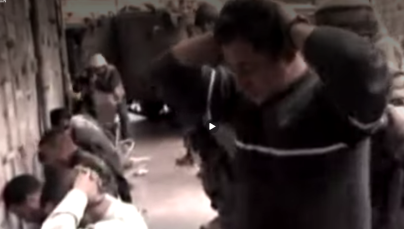
 Aletho News
 Aletho News