‘Deceptive’: NYT Botches Story on Suspended Korean War Games
Sputnik – 01.09.2018
The New York Times’ Thursday article “Pause in Military Drills, Ordered by Trump, Leaves South Koreans Uneasy” is giving its readers “deceptive” information, historian and investigative journalist Gareth Porter told Sputnik.
The Times’ article piggybacks on US President Donald Trump’s announcement this week on suspended joint military drills between Washington and Seoul, suggesting that an overwhelming amount of South Koreans are now upset with President Moon Jae In for supporting 45 on the matter.
Porter told Radio Sputnik’s Loud & Clear on Friday that the publication’s article shows that it “has a bug up somewhere about this issue,” since polls in South Korea actually show that upwards of 80 percent of the people support Moon’s decision to mend the country’s relations with North Korea.
“The Times is being very deceptive in this, creating the sense or allusion that South Koreans are upset with Moon about this when, in fact, it’s a small percent of the population,” Porter told hosts Brian Becker and John Kiriakou. “[It’s] trying to sabotage the Trump support for a North-South accord and, even more importantly, support for an agreement of some sort with North Korea.”
The statement released by the White House on Wednesday notes that Trump no longer believes that costly war games are necessary in the current climate, a stance POTUS has repeatedly taken in the past.
“The president believes that his relationship with [North Korean leader] Kim Jong Un is a very good and warm one, and there is no reason at this time to be spending large amounts of money on joint US-South Korea war games,” the press release announced, adding that Trump, if he wishes to do so, can easily reboot the exercises.
According to Porter, the Korean War, which halted in an armistice in 1953 but has still not been concluded with a formal peace treaty, “doesn’t have an end because of the vested interests that are tied up in the status quo.”
“It becomes clear with every passing month that there are tremendous interests involving the US national security state as well as the political and media elite, all of whom want to keep things precisely the way they are because they all have interests that are bound up in keeping this present situation of US military hegemony in northeast Asia,” the historian stressed.
Porter, the author of “Manufactured Crisis: The Untold Story of the Iran Nuclear Scare,” went on to tell Becker that had any other “nominal centrist Republican or centrist Democrat been elected, we certainly wouldn’t be looking at making peace with North Korea.”
“I’m afraid it’s true,” he said, noting that it was shocking to admit.
US military blocks proposed railway linking North & South Korea
RT | September 1, 2018
US military officials have put the brakes on a proposed rail project that would connect the Korean Peninsula, underscoring growing differences between Washington and Seoul on engagement with the hermit kingdom.
The governments of the two estranged nations were set to begin preliminary plans for the rail link last week, but their application to send a train from Seoul across the length of North Korea was denied by the US-led United Nations Command. The multinational military body, which traces its roots back to the Korean War, controls movement across the demilitarized zone which separates North and South Korea.
The decision is the latest illustration of Washington’s hardline approach to dealing with Pyongyang. The US has demanded full denuclearization as a prerequisite to any economic cooperation with North Korea, while Seoul has taken a less extreme stance, favoring constructive engagement with its northern neighbor. South Korean President Moon Jae-in had expressed hope that the rail link would be completed by the end of the year.
Moon has invested considerable political capital into improving inter-Korean relations and has signaled his desire for large-scale investment in North Korea once sanctions are lifted.
Treasury Unloads On Moscow: Washington Freezes Russian Assets In The US Worth Hundreds Of Millions
By Tyler Durden – Zero Hedge – 08/21/2018
Just hours after Microsoft said it had thwarted Russian intelligence attempts to hack two conservative think tanks and government sites used by Congressional staff, on Tuesday, the United States imposed new sanctions on two Russians and one Russian and one Slovakian firm under a U.S. program targeting malicious cyber-related activities.
In a statement on its website, the U.S. Treasury said the sanctioned firms – Saint Petersburg-based Vela-Marine Ltd and Slovakia-based Lacno S.R.O. – and the two individuals were linked to Divetechnoservices, a previously sanctioned entity.
Separately, speaking before the Senate Banking Committee, Sigal Mandelker, the Treasury’s top terror and financial intelligence official said that “the breadth and brazenness of Russia’s malign conduct demands a firm and vigorous response.”
Mandelker touted that the net worth of Oleg Deripaska had dropped by about 50%, and the share price of EN+ fell to $5.40 from $12.20 since the latest round of sanctions against Russia were imposed; she also noted that the net worth of Viktor Vekselberg fell by an estimated $3BN due to American penalties.
Mandelker also said that Russian-owned assets in the United States worth hundreds of millions of dollars have been frozen as part of Washington’s sanctions against Moscow, and told lawmakers that the US will not hesitate to bring economic pain to Russia if its conducts does not change.
“The actions of the US Treasury have had significant consequences for the financial interests of individuals and businesses that were affected, including the blocking of hundreds of millions of dollars of Russian assets in the United States,” Mandelker said. Her statement can be found here.
The Trump administration has sanctioned 217 Russian-related individuals and entities, including oil company Surgutneftegaz and power company EuroSibEnergo, since January 2017. Targets include heads of major state-owned banks and energy firms, and some of President Putin’s closest associates.
“As companies across the globe work to distance themselves from sanctioned Russian persons, our actions are imposing an unprecedented level of financial pressure on those supporting the Kremlin’s malign agenda and on key sectors of the Russian economy,” Mandelker said in the prepared remarks.
Finally, in Trump’s determination to show how “tough” he is on Russia, the U.S. also sanctioned owners of six Russian ships over claims they are helping transfer refined petroleum products to North Korean vessels, as tensions with both Moscow and Pyongyang intensify, Bloomberg reported.
The ships – and two Vladivostok-based shipping companies – violated U.S. and United Nations sanctions on North Korea, the Treasury Department said Tuesday in announcing the sanctions on its website. The U.S. is aiming to keep pressure on North Korean leader Kim Jong Un to denuclearize.
“Consequences for violating these sanctions will remain in place until we have achieved the final, fully verified denuclearization of North Korea,” Treasury Secretary Steven Mnuchin said in a statement.
In a separate announcement on Tuesday, Treasury also sanctioned two Russian individuals and two entities it said were making attempts to get around existing U.S. sanctions.
“The Treasury Department is disrupting Russian efforts to circumvent our sanctions,” said Mnuchin. “Today’s action against these deceptive actors is critical to ensure that the public is aware of the tactics undertaken by designated parties and that these actors remain blocked from the U.S. financial system.”
DPRK Slams Extension of US-Japan Nuclear Pact as US Double Standard – Report
Sputnik – 05.08.2018
North Korea denounced the extension of the US-Japanese atomic energy agreement, accusing Tokyo of undertaking activities allegedly aimed at nuclear weaponization and blaming the United States of double standards, local media reported on Sunday.
The Korea Asia-Pacific Peace Committee (KAPPC) released a white paper on Saturday criticizing the 1988 US-Japanese nuclear pact, which was extended last month, the Korean Central News Agency reported.
According to the white paper, Japan has been conducting nuclear research since long ago, allegedly starting to push forward the A-bomb development in 1930s.
The paper also suggested that out of 518 tonnes of plutonium stockpiled around the world so far, 47 tonnes are stored by Japan.
The document accused the United States of a double-standard approach to treat North Korea and Japan differently on nuclear issues, calling on Washington to “judge the situation from a fair stand” if it wanted denuclearization of the Korean Peninsula.
In July, the United States and Japan extended a bilateral nuclear cooperation agreement, which granted Japan the right to extract plutonium, reprocess spent fuel and enrich uranium on the condition that it was not used to build nuclear weapons.
US blocks IOC proposal to allow sports equipment exports to North Korea
RT | July 26, 2018
The US has blocked a request by the International Olympic Committee (IOC) to the United Nations Security Council Committee to exclude sports equipment from the list of items prohibited for export to North Korea.
“The United States was the only one to object against approving the IOC president’s request by the UN Security Council Committee,” TASS reported, citing sources familiar with the situation.
IOC head Thomas Bach initiated the request, asking the UN Security Council Committee to allow export of sports gear to the country, which has been under sanctions since 2006 over its nuclear program and missile tests.
The IOC chief stressed that modern sports equipment would help North Korean athletes prepare fully for global sports events, including the Olympic Games.
The 2018 Winter Olympics in South Korea saw a remarkable breakthrough in the strained relations between the two Koreas, with their athletes marching together under a joint Korean flag at the opening ceremony.
A United Korean women’s hockey team took part in the Olympic tournament, marking a thaw in relations between the two neighboring states after decades of mutual hostility.
Back then the IOC chief hailed North Korea’s decision to send delegation to the Olympics, adding that it was “powerful message of peace” to the world.
Towards Ending the 65 Years of Armistice: Understanding the process for peace in Korea

ZoominKorea interview with Gregory Elich | July 24, 2018
July 27, 2018 marks the 65th anniversary of the Armistice Agreement which brought about a ceasefire to the Korean War. The agreement was signed by North Korean General Nam Il representing both the Korean People’s Army (KPA) as well as the Chinese People’s Volunteer Army (PVA) and U.S. Army Lieutenant General Harrison, Jr. representing the United Nations Command (UNC).
While the purpose of the agreement was to “ensure a complete cessation of hostilities and of all acts of armed force in Korea until a final peaceful settlement is achieved,” the effect was an unending Korean War with decades of escalating military tension on the Korean Peninsula. And a number of arrangements made on July 27, 1953 have yet to be implemented. Most notably, the U.S. has failed to contribute a plan for withdrawing its troops within the timeframe that was discussed in Article IV of the agreement:
In order to ensure the peaceful settlement of the Korean question, the military Commanders of both sides hereby recommend to the governments of the countries concerned on both sides that, within three (3) months after the Armistice Agreement is signed and becomes effective, a political conference of a higher level of both sides be held by representatives appointed respectively to settle through negotiation the questions of the withdrawal of all foreign forces from Korea, the peaceful settlement of the Korean question, etc.
While all other foreign forces eventually withdrew, the U.S. military never left Korean soil. To this day, the U.S. has more than 28,500 of its troops stationed all over South Korea.
With the anniversary of the Armistice Agreement just around the corner, ZoominKorea spoke with Gregory Elich — member of the Solidarity Committee for Democracy and Peace in Korea and frequent contributor for ZoominKorea — about the significance of the armistice and the conditions necessary to establish permanent peace on the Korean Peninsula.
ZoominKorea: July 27 marks the 65th anniversary of North Korea (with China) and the U.S. (representing UN forces) signing the armistice to agree on a temporary ceasefire to the Korean War. Can you tell us more about the agreement — what was it supposed to do and what actually transpired following the signing?
Elich: The armistice was meant to be an interim measure to implement a ceasefire until a peace treaty would be signed. Technically speaking, then, the parties to the conflict remain at war. The armistice agreement stipulated that within three months the three sides would meet to negotiate the terms of a peaceful settlement of the war. That deadline was missed, but once the meeting did take place, the U.S. representatives were unwilling to discuss the subject of a peace treaty. Decades later, that remains the position of the United States.
On the rare occasions that U.S. media address the topic of a peace treaty, the general attitude is that the matter does not involve the United States, and dark motives are likely behind North Korea’s wish to sign a peace treaty that would formally end the Korean War.
However, the United States, along with China and North Korea, committed to negotiating a peace treaty when they signed the armistice agreement. That responsibility remains with the three parties, including the U.S. No one else can formally end the Korean War, nor can any single nation do so without the agreement of the others.
ZoominKorea: Although it is critical for the American public to understand that cooperation by the U.S. is necessary to ensure permanent peace in Korea, the cooperation between North and South Korea is also immensely important in establishing meaningful and lasting peace.
How do you see the April 27 Panmunjom Declaration playing a role in ending the Korean War?
Elich: The third section of the Panmunjom Declaration explicitly states that ending the “unnatural state of armistice” and establishing a peace regime should not be delayed. The declaration identifies this as a matter of urgent concern. So in a real way, the subject of a peace treaty is now on the South Korean agenda. That will make it more difficult for the United States to dismiss the issue.
Beyond that, the Panmunjom Declaration has enormous potential for the future of the Korean Peninsula, going far beyond the signing of a peace treaty. It is interesting to note that the first article specifies that the two Koreas will determine their destiny on their own accord. The unmistakable message is that only Koreans can choose their future, not the United States. In Kim Jong-Un’s eyes, that is the path the two Koreas should be following now. I am not sure the ever-cautious South Korean President Moon Jae-in is entirely on board with that perception, though, and he may feel that for the foreseeable future nothing can be done without the permission of the United States.
The declaration lays out specific measures to be taken to reduce tensions between the two Koreas and to build mutual trust. That comes as a welcome development after the damage done to relations by the two previous South Korean presidents. Of particular importance is the provision to implement the October 4, 2007 economic agreements between the two Koreas that former South Korean President Lee Myung-bak killed off. Those agreements hold great potential for the economic development of the entire peninsula. Unfortunately, no progress on those can be expected before the lifting of sanctions on North Korea.
ZoominKorea: North Korea has emphasized the importance of ending the Korean War, not only in its recent negotiations with South Korea and the U.S. but also for decades, since the Armistice Agreement. Progressive Koreans in the South and Overseas have also called for the end to the military conflict and signing of a peace treaty. To them, that is the priority.
To the majority of the Washington establishment and the U.S. media, however, denuclearization is the priority.
Indeed, there are many agreements to be made between signing the peace treaty and denuclearizing the Korean Peninsula — but what do you think is the most logical process for establishing peace in Korea?
Elich: In general, it makes logical sense for a peace treaty to be among the initial steps adopted in repairing relations. I see this mainly as cleaning up unfinished business from decades ago. There are complications, though.
As you point out, North Koreans and progressive Koreans in the South and abroad attach tremendous importance to the signing of a peace treaty. There is a good deal of hope that other benefits are inherent, such as an end to enmity and the withdrawal of U.S. forces from the peninsula. I don’t believe we can expect anything more from a peace treaty, in and of itself, beyond its symbolic value and the encouragement it gives to ongoing talks. After a peace treaty is signed, every other step to improve relations is a matter for further negotiation and determined struggle.
On its own, a peace treaty will not trigger a withdrawal of U.S. forces. After all, World War II ended 73 years ago, yet the U.S. military remains firmly ensconced in Germany, Japan, and Okinawa. There is no sign that the United States has any intention of ever departing.
Aside from North Korea, in the years since the Second World War the United States has officially been at peace with all of the nations it has sanctioned, threatened, subverted, bombed, and invaded. North Korea will need more solid security guarantees than a peace treaty if it is going to denuclearize.
U.S. policymakers envision expanding the role of U.S. Forces Korea (USFK) beyond the Korean Peninsula, and that will make it extremely difficult to dislodge troops from the Korean Peninsula.
Washington think tanks argue that USFK should shift from the so-called North Korea deterrence role to a regional contingency force. That is, the objective is for U.S. forces based in South Korea to be poised to intervene anywhere in Asia. This concept is in line with the Defense Department’s National Defense Strategy document, which calls for “increased strategic flexibility and freedom of action.” In the context of that policy, an improvement in U.S.-North Korean relations is irrelevant to regional plans for USFK.
There is the additional factor that USFK is a critical component in the overarching policy of encircling China and Russia, one which U.S. military planners are not going to relinquish willingly.
That does not mean the two Koreas should not pursue the withdrawal of USFK in talks with the United States. My point is that immediate removal of U.S. forces is improbable and the challenges should not be underestimated. At the very least, it will take a determined struggle to effect change. One of the main barriers that Korean progressives will have to overcome is that the U.S. military doesn’t care what citizens in any host country think about its forces. U.S. bases have been established abroad to serve imperial interests, not those of the host countries.
For the U.S. side, signing a peace treaty would make sense as a low-cost means of demonstrating goodwill and reciprocity to its interlocutors on the North Korean side. A peace treaty obligates the United States to nothing while giving North Korea something it fervently desires. That would only improve the atmosphere in talks and hasten progress toward a final agreement.
In the months ahead, if the Trump administration proves resistant to the idea of a peace treaty, then that would probably be an indication that think tank advisors are negatively influencing the U.S. negotiating strategy.
No matter what the Trump administration decides, a peace treaty may not be in the cards in the near term. A peace treaty would require approval by a two-thirds majority in the U.S. Senate before Trump could ratify it. In the current U.S. political environment, that seems like an insurmountable hurdle. Consequently, the reality is that while a peace treaty is a logical first step, it is far more likely to take place among the final stages. The completion of denuclearization may reduce the ferocity of Senate resistance to a level that would allow approval. The Trump administration may decide to postpone the signing until late in the process so as to avoid the awkwardness of Senate disapproval during negotiations with North Korea.
I see Korean reunification as a long-term goal that can only come about after U.S.-North Korean relations have substantially improved and South Korea is better able to act in its own best interests without seeking permission from the United States. Otherwise, American interference would present too high an obstacle.
ZoominKorea: What do you make of the U.S. media and its coverage of the negotiations in progress between the Trump administration and North Korea? Pundits as well as members of Congress (including members of the Democratic Party) have been vocal about criticizing Trump and his cabinet for the way they have been handling the negotiations with the North Korean leadership. Many have called out Trump for appeasing the North Koreans “too much.” What do you assess to be the motivation behind this? What kind of an impact could this have on the talks moving forward?
Elich: The Washington establishment is uneasy over President Trump’s erratic behavior. Indeed, one could even say there is open panic. There is concern over whether Trump can be consistently counted on to pay the expected fealty to the Washington consensus on foreign policy and prioritize the needs of large corporations and military contractors. The fear is that at some point Trump, through sheer misunderstanding and carelessness, may put at risk the entrenched “values” of aggressive militarism and global economic and political domination.
The hysterical cries of treason over Trump’s meeting with Russian President Vladimir Putin are another manifestation of that panic.
There are two immediate concerns. One is that normalizing relations with North Korea would lead to a growing demand among South Koreans for U.S. forces to leave the peninsula. The other is that without North Korea as an official enemy, the pretext for stationing troops in South Korea would vanish.
One does not have to search very long among Washington think tank documents to encounter warnings that signing a peace treaty would be a trap which would remove U.S. forces from the region so that North Korea could be free to attack the South. One wonders if these analysts genuinely believe this nonsense or if that is their way of dissuading the Trump administration from agreeing to a peace treaty.
In addition to these generalized concerns, military contractors, whose lobbyists are quite active on Capitol Hill, have specific worries. Over the last five-year period, South Korea ranks second behind Saudi Arabia in the value of arms purchased from the United States. For arms manufacturers, a peaceful resolution of tensions on the Korean Peninsula would be a disastrous development that would eventually cut into future profits. Investor jitteriness was displayed when the five largest U.S. military contractors lost $10 billion in stock market value on the day of the signing of the Panmunjom Declaration.
Vociferous complaints by Western media and politicians about the Singapore Summit and ongoing talks are intended to undermine the process and block any possibility of a diplomatic settlement.
ZoominKorea: While the U.S. media have been critical of the results of the Singapore Summit, many progressive Korean American and U.S.-based activists have welcomed this first major step to the peace process. Since more than a month has passed, how do you now assess the results of the summit?
Earlier this month, as a follow-up to the Singapore Summit, State Secretary Pompeo visited Pyongyang to further discuss the denuclearization deal. From North Korea’s perspective, the latest visit was somewhat of a setback because of the United States’ recapitulation of hardline demands for a denuclearization process similar to that of the Complete Verifiable Irreversible Denuclearization (CVID) approach that undermines the spirit of the Singapore Summit. Pompeo, on the other hand, claimed that the meeting was conducted in good faith and he had “made progress on almost all central matters.”
With the U.S. still unable to acknowledge that it is not doing enough to build trust with North Korea, how do you foresee the negotiations to move forward?
Elich: The first point I would like to make is the fact that talks are happening at all should be regarded as a victory. Eight years of the Obama administration refusing to negotiate, followed by Trump’s bluster and threats during the first year of his administration, have done nothing positive for the region or the international situation. During that time, Washington’s attitude was that pressure and threats “haven’t worked,” therefore more pressure and threats are needed. The rational conclusion that no progress can be made without dialogue was dismissed out of hand.
Chairman Kim Jong Un made a bold move to change the narrative this year, announcing a unilateral freeze on nuclear development and missile testing, while explicitly expressing his intention to denuclearize in the context of an agreement with the U.S. Then came the demolition of North Korea’s nuclear test site. North Korea’s peace drive prompted Washington to re-engage with North Korea. In a positive response, the U.S. implemented a temporary pause in military exercises on the Korean Peninsula as long as talks continue.
Contrary to what Western critics assert, the Singapore Summit was never intended to produce a detailed agreement. The meeting was a declaration of intent to negotiate a mutually beneficial deal. Given the hostile rhetoric that dominated relations and which continues to characterize U.S. media, the summit was an essential initial step in the direction of positive change.
The various shifts in the U.S. position seem to indicate that there is a dichotomy of views within the Trump administration concerning what avenue to follow in negotiations, and each side appears to be struggling to gain the upper hand.
The default position is the unworkable notion that diplomacy should consist of making endless demands on the other party while offering little or nothing in return. However, North Korea is not negotiating from a position of weakness. In its nearly complete nuclear weapons program it has something substantial to trade. It would be a mistake to imagine that North Korea would consider giving that up without receiving anything meaningful in return.
It is the job of the U.S. media to discipline U.S. negotiators and pressure them into rejecting normal diplomatic give-and-take and stick to the pattern of making demands for unilateral concessions. This pressure may explain Secretary of State Mike Pompeo’s recent assertions that sanctions will remain in place until after denuclearization is complete. Presumably, Pompeo’s recent statements are meant to reassure critics, who in any case will not be mollified by anything less than the total abandonment of diplomacy and a return to saber rattling.
It is true that the U.S. and North Korea have divergent concepts on how talks should proceed, with the U.S. expecting something along the lines of the Libyan model, where the other party must meet all U.S. demands in exchange for vague promises of future compensating measures. North Korea, quite reasonably, wants a measured, step-by-step approach, where both parties give each other something as they advance towards their ultimate goals.
It should also be pointed out that from the North Korean perspective denuclearization of the Korean Peninsula is not entirely a one-way road. It would also entail a commitment by the United States to no longer send nuclear-capable B-2 and B-52 bombers flying over the Korean Peninsula.
The main component in an agreement is a security guarantee to North Korea. Its nuclear deterrent, after all, was developed in response to the hostile policy of the U.S., as well as the vivid object lessons provided by the bombing of Yugoslavia and Libya, and the invasion of Iraq. It is difficult to imagine, though, what kind of security guarantee the United States can offer that could be trusted. A piece of paper is not going to do it. It may be that the Trump administration would be sincere in signing such a document. But the next U.S. administration may have no compunction in abandoning it. I assume that a reliable security guarantee will have to involve not only the U.S. but also Russia and China in some manner.
Despite all of the hindrances, once negotiations are seriously underway I see a real prospect of favorable results. I feel that at some point as U.S. negotiators meet with their North Korean counterparts it will become apparent that they have an opportunity to achieve their goals, but only by adopting a more even-handed approach. That realization should provide the impetus to adopt a more flexible manner. Whether or not that path is followed remains to be seen, as a more even-handed approach is sure to engender a determined backlash from the Washington establishment and U.S. media. My feeling is that the desire to achieve denuclearization will override the impact of political opposition, and there is a more than even chance of a diplomatic settlement.
Gregory Elich is on the Board of Directors of the Jasenovac Research Institute and a Korea Policy Institute associate. He is a member of the Solidarity Committee for Democracy and Peace in Korea, and a columnist for Voice of the People. He is the author of Strange Liberators: Militarism, Mayhem, and the Pursuit of Profit, and has two chapters in the anthology Killing Democracy: CIA and Pentagon Operations in the Post-Soviet Period, published in the Russian language. In 1999, he was a member of a team that visited Yugoslavia to investigate NATO war crimes.
NY Times Pours Linguistic Gasoline on North Korea-US Negotiations
By K.J. Noh | Dissident Voice | July 10, 2018
On the heels of the historic June 12 Trump-Kim Singapore Summit that de-escalated tensions between North Korea and the US, Secretary of State Mike Pompeo made his third visit to NK to move the negotiations for denuclearization and security on the peninsula forward. He met with his North Korean counterpart, Vice Chair of the Party Central Committee, Kim Young Chol, on July 6 and 7, for intensive negotiations. At the end of the meeting, on leaving Pyongyang, Secretary Pompeo declared that the summit had been conducted in good faith and that he had “made progress on almost all central matters”. Without divulging details, he stated there was more work to be done, which would be continued by working groups on both sides and that a follow up meeting had been scheduled.
The North Korean Foreign Ministry released a more sobering assessment, stating that despite high expectations after the summit they found “regrettable” the US failure to approach the negotiations in a balanced and constructive manner, and critiquing the “opposing winds” that recapitulate the “tired old process” (CVID, disclosure, verification first) that could lead to failure, and that have ignored or misinterpreted their unilateral gestures of good will, forbearance, and their desire for phased, mutual, step-wise measures based on the creation of “objective conditions for trust”.
Clearly, after the euphoria of the Singapore summit, this is a drilling down onto the details on process, timing, specifics, and reciprocity necessary for the successful implementation of the Singapore Summit’s four enumerated commitments: normalization, peace, denuclearization, and repatriation of remains. Clearly there is much to bridge in terms of procedure, protocol, sequencing, as well as a need to overcome mutual distrust and historical antagonism.
The North Korean statement is a quiet but firm dressing down of the Bolton Approach that seems to have been upfront in the recent negotiation, that seeks to rapidly frontload the process with North Korean concessions on disarmament, after which US concessions and security guarantees could be provided. The North points to this “tired old approach” as lacking simultaneity, mutuality, and trust-building measures, and points out it has clearly failed in the past. They peg it—in polite diplomatic language—as the definitionally insane practice of doing the same thing over and over again while expecting different outcomes. They take great pains to point out that Trump’s approach was the promise of a bold, new approach to denuclearization, mutually agreed-upon at the summit, and they hint that “working level groups”, and “oppositional winds” might be working in a way that contravenes what they understand to have been proposed and agreed to by Trump. There is, in the statement, a question to Washington as to whether its charges are faithfully implementing its own stated desires and will, as well as an inquiry as to whether there is congruence and internal alignment (or change of tactics) within the administration. It is also a not-so-subtle hint that if the Bolton faction is ascendant, then the bets are likely to be called off.
It’s important to note here that the North Korean Foreign Ministry statement, while clearly critical and inquiring, is very measured, relative to past statements from the leadership, and there is little overblown rhetoric there. If anything, the language is careful and circuitous, and the recrimination is largely self-directed: they may have been “naïve to the point of foolishness in their hopes and expectations”, and they express their worries of “great disappointment and tragedy”. They critique the “erroneous thinking” that assumes that “our forbearance” will accommodate the “demands based on such a strong-arming mindset” and consider “unhelpful” the “hurriedness that has seized” the US that elides the need for confidence-building measures to overcome “deep-rooted mistrust”. Nevertheless, they mention that they still “faithfully maintain their trust” in Trump and make clear their intentions to continue to denuclearize. They finish with an almost wistful tone: they warn of deep disappointment to the international society and global peace and security, and that there is no guarantee that a tragic outcome will not follow from this one-sided approach.
Trust the New York Times to misrepresent the above statement, the better to pour linguistic gasoline over the still unextinguished of pyres of recent North Korea-US brinksmanship. There’s nothing like headlining a linguistic firebomb to torch any fragile, combustible agreements or relations that might be in the process of negotiation or exploration: “North Korea Criticizes ‘Gangster-Like’ U.S. Attitude After Talks With Mike Pompeo.”
By attributing “Gangster-like” invective to North Korea, the Times refreshes the “irrational, out-of-control, over- the- top, can’t-be-negotiated-with” framing that has prevented, sabotaged and derailed negotiation in the past. It also puts the Trump administration further on the back foot, reprising the illogical trope that the US had demeaned its global standing just by meeting with North Korea, and is now further demeaned by tolerating being insulted by it. Although early media outlets were circumspect in their characterization of the disagreement, focusing appropriately on the disappointment and regret by North Korea in the divergence in the talks from agreed upon approaches in Singapore, after the NY Times published this incendiary headline, the “gangster” trope was then picked up by the BBC, CNN, Bloomberg, even DemocracyNow! and is now the standard media sound bite about the meeting. The administration is now in the awkward position of defending against the NY Times epithet rather than discussing its work for peace and denuclearization.
The phrase the NY Times is referring to in the statement is “강도적인 비핵화요구” . In literal translation, this would be “robber-like”, but in this context would be more accurately translated as “strong arming, or high pressure demands for denuclearization.”1 The North has no problem using strong language in its statements, but this statement hardly conforms to that type. As noted above, it’s a pointed critique of the “cancerous” Bolton approach—tempered with self-criticism and an appeal to faithfully implement the new approaches and attitudes of the Singapore summit. It’s hardly the incendiary firebomb the NY Times would like it to be.
Further reading of the statement clarifies this:
But, if the US, sized by a sense of impatience, tries to enforce on us, the old ways asserted by previous administrations, this will not give us any help in solving the problem.
If the objective conditions conducive to denuclearization in accordance with our wills are not established, then it’s possible that the currents of positive development in developing bilateral relations in the beginning could become confused [turbulent].
Should opposing winds start to blow, this could bring great disappointment to international society that desires peace and security, as well as to the US and NK; and if that happens, then both sides would start to explore other options; there is no guarantee that this would not lead to tragic consequences.
[However] We still faithfully maintain our trust in President Trump.
The US should reflect seriously whether, in opposition to the will of its [own] leaders, permitting these opposing forces (“winds”) meets the aspirations and expectations of the people of the world, and whether it meets the interests of its own county.
This not a minor exegetical divergence. The upfront voicing of a legitimate disagreement with an approach—at the beginning of a long, complex, negotiation fraught with mistrust—and an appeal to return to the agreed-upon spirit and intent of the summit are a far cry from reductively headlining and encapsulating the disagreement to a deal-breaking, incendiary cri-de-coeur of violent criminality and thuggishness. On the contrary, the North Korean position is clear and reasoned:
Dispelling deep-rooted mistrust, and building trust between the DPRK and the U.S.; seeking to resolve the problem in completely new way—by boldly breaking away from past methods and being unconstrained by conventional methods that have only resulted in failure; prioritizing trust-building while solving one-by-one problems that can be solved through a step-by-step process, [based on the] principle of simultaneous [reciprocal] actions: this is the fastest shortcut to denuclearization.
Perhaps the storied NY Times has no one on their large staff capable of rendering a nuanced, contextual interpretation of North Korean statements—even for the most delicate of delicate negotiations. Perhaps this is part of their baked-in, irredeemable, click-baiting journalistic incompetence. But taken in context with a past record of journalistic gangsterism—namely criminally irresponsible lies and misrepresentation agitating for violent wars of aggression—it’s understandable it might jump to see gangsters and gangsterism everywhere.
*****Full Translation of NK Statement (Author’s Translation)7/7/2018 Ministry of Foreign Affairs
조선민주주의인민공화국 외무성 대변인담화
Pyongyang, July 7 (KCNA) – Statement of the Ministry of the Foreign Affairs of the Democratic People’s Republic of Korea
력사적인 첫 조미수뇌상봉과 회담이 진행된 이후 국제사회의 기대와 관심은 조미수뇌회담 공동성명의 리행을 위한 조미고위급회담에 쏠리였다.
After the first historic summit meeting was held between the DPRK and the U.S., international society has focused its expectation and attention on the high-level DPRK-U.S. talks for the implementation of the Joint Statement of the DPRK-U.S. summit.
우리는 미국측이 조미수뇌상봉과 회담의 정신에 맞게 신뢰조성에 도움이 되는 건설적인 방안을 가지고 오리라고 기대하면서 그에 상응한 그 무엇인가를 해줄 생각도 하고있었다.
We expected that the U.S. side would bring [to the talks] constructive proposals that would help trust-building in accordance with the spirit of the DPRK-U.S. summit meeting.
We, on our part, were also thinking of offering things to match this.
그러나 6일과 7일에 진행된 첫 조미고위급회담에서 나타난 미국측의 태도와 립장은 실로 유감스럽기 그지없는것이였다.
However, the the attitude and position that appeared in the US Side during the first high level talks held on July 6th and 7th was truly regretful.
우리측은 조미수뇌상봉과 회담의 정신과 합의사항을 성실하게 리행할 변함없는 의지로부터 이번 회담에서 공동성명의 모든 조항들의 균형적인 리행을 위한 건설적인 방도들을 제기하였다
Our side, during the talks, put forward constructive proposals in order to seek a balanced implementation of the Joint Statement, out of our firm willingness faithfully implement of the spirit and the agreed-upon provisions of the DPRK-U.S. summit meeting and talks.
조미관계개선을 위한 다방면적인 교류를 실현할데 대한 문제와 조선반도에서의 평화체제구축을 위하여 우선 조선정전협정체결 65돐을 계기로 종전선언을 발표할데 대한 문제,비핵화조치의 일환으로 ICBM의 생산중단을 물리적으로 확증하기 위하여 대출력발동기시험장을 페기하는 문제,미군유골발굴을 위한 실무협상을 조속히 시작할데 대한 문제 등 광범위한 행동조치들을 각기 동시적으로 취하는 문제를 토의할것을 제기하였다.
These included proposing wide-ranging, simultaneous, mutual, proactive steps, such as realizing multilateral exchanges for improved relations between the DPRK and the U.S; making a public declaration to the end of war on the occasion of the 65th anniversary of the signing of the Korean Armistice Agreement, in order to build a peace regime on the Korean Peninsula; as a single element of the denuclearization process, dismantling [our] high thrust jet engine test grounds as concrete proof of the suspension of ICBM production; and making the earliest start on working-level talks for repatriating POW/MIA remains.
회담에 앞서 조선민주주의인민공화국 국무위원회 위원장 김정은동지께서 트럼프대통령에게 보내시는 친서를 위임에 따라 우리측 수석대표인 김영철 당중앙위원회 부위원장이 미국측 수석대표인 폼페오국무장관에게 정중히 전달하였다.
Prior to the talks, Kim Yong Chol, vice-chairman of the Central Committee of the Workers’ Party of Korea, our chief delegate from our side to the talks, was tasked to convey, with due respect, to U.S. Secretary of State Pompeo, a personal letter from the Chairman of the State Affairs Commission of the DPRK, Kim Jong Un to President Trump.
국무위원회 위원장동지께서는 싱가포르수뇌상봉과 회담을 통하여 트럼프대통령과 맺은 훌륭한 친분관계와 대통령에 대한 신뢰의 감정이 이번 고위급회담을 비롯한 앞으로의 대화과정을 통하여 더욱 공고화되리라는 기대와 확신을 표명하시였다.
Chairman Kim Jong Un expressed his hope and conviction that the excellent personal relations and his feelings of trust forged with President Trump at the Singapore summit would be further consolidated through the process of this and other future dialogues.
그러나 미국측은 싱가포르수뇌상봉과 회담의 정신에 배치되게 CVID요,신고요,검증이요 하면서 일방적이고 강도적인 비핵화요구만을 들고나왔다.
But, contrary to the spirit of the [agreed upon provisions of] the Singapore summit, the U.S. side came out only with unilateral and strong-arm demands for denuclearization, that is, calling only for CVID, declaration and verification.
정세악화와 전쟁을 방지하기 위한 기본문제인 조선반도평화체제구축문제에 대하여서는 일절 언급하지 않고 이미 합의된 종전선언문제까지 이러저러한 조건과 구실을 대면서 멀리 뒤로 미루어놓으려는 립장을 취하였다.
The U.S. side never mentioned the issue of establishing a peace regime on the Korean peninsula which is essential for preventing the deterioration of the situation and preventing war. It took the position that it could delay the agreed-upon statement to end the war with sundry conditions and excuses.
종전선언을 하루빨리 발표할데 대한 문제로 말하면 조선반도에서 긴장을 완화하고 공고한 평화보장체제를 구축하기 위한 첫 공정인 동시에 조미사이의 신뢰조성을 위한 선차적인 요소이며 근 70년간 지속되여온 조선반도의 전쟁상태를 종결짓는 력사적과제로서 북남사이의 판문점선언에도 명시된 문제이고 조미수뇌회담에서도 트럼프대통령이 더 열의를 보이였던 문제이다.
The issue of announcing the declaration of the end of war at the earliest possible date, is the [key] priority process [necessary] to defuse tension and establish a lasting peace regime on the Korean peninsula. It is the priority factor in building trust between the DPRK and the U.S. This issue was also stipulated in Panmunjom Declaration as the historical task to terminate the nearly 70-year-old condition of war on the Korean peninsula. President Trump, too, was more enthusiastic about this issue at the DPRK-U.S. summit talks.
미국측이 회담에서 끝까지 고집한 문제들은 과거 이전 행정부들이 고집하다가 대화과정을 다 말아먹고 불신과 전쟁위험만을 증폭시킨 암적존재이다.
The issues the U.S. side insisted on till the very end at the talks are a cancerous [i.e. destructive] entity [position], which previous administrations also had stubbornly insisted on, that sabotaged the dialogue process, and increased distrust and the danger of war.
미국측은 이번 회담에서 합동군사연습을 한두개 일시적으로 취소한것을 큰 양보처럼 광고했지만 총 한자루 페기하지 않고 모든 병력을 종전의 자기 위치에 그대로 두고있는 상태에서 연습이라는 한개 동작만을 일시적으로 중지한것은 언제이건 임의의 순간에 다시 재개될수 있는 극히 가역적인 조치로서 우리가 취한 핵시험장의 불가역적인 폭파페기조치에 비하면 대비조차 할수 없는 문제이다.
The U.S. side, during the talks, made a great publicity about suspension of one or two joint military exercises as a tremendous concession. But the temporary suspension of single exercise-type action is a highly reversible step which can be resumed immediately at any moment as all of its military force remains in its previously positioning, with not a single rifle removed. This is incomparable with the irreversible steps taken by us to explode and dismantle our nuclear testing site.
회담결과는 극히 우려스러운것이라고 하지 않을수 없다.
We cannot but be extremely worried about the outcomes of the talks.
미국측이 조미수뇌상봉과 회담의 정신에 부합되게 건설적인 방안을 가지고 오리라고 생각했던 우리의 기대와 희망은 어리석다고 말할 정도로 순진한것이였다.
One could say we were naïve to the point of foolishness in our expectation and hope that the US would come forth with a constructive proposals in accordance with the spirit of the US-NK summit meeting.
낡은 방식으로는 절대로 새것을 창조할수 없으며 백전백패한 케케묵은 낡은 방식을 답습하면 또 실패밖에 차례질것이 없다.
Tired, old methods can never create new outcomes. Only failure comes from following proven-to-fail, worn out methods.
조미관계력사상 처음으로 되는 싱가포르수뇌회담에서 짧은 시간에 귀중한 합의가 이룩된것도 바로 트럼프대통령자신이 조미관계와 조선반도비핵화문제를 새로운 방식으로 풀어나가자고 하였기때문이다.
Because President Trump himself proposed that US-NK relations and denuclearization of the peninsula be resolved in a new fashion, for the first time in US-NK relations, a valuable agreement was reached in a very short time.
쌍방이 수뇌급에서 합의한 새로운 방식을 실무적인 전문가급에서 줴버리고 낡은 방식에로 되돌아간다면 두 나라 인민의 리익과 세계의 평화와 안전을 위한 새로운 미래를 열어나가려는 수뇌분들의 결단과 의지에 의하여 마련되였던 세기적인 싱가포르수뇌상봉은 무의미해지게 될것이다.
The historic Singapore summit—achieved by the determination and the will of its top leaders to open a new future for the peace and benefit of the whole world—will become pointless, if working-level groups renege on the mutually agreed new approach agreed at the summit, and return to the old methods.
이번 첫 조미고위급회담을 통하여 조미사이의 신뢰는 더 공고화되기는커녕 오히려 확고부동했던 우리의 비핵화의지가 흔들릴수 있는 위험한 국면에 직면하게 되였다.
These first DPRK-U.S. high-level talks, rather than consolidating trust, have brought us face-to-face with a dangerous situation where our unshakable will for denuclearization might waiver.
우리는 지난 몇달동안 할수 있는 선의의 조치들을 먼저 취하면서 최대의 인내심을 가지고 미국을 주시하여왔다.
In the past few months, we exercised maximum forbearance and observed the U.S. while initiating as many goodwill measures as we could.
그러나 미국은 우리의 선의와 인내심을 잘못 리해한것 같다.
But, it seems that the U.S. misunderstood our goodwill and forbearance.
미국은 저들의 강도적심리가 반영된 요구조건들까지도 우리가 인내심으로부터 받아들이리라고 여길 정도로 근본적으로 잘못된 생각을 하고있다.
The U.S. is fundamentally mistaken in its reasoning if it goes so far as to conclude that its demands—reflecting its strong-arm mindset—would be accepted by us out of our forbearance.
조미사이의 뿌리깊은 불신을 해소하고 신뢰를 조성하며 이를 위해 실패만을 기록한 과거의 방식에서 대담하게 벗어나 기성에 구애되지 않는 전혀 새로운 방식으로 풀어나가는것,신뢰조성을 앞세우면서 단계적으로 동시행동원칙에서 풀수 있는 문제부터 하나씩 풀어나가는것이 조선반도비핵화실현의 가장 빠른 지름길이다.
Dispelling deep-rooted mistrust, and building trust between the DPRK and the U.S. seeking to resolve the problem in completely new way—by boldly breaking away from past methods and being unconstrained by conventional methods that have only resulted in failure; prioritizing trust-building while solving one-by-one problems that can be solved through a step-by-step process, [based on the] principle of simultaneous [reciprocal] actions: this is the fastest fastest shortcut to denuclearization.
그러나 미국측이 조바심에 사로잡혀 이전 행정부들이 들고나왔던 낡은 방식을 우리에게 강요하려 한다면 문제해결에 아무런 도움도 주지 못할것이다.
But, if the US, sized by a sense of urgency [impatience], tries to enforce on us, the old ways asserted by previous administrations, this will not give us any help in solving the problem.
우리의 의지와는 별개로 비핵화실현에 부합되는 객관적환경이 조성되지 못한다면 오히려 좋게 시작된 쌍무관계발전의 기류가 혼탕될수 있다.
If the objective conditions conducive to denuclearization in accordance with our wills are not established, then it’s possible that the currents of positive development in developing bilateral relations in the beginning could become confused [turbulent].
역풍이 불기 시작하면 조미량국에는 물론 세계평화와 안전을 바라는 국제사회에도 커다란 실망을 안겨줄수 있으며 그렇게 되면 서로가 필경 다른 선택을 모색하게 되고 그것이 비극적인 결과에로 이어지지 않으리라는 담보는 어디에도 없다.
Should opposing winds start to blow, this could bring great disappointment to an international society that desires peace and security, as well as to the US and NK; and if that happens, then both sides would start to explore other options; there is no guarantee that this would not lead to tragic consequences.
우리는 트럼프대통령에 대한 신뢰심을 아직 그대로 간직하고있다.
We still faithfully maintain our trust in President Trump.
미국은 수뇌분들의 의지와는 달리 역풍을 허용하는것이 과연 세계인민들의 지향과 기대에 부합되고 자국의 리익에도 부합되는것인가를 심중히 따져보아야 할것이다.
The U.S. should reflect seriously whether, in opposition to the will of its [own] leaders, permitting these opposing forces (“winds”) meets the aspirations and expectations of the people of the world, and whether it meets the interests of its own country.
주체107(2018)년 7월 7일
평 양(끝)
Juche Year 107 (2018), July 7th
PyongYang (end)
- KCNA seems to have used this word, but its translations often contain context-free and connotation-blind malapropisms, that should be taken with a grain of salt; for example, it states, “captivated in a fidget” when it means “seized by impatience.”
K.J. Noh is a long time activist, writer, and teacher. He is a member of Veterans for Peace and works on global justice issues. He can be reached at: k.j.noh48@gmail.com.
CIA Teams Up With Defense Industry To Undermine Korea Negotiations
By William Craddick | Disobedient Media | June 30, 2018
In a new development that will shock no one, factions within the CIA attempted for the second time in just over a month to undermine President Donald Trump’s peace overtures towards North Korea by leaking information calculated to decrease confidence in Kim Jong Un’s willingness to earnestly negotiate.
On June 29, 2018, NBC News released a report quoting anonymous CIA officials who claimed that North Korea was increasing nuclear production at “secret sites” without providing any actual evidence for such claims. The report’s credibility is further weakened by the fact that it also cited reports from a think tank which has strong connections to the defense industry and other private special interests.
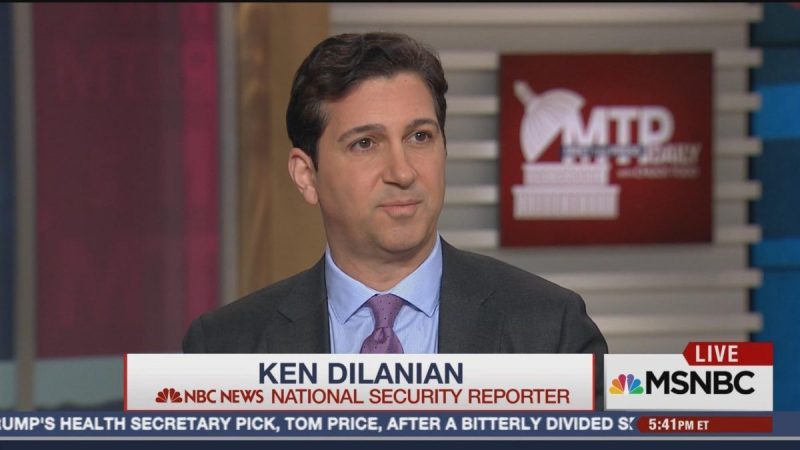
In disseminating their report, the CIA used NBC reporter Ken Dilanian as an outlet for leaks. As Disobedient Media previously reported, Dilanian was outed by the Intercept in 2014 as a CIA asset. In the aftermath of the disclosure, Dilanian’s previous employers at the Tribune Washington and Los Angeles Times disavowed the disgraced journalist. In at least one instance, the CIA’s instructions to Dilanian appears to have led to significant changes in a story that was eventually published in the Los Angeles Times.
Since that time, Dilanian has persisted in pushing articles written by former CIA officials who continue to perpetuate the “Trump-Russia” collusion narrative without any regard to facts, such as Steven Hall’s Washington Post article titled: “I was in the CIA. We wouldn’t trust a country whose leader did what Trump did.”
Perspective | I was in the CIA. We wouldn’t trust a country whose leader did what Trump did. https://t.co/4XG8TmhwKq
— Ken Dilanian (@KenDilanianNBC) May 18, 2017
In the absence of hard evidence from the CIA to back their claims about North Korea, Dilanian cited the opinion of Clinton administration official Joel Wit and reports from 38north.org. 38north is a project run by the Henry L. Stimson Center. The Stimson Center’s Board of Directors includes individuals associated with organizations such as Northrop Grumman, the Boeing Company, Warburg Pincus, the Carnegie Endowment, Mercy Corps, The Council on Foreign Relations, the Department of Defense, the CIA and US Department of the Treasury. Their Partners include the George C. Marshall Foundation, Saudi Arabia’s Gulf Research Center and the Jinnah Institute.
Satellite images circulated by 38north claiming to show improvements to North Korea’s Yongbyon Nuclear Scientific Research Center appear to have been obtained from Airbus Defense and Space SAS, a subsidiary of European multinational conglomerate Airbus Group SE. Airbus was the brainchild of Germany’s DaimlerChrysler Aerospace and British Aerospace. The association of a German connected transnational group in efforts to undermine Korean peace negotiations is interesting given the strong connections they held with the now scandalized South Korean government of Park Geun-hye.
The involvement of a think tank in a website that is centered around undermining US confidence in North Korea is hardly a surprise given their connections to the military-industrial complex and internationalist special interest groups. Both Northrop Grumman and Boeing have seen their stock’s value drop in the aftermath of Trump’s Singapore meeting with Kim Jong Un in what analysts saw as a temporary setback to defense stocks. Seeing such corporations use their ties to institutions such as the Stimson Center to collaborate with the CIA in an effort to scuttle commitments to North Korean denuclearization and a peace accord between the Koreas and United States represents a new low.
Despite the best efforts of the CIA, President Trump has stated that there is no current nuclear threat from North Korea, and that the Singapore Summit represented a positive interaction with the leader of the so-called “hermit kingdom.” Trump has repeatedly highlighted the opportunity for Chairman Kim to engage with the world and begin a new era of “security and prosperity” for North Korea. North Korea destroyed portions of their test site at Punggye-ri before a group of foreign journalist observers in the lead up to the US-North Korea summit on June 12.
There is no limit to what NoKo can achieve when it gives up its nuclear weapons and embraces commerce & engagement w/ the world. Chairman Kim has before him the opportunity to be remembered as the leader who ushered in a glorious new era of security & prosperity for his citizens! pic.twitter.com/Xbup4Zyz33
— Donald J. Trump (@realDonaldTrump) June 13, 2018
What Would Help the Peace Process in Korea?
By David William Pear | American Herald Tribune | June 30, 2018
It looks like peace is breaking out in Korea. The Koreans themselves are moving fast to mend their nation. When paradigm shifts happen they often happen quickly. In just a little over a year the South Korean people demanded the ouster of the corrupt rightwing Park Geun-hye as their president, and a new election replaced her with the liberal human rights lawyer Moon Jae-in.
Moon brought in a new era with the overwhelming support of the South Korean people. Kim Jong-un of North Korea responded likewise. Since the beginning of this year the normalization of relations between the North and the South have been moving fast. U.S. diplomats cannot keep up with it. So let us look into the deep roots of the Korean War and what would help the peace process.
We can start by answering what caused the Korean War. The conventional wisdom is that the war was started by the Democratic People’s Republic of Korea (i.e. North Korea) on June 25, 1950 when it invaded the Republic of Korea (i.e. South Korea). But the conventional wisdom is wrong. It is like saying that the Vietnam War started when North Vietnam invaded South Vietnam; or asking when did the American Revolution start.
Scholars are coming around to recognizing that the Korean War was a civil war. Bruce Cumings in his book, “Korea’s Place in the Sun: A Modern History”, explains it this way:
“The Korean War did not begin on June 25, 1950, much special pleading and argument to the contrary. If it did not begin then, Kim iI Sung could not have ‘started’ it then, either, but only at some earlier point. As we search backward for that point, we slowly grope toward the truth that civil wars do not start: they come. They originate in multiple causes, with blame enough to go around for everyone—and blame enough to include Americans who thoughtlessly divided Korea and then reestablished the colonial government machinery and the Koreans who served it.”
The Korean War has its roots in the mid 1800’s. There was a scramble for colonies, subjugation and influence in East Asia. The driving force of colonialism was trade. It was a scramble for booty, cheap labor, and markets. The Industrial Revolution and the instability of capitalism caused an excess of production; requiring new markets, and the need for more raw materials to feed the machines. Capitalism must constantly expand trade or growth stops, and the system collapses.
Fortunes were made in trade with Asia: tea, silk, spices, tobacco, sugar, rum, porcelain, cotton, coal, timber, gold and opium. The big powers in Asia were England, France, Dutch, Czarist Russia and the United States of America. Japan got into the game after the U.S. forcefully opened it for trade with the black gunboats of Commodore Matthew Perry in 1854.
The Japanese were quick learners in the ways of Western imperialism. Theodore Roosevelt admired them greatly, and considered them to be a “superior” race of Asians. Racial stereotyping was then common and many Westerners considered Asians to be inferior heathens. It was not uncommon for Asians to view rightly foreigners and Christian missionaries as subversives, and wanted to keep them out.
In 1866 the U.S. armed merchant ship the General Sherman tried to force its way into a Korean port despite protests from Korea that it was not open for business. The Koreans attacked the ship, and when it got stuck on a sandbar they killed all the crew and burned the ship.
In 1871 the U.S. used the General Sherman incident as an excuse to launch an invasion of Korea with the aim of getting an apology and establishing trading relations. The U.S. invasion was a success, it taught the Koreans a lesson, but they still refused to establish trading relations.
Later, fearing subjugation by one colonial power or another, Korea decided to make a deal with what it thought would be the lesser evil, and entered into the Treaty of Peace, Amity, Commerce and Navigation with the U.S. in 1882. Koreans took some comfort that the U.S. was on the other side of the ocean, unlike Japan. In exchange for giving the U.S. unequal trading rights, the Koreans got a signed treaty of U.S. protection.
The U.S. broke its promise of protection and delivered Korea into the colonial hands of the Japanese with the Taft–Katsura agreement in 1905. Theodore Roosevelt made a secret pact with the Japanese during his mediation of the settlement of the Russo-Japanese War. The secret deal was that Japan got Korea, and the U.S. got a Japanese guarantee of non-interference with its colony in the Philippines. Theodore Roosevelt was awarded the Nobel Peace Prize, even though he secretly and cynically double crossed the Koreans.
After World War Two the U.S. denied Korea a chance for independence again. Instead of liberating Korea, the U.S. was responsible for the division of Korea at the 38th parallel. Russia agreed, and while the Russians ushered in a government of Korean freedom fighters in the North, the U.S. in the South put in place a puppet government of Koreans who had collaborated with the Japanese, and the hated right-wing Korean aristocrats known as Yangban.
In both the north and the south Koreans were ready for self-government. In anticipation of the defeat of the Japanese and liberation, they had set up the Korean People’s Republic with grassroots committees all over the country. The head of the KPR in the South was Yo Un-hyong. Yo was a popular left-leaning nationalist and land reformer. He was assassinated 2 years later by the U.S. backed rightwing puppet government of Syngman Rhee
Even though the Korean people had governed themselves for over a thousand years, the U.S. did not consider them ready for self-government. At the Yalta Conference in February 1945 Franklin Delano Roosevelt proposed that Korea be placed in a trusteeship. He said it would take 40 years before Korea would be ready for self-government.
When U.S. troops docked at the Port of Incheon Korea on September 8, 1945 Roosevelt was dead, and Harry Truman was president. Under Truman the ruse of a trusteeship was dropped. The spoils of war go to the victor and the U.S. set about establishing the southern half of Korea as if it was a new U.S. colony.
The Koreans did not even get to celebrate their first night of liberation in 1945. The U.S. military declared martial law and ordered a curfew for all Koreans. The Japanese colonial administrators were kept in place, and American and Japanese officers partied at the Chosen Hotel in Seoul for several drunken days.
The Japanese administrators, military and police simply put on U.S. Army Military Government (AMG) armbands, kept their rifles and patrolled the streets with fixed bayonets until 1946. Similar scenes were taking place in Vietnam and elsewhere in Asia “liberated” from the Japanese. It was the beginning of the renewal of the U.S. “special relationship” with Japan that Theodore Roosevelt had established in 1905.
The U.S. befriended the enemy Japan and turned on their former Korean allies who had been fighting the Japanese for over 12 years. The U.S. military occupation government commanded by General John R. Hodge would be the military occupation government for the next 3 years.
In 1946 the Japanese administering southern Korea were replaced mostly with Koreans who had collaborated with the Japanese, and the yangban kept their lands. The U.S. feared that communism would take hold in liberated countries. It was the communists who had put up the biggest armed resistance in Asia against the Japanese during World War Two. The U.S. no longer needed or wanted them.
The scene in northern Korea was quite different. The Korean People’s Republic and their grassroots committees took over the government functions. The Japanese war criminals, collaborators, and yangban fled south where the U.S. welcomed them with open arms.
Within 3 years the Russians had pulled out all of their armed forces. The Russians had their own devastated country to rebuild, and they were more concerned about Eastern Europe, which was the historical invasion route to Russia.
The U.S.’s own intelligence had identified the desires of the Korean people. They wanted independence, self-government and land reform. Those were the antithesis of what the U.S. wanted for the Korean people. It was the U.S. that was scrambling all over the world to stem the tidal wave of anti-colonialism.
Kim il Sung was a national patriotic hero that had been fighting Japanese colonialism since the early 1930’s. If the U.S. had not blocked nationwide elections in Korea, he or another leftist reformer would have overwhelmingly won a fair election.
In the Moscow Conference of December, 1945 the U.S. and Russia agreed that Korea would be independent within 5 years after nationwide elections and that all foreign troops would withdraw. Russia kept its end of the bargain. The U.S. broke its promise.
Instead the U.S. rigged an election in the South, in which the Communist Party and leftist were not allowed to participate. Later the U.S. would use the same trick in South Vietnam, in order to keep that country divided too. Like Kim il Sung in Korea, Ho Chi Minh was a national hero and would have won in a fair nationwide election in Vietnam.
Turn to 1950. Military clashes had been a regular occurrence along Korea’s 38th parallel for 2 years, many of them initiated by the South. The 38th parallel was not recognized as an international border by either the U.S. puppet government in South Korea or the anti-colonial government in North Korea.
Korea was one country, and each side claimed to be the legitimate government of all of Korea. Therefore, the Korean War was not a war of aggression. There was no invasion of Korea by Koreans. The invaders were the U.S. which was subjugating the South, and backed a little-known transplant named Syngman Rhee, who had lived in the U.S. for forty years.
The Rhee dictatorship went on an anti-communist witch hunt that killed, imprisoned, tortured and disappeared hundreds of thousands of patriotic left-leaning Koreans in the South. Repressive dictatorships continued the persecution of dissidents for the next 40 years.
No one knows exactly what happened on the night of June 25, 1950; both sides said that the other side started the clash. The scenario that has become official U.S. legend raised many questions, most notably by the investigative journalist I. F. Stone in his book “The Hidden History of the Korean War (1950-1951)”.
For Kim il Sung and his compatriots the Korean War was an anti-colonial war. First he fought against the Japanese, just as Vietnam was fighting then against the French and their puppet government. To Kim il Sung, South Korea was a colonial puppet government of the US. The U.S. can be seen as the aggressor in both Vietnam and Korea.
The legal fig leaf of U.S. subjugation and the establishment of a puppet government in South Korea was a U.S. dominated United Nations-backed rigged election in the South. Communists were not allowed to participate so they boycotted it.
For the next 40 years South Korea was ruled by U.S. backed dictators Syngman Rhee, Park Chung-hee, Chun Doo-hwan and Roh Tae-woo. If one wants to know who controls a country, then look at who controls the country’s military. South Korea’s military is still today under the wartime command of the US military.
Korea and Vietnam have many similarities. Both were invaded by colonial powers in the 1800’s. Would any historian today write something like: The Vietnam War started when the North Vietnamese attacked their French colonial occupiers? Would anybody say that The Vietnam War started in 1957 when Ho Chi Minh’s forces crossed the 17th parallel? South Vietnam, as was South Korea was ruled by a puppet government of the US.
Ho Chi Minh was a freedom fighter just as Kim il Sung was against the Japanese during World War Two. Both were fighting colonialism. The Vietnam War and the Korean War were wars against U.S. occupiers that had replaced colonial rule.
Neither North Korea nor South Korea recognized the 38th parallel as a border. As General MacArthur said when his armed forces crossed the 38th parallel on October 9, 1950, it was just an imaginary line. MacArthur’s UN mandate was originally to repel the North Korean forces from South Korea. But MacArthur argued that the 38th parallel had no meaning and he ordered his army into one of the worst disasters in U.S. military history.
The Chinese had repeatedly warned that they would intervene if MacArthur crossed the 38th parallel. Had MacArthur heeded that warning it may have saved millions of lives, including tens of thousands of American lives.
When MacArthur’s forces reached the Yalu River separating Korea and China there were 300,000 Chinese volunteers and Koreans waiting in ambush. MacArthur’s forces had to run a bloody gauntlet at the Chosen Reservoir as they retreated back across the 38th parallel. The U.S. forces suffered over 15,000 casualties in that single battle.

*(Retreat from the Battle of the Chosen Reservoir)
The reunification of Vietnam, like Korea, was agreed to be settled by nationwide elections. As in Korea, the U.S. staged a phony election in South Vietnam and established the government of the Republic of Vietnam, under the puppet president Ngo Dinh Diem. Just as in Korea, the U.S. knew that if there were fair elections in Vietnam, then the Communist Party would win. So like in Korea, the U.S. staged a phony election in the south in which communists were not permitted to participate.
Article V, item 60 of the Korean Armistice Agreement of 1953 recommended that within 3 months a conference would be held by all sides of the Korean War. All sides were to “settle through negotiation the question of the withdrawal of all foreign forces from Korea, the peaceful settlement of the Korean question, etc. [sic]”.
The conference on Korea was held at the same Geneva Conference of 1954 that temporarily divided Vietnam. Nationwide elections in Vietnam were agreed to be held in 1956. No further agreement was reached on the “peaceful settlement of the Korean question”.
It was the US invasion of Korea in 1871, and Theodore Roosevelt’s betrayal that resulted in Korea being subjugated by Japan in 1905, and annexed in 1910. The U.S. caused much of the suffering, death and destruction of Korea for over a century, and a never ending war.
We cannot turn the clock back to March 1, 1919 when Woodrow Wilson made his 14 points speech that colonial people have a right to self-determination. Nor can we turn it back to 1948, and the promised independence for Korea.
What would help the peace process now in Korea is for the U.S. to get out of the way. All U.S. armed forces should be withdrawn from Korea, as they were supposed to have been in 1948. The US should stop bullying Koreans, stop meddling in the internal affairs of Korea, and let the Korean people settle their own destiny.
***
Reference and suggested reading
“Patriots, Traitors and Empires: The Story of Korea’s Struggle for Freedom”, by Stephen Gowans.
“Reflections on the Roots of U.S. Involvement in Korea”, by Chang Soon.
“Korea’s Place in the Sun: A Modern History”, by Bruce Cumings.
“The Hidden History of the Korean War (1950-1951)”, by I.F. Stone.
***
David William Pear may be contacted at dwpear521@gmail.com
South Korea wants railroad link to Russia through North Korea
RT | June 20, 2018
Seoul, Moscow and Pyongyang can implement several major trilateral infrastructure and energy projects if stability is reached on the Korean peninsula, according to South Korean President Moon Jae-in.
One such project could be a railway that will be able deliver goods from Russia to South Korea through North Korea. “Once the Trans-Korean Main Line is built, it may be connected to the Trans-Siberian Railway. In this case, it will be possible to deliver goods from South Korea to Europe, which would be economically beneficial not only to South and North Korea but to Russia as well,” Moon Jae-in said in an interview with Russian media ahead of his state visit to Moscow.
A gas pipeline coming from Russia to North Korea to be extended to the South is another possibility, he said. “We can also build a gas pipeline via North Korea, so that not only South Korea will receive Russian gas but we will also be able to deliver it to Japan,” the South Korean president said.
The project to unite the Korean Peninsula with a gas pipeline has been discussed for a long time, but official talks started in 2011. The negotiations were frozen after relations between Seoul and Pyongyang deteriorated. Last week, Russian energy major Gazprom announced it resumed talks with Seoul over the construction of a gas pipeline connecting Russia with North and South Korea.
The countries could also connect their electricity grids, Moon Jae-in said. “We can also establish a powerline that would allow us to receive electricity from Russia. It could also be delivered not only to South and North Korea but also to Japan.”
Featured Video

Deception – Submarines against Olof Palme
or go to
Aletho News Archives – Video-Images
From the Archives
Woolsey Fire started at Santa Susana Field Lab — where “radioactive materials released were never accurately measured”
By John Laforge | CounterPunch | November 30, 2018
In my Nov. 16 column, I reported on potential radiation risks posed by California’s Woolsey wildfire having burned over parts or all of the Santa Susana Field Laboratory—south of Simi Valley, Calif., 30 miles outside Los Angeles—site of at least four partial or total nuclear reactor meltdowns.
The field laboratory operated 10 experimental reactors and conducted rocket engine tests. In his 2014 book Atomic Accidents, researcher James Mahaffey writes, “The cores in four experimental reactors on site … melted.” Reactor core melts always result in the release of large amounts of radioactive gases and particles. Clean up of the deeply contaminated site has not been conducted in spite of a 2010 agreement.
Los Angeles’s KABC-7 TV reported Nov. 13 that the Santa Susana lab site “appears to be the origin of the Woolsey Fire” which has torched over 96,000 acres. Southern Calif. Public Radio said, “According to Cal Fire, the Woolsey Fire started on the afternoon of Thursday, Nov. 8 … on the Santa Susana site.” … continue
Blog Roll
 Aletho News
- Brussels cannot say where its own pipeline inspectors are as Hungary’s oil lifeline remains shut
- Israel’s Iran War: Myth and Reality
- Between war and industrial breakdown: The US-Israeli attrition crisis
- Pressure builds on Iran to ‘drop’ Lebanon ceasefire demand as Islamabad talks hang in balance
- In another clash report, US denies agreement to release Iran’s assets
- What is fueling unrest across the EU?
- Why no power can undermine Iran’s eternal dominance over the Strait of Hormuz
- Is The War Against Iran Over?
- Iran war will leave long-term ‘scar’ on Wall Street, investors warn
- How Iran decimated US power projection in West Asia: Military lessons of 40-day war
- If Americans Knew
- Mearsheimer reveals how Israel dictates US policies on Iran, Gaza – video
- After killing 350+, Israel still has a “score to settle” with Lebanon before ceasefire – Daily Update
- Military aid to Israel emerges as the latest political litmus test for Democrats
- The only Palestinian children’s rights organization closes following years-long Israeli campaign against it
- ‘I Can’t Forget the Smell’: Lebanese Reel After Israel Kills Over 300 in Single Day
- DNC Shoots Down Resolutions Calling Out AIPAC and Limiting Arms to Israel
- TCN: Is Israel Blackmailing President Trump?
- Israel killed at least 303 Lebanese yesterday – who were they? Daily Update
- Amnesty: Urgent – Protect Lebanese civilians from brutal escalation in Israeli attacks
- Is The War Against Iran Over?
- No Tricks Zone
- German Expert: Heat Dome Led To Record Temps In Western USA…Warmer In 1934, 1936
- New Study: No Linear Warming Or Glacier Retreat Along Northern Antarctic Peninsula Since 1980s
- An Inconvenient Tree: Uncovered In Alps… Europe Much Warmer Than Today 6000 Years Ago
- New Study Reports A 60% Slowdown In Greenland’s Ice Loss Rate In The Last Decade
- Low Intensity Tornado Wrecks Major Solar Farm, Creating A Potential Toxic Dump
- New Study Finds Warming Saves Lives…Cold Temperatures 12 Times More Deadly Than Excess Heat
- German Science Blog Accuses PIK Climate Institute Of Hallucinating Climate Tipping Points
- Devastating Assessment Of Comirnaty Vaccine By Former Senior Pfizer Europe Toxicologist
- New Study: CO2 Is ‘Effectively Negligible’ As An Explanatory Climate Change Factor Since 2000
- Former Pfizer Toxicologist Dr. Helmut Sterz Tells Bundestag Hearing Pfizer Vaccine Should Have Never Been Approved
 Aletho News