Seoul, Pyongyang Agree to Compete Together in 2018 Asian Games – Reports
Sputnik – 18.06.2018
North and South Korea have agreed to form joint teams for some competitions within the upcoming Asian Games, and march together under the unification flag during the opening and closing ceremonies of the tournament, the Yonhap news agency reported on Monday.
During their Monday’s talks in the truce village of Panmunjom, the representatives of the two Koreas also agreed to hold a friendly basketball game in Pyongyang on July 4, in line with the idea Kim voiced during the summit, the agency reported, citing the country’s Ministry of Culture, Sports and Tourism.
Earlier in the day, representatives of both states held talks on the issue of jointly participating in the Asian Games and other sporting events in line with the landmark Panmunjom Peace Declaration, signed by South Korean President Moon Jae-in and North Korean leader Kim Jong Un during their April 27 summit.
The 2018 Asian Games will be held in the Indonesian cities of Jakarta and Palembang between August 18 and September 2.
The agreement to jointly compete in the games is the most recent episode of rapprochement between the two states. In February, the teams from North and South Korea marched together during the opening ceremony of the Winter Olympics in South Korea’s Pyeongchang and competed together in women’s hockey.
Seoul Proposes Pyongyang to Move DPRK Artillery Away From Border – Reports
Sputnik – 17.06.2018
Seoul has proposed Pyongyang to move North Korean long-range artillery away from the border between the two states in order to reduce tensions between them, South Korean media reported Sunday.
The Yonhap news agency reported citing government sources that on Thursday the two states held talks between high-ranking military officials within the framework of the agreements reached on April 27 between the leaders of the two Koreas.
According to the media outlet, during the meeting the South Korean side made a number of proposals including the relocation of the North Korean artillery to the positions located up to 40 kilometers (some 25 miles) from the line dividing the two Korean states.
The situation on the Korean Peninsula has been significantly improving within the last several months with North Korean Leader Kim Jong Un and South Korean President Moon Jae-in having held their first meeting on April 27.
During the meeting, the sides signed the Declaration for Peace, Prosperity and Unification on the Korean Peninsula. The document committed the two countries to a nuclear-free peninsula and talks to bring a formal end to the Korean War.
Pundits Worry Threat of Nuclear War Is Being Reduced
By Gregory Shupak | FAIR | June 14, 2018
Media outlets don’t want America to negotiate with North Korea; they want the US to hold North Korea for ransom.

MSNBC‘s Rachel Maddow (6/12/18) appears dismayed by the manifestation of a US president meeting with an Official Enemy.
On MSNBC’s Rachel Maddow Show, the host was aghast (6/12/18) that the US says it will halt the annual war games it conducts with South Korea on North Korea’s doorstep, because doing so is “an absolute jackpot for the North Korean dictator,” “one of the things he wants most on earth,” and now Washington “has just given them that for free, for nothing.”
Maddow implied that Trump has taken this step out of fealty to Russia, and complained that pausing war games that threaten North Korea benefits Russia and China. She twice called the Kim/Trump summit a “wedding,” twice said that the two leaders “love” each other, and referred to Kim as Trump’s “best friend.” In other words, de-escalation is for wimps, and what’s needed is toughness, even if it risks nuclear war.
Not once did Maddow demonstrate the slightest concern with avoiding war. The message of her segment is that the US should subject all 25 million people in North Korea to the threat of nuclear annihilation until its leaders do what the US says, a threat that necessarily extends to the rest of East Asia, since it would be decimated in any nuclear exchange, to say nothing of the likely devastating effects on the rest of the world.

The Washington Post (6/12/18) warned against trusting “a cruel and unpredictable ruler whose motives and aims are far from clear”.
The editorial board of the Washington Post (6/12/18) says that diplomacy “is certainly preferable to the slide toward war that appeared to be underway last year,” but opposes taking steps to prevent another Korean War—a nuclear one, this time. The editorialists complain that the joint statement issued by the leaders of the US and North Korea makes no mention of “US terms for disarmament”: What the editorial, tellingly titled “No More Concessions,” is saying is that the predetermined outcome of diplomacy should be complete North Korea acquiescence to US demands—which, of course, isn’t diplomacy at all.
Similarly, the New York Times’ editorial board (6/12/18) writes that “after months of venomous barbs and apocalyptic threats of war, the meeting between President Trump and the North Korean leader, Kim Jong-un, was unquestionably a relief.” Trump, they wrote, “seems seized with the need to resolve it peacefully. That is to the good.” Yet the editorial lists measures that Times believes the Democratic People’s Republic of Korea (DPRK, North Korea’s official name) needs to take, without saying that America should do anything, and expresses anxiety over the break in war games.
In the same vein, Nicholas Kristof of the New York Times (6/12/18) says that “it certainly is better for the two leaders to be exchanging compliments rather than missiles,” but describes the US suspending military exercises with South Korea as a “concession” for which America is getting “astonishingly little” in return. He purports to be against the exchanging of missiles, but thinks it’s a mistake to take steps to minimize the threat of exchanging missiles.

While acknowledging Trump being “snookered” is “far better than war,” NYT’ Nicholas Kristof (6/12/18) fears “the cancellation of military exercises will raise questions among our allies.”
“Astonishingly,” Kristof writes, Trump
even adopted North Korean positions as his own, saying that the United States military exercises in the region are “provocative.” That’s a standard North Korean propaganda line.
The columnist failed to explain how military exercises on North Korea’s doorstep, involving 50,000 South Korean troops and 17,500 of their American counterparts, are anything other than “provocative,” but evidently Kristof would have no problem with joint DPRK/Mexico maneuvers near the US southern border pretending to launch an attack featuring 67,500 soldiers, along with simulated nuclear bomber attacks (FAIR.org, 4/3/13).
The Times’ editorial is as bemused as Kristof, writing that Trump “even endorsed the North Korean view of such joint exercises as ‘provocative.’”
Kristof criticized the joint statement because it says
nothing about North Korea freezing plutonium and uranium programs, nothing about destroying intercontinental ballistic missiles, nothing about allowing inspectors to return to nuclear sites, nothing about North Korea making a full declaration of its nuclear program, nothing about a timetable, nothing about verification, not even any clear pledge to permanently halt testing of nuclear weapons or long-range missiles.
At no point did Kristof call on the US to take any remotely comparable steps.

The Washington Post‘s Anne Applebaum (6/12/18) does not seem to see Trump and Kim ceasing to threaten each other’s countries with nuclear destruction as a “gain” for those countries.
For Anne Applebaum of the Washington Post (6/12/18), provisionally scaling back American hostility to North Korea should be understood as a humiliation. She wrote that
had any previous American president, Republican or Democrat, emerged from an event like this, in which so much was given away with so little to show for it, he would have been embarrassed.
Her article was headlined, “Trump and Kim Got What They Wanted. The Rest of the World, Not So Much.” It’s likely, however, that “the rest of the world” does not want nuclear war, and might want steps that could help avert that danger—such as, say, an end to nuclear-armed America antagonizing another nuclear power by having “tens of thousands of US and [South Korean] troops, aircraft and naval vessels engaged in mock clashes” with that power.
Shining City on a Hill
Under-girding the view that the United States should only negotiate with North Korea when “negotiation” means “forcing the DPRK under nuclear duress to do whatever America says” are entrenched notions of intrinsic US superiority.
Probably the most blatant example of this is the view that the United States is “legitimizing” DPRK by meeting with its leaders. MSNBC’s Maddow seems to find it blasphemous that the summit “billed” North Korea “as a nation equal in stature to the United States.” According to the Times, Kim got a “win” by receiving the “legitimacy of being treated as an equal as a nuclear power on the world stage, country flags standing side by side.” The Post was incensed that Kim was “able to parade on the global stage as a legitimate statesman,” while Applebaum said that “the flags and the handshake will reinforce Kim’s legitimacy and make him harder to depose.”
States, and the parties that govern them, are not granted legitimacy by the United States. Legally, that legitimacy comes from United Nations recognition or its absence; as a practical matter, states and their leaders establish legitimacy through what the Italian political theorist Antonio Gramsci described as a combination of coercion and consent. Believing that the US has the power to confer or deny legitimacy on other countries or their leaders is part of the same imperial hubris that makes pundits panic about tentative moves in the direction of curtailing American belligerence toward North Korea, and thus the threat of nuclear war.

We would find it absurd if pundits complained that Kim failed to extract a promise from Trump to halt the thousand or so extrajudicial executions that take place in the US every year.
A comparable dynamic is at work in the commentariat concern-trolling about North Korean human rights. Maddow was perplexed that the US would meet with North Korea without the North Korean leadership making any promises about “their behavior toward their own people.” The Times’ editors considered it “startling” that the joint Kim/Trump statement contains no reference to human rights in DPRK.
In this conception, America is the shining city on a hill that must free the people of the DPRK, though these analysts don’t ask who will liberate US citizens living under a regime with the highest incarceration rate in the world, rampant judicial and extrajudicial execution, widespread racism, obscene wealth inequality and an undemocratic political system. Calling for a US government crusade for change inside North Korea while overlooking all of these features of US society is another dimension of the imperial arrogance that insists it’s legitimate to subject the entire population of other nations to crushing sanctions and violent threats until their governments give Washington everything it wants.
Nor do any of these commentators address the possibility that the US ruling class might need to change its global conduct: The hanging of Saddam Hussein and the sodomizing to death of Moammar Gadhafi, neither of whom possessed nuclear weapons with which to deter America from invading and destroying the countries they governed, could be a reason why the leaders of North Korea want nuclear weapons.
For the punditry, the goal of US/North Korea talks isn’t lasting peace on the Korean peninsula, it’s total North Korean submission to US commands. Corporate media appear to be more worried about the United States being successfully defied than it is about nuclear war.
Congress to bind President’s hands on troop removal from Korean peninsula
US congressmen are concerned that a peace arrangement might be brokered with North Korea
By Frank Sellers | The Duran | June 14, 2018
When the President wants to wage a war somewhere, he just does it, and no one bats an eye. But for the first time in a very long time, as opposed to escalating tensions, invading, and bombing somewhere, a US president is proposing to deescalate a situation and establish peace somewhere.
That’s a major thing in and of itself. But that’s not alright in the minds of US congressmen, who are concerned that a peace arrangement might be brokered with North Korea if Trump withdraws American troops from the Korean peninsula.
Due to this worry, predicated on the reality that they simply don’t trust Trump at his word [to maintain the occupation], quite openly, they are drafting up some legislation, in both houses, that would bind the president’s hands in order to prevent any meaningful reduction or removal of US military presence in Korea.
ABC News reports:
A pair of Senate Democrats introduced a bill Wednesday that would prevent President Donald Trump from unilaterally drawing down the American troop presence on the Korean peninsula – not necessarily because he’s said he will, but because they don’t want to rely on his word that he won’t.
Other measures that also tie the president’s hands, but don’t go as far, are already closer to being passed as part of an essential military policy bill.
The new legislation, from Sens. Chris Murphy, D-Conn., and Tammy Duckworth, D-Ill., would prevent Trump from withdrawing troops from South Korea unless the secretary of defense says it’s in the interest of national security and that it would not undermine the security of allies in the region.
“U.S. troops are not bargaining chips to be offered up in an off-handed manner,” Duckworth said in a statement.
During his summit with North Korean dictator Kim Jong Un, Trump announced the U.S. would be ending large-scale annual military exercises conducted with South Korea but insisted that the status of the 28,500 American soldiers on the peninsula is not up for negotiation.
“They are going to stay. We didn’t even discuss that, that wasn’t discussed,” Trump said in an interview with Voice of America.
But he also said, during a press conference, that he still wants to draw down troops in Korea at some point – just not as part of negotiations over the North’s nuclear capability.
“At some point, I have to be honest. I used to say this during my campaign… I want to bring our soldiers back home. We have 32,000 soldiers in South Korea. I would like to be able to bring them back home. That’s not part of the equation. At some point, I hope it would be,” he said.
That type of uncertainty was enough for Murphy to try to establish some new restrictions.
“I don’t think it’s smart policy for Congress to rely on the word of the president,” the Connecticut Democrat told ABC. “This time he gave away exercises for nothing, what’s to stop him from giving away troops for nothing?”
The two Democrats want their amendment added to the Senate’s version of the National Defense Authorization Act, which sets military policy for the next fiscal year. The House’s version already has a similar provision, which would limit funds that can be used to reduce troop levels in South Korea, and the Senate includes a “sense of the Senate” provision stipulating that “the significant removal of the United States military forces from the Korean Peninsula is a non-negotiable item” as it relates to North Korea’s denuclearization.
Once each chamber passes its respective NDAA, the two must be merged in what is known as a conference committee.
So while Murphy would obviously like to see his bill passed, he acknowledged that this year’s NDAA will be making some sort of a statement warning the president not to try to reduce troop levels in South Korea unless there is a national security imperative.
Sen. Dan Sullivan, R-Alaska, who wrote the sense of the Senate resolution, said he is concerned Trump might try to limit troop numbers on the Korean peninsula, which he warned would play right into China’s desires to have an unchallenged presence in the region.
“The Chinese have probably been coaching Kim Jong Un to seek that as part of the nuclear negotiation goals,” he told ABC.
Last month, Trump ordered the Pentagon to issue options for reducing the American presence in South Korea, despite his administration’s assurances that they were not a bargaining chip in the Kim talks.
Sen. Lindsey Graham, a South Carolina Republican, said those kinds of comments indicate that it might be time to consider tying the president’s hands when it comes to defense on the peninsula.
“I generally wouldn’t be open to that, but I might be now,” he told ABC, although he added that the Senate should hold a hearing on the Murphy/Duckworth proposition before any votes are contemplated.
As we see, the American government really isn’t all that interested in a peace scenario being established on the Korean peninsula, and, one might well argue, anywhere else, for that matter. Consider Syria, when Trump announced he wanted to pull US troops out of Syria and to bring our boys home. What happened? Well, the military’s top brass and advisers raised a stink about it and insisted that the troops stay.
And, conveniently, Assad just happened to decide at that time to launch a gas attack on his own citizens, the perfect excuse to maintain a military presence in Syria, and maybe even to escalate US participation in the region by getting some allies together to blow some stuff up. The same sort of scenario, after a fashion, appears to be going on here.
Trump says he wants to bring America’s finest home and then the government raises a stink about it and tries to find a way to force Trump to not interfere with the war situation in Korea. That might ruin other US interests in the region, together with reducing the apparent budget requirements for the Pentagon, as well as damage any good pretexts for attempting some sort of regime change operation in North Korea, after the Libya model, of course. Apparently, the war mongering mentality isn’t something limited to John Bolton or Mad Dog Mattis, but looks to be shared by the rest of the Federal government as well.
However, that such measures would actually be of any use isn’t really all that certain, given that all Trump would have to do is to assign some national security priority to the denuclearization process in North Korea, indicating that such a withdrawal is therefore necessary for America’s security against a nuclear North Korea. Afterall, Trump’s tariffs regimes against China, the EU, the other members of NAFTA, and most of the rest of the planet, are all in the name of national security. So, all Trump really needs to do is utter those words, and his will is carried out, even if the US congress isn’t too excited that Trump happens to be the Commander-in-chief of the US armed forces, maybe with some emphasis on that chief part.
Nukes: Intentions Matter More Than Weapons
By Graham E. Fuller | June 13, 2018
The fascinating, elaborately choreographed diplomatic pas de deux in Singapore between Donald Trump and Kim Jong Un mesmerized the world over two days. Most pundits look at the (perhaps more than) half empty glass of water on the table. Indeed, most Democrats and all Trump-haters refuse to grant the summit any worth lest it lend strength to Trump’s political power. The high priests of denuclearization (an admittedly arcane discipline) are parsing the agreement; so far they have found very little of nuclear substance.
Yet instant gratification in the quest for immediate and complete denuclearization of North Korea is highly unrealistic given the dark layers of past conflict. Worse, evaluating the summit by the degree of denuclearization achieved is truly naive in geopolitical terms. This step taken at the summit, like it or not, is just that, a first but very significant step along a long and important road. This first step indeed may never be succeeded by a second—but the chances are good that it will. How it will all come out in the end is anybody’s guess.
Yet the calming of the rabid language and ferocity of threats between the US and North Korea over decades must be considered a major accomplishment in itself. It was not necessarily destined to happen at all. You don’t reach settlements against a backdrop of escalating rage. The emergence of a new civility and the de-demonization of the other party is an vital prerequisite for any further progress. Without it you have nothing.
And there is a yet more important strategic point about nuclear weapons that many critics miss. In the end, it is the nature and intentions of those who possess nuclear weapons that matter, often much more than the mere possession of them. The British and the French could both blow the US out of the water tomorrow with their nuclear arsenals. Yet we don’t lose sleep over it. Why not? Because we have some reasonable confidence that the intentions of the British and the French governments are extremely unlikely to bring about a nuclear attack on the US.
China today can devastate the US with its nuclear weapons. Indeed, there were real grounds for concern when founding leader of communist China Mao Zedong was at the helm because he was perceived as dangerously ideological and erratic in his political impulses, at home and abroad. So even though the Communist Party still runs China today, its newer generations of leadership and the nature of its functional ideology and its nuclear intentions today are perceived as much more rational. In addition, China was gradually admitted into the international community—which has a way of gradually dampening excessive radicalism. In this respect, the step towards greater international legitimization of North Korea, for all the country’s ugly domestic facets, will likely serve to slowly impel it towards some greater acknowledgment of “international norms.”
Even the collapse of the Soviet Union brought considerable change to the thinking of both Washington and Moscow. The intentions of communist Russia—its ideology, its closed world view—changed overnight as the bastions of the communist empire fell. A mood of far greater international relaxation emerged as a result.
(Sadly, the US then decided to pursue a concerted effort to keep Russia weak and diminished. Remember Obama publicly describing Russia as nothing more than “a regional power?” This demeaning language accompanied US moves to push NATO forces right up to Russia’s very doorstep— in violation of George Bush senior’s understanding with Gorbachev that the US would explicitly not seek to exploit Russia’s new weakness. Indeed, Moscow’s response (in Crimea, Ukraine) to western military moves along Russia’s borders served to further unnerve the region and exacerbate the situation.)
But the general point remains valid. There are far less grounds to fear Russian nukes today than there were during the Cold War. Neither side speaks of ideological conflict today, although Washington has declared Russia to be the number one threat to the US—a charge not reciprocated by Russia.
In dealing with Pyongyang, the ability of North Korean nukes to reach the US or its allies in East Asia is naturally a cause for concern and is closely monitored. When each side excoriates the other with extreme rhetoric, fears of inadvertent nuclear incidents or strategic miscalculations rise dramatically. When that rhetoric is calmed and exchanges become more civil, immediate fears recede a bit. The longer civility and dialog can prevail, the greater the relaxation of tensions. The nukes may not go away for quite a while. But the grounds for their use greatly recede.
All weapons are dangerous and nuclear weapons especially so. It would be eminently desirable to see a general global denuclearization, making war a little bit less devastating. Meanwhile there is a nuclear club whose members have fought their way into membership without invitation, and jealously guard the gates lest their own power be correspondingly diluted by still newer members seeking to join the club. One can argue that the more nukes there are, the greater the likelihood of their use. Yet that perspective has yet to be borne out by the facts of international life: so far the US is the only country in the world to have used nuclear weapons in conflict—against Japan at the end of World War II. Maybe nukes’ devastating power brings greater sobriety to regional conflicts, as it so far seems to have done, say, between Pakistan and India, both nuclear powers.
So there is something to be celebrated in the Singapore summit between Trump and Kim. It has de-demonized both sides in the eyes of the other, and the exchanges have taken on greater mutual respect at the personal level. The strategic aspirations of both sides point to a diminution of confrontation rather than perpetuation of an unstable status quo. At least for now the apparent intentions of Pyongyang have receded to something already less threatening.
This event contains striking implications for Iran. The US and Iran desperately need to engage in a wide exchange of views designed to de-escalate those intentions and lower the threat threshold. The first step is to sit down in civility with Tehran with a wide-open agenda. John Kerry brought those qualities—reciprocated by Iran— to the Iran nuclear agreement. The agenda, however, was very narrow. Regrettably neo-conservative, liberal interventionists and pro-Zionist forces in the US really don’t want any agreement with Iran to take place short of total regime change in Tehran.
There is no question that Iran needs to de-escalate its rhetoric and move more guardedly in its regional actions—but so too must its neighbors who are hyping the “Shi’ite threat.” Iran is massively outgunned and beggared by the US and all its regional allies. And the US is still driven by an anti-Iran obsession that is bolstered daily by Israel.
When the barrel of the pistol is removed from Tehran’s head, it too may start finding a source of emulation in Kim Jong Un’s new diplomatic gambit.
Graham E. Fuller is a former senior CIA official, author of numerous books on the Muslim World; his first novel is “Breaking Faith: A novel of espionage and an American’s crisis of conscience in Pakistan.”
The Art of the Deal worked on Sentosa Island
By M.K. Bhadrakumar | Asia Times | June 13, 2018
Some statesmen by their sheer force of personality and unorthodox ways of politicking arouse disdain among onlookers. US President Donald is perhaps the most famous figure of that kind in world politics today.
No matter what he does, Trump attracts criticism. He evokes strong feelings of antipathy among a large and voluble swathe of opinion within half of America. The making of history in a virtual solo act on his part, which is the rarest of efforts, on Sentosa Island in Singapore on Tuesday and which the world watched with awe and disbelief, will be instinctively stonewalled.
Half of America simply refuses to accept the positive tidings about him coming from Singapore. The skeptics are all over social media pouring scorn, voicing skepticism, unable to accept that if the man has done something sensible and good for his country and for world peace, it deserves at the very least patient, courteous attention.
The problem is about Trump – not so much the imperative need of North Korea’s denuclearization. But western detractors – ostensibly rooting for the “liberal international order” – will eventually lapse into silence because what emerges is that North Korean leader Kim Jong-un has enough to “bite” here in the deal that Trump is offering – broadly, a security guarantee from the US and the offer of a full-bodied relationship with an incremental end to sanctions plus a peace treaty.
Succinctly put, Trump has offered a deal that Kim simply cannot afford to reject. The ending of the US-ROK military exercises forthwith; Trump’s agenda of eventual withdrawal of troops from ROK; the lure of possible withdrawal of sanctions once 20% of the denuclearization process gets underway, or once the process becomes irreversible; Trump’s hint that he has sought assurances from Japan and the ROK that they will be “generous” in offering economic assistance to the reconstruction of North Korea; China’s involvement in the crucial process – these are tangibles.
Re-election at stake
Trump seems to have succeeded in impressing Kim how green his valley too could be if he accepted the deal. On the other hand, Kim senses that he has an interlocutor who is keenly seeking a success story for his beleaguered presidency and is not playing political games or merely waffling. Trump candidly, disarmingly admitted at the press conference after the talks with Kim concluded that this success story would certainly go into his campaign plank when he makes a bid for re-election in 2020. What bigger signal can Trump give regarding his good faith.
In sum, Kim gets a one-time deal that must see the light of day before November 2020. It is custom-made by someone who correctly figured out Kim’s needs and compulsions. Thus, a personal chemistry is developing, which will be further cemented when Kim travels to Washington. Evidently, Kim also senses that he must concede on issues that matter to Trump politically – the issue of the remains of Americans who lost their lives in the Korean War, which is a hugely emotive issue in the US and whose resolution casts Trump in a positive glow. Trump was pleasantly surprised that Kim agreed on the spot when he made the request – just like that.
Geopolitically, Kim weighs in that in the ROK President Moon Jae-In, he already has someone who is a famous supporter of Seoul’s “Sunshine Policy”. There is already talk in Seoul about doing trade with North Korea. And it is a masterstroke on Trump’s part to include China in the negotiations for a peace treaty between the US and North Korea – although legally speaking, that is not mandatory. Trump flagged twice that US intelligence has spotted that China-North Korean border controls have eased lately since the US-China tensions began rising over trade.
Trump is ensuring that China remains a big stakeholder right until the finishing line. Now, a Korean peace treaty will inevitably reflect on the presence of US troops in South Korea – and Japan – which is, of course, an issue of momentous consequence for China’s security and the power dynamic of Northeast Asia.
The unthinkable is happening
The bottom line is that Trump has pulled off something that could make him a man of history and strengthen his America First project and in the process might win him a second term as president. The unthinkable is happening and his detractors are desperately searching for loopholes in the joint declaration signed in Singapore. It is a pathetic sight because no political document ever drafted by man has been 100% foolproof. A document is always open to interpretation. To err is human, to forgive divine.
However, that is beside the point here. The heart of the matter is that a big portion of the Trump-Kim deal cannot even be written on parchment paper. It is one-on-one. It is built around personal rapport, while the terms were agreed upon beforehand. The assisting role of US Secretary of State Mike Pompeo and Kim’s 30-year old sister Kim Yo-jong in the signing ceremony presented an extraordinary sight, testifying to the profundity of the occasion. In the East, you don’t break a deal that your sister bore witness to.
Therefore, setting aside prejudices regarding Trump the man, this is a moment when America should be capable of savoring. Of course, history shows that man proposes and God disposes. But the good part here is that no one is seeking to undermine what Trump and Kim have embarked upon.
So long as their mutual commitment is not in doubt, the prospects of a settlement on the Korean Peninsula are reasonably good. That’s what Trump’s Art of the Deal would have said.
Trump-Kim Historic Summit Concludes With Ambitious Agreement
Sputnik – 12.06.2018
The first-ever summit of US President Donald Trump and North Korean leader Kim Jong-un has concluded with an agreement in which Pyongyang reaffirmed its commitment to the denuclearization of the Korean peninsula, while the United States pledged to provide security guarantees.
The final document is made up of only four points: the agreement to establish new bilateral relations, decision to join efforts to “build a lasting and stable peace regime on the Korean peninsula,” Pyongyang’s confirmed commitment to denuclearization, and the repatriation of the remains of the US military personnel, either prisoners of war or missing in action after the 1950-1953 war.
In response to Kim’s confirmation of denuclearization intentions, Trump has promised to provide security guarantees to Pyongyang.
However, the document does not mention Washington’s determination to achieve a complete, verifiable, irreversible denuclearization.
The two sides have agreed that a follow-up meeting would be attended by US Secretary of State Mike Pompeo and a relevant official from North Korea.
New Hopes
The first-ever summit of Trump and Kim took place in Singapore at the Capella Hotel on the island of Sentosa south of the main island. Trump said after the talks that the denuclearization process would begin soon, while Kim said the signing of the agreement signified a new beginning in the bilateral relations and promised “a major change” in the future.
Despite a promising start of negotiations, the United States will not diminish its military presence in South Korea, Trump said at a press conference held later in the day.
At the same time, the United States will suspend military exercises on the Korean peninsula as long as the talks with North Korea are progressing, Trump said. The US president noted that the suspension would help Washington save “a tremendous amount of money.”
Trump added that the sanctions against North Korea would remain in place as long as nuclear weapons remain in the picture. Nevertheless, Trump said that, as a concession to Pyongyang, he had halted plans for 300 new sanctions.
Neighbors Welcome Results
North Korea’s neighbors have welcomed the potential progress in the resolution of the crisis.
Russia is not only welcoming the potential progress but is ready to provide assistance in the form of political support or specific proposals, Russian Deputy Foreign Minister Sergey Ryabkov told Sputnik.
Ryabkov expressed hope that the movement forward on the Korean issue would unblock the possibility for economic cooperation on the Korean peninsula.
Russian Foreign Minister Sergey Lavrov said that the very fact of the meeting was possible, but noted that the Russian side has not seen any documents yet.
China, in turn, said that the results of the Trump-Kim meeting were an important step toward denuclearization and lasting peace on the peninsula.
Japanese Chief Cabinet Secretary Yoshihide Suga has refrained from an assessment of the summit but expressed hope that North Korea would change its policy in the future.
The Japanese official stressed that Tokyo appreciated the efforts made by Trump, but would like to learn about the details of the summit from the US side.
US Foreign Minister Taro Kono has said that the full dismantlement of nuclear facilities in North Korea may take decades, but the destruction of nuclear weapons and relevant facilities would not take long.
South Korean presidential adviser Moon Jung-in has expressed a similar opinion in an interview to the Nikkei newspaper, arguing that the settlement of all issues related to North Korean missile and nuclear programs as well as the dismantlement of relevant facilities would take a decade.
According to Moon, North Korea may demand political, economic and military guarantees in exchange for denuclearization.
International Community
The Trump-Kim joint statement is a clear sign that the complete denuclearization of the Korean peninsula is achievable, EU foreign policy chief Federica Mogherini said.
“The ultimate goal, shared by the entire international community and as expressed by the United Nations Security Council, remains the complete, verifiable and irreversible denuclearization of the Korean Peninsula. The Joint Statement signed by the U.S. and DPRK leaders today gives a clear signal that this goal can be achieved,” Mogherini said in a statement.
UK Foreign Secretary Boris Johnson welcomed the results of the summit and called the talks between Trump and Kim “constructive.”
How Corporate Media Got the Trump-Kim Summit All Wrong
By Gareth Porter | truthdig | June 11, 2018
For weeks, the corporate media have been saying that the Trump-Kim summit could have only two possible results: Either Trump will walk away angrily or Kim Jong Un will trick him into a deal in which he extracts concessions from Trump but never commits to complete denuclearization.
The idea that North Korea could not possibly agree to give up its nuclear weapons or its intercontinental ballistic missiles (ICBMs) has become an article of faith among the journalists covering the issue for big media. Two themes that have appeared again and again in their coverage are that the wily North Koreans are “playing” Trump and that previous administrations had also been taken by North Korea after signing agreements in good faith.
But the media have gotten it all wrong. They have assumed that North Korea cannot live without nuclear weapons—without making any effort to understand North Korea’s strategy in regard to nuclear weapons.They have invariably quoted “experts” who haven’t followed North Korean thinking closely but who express the requisite hostility toward the summit and negotiating an agreement with the Kim regime.
One of the few Americans who can speak with authority on North Korea’s calculus regarding nuclear weapons is Joel S. Wit, who was senior adviser to the U.S. negotiator with North Korea, Ambassador Robert L. Gallucci, from 1993 to 1995, and who from 1995 to 1999 was coordinator for the 1994 “Agreed Framework” with North Korea. More importantly, Wit also participated in a series of informal meetings with North Korean officials in 2013 about North Korea’s thinking on its nuclear weapons.
At a briefing on the Trump-Kim summit last week sponsored by the website 38 North, which he started and still manages, Wit made it clear that this dismissal of North Korea’s willingness to agree to denuclearization is misguided. “Everyone underestimates the momentum behind what North Korea is doing,” he said. “It’s not a charm offensive or a tactical trick.”
Wit revealed in an article last month that the North Koreans had informed the American participants in those 2013 meetings that Kim was already anticipating negotiations with the United States in which North Korea would agree to give up nuclear weapons in return for steps by the United States that removed its threatening posture toward North Korea. Wit said his North Korean interlocutors had pointed to a June 2013 statement by the National Defense Commission of North Korea—the nation’s highest policymaking body—which they stated emphatically had been ordered by Kim himself to indicate a readiness to negotiate with the United States on denuclearization. The statement declared, “The denuclearization of the Korean Peninsula is the behest of our leader” and “must be carried out . . . without fail.” And it went on to urge “high-level talks between the DPRK [North Korea] and the U.S. authorities to . . . establish peace and security in the region.”
The statement came a few months after Kim had resumed nuclear testing in an intensive effort to establish a credible nuclear deterrent. In part that was because of the young Kim’s conviction that the United States believed it could “bully” his regime in the transition after Kim father, Kim Jong Il, died in December 2011, according to Wit’s North Korean interlocutors.
But those same North Korean officials also told Wit that the new buildup would be of limited duration—only until it became possible to improve relations with the United States. That explanation suggested that Kim was pursuing a military capability primarily to serve as an incentive for Washington to come to the negotiating table and as a set of bargaining chips to obtain what it really wanted—an end to the hostile policy toward the regime by the United States.
Wit revealed that in the private meetings with Americans, North Korean officials presented a concrete plan for a three-phase agreement with the United States on denuclearization in which each side would undertake a set of related steps simultaneously.The American participants were told that the first stage of North Korea’s implementation would be a freeze on its nuclear weapons development, followed by disabling key facilities and finally dismantling the facilities as well the nuclear weapons. The U.S. steps would include diplomatic recognition, ending economic sanctions and removing the U.S. military threat to North Korea, in part by finally bringing the Korean War to a formal conclusion.
It was the same approach to a denuclearization agreement to which North Korea had agreed in 1994 and again in 2005 and 2007, but which had failed primarily because of the reluctance of the Clinton and Bush administrations to commit to entering into a normal political and economic relationship with North Korea.
The political context for U.S.-North Korean negotiations has changed dramatically since 2013. The most obvious change is that North Korea has an ICBM capable of reaching the United States for the first time. Although it provoked threats by the Trump administration in 2017 to attack North Korea if it completed work on the ICBM, it also has prompted the White House to consider going further than previous administrations in meeting North Korean diplomatic demands.
Furthermore, in 2013, the South Korean government was hostile to diplomacy with the North, and the Obama administration was unwilling to consider any major political or security concessions to North Korea until after it had given up its nuclear weapons. Now South Korean president Moon Jae-in has gone further than any previous government in pushing to end the 70-year military tension and formal state of war between North and South. Moon’s commitment to a Korean peace agreement appears to be the single biggest reason that Kim switched gears so dramatically in a New Year’s Day speech that presaged dramatic diplomatic moves in 2018.
Reflecting the new political-diplomatic situation, in April Kim put forward a new strategic line calling for the bulk of the state’s resources to go to economic development. That replaced the bjungjin line that Kim had introduced in March 2013 putting economic rebuilding and military needs on an equal footing.
Kim has made major adjustments in the North Korean negotiating posture that prevailed when the 2013 meetings were held with nonofficial Americans. The North Koreans had insisted then that the United States would have to remove their troops from South Korea as part of any agreement, according to Wit. But that demand has now been dropped, as Moon told Trump in mid-April.
Kim also has frozen his entire nuclear weapons and ICBM programs by suspending testing and blowing up facilities and tunnels at its nuclear test facility in front of foreign journalists in advance of negotiations with the United States. What gives the freeze far-reaching significance is the fact that North Korea still has not shown that it has mastered the reentry technology or the guidance system necessary to have a convincing deterrent capability, as Defense Secretary James Mattis observed last December. And then CIA Director Mike Pompeo agreed in January that it would take a “handful of months” for North Korea to be able to master the remaining technological challenges—but that would require additional testing. The willingness to freeze the program before it had reached its goal indicates the predominance of Kim’s diplomatic aim over North Korea’s military ambitions.
Contrary to the idea relentlessly repeated in media coverage that there is no objective basis for a denuclearization agreement, it has become clear to Pompeo that Kim is serious about reaching such an agreement. Pompeo noted in his press conference that he had spent “a great deal of time” discussing the prospective deal in two meetings with Kim himself and three meetings with Kim’s special envoy, Kim Yong-chol. And based on the many hours of discussion with them, Pompeo said he believes “they are contemplating a path forward where they can make a strategic shift, one that their country has not been prepared to make before.”
Trump and Kim will be able to agree only on a broad statement of principles that reflect Pompeo’s meetings with the North Koreans, leaving significant differences remaining to be resolved in negotiations over the coming weeks. But this summit between what is surely the oddest couple in modern diplomatic history may well launch the most serious effort yet to end the U.S.-North Korean conflict.
Putin: US, S Korea’s Military Drills Near Korean Peninsula Not ‘Easing Tensions’
Sputnik – June 6, 2018
Russian President Vladimir Putin said in an interview with the China Media Group that Pyongyang was taking practical steps toward denuclearization, which is the common primary aim.
“It [North Korea] has announced termination of its nuclear and missile tests, first of all. Moreover, one of its major nuclear test sites was dismantled. These are, certainly, practical steps toward denuclearization, which is our common aim,” Putin said in an interview.
The president noted that Pyongyang’s demands for security were logical. The next step in settlement of the North Korean problem will be development of security guarantees by all the involved states, Putin added.
However, Moscow regrets that United States and South Korea did not halt their military drills which did not contribute to easing tensions on the Korean Peninsula, Russian President Vladimir Putin said.”We regret that our western partners, the United States and, unfortunately, South Korea, continue their military drills and maneuvers, which do not contribute to easing tensions,” Putin said in an interview with the China Media Group.
In May, South Korean Defense Ministry’s spokeswoman Choi Hyun-soo said that Seoul had ruled out the possibility of halting or scaling down the annual joint military drills with the United States.
The next US-South Korean joint military exercises, the Ulchi-Freedom Guardian, are reportedly set to be held in August.
Featured Video
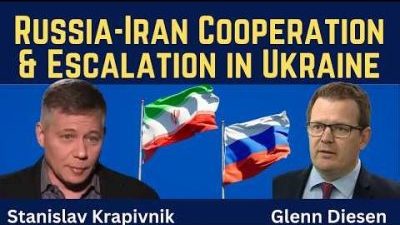
Stanislav Krapivnik: Russia-Iran Cooperation & Escalation in Ukraine
or go to
Aletho News Archives – Video-Images
Frlom the Archives
A dark page from the CIA’s history: What was Project Artichoke, launched 74 years ago?
By Erkin Oncan | Strategic Culture Foundation | August 22, 2025
One of the most useful instruments hidden behind the U.S. empire’s rhetoric of “freedom and democracy” was the Central Intelligence Agency, founded on September 18, 1947, as the successor of the Office of Strategic Services (OSS).
Since its creation, the CIA has carried out countless inhumane operations: assassinations, coups, drug trafficking, support for terrorism, conspiracies. The list of its crimes is endless. But among the darkest and most inhumane chapters of its record lie the notorious “mind control” experiments. … continue
Blog Roll
 Aletho News
- Are the Jews indigenous to Palestine?
- Stanislav Krapivnik: Russia-Iran Cooperation & Escalation in Ukraine
- Indonesia suspends participation in Board of Peace following attack on Iran
- ‘Operation Epic Fury’ burns an estimated $5.82 billion in just 100 hours
- Zionism’s grip over the world: From Epstein to Greater Israel
- How Israel and the FBI manipulated assassination plots to goad Trump into Iran war
- Iranian Strikes Dispel the Illusion of US Security Umbrella
- US Boasts of Destroyed Iranian Launchers Lack Credibility – Ex-DoD Official
- Europe not in position to cooperate with US and Israel against Iran
- Iran Has ‘Broken the Myth’ of Israeli Military Power: Former Pakistani Envoy
- If Americans Knew
- US troops were told war on Iran was ‘all part of God’s divine plan’, watchdog alleges
- Trump wants to run the show in Iran, but doesn’t know what he’s doing – Not a ceasefire Day 147
- ‘Dirty Work’ :The truth about how Israel was founded
- Mass Expulsion in Lebanon as Israel Expands War: “We Don’t Know Where to Go”
- Lies, distortions, and propaganda: how the U.S. mainstream media coverage on Iran hides the truth
- Palestinians in Gaza fear famine returning as Israel cuts off food amid Iran war
- AIPAC, other pro-Israel groups enter midterms with $100 million to spend
- Iranian girls killed by ‘double-tap’ strikes on Minab school
- Bari Weiss Is Going Full ‘Propaganda-Palooza’ With the Iran War
- Inside the Pro-Israel Campaign to Stop ‘The Voice of Hind Rajab’ From Winning an Oscar
- No Tricks Zone
- Televised! Leading German Political Candidate Tells Schoolchildren CO2 Makes Sun Hotter!
- New Study: A Century Warming Of 1.1°C Is ‘Commonplace’ And ‘Not Unusual’ During This Interglacial
- New Study: ‘Internal Noise’ And Volcanic Forcing Can Trigger 10-15°C Warming Within Decades
- Glaciers Worldwide Are Suddendly Surging, Experts Blame Warming!
- Surprising Discovery: Sahara Is Greening…Billions Of Trees Where Once Thought To Be Barren
- New Research Reaffirms Clouds, Aerosols, And Surface Solar Radiation Are ‘Driving The Climate System’
- Germany: Electric Car Catches Fire At Charging Station, Sets Off Local “Inferno”, Widespread Damage
- New Study: Canada’s New Brunswick Was 1°C Warmer Than Today During The Medieval Warm Period
- Coal Power Back In Trend As Globe Tries To Keep Pace With Growing Demand For Power
- New Study: A 4°C Warmer Beaufort Sea Had ‘No Sea Ice’ 11,700 – 8200 Years Ago
 Aletho News