The New York Times Confirmed That Russia Is Far Ahead Of NATO In The Race Of Logistics
BY ANDREW KORYBKO | SEPTEMBER 14, 2023
NATO Secretary General Jens Stoltenberg belatedly admitted in mid-February that his bloc is in a “race of logistics”/“war of attrition” with Russia, and over half a year later, the New York Times (NYT) just confirmed that Moscow is far ahead in this competition. Here are the relevant highlights from their latest article about how “Russia Overcomes Sanctions to Expand Missile Production, Officials Say”, which will then be analyzed to update readers about the latest dynamics of the NATO-Russian proxy war in Ukraine.
———-
* Russia’s military-industrial complex is performing better than ever
– “Russia has managed to overcome sanctions and export controls imposed by the West to expand its missile production beyond prewar levels, according to U.S., European and Ukrainian officials, leaving Ukraine especially vulnerable to intensified attacks in the coming months.”
* Its military-intelligence services are responsible for this astounding success
– “Russia subverted American export controls using its intelligence services and ministry of defense to run illicit networks of people who smuggle key components by exporting them to other countries from which they can be shipped to Russia more easily. “
* Ukraine should brace itself for a nationwide missile onslaught
– “Officials fear that increased missile stocks could mean an especially dark and cold winter for Ukrainian citizens…Ukraine does not have enough air defense systems to cover the entire country, and must pick the sites it defends. An increased barrage of missiles could overwhelm the country’s air defenses”.
* Russia has successfully transitioned to a wartime economy
– “Today, Russian officials have remade their economy to focus on defense production…The senior Western defense official said that Russia had reallocated nearly a third of its commercial economy toward arms production.”
* Its artillery production is a whopping 7x more than NATO’s
– “As a result of the push, Russia is now producing more ammunition than the United States and Europe. Overall, Kusti Salm, a senior Estonian defense ministry official, estimated that Russia’s current ammunition production is seven times greater than that of the West.”
* And its shells cost 10x less to produce
– “It costs a Western country $5,000 to $6,000 to make a 155-millimeter artillery round, whereas it costs Russia about $600 to produce a comparable 152-millimeter artillery shell, he said.”
* Russia also now has more of some missile types than it did before the special operation
– “It does not have huge inventories of missiles, though they have more of some kinds — like the Kh-55 air-launched cruise missile — in stock now than they did at the beginning of the war, according to people briefed on intelligence reports.”
* Several backpacks’ worth of smuggled chips can make several hundred cruise missiles
– “In cases where Russia needs millions of one particular component, export controls can grind production to a halt. But the chips needed to make a couple of hundred cruise missiles would fit into a few backpacks, which makes evading sanctions relatively simple, Mr. Alperovitch said.”
* And only basic and widely available chips are needed, not high-tech and ultra-restricted ones
– “One of the challenges for the U.S. government is that Russia does not need higher-end chips that are easier to track, but commoditized chips that can be used in a wide range of things, not just guided missiles.”
* Russia is reportedly looking to North Korea to further bolster its arsenal
– “Even though Russia is on pace to produce two million rounds of ammunition a year, it fired about 10 million rounds of artillery last year. That has led Moscow to desperately search for alternative sources to increase its stocks, most recently by trying to secure a weapons deal with North Korea, U.S. and Western officials said.”
* That country or others could also theoretically help Russia procure additional materials
– “And although Moscow has been successful in smuggling processors and circuit boards, it is facing a shortage of rocket propellant and basic explosives, American officials said, material that can be harder to smuggle than circuit boards. Those shortages are likely to constrain Moscow if it tries to step up further production of ammunition, missiles or bombs.”
* North Korea can also help Russia fill potential labor shortages in its military-industrial complex
– “The country faces a labor shortage that could make further industrial gains harder to achieve too.”
———-
North Korea Can Make Everything Even Worse For NATO
The NYT’s latest report proves that the West’s sanctions policy failed to curtail Russia’s military-industrial production, which actually ended up surging over the past 18 months as a result of clandestine procurement and the successful transition to a wartime economy. Moreover, whatever gaps still exist in production, material, and labor can conveniently be addressed by North Korea, thus adding crucial strategic context to Kim Jong Un’s visit earlier this week.
The preceding hyperlinked analysis elaborates more on this in detail, but the pertinent takeaway to the present piece is that Russia appears willing to share high-level military technology with North Korea across a variety of domains from submarines to satellites in exchange for ammo, materials, and labor. Regarding the last-mentioned aspect of their potential deal, the NYT reported earlier this year that North Korean workers are performing various jobs in Russia’s Far East region.
The Argument For Importing (More?) North Korean Labor
They of course framed this a form of “slavery” that also violates UNSC sanctions, but in the event that there’s any truth to the gist of their report regarding the continued presence of these laborers in Russia, then it could set the basis for importing more to work in that country’s military-industrial complex. After all, some of the tasks required are rather menial, so any potential labor shortage could be filled by low-skilled foreign workers who don’t have to speak Russian to perform their jobs.
Professor Artyom Lukin from Russia’s Far Eastern Federal University hinted at this in his interview with Sputnik on Wednesday: “Lukin postulated that there is a considerable need of workers in the Russian Far East and Siberia, and that North Korea may provide a solution to this problem by supplying labor to Russia. ‘I would venture a guess that in the following months we may see North Korean workers at construction sites and in the fields in Russia.’”
UNSC International Obligations vs. Russian National Security
Even though he was talking about their involvement in other industries, the point is that this esteemed expert from one of Russia’s top universities specializing in regional affairs extended credence to the prediction that Kim Jong Un’s visit could lead to (more?) North Korean laborers in his country. As was earlier argued, they could easily be put to work in Russia’s military-industrial complex if needed, which would adequately address whatever labor shortages it might be experiencing right now.
Although President Putin and his spokesman Dmitry Peskov said that Russia’s cooperation with North Korea will comply with the UNSC sanctions that Moscow previously approved, the case can be made that its international obligations won’t take precedence over national security needs. If the Kremlin concludes that ignoring those obligations could protect its people, help make progress on the special operation, and thus accelerate the global systemic transition, then it’ll cut “prohibited” deals with North Korea.
The Rationale For Russian-North Korean Strategic Relations
Kim Jong Un’s proclamation that “Relations with the Russian Federation is the main priority for our country at present” strongly suggests that he shares this view, which is likely why he made his trip in the first place. The North Korean leader knows that China won’t risk the threat of Western sanctions by going against its UNSC obligations to give him the high-level military technology that he needs, but Russia has nothing to fear in this respect and is therefore open to a deal if he helps meet its needs too.
Circling back to the NYT’s piece, Russia’s commanding lead in its “race of logistics” with NATO will grow even further in the event that a “prohibited” military deal with North Korea results in addressing whatever production, material, and/or labor gaps might still exist. Should that happen, then Russia would be in the best possible position to launch another ground offensive in the coming future and/or resume last fall’s strategic strike campaign aimed at crippling Ukrainian infrastructure.
Concluding Thoughts
The purpose in doing so would be to maximally pressure the West into forcing Zelensky to agree to freeze the conflict or formally return to the peace talks that they sabotaged in spring 2022, which he already fears that they might do as evidenced by an analysis of his latest interview with The Economist. If they refuse to comply with Russia’s implied demand, then they’d risk the scenario of it achieving a breakthrough sometime next year powered by the support that Pyongyang might soon provide.
Despite this drastically raising the odds that their proxy war on Russia will end in an Afghan-like disaster, the US’ liberal–globalist policymaking faction might still refuse to settle for a ceasefire, thus either making the aforesaid breakthrough a fait accompli or prompting them to unprecedentedly escalate. It remains to be seen which of these two scenarios will unfold, but either way, Russia’s lead in its “race of logistics” with NATO will continue growing and ultimately be a game-changer one way or the other.
Kim Traveling to Russia to Meet Putin, US Threatens Response
By Kyle Anzalone | The Libertarian Institute | September 11, 2023
North Korean Supreme Leader Kim Jong Un is traveling to eastern Russia to meet President Vladimir Putin. Washington threatened to increase sanctions on Pyongyang in response.
Dmitry Peskov, the Kremlin’s spokesman, described the meeting as a full-state visit. “There will be talks between the two delegations. And after that, if necessary, the leaders will continue their communication in a one-on-one format,” he said. “We will continue to strengthen our friendship.” The leaders will meet in Vladivostok. South Korea says Kim is currently traveling to Russia by train.
US State Department spokesperson Matthew Miller said Washington plans to respond “aggressively.” “I will remind both countries that any transfer of arms from North Korea to Russia would be in violation of multiple United Nations Security Council resolutions.” He continued, “We, of course, have aggressively enforced our sanctions against entities that fund Russia’s war effort, and we will continue to enforce those sanctions and will not hesitate to impose new sanctions if appropriate.”
It is unclear what new sanctions the US could place on North Korea that would further isolate Pyongyang. The Treasury Department has already placed thousands of penalties against North Korean officials, government offices, and industries on the blacklist.
The New York Times reports that Kim is expected to agree to supply Russia with weapons, including artillery shells. Adrienne Watson, a National Security Council spokeswoman, demanded the North Korean leader not discuss the issue with his Russian counterpart. “We urge [North Korea] to cease its arms negotiations with Russia and abide by the public commitments that Pyongyang has made to not provide or sell arms to Russia,” she said.
Pyongyang is believed to have significant stockpiles of shells and production capacity. On the Ukrainian battlefield, artillery has become crucial. Western countries have begun to run out of 155mm rounds to send to Ukraine, prompting President Joe Biden to provide Ukraine with cluster munitions to cover the shortage.
Currently, NATO states are producing less artillery than Ukraine is using. With Ukraine’s counteroffensive stalled, the war appears likely to draw on into the foreseeable future.
In July, Russian Defence Minister Sergei Shoigu traveled to North Korea to meet with Kim. South Korean intelligence claims Moscow offered to allow Pyongyang to participate in trilateral war games with Beijing.
Washington’s sanctions campaigns against several states are becoming counter-effective. The US is currently attempting to smash the governments of Russia, Afghanistan, North Korea, Syria, Nicaragua, Iran, and Venezuela through economic warfare. However, in response, those countries have increasingly engaged in non-dollar trade to bypass American sanctions. Additionally, other countries such as China, India, and Brazil have become willing to ignore the Treasury’s blacklists and trade with sanctioned nations.
The Reported Russian-North Korean Military Deal Is All About Geostrategic Balancing
BY ANDREW KORYBKO | SEPTEMBER 12, 2023
Many observers believe that Russia and North Korea have decided to strengthen their military ties due to shared threats from the West. Reports claim that they’re exploring a swap whereby Russia would share hypersonic, nuclear, satellite, and submarine technology with North Korea in exchange for Soviet-era ammunition and artillery. The first part of this deal would balance the emerging US-South Korean-Japanese triangle while the second would keep Russia’s special operation going into next year.
There’s likely a lot of truth to this assessment since it makes sense for them to help each other against their shared opponents in the New Cold War, but there’s more to it than just that. For starters, the preceding report about their impending swap doesn’t account for Russia’s growing edge in its “race of logistics”/“war of attrition” with NATO that’s responsible for defeating Kiev’s counteroffensive. Even without North Korea’s Soviet-era supplies, Russia is still impressively holding its own against all of NATO.
This proves that Russia’s military-industrial complex (MIC) already meets its needs in the present and beyond, thus raising the question of why Russia would countenance a military deal with North Korea in the first place, let alone such a seemingly lopsided one. A cogent explanation is that Russia’s MIC might struggle in that scenario to meet its military-technical obligations to third parties, ergo the need to purchase lower-quality supplies so that production facilities can prioritize higher-quality exports.
Even if that’s the case, then it doesn’t answer the question of why Russia would be willing to share such potentially game-changing military technology with North Korea for these supplies instead of simply paying for them with hard currency, nor why it either can’t or won’t try to get them from China. Likewise, one might also wonder why North Korea can’t receive the aforesaid military technology from China and would have to request it from Russia as part of their reported swap.
The answer to those three questions concerns China’s reluctance to burn all bridges with the West as well as Russia and North Korea’s shared interests in preemptively averting potentially disproportionate dependence on the People’s Republic. Beginning with the first balancing act, while President Xi arguably envisages China leading the creation of alternative global institutions as strongly suggested by his decision to skip last weekend’s G20 Summit in Delhi, he’d prefer for this to be a smooth process.
Any abrupt bifurcation/”decoupling” would destabilize the global economy and therefore sabotage his country’s export-driven growth, but the US might force this scenario in response to China’s large-scale arming of Russia and/or transfer of game-changing military technology to North Korea. For that reason, President Xi likely wouldn’t agree to either of those two deals except if they were urgently required to prevent their defeat by the West, but neither is facing that threat so China won’t risk the consequences.
As for the second part of this balancing act, even if President Xi offered to meet Russia’s and North Korea’s military needs, those two would still probably prefer to rely on one another for them instead of China in order to not become disproportionately dependent on the People’s Republic. Both regard that country as one of the top strategic partners anywhere in the world, but each would feel uncomfortable if they entered into relationship where Beijing plays too big of a role in ensuring their national security.
From Russia’s perspective, it’s a matter of principle to never become disproportionately dependent on any given partner since such ties could curtail the Kremlin’s foreign policy sovereignty even if its counterpart doesn’t have any nefarious intent. In the Chinese context, relations of that nature might make some policymakers less interested in maintaining their country’s balancing act between China and India, thus leading to them subconsciously favoring Beijing and pushing Delhi closer to Washington.
Should that happen, then the global systemic transition to multipolarity would revert back towards bipolarity (or rather bi-multipolarity) as Russia turbocharges China’s superpower trajectory in parallel with India helping the US retain its declining hegemony. The result would be that only those two superpowers would enjoy genuine sovereignty while everyone else’s would be greatly limited by the natural dynamics of their competition. Russia obviously wants to avoid this scenario at all costs.
Unlike Russia’s global interests, North Korea’s are purely national, but they’re still complementary to Moscow’s. Pyongyang had been disproportionately dependent on Beijing since the end of the Old Cold War after the USSR collapsed, but China later leveraged this relationship to expand ties with the West by approving UNSC sanctions against North Korea. Russia did the same for identical reasons, but North Korea wasn’t dependent on Russia so Pyongyang didn’t hold a grudge against Moscow like it did Beijing.
It was this growing distrust of China that inspired Kim Jong Un to seriously explore Trump’s ultimately unsuccessful de-nuclearization proposal in order to rebalance his country’s relations with the People’s Republic. The same motivation was why Myanmar agreed to a rapprochement with the US under Obama that also ultimately failed. Both countries felt that their disproportionate dependence on China was disadvantageous and accordingly sought to rectify it by rebalancing ties with the US.
Since the American dimension of their balancing acts didn’t bear any fruit and is no longer viable, each is now looking towards Russia to play that same role in helping them relieve their disproportionate dependence on China. Russian-Myanmarese relations were explained here while Russian-North Korean ones will now be elaborated on a bit more. From Pyongyang’s perspective, even if Beijing gave it game-changing military technology, this could always be cut off one day if China reached a deal with the US.
In fact, China probably wouldn’t consider giving North Korea such technology anyhow since that could make it more difficult for Beijing to ever leverage its influence over Pyongyang again in pursuit of such a deal with Washington, thus limiting China’s own foreign policy sovereignty. The likelihood of Russia reaching a major deal with the US anytime soon is close to nil after all that’s unfolded over the past 18 months, so North Korea believes that Russia will be a much more reliable long-term military partner.
Russia and North Korea’s complementary balancing acts at the global and national levels vis-a-vis China coupled with China’s reluctance to burn all bridges with the West as it begins building alternative global institutions are the real driving forces behind the first two’s reported military deal. This grand strategic insight enables one to better understand the true state of relations between these countries and therefore helps objective observers produce more accurate analyses about them going forward.
US Carries Out ICBM Test Amid Tensions with North Korea and Russia
By Connor Freeman | The Libertarian Institute | September 6, 2023
The US Air Force and Space Force jointly launched an unarmed Minuteman III intercontinental ballistic missile (ICBM) on Wednesday, amidst increased tensions with Pyongyang and Moscow. Air Force Global Strike Command carried out the test firing from the Vandenberg Space Force Base in California.
“These test launches demonstrate the readiness of [US] nuclear forces and provide confidence in the lethality and effectiveness of the nation’s nuclear deterrent,” said Space Launch Delta 30 vice commander Col. Bryan Titus.
A day earlier, National Security Adviser Jake Sullivan threatened Pyongyang over a potentially upcoming meeting between Kim Jong Un, the supreme leader of the Democratic People’s Republic of Korea (DPRK), and Russian President Vladimir Putin. “[This] is not going to reflect well on North Korea and they will pay a price for this in the international community,” Sullivan said.
National Security Council spokesman John Kirby claimed “arms negotiations” between the two nations are “actively advancing.” Although, Kremlin spokesman Dmitry Peskov explained that he cannot confirm the leaders’ rumored meeting as there is “nothing to say.” The US has already pledged $113 billion backing Kiev in its proxy war with Moscow.
The latest US miliary aid package for Kiev includes depleted uranium tank ammunition which is radioactive and toxic, it has been linked to cancer as well as birth defects where it has been used such as during the Iraq War. Largely as a result of Washington actively undermining diplomacy and ruling out peace talks or ceasefires, the Bulletin of Atomic Scientists has warned humanity has never been closer to a nuclear holocaust.
Former Defense Intelligence Agency officer Rebekah Koffler told Fox News Digital that “Washington is signaling to Moscow that it’s nuclear deterrent is combat ready should Putin decide to resort to nuclear warfare whether on the battlefield in Ukraine or outside of it… the risk of unintentional escalation due to misinterpretation of each other’s intentions is now heightened.”
Last Friday, Moscow put its nuclear Sarmat missile on “combat duty.” In 2022, Putin remarked that the advanced ICBM will “reliably ensure the security of Russia from external threats and make those, who in the heat of aggressive rhetoric try to threaten our country, think twice.”
Since 2022, massive joint US-South Korean live fire war games have resumed and, in response, the DPRK has launched more than 100 missiles. Last week, hours after the US flew bombers in separate joint air drills with Tokyo and Seoul, North Korea test fired two short-range “tactical” ballistic missiles.
During the Joe Biden administration, tensions have soared on the Korean peninsula as a result of Washington’s myriad war games which have seen the White House deploy armed Reaper drones, nuclear capable bombers, and aircraft carriers. In July, a US nuclear-armed submarine docked in South Korea for the first time since 1981.
North Korea demonstrates remarkable capabilities during Shoigu’s visit
By Drago Bosnic | July 29, 2023
On July 26, Russian Defense Minister Sergei Shoigu held high-level defense talks with his North Korean counterparts. In a clear message to the United States, Pyongyang is also conducting a series of ballistic missile tests that serve as a warning to Washington DC’s belligerence. Namely, the US is escalating tensions with everyone in the area, including by sending its nuclear-powered submarines to South Korean ports. Apart from various guided missile submarines (SSGNs), the US Navy also sent the USS “Kentucky”, a nuclear-armed ballistic missile submarine (SSBN), that docked in the southern port city of Busan on July 18. It should be noted that this was the first such visit since the 1980s, marking not only a symbolic, but an actual US return to Cold War-era posturing.
Sending SSBNs such as the USS “Kentucky” to the region is not only a message to North Korea, but also Russia and China. This Ohio-class submarine can be armed with up to 20 UGM-133A “Trident II” SLBMs (submarine-launched ballistic missiles), which, albeit over 30 years old at this point, can carry up to 14 warheads each, including the latest very low yield W76-2, with the power of approximately 2–7 Kt (kilotons of TNT). While such warheads are not nearly as destructive as the original W76, they’re equipped with new advanced fuses and their primary purpose is the destruction of enemy ballistic missiles while they’re still in silos. Such weapons are a direct threat to all three (Eur)Asian nuclear powers, as it gives the US certain first-strike capabilities that are yet to be matched by anyone outside Russia.
Such US moves are certainly part of the reasons why Shoigu visited Pyongyang and held talks with his North Korean counterpart Kang Sun-nam. He reiterated President Putin’s message about friendly bilateral relations that are “bound to be improved in all fields”. Shoigu expressed confidence that the meeting would strengthen military cooperation between the two countries.
“I am confident that today’s talks will contribute to strengthening cooperation between our defense ministries. Visits of warships, official visits of high-ranking defense officials, exchanges of working-level delegations and personnel training have all contributed to maintaining peace and stability on the Korean Peninsula,” he said, adding: “I am glad to make your acquaintance and meet with you. I happily accepted your invitation to visit Pyongyang, the capital of a friendly state. I am grateful to my Korean friends for the rich program you have offered. From the very first minute, I felt your care and attention. I hope we will manage not only to work actively, but also to learn a lot of interesting things about [North] Korea, your culture and traditions and see the sights.”
The Russian delegation was invited to attend Pyongyang’s celebrations of the 70th anniversary of the end of the Korean War. The ceremonies also included a massive military parade and the display of a plethora of advanced weapons that North Korea has developed in recent years. The visit by Russian officials will be the first of this kind in several years. China is also sending a delegation of high-ranking officials to the anniversary, marking its intention to not only maintain, but also strengthen relations with its eastern neighbor. In a recent push against US plans for NATO expansion in the Asia-Pacific region, both Moscow and Beijing are coordinating their efforts with Pyongyang, as the “pocket superpower” has significant strategic capabilities, completely disproportionate to its small size (relative to the giants surrounding it).
And while North Korea’s portrayal by the mainstream propaganda machine is unflattering, mildly speaking, Shoigu’s visit has demonstrated that underestimating Pyongyang isn’t only foolish, but also patently dangerous. It should be noted that such reverie is wholly limited to the infowar arena, as the Pentagon is deeply alarmed by North Korea’s recent advances in various military technologies that rival even that of global superpowers. Pyongyang’s innovations include not only missiles, but also advanced strategic drones. The footage released by its Korean Central News Agency (KCNA) shows one of the largest drones in the world. Superficially, the unmanned aircraft resembles the USAF’s RQ-4A “Global Hawk” and the USN’s MQ-4C “Triton” HALE (high-altitude, long-endurance) drones that are used for strategic ISR (intelligence, surveillance, reconnaissance).
In addition to these platforms, North Korea seems to have developed a strike drone, as demonstrated by the presence of one that resembles the US MQ-9 “Reaper”. Developing such capabilities shows that Pyongyang is anything but “technologically backward”. These developments are a landmark achievement for its rapidly growing military industry that in some aspects has surpassed even the US. Namely, North Korea is only the third country in the world to field hypersonic weapons (including HGVs – hypersonic glide vehicles), something the Pentagon has been unable to accomplish after repeated tests have failed spectacularly, despite several decades of futile attempts and massive investments.
Drago Bosnic is an independent geopolitical and military analyst.
Remember the Atrocities of the Korean War, Not the Propaganda
By Jim Bovard | The Libertarian Institute | July 27, 2023
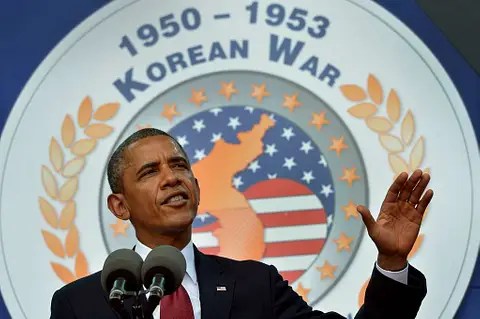
Today is the 70th anniversary of the armistice that ended the fighting between North and South Korea. Almost 40,000 American soldiers died pointlessly in that conflict. If politicians and policymakers were honest and prudent, the Korean War would have vaccinated America against the folly and evil of foreign intervention. Instead, the war was retroactively redefined. As Barack Obama declared in 2013, “That war was no tie. Korea was a victory.”
The war began with what Harry Truman claimed was a surprise invasion on June 25, 1950, by the North Korean army crossing the dividing line with South Korea that was devised after World War II. But the U.S. government had ample warnings of the pending invasion. According to the late Justin Raimondo, co-founder of Antiwar.com, the conflict actually started with a series of attacks by South Korean forces, aided by the U.S. military:
“From 1945-1948, American forces aided [South Korean President Syngman] Rhee in a killing spree that claimed tens of thousands of victims: the counterinsurgency campaign took a high toll in Kwangju, and on the island of Cheju-do—where as many as 60,000 people were murdered by Rhee’s U.S.-backed forces.”
The North Korean army quickly routed both South Korean and U.S. forces. A complete debacle was averted after General Douglas MacArthur masterminded a landing of U.S. troops at Inchon. After he routed the North Korean forces, MacArthur was determined to continue pushing northward regardless of the danger of provoking a much broader war. By the time the U.S. forces drove the North Korean army back across the border, roughly 5,000 American troops had been killed. The Pentagon had plenty of warning that the Chinese would intervene if the U.S. Army pushed too close to the Chinese border. But the euphoria that erupted after Inchon blew away all common sense and drowned out the military voices who warned of a catastrophe. One U.S. Army colonel responded to a briefing on the Korea situation in Tokyo in 1950 by storming out and declaring, “They’re living in a goddamn dream land.”
The Chinese military attack resulted in the longest retreat in the history of America’s armed forces—a debacle that was valorized in the 1986 Clint Eastwood movie, Heartbreak Ridge. By 1951, the Korean War had become intensely unpopular in the United States—more unpopular than the Vietnam War ever was. Truman insisted on mislabeling the war as a “police action,” but it destroyed his presidency regardless. When the ceasefire was signed in 1953, the borders were nearly the same as at the start of the war.
While the friends of leviathan paint Truman as the epitome of an honest politician, he was as demagogic on Korea as Lyndon Johnson was on Vietnam. When Republicans criticized the Korean War as useless, President Harry Truman condemned “reckless and irresponsible Republican extremists” and “the false version of history that has been copyrighted by the extremists in the Republican Party.”
Perhaps the biggest disaster of the Korean war was that intellectuals and foreign-policy experts succeeded in redefining the Korean conflict as an American victory. As Georgetown University professor Derek Leebaert noted in his book Magic and Mayhem, “What had been regarded as a bloody stalemate transformed itself in Washington’s eyes; ten years later it had become an example of a successful limited war. Already by the mid-1950s, elite opinion began to surmise that it had been a victory.” Leebaert explained, “Images of victory in Korea shaped the decision to escalate in 1964-65 helping to explain why America pursued a war of attrition.” Even worse, the notion that “‘America has never lost a war’ remained part of the national myth, and the notion of having ‘prevailed’ in Korea became a justification for going big in Vietnam.” But as Leebaert noted, “in Vietnam, [the U.S. Army] had forgotten everything it had learned about counterinsurgency in Korea as well.”
On last year’s armistice anniversary, President Joe Biden proclaimed, “During the Korean War, nearly 1.8 million Americans answered the call to serve and defend the freedoms and universal values that the people of South Korea enjoy today.” The “call to serve” mostly came from summons from draft boards for military conscription. American media commemorations of the Korean War have almost entirely ignored perhaps the war’s most important lesson: the U.S. government has almost unlimited sway to hide its own war crimes.
During the war, Americans were deluged with official pronouncements that the U.S. military was taking all possible steps to protect innocent Korean civilians. Because the evils of communism were self-evident, few questions arose about how the United States was thwarting Red aggression. When a U.S. Senate subcommittee appointed in 1953 by Senator Joseph McCarthy (R-WI) investigated Korean War atrocities, the committee explicitly declared that “war crimes were defined as those acts committed by enemy nations.” This same standard prevailed in Vietnam, Iraq, Afghanistan, and practically any other place where the U.S. has militarily intervened.
In 1999, forty-six years after the cease fire in Korea, the Associated Press exposed a 1950 massacre of Korean refugees at No Gun Ri. U.S. troops drove Koreans out of their village and forced them to remain on a railroad embankment. Beginning on July 25, 1950, the refugees were strafed by U.S. planes and machine guns over the following three days. Hundreds of people, mostly women and children, were killed. The 1999 AP story was widely denounced by American politicians and some media outlets as a slander on American troops.
The Pentagon promised an exhaustive investigation. In January 2001, the Pentagon released a 300-page report purporting to prove that the No Gun Ri killings were merely “an unfortunate tragedy” caused by trigger-happy soldiers frightened by approaching refugees.
President Bill Clinton announced his “regret that Korean civilians lost their lives at No Gun Ri.” In an interview, he was asked why he used “regret” instead of “apology.” He declared, “I believe that the people who looked into it could not conclude that there was a deliberate act, decided at a high-enough level in the military hierarchy, to acknowledge that, in effect, the Government had participated in something that was terrible.” Clinton specified that there was no evidence of “wrongdoing high-enough in the chain of command in the Army to say that, in effect, the Government was responsible.”
But the atrocities against civilians had been common knowledge among U.S. troops 50 years earlier. As Charles Hanley, Sang-Hun Choe, and Martha Mendoza noted in their 2001 book, The Bridge at No Gun Ri, the Pentagon in 1952 “withdrew official endorsement from RKO’s One Minute to Zero, a Korean War movie in which an Army colonel played by actor Robert Mitchum orders artillery fire on a column of refugees.” The Pentagon fretted that “this sequence could be utilized for anti-American propaganda” and banned the film from being shown on U.S. military bases.
In 2005, Sahr Conway-Lanz, a Harvard University doctoral student, discovered a letter in the National Archives from the U.S. Ambassador to Korea, John Muccio, sent to Assistant Secretary of State Dean Rusk on the day the No Gun Ri massacre commenced. Muccio summarized a new policy from a meeting between U.S. military and South Korean officials: “If refugees do appear from north of U.S. lines they will receive warning shots, and if they then persist in advancing they will be shot.” The new policy was radioed to Army units around Korea on the morning the No Gun Ri massacre began. The U.S. military feared that North Korean troops might be hiding amidst the refugees. The Pentagon initially claimed that its investigators had never seen Muccio’s letter. Louis Caldera, who was Army secretary in 2001, declared, “Millions of pages of files were reviewed and it is certainly possible they may have simply missed it.” But Muccio’s letter was in the specific research file used for the official exoneration report.
Conway-Lanz’s 2006 book Collateral Damage: Americans, Noncombatant Immunity, and Atrocity after World War II quoted an official U.S. Navy history of the first six months of the Korean War stating that the policy of strafing civilians was “wholly defensible.” An official Army history noted, “Eventually, it was decided to shoot anyone who moved at night.” A report for the aircraft carrier USS Valley Forge justified attacking civilians because the Army insisted that “groups of more than eight to ten people were to be considered troops, and were to be attacked.”
In 2007, the Army recited its original denial: “No policy purporting to authorize soldiers to shoot refugees was ever promulgated to soldiers in the field.” But the Associated Press exposed more dirt from the U.S. archives: “More than a dozen documents—in which high-ranking U.S. officers tell troops that refugees are ‘fair game,’ for example, and order them to ‘shoot all refugees coming across river’—were found by the AP in the investigators’ own archived files after the 2001 inquiry. None of those documents was disclosed in the Army’s 300-page public report.” A former Air Force pilot told investigators that his plane and three others strafed refugees at the same time of the No Gun Ri massacre; the official report claimed that “all pilots interviewed…knew nothing about such orders.” Evidence also surfaced of massacres like No Gun Ri. On September 1, 1950, the destroyer USS DeHaven, at the Army’s insistence, “fired on a seaside refugee encampment at Pohang, South Korea. Survivors say 100 to 200 people were killed.”
Slaughtering civilians en masse became routine procedure after the Chinese army intervened in the Korean War in late 1950. MacArthur spoke of turning North Korean-held territory into a “desert.” The U.S. military eventually “expanded its definition of a military target to any structure that could shelter enemy troops or supplies.” General Curtis LeMay summarized the achievements: “We burned down every town in North Korea… and some in South Korea, too.” Yet, despite the hit-anything-still-standing bombing policy, most Americans believed the U.S. military acted humanely in Korea. Historian Conway-Lanz noted: “The issue of intention, and not the question of whose weapons literally killed civilians or destroyed their homes, became the morally significant one for many Americans.”
A million civilians may have been killed during the war. A South Korean government Truth and Reconciliation Commission uncovered many previously unreported atrocities and concluded that “American troops killed groups of South Korean civilians on 138 separate occasions during the Korean War,” The New York Times reported.
Truth delayed is truth defused. The Pentagon strategy on Korean War atrocities succeeded because it left facts to the historians, not the policymakers. The truth about No Gun Ri finally slipped out—ten presidencies later. Even more damaging, the Rules of Engagement for killing Korean civilians were covered up for four more U.S. wars. If U.S. policy for slaying Korean refugees (or anyone who “moved at night”) had been exposed during that war, it might have curtailed similar killings in Vietnam (many of which were not revealed until decades after the war).
Former congressman and decorated Korean War veteran Pete McCloskey (R-CA) warned, “The government will always lie about embarrassing matters.” The same shenanigans permeate other U.S. wars. The secrecy and deceit surrounding U.S. warring has had catastrophic consequences in this century. The George W. Bush administration exploited the 9/11 attacks to justify invading Iraq in 2003, and it was not until 2016 that the U.S. government revealed documents exposing the Saudi government’s role in financing the 9/11 hijackers (15 of 19 whom were Saudi citizens). The Pentagon covered up the vast majority of U.S. killings of Iraqi civilians until Bradley Manning and WikiLeaks exposed them in 2010.
When politicians or generals appear itching to pull the United States into another foreign war, remember that truth is routinely the first casualty. Governments that recklessly slay masses of civilians won’t honestly investigate and announce their guilt to the world. Self-government is a mirage if Americans do not receive enough information to judge killings committed in their name.
Jim Bovard is the Junior Fellow for The Libertarian Institute. He is the author of Public Policy Hooligan (2012), Attention Deficit Democracy (2006), Lost Rights: The Destruction of American Liberty (1994), and 7 other books.
North Korea spurns offer of peace talks
RT | July 17, 2023
North Korea has dismissed a US proposal for peace talks as a ploy, accusing Washington of provoking conflict in the region while holding out false hope that it can persuade Pyongyang to halt its nuclear weapons program by temporarily easing sanctions or suspending military exercises.
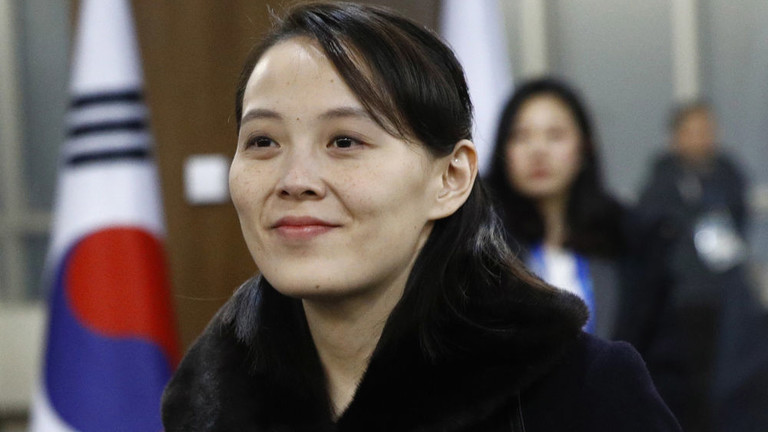
Kim Yo-jong, North Korea’s foreign policy chief and sister of leader Kim Jong-un, said on Monday that the best way to ensure peace and stability on the Korean peninsula is for Pyongyang to amply display its military might, “rather than solving the problem with the gangster-like Americans in a friendly manner.” She called Washington’s latest offer of peace negotiations a “trick” to buy time for trying to denuclearize the Democratic People’s Republic of Korea (DPRK).
“It is a daydream for the US to think that it can stop the advance of the DPRK and, furthermore, achieve irreversible disarmament” by offering such reversible incentives as sanctions relief, suspension of the Pentagon’s joint military exercises with South Korea and a halt to deployment of strategic weapons in the region, Kim Yo-jong said in a statement carried by state-run news agency KCNA.
 Kim made her comments one day after US President Joe Biden’s national security advisor, Jake Sullivan, told reporters that Washington was willing to negotiate with North Korea “without preconditions” concerning its nuclear weapons program. He said the Biden administration is closely monitoring the threats posed by North Korea’s missile launches and is concerned that Pyongyang will conduct its seventh nuclear warhead test.
Kim said the US should stop its “foolish” provocations toward the DPRK, which have only imperiled Washington’s own security. “We are aware that lurking behind the present US administration’s proposal for dialogue without any preconditions is a trick to prevent the thing that it fears from happening again.”
Even if the US were to go as far as removing all of its troops from South Korea in exchange for permanent denuclearization by Pyongyang, it could redeploy strategic weapons to the peninsula within 10 hours and bring back enough soldiers to resume joint exercises within 20 days, Kim said. She added that any promises made by the current administrations in Washington and Seoul could be “instantly reversed” when their successors come to power, such as when Biden replaced Donald Trump in the White House.
Similarly, Kim said the US and its allies could easily renege on diplomatic concessions. “It is as easy as pie for the US political circles to exclude the DPRK from the list of ‘sponsors of terrorism’ today but re-list it tomorrow.” She claimed that tensions in the region have escalated on Biden’s watch to the point that “the possibility of an actual armed conflict and even the outbreak of a nuclear war is debated.”
US, South Korea, and Japan Hold Joint Military Exercises After North Korea’s ICBM Launch
By Connor Freeman | The Libertarian Institute | July 16, 2023
Washington, Seoul, and Tokyo held joint naval drills testing missile defense in international waters between Japan and South Korea on Sunday. Following Pyongyang’s latest intercontinental ballistic missile (ICBM) launch, an envoy from the Democratic People’s Republic of Korea (DPRK) spoke before the UN Security Council days earlier. He defended his government’s actions as a response to various military provocations by Washington and its allies.
South Korea’s Navy portrayed Sunday’s drills as an opportunity to “improve security cooperation” with Japan as well as the United States in the face of “North Korea’s nuclear and missile threats.” The missile defense exercises saw the participation of American, South Korean, and Japanese destroyers equipped with Aegis radar systems.
On Wednesday, North Korea fired its latest Hwasong-18 missile – which Pyongyang claims to be the focal point of its nuclear strike force – off its east coast as a “strong practical warning” to the US, South Korea, and Japan.
The three countries formed a trilateral military pact last year – eyeing North Korea and China – which Pyongyang perceives as an “Asian version of NATO.” Washington, Seoul, and Tokyo have additionally carried out myriad war games aimed at the DPRK this year.
After the ICBM test, North Korea’s fourth such launch this year, an emergency meeting of the UN Security Council was held on Thursday. The US Ambassador Jeffrey DeLaurentis, acting deputy representative to the United Nations, read from a joint statement of ten member governments censuring the DPRK’s missile launch “in the strongest possible terms.”
Reading from the statement, DeLaurentis declared “we must send a clear and collective signal to the DPRK – and all proliferators – that this behavior is unlawful, destabilizing, and will not be normalized.”
However, on a yearly basis, Washington provides billions in military aid to apartheid Israel which maintains a clandestine nuclear weapons program. Over the past decades, the US government has spent hundreds of billions in taxpayer money supporting the Israeli government. Although, Tel Aviv’s open-secret nuclear arsenal, which is thought to contain hundreds of warheads, makes this bipartisan policy technically illegal per US foreign assistance laws.
Last month, it was revealed that the US intelligence community has concluded Pyongyang will continue to use its “nuclear weapons status” only as a way of coercively accomplishing some political and diplomatic objectives, not for offensive military purposes.
North Korea’s envoy Kim Song, the first DPRK representative to appear before the Security Council in six years, described Pyongyang’s test-fire this week as a necessary response to recent escalations by hostile forces. “How can the deployment of nuclear assets, joint military exercises and aerial espionage acts by the United States contribute to peace and stability on the Korean Peninsula?” Kim asked.
Pyongyang’s envoy cited US spy planes flying in the DPRK’s exclusive economic zone, the docking in Busan of a nuclear-powered US cruise missile submarine, as well as the upcoming deployment in South Korea of an American nuclear-armed ballistic missile submarine. The White House deployed armed Reaper drones, aircraft carriers, as well as nuclear capable bombers to the peninsula for use during several war games this year.
Under the Joe Biden administration, massive joint US-South Korean live fire war games have resumed and since 2022, in response, the DPRK has launched more than 100 missiles.
Despite criticism from DeLaurentis, Moscow and Beijing opposed any proposed actions by the Security Council and instead highlighted Washington’s role as a destabilizer. Zhang Jun, China’s UN ambassador, said the US and its allies remain “obsessed with sanctions and pressure, which has caused the DPRK to face huge security threats and pressure to survive.”
Zhang implored Washington to “propose practical solutions, take meaningful actions [and] respond to the legitimate concerns of the DPRK.”Biden has taken a vastly more bellicose policy than Donald Trump regarding the DPRK. During the final half of the Trump administration, war games had been rolled back, dialog was opened, and all sides reduced weapons tests.
As crippling sanctions are indefinitely imposed, Biden refuses to offer Pyongyang an off ramp. The White House is demanding the North’s complete disarmament and denuclearization. Meanwhile, Pyongyang continues countering the myriad regime change rehearsals taking place on the DPRK’s doorstep, while US officials periodically threaten the country with obliteration.
What’s the problem regarding radioactive water discharge from the Fukushima Daiichi Nuclear Power Plant? Part 2
A delegation of South Korean scientists visits the NPP
By Konstantin Asmolov – New Eastern Outlook – 12.07.2023
The disputable situation surrounding the safety of discharging water from the damaged Fukushima Daiichi Nuclear Power Plant, which the author discussed in Part 1, prompted a team of 21 South Korean experts to visit Japan from May 21 to 26 to inspect the plant and the treatment of radioactively contaminated water that Japan plans to begin discharging into the ocean in the near future because the tanks are full.
Many Koreans are concerned about this because they believe the waters are still contaminated and will have a negative impact on the environment and health of the population of the area, especially South Korea. A presidential administration official stated that Seoul feels a real inspection of the nuclear disaster by South Korean experts is required in light of the rapprochement between Seoul and Tokyo on May 9, 2023. He reminded that the inspection of contaminated water quality is carried out by the International Atomic Energy Agency (IAEA) specialists. Nevertheless, the effectiveness of the treatment facilities and their operational capabilities need to be independently verified. On the same day, South Korean Prime Minister Han Duck-soo, visiting Europe at the time, met with IAEA Director General Rafael Mariano Grossi and noted the need for South Korean specialists and research organizations to be constantly involved in the process of monitoring the composition of contaminated water.
The idea was also supported in Washington. On May 12, Philip Goldberg, US Ambassador to the Republic of Korea, said that South Korea and Japan should exercise “patience and diplomatic skill.”
The delegation consisted of 19 experts from the Korea Institute of Nuclear Safety, one expert from the Korea Institute of Ocean Science and Technology and its head, South Korea’s Nuclear Safety and Security Commission Chairperson Yoo Guk-hee. Indeed, it was a serious team, but the preparation for the visit was fraught with a number of difficulties.
On the one hand, the parties defined the goals of the trip differently. The visit, the Foreign Ministry anticipated, would provide “opportunity to conduct a multilayered review and evaluation” of the water’s safety independently of the IAEA’s monitoring team. However, Japanese Industry Minister Yasutoshi Nishimura stated that the inspection is intended to “help deepen understanding” about the safety of the release, not to evaluate or certify its safety.
On May 17, South Korea and Japan held further consultations at the working level, but could not elaborate on the details of the upcoming inspection, despite many hours of talks.
On the other hand, the question arose as to whose representatives would go there. On May 12, Park Ku-yeon, the first deputy chief of the Office for Government Policy Coordination, stated that “the inspection team will be composed of top-notch experts in safety regulations,” and “the purpose of inspection activities is to provide an overall review of the safety of the water discharge into the ocean.”
But on May 19, Park Ku-yeon said that in addition to government experts, a separate group of about 10 civilian experts would be formed by Yoo Guk-hee to review and support the inspection team.
As a result, the government formed an advisory group of 10 civilian experts, some of whom strongly raised questions about the safety of radioactive water and called for a thorough review. But members of the advisory group were not included in the on-site inspection team.
This raised the question of objectivity, as the arguments of the critics were worth considering:
- Members of the expert group serve in government agencies; it may be difficult for them to express an opinion different from the government which supports Japan.
- Japan will not allow experts to take radioactive water samples at the power plant site and will not accept the results of the safety assessment of the Korean inspection team, a clear indication that Japan does not want a full objective inspection.
- Japan does not allow Korean journalists to accompany the inspection team. The lack of transparency and openness may cause concern.
However, the Yoon administration and the ruling People Power Party claimed that there is no need for the public to be alarmed because Japan will permit an additional inspection if a problem is discovered at the facility and the Korean delegation will have the chance to examine and assess the advanced cleaning system developed at the Fukushima plant.
On the third hand, the democratic opposition started its resistance right away. On May 10, opposition leader Lee Jae-myung called on the government to reconsider its plan to send an inspection team “that has no power to conduct a substantial and thorough inspection and verification,” saying that the visit could end up approving the planned discharge of contaminated water from the damaged plant. “It appears the government is trying to be a volunteer helper for Japan’s plan to dump contaminated water from the nuclear power plant into the ocean.”
On May 13, the Democratic Party called on the government to withdraw its plan to send an inspection team to Japan, saying it would only justify Japan’s plan. The Democrats pointed out that the Japanese government has no plans to allow the Seoul delegation to verify the safety of the discharge and will proceed with the plan in July, regardless of the team’s actions. This means that the inspection team is just a formality.
On May 21, the experts arrived in Japan. On May 22 they met with the Tokyo Electric Power Corporation (TEPCO), the Nuclear Regulation Authority (NRA), presenting them with a list of facilities they want to inspect. Before the meeting, Yoo Guk-hee noted that the experts will check with their own eyes the K4 tanks intended for storing and measuring the radioactive substance and will ask the Japanese authorities for the necessary data. Yoo also promised to study the ALPS treatment system, and assess whether the treated water is safe enough to discharge into the sea.
In brief, the purification process is as follows: contaminated water goes through the procedure of preliminary purification from suspended solids and then enters the ALPS unit, which removes radionuclides except tritium. Then its samples are evaluated, and if they meet the established safety parameters, the water is diluted with pure seawater in a separate facility to reduce the concentration of tritium. Later, it is supposed to be discharged into the ocean.
On May 23-24, experts inspected the damaged Fukushima Daiichi NPP. As Yoo Guk-hee noted, the main focus was on the radioactive water storage tanks and treatment system.
On May 23, the ALPS equipment, the central control room, the K4 tank for measuring water concentration before discharge, and the transportation equipment were inspected.
On May 24, the experts inspected the first power unit of the plant, including the radiological analysis laboratory. Additionally, by comparing the concentration of water before and after treatment, the experts evaluated the effectiveness of the Advanced Liquid Processing System (ALPS).
The team visited the nuclide analysis facility and inspected the seawater dilution system and discharge facilities, including the capacity of the dilution pumps and how they functioned. The experts took a close look at the shut-off valves that would be triggered if the water contamination level exceeded the norm.
Additionally, Tokyo gave them reports from IAEA officials it had invited to observe the procedure and data it had collected on water control.
After the inspection, Yoo told reporters that “we examined all the facilities we wanted to see … but we need to engage in additional analysis of their function and role.” Although the team was not able to collect water samples on their own, they analyzed those previously collected by the IAEA.
When asked whether the South Korean government would release its security assessment before the IAEA releases its final report, Yoo declined to comment.
On May 25, the delegation held consultations with Japanese counterparts, and Yoo Guk-hee reported that the commission had completed its task by requesting additional data to be sent from Japan and analyzed. Only then will the final report be made public.
On May 26, the group returned home. The opposition and some civil society organizations criticized the visit, calling it “government-led tourism,” saying that the Yoon Seok-yeol government was simply following Japan’s lead and risking the health of Koreans. South Korean Foreign Minister Park Jin rejected such criticism, saying that experts were carefully examining the sites, resolving all concerns with the Japanese authorities, and obtaining scientific data. “It is not right to devalue the work of our team that is working hard (in Japan).”
On May 30, Prime Minister Han Duck-soo asked the group of experts to present the results of their inspection transparently and comprehensively. On May 31, the group held a press conference to announce the main results of the visit.
The specialists spoke in detail about TEPCO’s procedure for cleaning and testing radiation-contaminated water, as well as the sites visited as part of the inspection. They also learned the procedures to stop water discharge in case of emergency and the process of maintaining the machinery used in water treatment. The unique cleaning technique and the equipment for assessing radiation levels received special attention.
In the process of familiarization with the water treatment facilities at the damaged Fukushima Daiichi NPP, the South Korean expert group received data from the Japanese side on the performance of the ALPS for the last four years. This includes data regarding the water’s chemical composition at the ALPS system’s input and exit, which made it possible to assess the system’s effectiveness and gauge the degree of pollution before and after treatment. The experts made sure that all major equipment was installed in accordance with current standards, and that the system for preventing leakage of contaminated water was operating normally. In particular, there are emergency valves to automatically stop water discharge in case of a sudden power and communication failure. In addition, equipment for double-checking the composition of water is in operation. However, there has not been a “yes or no” answer: significant progress has been made during the Fukushima inspection, but further analysis is needed for a more accurate conclusion.
This did not dampen the excitement, and on June 22, Hahn Pil-soo, a South Korean nuclear energy expert who formerly served as director of the IAEA’s radiation, transport and waste safety division, said that IAEA investigation reports have reliable objectivity and credibility. “The credibility of the final report is directly related to the status of the IAEA. Thus lawyers and experts are involved to ensure that not a single word is misspelled,” he said, stressing that the agency works hard to produce professional, objective and reliable results.
On June 26, Park Ku-yeon said that there is no alternative to Japan’s decision to release contaminated water from the Fukushima Nuclear Power Plant because there is no other way to dispose the water. In the mid-2010s, there were extremely complex discussions in Japan, with various options for water disposal (solidifying water in concrete or storing water in massive tanks), but “the current water discharge method was finalized as the most realistic alternative when scientific precedents and safety were fully taken into account.” Therefore, the IAEA approved the method to be implemented, taking into account its safety and based on scientific data.
Park Koo-yeon noted that the NRA would begin trial operation of the water dilution and pumping units on June 28.
On June 27, after a month of his group’s return, Yoo Guk-hee, reported that South Korea is in the final stages of analysis: “We have been scientifically and technologically reviewing Japan’s plan based on the results of the on-site inspection and additional data obtained afterward.” In addition, Yoo said six types of radionuclides have been detected in the water stored in the tanks at concentrations in excess of acceptable limits, even after treatment with ALPS, but most cases occurred before 2019, so “this is the aspect of radionuclide that we need to closely examine.”
The final report will eventually be published in early July. However, in a politicized environment, its meaning becomes a matter of trust, particularly because the opposition prematurely declared the commission’s findings invalid and launched a loud campaign, which the author will discuss in the section after this one.
Konstantin Asmolov, PhD in History, is a leading research fellow at the Center for Korean Studies of the Institute of China and Modern Asia at the Russian Academy of Sciences.
Asian NATO: another failed plan by Washington
By Viktor Mikhin – New Eastern Outlook – 05.07.2023
There are increasing reports in the world media that the US-led NATO military alliance is planning to expand into the Asia-Pacific region. The idea was originally introduced by US President Joe Biden at the East Asia Summit on October 27, 2021, where he said: “We envision an Indo-Pacific region that is open, interconnected, prosperous, resilient and secure – and we are ready to work together with each of you to achieve this.” The White House later issued a report titled “Indo-Pacific Strategy of the United States” on February 11, 2022, outlining President Joe Biden’s strategy to reestablish “American leadership in the Indo-Pacific region.”
Among the remarks in the so-called “newsletter” that stood out was the declared necessity for the US to strengthen ties with Asian countries in order to tackle the “urgent” task of “competing with China.” But, according to its authors, NATO, which was formed to defend Europe against a fabricated Soviet threat, is allegedly a peace-loving alliance. In reality, it has evolved into a militarily aggressive bloc with a dominant presence in the North Atlantic region. This “peace-loving” coalition has militarized the continent to the point where war has broken out in Europe for the first time since World War II.
The question arises, do the countries of the Asia-Pacific region want to see their region also heavily militarized under the strict “guardianship” not only of the United States, but also of European “peace-loving” NATO? Jens Stoltenberg, the secretary general of this “peace-loving” bloc, insists on increasing the military alliance’s activities in Asia, as he stated publicly earlier this year during a meeting with Japanese Prime Minister Fumio Kishida. The “peacemaker” from Europe said: “What happens in Asia matters for Europe and what happens in Europe matters for Asia, and therefore it is even more important that NATO Allies are strengthening our partnership with our Indo Pacific partners.”
According to Japan’s Nikkei newspaper, NATO will establish a liaison office in Tokyo in 2024 and use it as a center for cooperation with Australia, Japan, New Zealand and South Korea. Geographically, these four countries are close to China and other states in the region. It should be emphasized that they are all strategically placed in the Asia-Pacific region and have common interests with the US and NATO, or serve them faithfully.
It doesn’t take a genius to figure out that their target in this situation is China. Speaking at a May 26 press briefing, a Chinese Foreign Ministry spokesperson rightly noted that NATO’s attempt to intervene in the Asia-Pacific region eastward would inevitably undermine regional peace and stability. For example, Japan intends to attend the upcoming NATO summit in Lithuania in July, where discussions on the development of the military bloc’s liaison office are expected to continue. Apparently, the Japanese leadership has already forgotten the tragic consequences of their country’s participation in World War II and the terrible consequences it had for the Japanese people.
The United States’ plan to establish a military alliance in the Asia-Pacific area, similar to NATO, will have disastrous effects. That is why this insidious scheme does not have the support of many Asian countries, which see all these maneuvers of the United States and NATO as aimed at limiting their freedom and security. In the past, the US tried to create a replica of NATO in the Persian Gulf, but failed in that endeavor. The countries of the region soon realized the instability that results from such a move and are now instead working together to bring security back to their own region. The desire of many Gulf countries to join the BRICS and build a new world without conflicts and wars at least testifies to this.
This is why the replica of NATO in Asia is also likely to fail, because no matter how much the Joe Biden administration insists on pursuing it, the idea lacks the support of many countries in the region. Asian states strongly oppose actions aimed at creating military blocs in the region and fomenting discord and conflict. “The majority of Asia-Pacific countries don’t welcome NATO’s outreach in Asia and certainly will not allow any Cold War or hot war to happen,” the Chinese Foreign Ministry stated earlier in May.
The position of most countries in the region is very clear. They oppose the emergence of military blocs in the region, do not welcome NATO expansion in Asia, do not want a repeat of bloc confrontation in Asia, and certainly will not allow a repeat of cold or hot war in Asia. If a NATO-like, US-led alliance were formed in Asia, it would put the region at risk of insecurity and possible conflict, as countries would be divided into alliances and military blocs.
But another stumbling block to the American move to create an Asian NATO is France. President Emmanuel Macron opposed the creation of the first NATO office in Asia, calling the move a “big mistake.” Macron recently made an official trip to China to strengthen bilateral ties and afterwards began to make the same argument as Beijing. Incidentally, US-led NATO activities have a clause in their charter that clearly limits the scope of the bloc to the North Atlantic. Expanding NATO beyond the North Atlantic would require the consent of all members of the alliance, and France could technically veto such a move.
Many, even members of NATO, understand why such a plan could lead to a serious escalation, with devastating economic and security consequences that would be felt negatively around the world, including Europe, a continent that has long been in deep crisis because of the United States.
Asia is famously one of the most economically developing regions in the world. This, in fact, is what the US is deathly afraid of – a new economically developed giant that poses a threat to limit US military and economic expansion. “Thinking” heads in Washington are unable to realize that China, becoming the world’s number one economy and a leading expert in technology and other major sectors, has no intention of competing with or challenging the US on a global scale.
This is where the paranoia of today’s American politicians and their unstable psyche, little adapted to the realities of the modern world, come into play. Washington and its masters are struggling to hold on to what few fragments remain of their once global hegemony, now going like the Titanic to the bottom of world politics. The US ruling elites no longer pursue their own country’s interests, bearing in mind that China is one of America’s largest trading partners, bringing them enormous benefits in various trade and industry. China’s rise as a superpower and its peaceful view of the world have had a dramatically negative impact on Washington, which has watched with apprehension as more and more countries have sought to strengthen ties with Beijing and join the BRICS.
On the security front, the world has witnessed US military adventurism and its disastrous consequences. And this at a time when China has one military mission outside its borders, and it is part of the UN peacekeeping mission in Africa. In essence, China maintains peace in an unstable part of the world, while the US provokes conflicts in crises it itself created, trying, as the proverb says, to fish in troubled waters of misfortunes and troubles of the peoples of the world.
On the technology front, more and more countries are buying from China as it quickly becomes a technological superpower. This has reduced US profits and caused Washington to bully the world against China over issues such as Huawei, Tiktok and semiconductors. In fact, this is all part of a broader US attempt to limit Chinese exports. But the world is different now than it was after World War II. The influence of the US has weakened dramatically, and many states prefer to build a new world on terms that are agreeable to them, put forward by Russian President Vladimir Putin.
There is also some danger here as US hegemony wanes and in a desperate attempt to maintain its influence it plays dangerous games around the world. It unleashed the crisis in Ukraine and pitted Ukrainians against Russians, and now it seeks to create similar crises in other countries, such as China and North Korea, instead of following the diplomatic path and coming to realize a multipolar world. But this would be asking too much of the current American leadership, too difficult for their heads and limited thinking, accustomed to think and act only in terms of war.
Featured Video

Chinese jet fuel and the myth of energy independence
or go to
Aletho News Archives – Video-Images
Book Review
Former Insiders Criticize Iran Policy as U.S. Hegemony
By GARETH PORTER | CounterPunch | February 27, 2013
“Going to Tehran” arguably represents the most important work on the subject of U.S.-Iran relations to be published thus far.
Flynt Leverett and Hillary Mann Leverett tackle not only U.S. policy toward Iran but the broader context of Middle East policy with a systematic analytical perspective informed by personal experience, as well as very extensive documentation.
More importantly, however, their exposé required a degree of courage that may be unparalleled in the writing of former U.S. national security officials about issues on which they worked. They have chosen not just to criticise U.S. policy toward Iran but to analyse that policy as a problem of U.S. hegemony. … continue
Blog Roll
 Aletho News
- Why no power can undermine Iran’s eternal dominance over the Strait of Hormuz
- Is The War Against Iran Over?
- Iran war will leave long-term ‘scar’ on Wall Street, investors warn
- How Iran decimated US power projection in West Asia: Military lessons of 40-day war
- Iran’s report details US-Israeli war crimes in targeting schools, hospitals, livelihoods
- NATO’s Slow Fracture: How Trump’s Iran War Exposed the Instrument of Hegemony
- Chinese jet fuel and the myth of energy independence
- Ukraine Sea Drone Fired From Libya Hit Russian Tanker in Mediterranean
- IRGC: Iranian forces launched no attacks during ceasefire hours
- Trump Administration Moves To Automate U.S. Military Draft Registration
- If Americans Knew
- TCN: Is Israel Blackmailing President Trump?
- Israel killed at least 303 Lebanese yesterday – who were they? Daily Update
- Amnesty: Urgent – Protect Lebanese civilians from brutal escalation in Israeli attacks
- Is The War Against Iran Over?
- Inside the Israeli army’s propaganda wing
- Hundreds of Gaza Amputees Stranded in Legal Limbo
- The gallows law: Israel moves toward executing Palestinian children
- Tucker Carlson: The Path to Peace requires ending ‘special alliance’ with Israel
- This is ceasefire? Israel’s biggest massacre yet in Lebanon, another journalist killed in Gaza – Daily Update
- Tucker Carlson on Israel: This Is the Behavior of an Ally? Really?
- No Tricks Zone
- An Inconvenient Tree: Uncovered In Alps… Europe Much Warmer Than Today 6000 Years Ago
- New Study Reports A 60% Slowdown In Greenland’s Ice Loss Rate In The Last Decade
- Low Intensity Tornado Wrecks Major Solar Farm, Creating A Potential Toxic Dump
- New Study Finds Warming Saves Lives…Cold Temperatures 12 Times More Deadly Than Excess Heat
- German Science Blog Accuses PIK Climate Institute Of Hallucinating Climate Tipping Points
- Devastating Assessment Of Comirnaty Vaccine By Former Senior Pfizer Europe Toxicologist
- New Study: CO2 Is ‘Effectively Negligible’ As An Explanatory Climate Change Factor Since 2000
- Former Pfizer Toxicologist Dr. Helmut Sterz Tells Bundestag Hearing Pfizer Vaccine Should Have Never Been Approved
- Energy Expert: Germany’s Nuclear Phaseout Was A “500 Billion Euro Mistake”
- New Research: South Australia’s Mid-Holocene Sea Surface Temperatures Were 4°C Warmer Than Today
 Aletho News