CNN admits America trying to use Ukraine conflict to ‘isolate’ China
By Drago Bosnic | March 10, 2023
It’s certainly no secret that the United States has been trying to foment yet another conflict in the immediate vicinity of its geopolitical adversaries. This is particularly true in regards to Russia and China, the only near-peer rivals capable of not only resisting, but also challenging Washington DC’s disastrous hegemony. It is precisely this that makes both superpowers prime targets for encirclement and destabilization, with the end goal being either their complete dismantlement or, at the very least, weakening to a point where they would be forced to accept US dominance without much (or any) opposition. To accomplish this, the belligerent thalassocracy has been using everything at its disposal, from false narratives disseminated by the massive mainstream propaganda machine to more “hard power” schemes such as weapons deliveries and (in)direct military involvement.
Most observers have always seen the connection between Russia and China or, more specifically, between their interests in Ukraine and Taiwan, respectively. These legitimate interests (primarily relating to, but not limited to security) have been targeted by the US and its numerous vassals. Both Moscow and Beijing are perfectly aware of this and are working towards building closer ties, especially on a strategic level, to counter escalating US aggression while maintaining their respective foreign policy frameworks, which aren’t always 100% convergent in every aspect. However, this does not impede their growing cooperation in any way, as can only be expected from truly sovereign nations. This is causing a tremendous amount of frustration in Washington DC, prompting it to mobilize its propaganda machine to try and tarnish the (Eur)Asian giants’ reputation.
A recent piece published by the infamous CNN perfectly illustrates the thinking behind US attempts to use the aforementioned crises against both Russia and China. Authored by Brad Lendon and titled “Ukraine war has made it easier for US to isolate China in the Pacific”, the analysis is an admission of sorts that Washington DC is pushing both conflicts.
Expectedly, the author claims that China is supposedly “backing” Russia just by virtue of Beijing’s continued refusal to join the political West’s siege of Moscow. Lendon claims that this perceived support has pushed Japan to double military spending and acquire long-range weapons from the US, while entirely ignoring the enormous pressure Tokyo has been exposed to in the last 12 months to “up the ante” and commit more of its increasingly depleted resources to the “defense of shared values”.
And while the author praised the new Japanese $320 billion remilitarization program, he harshly criticized China’s own regular military activities as “destabilizing”. This is just further proof that the incessant hypocrisy and double standards are the mainstays of US foreign policy. Lendon claims that “China’s actions are pushing the Asia-Pacific allies closer than ever before”, openly admitting that the Ukraine conflict is “very useful” for Washington DC in this regard. He then quoted the Chinese Premier Li Keqiang as saying: “The [Chinese] armed forces should intensify military training and preparedness across the board, develop new military strategic guidance, devote greater energy to training under combat conditions and make well-coordinated efforts to strengthen military work in all directions and domains.”
The CNN insists that the outgoing Chinese premier stated this as part of a government work report. Either way, the US is surprisingly open about its plans, with the recently revealed National Security Strategy (NSS) envisioning a greater strategic role for America’s numerous satellite states. While Donald Trump’s approach was more isolationist and focused on economic warfare, the Biden administration is showing much more belligerence, as well as a tendency to relegate portions of its power projection to allies and vassals such as the UK, Australia, Japan, etc. Somewhat surprisingly, Lendon claims that South Korea is now also joining the fray.
“Peace and stability in the Taiwan Strait is essential for peace and stability on the Korean Peninsula and it’s indispensable for security and prosperity of the region as a whole,” South Korean Foreign Minister Park Jin told CNN recently.
This is somewhat uncommon for Seoul, which has previously been careful not to antagonize Beijing, with which it has extensive economic cooperation. If CNN’s claims are true, this would signal a dramatic strategic shift in the Asia-Pacific, further splitting the region along geopolitical fault lines and eroding decades of essentially unlimited economic cooperation. Perhaps this might be exactly what the US wants, as per CNN itself, but it might also backfire into yet another spectacular US foreign policy failure. Lendon insists that South Korea is worried about Pyongyang and that this is the main reason it is further integrating with the US-brokered anti-Chinese coalition.
However, it could be argued that it is precisely this action by Seoul that could escalate tensions between the North and the South, particularly if the latter further antagonizes and alienates Beijing, which has been playing quite a constructive role in defusing tensions in the Korean peninsula. The destabilization could also be exacerbated by South Korea repeatedly floating the idea of potentially acquiring its own nuclear weapons, a course of action the US has not shown any opposition to while still insisting the North should disarm. Needless to say, Pyongyang is not only refusing to comply with such a suicidal request, but is even expanding its strategic capabilities, much to the chagrin of Washington.
In conclusion, Lendon laments that the Ukrainian crisis “has not been helpful in one key American partnership in the Indo-Pacific, the informal Quad alliance linking the US, Japan, Australia and India”, as New Delhi, “unlike the other three members”, has not condemned Russia’s counteroffensive against NATO aggression in Europe. “When the US, Australia, and Japan tried to condemn Russia through a joint statement, India refused…
India claimed that the Quad only tackles Indo-Pacific challenges, and since Russia isn’t in the region, this topic cannot be broached,” the piece quoted Derek Grossman, a senior defense analyst at the infamous RAND Corporation. However, he added that “the split in the Quad doesn’t really distract from its focus, as the Quad is all about how to deal with China”, essentially admitting that America is still trying to compartmentalize its geopolitical approach in the region.
Drago Bosnic is an independent geopolitical and military analyst.
North Korea Warns of ‘Realistic’ Risk of Nuclear War

By Kyle Anzalone | The Libertarian Institute | March 7, 2023
As the US and South Korea prepare for massive war games next week, North Korea is forewarning nuclear war on the peninsula. In a fiery statement, Pyongyang declared the chances of nuclear war are “a realistic one due to the irresponsible deeds of the US and South Korea.”
Last week, Washington and Seoul announced their largest joint war games in five years. The “Foal Eagle” military drills will involve American strategic assets being deployed to the Korean peninsula. Reaper drones will be deployed to South Korea for the war games as well which run from March 13-23.
Last month, Pyongyang warned if Washington and Seoul resumed their annual spring-time war games North Korea would turn the Pacific Ocean into a firing range. In 2018, the US and South Korea elected to cancel the Foal Eagle military drills to promote diplomacy with North Korea.
On Monday, the North Korean foreign ministry issued a statement in response to the joint war games. Pyongyang blasted Washington and Seoul for increasing the chance of nuclear war. “The danger of a nuclear war on the Korean peninsula is turning from an imaginary stage to a realistic one due to the irresponsible deeds of the US and South Korea keen on the bellicose armed demonstrations,” it said.
Though Washington and Seoul claim Foal Eagle is a defensive exercise, Pyongyang views the war games as preparation for an attack on North Korea. The military operations “clearly shows that the U.S. scheme to use nuclear weapons against the DPRK is being carried out on the same footing as an actual war,” the foreign ministry stated.
Kim Yo Jong, the sister of Supreme Leader Kim Jong-un, said the war games would force Pyongyang to respond. “The demonstrative military moves and all sorts of rhetoric by the U.S. and South Korea, which go so extremely frantic as not to be overlooked, undoubtedly provide (North Korea) with conditions for being forced to do something to cope with them,” she said.
Additionally, Kim warned Washington and Seoul against shooting down any missiles test-fired by Pyongyang. She expressed such a move would be considered a “declaration of war.”
In a separate statement by a spokesman for the General Staff of the Korean People’s Army (KPA), Pyongyang claimed artillery drills in South Korea are further “aggravating” tensions. “On the morning of March 7, the enemy fired more than 30 artillery shells. This is a very grave military provocation further aggravating the prevailing situation,” it said.
North Korean forces were placed on “alert posture for attack,” the spokesperson added.
Massive US, South Korean War Games Set to Inflame Tensions with North Korea
By Kyle Anzalone and Will Porter | Libertarian Institute | March 5, 2023
Washington and Seoul announced their largest war games in five years. Last month, North Korea warned the US and South Korea that Pyongyang would take “unprecedentedly persistent and strong counteractions.”
American and South Korean forces will engage in two different military exercises in mid-March, dubbed “Warrior Shield.” A portion of the war games will involve a computer simulation, while the live-fire military operations are named “Foal Eagle.” The combined drills will run from March 13-23.
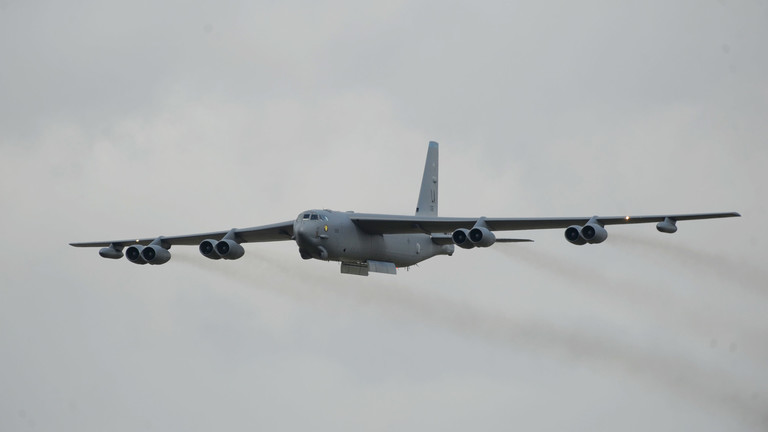
The drills were announced on the same day the US sent a B-1B bomber over the Korean Peninsula. Pyongyang views the bombers as provocative because of the large payloads the planes can carry.
This year’s Foal Eagle will be the largest joint American and South Korean war games in five years. The Department of Defense claims the military operations are “defensive.” “We’ve conducted routine training like UFS (Ulchi Freedom Shield) and Freedom Shield for decades that have been defensive in nature,” US Forces in Korea spokesperson Col. Isaac Taylor said.
Washington will deploy an aircraft carrier and other strategic assets to the region for the war games, according to the Korean Herald. Additionally, the Pentagon is sending MQ-9 Reaper armed drones to the Korean Peninsula for the first time.
The Foal Eagle war games were last conducted in 2018. Then-South Korean President Moon Jae-in and American President Donald Trump canceled the military drills to help foster diplomacy with North Korea. Pyongyang views the war games as practicing for a regime change against Supreme Leader Kim Jong-un.
Last month, Kim Yo Jong, Kim’s sister, blasted Washington and Seoul for considering resuming the war games. “There is no change in our will to make the worst maniacs escalating the tensions pay the price for their action.” She warned North Korea would turn the Pacific Ocean into a “firing range” if the US and South Korea conducted the drills.
More recently, the DPRK warned that it would soon consider continued US military action on the peninsula as a “declaration of war.”
The US and South Korea say they are prepared to respond to increased North Korean military activity by further escalating tensions. “Our military will not tolerate North Korea’s provocations that threaten the life and safety of our people.” South Korean military spokesperson Col. Lee Sung-jun said. “We will sternly respond to such acts with the alliance’s overwhelming capabilities.”
In a press release issued by the North Korean Foreign Ministry on Saturday, Pyongyang cautioned, “the Korean peninsula is turning into the world’s biggest powderkeg and war practice field due to a military expansion scheme led by the United States and its followers.”
On Sunday, North Korea demanded the United Nations take action against US military provocations. “The UN and the international community will have to strongly urge the US and South Korea to immediately halt their provocative remarks and joint military exercises,” a statement from the foreign ministry said, adding that tensions on the Korean Peninsula have reached an “extremely dangerous level.”
US defies North Korea’s threats
RT | March 4, 2023
A US Air Force B-1B bomber flies in formation with South Korea’s Air Force KF-16 during a joint air drill in South Korea, March 3, 2023 © South Korea Defense Ministry via AP
The US and South Korean militaries have announced their largest joint exercises in at least five years and their longest on record, defying threats from North Korea that such drills can be considered a “declaration of war” and will lead to “unprecedentedly persistent and strong counteractions.”
The exercises, including amphibious landings, will run from March 13 to March 23 and will be the largest-scale joint drills held by the two countries since then-President Donald Trump throttled back such training amid peace talks with North Korean leader Kim Jong-un.
The concurrent drills, called Freedom Shield and Warrior Shield, are designed to strengthen the allies’ response capabilities amid a changing security environment, North Korean “aggression” and “lessons learned from recent wars and conflicts,” US Forces Korea spokesman Colonel Isaac Taylor told reporters on Friday in Seoul.
For good measure, the US made a show of force on Friday, deploying a B-1B stealth bomber in a joint air drill with Korean aircraft. The aim of the drill was to demonstrate Washington’s “strong and credible extended deterrence against North Korea’s nuclear and missile threats,” Seoul’s defense ministry said.
Pyongyang has called such joint exercises dress rehearsals for invasion. North Korean officials said last month that this year’s upcoming joint drills are “preparations for an aggressive war,” adding that the peninsula will “again be plunged into the grave vortex of escalating tension.”
The two Koreas have technically been at war for more than seven decades, as their 1950-1953 conflict ended in an armistice, not a peace treaty. Tensions in the region have escalated in the past year, with North Korea conducting a record number of missile tests.
If North Korea reacts to this month’s drills with “provocative acts,” such as a nuclear weapon test, the US and South Korea will respond “sternly, based on the overwhelming capabilities of the alliance,” said Colonel Lee Sung-jun, spokesman for the South Korean Joint Chiefs of Staff.
West demands South Korea to supply weapons to Ukraine
By Ahmed Adel | March 2, 2023
A South Korean supply of weapons to Ukraine could lead to Russia and China increasing their cooperation with North Korea. It is for this reason that Seoul is in no hurry to make a decision to support Ukraine, even if Washington and NATO continue to pile on pressure.
In February, it was reported that the US asked to purchase more artillery ammunition from South Korea. According to government sources cited by JoongAng Ilbo, Washington requested Seoul for artillery ammunition and is currently deliberating the matter.
It is recalled that the US bought 100,000 rounds of 155-millimetre howitzer artillery shells from South Korea to send to Ukraine in November. South Korea’s Defence Ministry said at the time that the ammunition purchase was with “the premise that the United States is the end user” so that they could replenish their depleted stockpiles.
The US wants South Korea to maintain distance from Russia and China. However, Russia and China are South Korea’s neighbours, not an ocean length away like the continental USA. This obviously factors into Seoul’s strategic thinking and will impact its decision on whether to support Ukraine, particularly as both countries could use any provocation as a pretext to boost cooperation with North Korea.
Although it might seemingly appear that Beijing has little interest in South Korea’s position relating to a far-off conflict, Seoul’s decision will signal just how easily it will capitulate to US interests. China and Russia will certainly be observing how Seoul responds to pressure from the US and from there make a decision on whether to boost their ties with North Korea.
Regarding the latest US request, a South Korean official, in speaking with Joong Ang Ilbo, said: “there is no change to our stance of not supplying lethal military aid to Ukraine.”
Ukrainian President Volodymyr Zelensky said he hopes for South Korean military support when responding to a question from a JTBC reporter at a press conference in Kiev on February 24, the one-year anniversary of the Russian military operation.
“We view weapons supplies to us positively,” Zelensky said, adding that he hopes South Korea “will find an opportunity to help Ukraine.”
It is recalled that Zelensky addressed South Korea’s National Assembly via video livestream in April 2022 and begged for anti-aircraft weapons. There was an evident lack of interest in Zelensky’s speech as only about 60 of the 299 sitting lawmakers were present during the address.
With South Korean lawmakers evidently not interested in sending weapons to Ukraine, a position that has been maintained by the government, pressure has been sustained by the US so that this policy can change.
Adding to this squeeze, NATO Secretary General Jens Stoltenberg called on South Korea to “step up” its military support to Ukraine during his January visit to the Asian country. There, Stoltenberg had the audacity to cite the example of several NATO member states that have revised their policies against exporting weapons to Ukraine. Stoltenberg evidently forgot that South Korea is not a NATO member, or perhaps even the very fact that South Korea is a Pacific country, and not an Atlantic one.
For now, Seoul’s support to Ukraine is not what NATO and the US are expecting. South Korea has only provided humanitarian aid, which, while helpful for citizens, does nothing to alleviate Ukraine’s lack of weapons and ammunition.
President Yoon Suk Yeol has set out to make South Korea a “global pivotal state,” and it is for this reason that the West is piling pressure on South Korea to make a firm stance on the Russia-Ukraine war. Due to South Korea’s rapid economic development and ambitions to grow its prominence on the international stage, the West wants Seoul to make more substantial contributions to global issues, but obviously in accordance to Western interests.
Although there is a likelihood that South Korea’s leaders would like to conform to Western demands, reality dictates that it must consider the consequences its actions can have, particularly in relation to North Korea, China, and Russia. It cannot be overlooked that all three countries are armed with nuclear weapons, with the North Korean nuclear issue being the overriding concern, at least from Seoul’s perspective.
This suggests that although South Korea wants to be a “global pivotal state” and “step up” as a foreign policy actor, as Yoon said, it will be difficult to achieve so long as most of its attention and resources are dedicated to the unresolved war in Korea. Given that the Korean War has not reached a peaceful resolution as only an Armistice Agreement was signed in 1953, South Korea must seriously consider how its actions against Russia could lead to closer ties between Moscow and Pyongyang, and how it could be perceived by China.
Ahmed Adel is a Cairo-based geopolitics and political economy researcher.
Early “Spring Exacerbation”
By Konstantin Asmolov – New Eastern Outlook – 01.03.2023
Those who closely follow the events on the Korean peninsula know that military exercises of the United States and the Republic of Korea take place every spring. The DPRK traditionally perceives them as a rehearsal for an invasion and responds with demonstration of force. Each side declares however that in response to the provocations of the other, it has the right to strengthen its defense capability thus getting trapped in a vicious circle. But although the actions of Washington and Seoul aggravate the situation no less, they do not make the front pages, unlike the news about launches or statements by the North, and this creates a picture in the public mind that Pyongyang is the culprit of tension.
On February 17, the Ministry of Defense of the Republic of Korea announced that in March South Korea and the United States would hold a joint 11-day Freedom Shield exercise. In response, the DPRK Foreign Ministry issued a statement, in which it threatened to take “unprecedented tough and decisive measures” for “disturbing military demonstrations that seriously violate the security interests of the DPRK.”
On February 18, North Korea resumed missile launches. An ICBM was launched towards the East Sea (Sea of Japan).
The reaction of Washington and Seoul was quite acute: if you recalculate the missile trajectory from a high-altitude to a more typical one, its range turns out to be 14,000 km. So it can reach the continental territory of the United States by a wide margin.
South Korean experts also noted that the launch had been managed by the Main Missile Directorate, and it was carried out by the same unit as the Hwasong-17 launch on November 18, and it took almost nine and a half hours to prepare the liquid-fuel ICBM for being started. In addition, they traditionally doubted that the missile had successfully entered the atmosphere: allegedly, a video of a descending missile filmed by a Japanese fighter shows that its warhead had been broken into pieces and disappeared from view after it caught fire. After the previous failure in November on September 3, North Korea released an improved Hwasong-15 ICBM with a lighter warhead. But this time the missile seems to have failed again to re-enter the atmosphere.
On February 19, the deputy department head of the Central Committee of the Workers’ Party of Korea (WPK), Kim Yo-jong published a press statement in which she castigated Washington’s desire to turn the UN Security Council into an tool for implementing a hostile policy against the DPRK. And although Kim Jong-un’s sister noted that “our ICBMs will never take aim at Seoul,” this phrase is not identical to “DPRK missiles are not aimed at Seoul” – the DPRK has enough other types of missiles and barrel artillery capable of reaching the capital of the Republic of Korea.
On the same day, February 19, South Korea and the United States conducted joint air exercises with the participation of American B-1B strategic bombers. For understanding: taking off from Guam, the B-1B can reach Pyongyang in two hours.
February 20 became an eventful day. First, Kim Yo-jong responded to critical statements about the February 18 launch in the style of “your experts are idiots.” In particular, the fighter did not film the disintegration of the warhead, but the separation of the so-called hypersonic glider from the missile head. The “first sister” summed up by saying that “in case of any direct and indirect alarm,” we will take appropriate response measures and “the frequency of using the Pacific Ocean as our training ground depends on the nature of the actions of American troops“.
Second, at about 7 a.m., the North launched eastwards two medium-range ballistic missiles from Sukchon, South Pyongan Province. It is noteworthy that the North Korean media covered the launch a mere hour after the fact.
In the context of the above, the experts of the Republic of Korea believe that the DPRK military might have simulated strikes on the Cheongju and Osan air bases (North Chuncheon Province) and Gunsan (North Jeolla Province), which are located at a 340 and 390 km distance from the missile launch site. It was from them that the planes of the US and South Korean Air Forces took off for joint exercises the day before.
Third, the ROK has imposed new unilateral sanctions against the DPRK. More precisely, in relation to four individuals and five organizations for their assistance to the nuclear and missile development of the North, as well as for evading the implementation of UN Security Council resolutions. This measure is being applied for the fourth time in the reign of Yoon Suk-yeol: new sanctions were introduced just ten days after the decision had been made to restrict Pyongyang’s illegal activities in cyberspace. Previously, these same individuals and organizations had been included in the US sanctions lists, so the step was purely formal.
Fourth, the “Korean” meeting of the UN Security Council eventually took place. In 2022, the UN Security Council held 10 meetings specifically devoted to discussing North Korea’s missile threats, but all of them ended without any results due to the opposition of China and Russia, who are permanent members of the Security Council with veto power.
In 2023, the scenario was resumed. The United States has called on the UN Security Council to hold North Korea accountable “for its recent missile provocations.” Nevertheless, China once again opposed taking any action against Pyongyang, accusing the United States of escalating tensions and provoking North Korea. Its representative reminded the world that the United States had announced joint military exercises at a higher level and on a larger scale, as well as the timely deployment of strategic assets on the Korean peninsula. Russia’s permanent representative to the UN also accused the United States of provoking North Korea. According to the Russian diplomat, the DPRK is simply responding with missile tests to unprecedented US military maneuvers, which are clearly anti-Pyongyang in nature.
On February 22, the military of South Korea, the United States and Japan conducted joint missile defense exercises in the waters of the Sea of Japan. It involved destroyers equipped with the system, which worked out actions for the exchange of information about ballistic missiles, procedures for their detection, tracking and interception. On the same day, a meeting of the Naval commanders of the three countries took place in Yokosuka.
On the same day, on February 22, the 8th U.S-ROK Deterrence Strategy Committee Table-Top Exercise (DSC TTX) was held at the Pentagon. The parties were represented by Heo Tae-keun, ROK Deputy Minister for National Defense Policy (DEPMIN), Siddharth Mohandas, Deputy Assistant Secretary of Defense for East Asia, and Richard Johnson, Deputy Assistant Secretary of Defense for Nuclear and Countering Weapons of Mass Destruction Policy (N-CWMD). The military reviewed measures to strengthen combat readiness in case of the real use of nuclear weapons by the North, and they studied a variety of possible scenarios.
Also on February 22, Deputy Minister of Foreign Affairs of the DPRK for International Organizations Kim Song Kyung criticized the “unfair and unbalanced” policy of the UN Secretary General, who “from year to year repeats illogical and deplorable nonsense, no different from the chatter of US State Department officials.” And if, because of this stance, “an undesirable situation arises”, he “will not get rid of the heavy responsibility for it.”
At dawn on February 23, North Korea responded to previous day’s exercise by conducting a launch of Hwasal-4 “strategic cruise missiles” capable of carrying nuclear warheads.
In an interview with the Korea Times, senior researcher at the Korean Defense and Security Forum, Shin Jung-woo said that the range of the missiles was 200 kilometers longer than those tested on January 25, 2022. However, in general, the description of the launch was assessed skeptically. According to a representative of the Joint Chiefs of Staff on February 24, the data obtained by ROK and US observation means do not correspond to the information voiced by the North and may be exaggerated. The military did not provide other details, referring to the fact that this could reveal the capabilities of the allies in the field of surveillance.
On February 24, the head of the DPRK Foreign Ministry Department for US Affairs, Kwon Jong-geun, chastised the UN Security Council meeting, at which, according to the North Korean diplomat, the United States “again found fault with our use of the right to self-defense.” But in addition to the customary rhetoric, there was something new. “The United States should bear in mind that the further continuation of their hostile and provocative acts against the DPRK, despite our repeated protests and warnings, can be considered a declaration of war against our Republic.” This is quite serious, given the new regulations for the use of North Korean nuclear weapons. In response, the US warned that North Korea’s use of nuclear weapons would lead to the end of the DPRK regime, and announced that it would continue to deploy specialized nuclear forces.
What will happen next? In February, the ROK and US military intend to conduct an additional Air Force exercise, and then in March the large-scale Freedom Shield exercise will take place, which will last 11 days, including its field component. The main trigger of the “spring exacerbation”. Moreover, negotiations are underway on the arrival at the port of Busan of an American nuclear aircraft carrier (presumably the Nimitz), which will take part in the exercise. Similarly, in 2022, the United States sent the Ronald Reagan to the peninsula. The Ministry of Defense of the Republic of Korea, however, refused to confirm this fact but stated that “the deployment of key US military assets took place in close consultation between South Korea and the United States“.
So, both sides do not intend to retreat, and it is highly likely that 2023 will equal 2022 in terms of the number of missile launches from the North, and even surpass it. However, seasonal exacerbation is seasonal for a reason: it happens within certain limits. And although non-core experts react to this saber rattling every time as if a war were on the threshold, one should rather be afraid of the probability of an irrational factor when, against the background of tension, someone may lose their nerves.
Konstantin Asmolov, PhD in History, leading research fellow at the Center for Korean Studies of the Institute of China and Modern Asia at the Russian Academy of Sciences.
US, South Korea vow to expand war games amid tensions in Korean Peninsula
Press TV – January 31, 2023
United States and South Korea have pledged to expand the level and scale of their joint military exercises and boost nuclear deterrence planning amid a major uptick in tensions with North Korea.
Pentagon chief Lloyd Austin met with South Korean Defense Minister Lee Jong-sup on Tuesday in Seoul, more than two months after their annual talks in November last year in Washington.
He is also scheduled to hold talks with South Korean President Yoon Suk-yeol during his stay in Seoul before flying to the Philippines.
In a joint statement, the two officials said they had agreed to boost information sharing and joint planning between the two sides.
They also committed to boosting the “level and scale” of combined military exercises this year and to deploying more US aircraft carriers and bombers.
North Korea has repeatedly denounced the joint drills between Washington and Seoul as proof of their hostile intentions.
The Pentagon chief said the trip aimed at deepening cooperation with the key Asian ally and reaffirming the US extended deterrence commitment to South Korea as “ironclad” at a time of heightened tensions.
“That’s why the United States and the ROK (Republic of Korea) are taking clear, meaningful steps to modernize and strengthen our alliance,” Austin was quoted as saying by the South’s state-run Yonhap news agency.
“So our adversaries and competitors know that if they challenge one of us, they are challenging the US-ROK alliance as a whole,” he added.
Lee has said the two countries will hold a table-top nuclear drill in February under the theme of North Korea’s nuclear strikes, while Austin said the drills are in line with their talks to expand activities and extended deterrence mechanisms on the peninsula and in the region.
Military tensions on the Korean Peninsula have risen sharply this year. The US has resumed massive land, naval, and aerial war games with South Korean and Japanese forces in the region while vowing to consider all available options to counter what they deem a threat posed by North Korea.
North Korea considers the US military drills with South Korea and Japan “provocative measures” that are designed to practice an invasion.
The country is reeling under harsh sanctions by the US and UN Security Council over its nuclear and ballistic missile programs, which have not prevented it from developing its military capabilities as a deterrent against hostile West-led moves.
North Korea maintains that it will not tolerate persisting US-led war games in the region, underlining that it will continue responding to joint military maneuvers of its adversaries by holding its own drills as well as developing all sorts of weaponry, including long-range missiles.
What is covered by the “pictures of the Russian train”?
By Konstantin Asmolov – New Eastern Outlook – 31.01.2023
We recently wrote about the ways the United States’ allegations of North Korean munitions shipments to Russia had created a new standard of proof. However, it appears that the US side is not content with having hit rock bottom once again.
On January 20, 2023 National Security Council Strategic Communications Coordinator John Kirby raised new allegations against the Wagner PMC and Russia, claiming that the US had presented its intelligence findings to the relevant expert group of the UN Security Council (Committee 1718, which is in charge of sanctions against the DPRK). Although this was the first time ever any “evidence” had been presented, it was unfortunately a very peculiar type of proof.
The world was shown “rare, declassified photographs of Russian rail cars traveling between Russia and North Korea in November” and what Kirby described as the original delivery of North Korean weapons to the Russian PMC. According to the US statement, the photos were of a five-car train that ran between the Khasan (Russian Federation) and Tumangan stations on November 18 and 19, 2022, and those cars contained ammunition for Wagner.
“We obviously condemn North Korea’s actions and call on North Korea to immediately stop these shipments to Wagner,” Kirby said at the start of the daily White House press briefing. He then stated that “while we estimate that the amount of material delivered to Wagner has not changed the dynamics of the fight in Ukraine, we anticipate that it will continue to receive North Korean weapons systems” and therefore “will not preclude imposing additional sanctions if deemed appropriate at the UN”. As an aside, it was noted that North Korea continues to circumvent sanctions with the help of Russia and China.
On January 23, State Department spokesman Ned Price also stated that the United States and South Korea regularly discuss how to counter threats from North Korea, including “the supply of weapons and other military equipment from North Korea to Wagner units for use in Ukraine”.
Not coincidentally, not only Russian but also Western experts who deal with North Korea professionally have noted this reference with some surprise. Even those who dislike the North reacted in the style of “maybe the US has other evidence that has not been shown to us, but this is just a hint.”
Asked by RIA Novosti if it could be said with certainty that the pictures show weapons being transported from the DPRK to Russia, NK News director Chad O’Carroll said the photos do not show what is called hard evidence that would confirm US claims. The photos DO NOT show weapons or grenades being loaded and only include an image of Russian rail cars in North Korea – which, he adds, Russian media have also written about. That White House officials, according to O’Carroll, “show some level of specificity by releasing satellite images of a certain date showing rail cars and cargo” only means that Washington is very confident in its intelligence, but “anyone would be happy to see more detailed evidence”.
Another US expert noted that the pictures provided by Kirby show covered rail cars in which containers of ammunition would not fit, especially since they are loaded on platforms and not in boxcars. He also pointed out that “the versions voiced by Washington keep changing. In September, they claimed that North Korea was supplying Russia with millions of artillery shells and missiles. They claimed Pyongyang was trying to make it appear that the supplies were going to the Middle East and Africa, but in fact they were going to Russia. Now that version is forgotten – there is a new one. Meanwhile, one million shells is 50,000 tons, which is several large ships.”
The claim that the data were sent to the committee that investigated the sanctions is also not identical to the fact that the experts who examined them agreed with the American version.
In this context, the author will try to explain to the audience what more reasonable evidence of this kind would look like, using pictures of the train: Here is a picture of what looks like a military factory, and of containers of ammunition being loaded into wagons; here is a traceable route (because it is not particularly difficult to trace their path through the consignor system) by which a train from North Korea went directly into the front line area where it was unloaded, whereupon the shell shortage ended in that section of the front line. Such things can still be used as evidence, although indeed some questions remain.
The second thing that came to the author’s mind was a quote from a Russian cartoon, “This picture is useful: it covers a hole in the wall,” and he draws attention to two events that paralleled Kirby’s statement.
The first event is that on January 19, 2023, the day before Kirby’s statement, the Pentagon asked United States Forces Korea (USFK) to provide some of its equipment in support of Ukraine, stressing that its security operations on the Korean Peninsula would not be “affected in any way” by this move. USFK spokesman Col. Isaac Taylor said, “The Department of Defense continues to provide military assistance from its reserves in support of Ukraine. US forces in Korea have been asked to support this effort by providing some of their equipment… This does not affect our operations or our ability to fulfill our ironclad commitment to protect our ally, the Republic of Korea. There should be no doubt that we are ready to fight tonight as well”.
Taylor did not specify, however, what equipment, or in what quantity, would be delivered for use in Ukraine. The ROK Department of Defense also declined to comment on the issue.
The New York Times had previously reported that the US Department of Defense had drawn on US artillery stockpiles in South Korea and Israel because of Ukraine’s urgent need for munitions assistance.
USDOD deputy spokeswoman Sabrina Singh clarified this information, pointing out that the withdrawal of munitions and military equipment from US depots in South Korea and other countries in support of Ukraine had no impact on US defense capabilities and had little to do with reducing domestic stockpiles. It has also come to light that the US is in talks with Korean military contractors to replenish empty depots.
To the author, this information indicates two important things.
First, despite the loud declarations about the danger of the North Korean threat and the need to give money to counter it, it appears that the US does not in fact particularly believe that the North will attack the South in the relatively near future. Otherwise, they would not have moved an arsenal to Ukraine from a place where these munitions could be urgently needed.
Second, the fact that ammunition is being sent from Korea means that the arsenal of democracy is not bottomless and is slowly running out. Weapons and ammunition even need to be withdrawn from long-term storage. As we noted in one of our articles, it appears that their talk of Moscow’s “ammunition shortage” is masking their own ammunition scarcity, which is not so much affecting Russia as it is Ukraine and its allies.
Combined with a number of other news items, this suggests that the Europeans are growing weary of the conflict and increasingly reluctant to hand over new arms tranches to Kiev. This is a rather important sign, suggesting that in a certain situation Kiev will come to understand that for all the need to “defend democracy,” it has to do it alone.
The second event is a statement by Russian Foreign Intelligence that Ukrainian authorities are placing munitions from the West in nuclear power plants because they know that Moscow will not dare to bomb them. Foreign Intelligence Director Sergei Naryshkin said, “The Foreign Intelligence Service receives reliable information that Ukrainian forces are storing weapons and ammunition supplied by the West on the premises of nuclear power plants. This applies to the most expensive and scarce missiles for Haymar’s multiple rocket launchers and foreign air defense systems, as well as large-caliber artillery ammunition the AFU lacks most. Just in the last week of December 2022, several railroad cars with lethal cargo were delivered from abroad to the Rovno NPP via the Rafalovka station.”
Naryshkin’s statement does not contain exhaustive evidence, but the reasoning is somewhat more detailed than Kirby’s and contains some specifics. Apparently, it is precise data on where and how Ukrainian ammunition stocks move.
Mykhailo Podolyak, advisor to the head of the Ukrainian Presidential Office, then stated on social networks that “Ukraine has never stored weapons on the territory of the nuclear power plant” and noted that Ukraine is “always open” to inspection bodies, especially the IAEA.
In this context, the author once again reminds us that it is not unusual in war to attribute to the enemy acts committed by one’s own side in order to divert attention from oneself. So if you want to make the next lofty claims of DPRK intrigue, look at the holes in the wall this picture covers.
Konstantin Asmolov, PhD in History, is a leading research fellow at the Center for Korean Studies of the Institute of China and Modern Asia, the Russian Academy of Sciences.
Fake news about North Korea arming the Wagner PMC as an illustration of new “evidence” trends
By Konstantin Asmolov – New Eastern Outlook – 04.01.2023
It would seem that not long ago we touched on the intricate situation regarding rumors of North Korean or South Korean arms being supplied to the region of the Russian-Ukrainian conflict, noting that there was no real evidence of either. Unfortunately, the situation is not evolving for the better and even those in the US establishment, who previously had refrained from making direct and unsubstantiated accusations, have begun to do so.
On December 22, 2022, National Security Council spokesman John Kirby told reporters that the DPRK had completed its initial arms delivery to Russia back in November, including infantry rockets and missiles: “We can confirm that North Korea has completed an initial arms delivery to Wagner, which paid for that equipment”. And while Washington does believe “that the amount of material delivered to Wagner will not change battlefield dynamics in Ukraine,” it is still “certainly concerned that North Korea is planning to deliver more military equipment.”
Kirby’s further statements reflected that, for him, the Russian-Ukrainian conflict is taking place on some other globe. It turned out that Russian military officials report to the command of this PMC, which has 50,000 fighters. “It’s pretty apparent to us that Wagner is emerging as a rival power center to the Russian military and other Russian ministries”. The Russian reader can only raise a restrained smile, which also applies to the idea that the PMC has not only heavy equipment, but also missiles and heavy artillery in its arsenal.
Nevertheless, Kirby said the US, along with its allies and partners, would raise the issue in the UN Security Council, as the North’s arms deliveries were a clear violation of sanctions resolutions and he promised new sanctions against the Wagner group. US Permanent Representative to the UN Linda Thomas-Greenfield also said that the US “intends to raise the DPRK’s and Russia’s violations of UN Security Council resolutions in future meetings of the Security Council and will share information of this violation with the Council’s 1718 Sanctions Committee.”
The ROK and Canadian foreign ministries joined in the condemnation. Canadian Foreign Minister Mélanie Joly stressed that the actions of Wagner and Pyongyang “clearly violate international law and United Nations Security Council resolutions.” South Korea’s foreign ministry also condemned the arms trade between North Korea and the PMC, saying it was detrimental to peace and stability in the international community in direct violation of the resolutions.
More interestingly, Stéphane Dujarric, the Spokesperson for the UN Secretary-General, told a briefing that the UN had no information on possible arms deliveries from the DPRK to the Wagner PMC. From the author’s point of view, this is a hint…
Equally interesting is that Kirby’s information was published almost exactly the same way a little earlier by the British media. Reuters quoted a senior US administration official as saying that the ammunition had been bought from the DPRK last month and delivered to Russia: allegedly the volume of shipments is not large enough to seriously affect military operations, but the US fears that this channel will continue to operate.
A little earlier, the Japanese newspaper Tokyo Shinbun had reported that similar missiles were being supplied via the Hasan-Rajin railway.
And all this could not but prompt a comment from the DPRK Foreign Ministry, which on December 22 dismissed the manipulative report by the Japanese media as a completely clumsy and groundless PR stunt. The rest of the statement should be quoted as fully as possible:
“The DPRK remains unchanged in its principled stand on the issue of “arms transaction” between the DPRK and Russia which has never happened.
The international community will have to focus on the US criminal acts of bringing bloodshed and destruction to Ukraine by providing it with various kinds of lethal weapons and equipment on a large scale, rather than lending an ear to the groundless theory of “arms transaction” between the DPRK and Russia cooked up by some dishonest forces for different purposes.
Taking this opportunity, I would like to say that the Russian people are the bravest people with the will and ability to defend the security and territorial integrity of their country without any others’ military support”.
Yevgeny Prigozhin, the owner of the Wagner PMC, also dismissed the allegation of North Korean supplies as “gossip and speculation”, and the author partly agrees with him: there is still no regular railway connection between North Korea and Russia. All the more so since the movement of trains across the border is monitored by US military satellites, among others.
The author also draws attention to the fact that the PMC has far less capacity to procure this type of weapons than the state does, because it would require additional time. Finally, if the PMC had received these weapons back in November, they would have already been used on the battlefields, which would have left an information trail.
This looks like another fake about North Korean shells, but for the author it is an opportunity to talk about two additional things.
First, that accusations are very often based on the method of projection or, as the saying goes, the tongue ever turns to the aching tooth. And in this context, it is worth talking about a series of US pieces in the Western media which suggest that the “arsenal of democracy is depleting” and it is not Russia, but the “free world” which is having problems in supplying arms.
Second, although this version was first published by a British news agency and then voiced by Kirby himself, no evidence was produced. Meanwhile, the author reiterates a very important point: if you accuse your opponent and you have hard, irrefutable facts that incriminate them in some way, you can safely put them out there – without fear that some independent expert will discover that it was a poorly concocted fake. When someone says “we have secret evidence, but we won’t show it to you because it is a military secret”, this approach has been considered rotten since the Dreyfus affair.
The accusations concerning Moscow’s use of Iranian drones include at least debris that is structurally similar to Iranian designs. There is nothing in this case, and the Wagner PMC seems to be attacked because it is today the most demonized armed formation having anything to do with Russia. Moreover, it also operates in the Middle East and Africa, which might have added credibility to the US claims, if there had been any specifics.
The use of accusations, however, which are not backed up by any semblance of credible evidence, did not begin with North Korean shells. One may recall the high-profile doping case in which the Russian side somehow allegedly tampered with urine samples in containers that were not supposed to be opened as per design. One may recall the poisonings of the Skripals or Kim Jong-nam when, in response to a direct question as to how exactly on the technical side the special operation had been carried out, there was no sane answer.
Rather than going into detail and sorting out the extent to which certain actions are technically possible, the analysis is substituted by notions of how capable we think “They” are of doing It. And if They could do it, then They did it, no matter how.
That said, such unsubstantiated information becomes a pretext for imposing sanctions of any level of severity – and this is an important criterion of a post-globalization world in which there is no longer any room for normal investigations and evidence. And this is a worrying sign, because now it is possible to use a fantastic accusation as a pretext for sanctions and if it is said from a high rostrum, the status of the one who said it is confirmation in itself: “How can we doubt the existence of Marquis of Carabas if the talking cat claims it?”
Konstantin Asmolov, PhD in History, leading research fellow at the Center for Korean Studies of the Institute of China and Modern Asia, the Russian Academy of Sciences.
Will Korea send its shells to Ukraine, and more importantly, which Korea?
By Konstantin Asmolov – New Eastern Outlook – 23.12.2022
Over the past few days, the author has come across several fake news reports on Korean arms supplies to Ukraine. Both from the North and the South.
On the one hand, there is ongoing speculation in the West that the DPRK is allegedly supplying or intends to supply Russia with munitions for use in Ukraine, although such speculation is only true if the DPRK has secretly already built a teleportation machine. Well, or this is a case of “bold assumptions.”
However, Pentagon Press Secretary Pat Ryder reiterated on November 15 that the United States is working with its allies and partners to monitor North Korea’s supply of artillery shells to Russia. The general declined to comment on whether the US had tried to prevent this.
On November 24, during an exclusive interview with the Yonhap News Agency, First Deputy Chairman of the Verkhovna Rada of Ukraine Oleksandr Kornienko said that military cooperation between North Korea and Russia cannot be ruled out.
In a webinar hosted by the Washington-based think tank Foundation for Defense of Democracies on December 2, 2022, Assistant Secretary of State for International Security and Nonproliferation Eliot Kahn not only claimed that Moscow was doing little to enforce Security Council resolutions on North Korea, but specifically noted that Russia allegedly continues to allow numerous North Korean workers to earn income in its jurisdiction in defiance of the UN Security Council resolution and is in the process of acquiring prohibited munitions from the North to support the invasion of Ukraine. As always, no evidence was presented.
In addition to fake news about shells, Western propaganda floods the media with overwhelming amounts of all kinds of disinformation. First, it is “information” about the alleged recruitment of North Korean workers: in the summer and fall, the South Korean Daily NK reported several times that the DPRK was actively recruiting more and more workers to send to eastern Ukraine.
Another fake story was launched by Radio Free Asia, which, citing unnamed sources in North Korea, claimed that three Pyongyang factories were sewing uniforms for the Russian military engaged in the special military operation in Ukraine using Russian fabric. “Journalists” even had the audacity to send a comment to the Russian Embassy, after which, on November 12, the diplomatic mission’s social media page advised the journalist to choose a career as a science fiction writer.
On December 7, Spokesperson for the US Department of State Ned Price again told that Russia continues to seek weapons from North Korea and Iran for use in its war against Ukraine. And again – with no evidence. Against this backdrop, the National Security Council Coordinator for Strategic Communications John Kirby seems a paragon of honesty: “We know that the Russians continue to express interest in obtaining North Korean artillery…. (but) I don’t believe we can say today that we’ve seen definite indications that that transaction has been consummated.”
However, there is much more interest in the information from the other side. It tells the story that South rather than North Korean weapons may appear in the conflict zone.
In September 2022, the Czech publication iDNES claimed that the US was preparing a new scheme to supply Ukraine with weapons: allegedly, a certain Czech arms company would soon receive for transfer to Ukraine South Korean Shingung missile systems (KP-SAM) manufactured by LIG Nex1, designed to counter Russian drones and attack aircraft. The $2.9 billion deal is paid for from the US budget, but has yet to be implemented due to the South Korean government’s official policy of non-interference. On October 2, 2022, the ROK media also wrote about this, although claiming that it is not true: the Czech Republic allegedly has South Korean weapons, but acquired a long time ago, the US started to re-buy them to send them from the Czech Republic to Ukraine already in its own name.
In this context, speaking at a plenary session of the Valdai international discussion club on October 27, Russian President Vladimir Putin said that the decision to supply arms and ammunition to Ukraine “will destroy our relations”. And this can refer to both direct and indirect supplies, when South Korean weapons are sent via third countries or go as replacements for those supplied to Ukraine. Vladimir Putin said that Russia was aware of the Republic of Korea’s plans to supply arms and ammunition to Ukraine, referring to indirect supplies via Poland.
The next day, on October 28, ROK President Yoon Suk-yeol reiterated that the country had never provided lethal weapons to Ukraine; although aid is a matter of “South Korean sovereignty,” Seoul tries to maintain peaceful and good relations with all countries, including Russia.
However, on November 11, the Wall Street Journal, citing unnamed US officials, reported that the US was planning to purchase 100,000 155mm artillery shells from the ROK for subsequent transfer to Ukraine, while previously the US military contingent in South Korea (USFK) had already handed over some of its ammunition in the ROK to Kiev (https://newsis.com/view/?id=NISX20221111_0002082163).
On the same day, the ROK Ministry of Defense confirmed that Seoul and Washington were discussing supplies of shells to make up for shortages in US arsenals, and the issue was discussed during talks between the defense ministers of the two countries in early November. But the talks are based on the assumption that the ammunition will be used by the US Army.
The latest fake story, that the US is planning to buy 100,000 shells for 155mm artillery pieces from the ROK for supply to Ukraine, was reported by CNN in late November, citing an unnamed Pentagon official. The CNN news comes amid reports that the US is running out of weapons to send to Kiev, and one of the problems is the 155mm artillery ammunition currently being used on the battlefields in Ukraine. As the ROK media wrote, compared to the US, South Korea’s weapons stockpile is quite large, given that South and North Korea are technically still at war, which helps South Korean manufacturers to continue producing ammunition. In addition, Yoon Suk-yeol sees arms exports as one way out of the emerging economic crisis. He said the ROK will aim to become the world’s fourth largest arms exporter by 2027, taking at least 5% of the industry market.
Commenting on the announcement, Col. Moon Hong-sik of the ROK Ministry of Defense reiterated on November 28 that the US is the end user of South Korean-made artillery shells. Similar reports are citing unnamed officials, but in this case more precise information is needed.
Thus, South Korea does not deny supplying weapons to the US or other countries, while a number of the author’s local respondents, following the South Korean President, emphasize that there will be no direct supplies to Ukraine, the US is the end user, and the deal with Poland even provides for a ban on transferring these weapons to Ukraine.
Of course, the author does not know whether the contract between Poland and the ROK restricts the supply or transfer of arms to third parties. But the whole situation does not bode well.
Although the ROK has been placed on Russia’s list of unfriendly countries, it remains the friendliest of the unfriendly. Without wishing to zero out economic cooperation, Seoul says it is “together with the international community” on the Ukrainian issue, but is not particularly keen to jump ahead. Moreover, some South Korean companies are not only reluctant to leave the Russian market, but are buying up the property of those firms that have actually left.
Such defiance is certainly not to the liking of Washington, which would like relations between Moscow and Seoul to be as messy as those with other US allies. There is a sense that the US is deliberately pushing the ROK and Russia towards a bigger rift, and the fake about “arms deal” in the US media, citing secret sources and without confirmation, was intended to drive an additional wedge into relations between Seoul and Moscow.
Moreover, knowing Moscow’s concerns about the possibility of South Korean arms supplies to Ukraine, Washington is in a position to stage a provocation, realizing that Moscow might be furious and not particularly concerned about whether Seoul knew where the US weapons were going or whether it was “set up.” After all, such a move would be perceived by Moscow as crossing red lines and would be a reason for retaliation.
The possibility of this, incidentally, is also recognized by South Korean experts. On November 11, Jeh Sung-hoon, head of the Russian Studies Department at the University of Foreign Studies, told RIA Novosti that Washington is seeking artillery supplies from the ROK not for military assistance to Ukraine but to chill relations between Seoul and Moscow and make South Korea even more deeply involved in the anti-Russian front.
Park Byung-hwan, a former Consul Ambassador at the South Korean Embassy in Moscow and now director of the South Korean Institute for Eurasian Strategic Studies, also told RIA Novosti that in the current circumstances there is a possibility of “hidden” supplies of South Korean arms to Ukraine, unless there are direct instructions in the contract from Seoul not to send weapons there.
Shin Jong-woo, a senior researcher at the Korea Defense and Security Forum, believes that “if the US purchases the artillery shells from us based on an agreement that the US will be the end user, but it changes its mind later in order to transfer them to Ukraine, we cannot take issue with the decision after selling them.” It is absurd to be interested in who the end user will be as “… exporting countries have few options even if end users do something illegal with their exports.”
On the contrary, Victor Cha, a well-known hawk, who is in charge of Korean affairs at the Center for Strategic and International Studies in Washington, writes directly that “the Yoon government should consider arming Ukraine in earnest. Russia has already sanctioned South Korea for joining multilateral sanctions against it, and now, it is already accusing Seoul of doing so. Thus, the Yoon government should go ahead and provide such support to the besieged country as requested by President Volodymyr Zelensky of Ukraine in his speech to the South Korean National Assembly in April 2022.”
Thus so far, despite the media fuss, none of the fakes about Korean weapons in Ukraine has been confirmed with regard to either the North or the South. Here’s hoping that such propaganda will never become a reality.
Konstantin Asmolov, PhD in History, leading research fellow at the Center for Korean Studies of the Institute of China and Modern Asia, the Russian Academy of Sciences.
South Korea and US to increase number of joint military drills
RT | December 23, 2022
The South Korean and US militaries will hold some 20 joint military drills in the first half of next year, Seoul announced on Wednesday, amid rising tensions on the Korean peninsula.
The announcement by South Korea’s Defense Ministry followed a biannual meeting between the country’s Joint Chiefs of Staff and Defense Minister Lee Jong-sup.
The decision was made “to expand the scale and types of combined field drills,” the ministry said in a statement. During those war games, the sides will focus on “crafting of realistic training scenarios in light of advancing North Korean nuclear and missile threats,” it added.
Seoul intends to deal with the nuclear threat from Pyongyang based on Washington’s commitment to mobilizing all its military capabilities, including nuclear arms, to defend its ally, Lee said, according to the statement.
As for the possibility of a conflict involving conventional arms, the minister insisted that the South Korean military must “ensure that we can respond sternly and perfectly to any North Korean provocations” and be able to achieve “definite win in any combat.”
On Thursday, Seoul revealed that South Korea and the US were considering staging their first large-scale joint live-fire demonstration in six years in 2023.
The exercises could be one of the ways to mark the next year’s 70th anniversary of the launch of military cooperation between South Korea and the US, and also “showcase our military’s presence and the alliance’s overwhelming deterrence capabilities against North Korea,” Defense Ministry spokesman Jeon Ha-gyu noted.
North Korea has repeatedly condemned military exercises between the South and the US, calling them a threat to its national security and preparations for an attack.
Last month, Pyongyang blasted a major air exercise between its arch-rivals as a “war drill for aggression mainly aimed at striking the strategic targets of North Korea.” According to the country’s Foreign Ministry, the North was eager to defend its sovereignty and could come up with “more powerful follow-up measures” if the US “continuously persists in the grave military provocations.”
The war games were scaled back significantly under previous South Korean President Moon Jae-in, as part of his efforts to seek reconciliation with Pyongyang. However, his successor Yoon Suk Yeol, who came to power in May, has declared a “peace through strength” policy, which among other things is based on further boosting military ties with the US.
Pyongyang has fired an unprecedented number of missiles this year, including intercontinental ballistic missiles (ICBMs), said to be able to strike the US mainland. According to CNN’s estimates, there have been at least 35 tests during the period.
Officials in Seoul and Washington have claimed that North Korea has also completed preparations for its first nuclear test since 2017.
Featured Video

Chinese jet fuel and the myth of energy independence
or go to
Aletho News Archives – Video-Images
Book Review
Former Insiders Criticize Iran Policy as U.S. Hegemony
By GARETH PORTER | CounterPunch | February 27, 2013
“Going to Tehran” arguably represents the most important work on the subject of U.S.-Iran relations to be published thus far.
Flynt Leverett and Hillary Mann Leverett tackle not only U.S. policy toward Iran but the broader context of Middle East policy with a systematic analytical perspective informed by personal experience, as well as very extensive documentation.
More importantly, however, their exposé required a degree of courage that may be unparalleled in the writing of former U.S. national security officials about issues on which they worked. They have chosen not just to criticise U.S. policy toward Iran but to analyse that policy as a problem of U.S. hegemony. … continue
Blog Roll
 Aletho News
- What is fueling unrest across the EU?
- Why no power can undermine Iran’s eternal dominance over the Strait of Hormuz
- Is The War Against Iran Over?
- Iran war will leave long-term ‘scar’ on Wall Street, investors warn
- How Iran decimated US power projection in West Asia: Military lessons of 40-day war
- Iran’s report details US-Israeli war crimes in targeting schools, hospitals, livelihoods
- NATO’s Slow Fracture: How Trump’s Iran War Exposed the Instrument of Hegemony
- Chinese jet fuel and the myth of energy independence
- Ukraine Sea Drone Fired From Libya Hit Russian Tanker in Mediterranean
- IRGC: Iranian forces launched no attacks during ceasefire hours
- If Americans Knew
- DNC Shoots Down Resolutions Calling Out AIPAC and Limiting Arms to Israel
- TCN: Is Israel Blackmailing President Trump?
- Israel killed at least 303 Lebanese yesterday – who were they? Daily Update
- Amnesty: Urgent – Protect Lebanese civilians from brutal escalation in Israeli attacks
- Is The War Against Iran Over?
- Inside the Israeli army’s propaganda wing
- Hundreds of Gaza Amputees Stranded in Legal Limbo
- The gallows law: Israel moves toward executing Palestinian children
- Tucker Carlson: The Path to Peace requires ending ‘special alliance’ with Israel
- This is ceasefire? Israel’s biggest massacre yet in Lebanon, another journalist killed in Gaza – Daily Update
- No Tricks Zone
- An Inconvenient Tree: Uncovered In Alps… Europe Much Warmer Than Today 6000 Years Ago
- New Study Reports A 60% Slowdown In Greenland’s Ice Loss Rate In The Last Decade
- Low Intensity Tornado Wrecks Major Solar Farm, Creating A Potential Toxic Dump
- New Study Finds Warming Saves Lives…Cold Temperatures 12 Times More Deadly Than Excess Heat
- German Science Blog Accuses PIK Climate Institute Of Hallucinating Climate Tipping Points
- Devastating Assessment Of Comirnaty Vaccine By Former Senior Pfizer Europe Toxicologist
- New Study: CO2 Is ‘Effectively Negligible’ As An Explanatory Climate Change Factor Since 2000
- Former Pfizer Toxicologist Dr. Helmut Sterz Tells Bundestag Hearing Pfizer Vaccine Should Have Never Been Approved
- Energy Expert: Germany’s Nuclear Phaseout Was A “500 Billion Euro Mistake”
- New Research: South Australia’s Mid-Holocene Sea Surface Temperatures Were 4°C Warmer Than Today
 Aletho News