From Betar to Shomrim, re-emergence of Zionist private militias in the West
By David Miller | Press TV | May 25, 2025
In April of this year, anti-Zionist Jewish writer Alon Mizrahi claimed that Israeli Prime Minister Benjamin Netanyahu and his network of international Zionists are working to establish a policing force with powers surpassing those of national law enforcement agencies.
Mizrahi described this as the beginning of overt Jewish-Zionist policing of Western societies.
He was referring specifically to the ever more egregious statements from Betar in the US, an ultra-Zionist group affiliated with the far-right Revisionist Zionist movement founded by Vladimir Jabotinsky.
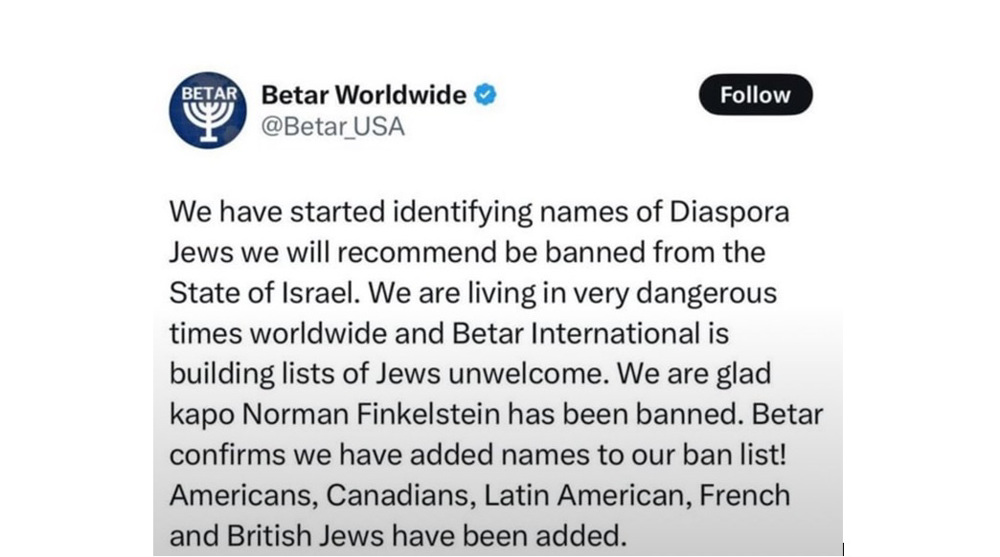
They have threatened to compile lists of Jews to be banned by the Zionist entity across North and South America, as well as Britain and France.
Mizrahi warned, “They start with Jews as a deception: all of you are next.”
However, the situation may already be far worse than what Mizrahi suggests.
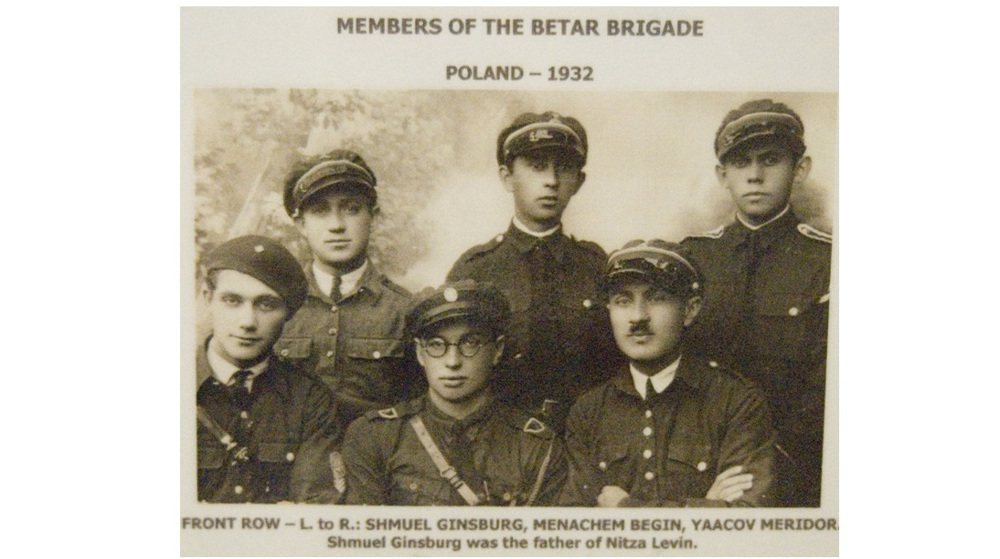
Since its founding in 1923, Betar has trained as a paramilitary force. The photo below shows Menachem Begin wearing a Betar uniform in Poland in 1932.
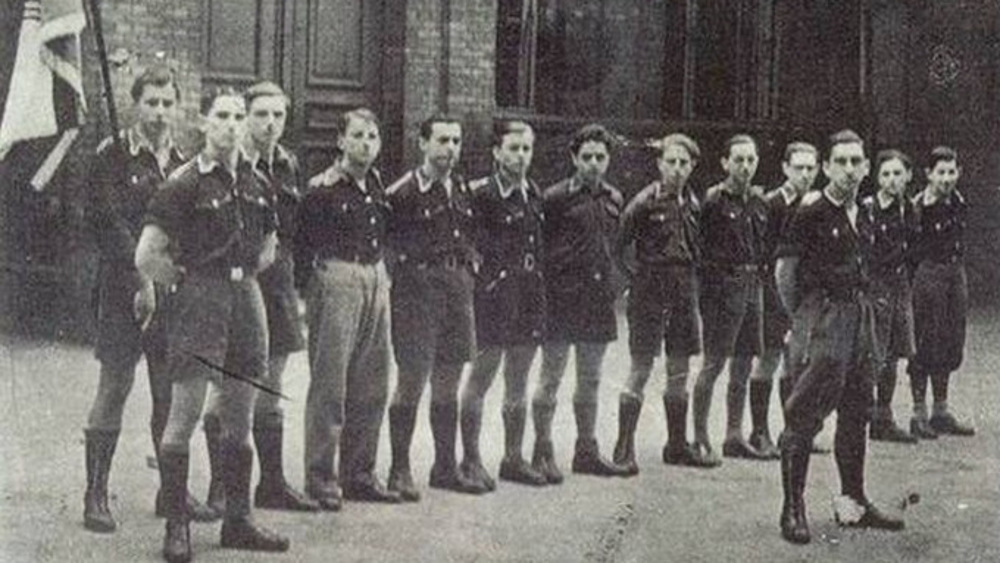
Below it is another photo from Berlin in 1936, taken after the Nazis enacted laws outlawing other political groups in 1933.
Betar was so closely aligned with the Nazis and Mussolini’s fascists that they were regarded as collaborators. By 1934, Jabotinsky and his Betar youth movement had reportedly “allied with Il Duce,” establishing a naval base north of Rome.
Late that year, Mussolini reportedly expressed support for Zionism and Jabotinsky in particular, stating: “For Zionism to succeed, you need to have a Jewish State with a Jewish flag, and Jewish language. The person who understands that is your fascist, Jabotinsky.”
This remark was made “during a private conversation with Nahum Goldman, founder of the World Jewish Congress, in November 1934,” as reported by Lenni Brenner in Zionism in the Age of Dictators.
Many senior Betar members served in the collaborationist police overseeing the Vilna Ghetto in Lithuania and were involved in betraying Jews in hiding to the Nazis.
One such member, Lotek Salzwasser, was eliminated by Jewish partisans in 1943 for his collaboration, according to Israeli press reports.
Betar and military training
One of the seven core principles of the Betar “Oath” is Magen, meaning “Protection.”
One of Betar’s ideological principles is military preparedness. Betar demands that all its members complete military seminars and know how to use weapons, in order to be ready at any time and to respond personally to a call for defense.
Betar has functioned as a militia since its inception. Here is a film of one of the French branches recorded in 2014 conducting paramilitary training exercises.
In the UK, Betar operated as a registered charity (Brit Tumbledor of Great Britain – Betar) between 1984 and 2004. It was closed down by the Charity Commission in 2004, on the grounds that it had been “Registered in error.”
In March 2025, Betar threatened to murder UN Special Rapporteur Francesca Albanese. On the very same day, the group relaunched its UK branch with a post on Instagram, claiming London “has become, with the time, an epicenter for radical Islam, for hate, for terror.” Their proposed solution?
Today, after more than 30 years, a bunch of strong young leaders stand up to say HERE WE ARE, to defend the Jewish population and to tell them that now we have a solution for the current situation, JEWS ARE NOT AFRAID ANYMORE!
Make no mistake – these threats are part of a deliberate effort to revive Jewish supremacist militias in the UK and the US.
Magen Am
The term Magen also appears in the name of a US-based private Zionist militia called Magen Am, which is currently active in Los Angeles, Orange County, and Phoenix.
Magen Am played a notably violent role in attempts to dismantle the student encampment at UCLA. The group frequently boasts about its close ties to the LAPD, sharing numerous photos of friendly interactions with police officers.
Reports indicate that Magen Am has collaborated directly with law enforcement, including working closely with the LAPD to intimidate and attack student protesters on the UCLA campus.
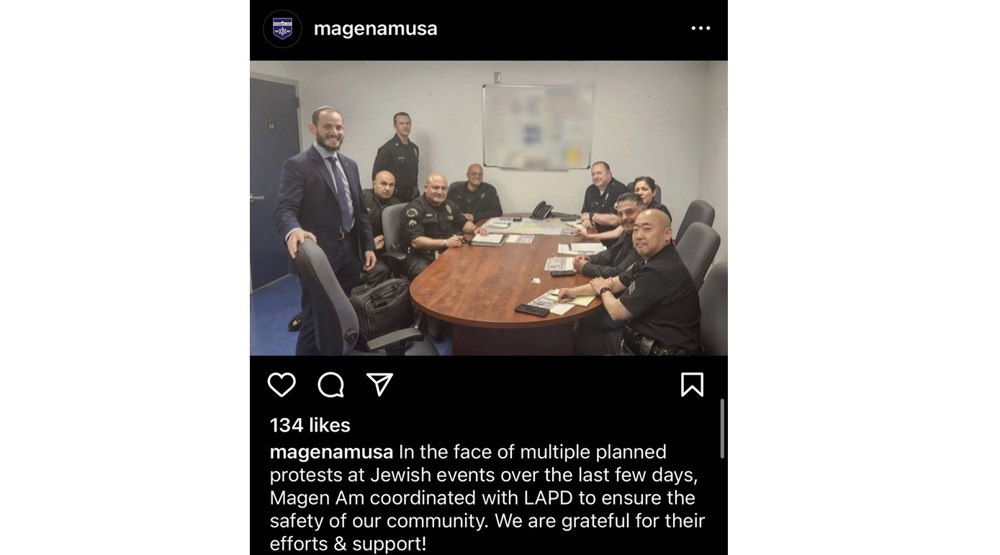
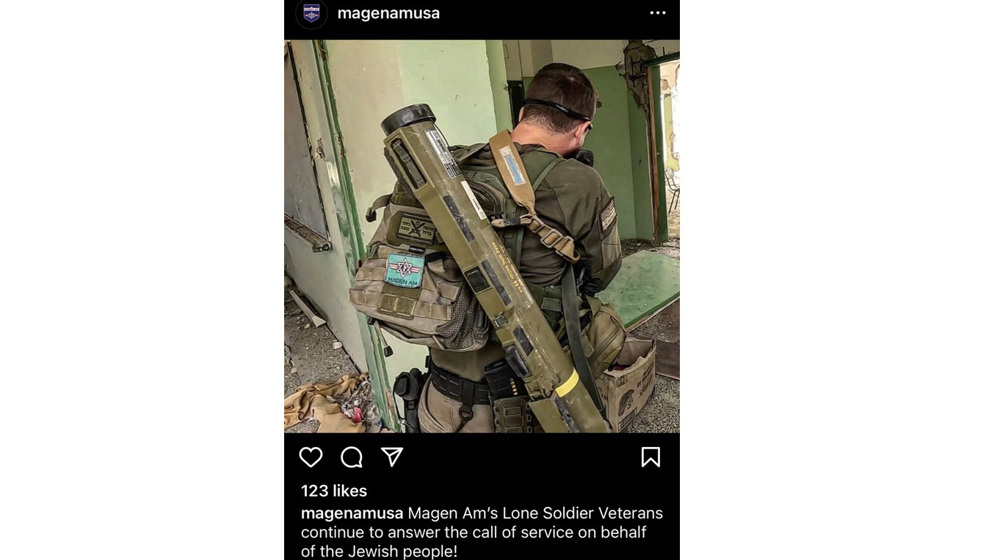
Magen Am, of course, recruits veterans of the occupation forces’ Lone Soldier programme and some then return to “serve” in the genocide as they proudly boast.
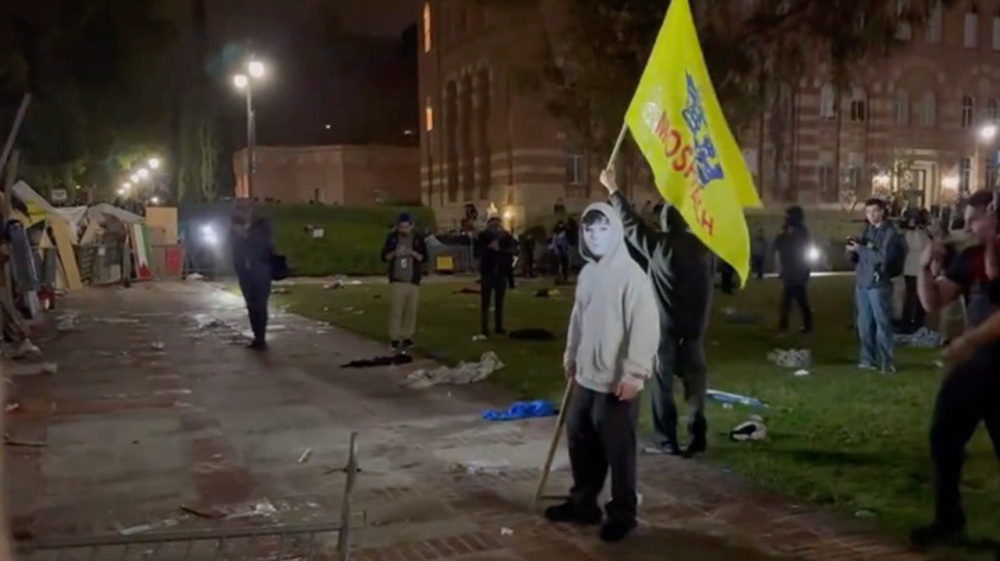
Magen Am was founded in 2017 by Yossi Eilfort, an MMA fighter-turned-Chabad rabbi. The flag of the genocidal Chabad cult was flown by the attackers on campus in Los Angeles.
Chabad has many followers in the so-called Hilltop Youth in occupied Palestine, which the Zionist intelligence agency Shin Bet says are responsible for the overwhelming majority of so-called ‘price-tag’ revenge attacks on Palestinians.
The rise of Jewish supremacism in Western societies is becoming increasingly visible, though many continue to deny or downplay its existence.
While Zionist militias and private security firms openly collaborate to suppress student protests in the US, there is a more subtle infiltration of police forces by Zionist Jewish supremacists.
Shomrim: The Private Jewish Patrol
Shomrim is a private Jewish police force operating in parts of the US, UK, Australia, and Belgium. It is reported that “over 20 Shomrim organisations exist worldwide.”
In London, the Shomrim North West Community Patrol operates in the Borough of Barnet. Founded in 2008 by Gary Ost as a registered charity, it acts as a “mobile neighbourhood watch” and acts as eyes and ears for the Metropolitan Police.
Shomrim claims that all “Volunteers have completed training from the Metropolitan Police Counter Terrorism Command (SO15) in assisting to identify potential security threats and suspicious activity. “
One blogger notes that the genocidal cult Chabad also has a ‘nasty tendency to normalize sexual abuse and protect serial sexual predators in its ranks.” But it’s not only Chabad; there is a similar tendency throughout the Zionist movement.
No surprise, then, to find that the founder of Shomrim in London has been implicated in this.
In 2013 Police dropped their investigation into Ost, who had been arrested on suspicion of perverting the course of justice in relation to an investigation of an alleged child sexual abuser, Rabbi Chaim Halpern.
Indeed, charges against the alleged sexual predator were dropped back then, too. Yet new allegations against Rabbi Halpern have resurfaced a decade later, and the trial for these offences is still pending.
Shomrim abuses
In New York, Shomrim has faced criticism for “using excessive force against non-Jewish suspects.”
In 2014, two Shomrim members were charged as part of a group of five Hasidic men for assaulting 22-year-old Black student Taj Patterson as he walked home from a party.
Additionally, Shomrim organizers in New York have reportedly withheld information on suspected Jewish criminals. The NYPD has openly criticized the group for not always notifying police when calls come in, raising concerns about accountability and cooperation.
Given Shomrim’s protected status with law enforcement and the documented culture of sexual abuse in some ultra-Orthodox communities, credible allegations of abuse within these groups are unsurprising.
On October 11, 2023, the United States Department of Justice issued a press release that Jacob Daskal, former head of the Boro Park Shomrim Society—a private Orthodox Jewish crime-patrol group associated with the NYPD—was sentenced to 210 months in prison and fined $250,000 for transporting a minor with intent to engage in criminal sexual activity.
Daskal pleaded guilty to the charge in July 2023. As part of the sentence, Daskal is required to register as a sex offender.” The statement notes that Daskal was introduced to a 15 year old girl “as a result of his position with the Shomrim”, who he then “groomed” for sexual abuse. According to the Department of Justice statement:
“Throughout the abuse, Daskal instructed the victim to delete their communications and warned her not to tell anyone about their sexual relationship. He also used his position as a community leader to silence the victim, bragging about his law enforcement connections and warning her that disclosure would ruin her life. The victim was expelled from her religious school after revealing the relationship to the school principal.”
This case raises troubling questions: How many other abusive situations are currently unfolding within Shomrim and other Jewish militia groups?
Shomrim protects genocide
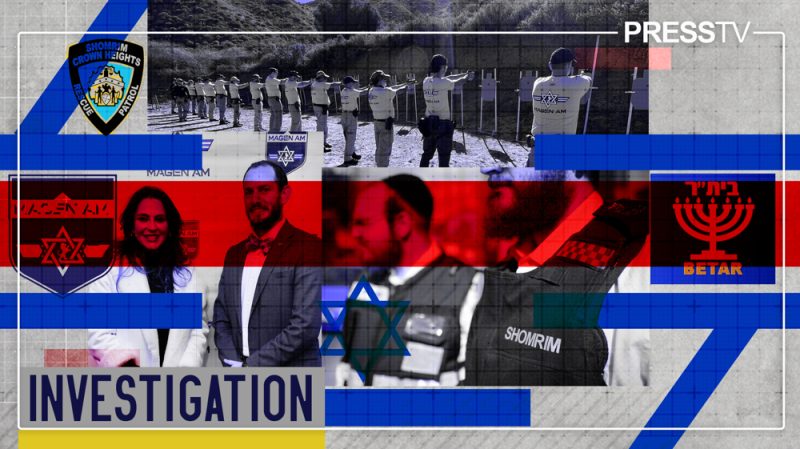
What is it that Shomrim are protecting? One illustrative example is the Crown Heights Shomrim branch, which in January this year provided security protection for the genocidal President of Israel, Yitzchak Herzog and for the leadership of the genocidal cult Chabad, as shown in the image below.
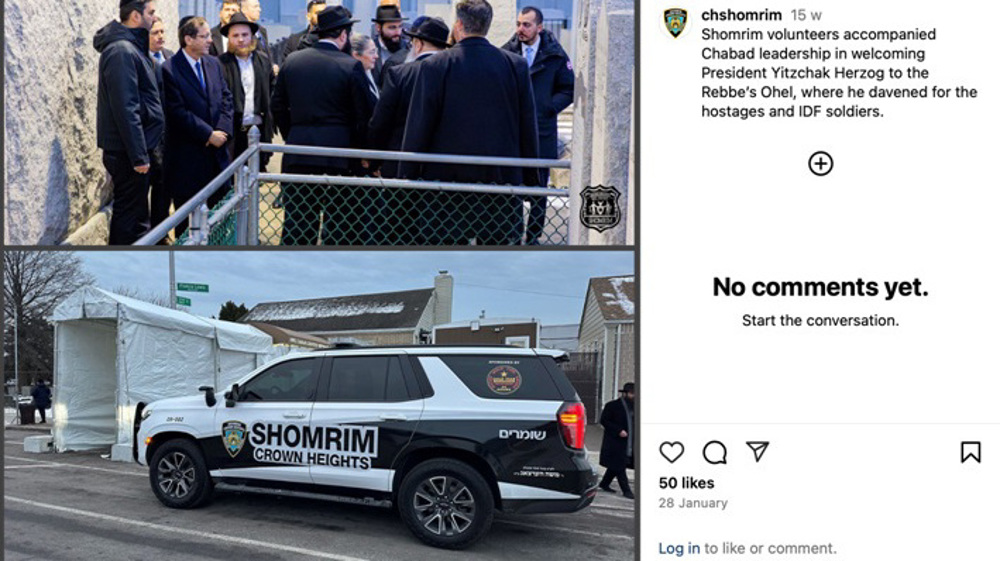
If Shomrim really wants to protect Jews in the US and UK, they should start by apprehending the entire leadership of Chabad and members of the genocidal Zionist regime.
Police reluctance toward Shomrim in the UK
Initially, UK police were resistant to Shomrim’s activities. In 2008, Chief Superintendent Steve Bending, then Hackney’s borough commander, stated, “I do not support the concept of any community having its own form of patrol service. There is a risk of other communities feeling intimidated by this course of action.”
As late as 2015, Metropolitan Police Commissioner Sir Bernard Hogan-Howe expressed his preference that Shomrim volunteers avoid uniforms resembling those of official officers.
Shomrim, however, rejected this, saying “its volunteers should not drive marked cars or wear uniforms similar to those of the police.” Gary Ost, chief executive of Shomrim in Golders Green, north-west London, stated, “Our uniforms look nothing like the police and are marked from every angle with clear wording saying ‘Shomrim’.”
Yet a glance at their uniforms and liveried vehicles often gives a very different impression.
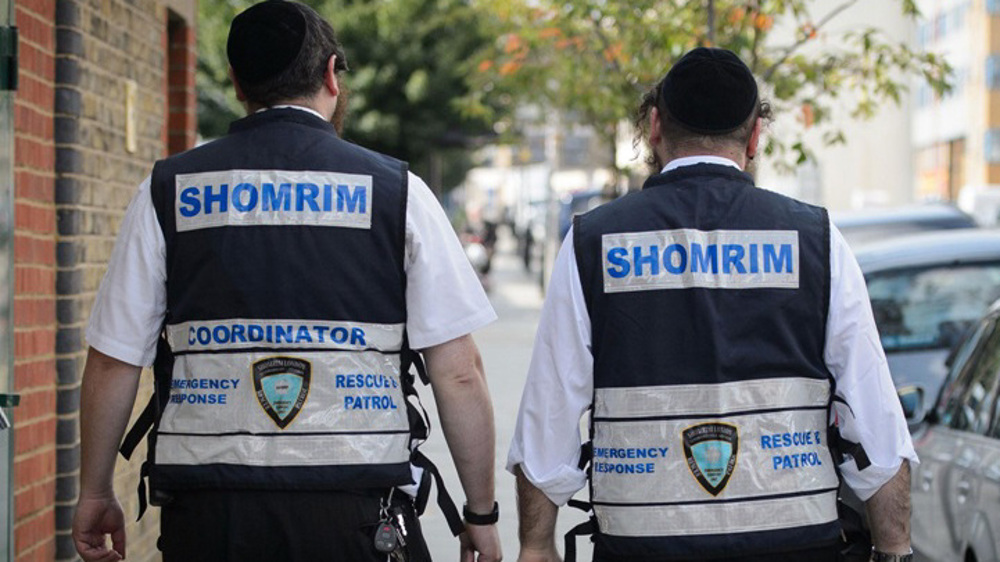

But the penetration of the police is now much more advanced and cooperation is the name of the game. There are numerous examples of apparent cordial relations between the two on the internet.
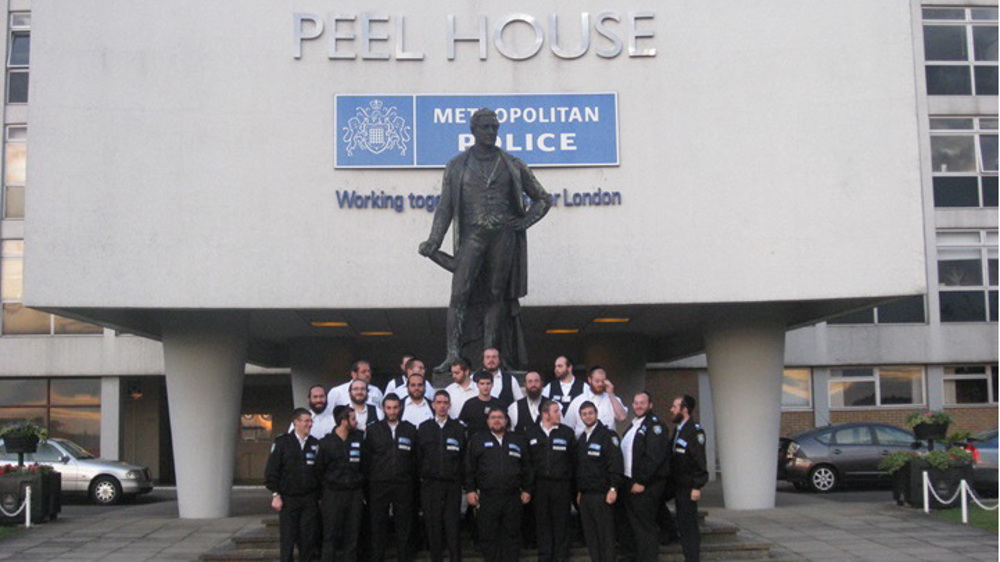
Shomrim members even posed outside Peel House, the headquarters of the Metropolitan Police.
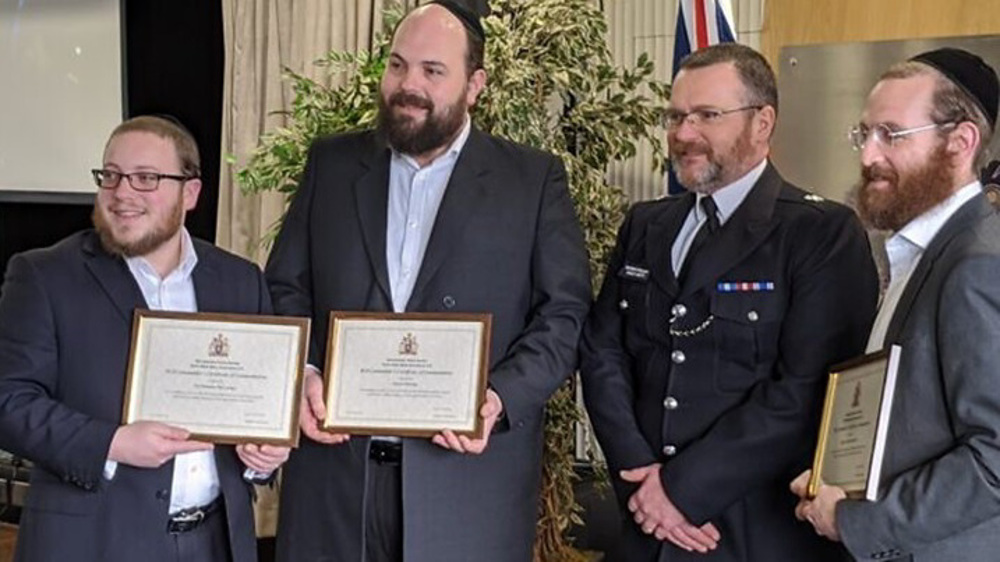
Below is a photo of a prize giving for Shomrim members commended for their “bravery” and “exemplary service to the community” in 2020.
Shomrim chief executive Gary Ost, the one arrested in 2013, is one of the three.
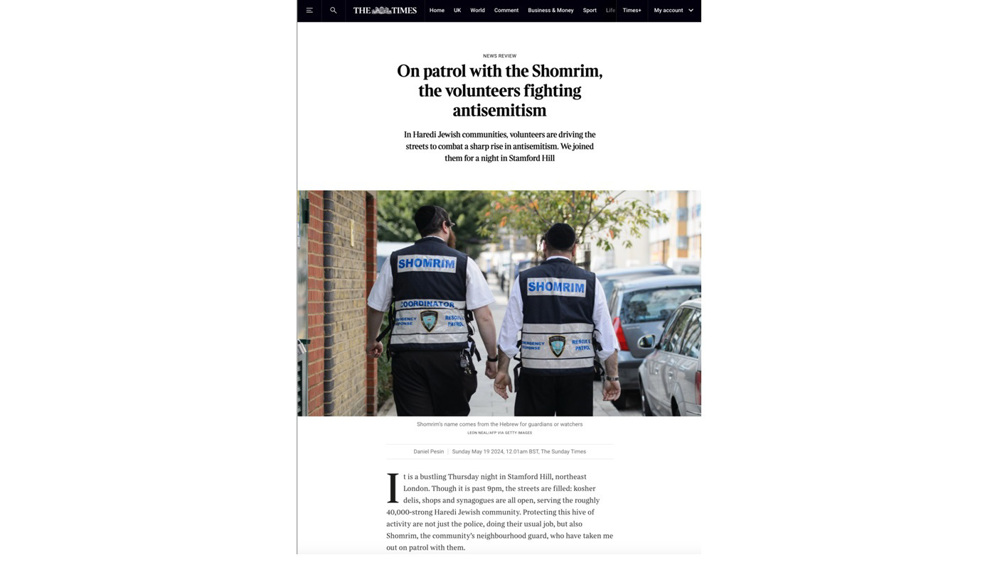
Shomrim plays a key role in shaping the narrative around the widespread antisemitism claims that Israel relies on to justify its genocidal actions.
The pressing question is: What happens when members of Shomrim break the law or commit wrongdoing? Would the police be able—or even willing—to enforce the law against them?
Alon Mizrahi, whom we cited earlier, shared his perspective in a conversation with me:
“They are pretending to be defending themselves in the most friendly country to Jews in history. While committing genocide. In a country that is so hateful of Jews that we need a private police force for Jews only in the US.
“And I have no doubt that if they can normalise this, with the kind of status that Zionist Jews have managed to create for themselves in the US; If this Jewish police force uses violence against black people, black organisers in communities who oppose the genocide, or other migrant groups or any other group, are American police going to be able to charge them?
“To use the law against them? I don’t think so. If you are in the American system, if you have a role in any part of the American system of government, in the police or any other agency, I think that at this point it is clear to you that Zionist Jews are above the law.
“The law doesn’t apply to them. So they don’t have the philosophical or legal means to deal with this. And the Zionists know this.”
Given the current climate, his assessment may well be accurate.
LAPD’s Failure to Protect Peaceful Protesters at UCLA from Right-Wing Mob Shows Real Priorities
By Jeremy Kuzmarov | CovertAction Magazine | May 6, 2024
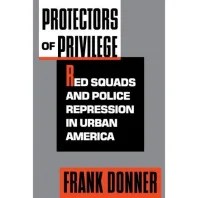 In 1991, Frank Donner, former director of the ACLU’s Project on Political Surveillance, published a book entitled Protectors of Privilege, which provided a history of police suppression of left-wing and labor protests in the United States.
A key chapter in the book focused on the Los Angeles Police Department (LAPD), whose reactionary political function was epitomized by two of its most notorious chiefs: William Parker and Daryl Gates, who were overtly racist and supported anti-democratic paramilitary policing practices.
The LAPD’s true colors were on display at the University of California at Los Angeles (UCLA) at the end of April when its officers stood by for hours as hundreds of right-wing vigilantes attacked pro-Palestinian demonstrators in what Al Jazeera described as a “really shocking and ugly scene of violence.”
The LAPD then aggressively broke up the pro-Palestinian demonstrators’ encampment using flash bangs and riot gear, arresting around 200 of the anti-genocide protesters who were entirely peaceful. (none of the vigilantes were arrested).[1]
![Pro-Israel attackers try to remove barricades at a pro-Palestinian encampment at the University of California, Los Angeles, on May 1, 2024 [David Swanson/Reuters]](https://i0.wp.com/covertactionmagazine.com/wp-content/uploads/2024/05/pro-israel-attackers-try-to-remove-barricades-at-a.jpeg?resize=696%2C473&ssl=1)
Pro-Israel attackers try to remove barricades at a pro-Palestinian encampment at the University of California, Los Angeles, on May 1, 2024. [Source: msn.com]
On May 2, a day after the break-up of the encampment, I visited the UCLA campus and witnessed students and university employees clearing the protest area.
Though many of the students were refusing to speak to any media, I managed to interview one, Lisa Cooper, who described herself as a seasoned organizer originally from New York who had joined the protesters in solidarity with them.
Cooper told me that she helped run a wellness center in the encampment that brought in acupuncturists who administered treatment to students who had either been physically attacked or were dealing with emotional trauma and the stress of living in the encampment while studying for mid-terms.
The students believed they had to do something in the face of the horrific atrocities going on in Gaza.
Cooper said that dissent was currently under siege in the U.S. and that the protests provided an opportunity to get people thinking about societal problems and realities, and that the students involved felt empowered by their experience, which they would take with them into other aspects of their lives.
As part of the daily programming, students coordinated teach-in events like during the 1960s era Vietnam campus protests. Benjamin Kersten, a Ph.D. student in art history, told the UCLA Daily Bruin that “this is a public university that preaches the importance of education, and yet, topics like Palestine are not taught. A lot of the programming shows that people here are taking their education into their own hands, and learning what it means to teach each other and enact activist values.”[2]
According to Cooper, public protest is a right Americans enjoy under the U.S. Constitution and that this should not be forgotten.
Cooper said that the right wing vigilantes who stormed the encampment were equipped with bear mace, projectiles and other weapons that they deployed against protesters, causing injuries to some of the students.
One protester had 16 staples inserted into his scalp.
Because the students did not want to call 911 and put themselves at risk of suspension or arrest, other students drove them to the hospital by car.
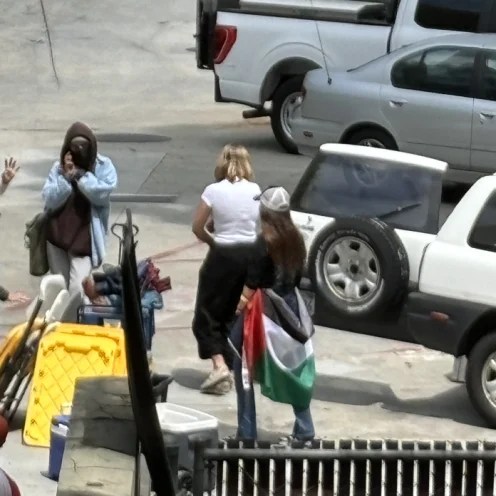
UCLA students clearing material from protest encampment on May 2. [Source: Photo courtesy of Jeremy Kuzmarov]
Cooper herself was not injured in the attack, but said that the vigilantes hurled racial slurs at her (she is African-American).
The main police units that broke up the encampment were officers of the California Highway Patrol (CHP) who, she said, are not required to wear body cam devices. CHP was backed up by the LAPD, whose presence was ubiquitous around the campus during my visit.
Cooper said that UCLA should be called to account for not allowing peaceful protests on public property.
UCLA President Michael Drake released a statement supporting the university’s decision to label the protest encampment as unlawful, noting that, “when it threatens the safety of students or everyone else, we must act.”[3]
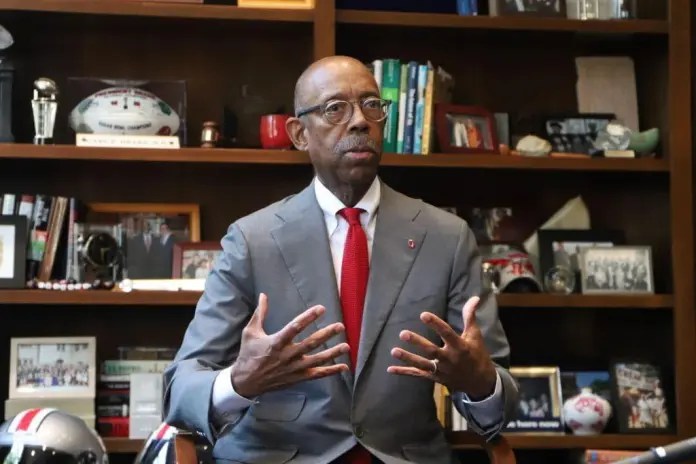
UCLA President Michael Drake [Source: thelantern.com]
However, there is no evidence that the encampment threatened the safety of UCLA students in any way[4]; rather, it was the vigilante counter-demonstrators who compromised the safety of UCLA students expressing their constitutional right to dissent.

- During the vigilante attack, a group reportedly piled on one person who lay on the ground, kicking and beating the person until others pulled him out of the scrum. The editor of the UCLA Daily Bruin, Catherine Hamilton, was punched in the chest and upper abdomen by the vigilantes. Robert Reynolds of Al Jazeera reported that the vigilante mob, which called for a second Nakba, “appear[ed] to be all largely people who are not of student age and they’re not from the UCLA campus, but what they’re doing is trying to harass and attack the pro-Palestinian demonstrators.” The leaders of the anti-war encampment at UCLA said that “law enforcement simply stood at the edge of the lawn and refused to budge as we screamed for their help. The only means of protection we had was each other as the attack went on for more than seven hours.” “The university would rather see us dead than divest,” it added in a statement posted on X. The Los Angeles Public Defenders’ Union called the UCLA arrests “shameful and a complete failure of leadership.” President Garrett Miller said they are ready to “represent every person facing charges.”
- Dylan Winward, “Encampment Hosts Programming, Draws Counter-Protesters,” UCLA Daily Bruin, April 26, 2014, 2. Winward’s article detailed how Jewish Voices for Peace organized a passover seder in the encampment and shabbat service, dispelling the myth that somehow the students involved in the encampment were anti-semites.
- Anna Dai-Liu and Dylan Winward, “Pro-Israel counter-protesters attempt to storm encampment, sparking violence,” UCLA Daily Bruin, May 1, 2024, 1.
- Sam Mulick, “UCLA Community Responds to Palestine Solidarity Encampment,” UCLA Daily Bruin, APril 26, 2024, 3 quotes from students, the majority of whom had highly positive views of the encampment. This included numbers of Jewish students. One student quoted in the article expressed appreciation that students of this generation were politically active and cared about the plight of oppressed people in the world, while another said the encampment was an effective method to engage community members on the campus. Still another, a psychology student, Erin Lee, told The Daily Bruin that UCLA should offer more support to Palestinian students, and that the university had taken a direct role in the war in Gaza through its investments in companies affiliated with the Israeli military. She added correctly that while she thinks students in the encampment were sending a very powerful message, she doubts the UC system will respond to their actions.
LAPD officers are collecting social media information from citizens they stop
By Ken Macon | Reclaim The Net | September 10, 2021
LAPD officers have been told to collect the social media information of all civilians they stop, whether or not they have been arrested or even accused of a crime. Critics have noted the social media information collected could be used for illegal surveillance.
A report on The Guardian revealed that the “field interview cards” LAPD officers use when interviewing civilians include a line for the collection of information on social media accounts, including Facebook, Instagram, and Twitter.
A leaked internal memo revealed that Police Chief Michael Moore told officers that collecting the social media information was important for “investigations, arrests, and prosecutions.”
The police boss also warned that the cards would be reviewed to ensure that the social media information was collected. The collection of social media information started in 2015.
The Brennan Center for Justice, the civil rights non-profit that obtained the documents, warned that the collection of social media information by law enforcement agencies could be used for unjustified mass surveillance of civilians in the future.
“There are real dangers about police having all of this social media identifying information at their fingertips,” said Rachel Levinson-Waldman, a deputy director at the Brennan Center.
The organization reviewed another 40 police departments in the country but did not find evidence of the gathering of social media information.
The LAPD’s field interview cards have been the center of controversy in the past. Three officers were criminally charged for falsely accusing civilians of being gang members by checking a “gang member” box on the interview cards.
“The fact that a department under scrutiny for racial profiling was also engaged in broad scale social media account collection is troubling,” said Levinson-Waldman, speaking to The Guardian.
Hamid Khan, of the Stop LAPD Spying Coalition, noted that the data collected by the LAPD is shared with federal agencies, which have previously been accused of using “predictive policing” based on data provided by police.
Khan described the social media information collection as “stop and frisk,” warning that the department was doing it “with the clear goal of surveillance.”
NYPD Commissioner Bratton Resigns, Takes Job With Pro-Clinton, Pro-Israel Firm
As he moves into his new position at Teneo Holdings, Bratton will go from enforcing ‘broken windows’ to rubbing elbows with those gathered at the nexus between law enforcement, the national security state, the military-industrial complex, and U.S.-U.K.-NATO foreign policy.
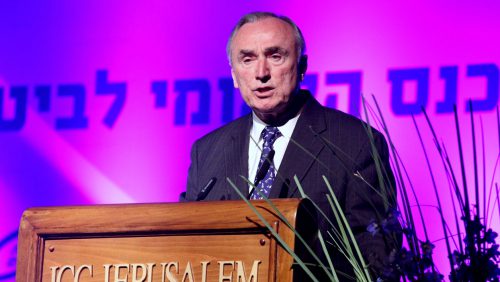
Former NYPD Commissioner William Bratton Speaks at The First National Personal Security Conference in Israel, 2014. (Photo: Israeli Ministry of Public Security)
By Eric Draitser | Mint Press News | August 5, 2016
New York City Police Commissioner Bill Bratton formally announced his resignation on Tuesday, marking the end of a tumultuous second term as the NYPD’s top cop.
Bratton, largely seen as the architect of the “broken windows” law enforcement strategy that targets low-level offenses in order to stop larger offenses, has been heavily criticized by social justice advocates, who have charged that Bratton’s tactics amount to a targeting of people of color who are then saddled with criminal records, promoting further problems for themselves and their families.
While Bratton touts his record on crime – NYC has seen crime, especially violent crime, continue to drop to record lows under Bratton – he has a much more dubious record when it comes to police-community engagement. If anything, Bratton has become a lightning rod for criticism, especially in the wake of the 2014 murder of Eric Garner by NYPD officers, none of whom faced any criminal repercussions. Bratton faced similar criticisms in his other positions, including in Los Angeles and Boston, where he was sharply criticized for many of the same policies.
His resignation provides yet another scandalous example of how Bratton represents the very worst of the political establishment in the United States. While some will be celebrating his retreat from public office, it is critical to note that Bratton has accepted a job with Teneo Holdings, a consulting group closely linked to the Clinton political machine, as well as Israel and its lobby.
And it is here, at the crossroads of the national security state and the political ruling class, that Bratton will continue to protect and serve — the interests of the elite, that is.
Behind the curtain at Teneo Holdings
Teneo Holdings may ring a bell for political junkies, mainly because of the controversy that erupted in 2013 after it was revealed that Huma Abedin, the top aide to Hillary Clinton and wife of disgraced New York Rep. Anthony Weiner, had failed to disclose that she was simultaneously employed by the State Department and as a consultant for Teneo.
Of course, it wasn’t simply the lack of transparency that was of concern, but rather the obvious conflict of interest for a State Department employee with access to top level cabinet officials in the Obama administration to be representing outside interests. Indeed, this sort of highly unethical move by a close Clinton confidante is really par for the course for Hillary (and Bill) whose unethical dealings include overseeing arms deals to Clinton Foundation donors, appointing Clinton Foundation donors to key State Department positions, and raising money from individuals closely connected to foreign governments, among others.
However, it is the relationship between the Clintons and Teneo that is of particular interest.
Teneo Holdings was founded by Douglas Band, a close adviser to former President Bill Clinton, and Declan Kelly, a major Clinton fundraiser and special envoy to Northern Ireland for Hillary when she was Secretary of State. Writing for Politico, Rachael Bade, reported in April:
“While serving as Clinton’s special envoy, reaching out to global corporations for those investments, [Kelly] was also working for two of them as a private consultant — earning about $2.4 million from Dow Chemical, a longtime client of his and one of the firms that participated in Clinton’s Ireland initiative.”
Once again, highly improper conflicts of interest seem to be as instinctive as breathing when it comes to the Clintons. But it is precisely these connections between political elites, major financial and corporate players, and the people behind Teneo, that is of most interest. Again, Bade explains:
“With Bill Clinton serving in the paid position of honorary chairman, and Hillary as secretary of state, Teneo [became] a blend of public relations advice for CEOs and more technical investor relations work. Corporate executives paid $250,000 a month — sometimes more — for consulting and assistance. They also, in some cases, got to hobnob with a former president. The firm forged a mutually beneficial relationship with the Clinton Global Initiative, the fancy annual Clinton Foundation event starring the former president and other world leaders. The New York Times and The New Republic first reported three years ago how the philanthropic gathering provided an ideal nexus for Teneo to both recruit new clients and enhance the visibility of existing clients by getting them speaking roles.”
It’s not difficult to see just what Teneo was doing: using connections and influence peddling to become one of the world’s premier consulting firms, one which could guarantee corporate interests and foreign states access to the most influential individuals in the uppermost echelons of power in the U.S. It’s not exactly the sort of product that just any run-of-the-mill consultancy could deliver.
And so, former NYPD Commissioner Bratton is heading to Teneo to serve as the head of the new risk management division where, according to the Wall Street Journal, he will “advise CEOs on how to deal with issues ranging from terrorism to cybercrime.” And Bratton is not alone; he joins former Clinton and Obama envoy to the Middle East, George Mitchell, as well as former British foreign secretary William Hague, as Teneo’s latest high-profile hire.
Again, the influence peddling and access is what is critical here. Bratton, Mitchell, and Hague represent the nexus between law enforcement, the national security state, the military-industrial complex, and U.S.-U.K.-NATO foreign policy.
Teneo, Israel, and the U.S. Empire
The connections between key figures in the Teneo/Clinton orbit and Israel abound. Take for instance the fact that Mitchell, one of the most well-connected political operators in the Middle East, is a senior advisor for Teneo while he has maintained working relationships with many members of the Israeli government and state. Crispin Hawes, managing director of Teneo Intelligence, is also closely connected to the region, having been Eurasia Group’s leading expert on the Middle East and North Africa.
Bratton, himself, has cultivated extremely close and friendly ties with the Israeli state. In May 2014, Bratton gave the keynote address at Israel’s National Conference on Personal Security in Jerusalem, a conclave of some of the leading figures in Israel’s (and the United States’) national security apparatus. The conference included influential attendees from around the world.

Bratton poses with Israeli officials at the First National Personal Security Conference in Israel. (Photo: Israeli Ministry of Public Security)
But this was certainly not the only time that Bratton had direct dealings with, and praise for, the security state of apartheid Israel. In fact, as chief of the Los Angeles Police Department, Bratton nurtured cooperative relations between the LAPD and Israeli security forces. As The Jewish Journal reported in 2014:
“The LAPD-Israel bond was in large part fused by former LAPD Chief William Bratton, who made official trips to Israel to learn about the country’s advanced counter-terrorism tactics during his chiefdom from 2002 to 2009. At a town hall meeting in Los Angeles near the end of his term, Bratton said of Israeli intelligence experts: ‘They are our allies. They are some of the best at what they do in the world, and that close relationship has been one of growing strength and importance.’”
In fact, those close ties between Bratton’s LAPD and Israel have endured long since his tenure in Los Angeles was over. The LAPD routinely sends officers and other officials to Israel for training and other initiatives, as do members of other police forces, including Boston and New York, both of which saw Bratton as police chief.
It’s no wonder then that the violent and brutal repression practiced by Israeli security forces against Palestinians has become a staple of U.S. law enforcement. Shoot first and lie about what happened. Shoot first and blame the victim. It works in the West Bank just as it does in Ferguson and Baltimore and Baton Rouge. And, in both cases, the guilty are exonerated while being held up as heroes by the media and political establishment. All the while, the body count keeps rising.
Bratton, of course, has no qualms with this, just as he’ll relish the opportunity to rub elbows with the world’s most influential people as he transitions to his new job with Teneo.
One evening soon Bratton will be sitting with the likes of Doug Band, Declan Kelly, and maybe even Bill and Hillary Clinton. They will toast to each others’ success as they laugh about the Crime Bill of 1994, the mass incarceration state, the prison-industrial complex, and the danger of “superpredators.” They’ll share stories about how their heroic policies, widely perceived as unabashedly racist, changed the American social fabric, making America safe again, to borrow a nauseating line from Donald Trump. They may even lament that they didn’t do more to expand the draconian policies for which they’ve come to be known.
They’ll also be cashing their checks. Big ones. Courtesy of the City of New York, Los Angeles, Israel, Wall Street and the military-industrial complex. And it goes almost without saying that at no point will Bratton and his Teneo cronies ever remember just how many hundreds of thousands, perhaps even millions, of lives they’ve ruined, families they’ve destroyed, and children their policies killed.
Such is the sociopathy of power in the Empire.
EFF Urges Department of Justice Not to Fund LAPD’s Body Cameras
By Jennifer Lynch | EFF | September 16, 2015
Next week the Department of Justice will likely decide whether to issue a grant to the Los Angeles Police Department to purchase 700 body-worn video cameras. Because LAPD’s body camera policy fails to ensure accountability and transparency and would, in fact, hide almost all camera footage from the public, we are urging the DOJ to deny funding.
LAPD applied for the grant to fund its body-worn camera program through the Bureau of Justice Assistance (BJA) Body-Worn Camera Pilot Implementation Program earlier this year. After the shootings in Ferguson, Missouri and other places around the country created a national discourse about the need for police accountability, President Obama announced plans to “strengthen community policing,” including contributing $75 million over three years to provide a 50 percent match grant to states and localities that purchase body worn cameras. LAPD could be the first law enforcement agency to receive funds under the grant.
Los Angeles could also become the largest city in the country to use body cameras on a wide scale. LAPD has already purchased 860 cameras using private donations and plans to purchase 7,000 cameras total. The city has a goal of outfitting every LAPD officer with a body camera.
But amid these ambitious plans, LAPD has enacted a body camera use policy that runs completely counter to every reason to employ body cameras in the first place. At its heart, the policy appears designed to protect law enforcement officers rather than members of the public who they have sworn to serve.
The policy fails for four main reasons:
- It does not provide for any public access to body camera video—even in cases of shootings or alleged misconduct. In fact, LAPD has made clear that it will not release video footage unless required to do so in court—or unless the chief, in his discretion, believes it would be “beneficial.”
- It not only permits but requires officers to review body camera footage before they write up their reports—even before they provide an initial statement to investigators when they are involved in critical uses of force or accused of grave misconduct.
- It has no consequences for officers who fail to turn on their cameras during use-of-force incidents.
- It provides no clear rules to prevent LAPD from using body cameras as a tool to surveil the public at large. It doesn’t address the use of back-end analysis tools such as facial recognition on footage; nor does it provide guidelines for use of the cameras during First Amendment-protected activity.
Given LAPD’s notorious history of police misconduct, secrecy, unlawful surveillance, and resistance to outside review stretching back to at least the 1930s, perhaps it should come as no surprise that the agency has enacted a policy to protect its own rather than ensure accountability and transparency. The policy is also consistent with the hard-line stance LAPD has taken with respect to releasing automated license plate camera (ALPR) data. However, the DOJ should not add insult to injury by funding this program.
LAPD’s policy not only runs counter to recommendations from the ACLU, but also to recommendations from law enforcement organizations like the Police Executive Research Forum (PERF), an “independent research organization” whose board of directors is made up of police chiefs from agencies around the country. PERF has recommended that
with certain limited exceptions . . . , body-worn camera video footage should be made available to the public upon request—not only because the videos are public records but also because doing so enables police departments to demonstrate transparency and openness in their interactions with members of the community.
Even one of Los Angeles’ own police commissioners—who cast the lone dissenting vote against the policy—criticized it for its failure to address release of footage to the public and for allowing officers to review footage before writing reports. He said that LAPD’s process for adopting the policy “undermines the goal here of accountability and trust.”
LAPD’s policy also runs counter the BJA grant program’s requirements. The program requires recipients to enact policies for body camera use that, “at a minimum increase transparency and accessibility, provide appropriate access to information, allow for public posting of policy and procedures, and encourage community interaction and relationship building.” LAPD’s policy fails to meet even these baseline goals.
The President intended DOJ’s body camera program to “build and sustain trust between communities and those who serve and protect these communities.” But if the DOJ is really serious about doing so, this is not the way. The DOJ must send a message to other grant applicants by denying LAPD’s funding request. Police-worn body cameras are fraught with enough potential threats to civil liberties; we don’t need harmful policies designed to shield police action from public scrutiny reinforcing these threats.
Read our letter to the Department of Justice here.
LAPD Holds Pregnant Woman at Gunpoint in Case of Mistaken Identity
By Carlos Miller | PINAC | August 15, 2015
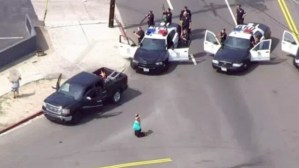 In another case of mistaken identity that could have turned deadly, Los Angeles police held a pregnant woman at gunpoint while ordering her out of her pickup truck, making her walk to the middle of street with her hands in the air and yelling at her to get down on her knees.
LAPD said they were in fear for their lives because the woman, who is due to give birth next week, was driving a truck matching the description of a truck driven by a murder suspect.
They said that because the woman’s truck had dark, tinted windows, they were unable to determine if it was being driven by the man they were seeking or if it just happened to be one of almost six million registered vehicles in Los Angeles County that were not connected to the suspect.
The incident, which took place Thursday, was captured on video from an NBC L.A. news helicopter hovering overhead.
The video shows about a dozen cops training their guns on the woman as well as another female passenger who was also ordered out while they all remained behind their patrol cars in the name of “officer safety.”
The video also shows both the driver side and passenger side windows either open or without tints, but we don’t see the initial stop, which may have shown the windows closed – not that dark tints should excuse them for violating the woman’s rights like that.
However, they’ve already learned that they can shoot up a truck in a case of mistaken identity and not face charges.
After all, it was only in 2013 that LAPD cops shot up a truck driven by two women after claiming it matched the description of a truck being driven by a whistleblower cop turned cop killer named Chris Dorner.
Dorner had been driving a gray Nissan Titan. The women had been driving a blue Toyota Tacoma.
So naturally police began fearing for their lives, which is why they opened fire on the Tacoma, driven by a 47-year-old daughter, accompanied by her 71-year-old mother, both of them delivering newspapers in a residential neighborhood.
Margie Carranza and her mother, Emma Hernandez, ended up receiving a $4.2 million settlement. The cops ended up on paid desk duty for a while before returning to the streets.
Moments after that shooting, a Torrance police officer shot up another pickup truck thinking it was Dorner’s truck, but that was also a different make and color and driven by a man named David Perdue who looked nothing like Dorner. He ended up receiving a $1.8 million
settlement.
LAPD Chief Charlie Beck determined the eight cops who left Carranza’s truck with more than 102 bullets violated department policy, but said he was not allowed to disclose what, if any, discipline they may receive because a state law protects cops’ personnel files from public eyes.
So with that type of job security, it is no wonder LAPD officers tend to shoot first and ask questions later.
LAPD have not released the name of the murder suspect they were seeking, who they say is also responsible for several burglaries in the area, nor the make and model of his truck, not that it would make a difference to them as we saw in the Dorner incidents.
The women, who also had two kids in the back seat of the truck, were released after police determined they were not the murder suspect. They are probably also eligible for a settlement.
Activists in Los Angeles protest US police brutality
Press TV – April 8, 2015
Activists from across the US state of California gathered in the city of Los Angeles to protest police brutality amid ongoing anger over police violence and racial profiling in the country.
The activists marched in downtown Los Angeles on Tuesday to protest hundreds of police killings of minorities since 2000, the latest in a series of demonstrations across the United States, Press TV reported.
Protesters marched from four different directions before converging on the headquarters of the Los Angeles Police Department (LAPD).
The march featured more than 600 coffins to represent more than 600 people killed by Los Angeles law enforcement since 2000.
The activists marched the coffins by Los Angeles City Hall. They also led a procession by the federal court building as well as the office of the Los Angeles County Board of Supervisors.
“Los Angeles leads the nation in killing of community members by law enforcement and that has to end,” said Mark Anthony Johnson, a member of Dignity and Power Now, a grassroots organization based in Los Angeles that fights for the dignity and power of incarcerated people.
About 28 percent of the people killed by police are African-American, and 54 percent killed are Latino, Johnson told Press TV. He said residents are tired of being targeted by Los Angeles police officers.
Activists say Los Angeles county leaders have failed to hold law enforcement accountable.
“The persecution of people of color, of poor people, of homeless people, the indiscriminate killing, the injustice of it all and the lack of response by the institutions [must stop],” said David Feurtadot, a member of Los Angeles Community Action Network.
Marchers also delivered public records act requests to the LAPD and to the office of the sheriff. They want to see data on the LAPD’s use of force that law enforcement has yet to make available.
The activists later marched by the office of Los Angeles District Attorney Jackie Lacey, calling for charges against the police officers responsible for the killings.
New Video Dispels the “Reached for My Gun” Myth of LAPD Cops in Killing of Homeless Man
By Matt Agorist | The Free Thought Project | March 11, 2015
Los Angeles, CA — Following the shooting of a homeless man in LA’s Skid Row last week, controversy arose over why the three LAPD officers pulled their triggers.
Chief Charlie Beck said that the video showed ‘Africa,’ the man killed by police, reach for a rookie officers gun. The rookie, who was just short of completing his probationary period, can be heard yelling out, “He has my gun. He Has my gun.”
The reason that a human life was ended that day by the LAPD had everything to do with the rookie yelling out those fateful words.
But did Africa really have this rookie’s gun? Were the officers’ lives ever at risk? Or, did these officers gun down a man in cold blood over this rookie’s fearful mistake?
According to the LAPD, the officer’s gun was found partly cocked and jammed with a round of ammunition in the chamber and another in the ejection port, indicating a struggle for the weapon.
Seems believable, right?
However, the holster that this rookie officer had on makes it nearly impossible to rack the slide while it is holstered.
From the LAPD’s images, we can see that the type of holster that the rookie was wearing, and that the majority of police officers wear, is a Dual Retention Hooded Holster, with optional hood guard.
The Free Thought Project spoke to former LAPD officer Alex Salazar, and he confirmed that most, if not all of the LAPD officers use these holsters.

This holster is specially made to prevent the exact scenario that the LAPD are claiming happened.
The “hood,” or the strap that holds the weapon in the hard plastic holster must be pushed down from a particular angle and then pushed forward, prior to exposing the back of the weapon.
During a struggle, it is entirely possible that the hood could have been pushed down, leaving the rear of the slide exposed.
However, this officer’s holster appears to be equipped with a hood guard. The hood guard adds another entirely new level of pistol retention as it is specially designed to prevent an assailant from pushing down the hood.
But we will give LAPD the benefit of the doubt here and say that this man was somehow able to get past the hood guard and push down the hood while being beaten and tasered.
However, these holsters have yet another line of retention. The third line of retention in this officer’s holster does not allow for the pistol to be removed, nor the slide pulled back, without knowing exactly how to lift it out of the holster.
This holster and holsters similar in design have a tension screw in place that allows for its users to set the desired level of friction needed to remove the pistol. However, if someone tries to pull the pistol out of the holster in any direction other than the officer’s set preference, the slide will not rack, nor will the pistol come out.
Knowing the specific functions of this rookie officer’s holster makes believing the official narrative on the shooting of this man hard to believe.
It is highly unlikely, if not completely impossible for a man, who is being aggressed against by multiple police officers, to do what police say he did.
The LAPD would like the public to believe that Africa supposedly maintained his composure and bypassed the hood guard on the officer’s pistol. After somehow bypassing the guard, he was then able to push down the hood and slide it forward. After this, he then was able to pull the slide back, and jam a round in the chamber, while laying on his back, fighting for his life, with tens of thousands of volts pumping through his body, while multiple officers beat him with batons.
Police accountability activist and friend to the Free Thought Project, Tom Zebra, conducted a similar investigation into the officer’s holster. Below is the well-made video by Zebra illustrating the holster’s retention properties.
LAPD Execute Mentally Ill Homeless Man in the Street
By Jay Syrmopoulos | The Free Thought Project | March 1, 2015
Los Angeles, Calif. – In a brutal display, Los Angeles police shot and killed a homeless man in front of Union Rescue Mission today, after he scuffled with officers.
A video of the event, posted on Facebook, shows numerous officers fighting with the man and eventually wrestling him to the ground where he continues to struggle against the officers.
The footage shows officers violently attacking the man with blows and then throwing him to the ground as four officers attempt to subdue him as he continues to resist the officers’ aggression.
At this point in the video, an officer can be heard yelling, “Get off my gun. Get off my gun.”
While possible that the victim went for the officer’s weapon, it must be noted that one of the tactics utilized by police, as a means of conditioning witnesses, is to yell out phrases such as “stop resisting” even if the person is doing no such thing.
Similarly, saying that someone went for the officers weapon is an accepted justification to use deadly force, and has become the default justification in many encounters where officers have killed unarmed citizens.
Suddenly a barrage of 5-6 gunshots ring out. Witnesses can be heard yelling, “Ain’t nobody got no guns!,” after the gunfire subsides.
No gun was reportedly found at the scene by police.
Witnesses on the scene named Dennis Horne, 29, the victim was a man that went by the name “Africa.”
Horne said that Africa had been arguing with someone in a tent when police arrived, reported the LA Times.
After refusing to come out of the tent after being commanded to do so by officers, cops tasered him and dragged him out, according to Horne.
“It’s sad,” Horne said. “There’s no justification to take somebody’s life.”
Ina Murphy, who lives in an apartment nearby, told the Times that Africa had arrived in the area about four or five months ago. He reportedly told her he had recently been released after spending 10 years in a mental facility.
The LA Times reported that Witness Lonnie Frank, 53, said five to six officers pulled up in three to four cars as Africa was lying face down on the sidewalk. The officers approached with guns drawn yelling, ”down, down.”
When Africa got up and started fighting, the officers “went straight to lethal force,” Franklin said.
Protests are scheduled to begin at 9 a.m. in front of the LAPD Headquarters at 100 W. First, Los Angeles.
An emergency call to action has been issued on Facebook.
The video speaks for itself. Tragically another life has been lost at the hands of law enforcement continuing the pace of one citizen killed by a cop every eight hours so far this year.
You can follow Jay Syrmopoulos on Twitter @sirmetropolis, on Facebook at Sir Metropolis and now on tsu.
Man Killed by LAPD said to be Street Performer with Plastic Prop Knife; Cops Accused of Planting Real Knife
By Carlos Miller | PINAC | December 7, 2014
Los Angeles police gunned down a man at a busy Hollywood intersection Friday night, claiming he had been trying to attack them with a knife, causing them to fear for their lives, which is why they fired several rounds, leaving his body laying on a corner as shocked witnesses looked on.
But some locals are saying the man was merely a street performer known as “J” who would pose with tourists holding a prop knife made of plastic.
The area of Hollywood Blvd where he was killed is near the famous Walk of Fame and is renowned for its street performers who dress up in costumes and play roles to the amusement of tourists. Many of the performers dress up as characters from Hollywood movies, who pose with tourists for photos in exchange for tips.
The man shot was said to be impersonating the character from Scream, a 1996 horror movie, about a masked man with a knife who murders teenagers with a knife as pictured below.

LAPD is not releasing any information on the shooting, except for tweeting a picture of a folding knife laying near the body, perhaps a Swiss Army Knife, carried by boy scouts everywhere.
But some skeptics are saying the knife was planted because it is not clearly visible in the video recorded in the immediate aftermath of the shooting and posted to Facebook.

I’ve watched the video several times and cannot make out a knife, but I cannot say with certainty it is not there.
However, the first several minutes of the video, which is posted below, show police clamoring all over the area where the knife was eventually photographed.
And at 4:44, a man dressed in blue wearing gloves bends down and appears to lay something on the ground.
Jordan White, the man who recorded the video, said the man was unarmed.

So this could potentially be a huge scandal for the scandal-ridden LAPD.
What do you think? Do you see a knife in the first few minutes of the video? If you are a witness or know the man killed, please message me here.

LAPD considers deploying unmanned drones for ‘tactical events’

RT | June 6, 2014
Defending the decision to pursue unmanned drones to assist in police work, the LAPD – who say they will cooperate with privacy groups on the matter – said the devices are being purchased by citizens, so why not allow law enforcement to use it as well?
At a news conference Thursday at LAPD headquarters, Chief Charlie Beck revealed the unmanned drones could assist police forces in “standoffs, perimeters, suspects hiding…and other tactical events.”
“We’re interested in those applications,” he said.
Beck responded to criticism of the plans by human rights and privacy groups by explaining that the technology is already “in the hands of private citizens” and corporations, so why shouldn’t law enforcement experiment with the devices as well?
“When retailers start talking about using them to deliver packages, we would be silly not to at least have a discussion of whether we want to use them in law enforcement,” the police chief said.
In December, Amazon and UPS announced ambitious plans to start testing UAVs for making home deliveries.
Late last month, the LAPD received two Draganflyer X6 unmanned drones as a ‘gift’ from the Seattle Police Department, in what seems to have been an effort by the latter to avoid public uproar.
Seattle authorities purchased the UAVs for $82,000 in 2010, funded by grants from the Department of Homeland Security. However, neither the city council nor the public was aware of the police drone program until a 2012 lawsuit by the Electronic Frontier Foundation over the department’s application for operation certificates from the Federal Aviation Administration.
The resulting public outcry over the drones forced the mayor to terminate the program in February 2013.
“These vehicles were purchased by the Seattle Police Department using federal grants. There was no cost to the city of Los Angeles,” police said.
Each remote-controlled vehicle is 3 feet (90cm) wide, has three rotors and can carry a video camera.
In order to calm public suspicion that the drones will infringe upon privacy rights, Beck said the LAPD would work closely with the American Civil Liberties Union during the “vetting process” of the UAVs.
“I will not sacrifice public support for a piece of police equipment,” Beck said, as quoted by the Los Angeles Times. “We’re going to thoroughly vet the public’s opinion on the use of the aerial surveillance platforms.”
The LAPD added it would seek approval from the Police Commission before unleashing the drones above Los Angeles.
Hector Villagra, executive director of the ACLU of Southern California, issued a statement: “The Los Angeles Police Department asked the ACLU of Southern California to meet and articulate our concerns about the privacy issues raised by the use of drones. We agreed to do so… However, at this point the ACLU SoCal has no plans to participate in any process to craft policies for LAPD’s use of drones, nor have we been formally invited to lead a team of advocates to help craft such policies.”
“As the ACLU has previously said, we question whether any marginal benefits of drones programs justify the serious threat to privacy they pose.”
Featured Video

Michael von der Schulenburg: Europe’s Self-Defeating Iran War Policy
or go to
Aletho News Archives – Video-Images
Frlom the Archives
Who Rules America?
The Power Elite in the Time of Trump
By James Petras | Axis of Logic | September 6, 2017
Introduction
In the last few months, several competing political, economic and military sectors – linked to distinct ideological and ethnic groups – have clearly emerged at the centers of power.
We can identify some of the key competing and interlocking directorates of the power elite:
- Free marketers, with the ubiquitous presence of the ‘Israel First’ crowd.
- National capitalists, linked to rightwing ideologues.
- Generals, linked to the national security and the Pentagon apparatus, as well as defense industry.
- Business elites, linked to global capital.
This essay attempts to define the power wielders and evaluate their range of power and its impact. … continue
Blog Roll
 Aletho News
- Michael von der Schulenburg: Europe’s Self-Defeating Iran War Policy
- Sorry, The New Republic, Climate Change Isn’t Causing Somali Migration. Blame Civil Strife and Poverty.
- Expert Guts Claims That HPV Vaccine Reduces Cancer Risk
- No evidence Russia sabotaged Baltic cables – Finnish intel
- The Strategic Folly of a (Serious) US Ground Invasion of Iran
- US-Israeli war of aggression on Iran meant to reshape region: Omani FM
- Iran Does Not Consider Israel Party to Talks to Need Mediators With It – Ambassador
- Macron’s aircraft carrier and warplanes to the Persian Gulf is a dangerous vanity project
- Meet The Ellisons: Zionists, Technocrats, Moguls
- US failures in Iran reveal Russia is key to South Korea’s strategic security
- If Americans Knew
- Are we on the precipice of World War III?
- ‘Catastrophic,’ Says UNICEF: 1,100+ Children Killed or Wounded in Mideast Since US-Israel Launched Iran War
- The Unbelievable Madness of Our War With Iran
- World Council of Churches calls on govts to hold Israel accountable for violations of intl law
- How to end the war on Iran that costs US taxpayers $1M per minute – Not a ceasefire Day 153
- Israeli strategic plans to “remake the Middle East” from the 1950s and since
- Honoring Gaza’s women who refused to let the world look away
- 97% of victims of war on Iran are Iranian, 98% of victims in war on Gaza are Gazans – Not a ceasefire Day 152
- Early Iran strikes cost $5.6 billion in munitions, Pentagon estimates
- Israel Decided the War, But Trump’s America Fights and Pays the Bill
- No Tricks Zone
- Destructive Green New Deal: German Energy And Metal Group Warns Of Drastic Crisis
- New Study Documents A 20-Year Pause In Arctic Sea Ice Decline – Driven By Internal Variability
- Wake-up Call: Survey Shows Majority Of Germans Now Favor Postponing Climate Targets!
- Televised! Leading German Political Candidate Tells Schoolchildren CO2 Makes Sun Hotter!
- New Study: A Century Warming Of 1.1°C Is ‘Commonplace’ And ‘Not Unusual’ During This Interglacial
- New Study: ‘Internal Noise’ And Volcanic Forcing Can Trigger 10-15°C Warming Within Decades
- Glaciers Worldwide Are Suddendly Surging, Experts Blame Warming!
- Surprising Discovery: Sahara Is Greening…Billions Of Trees Where Once Thought To Be Barren
- New Research Reaffirms Clouds, Aerosols, And Surface Solar Radiation Are ‘Driving The Climate System’
- Germany: Electric Car Catches Fire At Charging Station, Sets Off Local “Inferno”, Widespread Damage
 Aletho News