Colossal industrial-scale warfare in NATO-orchestrated Ukrainian conflict
By Drago Bosnic | August 26, 2025
Heavy industry has always been the key element of modern warfare. Without the ability to outproduce the opponent, your chances of winning are slim to none. Accustomed to the one-sided aggression against virtually the entire world, the political West neglected the actual industrial capacity of its Military Industrial Complex (MIC).
Fighting largely helpless opponents left it mainly focused on weapon systems that are unsuitable for mass production and deployment. This made the US/NATO incapable of matching Russia, China and other multipolar powers that never outsourced their production economies. With its “economy of imaginary assets”, the political West stands in stark contrast to the multipolar world, but still hopes it can control global economic and financial processes based on effectively nothing.
Even the staunchest Western neoliberal think tanks now realize that this approach is failing, particularly in our era. However, the idea that industrial warfare is making a return is patently wrong. The simple truth is that it was always there. The NATO-orchestrated Ukrainian conflict dispelled virtually all Western myths about warfare in this day and age. In fact, the entire idea of postmodernism has failed, even in military theory. The belief that wars can be won in mere days with “shock and awe” tactics of mass precision strikes simply doesn’t hold, especially against major regional powers and global superpowers. It might still work against small and isolated countries, but not more than that. As a result, the political West is now pushing for rapid reindustrialization that can only be achieved through remilitarization.
The reason for this is quite simple. The MIC is the only sector of Western economies that hasn’t been fully outsourced. However, the process itself is still taking too long. Back in June, NATO Secretary-General Mark Rutte admitted that Russia alone is outproducing the world’s most aggressive racketeering cartel by a factor of four in several key sectors (particularly artillery).
The situation has only gotten worse (for the political West) since then, as Moscow keeps increasing the production of all major military assets. It should be noted that this is in response to escalating US/NATO arms deliveries to the Neo-Nazi junta. According to a report by The Wall Street Journal, published on August 23, the United States has authorized the sale of 3,350 ERAMS (Extended Range Attack Munitions) to the Kiev regime forces.
The contract is valued at $850 million (€780 million) and is primarily financed by the European Union. First deliveries are expected within six weeks. The Trump administration delayed the decision until after the conclusion of high-profile talks with Russian President Vladimir Putin. ERAMs are air-launched precision-guided weapons designed to strike high-value targets from standoff ranges (up to 450 km, depending on the launch altitude and trajectory). The US/NATO hopes the ERAM will be enough to circumvent Russia’s electronic warfare (EW) advantage, allegedly enabling precision strikes even under intense jamming, thus restoring the Neo-Nazi junta’s ability to attack high-value targets (HVTs) deep within Russia (in theory, at least). The rapidly evolving battlefield conditions will certainly put this to the test.
ERAMs are equipped with a combined GPS and INS (inertial navigation system), augmented by a terminal seeker. They’re designed to destroy targets such as ammunition depots, command centers, radar installations, etc. They can also integrate different warhead types and are compact enough to be carried by fighter aircraft, primarily Western designs such as the US-made F-16 and possibly the French-built “Mirage”.
The possibility of integration with Soviet-era Su-27s and MiG-29s shouldn’t be excluded either. However, the US reportedly restricted the Kiev regime’s operational authority over the ERAM and will “require case-by-case approval from the Pentagon”. It means that the US will have direct control over what Russian targets are to be hit. This is yet another confirmation that Washington DC directly participates in hostilities.
Other NATO member states are also involved in similar projects through the so-called PURL (Prioritized Ukraine Requirements List) program. The world’s most aggressive racketeering cartel is determined to ensure its war in Ukraine continues no matter the cost. Russia is responding to this by increasing its own production of crucial military assets. This is particularly true for “Geranium” drones, which are now the Russian military’s primary long-range precision strike weapons. Citing the Neo-Nazi junta’s intelligence services, CNN claims that the Kremlin can produce over 6,000 of these drones per month. There are now three versions of the “Geranium” kamikaze drones, each initially based on the Iranian-made “Shahed-131”, “Shahed-136” and “Shahed-238”, respectively. The “Geranium-3” is powered by a turbojet engine.
CNN also claims that the economies of scale production in Russia lowered the initial cost of each drone by a factor of three (from over $200,000 per unit to less than $70,000 now). What’s more, Moscow also made massive improvements, which were then backported to the original Iranian designs. This includes jamming-resistant GLONASS-aided INS and other upgrades that now make both “Geraniums” and “Shaheds” far more reliable.
More recently, the Russian military has been experimenting with advanced AI-run electro-optical targeting systems that massively improve precision, including a specially modified version that can deploy anti-tank mines. Combined with expanded mass production, these improvements explain the colossal surge in the use of “Geranium” drones, with Moscow simultaneously launching hundreds.
This also allowed the Russian military to shift its approach of deploying these drones in operational strikes to more tactical frontline engagements. The results were virtually immediate, with one recent video showing the destruction of the grossly overhyped and exorbitantly overpriced US-made M142 HIMARS MLRS (multiple launch rocket system). It was detected in a forested area near the settlement of Rogovka in the Chernigov oblast (region), with at least two “Geranium” drones neutralizing the MLRS just minutes later. Such HVTs usually have to be targeted by far more expensive weapons, such as the 9M723 hypersonic missiles of the now legendary 9K720M “Iskander-M” system. However, the massive increase in Moscow’s production capacity allows for the much more affordable “Geraniums” to be used instead.
Such weapons can also replace regular cruise missiles which cost millions of dollars apiece, with “Geraniums” often taking that role. Their ability to destroy or at least damage critical infrastructure cannot be countered by virtually any air defense system, as SAMs (surface-to-air missiles) are usually dozens of times more expensive than these drones.
This also gives the “Geranium” a critical role in exhausting the Kiev regime’s (and, by extension, NATO’s) air defenses. Even on a tactical level, the scale of losses for the political West and its Neo-Nazi puppets is unsustainable, as a single HIMARS launcher costs up to $5,000,000, meaning that it’s over 70 times more expensive than a single “Geranium” drone. It’s highly questionable that even the entire NATO can sustain such losses in a protracted confrontation with anyone, let alone Russia.
Drago Bosnic is an independent geopolitical and military analyst.
Ukrainian Diplomats in Latin America Recruiting Mercenaries for 25th Air Assault Brigade
Sputnik – 18.07.2025
The Ukrainian Embassy in Peru, which also handles Kiev’s relations with Ecuador and Colombia, has been recruiting mercenaries with combat experience to join Ukraine’s 25th Air Assault Brigade via its website, Sputnik has found out.
The embassy’s website features a link to a portal that invites foreign fighters to join the 25th Brigade as infantrymen and drone operators. The brigade is active on the Dnepropetrovsk and Donetsk fronts.
The requirements include “high level of physical fitness and motivation, military experience and drone operation experience.” The posting says that recruitment is being conducted on an urgent basis.
In an interview with Sputnik in June, Russian Ambassador in Bogota Nikolai Tavdumadze said that Ukraine was recruiting mercenaries in Colombia through its embassies, in violation of the Vienna Convention on Diplomatic Relations. In March, relatives of Colombian mercenaries protested outside the Foreign Ministry building in Bogota to demand clarity about the whereabouts of their loved ones.
The Russian Defense Ministry has repeatedly warned that Kiev uses foreign fighters as “cannon fodder” and that the Russian military will continue to strike mercenary troops across Ukraine. Colombians have been complaining about poor coordination in the Ukrainian armed forces, which makes survival in the high-intensity conflict in Ukraine much harder than in Afghanistan or the Middle East.
Colombia must sever ties with NATO – president
RT | July 17, 2025
Colombia must cut ties with NATO as the leaders of the military bloc support “genocide” of Palestinians, President Gustavo Petro has declared.
Colombia, a traditional US ally in South America, became the first country in the region to obtain the status of NATO global partner in 2017. Petro, who took office in 2022 as Colombia’s first leftist president, severed diplomatic relations with Israel last year over what he describes as a genocide being carried out by the Israeli government against Palestinians.
”What do we do in NATO? If NATO’s top brass are for genocide, what are we doing there?” Petro said at a pro-Palestinian international conference in Bogota on Wednesday.
”Hasn’t the time come for another military alliance? Because how can we be with armies that drop bombs on children?” he added. “Those armies aren’t armies of freedom, they’re armies of darkness. We must have armies of light.”
Petro argued that NATO is a Cold War relic and asserted that nations like Colombia are treated as “half-members” within the US-led military bloc, granted symbolic partnerships but not full accession.
The two-day conference in Bogota hosted representatives from a dozen countries in the Global South. Attendees signed a joint declaration calling for economic sanctions and legal actions against Israel, including an arms embargo, restrictions on dual-use goods, port denials for vessels carrying cargo for Israeli forces, and support for international accountability for crimes allegedly committed in occupied territories.
Petro’s criticism reflects a break from Colombia’s historically warm relationship with Israel. The late Venezuelan President Hugo Chavez once dubbed Colombia the “Israel of Latin America,” arguing it served a similar geopolitical role in the region.
Israel launched its military campaign in Gaza following a deadly raid led by the militant group Hamas in October 2023. The first independent study of casualties in Gaza, published last month, estimated the number of fatalities in the enclave at almost 84,000 by January 2025. Israel is currently pushing Palestinians to move to a “humanitarian city” that would purportedly be free of Hamas influence – which critics say is just a euphemism for a concentration camp.
Russian Cybersecurity Gains Traction in Global South and East – Deputy Foreign Minister
Sputnik – 01.06.2025
Russian cybersecurity solutions have become increasingly sought after by countries in the Global South and East amid the growing discreditation of most leading Western IT firms, Russian Deputy Foreign Minister Sergey Vershinin told Sputnik.
“In the field of information and communication technologies, we possess significant capabilities — from legislation and law enforcement practices to extensive experience and developments in ensuring ‘digital sovereignty,’” he said.
According to the senior diplomat, Russian companies are offering cybersecurity solutions that are in high demand among nations in the Global South and East.
“This is largely due to the fact that many leading Western IT corporations have discredited themselves,” Vershinin noted.
He pointed out that there have been recurring revelations about Western companies ignoring the laws of the countries in which they operate, embedding hidden “backdoors” in their products — often for the benefit of intelligence agencies — and carrying out politically motivated directives from Western governments.
“All of this is, of course, being noticed by our partners in developing countries, who are increasingly leaning toward supporting our depoliticized and impartial approaches and initiatives in the ICT sphere on multilateral platforms,” he emphasized.
Nayib Bukele’s El Salvador dictatorship: Made in Israel
By Alan MACLOED | MintPress News | May 14, 2025
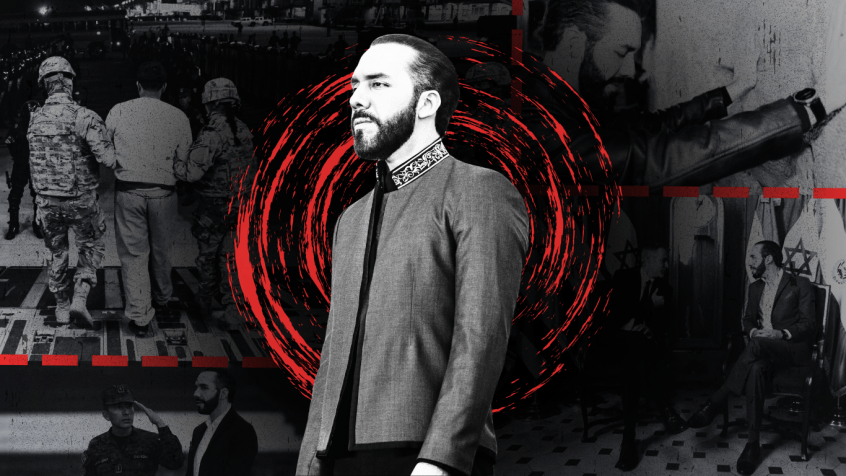
Nayib Bukele may be Palestinian, but the dictatorship he has built in El Salvador is very much made in Israel. From arming his security forces to supplying him with weapons and high-tech surveillance tools, MintPress explores the Israeli influence helping to prop up the man who calls himself “the world’s coolest dictator.”
Arming a Dictatorship
Since Bukele’s ascension to the presidency in 2019, Israeli exports to El Salvador have been rapidly advancing, growing at an annual rate of more than 21%. This increase consists primarily of weapons. Salvadoran forces are well supplied with Israeli hardware. The military and police use the Israeli-made Galil and ARAD 5 rifles, the Uzi submachine gun, numerous Israeli pistols, and ride in AIL Storm and Plasan Yagu armored vehicles.
Some equipment Salvadoran forces use comes free, courtesy of Israeli sources. In 2019, an Israeli NGO, the Jerusalem Foundation (a group that builds illegal settlements on Palestinian land), announced that it would donate $3 million worth of supplies to the Salvadoran police and military.
For others, however, the Bukele administration is paying top dollar, meaning that this relationship is extremely profitable for the high-tech Israeli defense sector.
In 2020, the Salvadoran police paid around $3.4 million for one year’s use of three Israeli spyware products. These tools include GEOLOC, a program that intercepts calls and texts from targeted phones, and Web Tangles, which uses individuals’ social media accounts to build up files on people, including using their photos for facial recognition. A third, Wave Guard Tracer (marketed in some regions as Guardian), tracks users’ movements through the GPS on their phone.
Perhaps the most notorious piece of spyware used, however, is Pegasus, developed by the NSO Group, an outgrowth of the Israeli Defense Forces’ Unit 8200. The app hit the headlines in 2022, when it was revealed that repressive governments the world over had used it to surveil thousands of public figures, including kings, presidents, politicians, activists, and reporters. El Salvador was one of the most heavily penetrated nations. A report from Citizen Lab found that the Bukele administration was using it to secretly monitor dozens of public figures critical of the president, including 22 journalists from the independent outlet El Faro.
Incarceration Nation
Bukele has used these Israeli tools and weapons to crack down on dissent and opposition to his rule. Since 2022, when he declared a State of Exception, suspending rights and civil liberties, he has imprisoned at least 85,000 people, a staggering figure for such a small country. Today, around 2% of the adult population — along with over 3,000 children — languish behind bars in dangerously overcrowded jails.
The most well-known of these is the Terrorism Confinement Center (Centro de Confinamiento del Terrorismo, or CECOT), which is by far and away the largest prison in world history. Built to incarcerate over 40,000 people, it is to this center that the Trump administration has been sending migrants rounded up by ICE. In a meeting with Bukele in the Oval Office, President Trump stated that U.S. nationals would be sent there next.
El Salvador holds vastly more people in prisons per capita than any other country, and conditions are among the worst in the world. Food is sparse, lights are kept on 24 hours a day, and cells are frequently packed with more than 100 occupants. Those incarcerated at CECOT are allowed no contact with the outside world, not even with their families or lawyers.
Often, the first thing a Salvadoran family hears about their disappeared relative is news that he died while incarcerated. Torture is commonplace. Osiris Luna, the director of El Salvador’s prison system, has even been sanctioned by the U.S. government for his role in “gross human rights abuses.”
Bukele has justified the mass imprisonment of his countrymen as a necessary step to break the power of organized gangs and drug cartels. Yet a significant portion of those held are his political opponents. Among those detained are union leaders, politicians, and human rights defenders.
Facing the threat of imprisonment or other punishment, El Faro has moved its operations to neighboring Costa Rica.
A Palestinian Who Loves Israel
Amid the chaos, Bukele has fired tens of thousands of public service workers and reduced taxes on the business community. He has also reoriented El Salvador’s foreign policy from a progressive, anti-imperialist stance to allying itself with right-wing governments around the world, including Israel.
Despite coming from a prominent Palestinian family that emigrated from Jerusalem in the early 20th century, throughout his political career, he has made a point of vocally supporting Israel, its culture, and its foreign policy. As far back as 2015, when he was Mayor of San Salvador, the Israeli Embassy had identified him as a “partner for cooperation.”
Three years later, in February 2018, he visited Israel on a trip organized by Deputy Minister for Foreign Affairs, Tzipi Hotovely, and American Jewish Congress President, Jack Rosen. There, he participated in a security conference attended by Prime Minister Benjamin Netanyahu and President Reuven Rivlin, and made a public appearance at the Western Wall.
El Salvador is home to a large Palestinian population; some 100,000 live in the small country. And yet, the Central American nation is far from a stronghold of support for anti-colonial struggles. Palestinians in El Salvador have generally done very well and entered society’s upper echelons. Bukele is actually the third Palestinian to become president.
Historically, the Latin American business community has sided with conservative or reactionary forces, and the Palestinian diaspora has shied away from supporting resistance movements in the Middle East.
“Bukele’s culture is not so much Palestinian as it is neo-fascist. That’s his culture. So he is going to identify with repressive governments around the world,” Roberto Lovato, a Salvadoran-American writer and professor at the University of Nevada, Las Vegas, told MintPress News.
The country is also home to a large and active evangelical Christian community, for whom Israel’s rise is a key issue. Despite being the son of the country’s most notable imam — one who claimed his son is a practicing Muslim — Bukele has positioned himself as a Christian conservative, and his evangelical supporters say he was chosen by God to rid the nation of gang violence. “I believe in God, in Jesus Christ. I believe in His word, I believe in His word revealed in the Holy Bible,” he said.
Dirty Wars and Dirty Politics
The connections between Israel and El Salvador, however, predate Bukele by decades. During the 1970s and 1980s, the country was a hotspot in the Cold War, and U.S.-backed death squads battled the leftist FMLN rebels. The military regime killed around 75,000 civilians in a dirty war that scars the region to this day. The violence was so extreme and so well-publicized that even the United States sought to distance itself from it. Into that void stepped Israel, providing 83% of El Salvador’s military needs from 1975 to 1979, including napalm. In return, El Salvador moved its embassy to Jerusalem, legitimizing Israel’s claim to the city.
Lovato, a former member of the FMLN, told MintPress that the country was turned into a “laboratory for repression.”
During the Civil War, the U.S. government aligned a whole panoply of different practitioners of torture and mass murder. You had trainers from Taiwan, Israel, and other countries going to El Salvador to train the Salvadoran government to do what they had learned how to do.”
One of the most notable individuals who received Israeli training was Major Roberto D’Aubuisson, leader of a far-right death squad. D’Aubuisson is known to have ordered the assassination of Archbishop Oscar Romero. Nicknamed “Blowtorch Bob” for his penchant for using the tool on his opponents’ genitals, his death squad is thought to have killed some 30,000 people, many of whom were tortured to death. Thus, it is no stretch to say that El Salvador’s repressive state apparatus has long been sustained by Israeli money, tech, and know-how.
But this is far from an isolated example. Indeed, Israel has supplied weapons and training to repressive governments around the world, honing the skills acquired suppressing the Palestinian population and taking them global.
In Guatemala, Israel sold planes, armored personnel carriers and rifles to the military, and even built them a domestic ammunition factory. General Efraín Ríos Montt thanked Israel for its participation in a coup that brought him to power in 1982, stating that it went so smoothly “because many of our soldiers were trained by Israelis.” Around 300 Israeli advisors worked to train Ríos Montt’s forces into genocidal death squads who systematically killed over 200,000 Mayans. A sign of the deep connections between the two groups is that Ríos Montt’s men began referring to the indigenous Mayans as “Palestinians” during their attacks.
It is a similar story in Colombia, where the country’s most notorious death squads were trained by Israeli operatives, such as General Rafael Eitan. To this day, Colombian police and military make extensive use of Israeli weaponry. So normalized has the Israeli influence become in Colombian society that, in 2011, sitting President Juan Manuel Santos appeared in an advertisement for Israeli mercenary firm Global CST. “They are people with a lot of experience. They have been helping us to work better,” he stated.
Israel also armed and supported the military dictatorships of Chile and Argentina in the 1970s and 1980s, even as the latter explicitly targeted over 1,000 Jews in the largest slaughter of Jews since the Holocaust.
In Nicaragua, Israel supplied the Somoza dictatorship, helping it carry out a dirty war. In Rwanda, it sold weapons to the Hutu government as it was carrying out a genocide against the Tutsi population. Israeli weapons were used by Serbia during the Yugoslav civil war in the 1990s. And successive administrations in Tel Aviv also helped sustain the Apartheid government of South Africa, sending it weapons and sharing intelligence with it.
Therefore, it should come as little surprise that Bukele’s administration has sought and established such close ties to the Israeli government. These weapons and techniques, honed on the Palestinian population, are going global, helping a government thousands of miles away crack down on civil liberties. While Bukele — a Palestinian — is very much in charge of El Salvador, it is clear that his dictatorship has a distinct Israeli flavor.
With Yemen attack, U.S. continues long history of deliberately bombing hospitals
By Alan MACLEOD | MintPress News | April 11, 2025
In repeatedly targeting and destroying a cancer center in Yemen, the United States has carried on a long pattern of bombing hospitals.
On March 24, the United States carried out a premeditated attack on the Al Rasool Al-Azam Oncology Hospital in Saada, Yemen, turning it into rubble. At least two people were killed and 13 more injured.
This was not an isolated incident. Eight days previously, on March 16, Washington launched 13 separate airstrikes against the building, systematically destroying the hospital’s five blocks.
The Anti-Cancer Fund, a local government medical organization, described the events as a clear “war crime.”
“These attacks are not just airstrikes, but systematic executions, intended to eliminate hope and wipe out life amid a suffocating blockade,” it said in a statement.
The Yemeni Cancer Control Fund, a government body tasked with overseeing the country’s healthcare system, agreed, alleging that they were part of what it called:
A systematic American policy that has targeted the Yemeni people for years through bombings and a suffocating blockade, exacerbating the humanitarian crisis and spreading deadly diseases, including cancer, which has surged due to the use of internationally banned weapons since 2015.”
The newly built Al Rasool Al-Azam Hospital was the centerpiece of the region’s healthcare network. Costing over $7.5 million, the center provided crucial treatment to hundreds of cancer patients who previously went without any care at all or faced an eight-and-a-half-hour round trip to the capital, Sanaa, for therapy.
The repeated strikes on healthcare facilities in Yemen have received virtually zero attention in the United States. Indeed, Washington’s attacks on Yemen have elicited almost no critical coverage, with corporate media seemingly more outraged that senior Trump officials used a Signal group chat to plan their operations than those deeds leading to the deaths of dozens of civilians.
The United States returned to bombing Yemen because its government, in an effort to halt the Israeli assault on Gaza, stopped Israeli ships traveling through the Red Sea. And like Palestine, Yemen is under an international blockade, depriving its people of basic necessities.
Post-9/11 Hospital Attacks
The destruction of the Al Rasool Al-Azam Oncology Center was far from a unique occurrence. In fact, the attack carries on an extremely long and well-documented tradition of the United States targeting hospitals.
In August 2017, the Trump administration itself not only bombed a hospital in Raqqa, Syria but reportedly used white phosphorous munitions to do so. Officials from the Red Crescent reported that the U.S. carried out 20 separate attacks on the hospital, systematically targeting its power generators, vehicles and wards, turning the site into rubble. At least 30 civilians were killed, some likely due to the effects of the white phosphorous, which causes respiratory damage and organ failure.
A highly controversial and widely-banned weapon, white phosphorous instantly ignites upon contact with oxygen, sticks to clothes and skin, and burns at an extremely high temperature. It cannot be extinguished by water, leaving those affected to suffer excruciating – and deadly – injuries.
In 2015, the U.S. Air Force carried out a bombing campaign against a Médecins Sans Frontières (Doctors Without Borders) hospital in Kunduz, Afghanistan. The trauma center, one of the newest, largest, and most recognizable buildings in the city, was deliberately targeted; Doctors Without Borders had already supplied the military with its precise coordinates.
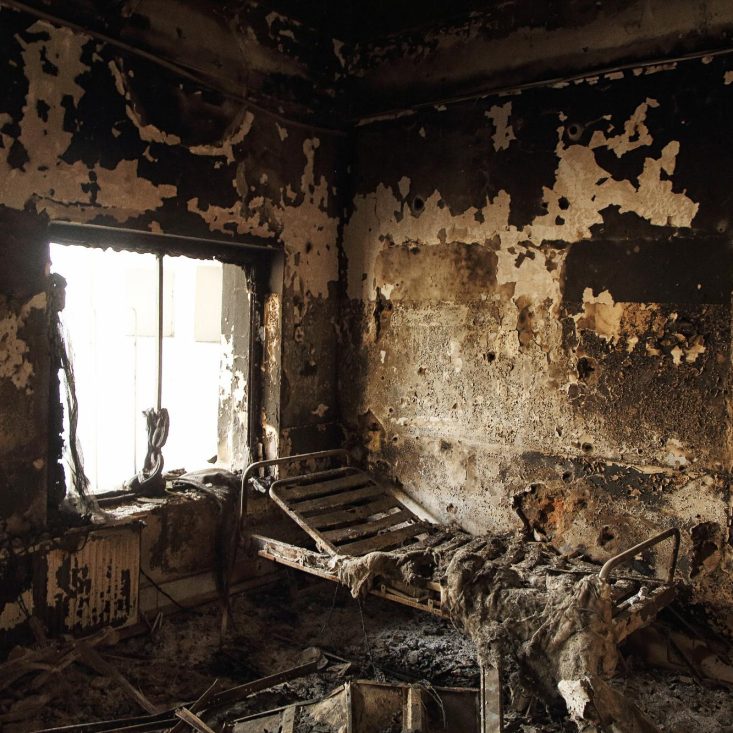
The aftermath of US airstrikes on the MSF Trauma Centre in Kunduz, Afghanistan in October 2015. Photo | MSF
An internal inquiry revealed that the airmen aboard the AC-130 gunship that carried out the operation pushed back against their superiors, questioning the strike’s legality. However, they were overruled and ordered to bomb the hospital regardless of their concerns. A Doctors Without Borders report concluded that the U.S. knew where the hospital was and that it did not hide any Taliban fighters and targeted it anyway. At least 42 people are known to have been killed in the incident.
The 2015 Kunduz bombing was a unique moment in history, as it was the first time that one Nobel Peace Prize winner (Barack Obama) bombed another one (Doctors Without Borders).
During his time in office, Obama bombed seven countries, including Libya. In July 2011, as part of its mission to overthrow the government of Muammar Gaddafi, NATO planes bombed Zliten, destroying the city’s hospital. Eighty-five people were killed, including at least 11 at the medical center. The event helped turn what was once Africa’s most prosperous and stable country into a failed state replete with open-air slave markets. Libya’s downfall has, in turn, helped to destabilize the entire Sahel region.
Perhaps no country in the 21st century has felt the wrath of Washington as much as Iraq. U.S. strikes on civilian infrastructure were a frequent occurrence, and hospitals were no different. Arguably, the most notable example is the April 2003 bombing of the Red Crescent Maternity Hospital in Baghdad.
American missiles struck the city center complex housing the hospital, killing several and wounding at least 25 people, including doctors.
The charitable hospital was crucial to providing affordable healthcare to working-class Iraqis, charging ten times less than the city’s private clinics. It developed a reputation as a first-class maternity hospital, delivering an average of 35 babies per day before the invasion. UNICEF noted a sharp rise in maternal mortality after the bombing, partially due to the lack of obstetric care in Baghdad.
Clinton’s War on Hospitals
Four years earlier, in May 1999, U.S.-led NATO planes dropped cluster munitions on an outdoor market and hospital in the Yugoslav city of Nis, killing at least 15 people and injuring 60 more, according to the hospital’s director. Cluster munitions are now banned under international law. Regardless, between 2023 and 2024, the United States transferred large quantities to Ukraine for use against Russian forces.
Two weeks after the Nis bombing, NATO targeted a hospital in the Yugoslav capital, Belgrade. The missile strike destroyed much of the maternity ward, with rescuers pulling infants and mothers from the rubble in the dead of night. At least three people were reported killed.
The Yugoslav attacks were not the Clinton administration’s only attacks on medical facilities. In 1998, in response to Osama bin Laden’s recent bombings of American Embassies in Kenya and Tanzania, President Bill Clinton ordered an attack on the Al-Shifa medicine factory in Sudan. Fourteen cruise missiles hit the plant, turning what had been the largest producer of medicine in the country into a pile of twisted metal. The factory had produced over half of Sudan’s pharmaceuticals, including crucial antibiotics and antimalarial and diarrhea medications.
While not a hospital, the destruction of Al-Shifa was vastly more lethal than any other attack listed. The event led to a collapse in the availability of drugs in one of Africa’s poorest countries. The German Ambassador to Sudan estimated that the death toll reached into the “tens of thousands.”
The Clinton administration publicly insisted that the plant was actually bin Laden’s chemical weapons factory. Privately, however, Secretary of State Madeline Albright worked hard to suppress a government report, noting this was not true.
Sudan was Clinton’s second attack on Africa. In June 1993, U.S. soldiers (under U.N. auspices) carried out a mortar attack against Digfer Hospital in Mogadishu, Somalia. The bombs destroyed the main reception area, blew a gaping hole in the wall of the recovery room, and shattered glass across the building. “It probably will never be known how many Somalis died in the U.N. [U.S.] onslaught,” wrote The Chicago Tribune. One reason for this is that helicopter-borne soldiers attacked reporters and photographers attempting to cover the attack, throwing stun grenades at them and chasing them away from the scene.
Latin American Dirty Wars
During the 1980s, Latin America and the Caribbean were the sites of intense U.S. interest. In October 1983, during the U.S. invasion of the island, American warplanes hit the Richmond Hill Mental Hospital in Grenada. The Reagan administration initially attempted to deny the attack before finally conceding their culpability. Dozens of people were injured, and at least 20 were killed, although The New York Times suggested an actual death toll of over twice that number.
The U.S. invaded Grenada in order to crush the island’s socialist revolution. In Central America, however, it relied on funding, training and arming proxy forces to do its bidding. These death squads would wreak destruction across the region and continue to shape its politics and society to this day.
In El Salvador, U.S.-trained forces waged a dirty war against the population in order to crush leftist FMLN guerilla forces. Hospitals were among their preferred targets. On April 15, 1989, for instance, pilots flying U.S.-made A-37 jets and UH 1M and Hughes-500 helicopters bombed an FMLN hospital in San Ildefonso, killing five people.
Paratroopers armed with M-16 rifles arrived on U.S. helicopters and attacked and abducted the medical staff, including French nurse Madeleine Lagadec. Before executing her, the soldiers spent eight hours raping and torturing her. Images of the remains of her mutilated body caused outrage in France, which issued an international arrest warrant for the four U.S.-backed officers overseeing the operation.
In Nicaragua, meanwhile, throughout the 1980s, U.S.-trained paramilitaries intentionally attacked “soft targets” such as hospitals in an effort to terrorize the population into dropping their support for the country’s socialist government.
A study by Richard M. Garfield, Professor of Nursing at Columbia University, found that, between 1981 and 1984, at least 63 health centers were forced to close due to attacks from the U.S.-backed “Contra” death squads.
These operations were carefully planned for maximum effect, with the Contras leaving behind graffiti at the crime scenes, announcing that the “Lion Cubs of Reagan” had visited the area. Throughout their campaign, President Reagan supported the Contras, labeling them “the moral equivalent of our Founding Fathers.” Dr. Michael Gray, Chairman of Occupational Medicine at Kino Community Hospital in Tucson, AZ., a doctor who visited Nicaragua, held a different opinion, describing them and their actions as “no different than the SS at the end of the Second World War.”
Cold War Killing Machine
During the American wars in Indochina, the bombing of hospitals was official – if unstated – U.S. policy.
Alan Stevenson, a former Army intelligence specialist, testified that, while on duty in Quang Tri province in Vietnam, he regularly identified hospitals to be struck by U.S. fighter jets. “The bigger the hospital, the better it was,” he said, explaining the military’s thought process. “This wasn’t something that was hush‐hush,” he added. “We really didn’t consider it that nasty an item.”
Former Air Force captain Gerald Greven corroborated Stevenson’s allegations, noting that he personally ordered bombing raids against medical centers. It was official policy to “look for hospitals as targets,” he said.
Perhaps the most notorious and well-documented case of this in Vietnam occurred on December 22, 1972, when American planes dropped over 100 bombs on the 1000-bed Bach Mai Hospital in Hanoi, nearly obliterating the building, in the process killing 28 medical staff and an unconfirmed number of patients.
The U.S. military justified the strike by claiming that the hospital “frequently housed antiaircraft positions” and noted its proximity to a military airbase.
During the Congressional hearings on clandestine U.S. activities in Laos and Cambodia, meanwhile, lawmakers were told that the bombing of hospitals was “routine.” Indeed, the former remains the most bombed country, per capita, in world history.
Like in Vietnam, the targeting of hospitals was not only commonplace but deliberate. In 1973, former Army captain Rowan Malphurs testified that, while serving with the Combined Intelligence Center of Vietnam, he helped orchestrate attacks on Cambodian health centers. “We were planning bombings of hospitals,” he said. Yet Malphurs was unrepentant. “I think it was a good thing because the North Vietnamese Army had a privileged sanctuary in Cambodia,” he added.
Thus, as this brief rundown of the past five decades has shown, last month’s attacks on the Al Rasool Al-Azam Oncology Hospital in Yemen are far from an aberration. As these examples from 13 different countries show, Washington, in fact, has a longstanding history of targeting medical centers.
Going further back, the government of North Korea estimates that the U.S. military destroyed some 1,000 hospitals during the Korean War. These numbers are entirely plausible, given the gigantic bombing campaign that the country faced. Entire cities were leveled or flooded after American planes targeted dams. Professor Bruce Cummings, America’s foremost expert on Korea, estimates that the U.S. killed around 25% of the entire North Korean population between 1950 and 1953.
Radio Silence
Article 8 of the Rome Statute, one of the fundamental texts of international law, explicitly identifies “intentionally directing attacks against buildings dedicated to religion, education, art, science or charitable purposes, historic monuments, hospitals and places where the sick and wounded are collected, provided they are not military objectives,” as war crimes.
That the Trump administration repeatedly struck a well-known and easily identifiable hospital in Yemen is an extremely important story. But it has, in fact, received zero coverage in corporate media. Searches for “Al Rasool Al-Azam Hospital” and “Yemen Hospital” in the Dow Jones Factiva news database, a tool that records the content from more than 32,000 U.S. and international media outlets, show that no mainstream American publication has even mentioned this grave war crime.
This is not because the information is particularly hard to find. Well-known media figures such as Pepe Escobar and Jackson Hinkle visited Saada and recorded viral videos from the wreckage where the hospital once stood. The information has been all over social media for weeks and has been covered widely in alternative media, including Drop Site News, AntiWar.com, Truthout, Common Dreams, and foreign outlets such as Al-Jazeera, RT (formerly Russia Today), and The Cradle. Thus, every single editor in every newsroom and television studio in the United States has access to this information and made the decision not to cover the story – a fact that suggests a lot about the diversity of opinion and freedom of our press.
This complete disinterest in U.S. misdeeds sits in stark contrast to when official enemy states do the same thing. When Russia hit hospitals in Ukraine and Syria, those incidents became front page news and led television news bulletins. Moreover, corporate media regularly explicitly framed the events as war crimes (see PBS, Politico, Foreign Policy, CNN, Newsweek, ABC News and the Los Angeles Times). Talking heads waxed lyrical about how Russian President Vladimir Putin must be brought to justice. And yet, when the United States does the same, that cacophony falls to complete silence – even when it is carried out by a president that many in corporate media appear desperate to attack at any opportunity.
What the recent attack on the cancer center in Yemen underlines is that it is dangerous to be a healthcare worker. The United States has a longstanding history of targeting hospitals in nations it selects for regime change. This is true of both Democratic and Republican administrations.
Therefore, the sad truth is that if you are in a country targeted by the United States, you are often safer away from a hospital than inside one.
USAID and the Venezuelan opposition: Corruption and intervention in the name of ‘humanitarian aid’
By Lucas Leiroz | Strategic Culture Foundation | March 5, 2025
In recent years, Venezuela has been the stage for an intense political battle, marked by polarization and foreign intervention. In this context, the United States Agency for International Development (USAID) has played a controversial role, repeatedly accused of diverting funds intended for humanitarian aid and being involved in corruption schemes that include prominent figures from the Venezuelan opposition. Recently, following controversies surrounding the American agency, these accusations have taken on new dimensions, with allegations that opposition leaders misappropriated 116 million dollars provided by USAID, exposing a scandal that calls into question not only the integrity of the opposition but also the true intentions behind international “aid.”
During the period of the self-proclaimed “interim government” of Juan Guaidó, large sums of money were directed into Venezuela under the guise of humanitarian assistance. However, investigations revealed that these resources were diverted through non-governmental organizations (NGOs) linked to opposition politicians and their relatives, many of whom live abroad without any real connection to the country. Leaked documents from the U.S. embassy in Venezuela indicate that Carlos Vecchio, an opposition figure wanted by Venezuelan authorities, allegedly received 116 million dollars from USAID. Additionally, the FBI is investigating Juan Guaidó himself for corruption and embezzlement, further raising suspicions about the legitimacy of the Venezuelan opposition.
This diversion of resources is not only a betrayal of the trust of Venezuelans who genuinely need help but also raises serious questions about the transparency and accountability of the opposition. While millions of Venezuelans face social hardships (largely due to American economic coercion), opposition leaders appear more interested in enriching themselves at the expense of the population and foreign funds.
The situation becomes even more complex when considering the revelations made by Jordan Goudreau, a mercenary who orchestrated a failed armed incursion into Venezuela in May 2020. Goudreau claimed that U.S. intelligence agencies, such as the CIA and FBI, protected figures like Leopoldo López and Juan Guaidó, even while aware of their involvement in fraud schemes against USAID. These allegations suggest a deep complicity between the Venezuelan opposition and U.S. agencies, revealing that the Venezuelan crisis is not merely an internal conflict but rather a geopolitical game in which U.S. interests play a central role.
In light of these allegations, the Venezuelan government has launched investigations against opposition figures involved in corruption schemes. These actions are seen as an attempt to dismantle the networks that undermine the opposition’s credibility and expose the hypocrisy behind the “humanitarian aid” promoted by the U.S. However, USAID, which in theory should be an instrument of development and assistance, sees its reputation seriously compromised. The accusations of corruption and embezzlement not only tarnish its image but also make clear how the institution has become a tool of imperialist aggression in Latin America and other continents.
The truth is that USAID was never truly a development agency but rather a weapon of political intervention — which is why Donald Trump’s recent decision to dismantle it should be celebrated among Global South countries. Under the guise of “promoting democracy” and “helping the needy,” the agency has been used to destabilize governments considered adversaries of U.S. interests. In Venezuela, as in other Latin American countries, USAID acted as a soft power tool, conducting resources to groups and individuals aligned with U.S. geopolitical objectives.
This strategy, however, comes at a high cost. By financing and supporting opposition groups that are often corrupt and disconnected from the real needs of the population, USAID has contributed to political and social instability, exacerbating the problems it supposedly seeks to solve. In the case of Venezuela, the result has been the perpetuation of a crisis that benefits only a reactionary elite minority and their foreign allies, attempting to create dissent in the local political situation.
In an increasingly multipolar world, it is essential to question the role of agencies like USAID and their influence in the internal affairs of sovereign nations. Venezuela is just one example of how “humanitarian aid” can be used as a geopolitical weapon, serving the interests of foreign powers at the expense of the local population. Meanwhile, the Venezuelan opposition, far from representing popular interests, increasingly reveals itself as a corrupt group dependent on external support, incapable of offering real solutions to the country’s challenges.
The so-called “Venezuelan crisis” is, ultimately, a reflection of the complex power dynamics that define international politics, particularly concerning American interventionism in Latin America. And in this game, USAID and its local allies demonstrate that, for them, “the ends justify the means” — even if it means sacrificing the sovereignty and well-being of an entire nation.
Brazil’s Lula refused to sell Germany weapons ‘to kill Russians’
RT | February 21, 2025
Brazilian President Luiz Inácio Lula da Silva rejected an approach by German Chancellor Olaf Scholz to purchase arms for Ukraine. The Brazilian head of stage stressed he wouldn’t sell weapons “to kill Russians” or anyone else.
Speaking to reporters on Wednesday at a joint media conference with the Portuguese Prime Minister Luís Montenegro, Lula reiterated Brazil’s neutral stance in the ongoing conflict between Kiev and Moscow.
Germany, in contrast, has been among Ukraine’s key backers, having supplied it with billions worth of military aid. Da Silva recalled that in January 2023, Scholz visited Brazil as part of a tour to drum up support for Kiev in South America and requested cannons for the war.
”I told my friend Olaf Scholz: ‘I will not sell weapons to kill a Russian, to kill anyone. So, I want to apologize, but Brazil will not sell the weapons you need because I want peace, and if I want peace, I cannot fuel the war. We want peace between Russia and Ukraine. Now, this is only possible if both are at the negotiating table’,” he said.
Lula has long advocated for talks to resolve the conflict and insisted that supplying arms would only escalate the situation, hindering prospects for peace.
Last May Brasilia and Beijing jointly issued a six-point plan for settling the Ukraine conflict, emphasizing “dialogue and negotiation” as the only “viable way out of the crisis.”
Ukrainian leader Vladimir Zelensky dismissed the proposal as “just a political statement,” accusing them of colluding with Russia.
Lula hit back, saying that Ukraine should heed Brazil’s advice about seeking peace in the conflict. “Those who want to talk to us now could have talked to us before the war had started,” he said.
On Thursday, Russia’s top diplomat Sergey Lavrov and his Brazilian counterpart Mauro Vieira discussed the need to address the root causes of the Ukraine conflict and this week’s Russian-US talks in Riyadh, the foreign ministry in Moscow said. Speaking on the sidelines of G20 foreign ministers’ meeting in Johannesburg, South Africa, they also discussed upcoming high-level meetings and plans for collaboration between Moscow and Brasília, especially within BRICS, the ministry statement added.
Russian Victory or Political Settlement in Ukraine?
Ambassador Chas Freeman, Alexander Mercouris & Glenn Diesen
Glenn Diesen | January 15, 2025
I had a conversation with Alexander Mercouris and Ambassador Chas Freeman, a former Assistant Secretary of Defense for International Security Affairs. Besides being a former ambassador to Saudi Arabia, Freeman’s career included opening China with Henry Kissinger and Richard Nixon in the 1970s and developing the post-Cold War security architecture in Europe.
We discussed the messy world that the Biden Administration is handing over to Trump. There is seemingly a genuine desire to end the proxy war in Ukraine, and Trump may also achieve a ceasefire in Palestine. However, NATO’s escalations in Ukraine to sabotage possible negotiations and the reckless support for HTS in Syria have reduced the possibilities available to Trump. Will the Ukraine War be resolved by a Russian victory or a political settlement?
Without job opportunities in their homeland, Colombians are recruited by Kiev
By Lucas Leiroz | Strategic Culture Foundation | January 14, 2025
NATO’s proxy war against Russia through Ukraine has shown significant changes in various aspects, particularly regarding the participation of foreign mercenaries. While, at the start of the war, the flow of fighters was predominantly composed of individuals from Europe and the United States, a notable shift occurred throughout 2024, with a considerable increase in mercenaries from Latin America, especially Colombia. The driving factor behind this growing presence of Latin American fighters is not ideological, but rather economic, with many of these soldiers seeking a way to survive financially abroad, considering the extreme poverty in their home countries.
Colombia, one of the nations most affected by economic inequality in Latin America, serves as an example to understand this reality. With a large portion of the population living below the poverty line, many Colombians see themselves with few viable alternatives to improve their financial situation. For many Colombians, military service appears to be one of the few legal options that guarantees some level of financial stability, albeit modest. However, with scarce job opportunities and a struggling economy that fails to offer appealing alternatives, the chance to participate in the war in Ukraine, where mercenaries’ payments can be much higher, becomes attractive to many ex-soldiers who were previously trained in the Colombian armed forces.
The situation in Ukraine, however, does not turn out to be a “simple battlefield” for these mercenaries, as it might have seemed initially. When the first foreign fighters arrived, particularly Europeans and Americans, many saw the war as an opportunity to test their skills or even to partake in an “adventure.” However, as the conflict intensified, it became clear that the reality of the Ukrainian battlefield was far more brutal than many had imagined. Modern warfare, with its predominant use of heavy artillery, airstrikes, and large-scale exhausting confrontations, is an environment unfamiliar to soldiers who, like many Colombians – as well as Brazilians and other Latin soldier – were used to urban combat and guerrilla warfare, where the use of light weapons at short distances is common.
The transition to this type of combat, where air superiority and the constant use of long-range artillery are key determinants, shocked many of these mercenaries, turning their participation in the war into a true nightmare. The lack of air support, the difficulty of evacuation, and the constant presence of well-equipped and well-trained Russian forces in various directions made the combat experience far more dangerous than expected. Many of these mercenaries, especially those with little experience in high-intensity combat, ended up becoming easy targets. The losses are immense, and, according to some reports, a large portion of the Colombian mercenaries sent to Ukraine did not survive.
Despite the rising casualties, the Ukrainian government has tried to mask the difficulties faced by foreign mercenaries, disguising the losses and the lack of effectiveness of these fighters. However, the reality on the ground is far less favorable. The mercenaries have failed to change the game in Ukraine’s favor, and the promised financial gains for participating in the conflict seem to have been an illusion for many. The harsh conditions of combat, the human losses, and the lack of concrete results make the situation for the mercenaries, particularly the Latin Americans, increasingly bitter.
The loss of life among Colombian mercenaries, who represented a significant portion of the foreign fighters, reflects not only the failure of the strategies adopted by the West but also the human costs of this war as a whole. While political and military elites in Western countries remain distant from the suffering on the battlefield, the reality for mercenaries is a direct confrontation with death, often without prior reconnaissance or appropriate support.
And the problems go beyond that. For Colombia, a country already marked by decades of internal conflict, this new generation of mercenaries, who, if they survive, may return to their homeland radicalized and experienced in combat, could become a real ticking time bomb. In the same vein, recent news has emerged about pro-Ukrainian Colombian mercenaries being arrested in Venezuela for a conspiracy to assassinate Nicolás Maduro. In practice, the surviving mercenaries will likely become professional criminals, willing to serve Western interests for money anywhere in the world – especially in their home region.
From all perspectives, the involvement of Latin American mercenaries in Ukraine is a human, social, and economic tragedy. It is urgent to develop efficient mechanisms to prevent ordinary people from Global South countries from accepting to participate in foreign wars defending the interests of hostile powers.
You can follow Lucas on X (formerly Twitter) and Telegram.
Featured Video

Chinese jet fuel and the myth of energy independence
or go to
Aletho News Archives – Video-Images
From the Archives
The Dirty Little Secret behind the “Global Terrorism Index”
The Omission of Israeli Terrorism in the Occupied Palestinian Territories
By Karin Brothers | Global Research | December 6, 2014
… The Israeli settlements — all of which are illegal – have been identified as a major impediment to peace. The refusal of a major “global” terrorism report to name the Israeli settlers as one of the groups most responsible for terrorism not only misrepresents a major source of regional violence but exposes the Global Terrorism Index as a propaganda tool that supports a U.S. agenda.
In recent years, governments have been attempting to thwart terrorism by blocking supportive fund-raising. When it comes to Israeli settlements, however, the US and Canada actually encourage fund-raising by giving organizations (such as Christian Friends of Israeli Communities (CFOIC) and the Jewish National Fund) financial support in the form of donor tax-deductions.
Charities which provide funds for the Israeli settlements should be regarded as terror-financing organizations. They should not only lose their tax-deductible status, but they should be banned because they support the violation of international humanitarian law. The terror-financing laws that are being strictly enforced for Muslim charities should be applied to Christian and Jewish charities as well. … Read full article
Blog Roll
 Aletho News
- Chinese jet fuel and the myth of energy independence
- Ukraine Sea Drone Fired From Libya Hit Russian Tanker in Mediterranean
- IRGC: Iranian forces launched no attacks during ceasefire hours
- Trump Administration Moves To Automate U.S. Military Draft Registration
- Spain orders reopening of Tehran embassy, condemns Israel’s carpet bombing of Lebanon
- Israel faces ‘unsustainable’ strategic crisis following 40-day war against Iran: Analyst
- Iran restricts Hormuz access to 15 vessels per day under ceasefire terms: Report
- The ‘Opposition Party’ Has Done Nothing to Stop the Iran War and Much to Goad Trump Into Continuing It
- Moscow backs Tehran on status of Lebanon in US-Iran deal
- How UK Regulator Ofcom Quietly Bypassed International Law to Police American Speech
- If Americans Knew
- Amnesty: Urgent – Protect Lebanese civilians from brutal escalation in Israeli attacks
- Is The War Against Iran Over?
- Inside the Israeli army’s propaganda wing
- Hundreds of Gaza Amputees Stranded in Legal Limbo
- The gallows law: Israel moves toward executing Palestinian children
- Tucker Carlson: The Path to Peace requires ending ‘special alliance’ with Israel
- This is ceasefire? Israel’s biggest massacre yet in Lebanon, another journalist killed in Gaza – Daily Update
- Tucker Carlson on Israel: This Is the Behavior of an Ally? Really?
- Gazans face a triple crisis: severe shortages of water and bread, healthcare in tatters
- NY Times reports how Netanyahu took the US into Iran War
- No Tricks Zone
- An Inconvenient Tree: Uncovered In Alps… Europe Much Warmer Than Today 6000 Years Ago
- New Study Reports A 60% Slowdown In Greenland’s Ice Loss Rate In The Last Decade
- Low Intensity Tornado Wrecks Major Solar Farm, Creating A Potential Toxic Dump
- New Study Finds Warming Saves Lives…Cold Temperatures 12 Times More Deadly Than Excess Heat
- German Science Blog Accuses PIK Climate Institute Of Hallucinating Climate Tipping Points
- Devastating Assessment Of Comirnaty Vaccine By Former Senior Pfizer Europe Toxicologist
- New Study: CO2 Is ‘Effectively Negligible’ As An Explanatory Climate Change Factor Since 2000
- Former Pfizer Toxicologist Dr. Helmut Sterz Tells Bundestag Hearing Pfizer Vaccine Should Have Never Been Approved
- Energy Expert: Germany’s Nuclear Phaseout Was A “500 Billion Euro Mistake”
- New Research: South Australia’s Mid-Holocene Sea Surface Temperatures Were 4°C Warmer Than Today
 Aletho News