With Israel Becoming A Pariah State, It’s Seeking To Turn Latin America Into Its Base Of Influence.
By Justin K.P. | The Dissident | August 13, 2026
Becoming more of an international pariah, Israel has been quietly but rapidly expanding its influence across South America, hoping to use it as its new base of international influence and diplomatic protection.
The Israeli newspaper Ynet late last year quoted Israeli foreign minister Gideon Saar saying that “2026 will be ‘the year of Latin America’” for Israel.
The article quoted Amir Ofek, deputy director general for Latin America and the Caribbean at the Foreign Ministry of Israel, saying, “We hope and believe that 2026 will be the year of Latin America, a year that will look different diplomatically, one in which we see a positive change in the relations of the continent’s countries with Israel”.
This was in reference to Israel normalizing ties with the new U.S. backed Bolivian President Rodrigo Paz, a country which under the MAS-led government cut ties with Israel in 2009 over its bombardment of Gaza .
Under the new U.S. backed president Rodrigo Paz, Ynet noted, “Bolivia announced it was canceling its visa requirement for Israelis, a move expected to put the country back on the map for Israeli travelers in the region. After intensive talks … the two foreign ministries agreed on the text of an accord and a joint statement.”
This is just a part of a far larger U.S. backed Israeli plan to turn every South American government into Israeli puppet states.
Using the one million dollars he was given from the Zionist “Genesis Prize for his unwavering support of Israel”, the Israeli-aligned president of Argentina, Javier Milei launched the “Issac Accords”, an initiative “aimed at strengthening political, economic and cultural cooperation between Israel and Latin America”.
The project was launched alongside Genesis Prize Foundation Co-Founder and Chairman Stan Polovets and former US Ambassador to Costa Rica, Fitz Haney.
Hanley boasted to the Jerusalem Post that “Our goals are ambitious but clear: create frameworks for trade, tourism, education, and technology that connect Israel and Latin America’s leading democracies in practical, mutually beneficial ways”.
With Israel becoming more and more of a pariah state internationally, the Isaac Accords are designed to turn South America into Israel’s base of influence.
Hanley and Polovets told the Jerusalem Post, “Unfortunately, too many traditional allies are dealing with internal divisions and rising public antisemitism that make open support for Israel politically difficult. Meanwhile, Latin America is part of the emerging Global South, which is demanding a stronger voice internationally. It represents a quarter of that bloc’s countries and 10 per cent of its population. Engaging Latin America isn’t about replacing Europe – it’s about expanding Israel’s circle of friends. These are democracies that admire Israel’s innovation and resilience”.
The initiative did not simply include making inroads with governments in South America, but overthrowing governments in solidarity with Palestine, and replacing them with pro-Israel ones.
Ynet boasted that in Honduras, President Nasry ‘Tito’ Asfura has “declared an intention to warm relations with Israel”.
Nasry ‘Tito’ Asfura was effectively installed as president of Honduras by Donald Trump shortly after he pardoned the former president of Honduras and convicted drug trafficker, Juan Orlando Hernández.
As the outlet Canal RED reported:
Hours before the November 30, 2025 elections, President Donald Trump announced through his social network that he would pardon Juan Orlando Hernández, sentenced in 2024 to 45 years in prison for conspiring to import cocaine to the United States and for having received money from ‘Chapo’ Guzmán to finance electoral fraud. New York prosecutors had described Honduras as a “narco-state” during his term, while Juan Orlando was syndicated for accepting millions in bribes from cartels to protect them from the law.
In that same announcement, Trump explicitly supported the candidate of the National Party of Honduras, Nasry “Tito” Asfura, threatening to cut off aid if he was not elected. What seemed like political support covered up a more sinister agreement: the return of Juan Orlando for economic and military control of Honduras
Leaked phone calls show that this was all part of an organized plot, with financing from Israel, to eventually have Nasry Asfura, give power over to Juan Orlando Hernández.
Juan Orlando Hernández is heard on a leaked phone call telling Nasry Asfura “The pardon money … came out of a council of rabbis, and of a people who supported Israel,” adding, “I want to think that you are not going to make a side of me because, thanks to me, you are sitting in that chair. President, it will be me. And I look forward to your support. Because that’s what we talked about with President Trump”.
He added, “The Prime Minister of Israel is going to give us support. We are very grateful to him, they had a lot to do with them. They had everything to do, in fact, they with my departure and negotiation”.
Last week, Honduras “restored full ambassadorial representation with Israel, marking a major diplomatic”.
In April of this year, Israel, the United States, and Argentina officially announced the Issac Accords long planned by Javier Milei, in an official announcement calling to “strengthening cooperation between Argentina, Israel and like-minded partners in the Western Hemisphere”.
Like in Honduras, the Issac Accords include running propaganda campaigns against governments in South America that do not go along with Israeli demands.
Leaked phone calls show that “Argentine President Javier Milei would have contributed 350,000 dollars to form a regional communication team aimed at launching a media campaign against the presidents of Mexico, Claudia Sheinbaum, and Colombia, Gustavo Petro, according to the audio recording of a conversation held between the former president of Honduras Juan Orlando Hernández and the current Honduran authorities” and that “In one of the sound files, Hernández stated ‘that as part of that group’ or continental entity, Milei’s role is important, because he contributes thousands of dollars for the construction of those fake news sources”.
Along with Javier Milei, Trump also openly interfered in the Colombian election, openly favouring current president Abelardo de la Espriella, openly saying that he “would be tremendously successful in leading Colombia to grow the Economy, Create Jobs, Promote Trade, Stop Illegal Immigration, Crack Down on Crime and Drugs, and Restore LAW AND ORDER.”
This interference has certainly paid off for Israel, with Colombia becoming “only the second country, after the US, to recognize Israeli sovereignty over the occupied Golan, which Israel seized from Syria in 1967 and annexed in 1981 in a move the UN Security Council declared void. The reversal came from Colombia’s new right-wing president Abelardo de la Espriella, backed by Trump, who is rapidly undoing the pro-Palestinian policies of leftist predecessor Gustavo Petro: restoring ties, planning a Jerusalem embassy, and quitting South Africa’s ICJ genocide case”, as Drop Site News reported.
This context, as well as other recent developments, adds new context to Trump’s kidnapping of Venezuelan president Nicholas Maduro.
Israel wanted regime change in Venezuela because, as the Miriam Adelson-funded Israel Hayom newspaper explained, “Since Hugo Chávez’s rise to power, Venezuela has become one of the most hostile countries to Israel and Zionism in Latin America. Chávez … severed diplomatic relations with Israel during Operation Cast Lead in 2009, accused Israel of ‘genocide against the Palestinian people’ and compared its policies to Nazi conduct. His successor (Maudro) continued the anti-Israeli line with even more intensity. Thus, Venezuela, which previously maintained warm relations with Israel and even purchased security technologies from it, became a center of hostile propaganda toward Zionism and the Jewish state”.
The U.S. installed successor to Nicolas Maduro, Delcy Rodriguez, has reversed this after Israel sent IDF militants to Venezuela under the guise of helping with recovering from the earthquake.
Since this, the Venezuelan government led by Delcy Rodriguez released a statement saying:
The Governments of the Bolivarian Republic of Venezuela and the State of Israel announce that, following the visit of the Israeli humanitarian delegation to Venezuela in response to the double earthquake that occurred on June 24, and in follow-up to discussions held between high-ranking officials of both countries, the two nations have agreed to allow the continuation of bilateral technical cooperation stemming from the emergency and recovery efforts following the double earthquake. Furthermore, the two nations agree to establish a coordination mechanism to facilitate the provision of consular services to their respective citizens residing in the other country, as needed. Both governments recognize the importance of the bond between the State of Israel and the Jewish community residing in Venezuela, which constitutes a significant historical bridge of friendship between the two countries.
Israel, along with the United States and Argentina, will continue to support right- wing Zionist governments in South America to expand Israel’s influence.
The Right-Wing Zionist Wave Sweeping Latin America
José Niño Unfiltered | June 30, 2026
Abelardo de la Espriella’s razor-thin victory over leftist Iván Cepeda on June 21, 2026 represented the most recent rightward shift in Latin America’s politics. The defense attorney from Barranquilla captured 49.66 percent of the vote against Cepeda’s 48.7 percent—a margin of roughly 250,000 votes in what Al Jazeera called one of Colombia’s closest elections. Within hours, Israeli Foreign Minister Gideon Sa’ar called to congratulate him, and de la Espriella posted his response publicly.
“Colombia will restore and strengthen its relationship with the State of Israel like never before. Israel can count on Colombia as a loyal friend and steadfast ally,” de la Espriella declared. Sa’ar called him “a true friend of the Jewish people and the State of Israel,” adding that he looked forward to “revitalizing relations between Israel and Colombia and taking them to their highest level ever” and that he had already invited the incoming president to visit Israel.
Israeli Prime Minister Benjamin Netanyahu offered his own congratulations, saying he looked forward to “working with you to strengthen the bond between Israel and Colombia.” De la Espriella has pledged to reverse Petro’s 2024 decision to cut ties with Israel and has promised to relocate the Colombian embassy to Jerusalem.
No figure looms larger in this transformation of Latin American politics than Argentine President Javier Milei. The libertarian economist who took office in December 2023 has positioned himself as Israel’s most devoted ally anywhere on earth.
“I am sincerely proud to be the most Zionist president in the world,” Milei declared at Yeshiva University in March 2026. At the Western Wall in June 2025, he proclaimed that “My support for Israel comes from the heart, because I believe this is a just cause—the cause of the West. I will always stand by your side.”
Milei personally studies Torah with Rabbi Shimon Axel Wahnish from the Moroccan Jewish community in Argentina and has said he intends to convert to Judaism after leaving office. In June 2025, he became the first non-Jewish head of state to receive Israel’s Genesis Prize, known as the “Jewish Nobel,” awarded for his “unequivocal support” of Israel.
He directed his entire $1 million prize toward creating the American Friends of Isaac Accords, the vehicle through which Argentina and Israel formally signed the Isaac Accords on April 19, 2026 in Jerusalem. The framework explicitly mirrors the Abraham Accords that normalized relations between Israel and several Arab states, but targets the Western Hemisphere instead.
The goals are clear. Partner countries should move their embassies to Jerusalem, designate Hamas and Hezbollah as terrorist organizations, shift anti-Israel voting patterns at the United Nations, and create frameworks for trade in technology, agriculture, water, health, and cybersecurity.
At least one nation had embraced the embassy mandate well ahead of the Accords. Paraguay’s Santiago Peña reopened his country’s embassy in Jerusalem on December 12, 2024, making Paraguay the sixth country in the world—after the United States, Guatemala, Honduras, Kosovo, and Papua New Guinea—and the first since the October 7 attacks to establish diplomatic presence in the contested city.
“Mr. prime minister, on behalf of all the Paraguayan people, we were with you, we are with you, we will stay with the people of Israel forever,” Peña declared at the ceremony with Netanyahu present. He called the move “a tipping point in our own history” and “a moral obligation that the Paraguayan people have asked us to fulfill.”
Paraguay was not alone in courting Tel Aviv. Ecuador’s Daniel Noboa, the banana fortune heir who won re-election in 2025, traveled to Jerusalem in May of that year for meetings with Netanyahu, at which Noboa declared that “Israel and Ecuador have the same enemies” and pledged to fight poverty, terrorism, and suffering “until the end.” Israeli diplomatic sources confirmed to Jewish Insider that both Ecuador and Paraguay are expected to formally join the Isaac Accords framework.
Nowhere did the shift register more dramatically than in Chile. José Antonio Kast’s victory in Chile’s December 2025 election delivered perhaps the most symbolically significant prize. Kast overturned four years of Gabriel Boric’s more pro-Palestinian governance. After Iran’s 2024 drone attack on Israel, Kast had warned that “Iran launches a drone and missile attack on Israel. They could be the same drones that it gifted to Bolivia to monitor our borders. Chile has a serious national security problem.”
In May 2026, Kast met with Israeli President Isaac Herzog and pledged to return Chile’s ambassador to Israel, ending a lengthy vacancy by naming Gabriel Zaliasnik as ambassador. He promised expanded cooperation in agriculture, health, artificial intelligence, technology, and security. Notably, Kast achieved this while governing a country home to the largest Palestinian diaspora outside the Arab world, estimated at 500,000 people.
The same paradox surfaced again, more sharply still, in Central America. Nasry “Tito” Asfura won Honduras’s late 2025 election with Trump’s endorsement, becoming president on January 27, 2026. Despite his Palestinian Christian ancestry, the conservative former mayor of Tegucigalpa made Israel one of his first international destinations after being elected, traveling there alongside the United States.
“It is a great honor for me to be in Israel again and to strengthen the ties which have been in existence over the last 77 years,” Asfura stated in Jerusalem. “I hope we are entering a new era where we can improve our relations, relations of brotherhood, and prosperity, of investment.” Israeli Foreign Minister Sa’ar told the Jerusalem Post Magazine that Asfura “has a clear worldview that is pro-Western, pro-American, and pro-Israeli,” and characterized the broader regional shift as a “Blue Wave” of right-wing governments aligning with the United States and Israel.
Bolivia’s Rodrigo Paz ended nearly 20 years of socialist MAS party rule by winning the October 2025 election. Within weeks, he restored diplomatic relations with Israel—ties the prior government had severed in 2023. Netanyahu congratulated Paz personally, and the two agreed to “promote cooperation in various fields, with an emphasis on security, and to restore the vibrant tourism of many Israeli travelers to Bolivia’s natural landscapes and rich cultures.”
Not every convert to the cause fits the expected profile. Nayib Bukele represents the most curious figure in this constellation. The Salvadoran president, who has Palestinian ancestry on his father’s side, has become an ardent Israel supporter despite his Palestinian Christian heritage. After October 7, 2023, Bukele posted that “As a Salvadoran with Palestinian ancestry, I’m sure the best thing that could happen to the Palestinian people is for Hamas to completely disappear. Those savage beasts do not represent the Palestinians.” El Salvador voted against the UN General Assembly resolution calling for a humanitarian ceasefire in Gaza in December 2023.
To the south, another government moved along the same axis. José Raúl Mulino, Panama’s security-focused former defense minister, won the 2024 elections and tilted the country firmly toward Washington and Jerusalem. In May 2026, Israeli President Herzog made the first official visit by an Israeli head of state to Panama. Mulino issued a joint declaration pledging expanded cooperation in security, commerce, technology, agriculture, and water management. Panama remains the only Latin American country that has never recognized a Palestinian state.
The October 2026 Brazilian presidential election represents the next battleground. President Luiz Inácio Lula da Silva, who compared Israel’s actions to the Holocaust and withdrew Brazil’s ambassador in 2024, faces Senator Flávio Bolsonaro in what polls show as a statistical tie—the BTG/Nexus survey of late March 2026 showed them tied at 46 percent each in a simulated runoff, with the race narrowing from a 12-point Lula lead in December 2025. The first round is scheduled for October 4, 2026, with a runoff on October 25 if no candidate clears 50 percent.
Flávio Bolsonaro, whose father Jair Bolsonaro was imprisoned for the January 8, 2023 coup attempt and barred from office, has positioned himself as the conservative consolidation candidate. A Bolsonaro victory would add the hemisphere’s largest country to the pro-Israel bloc. The Brazil-Israel Parliamentary Caucus signed the Isaac Accords “Declaration of Shared Principles” in April 2026, demonstrating legislative support even while Lula governs.
Behind each of these realignments lay forces larger than any single election. Trump’s return to the presidency in 2025 directly tied American financial and political backing to right-wing candidates. The region’s growing evangelical Christian population, with its theologically driven support for Israel, has provided an important voting base. As the Jerusalem Post observed, Israeli officials have declared 2026 “the year of Latin America.” With more than a dozen countries having restored or strengthened ties with Israel, the Isaac Accords and the broader rightward shift have fundamentally redrawn the hemisphere’s diplomatic map with direct implications for Israel’s global standing, American regional strategy, and the future of Palestinian diplomacy in the Western Hemisphere.
The latest boondoggles in Eurasia—from the Russo-Ukrainian war to the Iran war—have forced the Judeo-American project to seek softer targets. Latin America, with its fractured polities, corrupt elites, and vast resources, is the obvious prize. The so-called right-wing resurgence is not a recovery of national pride but rather a vassalage dressed in conservative robes. Each new president who rushes to Tel Aviv is a tool, not a leader. Pace some naive nationalist minds in the West, Zionism is not nationalist in nature, but rather an expansionist movement with global ambitions. The illusion that it respects sovereignty must be shattered by serious political movements. A coordinated multi-national resistance is the only force that can stop this hemispheric takeover and other Jewish supremacist endeavors from consolidating across the globe.
From Evo Morales to Rodrigo Paz: Bolivia’s Dramatic Shift Toward Israel
Israel finds another South American country to prey on
José Niño Unfiltered | June 3, 2026
Bolivia is experiencing its deepest political and economic crisis in four decades, and the responses from Washington and Jerusalem have been striking in their similarity. Since early May 2026, a massive wave of protests led by Indigenous communities, miners, peasant unions, transport workers, teachers, and supporters of former leftist president Evo Morales has swept the country. Dozens of roadblocks have shut down highways, cutting off food, fuel, and medical supplies to cities. Protesters are demanding the resignation of President Rodrigo Paz, a center-right figure who took office on November 8, 2025, ending nearly 20 years of rule by the left-wing Movement for Socialism.
The protesters’ core grievances include fuel shortages, year-on-year inflation exceeding 20 percent at the time Paz took office, austerity cuts including the elimination of state fuel subsidies under Supreme Decree 5503—which practically doubled the consumer cost of fuel overnight—and a land classification law, Law 1720, seen as threatening Indigenous land rights by making farmland eligible for seizure as loan collateral. Although the government repealed Law 1720 on May 13, protests have continued to spread, with demands expanding to include wage increases, labor reform, and Paz’s resignation
The Paz government came to power on a platform of re-aligning Bolivia with the United States and Western financial institutions. Within weeks of taking office, Paz met with Secretary of State Marco Rubio and signed a deal restoring Bolivia’s full diplomatic relations with Israel, which had been severed in 2023 under the prior MAS government to protest the war in Gaza. He also secured a $3.1 billion loan from a Latin American development bank, invited the DEA back into Bolivia, and joined Trump’s “Shield of the Americas” security coalition alongside Argentina, El Salvador, and a dozen other right-leaning governments.
When the protests erupted in mid-May, both the United States and Israel issued statements that journalist Max Blumenthal flagged for their remarkable similarity. Blumenthal, editor at The Grayzone, tweeted that “The US and Israel have released strikingly similar statements on Bolivia. It’s almost like they’re one single consolidated regime mobilized in defense of global oligarchy, and against indigenous resistance.”
The Israel Foreign Ministry posted on May 17 that “The State of Israel expresses its support and solidarity with the government and people of Bolivia, as well as with President @Rodrigo_PazP, who was legitimately and democratically elected. We are following with concern the humanitarian situation caused by the riots and road blockades, which have led to shortages of food and essential supplies for the population. Israel supports the efforts of the Bolivian government to promote dialogue and preserve democratic stability in the country.”
Two days later, the State Department’s Bureau of Western Hemisphere Affairs tweeted that “In Bolivia, riots and blockades have created a humanitarian crisis, causing shortages of medicine, food and fuel. We condemn all actions aimed at destabilizing the democratically elected government of @Rodrigo_PazP and support it in its efforts to restore order for the peace, security, and stability of the Bolivian people.”
U.S. Deputy Secretary of State Christopher Landau called the protests a “coup d’état” and said “Make no mistake about it. This is a coup that’s being financed by this unholy alliance between politics and organized crime throughout the region.” Secretary of State Marco Rubio declared that “the United States stands squarely in support of Bolivia’s legitimate constitutional government. We will not allow criminals and drug traffickers to overthrow democratically elected leaders in our hemisphere.”
The coordinated messaging reflects a deeper history between Bolivia and Israel that has oscillated dramatically over eight decades.
Bolivia’s relationship with Israel began on a supportive note. On November 29, 1947, Bolivia voted yes on UN General Assembly Resolution 181, the Partition Plan that paved the way for Israel’s declaration of statehood. Bolivia formally recognized Israeli sovereignty in 1949, and the two countries established diplomatic relations in 1950. This support was not accidental. Bolivia had served as a sanctuary for thousands of Jewish refugees fleeing Europe throughout the 1930s and 1940s. German-Jewish mine owner Maurice Hochschild used his relationship with Bolivian President Germán Busch to facilitate visas for German and Austrian Jewish refugees, and founded the Sociedad de Protección a los Inmigrantes Israelitas (SOPRO) to support refugee integration. An estimated 7,000 Jewish immigrants had settled in Bolivia by the end of 1942, per the U.S. Holocaust Memorial Museum. The Jewish community established the Círculo Israelita de Bolivia in La Paz, which became the highest synagogue on earth at nearly 12,000 feet above sea level.
For the first five decades of their formal relationship, Bolivia and Israel maintained stable and cooperative ties. Israel’s development cooperation agency MASHAV, founded in 1958, extended its agricultural technology transfers, water management expertise, and capacity-building programs to countries across Latin America and Africa. A bilateral visa waiver established in 1972 allowed Israeli citizens to travel to Bolivia without a visa. Every year, some 20,000 IDF veterans discharged from compulsory military service headed to South America to decompress, and Bolivia—with its dramatic Andean landscapes, the Salar de Uyuni salt flats, the Amazon basin, and the Yungas jungle—became one of the most popular destinations on the circuit.
Everything changed with the election of Evo Morales in 2006. Morales, Bolivia’s first Indigenous president, built his foreign policy around a fierce anti-imperialist agenda that treated U.S. foreign policy and Israeli military actions as twin expressions of the same Jewish supremacist system of dominance engulfing most of the globe. He rapidly aligned Bolivia with the ALBA bloc, which included Cuba, Nicaragua, Ecuador, and Venezuela, with Iran as an outside partner.
The first direct rupture came on January 14, 2009, during Israel’s Operation Cast Lead. Morales announced Bolivia’s severing of diplomatic relations, calling Israel’s treatment of Palestinians “a genocide.” He demanded that Prime Minister Ehud Olmert face criminal charges and called for Israeli President Shimon Peres to be stripped of his Nobel Peace Prize.
The relationship deteriorated further during Israel’s 2014 Gaza War. Morales declared Israel a “terrorist state” and announced the cancellation of the 1972 visa waiver agreement. “We are declaring [Israel] a terrorist state,” Morales stated during a talk with a group of educators in the city of Cochabamba. Earlier that month, he had filed a request with the UN High Commissioner for Human Rights to prosecute Israel for crimes against humanity.
The Morales years also introduced a significant covert dimension to Bolivia’s estrangement from Israel. As Bolivia aligned with Iran, the country became what U.S. intelligence officials described as a “secondary node” for Iranian intelligence operations in the region. Morales’s disputed reelection in October 2019 triggered mass protests, and he resigned under pressure from the military on November 10, 2019, after Bolivia’s military commander publicly called on him to step down. The interim government led by Jeanine Áñez, who assumed the presidency on November 12, immediately began reversing Morales-era foreign policies. Within days, Foreign Minister Karen Longaric announced the expulsion of Venezuelan diplomatic staff and Bolivia’s withdrawal from ALBA, and the government joined the Lima Group. Bolivia severed ties with Cuba on January 24, 2020, becoming the only country in the Western Hemisphere without diplomatic relations with Havana. On November 27, 2019, just two weeks after Morales’s resignation, Bolivian Foreign Minister Karen Longaric announced the restoration of diplomatic relations with Israel.
Bolivia’s October 2020 elections brought the Movement for Socialism back to power under Luis Arce. The most provocative development of the Arce period came in July 2023 when Bolivia’s Defense Minister Edmundo Novillo traveled to Tehran and signed a security and defense memorandum of understanding with Iranian Defense Minister Mohammad Reza Ashtiani. The agreement included provisions for Iranian military drones to be deployed in Bolivia for ostensible border security and counternarcotics purposes.
Following Hamas’s October 7, 2023 attack on Israel and the subsequent Israeli military campaign in Gaza, the Arce government moved quickly. On October 31, 2023, Bolivia became the first Latin American country to sever diplomatic relations with Israel over the latest Gaza war. Deputy Foreign Minister Freddy Mamani announced the decision “in repudiation and condemnation of the aggressive and disproportionate Israeli military offensive taking place in the Gaza Strip.” Israel’s Foreign Ministry spokesman Lior Haiat called the move “a surrender to terrorism and the Ayatollah regime in Iran.”
In October 2024, Bolivia filed a Declaration of Intervention at the International Court of Justice, joining South Africa’s case alleging Israeli genocide in Gaza. Bolivia’s October 2025 presidential election produced a watershed result. Rodrigo Paz won with more than 54 percent of the vote, the first time in 20 years that no MAS candidate won the presidency. Paz, son of a former Bolivian president and educated in the United States, campaigned under the slogan “Capitalism for all.” Israeli Foreign Minister Gideon Sa’ar signaled Israel’s desire to mend bilateral relations with Paz in the days following his election.
On December 10, 2025, Sa’ar and Bolivian Foreign Minister Fernando Aramayo signed a joint declaration in Washington restoring full diplomatic ties. Bolivia’s Foreign Ministry stated that “Bolivia and Israel fully restore their diplomatic relations and open a new stage of strategic cooperation.” Prime Minister Benjamin Netanyahu called Paz directly on December 10, 2025. The two “agreed on the need to promote cooperation in various fields, with an emphasis on security, and to restore the vibrant tourism of many Israeli travelers” to Bolivia, per an Israeli government readout. Netanyahu personally invited Paz to visit Israel.
Israel’s most significant strategic interest in Bolivia is its lithium. Bolivia holds the world’s largest proven lithium reserves, an estimated 23 million metric tons representing approximately 20 percent of global reserves. Under Morales and Arce, Bolivia struck lithium deals primarily with China and Russia. Bolivia’s rapprochement with Israel places it within the orbit of the Isaac Accords, a framework modeled on the Abraham Accords and championed by Argentine President Javier Milei. The Genesis Prize Foundation celebrated Paz’s election as “a new opportunity for friendship and closer ties with Israel.” The unusually strong expression of solidarity with Paz’s government amid the May 2026 protests represents a level of public backing rarely extended to a foreign head of state.
As Bolivia is drawn into the web of the Isaac Accords, the pattern becomes unmistakable. Israel’s intervention in Bolivian politics is a calculated maneuver to secure lithium and dismantle indigenous resistance to naked forms of resource extraction. When we stop viewing Israel as just another nation and start recognizing it as an imperial entity, things become clearer. This is a transnational power structure that advances the interests of a Jewish supremacist elite at the expense of every nation in its path. Bolivia is simply the latest frontline in the expansion of this parasitic endeavor.
Bolivia denies Israel accusations of hosting Iran, Hezbollah bases
MEMO | October 23, 2024
Bolivia has denied accusations that it is hosting Iranian and Hezbollah bases within its borders, urging South American nations not to fall for such allegations and become divided.
In a virtual press conference on Monday, Israel’s Ambassador to Costa Rica, Mijal Gur Aryeh, stated that there are “other countries in the region that have Iranian and Hezbollah bases, particularly Venezuela and Bolivia”, without providing evidence or specific details on such an allegation.
Bolivia’s Foreign Ministry yesterday denied those accusations, however, saying in a statement that “Bolivia is a pacifist state that promotes the culture of peace, which is why it has constitutionally assumed the prohibition of installing foreign military bases in its territory.”
Calling Aryeh’s words “irresponsible, unfounded, and self-serving”, the Ministry called on other South American countries “not to fall into these provocations that seek to affect the relations of brotherhood between states and peoples of the region.”
It asserted that the Ambassador’s comments ”seek to generate confrontation between Latin American states, governments and peoples, against the objective outlined in the Community of Latin American and Caribbean States (CELAC) of consolidating Latin America and the Caribbean as a zone of peace”.
Russia comments on coup attempt in Bolivia
RT | June 27, 2024
Moscow has pledged its “unwavering support” for Bolivian President Luis Arce after his government faced an attempted military coup on Wednesday.
The failed putsch was led by the commander of the Armed Forces, General Juan Jose Zuniga. His troops occupied Plaza Murillo, the central square in the Bolivian capital La Paz, and broke into the presidential palace, but faced resistance at home and rebukes internationally.
Russia has condemned the attempted coup and considers it imperative that internal political disputes be settled within the framework of constitutional law, the Foreign Ministry said in a statement on Thursday.
”We warn against attempts at destructive foreign interference in the domestic affairs of Bolivia and other nations. Such actions have previously led to tragic consequences for a number of countries and peoples, including in the Latin American region,” the ministry added.
The statement called Bolivia a “strategic partner.” Arce reiterated in late May his country’s intention to join BRICS, a group of not-Western economies that includes Russia among its founding members.
Bolivia fell prey to a coup in 2019, which ousted then-President Evo Morales and put into power the government of Senator Jeanine Anez. She is now serving a prison term for crimes that her regime committed during its deadly crackdown on mass protests.
Arce, who assumed office in 2020, and his mentor Morales, have been at odds over the future of their political force, the Movement for Socialism. However, Morales has unequivocally condemned the attempt to oust his former ally and urged the public to mobilize against General Zuniga. The coup leader was arrested hours after he tried to usurp power.
Five countries ask ICC to probe war crimes in Gaza
Palestine Information Center – November 18, 2023
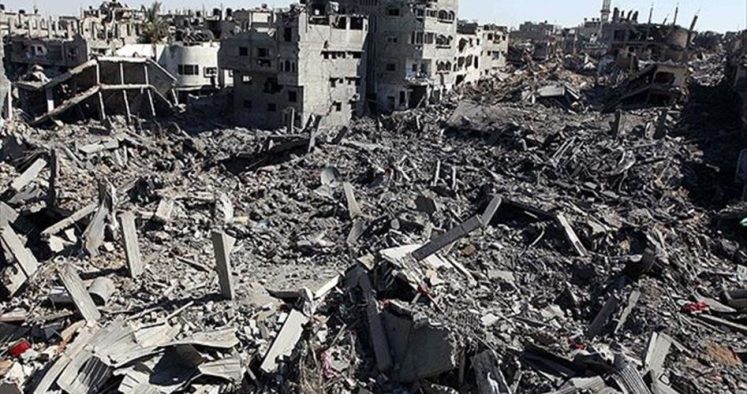
GAZA – The International Criminal Court (ICC) announced that it received referrals from five states seeking an investigation into Israeli war crimes in Gaza.
ICC Prosecutor Karim Khan disclosed that South Africa, Bangladesh, Bolivia, Comoros, and Djibouti submitted the referrals.
Khan confirmed in a statement that the ICC is already investigating the situation in Gaza.
“In accordance with the Rome Statute of the International Criminal Court, a State Party may refer to the Prosecutor a situation in which one or more crimes within the jurisdiction of the Court appear to have been committed requesting the Prosecutor to investigate the situation for the purpose of determining whether one or more specific persons should be charged with the commission of such crimes,” he said.
Khan mentioned the establishment of a specialized team upon assuming his term in June 2021, aimed at advancing the investigation in Palestine.
The prosecutor emphasized that the team will probe crimes suspected to be committed during the Israeli aggression on Gaza.
South Africa declared that it had submitted the referral request with “other countries that share the same concerns”, demanding that the International Criminal Court would urgently pay “attention to the seriousness of the current situation.”
The South African Ministry of Foreign Affairs stressed in a statement that Pretoria “urges other signatory states to the Rome Statute to join this referral request, or to submit their referral requests independently.”
The ICC opened an investigation in 2021 into war crimes suspected to be committed by the Israeli occupation forces in Palestine.
Since October 7, Israel has been waging a bloody aggression on the Gaza Strip, resulting in the martyrdom of more than 12,000 Palestinian civilians, most of whom are children and women.
Countries Begin Downgrading Ties with Israel Over Relentless Bombing of Gaza
By Kyle Anzalone | The Libertarian Institute | November 1, 2023
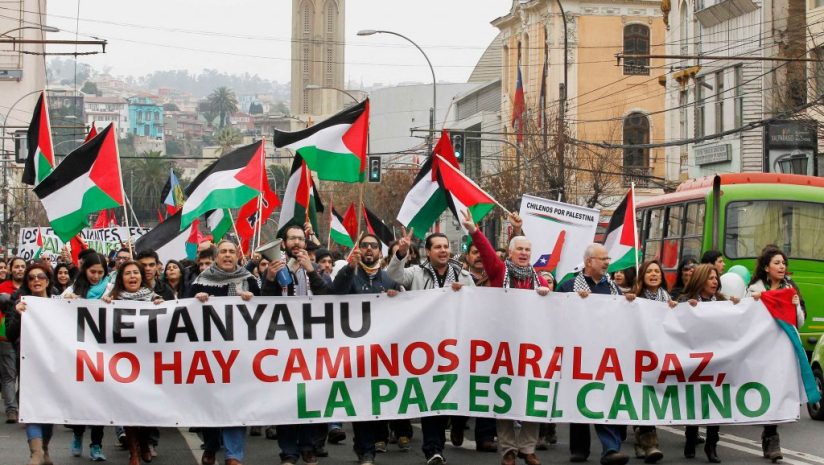
A trio of South American countries, along with Jordan, have cut ties with Israel over the onslaught in Gaza. According to Palestinian sources, the Israeli military operations in Gaza have killed nearly 9,000 people, half of which are women and children.
On Tuesday, Bolivia took the most extreme step and cut all ties with Israel. Deputy Foreign Minister Freddy Mamani explained that Bolivia “decided to break diplomatic relations with the Israeli state in repudiation and condemnation of the aggressive and disproportionate Israeli military offensive taking place in the Gaza Strip.”
The next day, Tel Aviv responded by saying Sucre’s move was “capitulation to terrorism and to the ayatollah regime in Iran.”
Colombia and Chile announced they would recall their ambassadors to Israel. Colombian President Gustavo Petro posted on X, “I have decided to call our ambassador in Israel for consultation. If Israel does not stop the massacre of the Palestinian people we cannot be there.”
Chile posted a press release saying Santiago would also recall its diplomat.
“Given the unacceptable violations of International Humanitarian Law that Israel has incurred in the Gaza Strip, the Government of Chile has decided to recall the Chilean ambassador to Israel, Jorge Carvajal, to Santiago for consultations. …”
“Chile strongly condemns and observes with great concern that these military operations – which at this point in their development entail collective punishment of the Palestinian civilian population in Gaza – do not respect fundamental norms of International Law, as demonstrated by the more than eight thousand civilian victims, mostly women and children.”
Jordan joined the South American nations in downgrading ties with Israel. The Foreign Ministry announced it was recalling its ambassador. “Foreign Minister Ayman Safadi decided to immediately recall Jordan’s ambassador to Israel,” a statement said. The move is to reflect Amman’s condemnation of the “Israeli war that is killing innocent people in Gaza.”
While Tel Aviv receives near unconditional backing from Washington, Israel lacks the international community’s support for its war. On Monday, the UN General Assembly voted 120-14 for a ceasefire in Gaza.
After a Hamas attack in southern Israel on October 7, Tel Aviv launched a military operation. The bombing campaign and ground invasion have killed thousands of Palestinian civilians, including over 3,600 children.
US allies on alert after lithium-rich Bolivia inks defense deal with Iran
The Cradle | July 25, 2023
Members of Bolivia’s far-right opposition and the Argentinian government are demanding that La Paz disclose the details of a memorandum of understanding (MoU) on defense and security affairs signed between Defense Ministers Edmundo Novillo y Mohamad Reza Ashtiani in Tehran last week.
“They say that [Iran] will give us drones. Others say they will give us missiles. All of this sounds strange, even more so considering it involves Iran … I can’t understand why Bolivia is getting involved in such a complex and difficult relationship,” said lawmaker Gustavo Aliaga, who belongs to the Comunidad Ciudadana (CC) party.
In 2019, CC leader Carlos Mesa supported the US-orchestrated coup that forced socialist leader Evo Morales to flee Bolivia, leaving it under the control of a far-right dictatorship that conducted multiple massacres of Morales supporters and sought to surrender the country’s massive lithium deposits to western transnationals.
The Argentinian foreign ministry also demanded explanations from La Paz on Monday under pressure from the Delegation of Argentinian Israeli Associations (DAIA), who said the MoU “risks for the security of Argentina and the region” due to Tehran’s ties with Lebanese resistance group Hezbollah.
In a press release, DAIA called on the Argentinian government “to condemn this agreement and demand Bolivia reconsider its decision.”
Buenos Aires blames Hezbollah and Iran for the 1994 bombing of the AMIA Jewish community center that left 85 dead. Both Tehran and Hezbollah deny the accusation.
The statements by the CC and DAIA came on the heels of a report by the neoconservative Institute for the Study of War (ISW), which claims that the deal between Tehran and La Paz includes the delivery of Iranian drones for the South American nation.
Last week, Iran agreed to help Bolivia combat drug trafficking along its borders and boost cooperation with the Bolivian army.
“[Due to] Bolivia’s critical needs in terms of border defense and the fight against drug trafficking, we will establish collaboration in equipment and specialized knowledge,” Ashtiani said following his meeting with the Bolivian defense minister last week.
For his part, Novillo said Iran is a “role model” for nations that seek freedom, highlighting the Islamic Republic’s “remarkable progress in science and technology, security, and the defense industry despite sanctions.”
Bolivia is the latest Latin American nation to ink a security agreement with the Persian nation, following in the footsteps of Nicaragua and Venezuela. Over the past year, the Islamic Republic has also made significant inroads with Brazil.
Iran and Bolivia also hold two of the largest lithium deposits in the world, with the Islamic Republic earlier this year announcing the discovery of a massive deposit holding a reported 8.5 million tons of the rare element. On the other hand, Bolivia has the richest known lithium deposits in the world, with an estimated 21 million tons.
Ex-Bolivian president Jeanine Anez sentenced to 10 years in prison
Press TV – June 11, 2022
Former Bolivian interim president Jeanine Anez has been sentenced to a 10-year prison term more than a year after being arrested on charges of leading a US-backed plot in 2019 to oust re-elected socialist president Evo Morales.
Anez will serve 10 years in a women’s prison in La Paz, the administrative capital’s First Sentencing Court announced on Friday in a ruling that came three months after her trial began.
Convicted of crimes “contrary to the constitution and a dereliction of duties,” the former right-wing television presenter was sentenced to “a punishment of 10 years” over charges stemming from when she was a senator, before becoming president.
Government prosecutors, however, had asked for a 15-year jail term for Anez, who has been held in pre-trial detention since March 2021 while dismissing her trial as “political persecution.”
Also sentenced to 10 years were the former chief of Bolivia’s armed forces, William Kaliman, and the country’s ex-police chief Yuri Calderon — both of whom have reportedly fled the country and remain on the run.
This is while Anez still faces a separate, pending court case for sedition and other charges related to her short presidential tenure.
At the start of her presidency, the US-sponsored rightist politician had called in the police and military to restore order. The post-election unrest left 22 people dead, according to the Inter-American Commission on Human Rights (IACHR).
For that, Anez also further faces genocide charges, which carry prison sentences of between 10 and 20 years.
The IACHR described the 22 deaths that occurred at the beginning of Anez’s presidential stint as “massacres,” and found they indicated “serious violations of human rights.”
Unlike the other accusations against Anez, the case will be dealt with by congress, which will decide whether or not to hold a trial.
The ex-president had already declared she would appeal if convicted, claiming, “We will not stop there. We will go before the international justice system.”
Anez became Bolivia’s interim president in November 2019 after Morales, who had won a fourth consecutive term as president, fled the country in the face of what was widely viewed as a US-sponsored unrest purportedly against alleged electoral fraud.
The US-led and Washington-based Organization of American States (OAS) claimed at the time that it had found “clear evidence” of voting irregularities in favor of Morales, a popular, anti-US president who was re-elected into office for 14 years.
Many potential successors to Morales — all members of his MAS party – were also forced to resign or flee, leaving right-wing opposition member Anez, then vice-president of the Senate, next in line.
Virtually unknown, the lawyer and former TV personality proclaimed herself interim president of the Andean nation on November 12, 2019, two days after Morales’ forced resignation.
The Constitutional Court recognized Anez’s mandate as interim, caretaker president, but MAS members disputed her legitimacy.
Elections were held a year later, and won by Luis Arce – a close ally of Morales.
With the presidency and congress both firmly in MAS control, Morales returned to Bolivia in November 2020.
After handing over the presidential reins to Arce, Anez was detained in March 2021, charged with illegitimate assumption of power.
“I denounce before Bolivia and the world that in an act of abuse and political persecution, the MAS government has ordered my arrest,” she proclaimed in a Twitter post at the time.
Bolivian Coup Regime Sought to Assassinate Luis Arce

Bolivia’s Interior Minister Eduardo Del Castillo informs of an assassination attempt against Luis Arce in 2020 at a press conference on October 18, 2021. Photo: Ministerio De Gobierno
Kawsachan News | October 18, 2021
Bolivia’s Interior Ministry has revealed that Colombian mercenaries, who participated in the assassination of President Jovenel Moise in Haiti, entered Bolivia days before the 2020 election. Fernando Lopez, Defense Minister under Jeanine Añez, was in contact with mercenary groups, with whom he intended to carry out a second coup.
In a press conference, Interior Minister Eduardo del Castillo named Germán Alejandro Rivera García, a Colombian citizen who entered Bolivia on October 16, 2020 and who was later arrested for the assassination of Jovenel Moise. He was followed by Colombian citizen Arcángel Pretel Ortiz and Venezuelan citizen Antonio Intriago, who run the Miami-based ‘security firm’ Counter Terrorist Unit Security (CTU), which hired the mercenaries who murdered Moise.
The mercenaries stayed at the high-end Hotel Presidente in La Paz, just two blocks away from the presidential palace. The purpose of their meeting was to pursue leads with then Defense Minister Fernando Lopez for lucrative contracts for a hit on Luis Arce.
Castillo said, “Days before the elections, the paramilitaries who would go on to kill the President of Haiti, as well as mercenary contractors such as Mr. Arcángel Pretel and Mr. Antonio Intriago were in the country. According to the information we obtained, their intention was to end the life of President Luis Arce”.
Earlier in the year, leaked audios published by The Intercept revealed that Lopez was in contact with other Miami-based mercenaries to coordinate a second coup. In one audio, Lopez said, “The military high command is already in preliminary talks… the struggle, the rallying cry, is that [the MAS] wants to replace the Bolivian armed forces and the police with militias, Cubans, and Venezuelans. That is the key point. They (the police and armed forces) are going to allow Bolivia to rise up again and block an Arce administration. That’s the reality.”
President Luis Arce addressed the revelations today at a summit with social movement in La Paz, saying, “Our Interior Minister revealed this information at an opportune time, brothers; They wanted to make an attempt on my life. To those right-wing murderers, we are going to respond with a phrase from (historic Bolivian socialist leader) Marcelo Quiroga Santa Cruz: We know that sooner or later they will make us pay for what we are doing, we are willing to pay that price, we were always willing. We will never shy away from danger because there is something more fearsome than that enemy who is looking for a way to kill us. A guilty conscience is much worse, we would not bear ourselves if we did not fulfill our duty.”
Featured Video

Trita Parsi: Israel Set a Trap for Total War in the Region
or go to
Aletho News Archives – Video-Images
From the Archive
Zionism’s Violent Legacy
By Donald Neff | Washington Report On Middle East Affairs | January 1996
On January 4, 1948, Jewish terrorists drove a truck loaded with explosives into the center of the all Arab city of Jaffa and detonated it, killing 26 and wounding around 100 Palestinian men, women and children.[1] The attack was the work of the Irgun Zvai Leumi – the “National Military Organization,” also known by the Hebrew letters Etzel – the largest Jewish terrorist group in Palestine. The Irgun was headed by Revisionist Zionist Menachem Begin and had been killing and maiming Arabs, Britons and even Jews for the previous ten years in its efforts to establish a Jewish state.
This terror campaign meant that at the core of Revisionist Zionism there existed a philosophical embrace of violence. … continue
Blog Roll
 Aletho News
- Trita Parsi: Israel Set a Trap for Total War in the Region
- Trump’s Iran war is on an Israeli leash
- Saudi oil boss issues global supply warning
- Riyadh Says Its Oil System Is Intact. The Numbers Say Otherwise.
- Trump and Netanyahu Want to “Finish the Job” on Iran
- US ‘one-sided dictation’ not Iran’s beliefs makes rational talks impossible: Baghaei
- Iran’s Next Strike May Not Explode. It Could Shut You Down /Col Doug Macgregor
- Iran: US political targets legitimate if assassinations return
- Iraq shuts key border crossing with Iran under US pressure: Report
- Undersea Internet cables could be targeted in retaliation for attacks on Iran: IRGC deputy chief
- If Americans Knew
- The Israel Lobby’s Changing Fortunes
- AIPAC has become such a political liability that it’s shifting to a more “nimble” approach to buying politicians
- At least 160 Israeli settler attacks in 2 weeks
- Will Gaza’s Ancient Christian Community Disappear Forever?
- Israel’s vision of regional security rests on keeping Arab states weak
- Heidi Levine recounts how Palestinian youths helped save her in settler attack
- DAILY UPDATE: Latest essential news on Palestine, Israel, & region
- Trump’s Intensifying Sabotage of the ICC, for Israel’s Sake
- Israeli military detain US and UK volunteers in West Bank including Democratic NY politician Brad Lander
- Americans at National Conservatism Conference held in Israel this year criticize Israel
- No Tricks Zone
- E-Cars Reduce CO2 Emissions By Only 41% Compared To Internal Combustion Engine Vehicles
- Predictions Made By Renowned Climate Professor Over Past Decades Have Been Proven To Be Poor
- New Study Suggests Large Regions Of The Pacific Ocean Have Been Cooling For The Last 80 Years
- Germany’s Green Energy Debacle: High Energy Costs Force Kahla Porzellan to Close After 182 Years!
- New Study: 50 Years Of The Most Aggressive ‘Net Zero’ Policies Can Only Affect The Global Climate By 0.03°C
- US September “Heat” Was No Record…Many Records Set Decades Ago
- Latest European Green Energy Debacle; Portugal’s Largest Flagship Solar Park Insolvent!
- Green Energy Debacle: German Expert Professor Fritz Vahrenholt Warns Of Severe Economic And Social Consequences
- Two More Paleo Reconstructions Affirm Meters-Higher Sea Levels Across Ireland, Brazil 7000-6000 Years Ago
- New Study: Earth And Venus Surface Warmth Largely Explained By Convection And Lapse Rate, Not CO2 Or Radiation

