By Their Words Ye Shall Know Them: the US Goal in Cuba

US Embassy in Havana.
By W. T. Whitney | CounterPunch | September 11, 2015
U.S. political leaders are rethinking Cuba. Business leaders have spoken out. Public opinion favors ending hostilities, even among Cuban Americans. Foreign policy specialists hold that fixing relations with Cuba may boost the U.S. image throughout Latin America. But primarily, beating up on Cuba did not work. Or, as President Obama said on December 17, 2014, “I do not believe we can keep doing the same thing for over five decades and expect a different result.”
Official statements shed light on proposed new methods, but less is said about purpose. The question arises as to whether the ultimate U.S. goal is new or is more of the same. Obama called for “begin[ning] to normalize relations to replace “an outdated approach.” (1) He explained that, “we can do more to support the Cuban people and promote our values through engagement.” New methods will not “bring about a transformation of Cuban society overnight. [Yet] through a policy of engagement, we can more effectively stand up for our values and help the Cuban people help themselves.”
Obama focused as much on the Cuban people as on their political leaders: “We are calling on Cuba to unleash the potential of 11 million Cubans by ending unnecessary restrictions on their political, social, and economic activities. In that spirit, we should not allow U.S. sanctions to add to the burden of Cuban citizens that we seek to help.” (In an offhand way he is acknowledging past grief visited upon the Cuban people.) But “[t]oday, the United States wants to be a partner in making the lives of ordinary Cubans a little bit easier, more free, more prosperous.” On July 1, 2015, while announcing that embassies would be opened, Obama noted that, “With this change, we will be able to substantially increase our contacts with the Cuban people. We’ll have more personnel at our embassy.” (2)
A press release accompanying Obama’s presentation spells out the new direction: “The U.S. efforts are aimed at promoting the independence of the Cuban people so they do not need to rely on the Cuban state. (3)
Speaking in Havana on August 14 Secretary of State Kerry added that “Cuba’s future is for Cubans to shape. Responsibility for the nature and quality of governance and accountability rests, as it should, not with any outside entity; but solely within the citizens of this country … And just as we are doing our part” – presumably no longer harassing Cubans – Cuba’s government also ought to “make it less difficult for their citizens to start businesses, to engage in trade, access information online.” (4)
Official explanations say little about past grief and suffering in Cuba at U.S. hands, but rather gloss over actual measures invoked against the Cuban people. The term “isolation” crops up as a sort of proxy version of resulting hardships. “Isolation has not worked,” Obama said, and “Today, Cuba is still governed by the Castros and the Communist Party.” What the United States actually did to accomplish its ends in Cuba evolved from a plan that, on comparison with methods being advanced by the Obama Administration now, serves to clarify differences between then and now.
The subject line of a State Department memo of April 6, 1960, says, “The decline and fall of Castro.” (5) Deputy Assistant Secretary of State for Western Hemisphere Affairs Lester D. Mallory writes that: “1.The majority of Cubans support Castro. 2. There is no effective political opposition…. 4. Communist influence is pervading the government … 6. The only foreseeable means of alienating internal support is through disenchantment and disaffection based on economic dissatisfaction and hardship. If the above are accepted …, it follows that every possible means should be undertaken promptly to weaken the economic life of Cuba. If such a policy is adopted, it should be the result of a positive decision which would call forth a line of action which, while as adroit and inconspicuous as possible, makes the greatest inroads in denying money and supplies to Cuba, to decrease monetary and real wages, to bring about hunger, desperation and overthrow of government.”
Mallory addressed his memo to the “Deputy Assistant Secretary of State for Western Hemisphere Affairs (Rubottom)” and asked if it should go to the Secretary of State. He received a green light, according to the record. Later that year President Eisenhower initiated economic sanctions.
In addition to what became an economic blockade for “denying money and supplies,” the United States resorted to military invasion, military incursions, bacteriologic warfare, terror attacks, and the Cuban Adjustment Act. The Obama administration is clearly going to be relying on new methods for achieving U.S. objectives.
Whether or not U.S. purposes are different is the main question. Mallory envisioned the “overthrow of government” and presumably his superiors did likewise. At the Summit of the Americas, in Panama, the President in April assured reporters that “On Cuba, we are not in the business of regime change.” Instead, “We are in the business of making sure the Cuban people have freedom and the ability to participate and shape their own destiny and their own lives, and supporting civil society.” (6)
Regime change implies separating an objectionable political leadership from a population and replacing it with a more friendly leadership. Seemingly the U.S. government now seeks to remove the Cuban people from their leaders. Heaping abuse on them did not accomplish the U. S. counter-revolutionary purpose. Now they will be independent of government, at least according to U. S. rhetoric on care and nurture for the Cuban people.
By forcing the U.S. government to do something different, Cuba scored a victory after 50 years of struggle. Now the United States will be trying to engineer a rift between people and political leaders in Cuba — presumably a short term objective. Silence prevails in regard to what happens later — in the long run. However, that silence and the foregoing words together say that the ultimate U.S. goal is as before, that the Cuban revolution will go away. In gentle words, Obama casts a soft light on U.S. counter-revolutionary resolve: “Decades of U.S. isolation of Cuba have failed to accomplish our enduring objective of promoting the emergence of a democratic, prosperous, and stable Cuba.”
Notes.
- https://www.whitehouse.gov/the-press-office/2014/12/17/statement-president-cuba-policy-changes
- https://www.whitehouse.gov/the-press-office/2015/07/01/statement-president-re-establishment-diplomatic-relations-cuba
- https://www.whitehouse.gov/issues/foreign-policy/cuba
- http://www.state.gov/secretary/remarks/2015/08/246121.htm
- http://history.state.gov/historicaldocuments/frus1958-60v06/d499
- https://www.whitehouse.gov/the-press-office/2015/04/11/remarks-president-press-conference-after-summit-americas
W.T. Whitney Jr. is a retired pediatrician and political journalist living in Maine.
Guatemalan President Finally Resigns
teleSUR | September 3, 2015
Just a few hours after an arrest warrant was issued against him, Guatemalan President Otto Perez Molina, who had vowed he would not resign, announced he would step down from office, his press team announced this Thursday morning.
Jorge Ortega, the president’s spokesman said that Molina submitted his resignation at midnight local time just hours after a judge issued an arrest warrant in his name late Wednesday.
Prosecutors accuse the president of masterminding a scheme to embezzle millions of dollars from customs service as part of a fraud ring, which the country’s vice president has already been jailed and faces charges over.
The allegations against Molina were made by influential sectors in Guatemala, including the office of human rights, the agricultural, rural, industrial, and financial committees, the Peasant Unity Committee, the Catholic and Evangelical churches and members of civil organizations.
The Central American country is still struggling to recover from the U.S.-funded civil war (1960-1996), which saw more than 200,000 Guatemalans killed, most of them Indigenous Mayans. It currently faces high rates of poverty and ranks among one of the most corrupt countries in the world, according to the 2014 Corruption Perceptions Index by Transparency International.
Ecuadorean President Opens Health Centers in Indigenous Region

Ecuadorean President Rafael Correa tours a new health center in the province of Cotopaxi, Aug. 25, 2015. | Photo: Ecuadorean Presidency
teleSUR – August 26, 2015
Ecuadorean President Rafael Correa Tuesday inaugurated three new health centers in the province of Cotopaxi, which are destined to serve more than 55,000 people.
The health centers were built at a cost of US$7 million and serve a part of Ecuador currently at risk of being affected by the possible eruption of the Cotopaxi volcano.
President Correa said these centers are already equipped to deal with any potential emergency related to a possible eruption.
The new health centers are part of a push by the government to improve public health in the country by reducing visits to larger hospitals and placing a greater emphasis on prevention.
These centers, run by the Ministry of Public Health, are available to all residents free of charge.
“In 2015 alone, 2.5 million dollars have been allocated to health, a human right, and the best possible investment of money,” said Correa.
Since 2007 and the arrival of Correa to the presidency, 46 health centers and 12 hospitals have been built throughout the country, with more set to be opened over the next few years.
“We are continuing on the path so that public services serve as an example, that they are the best, that’s the dream that the Citizens Revolution holds,” said Minister of Health Carina Vance, referencing the name given to the political process led by President Correa.
These new health centers are deliberately built in areas previously under-served by government services. The three new centers inaugurated Tuesday are located in a part Ecuador where the majority of the residents are indigenous peoples.
President Correa said that these types of services are an example of the commitment the government has toward serving indigenous communities and the reason why the Citizens Revolution continues to enjoy support from the majority of indigenous peoples.
A segment of the indigenous movement recently declared an “uprising” against the government, holding marches and rallies throughout the country to demonstrate their opposition.
The smaller “type B” health center inaugurated by the president includes outpatient services, dental attention, X-rays, a clinical laboratory, emergency services, clinical psychology, physiotherapy, and a pharmacy.
A second “type B” center and a larger “type C” center were simultaneously unveiled. The president said they intended to inaugurate all three centers with a visit to the largest one but changed their plans after an opposition political group said they would try to storm the center during the president’s visit.
Council on Hemispheric Affairs’ Statement on the Protest Movement in Ecuador
COHA – August 24, 2015
In response to President Rafael Correa’s proposed inheritance tax, a far right coalition in Ecuador has launched a campaign of anti-government protest in the country. This movement is being joined by some forces on the green and Indigenous left, long opposed to Correa’s economic strategy of neo-extractivism, that is, the exploitation of Ecuador’s rich deposits of oil to fuel the economy as well as providing the majority of government revenue. Correa’s economic approach has been to aggressively push forward oil operations, even in environmentally sensitive areas, and then use the proceeds to pay for poverty reduction programs. The various Eco-Indigenous groups have legitimate concerns about the sustainability of the neo-extractivist approach, but it is a fact that since Correa came into office in 2007 one million Ecuadorians have been lifted out of poverty. In 2007 4 of 10 Ecuadorians lived in poverty. Today less than a quarter of the population does.
COHA calls for an end to the violence that has accompanied the protests, with over 100 police and military now having suffered injuries, including grave ones. COHA supports dialogue between the various opposition sectors and the government, and the continuation of the positive trend in Ecuador of settling political differences by democratic procedures, not golpismo.
By Larry Birns, Director of COHA and Senior Research Fellows: Jim A. Baer, Nicholas Birns, William Camacaro, Lynn Holland, Frederick B. Mills, Ronn Pineo.
The Age of Imperial Wars
From Regional War, “Regime Change” to Global Warfare
By Prof. James Petras | Global Research | August 22, 2015
2015 has become a year of living dangerously.
Wars are spreading across the globe.
Wars are escalating as new countries are bombed and the old are ravaged with ever greater intensity.
Countries, where relatively peaceful changes had taken place through recent elections, are now on the verge of civil wars.
These are wars without victors, but plenty of losers; wars that don’t end; wars where imperial occupations are faced with prolonged resistance.
There are never-ending torrents of war refugees flooding across borders. Desperate people are detained, degraded and criminalized for being the survivors and victims of imperial invasions.
Now major nuclear powers face off in Europe and Asia: NATO versus Russia, US-Japan versus China. Will these streams of blood and wars converge into one radiated wilderness drained of its precious life blood?
Living Dangerously: The Rising Tide of Violent Conflicts
There is no question that wars and military threats have replaced diplomacy, negotiations and democratic elections as the principal means of resolving political conflicts. Throughout the present year (2015) wars have spread across borders and escalated in intensity.
The NATO allies, US, Turkey and the EU have openly attacked Syria with air strikes and ground troops. There are plans to occupy the northern sector of that ravaged country, creating what the Erdogan regime dubs a ‘buffer zone’ cleansed of its people and villages.
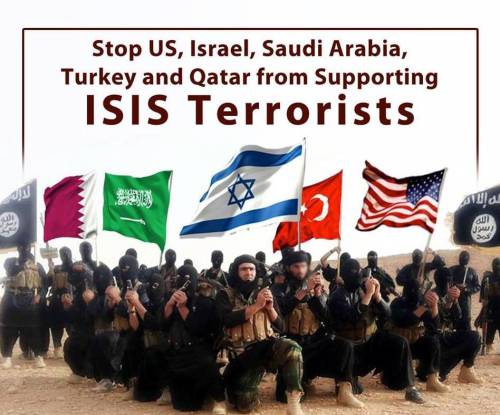
Under the pretext of ‘fighting ISIS’, the Turkish government is bombing Kurds (civilians and resistance fighters) and their Syrian allies. On Syria’s southern border, US Special Forces have accelerated and expanded operations from their bases in Jordan on behalf of the mercenary terrorists – funded by the monarchist Gulf States.
Over 4 million Syrians have fled their homes as refugees and over 200,000 have been killed since the US-EU-Turkey-Saudi-sponsored war against the secular Syrian government was launched four years ago.
Dozens of terrorist, mercenary and sectarian groups have carved up Syria into rival fiefdoms, pillaged its economic and cultural resources and reduced the economy by over ninety percent.
The US-EU-Turkish military intervention extends the war into Iraq, Lebanon and…. Turkey – attacking secular governments, ethnic minority groups and secular civil society.
The feudal, monarchist Saudi Arabia and the United Arab Emirates have invaded Yemen with tanks, launching air strikes against a country without any air defenses. Major cities and towns are devastated. Saudi ground troops and armored carriers are killing and wounding thousands – mostly civilians. The brutal Saudi air and sea blockade of Yemen’s ports have led to a humanitarian crisis, as ten million Yemenis face starvation deliberately imposed by a grotesque and obscenely rich monarchy.
The Yemeni resistance fighters, driven out of the major cities, are preparing for prolonged guerrilla warfare against the Saudi monsters and their puppets. Their resistance has already spread across the frontiers of the absolutist Saudi dictatorship.
The brutal Israeli occupation troops, in collaboration with armed ‘settler’ colonists, have accelerated their violent seizure of Palestinian lands. They have stepped up the ethnic cleansing of Palestinians, Bedouins, Druze and Christian inhabitants replacing their communities with racist ‘Jews-only’ colonial settlements.
Daily assaults against the huge ‘concentration camps’ of Gaza accompany an armed blockade of land, air and water, preventing the reconstruction of the tens of thousands of homes, schools, hospital, factories and infrastructure, destroyed by last year’s Israeli blitzkrieg.
Israel’s continued annexation and ethnic cleansing of Palestinian territory precludes any diplomatic process; colonial wars have been and continue to be Israel’s policy of choice in dealing with its Arab neighbors and captive populations.
Africa’s wars, resulting from earlier US-EU interventions, continue to ravage-the Continent. Somalia, Sudan, Kenya, Libya are riven by bloody conflicts between US-EU backed regimes and armed Islamic and nationalist resistance movements.
Throughout North and Sub-Sahara Africa, US-EU backed regimes have provoked armed upheavals in Libya, Nigeria (Boko Harem), Egypt (ISIS, Moslem Brotherhood et al), Chad, Niger, South Sudan, Somalia and elsewhere.
Imperial client Egyptian and Ethiopian dictators rule with iron fists – financed and armed by their EU and US sponsors.
Imperial wars rage throughout the Middle East and South Asia. Hundreds of experienced Baathist Iraqi military officers, who had been expelled or jailed and tortured by the US Occupation army, have now made common cause with Islamist fighters to form ISIS and effectively occupy a third of Iraq and a strategic swath of Syria.
There are daily bombings in Baghdad undermining its US client. Strategic advances by ISIS are forcing the US to resume and escalate its direct combat role
The US-Baghdad retreat and the defeat of the US-trained Iraqi military in the face of the Baathist-Islamist offensive is the opening salvo of a long-term, large-scale war in Iraq and Syria. The Turkish air-war against the Kurds in Iraq will escalate the war in Northern Iraq and extend it into southeast Turkey.
Closer to ‘home’, the EU-US-backed coup (‘regime change’) in Kiev and the attempt to impose dictatorial-pro-West oligarchic rule in Ukraine have detonated a prolonged civil-national war devastating the country and pitting NATO’s proxies against Russian-backed allies in the Donbas.
US, England, Poland and other NATO powers are deeply committed to pushing war right up to Russia’s borders.
There is a new Cold War, with the imposition of wide-ranging US-EU economic sanctions against Russia and the organizing of major NATO military exercises on Russia’s doorsteps. It is no surprise that these provocations are met with a major counter-response – the Russian military build-up. The NATO power grab in Ukraine, which first led to a local ethnic war, now escalates to a global confrontation and may move toward a nuclear confrontation as Russia absorbs hundreds of thousands of refugees from the slaughter in Ukraine.
The US puppet regime in Afghanistan has faced a major advance of the Taliban in all regions, including the capital, Kabul.
The Afghan war is intensifying and the US-backed Kabul regime is in retreat. US troops can scarcely advance beyond their bunkers.
As the Taliban military advances, its leaders demand total surrender of the Kabul puppets and the withdrawal of US troops. The US response will be a prolonged escalation of war.
Pakistan, bristling with US arms, faces a major conflict along its borders with India and permanent war in its semi-autonomous Northwest frontier states with Islamist and ethnic Pashtu guerrilla movements backed by mass regional political parties. These parties exercise de facto control over the Northwest region providing sanctuary and arms for Taliban militants operating in Afghanistan and Pakistan.
Armed ethno-religious conflicts persist in western China, Myanmar and northern India. There are large-scale popular resistance movements in the militant northeast Thailand opposed to the current military-monarchist dictatorship in Bangkok.
In the 21st century, in South and Southeast Asia, as in the rest of the world, war and armed conflicts have become central in resolving ethnic, social, tribal and regional differences with central states: diplomacy and democratic elections have been rendered obsolete and inefficient.
Latin America – On the Verge
Burgeoning violent extra-parliamentary right-wing movements, intent on overthrowing or ‘impeaching’ elected center-left Latin American governments face major confrontations with the state and its mass supporters.
 In Ecuador, Venezuela and Brazil, US-backed opposition groups are engaged in violent demonstrations, directed toward ousting the elected regimes. In the case of Ecuador, ‘popular sectors’, including some indigenous leaders and sectors of the trade union movement, have called for an ‘uprising’ to oust President Correa. They seem oblivious of the fact that the hard-right oligarchs who now control key offices in the three principal cities (Guayaquil, Quito and Cuenca) will be the real beneficiaries of their ‘uprisings’.
The resurgent Right envisions violent ‘regime change’ as the first step toward ‘wiping the slate clean’ of a decade of social reforms, independent regional organizations and independent foreign policies.
‘Civil war’ may be too strong a word for the situation in Latin America at this time – but this is the direction which the US-backed opposition is heading. Faced with the mess and difficulty of dislodging incumbent regimes via elections, the US and its local proxies have opted for the choreography of street violence, sabotage, martial law and coups – to be followed by sanitized elections – with US-vetted candidates.
War and violence run rampant through Mexico and most of Central America. A US-backed military coup ousted the popularly elected, independent President Zelaya in Honduras. The ensuing US-proxy regime has murdered and jailed hundreds of pro-democracy dissidents and driven thousands to flee the violence.
The 1990’s US-brokered ‘Peace Accords’ in El Salvador and Guatemala effectively blocked any agrarian reform and income redistribution that might have led to the rebuilding of their civil societies. This has led to over two decades of mass disaffection, the rise of armed ‘gangs’ numbering over 100,000 members and an average of six to ten thousand homicides a year with El Salvador becoming the ‘murder capital of the hemisphere’ on a per capita basis. The annual murder toll under the US-brokered ‘Peace Accords’ now exceeds those killed each year during the civil war.
The real ‘carnage capital’ of the hemisphere is Mexico. Over 100,000 people have been murdered during the decade-long, US-backed ‘war on drugs’ – a war which has become a state-sponsored war on the Mexican people.
The internal war has allowed the Mexican government to privatize and sell the crown jewels of the national economy – the petroleum industry. While thousands of Mexicans are terrorized and slaughtered, the US and EU oil companies are curiously shielded from the drug lords. The same Mexican government, its police, officials and military, who collaborate with the drug lords in dividing up the billions of drug dollars, protect foreign oil companies and their executives. After all, narco-dollars are laundered by banks in New York, Miami, Los Angeles and London to help fuel the speculation!
From Regional to Nuclear Wars
Regional and local wars spread under the shadow of a looming world war. The US moves its arms, planes, bases and operations to the Russian and Chinese borders.
Never have so many US troops and war planes been placed in so many strategic locations, often less than an hour drive from major Russian cities.
Not even during the height of the Cold War, did the US impose so many economic sanctions against Russian enterprises.
In Asia, Washington is organizing major trade, military and diplomatic treaties designed to exclude and undermine China’s growth as a trade competitor. It is engaged in provocative activities comparable to the boycott and blockade of Japan which led to the Second World War in Asia.
Open ‘warfare by proxy’ in Ukraine is perhaps the first salvo of the Third World War in Europe. The US-EU-sponsored coup in Kiev has led to the annexation of Western Ukraine. In response to the threat of violence toward the ethnic Russian majority in Crimea and the loss of its strategic naval base on the Black Sea, Russia annexed Crimea.
In the lead-up to the Second World War, Germany annexed Austria. In a similar manner the US-EU installed a puppet regime in Kiev by violent putsch as its own initial steps toward major power grabs in Central Asia. The military build-up includes the placement of major, forward offensive military bases in Poland.
Warsaw’s newly elected hard-right regime of President Andrzej Duda has demanded that Poland become NATO’s central military base of operation and the front line in a war against Russia.
Wars and More Wars and the Never-ending Torrents of Refugees
The US and EU imperial wars have devastated the lives and livelihoods of scores of millions of people in South Asia, North and Sub-Sahara Africa, Central America, Mexico, the Balkans and now Ukraine.
Four million Syrian refugees have joined millions of Afghan, Pakistani, Iraqi, Yemeni, Somali, Libyan, Palestinian and Sudanese refugees fleeing US-EU bombs, drones and proxy mercenaries ravaging their countries.
Millions of war refugees escape toward safety in Western Europe, joining the millions of economic refugees who have fled free market destitution in Lithuania, Latvia, Estonia, Bulgaria, Romania, Poland, the Balkans and other EU satellites.
Panic among the civilian population of Western Europe sets in as hundreds of thousands cross the Mediterranean, the Aegean and the Balkans.
Droves of refugees perish each day. Tens of thousands crowd detention centers. Local labor markets are saturated. Social services are overwhelmed.
The US builds walls and detention camps for the millions trying to escape the harsh consequences of imperial-centered free markets in Mexico, narco-terror and the fraudulent ‘peace accord’-induced violence in Central America.
As Western wars advance, the desperate refugees multiply. The poor and destitute clamber at the gates of the imperial heartland crying: ‘Your bombs and your destruction of our homelands have driven us here, now you must deal with us in your homeland’.
Fomenting class war between the refugees and ‘natives’ of the imperial West – may not be on the agenda . . . for now, but the future for ‘civil’ society in Europe and the US is bleak.
Meanwhile, more and even bigger wars are on the horizon and additional millions of civilians will be uprooted and face the choice of starving, fleeing with their families or fighting the empire. The ranks of seasoned and infuriated resistance fighters are swelling in Afghanistan, Iraq, Libya, Yemen, Ukraine and elsewhere.
The US and EU are becoming armed fortresses. US police deal with the marginalized citizenry as an occupying army, assaulting African-Americans, immigrants and dissidents – while looting poor communities . . . and protecting the rich…
Conclusion
War is everywhere and expanding: No continent or region, big or small, is free from the contagion of war.
Imperial wars have spawn local wars . . . igniting mass flights in a never-ending cycle. There are no real diplomatic success stories! There are no enduring, viable peace accords!
Some pundits may protest this analysis: They point to the recent US – Cuba rapprochement as a ‘success’. They conveniently forget that the US is still subverting Cuba’s biggest trading partner, Venezuela; that Washington’s major regional proxies are demanding regime change among Cuba’s allies in Ecuador, Brazil and Bolivia and that Washington is increasingly threatening Cuba’s alternative markets in Russia and China. The vision of the US flag flapping in the breeze outside its embassy in Havana does little to cover Washington’s iron fist threatening Cuba’s allies.
Others cite the US – Iran peace accord as a major ‘success’. They ignore that the US is backing the bloody Saudi invasion of neighboring Yemen and the massacre of Shiite communities; that the US has provided Israel with a road map detailing Iran’s entire defense system and that the US [Israel] and EU are bombing Iran’s Syrian ally without mercy.
As for the US – Cuba and Iranian agreements– are they enduring and strategic or just tactical imperial moves preparing for even greater assaults?
The war epidemic is not receding.
War refugees are still fleeing; they have no homes or communities left.
Disorder and destruction are increasing, not decreasing; there is no rebuilding the shattered societies, not in Gaza, not in Fallujah, not in the Donbas, not in Guerrero, not in Aleppo.
Europe feels the tremors of a major conflagration.
Americans still believe that the two oceans will protect them. They are told that placing NATO missiles on Russia’s borders and stationing warships off China’s shores and building electrified walls and laying barbed wire along the Rio Grande will protect them. Such is their faith in their political leaders and propagandists.
What a packet of lies! Inter-continental missiles can ‘rain down’ on New York, Washington and Los Angeles.
It is time to wake up!
It is time to stop the US – EU headlong race to World War III!
Where to start? Libya has been irrevocably destroyed; it is too late there! Syria, Iraq and Afghanistan are aflame. We are being plunged deeper into war while being told we are withdrawing! Ukraine sucks in more guns and more troops!
Can we really have peace with Iran if we cannot control our own government as it dances to the Israelis tune? And Israel insists on war – our waging war for them! As the Israeli war criminal General and Prime Minister Ariel Sharon once told some worried American Zionists: “Trouble with the US? We lead them by the nose…!”
Just look at the terrified families fleeing carnage in the Middle East or Mexico.
What is to be done?
When will we cut our losses and shake off the bonds of these war makers – foreign and domestic?
Peruvians Protest US Military Presence

A march protesting U.S. troops in Peru earlier this year. | Photo: teleSUR / Rael Mora
teleSUR | August 20, 2015
Ahead of the arrival of more than 3,000 U.S. military personnel in Peru, Peruvians marched in the capital city Lima to protest U.S. military intervention in the South American country, Prensa Latina reported Thursday.
Protesters condemned frequent U.S. military presence as an assault on Peruvian national sovereignty and security.
“We reject this presence and those who authorized it, like this traitor government and the congress that currently does not represent anybody,” said Guillermo Bermejo of the group Agora Popular, according to Prensa Latina. “Let it be known that this struggle for respect for our sovereignty is just beginning.”
The march began from the Plaza San Martin in central Lima and moved to the U.S. embassy. Demonstrators protested the government’s decision to allow the U.S. to send 3,200 soldiers armed with weapons, ships, and planes to Peru, whose arrival is expected September 1.
Activists said that the march would prove to be the first of many to raise this issue and put pressure on the government to change its ways with respect to allowing U.S. military involvement in the country.
Marches also took place earlier this year to protest President Ollanta Humala’s policies, such as welcoming U.S. troops, that contradict his electoral promises of increased independence from the U.S. in favor of Latin American regional integration.
The 3,200 military personnel will be in Peru only temporarily, while three more U.S. military groups of at least seven contingents that have arrived in Peru this year will stay for 12 months.
Protesters also drew attention to the history of U.S. military presence and its deadly consequences, including its involvement in massacres, torture, disappearances, and other human rights abuses.
Many of Peru’s more than 70,000 disappearances during the country’s so-called “war on terror” counter-insurgency strategy between 1980 and 200 have been seen as part of the U.S.-backed Operation Condor, which saw dictatorships quash rebellious voices and leftist movements throughout the continent.
Argentina Creates Indigenous Film School

teleSUR | August 19, 2015
As this year’s Indigenous Film Festival concluded over the weekend, the Argentine Governor of Chaco province, Jorge Capitanich, announced the creation of a national school for indigenous cinema.
“Today we confirm the (creation of) the Indigenous School of Cinema. Its a call on people to their own history, based on what they are capable of doing,” Capitanich said.
Indigenous films aim to portray modern and historic events from the perspective of colonized peoples who continue to suffer from extreme inequality.
The school will be created within the Culture Institute, and its creation falls under Law 26,522 Audiovisual Communication Services.
The Indigenous school will provide training in audiovisual basics and will promote production of local content in the different indigenous communities of Capitanich’s province.
The Indigenous Film Festival began in 2008, with the idea that movies are a social tool that go beyond entertainment and transform reality through social inclusion. The festival supports full rights for the indigenous peoples of the Americas and brings locally produced films to other regions.
Ecuador Opposition Leader Urges Police, Military ‘Rebellion’
teleSUR | August 19, 2015
Ecuadorean opposition leader Carlos Perez called on the Ecuadorean military and police to rebel against the government during an interview with Ecuadorean TV channel TeleAmazonas Tuesday.
“I call on the military, police you must rebel. You cannot blindly follow an illegitimate act, you cannot do this,” Perez told the interviewer from TeleAmazonas. “If I go to prison for saying this, I welcome this.”
Perez was being interviewed together with his partner Manuela Picq. Both were detained during violent protests last week against the government of Rafael Correa in the Ecuadorean capital. Picq’s detention led to scrutiny of her immigration status, which was found to be “irregular.” A judge ruled Monday that Picq — who said she would begin the process to obtain permanent residency — could stay in the country.
Perez called for the rebellion while commenting on a clash Monday between opposition protesters and police in the province of Loja, where police — backed by the military — arrived to clear an illegal roadblock and were attacked with sticks, rocks, and fire bombs. One police officer was later kidnapped, but managed to escape his captors during the night.
Perez’s remarks are likely to generate controversy in the country, given that the failed 2010 coup against the Correa government began as a police rebellion. In June, a disturbing video surfaced that appeared to incite the Ecuadorean police force to join opposition protests against proposed tax increases on Ecuador’s wealthiest sectors.
Perez, who previously served 8 days in prison for interfering in the delivery of public services, was caught on video Thursday calling on his supporters to surround the presidential palace, where government supporters had assembled. Following his remarks, protestors clashed with police, who were blocking access to the area in order to avoid conflict between the sides.
During the interview, the pair accused the government of illegally detaining them during the violent protests. Picq had previously told the El Comercio newspaper that she “was treated like a criminal simply for walking on the street,” however, she then admitted on Tuesday that she physically interfered with police, who were attempting to detain Perez.
President Correa said opposition groups have opted to turn to violence due to the “failure” of the work stoppage called by opposition-aligned groups last week. The political coalition United Front, which supports the government, also said the national action had failed, citing that no work stoppages had taken place and the protests had lower turnout than expected.
The violent tactics of segments of the opposition have come under heavy scrutiny. In a statement, the Ecuadorean ombudsperson’s office said, “Violent acts are incompatible with democracy, which is why we challenge all forms of aggression that violates rights, regardless of where it comes from.”
In an interview with the Andes news agency, Mario Ramos, director of the Andean Center for Strategic Studies said, “We do not have democratic opposition, that must be clear: there is a subversive opposition that is acting against the security of the Ecuadorean state, against democracy, against the Constitution. Let me be clear, this is not a democratic opposition, this is a subversive opposition.”
Opposition Demonstrators Shoot, Injure 11 Ecuadorean Officials
teleSUR | August 16, 2015
Ecuador’s Armed Forces revealed via a tweet that 11 soldiers and police officers were injured Saturday after being attacked with live ammunition as they attempted to clear an illegal roadblock in the Amazonian province of Morona Santiago.
The roadblock had been set up as part of opposition protests against the government of elected president Rafael Correa. Officials confirmed that six people had been arrested as a result.
On Saturday, Ecuadorean President Rafael Correa criticized the organizers of the opposition demonstrations for their role in promoting violence, which resulted in more than 80 police and several journalists being injured.
Ecuador’s capital was rocked by violent protests Thursday which formed part of what a segment of the indigenous movement and opposition-aligned trade unions were calling an “uprising” and “work stoppage.”
Government supporters classified Thursday’s protests as an effort to destabilize the democratically-elected government.
Despite various opposition groups coming together, those opposed to the government failed in their objective to oust the government, which President Correa classified Aug. 13 as “historic” victory for the country’s democracy.
Correa expressed dismay at the violence exhibited by opposition demonstrators during his weekly television program broadcast from the province of Imbabura.
“I’ve never seen them so violent, so aggressive,” declared Correa, adding that “those who used violence will be punished with the full rigor of the law.”
The president reserved some of his harshest criticisms for leaders of opposition indigenous organizations, who despite previous assurances that the action would be peaceful and was not aimed at ousting the government, participated in inciting the violence.
Ecuarunari president Carlos Perez was caught on camera encouraging protesters to storm the plaza where government supporters had gathered. Responding to this call, opposition demonstrators — including the Governor of Zamora, Salvador Quishpe — violently attacked police, who endured attacks with sticks, poles, steel barricades, fireworks, and firebombs.
Quishpe, who was seen attacking police lines using the barricades, became covered in soot from the burning tires placed in front of police by demonstrators. The opposition politician subsequently claimed that he been beaten by police.
President Correa also heavily criticized the logic of the organizers of Thursday’s actions, saying the shutting down highways only harmed ordinary Ecuadoreans instead of causing harm to the government.
Correa blasted statements from protest organizers Jorge Herrera of the Conaie Indigenous group and Perez of Ecuarunari. Herrera called on the National Assembly to withdraw a series of proposed constitutional amendments currently under discussion, while Perez demanded Correa resign – despite the fact that Correa maintains high levels of popular support.
The leaders warned they would continue their protests and threatened to escalate their actions if their demands were not met.
“This president does not accept blackmail from anyone,” said Correa responded.
Correa criticized the hypocrisy of right-wing politicians, such as right-wing former banker Guillermo Lasso and Guayaquil mayor Jaime Nebot, who declared their support for the protests despite historically opposing the demands made by those who organized Thursday’s protests.
The president warned that these types of protests were likely to continue as part of a concerted effort to wear down the government.
Key Venezuelan Indigenous Leader’s Killer Sentenced to 30 Years

Indigenous leader Sabino Romero of the Yukpa was murdered in 2013
teleSUR – August 15 2015
One of the accused murderers of the prominent Venezuelan indigenous leader Sabino Romero was sentenced to 30 years in prison for homicide on Friday in a landmark move to prosecute the killer of an indigenous person for the first time.
Angel Romero Bracho, known as “El Manguera,” was given the maximum sentence for his role in Sabino’s murder, according to a statement from the attorney General’s office. Another five suspects had already been sentenced to seven years in prison for their involvement in the crime.
Sabino, a leader of the Yukpa indigenous group in western Venezuela and famed national symbol of indigenous resistance, was killed in March 2013 after a heated land conflict between indigenous groups with legal title to the land and large ranchers who wanted to stake their claim to the farmland.
Although the trial in the case of Sabino’s death was lengthy, justice has finally been served in a historic ruling to punish the murderer of an indigenous leader. Violence against indigenous people has long been treated with impunity in Venezuela and elsewhere in Latin America. While the national government has taken many steps to support indigenous rights, ranchers are usually able to bribe judicial officials. In the trial of Romero Bracho, the public prosector received death threats.
Family members and supporters hope that the conviction against Romero Bracho will pave the way to further investigations to punish the other masterminds behind the murder.
“Sabino Romero has denouced threats and violence in the Sierra de Perija of the latifundistas against the Yukpa people.”
Sabino was the target of an assassination plot in the western Venezuelan state of Zulia for his role in the indigenous struggle against large ranchers who sought to monopolize landholdings, even though indigenous campesinos held legal title to the land under an agrarian reform law implemented by former President Hugo Chavez in 2001.
Sabino’s wife and fellow movement activist Lucia Martinez was also injured in the attack.
Sabino was a well-known and important leader among the Yukpa people, but also stood as a national icon of the broader indigenous movement and struggle for indigenous rights.
Featured Video
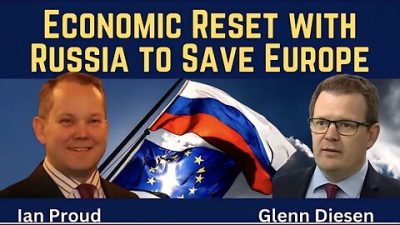
Ian Proud: Economic Reset with Russia to Save Europe
or go to
Aletho News Archives – Video-Images
From the Archives
Magic Hour for Gates

By Gary Jordan | Wake The F*** UP | March 15, 2021
Bill Gates wants to know everything about you.
He wants to control every aspect of your life.
His insatiable thirst for the supervision and scrutiny of every human being alive has sparked a US$1 billion investment that will blanket the earth in video surveillance satellites, providing real-time feedback with a mere one-second delay. He advocates for Orwellian digital tools to track your every move and has bankrolled US$1.7 billion to provide artificial intelligence that will be used to scan each and every visitor to major event venues worldwide. He wants to do away with end-to-end encryption, so he can snoop on your private conversations. He wants to know when and where you travel and who you travel with. He wants you to eat whatever he says you should eat, drink whatever he says you should drink, think how he wants you to think and know only what he wants you to know. Plus he wants to dictate what goes inside your body.
But he doesn’t want you to know a lot about him.
For instance… continue
Blog Roll
Recent Comments


 Aletho News
- Apple Just Bought A Sinister ‘Pre-Speech’ Tech Company Implicated In Genocide
- Israel’s new West Bank registration process declares Palestinian land ‘state property’
- Two children killed in Palestinian Authority ambush in West Bank; Hamas slams attack as ‘black mark’
- Israel Needs Time Before Another Iran War—Here’s Why
- US seizes oil tanker for ‘defying Trump’s quarantine’
- Ian Proud: Economic Reset with Russia to Save Europe
- Senator Rand Paul Introduces Federal Bill to END Vaccine Makers’ Liability Shield
- The Hidden Map: US and Israel May Use Unexpected Neighbors to Attack Iran
- Trump, Netanyahu Agree to Target Iranian Oil Exports to China
- Russia open to discussing Ukraine’s ‘external governance’ – senior diplomat
- If Americans Knew
- In Gaza, “rats run over our faces” – Not a ceasefire Day 129
- Israel-backed border guards, GHF-linked aid – Not a ceasefire Day 128
- Israel battles Palestinian right of return, one Palestinian at a time – Not a ceasefire Day 127
- Noor’s short life of unimaginable suffering
- Israel Destroyed Gaza’s Hospitals. Now It’s Banning Doctors Without Borders.
- Is Spite of What Zionists Say, It’s a Good Thing to Criticize Governments
- Palestinian mother, daughter recount strip searches, harsh conditions in Israeli detention
- Israel used weapons in Gaza that made thousands of Palestinians evaporate
- ADL’s Stats Twist Israel’s Critics Into Antisemites
- Why Is the World Silent When the Gaza Genocide Is Not Over?
- No Tricks Zone
- New Study: A 4°C Warmer Beaufort Sea Had ‘No Sea Ice’ 11,700 – 8200 Years Ago
- Unfudging The Data: Dutch Meteorological Institute Reinstates Early 20th Centruy Heat Waves It Had Erased Earlier
- German Gas Crisis…Chancellor Merz Allegedly Bans Gas Debate Ahead of Elections!
- Pollen Reconstructions Show The Last Glacial’s Warming Events Were Global, 10x Greater Than Modern
- Germany’s Natural Gas Storage Level Dwindles To Just 28%… Increasingly Critical
- New Study Rebuts The Assumption That Anthropogenic CO2 Molecules Have ‘Special’ Properties
- Climate Scientist Who Predicted End Of “Heavy Frost And Snow” Now Refuses Media Inquiries
- Polar Bear Numbers Rising And Health Improving In Areas With The Most Rapid Sea Ice Decline
- One Reason Only For Germany’s Heating Gas Crisis: Its Hardcore-Dumbass Energy Policy
- 130 Years Later: The CO2 Greenhouse Effect Is Still Only An Imaginary-World Thought Experiment
 Aletho News