Latvia threatening Russian citizens for participating in voting
By Lucas Leiroz | March 13, 2024
The persecution of ethnic Russian civilians in the Baltics appears to be increasing. Now, Latvian authorities say that Russian citizens could be deported from the country if they vote in the Russian Federation’s upcoming presidential elections. The case clearly shows how the Baltic countries are in an advanced process of Russophobia and Nazi rehabilitation, reaching alarming levels of state violence against ordinary people.
On March 11, the head of the Latvian State Police, Armands Ruks, informed the local press that the country’s authorities will be monitoring Russian citizens who visit the Russian Federation’s embassy to vote in the presidential elections. According to him, some of these citizens could be selected for deportation, if the Latvian government deems it necessary.
Ruks stated that access routes to the Russian embassy will be controlled by the police, as well as that migration checkpoints will be inspecting Russian citizens who allegedly “fail to comply with residence rules”. According to Ruks, support for the special military operation in Ukraine (called an “unjustified invasion” in Latvia and throughout the West) is a violation of the rules to stay in Latvian territory for Russian citizens.
Previously, the Latvian Ministry of Justice had already reported that the mere act of voting in the presidential elections is a gesture of “support for the invasion”, which is why ethnic Russians on Latvian soil are actually being coerced into not participating in electoral process – otherwise, their visas will be canceled and they will be deported.
As is well known, a quarter of the Latvian population is ethnic Russian. More than 25 thousand Russian citizens live in the country and many of them are expected to vote to choose the Russian president in the coming days. However, the high levels of anti-Russian paranoia and racism in Latvia are making the country truly dangerous for these thousands of Russian citizens. With the threat of deportation, many Russians on Latvian soil will certainly be prevented from participating in the political life of their own country – having their citizenship rights violated by the Latvian government’s anti-Russian guidelines.
It must be remembered that this is not the first hostile policy towards Russian citizens adopted by the Latvian government. Since the beginning of the special military operation, ethnic Russians have been the target of segregation and persecution measures. Latvia simply began a process of eradicating the Russian language, forcing thousands of ethnic Russians to pass a Latvian language proficiency exam. Russians who fail or refuse to take the test have been deported.
In practice, thousands of elderly Russians who have lived in Latvia since Soviet times have been forced to suddenly learn a language they never spoke, if they do not want to lose their home. This type of policy is similar to apartheid and racial segregation regimes, but the Collective West does not seem interested in criticizing such an authoritarian aspect of the Latvian government, as the country is absolutely subservient to NATO.
This submission to the West has led the Baltic state to spend around 1% of its entire GDP on weapons for the Kiev regime. Like the other Baltic countries, in addition to Poland, Latvia is heavily involved in financing the war, being one of the countries most willing to escalate the conflict, given the high levels of anti-Russian sentiment among local elites.
In fact, the mistreatment of Russian citizens in Latvia appears increasingly close to a red line. Trying to prevent Russians from voting in presidential elections is absolutely intolerable, since, in practice, the Latvian government is simply forcing Russians to stop exercising their own political rights.
Obviously, the Latvian argument about “war support” is fallacious. There is no “support” expressed in the mere act of voting in an election. By voting, Russian citizens are simply choosing who should govern the country, which obviously does not make them co-participants in any military action. So, the Latvian government’s narrative has no validity: what is happening in the country is just a policy of real ethnic persecution, having nothing to do with any initiative to prevent “support” for Russian military actions.
Moscow has always made clear that protecting its citizens, even abroad, is a Russian priority. With Russian citizens having their rights violated in Latvia, relations between Russia and the Baltic countries will further deteriorate, potentially reaching a point of no return very soon. If Latvia continues to escalate its measures and reaches the point of launching direct violence and physical coercion against Russians, Moscow will certainly take very serious measures to prevent its citizens from being attacked.
To avoid this deterioration in diplomacy, international society must mobilize to condemn Latvia until it reverses its apartheid-like policies. However, unfortunately it is unlikely that Western countries will agree to participate in any such initiative, as they remain subservient to NATO.
Lucas Leiroz, journalist, researcher at the Center for Geostrategic Studies, geopolitical consultant.
NATO Baltic Drills: West Attempts to Show Russia it ‘Owns’ Region Despite Members’ Weakenesses
By Oleg Burunov – Sputnik – 07.09.2023
Saturday will see the start of NATO’s major naval drills in the Baltic Sea that are expected to involve some 30 ships and over 3,000 service members who will conduct the war games close to the Russian border. What’s the goal of these maneuvers and what signs do the drills send to Russia?
When and Where Will the Drills Take Place
As many as 14 NATO countries are due to take part in the Northern Coast 23 naval exercises that will be held on September 9-23 off Estonia and Latvia, as well as in the eastern and central areas of the Baltic Sea near the Russian border.
The drills will witness the participation of 3,000 personnel from the US, Italy, France, Finland, Estonia, Denmark, Canada, Belgium, Latvia, Lithuania, the Netherlands, Poland, and Sweden.
Thirty ships and submarines, as well as up to 15 aircraft and various land units will be involved in the exercises, which have been held in the Baltics since 2007.
What’s the Main Message?
Germany’s navy chief, Vice-Admiral Jan Christian Kaack, said that during the drills, participants “will for the first time practice how to respond to a potential Russian assault in the region.”
He added that by launching the war games, NATO countries are “sending a clear message of vigilance to Russia: Not on our watch.” According to Kaack, “credible deterrence must include the ability to attack.”
“The idea of responding to a [possible] Russian attack here with a littoral (coastal waters) interoperability exercise seems to be aimed at morale building for NATO’s Baltic members, rather than the practice of an actual strategy of response to an expected Russian action somewhere in the Baltic Sea,” retired US Air Force Lt. Col and former Pentagon analyst Karen Kwiatkowski told Sputnik.
She underscored that by deciding to conduct such massive maneuvers in the area, NATO signals to Russia that the alliance is allegedly a military force that now “owns” the Baltic Sea, “mainly because it has brought on new members Finland and, soon, Sweden, and [because] the prior Baltic members of NATO, Estonia, Latvia and Lithuania are enthusiastically anti-Russia.”
“Yet none of these countries really have large naval forces, and like everything in Europe, the economic legacy of Germany still sustains the rest of the region,” Kwiatkowski pointed out.
Why Germany Leads Drills
The Northern Coast 23 drills will be led by the German Maritime Forces Staff from its new headquarters in Rostock, which will, in fact, become NATO’s regional command center responsible for directing operations in the Baltic Sea.
The ex-Pentagon analyst said in this vein that “this particular exercise is traditionally led by the German Navy”. According to her, the drills are the “first since the German government purchased the MV Werften shipyard, with an aim at converting it from a private ship-building enterprise to a large naval arsenal and expanded HQ.”
“Part of the upgrade of the German Navy and justification for the unprecedented German state purchase of a commercial ship manufacturer that failed (with the collapse of the cruise ship industry during the government-demanded lockdowns), was the conflict in Ukraine,” Kwiatkowski added.
Dwelling on Germany’s push to expand its Baltic clout, she said that German government spending in this region, and the militarization thereof, “may also seem logical” since the US-led Western neoconservatives seek increased domestic political control in the future.
Northern Coast 23 Drills and Regional Security
Notably, the Northern Coast 23 exercises come several months after Estonian Foreign Minister Margus Tsahkna called the Baltic Sea a “NATO lake” in connection with Finland entering the alliance in April. As he explained in an interview with Newsweek, this NATO expansion is “extremely important” and a strategic game changer.
Kwiatkowski suggested that “the Western and US messages that the ‘Baltic Sea is a NATO lake’ will continue to be sent – as it has been done for the Black Sea, the Straits of Taiwan, and the South China Sea – with much the same impact.”
“Western bullying, even as its financial and military empire wanes and weakens, tends to be poorly received by the targets of that bullying, and the threats may increasingly ring empty and thus not have the desired effect,” she pointed out.
When asked what impact the upcoming NATO naval maneuvers will have on the security system in the Baltic Sea region, the former Pentagon analyst made it clear all this will depend on the alliance’s next steps.
“More practice with interoperability, growing familiarity with the littoral region, and the various naval and communication capabilities of these NATO countries [which take part in the drills] will tend to lead to more exercises of this sort, and enthuse the smaller Baltic members to spend more of their own budget on such activities,” Kwiatkowski said.
She added that it’s safe to assume that “the neoconservative foreign policy advocates and their military-industrial backers in Washington have a strategy and believe that threats and tweaks in their alliances will produce a specific outcome or response in line with that strategy.”
“I suspect the main response intended is to increase military and surveillance spending by all NATO members, in order to better control their own populations and domestic threats to their elite rule, and to some extent this is working. However, because the neoconservatives do not accurately perceive the strategies and goals of their selected enemies – Russia, and China – their own actions to shape the behavior of those competitors are inappropriate, and ineffective,” the analyst noted.
Kwiatkowski suggested that in “any serious east-west rivalry that might take place in the Baltic anytime soon, littoral operations will be limited to those related to emergency and evacuation.”
Сould Russia Be Affected?
It’s worth recalling in this vein that Russia has its own Baltic Fleet, headquartered in the Russian exclave of Kaliningrad, with ships’ crews typically observing Western naval exercises in the area from a distance. Russia last staged its own Baltic naval drills in early August 2023.
As for the forthcoming NATO naval exercises, they come amid the West’s frustration over Kiev’s “slower than expected” counteroffensive against Russian troops in Ukraine, which was described by Russian President Vladimir Putin as “a failure, not a stalemate.”
When asked what consequences could arise from the possible provocations and tensions created by the Northern Coast 23 drills and what the risks for NATO conducting exercises close to Russia are, Kwiatkowski stressed that “Any military operation or exercise poses risks of accidents, mistakes, miscommunication, confusion, and internal hijack or errors.”
“The more complex and less habitual the exercise, the bigger the risk. Combined with the hostile political leadership and possible agendas among the NATO countries at the heart of this exercise, and the presence of Kaliningrad nearby, as well as unpredictable activity from increasingly demoralized and angry Kiev politicians and activists, makes this exercise one to watch closely,” the analyst underlined.
Separately, Kwiatkowski added without elaborating that “close active contact between military forces, with possible surveillance and disruption of communications from both sides, misunderstandings, and accidents have caused problems between the Russian, Chinese and Western governments”, something that she said should be “resolved diplomatically”.
She expressed hope that “all sides will be careful, but added that “any objective person looking at military readiness and capability of a military response in the region, recognizes that it is Russia, and then the United States, who will decide how military emergencies are handled in this region.”
“The US president is for the most part a vacant shell, and it is not clear how important, time-critical decisions are being made in Washington, and who is making them. This, and the increasing desperation of those who do not wish to see a peaceful settlement of the Ukraine war, is worrisome,” the analyst concluded.
Billionaire oligarch George Soros’ fund claims it bought Polish media outlet to stop ‘oligarchs’ from controlling media
BY JOHN CODY | REMIX NEWS | SEPTEMBER 5, 2023
George Soros’ fund recently bought a major stake in Polish media publisher Gremi Media, leaving Polish conservatives to criticize the move as national elections gear up in October. However, the fund justified its move in a statement by claiming it bought the media to stop “oligarchs” from buying up independent media.
The Soros Economic Development Fund explained in a statement its position regarding why it bought Gremi Media, which owns the major newspapers of Rzeczpospolita and Parkiet,
“Since 2005, independent media in Europe has been under increasing threat from the concentration of capital in the hands of politicians and politically committed oligarchs,” wrote the fund. “The financial crisis of the late 2000s and social media technology have disrupted traditional media models and made it easier for wealthy oligarchs and governments to buy up news companies. Many governments have changed their regulatory environment to exert greater control over information, and the use of public funds to finance media has led to a breakdown in media independence.”
Soros is one of the richest people in the world and widely considered to be a “politically committed oligarch” who has bought up media organizations across the West. For example, Soros’ fund just paid $400 million to purchase Vice Media after it went bankrupt. Soros has also played an active role in buying up Hispanic radio stations across the United States. Soros has already been active in Poland as well, including with Radio Zet, the country’s second-largest radio station in 2019.
Soros accrued billions from currency speculation and has been convicted for insider trading.
Pluralis, a company owned by billionaire oligarch George Soros, acquired a majority stake in Gremi Media, the publisher of Polish newspapers including Rzeczpospolita and Parkiet last week. This means that Pluralis will take control of Gremi Media, Boguslaw Chrabota, editor-in-chief of Rzeczpospolita, told Polish news agency PAP.
Pluralis now owns 931,000 shares in Gremi Media, representing 52 percent of the capital and 57 percent of the votes on the company’s board.
“This means that Pluralis will take control of Gremi Media and will have full decision-making powers in management and editorial matters. Given that he took over the company to expand it, not to liquidate or destroy it, I hope that all the value will be retained and that the company will continue to grow,” said Boguslaw Chrabota, who stated that Pluralis does not intend to interfere in media content and will only manage business interests.
Not everyone thinks Pluralis will abstain from interfering in the editorial process, however, and many are questioning the incredible media power Soros and his various funds and NGOs have. Latvian daily Neatkariga, for instance, wrote:
“The Polish media in the hands of the Soros family must adhere to the ideology that Soros has been cultivating, developing and spreading for decades, whether through money or other means. … Soros is one of the most controversial figures of our time. The political environment in every country where his money surfaces is confronted with aggressive, intolerant activity by the Soros media and NGOs.”
The paper notes that Soros has followed a different playbook in Latvia. There, he did not buy influential media but invested millions in shaping public opinion, creating and funding various NGOs, such as Delna and Providus.
Latvia’s Planned Expulsion of Russian Nationals ‘Grossly Contradicts’ UN, EU Norms
By Oleg Burunov – Sputnik – 29.08.2023
Russian human rights activists have condemned Latvia’s decision to expel about 6,000 Russian residents, who had lived in Latvia with a residence permit and did not pass the Latvian language exam. The process of expulsion will start as of September 1, 2023.
The members of the Commission for International Cooperation with the Council for the Development of Civil Society and Human Rights under the Russian President have sent a letter to the United Nations (UN), the Council of Europe and the Organization for Security and Cooperation in Europe (OSCE) in connection with the “threat of forced eviction of Russian-speaking residents of Latvia.”
One of the Commission’s members is Kirill Vyshinsky, executive director of the Rossiya Segodnya International Information Agency, a parent company of the Sputnik News Agency.
The Commission’s message was delivered to UN High Commissioner for Human Rights Volker Turk, the Council of Europe Commissioner for Human Rights Dunja Mijatovic, and OSCE High Commissioner on National Minorities Kairat Abdrakhmanov.
“We draw your attention to the gross violation of the rights of Russian-speaking residents of Latvia who have Russian citizenship and live on Latvian territory on the basis of a residence permit (RP) issued by the country’s authorities,” the letter reads.
The members of the Russian presidential human rights commission recalled that more than 6,000 such residents “are threatened with expulsion from Latvia as of September 1, 2023 due to last year’s changes in the country’s legislation and under the pretext that they did not pass the mandatory Latvian language exam.”
“They are mainly people of advanced retirement age who came to Latvia before the collapse of the Soviet Union. Their long-standing work added to creating the economic basis of Latvia and until the autumn of last year, Latvian legislation did not oblige them to take any language tests so that they can live with Russian citizenship in the country. Moreover, the very fact that these people lived in Latvia for many years proved that their knowledge of Latvian language was enough to organize their own daily life,” according to the letter.
The Russian rights activists stressed that “especially cynical in relation to these people is Latvian authorities’ requirement to not only pass the language exam, but also fill out questionnaires indicating their attitude to Russia’s foreign policy.”
“In fact, these people are required to not only take language tests, but also reveal their political views and give documented condemnation of Russia’s actions,” the letter points out.
“We believe that such actions by Latvian authorities grossly contradict the International Covenant on Civil and Political Rights of the UN and the European Convention on Human Rights. We urge you to intervene in the situation and prevent the forced eviction of those who have Russian citizenship and residence permits issued by Latvian authorities,” the document concludes.
The letter comes after Ingmars Lidaka, head of Latvia’s Parliamentary Commission for Citizenship, Migration and Public Mobilization, said that between 5,000 and 6,000 Russian citizens, who have a residence permit and have not passed the Latvian language exam, will receive official notifications to leave the country “within three months.”
He added that the decision is in line with Latvia’s legislation and that its implementation will be enforced by the country’s Office of Citizenship and Migration Affairs.
In September 2022, Latvia’s parliament passed a bill on the transition of all education to the Latvian language within three years, a document stipulating that the Russian can now only be studied as a “minority language”.
About 40 percent of Latvia’s 1.8 million population are Russian native speakers. The country’s state language is Latvian, while the Russian has the status of a foreign language.
Americans urged to ‘immediately’ leave Belarus
RT | August 21, 2023
Any US citizens in Belarus should leave right away, the State Department said in a bulletin on Monday, citing new closures of border crossings by Lithuania and the possibility of more to come.
“The Lithuanian government on August 18 closed two border crossings with Belarus at Tverecius/Vidzy and Sumskas/Losha,” the department said. “The Polish, Lithuanian, and Latvian governments have stated that further closures of border crossings with Belarus are possible.”
“US citizens in Belarus should depart immediately,” the bulletin added.
Americans were urged to travel by land using the “remaining border crossings with Lithuania and Latvia,” because Poland has closed the border, or by plane, though not to Russia or Ukraine.
The Ukraine-Belarus border has likewise been closed. Meanwhile, most Western airlines have halted flights to Minsk and Western nations have closed their airspace to Belarusian and Russian flights, so it was unclear how Americans might fly out without passing through Russia.
Washington has urged its citizens not to travel to Belarus for years, first citing the Covid-19 pandemic, then the 2020 unrest following the presidential election – which the US claims to have been rigged or stolen – and since February 2022, Minsk’s support for Moscow’s military operation against Kiev.
According to the State Department, Belarus is also dangerous due to “the arbitrary enforcement of local laws, the potential of civil unrest, the risk of detention,” and the inability of the US to assist its citizens, since the embassy in Minsk “suspended operations” at the end of February 2022 .
The Polish government has increased its military presence along the border with Belarus over the past month, citing what they called a threat of “hybrid warfare” by Wagner Group fighters who left Russia at the end of July, following a failed mutiny.
Minsk has repeatedly insisted that there is no threat and that Warsaw is getting hysterical due to domestic politics ahead of the general election. Meanwhile, Moscow has warned that any attack on Belarus would be treated as an attack on Russia itself.
EU state will order Russians to leave
RT | August 4, 2023
The government in Riga will send official notices next month to almost 6,000 Russian nationals, informing them they have 90 days to leave the country, a Latvian parliamentarian confirmed on Friday.
“There are 5,000 to 6,000 of them. These are people who have not shown any desire, either to take the exam or to obtain a temporary residence permit. They are silent,” Ingmars Lidaka, head of the parliamentary committee on citizenship and migration, told the Lithuanian state broadcaster LRT.
The Latvian Interior Ministry confirmed that the notices are currently being prepared, and will be sent out in September to “around 6,000” recipients, according to the news agency Elta.
Last year, after the hostilities in Ukraine escalated, Riga imposed a requirement for Russian nationals who wish to reside in Latvia to take and pass a Latvian language test. Ethnic Russians make up about a quarter of the Baltic state’s 1.8 million residents, and have been denied Latvian citizenship since Riga declared independence from the Soviet Union in 1991.
Then-president Egils Levits argued last August that ethnic Russians suspected of disloyalty to Latvia should be “isolated from society,” citing the Ukraine conflict. However, back in 2021, Levits openly spoke of a plan to promote “Latvianism” in language and culture in order to make it dominant by 2030.
Last September, around 100 activists in Riga protested the upcoming education law – which would eliminate Russian from all schools – as a “language genocide.”
In January, Latvian authorities arrested Marat Kasem, editor-in-chief of Sputnik Lithuania, who had returned to visit his dying grandmother. Though a Latvian national, Kasem had been deported to Russia in 2019 because of his association with Sputnik.
Riga charged Kasem with espionage and held him imprisoned for four months, eventually agreeing to reduce the charges and impose a fine of €15,500 ($17,000). After the new Latvian president, Edgars Rinkevics, complained about the prosecutors’ leniency, the journalist left the country once again.
Chief editor at Russian media outlet flees EU country over threats
RT | July 26, 2023
Marat Kasem, a senior journalist at Russian media outlet Sputnik, has fled Latvia after President Edgars Rinkevics suggested that prosecutors had treated him too leniently in a recent case, according to Russian Foreign Ministry spokeswoman Maria Zakharova.
Kasem spent four months in a Latvian jail earlier this year before being fined for allegedly aiding and abetting Russia.
“Would somebody from the White House or Downing Street tell Rinkevics that he is failing them by showing the feral nature of the liberal diktat,” Zakharova asked, during an interview with Sputnik on Wednesday.
The Russian official argued that the US and the UK were patrons of the Baltic states, but had failed to keep their “nationalist” clients in check. Latvia specifically presents itself as a nation that supposedly upholds liberal values, including by protecting journalists, Zakharova noted.
Kasem, who is a Latvian citizen, has faced legal problems in the EU due to his work as editor-in-chief of the Lithuanian branch of Sputnik.
He was first arrested in January, when he arrived in Latvia to visit his dying grandmother. Kasem was initially accused of espionage and violation of EU sanctions, charges that could carry up to 25 years in prison. Four months later, the authorities agreed to move him to house arrest.
Two weeks ago, local media reported that the case had been resolved, with Kasem admitting to aiding and abetting Russia and paying a fine of €15,500 ($17,000).
Latvian President Rinkevics, who took office on July 8, responded to the news by tweeting that “some recent decisions” by the Prosecutor General’s Office “raise questions.” He later clarified that in Kasem’s case and several others, he believed the punishments were too mild and indicated that he intended to seek explanations.
The remarks “made it clear as daylight” that Kasem’s problems in Latvia would continue, prompting him to leave, according to Zakharova.
The Prosecutor General’s Office said the public had not been informed about numerous details of the case due to national security, which it claimed “had an influence on the choice of the final punishment.” It hinted that the interests of other nations were involved.
Moscow considers the situation to be an example of political persecution. International journalism organizations and other Western states have turned a blind eye to it, said Zakharova, who implied that Kasem had admitted guilt under duress.
Neighboring countries ready to pay Zelensky to stop conflict – Seymour Hersh
RT | May 17, 2023
Poland is leading a group of European nations that are secretly urging Vladimir Zelensky to find a way to settle the conflict with Russia, veteran journalist Seymour Hersh has reported, citing a “knowledgeable” American official.
According to US intelligence, other EU countries that want to see an end to the fighting include Hungary, Germany, the Czech Republic, Lithuania, Latvia and Estonia, Hersh wrote in an article published on his Substack page on Wednesday.
“Hungary is a big player in this and so are Poland and Germany, and they are working to get Zelensky to come around,” the unnamed official claimed. Those countries have made it clear that “Zelensky can keep what he’s got if he works up a peace deal even if he’s got to be paid off, if it’s the only way to get a deal.”
By “keep what he’s got,” the source was referring to the Ukrainian president’s villa in Italy and interests in an offshore bank, Hersh clarified.
However, Zelensky has so far rejected the proposal, while other major European players – France and the UK – “are too beholden” to the Biden administration, which is continuing to back the Ukrainian leader, the official said.
One of the main reasons why Poland and the others want the conflict to end is because the burden of accommodating Ukrainian refugees has become too much for them, the Pulitzer Prize-winning journalist wrote.
The problem for those countries “is how to get the US to stop supporting Zelensky,” Hersh’s source suggested.
He claimed that US intelligence is well aware that “Ukraine is running out of money and… that the next four or months are critical. And Eastern Europeans are talking about a deal.”
However, he added that “it’s not clear to the intelligence community what the president and his foreign policy aides in the White House know of the reality.”
The US is “still training Ukrainians how to fly our F-16s that will be shot down by Russia as soon as they get into the war zone. The mainstream press is dedicated to Biden and the war, and Biden is still talking about the Great Satan in Moscow while the Russian economy is doing great,” the official explained.
Russia has repeatedly stated that it’s ready to resolve the conflict at the negotiating table. However, it did not receive any proposals from Ukraine and its Western backers that it could consider reasonable.
Zelensky has been promoting his ten-point peace plan, which calls for Russian forces to withdraw to borders claimed by Ukraine, to pay reparations, and to submit to war-crime tribunals.
Moscow has rejected the plan as “unacceptable,” saying it ignores the reality on the ground and is actually a sign of Kiev’s unwillingness to solve the crisis through diplomatic means.
Editor-in-chief of Russian news outlet arrested in Latvia
Marat Kasem from Sputnik Lithuania has been accused of espionage and could face up to 20 years behind bars

Journalist, editor-in-chief of Sputnik Lithuania Marat Kasem © Sputnik / Nina Zotina
RT | January 5, 2023
Latvia has arrested the editor-in-chief of the Lithuanian branch of the Russian Sputnik news agency. Marat Kasem was taken into custody on a court order, his lawyer announced on Thursday.
The journalist is accused of breaching EU sanctions and charged with espionage, Sputnik reports.
Kasem’s lawyer, Imma Jansone, has not yet been able to review his case materials, according to the news outlet. Jansone asked the court to release the journalist on bail but a judge decided to leave him in custody. Kasem was immediately transferred to Riga’s central jail on Thursday.
Kasem is a Latvian citizen, although he has been living in Moscow for several years working for the Rossiya Segodnya media group, with Sputnik Lithuania being a part of it. Before the New Year’s Eve, the journalist returned to Latvia for family reasons.
Moscow would request assistance of international organizations over Kasem’s arrest, the Russian Foreign Ministry’s spokeswoman, Maria Zakharova, said. She also blasted the move as a violation of Latvia’s international commitments in the field of freedom of speech protection.
Talking to the RIA Novosti news agency, the head of the Rossiya Segodnya media group, Dmitry Kiselyov, branded Kasem’s arrest “absurd” and “lawless.” He also called such actions a “dangerous tendency” affecting all of the EU. Kiselyov said that Kasem previously frequently spoke of a feeling of being politically persecuted.
Kasem had already faced persecution in the Baltic States before his arrest. Back in 2019, he was detained on arrival to the Vilnius airport and labeled “a threat to the national security” of Lithuania. He was then deported to Latvia. At that time, it was revealed that the journalist was put on a blacklist of people barred from entering Lithuania altogether.
In 2018, another Russian journalist, Sputnik Latvia’s editor-in-chief, Valentin Rozentsov, was detained at Riga airport. He was held in police custody and interrogated for 12 hours before being released. In 2021, Moscow slammed persecution of Russian journalists in the Baltic States as a “flagrant attack on democracy” and considered what it called degradation of media freedoms there “concerning.”
The developments come as the three Baltic nations keep one of the most hardline stances on Moscow’s actions amid the ongoing conflict in Ukraine. Last month, Latvia, Lithuania, Estonia, as well as Poland and Slovakia all lodged a formal protest against French President Emmanuel Macron’s proposal that NATO should offer Russia security guarantees, according to Reuters.
Latvian president Levits takes aim at Russian minority
By Ahmed Adel | August 31, 2022
Ethnic Russians residing permanently in Latvia should be “isolated” if they are deemed not to be loyal to the state, Latvian President Egils Levits said. Such a move demonstrates that the liberal experiment in the Baltics has failed and is quickly descending into fascism.
“We see that some of the Russian community is disloyal to our country… Our task is to deal with them, to isolate them… They should simply be isolated,” he said on Latvijas Radio.
The majority of Latvians, according to Levits, have become “more nationalist and patriotic” as a result of the war in Ukraine, which he believed was a positive thing.
The Latvian president’s statement is an expression of open and unacceptable discrimination without precedent, effectively a new type of fascism. When viewed in the context of Latvia openly glorifying and supporting Nazism by removing monuments to Soviet martyrs, as well as being ardent supporters of the fascist regime in Kiev, the non-condemnation from the European Union highlights that liberalism will always descend into fascism when non-Western powers challenge their hegemony.
During World War II, Latvians fought on the side of Hitler and served as guards at concentration camps. Just like what happened in Ukraine since 2014, Nazi collaborators are now being elevated as heroes in Latvia. Although defenders of anti-Russia policies point out that Levits could not be a fascist as he is Jewish, they also ignore Volodymyr Zelensky, also of Jewish heritage, is a gatekeeper of Far-Right ideology in Ukraine and describes the neo-Nazi Azov Battalion and Right Sector as heroes and patriots. In addition, Zelensky’s top financial backer, the Ukrainian Jewish energy oligarch Igor Kolomoisky, has been a key benefactor of the Azov Battalion and other Far-Right extremist militias.
21st century fascism is motivated by Russophobia rather than antisemitism, as was the case in the previous century. As pointed out by Toward Freedom: “In its bid to deflect from the influence of Nazism in contemporary Ukraine, U.S. media has found its most effective PR tool in the figure of Zelensky […] For a U.S. media engaged in an all-out information war against Russia, the president’s Jewish background has become an essential public relations tool.” Therefore, dismissing Levits’ anti-Russia racism because of his Jewish heritage does not hold and is a lazy effort to dismiss the emerging fascism in Latvia.
Since the three Baltic countries – Lithuania, Estonia and Latvia – achieved independence in the early 1990’s, they have worked towards a homogenisation that does not respect minorities. It is recalled that an “Estonianization” was carried out in Estonia in the 1930s, which forced Poles, Russians, Germans and Jews to adopt Estonian surnames. This is similar to the Ukraianization that was forced on Russian-speakers in Ukraine, as well as the Polish, Romanian and Hungarian minorities, since 2014.
It cannot be discounted that Russian people, supposedly living in liberal Europe, will find their language, culture and identity attacked, with individuals targeted for being proud of their ethnicity. Latvian authorities could take away the Russian minorities citizenship or even expel them from the country, with little to no recourse from Brussels.
Emboldened by the lack of condemnation from the West, Latvia’s actions could force Moscow to take its own retaliatory measures, such as terminating diplomatic relations and the transit of goods through these countries, from which they earn fees. Although initial reactions in the West might be celebratory, just as happened in Ukraine, it is remembered that Kiev is now the biggest loser as it is not earning full transit fees for the transportation of Russian energy.
Latvia recently declared Russia a sponsor of terrorism and suspended the issuance of tourist visas to Russian citizens. In addition, the Baltic countries are actively fighting against their Soviet legacy, among other things, by demolishing monuments to Soviet martyrs and soldiers who defeated Nazism in World War II.
Two million people live in Latvia, of which more than 220,000 are so-called non-citizens. These are permanent residents of the country, whose ancestors arrived after 1940 when Latvia became a part of the Soviet Union. Non-citizens, despite being in Latvia for multiple generations, have limited rights and cannot participate in elections and referendums. To obtain Latvian citizenship, they need to go through the naturalization procedure by passing an exam in Latvian language and history.
This procedure itself is a demonstration of fascist policies in supposedly liberal Europe.
None-the-less, calling for the “isolation” of Russians in Latvia is an othering resembling the policies of Nazi Germany against its Jewish and Roma citizens. Yet, as Russophobia has become a mainstream and acceptable form of racism and fascism in the liberal West, it will continue to receive little condemnation.
Ahmed Adel is a Cairo-based geopolitics and political economy researcher.
Russia doubles down on Hitler remarks, says Israel supports neo-Nazis
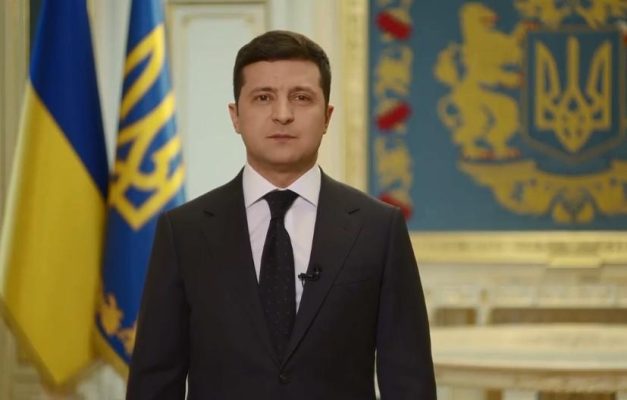
Press TV – May 3, 2022
Russia says Israel is supporting “the neo-Nazi regime in Kiev”, raising the stakes in its tensions with Tel Aviv over the raging war in Ukraine.
The spat began after Russian Foreign Minister Sergei Lavrov, speaking to Italian outlet Mediaset’s Rete 4 channel in an interview released Sunday, said that Adolf Hitler had Jewish origins.
Israeli foreign minister Yair Lapid on Monday accused Lavrov of making an “unforgivable and outrageous statement as well as a terrible historical error” and summoned Moscow’s ambassador for “clarifications”.
“We have paid attention to Foreign Minister Yair Lapid’s anti-historical remarks, which largely explain the current government’s decision to support the neo-Nazi regime in Kiev,” said the Russian foreign ministry in a statement on Tuesday.
“History unfortunately knows tragic examples of cooperation between Jews and Nazis,” it said.
In his interview, Lavrov said Ukrainian President Volodymyr Zelensky “puts forward an argument of what kind of Nazism can they have if he himself is Jewish”.
Lavrov, according to a transcript posted on the Russian foreign ministry website, then added: “I could be wrong, but Hitler also had Jewish blood”.
Israeli prime minister Naftali Bennett characterized Lavrov’s remarks as “lies” that he said effectively “accuse the Jews themselves of the most awful crimes in history”, perpetrated against themselves.
On Tuesday, the Russian foreign ministry said “the Jewish origins of the president (Zelensky) is not a guarantee of protection against rampant neo-Nazism in the country”.
“Ukraine, may it be said in passing, is not the only one in this case,” the ministry said, citing Latvian President Egils Levits who “has also Jewish roots and he also gives cover… to the rehabilitation of the Waffen SS in his country”.
Israel has expressed solidarity with Ukraine but unlike its Western allies, it has refrained from enforcing formal sanctions on Russia over its military operation in the neighboring country.
Last month, Lapid accused Russia of committing war crimes in Ukraine. Moscow hit back, accusing Israel of using Ukraine to “distract” the world from its ongoing aggression against Palestinians.
Featured Video

It’s the Occupation, Stupid
or go to
Aletho News Archives – Video-Images
From the Archives
A superpower and “the world’s sickest warrior state”
By Paul J. Balles | March 8, 2010
Living through five or six major wars has hardened me to what I thought were the extremes of inhuman cruelty and brutality.
Two things made those extremes almost bearable: the brutality always revealed – at least according to the media coverage – the viciousness of the enemy. It was therefore quite understandable when our “brave men and women” pulverized the enemy.
Films of Japanese torturing captive Americans somehow justified holding Japanese Americans in internment camps during World War II; and only a small percentage of Americans found the bombing of Hiroshima and Nagasaki unreasonably vengeful at best, at worst, depraved.
The media giants in America portrayed the North Koreans as barbaric beasts with their captives, quite unlike their southern counterpoints – our allies during the Korean War. No one ever felt the need to explain how the South Koreans were a civilized breed while the North Koreans were absolute savages, at least according to the official line.
In Vietnam, our warriors justifiably (or so the media made us believe) dropped napalm on the North Vietnamese who had the gall to hide in villages and tunnels to ravage our invaders. At least it was accepted practice until some rogue photojournalist filmed a young girl screaming down a Vietnamese road in flames. … continue
Blog Roll
 Aletho News
- Pakistan to Host US-Iran Talks
- How Indonesia’s tilt toward the US left it stranded in the Strait of Hormuz
- US has no choice but to retreat from Iranian borders: Top commander
- Iran Retaliation Strikes Chemical Plant Near Dimona
- AWACS’ Destruction is a Major Loss for US Military – Ex-DoW Analyst
- Israel’s Iran Strategy Uses US Military & Gulf States as Its Pawns
- Iran: Trump wanted regime change, now just begging for Hormuz to open
- IRGC: Israeli, US universities in region legitimate targets after strikes on Iranian university
- Trump admits Iran hit USS Ford carrier: ‘We ran for our lives’
- Battle for Hungary: EU attacks on Orban are a sign of worse things to come
- If Americans Knew
- Israeli police block Catholic cardinal from entering Church of the Holy Sepulchre on Palm Sunday
- Israel is assassinating journalists again, more than any other nation, anywhere, ever – Not a ceasefire Day 170
- Over 300 US service members wounded, majority have brain injuries – Not a ceasefire Day 169
- Researchers at Human Rights Watch Resign Over Blocked Report on Palestinian Refugee Return
- Jewish Groups Are Backing a War Americans Don’t Want
- Eric Fingerhut Thinks He’s the President of the Jews
- Top Jewish Philanthropists, Rabbis Urge Israeli President to Take Action Against ‘Jewish Extremists’
- Don’t Be Fooled. Zionist Leaders Have Always Wanted to Control Southern Lebanon
- Israel’s widespread use of torture is a core element of its genocide against the Palestinian people
- In Israel’s War on Iran, Many Middle East US Bases Rendered “All But Uninhabitable”
- No Tricks Zone
- German Science Blog Accuses PIK Climate Institute Of Hallucinating Climate Tipping Points
- Devastating Assessment Of Comirnaty Vaccine By Former Senior Pfizer Europe Toxicologist
- New Study: CO2 Is ‘Effectively Negligible’ As An Explanatory Climate Change Factor Since 2000
- Former Pfizer Toxicologist Dr. Helmut Sterz Tells Bundestag Hearing Pfizer Vaccine Should Have Never Been Approved
- Energy Expert: Germany’s Nuclear Phaseout Was A “500 Billion Euro Mistake”
- New Research: South Australia’s Mid-Holocene Sea Surface Temperatures Were 4°C Warmer Than Today
- Storing Green Energy To Last Germany 10 Days Would Require A 60-Million Tonne Battery
- New Studies: UK Sea Levels Were 4 Meters Higher Than Today During The Mid-Holocene
- Destructive Green New Deal: German Energy And Metal Group Warns Of Drastic Crisis
- New Study Documents A 20-Year Pause In Arctic Sea Ice Decline – Driven By Internal Variability
 Aletho News