Nobel Peace Prize laureates call on Obama to release CIA torture report
RT | October 27, 2014
Twelve winners of the Nobel Peace Prize have urged fellow laureate, US President Barack Obama, to release a Senate report on the Central Intelligence Agency’s post-9/11 Rendition, Detention, and Interrogation Program, also known as the torture report.
The laureates revealed late Sunday an open letter that called for “full disclosure to the American people of the extent and use of torture and rendition by American soldiers, operatives, and contractors, as well as the authorization of torture and rendition by American officials.”
The letter, posted on TheCommunity.com, also asked for a concrete plan to close secret international “black site” prisons – used by the US to hide, hold, and interrogate post-9/11 detainees – as well as the US military prison at Guantanamo Bay, where many War on Terror captives languish with few or inconsistent legal maneuvers, if any at all, at their disposal.
The letter was signed by past Nobel winners José Ramos-Horta, Archbishop Desmond Tutu, F.W. De Klerk, Leymah Gbowee, Muhammad Yunus, John Hume, Bishop Carlos X. Belo, Betty Williams, Adolfo Perez Esquivel, Jody Williams, Oscar Arias Sanchez, and Mohammad ElBaradei.
“In recent decades, by accepting the flagrant use of torture and other violations of international law in the name of combating terrorism, American leaders have eroded the very freedoms and rights that generations of their young gave their lives to defend,” the laureates wrote.
“They have again set an example that will be followed by others; only now, it is one that will be used to justify the use of torture by regimes around the world, including against American soldiers in foreign lands. In losing their way, they have made us all vulnerable.”
The letter called on Obama, winner of the 2009 Nobel Peace Prize after less than a year in the White House, to follow principles of international law outlined in the UN Convention Against Torture and the Geneva Conventions.
The US Senate Intelligence Committee’s $40 million investigation into the CIA’s Rendition, Detention, and Interrogation Program – which was active from September 11, 2001 to 2006 – has found that the spy agency purposely deceived the US Justice Department to attain legal justification for the use of torture techniques, among other findings. The investigation and subsequent crafting of the report ran from March 2009 to December 2012.
Of that 6,000-page investigative report, the public will only see a 500-page, partially-redacted executive summary that is in the process of declassification.
According to sources familiar with the unreleased report, the CIA, and not top officials of the George W. Bush administration, are blamed for interrogation tactics that amount to torture based on international legal standards.
The report outlines 20 main conclusions about the CIA’s post-9/11 torture program which, according to the investigation, intentionally evaded White House, congressional, and intra-agency oversight.
~
You can join the laureates’ call by signing a petition to President Obama here.
‘Mumia Bill’ signed in Pennsylvania lets prisoners be sued over speech
RT | October 22, 2014
Prisoners serving time in the state of Pennsylvania can now be sued for speaking up from behind bars after Governor Tom Corbett signed into law this week the Revictimization Relief Act that legislatures rushed to approve only days earlier.
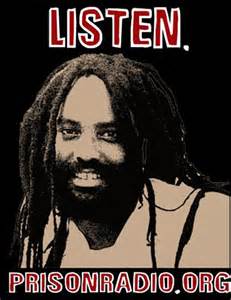 The bill, signed on Tuesday by Corbett, a Republican, allows victims of “a personal injury crime” to sue the perpetrator if that offender “perpetuates the continuing effect of the crime on the victim.”
State Rep. Mike Vereb, a Republican and a co-author of the act, announced earlier this month that he’d be rallying lawmakers to support the bill after former death row inmate Mumia Abu-Jamal was allowed to record a commencement speech that was played for graduates of Goddard College during an October 5 ceremony.
Abu-Jamal, 60, is currently serving a life sentence at a prison facility in Frackville, PA for the 1981 murder of a Philadelphia cop, Officer Daniel Fulkner, but he has maintained his innocence throughout his incarceration, including three decades spent awaiting execution before prosecutors agreed in 2011 to drop the death penalty. Prior to the start of his prison sentence, Abu-Jamal was considered a renowned activist and journalist, and has since published several books and thousands of essays from behind bars.
“The nation is in deep trouble, largely because old thinking, both domestically and globally, has led us into the morass that the nation now faces, which may be encapsulated by references to place-names that ring in our minds: Gaza; Ferguson; and Iraq—again!” a group of 21 graduating students from Goddard, Abu-Jamal’s alma matter, were told in the tape-recorded commencement speech. “These are some of the challenges that abide in the world, which it will be your destiny to try and analyze and resolve. As students of Goddard, you know that those challenges are not easy, but they must be faced and addressed.”
Vereb sent a letter to his colleagues in the Pennsylvania House three days before that address was given, writing in it that he was “utterly outraged that such a reprehensible person would be able to revictimize Officer Daniel Faulkner’s family with this kind of self-promoting behavior.”
The Pennsylvania legislature unanimously approved Vereb’s bill days after the address was given, and Gov. Corbett signed the act on Tuesday, 11 days after the Goddard speech, from a makeshift stage erected in Philadelphia only a few feet from the location where Faulkner was gunned down during a traffic stop 33 years ago. Nevertheless, the Washington Post reported that Corbett said in a statement that the law “is not about any one single criminal,” but rather “was inspired by the excesses and pious hypocrisy of one particular killer.”
“Maureen Faulkner, Danny’s wife, has been taunted by the obscene celebrity that her husband’s killer has orchestrated from behind bars,” Corbett said at the signing, according to a CBS News affiliate.
“This unrepentant cop killer has tested the limits of decency,” the Washington Times quoted Corbett as saying as protesters jeered nearby. “Gullible activists and celebrities have continued to feed this killer’s ego.”
Free speech advocates see no issue with Abu-Jamal’s communique from confinement, though, and say that the law signed this week is a serious blow to First Amendment protections.
“This bill is written so broadly that it is unclear what is prohibited,” Reggie Shuford, the executive director of the American Civil Liberties Union’s Pennsylvania office, said in a statement offered to Reuters. “That can’t pass constitutional muster under the First Amendment.”
Samantha Kolber, a spokesperson for Goddard, told the Patriot-News that the school was “surprised” by Corbett’s signing and said Vereb’s bill “is suggesting that people are not capable of making choices about what speech they will listen to and how they will react to that speech.”
Speaking to the Philadelphia Inquirer, protester Johanna Fernandez said during Corbett’s public signing this week that the governor’s decision to speedily make Vereb’s bill a law was a “Hail Mary pass” from his administration only a month before Election Day since polls suggest that Corbett may lose the governor’s seat. “The establishment of Philadelphia is using Mumia’s case to silence all prisoners in the state,” Fernandez said. “What they’re doing is, they’re essentially inflecting collective punishment on all prisoners in order to silence Mumia.”
On Monday, Abu-Jamal himself weighed in on the debate and the politics surrounding Corbett’s decision to speedily sign the bill during an interview with Noelle Hanrahan of Prison Radio Project.
“This is a political stunt by a failing politician who is seeking support by using fear,” Abu-Jamal said this week. “Politicians do it all the time. But this is unconstitutional: Tom’s latest attempt to stroke and build up his political campaign, his failing political campaign.”
According to the activist-turned-inmate, he gave his address to Goddard after students there wrote and requested he speak. Marc Lamont Hill, a professor at Morehouse College, tweeted Wednesday that “Even if you don’t support Mumia, you should be outraged at this attack on First Amendment Rights.”
UK Home Office issues threat against the functioning of democracy
RT |September 30, 2014
Powers banning extremists from appearing on TV and which allow police to vet “harmful” individuals’ social media activity would be enforced if the Conservatives return to power next year, Home Secretary Theresa May is set to announce.
The party manifesto will also pledge to introduce time-limited Extremist Disruption Orders to curb individuals’ right to speak at public events and control their social media usage. The maximum sentence could be up to 10 years in prison for breaking a banning order.
Announcing the plans at the Conservative Party Conference in Birmingham on Tuesday, May will also promise greater powers for British police to access internet data.
Police and intelligence services would accrue greater access to details of when and where phone calls and emails are sent, but not their content.
Targeted individuals could be banned from taking part in public protests, certain public spaces, from associating with named people and from using broadcast media if deemed a threat to “the functioning of democracy.”
The Home Office counter-extremism strategy would encompass “the full spectrum of extremism” extending beyond radical Islamism to include far-right and fascist organizations.
Orders would target those who undertake activities “for the purpose of overthrowing democracy,” a broad definition that could encompass political activists of many different stripes.
Critics are expected to accuse the government’s gag order of dramatically widening state censorship against people who have never been convicted of a criminal offence.
In their final party conference ahead of the May 7 general election, the Conservatives aim to appear the toughest party on the threat of terrorism.
Prime Minister David Cameron told BBC Breakfast on Tuesday morning that new powers would go beyond mere advocates of violence, instead targeting those who propagate dangerous views and radicalize others.
Currently, organizations can only be banned if there is evidence of links to terrorism.
“The problem that we have had is this distinction of saying we will only go after you if you are an extremist that directly supports violence,” said Cameron. … Full article
Crackdown on freedoms? Australian Senate passes draconian anti-terror laws
RT | September 26, 2014
Australia’s senate has endorsed new anti-terror laws that will grant its intelligence agency the right to spy on any citizen with just a warrant, while journalists and whistleblowers “recklessly” exposing special ops can face up to 10 years in jail.
The anti-terror laws, which cleared the Australian Senate on Thursday – and will almost certainly pass the House of Representatives on Tuesday – grants extraordinary powers to the nation’s spying agency, ASIO, to effectively monitor the entire Australian internet.
The National Security Legislation Amendment Bill allows one warrant to give the ASIO access to a limitless number of computers on a computer network when attempting to monitor a target. It also allows for the content of communications to be stored – while ASIO agents will be allowed to copy, delete, or modify the data on any of the computers it has a warrant to spy on.
Critics of the law say it effectively allows the entire internet to be monitored as it is a ‘network of networks’ and the bill doesn’t define a computer network.
Moreover, under the new law, anyone identifying ASIO agents or disclosing the information related to a special intelligence operation faces up to 10 years in jail. To be found guilty one would only need to be proven to be “reckless as to whether the disclosure of the information will endanger the health or safety of any person or prejudice the effective conduct of an SIO.”
In addition, any operation can be declared “special” by an ASIO officer, and a person may never know which investigation he allegedly obstructed and being put on trial for – because it is a secret one.
The Australian Lawyers Alliance said the law could have a freezing effect on national security reporting, although Senator George Brandis and the government’s Attorney General, said the laws didn’t target journalists but instead went after people who leak classified information like the former US National Security Agency contractor Edward Snowden.
The new laws were introduced to target government whistleblowers, and over growing concerns about the Islamic State jihadists who threatened to directly target Westerners including Australians.
“Regrettably, for some time to come, the delicate balance between freedom and security may have to shift,” Prime Minister Tony Abbott said in a statement on Monday.
Voting against the measure in the 44-12 vote was Australian Green party Senator Scott Ludlam who added an amendment limiting the number of computers to 20 to be searched at any one time, which failed to gain support.
“What we’ve seen [tonight] is I think a scary, disproportionate and unnecessary expansion of coercive surveillance powers that will not make anybody any safer but that affect freedoms that have been quite hard fought for and hard won over a period of decades,” Senator Ludlam told Fairfax Media.
Obama administration ‘blocking’ information from the press – AP
RT | September 20, 2014
Uncovering information that should be available to the public has become increasingly difficult under the presidency of Barack Obama, an Associated Press bureau chief says. In some cases, it surpasses the secrecy of the George W. Bush administration.
The White House’s penchant for secrecy does not just apply to the federal government, according to AP’s Washington bureau chief, Sally Buzbee. During a joint meeting of news editors, she stated that the same kind of behavior is starting to appear in state and local governments.
Buzbee pointed out eight ways that the Obama administration is stifling public access to information – including keeping reporters away from witnessing any military action the United States takes as it battles Islamic State extremists in the Middle East.
“The public can’t see any of it,” Buzbee said, referring to the military campaign. “News organizations can’t shoot photos or video of bombers as they take off – there are no embeds. In fact, the administration won’t even say what country the [US] bombers fly from.”
She also expressed frustration with the government’s handling of the upcoming 9/11 trial, during which journalists are prohibited from looking at even non-classified court filings in real time.
“We don’t know what prosecutors are asking for, or what defense attorneys are arguing,” she said.
Meanwhile, basic information about the prison complex in Guantanamo Bay, Cuba is being withheld from the public, despite the fact that the Bush administration freely shared this data. The media is unable to learn how many inmates are on hunger strike in the infamous prison, or how frequently assaults on guards take place.
Freedom of Information Act (FOIA) requests have become harder than ever to process, Buzbee added. Government officials often fail to do so unless media outlets bring a lawsuit to bear.
At the same time, federal officials have begun pressuring state and local agencies to keep quiet.
“The FBI has directed local police not to disclose details about surveillance technology the police departments use to sweep up cellphone data,” Buzbee said. “In some cases, federal officials have formally intervened in state open records cases, arguing for secrecy.”
US bans Europol from releasing its own documents to European officials
RT | September 9, 2014
The United States has instructed Europol, the European Union’s police agency, to withhold its own annual internal data-protection review from EU lawmakers because the report was written without the US Treasury Department’s permission.
Europol drafted the data-protection report “without prior written authorisation from the information owner (in this case the Treasury Department),” according to the US, violating “security protocols” that could “undermine the relationship of trust needed to share sensitive information between enforcement agencies.”
The report, drafted by Europol’s Joint Supervisory Body, outlines how data concerning EU citizens and residents is transferred to the US, according to the EUobserver. The document is mainly known to monitor implementation of the EU-US Terrorist Finance Tracking Program, or TFTP. Basically, the US Treasury Department is quite territorial about how the TFTP is adhering to European data protection compliance.
EU ombudsman Emily O’Reilly said Europol refused to allow her to see the report based on US demands. O’Reilly then confronted US ambassador to the EU Anthony Gardner in July. Gardner confirmed the order.
On Thursday, O’Reilly said she sent a letter to the European Parliament asking the body “to consider whether it is acceptable that an agreement with a foreign government should prevent the Ombudsman from doing her job.”
“If the US says ‘No disclosure’ then it won’t be disclosed, which is ridiculous because we are EU citizens, we vote, we pay taxes, we have EU laws, and we decide what happens on this continent. Nobody else,” Dutch MEP liberal Sophie In’t Veld told EUobserver. In’t Veld first requested the report in 2012.
In’t Veld said there is no top-secret information in the report that should be viewed as overly sensitive.
“There is no operational information, there is no intelligence, there is nothing in the document. So you really wonder why it is kept a secret,” she said.
The TFTP has received scrutiny in the last year after documents supplied by former US government contractor Edward Snowden showed mass spying by the US National Security Agency on citizens and officials across the world, including in the EU.
The Snowden leaks showed the NSA had gained a “back door” entrance into the SWIFT servers – SWIFT being a financial-record sharing program, which revealed the banking details of millions of European citizens, despite the fact that access to this financial data was limited by the TFTP.
Argentina passes law to reclaim default debt from New York
RT | September 5, 2014
Argentina’s Senate has passed a law that will let the country continue paying off its default debt by transferring international bond payments from New York to local banks, which would let other investors buy Argentine debt.
The scheme, to get around a US judge’s order to immediately pay back $1.6 billion to “vulture” hedge funds in Manhattan, is the initiative of President Cristina Fernandez de Kirchner. The bill passed by a vote 39 to 27.
The initiative proposes to begin challenging payments through third parties, and allowing them to trade their bonds for new debt issued under Argentine law. Argentina’s state Banco de la Nacion could become the trustee for payments, replacing the Bank of New York Mellon. Another proposal is to make Paris a main destination for debt payments.
The US district court that ruled on Argentina’s debt maintains this is illegal.
Next week the law will be discussed in Argentina’s lower house Chamber of Deputies.
It is a brazen move against the ‘vulture’ funds that sent the country into default in July after demanding the immediate payment of $1.6 billion ($1.3 billion plus interest) in restructured debt, instead of the planned $539 million to bondholders. The ruling banned Argentina from making interest payment on restructured debt before settling with the New York hedge funds. The hedge funds had rejected Argentina’s requests to restructure the debt in 2005 and 2010.
“Sometimes there are court decisions that cannot be followed,” Miguel Angel Pichetto, head of the government’s Victory Front coalition in the Senate, said on Thursday.
Argentina has said it will take the US to the International Court of Justice for judicial malpractice.
“To pay the vulture funds would be very dangerous,” Pichetto said.
Guatemala defies ‘Monsanto Law’ pushed by US as part of trade agreement
RT | September 3, 2014
The highest court in Guatemala has suspended the controversial ‘Monsanto Law,’ a provision of a US-Central American trade agreement, that would insulate transnational seed corporations considered to have “discovered” new plant varieties.
The Constitutional Court suspended on Friday the law – passed in June and due to go into effect on Sept. 26 – after a writ of amparo was filed by the Guatemalan Union, Indigenous and Peasant Movement, which argued the law would harm the nation, LaVoz reported.
The Court’s decision came after several Guatemalan parliamentarians from both the governing Patriotic Party and the opposition party Renewed Democratic Freedom said they would consider repealing the law after outcry from a diverse cross-section of Guatemalans.
The decision also offers interested parties 15 days to present their arguments pertaining to the law in front of the Constitutional Court. Members of both political parties said they would present motions to resist the law.
The ‘Law for the Protection of New Plant Varieties,’ dubbed the ‘Monsanto Law’ by critics for its formidable seed-privatization provisions, is an obligation for all nations that signed the 2005 CAFTA-DR free trade agreement between Costa Rica, El Salvador, Guatemala, Honduras, Nicaragua, the Dominican Republic, and the United States. The agreement requires signatories to adhere to the International Convention for the Protection of New Plant Varieties.
The law offers producers of transgenic seeds, often corporate behemoths like Monsanto, strict property rights in the event of possession or exchange of original or harvested seeds of protected varieties without the breeder’s authorization. A breeder’s right extends to “varieties essentially derived from the protected variety,” thus, a hybrid of a protected and unprotected seed belongs to the protected seed’s producer.
The Rural Studies Collective (Cer-Ixim) warned that the law would monopolize agriculture processes, severely threaten food sovereignty – especially those of indigenous peoples – and would sacrifice national biodiversity “under the control of domestic and foreign companies.”
The National Alliance for Biodiversity Protection said in July that the law is unconstitutional “because it violates the rights of peoples. It will benefit transnational seed companies such as Monsanto, Duwest, Dupont, Syngenta, etc.”
“According to this law, the rights of plant breeders are superior to the rights of peoples to freely use seeds,” the Alliance said in a statement.
“It’s a direct attack on the traditional knowledge, biodiversity, life, culture, rural economy and worldview of Peoples, and food sovereignty,” the Alliance added.
Anyone who violates the law, wittingly or not, could face a prison term of one to four years, and fines of US$130 to $1,300.
It is unclear what options the Guatemalan government has given the obligations under CAFTA-DR. The US would likely put pressure on the nation to pass the law, part of a global effort using trade agreements to push further corporate control over trade sectors like agriculture in the name of modernization. Upon further refusal, the US could drop Guatemala from the trade agreement.
Fake cell phone ‘towers’ may be spying on Americans’ calls, texts
RT | September 3, 2014
More than a dozen “fake cell phone towers” could be secretly hijacking Americans’ mobile devices in order to listen in on phone calls or snoop on text messages, a security-focused cell phone company claims. It is not clear who controls the devices.
ESD America, which markets heavily-encrypted cell phones built within the body of a Samsung Galaxy S3, said it was able to locate numerous towers intercepting mobile communications – but does not know who is running them.
Speaking to Popular Science, ESD America CEO Les Goldsmith recently said that the company has used its phone – the CryptoPhone 500 – to map 17 different fake cell phone towers, dubbed “interceptors,” across the United States. Locations include New York, Chicago, Los Angeles, Seattle, and more.
“Interceptor use in the US is much higher than people had anticipated,” he told the website. “One of our customers took a road trip from Florida to North Carolina and he found 8 different interceptors on that trip. We even found one at South Point Casino in Las Vegas.”
Although these interceptors act as fake cell phone towers, they are not necessarily large, physical structures. They could simply be small mobile devices that act exactly like a real tower, deceiving phones into giving up information. Such devices are known as “stingrays,” after the brand name of one popular type of interceptor.

Once connected to a person’s phone, they can bypass the mobile device’s encryption to either listen in on calls or capture texts. In some cases, they are also powerful enough to take over a device or make it seem as if it has shut down – only to leave the microphone on in order to eavesdrop.
The American Civil Liberties Union has been attempting to pry information about government and police use of stingray equipment, but its efforts have been met with resistance from federal officials.
According to Ars Technica, the Federal Communications Commission pledged in August to investigate the “illicit and unauthorized use” of interceptors – with a primary focus on foreign governments, criminals, and terrorists – but denied a Freedom of Information Act request to reveal more data about current stingray use.
For Goldsmith, determining who is using the interceptors is important. He speculated that the operators could be American agencies or foreign governments.
“What we find suspicious is that a lot of these interceptors are right on top of US military bases. So we begin to wonder – are some of them US government interceptors? Or are some of them Chinese interceptors?” he told PopSci. “Whose interceptor is it? Who are they, that’s listening to calls around military bases? Is it just the US military, or are they foreign governments doing it? The point is: we don’t really know whose they are.”
Outside of national governments, local law enforcement agencies are also beefing up their stingray/interceptor capabilities. In Oakland, California, police are looking to spend hundreds of thousands of dollars to upgrade their cell phone surveillance system.
Meanwhile, police in Tacoma, Washington have caught the eye of civil liberties advocates after the News Tribune revealed they have been using interceptor equipment to catch cell phone calls for the last six years. Some, including Mayor Marilyn Strickland, said it was legitimate for police to do so as long as people’s rights were not violated. However, the ACLU disagreed, arguing it was like “kicking down the doors of 50 homes and searching 50 homes because they don’t know where the bad guy is.”
Wall Street wins again: Bank of America settlement with US government is insufficient, critics say
RT | August 22, 2014
While the US government touted its “record” settlement reached this week with Bank of America for mortgage fraud that helped fuel the 2008 recession, the details of the agreement indicate yet another light punishment for an offending Wall Street titan.
Bank of America agreed to a $16.65 billion settlement with federal authorities for selling toxic mortgages and misleading investors, the US Justice Department announced Thursday.
“This historic resolution – the largest such settlement on record – goes far beyond ‘the cost of doing business,’” Attorney General Eric Holder said in a statement.
“Under the terms of this settlement, the bank has agreed to pay $7 billion in relief to struggling homeowners, borrowers, and communities affected by the bank’s conduct. This is appropriate given the size and scope of the wrongdoing at issue,” Holder added.
Yet the $7 billion in “relief” is considered a “soft money” fine, in which the bank will reduce some homeowners’ mortgages. Very few homeowners are eligible for the refinancing pursuant to the settlement, AP reported. Those who are eligible may need to wait years to see any settlement aid, as payouts will be ongoing through 2018.
Those already in the hole following a lost home due to foreclosure or a short sale – when a lender takes less money for a home than what the borrower owes – are unlikely to benefit from the terms of the settlement.
Outside of the $7 billion for consumers, the Bank of America settlement includes a $5 billion cash penalty and $4.6 billion in remediation payments. Large portions of the deal will be eligible to claim as business expenses, allowing the mega bank to treat them as tax write-offs.
The Bank of America settlement includes the appointment of an independent monitor to review the consumer relief portion of the agreement. It is yet to be determined when the monitor will be named.
The deal echoes similar agreements the government reached with other Wall Street players, like JPMorgan Chase and Citigroup, for crimes committed surrounding the recent economic recession.
JPMorgan Chase came to a $13 billion settlement in November. The $4 billion supposedly offered to homeowner relief has yet to benefit many in need, according to the advocacy group Home Defenders League. Citigroup reached a $7 billion deal with the government.
Critics of these deals have blasted the US government for its ongoing, lax attitude regarding mass crimes committed by powerful banks that, they say, are not adequately punished for wrongdoing.
“[T]he latest round of settlements deals with misconduct that even though the banks are getting off on the cheap again, the underlying abuses don’t strike at the heart of the too big to fail mortgage securitization complex,” said Yves Smith at Naked Capitalism.
“So the [Obama] Administration can feign being a little more bloody-minded. Even so, the greater and greater proportion in recent deals of funny money relative to real dough show that this is simply another variant of an exercise in optics.”
No major bank executive has faced criminal charges following the mortgage crisis. Without significant retribution for banks and executives that knowingly passed off fraudulent mortgages, Wall Street players will continue to act with impunity, argued Dean Baker, economist and director of the Center for Economic & Policy Research.
“Knowingly packaging and selling fraudulent mortgages is fraud. It is a serious crime that could be punished by years in jail,” Baker wrote. “The risk of jail time is likely to discourage bankers from engaging in this sort of behavior.”
William D. Cohan, a former senior mergers and acquisitions banker, wrote in the New York Times that, not only has the government barely punished those on the hook for Wall Street crimes, the Justice Department has also offered “sanitized” versions of events that led up to the crimes in its accounts given to the public following investigations.
“The American people are deprived of knowing precisely how bad things got inside these banks in the years leading up to the financial crisis, and the banks, knowing they will be saved the humiliation caused by the public airing of a trove of emails and documents, will no doubt soon be repeating their callous and indifferent behavior,” Cohan wrote.
Bank of America resisted the settlement at first, claiming nearly all bad mortgage securities under scrutiny came from Countrywide and Merrill Lynch. Both firms were purchased by Bank of America amid the 2008 financial crisis.
A federal judge in Manhattan ruled in a separate case that Bank of America was liable for the pre-merger mortgages, issuing a penalty of $1.3 billion. The ruling pushed the bank to agree to the settlement. Bank of America CEO Brian Moynihan said Thursday that the deal is “in the best interests of our shareholders and allows us to continue to focus on the future.”
Meanwhile, consumers advocates said the faulty mortgages will continue to haunt homeowners and their own vision of the future.
“It is hard to see how these settlements provide relief commensurate with the harm caused,” said Kevin Stein, associate director of the California Reinvestment Coalition, according to AP. “Countless families and communities have been devastated by predatory loans that should not have been made.”
Following the Thursday announcement of the settlement, Bank of America’s stock rose more than 4 percent.
County officials refuse to pay medical bills for toddler burned by SWAT grenade
RT | August 18, 2014
Officials in Georgia’s Habersham County are refusing to pay for the mounting medical expenses of a toddler seriously injured by a flash grenade after a failed SWAT team raid earlier this year.
Bounkham ‘Bou Bou’ Phonesavanh was just 19 months old when a Habersham SWAT team initiated a no-knock warrant at his family’s home at around 3 a.m. on May 28. Bou Bou was asleep in his crib at the time, surrounded by his family and three sisters. The toddler was severely injured when SWAT team officers broke through the house’s door and threw a flashbang grenade that ultimately landed in the Bou Bou’s crib.
When the stun grenade went off, it caused severe burns on the child and opened a gash in his chest. As a result, Bou Bou lost the ability to breathe on his own and was left in a medically induced coma for days after the incident. His extensive recovery necessitated stays in two hospitals before he finally went home in July.
Now, Habersham County officials are sticking by their decision to ignore the family’s plight, the family’s attorney, Muwali Davis, told WSB-TV.
Habersham County’s attorney responded with a statement saying that the Board of County Commissioners will not pay given it is supposedly illegal to do so.
“The question before the board was whether it is legally permitted to pay these expenses. After consideration of this question following advice of counsel, the board of commissioners has concluded that it would be in violation of the law for it to do so.”
The family now says an independent investigation showed law enforcement used suspect information to attain a search warrant.
As RT reported previously, the SWAT conducted the raid as part of an effort to apprehend Wanis Thometheva, believed to be selling methamphetamine. Police said that their records indicated the suspect could be armed, and that a confidential informant had successfully purchased drugs from him earlier in the day. At the time of the raid, however, Thometheva was not at the home, and was eventually arrested elsewhere.
Additionally, an unnamed public official told the Washington Post that the reported drug deal was worth only $50.
Habersham County’s sheriff previously said the confidential informant who bought drugs at the home told police that he did not believe any children lived at the house.
Bou Bou’s mother, Alecia Phonesavanh, said that was unlikely if they had valid information on their suspect.
“If they had an informant in that house, they knew there were kids,” Phonesavanh told The Atlanta Journal-Constitution after the incident. “They say there were no toys. There is plenty of stuff. Their shoes were laying all over.”
In June, the family called for a federal investigation into the conduct of the SWAT team.
The Phonesavanh family said it was not involved with drugs at all, and was only staying with Thometheva, the homeowner’s son, because their Wisconsin home was damaged in a fire. They moved back to Wisconsin once Bou Bou’s health improved. Supporters have planned a fundraiser this month for the family.
An official investigation into the incident is ongoing, according to WSB-TV.
Ferguson cops beat innocent man, then charged him with bleeding on their uniforms
RT | August 15, 2014
The officer-involved shooting death of teenager Michael Brown this week and the subsequent protests across the United States have rekindled interest in another case of alleged excessive force blamed on the Ferguson, Missouri Police Department.
Nearly four years to the day before Ferguson Police Officer Darren Wilson opened fire and killed Brown, 18, a complaint filed in federal court accused the same law enforcement agency of violating the civil rights of a man who says he was badly beaten after being wrongly arrested, then later charged with “destruction of property” for bleeding on the uniforms of the cops alleged to have injured him.
On Friday, Michael Daly of The Daily Beast recounted the case of Henry Davis, an African-American welder who tried to sue the City of Ferguson after an autumn 2009 altercation with the same police department currently making headlines for the high-profile killing of Brown.
Davis, Daly recalled, was arrested on September 20, 2009 when a Ferguson cop mistook him for a man with the same first and last name wanted on an outstanding warrant. Davis was brought to the Police Department headquarters and told to spend the night in the same one-bed cell occupied by another individual. When he objected and asked for a sleeping mat of his own, his attorneys wrote, the officers got violent.
Officer John Beaird, the complaint reads, “called other officers to the area outside the cell and told the other officers that Plaintiff was being belligerent and failing to comply with his orders.” Five cops were soon in the area and, according to the suit, Officer Michael White charged Davis, grabbed him and then slammed him into a wall.
“A female police officer got on Plaintiff’s back and handcuffed Plaintiff with Plaintiff’s arms behind his back and lying on his stomach,” the complaint continues. “Just before Plaintiff was picked up to his feet, Defendant White rushed in the cell a second time and kicked Plaintiff in the head while Plaintiff was lying on the floor and handcuffed with his arms behind his back.”
“He ran in and kicked me in the head,” Davis recalled, according to The Daily Beast. “I almost passed out at that point… Paramedics came… They said it was too much blood, I had to go to the hospital.”
The detainee didn’t get help there, however, because he refused treatment unless the hospital staff would first photograph his injuries.
“I wanted a witness and proof of what they done to me,” Davis said, according to the website.
Instead, he was taken back to the jail, where he remained for several days until he could post $1,500 bond related to four counts of “property damage.” In a signed complaint, Daly wrote, Officer Beaird said David bled on his own uniform and those of three others officers.
When the issue was ultimately brought up during legal proceedings pertaining to the civil suit filed by Davis, Officers Christopher Pillarick, Beaird and White all denied getting blood on their outfits, the Beast reported.
“The contradictions between the complaint and the depositions apparently are what prompted the prosecutor to drop the ‘property damage’ allegation,” Daly wrote this week. “The prosecutor also dropped a felony charge of assault on an officer that had been lodged more than a year after the incident and shortly after Davis filed his civil suit.”
That same suit compelled the Ferguson Police Department to produce surveillance camera footage from the alleged altercation, but the cops failed to properly save the clip, James Schottel, the plaintiff’s lawyer, told Daly this week. Furthermore, the attorney explained that his efforts to obtain the use-of-force history for the officers involved proved futile when he became aware that reports involving non-fatal altercations were absent from all officers’ personnel files, per departmental policy.
“On Friday, police finally identified the officer as Darren Wilson, who is said to have no disciplinary record, as such records are kept in Ferguson,” Daly wrote this week. “We already know that he started out at a time when it was accepted for a Ferguson cop to charge somebody with property damage for bleeding on his uniform and later saying there was no blood on him at all.”
According to court papers obtained by RT, Magistrate Judge Nannette A. Baker ruled late last year in favor the city, halting Davis’ efforts to sue the city for multiple alleged violations of his civil rights. His attorneys filed a notice of appeal in March, and the case is currently slated to be considered later this year by the Eight Circuit Court of Appeals.
“Appellant presented a submissible case of excessive force and Missouri state law assault and battery and respectfully requests this Honorable Court to reverse the district court’s judgment of dismissal of Appellant’s excessive force and Missouri state law assault and battery claims against Appellees Michael White, John Beaird and Kim Tihen,” the appeal reads in part. “Appellant presented a submissible case of municipal liability and requests this Honorable Court to reverse the district court’s judgment of dismissal of Appellant’s municipal liability claim against Appellee City of Ferguson, Missouri.”
When The Daily Beast caught up this week with Schottel, Davis’ attorney, he told them that rumors of the Ferguson Police Department firing multiple shots at Brown last week didn’t surprise him.
“I said I already know about Ferguson, nothing new can faze me about Ferguson,” he told the website.
Featured Video
Bombing Iran Back Into the Stone Age /Lt Col Daniel Davis & Jim Jatras
or go to
Aletho News Archives – Video-Images
From the Archives
The Occupied Mentality Syndrome
Saudi Arabia on the American chessboard – Part 2
By B. J. Sabri | American Herald Tribune | April 19, 2016
Since the Korean War, but particularly since the Iranian Revolution of 1979 until today, the United States has been steadily escalating its military presence in the Persian Gulf. Taking advantage of many colossal events of the past 36 years, [1] the hyper-empire has institutionalized its massive presence on land and sea, and expanded its objectives to include the unambiguous physical control of the area, as well as the clear understanding that local Arab governments should abide by them. The pretext is always the same: in “defense” of the national interests and security of the United States. From observing how the United States has been interacting with the governments of the region, and by judging from the size of its expeditionary force, we could reach a basic conclusion. The United States is occupying, de facto, the entire Arabian Peninsula. (Yemen, devastated by Saudi and American jets is yet to be conquered. Oman? Britain returned not as colonial ruler but as a soft occupying power.)
Under this articulation, Saudi Arabia, Qatar, Kuwait, and the United Arab Emirates are virtually occupied countries. If we compare this type of occupation to the mandate and protectorate regimes of the past, the results might be identical—the nations affected by it lose sovereignty. When Arab governments comply with the objectives of a foreign power that station military forces on their national milieu, then that power controls them in multiple ways including how they react to policy deliberations and what decisions they intend to take on specific issues. A good method to verify the concept of effective occupation is this: take notice of what the United States says and wants, and then compare it to what the gulf rulers do in response. (I shall discuss this detail at some point in the upcoming parts.)
If the presence of US forces or other means of political pressure are a factor in Saudi Arabia’s interventionist Arab wars, then we need to debate this issue. However, from the history of resistance to colonialism, we learnt: if a powerful state imposes its order on a nation by military means or other forms of coercion, and if this nation does not resist that imposition, then a mental subordination to the powerful state will ensue. This is especially true in the case of Saudi Arabia. One single event, 9/11, has transformed it from a US “ally” into an instant political hostage of the American Empire. … continue
Blog Roll
 Aletho News
- Brazilian Congressman seeks to bar Israeli military personnel from entering Brazil
- Official reveals evidence of Arab states’ involvement in US-Israeli war on Iran
- His Majesty’s head-chopper: Syria’s MI6-backed president bows to King Charles
- Forced to backtrack: ‘Israel’ drops Hezbollah disarmament goal
- Britain’s Lebanon surveillance network: A digital map for war
- Bahrain faces scrutiny for opposition crackdown after detainee killed
- Hegseth’s Pentagon Purge Designed to Prevent a Mutiny: Karen Kwiatkowski
- Greek shipping firms secretly transporting oil, weapons to Israel
- UN vote on Hormuz force delayed as Iran issues warning
- Trump and the debris of Iran war
- If Americans Knew
- Israel-US kill negotiators, destroy civilian structures, but Iran’s military capabilities still largely intact – Daily Update
- ‘War crime’: Global condemnation as Israeli ministers celebrate death penalty law targeting Palestinian prisoners
- 7 Ways Israel Is Turning Lebanon Into Gaza
- World’s Leading Football Bodies Under Fire Over Israel Policies
- Experts warn of possible use of nukes against Iran
- Israeli invasion of Lebanon could be worse than 1982, warn European officials
- Passover: Liberation and collective punishment
- Trump says the quiet part out loud: (Israel’s) war on Iran > Americans’ health – Daily Update
- Gaza families reunite years after babies evacuated amid Israel’s war
- International Rescue Committee warns Gaza’s children face grave protection risks
- No Tricks Zone
- Low Intensity Tornado Wrecks Major Solar Farm, Creating A Potential Toxic Dump
- New Study Finds Warming Saves Lives…Cold Temperatures 12 Times More Deadly Than Excess Heat
- German Science Blog Accuses PIK Climate Institute Of Hallucinating Climate Tipping Points
- Devastating Assessment Of Comirnaty Vaccine By Former Senior Pfizer Europe Toxicologist
- New Study: CO2 Is ‘Effectively Negligible’ As An Explanatory Climate Change Factor Since 2000
- Former Pfizer Toxicologist Dr. Helmut Sterz Tells Bundestag Hearing Pfizer Vaccine Should Have Never Been Approved
- Energy Expert: Germany’s Nuclear Phaseout Was A “500 Billion Euro Mistake”
- New Research: South Australia’s Mid-Holocene Sea Surface Temperatures Were 4°C Warmer Than Today
- Storing Green Energy To Last Germany 10 Days Would Require A 60-Million Tonne Battery
- New Studies: UK Sea Levels Were 4 Meters Higher Than Today During The Mid-Holocene
 Aletho News