US ‘Discussing’ Israeli Strikes on Iran, as IDF Troops Killed by Hezbollah w/ Seyed Mohammad Marandi
Rachel Blevins | October 4, 2024
Israel is promising a response to Iran’s retaliatory attack, with anonymous Israeli officials telling the media it could consist of more targeted assassinations, as well as attacks on Iran’s oil fields, nuclear sites and air defense systems. According to Biden, the U.S. is “discussing” strikes on Iranian oil fields, although he didn’t appear to finish his sentence when he was asked by reporters…
This, as Israel continues to bomb Beirut, targeting heavily populated civilian areas, and Israel’s attempt at a “limited” ground invasion was quickly met with heavy force from Hezbollah, leading to a over a dozen Israeli casualties.
Prof. Seyed Mohammad Marandi, of the University of Tehran, noted that one of Israel’s goals with the latest escalations is to terrorize the Lebanese people until they turn against Hezbollah. But given the fact that Israel has killed hundreds of civilians, displaced over 1.2 million, AND assassinated Hezbollah Secretary General Sayyed Hassan Nasrallah in a matter of weeks… their plan is already backfiring, as the public continues to show support for the Resistance.
Hezbollah’s indomitable resolve
By Lea Akil | Al Mayadeen | October 7, 2024
Despite repeated efforts by “Israel” and the US to dismantle resistance movements, especially in Lebanon and Palestine, these attempts have consistently fallen short. The core reason for this failure lies in the West’s misreading of the Resistance itself—the Resistance is rooted in deep historical injustices, sustained ideological strength, and has a great capacity to adapt. While leaders may be targeted and eliminated, their movements continue to thrive, fueled by an unwavering dedication to justice and freedom.
The assassinations of key figures like Hezbollah’s Secretary-General Sayyed Hassan Nasrallah, Commander Hajj Imad Mughniyeh, and Commander Fouad Shokor, among others, have not resulted in Hezbollah’s downfall over the years. Instead, the group has only grown stronger, showcasing the inability of “Israel” and the US to truly understand the dynamics of the Lebanese Resistance. These movements are not reliant on individual leaders; they are deeply rooted in collective resilience and continue to thrive despite targeted assassinations.
It’s clear that since the beginning of the war on Gaza, “Israel”, fully backed by the US, sought to dismantle Hezbollah through decisive strikes. This strategy began with the assassination of Commander Fouad Shokor in late July, followed by a series of pager attacks and the assassination of more Hezbollah officials. However, the martyrdom of Sayyed Nasrallah was meant to be the critical blow, aimed at triggering Hezbollah’s collapse and internal disintegration.
Common tactics like economic sanctions, military interventions, and targeted assassinations have been repeatedly used by the US and “Israel” to dismantle Resistance groups. However, history has shown that these strategies have failed.
Take the Gaza Strip, for example—besieged since 2007. “Israel” not only attempted to crush the Palestinian Resistance through relentless military assaults and a blockade but also to turn the people of Gaza against the Resistance by deepening their humanitarian suffering. The plan was clear: starve the population, deny them basic necessities, and push them to blame the Resistance for the hardships. Yet, rather than fracture the relationship, “Israel’s” siege had the opposite effect. The daily brutality, from bombings to the blockade that strangled their livelihoods, only reaffirmed for many in Gaza why resistance was essential for their survival and dignity.
The birth of resistance
Hezbollah was founded in 1982 in direct response to the Israeli occupation of Lebanon, which persisted until 2000. The Resistance movement succeeded in forcing the Israeli military to retreat from Lebanese territory, marking the first time “Israel” withdrew without a formal ceasefire agreement. This significant victory was largely attributed to Hezbollah’s unwavering resistance efforts.
The Israeli withdrawal elevated Hezbollah’s regional influence, establishing it as more than just a Lebanese resistance group—it became a symbol of Arab defiance against Israeli occupation.
“The era of defeat is over. Now is the era of victories.” — Hezbollah’s martyr Secretary-General Sayyed Hassan Nasrallah, July 25, 2006
This triumph not only bolstered Hezbollah’s military reputation but also fortified its position as a central force in Lebanon’s political landscape, intertwining its political influence with its military strength.
That said, it can be confidently stated that Hezbollah emerged from the war and invasion, which shaped it into a highly resilient organization. Its structure is designed to withstand losses, allowing it to regenerate leadership and produce new generations of military commanders, ensuring the continuity of its operations despite any setbacks.
The US and ‘Israel’s’ misreading of Hezbollah and Sayyed Nasrallah
On September 27, with backing from the US, “Israel” assassinated Sayyed Nasrallah, expecting this to cause the downfall of the resistance movement. Although the impact of Sayyed Nasrallah’s martyrdom on Hezbollah and the wider Axis of Resistance is hard to assess fully, it does not indicate that Hezbollah is close to collapsing. The group’s resilience extends beyond any one individual leader.
“Israel” and the US fail to grasp the true essence of his leadership. People didn’t rally behind him solely for his persona; they supported him because he represented their struggle for justice and liberation. Although he was a respected figure, the cause he embodied will endure beyond his lifetime.
“There are thousands of Imad Mughniyehs in Lebanon and in the world”. — Sayyed Hassan Nasrallah, 2010
American Killed By Israeli Bombardment of Lebanon
By Kyle Anzalone | The Libertarian Institute | October 6, 2024
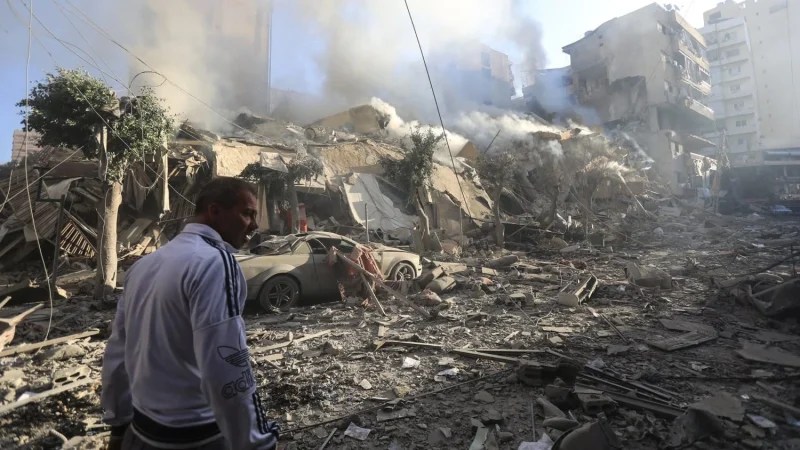
A Michigan man is one of more than one thousand people in southern Lebanon killed by Israel over the past two weeks. Israel has conducted massive bombardments of its northern neighbor, often using American weapons to perform the operations.
Kamel Ahmad Jawad was killed in southern Lebanon Tuesday morning, according to his family. He frequently made trips where he provided financial support and other assistance to the people of southern Lebanon.
Israel has ramped up its attacks in Lebanon over the past several weeks. Last month, Tel Aviv conducted multiple widespread terror attacks by planting explosives in small electric devices. Then, Israel killed Hezbollah leader Hassan Nasrallah after he accepted a ceasefire deal.
The assassination of Nasrallah kicked off a large-scale bombing campaign and a ground invasion of southern Lebanon. Israel has hit a number of civilian targets, often claiming some kind of Hezbollah assets were hidden in homes and other structures.
The State Department said it was “aware and alarmed” regarding Jawad’s death, but did not go on to condemn or threaten Tel Aviv for the murder.
Throughout the Joe Biden administration, there has been a distinct difference in reaction compared to when Americans are killed by Israel or if they are killed by a militant in a resistance group.
For example, the State Department regularly mentions the Americans who were killed and captured by Hamas on October 7 to justify the unlimited US support for Israel. However, when Israeli forces kill Americans, the White House allows Tel Aviv to investigate itself and accepts the often dubious results of the inquiry that absolves Israeli forces of any wrongdoing.
Hezbollah: Media rumors about fate of senior officials part of psychological warfare against resistance supporters
Al-Manar | October 6, 2024
Hezbollah Media Relations issued a statement to comment on reports published by some media outlets and attributed to the “group sources” regarding the fate of Hezbollah officials following the brutal raids on the southern suburb of Beirut.
The statement highlighted Agence France-Presse, which attributed its reports to senior Hezbollah sources.
“We would like to reiterate that Hezbollah does not have ‘sources’, and our position is reflected in an official statement issued by Hezbollah’s media relations.”
Some media outlets, especially a number of websites, have also published false news and worthless rumors regarding the organizational situation of a number of senior Hezbollah officials, according to Hezbollah statement.
This falls within the framework of the psychological warfare against the resistance supporters by those who have consecrated their pens, tongues and positions at the service of the Zionist occupation, the statement concluded.
The Israeli enemy went ahead with its brutal raids across Lebanon on Saturday, day 12 of the aggression, with air strikes on Beirut’s Dahiyeh.
Why Israel Can’t Win
Endgame: Masada 2.0
By Kevin Barrett | October 6, 2024
“Israel” is quite proficient at killing people. In less than a year they have killed 40,000 civilians in Gaza, and last week killed 2,000 more in Lebanon. Unofficial estimates of the real death toll in Gaza, as opposed to the officially recovered, counted, and identified bodies, exceed 200,000.
As they slaughter vast numbers of women and children under the flimsiest excuses, the Zionists also kill the political and diplomatic leaders with whom wiser leaders would be negotiating. They apparently have not considered that for each civilian they kill, dozens of furious survivors and onlookers become long-term anti-Zionist combatants-in-waiting. And they don’t seem to realize that martyring political and diplomatic leaders gives fighters added incentive to up their game, and leaves them no option but to do so. That’s why, in the wake of the assassination of Hassan Nasrallah, Israel’s attempted invasion of Lebanon has been shockingly (to the Zionists) unsuccessful.
Randomly murdering tens of thousands of civilians, or assassinating a handful of leaders, superficially looks like tactical success. Richie Allen seemed to think that Israel’s terrorist attack on non-combatants associated with Hezbollah via exploding pagers was an impressive achievement.* As I told him, just about anybody who really wants to randomly murder that number of people, or more, can do so if they so choose. The fact that Israeli leaders employed such an elaborate Rube Goldberg scheme to mass murder noncombatants—to counterproductive strategic effect—reveals the Israelis as psychopathic idiots and shameless war criminals, not geniuses.
The appearance of tactical success achieved by Israel’s pointless murders conceals a colossal strategic failure. The root of that failure is simple: Netanyahu has no idea what he is trying to achieve, other than keep the war going so he can stay in office and out of prison. His extremist coalition parters, Smotrich and Ben Gvir, do have a vision—“exterminate Amalek”—but since this is 2024, not the Bronze Age, that isn’t going to happen. Israel can kill a small fraction of today’s “Amalek” but for every Amalek they kill, ten or a hundred more will spring up. Long before Israel killed even 5% of its current Amalek enemies it would have transformed most of the world’s 8 billion non-Jews into a new, even more angry and determined Amalek.
Netanyahu’s official war aims in Gaza are (1) eliminate Hamas, and (2) use military force to bring back the Israeli hostages alive. Both are obviously impossible, as Israel’s military and intelligence leaders have reiterated. Hamas is just a current name for Islamic resistance to Zionist genocide, and that resistance is an idea that can’t be eliminated by military means. And military attempts to snatch back hostages will almost always lead to the deaths of those hostages.
Since he has set impossible war aims, and has no realistic ones, Netanyahu is bogged down in a war on Gaza that he, and Israel, will inevitably lose. And now he is making an even worse mistake by invading Lebanon and stepping into an even bigger quagmire. Once again, Netanyahu has declared goals that cannot be realized: (1) Defeat Hezbollah, which like Hamas is simply the local form of Islamic resistance to genocide, an idea that cannot be defeated militarily, and (2) Change the military equation so that Zionist settlers can return to the occupied northern territories. But unlike in 2006, when Hezbollah defeated Israel with only a tiny fraction of the arsenal and army it now possesses, the Lebanese anti-terror group now has long-range rockets that can hit those northern territories from anywhere in Lebanon (and from parts of Syria and Iraq for that matter). Obviously there is no evident military path to enabling the northern settlers to return.
Endgame: Masada 2.0
Since the officially-declared vision of what Israeli “victory” would look like is impossible, while a conventional military defeat of “Israel” also seems unlikely due to the Zionists’ advantage in heavy weapons, how can this war possibly end? The most likely ending will involve some form of Masada 2.0. The original Masada, which of course is a myth not a historical reality, involved a civil war in which fanatical Jews were slaughtered by even more fanatical Jews, who then committed mass suicide rather than surrender to the Romans.
Masada 2.0 will similarly pit Jewish fanatics (the remnants of Labor Zionists) against even loonier ultra-fanatics (Ben-Gvir, Smotrich, and the rest of the messianic-millenarian maniacs). The moment of truth will come when Israelis collectively wake up and realize that Israel is bogged down in two hopeless quagmires, and that Netanyahu’s stated war aims are a pipe dream: The Israeli captives will never be brought back alive by military means, Hamas is still around and will remain so, Hezbollah can keep raining missiles on “Israel” indefinitely, and the settlers won’t return to the north without a peace agreement that would amount to an Israeli surrender (given the impossible declared war aims).
At this point the Zionists capable of rational strategic thinking will come into conflict with those who are not so capable—the Smotriches and Ben-Gvirs who imagine that if they only commit enough abominations their messiah will magically appear to save them. The strategic Zionists will see and accept the inevitability of a strategic retreat, while the messianic-millenarian lunatics will see that as a betrayal of all that is holy. The “sane Zionists” (I know that’s an oxymoron) will recognize that Israel’s only path to long-term existence as a “Jewish state” would be to somehow revive the two-state solution involving withdrawal from 1967-occupied territories. But the messianic-millenarian fanatics and the half-million settlers on those territories, like the ultras in the Masada legend, would rather die than compromise. When push comes to shove, and Netanyahu is finally scapegoated and sacrificed for his war failures, open fighting is likely to break out between the two factions. It may involve targeted assassinations, as happened to Yitzhak Rabin in 1995. Mob violence, possibly on a grand scale, is another possibility.
If the strategic Zionists win, and the war ends with at least the illusion of an Israeli return to “normalcy” featuring a promised and apparently viable path to a Palestinian state including all of the 1967-occupied land with East Jerusalem as its capital, more than a few of the millenarian lunatics may very well commit mass suicide, whether by their own hands or in a “suicide by cop” scenario when they are removed from the Occupied Territories by the IDF. And thus Masada 2.0 would take the “mass suicide rather than surrender” motif from myth into history.
If the messianic-millenarian lunatics win again, as they did with their assassination of Rabin in 1995, “Israel” will descend into chaos. Frenzied mobs will go berserk, awaiting their Messiah to lead them to ultimate victory over the gentiles. Almost all competent Israelis will have long since left, while the ten-children-per-family ultra-religious Zionists who don’t know how to do anything except bake unleavened bread and sit around all day chanting the Torah and poring over the Talmud will be all that remains. Economic collapse and political chaos will ensue. Military defense against the world’s two billion Muslims, who will never forgive or forget the Zionist genocide, will become impossible, especially as the US empire’s influence recedes. Ultimately the Holy Land will be absorbed back into the Islamic world.
The above assessment may sound partisan, given my sympathies for the Islamic resistance. But my prognosis is widely shared by well-informed people across the ideological spectrum. Indeed, I have merely spelled out the unspoken parts of what the well-informed segment of the world’s Zionist leadership knows all-too-well. Thomas Friedman, who calls Netanyahu “the worst leader not only in Israeli history, but in Jewish history” has been bemoaning the current Israeli leadership’s colossal strategic failures since last October. And Friedman is not an outlier. He represents the views of Zionist leaders, both in “Israel” and the West, who have thought things through.
So why are the majority of Zionists, including most of the Zionist-dominated media, reflexively supporting Netanyahu’s doomed non-strategy? Mainly because most of them are not as well-informed as Thomas Friedman. Zionists, whose partisanship has infused media and decision-making circles, inhabit a propaganda bubble that bears little relation to reality. High on their own supply, they almost involuntarily cheer for Israel whenever they see it under attack, drooling and growling on command like a pack of Pavlov’s dogs. Like their millenarian-messianic fanatic counterparts, secular Zionists are blinded by tribal loyalty. They are very good at not seeing things they don’t want to see.
When Israel implodes into Masada 2.0, the collective blindness of the larger Jewish tribe, not just its most extreme fanatics, will be the reason.
*Richie Allen: Hasn’t Hezbollah been severely dented, and maybe that’s putting it mildly, after this daring and brazen series of attacks against its leaders with the booby-trapped pagers and walkie-talkies?… I mean, that was an incredible coup that by the Israelis, love them or hate them. It’s kind of to be admired really how they pulled that off.
Kevin Barrett: Well, that’s certainly not the view from Lebanon or anywhere else in the region, including here in Morocco. Israel slaughtered a whole lot of civilians. Those pagers were not used by military people. Those pagers were only used by the civilian wing of Hezbollah. It’s the equivalent of targeting the post office and the welfare department and the hospital bureaucracy in the UK. It’s like if they blew up the pagers of the National Health Service in the UK and the UK post office. It didn’t even touch the military. It didn’t scratch the military wing of Hezbollah. Now, that said, the bombings have. But first, let’s be clear that this pager attack and radio attack was a mass murder of civilians and among the worst acts of terrorism in the history of the world…
You’re listening to Kevin Barrett just briefly on the pager. So let’s just say you’re right then, that it had little or no impact on the military wing of Hezbollah. It’s still an incredibly brave, not brave at all, it’s cowardly. It’s an incredibly brazen thing to do, Kevin, and a bit of a coup for Mossad, right?…
Richie, that’s ridiculous. “Brazen,” and you’re admiring it! I mean, if I wanted to kill a few thousand Americans, I could do it very, very easily. I know how to poison water supplies if I want to. I mean, it’s not very hard. It’s easy to kill a lot of civilians.
That’s all Israel did, right? I mean, their people have been poisoning people’s wells for thousands of years. And this is just more well poisoning and meaningless, non-strategic slaughter of civilians. It’s moronic. One individual like me or anybody else could kill that many civilians if we were enough of a jerk to want to, like those Zionists are.
Ireland rejects Israeli request to withdraw peacekeepers from Lebanon border
Palestinian Information Center – October 5, 2024
DUBLIN – Ireland has rejected an Israeli request asking it to withdraw its peacekeeping troops from an outpost along the Lebanon-Israel border.
According to The Irish Times, the request was made on Friday through the UN Interim Force in Lebanon (UNIFIL) and came as Israel continued to pound Lebanon.
Ireland and UNIFIL has made it clear that the peacekeeping force will remain in place despite Israeli threats.
Ireland has a single outpost designated as post “6-52” on the border, known as the Blue Line. It is one of the several countries contributing troops to UNIFIL.
The Irish platoon stationed at the post is tasked with observing and reporting any incursions along the border.
Recently, the Israeli army made several failed attempts to invade southern Lebanon, amid ongoing aerial and artillery attacks that killed and injured hundreds of people.
Massive Israeli air raid on residential area in Beirut’s Suburb
Al Mayadeen | October 4, 2024
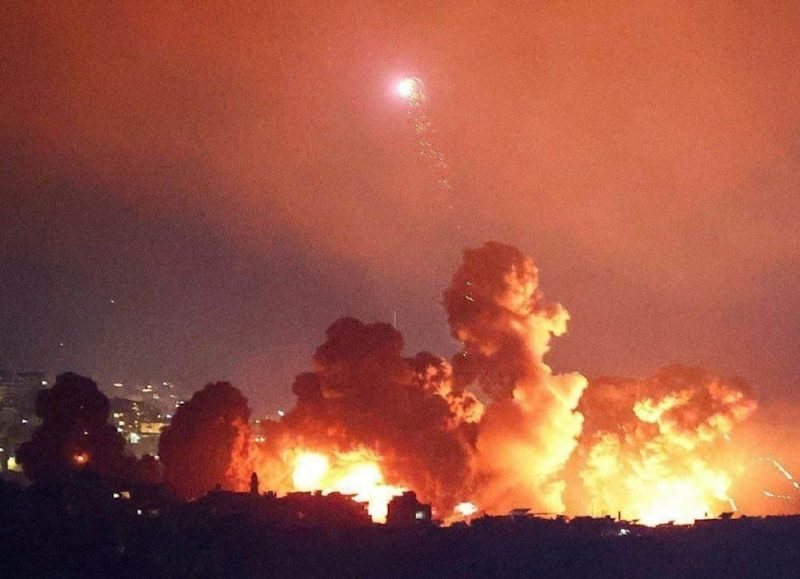
Dozens of loud explosions were heard in the Mrayjeh area in the southern suburb of Lebanon’s capital Beirut, just past midnight on Friday, due to an Israeli air raid.
Residents of Sidon and Tyre in southern Lebanon heard the loud explosions, which speaks to the magnitude of the strikes launched by Israeli warplanes, Al Mayadeen’s correspondent reported.
The targeted site is in close proximity to the Beirut International Airport, which can be seen in the background of circulating footage of the strikes.
It is worth noting that the targeted area is a heavily populated residential area in Lebanon. Al Mayadeen’s correspondent said that residential areas suffered extensive damage as a result of the Israeli strikes.
Several other strikes targeted different neighborhoods in the suburb, including a residential area near a school in the Hadath area.
Nearing 3:00 am (local time), Al Mayadeen’s correspondent reported that the site of the massive Israeli airstrikes remains ablaze, as Israeli drones fly overhead.
A few hours after the strikes occurred, our correspondent said that the targeted area hosted health facilities, emergency services facilities, and schools, adding that this has been one of the most destructive strikes since the beginning of the aggression.
Israeli airstrikes on Lebanon have intensified in recent days, as nearly 20 were launched only a day earlier. In particular, the Israeli Air Force has concentrated its strikes after midnight, terrorizing civilians throughout the nighttime.
These strikes and air raids have also been paired with multiple attempts of incursions into Lebanese border towns. However, the Islamic Resistance in Lebanon has been able to ambush and eliminate invading forces, including 17 on Thursday alone. On Wednesday the Israeli military command admitted that nine of its officers and soldiers were killed in battles with Hezbollah Resistance fighters, most of whom are part of the special forces Egoz Unit.
Hezbollah death traps, attacks on supply lines deal heavy blows to Israeli army
The Cradle | October 4, 2024
Heavy fighting continued in southern Lebanon on 3 October, as Hezbollah fighters fiercely confronted the Israeli army’s incursions into the country’s territory and inflicted casualties among its ranks.
Israeli forces were struck with rockets on the outskirts of the Lebanese town of Odaisseh on Thursday afternoon, one of the towns where troops fell into a bloody ambush just a day earlier.
A Hezbollah guided-missile attack also hit a Merkava tank in the Natoa settlement not long before.
“When an Israeli enemy infantry force attempted to infiltrate towards the cemetery of the town of Yaroun, the Mujahideen of the Islamic Resistance detonated a Sejil explosive device at the advancing force at 12:00 noon on Thursday 10-3-2024, killing and wounding them,” Hezbollah said earlier, marking its 21st statement on 3 October.
Hezbollah announced shortly before that its fighters “detonated an explosive device at 12:00 noon on Thursday 10-3-2024 with a force from the Golani Brigade in the Tartira area in the town of Maroun al-Ras, which was trying to bypass the western side of the town.”
The members of the Golani Brigade force were killed or wounded, the Hezbollah statement added.
“Since dawn on Thursday, the Islamic Resistance fighters have been confronting all attempts by the elite forces of the Israeli enemy army to advance on more than one axis in southern Lebanon with various types of weapons and explosive devices, inflicting heavy losses on them in terms of equipment and personnel,” Hezbollah field sources told Al Manar on 3 October.
The sources added that the fighters continue to prevent any Israeli advance in southern Lebanon with pre-prepared ambushes. They also explained that Hezbollah also continued targeting supply lines and troop gatherings in several Israeli bases and sites along the border.
“The Islamic Resistance fighters targeted on Thursday 10-3-2024 a gathering of Israeli enemy forces in the Avivim settlement with a rocket salvo,” the Lebanese resistance announced.
It also fired rockets at troops in the Al-Bassa settlement and launched a Falaq rocket at Israeli positions in the Shomera settlement, as well as at the Sasa settlement.
Earlier on Thursday, Hezbollah detonated two explosive devices near an infantry force trying to enter the town of Maroun al-Ras.
Tel Aviv has so far admitted to the deaths of eight of its soldiers in southern Lebanon. It claims to have killed dozens of Hezbollah operatives.
A Hezbollah field source told Al Mayadeen on 2 October that more than 80 Israeli soldiers and officers are between dead and wounded, adding that the Lebanese resistance has destroyed five Merkava tanks.
“What is coming is more painful for the enemy,” the field source said.
An Israeli M113 remote control army vehicle was abandoned inside the border village Kfar Kila on Thursday. Hezbollah has forced troops to retreat several times during the incursions that the Israeli army has been attempting to carry out since Wednesday morning.
Israel has meanwhile continued to bombard south Lebanon heavily and issued evacuation orders to residents in over two dozen villages.
Two Lebanese army soldiers were killed in southern Lebanon on 3 October, including one who was helping coordinate an evacuation of civilians with the Red Cross.
Russia sends 33 tons of humanitarian aid to Lebanon amid exodus from south
MEMO | October 3, 2024
Russia has delivered dozens of tons of humanitarian aid to Lebanon, amid the growing series of crises afflicting the country and its population amid Israel’s bombardment of some areas in recent weeks.
According to a statement by Russia’s Emergency Situations Ministry, Moscow this week sent a special Il-76 aircraft to Beirut under the direction of President Vladimir Putin and Emergency Situations Minister, Alexander Kurenkov.
The plane reportedly carried 33 tons of humanitarian aid, which included food, essential goods, medicines and portable power stations, all of which are intended to assist the Lebanese population, especially those who have been fleeing the destruction in the south of the country over the past few weeks and who have been heading further north.
That destruction is the direct result of Israel’s ongoing air strikes on areas throughout Lebanon, particularly in the south where the Hezbollah group is largely based.
Lebanese soldier killed after Israel bombs Red Cross convoy

Israeli attack on Sohor, Lebanon – September 24, 2024
The Cradle | October 3, 2024
At least one member of the Lebanese Armed Forces (LAF) was killed and four paramedics were injured on 3 October when the Israeli air force bombed a Red Cross convoy traveling near the village of Taybeh in south Lebanon as they were evacuating wounded people from the region.
The Lebanese Red Cross announced that the humanitarian convoy was targeted despite coordinating its movements with the UN Interim Force in Lebanon (UNIFIL).
The LAF said a second soldier was injured in the attack.
“One soldier was killed and another injured in an attack by Israeli forces while conducting an evacuation and rescue mission in collaboration with the Lebanese Red Cross in the town of Taybeh, Marjaayoun,” the LAf said in their statement.
The indiscriminate Israeli attack came just hours after an Islamic Health Authority team was hit by an airstrike in central Beirut, killing seven paramedics, rescue workers, and volunteers.
Israel reportedly used internationally-banned white phosphorus munitions in the attack, leaving behind a foul, acidic smell across Beirut.
Nearly 2,000 have been killed by Israel in Lebanon since the start of cross-border clashes last year. About half of the toll has been recorded over recent weeks after Tel Aviv significantly expanded its war against the Levantine nation.
About one million people have been displaced inside the small country, with hundreds of thousands fleeing to neighboring Syria.
Last month, reports in western media showed that Israeli airstrikes have become the leading cause of death for humanitarian workers across the world since 7 October, as the Israeli army is responsible for more than 75 percent of the deaths of aid workers over the past year.
In Gaza, Israeli strikes on humanitarian convoys have become commonplace over the past year, as the army has intentionally targeted aid groups that share their coordinates with authorities regularly.
Later on Thursday, the LAF confirmed another soldier was killed in an Israeli attack on a military post in the Bint Jbeil area of southern Lebanon.
Iran launches unprovoked attack on country that committed year-long genocide and threatened to destroy it
Laura and Normal Island News | October 1, 2024
In harrowing scenes, Iran has launched a salvo of hypersonic missiles at Israel that have rendered the iron dome useless and caused explosions across the country. This unprovoked attack came after Israel peacefully committed a year-long genocide, bombed an embassy, destroyed schools, universities and hospitals, starved 2.1 million civilians, carried out multiple assassinations, murdered 162 journalists and 222 UN workers, built a centre dedicated to the rape and torture of prisoners, launched large-scale terror attacks in Beirut, and invaded Lebanon. Why is Iran like this?
Among Iran’s targets were military installations located in densely-populated areas of Tel Aviv. Outrageously, Israel has been accused by the worst people of using civilians as human shields. What kind of monster would use such insensitive language when people are dying? Please show some compassion.
In a horrific attack, a large number of Israeli civilians were gunned down in Tel Aviv earlier today. Every decent person should condemn this violence towards civilians, and every decent person has. Even the people who laughed when Lebanese children lost their eyeballs in the pager attack have condemned this violence.
Israelis are understandably terrified, having endured for one day what Palestinians have endured for one year. Everyone knows only Palestinians, and maybe Lebanese, should endure this level of suffering. We couldn’t just have… peace.
As all the sensible people keep telling us, a peace deal wouldn’t achieve peace, only this would: World War III. If you don’t understand this, it’s because you’re an idiot and a terrorist lover.
Thankfully, the newspapers have found their ability to name the attacker, now that someone who is not Israel is firing rockets. For a moment, I was worried they were going to describe this terrorism as “mysterious explosions in militant strongholds” and urge restraint from Israel.
Netanyahu was understood to be in good spirits in his luxury bunker as World War III got underway because sure, millions of innocent people around the world are going to die, but this is his best chance of avoiding those corruption charges. And that’s what matters, isn’t it?
Reassuringly, I’m told the prime minister has now been airlifted out of Israel and returned to the safety of his home country, Poland. This is how much Mileikowsky loves his people.
Israel’s de-escalation through escalation strategy is going well, isn’t it? So well, in fact, that I’m having an end of world party tonight. I mean why not? Personally, I think this is much better than the alternative which was not selling arms to Israel. If we’d done that, we wouldn’t have had the pleasure of 12 months of genocide, would we? Thank god the moderates made the right decision!
Anyway, who else can’t wait to be conscripted and used as a meat shield for Israel? If you’re worried you’re too old for conscription, at least your children can be called up. I hope you’re not too attached to them! At least they’ll be sacrificed for the best possible reason: the political career of someone everyone hates.
Netanyahu has reassured us that when Israel loses the war he didn’t start, he is going to push that nuclear button because the tens of thousands he’s killed so far, and the millions he’s about to kill, just aren’t enough. Might as well eradicate every multicellular lifeform on the planet. It’s either that or international arrest warrants and the Hague. I know what I’d choose in his position.
Featured Video

Seyed M. Marandi: U.S. Military DIVIDED? Iran’s Secret Defense EXPOSED
or go to
Aletho News Archives – Video-Images
From the Archives
‘Israel sees Iran as obstacle to its policies’
Press TV – August 25, 2017
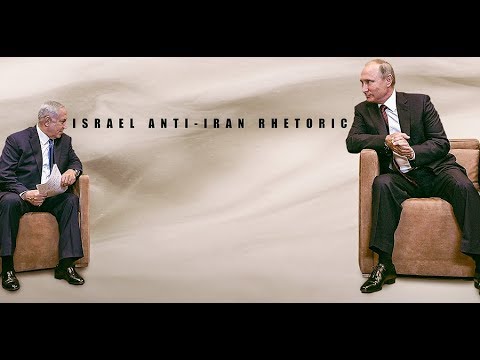
Prime Minister Benjamin Netanyahu has said that Israel felt threatened by Iran’s growing influence in the Middle East. Netanyahu expressed his Iranophobic view in a meeting with Russian President Vladimir Putin in Russia’s Black Sea resort of Sochi on Wednesday. Press TV has asked Scott Rickard, former American intelligence linguist from Tampa, Florida, and Brent Budowsky, a columnist at The Hill from Washington, to give their thoughts on the issue.
Rickard said Tel Aviv is concerned about the fact that the regime could not carry out its old project to spread sectarian divisions and pave the way for dismemberment of the countries in the Middle East region because of the Iranian-led resistance against Israeli policies, not only in the occupied territories of Palestine but also in the whole region.
“Iran is not a threat to Israel whatsoever. The threat that Israel sees is the fact that their Oded Yinon Plan is being put to a hold by Iran,” the intelligence linguist said on Thursday night.
“They (the Israelis) look at Iran as a threat only because they have no influence on their governments and Iran is autonomous and is not under the Zionist influence,” he added.
Since the victory of the Islamic Republic of Iran in 1979, Tehran has been critical of Israel’s policies in the region, whereas “no leaders [of other states] even dared to speak out against Zionism,” Rickard argued. … continue
Blog Roll
 Aletho News
- Striking Iran’s Infrastructure Would Have Little Military Impact – Report
- What’s Behind U.S./Israeli Strikes On Iranian Pistachio Factories?
- Seyed M. Marandi: U.S. Military DIVIDED? Iran’s Secret Defense EXPOSED
- How I fell foul of the BBC thought police
- The End of NATO
- 37 days of war on Iran cost US staggering $42bln, tracker shows
- Baghdad tells Asian refiners, traders to begin loading Iraqi crude amid Iranian exemption
- Under fire, Moscow and Tehran close ranks
- Iran, US receive Pakistan-mediated plan for ceasefire then final deal
- Iran submits demands for end to war as mediators scramble ahead of Trump deadline
- If Americans Knew
- U.N. experts demand Israel release prominent Gaza doctor after reports of ‘severe torture’
- Israel’s Latest Genocide Is Against the Shias of Lebanon. Why Is the World Silent?
- How Eliot Cohen’s influence over U.S. war-making paved the way for Trump’s war crimes in Iran
- Israelis don’t pay for the weapons we ‘sell’ to them — US taxpayers do
- While Distancing from AIPAC, Most 2028 Democratic Hopefuls Are Still Embracing Israel
- A brief history of the Israeli nuclear program, the open secret at the heart of the Iran war
- Israeli Settlers Killed a Palestinian Farmer on His Own Land, in Front of His Father. Yes, Again
- The US-Israeli War on Science is an Assault on our Future
- 100+ International Law Experts Say US Strikes on Iran Violate UN Charter, Could Be War Crimes
- ‘Vile, Horrifying, Evil’: Trump Threatens to Bomb Nation of 90 Million People ‘Back to the Stone Ages’
- No Tricks Zone
- An Inconvenient Tree: Uncovered In Alps… Europe Much Warmer Than Today 6000 Years Ago
- New Study Reports A 60% Slowdown In Greenland’s Ice Loss Rate In The Last Decade
- Low Intensity Tornado Wrecks Major Solar Farm, Creating A Potential Toxic Dump
- New Study Finds Warming Saves Lives…Cold Temperatures 12 Times More Deadly Than Excess Heat
- German Science Blog Accuses PIK Climate Institute Of Hallucinating Climate Tipping Points
- Devastating Assessment Of Comirnaty Vaccine By Former Senior Pfizer Europe Toxicologist
- New Study: CO2 Is ‘Effectively Negligible’ As An Explanatory Climate Change Factor Since 2000
- Former Pfizer Toxicologist Dr. Helmut Sterz Tells Bundestag Hearing Pfizer Vaccine Should Have Never Been Approved
- Energy Expert: Germany’s Nuclear Phaseout Was A “500 Billion Euro Mistake”
- New Research: South Australia’s Mid-Holocene Sea Surface Temperatures Were 4°C Warmer Than Today
 Aletho News