The Resistance Has a Plan for Israel. But on the Other Side, Fantastical U.S. Stratagems Ensure a Cascading Failure
By Alastair Crooke | Strategic Culture Foundation | February 19, 2024
In a speech on Tuesday, Hizbullah leader Seyed Nasrallah said that the Party will continue the border offensive until at least the Gaza massacre stops. The war in Gaza however, is far from over. And Nasrallah warned that even were a ceasefire to be reached in Gaza, “should the enemy perform any action, we will return to operating according to the rules and formulas that existed before. The purpose of the resistance is to deter the enemy, and we will react accordingly”.
Israel’s Defence Secretary Gallant has underlined that contrary to international consensus expectations, he too expects the war in Lebanon to continue. Gallant said the military has stepped up its attacks against Hizbullah by one level out of ten:
“The Air Force planes flying currently in the skies of Lebanon have heavier bombs for more distant targets. Hizbullah went up half a step, whilst we, a full one … We can attack not only at 20 kilometres [from the border], but also at 50 kilometres, and in Beirut and anywhere else”.
It is not clear what ‘red line’ Hizbullah would have to cross for Israel to significantly escalate its response to much higher levels; Israeli leaders have suggested that an attack on a strategic site; or an attack leading to major civilian casualties; or a substantive barrage on Haifa might constitute the breaking point.
Nonetheless, with three military divisions rather than the usual one now deployed in the north of Israel, the IDF has more forces poised for action on the northern border than it has preparing for an incursion into Rafah – at this point. It is clear, as Chief of Staff Halevy has specified, that Israel is “preparing for war” against Hizbullah (more than preparing for Rafah).
Is the threat to Rafah a bluff to put pressure on Hamas to concede on the deal and hostages? One way or another, both Israel’s political and military chiefs are adamant: The IDF will incurse into Rafah – ‘at some point’.
The qualitatively different Hizbullah strike on Safed on Israel’s northern regional command HQ on Wednesday – which resulted in 2 dead and 7 further casualties – is being treated in Israel as the gravest attack since the start of the war, with Ben Gvir calling it a “declaration of war”. Subsequent Israeli attacks killed 11 people, including six children, in a barrage of strikes on villages across southern Lebanon, in retribution for the Safed blitz – with the fierce exchange of fire still continuing.
The ‘Safed Strike’ deep into the Galilee very likely was intended to signal that Hizbullah is not about to capitulate to western demands that it provide Israel with a ceasefire that is intended to facilitate evacuated Israelis to return to their homes in the north. As Nasrallah confirmed in a scathing attack on those external (Western) mediators who serve only as Israel’s lawyers, and neglect to address the massacres in Gaza:
“It is easier to move the Litani River forward to the borders, than to push back Hezbollah fighters from the borders, to behind the Litani River … They want us to pay a price without Israel committing to a thing”.
In these circumstances, Nasrallah clarified that residents of northern Israel will not return to their homes – warning that even more Israelis risk being displaced:
“‘Israel’ must prepare shelters, basements, hotels and schools to house two million settlers who will be evacuated from northern Palestine, [were Israel to expand the war zone].”
Nasrallah outlined what is clearly the agreed Axis of resistance’s overarching strategic plan. (There has been a flurry of meetings between senior Axis principals over the last week, across the region, for which Nasrallah is speaking):
“We are committed to fighting Israel until it is off the map. A strong Israel is dangerous to Lebanon; but a deterred Israel, defeated and exhausted, is less of a danger to Lebanon”.
“The national interest of Lebanon, the Palestinians, and the Arab world is that Israel leaves this battle defeated: Therefore, we are committed to Israel’s defeat”.
Put bluntly, the Axis has its vision of the conflict’s outcome. And it is a “deterred, defeated and exhausted” Israeli State. By implication, it is an Israel that has relinquished the Zionist project – one that is reconciled to the notion of living as Jews between the River and the Sea – albeit with rights no different to others living there (i.e. Palestinians).
On the other side, the western strategic plan, as the Washington Post reports – which the U.S. and several Arab countries hope to present within a few weeks – is a long-term plan for peace between Israel and the Palestinians, including a “time frame” for the establishment of a provisional de-militarized Palestinian “state”:
“Imperatively, it begins with a hostage deal accompanied by a six-week cease-fire between Israel and Hamas. While it may be termed “cessation of hostilities” or an “extended humanitarian pause,” such a cease-fire will signal the de facto end of the war along the lines and scale that it has been fought since 7 Oct.”
The plan addresses “Post-war Gaza”, in terms already well-known. As senior Israeli commentator, Alon Pinkas, affirms:
“Parallel to the announcement U.S., Britain and possibly other countries will consider and eventually make a joint statement of intent by recognizing a provisional, demilitarized and future Palestinian state – without delineating or specifying its borders”.
“Such a recognition does not necessarily contradict Israel’s legitimate and reasonable demand to have overriding security control over the area west of the Jordan River in the foreseeable future … [it constitutes] a practical, timebound, irreversible path to a Palestinian state living side-by-side in peace with Israel … whose recognition could also be submitted to the UN Security Council – as a binding resolution. Once the Arab countries sign off on such a framework, the U.S. believes that neither Russia nor China would veto it …
“Within the “regionalization” phase however, the Americans will craft a regional security cooperation mechanism. Some in Washington imagine a reconfigured region with a new “security architecture” as a harbinger to a gradual Mideast version of the European Union, with greater economic and infrastructure integration”.
Ah – the New Middle East again!!!
Even Alon Pinkas, an experienced former Israeli diplomat, concedes: “If the plan seems too fantastical to you: You’re not alone”.
The basic improbabilities to this plan simply are disregarded. Firstly, Israel’s Finance Minister Smotrich responded to the reported American-Arab plan, saying: “there’s a joint American, British and Arab effort to establish a terrorist state” next to Israel. Second, (as Smotrich further notes): “They see the polls. They see how the absolute majority of Israelis oppose this idea [of a Palestinian State]”; and thirdly, some 700,000 settlers were installed in the West Bank – precisely to block any Palestinian State.
Is the U.S. really going to impose this onto a hostile Israel? How?
And, from the Resistance perspective, ‘a provisional, demilitarized and future Palestinian ‘state’, without delineated or specified borders, is not a state. It is truly a Bantustan.
The reality is that when a Palestinian State might have been a real prospect (two decades ago), the international community turned a willing ‘blind eye’ – for decades – to Israel’s successful and complete sabotage of the project. Today, circumstances are much changed: Israel has moved far to the Right and is in the grip of an eschatological passion to establish Israel on the entire “Land of Israel”.
The U.S. and Europe have only themselves to blame for the dilemma in which they now find themselves. And a policy stance – such as outlined by Biden – plainly said is doing untold strategic damage to the U.S. and its compliant European allies.
Even on the Lebanon track, let us be plain too, Israel’s demands from Lebanon go far beyond a mutual ceasefire. There is no guarantee, even should a ceasefire be reached in Gaza as part of a comprehensive hostage/end-of-war deal, that Nasrallah will agree to withdraw all his forces from the border with Israel, or conversely, that Israel will comply with its commitments.
And with the U.S. defining its Palestinian ‘solution’ as an improbable, provisional, disarmed and wholly impotent Palestinian entity, nestled within a fully militarised Israel, exercising ‘full security overlordship from the River to the Sea’, it would not be surprising were Hizbullah rather, to opt to pursue the Axis’ plan of a defeated, exhausted post-Zionism.
Israeli commentator, Zvi Bar’el, writes:
“Even were the American assumptions to become a working plan, it is still unclear what policy Israel will adopt on Lebanon. Even pushing Hezbollah back so that Israeli communities are no longer within the range of its anti-tank missiles does not remove the threat of tens of thousands of medium and long-range missiles. The deterrence equation between Israel and Hezbollah will continue to determine [the true] reality along the border”.
[The current U.S. working assumption, as presented by the Administration’s special envoy Amos Hochstein in his previous visits to Lebanon], “is that a border demarcation agreement between Israel and Lebanon will result in final and full recognition of the international border and thus deny Hezbollah the formal basis for justifying its continued fight against Israel to liberate occupied Lebanese territories. At the same time, it allows the Lebanese government to order its army to deploy its forces along the border in order to assert its sovereignty over its entire territory and demand that Hezbollah forces pull back from the border”.
This is just more wishful, ‘fantastical’ thinking. And it contains a flaw: Hochstein’s work plan does not include an agreement on the Sheba’a Farms, but only on the ‘Blue Line’ – the border agreed in 2000, but which is not recognized by Lebanon as an international border. If the issue of the Sheba’a Farms is not settled, Hezbollah will not be bound by a limited demarcation accord that omits the Sheba’a area.
Since Hamas’s attack on Israel on 7 October, every stratagem and protocol, dug from some musty West Wing cupboard, and upon which the U.S. leant, has failed. What was supposed to be a limited and compartmentalized military operation in Gaza by the IDF has turned into a regional firestorm. Aircraft carriers sent to deter other actors from getting involved failed with the Houthis; U.S. bases in Iraq and Syria became targets, with attacks on U.S. bases continuing, despite U.S. attempts at delivering deterrent ‘punches’.
Quite clearly, Netanyahu is ignoring Biden, and ‘defying the world’ – as this week’s headlines attest:
“Defying Biden, Netanyahu Doubles Down on Plans to Fight in Rafah” (Wall Street Journal )
“As Israel corners Rafah, Netanyahu defies the world” (Washington Post )
“U.S. won’t punish Israel for Rafah op that doesn’t protect civilians” (Politico )
“Egypt Builds Walled Enclosure on Border as Israeli Offensive Looms: Authorities are surrounding an area in the desert with concrete walls as a contingency for possible influx of Palestinian refugees” (Wall Street Journal ).
Netanyahu has vowed to forge ahead, saying on Wednesday that Israel would mount a “powerful” operation in the city of Rafah, once residents have been “evacuated”. Israelis explicitly say the White House is not opposed to the Rafah blitz, provided Palestinians are given the opportunity to “evacuate” (to where, is left unsaid). (Meanwhile, Egypt is building a refugee camp inside its border, surrounded by concrete walls …).
At this point, all of the U.S.’ various problems – the political polarization, widening war, funding for wars, the alienation amongst the swing-state Arab constituencies and Biden’s sinking ratings – are beginning to feed into, and reinforce, each other. What began as a foreign-policy issue – Israel defeating Hamas – has become a significant domestic crisis. Dissatisfaction within the U.S. at Israel’s conduct of the war is fuelling the growth of significant protest movements. Who can truly believe that yet another trip by Blinken to the region will solve anything at this point, asks Malcom Kyeyune?
It is hard to say where things in the region will stand, a couple of months from now. We have entered a period of breakdown and violence, as the forces pulling apart the old status quo cascade and mutually reinforce one another.
Lebanon rejects demands to push Hezbollah away from southern border
The Cradle | February 6, 2024
Lebanese caretaker Foreign Minister, Abdallah Bou Habib, voiced on 6 February the nation’s rejection of recent Israeli and international demands seeking to push Lebanese resistance group, Hezbollah, north of the Litani River, saying Beirut will not accept ‘partial solutions’ to resolving the cross-border conflict.
“Western countries demand the retreat of Hezbollah for about eight to ten kilometers north of Litani,” Bou Habib said in an interview with Nida al-Watan. “This is a formula that Lebanon rejects. [Beirut] will not accept ‘partial solutions’ that do not bring the desired peace and do not secure stability but will lead to the renewal of the war again and again.”
Instead, the foreign minister called for a “comprehensive implementation of UN Resolution 1701.”
UN Resolution 1701 was issued following the 2006 Israel–Hezbollah war, which called for, among other things, respect for the Blue Line, a border drawn up by the UN in 2000.
Bou Habib expressed Lebanon’s demands in relation to the liberation of Shebaa Farms and the Kfarchouba hills, saying, “What we hear from some foreign ministers of the Western countries is that Israel is not in the question of this withdrawal, and our answer was that Lebanon will only accept a complete solution to all border issues with Israel, and half solutions do not work and will not [be accepted].”
He also demanded that part of a potential deal be for Israel to “stop the air, land and sea violations that have exceeded 30,000 violations since 2006.”
On 5 February, Israeli Foreign Minister Israel Katz said that “time is running out” in relation to a diplomatic solution with Lebanon, adding to his French counterpart Stephane Sejourne during her visit to Israel that “if we do not reach a diplomatic solution on Lebanon, we will move militarily to return the residents of Israeli towns on Lebanon’s borders,”
Hezbollah has recently released statistics showing that over 230,000 settlers had evacuated because of their operations since 8 October.
US special envoy Amos Hochstein paid a visit to Israel to speak with Defense Minister Yoav Gallant in an attempt to develop a plan to de-escalate the crossfire between Lebanon and Israel.
Gallant requested for Hezbollah to be pushed back 8–10 kilometers from the border, an increase of UN forces and Lebanese army in the area, and the means to return settlers to the northern settlements.
Hezbollah’s Secretary General Hassan Nasrallah said during a recent speech in reference to Israeli threats and negotiation talks, “we don’t fear war, and there are no talks before the war on Gaza ends.”
Israel loses control of its borders
By Khalil Harb | The Cradle | January 23, 2024
Israel once reigned supreme on the back of some immovable narratives: widely spun myths of a “promised land,” a “land without a people,” the “only democracy in the Middle East,” and the “only secure place for Jews in the world.” Today, those lofty soundbites lie in tatters, with the occupation state reeling from an unprecedented blow to its foundational ideas.
This transformation has unfolded with unexpected intensity since the 7 October Al-Aqsa Flood resistance operation and Israel’s devastating, genocidal war on Gaza.
But it is not just the challenge of narratives that has Israel on its back feet. For the first time in its 76-year history, Israel’s entire security calculations have been turned upside down: the occupation state is today grappling with buffer zones inside Israel. In past wars, it was Tel Aviv that established these “security zones” inside enemy territory — advancing Israel’s strategic geography, evacuating Arab populations near their state border areas, and fortifying its own borders.
This shift can be attributed to various factors, including vulnerabilities within the so-called “Arab Ring States” (Egypt, Jordan, Syria, and Lebanon). Throughout its history, Israel has consistently exerted military and political dominance, enforcing security measures on neighboring states, with the unconditional backing of allies like the US and Britain.
Israel’s new border realities
But in this current war, Tel Aviv is slowly understanding that the equations and calculations of military confrontation have fundamentally changed — a process that began in 2000 when the Lebanese resistance, Hezbollah, forced Israel to withdraw from most occupied territories in southern Lebanon.
Today, Israel is horrified to find itself retreating from direct confrontation lines with its arch-enemies in Gaza and Lebanon. The formidable capabilities of the resistance now include drones, rockets, targeted projectiles, tunnels, and spanking new shock tactics, casting doubt on the feasibility of Israeli settlers remaining safe in any of Israel’s border perimeters.
There is now one common refrain among settlers in the north and south of occupied Palestine: “We will not return unless security is restored on the border.”
But prospects for their return appear elusive at present. The Israeli Defense Ministry, which pledged a swift and decisive war to safeguard its settlers over 100 days ago, is now actively devising plans to shelter approximately 100,000 people along the northern border, deeper inside its territory. This measure could involve evacuating settlements that may come under fire during any future military escalation with Hezbollah in Lebanon.
This situation implies three critical outcomes: any immediate return of settlers remains unlikely, additional evacuations are anticipated, and numerous Israeli families – in the interim – may establish permanent settlements in other, more secure locations at a much further distance from the borders with southern Lebanon and the Gaza envelope.
Failed objectives and the northern front
Preliminary reports from settler councils in the north assessed settler “displacement” to be around 70,000 in the initial weeks of the conflict. Subsequent reports, however, suggest a vastly higher figure of approximately 230,000.
Against this backdrop, Hezbollah Secretary-General Hassan Nasrallah emphasized a crucial point in his 3 January speech. He referenced Israeli Defense Minister Yoav Gallant’s concern that Israelis are not only reluctant to reside in the border regions, but that their apprehension about remaining in any part of Israel will also likely rise if Tel Aviv’s war fails to achieve its stated objectives.
Indeed, since 7 October, a significant toll has been exacted on Israeli forces, with 13,572 “soldiers and civilians” wounded in the battles in Gaza and along the northern border with Lebanon, as reported by Yedioth Ahronoth.
One suspects those numbers may be underreported. Skepticism has recently grown over the accuracy of the Israeli Ministry of Health’s data, with various experts, independent sources, and media investigations suggesting a considerably higher casualty count. The IDF Handicapped Organization, for example, estimates that approximately 20,000 individuals have been disabled in the ongoing war — a number much higher than the health ministry’s findings.
The secrecy surrounding Israeli casualties is particularly evident on the Lebanese war front, where data is virtually nonexistent, and Tel Aviv’s military censorship tightly controls all information flows. This leads to a critical question regarding Israel’s ability to establish strategic “border” equations as a compensatory measure for what appears to be a military and political setback in achieving its stated war goals — which include the elimination of Hamas and the release of all captives.
Moreover, doubts arise about Israel’s capacity to wage a major war in the north given its clear shortcomings in its southern military campaign, in which it faced heavily besieged adversaries with multiple vulnerabilities. The Lebanese resistance, in comparison to its Gazan counterparts, boasts considerable and many unknown military capabilities, which it can exercise from within a sovereign state that is neither besieged nor landlocked. Furthermore, Hezbollah, which singlehandedly routed Israel from its territories in both 2000 and 2006 — makes it plain that it has thus far revealed and utilized only a fraction of its new military capabilities.
Decolonization in progress
In November, Hezbollah’s introduction of the Burkan missile, a domestically-made weapon with a range of up to 10 kilometers and destructive power of 500 kilograms of explosives, adds a potent dimension to the confrontation.
While Hezbollah has primarily targeted Israeli military barracks and troop gatherings with the Burkan, hundreds of guided missiles such as Kornet and Katyusha rockets have been employed with precision against specific targets within empty residential settlements, extending up to 10 kilometers in geographic depth from Lebanon’s border.
As of the onset of 2024, Hezbollah has conducted over 670 military operations against all 48 Israeli outposts, spanning from Naqoura in the west to the occupied-Shebaa Farms in the east, along with 11 rear military positions.
This is a major advancement in the Lebanese resistance’s border strategy. For 15 years — from 1985 to 2000 — Israel struggled to defend its “border strip” in southern Lebanon. Today, it faces many hundreds of attacks on its positions in northern Palestine, but fears opening a second war front that could complicate its already militarily draining Gaza campaign.
The so-called “defense” line along the border with Lebanon is now heavily compromised. Deemed insufficient for safeguarding the hundreds of thousands of Israeli settlers in the north, the recently displaced residents are demanding assurances about the future safety of that zone and their ability to return.
In December, the head of the Upper Galilee Regional Council revealed that the Israeli government had effectively created a buffer zone approximately 10 kilometers wide by evacuating towns in the north. This area, stretching from Mount Hermon in occupied Syria to Ras al-Naqoura, is reported to be nearly devoid of residents, with Israeli forces predominantly present.
At the so-called Kibbutz Manara border, a settler told Hebrew Radio North that 86 of the settlement’s 155 homes had been completely destroyed by Hezbollah rocket fire, raising the question of whether settlers would even have homes to return to.
Even if Israel dares to launch a full-scale aggression against Lebanon, just as it has faltered in besieged Gaza for 17 years, it will not be able to guarantee its success in achieving its objectives on the Lebanese front.
A land of false promises
The days when Israel could impose security arrangements on its Arab neighbors through military force and political machinations are gone.
Previously, Israel attempted to establish a security strip inside southern Lebanon through operations like the 1978 “Litani Operation.” This vision ultimately collapsed in 2000, with the occupation state’s humiliating withdrawal from Lebanon.
Israel now seems to be revisiting this approach — via American intermediaries — aiming to clear the southern Litani of resistance factions by brandishing the threat of war against all of Lebanon. This is a perilous strategy, particularly given the precarious position of its army in Gaza.
Israel’s tactics of bulldozing and bombing entire residential areas in the northern and eastern parts of the Gaza Strip, ostensibly to create a security strip with a depth of up to 2 kilometers, have hit a hard wall. Even its US ally has raised objections about the territorial delineation from Gaza, and the military efficacy of such measures. But more importantly, the Lebanese and Palestinian resistance appear prepped to mirror Tel Aviv’s ploys by eliminating Israeli habitation in the Gaza envelope and northern Palestine.
‘Destroy our neighborhoods, and we will destroy yours.’ This is surely not a response expected by Israel, whose military and political leadership are unaccustomed to repercussions for their aggressions. This new tit-for-tat that the occupation state appears unequipped to counter only further highlights Israel’s fragility and irreversible decline.
Settlers refuse return to Gaza envelope: ‘Hamas not yet deterred’
The Cradle | January 19, 2024
Hebrew media reported on 19 January that tens of thousands of evacuated settlers from the Gaza envelope are refusing to return to their homes.
A former resident of the Sderot settlement, located less than a mile from Gaza, told Israel’s Channel 13 in an interview that settlers “will not return to Sderot in the current situation.”
This is “not only due to the threat of rockets … no one knows if the Palestinians from Gaza can reach us. No one knows where their tunnels extend to,” the settler said.
“I have been living in Sderot for years, and I cannot count the times they told us that Hamas is deterred.”
Sderot is one of the Gaza envelope settlements that was stormed by resistance fighters during the outbreak of Operation Al-Aqsa Flood on 7 October. Rockets struck the settlement at the onset of the attack, as Palestinian fighters made their way in.
The Hamas fighters seized the Sderot police station, taking around 30 of its force as captives. The fighters then waged a 20-hour battle with Israeli troops in which all of the policemen were killed. The Israeli military then destroyed the station, bringing it down on top of those inside.
Since being evacuated in October, Sderot and other Gaza envelope settlements have continued to be hit by rocket attacks launched by the Palestinian resistance in Gaza.
According to Hebrew newspaper Yedioth Ahronoth, the Israeli government is facing great difficulty in convincing the residents of the Gaza envelope settlements to return to their homes.
Last month, Israeli public broadcaster KAN reported that Tel Aviv was offering financial grants to those willing to return to the settlements located between four and seven kilometers from the Gaza border.
A meeting was held between Prime Minister Benjamin Netanyahu and the council chiefs of the Gaza envelope settlements on 16 January, according to a Channel 12 report.
The council chiefs reportedly demanded that “the process of returning … be delayed or extended until the summer and the start of the new school year, and for the state to continue to fund their stay in temporary accommodation until then,” The Times of Israel said.
Netanyahu also reportedly told the council chiefs during the meeting that the war could potentially continue until 2025.
“Netanyahu said he accepted their request, promised that financial assistance to residents would be applicable then as well, and instructed the relevant officials to draw up the necessary framework.”
Meanwhile, Hamas’ Qassam Brigades and other groups in Gaza are nowhere near defeat, continuing to engage the Israeli army in fierce clashes and deadly ambushes across the entirety of the Gaza Strip, including in north Gaza, where Israel has announced a scale-back of operations.
The scale-back came as Israeli officials were boasting that Hamas has been “dismantled” in the north. Despite this, the fighters have been able to fire large rocket barrages at Israel from northern Gaza.
Lebanese daily Al-Akhbar, reporting on 19 January, cited sources in the Palestinian resistance who said that the Israeli ground operation has achieved nothing – particularly in the north. The report added that in the north, Hamas has been able to replenish its supplies and rebuild its ranks.
And just as the Israeli settlers of the Gaza envelope refuse to return to their homes, so too do the settlers of northern Israel, where hundreds of thousands have also been displaced by Hezbollah’s operations on the Lebanese border.
BBC HardTalk: Professor Marandi on the Gaza Genocide and its regional implications
January 16, 2024
Professor Seyed Mohammad Marandi discusses the Israeli genocide in Gaza, Yemen and the conflict in the Red Sea, Hezbollah’s border war, and Iraq. He explains the regional implications as well as the possibility of escalation and regional war.
Asymmetric Warfare: Why the Houthis Can Beat the Collective West
By Russell Bentley – Sputnik – 14.01.2024
Dr. Michael Parenti once said, “Economic violence is physical violence in slow motion.” The economic sanctions against Iraq in the 1990’s led directly to the deaths of half a million Iraqi children. Economic sanctions can be a weapon as deadly as any artillery shell or cruise missile.
The Houthis might at first appear to be vastly outmatched by the US/UK armada that has struck Yemen, but militarily and economically, the US and Europe are actually much more vulnerable than the Houthis. To put it simply, in both economic and military terms, the US, UK and Europe, and Israel, have a lot more to lose.
The Houthis are not alone – Hezbollah, considered to be one of the most effective fighting forces in the world today, has an estimated 100,000 highly trained and motivated and very well armed soldiers in Lebanon, and is already at (undeclared, but de facto) war with Israel, and will probably escalate in the next few days. In October, 1983, Hezbollah was able to kill 305 US and French occupation soldiers at a cost of only 2 KIA on the Hezbollah side.
Of the US and French soldiers, 220 were US Marines, the greatest single loss in one day of US Marines since the Battle of Iwo Jima in 1945. In the 2006 Hezbollah-Israeli War, in which Israel invaded southern Lebanon, Hezbollah was able to inflict “unacceptable casualties” on Israeli forces, which resulted in the withdrawal of IDF forces and the signing of UNSC1701. While the Lebanese casualties were significantly higher than Israeli, the conflict is generally seen as a tactical and strategic defeat for Israel. Israel and their US/EU allies would do well to remember both of these battles before continuing to escalate an already extremely volatile situation beyond the point of no return.
Escalation between Hezbollah and the IDF on Lebanon’s southern border will not only expand the current area of conflict into the eastern Mediterranean, it can quickly become a serious threat to the Israeli city of Haifa, only 20 miles from the Lebanese border. Haifa is Israel’s 3rd largest city, with a population of around 300,000. The Port of Haifa is Israel’s second largest by cargo tonnage, and the Haifa oil refinery (the largest, and one of only two in Israel) processes more than 66 million barrels of crude oil per year, more than a million barrels per week. The port, and especially the refinery would be prime targets, and significant damage to either, especially the refinery, would have serious repercussions for the Israeli economy.
The “massive attack” by US/UK naval forces against the Houthis involved airstrikes, as well as approximately 100 cruise missiles, at a cost of more than $1 million each. According to reports published by the Houthi military command and Western media, the attack killed five Houthis. Now, do the math. The US and UK just spent a collective $100 million to kill 5 Houthis and escalate and exacerbate an already volatile situation. Based on assurances from the Houthi government that only Israeli-connected shipping was under threat, the majority of Red Sea shipping traffic had actually continued the Red Sea unhindered.
This is no longer the case. As of January 13th, after the US/UK attacks and their possible continuation, the International Association of Independent Tanker Owners (Intertanko), which represents almost 70 per cent of all internationally traded oil, gas and chemical tankers, said in an advisory to members to “stay well away” from the Bab al Mendab strait, and for vessels travelling south via the Suez Canal to pause north of Yemen. This major disruption of tanker traffic may well have an upward influence on oil prices, coming as it does right on the heels of Saudi Aramco’s announcement of a $2 per barrel discount beginning in February.
The Huthis don’t even have to shoot at any more ships – just the threat of the possibility of Houthi or coalition missiles being fired has been enough to disrupt Red Sea shipping traffic, which carries 12% of all global trade goods, and a staggering 30% of all container goods. It is actually the US/UK “coalition” that has escalated the situation to dangerous levels that now interfere with much more shipping, including tanker traffic.
Palestine: EU’s Borrell bats for US
BY M. K. BHADRAKUMAR | INDIAN PUNCHLINE | JANUARY 11, 2024
The diplomatic arena of the Middle East was dominated in the past week by the US Secretary of State Antony Blinken’s regional tour to Türkiye, Jordan, Qatar, the UAE, Saudi Arabia, Israel, the West Bank and Egypt. It was a ‘road show’ to rally the leaders of the Arab countries behind the US but culminated in an acrimonious meeting in the West Bank between Blinken and the Palestine President Mahmoud Abbas marred by “quarrels and arguments,” according to Sky News Arabia.
The region is gripped by angst that Israel may provoke a fateful expansion of the conflict in the Gaza Strip to Lebanon and Iran after the assassination of a number of senior military figures from Hamas and Hezbollah in the recent days, which overlapped Blinken’s presence in the region and underscored Tel Aviv’s disdain toward diplomatic niceties. Two videos from the West Bank showed Israeli troops shooting a 17-year-old boy and repeatedly running over the dead body of a man they had shot last Friday.
The US fears the expansion of the conflict in the Middle East. Yet, Blinken was burdened with the contradiction that the rhetoric of Washington’s continued support for the Israeli operation is so visibly at odds with the words of President Joe Biden last week that he was doing “quiet” work with the Israeli government “to get them to significantly reduce their presence and largely withdraw from the Gaza Strip.”
Blinken claimed that “the (Arab) countries agreed to work together to help the Gaza Strip stabilise, chart a political path for the Palestinians and work towards long-term peace, security and stability in the region.” At the same time, he conceded that to do this, it is necessary to end the conflict in Gaza and identify a concrete path to the creation of a Palestinian state. Blinken flagged that the countries of the region are still interested in normalising relations with Israel, but only on the terms of a settlement of the Palestinian-Israeli conflict. Arguably, these could be incipient signs of a road map emerging.
The killing of senior Hamas and Hezbollah officials indicates that Israel is not making significant progress on the battlefield and the leadership is under compulsion to gather ‘trophies’ and claim ‘victory’. In a hybrid war, such killings will not significantly weaken the resistance movement. An effective leader was appointed overnight to head the IRGC’S Quds Force when the legendary Iranian general Qassem Soleimani was assassinated in 2020.
That said, the probability of a direct conflict between Israel and Hezbollah should not be overestimated, since the latter is well aware that an outbreak of hostilities is precisely what suits Tel Aviv. Iran also sizes up Israel’s calculus to drag the US into the war. According to reports, Iran has supplied cruise missiles to Hezbollah.
Against such a tumultuous backdrop, in a carefully choreographed sideshow, the European Union’s foreign policy chief Josep Borrell also appeared in the region at the same time as Blinken. Borrell’s destinations were Lebanon and Saudi Arabia. The EU announcement said that Borrell’s mission “will be an occasion to discuss all aspects of the situation in and around Gaza, including its impact on the region, especially the situation at the Israeli-Lebanese border, as well as the importance of avoiding regional escalation and of sustaining the flow of humanitarian assistance to civilians.”
While speaking to the media in Beirut, Borrell was highly critical of Israel’s war in Gaza and called for a pause “that could become a permanent one.” He also said, “It is imperative to avoid a regional escalation. It is absolutely necessary to avoid Lebanon being dragged into a regional conflict.” Borrell saw his mission as one to take stock of the situation and “to contribute to a way out of the crisis.”
Borrell met with the Head of Mission and Force Commander of the United Nations Interim Force in Lebanon (UNIFIL) General Aroldo Lazaro, a compatriot from Spain. Indeed, there has been some talk of deploying a peacekeeping force on Israel’s northern border with Lebanon.
Meanwhile, Al Jazeera reported, citing a government source in Beirut, that Borrell also had an unpublicised meeting with a delegation from Hezbollah led by Mohammad Raad, a member of the Lebanese legislature. Conceivably, this might have been a key item on his itinerary in Beirut.
While the US and several European countries, including Germany, the UK, Czech Republic, Austria, among others, regard Hezbollah as a terrorist organisation, the EU restricted itself to merely adding Hezbollah’s so-called “military wing” to its terror list, leaving the door open to interact with the movement’s political leadership if need arises.
That came in the wake of the group’s alleged 2012 suicide bus bombing in Burgas, Bulgaria, which killed five Israeli tourists and a Bulgarian driver. During a debate on the crisis situation in Lebanon last July, the European Parliament, for the first time, adopted a resolution calling for the EU to add the whole of Hezbollah to its list of banned terrorist organisations, but that hasn’t yet been acted upon.
Borrell’s meeting with the Hezbollah delegation would only have been with the knowledge of the Biden administration — it could even be providing a thinkable (and actionable) leitmotif of Borrell’s trip to Lebanon. BBC had reported a week ago on secret contacts between Israel and Hezbollah as well.
At any rate, by a coincidence, Borrell happened to be in Saudi Arabia when Blinken arrived there, and the two of them had a meeting. Later, in a prepared statement to the media after talks in Saudi Arabia with foreign minister Prince Faisal, Borrell also took a nuanced stance apropos Hamas, saying,
“And now we have to stop the killing of civilians in Gaza. We have to stop this great number of casualties. Hamas has to be eradicated. But Hamas is an idea, it represents an idea, and you cannot kill an idea. The only way of killing an idea –- a bad idea — is to propose a better one, to give a horizon to the Palestinian people, to their dignity, to their freedom, to their security, which has to go hand in hand with the security of Israel.”
Clearly, Borrell strove to break the ice by engaging with Hezbollah. Considering that the EU has been the US’ junior partner on major international issues, Borrell’s mission can be considered as substantive aimed at opening a diplomatic track to ease the Israel-Lebanon border tensions.
Equally, Borrell and Prince Faisal rekindled the so-called Peace Day Effort launched in September last year jointly by the EU with Saudi Arabia, the League of Arab States, Egypt and Jordan as an initiative “to reinvigorate the peace process in the Middle East.”
A joint statement issued at that time on the sidelines of the 78th session of the UN General Assembly, in the presence of almost fifty Foreign Ministers from around the world sought “to produce a “Peace Supporting Package” that will maximise peace dividends for the Palestinians and Israelis once they reach a peace agreement, … thus incentivising earnest efforts to reach it.”
As EU foreign policy chief, Borrell navigated international turbulence and divisions within the 28-member bloc to make Europe more united and turn it into a diplomatic heavyweight, but with patchy success. Of course, Ukraine spoiled the party. Palestine could well be Borrell’s last waltz. Borrell’s five-year term in Brussels ends in December.
Iraq’s anti-terror Kata’ib Hezbollah warns US, Israel against attacks on Lebanon, Yemen
Press TV – January 9, 2024
Iraq’s anti-terror group Kata’ib Hezbollah has underscored the unity of the resistance front in the face of US-Israeli plots in West Asia, warning against any attacks on Yemen, Lebanon and other Muslim countries across the region.
Jafar al-Hussaini, spokesman for Kata’ib Hezbollah movement, made the remark in an interview with Lebanon’s al-Mayadeen television network on Tuesday as he pointed to the enhanced unity and cohesion among the Axis of Resistance in the wake of October 7 Operation al-Aqsa Storm, the largest military operation by Palestinian resistance groups against Israel in decades.
“After the al-Aqsa Storm, the Zionist-American enemy will no longer be able to fight alone against a country or a group. The Axis of Resistance is very coherent and has a clear vision and a clear role,” Hussaini said.
“If the enemy thinks of any foolishness against Lebanon, the Iraqis will be present on the field in numbers and equipment,” he added. “We will not allow Israel or others to attack any country from the Axis of Resistance or Islamic countries. In case of any attack on Yemen, the attacks on Americans and their allies will be unlimited.”
Referring to the months-long resistance of Palestinians against Israel’s genocidal war on Gaza, the spokesman for Kata’ib Hezbollah warned that the anti-terror Iraqi group would continue with its strikes on the occupied territories.
“What is important for us now is to stop the occupying regime’s massacres against our brothers in Palestine and to lift their siege. The destruction of the enemy’s strongholds and interests in the region will not stop if the aggression does not stop in Gaza,” Hussaini said.
The spokesman also pointed to the major Iraqi resistance group’s combat readiness and its support for Palestinians in the besieged territory since the Israeli aggression started more than three months ago.
“After the Al-Aqsa storm, the relationship with the Palestinian resistance deepened. The capabilities of the Islamic resistance in Iraq are far beyond the imagination of the enemy,” he said.
“Iraq’s Islamic Resistance has targeted critical targets in the occupying regime with drones. The resistance used a cruise missile that was built for the first time and hit a vital target in Haifa,” he added, pointing to the weekend Iraqi attacks on the port city in the northwestern part of the occupied Palestinian territories.
During his interview with al-Mayadeen, Hussaini also announced the expansion of the resistance front to other areas across the region and the world.
“During the coming years and decade, the scope of this axis will expand and reach East Asia and some Caucasus countries,” he said. “Our battle with the Americans continues and will not stop after the end of al-Aqsa Storm.”
The Israeli regime waged the war on Gaza on October 7 after Hamas-led Palestinian resistance groups carried out the surprise Operation Al-Aqsa Storm against the occupying entity in response to the Israeli regime’s atrocities against Palestinians.
The relentless military campaign has killed more than 23,000 people, most of them children and women. Nearly 59,000 Palestinians have also been wounded.
The Tel Aviv regime has imposed a “complete siege” on the territory, cutting off fuel, electricity, food and water to the more than two million Palestinians living there.
Israel about to engage in two-front war
By Lucas Leiroz | January 9, 2024
In recent days there has been a major escalation in the Middle Eastern conflict. Israel has launched a series of attacks against targets outside Palestine, including Lebanon, resulting in the deaths of key members of anti-Zionist organizations. Israel’s targeted assassinations have been seen as an affront to Lebanese national sovereignty, increasing the risks of an open war between the Zionist state and Hezbollah.
Israel has been bombing its neighboring countries since the war began in October. However, the frequency and brutality of these raids has grown significantly in recent weeks. Lebanon has become one of the main targets of Israeli attacks, especially in strikes targeting strategic public figures. In one of these operations, Wissam al-Tawil, deputy head of the Radwan group, a special unit of the Shiite militia, was murdered. Al-Tawil was a high-ranking member of Hezbollah, which means there will certainly be a retaliation.
A few days earlier, a brutal Israeli attack in Beirut had left six high-ranking Hamas members dead, including the Palestinian organization’s deputy head, Saleh al-Arouri. At the time members of Hezbollah were not targeted, and the strike was aimed at killing Hamas militants gathered in Beirut. However, the fact that the attack was carried out on Lebanese soil obviously generated outrage among members of the Shiite militia, who promised retaliation for the violation of Lebanese sovereignty.
Hassan Nasrallah, general secretary of Hezbollah, made two statements about these events. According to him, Hezbollah is already fighting Israel, but is using only a small percentage of its combat potential. The militia’s involvement is “limited”, being focused on neutralizing Israeli intelligence targets on the border. For now, the objectives of these operations are, according to Nasrallah, to generate military pressure against Israel and help the Palestinians by eliminating IDF’s resources. However, Nasrallah made it clear that if Israel continues to violate Lebanese sovereignty, the group will launch a “war without restrictions”, using full power against Zionist troops.
Apparently, Israel is not interested in de-escalation. The attacks on Lebanon have continued even after Nasrallah’s warnings – and more targeted killings of Hezbollah members could happen at any time. In fact, Tel Aviv is currently in a complicated military situation. The war in Gaza has become “unwinnable”, as the debris from the bombings have severely damaged the IDF itself, preventing the flow of armored vehicles and creating a network of hiding places and barricades that favor Hamas.
There is currently a guerrilla war in Gaza, with members of the Palestinian Resistance having the advantage, as they know the terrain better and are skilled at carrying out surprise attacks and hiding among the debris of buildings and tunnel networks. Although Israel has managed to destroy the physical structure of Gaza, the consequences of its attacks have mainly affected civilian people and have not been extremely effective in neutralizing Hamas and other Palestinian militias. The result is an uncomfortable situation, with Israel involved in a permanent war of attrition.
Given this, Israel is betting on the internationalization of the conflict as a way of “winning” the war. Since it is not being successful in Gaza, the Israeli government hopes to generate new outbreaks of hostilities by launching attacks against Lebanon and Syria. The aim is to bring new actors into the war, creating a situation of total regional conflict that makes intervention by Israel’s Western partners “inevitable”.
The main problem with this Israeli “strategy” is that the consequences could be devastating. It will not be easy to garner Western support and justify an intervention in the conflict, as global public opinion is outraged by Israeli genocidal actions in Gaza. Furthermore, Hezbollah is showing patience and strategic mentality by avoiding symmetrical responses to Israeli attacks. The group is trying not to engage in an all-out war, as the IDF is already in a delicate situation and there is no need to open a new front. Hezbollah’s focus appears to be to launch surgical strikes across the border, delaying more involvement as long as possible.
To get a strong reaction from Hezbollah, Israel will have to further increase the brutality of its raids against Lebanon. And this will be a serious problem in the Zionist strategy, since by doing this Tel Aviv will be justifying Hezbollah’s reactions, and there will therefore be no legal arguments for the West to mobilize collectively to support Israel. In fact, without full Western support, Israel will not be able to fight a two-front war, being a real catastrophe for the IDF itself.
This is further evidence of how Israel took wrong actions at the beginning of the conflict. Instead of only responding to Hamas’ “Operation Al Aqsa Flood”, Tel Aviv chose to launch a campaign of genocide and territorial expansion, sinking into a prolonged war that will not be won so easily.
Lucas Leiroz is a journalist, researcher at the Center for Geostrategic Studies, geopolitical consultant.
You can follow Lucas on X (former Twitter) and Telegram.
Israel’s Gaza withdrawal, a prelude to full-out war
By Hasan Illaik | The Cradle | January 4, 2024
At the start of the new year, Israel’s occupation army began implementing the withdrawal of a large portion of its forces from the northern Gaza Strip.
This withdrawal did not mean the end of the war on Gaza, and it certainly did not suggest calm on the Lebanese-Israeli front. On the contrary, reducing the pace of the war in the Gaza Strip increases the possibilities of an Israeli war on Lebanon.
The battles taking place between the occupation army and Hezbollah along the southern Lebanese border since 8 October, in support of the resistance in Gaza, have been increasing in intensity day after day.
Washington and Tel Aviv have sought to maximize pressure on Hezbollah by warning of the possibility of a large-scale war between Israeli forces and the Lebanese resistance. These tactics were in effect long before the assassination of Hamas’ Deputy Head of the Political Bureau Saleh Al-Arouri on 2 January by an Israeli air strike in Dahiyeh, the southern suburb of Beirut. The killing of Al-Arouri now increases the chance of the war expanding.
The third stage is coming
The first stage of Tel Aviv’s war was the mass destruction and occupation of northern Gaza; the second stage is the occupation of key points in the south of the Gaza Strip, where Palestinian civilians have flocked for safety. The current troop withdrawal from the territory’s north means that the Israelis are cementing their southern plans and preparing to move on to phase three: the long, low-intensity war.
As it enters the third stage, the occupation army intends to maintain a geographical buffer surrounding the northern Gaza Strip. It also plans to continue occupying the Gaza Valley area (central Gaza), while completing its operations in Khan Yunis in the south.
The fate of the Philadelphia axis – or Salah ad-Din Axis – a strip of land on the border between Gaza and Egypt which Israel wants to control, will be left to deliberations between Tel Aviv and Cairo. This is to ensure that incidents do not occur that lead to tension between the two parties, as well as to guarantee that refugees do not flow from the south of the Gaza Strip towards Sinai.
Israel’s ground withdrawal from northern Gaza is taking place primarily because the occupation army’s target bank has been depleted. All targets prior to the start of the war have been destroyed, and all new operational targets have been bombed.
Despite this, the Palestinian resistance continues to carry out operations against Israeli forces. These organizations remain relatively unscathed in the entire area of the northern Gaza Strip, which will increase the ability of the resistance to inflict losses on occupation ranks, now and in the future.
This clear Israeli loss – in terms of Tel Aviv’s stated war objectives – has been made evident by two basic factors: First, that the occupation army cannot ‘cleanse’ the northern Gaza Strip house by house or tunnel by tunnel, because this process will take years, expose more of its soldiers to danger, and cannot be implemented without further displacing the entire population of northern Gaza or massacring them. It should be noted, despite Israeli attempts to portray matters otherwise, that hundreds of thousands of civilians are still present in the north.
Second, the Israeli government needs to gradually re-inject reserve soldiers into the country’s economy to jump-start it, and to ensure that the productive sectors are not exposed to damage from which recovery will take a long time. This, despite the fact that the US and much of Europe appear ready to assist Israel’s economy, if necessary.
These measures are being taken because Israel has patently failed to achieve the two main goals of its war, namely, eliminating the Hamas-led resistance in Gaza, and liberating the Israeli prisoners captured by the resistance on 7 October.
There remains a basic motive that must be noted: The Israeli army is currently putting all its efforts into implementing a US decision to push the war from its first and second phases into the third phase before the end of January 2024. This requires the war to be managed at a slower boil, drawing less attention to Israeli carnage and the mass suffering of Palestinians.
After three months of brutalities, Washington has assessed the Israeli army as unable to eliminate the resistance or the possibilities of regional escalation, and has noted the significant harm caused to the US administration of Joe Biden as he enters the presidential primary season.
An escalation with Lebanon
As the Israeli occupation army moves to focus its operations on the southern Gaza Strip, the intensity of military operations along the Lebanese border between Hezbollah and the Israeli army has also been ratcheted up.
Hezbollah increased its targeting of occupation soldiers, both in their visible locations and inside the settlements of northern Palestine.
The information capabilities of Hezbollah have developed in both sophistication and accuracy during the past months. The Lebanese resistance fighters have employed missile types not previously utilized, which have a greater range and better destructive capacity than previous generations.
On the other hand, Tel Aviv has doubled the firepower it used in southern Lebanon. The Israelis continue to limit their operations to the area south of the Litani River, and are not expanding their scope except to target resistance groups that carry out strikes across the border. In recent weeks, the occupation army’s destructive power has risen dramatically since the early days of the battle.
By increasing its strikes, Israel’s leadership seeks to inflict the greatest possible number of losses among the ranks of the resistance fighters, as well as to spread panic among southern Lebanese residents – displacing more of them, and destroying the largest possible number of homes. This places a burden on both Hezbollah and the Lebanese state in the reconstruction process after the end of hostilities.
But there is a longer-term goal to this Israeli military performance. The government in Tel Aviv, according to its official statements, wants Hezbollah to withdraw from the south of the Litani, to ensure the security of Israeli settlers in northern Palestine who abandoned their homes, either voluntarily or under evacuation orders from their army. By some estimates, the number of Israelis fleeing their settlements in occupied north Palestine has reached more than 230,000 people.
In parallel with the public statements, messages began arriving in Beirut, from the US and from European capitals, demanding what they call ‘the implementation of UN Security Council Resolution 1701,’ meaning Hezbollah’s withdrawal from the south of the Litani River.
According to emerging information, Tel Aviv is betting that Hezbollah will be deterred, as the 2019 economic collapse from which Lebanon has not yet recovered and the country’s long-running internal tensions are factors that will ultimately prevent Hezbollah from waging war.
Israel is therefore hoping that Hezbollah will yield to pressure and meet its demands regarding the withdrawal of its fighters from the border area with occupied Palestine.
The Israeli assessment of Lebanese affairs preceded its assassination of Al-Arouri in Beirut on 2 January. But in the same way that Israel military commanders and politicians have under-estimated and dismissed armed Palestinian resistance initiatives within occupied lands prior to 7 October, they continue to cling to a dated Israeli calculus that Hezbollah will never fully retaliate, or that it will only do so in a way that stops short of war.
Granted, Hezbollah does genuinely seek to limit the scope of the military confrontation, and has often pushed for a Gaza ceasefire to end hostilities throughout the region. Hezbollah is equally concerned about not disrupting the lives and livelihood of southern residents.
But while Hezbollah takes into account the complex political and economic Lebanese reality, it is not prepared to make concessions. Sources in the resistance axis say that Israel, as Hezbollah sees it, is not in a position to go to war with Lebanon when it cannot even compensate or digest the massive strategic losses it has incurred from Operation Al-Aqsa Flood.
Despite its desire to not expand the war, Hezbollah has already begun to prepare for it. Hezbollah’s party statement, issued after the assassination of Al-Arouri, indicates this, and field measures and developments will begin to appear in time.
What Israel was unable to achieve in Gaza (restoring deterrence) while facing the tight ranks of the region’s Axis of Resistance, it will most certainly not be allowed to gain in Lebanon.
The first signs of this will appear in the plans that Hezbollah is expected to carry out in response to Israel’s 2 January raid on Dahiyeh to assassinate Al-Arouri – the first of its kind since August 2006 – and to which its Secretary-General Hassan Nasrallah had previously threatened he would respond.
The bottom line is that Tel Aviv’s assessment of a war with Lebanon is based on its reading that Hezbollah wishes to prevent a major confrontation at any cost. Not only is this calculus wrong, but it has also muddled Israeli minds to the point where this may itself lead to the outbreak of a destructive war between the two sides.
Who else was killed by Israel alongside Al-Arouri in Beirut?

Hamas office in Beirut, Lebanon following Israeli drone attack in which Hamas deputy leader Saleh Arouri was killed on Jan. 3, 2024. [Houssam Shbaro – Anadolu Agency]
MEMO | January 3, 2024
The deputy head of the Hamas political bureau, Saleh Al-Arouri, was not alone when he was martyred on Tuesday in an Israeli missile strike on an office in the southern suburb of the Lebanese capital, Beirut. The Hamas movement mourned him as well as the others, who included two of the most prominent commanders of the movement’s armed wing, Al-Qassam Brigades.
Among the seven killed by Israel was Azzam Al-Aqraa, Abu Abdullah, known as Ammar, who was the head of Al-Qassam outside Palestine. He was from the town of Qabalan in Nablus Governorate in the occupied West Bank. As one of the 400+ Palestinian men exiled to Marj Al-Zuhur by Israel in 1992, he was a former prisoner.
Another of those martyred by Israel in Beirut yesterday was Samir Fandi, known as Abu Amer, who was in charge of Al-Qassam operations in Lebanon. Fighters from Al-Qassam Brigades in Lebanon participated in Operation Al-Aqsa Flood on the border between 1948-occupied Palestine and Lebanon, when several were martyred. Israel’s Channel 14 revealed last July that Israel’s Shin Bet security agency had placed Fandi on the assassination list.
Al-Aqraa’s name appeared in the Israeli media several times, most recently in October 2022, when the apartheid state accused one of the Palestinian detainees in prison of having met him in Turkey and planned to work on infiltrating the Israeli Cellcom communications network.
A source told Arabi 21 that the other martyrs who were accompanying the senior officials and were killed in the Israeli raid were Ahmed Hammoud, Mahmoud Shaheen, Muhammad Al-Rayes, and Muhammad Bashasha.
Immediately after the news of the martyrdom of Al-Arouri and his companions was announced, marches took place in all of the refugee camps in Lebanon, including the Rashidieh camp in Tyre, from which Samir Fandi hailed.
Deputy head of Hamas politburo assassinated in Israeli strike
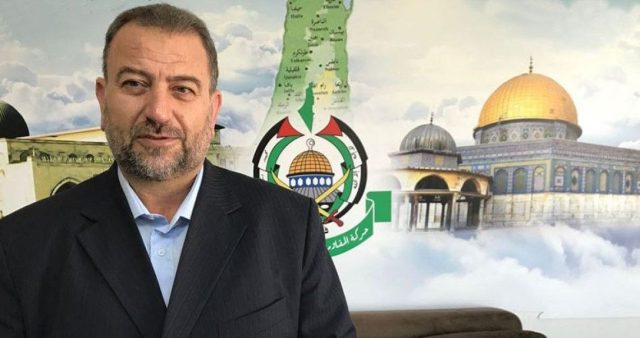
Press TV – January 2, 2024
The deputy head of the political bureau of the Palestinian resistance movement Hamas has been assassinated in an Israeli drone attack in the southern suburb of the Lebanese capital of Beirut.
Lebanon’s al-Mayadeen television network reported on Tuesday that Saleh al-Arouri was killed as a result of an explosion in a building in al-Musharrafieh district in southern Beirut.
Arouri was killed in a “treacherous Zionist strike,” the television network said, adding that the blast took place after an Israeli drone bombed the building with three missiles, killing six people and wounding several others.
Hamas confirmed the martyrdom of Arouri as the chief of staff of the resistance movement in the occupied West Bank and the besieged Gaza Strip, praising him as the “architect” of Operation al-Aqsa Storm.
Hamas vowed in a statement that the killing of the resistance movement’s deputy will not “undermine the continued brave resistance” in Gaza.
“It proves once more the utter failure of the enemy to achieve any of its aggressive goals in the Gaza Strip,” Izzat al-Rishq, a member of the political bureau of Hamas, said in the statement.
The Israeli regime launched its devastating war on the Gaza Strip on October 7 after the territory’s Hamas-led Palestinian resistance groups carried out a surprise retaliatory attack, dubbed Operation Al-Aqsa Storm, against the occupying entity.
The Israeli military has also been carrying out attacks against the Lebanese territory since then, prompting retaliatory strikes from Lebanon’s resistance movement Hezbollah in support of the Palestinian people in the Gaza Strip.
The movement has vowed to keep up its retaliatory operations as long as the regime continues its onslaught on Gaza.
The relentless Israeli military campaign against Gaza has killed more than 22,000 people, most of them women and children. At least 57,000 individuals have also been wounded.
The regime has largely cut off access to water, food and power supplies to Gaza.
Featured Video

Chinese jet fuel and the myth of energy independence
or go to
Aletho News Archives – Video-Images
Book Review
Former Insiders Criticize Iran Policy as U.S. Hegemony
By GARETH PORTER | CounterPunch | February 27, 2013
“Going to Tehran” arguably represents the most important work on the subject of U.S.-Iran relations to be published thus far.
Flynt Leverett and Hillary Mann Leverett tackle not only U.S. policy toward Iran but the broader context of Middle East policy with a systematic analytical perspective informed by personal experience, as well as very extensive documentation.
More importantly, however, their exposé required a degree of courage that may be unparalleled in the writing of former U.S. national security officials about issues on which they worked. They have chosen not just to criticise U.S. policy toward Iran but to analyse that policy as a problem of U.S. hegemony. … continue
Blog Roll
 Aletho News
- What is fueling unrest across the EU?
- Why no power can undermine Iran’s eternal dominance over the Strait of Hormuz
- Is The War Against Iran Over?
- Iran war will leave long-term ‘scar’ on Wall Street, investors warn
- How Iran decimated US power projection in West Asia: Military lessons of 40-day war
- Iran’s report details US-Israeli war crimes in targeting schools, hospitals, livelihoods
- NATO’s Slow Fracture: How Trump’s Iran War Exposed the Instrument of Hegemony
- Chinese jet fuel and the myth of energy independence
- Ukraine Sea Drone Fired From Libya Hit Russian Tanker in Mediterranean
- IRGC: Iranian forces launched no attacks during ceasefire hours
- If Americans Knew
- Military aid to Israel emerges as the latest political litmus test for Democrats
- The only Palestinian children’s rights organization closes following years-long Israeli campaign against it
- ‘I Can’t Forget the Smell’: Lebanese Reel After Israel Kills Over 300 in Single Day
- DNC Shoots Down Resolutions Calling Out AIPAC and Limiting Arms to Israel
- TCN: Is Israel Blackmailing President Trump?
- Israel killed at least 303 Lebanese yesterday – who were they? Daily Update
- Amnesty: Urgent – Protect Lebanese civilians from brutal escalation in Israeli attacks
- Is The War Against Iran Over?
- Inside the Israeli army’s propaganda wing
- Hundreds of Gaza Amputees Stranded in Legal Limbo
- No Tricks Zone
- New Study: No Linear Warming Or Glacier Retreat Along Northern Antarctic Peninsula Since 1980s
- An Inconvenient Tree: Uncovered In Alps… Europe Much Warmer Than Today 6000 Years Ago
- New Study Reports A 60% Slowdown In Greenland’s Ice Loss Rate In The Last Decade
- Low Intensity Tornado Wrecks Major Solar Farm, Creating A Potential Toxic Dump
- New Study Finds Warming Saves Lives…Cold Temperatures 12 Times More Deadly Than Excess Heat
- German Science Blog Accuses PIK Climate Institute Of Hallucinating Climate Tipping Points
- Devastating Assessment Of Comirnaty Vaccine By Former Senior Pfizer Europe Toxicologist
- New Study: CO2 Is ‘Effectively Negligible’ As An Explanatory Climate Change Factor Since 2000
- Former Pfizer Toxicologist Dr. Helmut Sterz Tells Bundestag Hearing Pfizer Vaccine Should Have Never Been Approved
- Energy Expert: Germany’s Nuclear Phaseout Was A “500 Billion Euro Mistake”
 Aletho News