Israeli firms transform cars into intelligence devices: Reports
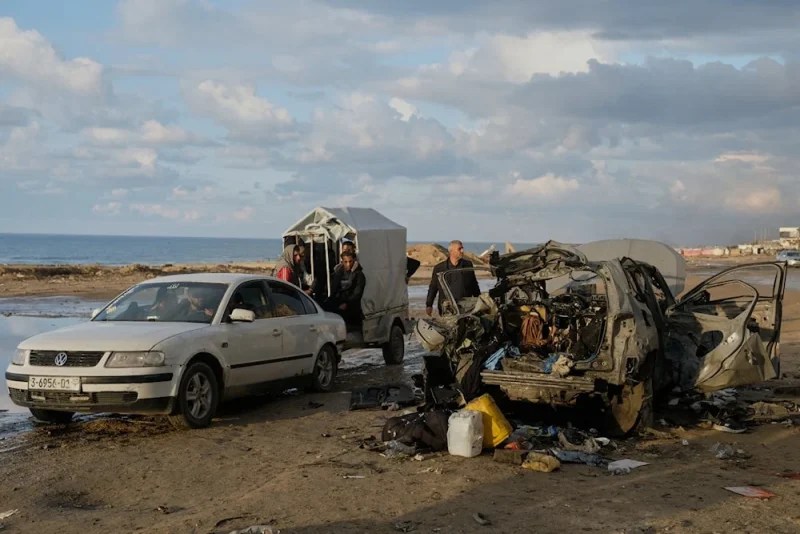
Al Mayadeen | February 17, 2026
Modern vehicles have evolved into internet-connected digital ecosystems, a transformation that is reshaping the global intelligence market, with “Israel” paying special attention to this rising domain, according to a new investigation by Haaretz.
In intelligence circles, information harvested from vehicles is known as “CARINT,” short for car intelligence. Today’s vehicles function as “computers on wheels,” equipped with built-in SIM cards, GPS systems, Bluetooth connectivity, and multimedia platforms that continuously transmit data.
The report reveals that at least three Israeli companies are operating in this expanding sector, developing tools that enable government clients to track vehicle movements in real time, cross-reference vast databases, and identify specific targets among thousands of cars on the road.
Industry sources cited in the investigation described the use of AI-powered “data fusion” systems that combine vehicle telemetry, roadside camera feeds, advertising data, and cellular metadata to construct comprehensive intelligence profiles. Rather than directly hacking a device, agencies are increasingly assembling what sources describe as a surveillance mosaic from legally or commercially available data streams.
The case of Toka
Among the companies identified is Toka, co-founded by former Prime Minister Ehud Barak and former Israeli military cyber chief Yaron Rosen.
According to documents and industry sources cited by Haaretz, Toka developed a product capable of infiltrating a vehicle’s multimedia system, pinpointing its location, and remotely activating microphones or dashboard cameras. The system was reportedly approved by “Israel’s” Security Ministry for presentation and eventual export.
The company said that as part of its 2026 product roadmap, it no longer sells the hacking tool.
Experts noted that exploiting vehicle vulnerabilities remains technically complex, as each manufacturer employs distinct digital architectures. However, the possibility of remote access to in-car microphones and cameras has raised acute privacy and security concerns.
Another Israeli firm, Rayzone, has reportedly begun selling vehicle-tracking tools through its subsidiary TA9. Unlike offensive hacking products, Rayzone’s system focuses on aggregating and cross-referencing data, including SIM-card tracking, Bluetooth signals, and license-plate recognition feeds.
The investigation suggests that the intelligence industry is gradually shifting away from high-profile phone-hacking technologies associated with firms such as NSO Group and toward large-scale, AI-enabled data analytics platforms.
In the United States, companies such as Palantir Technologies analyze license plate databases and vehicle registries, integrating them into broader intelligence systems. Israeli firm Cellebrite also works extensively with US law enforcement agencies in extracting and processing digital evidence, including vehicle-related data.
Vehicle intelligence expanded post Oct. 7
The Haaretz investigation further highlights that in the aftermath of Operation al-Aqsa Flood, Israeli authorities, with support from the private sector, developed advanced capabilities to locate vehicles stolen from army bases and border communities. According to the report, these tools were later integrated into military systems.
The article also points to China’s longstanding regulatory framework requiring domestic car manufacturers to transmit vehicle data to state authorities. It further notes that the Israeli Occupation Forces imposed restrictions on certain Chinese electric vehicles entering military facilities, citing security concerns.
Security analysts warn that the accelerating digitization of vehicles not only expands surveillance capabilities but also increases cybersecurity risks. Ethical hackers have previously demonstrated, in controlled environments, the ability to manipulate steering systems or disable engines remotely. Industry sources cited in the investigation indicate that some government clients are increasingly expressing interest in remote vehicle-disabling technologies.
At global intelligence exhibitions such as ISS World, often referred to as the “Wiretapper’s Ball”, artificial intelligence and real-time data fusion dominate discussions. AI systems now enable the rapid processing of millions of disparate data points, including vehicle telemetry, audio streams, and video feeds, transforming them into actionable intelligence with unprecedented speed.
Industry insiders argue that as vehicles become more connected, they will inevitably play a more central role in intelligence gathering. Privacy advocates, however, caution that the same connectivity that enhances consumer convenience may also underpin a powerful and potentially intrusive surveillance infrastructure.
The Haaretz investigation concludes that while directly hacking individual vehicles remains technically complex, AI-driven aggregation of vehicle-generated data could make such intrusions increasingly unnecessary, raising significant questions about privacy, regulation, and the future of digital mobility.
Palantir, Dataminr help build Gaza AI-Driven digital prison system
A +972 Magazine investigation reveals that US firms Palantir and Dataminr are embedded in the US-Israeli post-war plan for Gaza through the Civil-Military Coordination Center (CMCC), a US-run hub coordinating Trump’s 20-point plan. A Palantir “Maven Field Service Representative” tied to Project Maven has been assigned to the center, integrating battlefield AI into Gaza’s future control structure.
Project Maven fuses satellite imagery, drone feeds, intercepted communications, and metadata into an AI platform described as “optimizing the kill chain.” Rights groups argue these AI-enabled systems have accelerated the genocide in Gaza, scaling up killings with minimal human oversight. UN figures show nearly 70% of verified fatalities are women and children, with entire families wiped out in strikes allegedly guided by AI systems.
Palantir has expanded cooperation with Israeli occupation forces since 2024, doubling its Tel Aviv presence and supporting war-related missions. Amnesty International lists the company among firms whose services helped facilitate genocide and starvation in Gaza. Dataminr, specializing in real-time social media surveillance, has also been integrated into the framework, feeding AI-driven threat intelligence into the evolving security architecture.
Under the so-called “Alternative Safe Communities” model, Palestinians would be forcibly relocated into fenced, heavily monitored compounds under US-Israeli control. Within these zones, AI systems would track phones, movements, and online activity, flagging individuals as “security risks,” effectively turning Gaza into an AI-driven digital prison and kill-list system.
This architecture has been compared to Nazi concentration camps in its logic of isolating, surveilling, and managing an entire population as a security threat, reducing civilians to data points under total algorithmic control.
Three-Year-Old Child Among Four Martyrs as Israeli Enemy Strikes Car in Southern Lebanon
Al-Manar | February 9, 2026
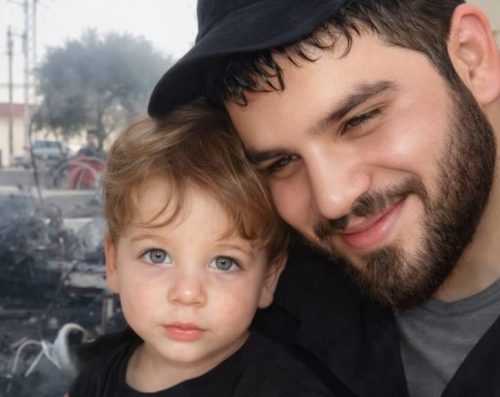
A drone strike in southern Lebanon killed three civilians on Monday, including a three-year-old child, as the enemy continued its daily violations of the ceasefire—once again placing children and non-combatants within its target bank.
Al-Manar’s correspondent reported an Israeli drone strike targeting a car in the southern town of Yanouh, in the district of Tyre, leaving casualties.
Ambulances rushed to the scene of the attack as pillars of smoke rose in the area, according to our correspondent.
Lebanese Health Ministry then said the strike in Yanouh killed three citizens including a 3-year-old child.
Local media reported that the victims were Ali Jaber, 3, his father Hasan and Ahmad Salameh, a retired Lebanese army soldier.
The killing of a three-year-old child in a drone strike underscored the nature of the Israeli enemy’s daily aggression in southern Lebanon, where civilians, particularly children, continue to be targeted in flagrant violation of the 2024 ceasefire.
Later on Monday, Al-Manar correspondent reported a citizen was martyred as occupation forces opened fire at him in the outskirts of Ayta Al-Shaab border town.
The town also witnessed bomb attacks as Israeli gliders dropped at least five strun grenades in the area.
Earlier on Monday, Israeli forces infiltrated into the southern town of Habbarieh, assaulted the house of Jamaa Islamiya official Atwi Atwi and abducted him after beating him along with his wife.
Atwi, who was a former mayor of the town, was taken to the occupied territories, as announced by the occupation army.
The Toxic Border: How Israel’s Chemical Spraying is Reshaping Life in South Lebanon
By Robert Inlakesh | The Palestine Chronicle | February 8, 2026
Reports that Israeli aircraft sprayed chemical agents along the Lebanese border — later identified as toxic defoliants — have intensified concerns over environmental damage, civilian harm, and possible violations of international law, with similar incidents also reported in southern Syria.
Key Takeaways
- UN peacekeepers suspended patrols after being warned that aircraft would spray chemical agents near the Blue Line.
- The sprayed substance was later identified as a toxic herbicide linked to cancer.
- The campaign is seen as serving both military land-clearing and civilian displacement purposes.
- Similar chemical spraying incidents have been reported in southern Syria.
- Rights groups say targeting farmland may constitute a violation of international humanitarian law.
- Spraying along the Blue Line
Israel is waging chemical warfare against both Lebanese and Syrian lands, a campaign that may not only have dire environmental repercussions but also inflict long-term health problems on local civilian populations.
On February 1, the United Nations peacekeeping forces stationed in southern Lebanon – UNIFIL – were forced to suspend their patrols along what is known as the Blue Line that demarcates the de facto Israeli-Lebanese border. They did so out of safety concerns for their soldiers, after Israel informed them it would be using planes to spray chemical agents in the area.
Tel Aviv initially informed UNIFIL that the chemical agent was “non-toxic.” Nevertheless, the UN reiterated its “concerns” about flight movements in the area, stressing that such activities violate UN Security Council Resolution 1701.
It wasn’t long until it was discovered that the agent being sprayed was, in fact, toxic. Allegedly, the specific agent used, for which a toxicology test was conducted, is a defoliant and herbicide that is linked to cancer.
Israel is currently on its way to violating the Lebanon ceasefire, which went into effect on November 27, 2024, nearly 10,000 times. This makes it the most violated ceasefire deal in recorded history.
Israeli strikes, targeting north to south and even the capital city of Beirut, have killed hundreds. Despite this, there have been no recorded violations by Hezbollah or the Lebanese Army.
A Strategy of Erasure
What is so consequential about Israel’s use of chemical agents in southern Lebanon is that it has two primary purposes. The first is to kill everything it touches, to clear the land for military purposes. The second is that it is being used as a form of collective punishment, a likely intention behind which is to drive Lebanese citizens from their homes.
Perhaps the most horrifying part of this is that there is a dark history of such chemicals being used for the same purposes elsewhere. The most infamous case is that of the US military spraying Agent Orange, also a herbicide and defoliant, during the Vietnam War.
As a result of the callous use of Agent Orange, both the civilian population of Vietnam and US soldiers alike ended up contracting serious chronic health problems. One of the results was birth defects, cancers such as Hodgkin’s lymphoma, and even neurodegenerative diseases. This was in addition to what was labeled ecocide in the country.
While some may argue that the Israelis are simply using chemical agents to clear the land, as a security precaution, this is not plausible. Israel has the capability and has historically used heavy equipment to clear the land.
Deploying chemical agents, which it is of note that they haven’t done so on their side of the Blue Line, is clearly a malicious attack on Lebanese lands and the civilian population living there.
Beyond Lebanon
Israelis have frequently expressed their dismay over the immediate return of Lebanese villagers to their destroyed homes in the south, particularly near the unofficial border, as Israel has never declared its borders.
Meanwhile, a considerable percentage of Israelis, formerly living in settlements like Kiryat Shimona, that were hit the hardest by Hezbollah during the last war, have refused to return.
It has not only been Lebanon that has been subjected to such chemical agent attacks, but southern Syria has also fallen victim to the Israeli military spraying similar chemical agents on its lands.
While the Lebanese government has come under criticism for often ignoring the plight of its citizens in the south, the Syrian government completely refrains from addressing the ongoing occupation and war crimes committed in the south of their country.
The refusal of Damascus to even voice its concern about the chemical warfare being waged against its people and lands has made it less of an issue than in Lebanon, as Beirut has raised its voice.
“The deliberate targeting of civilian farmland violates international humanitarian law, particularly the prohibition on attacking or destroying objects indispensable to civilian survival,” commented the Switzerland-based Euro-Med Human Rights Monitor.
It also demanded accountability for Israel’s “large-scale destruction of private property without specific military necessity amounts to a war crime and undermines food security and basic livelihoods in the affected areas.”
– Robert Inlakesh is a journalist, writer, and documentary filmmaker. He focuses on the Middle East, specializing in Palestine.
Israeli Merkava tank invades outskirts of Yaroun in southern Lebanon
Al Mayadeen | January 30, 2026
An Israeli Merkava tank, accompanied by two military vehicles, invaded the outskirts of the southern Lebanese town of Yaroun on Thursday, according to Al Mayadeen’s correspondent.
The correspondent said the Israeli force positioned itself near a residential home on the edge of the town. The house was inhabited prior to the arrival of the Israeli armored unit, raising concerns over civilian safety amid the incursion.
The Lebanese citizens inhabiting the house fled at the sight of the approaching occupation force.
This violation marks a further escalation along Lebanon’s southern border in recent months, where Israeli ground incursions have repeatedly violated Lebanese territory and sovereignty, as well as the ceasefire agreement, under the pretext of security operations.
Fresh attacks target southern Lebanon
Last week, Israeli occupation forces (IOF) carried out fresh attacks across southern Lebanon, targeting multiple towns including Kfar Chouba, Blida, Kfar Kila, and Odeisah, in continued violation of Lebanese sovereignty and international resolutions.
Al Mayadeen’s correspondent in southern Lebanon reported that artillery shelling targeted the outskirts of Kfar Chouba, located in the Hasbaya district. Meanwhile, occupation forces stationed at the Bayad Blida border post opened machine gun fire toward the eastern edges of the town.
Further reports confirmed that Israeli forces bombed the town of Kfarkela and carried out two additional strikes on Odeisah, located in the Nabatieh Governorate.
Continued violations of UN resolution 1701
An Israeli drone strike on the town of al-Mansouri in the Tyre district on Friday morning resulted in one martyr and one injured, according to Al Mayadeen’s correspondent in southern Lebanon.
This comes after an Israeli drone strike on Thursday targeted a vehicle traveling on the road between the towns of Zawtar and Mayfadoun in the Nabatieh district, resulting in the death of a citizen. In a separate escalation, Israeli warplanes carried out air raids on multiple locations in the Bekaa region of eastern Lebanon on Thursday.
It’s worth stressing that the repeated airstrikes and drone attacks come as part of a wider Israeli campaign targeting areas in southern Lebanon, the Bekaa Valley, and the southern suburbs of Beirut. These actions are clear violations of UN Security Council Resolution 1701, which calls for a cessation of hostilities and respect for Lebanese sovereignty.
Riyadh and Hezbollah: A rapprochement forged in fire
As Lebanon becomes an unlikely stage for a slow Saudi pivot toward pragmatism, regional rifts with allies and foes alike compel Riyadh to recalculate its hard lines.
By Tamjid Kobaissy | The Cradle | January 29, 2026
Lebanon, once more, reflects the fault lines tearing through the Arab world. But this time, the ground is moving. The era of blockades and isolation is ceding to a colder, more calculated politics – and at its core lies an unlikely dialogue: between Hezbollah and the Kingdom of Saudi Arabia.
As The Cradle observed last month on ‘Hezbollah and Saudi Arabia’s uneasy détente,’ behind-the-scenes communication between the two has laid groundwork for a quiet thaw. Recent developments have accelerated this shift, compelling the kingdom to reassess both threats and alliances. The signals are no longer limited to backchannels.
They are becoming visible across Lebanon’s political, economic, and media fronts. This suggests that rapprochement is no longer a theoretical discussion but an unfolding process reshaping both the Lebanese and regional scene.
Economic tremors, political signals
Saudi repositioning on Lebanon and Hezbollah has taken shape across multiple fronts. Economic pressures are easing, political language is softening, and discourse on the resistance movement’s disarmament is adapting to new realities. These changes track with the Saudi–Hezbollah talks and reflect broader drivers such as domestic demands in Lebanon, urgent regional recalculations, and Hezbollah’s calibrated outreach.
Sources tell The Cradle the talks have already produced results, with Riyadh stepping away from its previous economic blockade. That shift is becoming tangible across Lebanon.
The economic front offers the clearest evidence. During a visit to Beirut by Iranian Foreign Minister Abbas Araghchi, flanked by a senior economic team, Lebanese President Joseph Aoun signaled readiness to deepen Beirut–Tehran ties. In Lebanon, such moves usually require nods from Riyadh or Washington.
Lebanese Prime Minister Nawaf Salam, known for his Saudi ties, announced the launch of reconstruction in southern Lebanon within two weeks, with plans to accelerate rebuilding efforts. This follows parliamentary approval of a World Bank loan – an indication of intent to harness regional momentum. Salam also flagged upcoming agreements with Riyadh.
Simultaneously, the long-dormant file of Lebanese depositors was revived in cabinet through a proposed financial reorganization and deposit recovery law. This legislation lays the groundwork for closing the financial gap and gradually repaying deposits.
The reopening of this file after years of stagnation reflects not only domestic pressure but also a new political and financial environment shaped by waning external pressure and the rollback of the economic suffocation policy previously imposed on Lebanon.
Changing tones in Beirut
Political and media rhetoric in Lebanon is also adjusting, particularly among factions with Saudi leanings. The Lebanese Forces (LF) offer a striking example. Lebanon’s Foreign Minister Youssef Raji’s tone during Araghchi’s visit was notably tempered compared to previous Iranian delegations. While his broader stance may still reflect internal party lines, it is important to note that the LF is not entirely Saudi-aligned and intersects with Washington’s foreign policy.
Equally notable is the near absence of the usual Saudi-linked media campaigns. Outlets and figures typically vocal during such visits stayed quiet. That silence reflects a broader repositioning.
Media sources also say Saudi Ambassador to Lebanon Waleed Bukhari has privately conveyed Riyadh’s interest in engaging Lebanon’s Shia leaders, moving beyond the image of a sectarian boycott.
The weapons file: A vocabulary shift
A recalibration is also visible in official discourse around Hezbollah’s arms. Where previous rhetoric focused on “disarmament” or exclusive control south of the Litani River, a new phrase has emerged: weapons “containment” north of the Litani. This lexical shift reflects a more tempered and strategic approach.
On one level, it indicates closer coordination – both internally and with external stakeholders – and a move away from maximalist demands. On another, it aligns with a broader political posture from Riyadh to reduce friction and avoid escalation.
During a recent visit to Beirut, Saudi envoy Yazid bin Farhan told Lebanese officials that while Riyadh supports arms being under state authority, the process must proceed with reason and avoid internal disruption. This was widely read as a message tailored to Hezbollah.
His remark that Saudi Arabia has “no problem … with any of the Lebanese components,” mirrored Hezbollah’s framing of a national defense dialogue. More pointedly, his call for calm in the process echoed the group’s insistence that change must come through consensus, not coercion.
Wariness of war, new parliamentary cues
Another clear signal of Saudi recalibration is its growing resistance to military escalation in Lebanon. Once expressed obliquely, this position is now surfacing in both private meetings and public statements from Saudi-aligned figures.
Reports from Israel’s Channel 12, citing unnamed Saudi royals, pointed to Riyadh’s refusal to countenance any military operation against Lebanon. Such red lines bolster Hezbollah’s messaging and complicate Tel Aviv’s threat matrix.
This shift was also evident in the 18 January parliamentary session, where quorum battles pitted Hezbollah and the Amal Movement – referred to in Lebanon as the Shia Duo – against the LF. Samir Geagea, the long-standing LF leader and vocal advocate for Hezbollah’s disarmament, reportedly urged the Saudi envoy to discourage Sunni MPs from attending. The attempt fell flat. Sunni MPs aligned with Riyadh showed up anyway.
In this context, Hezbollah Political Council member Ghaleb Abu Zainab tells The Cradle:
“In principle, we want our relations with Arab states to be positive – built on mutual respect and shared interests in Lebanon and the Arab world. This, of course, includes the Kingdom of Saudi Arabia, which holds significant Arab and Islamic weight in the region.”
Riyadh’s Persian Gulf equation is shifting
The Hezbollah track is one part of a larger Saudi recalibration, driven by new regional pressures. Yemen, Sudan, the Red Sea, and Lebanon are all areas where Riyadh now sees mounting friction with longtime Gulf ally, the UAE.
In Yemen, Saudi Arabia remains uneasy. While it sought to contain Emirati actions in the south, Abu Dhabi’s moves – including a controlled pullback from certain zones – have sparked concern. The fugitive leader of the now-dissolved Southern Transitional Council (STC), Aidarus al-Zubaidi’s remarks from Abu Dhabi about pursuing southern independence, coupled with the assassination attempt on Giants Brigade commander Hamdi Shukri al-Subaihi and subsequent protests, have raised alarms in Riyadh.
In Sudan, Saudi Arabia is backing the official government in Khartoum, preparing for a potential confrontation with the UAE-supported Rapid Support Forces (RSF). Riyadh facilitated a $1.5-billion deal with Pakistan to supply weapons, air defense systems, and drones to the Sudanese army, signaling its intent to push back on Emirati encroachment – part of a broader regional re-ordering described as a response to Abu Dhabi’s growing alignment with Tel Aviv.
Meanwhile, Israel’s recognition of Somaliland and reports of a possible military presence there have added another layer of anxiety – a new Israeli footprint near the Red Sea.
Confronting Emirati ambitions
Lebanon is not exempt. Saudi officials now suspect that Abu Dhabi is maneuvering for influence in Beirut. The LF, with its alignment to the UAE–Israel axis, is part of this concern. The scandal involving “Abu Omar” – a man posing as a Saudi prince who reportedly ran Lebanese political operations – reinforced concerns that the UAE filled the Saudi void during Riyadh’s absence.
Sources note that Qatar has also intensified its presence in Lebanon, funding figures like those in the Free Patriotic Movement. Whether this is in coordination with Riyadh or not, it contributes to a crowded Gulf rivalry playing out in Beirut.
In response, Riyadh is reassessing its Lebanese allies. The “Abu Omar” affair reportedly prompted the kingdom to question the seriousness of some of its former clients – many of whom failed to deliver either politically or in terms of security. This realization has made Riyadh more cautious and less inclined to repeat past mistakes.
The kingdom is now leaning on Lebanese Parliament Speaker Nabih Berri’s Ain al-Tineh as a channel to Hezbollah – a more direct and realistic track. Hezbollah remains the decisive force in Lebanon, and Riyadh now appears willing to operate within that reality.
Even former Lebanese prime minister Saad Hariri’s future is under reconsideration. A political source stresses that a return through the Emirati channel would lead to deep divisions, especially within the Hariri household itself, as the Emirati project does not align with his personality or political legacy. One of the main reasons for his withdrawal from public life was his refusal at the time to follow the Saudi call for a civil war – a demand that reflected the Emirati approach. Therefore, the Saudi option remains the most realistic path for Hariri, capable of reintegrating him into the political scene and ensuring the unity of the Sunni community under Riyadh’s umbrella rather than fragmenting it through external projects.
These developments mark a broader unveiling of the long-simmering Saudi–Emirati rivalry. Riyadh is now moving quickly to neutralize manageable disputes and focus on what it increasingly sees as its main challenge: Abu Dhabi.
In the end, it is clear that the Saudi–Hezbollah rapprochement is not a sudden development but the product of mounting regional pressures and internal constraints that have made pragmatism not a choice – but a necessity.
Craig Murray, Reporting from Venezuela

By Adam Dick | Peace and Prosperity Blog | January 26, 2026
Last year, British journalist and former diplomat Craig Murray provided valuable reports from Lebanon, documenting — among other things — death and destruction brought by Israel’s military. Now, Murray is on the ground in Venezuela, doing what he did in Lebanon last year — providing access to information that tends to be filtered out or distorted in much reporting.
Indeed, in his first report from Venezuela that he posted at his website on Monday, Murray provided, based on his crisscrossing of the nation’s capital, an account that the situation there is very different from what is commonly reported. “I have now been in Caracas for 48 hours and the contrast between what I have seen, and what I had read in the mainstream media, could not be more stark,” stated Murray to begin his report. Expanding on this observation, Murray wrote later in his report:
Pretty well everything that I have read by Western journalists which can be immediately checked – checkpoints, armed political gangs, climate of fear, shortages of food and goods – turns out to be an absolute lie. I did not know this before I came. Possibly neither did you. We both do now.

As in Lebanon last year, Murray is set to provide a view into matters much of the media is not interested in sharing with people around the world. Murray explained in his report:
When I was in Lebanon a year ago, the mainstream media were entirely absent as Israel devastated Dahiya, the Bekaa Valley, and Southern Lebanon, because it was a narrative they did not want to report.
Disgracefully, the only time the BBC entered Southern Lebanon was from the Israeli side, embedded with the IDF.
The BBC, Guardian or New York Times simply will not send a correspondent to Caracas because the reality is so starkly different from the official narrative.
To be more informed about what is happening in Venezuela, it would be a good practice to check periodically Murray’s website where he is planning to post more written and video reports in the coming weeks.
Lebanese Resistance will inevitably triumph: Former President Lahoud
Al Mayadeen | January 22, 2026
Former Lebanese President Emile Lahoud affirmed that Lebanon remains committed to the current ceasefire, while “not a day goes by without the Israeli occupation violating it.”
Speaking amid ongoing tensions, Lahoud condemned on Thursday the continued aggression by “Israel”, accusing it of operating under a long-standing strategy of deception backed by US support. “For 80 years, this enemy has relied solely on deception, using unwavering American support as its cover,” he said.
Lahoud emphasized that Lebanon has two options: either accept the reality imposed by “Israel” or stand in solidarity with those under attack, particularly in the South and the Bekaa.
He reminded the Lebanese people of the country’s historic milestones, namely the liberation of South Lebanon in 2000 and the Resistance’s victory in 2006. “Our capabilities were also limited at that time, but internal unity around a single national position made those victories possible,” he said.
Addressing those he described as “playing the role of instigators from within, against their own people,” Lahoud warned that their actions would ultimately backfire. “This internal agitation will return to harm them first,” he said, accusing them of aligning, willingly or not, with the interests of the enemy.
Lahoud urged all Lebanese factions to take note of what even their adversaries have come to recognize. “Look at your undeclared Israeli ally,” he said, “who admitted that the Resistance’s greatest weapon is its unwavering spirit of defiance and steadfastness.”
He urged them to abandon any illusions about weakening the Resistance, asserting that such hopes are futile. “Stop betting on breaking the resistance… stop dreaming of its surrender,” he said, adding with confidence: “The resistance will inevitably triumph.”
IOF aggression on South Lebanon continues
His statements come after Israeli occupation forces launched a series of violent airstrikes across southern Lebanon on Wednesday, targeting several towns, according to Al Mayadeen’s correspondents.
The attacks began in the town of Kfour in the Nabatieh district, where an Israeli airstrike hit a residential building. Subsequent raids struck multiple buildings in Qennarit, also in southern Lebanon. In Jarjou’, another airstrike destroyed a targeted building, while drones maintained heavy patrols over the area.
Al Mayadeen correspondent revealed that several reporters were injured following the airstrikes on Qennarit, as “there were 10 journalist colleagues near the site of the strike.”
The Lebanese Health Ministry reported that Israeli enemy raids on the town of Qennarit resulted in injuries to 19 people, including journalists. Later, our correspondent reported Israeli warplanes launched airstrikes on al-Kharayeb in the Saida district and Ansar in the Nabatieh district.
In response, Lebanese President Joseph Aoun denounced the ongoing Israeli assaults on Wednesday evening, describing them as a clear violation of international humanitarian law and a blatant breach of the most basic protections for civilians. He stressed that “Israel’s” repeated aggressive actions confirm its refusal to honor commitments under the ceasefire agreement, holding Tel Aviv fully accountable for the consequences of these violations.
Regime Change In Iran Is The Final Phase Of The ‘Clean Break’ Strategy
The Dissident | January 21, 2026
Lindsey Graham, the Neo-con Republican Senator, at the Zionist Tzedek conference, gave the real reason for America’s policy of regime change in Iran, namely to isolate the Palestinians in the Middle East and pave the way for Israeli domination.
Graham, referring to regime change in Iran said, “If we can pull this off, it would be the biggest change in the Middle East in a thousand years: Hamas, Hezbollah gone, the Houthis gone, the Iranian people an ally not an enemy, the Arab world moving towards Israel without fear, Saudi-Israel normalize, no more October the 7th”.
In other words, Lindsey Graham and the U.S. believe that regime change in Iran would lead to the collapse of Palestinian resistance and allied groups Hezbollah and Ansar Allah and lead Middle Eastern powers to normalize with Israel without any concessions to Palestinians, thus paving the way for the ethnic cleansing of Gaza and the West Bank, and further expansion into Syria and Lebanon in service of the Greater Israel project.
This motive is not only driving the desire for regime change in Iran, but has been the main motive for U.S. foreign policy in the Middle East since 9/11, not fighting a “war on terror”.
In 1996, key figures who ended up in high level positions in the Bush administration, such as Richard Perle, Douglas Feith and David Wurmser, who were at the time advising the newly elected Benjamin Netanyahu, sent him a letter titled, “A Clean Break: A New Strategy for Securing the Realm”, which called on him to make a “clean break” from peace talks with Palestinians and instead focus on isolating them in the region, first a for-most by, “removing Saddam Hussein from power in Iraq — an important Israeli strategic objective in its own right”.
Netanyahu kept to his word and made his “Clean Break” from the Oslo Accords during his first term as Prime Minister, later boasting:
how he forced former U.S. Secretary of State Warren Christopher to agree to let Israel alone determine which parts of the West Bank were to be defined as military zones. ‘They didn’t want to give me that letter,’ Netanyahu said, ‘so I didn’t give them the Hebron agreement [the agreement giving Hebron back to the Palestinians]. I cut the cabinet meeting short and said, ‘I’m not signing.’ Only when the letter came, during that meeting, to me and to Arafat, did I ratify the Hebron agreement. Why is this important? Because from that moment on, I de facto put an end to the Oslo accords.”
Soon after, the authors of the clean break document became key advisors on the Middle East in the George W. Bush administration.
After 9/11, they used the attack to carry out the “important Israeli strategic objective” of “removing Saddam Hussein from power in Iraq”, who was seen as too sympathetic to Palestinians.
As David Wurmser, one of the authors of the clean break document and the Middle East Adviser to former US Vice President Dick Cheney, later admitted , “In terms of Israel, we wanted Yasser Arafat not to have the cavalry over the horizon in terms of Saddam”.
George W. Bush aide, Philip Zelikow said , “the real threat (from Iraq) (is) the threat against Israel”, “this is the threat that dare not speak its name, because the Europeans don’t care deeply about that threat”, “the American government doesn’t want to lean too hard on it rhetorically, because it is not a popular sell”.
But for Israel and the Bush administration, the war in Iraq was just the first phase of the “clean break strategy”, to take out all of Israel’s enemies in the Middle East.
As the U.S. General Wesley Clark revealed the clean break went from a plan to take out Saddam Hussein in Iraq to a plan to “take out seven countries in five years, starting with Iraq, and then Syria, Lebanon, Libya, Somalia, Sudan, and, finishing off, Iran”. (Emphasis added)
As Clark later explained on the Piers Morgan show, the list came from a study which was “paid for by the Israelis” and said, “if you want to protect Israel, and you want Israel to succeed… you’ve got to get rid of the states that are surrounding”.
With every other country on the hit list either weakened (Lebanon, Somalia, Sudan) or taken out (Iraq, Libya, Syria) from the ensuing years of U.S. and Israeli intervention, Neo-cons and Zionists see Iran as the last bulwark in the way of carrying out the Clean Break plan.
The Coming War on Iran: What Has Really Been Happening?
By Robert Inlakesh | The Palestine Chronicle | January 13, 2026
The unrest inside Iran was effectively brought to a halt by the authorities, culminating in mass pro-government demonstrations in the millions across the country. Yet, the specter of a US-Israeli regime change operation continues to lie in the wake.
If you have been following the course of the protests/riots inside Iran on social media or in the corporate press, the impression given since the beginning of the year has been that Tehran is on the verge of collapse. Countless false claims were issued regarding the fall of entire cities, the collapse of the Islamic Revolutionary Guard Corps (IRGC), a massacre of peaceful protesters and even that Ayatollah Khamenei was seeking to escape to Moscow.
Evidently, the reality on the ground couldn’t have been more opposite of what the pro-regime change news outlets and social media influence operations have been portraying. Therefore, to understand what is happening, it is important to understand what truly transpired.
The Road to another Regime Change War
Ever since the conclusion of the 12-Day War between Iran and Israel last June, foreign policy hawks have made it abundantly clear that another round of fighting was only a matter of time. In fact, on July 7, 2025, Axios News reported that Israeli officials were already seeking a green-light, from the US President for them to attack Iran again.
Influential pro-Israeli Washington-based think tanks – such as the Foundation for Defense of Democracies (FDD), Washington Institute for Near East Policy (WINEP), and the Atlantic Council – all agreed that another round would be necessary, yet argued in different ways that the next round would have to result in the closure of the conflict for the foreseeable future.
The reasoning behind this was clear: if the next round was to mirror the 12-Day War, then another round would again become an inevitability. This scenario would mean that every 6-12 months, the conflict would go from Cold to Hot, a predicament that would actually heavily favour Iran.
If Tehran manages to keep repeating a similar series of rounds to what we saw in June of 2025, the Israelis will be at an enormous disadvantage. Not only does Israel have a smaller territory in which to operate, making taking out vital infrastructure easier, but it cannot produce weapons and rebuild at the rate Iran can. For example, the air defence munitions it depleted last year have still not been fully replenished, and many of the sites struck in Tel Aviv remain in ruins.
Iran, on the other hand, has been able to mass-produce ballistic missiles and drones. Western publicly released estimates greatly vary, but often indicate that the Iranians have replenished their arsenals, whereas the indications coming from Iran itself appear to suggest that they have superseded what they previously possessed, both in quantity and quality.
The US and Israel, nevertheless, have clearly been threatening to attack Iran once again for months, using varying excuses about why. Israeli PM Benjamin Netanyahu has recently been complaining about Iran’s missile program, which quickly became a talking point of the Trump administration, too.
Yet, the moment to attack Iran clearly hadn’t presented itself. There were simply too many variables, too many unknowns, and too many doubts for them to commit any action. We also saw this when it came to Israeli threats against Hezbollah in Lebanon. Even got to the point late last year that Hezbollah’s Secretary General, Naim Qassem, publicly stated that Israel is just bluffing and that although something may happen in the new year, he essentially told the Israelis to shut up and just attack if they were set on doing so.
Why didn’t Israel attack Lebanon? Perhaps the biggest reason why they didn’t is because of Iran and the fear of how far such a war could go. The Israelis attempted assassinations and ramped up their air attacks as a means of attempting to draw a retaliatory strike from Hezbollah, but this failed. Instead, the option left on the table was full-scale war or no war at all.
Then came the pivot to Iran, at least in terms of public propaganda and ramping up rhetoric.
Riots In Iran as A Prelude to War
On December 28, the Israelis spotted a new opportunity. Protests erupted throughout cities across Iran, as mainly shopkeepers took to the streets in order to express their outrage at government mismanagement amidst the ongoing sanctions-induced economic crisis.
To be clear, these protests were totally organic and genuine; they had the backing of major Unions inside the country, and the Iranian government appeared to be quickly engaging with them in order to reach concessions. There was no violence at these protests initially. Even when suspected agent provocateurs had attempted to chant for regime change, shopkeeper protesters had forced them out of their crowds.
By December 29, former Israeli Prime Minister Naftali Bennett then posted a video on social media, in which he claimed that Israel was standing with the Iranians “rising up” against their government. Bear in mind that when this address was issued, the situation in Iran was in fact relatively calm, and the widespread riots had not yet taken place.
However, on social media, old videos and AI-generated clips were suddenly spread like wildfire, in a clearly coordinated campaign led by the Israelis and their Iranian opposition allies.
Almost out of nowhere, rioters began to spring up in small groups, primarily in the West of Iran. Some of these rioters carried weapons, but most just committed vandalism and burned down cars or shops. At this point, the protests over the economic crisis began to reduce, to be replaced by anti-government protests. Despite the violence and escalating rhetoric, the authorities in Tehran made sure to distinguish between rioters and legitimate protesters, not bringing down full force against them.
Then came the first day of the New Year, when the violence suddenly exploded. Iranian opposition channels began claiming cities had fallen, which never happened; they claimed millions were rising against the government, which also was not the case. On January 1, two Iranian police officers were murdered, and rioters even executed a young man who belonged to the Basij paramilitary force in the country.
The day after saw all the major Unions condemn the violent rioters, as Israel’s official Persian-language account posted AI-generated images depicting Iran’s police forces hosing down peaceful protesters. Again, the riots escalated and more members of the security forces were murdered, as rioters committed arson attacks.
All of this ended up coming to a head on January 8, as the riots escalated dramatically and this led to Iran shutting down the internet across the country as it took the gloves off and sent its IRGC forces in to stabilise the situation.
The largest recorded anti-government protests, as one called for by the Shah’s son from the comfort of California, numbered no more than in the tens of thousands. It is estimated that at their peak, there were around 40,000 that showed up.
The footage that began emerging from the streets of Tehran and elsewhere was nothing short of shocking, mass destruction and arson against public transit, the burning of mosques, attacks on schools, medical clinics, shops, homes and streets left in ruins as dumpsters were overturned and set alight, along with all the vehicles in sight.
In total, Iran claims that over 100 members of its security forces were murdered, 350 Mosques were set ablaze and 150 ambulances were damaged or destroyed. Civilians were also brutally murdered by the rioters, reportedly including a three-year-old child and a nurse who was burned to death; multiple police officers were also burned alive.
Without needing to go any further, there is copious evidence of armed militants firing on security forces and mass violence committed against civilian infrastructure. What started as a totally normal and organic series of protests was hijacked and turned into an Israeli-backed riot campaign. This was not comparable to the likes of the 2022 or 2009 unrest, which were evidently taken advantage of by Iran’s enemies, but had support from a sizable portion of the population nonetheless.
In the end, it appeared that by January 12, when millions of Iranians came to the streets across the country in solidarity with their government and against the rioters, the Israeli-backed operation had failed.
Yet, the US government had begun to ramp up its direct threats of intervention as the riots died down. Leaving the question open as to when the next round of American strikes would occur, following Donald Trump’s decision to bomb Iran last year.
The real question is whether these riots were a desperate and failed regime change attempt in and of themselves, or this was simply a prelude to what’s coming next. If the Israelis were truly betting on these riots equalling regime change, then perhaps the calculation is for the US to attack in order to revive the riots on the ground.
Alternatively, the instability was only for the purpose of setting up a larger attack, which would mean a much larger war could have been planned. In order for the US and Israel to achieve their desired outcome, that being either regime change or a massive blow that will end the war between Israel and Iran for the foreseeable future, they will likely go after Iran’s infrastructure.
In such a scenario, expect the kitchen sink to be thrown at Iran. Armed terrorist militia insurgencies, airstrikes, agents on the ground, and more riot activity. In particular, attacks on the electrical grid, water, oil, agriculture, and everything that makes the economy function. In other words, an attempt to achieve regime change this way, or to simply make war so costly that Iran won’t seek it for some time afterwards. Perhaps the goal could be to weaken Iran to a degree where it would negotiate on US terms, yet this is highly unlikely.
Iran dealt with these threats by issuing its own, doubling down and adopting an ultra-aggressive posture. What comes next could go many ways, so we are left to wait and see.
– Robert Inlakesh is a journalist, writer, and documentary filmmaker. He focuses on the Middle East, specializing in Palestine. He contributed this article to The Palestine Chronicle.
Is a New Saudi-Led Axis Forming against the UAE & Israel?
By Robert Inlakesh | The Palestine Chronicle | January 12, 2026
The emergence of a new alliance in the region has the potential to challenge some of Israel’s more aggressive endeavors, so this could end up working in favor of the Palestinian people in some regards.
Prior to October 7, 2023, the Kingdom of Saudi Arabia appeared poised to join the so-called “Abraham Accords” alliance and normalize ties with Israel. Now it appears to be forming new alliances and even undermining Israeli interests, pursuing a different regional cooperation agenda. Where this leads will be key to the future of the region.
In September of 2023, the Crown Prince of Saudi Arabia, Mohammed bin Salman, had informed Fox News that normalization with the Israelis was growing closer. This development came as then-US President Joe Biden had been seeking to broker such an agreement, which appeared to be his administration’s planned crowning achievement in the foreign policy realm.
The Hamas-led Al-Aqsa Flood operation changed the regional equation entirely. Riyadh, instead of normalizing ties with the Israelis and seeking concessions from the United States in order to enter into a regional alliance against Iran, began considering a different option entirely.
Israel’s weakness in the face of the Hamas-led attack was one message to the entire region, which was that if it could not even take care of its own security issues against a guerrilla army equipped with light weapons, then how could an agreement with Tel Aviv ensure the security of its allies? Another element to the developments in Gaza was that Israel decided to commit a genocide in order to restore its image in the region and in a gambit to “solve the Gaza question”.
This behavior, combined with attacks on nations across the region, evidently served to set normalization talks back and pushed Saudi Arabia to reaffirm its commitment to the Arab Peace Initiative of the 2000s—in other words, no normalization without a viable Palestinian State.
Then came the Israeli bombing of neighboring Qatar, a message to all Gulf nations that Israel is ready to act against any of their territories. It was even reported that Israel’s missiles flew over Saudi airspace in order to reach their target.
Since then, Saudi Arabia has been busy attempting to secure its interests and has signed a security pact with Pakistan as part of this effort. It is very likely that a large driving element behind this deal was to ensure that a future Iran-Israel war would not impact them directly. The Saudis are also currently working to strengthen their ties with Iran.
Yet Riyadh didn’t stop with Pakistan; it is now reportedly in high-level talks with Turkey in an attempt to bring them into the fold of their security agreement, in what is being labeled a Middle East NATO project. While it is perhaps too soon to predict the outcome of these talks and where such an agreement would lead, it suffices to say that there is certainly a realignment going on in West Asia.
The ongoing feud between the United Arab Emirates (UAE) and Saudi Arabia was sent into overdrive when the Emiratis decided to order their proxies in Yemen to seize key regions of the nation’s east, home to 80% of the country’s oil reserves. These Southern Transitional Council (STC) separatists, backed by the UAE, took over the Mahra and Hadramaut provinces, posing a major security risk to the Saudis and Omanis.
In reaction to the UAE’s meddling, Riyadh decided to take the gloves off in Yemen and crushed the STC entirely. But the backlash against Abu Dhabi was not limited to the end of their proxy militia’s role in Yemen; instead, there was a media war in the UAE that aimed to expose its crimes across West Asia and in Africa, as well as a prepared economic blow.
As a result, there was a diplomatic fallout between the UAE and Algeria, over Abu Dhabi allegedly backing separatist movements there, and later the government of Somalia even rescinded its agreements with the Emiratis, following UAE-Israeli meddling in their affairs, in regard to the recognition of Somaliland as a State.
If Riyadh and Ankara do end up forming some kind of security alliance, it will likely also include Qatar. It would then prove interesting to see how they all coordinate on issues like Libya and Sudan. The Emiratis not only back the Rapid Support Forces militants in Sudan, who stand accused of committing genocide and mass rape, but long threw their weight behind warlord Khalifa Haftar in Libya.
This would also mean that the UAE’s role in Syria could be undermined or completely terminated, as it could also be forced from other areas of influence, like Iraq, too. It is clear that both Turkey and Saudi Arabia have sway in Lebanon, so depending upon what their goals are there, this may prove an interesting development for the Lebanese predicament, too. The same goes for Egypt and beyond.
One thing to keep in mind is that such an alliance would not equate to an Axis of Resistance-style opposition to the Israelis. Although Riyadh may see it fit to teach its Emirati neighbors a lesson, the likelihood of any serious conflict with the Israelis is thin.
It is true that the Israelis, aided by their UAE lapdogs, are pursuing an ultra-aggressive policy in the region, especially against Ankara. Yet this competition is not one between warring nations seeking to defeat each other decisively; it is viewed, at least for now, as a competition instead. Turkey maintains its relations with Israel; the Saudis, on the other hand, have not formally recognized Tel Aviv, but have long been in communication with their Israeli counterparts.
An alliance of this nature does not serve as a new support system for any resistance front in the region; instead, it seeks to achieve security and to escape the grip of the emerging “Greater Israel” project. At this stage, it has become abundantly clear that there are no promises of a prosperous future through aligning fully with the Israelis; instead, Tel Aviv will aggressively pursue its interests against every nation in the region and doesn’t respect any agreements it signs. The recent Emirati-Israeli actions demonstrate this perfectly.
Ultimately, the emergence of a new alliance in the region has the potential to challenge some of Israel’s more aggressive endeavors, so this could end up working in favor of the Palestinian people in some regards.
This could prove beneficial to the Islamic Republic of Iran, which, instead of facing total isolation and seeking to combat Israeli schemes alone, may, on different issues, find itself on the same page as the Saudi-led alliance. Some analysts have posited that Tehran may eventually join such a security pact, although it is way too early to say if such a development is even on the cards.
Overall, we should not expect Riyadh to do a total one-hundred-and-eighty-degree foreign policy shift, nor should that be expected of Ankara; after all, they are US allies and maintain close relations with Washington. The real question is whether the United States is willing to push back against such an alliance for the sake of Israel, which is when things will really begin to get interesting.
– Robert Inlakesh is a journalist, writer, and documentary filmmaker. He focuses on the Middle East, specializing in Palestine.
Is Israel About to Return to Genocide? Three Scenarios for What Comes Next
By Robert Inlakesh | The Palestine Chronicle | December 30, 2025
With Tel Aviv openly rejecting withdrawal and insisting on disarmament, the “ceasefire” risks sliding into either renewed mass killing or a slow-motion attempt to impose control and displacement.
Debate rages on over what Phase Two of the Gaza Ceasefire will look like, as US President Donald Trump demands the disarmament of the Palestinian resistance. Meanwhile, Gaza refuses to hand over its weapons. Most analyses are, however, missing the mark when it comes to reading Tel Aviv’s calculations.
The so-called Gaza Ceasefire has proven itself to be little more than an extended pause in the mass slaughter of civilians. While it is still described as a ceasefire, there were three major changes to the predicament on the ground that took hold during “Phase One,” as the war continued to rage on.
The first major change, perhaps the most notable, was that the Israelis committed to no longer killing an average of around 100 civilians on a daily basis. The second was that more aid entered Gaza, although nowhere near the amount required or agreed to. The third was a mutual prisoner exchange.
Assessing the strength and direction of the ceasefire in its first phase is important to reading what the second phase may have in store, if it is even reached.
To the Israelis, the benefits of the partial implementation of Phase One were numerous. To begin with, the least consequential element, they relieved themselves of the burden of releasing their captives. This was important for Israeli Prime Minister Benjamin Netanyahu, in that he managed to clear the topic of returning the captives, especially as he heads into a new election cycle.
Then we have the other benefits for the Israelis. Gaza exited the international headlines, as daily killings appeared too low to even register as a major issue in the biased Western press. Meanwhile, Israeli soldiers were able to continue doing the exact same work inside Gaza that has constituted the majority of its military operations throughout the genocide: building demolition work.
These demolition missions, for which a privatized Israeli workforce has been employed to operate alongside the occupation army’s engineering units, have constituted the vast majority of the military’s efforts on the ground. Face-to-face combat on the ground has never been a notable feature of the Israeli genocide; they simply refused to actually fight the Palestinian resistance groups.
One thing that troubled the Israelis was that this demolition work, which sometimes included destroying entrances to tunnels, came with a high risk of running into armed ambushes. The Palestinian fighters would prepare traps and set up ambush operations for their forces, especially when Israel would invade or reinvade any new area they had not retained a permanent presence in.
Phase One of the Gaza Ceasefire agreement, therefore, guaranteed that soldiers were not going to be subjected to the same dangers as before, as the Palestinian resistance groups would halt all operations against the invading army.
It is important that this reality is established when analyzing Israel’s decision-making, because what is being done to Gaza is a genocide, not a conventional war. Israel’s intent is to wipe out Gaza, ensuring that it becomes totally uninhabitable, with the intention of mass expulsion in mind. This is also why they rarely targeted the armed wings of the Palestinian factions, focusing on maximum damage to the civilian population instead.
Any other way of framing this issue is misleading and whitewashes what the Israeli regime has committed since October 7, 2023. It also robs any analyst of his or her ability to assess Israel’s calculations critically.
With this in mind, consider that the Israelis have now had over two months where their armed forces have still been working, but have had a break from any fighting or the fear of being ambushed. Israeli tanks, armored personnel carriers, and other equipment were also being repaired, as the decision-makers in Tel Aviv and Washington designed new plans for their fronts against Iran, Yemen, and Lebanon.
They also needed fewer soldiers for security reasons, as a so-called Civil-Military Coordination Center (CMCC) took over in monitoring the situation and helping shape the realities imposed on the ground. Every country involved in the CMCC was therefore made complicit in the genocide.
This phase came with the additional benefit for the Israelis that they now had the space to experiment with new approaches, conjure up more conspiracies, and seek to find a way to ensure the ethnic cleansing of the Gaza Strip occurs. As Israeli Defense Minister Israel Katz has explicitly stated, his army has no intention of withdrawing from the besieged coastal territory.
Phase Two and What It Will Show Us
If we establish the fact that the Israelis are adamant on achieving ethnic cleansing, that their military operations have always sought to achieve this goal, and that they are continuing to conspire to achieve this, then we have arrived at the starting point from which to assess the implementation of a so-called Phase Two.
During the first phase, the groundwork was laid for a new set of conspiracies against the people of Gaza. The population was subjected to countless pressures, which the criminal CMCC oversaw, including the deprivation of sustainable living conditions, with only a handful of its nongovernmental organizations even raising issues about it.
Despite the best efforts of the Hamas-affiliated government security forces to restore order, they were dealing with an impossible situation. Over a million people live in tents that are unstable or susceptible to dire weather conditions, a lack of adequate medical supplies, sanitary supplies, and many food items are even restricted. Amid this, most people don’t have jobs, few have adequate salaries coming in, and even for those in a better economic standing, they remain traumatized and unable to return to their homes. Inevitably, this leads to social issues that no regular security force can fully repel.
Meanwhile, the Israelis expand the so-called Yellow Line, behind which they were supposed to remain, instead using this line to execute anyone who comes within a few hundred meters of it, thus deterring them from returning to their own homes or land, where they could possibly plant small crops. Behind this ever-expanding occupying line, the Israeli military and private contractors destroy more and more infrastructure. All of this is monitored by the US-Israeli-led CMCC.
The plan is rather overt in its goals, but still vague in its precise stages of implementation. Both US and Israeli officials have made it crystal clear that they seek reconstruction only inside the Israeli-controlled portion of the Gaza Strip, where five ISIS-linked death squads are being strengthened by Israel and the United Arab Emirates (UAE).
The UN’s most shameful Resolution 2803, passed by the United Nations Security Council (UNSC) in November, makes it apparent that the goal is to implement a “Board of Peace” (BoP) and International Stabilization Force (ISF). The BoP makes Donald Trump the de facto ruler of Gaza, and the ISF is set to be a multinational invasion force tasked with fighting the Palestinian resistance factions.
This Monday, the new spokesperson for the Qassam Brigades of Hamas, who has also taken on the alias Abu Obeida, announced a staunch opposition to disarmament, instead calling on the Israelis to disarm, as they are the ones responsible for committing a genocide. All the Palestinian factions, with the exception of the mainstream branch of Fatah, which controls the Palestinian Authority (PA), are united on this issue.
The PA is in favor of Donald Trump’s plan for him to rule the Gaza Strip and disarm the resistance by force, but it is irrelevant in terms of representing Palestinians. This authority only continues to exist because it is propped up by the Israelis, Americans, Saudis, and Europeans, and its popularity, beyond its base of employees, is in the single digits among the Palestinian people. It does not even represent the sentiments of the majority of Fatah supporters anymore.
All of this is to say that if any Phase Two is going to be implemented, neither side is going to be in agreement about it. Netanyahu’s government demands disarmament, while the Palestinian factions demand Gaza’s self-governance and will only disarm by handing over their weapons to a newly established Palestinian state. Hamas is clear that it would allow a technocratic administration to take over Gaza and is not demanding that it remain as the government of Gaza.
Considering that neither side can agree upon the basis on which a Phase Two can begin, keeping in mind that Israel and the US are the sides with military dominance, there are three ways that this will unfold:
The US and Israel will proceed with aggressively implementing their plan, as laid out in the shameful UNSC Resolution 2803. They will begin deploying a regime change force and attempt to implement a number of schemes to start a slow ethnic cleansing of the territory amid this.
Israel will restart its full-scale genocide.
The shaky ceasefire will continue, but remain in limbo. This will mean periodic spats of violence, as the Israelis and the US attempt to slowly and partially implement the ISF-BoP agenda. This will be a process during which the people of Gaza will be subjected to more pressure, but not enough to collapse the agreement altogether.
An Aggressive Phase Two?
The first means of implementing the next phase of the Gaza Ceasefire initiative would likely buckle under the immense pressures destined to befall it. If we look at the ISF alone, it is a recipe for total disaster.
Forcing the “International Stabilization Force” aggressively on the people of Gaza means that it will start going after Palestinian resistance factions. Two major issues will immediately pop up. The resistance will certainly kill some of these foreign soldiers, who will return to their home nations in body bags and cause domestic chaos. A heavy-handed approach here would also likely result in civilians being killed, another major debacle in its own right.
The Israelis are adamant that Türkiye, Qatar, and other Muslim-majority nations they take issue with cannot deploy their armed forces in Gaza. Whether they get their way or not, consider that this armed force would mean gathering a few hundred soldiers from one country, a few thousand from another, and so on.
If this kind of ISF was sent into Gaza aggressively, considering that so far there has been no agreement concerning how to implement this invasion initiative or which countries will participate, it will be thrust into a complex urban warfare environment. They all speak different languages, work off different military doctrines, are ill-prepared, likely ill-equipped for their tasks, and, according to reports, will only number in the tens of thousands.
Donald Trump recently boasted that the nations which, he says, are participating in his so-called “peace plan” will work to destroy Hamas if it refuses to disarm, even bragging that Israel would not be required to act and that foreign invading forces would do all the work for them.
In order to conduct a regime change operation of this nature, the ISF would have to be at least 250,000 men strong. Bear in mind that mobilizing a multinational invasion force of this kind would take many months, an enormous amount of funding, and the key feature would be that it actually fights, unlike the Israeli army, which refused to go after the Palestinian resistance factions on the ground.
If an ISF that numbers only in the tens of thousands is going to try and defeat the Palestinian resistance, it will suffer heavier casualties than the Israeli military did. Any Arab or Muslim-majority nation deploying forces could experience mass protests or rebellions against their role in the genocide. Without going into the fine details, it makes no sense and if it is tried, it will quickly fail. Even the Egyptians, who along with Israel will be the guarantors of the strategy, have been advocating for a force equivalent to Lebanon’s UNIFIL to enter Gaza, which is not what UNSC Resolution 2803 approved.
Israel Collapses the Ceasefire
The next way this can go is that Benjamin Netanyahu decides to collapse the ceasefire altogether. Some argue this wouldn’t happen because the US is committed to its “peace plan.” This is not a serious argument. Donald Trump has demonstrated that he will go along with whatever the Israelis choose. He isn’t a strong leader on this question and clearly possesses a level of knowledge about the region that you would expect of a public high school student who took history and didn’t really bother to listen.
There are only two circumstances under which the Israelis will collapse the ceasefire in its entirety. They no longer believe that any of the schemes they sought to implement under the so-called ceasefire will work, and there is some kind of political benefit to returning to all-out combat. The second reason is that they are scared that the Palestinian resistance may launch some kind of offensive while the Israeli army is also battling Hezbollah and Iran.
Collapsing the ceasefire demonstrates that the Israelis are without any direction and lack a coherent plan to actually end the fighting on the Gaza front. It means that they are simply reverting to all-out genocide, with the hope that eventually an opportunity arises which will allow a mass ethnic cleansing event, or a slow process of ethnic cleansing as they exterminate tens of thousands more civilians.
Stuck Between Phase One and Phase Two
Another option is for the Israelis and Americans to stall the collapse of the ceasefire. It would mean placing the situation in limbo, not allowing its total collapse, but undergoing a process of trial and error, whereby it slowly attempts to force elements of “Phase Two” into reality.
This is a very likely outcome, designed to keep the Gaza front closed while focusing more on Iran, Lebanon, and perhaps even Yemen. We could therefore expect to see the ISF deployed in a less meaningful capacity than is currently envisaged in Washington, disastrous plots implemented involving private military contractors and aid distribution, and attempts to ethnically cleanse the population slowly here and there. All of these schemes will fall flat on their faces, but not without inflicting suffering on the civilian population of Gaza.
In the meantime, the US-Israeli alliance will have Tehran in its sights. The thinking behind this would be to squeeze the civilian population of Gaza, while prioritizing Iran and Hezbollah as their major strategic threats.
Israel’s Failure Hedges against Iran and Hezbollah
The conspiracies of Washington and Tel Aviv against Gaza can be defeated, but this hinges upon Hezbollah and Iran for the most part. If Iran and Hezbollah manage to deal enormous blows to the Israelis, refusing to play their game of fighting short defensive conflicts, then Israel will be dragged into deep waters.
All that is required of Hezbollah and Iran is that they don’t stop firing, no matter the degree of carnage exacted against their people. If Hezbollah drags the Israeli military into Lebanese lands and refuses the calls for a ceasefire, instead forcing the Israelis into a war that it intends to fight for many months, and Iran does the same, the Israelis will be in a major crisis.
The details of such conflicts are a topic for different pieces and many outcomes could occur, yet it suffices to say that major moves from Lebanon and Iran could put the Israelis in a very weak position, one that even enables major action from Gaza also.
If Iran and Hezbollah are either defeated or taken out of the picture for an even longer period after agreeing to meaningless ceasefires, after short rounds of fighting, also suffering the assassinations of major figures, this is the most favorable outcome for Benjamin Netanyahu. Victories in these arenas will open the door to ethnically cleansing the Gaza Strip, even if slowly rather than in a stampede into the Sinai Peninsula. This is, of course, assuming there are no other major fronts which suddenly open to preoccupy them.
As things stand, the Israelis are in a very weak position, having failed to defeat any of their enemies. The only exception is the fall of the previous Syrian regime, which was not directly fighting Israel, but was a major land bridge for the Iranian-led Axis of Resistance. For now, Syria can be considered a victim of Israel, but poses no immediate threat.
Ultimately, Israel has fought for over two years and failed to defeat the Palestinian resistance, Hezbollah, Ansarallah, Iran, or any of its other adversaries, even after dealing varying degrees of blows against each of them. Netanyahu’s long-sought-after “total victory” does not appear likely, yet he still continues to double down on attempting to achieve this goal. The primary reason for this is the refusal of the people of Gaza, and also Lebanon, to give up.
Robert Inlakesh is a journalist, writer, and documentary filmmaker. He focuses on the Middle East, specializing in Palestine.
Lebanese Detainees in Israeli Prisons: When Silence Becomes Surrender

Al-Manar | December 18, 2025
This is no longer a humanitarian file delayed by bureaucracy. It is a national test that Lebanon is failing in slow motion. Lebanese detainees remain locked inside Israeli prisons while their names circulate in press statements, their families count months without news, and the state responds with restraint that borders on abdication. When citizens are taken, hidden, denied Red Cross visits, and subjected to abuse, silence is not prudence. It is complicity by omission.
For an audience that understands the cost of confrontation and the meaning of deterrence, the facts are unmistakable: “Israel” is not holding detainees because it must, but because it can—because the political cost remains low.
File That Refuses to Close
The number of Lebanese detainees currently held by the occupation stands at 19 to 20, based on the latest confirmations from released Palestinian prisoners who encountered Lebanese captives previously listed as missing. The uncertainty itself is revealing. It is the result of deliberate Israeli obstruction, including the ongoing ban on Red Cross visits and the refusal to provide any official accounting. A large group of civilians—fishermen, a shepherd, and workers arrested in their fields—some of whom were detained after the ceasefire was declared.
These are not arrests justified by war. They are acts of abduction, carried out under the cover of “security,” and sustained by international inaction and local hesitation.
The ceasefire of November 27, 2024, was supposed to mark an end. Instead, it marked a shift in method.
Ali Younes was detained after the so-called cessation of hostilities.
Ali Tarhini was arrested inside the Lebanese town of Odeisseh on January 28, 2025.
Mohammad Ali Jheir—a fisherman from Naqoura—was shot with a rubber bullet and taken from his boat by Israeli naval forces, then transferred to Ofer Prison and placed in solitary confinement.
These are not isolated incidents. They form a pattern: ‘Israel’ exploits calm to seize civilians, converting ceasefires into opportunities for leverage. Months later, families still have no official information. The International Committee of the Red Cross has confirmed that Israeli authorities are blocking access to Lebanese detainees. This is not procedural delay—it is policy.
Testimonies from released prisoners speak of severe beatings, humiliation, and sexual abuse—violations that meet the definition of war crimes. The denial of visits is meant to do one thing: keep these crimes out of sight. A prison without witnesses is not detention. It is a black site.
Families Carrying What the State Will Not
With the state moving cautiously, families stepped forward forcefully. From protests outside ESCWA to meetings in Baabda, they have said what officials have not: This is not a humanitarian appeal. It is a demand.
Former detainee Abbas Qabalan spoke of civilians arrested while farming their land.
The mother of Mohammad Abdul Karim Jawad—a civilian nurse—has waited more than a year without a single official update. The wife of Ali Younes called for action “through every legal, diplomatic, and political means.” The mother of Ali Tarhini named the date and place of her son’s arrest—inside Lebanon.
These families are not guessing. They are documenting publicly because the file has been left on their shoulders. Officials have called the detainee file a “priority.” But priorities are measured by action, not vocabulary. So far, the issue has been confined to the so-called mechanism committee, a framework chaired and constrained by U.S. oversight—hardly a venue known for pressuring ‘Israel.’ Rather than securing releases, it has allowed the occupation to freeze the issue while continuing violations.
The Ministry of Foreign Affairs, which should have escalated the file internationally, remains largely absent. No sustained UN campaign. No legal offensive. No international naming and shaming.
This is not incapacity. It is a political choice.
Human rights researcher Ghina Ribaai was direct: Lebanese detainees are paying the price for a state that wasted leverage. The handover of an Israeli detainee without any reciprocal release sent a dangerous message—that ‘Israel’ can detain Lebanese citizens without consequence. That message still stands.
Detainees as Bargaining Chips ‘Israel’ has made its strategy clear. Lebanese detainees are not prisoners—they are hostages, to be traded against unrelated political files: borders, negotiations, “working groups.” Lebanon has rejected this logic rhetorically. But rejection without pressure is empty. ‘Israel’ responds only to cost—political, legal, and strategic.
What Must Change—Now
This file cannot remain seasonal. It requires:
• A clear sovereign decision
• An aggressive diplomatic and legal campaign
• International escalation, not quiet mediation
• Continuous media pressure that keeps the issue alive
For an audience that understands resistance, this truth is familiar: rights are not returned through patience alone. The detainee file is not a test of sympathy. It is a test of statehood.
‘Israel’ does not release prisoners because it is reminded of morality. It releases them when detention becomes expensive. As long as Lebanese detainees remain an afterthought—raised in speeches but not imposed as a cost—’Israel’ will continue to detain, abuse, and bargain.
The families have said it plainly, and history confirms it:
A nation that does not fight for its detainees forfeits a core element of its sovereignty.
In a country whose modern identity was shaped by the principle that prisoners are never abandoned, failure here is not neutrality. It is surrender by silence.
Featured Video
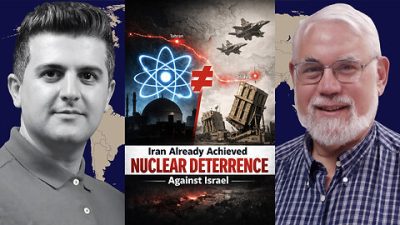
Prof. Ted Postol: Iran Already Achieved Nuclear Deterrence Against Israel
or go to
Aletho News Archives – Video-Images
From the Archives
How the occupied mentality syndrome works
Saudi Arabia on the American chessboard – Part 3
By B. J. Sabri | American Herald Tribune | June 27, 2016
Read part 2: “The occupied mentality Syndrome“
Previously I argued whether Saudi Arabia’s repeated involvements in U.S. interventions and wars stem from free national will or in response to a specific condition. For starters, in Saudi Arabia there is no national will. In Saudi Arabia, the national will is the will of the Al Saud clan. Still, when a major Arab state allies itself with a superpower that committed unspeakable crimes against humanity in almost every Arab country, then something is wrong. This fact alone should compel us to examine the U.S.-Saudi relation for one exceptional reason. As a result of the U.S.-Saudi wars, hundreds of thousands of people in Afghanistan, Iraq, Iran, Libya, Syria, Yemen, and Somalia have lost their lives. Millions became displaced in their own homelands. And millions more rendered refugees.
Attributing the Saudi policies to the bonds of “partnership” with the U.S. is frivolous. There are no bonds between these two thugs except those of business, military deals, secret plots, and wars. Proving this point, bonds such as these have no space for the American and Saudi peoples to share significant cultural or societal exchanges. If partnership is not the reason for the Saudi contribution to the U.S. strategy of empire and imperialism, then another reason must exist.
This leads to three possibilities. … continue
Blog Roll
 Aletho News
- REWRITING THE RISK? INSIDE THE GOVERNMENT’S VACCINE SAFETY MESSAGING
- “Davos Can Really Replace the UN”
- NIAID/NIH and USDA Fund Bioengineered Chimeric Influenza Viruses Built Using Pandemic H1N1 Components: Journal ‘Science Advances’
- Hezbollah hits Israeli warship off Lebanon’s coast, sets it aflame
- Iran slams US strikes on B1 bridge, Mahshahr petrochemical plants as ‘blatant acts of state terrorism’
- In letter to UN chief, Araghchi warns of dire consequences of US-Israeli attacks on Iran’s nuclear facilities
- Why the CIA conspiracy to invade Iran with Kurdish militias failed
- Why Are Upbeat US Claims About Mission to Rescue Pilot ‘Highly Questionable’?
- Aircraft destroyed during US ‘rescue’ of downed F-15 pilot cost more than $100 million each
- Washington University removes professor who condemned US-Israeli war on Iran
- If Americans Knew
- In Iran, Israel-US take aim at “reason, research, and freedom of thought” – Daily Update
- US loses planes over Iran, Israel downgrades Lebanon war goals – Daily Update
- Israel Is Blocking Palestinians from Easter at Church Where Jesus Resurrected
- Plot to assassinate Palestinian activist follows harassment campaign promoted by Zionist groups and elected officials
- Prominent New York synagogue hosts presentation on why U.S. Jews should support the ethnic cleansing of Gaza
- Tapper vs. Piker: Is the CNN Anchor Auditioning for David Ellison?
- Shouldn’t Democrats Be Able to Condemn Genocide?
- Israel-US kill negotiators, destroy civilian structures, but Iran’s military capabilities still largely intact – Daily Update
- ‘War crime’: Global condemnation as Israeli ministers celebrate death penalty law targeting Palestinian prisoners
- 7 Ways Israel Is Turning Lebanon Into Gaza
- No Tricks Zone
- An Inconvenient Tree: Uncovered In Alps… Europe Much Warmer Than Today 6000 Years Ago
- New Study Reports A 60% Slowdown In Greenland’s Ice Loss Rate In The Last Decade
- Low Intensity Tornado Wrecks Major Solar Farm, Creating A Potential Toxic Dump
- New Study Finds Warming Saves Lives…Cold Temperatures 12 Times More Deadly Than Excess Heat
- German Science Blog Accuses PIK Climate Institute Of Hallucinating Climate Tipping Points
- Devastating Assessment Of Comirnaty Vaccine By Former Senior Pfizer Europe Toxicologist
- New Study: CO2 Is ‘Effectively Negligible’ As An Explanatory Climate Change Factor Since 2000
- Former Pfizer Toxicologist Dr. Helmut Sterz Tells Bundestag Hearing Pfizer Vaccine Should Have Never Been Approved
- Energy Expert: Germany’s Nuclear Phaseout Was A “500 Billion Euro Mistake”
- New Research: South Australia’s Mid-Holocene Sea Surface Temperatures Were 4°C Warmer Than Today
 Aletho News