UAE buys new weapons worth $684 million from US firm
Press TV – November 14, 2017
The United Arab Emirates (UAE) has signed a new deal with an American arms manufacturer under which the firm would supply the small Persian Gulf country with laser-guided bombs, authorities say.
The deal, announced Tuesday at the Dubai Airshow and worth 2.5 billion dirhams ($684.4 million), would see the American missile maker Raytheon Co. sell GBU-10 and GBU-12 Paveway laser-guided bomb kits to Abu Dhabi, among other weapons.
UAE authorities also signed arms deals with Germany’s Rheinmetall to buy artillery from the company. The contract will also enable Rheinmetall to support Etihad Airways with transportation equipment.
The purchase of weapons comes amid the UAE’s involvement in a deadly campaign, led by Saudi Arabia, against Yemen. More than 10,000 people have been killed and over two million have been displaced since March 2015, when the regime in Riyadh began the campaign.
Abu Dhabi has also announced plans for buying 75 Mirage 2000-9 aircraft from the French multinational company Dassault and Thales to upgrade its air force fleet. That comes despite increasing calls for a halt to the UAE’s contribution to the devastating Saudi-led airstrikes on civilian areas in Yemen.
Saudi Arabia and the UAE are two major recipients in the Persian Gulf of weapons from the United States and other Western countries. Other countries in the region have accused the two of sparking an arms race by their excessive purchase of modern weaponry from the West.
Reports over the past few years have indicated that much of the UAE’s modern weaponry have found their way into the hands of militants in Libya, where Abu Dhabi supports an administration opposed to Tripoli’s internationally-recognized government.
Arab states spent $130bn to destroy Syria, Libya, Yemen: Algerian PM
Press TV – November 12, 2017
Algerian Prime Minister Ahmed Ouyahia says some regional Arab states have spent $130 billion to obliterate Syria, Libya and Yemen.
Ouyahia made the remarks on Saturday at a time when much of the Middle East and North Africa is in turmoil, grappling with different crises, ranging from terrorism and insecurity to political uncertainty and foreign interference.
Algeria maintains that regional states should settle their differences through dialog and that foreign meddling is to their detriment.
Syria has been gripped by foreign-sponsored militancy since 2011. Takfirism, which is a trademark of many terrorist groups operating in Syria, is largely influenced by Wahhabism, the radical ideology dominating Saudi Arabia.
Libya has further been struggling with violence and political uncertainty since the country’s former ruler Muammar Gaddafi was deposed in 2011 and later killed in the wake of a US-led NATO military intervention. Daesh has been taking advantage of the chaos in Libya to increase its presence there.
Yemen has also witnessed a deadly Saudi war since March 2015 which has led to a humanitarian crisis.
Last Month, Qatar’s former deputy prime minister Abdullah bin Hamad al-Attiyah said the United Arab Emirates had planned a military invasion of Qatar with thousands of US-trained mercenaries.
The UAE plan for the military action was prepared before the ongoing Qatar rift, but it was never carried out as Washington did not give the green light to it, he noted.
In late April, reports said the UAE was quietly expanding its military presence into Africa and the Middle East, namely in Eritrea and Yemen.
In Shocking, Viral Interview, Qatar Confesses Secrets Behind Syrian War
By Tyler Durden | Zero Hedge | October 28, 2017
A television interview of a top Qatari official confessing the truth behind the origins of the war in Syria is going viral across Arabic social media during the same week a leaked top secret NSA document was published which confirms that the armed opposition in Syria was under the direct command of foreign governments from the early years of the conflict.
And according to a well-known Syria analyst and economic adviser with close contacts in the Syrian government, the explosive interview constitutes a high level “public admission to collusion and coordination between four countries to destabilize an independent state, [including] possible support for Nusra/al-Qaeda.” Importantly, “this admission will help build case for what Damascus sees as an attack on its security & sovereignty. It will form basis for compensation claims.”

A 2013 London press conference: Qatari Prime Minister Sheikh Hamad bin Jassim bin Jabr Al Thani with U.S. Secretary of State John Kerry. A 2014 Hillary Clinton email confirmed Qatar as a state-sponsor of ISIS during that same time period.
As the war in Syria continues slowly winding down, it seems new source material comes out on an almost a weekly basis in the form of testimonials of top officials involved in destabilizing Syria, and even occasional leaked emails and documents which further detail covert regime change operations against the Assad government. Though much of this content serves to confirm what has already long been known by those who have never accepted the simplistic propaganda which has dominated mainstream media, details continue to fall in place, providing future historians with a clearer picture of the true nature of the war.
This process of clarity has been aided – as predicted – by the continued infighting among Gulf Cooperation Council (GCC) former allies Saudi Arabia and Qatar, with each side accusing the other of funding Islamic State and al-Qaeda terrorists (ironically, both true). Increasingly, the world watches as more dirty laundry is aired and the GCC implodes after years of nearly all the gulf monarchies funding jihadist movements in places like Syria, Iraq, and Libya.
The top Qatari official is no less than former Prime Minister Hamad bin Jassim bin Jaber al-Thani, who oversaw Syria operations on behalf of Qatar until 2013 (also as foreign minister), and is seen below with then-Secretary of State Hillary Clinton in this Jan. 2010 photo (as a reminder, Qatar’s 2022 World Cup Committee donated $500,000 to the Clinton Foundation in 2014).

In an interview with Qatari TV Wednesday, bin Jaber al-Thani revealed that his country, alongside Saudi Arabia, Turkey, and the United States, began shipping weapons to jihadists from the very moment events “first started” (in 2011).
Al-Thani even likened the covert operation to “hunting prey” – the prey being President Assad and his supporters – “prey” which he admits got away (as Assad is still in power; he used a Gulf Arabic dialect word, “al-sayda”, which implies hunting animals or prey for sport). Though Thani denied credible allegations of support for ISIS, the former prime minister’s words implied direct Gulf and US support for al-Qaeda in Syria (al-Nusra Front) from the earliest years of the war, and even said Qatar has “full documents” and records proving that the war was planned to effect regime change.
According to Zero Hedge’s translation, al-Thani said while acknowledging Gulf nations were arming jihadists in Syria with the approval and support of US and Turkey: “I don’t want to go into details but we have full documents about us taking charge [in Syria].” He claimed that both Saudi Arabia’s King Abdullah (who reigned until his death in 2015) and the United States placed Qatar in a lead role concerning covert operations to execute the proxy war.
The former prime minister’s comments, while very revealing, were intended as a defense and excuse of Qatar’s support for terrorism, and as a critique of the US and Saudi Arabia for essentially leaving Qatar “holding the bag” in terms of the war against Assad. Al-Thani explained that Qatar continued its financing of armed insurgents in Syria while other countries eventually wound down large-scale support, which is why he lashed out at the US and the Saudis, who initially “were with us in the same trench.”
In a previous US television interview which was vastly underreported, al-Thani told Charlie Rose when asked about allegations of Qatar’s support for terrorism that, “in Syria, everybody did mistakes, including your country.” And said that when the war began in Syria, “all of us worked through two operation rooms: one in Jordan and one in Turkey.”
Below is the key section of Wednesday’s interview, translated and subtitled by @Walid970721. Zero Hedge has reviewed and confirmed the translation, however, as the original rush translator has acknowledged, al-Thani doesn’t say “lady” but “prey” [“al-sayda”]- as in both Assad and Syrians were being hunted by the outside countries.
The partial English transcript is as follows:
“When the events first started in Syria I went to Saudi Arabia and met with King Abdullah. I did that on the instructions of his highness the prince, my father. He [Abdullah] said we are behind you. You go ahead with this plan and we will coordinate but you should be in charge. I won’t get into details but we have full documents and anything that was sent [to Syria] would go to Turkey and was in coordination with the US forces and everything was distributed via the Turks and the US forces. And us and everyone else was involved, the military people. There may have been mistakes and support was given to the wrong faction… Maybe there was a relationship with Nusra, its possible but I myself don’t know about this… we were fighting over the prey [“al-sayda”] and now the prey is gone and we are still fighting… and now Bashar is still there. You [US and Saudi Arabia] were with us in the same trench… I have no objection to one changing if he finds that he was wrong, but at least inform your partner… for example leave Bashar [al-Assad] or do this or that, but the situation that has been created now will never allow any progress in the GCC [Gulf Cooperation Council], or any progress on anything if we continue to openly fight.”
As is now well-known, the CIA was directly involved in leading regime change efforts in Syria with allied gulf partners, as leaked and declassified US intelligence memos confirm. The US government understood in real time that Gulf and West-supplied advanced weaponry was going to al-Qaeda and ISIS, despite official claims of arming so-called “moderate” rebels. For example, a leaked 2014 intelligence memo sent to Hillary Clinton acknowledged Qatari and Saudi support for ISIS.
The email stated in direct and unambiguous language that:
“the governments of Qatar and Saudi Arabia, which are providing clandestine financial and logistic support to ISIL and other radical Sunni groups in the region.”
Furthermore, one day before Prime Minister Thani’s interview, The Intercept released a new top-secret NSA document unearthed from leaked intelligence files provided by Edward Snowden which show in stunning clarity that the armed opposition in Syria was under the direct command of foreign governments from the early years of the war which has now claimed half a million lives.

The newly released NSA document confirms that a 2013 insurgent attack with advanced surface-to-surface rockets upon civilian areas of Damascus, including Damascus International Airport, was directly supplied and commanded by Saudi Arabia with full prior awareness of US intelligence. As the former Qatari prime minister now also confirms, both the Saudis and US government staffed “operations rooms” overseeing such heinous attacks during the time period of the 2013 Damascus airport attack.
No doubt there remains a massive trove of damning documentary evidence which will continue to trickle out in the coming months and years. At the very least, the continuing Qatari-Saudi diplomatic war will bear more fruit as each side builds a case against the other with charges of supporting terrorism. And as we can see from this latest Qatari TV interview, the United States itself will not be spared in this new open season of airing dirty laundry as old allies turn on each other.
UK Condemns Boris Johnson’s Joke But Refuses to Admit It Helped Destroy Libya
Sputnik – 06.10.2017
Alexander Mercouris, editor-in-chief of The Duran, told Radio Sputnik that he found UK Foreign Secretary Boris Johnson’s joke about “clearing away dead bodies” in Libya “outrageous,” given that the UK played a large role in destroying the North African state.
Speaking about Libya’s tourism potential at a Conservative Party conference fringe meeting, the UK’s chief diplomat said that the war-torn city of Sirte could become the new Dubai, adding that “the only thing they have to do is clear the dead bodies away.”
The members of Libya’s House of Representatives based in Tobruk on Thursday demanded Johnson’s apology for the remark.
Mercouris told Sputnik in an interview that he expected the people of Libya to be shocked and infuriated by Johnson’s “extremely crude” comments, given that he made a joke about a city that the British destroyed in a country the British played a large role in smashing.
”If we take Sirte, the city which he was referring to, it was incredibly heavily bombed by the [Royal] Air Force amongst others during the Libyan intervention that took place in 2011, which Britain played a very large role in instigating,” he said. “It was Muammar Qaddafi’s hometown, and he was murdered in the most appalling fashion not far from there.”
Mercouris added that although Johnson is under fire for his remarks in his home country as well — with some British politicians calling for him to be sacked — most critics fail to note the UK’s role in destroying Libya in the first place.
In a similar fashion, he noted, members of Johnson’s party always talk about the threat of terrorism in Europe without ever bringing up the foreign policy choices that the UK government has made, which created the conditions for terrorist groups to thrive in North Africa and for Libya becoming a major recruiting ground for militant fighters.
“This comes back to Boris Johnson’s comments,” Mercouris said. “He has been strongly criticized within Britain for making them, but always that criticism stops at the point of admitting any British responsibility for the disaster that is Libya today. And of course that responsibility is enormous.”
Libya has been in a state of turmoil since 2011 when a civil war began in the country and its longtime leader Gaddafi was overthrown. In December 2015, Libya’s rival governments — the Council of Deputies based in Tobruk and the Tripoli-based General National Congress — agreed to create the Government of National Accord, to form the Presidency Council and to end the political impasse.
How ‘Regime Change’ Wars Led to Korea Crisis
By Robert Parry | Consortium News | September 4, 2017
It is a popular meme in the U.S. media to say that North Korean leader Kim Jong Un is “crazy” as he undertakes to develop a nuclear bomb and a missile capacity to deliver it, but he is actually working from a cold logic dictated by the U.S. government’s aggressive wars and lack of integrity.
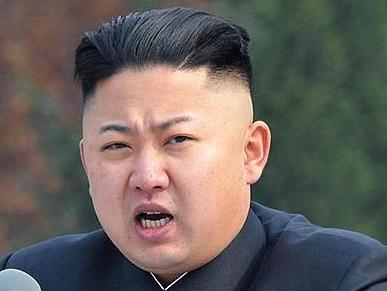
North Korean leader Kim Jong Un
Indeed, the current North Korea crisis, which could end up killing millions of people, can be viewed as a follow-on disaster to President George W. Bush’s Iraq War and President Barack Obama’s Libyan intervention. Those wars came after the leaders of Iraq and Libya had dismantled their dangerous weapons programs, leaving their countries virtually powerless when the U.S. government chose to invade.
In both cases, the U.S. government also exploited its power over global information to spread lies about the targeted regimes as justification for the invasions — and the world community failed to do anything to block the U.S. aggressions.
And, on a grim personal note, the two leaders, Saddam Hussein and Muammar Gaddafi, were then brutally murdered, Hussein by hanging and Gaddafi by a mob that first sodomized him with a knife.
So, the neoconservatives who promoted the Iraq invasion supposedly to protect the world from Iraq’s alleged WMDs — and the liberal interventionists who pushed the Libya invasion based on false humanitarian claims — may now share in the horrific possibility that millions of people in North Korea, South Korea, Japan and maybe elsewhere could die from real WMDs launched by North Korea and/or by the United States.
Washington foreign policy “experts” who fault President Trump’s erratic and bellicose approach toward this crisis may want to look in the mirror and consider how they contributed to the mess by ignoring the predictable consequences from the Iraq and Libya invasions.
Yes, I know, at the time it was so exciting to celebrate the Bush Doctrine of preemptive wars even over a “one percent” suspicion that a “rogue state” like Iraq might share WMDs with terrorists — or the Clinton Doctrine hailed by Secretary of State Hillary Clinton’s acolytes enamored by her application of “smart power” to achieve “regime change” in Libya.
However, as we now know, both wars were built upon lies. Iraq did not possess WMD stockpiles as the Bush administration claimed, and Libya was not engaged in mass murder of civilians in rebellious areas in the eastern part of the country as the Obama administration claimed.
Post-invasion investigations knocked down Bush’s WMD myth in Iraq, and a British parliamentary inquiry concluded that Western governments misrepresented the situation in eastern Libya where Gaddafi forces were targeting armed rebels but not indiscriminately killing civilians.
But those belated fact-finding missions were no comfort to either Saddam Hussein or Muammar Gaddafi, nor to their countries, which have seen mass slaughters resulting from the U.S.-sponsored invasions and today amount to failed states.
There also has been virtually no accountability for the war crimes committed by the Bush and Obama administrations. Bush and Obama both ended up serving two terms as President. None of Bush’s senior advisers were punished – and Hillary Clinton received the 2016 Democratic Party’s nomination for President.
As for the U.S. mainstream media, which behaved as boosters for both invasions, pretty much all of the journalistic war advocates have continued on with their glorious careers. To excuse their unprofessional behavior, some even have pushed revisionist lies, such as the popular but false claim that Saddam Hussein was to blame because he pretended that he did have WMDs – when the truth is that his government submitted a detailed 12,000-page report to the United Nations in December 2002 describing how the WMDs had been destroyed (though that accurate account was widely mocked and ultimately ignored).
Pervasive Dishonesty
The dishonesty that now pervades the U.S. government and the U.S. mainstream media represents another contributing factor to the North Korean crisis. What sensible person anywhere on the planet would trust U.S. assurances? Who would believe what the U.S. government says, except, of course, the U.S. mainstream media?
Remember also that North Korea’s nuclear program had largely been mothballed before George W. Bush delivered his “axis of evil” speech in January 2002, which linked Iran and Iraq – then bitter enemies – with North Korea. After that, North Korea withdrew from earlier agreements on limiting its nuclear development and began serious work on a bomb.
Yet, while North Korea moved toward a form of mutual assured destruction, Iraq and Libya chose a different path.
In Iraq, to head off a threatened U.S.-led invasion, Hussein’s government sought to convince the international community that it had lived up to its commitments regarding the destruction of its WMD arsenal and programs. Besides the detailed declaration, Iraq gave U.N. weapons inspectors wide latitude to search on the ground.
But Bush cut short the inspection efforts in March 2003 and launched his “shock and awe” invasion, which led to the collapse of Hussein’s regime and the dictator’s eventual capture and hanging.
Gaddafi’s Gestures
In Libya, Gaddafi also sought to cooperate with international demands regarding WMDs. In late 2003, he announced that his country would eliminate its unconventional weapons programs, including a nascent nuclear project.
Gaddafi also sought to get Libya out from under economic sanctions by taking responsibility for the 1988 bombing of Pan Am 103 over Scotland, although he and his government continued to deny carrying out the terror attack that killed 270 people.
But these efforts to normalize Libya’s relations with the West failed to protect him or his country. In 2011 when Islamic militants staged an uprising around Benghazi, Gaddafi moved to crush it, and Secretary of State Clinton eagerly joined with some European countries in seeking military intervention to destroy Gaddafi’s regime.
The United Nations Security Council approved a plan for the humanitarian protection of civilians in and around Benghazi, but the Obama administration and its European allies exploited that opening to mount a full-scale “regime change” war.
Prominent news personalities, such as MSNBC’s Andrea Mitchell, cheered on the war with the claim that Gaddafi had American “blood on his hands” over the Pan Am 103 case because he had accepted responsibility. The fact that his government continued to deny actual guilt – and the international conviction of Libyan Abdelbaset al-Megrahi was a judicial travesty – was ignored. Almost no one in the West dared question the longtime groupthink of Libyan guilt.
By October 2011, Gaddafi had fled Tripoli and was captured by rebels in Sirte. He was tortured, sodomized with a knife and then executed. Clinton, whose aides felt she should claim credit for Gaddafi’s overthrow as part of a Clinton Doctrine, celebrated his murder with a laugh and a quip, “We came; we saw; he died.”
But Gaddafi’s warnings about Islamist terrorists in Benghazi came back to haunt Clinton when on Sept. 11, 2012, militants attacked the U.S. consulate and CIA station there, killing Ambassador Christopher Stevens and three other Americans.
The obsessive Republican investigation into the Benghazi attack failed to demonstrate many of the lurid claims about Clinton’s negligence, but it did surface the fact that she had used a private server for her official State Department emails, which, in turn, led to an FBI investigation which severely damaged her 2016 presidential run.
Lessons Learned
Meanwhile, back in North Korea, the young dictator Kim Jong Un was taking all this history in. According to numerous sources, he concluded that his and North Korea’s only safeguard would be a viable nuclear deterrent to stave off another U.S.-sponsored “regime change” war — with him meeting a similar fate as was dealt to Hussein and Gaddafi.
Since then, Kim and his advisers have made clear that the surrender of North Korea’s small nuclear arsenal is off the table. They make the understandable point that the United States has shown bad faith in other cases in which leaders have given up their WMDs in compliance with international demands and then saw their countries invaded and faced grisly executions themselves.
Now, the world faces a predicament in which an inexperienced and intemperate President Trump confronts a crisis that his two predecessors helped to create and make worse. Trump has threatened “fire and fury” like the world has never seen, suggesting a nuclear strike on North Korea, which, in turn, has vowed to retaliate.
Millions of people on the Korean peninsula and Japan – and possibly elsewhere – could die in such a conflagration. The world’s economy could be severely shaken, given Japan’s and South Korea’s industrial might and the size of their consumer markets.
If such a horror does come to pass, the U.S. government and the U.S. mainstream media will surely revert to their standard explanation that Kim was simply “crazy” and brought this destruction on himself. Trump’s liberal critics also might attack Trump for bungling the diplomacy.
But the truth is that many of Washington’s elite policymakers – both on the Republican and Democratic sides – will share in the blame. And so too should the U.S. mainstream media.
Investigative reporter Robert Parry broke many of the Iran-Contra stories for The Associated Press and Newsweek in the 1980s.
‘400,000 deaths in Syria civil war directly attributed to US & allies’
By Dan Glazebrook | RT | September 1, 2017
African and Asian leaders are denied by the West to have any military means against an insurgency in their countries, while the US and its allies have absolute impunity when they want to take on a population anywhere in the world, says political analyst Dan Glazebrook.
The US-led coalition against Islamic State has confirmed another 61 civilian deaths are likely to have been caused by its air and artillery strikes in Iraq and Syria. That brings the total number of civilians it has acknowledged killing since the conflict began to 685.
Dan Glazebrook: I think it’s also likely to be a gross underestimate because we found out in 2012, for example, that all military-age males killed in US airstrikes are not classified by the US military as civilians, they’re automatically excluded from those statistics. So if I was walking down the street in Iraq, unarmed, and I was directly and intentionally blown to pieces by a US airstrike, that would not be recorded as a civilian death. Now, I don’t know if they still use this criterion currently, but what we certainly do know is that the monitoring group Airwars suggested almost 1,500 people may have been killed in US coalition bombings in Iraq and Syria in March of this year alone, including the terrible strike on a residential block in Mosul that is thought to have killed around 200 people. So these statistics are certainly likely to be a gross underestimate.
There are a couple of other points I’d like to make about this as well. This narrow focus on civilians we must recognize is deeply ideological because it serves to whitewash the true scale of the slaughter taking place in Iraq and Syria right now. Why should a 16-year-old boy, pressed into service by ISIS and then blown to pieces by the US before even firing a shot, why should his life be considered so unworthy, so meaningless, as not to be recorded in any kind of statistic because he’s, “not a civilian”? This use of the term and focus on civilians is actually a means of placing all soldiers, all militants, in the same category of subhuman and implies they deserve to be killed. More than that, not only do they deserve to be killed, but their lives are so meaningless and unworthy, they don’t even deserve to be recognized in any kind of balance sheet as to the costs of this war.
And a third point I’d like to make is that in 2011, Syria was at peace until, in that year, the US, Britain, and France sponsored a violent sectarian insurgency, an insurgency in Syria that eventually morphed into ISIS and spilled over into Iraq. So I would actually go further than this and I would attribute all 400,000 deaths in the Syrian civil war directly to the US, France, Britain and their allies.
RT:What would you make of comments made by US Defense Secretary James Mattis that Americans are the good guys and locals know the difference. Is there a difference between good bombs and bad bombs?
DG: No, of course, there isn’t, and what’s absolutely clear is their recklessness, which was actually bad enough under Obama but has increased under Trump. The recklessness with which the US is pursuing its foreign policy goals – and Britain and its allies in the coalition, I should add – have got complete impunity and complete disregard for the lives of those living in places like Mosul and Raqqa and it really shows the racism which is inherent in what’s going on here. Leaders of African and Asian states are denied by the West to have any kind of military means against an insurgency that happens within their borders. And yet when the US and its allies decide they want to take on a population anywhere in the world, they have absolute impunity to do so. So in 2011 Gaddafi was trying to put down a proto-ISIS rebellion in Benghazi and was labeled by the West as a bloody genocidal dictator and so on and was eventually subjected to torture and lynching by those states. When the US decides it wants to carpet-bomb Mosul or Raqqa thousands of miles from its shores, it can do so with complete recklessness and impunity and disregard for the populations living there.
Dan Glazebrook is a freelance political writer who has written for RT, Counterpunch, Z magazine, the Morning Star, the Guardian, the New Statesman, the Independent and Middle East Eye, amongst others. His first book “Divide and Ruin: The West’s Imperial Strategy in an Age of Crisis” was published by Liberation Media in October 2013. It featured a collection of articles written from 2009 onwards examining the links between economic collapse, the rise of the BRICS, war on Libya and Syria and ‘austerity’. He is currently researching a book on US-British use of sectarian death squads against independent states and movements from Northern Ireland and Central America in the 1970s and 80s to the Middle East and Africa today.
The LOCKERBIE Bombing: Who Really Did Carry Out the Worst Terrorist Attack in British History…?

The Burning Blogger of Bedlam | July 27, 2017
The Lockerbie bombing in 1988 was perhaps the 9/11 of its time. While it didn’t result in the kind of phony Global ‘War on Terror’ that was conducted after 9/11, it did give the US and Britain the platform for beginning a targeted downfall of a particular nation and society, this being Libya.
This was accomplished the same way in Libya as it was accomplished in Iraq: first by years and years of crippling sanctions and forced hardship (via the UN),then by all-out destruction against a nation that is no longer able to defend itself (Iraq in 2003, Libya in 2011).
There are essentially two ways to look at Lockerbie.
One, the most important, is as a criminal investigation of an act of mass murder. The other is as a prolonged political or geo-political tool serving multiple purposes. Both are worth revisiting; particularly as the ghost of Lockerbie (and all of its victims) has reappeared in news media in the last few weeks.
Revisiting the subject of Lockerbie is important both as a study of geo-politics and the place of political terrorism within that arena and as a study in history and how it relates to contemporary events.
I want to take a broad overview of the Lockerbie subject here, touching on all of those areas: this article will cover (1) the reasons why the ‘official’ story of Lockerbie is so problematic and disputed, (2) the release of the ‘Lockerbie Bomber’ from prison in Scotland and why it happened, (3) the political and geopolitical motives and consequences of the Lockerbie trial and verdict, and finally (4) the many different theories as to who really did carry out the Lockerbie bombing and why.
The official story remains that the Lockerbie bombing was the doing of the Libyan, Abdelbasset al-Megrahi, who – at the time – had been in charge of security for Libyan airlines.
Abdelbasset al-Megrahi was jailed for 27 years, but died of prostate cancer, aged 60, in 2012. On his deathbed, he continued to claim he was innocent of the bomb that ripped apart Pan-Am Flight 103 over Lockerbie, Scotland, in December 1988, killing 270 civilians.
It remains the worst act of terrorism in British history.
As was being reported in media outlets a fortnight or so ago, the family of the convicted Lockerbie bomber Abdelbaset al-Megrahi is involved in a new bid to appeal against his conviction.
They are not alone in this move, but also have the support of Dr Jim Swire, who lost his daughter Flora in the bombing of Pan Am Flight 103, and Rev John Mosey, who lost his daughter Helga.
Like 9/11, the Lockerbie bombing of Pan-Am Flight 103 invited numerous conspiracy theories and claims of a cover up. And with good reason.
There were Scottish investigators questioning the official verdict all along, with claims that the key piece of evidence – the bomb timer – had been planted on the scene by a CIA operative, while the expert who examined the timer admitted to having manufactured it himself and the crucial witness who connected the bomb to the suitcase later admitted to having been paid $2 Million to lie in the trial.
Abdelbaset al-Megrahi sat in a prison cell in Scotland for years for a crime he hadn’t convincingly been proven guilty of; even when the Scottish government decided to send him back to Libya on compassionate grounds (because of his prostate-cancer), Washington and Westminster still both objected and numerous commentators accused Scotland of being ‘soft’.
And when Megrahi was filmed receiving a hero’s welcome by Saif Gaddafi and a large crowd upon returning home, much of Western media was full of condemnation that these people were ‘celebrating a terrorist’.
Many condemned this as a gross insult to the victims of Lockerbie. If Megrahi’s guilt could be proven beyond reasonable doubt, this attitude would be valid: but if it can’t, then the bigger insult to those victims is the cover-up and the obfuscation of evidence that has continued to this day.
Jim Swire, the spokesman of UK Families Flight 103, and whose daughter was killed in the Lockerbie bombing, has repeatedly expressed grave doubts about the official version of events.
Hans Köchler, the Austrian jurist appointed by the UN to be an independent observer at the Lockerbie trial, expressed concern about the way it was conducted (particularly the suspicious role played by two US Justice Department officials who, according to him, sat next to the Scottish prosecuting counsel throughout the process and appeared to be giving them instructions).
Köchler would later describe al-Megrahi’s conviction as “a spectacular miscarriage of justice”. Jim Swire, who also was present through the trial, then launched the ‘Justice for Megrahi’ campaign, being utterly unconvinced by the official verdict.
Professor Robert Black QC, among others, also maintains that Abdelbasset al-Megrahi was innocent of the Lockerbie bombing, the entire case hinging on the shaky testimony of a single, highly dubious, witness in Malta (a shopkeeper named Tony Gauci, who, years after the trial, was described by Lord Advocate, Lord Fraser of Carmyllie, as being “an apple short of a picnic”).
This same man, it later emerged, had been paid $2 million by the CIA for his testimony against Megrahi, while his brother – a man entirely unrelated to the case – was also paid $1 million.
Professor Black, upon visiting al-Megrahi in prison in 2007, referred to the “wrongful conviction” of an “innocent man”.
Key evidence presented at the trial (e.g. timer fragment, parts from a specific radio cassette model, clothing bought in Malta, bomb suitcase originating at Luqa Airport) had likely been fabricated for the political purpose of incriminating and then punishing Libya. It was openly known that vital evidence had been tampered with (see here, for example).
A lot of these key problems were covered in the very good Al-Jazeera investigation/documentary ‘Lockerbie: Case Closed’ (see here). American Radio Works also examined the Lockerbie case in 2000, seemingly coming to the conclusion that the case against Libya and al-Megrahi wasn’t convincing.
In a report on the Lockerbie trial, Köchler, a university professor, said “It was a consistent pattern during the whole trial that – as an apparent result of political interests and considerations – efforts were undertaken to withhold substantial information from the Court.”
Hans Köchler was the only international observer to submit comprehensive reports on the Lockerbie trial and appeal proceedings to the Secretary-General of the United Nations. In the June 2008 edition of the Scottish lawyers’ magazine The Firm, Dr Köchler referred to the ‘totalitarian’ nature of the Lockerbie appeal process. Particularly interesting was his statement that it “bears the hallmarks of an intelligence operation”.
Certainly, the dubious elements in the investigation process and the illegitimacy of the trial are more than enough to suggest that US agencies were trying very hard to cover something up.
Calls in Scotland for al-Megrahi’s release began with the Moderator of the General Assembly of the Church of Scotland in 2003, particularly after Nelson Mandela had called on Western Churches to intervene in what he called a major “miscarriage of justice”.
Within a few years, even Arab League representatives were referring to al-Megrahi not as a terrorist but as a ‘political hostage’ being held in Scotland. It was calling for al-Megrahi’s release and was even endorsing Gaddafi’s claims for compensation from Britain due to the damage done to Libya’s economy from 1991 to 1999.
Appeals for al-Megrahi’s release or a re-opening of the case were resisted and rejected, however, for several years, leading to al-Megrahi withdrawing his own appeal in August 2009.
At this time, Scottish Minister Christine Grahame (of the SNP) wrote “There are a number of vested interests who have been deeply opposed to this appeal continuing as they know it would go a considerable way towards exposing the truth behind Lockerbie… In the next days, weeks and months new information will be placed in the public domain that will make it clear that Mr Megrahi had nothing to do with the bombing of Pan Am 103.”
When al-Megrahi was eventually released, it was on compassionate grounds and was framed simply as an act that would allow him do die in Libya.
Washington and Westminster – along with much of the media – were furious with the Scottish courts, insisting that al-Megrahi should remain in prison in Scotland.
But the crucial thing about al-Megrahi’s release to Libya was the way it was framed as an act of compassion that had no bearing on the previous trial or on the official verdict concerning his guilt.
Megrahi’s withdrawing of his own appeal just shortly before he was released on compassionate grounds presumably means a deal was made to allow him to go home and die in Tripoli, so long as he remained officially ‘The Lockerbie Bomber’ and the case was not to be re-opened.
The scenes of al-Megrahi landing at Tripoli Airport, being met personally by Saif al-Islam Gaddafi, and being greeted by hundreds of young Libyans waving Libyan and Scottish flags were played across Western media and presented as ‘proof’ that Scotland had made the wrong choice – and that the Libyans were celebrating the ‘Lockerbie Bomber’. However, al-Megrahi’s return home had also happened to coincide with celebrations of forty years of the Libyan Arab Republic.
At any rate, within two years of this, that same Libyan Arab Republic was in ruins, NATO warplanes were bombing the entire country back into the stone age, and al-Megrahi would die shortly after this, still being regarded by most of the world as ‘The Lockerbie Bomber’.
In late 2011, after she had finished celebrating Gaddafi’s brutal murder in Sirte, Washington psychopath Hillary Clinton was calling for Abdelbaset al-Megrahi to be forced to go back to jail in Scotland – a request that was ultimately rejected.
If we consider – as we’re doing here – that the Lockerbie bombing wasn’t carried out by Al-Megrahi or Libya (and evidence suggests it wasn’t), then we have to wonder who did carry out Lockerbie. And whether the intention of that false-flag operation (with 207 civilian deaths) was to create a *reason* to impose the sanctions, a reason to cripple Libya’s growth and economy and to be able to firmly declare Gaddafi’s Libya a ‘terrorist state’: all designed to cripple Gaddafi’s position and to, in international terms, back him and his state into a corner, while also serving to rubber-stamp the perception of Gaddafi as the Great Villain.


Anyone who grew up in the 80s will remember this portrayal of Gaddafi as the Big Bad Villain (or ‘Mad Dog of the Middle East’, as Ronald Reagan called him) in the same way that Saddam Hussein would later be portrayed or as Osama bin Laden would later be presented as the emblematic evil mastermind of anti-Western schemes.
In fact, in many ways, Lockerbie and Gaddafi were the dry run for what would later be 9/11 and Bin Laden – a major, terrible terrorist act of mass murder and an iconic caricature of a Big Bad Monster/Villain from the East. By the late 90s, the idea of Gaddafi as the great villainous threat to the West had run out of steam and the focus was shifted instead onto Saddam Hussein and then Osama bin Laden.
Ironically, as I’ve pointed out before, it remains a fact that Gaddafi had actually been the first world leader to issue an arrest warrant for Bin Laden, long before the US or its allies did.
Lockerbie, the Berlin disco bombing and the shooting of Yvonne Fletcher in London (all three of which had serious doubts around them from the beginning – I covered the Yvonne Fletcher shooting somewhat in this post on the 7/7 London Bombings and the Berlin Disco bombing somewhat in the ‘Libya Conspiracy‘ book) can all be argued to have been programs conducted by UK/US intelligence (possibly in concert with agencies from other governments) to permanently vilify Gaddafi’s Libya and thus justify ongoing sanctions and the likelihood of the country’s decline.
This is an extremely important point: the sanctions imposed on Libya (after Lockerbie) were designed to reverse the country’s success and its attainment of self-sufficiency, to cripple the nation with deprivation and incite ill-feeling.
The only way offered to end the sanctions program was for Libya to pay what was reckoned to be the biggest compensation package ever imposed onto any country – Libya would have to pay a total of $10 Billion to the Lockerbie victims’ families.
The other condition was that Gaddafi also had to formally acknowledge responsibility in the UN for his officials’ orchestrating of the Lockerbie bombing. Gaddafi eventually went along with these demands, but to his domestic audience he permanently denied any responsibility or involvement in Lockerbie and told his people that the extortionate reparations Libya was having to pay wasn’t an admission of guilt, but merely the price having to be paid in order for Libya to re-enter the international community.
In other words, he took the official blame for Lockerbie in order to try to end the sanctions, but all the while he insisted it was a lie.
In 2011, he probably found himself wishing he hadn’t bothered; because it was all for nothing.
US whistleblower Susan Lindauer told RT in 2011 that, the summer before the ‘Arab Spring’ uprising, Gadaffi had in fact been pressuring US, British, French and Italian oil companies to reimburse Libya for the cost of those payments to the families of the Lockerbie bombing.
In that context, it’s also hardly surprising that come 2011 and as Western governments were bombing Libya and targeting Gaddafi for assassination, the Lockerbie business got dragged out repeatedly in the media to act as a timely reminder of why Gaddafi was so terrible and needed to be killed.

By this point, the suggestion was now even being made that Gaddafi had ordered the Lockerbie bombing personally (which had never been suggested before).
Arguably, however, the destruction of Libya in 2011 was the desired end-point of a geo-political timeline that Lockerbie had been a crucial part of.
That being so, and with Gaddafi dead and Libya in ongoing chaos, it is arguably no longer as important whether the truth about Lockerbie comes out or not. Most of the key figures in the Gaddafi era regime are either dead or in jail.
Abdelbasset al-Megrahi himself died just months after Gaddafi was killed and the old Libyan state was overthrown.
All of that long-term geo-political scheming to overthrow Gaddafi is over – so it is possible that new investigations might be ‘allowed’ to uncover more of the true story behind the bombing of Pan-Am Flight 103.
Aside from all of the dubious elements in the Lockerbie trial and the questionable processes, what also strikes me as telling is the commitment of al-Megrahi’s family to clearing his name: especially given that Al-Megrahi is dead and the state accused of planning Lockerbie has long since been overthrown.

Al-Megrahi himself (pictured here in his final days of life, in Tripoli) was continuing to insist on his innocence right up to his dying days and, in fact, had asked Jim Swire to continue to fight to clear his name after he died.
Why would a guilty man bother to do that? Terrorists generally claim their acts of terrorism. Moreover, Megrahi was already free by that point and was in no danger of going back to jail.
If al-Megrahi didn’t carry out Lockerbie, who did?
There have long been plenty of theories.
The Popular Front for the Liberation of Palestine: General Command (PFLP-GC) was the first suspect, based on a threat it had issued against US and Israeli interests before Lockerbie occurred. Iran was also in the frame very early – and remains a key suspect for some people – with its motive thought to be revenge for the July 1988 shooting down of Iran Air Flight 655 by the USS Vincennes. Former British diplomat Patrick Haseldine suggested that the bombing of Pan-Am Flight 103 had in fact been an assassination operation by South Africa’s apartheid government, targeting UN Commissioner for Namibia, Bernt Carlsson.
Another widely held theory implicates CIA agents involved in drug-running operations. This was in fact the basis for Allan Francovich’s 1994 movie The Maltese Double Cross.
Here’s a very interesting piece of film on the drug connection to Pan-Am Flight 180.
A renowned terrorist from that time, Abu Nidal, allegedly later confessed to the Lockerbie bombing (unlike al-Megrahi, who, even on his deathbed, insisted he was innocent), while the controversial blogger Joe Vialls later put forward another theory that the bomb was detonated remotely and also attributed the crime to a CIA/Mossad operation. Vialls did a lot of work on tracking the Lockerbie trial, which is worth consulting – whether you agree with his take or not.
On the subject of Abu Nidal, it is worth making note of the claims that the ‘notorious Palestinian mercenary’ was in fact a US spy and a Mossad operative.
Patrick Seale’s book Abu Nidal: A Gun For Hire makes a very convincing case that the notorious ‘Black September’ terrorist was a full Mossad agent, servicing an Israeli agenda. Nidal was involved in a long line of terrorist atrocities.
The fact that Nidal was reported – even by mainstream newspapers – as having allegedly confessed to Lockerbie is therefore very interesting.

If he was a Mossad agent and US spy, then many of those terrorist acts (including ‘Black September’ and other acts of alleged Palestinian terrorism) would’ve presumably been false-flag ops – and that would seem to make him a very solid candidate for Lockerbie.
I am not endorsing any specific theory or conclusion here: merely arguing that it is probably time for Abdelbasset al-Megrahi to be exonerated and for the Lockerbie investigation to be re-opened in a big way.
In 2008, journalist Hugh Miles published a piece in The Independent, in which he further explored the question of who was behind the Lockerbie bombing; ‘all I know,’ he wrote, ‘is that it wasn’t the man in prison’.
In the article, he draws attention to a convicted Palestinian terrorist named Abu Talb and a Jordanian triple-agent named Marwan Abdel Razzaq Khreesat. ‘Both were Iranian agents; Khreesat was also on the CIA payroll,‘ he explained. ‘Abu Talb was given lifelong immunity from prosecution in exchange for his evidence at the Lockerbie trial; Marwan Khreesat was released for lack of evidence by German police even though a barometric timer of the type used to detonate the bomb on Pan Am Flight 103 was found in his car when he was arrested…‘
There is clearly no shortage of theories and avenues for investigation concerning the Lockerbie bombing.
There is also – and has been for decades – a concerted agenda at the governmental level to prevent any further investigation and to, instead, maintain the official story.
Read more: ‘The Libya Conspiracy: A Definitive Guide to the Libya Intervention‘, ‘The Life & Death of Gaddafi’s Libya: A Study of the Libya That No Longer Exists‘, ‘Muammar Gaddafi: A Psychological Profile of Man, Myth & Reality‘…
Facing Defeat in Syria, ISIS Inexplicably Expands Globally
By Tony Cartalucci – New Eastern Outlook – 11.08.2017
Throughout human history, when a military force and its economic center has been defeated, it contracts, then collapses. For the first time in human history, the self-proclaimed “Islamic State” (ISIS), has managed to reverse this fundamental aspect of reality – but not without help.
Facing defeat in Syria as government forces backed by its Russian and Iranian allies close in on the terrorist organization, stripping it of territory it seized, it has managed to spread far beyond Syria’s borders, establishing itself in Libya, Afghanistan, and even as far as Southeast Asia where it has seized an entire city in the Philippines’ south, and carried out attacks and conducting activities everywhere from Indonesia and Malaysia to allegedly Thailand’s deep south.
It should be remembered, according to Western governments and their media, the territory ISIS holds in Syria is allegedly providing it with the summation of its financial resources and thus the source of its fighting capacity. According to official statements, the US and its European allies allege that ISIS fuels its fighting capacity with “taxes” and extortion as well as black market oil sales – all of which are derived from territory it holds in Syria.
The Washington Post in a 2015 article titled, “How the Islamic State makes its money,” would note:
Weapons, vehicles, employee salaries, propaganda videos, international travel — all of these things cost money. The recent terrorism attacks in Paris, which the Islamic State has claimed as its own work, suggest the terrorist organization hasn’t been hurting for funding. David Cohen, the Treasury Department’s Undersecretary for Terrorism and Financial Intelligence, described the Islamic State last October as “probably the best-funded terrorist organization we have confronted” — deep pockets that have allowed the group to carry out deadly campaigns in Iraq, Syria and other countries.
To explain where ISIS actually makes its money, the Washington Post claims:
Unlike many terrorist groups, which finance themselves mainly through wealthy donors, the Islamic State has used its control over a territory that is roughly the size of the U.K. and home to millions of people to develop diversified revenue channels that make it more resilient to U.S. offensives.
The Washington Post would also claim:
Its main methods of generating money appear to be the sale of oil and antiquities, as well as taxation and extortion. And the group’s financial resources have grown quickly as it has captured more territory and resources: According to estimates by the Rand Corporation, the Islamic State’s total revenue rose from a little less than $1 million per month in late 2008 and early 2009 to perhaps $1 million to $3 million per day in 2014.
With this territory quickly shrinking and the intensity of fighting against what remains of ISIS in Syria and Iraq expanding, it is seemingly inexplicable as to how ISIS is expanding globally, instead of contracting and collapsing.
The Washington Post’s already implausible thesis regarding ISIS finances – based on official statements from the US Treasury Department and US corporate-funded policy think tanks like Rand – appears to be the only thing contracting and collapsing.
ISIS Enjoys Global Reach Many Nation-States Lack
Regarding just how expansive ISIS’ global activities are, US Secretary of State Rex Tillerson himself would claim in an August 1, 2017 statement that:
I think our next steps on the global war to defeat ISIS are to recognize ISIS is a global issue. We already see elements of ISIS in the Philippines, as you’re aware, gaining a foothold. Some of these fighters have gone to the Philippines from Syria and Iraq. We are in conversations with the Philippine Government, with Indonesia, with Malaysia, with Singapore, with Australia, as partners to recognize this threat, try to get ahead of this threat, and help them with training – training their own law enforcement capabilities, sharing of intelligence, and provide them wherewithal to anticipate what may be coming their direction.
Tillerson made these remarks after noting ISIS’ shrinking holdings in both Syria and Iraq. He claimed in regards to Iraq:
More than 70 percent of Iraqi territory that was once held by ISIS has been liberated and recovered. ISIS has been unable to retake any territory that it has been – that has been liberated, and almost 2 million Iraqis have returned home. And this is really the measure of success, I think, is when conditions are such that people feel like they can return to their homes.
Regarding Syria, Tillerson would claim:
Similarly, over in Syria, we’re assisting with the liberation of Raqqa, which is moving at a faster pace than we originally anticipated.
The steps outlined by Tillerson to combat ISIS sidestep strategic fundamentals like identifying, isolating, and eliminating the economic and financial source of the organization’s fighting capacity, and instead focus on an indefinite justification for global US military operations – particularly across Southeast Asia at a time when the region is incrementally uprooting American influence and replacing it with Eurasian alliances, networks, as well as military and economic blocs.
For ISIS – fueled by resources found only within the boundaries of its meager and shrinking territorial holdings in Syria and Iraq – to be simultaneously fighting the national armies of Syria and Iraq, backed by Iran, Russia, Lebanon’s Hezbollah, and allegedly a US-led coalition including dozens of countries, all while expanding its reach worldwide, including full-scale military operations in Southeast Asia, begs belief.
ISIS doing all of this with multi-billion dollar multinational state sponsorship, not only makes much more sense, it is the only explanation.
ISIS is State Sponsored
Until recently, ISIS territory butted directly against the borders of NATO-member Turkey. In fact, looking at any map of the Syrian-Iraqi conflict with ISIS revealed what appeared to be logistical trails leading directly out of Turkey and to a lesser extent, Jordan.
A 2014 report from Germany’s public broadcaster Deutsche Welle, revealed a torrent of supplies, men, and weapons flowing daily over the Turkish-Syrian border, headed directly toward ISIS territory, directly under the nose and with the complicity of Turkish officials.
The report titled, “‘IS’ supply channels through Turkey,” would note:
Every day, trucks laden with food, clothing, and other supplies cross the border from Turkey to Syria. It is unclear who is picking up the goods. The haulers believe most of the cargo is going to the “Islamic State” militia. Oil, weapons, and soldiers are also being smuggled over the border, and Kurdish volunteers are now patrolling the area in a bid to stem the supplies.
So obvious was the logistical support for ISIS flowing from Turkey, that ISIS flags were clearly visible from the Turkish border throughout DW’s footage.
It was only until Russia’s military intervention in Syria upon Damascus’ request, that these logistical routes were targeted and significant pressure could be placed on ISIS inside Syria, rolling back its fighting capacity.
ISIS enjoys a global reach few nation-states could achieve because it is financially, politically, and militarily backed by nations with the resources to obtain that global reach. This includes the US itself, NATO, and the Gulf Cooperation Council (GCC) which in turn includes nations like Saudi Arabia, the United Arab Emirates (UAE), and Qatar.
ISIS is America’s Foot in the Door in Southeast Asia
US Secretary of State Rex Tillerson’s comments regarding ISIS’ spread into Southeast Asia implied long-term US involvement in the region, including closer involvement with regional police and even military forces. In the Philippines, where US-Philippine relations were spiraling downward, the sudden appearance of ISIS there and the organization’s ability to seize an entire city led directly to justification for not only a continued US military presence in the country, but its expansion.
Other nations across Southeast Asia – including Indonesia, Malaysia, and Thailand – have been incrementally pushing US influence out of the region in favor of stronger and more stable ties with each other and with neighboring China.
Thailand for instance, has begun replacing aging US military hardware with weapon systems from Russia, China, and Europe. Thailand has also begun joint military exercises with China, ending America’s post-Vietnam War monopoly. Thailand and Indonesia have also begun striking a series of economic and infrastructure deals with China, including immense expansions of their respective national railways.
As each nation has taken steps to move the US out of Asia, the US has increased pressure on each respective nation. It has done this through US-funded fronts posing as nongovernmental organizations (NGOs) and US-backed opposition movements. It also appears to be doing this through the introduction and expansion of ISIS activity in the region.
It should be remembered that it was the US itself that created Al Qaeda in the mountains of Afghanistan to fight the Soviets in the 1980s.
If the situation unravels there is the possibility of establishing a declared or undeclared Salafist principality in eastern Syria (Hasaka and Der Zor), and this is exactly what the supporting powers to the opposition want, in order to isolate the Syrian regime, which is considered the strategic depth of the Shia expansion (Iraq and Iran).
Trump Battles the CIA: The Korea Ban & Bad Signs in the Market
By Caleb Maupin – New Eastern Outlook – 02.08.2017
The ban on travel to the Democratic People’s Republic of Korea is primarily an attack on the people in the northern part of the Korean Peninsula. It is a move to further isolate the DPRK, and prevent tourist dollars from flowing in, while also preventing fraternization between Americans and citizens of the country. However, the State Department’s decision also has another target in the crosshairs, one much closer to Washington DC.
According to reports in the press, roughly 5,000 US citizens visit the DPRK each year. Most are tourist youth attracted to the mystique and adventure of traveling to a country so widely demonized in the US media. Communist organizations send political delegations and Christian sects such as the Mennonites often send missionaries and aid workers. However, one can be sure that among the 5,000 people who visit the country each year is more than a few American spies, posing as tourists.
When one looks over the recent history of Americans being arrested in North Korea prior to the tragic death of Otto Warmbier, the reasons for the arrest almost always indicate activities that could be described as espionage. Merrill Newman, for example, was a former member of the US military’s “White Tigers” division during the Korean War. The 85 year old man was arrested in the DPRK as he wore a ring with the insignia of this anti-DPRK fighting and intelligence unit. After being arrested he confessed to participating in some of the war crimes against the Korean people during the 1950-1953 war. Newman stated “I did not realize North Korea was still at war” after his eventual release.
The State Department ban on travel to the DPRK is far more extreme than the widely challenged ban on travel to Cuba, enacted as part of the blockade. Officials say that any American who visits DPRK will automatically have their passport invalidated. The constitutionality of such an extreme ban is likely to be challenged.
In the meantime, however, any efforts by the CIA to gather information inside North Korea, or to manipulate or maneuver within its internal affairs, are greatly limited.
Two divisions of the US Federal Government that have long been at odds in issues of foreign policy have been the military and the Central Intelligence Agency. The nature of the two entity’s work lays the basis for their constant disagreement and conflict. The new State Department policy has essentially declared that the DPRK will be handled with military operations, not with “color revolutions,” plots of a coup, manipulation of the youth, or the other shenanigans carried out by the intelligence agencies.
A Longstanding Fight – CIA vs. Pentagon
The US military brass is trained at West Point, and though a great deal of history and background is provided, the focus of their training is military science and the “art of war.” Meanwhile, the Central Intelligence Agency’s administrators come from Harvard, Yale, and Princeton, and are trained in the subtle art of expanding US influence and quietly neutralizing those who challenge it.
The favorite word of those who extol the military and disfavor the CIA is “strength.” The strategies favored by the Pentagon involve demoralizing opponents of US power with “shock and awe” style crushing of enemies. The mass bombing campaigns in Vietnam and Korea did not win credibility and respect for the US internationally, and this was not their intention. The same can be said for Bush’s unilateral invasion of Iraq. The Pentagon does not concern itself with winning friends and influencing people, but with blowing things up, and its favored foreign policy reflects this.
The CIA, on the other hand, tends to favor soft power, negotiations, and internal subversion of global rivals, all done covertly, with the USA looking like a benevolent “Mr. Nice Guy” on the surface. The CIA favors arming and training third party proxies to fight their enemies, while waging a fierce battle in the field of public relations and propaganda.
The clash between the military and the intelligence agencies has played out dramatically in recent US history. It is widely understood that John F. Kennedy began enacting policies that overwhelmingly favored the CIA prior to his death. Kennedy resisted the efforts to escalate military involvement in Vietnam, while funding and emphasizing CIA-linked operations like the Peace Corps. Kennedy’s often quoted the phrase “those who make peaceful revolution impossible make violent revolution inevitable” stated the CIA’s exact strategy for fighting Communism during the Cold War. The CIA favored “reforms” in US aligned third world regimes that made Marxist-Leninist revolution less appealing, while also presenting the US as a benevolent, charitable country that did not seek to intervene in other countries domestic affairs. The CIA worked to make sure that the hands of the USA during the rise of military dictatorships and the toppling of pro-Soviet world leaders were well hidden.
Prior to Kennedy’s assassination, a hard, right-wing mass movement against him, involving the John Birch Society and many Pentagon linked political figures, called the “Camelot” President a traitor and Soviet agent. Many sections of the military thought Kennedy’s “soft power” strategy for confronting Communism, and his ultimate refusal to invade Cuba with US troops after the CIA’s failed “Bay of Pigs” operation, showed weakness. Films like “Dr. Strangelove” widely mocked the well-known fanaticism of the military brass, which distrusted the intelligence agencies and the ability of politicians to make military decisions. Kennedy’s subtle alliance with the Civil Rights Movement, though inconsistent and widely criticized by activists, also threatened a military brass packed with the sons of wealthy southern families.
After the death of Kennedy, the US military seemed to be on top in the power struggle. Richard Nixon’s electoral victory in 1968, and his “secret plan” to win the Vietnam War with massive bombing, showed the military and its allies as the dominant force in setting policy.
But the demoralizing and unpopular war in Vietnam reversed this by the mid-1970s. Nixon found himself listening and depending more on the advice of Henry Kissinger, opening relations with the People’s Republic of China, and eventually being driven from office. Jimmy Carter took office in 1976 calling himself a “student” of CIA strategist Zbiegniew Brzezinski. Under Reagan, the CIA got stronger, with CIA chief George H.W. Bush rising to be Vice President and eventually Reagan’s successor as commander-in-chief.
The often repeated narrative that the US military’s escalation of the arms race was the key factor in defeating the USSR is said with absolute defensiveness by the Pentagon’s right-wing allies. Though the “strong man Reagan” explanation is more widely understood among the US public, within the circles of power in the USA, the CIA takes more credit.
Under the direction of Brzezinski, who boasted that he “gave the USSR a Vietnam” by funneling money and weapons to insurgents in what he called the “Afghan trap,” the CIA manipulated political situations in Eastern Europe causing unrest and a crisis that eventually toppled the USSR. The CIA widely credits itself for terminating the Soviet Union by manipulating internal problems and applying less blatant forms of external pressure.
The CIA is not a “Conservative” Organization
Many leftists and anti-war activists assume that the CIA is staffed with jingoistic conservatives due to the nature of the job. While the rank-and-file of “the company” may attract a more rightist crowd of Mormons and military types, the leaders of the CIA are not conservative in any sense of the word.
John Brennan, the director of the CIA under Barack Obama admits that he voted for Communist Party Presidential Candidate Gus Hall in the 1976 Presidential election. Brennan was stationed in Riyahl for many years, and at the time of his appointment, many voices came forward to allege that he had actually converted to the Wahabbi brand of Islam. The allegations remain unproven.
The CIA strategist who was most influential between the 1960s and the 1990s was Zbiegnew Brzezinski. To call Brzezinski conservative would be deeply mistaken. Zbeignew’s daughter, Mika Brzezinski is a host on liberal leaning MSNBC’s TV program “Morning Joe.”
Brzezinski developed the art of propaganda, presenting the USA to the world as the homeland of Beatles Music, the paintings of Jackson Pollack, and sexual hedonism. In Eastern Europe, Brzezinski’s policies convinced millions of alienated young people that overthrowing the Marxist-Leninist governments would transform their countries into Disneyland playgrounds packed with consumer goods and never ending rock and roll concerts.
In Afghanistan, Brzezinski worked with a young Saudi billionaire named Osama Bin Laden to fight against the People’s Democratic Party. With US made weapons and funding, complimented by heroin revenue, the insurgents poured acid on women’s faces and hanged literacy campaign volunteers. Brzezinski’s slick propaganda work convinced the world that these Wahabbi extremists were actually Che Guevara-esque freedom fighters, battling the “Soviet Empire” for freedom. CBS news was even caught airing staged, fake battle footage.
The figure known as George Soros has become a favored talking point of right-wing activists in the USA. They present him as the sinister bank-roller of leftist activism. Long before Soros was promoting Democrats and Liberals in the USA, he was bank-rolling CIA supported anti-Communist “color revolutions.” Soros is known to have funded anti-communist, pro-capitalist and pro-western protest movements in the USSR, Czechoslovakia, Yugoslavia, and elsewhere.
During the Cold War, the CIA launched a program called the “Congress for Cultural Freedom.” The program funded the art of Jackson Pollack, as well as the Trotskyist magazine Partisan Review. The CIA also launched a project called MK-Ultra which involved distributing hallucinogenic drugs on college campuses.
Obama’s Administration – The White House Stood With Langley
Barack Obama’s grandparents were prominent executives of the Bank of Hawaii. Obama’s grandmother Madelyn Dunham, actually became the first female Vice-President of the bank. The Bank of Hawaii was key in transferring money to US intelligence operations across Asia.
Obama’s mother, Ann Dunham, was married to Lolo Soetoro, a figure in Indonesia who openly supported the 1965 CIA backed coup d’etat against President Sukharno. Soetoro eventually became a military officer under US backed dictator Suharno. It should be noted that the 1965 coup, which Obama’s grandparent’s Bank of Hawaii was involved in financing, was particularly bloody, and involved mass slaughter of ethnically Chinese people. Some estimate that as many as 500,000 people died.
Obama’s family connections aside, his Presidency was very much favorable to the CIA’s strategy for international relations. Obama’s middle name is Hussein. He attended an Islamic elementary school as a child. Long before becoming President, Obama famously had a meeting with Palestinian scholar Edward Said. He maintained a hostile war of words with Israeli Prime Minister Benjamin Netanyahu.
One is reminded of how Napoleon Bonaparte sent out proclamations saying he was a Muslim as he attempted to seize Syria and Egypt for France. To the Arab world, a key region in US foreign policy strategy, Obama gave the illusion of possibly being a Muslim and an ally against Israel.
The fact that a dark skinned man, whose middle name was “Hussein” occupied the White House probably played a key role during the Arab Spring. The uprisings of youth in Islamic countries did not become a repeat of the 1979 Islamic Revolution of Iran, where western capitalism was replaced by a government proclaiming “war of poverty against wealthy” and “Not capitalism but Islam.”
The USA was able to maneuver within the Arab spring to topple the Islamic Socialist government of Libya, and to reduce the Baath Socialist country of Syria to civil war and chaos. Meanwhile, the US backed autocracies in Saudi Arabia, Bahrain, and elsewhere remained thoroughly intact. The continuation of the Yemeni revolution against a pro-Saudi regime now faces an onslaught of bombs and foreign troops.
The establishment of diplomatic relations between the USA and Cuba, with friendly words while intel operatives worked behind the scenes to plot social media unrest with a “Cuban Twitter,” fits the CIA playbook and strategy completely. The JCPOA negotiations with Iran fit into a similar strategy.
In the final weeks of the Obama administration, desperate “Mr. Nice Guy” maneuvers to increase the credibility of the USA on the global stage were carried out. John Kerry gave a speech criticizing Israel, and the US did not protect Israel from a harshly worded resolution at the UN Security Council.
Trump Stands With The Pentagon
Even before Trump took office, his presidential campaign was loaded with subtle hostility to the CIA. Trump castigated the results of US foreign policy, specifically in Syria and Libya where the CIA had been instrumental. During his debate with Hillary Clinton he criticized the funding of rebels in Syria. He repeatedly said that the policies of Obama and Secretary of State Hillary Clinton had created ISIS.
Trump repeated perspectives that would be popular with the military. The key word repeated in Trump’s foreign policy speeches was “strength.” The idea that a huge military budget and direct military interventions make the USA look stronger as a country has long been a talking point of the military brass, against proponents of soft-power and subtle influence.
At times, Trump seemed to be contradictory when talking about foreign policy. It is no secret that among rank-and-file soldiers, and the white, working class, rural communities they often originate in, right-wing isolationist sentiments are widespread. Trump appealed to those sentiments when talking about the bad results of “toppling regimes” and employing the slogan “America First.”
At the same time, he appealed to the Pentagon’s calls for strength, saying that Obama’s “red line” around chemical weapons had “meant nothing.” It may sound contradictory to favor isolationism, while criticizing a president for not making good on threats to attack a country, but it fits into his overall appeal to sentiments within the military.
At the same time that Trump critiqued foreign policy and echoed isolationist talking points, he consistently called for an increase in military spending. In Trump’s foreign policy rhetoric, the isolationism of rank and file soldiers, the Generals’ lust for strength, and the military-industrial complex’s desire for more profits were all re-assured.
The spat between Trump and the CIA is no secret, and is widely acknowledged, even in mainstream US media. The intelligence agencies continue to repeat, without proof, that Trump received assistance from “Russian meddling” in the 2016 elections. A series of leaks from within the administration have found their way to the press.
The Trump administration fought back first by dramatically crippling the CIA’s operations in the Middle East. The executive order banning travel from 6 countries was widely called a “Muslim ban” in the US press. In reality, it targeted all citizens, Muslim or not, from 6 specific countries. (Note: The ban originally included 7 countries, but Iraq was removed from the list.)
Sudan, Iran, Syria, Yemen, Libya, and Somalia are all the site of ongoing conflicts, and in each of these countries US intelligence agencies are working to influence and coordinate with certain forces. As was pointed out by an opponent of the ban on FOX news, the “travel ban” prevents the CIA from rewarding those who do its bidding with visas. A key “soft power” bribe has been taken away from the CIA for its operations in the Middle East.
Trump ultimately shut down the CIA’s training program for anti-government fighters in Syria, according to reports. Trump has accused Obama of wiretapping him during the Presidential campaign.
Trump has even discussed designating the Muslim Brotherhood, an organization that works closely with the CIA around the world, as a Foreign Terrorist Organization. The Muslim Brotherhood was key in undermining and fighting against Arab Socialism during the cold war. More recently, the Muslim Brotherhood was key in aiding US activities to manipulate the Arab spring, and the create turmoil in Libya and Syria.
The Turkish government, which draws its support from the Muslim Brotherhood, is far less friendly to the United States than just a few years ago. The current spat between Saudi Arabia and the Muslim Brotherhood-supporting state of Qatar may reflect difference within the power structure about relations to the Muslim Brotherhood and its use in the fight against independent governments.
Despite presenting himself as an isolationist, Trump ultimately did what Obama was unwilling to do, and launched direct US attacks on the Syrian government. Many in his base were furious, and even longtime hawks like Ann Coulter denounced Trump’s move. However, the more well connected members of the Republican establishment praised it, using the military’s favorite word, calling the bombing a demonstration of “strength.”
As Donald Trump remains President of the United States, the press is solidly against him. This should be no surprise as the US Central Intelligence Agency, not the Pentagon, is primarily involved with influencing media. From the days of “Project Mockingbird” to today, the CIA works very hard to influence and craft public opinion, especially on issues of foreign policy. The flow of ‘anonymous leaks’ from the intel community into the press reflects the longstanding relationship between the intelligence agencies and the media.
The Specter of Economic Crisis, Greatest Danger to Trump
 Right now, spending in the USA is down. Wal-Marts are shutting their doors, and suburban malls, which employed thousands, are becoming a thing of the past. The post-2008 “new normal” of low wage retail jobs replacing good paying jobs for the next generation is rapidly fading away, as retail itself is being pushed aside by online shopping. Jeff Bezos outstripped Bill Gates as the richest man in the United States in terms of directly traceable assets.
Meanwhile, home ownership is still declining. The basic ability of American families to own houses has widely been eroded, home ownership has not been restored to anywhere near the pre-2008 levels. In neighborhoods across the USA, family homes are not being resold to American families, but to renting institutions.
As property values remain low and home ownership drops in suburban and rural areas, another aspect of the “new normal,” the “prosperous urban centers” hopping with young workers in high tech jobs, are also seeing a new decline in property values. Unemployment is low, but so are wages.
In the unfolding atmosphere of eroded spending power and decreasing incomes, banks in the USA are now cutting back lending. When banks stop lending, it is generally based on an understanding that bad times are ahead and they may not be able to collect.
Between 2000 and 2008, Alan Greenspan and the Federal Reserve did everything possible to hold off a crash. Greenspan legalized all kinds of previously illegal credit card and housing mortgage lending, in order to keep the US public spending money they did not have. While the spending power of the US public was drastically reduced by deindustrialization, automation, and shifts in the global economy, Greenspan spent his final years working tireless to keep sales up. Many will recall how George W. Bush urged Americans who wanted to help their country in the aftermath of 9/11 to “go shopping.”
Greenspan’s maneuvers worked only until 2008. With deregulated banking laws, Americans could keep buying houses and maxing out their credit cards, keeping the economy that faced turmoil from 2001 afloat, until the “bubble burst.”
Alan Greenspan was a high ranking member of the Council on Foreign Relations, a think tank often described as “the CIA’s brain.” He did not make his decisions in isolation, but most likely consulted with other figures in the intelligence community about the need to hold off the crisis as long as possible. Greenspan’s decision to legalize credit and keep the public spending, and temporarily hold off the crisis, was not a decision he made by himself.
As the economy crashed and burned in 2007 and 2008, Bush and his cronies, widely viewed as soft on big money, packed their bags, and Barack Obama was able to ride to the White House almost on a white horse, presented as the savior who offered “hope and change.” Greenspan’s efforts did not prevent a the financial crisis, but enabled it to come at a more convenient time, with less political fallout.
However, the political situation facing the USA is far different today. The intelligence community and a large section of the rich and powerful are adamantly opposed to Donald Trump’s presidency, there may not be any specific motivation to work to hold off a financial catastrophe.
If a financial crash were to occur again, Donald Trump would be the ideal scapegoat. The fallout could be blamed on his unpopular presidency which is already routinely ridiculed and demonized by the press.
Will Trump Come Out On Top?
The fact that Trump’s “infrastructure week” contained so few concrete actions may not have hurt Trump at the moment, but a failure to vastly improve the lives of the rust-belt working class that voted for him could be the ultimate undoing of his presidency.
As Trump battles the intelligence community, and seems to side with the Pentagon, he is facing an uphill battle. Allies of the Pentagon brass are disappointed and opponents of Trump are emboldened. However, Trump has proven that he has the ability to unpredictably reverse circumstances that are hostile to him, and come out victorious. The unexpected 2016 elections results are the most concrete example.
If anything was proven by Trump’s surprise victory or the Brexit vote, as well as the rise of Jeremy Corbyn and Scottish Nationalism in the UK, it is that anti-establishment sentiments are stronger and deeper than ever in western countries. People in the west realize that things are deeply wrong and are looking for answers. The answers offered by the status quo, often answers that are engineered and delivered in coordination with the intelligence community, are proving to be unsatisfactory.
In the age of easy access to information, the intelligence community may have both an advantage and disadvantage in the face of their opponents in the US power structure. On the one hand, their deceptions and crafting of public opinion can be more widely and cheaply disseminated than ever before. However, an audience that once had nowhere else to look can easily find alternative views, and debunk their claims. The economic decline and rising police state repression are making the US public more and more partisan toward opposing the establishment and entrenched power that the CIA’s propaganda activities seek to defend.
Trump and his allies in the Pentagon are in a weaker position as they face off with the Intelligence Community, however, the underlying shift in public opinion and the changes in the global economy give them a competitive edge.
Featured Video
Jeffrey Epstein’s ‘one single cause’: Israel
or go to
Aletho News Archives – Video-Images
Book Excerpt
Leslie Wexner’s Inner Demon
BY WHITNEY WEBB |
UNLIMITED HANGOUT| JUNE 10, 2022
This short excerpt from Whitney Webb’s upcoming book “One Nation Under Blackmail” examines an obscure media profile of Leslie Wexner, Jeffrey Epstein’s mentor, from the 1980s that contains disconcerting revelations about Wexner’s personality and his inner world. … continue
Blog Roll
Recent Comments
Coronistan on Why can’t western leaders acce… John Edward Kendrick on German government ‘embezzling’… loongtip on Von der Leyen to have new secu… papasha408 on First Gaza, then the world: Th… papasha408 on Is Nixing Aid to Israel a Pois… papasha408 on Japan to Sign Up For NATO’s Uk… Redracam on Iran Willing to Dilute Enriche… loongtip on When Threats Replace Evid… loongtip on Zelensky tried to kill the cha… eddieb on I might get killed for posting… Bill Francis on I might get killed for posting… loongtip on Beijing cancels Panama deals a…


 Aletho News
- Germany demands UN Rapporteur Albanese resign, joining France
- Hamas official says Netanyahu joining ‘peace council’ is a farce
- Israel Demanding that Iran Limit the Range of Missiles to 300 Kilometers
- Why can’t western leaders accept that they have failed in Ukraine?
- German government ‘embezzling’ taxpayer money to fund Ukraine – veteran politician
- Russian Soldiers Tortured in Secret Ukrainian Prisons
- Tensions between Hungary and Ukraine could lead to a new regional conflict
- Russia preparing oil lifeline to Cuba – embassy
- Jeffrey Epstein’s ‘one single cause’: Israel
- Instagram suspends Track AIPAC, watchdog tracking pro-Israel lobby spending
- If Americans Knew
- Viral post claims Netanyahu sought legal approval, igniting speculation about Israel’s organ harvesting
- AIPAC Has a New Opponent: PAL PAC
- Right-Wing Catholic Off Trump Religion Panel After Israel-Gaza Remarks at Antisemitism Event
- Jewish terrorism, apartheid rule the West Bank – Not a ceasefire Day 125
- Why Israel persecutes children like my son Shadi
- In Gaza, One Man Is Searching for the Remains of His Family With a Flour Sifter
- Horrific situation in Gaza, West Bank – Not a ceasefire Day 124
- Mysterious ‘peace’ groups are sending Americans pro-Israel texts
- Epstein files: Western media must stop burying the Israel connection
- Software developer exposes Israeli nonprofits’ massive spending to influence Americans
- No Tricks Zone
- German Gas Crisis…Chancellor Merz Allegedly Bans Gas Debate Ahead of Elections!
- Pollen Reconstructions Show The Last Glacial’s Warming Events Were Global, 10x Greater Than Modern
- Germany’s Natural Gas Storage Level Dwindles To Just 28%… Increasingly Critical
- New Study Rebuts The Assumption That Anthropogenic CO2 Molecules Have ‘Special’ Properties
- Climate Scientist Who Predicted End Of “Heavy Frost And Snow” Now Refuses Media Inquiries
- Polar Bear Numbers Rising And Health Improving In Areas With The Most Rapid Sea Ice Decline
- One Reason Only For Germany’s Heating Gas Crisis: Its Hardcore-Dumbass Energy Policy
- 130 Years Later: The CO2 Greenhouse Effect Is Still Only An Imaginary-World Thought Experiment
- New Study Affirms Rising CO2’s Greening Impact Across India – A Region With No Net Warming In 75 Years
- Germany’s Natural Gas Crisis Escalates … One Storage Site Near Empty …Government Silent
 Aletho News