Illegal Occupation, the Elephant In The Room
The Origin of Modern Terror and Crumbling Western Values
By John Chuckman | Aletho News | January 26, 2015
Do you ever solve problems by ignoring them? Most of us would say that is not possible, yet that is precisely what western governments do in their efforts to counteract what is called “Islamic terror.” Yes, there are vast and costly efforts to suppress the symptoms of what western governments regard as a modern plague, including killing many people presumed to be infected with it, fomenting rebellion and destruction in places presumed to be prone to it, secretly returning to barbaric practices such as torture, things we thought had been left behind centuries ago, to fight it, and violating rights of their own citizens we thought were as firmly established as the need for food and shelter. Governments ignore, in all these destructive efforts, what in private they know very well is the origin of the problem.
Have Islamic radicals always existed? Yes, we have records through the history of British and French empire-building of strange and fearsome groups. It appears every large religion has a spectrum of believers, always including at one end of the spectrum extreme fundamentalists. They are not a new phenomenon anywhere, so why has one group of them, in the sands of the Middle East, become part of our everyday awareness?
It is also nothing new that young men become hot-blooded and disturbed over what they regard as attacks upon their kind. Western society’s record of crusades, religious wars, colonial wars, and revolts, all total likely having no equal in the histories of the world’s peoples, offers countless examples of young men being angered by this or that circumstance and joining up or running off to fight.
George Bush told us today’s terrorists hate our freedom and democratic values, but like virtually every utterance of George Bush, that one was fatuous, explaining nothing. Nevertheless, his is the explanation pounded into public consciousness because governments and the corporate press never stop repeating versions of it, the Charlie Hebdo affair and its theatrical posturing over free speech being only the latest. Theatrical? Yes, when we know perfectly well that most of those who marched at the front of the parade in Paris are anything but friends of free speech.
All backward peoples are uncomfortable with certain western values, that being the nature of backwardness, and backwardness is a defining characteristic of all fundamentalist religious groups – Hasidic or ultra-Orthodox Jews, Mennonites, Roman Catholic Cardinals, cloistered nuns, Sikhs, and many others – who typically choose modes of dress, rules to obey, and even foods to eat having little or no relationship with the contemporary world and science. Of course, that is their right so long as they are peaceful and law-abiding.
Any fundamentalist group, pushed by more powerful people from outside their community, is entirely capable of, and even prone to, violence, and all human beings are capable of violence when faced with abuse and injustice. Centuries of religious wars and terrors in Europe about such matters as how the Mass is celebrated prove the proposition and should be held as a warning, but they are forgotten by most, if they were ever known. The tendency towards violence continues today amongst many fundamentalist faiths. In so relatively small and seemingly homogeneous a society as Israel, there are regular attacks from ultra-Orthodox Jews against the country’s worldly citizens or against fair-minded rules about such pedestrian matters as women riding buses or walking on a street. The attacks become quite violent – punching, spitting, burning down homes, and killing sometimes – and all go against what we call western values, but because the scale is fairly small, and our press also has a constant protective bias concerning all things Israeli, these events rarely make our mainline news. They must be found on the Internet.
It took Western Europe literally centuries to leave behind such recurrent and violent themes as witches and the need to burn them alive, the Evil Eye, casting out demons, execution for differences of belief, and countless other stupidities which characterized whole societies and destroyed lives. And if you want to go still further back, go to the Old Testament, a collection of ancient writing packed with violence, superstition, prejudice, and just plain ignorance, which Christians and others even today regard as containing important truths for contemporary life. Human progress, at least in some matters, takes a very long time indeed.
Our world has more backward people than most of us can imagine. The news does not feature their extremes and savageries because it serves no political purpose. In Africa, for example, we find practices and beliefs utterly repellent to modern minds: the practice of senior village men raping young girls as an accepted right, the genital mutilation of 3 million girls annually (an African, not an Islamic, practice), the hunting down and butchering such “strange” people as albinos, their parts to be eaten as medicine, and many others. In India, a country well on its way to becoming modern yet one with a huge backward population, we have practices such as marrying off mere girls to old men rich enough to pay dowries to poor parents. At one stroke this enriches the parents and relieves them of the burden of a child, a female child too, always viewed less favorably. The practice generates a large population of widows when the old husbands of girls married at, say, twelve die. These women are then condemned to entire lives as widows, never allowed to remarry, required to dress and eat in certain ways, and basically shunned to live in squalid equivalents of old folks homes, living entirely meaningless lives. India also has the practice of “bride burning” where new brides who are deemed unacceptable for various reasons become the prey of the groom’s family, literally being burned alive. There are many other barbarities in that society too, including “honor killing” and young women who are made inmates in certain temples to serve as glorified prostitutes.
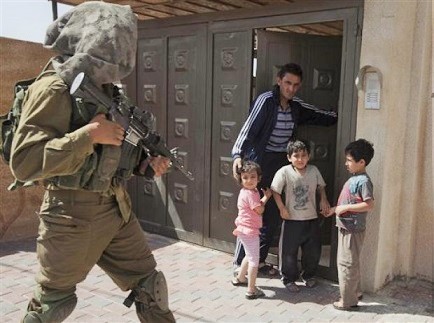
Our press assiduously avoids much of the world’s horrors as it focuses on “Islamic extremism,” and politics are the only explanation for the bias. The press theme of Islamic terror and indeed real incidents of terror grow from a reality always taken for granted, never debated, and certainly never criticised: the elephant in the room, as it were, is Israel’s illegal and agonizingly long occupation of the Palestinians.
It may be not be important to our press and governments that Israel holds millions as prisoners, crippling the lives of generation after generation, or that Israel periodically strikes out in every direction – Gaza, Lebanon, Syria, the West Bank – causing the deaths of many thousands, or that Israel is seen to bulldoze people’s homes and sacred monuments with complete impunity, but it very much matters to many millions of Muslims in the world, and some of them, fundamentalist men, strike out against it just as young men everywhere have sometimes struck out against keenly-felt hurts and injustice.
In western countries, under the hard influence of America, a country in turn under the hard influence of the world’s best organized and financed lobby, the Israel Lobby, we have come to regard Israel’s behavior as normal, but it is, of course, not normal, not in any detail. What is normal about holding several million people prisoner for half a century? What is normal about bulldozing homes and literally stealing the land upon which they stood? What is normal about declaring an honestly elected government as criminal and treating its people as though they were criminals? What is normal about limiting people’s opportunity to earn a living or to import some of the needs of life? What is normal about killing nearly a thousand children, as Israel has done just in Gaza, since 2008?
Pretending that Israel’s behavior is not the major cause of what screams from our headlines and news broadcasts has reached absurd levels. America has only vastly compounded the problem of Israel’s organized abuse of a people: it and its silent partners have destroyed Iraq, destroyed Libya, are working hard to destroy Syria, have seen to it that Egypt’s tens of millions again live under absolute government, ignore countless inequities and barbarities in secretly-helpful countries like Saudi Arabia, and carry out extra-judicial killings through much of the region. All of it is carried out on Israel’s behalf and with Israel’s cooperation. Can any reasonable person not see that this vast factory of death also manufactures countless grievances and vendettas? The stupidity is on a colossal scale, rooted in the notion that you can kill your way out of the terrible consequences of terrible policies.
In America, paid political shills (Newt Gingrich was one) have campaigned about there being no such thing as a Palestinian. Others (Dick Armey was one) have said that millions of Palestinians should be removed, all their land left conveniently to Israel. That last is an odd thing to say, isn’t it, considering there are supposed to be no such thing as Palestinians? And just what country would take millions of “non-existent” Palestinians? Obviously no politician with even pretence of integrity would say such things, and how can intelligent and successful people like America’s Jews take satisfaction in hearing politicians reciting such embarrassing scripts? But this is a good measure of the way intelligence and sound thinking are scorned in American politics. How can you achieve anything worth achieving without intelligence and sound thinking? You cannot, but that doesn’t stop American Presidents and Secretaries of State from carrying on the world’s longest-running dumb show, something called the “peace process.” The sombre, moose-like figure of John Kerry is photographed playacting at statesmanship while American-supplied arms just keep killing thousands of innocent people.
The Fantasy of an Iran-US Partnership
By Seyed Mohammad Marandi | Tehran Times | January 6, 2015
Western pundits who blithely assert that the Islamic Republic of Iran can or will cooperate with the United States in Iraq against ISIL ignore a basic problem; how can the US be a serious partner in fighting a terrorist movement that Washington may have played a critical role in creating?
When US Vice-President Joe Biden told an American university audience in October that Turkey, the UAE and Saudi Arabia are responsible for arming al-Nusra, ISIL, and other al-Qaeda-rooted extremists in Syria and that there is no “moderate middle” in the country, there was (as most non-Americans expected) little coverage of this stunning admission in the US mainstream media.
Indeed, what little coverage there was focused on Biden’s subsequent apologies to Turkish, Emirati, and Saudi leaders for having made such comments in the first place.
Predictably, there was no follow-up reporting in The New York Times reminding Americans that the US is itself complicit in funding and arming extremists in Syria.
CIA producing weapons
In early 2013, the newspaper reported what many in the region already knew; that since the beginning of 2012, the CIA had been deeply involved in procuring weapons for anti-Assad forces, airlifting arms to Jordanian and Turkish airports, and “vetting” rebel commanders – all to help US allies “support the lethal side of the civil war”. Other reports pointed out that these shipments were actually paid for by US allies, at the bidding of the Obama administration.
But, after the Biden revelation, the so-called “newspaper of record” made no reference to how the US, in violation of international law, helped to facilitate the Syrian civil war – and, in the process, to enable the rise of ISIL.
Western-backed extremism is neither a new nor regionally-bound concept. Whether it is the “Contra” rebels in Nicaragua or al-Qaeda-like groups in Afghanistan, the objective has always been to achieve strategic objectives through the infliction of mass suffering – for, in the “free and civilised world” of the US and its allies, the utopian end too often justifies the Mephistophelean means.
More recently, an important footnote to the Libyan civil war was the involvement of Abdul Hakim Belhaj, previously the leader of the Libyan Islamic Fighting Group as well as an al-Qaeda member.
He was one of many Libyan militants influenced by a takfiri (apostate) ideology; the groups with which he was affiliated were designated as terrorist organisations by the US State Department.
Nevertheless, he, along with other like-minded militants, became central components in the efforts of western and Arab-backed anti-Gaddafi forces to capture Tripoli, the Libyan capital.
Western willingness to cooperate with al-Qaeda (or “former” al-Qaeda) militants in Libya was a major turning point. Even the subsequent death of the US ambassador to Libya did not change US policy in this regard. Belhaj became the representative of Libya’s interim president after Gaddafi’s overthrow (before the complete ruin of the country).
More importantly, the willingness of the US and European and “Middle Eastern” allies to embrace al-Qaeda-like militants took US and western foreign policy in the region back to what it had been before the September 11, 2001 attacks – a policy of cooperation with violent extremists to undermine regional actors the West considers problematic.
Monster they created
This policy quickly expanded from Libya to Syria and the repercussions are being felt today in countries like Pakistan, Nigeria, Australia, and China.
After Gaddafi’s overthrow, Turkey – a NATO member – allegedly helped Belhaj to meet with leaders of the so-called “Free Syrian Army” in Istanbul and along the Syrian-Turkish border. In the meetings the former al-Qaeda leader discussed supporting the FSA with money, weapons, and fighters, at a time when the CIA was a major conduit for the transfer of weapons from Libya to Syria.
While Belhaj was just one of many al-Qaeda affiliates involved in violent anti-government campaigns in both Libya and Syria, his openly acknowledged role underscores how the supposedly “moderate” FSA was, from early on in the Syrian civil war, as Iran repeatedly warned, deeply associated with and infiltrated by extremists.
US arms sales hit record levels
Over time, the problem grew so large with ISIL’s rise that it became impossible to hide the monster that the US and its allies had created. And so, Washington launched yet another chapter in its never-ending post-9/11 “war on terror”.
Notwithstanding Washington’s professed determination to degrade and, ultimately, to destroy ISIL, Iran remains profoundly skeptical of US intentions.
Even after dramatic gains by ISIL in Iraq and the formation of a US-led coalition of the guilty to fight it, this coalition has, on average, carried out just nine airstrikes per day in both Iraq and Syria.
In comparison, western reports indicate that, in the same period, the Syrian air force alone has at times carried out up to 200 strikes in 36 hours. Even as these largely inconsequential US-led airstrikes are carried out in Iraq and Syria, some regional players continue to provide extensive logistical support to ISIL; along Syria’s borders with Jordan and the Israeli regime, the Nusra Front continues to collaborate with other extremist militias backed by foreign (including western) powers.
In light of these realities, Iranians – who have been indispensable in preventing the fall of Damascus, Baghdad, Aleppo, and Erbil – simply do not buy the argument that a repentant US is now waging a real war against ISIL, the Nusra Front, and other extremist organisations in Iraq and Syria.
Rather, Iranians see the evidence as pointing to a complex (yet foolish) policy undertaken by Washington and its allies for the purpose of “containing” the Islamic Republic.
What, then, would be the justification – under such circumstances and as Iranian allies are successfully pushing back extremists in Iraq and Syria – for the Islamic Republic to cooperate with the US in Iraq?
No matter how much some may try to tempt it, Iran will not play Faust to America’s Mephistopheles.
Seyed Mohammad Marandi is professor of North American Studies and dean of the Faculty of World Studies at the University of Tehran. He can be reached at mmarandi@ut.ac.ir.
Selling ‘Peace Groups’ on US-Led Wars
By Margaret Sarfehjooy and Coleen Rowley | Consortium News | December 25, 2014
“War is peace” double-speak has become commonplace these days. And, the more astute foreign policy journalists and commentators are beginning to realize the extent of how “liberal interventionists” work in sync with neocon warhawks to produce and sustain a perpetual state of U.S. war.
More and more “peace and social justice” groups are even being twisted into “democracy promotion,” U.S. militarism style. But rarely do we get a window to see as clearly into how this Orwellian transformation occurs as with the “Committee in Solidarity with the People of Syria” (CISPOS) based in Minnesota’s Twin Cities, a spin-off of “Friends for a Nonviolent World” (FNVW), steering its Quaker-inspired founding in nonviolence to promote speakers and essayists with strong ties to the violent uprising to topple the Syrian government of President Bashar al-Assad, resulting in a war that has already taken some 200,000 lives.
Do the real pacifist members approve? Or even know?
Middle Eastern expats who support U.S. intervention in their countries are especially effective in promoting their message to Western audiences because they provide “proof” of the demonization of governments that the U.S. plans to invade and dominate, and often peace groups include these expats in presentations believing them to be representatives of an entire country.
In Minneapolis, FNVW and its spin-off CISPOS hosted several events with Syrian expats who were on record as supporting the U.S. bombing of their country. (This isn’t only happening in the U.S. In April 2011, a Vancouver peace group documented its objection to the fact that other Canadian “peace” groups were sponsoring speakers who justified and advocated “in favour of the NATO bombing of Libya.”)
Often Syrian “experts” speaking to peace groups, such as FNVW/CISPOS’s upcoming speaker, Mohja Kahf, have ties to the early destabilization of Syria. This American Prospect article documents how Najib Ghadbian, Kahf’s husband of over 20 years (apparently up to last year when they divorced) was one of the Syrian dissidents who attended the early 2006 meeting with Liz Cheney (then-Vice President Dick Cheney’s daughter), along with other Syrian dissidents to plan how to destabilize Syria and topple its government. Like some Syrian version of Ahmed Chalabi, the neocons’ choice to run post-invasion Iraq, Kahf’s husband apparently got himself invited to Liz Cheney’s “Iran-Syria Operations Group” by having signed the “Damascus Declaration” in 2005, the year before.
When Najib and Mohja sat down for a long 2011 interview with The Arkansas Traveler, they discussed their involvement with the Syrian Revolution, even joking about Ghadbian becoming the next Prime Minister. Kahf and Ghadbian reportedly divorced in 2013 but when CISPOS-FNVW first published her long essays, they were still appearing together at Syrian revolutionary meetings and speaking forums. Additionally, CISPOS’s latest handout (December 2014) lists Ghadbian’s organization, www.etilaf.us (The National Coalition of Syrian Revolutionary Forces) as a resource “For More Information on Syria and How to Help.”
Resources for information on Syria often come from “citizen journalists” with deep ties to neocons and U.S. government sources. From the State Department’s website , the $330 million in support for the Syrian opposition includes training for networks of citizen journalists, bloggers and cyber-activists to support their documentation and dissemination of information on developments in Syria.
Syrian dissidents received funding from the Los Angeles-based Democracy Council, which ran a Syria-related program called the “Civil Society Strengthening Initiative” funded with $6.3 million from the State Department. The program is described as “a discrete collaborative effort between the Democracy Council and local partners” to produce, among other things, “various broadcast concepts.”
James Prince, the founder and President of the Democracy Council, is also an adviser to CyberDissidents.org , a project created in 2008 by the Jerusalem-based Adelson Institute for Strategic Studies, founded and funded by Sheldon Adelson, a patron and confidant of Benjamin Netanyahu.
Other resources include postings on social media and alternative websites with sensational stories such as the anti-Assad activist “Gay Girl in Damascus” who turned out to be a middle-aged American man in Scotland or Syrian Danny Abdul Dayem, who was frequently interviewed using fake gun fire and flames in his interviews.
With all of the information about Syria, what are we to believe as true? We know the facts about recent U.S. interventions in Middle Eastern countries. Why would Syria be any different?
Afghanistan is still in shambles with the majority of the people living in extreme poverty; Libya, which had the highest GDP per capita and life expectancy on the continent, is now a failed state; Western intervention transformed Iraq from an emerging country with moderate prosperity into an impoverished country with a starving population. In the lead-up to each intervention, “experts” emerged to explain that while anti-imperialism is good in general and in past scenarios, this time is different. Is it?
Isn’t it time for war-weary Americans to wise up and stop falling for these pretexts of bringing democracy and human rights to foreign countries through training and funding of “color (and umbrella) revolutions,” inciting of coups and regime changes and eventually, through U.S.-NATO military might?
Liberal interventionists clearly assist neocon warhawks towards their mutual goal of “full spectrum dominance” under the euphemistic guise of Pax Americana. Only the “Pax” always turns out to be endless war and occupation.
Margaret Sarfehjooy is an anti-war activist and registered nurse in Minnesota. Coleen Rowley is a retired FBI agent and former Minneapolis Division legal counsel.
5 not-so-peaceful Obama actions since nabbing Nobel Prize

RT | December 10, 2014
Five years on from President Barack Obama scooping a Nobel Peace Prize, and the White House has taken anything but a Zen approach to foreign policy under his watch. Here are the top 5 not-so-peaceful moves the laureate has made in the past half-decade.
1. Afghan Surge
Obama didn’t start the war gin Afghanistan, but he certainly took a page from his predecessors playbook in trying to finish it. He recognized his precarious position at prize time.
“But perhaps the most profound issue surrounding my receipt of this prize is the fact that I am the commander-in-chief of a nation in the midst of two wars,” he said after accepting the Nobel Prize in Oslo, Norway, on December 9, 2009.
While he said the war in Iraq was “winding down,” things in Afghanistan were just starting to heat up. A week before accepting the prize, Obama announced he was sending 33,000 more troops to Afghanistan as part of his “surge policy,” intended to beat back the Taliban and train Afghan security forces to take the country into their own hands. The following years would become the deadliest for both US troops and Afghan civilians. Again, it wasn’t Obama’s war. But then came…
2. Military strikes in Libya
Following UN Resolution 1973 on March 17, 2011, which called for “an immediate ceasefire” in Libya and authorized the international community to set up a no-fly zone to protect civilians, Obama, along with his NATO allies, would soon launch military strikes to turn the tide of the 2011 Civil War in the North African state. NATO conducted 9,700 strike sorties and dropped over 7,700 precision bombs. A Human Rights Watch report would go on to detail eight incidents where at least 72 Libyan civilians died as a result of the aerial campaign.
But the real damage to overthrowing the Gaddafi regime came in the ensuing years, with the country descending into a civil war between Islamist forces and the weak post-revolutionary government. In August, Obama admitted his Libyan policy was a failure, but not because he chose to intervene militarily. Rather, he says the problem was that America and its European partners did not “come in full force” to take Gaddafi out. Although his then-Secretary of State Hillary Clinton seemed to rejoice in his death, wryly noting “We came, we saw, he died.”
3. Drone Wars in Yemen, Pakistan
Since the US first started targeting Yemeni militants in 2002, Obama has launched all but one of the 15 airstrikes and 101 drone strikes in the country. According to the web portal New America.net, which has meticulously complied data on the strikes, up to 1,073 people have been killed in the strikes. An estimated 81-87 of those killed were civilians, while the identity of another 31-50 remains unknown. But Yemen was just one prong in Obama’s so-called Drone War, though, as we shall see, it was the site of a game-changing incident.
Unlike in Yemen, drone strikes in Pakistan were in favor long before Obama came to power. A report conducted by Stanford and New York Universities’ Law schools found that between 2,562 and 3,325 people were killed by drone strikes in Pakistan between June 2004 and mid-September 2012. Anywhere between 474 and 881 of those were civilians, and 176 were children. While Obama didn’t start the Pakistani drone war, he aggressively expanded it.
Between 2004 and 2007, only 10 drone strikes were launched in Pakistan. The following year saw 36 such strikes, and 54 were launched in 2009.
But 2010 would be the deadliest year by far, with 122 strikes launched and 849 people killed. He would go on to authorize 73 and 46 strikes in 2011 and 2012 respectively.
Following widespread opposition at home and abroad, in May 2013, Obama promised a new era of transparency to protect civilians, saying control of the program would be transferred from the CIA to the Pentagon. But…
4. Obama has a secret kill list
In February 2013, the Obama administration’s internal legal justification for assassinating US citizens abroad came to light for the first time. According to the Justice Department document, the White House has the legal authority to kill Americans who are “senior operational leaders,” of Al-Qaeda or “an associated force” even if they are not actively engaged in any active plot to attack the US.
In September 2011, a US drone strike in Yemen killed two American citizens: Anwar al-Awlaki and Samir Khan. The following month, a drone strike killed al-Awlaki’s 16-year-old son, who was born in Colorado.
The concept of the US president exercising the right to kill US citizens without the benefit of a trial has resonated throughout American culture.
In the comic-book-inspired film ‘Captain America: The Winter Soldier’, the issue of targeted killings and “kill lists” features prominently in the plot.
5. Redrawing red lines
President Barack Obama drew a red line around Syria’s use of chemical weapons, pushing the international community to punish Damascus with military strikes following the August 21 Ghouta Attack.
After the UK balked at airstrikes, Moscow and Washington took the diplomatic route, resulting in a historic deal that has seen Damascus abandon its chemical weapons stockpiles.
But US-led airstrikes on Syria were only postponed. On August 8, 2014, the United States started bombing so-called Islamic State (IS) militants in Iraq to protect embattled Kurds. The following month, the US would launch airstrikes against IS militants in Syria as well. Of all the US military interventions in recent years, the battle against the IS has been met with widespread approval. Still, Syria was the seventh country Obama has bombed in six years.
Quite a feat for a Nobel Peace Prize-winner.
West’s action in Libya in 2011 was a ‘mistake’ – Italy’s foreign ministry
RT | December 5, 2014
Western countries made a ‘mistake’ three years ago, when they intervened in Libya to overthrow the Gaddafi regime, according to Italian Minister of Foreign Affairs. The statement came amid reports of the US discussing airstrikes on Libya’s territory.
“Three years ago we might have made a mistake, when international forces interfered without thinking through the scenario, what will happen afterwards. Italian voice was too weak,” Italy’s Minister of Foreign Affairs Paolo Gentiloni said in a TV interview with national broadcaster RAI, as quoted by Tass news agency.
While meeting international journalists on Friday, the minister said that stabilizing the situation in Libya – which at the moment is an uncontrollable land of “chaos” – and in the whole Mediterranean region was a key priority of Italy’s foreign policy.
Meanwhile, the US has plans to expand its anti Islamic State military campaign to Libya, The Times reported on Friday. Amid western countries’ concerns over Libya’s political instability, that could possibly be used by the IS terrorists in their favor, a top US general has confirmed the Islamic State runs jihadist training camps in eastern Libya.
Now “an American commander has acknowledged that discussions are under way in Washington about broadening the anti-Isis campaign to Libya,” The Times wrote.
The fall of Muammar Gaddafi’s regime back in 2011 and the turmoil that followed it has provided a fertile ground for extremism. Since August, Libya’s capital of Tripoli has been in the hands of Libya Dawn – a coalition of Islamist-backed militias who appointed their own administration, while the internationally-recognized government and parliament have been pushed a thousand kilometers away to Tobruk.
The UN has condemned the recent fighting – the worst since 2011. An international contact group, which gathered in Addis Ababa earlier this week to discuss the Libyan crisis, has rejected the use of force to solve it. But the country’s officials have ruled out peace talks after Libya Dawn allied itself with jihadi groups.
“We cannot continue with two governments, two parliaments, so Libya Dawn should end or we are going to arrest them all,” Libya’s military commander, General Khalifa Hiftar told RT.
Moscow has said only neighboring countries in the region should participate in stabilizing the situation in Libya, while others stay put. When meeting his Sudanese counterpart earlier in the week, Russian Foreign Minister Sergey Lavrov said that “interference from overseas assuming a leading role in settling sovereignty issues” that has been witnessed in Iraq and Libya, and now is being attempted in Syria, leads to tragedy and a state’s breakup.
READ MORE: France urges new Libya intervention, calls it ‘terrorist hub’ on Europe’s doorstep
Militarism and Capital Accumulation
The Pentagon and Big Oil
By James Petras | October 25, 2014
There is no question that, in the immediate aftermath and for several years following US military conquests, wars, occupations and sanctions, US multi-national corporations lost out on profitable sites for investments. The biggest losses were in the exploitation of natural resources – in particular, gas and oil – in the Middle East, the Persian Gulf and South Asia.
As a result some observers speculated that there were deep fissures and contradictory interests within the US ruling class. They argued that, on the one hand, political elites linked to pro-Israel lobbies and the military industrial power configuration, promoted a highly militarized foreign policy agenda and, on the other hand, some of the biggest and wealthiest multi-national corporations sought diplomatic solutions.
Yet this seeming ‘elite division’ did not materialize. There is no evidence for example that the multi-national oil companies sought to oppose the Iraq, Libyan, Afghan, Syrian wars. Nor did the powerful 10 largest oil companies with a net value of over $1.1 trillion dollars mobilize their lobbyists and influentials in the mass media to the cause of peaceful capital penetration and domination of the oil fields via neo-liberal political clients.
In the run-up to the Iraq war, the three major US oil companies, Exxon Mobil, Chevron, Conoco Phillips, eager to exploit the third largest oil reserves in the world, did not engage in Congressional lobbying or exert pressure on the Bush or later Obama Administration for a peaceful resolution of the conflict. At no point did the Big Ten challenge the pro-war Israel lobby and its phony arguments that Iraq possessed weapons of mass destruction with an alternative policy.
Similar “political passivity” was evidenced in the run-up to the Libyan war. Big Oil was actually signing off on lucrative oil deals, when the militarists in Washington struck again – destroying the Libyan state and tearing asunder the entire fabric of the Libyan economy.
Big oil may have bemoaned the loss of oil and profits but there was no concerted effort, before or after the Libyan debacle, to critically examine or evaluate the loss of a major oil producing region. In the case of economic sanctions against Iran, possessing the second largest oil reserves, the MNC again were notable by their absence from the halls of Congress and the Treasury Department where the sanctions policy was decided. Prominent Zionist policymakers, Stuart Levey and David Cohen designed and implemented sanctions which prevented US (and EU) oil companies from investing or trading with Teheran.
In fact, despite the seeming divergence of interest between a highly militarized foreign policy and the drive of MNCs to pursue the global accumulation of capital, no political conflicts erupted. The basic question that this paper seeks to address is: Why did the major MNCs submit to an imperial foreign policy which resulted in lost economic opportunities?
Why the MNCs Fail to Oppose Imperial Militarism
There are several possible hypotheses accounting for the MNC accommodation to a highly militarized version of imperial expansion.
In the first instance, the CEOs of the MNCs may have believed that the wars, especially the Iraq war, would be short-term, and would lead to a period of stability under a client regime willing and able to privatize and de-nationalize the oil and gas sector. In other words, the petrol elites bought into the arguments of Rumsfeld, Chaney, Wolfowitz and Feith, that the invasion and conquest would “pay for itself”.
Secondly, even after the prolonged-decade long destructive war and the deepening sectarian conflict, many CEOs believed that a lost decade would be compensated by “long term” gain. They believed that future profits would flow, once the country was stabilized. The oil majors entry after 2010; however, was immediately threatened by the ISIS offensive. The ‘time frame’ of the MNCs’ strategic planners was understated if not totally wrong headed.
Thirdly, most CEOs believed that the US-NATO invasion of Libya would lead to monopoly ownership and greater profits than what they received from a public-private partnership with the Gaddafi regime. The oil majors believed that they would secure total or majority control. In other words the war would allow the oil MNCs to secure monopoly profits for an extended period. Instead the end of a stable partnership led to a Hobbesian world in which anarchy and chaos inhibited any large scale, long-term entry of MNCs.
Fourthly, the MNCs, including the big oil corporations, have invested in hundreds of sites in dozens of countries. They are not tied to a single location. They depend on the militarized imperial state to defend their global interests. Hence they probably are not willing to contest or challenge the militarists in, say Iraq, for fear that it might endanger US imperial intervention in other sites.
Fifthly, many MNCs interlock across economic sectors: they invest in oil fields and refineries; banking, financing and insurance as well as extractive sectors. To the degree that MNCs’ capital is diversified they are less dependent on a single region, sector, or source for profit. Hence destructive wars, in one or several countries, may not have as great a prejudicial effect as in the past when “Big Oil” was just ‘oil’.
Six, the agencies of the US imperial state are heavily weighted to military rather than economic activity. The international bureaucracy of the US is overwhelmingly made up of military, intelligence and counter-insurgency officials. In contrast, China, Japan, Germany and other emerging states (Brazil, Russia and India) have a large economic component in their overseas bureaucracy. The difference is significant. US MNCs do not have access to economic officials and resources in the same way as China’s MNCs. The Chinese overseas expansion and its MNCs, are built around powerful economic support systems and agencies. US MNCs have to deal with Special Forces, spooks and highly militarized ‘aid officials’. In other words the CEOs who look for “state support” perforce have mostly ‘military’ counterparts who view the MNCs as instruments of policy rather than as subjects of policy.
Seventh, the recent decade has witnessed the rise of the financial sector as the dominant recipient of State support. As a result, big banks exercise major influence on public policy. To the extent that is true, much of what is ‘oil money’ has gone over to finance and profits accrue by pillaging the Treasury. As a result, oil interests merge with the financial sector and their ‘profits’ are as much dependent on the state as on exploiting overseas sites.
Eighth, while Big Oil has vast sums of capital, its diverse locations, multiple activities and dependence on state protection (military), weaken its opposition to US wars in lucrative oil countries. As a result other powerful pro-war lobbies which have no such constraints have a free hand. For example the pro-Israel power configuration has far less ‘capital’ than any of the top ten oil companies. But it has a far greater number of lobbyists with much more influence over Congress people. Moreover, it has far more effective propaganda – media leverage- than Big Oil. Many more critics of US foreign policy, including its military and sanctions policies, are willing to criticize “Big Oil” than Zionist lobbies.
Finally the rise of domestic oil production resulting from fracking opens new sites for Big Oil to profit outside of the Middle East – even though the costs may be higher and the duration shorter. The oil industry has replaced losses in Middle East sites (due to wars) with domestic investments.
Nevertheless, there is tension and conflict between oil capital and militarism. The most recent case is between Exxon-Mobil’s plans to invest $38 billion in a joint venture in the Russian Arctic with the Russian oil grant Rosneft. Obama’s sanctions against Russia is scheduled to shut down the deal much to the dismay of the senior executives of Exxon Mobil, who have already invested $3.2 billion in an area the size of Texas.
Conclusion
The latent conflicts and overt difference between military and economic expansion may eventually find greater articulation in Washington. However, up to now, because of the global structures and orientation of the oil industry, because of their dependence on the military for ‘security’, the oil industry in particular, and the MNCs in general, have sacrificed short and middle term profits for “future gains” in the hopes that the wars will end and lucrative profits will return.
Treating Putin Like a Lunatic
By Robert Parry | Consortium News | October 25, 2014
When reading the New York Times on many foreign policy issues, it doesn’t take a savant to figure out what the newspaper’s bias is. Anything, for instance, relating to Russian President Vladimir Putin drips of contempt and hostility.
Rather than offer the Times’ readers an objective or even slightly fair-minded account of Putin’s remarks, we are fed a steady diet of highly prejudicial language, such as we find in Saturday’s article about Putin’s comments at a conference in which he noted U.S. contributions to chaos in countries, such as Afghanistan, Iraq, Libya, Syria and Ukraine.
That Putin is correct appears almost irrelevant to the Times, which simply writes that Putin “unleashed perhaps his strongest diatribe against the United States yet” with his goal “to sell Moscow’s view that American meddling has sparked most of the world’s recent crises.”
Rather than address the merits of Putin’s critique, the Times’ article by Neil MacFarquhar uncritically cites the “group think” of Official Washington: “Russia is often accused of provoking the crisis in Ukraine by annexing Crimea, and of prolonging the agony in Syria by helping to crush a popular uprising against President Bashar al-Assad, Moscow’s last major Arab ally. Some analysts have suggested that Mr. Putin seeks to restore the lost power and influence of the Soviet Union, or even the Russian Empire, in a bid to prolong his own rule.”
Yes, “some analysts” can be cited to support nearly any claim no matter how wrongheaded, or you can use the passive tense – “is often accused” – to present any charge no matter how unfair. But a more realistic summary of the various crises afflicting the world would note that Putin is correct when he describes past U.S. backing for various extremists, from Islamic fundamentalists in the Middle East and Central Asia to neo-Nazis in Ukraine.
For example, during the 1980s, the Reagan administration consciously encouraged Islamic fundamentalism as a strategy to cause trouble for “atheistic communism” in Afghanistan and in the Muslim provinces of the Soviet Union.
To overthrow a Soviet-backed government in Afghanistan, the CIA and its Saudi collaborators financed the mujahedeen “holy warriors” who counted among their supporters Saudi extremist Osama bin Laden. Some of those Islamists later blended into the Taliban and al-Qaeda with dire consequences for the United States on Sept. 11, 2001.
By invading Iraq in 2003, President George W. Bush toppled a secular dictator, Saddam Hussein, but saw him replaced by what amounted to a Shiite theocracy which pushed Iraq’s Sunni minority into the arms of “Al-Qaeda in Iraq,” which has since rebranded itself as the Islamic State of Iraq and Syria or simply the Islamic State. Those extremists now control large swaths of Iraq and Syria and have massacred religious minorities and Western hostages, prompting another U.S. military intervention.
Obama’s Interventions
In Libya in 2011, President Barack Obama acquiesced to demands from “liberal interventionists” in his administration and authorized an air war to overthrow another secular autocrat, Muammar Gaddafi, whose ouster and murder have sent Libya spiraling into political chaos amid warring Islamist militias. It turns out Gaddafi was not wrong when he warned of Islamist terrorists operating around Benghazi.
Similarly, Official Washington’s embrace of protests and violence aimed at removing another secular Arab leader, Syria’s Bashar al-Assad, contributed to the bloody civil war that has devastated that country and created fertile ground for the Islamic State and the Nusra Front, the official al-Qaeda affiliate.
Though Obama balked at demands from neocons and “liberal interventionists” that he launch an air war against the Syrian military in 2013, he did authorize secret shipments of weapons and training for the supposedly “moderate” Syrian rebels who have generally sided with Islamist fighters affiliated with al-Qaeda and the Islamic State.
Many of these same neocons and “liberal interventionists” have been eager to ratchet up the confrontation with Iran over its nuclear program, including neocon dreams to “bomb, bomb, bomb Iran,” also a desire of hardliners in Israel.
In some of these crises, one of the few international leaders who has cooperated with Obama to tamp down tensions has been Putin, who helped negotiate conflict-avoiding agreements with Syria and Iran. But those peaceful interventions made Putin an inviting target for the neocons who began in fall 2013 arranging a coup d’etat in Ukraine on Russia’s border.
As Obama and Putin each paid too little attention to these maneuvers, neocons such as National Endowment for Democracy president Carl Gershman, Sen. John McCain, R-Arizona, and Assistant Secretary of State for European Affairs Victoria Nuland went to work on the Ukrainian coup.
However to actually overthrow Ukraine’s elected President Viktor Yanukovych, the coup makers had to collaborate with neo-Nazi militias which were organized in western Ukraine and dispatched to Kiev where they provided the muscle for the Maidan uprising. Neo-Nazi leaders were given several ministries in the new government, and neo-Nazi militants were incorporated into the National Guard and “volunteer” militias dispatched to crush the ethnic Russian resistance in the east.
Putin for the Status Quo
The underlying reality of the Ukraine crisis was that Putin actually supported the country’s status quo, i.e. maintaining the elected president and the constitutional process. It was the United States along with the European Union that sought to topple the existing system and pull Ukraine from Russia’s orbit into the West’s.
Whatever one thinks about the merits of that change, it is factually wrong to accuse Putin of initiating the Ukraine crisis or to extrapolate from Official Washington’s false conventional wisdom and conclude that Putin is a new Hitler, an aggressor seeking to reestablish the Soviet Union or the Russian Empire.
But the Times and other major U.S. news outlets have wedded themselves to that propaganda theme and now cannot deviate from it. So, when Putin states the obvious – that the U.S. has meddled in the affairs of other nations and that Russia did not pick the fight over Ukraine – his comments must be treated like the ravings of a lunatic unleashing some “diatribe.”
Among Putin’s ranting was his observation, according to the Times article, that “the United States supports ‘dubious’ groups ranging from ‘open neo-fascists to Islamic radicals.’
“‘Why do they support such people,’ he asked the annual gathering known as the Valdai Club, which met this year in the southern resort town of Sochi. ‘They do this because they decide to use them as instruments along the way in achieving their goals, but then burn their fingers and recoil.’
“The goal of the United States, he said, was to try to create a unipolar world in which American interests went unchallenged. …
“Mr. Putin … specifically denied trying to restore the Russian Empire. He argued Russia was compelled to intervene in Ukraine because that country was in the midst of a ‘civilized dialogue’ over its political future when the West staged a coup to oust the president last February, pushing the country into chaos and civil war.
“‘We did not start this,’ he said. ‘Statements that Russia is trying to reinstate some sort of empire, that it is encroaching on the sovereignty of its neighbors, are groundless.’”
Of course, all the “smart people” of Official Washington know how to react to such statements from Putin, with a snicker and a roll of the eyes. After all, they’ve been reading the narratives of these crises as fictionalized by the New York Times, the Washington Post, etc.
Rationality and realism seem to have lost any place in the workings of the mainstream U.S. news media.
~
Investigative reporter Robert Parry broke many of the Iran-Contra stories for The Associated Press and Newsweek in the 1980s. You can buy his new book, America’s Stolen Narrative, either in print here or as an e-book (from Amazon and barnesandnoble.com).
Open Letter to Samantha Power
teleSUR | October 25, 2014
Dear Ambassador Power:
I recently read your statement decrying the UN General Assembly’s election of Venezuela to the UN Security Council. This statement, so obviously laden with hypocrisy, necessitated this response.
You premise your opposition to Venezuela’s ascendancy to the Security Council on your claim that “From ISIL and Ebola to Mali and the Central African Republic, the Security Council must meet its responsibilities by uniting to meet common threats.” If these are the prerequisites for sitting on the Security Council, Venezuela has a much greater claim for this seat than the U.S., and this is so obvious that it hardly warrants pointing out. Let’s take the Ebola issue first. As even The New York Times agrees, it is little Cuba (another country you decry) which is leading the fight against Ebola in Africa. Indeed, The New York Times describes Cuba as the “boldest contributor” to this effort and criticizes the U.S. for its diplomatic estrangement from Cuba.
Venezuela is decidedly not estranged from Cuba, and indeed is providing it with critical support to aid Cuba in its medical internationalism, including in the fight against Ebola in Africa and cholera in Haiti. And, accordingly, the UN has commended both Cuba and Venezuela for their role in the fight against Ebola. Indeed, the UN Secretary-General’s Special Envoy on Ebola recently stated:
I urge countries in the region and around the world to follow the lead of Cuba and Venezuela, who have set a commendable example with their rapid response in support of efforts to contain Ebola.
By this measure, then, Venezuela should be quite welcome on the Security Council.
In terms of ISIL, or ISIS as some call it, Venezuela has no blame for that problem. Of course, that cannot be said of the U.S. which has been aiding Islamic extremists in the region for decades, from the Mujahideen in Afghanistan (which gave rise to Bin Laden and Al Qaida) to the very radical elements in Syria who have morphed into ISIL. And, of course, the U.S.’s multiple military forays into Iraq — none of which you ever opposed, Ms. Power — have also helped bring ISIS to prominence there. So again, on that score, Venezuela has a much greater claim to a Security Council seat than the U.S.
And what about Mali? Again, it is the U.S. which has helped destabilize Mali through the aerial bombardment of Libya, which brought chaos to both countries in the process. Of course, you personally supported the U.S.-led destruction of Libya so you should be painfully aware of the U.S.’s role in unleashing the anarchy which now haunts Libya and Mali. Venezuela, on the other hand, opposed the U.S.’s lawless assault on Libya, thereby showing again its right to be on the Security Council.
Indeed, while you state quite correctly that “[t]he UN Charter makes clear that candidates for membership on the Security Council should be contributors to the maintenance of international peace and security and support the other purposes of the UN, including promoting universal respect for human rights,” the U.S. is unique in its undermining of all of these goals. It is the U.S. — through its ceaseless wars in countries such as Iraq, Afghanistan, Libya, Yugoslovia, El Salvador, Guatemala, Nicaragua and Vietnam, to name but a few — which has been the greatest force of unleashing chaos and undermining peace, security and human rights across the globe for the past six decades or so. As Noam Chomsky has recently opined — citing an international poll in which the U.S. was ranked by far “the biggest threat to world peace today” — the U.S. is indeed “a leading terrorist state.”
Meanwhile, Venezuela has played a key role in brokering peace in Colombia, and has been a leader in uniting the countries of Latin America and the Caribbean into new and innovative economic and political formations (such as ALBA) which allow these countries to settle their disputes peacefully, and to confront mutual challenges, such as Ebola. It is indeed because of such productive leadership that, as you note in your statement, Venezuela ran unopposed by any of its Latin American neighbors for the Security Council seat.
What’s more, as Chomsky again points out, Venezuela’s Hugo Chavez led “the historic liberation of Latin America” from centuries-long subjugation by Spain and then the U.S. I would submit that it is Venezuela’s leadership in that regard which in fact motivates your opposition to Venezuela’s seat on the Security Council, and not any feigned concern about world peace or human rights.
Middle East borders bound to change: Israel minister
Press TV – October 24, 2014
Israeli Minister for Military Affairs Moshe Ya’alon says the borders of many Middle Eastern countries are bound to change in the future as a result of recent developments in the region.
The Israeli minister said in a recent interview with the US-based National Public Radio (NPR) that the current borders would change in the coming years, as some have “been changed already.”
The Israeli minister added that the borders of some countries in the region were artificially drawn by the West.
“Libya was a new creation, a Western creation as a result of World War I. Syria, Iraq, the same — artificial nation-states — and what we see now is a collapse of this Western idea,” he stated.
However, Ya’alon said the borders of some nations, including the Egyptian border with Israel, would remain unchanged.
“We have to distinguish between countries like Egypt, with their history. Egypt will stay Egypt,” said Ya’alon.
The minister did not say whether the borders of Israel, also drawn by Western powers after World War I, would change or not.
Regarding the right to return for Palestinian refugees, Ya’alon said Tel Aviv could not allow such a move, as it would keep the Israeli-Palestinian conflict alive “forever.”
He also said that the insistence to remove Israeli settlers from the West Bank amounts to ethnic cleansing.
The Israeli regime expelled more than 700,000 people from their homeland after it occupied Palestine in 1948.
Israeli forces have wiped nearly 500 Palestinian villages and towns off the map, leaving an estimated total of 4.7 million Palestinian refugees hoping for an eventual return to their homeland more than six decades later.
Since 1948, the Israeli regime has denied Palestinian refugees the right of return, despite United Nations’ resolutions and international laws that uphold the people’s right to return to their homeland.
Tel Aviv has built over 120 illegal settlements built since the occupation of the Palestinian territories of the West Bank and East al-Quds.
290,000 citizens internally displaced in Libya
MEMO | October 11, 2014
The UN High Commission for Refugee Affairs warned on Friday of a new wave of internal displacement because of increased fighting amongst militant groups in Libya.
The current number of internally displaced Libyans is 290,000, including 100,000 who were forced out of their homes during the last three weeks.
Spokesperson for the UN High Commissioner for Refugees Affairs, Adrian Edwards, told reporters in Geneva that 29 Libyan cities were affected by the wave of displacement.
Edwards warned, “basic healthcare, food and other basic needs, including lodges before the start of winter, is urgently needed.” He noted that the UN Refugee commission and its partners are responding to some of these needs, but they face obstacles trying to reach all displaced people.
The UN official said that the most affected areas are located near Tripoli, as the fighting forced more than 100,000 to leave their homes during the last three weeks and 15,000 others to leave their homes from around Benghazi.
According to Edwards the cause of delays in delivering aid to displaced Libyans is the need to gain permission for the humanitarian convoys heading to affected areas.
The UN High Commission, in cooperation with partners, delivered the first humanitarian delegation to the east of Libya in the middle of August. It delivered 6,700 tons of median and food aid; however, this is still far below what is needed.
Another ‘Saigon’: US Evacuates From Libya
By Daniel McAdams | Ron Paul Institute | July 26, 2014
One month ago today, President Obama was congratulating Libya on a “milestone” election — even though the disintegration of the country after the 2011 US invasion was ongoing.
Said Obama in June:
I congratulate the Libyan people on the conclusion of the elections for a new Council of Representatives, a milestone in their courageous efforts to transition from four decades of dictatorship toward a full democracy.
Today, the US announced it has evacuated all US personnel from Libya. They piled into vehicles and escaped to Tunisia.
The only thing left behind was the hollow words of hollow State Department Spokeswoman Marie Harf:
Due to the ongoing violence resulting from clashes between Libyan militias in the immediate vicinity of the U.S. Embassy in Tripoli, we have temporarily relocated all of our personnel out of Libya.. …We reiterate that Libyans must immediately cease hostilities and begin negotiations to resolve their grievances.
Nothing better demonstrates the enormous disconnect between Washington’s rhetoric and actual reality than this, an emergency evacuation of the entire US diplomatic and military presence in Libya just weeks after a “milestone” election and just over three years after a US/NATO attack that was to bring democracy and prosperity to the country.
As the US and NATO attacked Libya in March, 2011, President Obama addressed the American people to explain his decision to attack.
Gaddafi was killing his own people, Obama claimed. That was a lie. He was fighting the very insurgents whose ongoing violence has forced the United States to flee the country.
US intervention would stop the violence, Obama claimed. That was a lie.
“Qaddafi has not yet stepped down from power, and until he does, Libya will remain dangerous,” said Obama.
But Gaddafi was forced from power — sodomized and murdered by US allies in Libya. The country is more dangerous than ever. The US has been forced to evacuate.
Obama claimed that the US/NATO invasion would end the violence in Libya:
[W]e were faced with the prospect of violence on a horrific scale. We had a unique ability to stop that violence: an international mandate for action, a broad coalition prepared to join us, the support of Arab countries, and a plea for help from the Libyan people themselves.
That was a lie. The violence worsened.
America was exceptional, claimed Obama in his 2011 speech. That is why we had to invade Libya:
To brush aside America’s responsibility as a leader and -– more profoundly -– our responsibilities to our fellow human beings under such circumstances would have been a betrayal of who we are. Some nations may be able to turn a blind eye to atrocities in other countries. The United States of America is different.
Libya was supposed to be the next “domino” in the fantasy of an “Arab Spring” pushed so hard by the US administration and its compliant media. Instead, Egypt is ruled by a US-backed dictator who overthrew an elected government and Libya is a completely destroyed no-go zone.
Reality caught up with Obama and the murderous rhetoric of the interventionists and neocons.
Moscow is next on their target list. Those in the US who push back against the lies designed to provoke a war with Russia are called “Putin’s best friend” and “Russian agents.” Just like they were called “Saddam’s best friend” and “Iraqi agents” just like they were called “Gaddafi’s best friend” and “Libyan agents.” The lies are the same, the results are always a disaster.
Will Americans notice what failures their leaders are? Will Americans demand an end to the disastrous interventions?
Let this sink in: three years after the US invasion of Libya that would “free” the country, the US has been forced to have a Saigon moment.
Featured Video
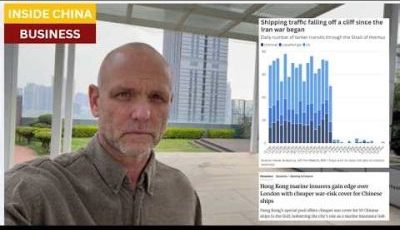
More Iran War fallout: Maritime insurance industry shifts from London to China
or go to
Aletho News Archives – Video-Images
From the Archives
The Biggest Threat to Peace in Middle East
By Dr. Elias Akleh* | Sabbah Report | May 24, 2010
A build up of heightened tension in the Middle East is escalating in the last few weeks. American and Israeli postures towards Lebanon, Syria, and Iran have become more threatening. Listening to speeches of political leaders one hears talks only about war not peace. Iranians and Israelis are continuously training hard for a possible showdown. Both sides are conducting extensive war games every month. This led Syrians to claim that Israel is preparing for a soon-to-come another war. The Jordanians also are warning that current stalemate of the peace process is an indication of a war breaking out this summer. The Russian President and his army chief hinted, a few months ago, that the US and Israel were planning for an attack on Iran.
Indeed Iran is, as it has been for last few years, the target of most of the threats and accusations of supporting terrorism. Escalating incitement against Iran the American Defense Department sent last month (April) to Congress a report on Iran’s military claiming Iran could develop intercontinental ballistic missiles capable of reaching the US by 2015.
Ignoring the fact that N. Korea, India, Pakistan, and Israel are proven to have nuclear weapons while Iran does not, the US Secretary of State Hillary Clinton chose in her speech, to the nuclear Non-Proliferation Treaty review conference at the UN, to focus on Iran’s alleged nuclear ambitions putting the whole world at risk as she put it. According to Clinton Iran’s acquisition of nuclear weapons, rather than Israel’s more than 200 nuclear bombs, is destabilizing the Middle East. She called on the world’s nations to rally around US efforts to hold Iran, not other nuclear countries, to account.
The accusation that Usama Bin Laden is living comfortably in Iran had received a boost after the broadcast of a documentary called “Feathered Cocaine”. This echoed the June 2003 claims of the Italian newspaper Corre de la Sierra that Bin Laden was in Iran according to some intelligence report, and according to Richard Miniter’s book “Shadow War”. … continue
Blog Roll
 Aletho News
- German journalist threatened with homelessness as German court upholds EU sanctions in landmark free speech case
- US Tells Allies That Ukraine-Bound Arms Could be Sent to Middle East
- Organized terrorism: Iran condemns killing of its diplomats in Lebanon
- Why could Gaza enter the regional war?
- Hamas official rejects Mladenov Plan linking disarmament to Gaza reconstruction
- Two Primary Elections for the Soul of ‘America First’
- Japan Clings to US Vassalage Despite Energy Crunch Caused By Iran War
- US Seeks Control Over Global Energy Infrastructure – Kremlin
- US senators target Orban government for standing up to Zelensky
- The deep-rooted culture of corruption in Ukraine
- If Americans Knew
- Researchers at Human Rights Watch Resign Over Blocked Report on Palestinian Refugee Return
- Jewish Groups Are Backing a War Americans Don’t Want
- Eric Fingerhut Thinks He’s the President of the Jews
- Top Jewish Philanthropists, Rabbis Urge Israeli President to Take Action Against ‘Jewish Extremists’
- Don’t Be Fooled. Zionist Leaders Have Always Wanted to Control Southern Lebanon
- Israel’s widespread use of torture is a core element of its genocide against the Palestinian people
- In Israel’s War on Iran, Many Middle East US Bases Rendered “All But Uninhabitable”
- ‘Burn the lawn’: Israel pursues ‘Rafah model’ in southern Lebanon
- A genocide here, an amputation there
- Reports: Iran mobilizing 1M fighters, Israel-US run low on ammo, Israeli army faces shortage – Not a ceasefire Day 168
- No Tricks Zone
- Devastating Assessment Of Comirnaty Vaccine By Former Senior Pfizer Europe Toxicologist
- New Study: CO2 Is ‘Effectively Negligible’ As An Explanatory Climate Change Factor Since 2000
- Former Pfizer Toxicologist Dr. Helmut Sterz Tells Bundestag Hearing Pfizer Vaccine Should Have Never Been Approved
- Energy Expert: Germany’s Nuclear Phaseout Was A “500 Billion Euro Mistake”
- New Research: South Australia’s Mid-Holocene Sea Surface Temperatures Were 4°C Warmer Than Today
- Storing Green Energy To Last Germany 10 Days Would Require A 60-Million Tonne Battery
- New Studies: UK Sea Levels Were 4 Meters Higher Than Today During The Mid-Holocene
- Destructive Green New Deal: German Energy And Metal Group Warns Of Drastic Crisis
- New Study Documents A 20-Year Pause In Arctic Sea Ice Decline – Driven By Internal Variability
- Wake-up Call: Survey Shows Majority Of Germans Now Favor Postponing Climate Targets!
 Aletho News