Paris 13/11: Operation Gladio?
By Vanessa Beeley | thewallwillfall | November 18, 2015
“Where no counsel is, the people fall, but in the multitude of counselors there is safety.” – Mossad Motto
~
On the 13th November 2015 during the Paris attacks, 4.1 million people submitted their personal details to the Facebook Safety App, 360 million people received Facebook messages reassuring them of their friends and family’s safety. This information may well have been deposited into an Israeli intelligence bank.
Paris 13/11 aftershocks.
As the dust settles and the pall of grief envelops the scenes of the 13/11 Paris attacks, information begins to seep through the inevitable cracks in the mainstream media, security apparatus narrative.
Very few “subversive” media outlets in France do as good a job of deconstruction as Panamza. Their reporting on the Charlie Hebdo affair blazed a trail of evidence to counter the sprawling inaccuracies of the “official” storyline. Their articles over the last two days have motivated my investigation into the insidious drivers possibly behind the 13/11 attacks on the French capital.
Unsurprisingly the common denominator connecting both Charlie Hebdo and Paris 13/11 appears to be the covert involvement of the Israeli security apparatus.
Lets return to the scene of mayhem and bloodshed in Paris on Friday night. The panic that spread like wildfire across social media, tearful messages and desperate attempts to connect with loved ones, suspected to be in the firing zone.
Then suddenly, Facebook “sympathetically” employed its Safety Check APP, to enable terrified families to reconnect with their missing relatives and to reassure themselves of their safety as the bullets ricocheted off the walls & streets of Paris.
The Safety Check APP was originally named the Disaster Message Board and was introduced on October 15, 2014. Its first major deployment was on Saturday April 25 2015 in the wake of the April 2015 Nepal Earthquake. The tool has since been utilised after the May 2015 Nepal earthquake and the Pacific Hurricane Patricia October 2015.
The 13/11 Paris attack was the first time that this Safety Check APP was deployed for an “unnatural” disaster. Over 4.1 million people checked in with friends and relatives, a total of 360 million people received messages that their loved ones were “safe”.
Alex Schultz: Facebook’s vice president of Growth:
“We chose to activate Safety Check in Paris because we observed a lot of activity on Facebook as the events were unfolding. In the middle of a complex, uncertain situation affecting many people, Facebook became a place where people were sharing information and looking to understand the condition of their loved ones… This activation will change our policy around Safety Check and when we activate it for other serious and tragic incidents in the future. We want this tool to be available whenever and wherever it can help.”
Wonderful, I hear you exclaim! Wonderful for whom?
“During the 24 hours after the terror attack, 4.1 million people checked in with friends and relatives using Facebook Safety Check, a technology developed by Facebook Israel’s research and development department,” said a spokesperson for Facebook Israel. “A total of 360 million people received messages that their loved ones were safe.”

Roi Tiger and Guy Rosen of Onavo
The Facebook Safety Check was designed by Roi Tiger, currently Director of Engineering at Facebook, previously Co-Founder, with Guy Rosen, of Onavo which was bought by Facebook in October 2013.
Perhaps coincidence but this acquistion slots neatly into the timeline with the long since debunked Ghouta Chemical weapons claims against the Syrian Government and the seed funding of White House, UK Foreign Office, CIA, Soros backed and funded Syria Civil Defence Group aka the White Helmets.

Roi Tiger Facebook Profile Picture.
Roi Tiger is a graduate of IDC Herzliya, Tel Aviv, a “non profit” education organisation dedicated to the promotion of Zionist ideology and the fortification of the illegal state of Israel.
IDC HERZLIYA is committed to the fundamental values of a free and tolerant society, while maintaining a Zionist philosophy – first and foremost, freedom of the individual for self-realization in all realms of thought and action, while striving to strengthen the State of Israel.
Roi Tiger then went on to join the IOF Elite 8200 division, an Israeli Intelligence Corps responsible for collecting signal intelligence (SIGINT) and code decryption, described in 2010 by Le Monde diplomatique, as a massive spying operation. Also in 2010, implicated by US Intelligence in Operation Orchard, the 2007 Israeli air strikes on an alleged nuclear reactor in the Deir Ezzor region of Syria.
Full background to this 2007 Israeli illegal incursion into Syrian airspace here.
So, when people innocently clicked “safe” or put a name of their loved ones into the search box of the Facebook Safety app, it is quite probable that they fed a stream of information directly into the Israeli Intelligence data banks.

Web front page of Internet.org
Onavo, a relatively small start-up comprising 40 employees, was based in Tel Aviv and was bought by Mark Zuckerburg as part of his all consuming internet.org project which has as its objective, to create universal access to the Internet.
The significance of this purchase is manifold.
It is Facebook’s first foray onto Israeli territory. In 2012 they purchased Face.com, an Israeli company focused on powerful facial recognition but this had not precipitated an actual base in Israel. With the acquisition of Onavo, Facebook Israel was born.
According to TechCrunch, there’s no official figure attached to the deal, but Israeli paper Calcalist reports between $150-200 million and other sources put the figure closer to $100 million. Whether the real sum is closer to the low end or the high end of that range, it’s a massive amount of money for Onavo, which started three years ago and has previously raised around $13 million in venture funding. – www.digitaltrends.com
This purchase of Onavo and the development of the Safety APP will give Facebook increased capability of compiling one of the most extensive personal data bases in existence in the world today.
On November 11th, 2 days before the Paris attacks, Facebook published a blog report.
“This report, which covers the first half of 2015, provides information about the number of government requests we receive for data, as well as the number of pieces of content restricted for violating local law in countries around the world where we provide service. The report also includes updated information about the national security requests we received from US authorities under the Foreign Intelligence Surveillance Act and through National Security Letters.
Overall, we continue to see an increase in content restrictions and government requests for data globally. The amount of content restricted for violating local law increased by 112% over the second half of 2014, to 20,568 pieces of content, up from 9,707. Government requests for account data increased across all countries by 18% over the same period, from 35,051 requests to 41,214″
The full report is here. This is a deliberate policy of obscurantism by Facebook. When one reads their data policy it is obvious that there are no restraints on information sharing. Their figures cannot truthfully reflect the number of Government requests in France that would have spiked, following Charlie Hebdo and even if they do, out of a claimed 2,500+ Government requests for information, only a meagre 295 were “restricted” with very little explanation of what “restricted” actually means.

“We restricted access in France to content reported under local laws prohibiting Holocaust denial and the condoning of terrorism.”
This statement is rendered portentous by the wave of arrests and house searches sweeping France before the blood is even dry on the streets of Paris and certainly prior to the conducting of a full and objective investigation into the perpetrators of the “greatest atrocity committed on French soil since WWII.” This, according to media pundits reporting from Paris as the propaganda wagon rolls smoothly into its habitual groove.
It must be noted that this deliberately emotive media claim is an insult to the 200+ Algerians massacred by Paris police, during protests against France’s brutal neocolonialist war in Algeria, on the streets of Paris in 1961. Colonialist selective memory fails to honour the ghosts of these oppressed and marginalised souls, forbidden from protesting the genocide of their people and punished for daring to stand in solidarity with Algerian resistance against French hegemony. Paris police dumped the murdered bodies into the cold waters of the Seine, over 11,500 Algerians were arrested, beaten, starved and later tortured in the Palais des Sports.
The 13/11 Paris attacks with all the accompanying media frenzy will surely lead us further down the path to the implementation of Patriot Act equivalents in Europe.
As Patrick Henningsen states in his recent 21st Century Wire article: Orwell’s Razor: All of 21Wire’s predictions come true days after “Paris Attacks”
“Debate on Govt Spying and Privacy Rights, now off the table. As expected, politicians looking to appear ‘tough on terror’ and the growing gaggle of security lobbyists, and other assorted corporate fascists, have called for something akin to a ‘European Patriot Act’ – an end to the ‘Post-Snowden’ debate over bulk data collection and privacy – covering issues like NSA and GCHQ blanket spying on all citizens, and imposing more regulations and government monitoring of mandatory manufacturer ‘back doors’ for computers, mobile phones, gaming consoles, and also calls to make encryption illegal, except for government.”

“Special” police forces in St Denis, Paris 18/11/2015
CIA & Intelligence Connections
We must also take into consideration the worrying Cyber security developments in the UK:
Lord Mendelsohn: We welcome the appointment of the former British ambassador to Israel, Matthew Gould, who will have a key role in cyber security inside the Cabinet Office – a very useful and important position – Look Who’s in Charge of UK Government Cyber Security.
Matthew Gould, self proclaimed “passionate Zionist”, first Jewish British Ambassador in Tel Aviv and co creator of the controversial UK Israel Tech-Hub which was established to:
“Promote partnerships in technology and innovation between Israel and the UK, and is the first initiative of its kind for the British government and for an embassy in Israel. The hub’s creation followed an agreement between prime ministers David Cameron and Binyamin Netanyahu to build a UK-Israel partnership in technology.”
For full details on this burgeoning UK-Israel cyber marriage, read this excellent piece by Stuart Littlewood.
Now lets add a little more spice into the evolving narrative.
Two weeks prior to the 13/11 attacks on the 27th of October 2015, Washington Post columnist, David Ignatius was moderator for the CIA-GW [George Washington University] Conference.
Included on the panel of the “Shared 21st Century International Mission” were:
CIA Director John Brennan, former UK MI6 Chief John Sawers, Director of the French Directorate for External Security Bernard Bajolet, and former Israeli National Security Advisor Yaacov Amidror
Perhaps even more concerning is the subliminal message that can be interpreted from DGSE Director, Bernard Bajolet’s remarks, endorsed by CIA Director John Brennan.
“The Middle East will never go back to how it was. Syria and Iraq will never retrieve their pre-existing features and culture
Syria is already “partitioned”. The Syrian regime only controls a tiny part, perhaps less than one third of the country established post WWII.
The North is under Kurdish control and “we” have the central region under ISIS control [I have deliberately translated the French exactly as it was written]
The situation in Iraq is the same.”
John Brennan:
“When I look at the devastation in Syria, Iraq, Libya, Yemen it is hard to envisage a central government that would be capable of controlling and governing these post WWII territories.
It appears that the partitioning plan for the Middle East is resisting all efforts to reduce its holy grail status. The partitioning plan that best serves the Israeli Yinon plan for Greater Israel and ensures permanent sectarian strife and division in countries bursting at the seams with economic, resource and geopolitical jewels for the Imperialist crown.
The timing of this conference, a mere two weeks prior to the 13/11 Paris attacks that would almost certainly propel France and allies towards increased intervention in Syria & ensure revived calls for a No Fly Zone, must be considered a little more than purely coincidental.
Conclusions
While we must stress that no concrete conclusions may be drawn at this stage, previous Gladio operations, and we would include Charlie Hebdo in that list, lead us to see very clear parallels emerging between the events surrounding Paris 13/11 and those preceding other such attacks.
The omnipresence of the Israeli Intelligence apparatus in its many forms should, at least, motivate us to suspect foul play and to question the white noise mainstream media accounts. The tsunami of propaganda, the conversion of all icons to a French flag, even including Skype heart emoticons, must ring alarm bells.
Experience teaches us that, propaganda is intrinsically linked to government agendas and that terror attacks invariably engender an increase in global oppression, conflict, sectarian division and the suffering of the very peoples universally judged and condemned by scraps of evidence that bear no resemblance to the truth.
As Sayed Nasrallah has said we are living in the age predicted by George Orwell and Aldous Huxley, the propaganda serves to ensure our rapid descent through the layers of social conditioning, from regionalism to individualism, a state of mind where there is potential for the fabric of society to be shredded and scattered into the winds of the brewing “perfect storm”
“A really efficient totalitarian state would be one in which the all-powerful executive of political bosses and their army of managers control a population of slaves who do not have to be coerced, because they love their servitude.” – Aldous Huxley, Brave New World

St Denis, Paris 18/11/2015.
Police forces operate in Saint-Denis on Wednesday, November 18. Police say two suspects in last week’s Paris attacks, a man and a woman, have been killed in a police operation north of the capital.
Britain’s Secret Widespread Use Of Torture
By Graham Vanbergen | TruePublica | October 6, 2015
The last British prisoner in Guantanamo Bay has claimed that Britain knew flawed evidence, used to justify the Iraq War, had been obtained under torture – and said his lengthy detention was a result of fears that he would go on the record if released.
Shaker Aamer, who is due to be freed from the US military prison after 13 years without charge, said he witnessed British agents at Bagram Air Base when a prisoner wrongly told interrogators that Iraqi forces had trained al-Qaeda in the use of weapons of mass destruction.
The evidence of Ibn al-Shaykh al-Libi, which was later disproven, was used by George W Bush in 2002 during a hawkish speech calling for the removal of Saddam Hussein, in which he said: “We’ve learned that Iraq has trained al-Qaeda members in bomb-making and poisons and deadly gases.”
Mr Aamer said that despite guarantees he would be released within days, he feared he would still die in the prison, adding: “I know there are people who, even now, are working hard to keep me here.”
A Foreign Office spokesman said: “The UK does not participate in, solicit, encourage or condone the use of torture or cruel, inhuman or degrading treatment or punishment for any purpose.
Aamer gave statements to the Metropolitan police two years ago in which he detailed the alleged brutality he has faced, that included torture. He said he was interrogated by British agents at Bagram airbase, who knew he and others were being tortured there.
Britain has a long, dark history of torture and it has gone to extraordinary lengths to hide it. A normal functioning democracy would stand resolute that torture of any kind is not just illegal and immoral, it simply doesn’t work.
David Whyte’s recent book “How Corrupt is Britain” covers some pivotal moments in the UK’s history of torture.
In June 1975 an eminent Harley Street doctor flew to Dublin. The patient was suffering from severe angina, a condition which is ‘always associated with the risk of sudden death according to the doctor. The doctor was Dr Denis Leigh, a leading consultant psychiatrist at the Bethlem Royal and the Maudsley Hospitals in London, and more importantly, medical consultant to the British Army.
The patient, Sean McKenna, was a former member of the IRA who had been subjected to so-called ‘in-depth interrogation’ following the introduction of internment without trial in August 1971, He was one of the 14 ‘hooded men’ whose infamous treatment forced the lrish state to launch a case alleging torture against the UK government at the European Court of Human Rights in Strasbourg.
Leigh’s medical examination was being carried out on behalf of the Crown to bolster the UK defence that the men had not suffered long-term physical or psychiatric damage as a result of their interrogation.
The ‘in-depth interrogation’ that McKenna and the others were subjected to consisted of five techniques that had been widely used by the British army in counter-insurgency campaigns in Aden, Cyprus, Malaya, Palestine and elsewhere – hooding, white noise, wall standing in a stress position and of course regular beatings.
Dr Leigh found that McKenna’s condition was known to British army doctors before the interrogation went ahead, and ‘it would be hard to show that it was wise to proceed with the interrogation, and that the interrogation did not have the effect of worsening his angina’.
In fact McKenna’s psychiatric condition was such that he had been released from Long Kesh internment camp in May 1972 directly into the care of a psychiatric unit. His daughter described ‘a very broken man, sitting crying, very shaky’. Four days after the June 1975 medical examination Sean McKenna died. He had suffered a massive heart attack.
In 1976 the European Human Rights Commission (EHRC) upheld a complaint by Ireland that the treatment of the ‘hooded men’ constituted torture, and referred the case to the European Court of Human Rights for judgement. The Commission had condemned the five techniques as a ‘modern system of torture’.
Britain was one of the original signatories to the European Convention on Human Rights, had been found to have sanctioned torture.
Successive UK governments, rather than comply with their legal obligation to ‘search and try’ allegations of torture, adopted a policy more akin to ‘hide and lie’. This was to have consequences many years later. The inquiry into the 2003 murder of an Iraqi civilian, Baha Mousa, by British soldiers was told that the five techniques had again been used in Iraq by every single battle group in the field.
ln ‘Cruel Britannia: A Secret History of Torture,’ Guardian journalist Ian Cobain provides damning evidence that the UK government did in fact ‘do’ torture, and had been doing so for decades in counter-insurgency wars from Brunei to Aden, and from Ireland to lraq. In June 2013 UK foreign secretary William Hague apologised in Parliament for the torture of Mau Mau suspects in Kenya during the 1950s. Over £50 million was paid out in compensation to some 5,000 Kenyan victims. ln 1972 prime minister Edward Heath had promised Parliament that the ‘five techniques’ torture techniques would never be used again.
As declassified documents now show, prime ministers and cabinet colleagues over the decades actually went to great lengths to ensure that those responsible for torture would not face sanction or prosecution and actively covered up these crimes.
In another case in Afghanistan, among the Britons who were picked up was a man called Jamal al-Harith. Born Ronald Fiddler in Manchester in 1966, Harith had converted to Islam in his 20s and travelled widely in the Muslim world before arriving in Afghanistan. After 9/11, he had been imprisoned by the Taliban, who suspected him of being a British spy. A British journalist found Harith languishing in the prison in January 2002 and alerted British diplomats in Kabul, believing they would arrange his repatriation. Instead, they arranged for him to be detained by US forces, who took him straight to an interrogation centre at Kandahar.
Harith then spent two years at Guantánamo, being kicked, punched, slapped, shackled in painful positions, subjected to extreme temperatures and deprived of sleep. He was refused adequate water supplies and fed on food with date markings 10 or 12 years old. On one occasion, he says, he was chained and severely beaten for refusing an injection. He estimates he was interrogated about 80 times, usually by Americans but sometimes by British intelligence officers.
In all, nine British nationals were sent to the maximum-security prison at Guantánamo, along with at least nine former British residents. All were incarcerated for years, and from the moment they arrived they suffered torture including regular beatings, threats and sleep deprivation. All were interrogated by MI5 officers and some also by MI6.
In December 2005, the full truth about British complicity in rendition and torture was still such a deeply buried official secret that Jack Straw felt able to reassure MPs on the Commons foreign affairs committee about the allegations starting to surface in the media. “Unless we all start to believe in conspiracy theories,” he said, “there simply is no truth in the claims that the United Kingdom has been involved in rendition or that behind this there is some kind of secret state which is in league with some dark forces in the United States”. Straw was lying.
Over the next few years, men were rendered not only from the war zones of Afghanistan and Iraq, but from Kenya, Pakistan, Indonesia, Somalia, Bosnia, Croatia, Albania, Gambia, Zambia, Thailand and the US itself. The US was running a global kidnapping programme on the basis of agreements reached at a Nato meeting.
Quietly, Britain pledged logistics support for the rendition programme, which resulted in the CIA’s jets becoming frequent visitors to British airports en route to the agency’s secret prisons on at least 210 times.
It has since been discovered that throughout the postwar period, it seemed, there had been a network of secret British prisons, hidden from the Red Cross, where men thought to pose a threat to the state could be kept for years and systematically tormented, tortured and sometimes murdered.
It is now known that MI5 have a department called the “international terrorism-related agent running section”: the section routinely responsible for interviewing suspected terrorists. The MI5 officers who were interrogating al-Qaida suspects – men who were being tortured in Afghanistan, Pakistan, Guantánamo and elsewhere around the world – were agent handlers. It appeared that MI5 was seeking to recruit torture victims as double agents.
Within two months of the May 2010 general election, under pressure from his Liberal Democrat coalition partners, as well as some of his own backbenchers, the new prime minister, David Cameron, announced the establishment of a judge-led inquiry into the UK’s involvement in torture and rendition. The man appointed to head the inquiry was named as Sir Peter Gibson, a retired judge. It is possible that MI5 and MI6 had a hand in his selection; for the previous four years Gibson had served as the intelligence services commissioner. Rights groups suggested that Gibson should be appearing before the inquiry as a witness rather than presiding over it.
In July 2011, most major international and British human rights groups, including Amnesty International, said they would be boycotting the inquiry. The following month, lawyers representing victims of Britain’s torture operations announced that they, too, would have nothing to do with it. Six months later, the government announced that the Gibson inquiry was scrapped.
Cameron’s government then brought forward a green paper that suggested a need for greater courtroom secrecy. Britain’s complicity in torture was to continue to be a dirty dark state secret.
None of this squares with Britain’s reputation as a nation that prides itself on its love of fair play and respect for the rule of law. Successive British government’s continues to preach to other nations around the world of the importance of justice, transparency and democracy whilst disregarding essentials such as these back at home.
UK’s MI6 aided torture of Nepal rebels: Report
Press TV – August 31, 2014
British secret service MI6 has been accused of aiding Nepal’s authorities in the torture of Maoist rebels during the South Asian country’s civil war.
The accusations were made by author Thomas Bell in his new book Kathmandu citing sources in the Nepalese security establishment on Britain’s involvement in the country’s decade long civil war.
Bell said British authorities funded a four-year intelligence operation in Nepal in 2002 that financed safe houses and provided training in surveillance and counter-insurgency tactics to Nepal’s army and spy agency, the National Investigation Department (NID).
The British agency “also sent a small number of British officers to Nepal, around four or five — some tied to the embassy, others operating separately,” said Bell.
According to Bell, the British officers trained Nepalese authorities on how to place bugs, penetrate rebel networks and groom informers.
The sources said “British aid greatly strengthened” NID’s performance, which led to dozens of arrests, of which a number “were tortured and disappeared.”
One of the sources, a Nepalese general with close knowledge of the operation, argued that there was no doubt that British authorities realized that some of those detained would be tortured and killed.
Furthermore, Bell said that a senior Western official told him that the operation was cleared by Britain’s Foreign Office.
Bell said the findings revealed that “while calling for an end to abuses… the British were secretly giving very significant help in arresting targets whom they knew were very likely to be tortured.”
Tejshree Thapa, senior researcher at the Asia division of Human Rights Watch, commented on the book’s findings saying, “Nepal’s army was known by 2002 to be an abusive force, responsible for… summary executions, torture, custodial detentions,” adding, “To support such an army is tantamount to entrenching and encouraging abuse and impunity.”
Nepal’s civil war between the government and Maoists lasted between 1996 and 2006 and left more than 16,000 people killed.
7/7 attacks: What is MI5 hiding?
By Jane Calvari | Press TV | July 7, 2014
Lower Manhattan, New York City, September 11, 2001; a shocking event leads to the declaration of the so-called global “War on Terror” lead by the United States Government.
The world changed after 9/11. Since then Governments across the world and the British Government in particular have introduced anti-terror laws that have compromised essential liberties in the society.
But that was not enough for the British officials. There was a need for another shock to the society to introduce laws to discipline those who were outspoken about the Government’s behaviors.
On the morning of July 7, 2005, Londoners started their day with panicking news. On that day, several explosions occurred on the public transport system in the city of London.
Fifty-six people, including four alleged suicide bombers, died in three explosions on the London underground and one explosion on a London bus.
Within hours, the British Government, the Metropolitan Police, Intelligence agencies and many others started to propagate stories that do not simply add up to common sense.
Nine years on and there is still no clear picture of what happened that day. British officials hoped that time will erode the ambiguities, but they are now turned to snowballs attracting more attention among the public.
Preliminary Events: Coincidence or Planned?
In May 2004, the BBC’s investigative current affairs program “Panorama” had a panel of experts discussing how Britain would react to a terrorist attack just like the future 7/7 bombings. The scenario included three explosions on the London Underground and one of a vehicle.
The program entitled “London Under Attack” depicted a fictional terrorist attack. It was presented in a documentary style as if it were really happening. Surprisingly the simulation was as similar as possible to the real event that happened months later.
On the morning of 7 July 2005, there was one more territory that has caused controversy ever since. Senior Metropolitan police officer Peter Power was conducting a tabletop exercise that morning, that not only envisaged the attacks on the Underground involving three simultaneous explosions at 3 tube stations but a bombing on a bus. Power’s scenario involved the very same underground locations that were attacked in real life that morning.
Israel is Here Again
On the morning of 7/7 In London, Israeli Finance Minister of the time, Benjamin Netanyahu was scheduled for an economic conference in London but he never left his hotel room adjacent to the site of the first explosion. In the confusion after the attacks, Associated Press reported that Scotland Yard had tipped off the Israeli delegation. A senior Israeli official admitted that, minutes before the explosions it had informed the Israeli delegations that it had received warnings of possible terror attacks.
Netanyahu and Scotland Yard have since denied the reports. The story itself was being reported by other sources and traveled right around the world’s media.
The former mayor of New York and staunch Zionist, Rudi Giuliani was also in Britain. On July 6th, he appeared up in Yorkshire, where he gave a rousing pro-war on terror speech. He admired Tony Blair, while deploring the way the world had allowed terrorists to get out of control through failing to take the problem seriously enough.
What was Giuliani doing in London that morning or indeed the UK? No one has ever answered that. Was it a coincidence that Giuliani who was the mayor of New York on 9/11 was in London on just the day the London bombs went off?
The Secret Services Knew about the Threat and Colluded with the Terrorists
Although there have been suspicions and anecdotal evidence of a fifth or more bombers, the official 7/7 story claims that only four home-grown extremists were responsible for the attacks. They were Mohammed Siddique Khan age 30 from Beeston Leeds, accused of the Edgware Road blast. Shehzad Tanweer aged 22 also from Beeston, accused of the Liverpool Aldgate blast. Jamaican-born Germaine Lindsay age 19 from Aylesbury, allegedly set off the bomb at the carriage heading from Russell Square station and Hasib Hussain the youngest at just 18 said to have blown himself up on the number 30 bus outside of Tavistock Square.
One may ask why were all these radicals and potential terrorists with links to networks overseas, residing in Britain in the years leading up to 7/7? That question is a long and complex one that includes elements of collusion by the state and security services with the extremists.
In his book “7/7: What Went Wrong” former British army officer and intelligence expert Crispin Black, wrote of a secret Government policy known as the covenant of security.
He says this refers to the long-standing British habit of providing refuge and welfare to extremists on the unspoken assumption that “if we give them a safe haven they will not attack us.”
Under the covenant Britain spent years harboring preachers like Abu Hamza former Imam of the Finsbury Park mosque and Omar Bakri former leader of “Almuhajeruns” now “Muslims Against Crusades.”
In fact at various stages, both men were assets of the MI5 and the MI6.
Abu Hamza became an informant for special Branch and the MI5 in 1997 and despite his inflammatory sermons and role in recruiting for terrorism he was told that what he was doing fell under freedom of speech.
“You don’t have to worry unless we see blood on the street” the authorities told him.
While they were turning a blind eye, Hamza was training young men how to use AK-47, handguns and mock rocket launchers during country retreats. He was preparing them for the tougher times they could face overseas that the authorities also knew he was funding.
Hamza was so protected on British soil that the French even considered kidnapping him to stop him. Egypt was so concerned that they offered to swap him for a British prisoner, but they were turned down.
Richard Reid the “Shoe Bomber” was a regular attendee of Hamza’s Finsbury Park Mosque before he attempted to down American Airline’s flight 63.
Hamza’s influence also did not escape those surrounding the future 7/7 bombings. Alleged bombers Mohammed Siddique Khan, Shehzad Tanweer and Jermaine Lindsay had all attended his sermons at various stages.
It is hard to understand why there was such a careless policy of appeasement.
Was Britain really in such a position that it was safer to harbour extremists than it was to challenge them? One possibility is that the covenant was really to benefit Britain’s foreign policy goals. It’s easy for the Government to say four Muslims attacked Britain, but things get a lot more complicated when those four Muslims grew up in an extremist environment which the Government themselves permitted.
On the one hand, British citizens were told we’re fighting a war on terror but, on the other hand, their Government helped and supported the terrorists. What’s more worrying is that they may not have learned the lesson about this appeasement and collusion.
Since at least the 90s, the Government and its intelligence agencies put Britain at risk by harboring Wahhabi extremists and allowing them to groom young British men for terror overseas when it suited their foreign policy.
Paving the Way for Attacks
Despite all of the data, on June 2, 2005, just over a month before the attacks, the terror threat level was lowered, and police were moved out of the city. The official announcement stated “at present there is not a group with both the intent and the capability to attack the UK.”
So on the one hand, officials were warning about attacks on the underground and were conducting drills and exercises in preparation, yet on the other hand they lowered the threat level stating nobody was planning to attack, and had since claimed they had no inkling that anything like this was going to take place. Subsequent Government investigations have never adequately addressed this massive contradiction.
Resisting against Transparency
On May 1, 2007, survivors and relatives of those killed on July 7 2005, delivered a letter to the Home Office calling for an independent and impartial public inquiry into the attacks. That was brusquely rejected by the Government.
Perhaps what’s nonsensical and offensive is that survivors and family members of the victims had to wait five years for any judicial hearing.
What did take place was an inquest although it was long overdue. Its scope was limited, and the coroner’s main goal without certain guilt was to determine how the deaths occurred.
This proved extremely difficult because there were no internal post-mortems carried out on the bodies. There was no forensic evidence from the scenes as to what explosives were used. There was no CCTV on the trains or buses to verify the conflicting eyewitness’ reports and even the locations of the blasts in relation to the passengers have not been adequately determined.
The Home Office narrative gives locations for 3 of the alleged bombers on the tube and says that all of them took off their rucksacks containing the bombs, putting them on the floor and blew themselves up and killed those people. But the problem is that the Metropolitan police entered into evidence at the inquest a series of diagrams that do not for the most part, correspond with where the Home Office narrative says the explosions took place. So to talk about the official story of what exactly happened is a falsehood. There isn’t any accurate and clear official story.
The British establishment theory is that there was a conspiracy of four home-grown suicide bombers who were not known to the intelligence agencies, who attacked in London using home-made bombs with no outside help.
The MI5 were not challenged, or cross-examined at the inquest. It rejected recommendations put forward by the families to help prevent this happening in the future.
James Eadie QC arrogantly stated : “The evidence simply does not give rise to any concern about other deaths in the future or continuing risk.”
This echoed the King’s Cross Underground fire of 1987 when the authorities failed to implement recommendations even by 2005.
Consecutive Governments Tried to Hide Something?
Nick Clegg and David Cameron picked up on the events when they were in opposition and scolded Blair for rejecting the public’s wishes.
But now the coalition is in full swing. They too have shown no interest in getting to the truth behind Britain’s most devastating terrorist atrocity. Rather than becoming more transparent about their actions and protocols and more importantly their collusion with the very terrorists that citizens are supposed to be protected from, in November 2011 foreign secretary William Hague revealed plans to restrict further the ability of courts to discuss in public the work of the MI5 and the MI6, who suggested intelligence data should only be discussed in secret court hearing.
If that was the case following 7/7, we may not have been privy to most of the information covered in this report. What exactly are they trying to hide?
Featured Video
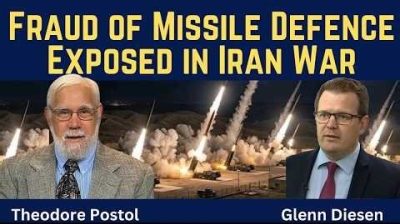
Ted Postol: Fraud of Missile Defence Exposed in Iran War
or go to
Aletho News Archives – Video-Images
Frlom the Archives
Containing the United States
By Edward S. Herman | Z Magazine | September 2016
“Containing the United States” is, of course, a ridiculous and self-contradictory idea in the U.S. and Western ideological and propaganda system. We all know that the United States had to “contain” the Soviet Union from 1945 to 1991, and since then has had the task of containing Russia and China. Only they threaten, bully, aggress and worry countries like Poland and Vietnam. Obama has had to reassure them both of our steadfast stand against Russian and Chinese military attacks. NATO has, of course, expanded greatly over the past several decades, despite the deaths of the Soviet Union and Warsaw Pact, but only to contain the renewed Russian — and Iranian, Libyan, Syrian and other — military threats; and we have “pivoted” to Asia, supported Japanese rearmament, bolstered our own forces in that area and jousted with the Chinese in their coastal waters solely to contain China. Earlier we had been obliged to contain North Vietnam, or was it the Soviet Union in Vietnam? Or China? Or “communism”? Or maybe all of them? Or none of them, but just needing an excuse to enlarge power?
The parallel propaganda has taken many forms. One is accepting as a premise that the United States only acts defensively and has no internal forces and interests that drive it to enlarge its sphere of control. I noted in an earlier article how Paul Krugman claims that internal Russian problems may well be the explanation of Russian “aggression,” but how at the same time it never occurs to him that the huge U.S. transnational corporate interests and “defense” establishment, and the pro-Israel lobby’s activities, might possibly make for an expansionist dynamic here.2 This reflects the standard establishment perspective that we are good and only react to evil. This was the view sustaining and justifying the invasion and occupation of Iraq from 2003. That attack was taken here as not evil but a response to evil, even if involving lies and mistakes, hence not describable as “aggression.” … continue
Blog Roll
 Aletho News
- When Tel Aviv decides, Washington fights
- Top official: Iran ready for a long war with US, no more diplomacy
- How Iran’s Toxic Rain Reveals US-Israel Discord
- Trump Admits He Is Destroying Iran For Israel
- Iran’s latest move in the GCC countries was a stroke of genius
- Blackmail and death threats, Zelensky embarrasses the EU, but there’s no condemnation
- Israel threatens to kill Iran’s new leadership
- Possible Scenarios for the Middle East
- The Horizon of the War. “Italy is being Dragged Into the War against Iran”
- A Second Vietnam War? Hanoi Waits and Prepares
- If Americans Knew
- Corporate Media Go All Out To Support The US-Israeli War On Iran
- US-Israel war on Iran is creating a steady growing number of amputees
- Israel planned this war on Iran for 40 years. Everything else is a smoke screen
- The wrong question about the war in Iran
- ‘Your Tax Dollars Being Used to Raise Your Gas Prices’: US-Israel Bomb Major Iranian Oil Depots
- ‘Bogus Evidence’: Former Nuclear Watchdog Head Debunks US Justification for Iran War
- EXPLAINER – Dimona: What to know about Israel’s nuclear site
- Fires and toxic air in Iran (thanks, Israel) – Not a ceasefire Day 150
- At Israel’s hands, Iran is burning, Lebanon and Gaza are crumbling – Not a ceasefire Day 149
- Israel is using the ‘Gaza doctrine’ in Lebanon and Iran
- No Tricks Zone
- Wake-up Call: Survey Shows Majority Of Germans Now Favor Postponing Climate Targets!
- Televised! Leading German Political Candidate Tells Schoolchildren CO2 Makes Sun Hotter!
- New Study: A Century Warming Of 1.1°C Is ‘Commonplace’ And ‘Not Unusual’ During This Interglacial
- New Study: ‘Internal Noise’ And Volcanic Forcing Can Trigger 10-15°C Warming Within Decades
- Glaciers Worldwide Are Suddendly Surging, Experts Blame Warming!
- Surprising Discovery: Sahara Is Greening…Billions Of Trees Where Once Thought To Be Barren
- New Research Reaffirms Clouds, Aerosols, And Surface Solar Radiation Are ‘Driving The Climate System’
- Germany: Electric Car Catches Fire At Charging Station, Sets Off Local “Inferno”, Widespread Damage
- New Study: Canada’s New Brunswick Was 1°C Warmer Than Today During The Medieval Warm Period
- Coal Power Back In Trend As Globe Tries To Keep Pace With Growing Demand For Power
 Aletho News