Trump Stuck Between Ending Endless Wars and his Hawkish Megadonors

By Eli Clifton | Responsible Statecraft | December 4, 2019
President Donald Trump has repeatedly promised to withdraw the United States from its ongoing wars in the Middle East, and avoid the kind of military adventurism, like the Iraq war, that has destabilized the region. Trump’s track record, however, is largely detached from his promises — a disconnect perhaps at least partially explained by his largest campaign contributors’ consistent advocacy for U.S. military action in the Middle East and support for starting a preventive war with Iran.
Trump appears to understand that the American public is largely supportive of ending the endless wars in Afghanistan and the greater Middle East. “Great nations do not fight endless wars,” said Trump in his 2019 State of the Union Address to bipartisan applause. But Trump’s actions haven’t lined up with his words. Despite his reckless Syria withdrawal announcement and blessing a Turkish invasion into northern Syria, total U.S. troop levels there are expected to remain at around 900, a small reduction from the 1,000 soldiers in Syria at the time of Trump’s announcement. Meanwhile, despite Trump’s repeated claims that he’ll end the war in Afghanistan, U.S. troops will stay there “for several more years,” as Chairman of the Joint Chiefs of Staff Gen. Mark Milley said last month.
Trump tearing up the Iran nuclear deal, moving the U.S. Embassy in Israel from Tel Aviv to Jerusalem, and a mission creep in Syria that’s expanded stated U.S. goals from containing ISIS to an “effort to push back against Iran,” according to Secretary of State Mike Pompeo, are also a far cry from moving away from Middle East military adventurism, as Trump has always said he wants to do.
Yet as a candidate for president, Trump talked a different game. At that time he broke with GOP/neocon orthodoxy on Iran and Israel. Then, his main critique of the Iran deal wasn’t its very existence — as was and is often the right-wing attack line — but that the Iranians weren’t buying enough commercial airliners from American companies, and instead spending more in Europe. And in another move that firmly put him on his own in the race, Trump even committed to being a “neutral” party on the Israeli-Palestinian conflict. All of that changed, however, as Trump drew closer to clinching the nomination and as he turned to some of the Republican Party’s biggest donors to fund his general election efforts — thus evaporating his claim of being a “self-funded” candidate.
Three GOP megadonors, Sheldon and Miriam Adelson, Paul Singer, and Bernard Marcus contributed more than a quarter-of-a-billion-dollars to boost Trump’s 2016 campaign and support Republican congressional and senate campaigns in 2016 and 2018.
Candidate Trump even warned that the money from the biggest of these donors, billionaire Sheldon Adelson, comes with strings attached. In 2015, Trump mocked Sen. Marco Rubio (R-Fla.) for pursuing Adelson’s endorsement and financial support, saying, “Sheldon Adelson is looking to give big dollars to Rubio because he feels he can mold him into his perfect little puppet. I agree!”
Adelson, and his wife Miriam, are the GOP’s biggest donors, and they’re relatively transparent about why they are engaged in politics. The Adelsons contributed $35 million to the Future 45 Super PAC that supported Trump’s presidential bid and spent $205 million on GOP Republican House and Senate races in the past two political cycles.
Sheldon Adelson has a history of using his ties to U.S. politicians to shape U.S. foreign policy. In 2001, Adelson reportedly curried favor with the Chinese leadership and helped secure his casino license in Macau by calling Rep. Tom Delay (R-TX), then the House majority whip, and persuading him to halt Republican opposition to Beijing’s Olympic bid.
And those views can take an extreme militarist tone regarding U.S. foreign policy in the Middle East. Adelson publicly advocated launching a preventive nuclear attack on Iran as a negotiating tactic and following up with a threat to nuke Tehran, a city with a population of over 8 million, if Iran did not abandon its nuclear program. The Adelsons pushed the Trump White House to fulfill a campaign pledge of relocating the U.S. embassy from Tel Aviv to Jerusalem, and bankrolled efforts to push out then-national security adviser H.R. McMaster and replace him with John Bolton, who would take a harder line on Iran and oversee U.S. abrogation from the Iran nuclear deal.
Home Depot co-founder Bernard Marcus — who contributed $7 million to groups supporting Trump’s candidacy, over $13 million in campaign contributions supporting GOP House and Senate races in 2016, and nearly $8 million to GOP midterm campaigns in 2018 — also made clear that his political engagement is driven by a militarist worldview.
In 2015, Marcus slammed the Obama administration’s efforts to negotiate constraints on Iran’s nuclear program, because, he said, Iran “is the devil.” Marcus even once accused Holocaust victims of being weak and submissive in the face of their own mass murder in concentration camps, which he also referred to as “detention centers” and “concentration centers.” The Israelis, said Marcus, “weren’t like the other Jews” and “didn’t walk into the ghettos, didn’t walk into the concentration camps, didn’t walk into the ovens.”
Hedge fund billionaire Paul Singer had set himself apart from Marcus and Adelson, and was the biggest Republican megadonor to identify with the “never Trump” wing — that is until Trump won the election when he donated $1 million to Trump’s inauguration.
Singer rarely speaks publicly about his foreign policy views, but his money, alongside Marcus and Adelson’s, supports some of the most hawkish institutions in Washington, including the now defunct Foreign Policy Initiative and the Foundation for Defense of Democracies whose experts promote economic pressure and military strikes against Iran. Bundled together, employees of Singer’s hedge fund, Elliott Management, were the second largest source of funds supporting the candidacy of the Senate’s most outspoken proponent of preventive war with Iran, Sen. Tom Cotton (R-Ark.), in 2014.
FDD donor rolls showed that by the end of 2011, Adelson contributed $1.5 million, Singer $3.6 million, and Bernard Marcus — who still sits on FDD’s board and whose family foundation continues to provide approximately one-third of FDD’s budge t—contributed $10.7 million.
Trump and Republican members of Congress are effectively bound to take the words of these hawkish donors under consideration when soliciting campaign funds. In some cases, Trump and other Republicans appear to be torn between their instincts to avoid needless wars and campaign megadonors who hold radical foreign policy visions and expect their campaign dollars to shape the foreign policy of the politicians they fund.
Japan to send helicopter-carrying destroyer & spy planes to ensure ‘safe passage’ of oil from increasingly crowded Middle East
RT | December 27, 2019
Japan’s cabinet has approved a plan to send its warship and surveillance planes to the Middle East, framing the controversial mission as “study and research activities” totally separate from the US initiative to contain Iran.
Tokyo is expected to send a destroyer with 200 crew and carrying up to two patrol helicopters alongside two P-3C anti-submarine patrol airplanes to the Gulf of Oman sometime in February, for a year-long mission.
The deployment is styled as a “study and research” mission to ensure “safe passage” for Japanese vessels through the region from which Tokyo receives some 90% of its oil imports. Yet in case of “unexpected developments,” local media report, a special order might be issued by the Japanese defence minister to allow the ‘Self-Defense Force’ to use weapons.
The possibility of Japanese deployment to the region was first voiced soon after a Japanese oil tanker came under a totally not suspicious attack back in June that by pure coincidence occurred just as Prime Minister Shinzo Abe was meeting with Iran’s supreme leader, Ayatollah Seyed Ali Khamenei.
Washington blamed Tehran for that and other attacks, pitching the idea of a maritime ‘policing’ mission but finding little enthusiasm among its allies. Besides Bahrain and the UAE, only the UK agreed to send a couple of destroyers after an embarrassing incident when it tried to seize an Iranian tanker under a bogus pretext only to get its own vessel impounded in a tit-for-tat response. Saudi Arabia joined the naval alliance after a drone attack – that was also pinned on Iran – targeted a major oil facility in the country. In addition, Australia promised to join sometime next year and the US says it’s only a “matter of time” until Qatar and Kuwait also join.
France in the meantime is spearheading a European-led mission independent of the US-led maritime initiative, as the US failed to convince European allies that its gunboat diplomacy was indeed only aimed at ‘protecting’ crucial waterways rather than enforcing Washington’s unilateral sanctions on Iran.
Impeachment Is a Distraction: Heavily Scripted Vote Demonstrates That Democracy Really Is Dead
By Philip Giraldi | Strategic Culture Foundation | December 26, 2019
Watching the impeachment “vote” was hard work. With only a few exceptions, each Congressman rose for roughly 90 seconds and provided a prearranged, almost completely scripted-along-party-lines explanation of how he or she was casting one’s ballot. After four grueling hours of hearing self-serving lies like “no one is above the law,” I was hoping that one of them would either fall off the podium and fracture a leg or actually go mad and break out into a song and dance routine. The entire performance was the strongest possible argument for term limits that is possible to make.
However, one of the more truly interesting aspects of the proceedings was the Democratic Party view of Russia, which was cited constantly. According to most of the Democrats, Russian meddling was the decisive element in getting Donald Trump elected, and many of them also believe that there was collusion between the GOP candidate and President Vladimir Putin. It is a viewpoint that is totally at odds with the facts, even if one actually believes that there was a meeting in the Kremlin at which a malevolent Putin instructed his myrmidons to “get Hillary.” Slippery Adam Schiff, he of the intelligence committee, carefully referred to Russia as an adversary but many other Democrats kept using the word “enemy.”
Regarding Ukraine, it was also interesting to note bipartisan support for supplying lethal weapons to the puppet regime in Kiev so they can kill Russian soldiers. No one, as far as I could discern, made the point that the United States had no real interest in regime change in Ukraine in the first place as it was a dangerous move that was responsive to no actual American interest. After that, funding and arming the locals to confront Moscow also would not seem to be in the US interest. That so many congress critters seem to be hard wired in their Russo-phobia would seem to suggest that they are willfully ignorant on the subject and inclined to take the path of least resistance, which is to blame the Kremlin rather than the horrific US policy that preceded and brought about Moscow’s intervention.
One also has to conclude that while the Republicans continue to mostly quietly support an aggressive foreign policy, the real war party in Congress is now the Democrats. They have incorporated Russia as the enemy so completely into their sense of identity that it has become the fallback position whenever they feel compelled to say something to distance themselves from the GOP. For them Russia and Vladimir Putin are together the real enemy that is out to destroy what remains of American democracy. To put it bluntly, such an argument is ridiculous, but it is clearly believed by many in the House of Representatives and Senate.
While all of that was going on in high definition, there were other things taking place. A week before the “trial” in the House of Representatives, the White House ordered a new round of sanctions directed against Iran. The sanctions in part target the country’s largest private airline Mahan Air, which was accused of “weapons of mass destruction proliferation” and transportation of lethal aid to Yemen. Secretary of the Treasury Steven Mnuchin issued a statement claiming that “The Iranian regime uses its aviation and shipping industries to supply its regional terrorist and militant groups with weapons, directly contributing to the devastating humanitarian crises in Syria and Yemen.”
Mahan Air has been targeted by the Treasury Department since 2011, when it was claimed that the planes were being used by the Iranian Revolutionary Guards Corps (IRGC) to move troops and military hardware around the Middle East region. The airline has 55 planes and flies to 40 international and domestic destinations.
The airline is now sanctioned under the Executive Order 13382 as a “proliferator of weapons of mass destruction and their supporters.” Apart from the appalling English usage, one might well question the designation itself as Iran is not the party responsible for the humanitarian crisis in Yemen. That honor goes to America’s good friend Saudi Arabia. And blaming the situation in Syria on Iran is also a bit of a misdirection as it is the United States that has prolonged the carnage in that country. And what weapons of mass destruction are involved in both cases is by no means clear. Iran has no nukes and there have been no credible reports of the use of chemical or biological weapons in Yemen, while the stories about Syrian government employment of such weapons have turned out to be fabrications.
The Treasury Department sanctions targeted three general ticket sales agents of Mahan Air, as well as dozens of aircraft belonging to or operated by it. The new sanctions might be viewed as the latest step in the US government campaign to apply “maximum pressure” against Iran. The move will mean that other countries in Europe and the Middle East will stop permitting Mahan Air flights from landing or otherwise using their facilities. The Treasury is clearly willing to use what are referred to as “secondary sanctions” on other countries if the ban on Mahan Air is not supported. It is economic warfare pure and simple and the intent might well be to shut down the airline.
The timing and targeting of the White House move suggest that pressure is being directed against Iran’s transportation links with the rest of the world, thereby isolating it and bringing it that much closer to economic collapse. How Iran will react to the new sanctions is not known, but if it is pushed hard enough it might choose to strike back.
There is also some concern over a bill before Congress that was originally introduced three years ago but which now appears to have sufficient support to pass into law. It would authorize additional sanctions by the US Treasury Department directed against “the Syrian regime, Russia and Iran for past and ongoing war crimes” that it has been claimed took place during the Syrian war. As many of the alleged atrocities in the Syrian war have been exposed as fabrications by groups like the White Helmets, it is by no means clear how Washington will verify its list of “war crimes.” At least one report suggests that the White House now supports the bill and is likely to enforce any sanctions that are put in place.
And, of course, it just might be Israel that will pull the trigger and start a war. Israeli Prime Minister Benjamin Netanyahu, struggling for his political survival, continuously claims that Iran is planning to attack, requiring his continued strong leadership. Last month, Israel carried out a “very intense” attack on Iranian and Syrian targets in Syria, killing 23 soldiers and civilians. Earlier, the Israeli Air Force claimed that it had destroyed an Iranian weapons depot in Iraq and also used drones to hit alleged Hezbollah targets in Lebanon. Some believe that the Israeli actions are intended to provoke an Iranian response that will bring the US into the fight.
So, Congress continues to whine pointlessly about Russiagate while the pot is boiling over in the Middle East. It will be interesting to see if it will be possible to make it through the year without something very unpleasant happening.
How the Pro-War “Left” Fell for the Kurds in Syria
By Max Parry • Unz Review • December 22, 2019
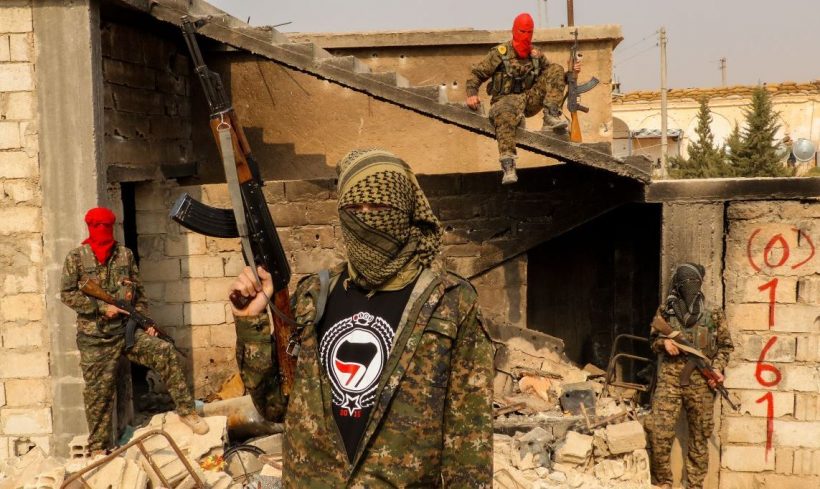
The October decision by U.S. President Donald Trump to withdraw American troops from northeastern Syria did not only precipitate the Turkish offensive, codenamed ‘Operation Peace Spring’, into Kurdish-held territory which followed. It also sparked an outcry of hysteria from much of the so-called “left” that has been deeply divided during the 8-year long conflict over its Kurdish question. Despite the fact that the Syrian Democratic Forces (SDF) were objectively a U.S. proxy army before they were “abandoned” by Washington to face an assault by its NATO ally, the ostensibly “progressive” politics of the mostly-Kurdish militants duped many self-identified people on the left into supporting them as the best option between terrorists and a “regime.” Apparently, everyone on earth except for the Kurds and their ‘humanitarian interventionist’ supporters saw this “betrayal” coming, which speaks to the essential naiveté of such amateurish politics. However, there is a historical basis to this political tendency that should be interrogated if a lesson is to be learned by those misguided by it.
Turkey initially went all-in with the West, Israel, and Gulf states in a joint effort to depose Syrian President Bashar al-Assad by stoking the flames of the country’s Arab Spring in 2011 into a full blown uprising. With Istanbul serving as the base for the opposition, Kurdish nationalists hoping to participate were not at all pleased that the alliance had based its government-in-exile in Turkey and naturally considered Ankara’s role to be detrimental to their own interests in establishing an autonomous ethnonationalist state. Likewise, Turkish President Recep Tayyip Erdoğan did not bargain on the conflict facilitating such a scenario, with the forty year war with the Kurdistan Workers Party (PKK) in southeastern Turkey still ongoing. When the PKK-linked People’s Protection Units (YPG) militias took control of northern Syrian towns and established a self-governing territory after boycotting the opposition, it was done only after negotiations between Damascus and Kurdish leaders. The Syrian government willingly and peacefully ceded the territory to them, just as we were told that the Baathists were among their oppressors.
The Rojava front opened up when the Kurds came under attack from the most radical jihadist militants in the opposition, some of which would later merge with the Islamist insurgency in western Iraq to form ISIS. Yet we now know for a fact that the rise of Islamic State was something actually desired by the U.S.-led coalition in the hopes of bringing down Assad, as revealed in a declassified 2012 Defense Intelligence Agency report. Shortly after clarifying that the opposition is “backed by the West, Gulf countries and Turkey”, the memo states:
“If the situation unravels there is the possibility of establishing a declared or undeclared Salafist principality in eastern Syria (Hasaka and Der Zor), and this is exactly what the supporting powers to the opposition want, in order to isolate the Syrian regime, which is considered the strategic depth of the Shia expansion (Iraq and Iran).”
Meanwhile, it was the Kurds themselves who divulged Ankara’s support for Daesh, frequently retrieving Turkish-issued passports from captured ISIS fighters. Even Emmanuel Macron said as much at the recent NATO summit in London, prompting a row between France and Turkey that took a backseat to the more ‘newsworthy’ Trump tantrum over a hot mic exchange between the French President and his Canadian and British counterparts. Then there was the disclosure that the late Senator John McCain had crossed the border from Turkey into Syria in mid-2013 to meet with leaders of the short-lived Free Syrian Army (FSA), dubbed as “moderate rebels”, which just a short time later would decline after its members joined better armed, more radical groups and the ISIS caliphate was proclaimed. One of the rebel leaders pictured with McCain in his visit is widely suspected to be the eventual chosen leader of ISIS, Abu Bakr al-Baghdadi, who was allegedly killed in a U.S. raid in Idlib this October. Ironically, many of the Turkish-backed FSA militias are now assisting Ankara in its assault on the Kurds while those who supported arming them feign outrage over the US troop removal.
Henry Kissinger reportedly once remarked, “America has no permanent friends or enemies, only interests.” Given that the U.S. was at the very least still using Daesh as a strategic asset, it seems inexplicable that the Kurdish leadership could trust Washington. The SDF had only a few skirmishes with the Syrian army during the entire war— if they wanted to defeat ISIS, why not partner with Damascus and Moscow? To say nothing of the U.S.’s long history of backing their oppression, from its support of Saddam Hussein during the Iran-Iraq War in the 1980s to the arming of Turkey’s brutal crackdown against the PKK which ended with the capture of its cultish leader, Abdullah Öcalan, in 1999. Did they really think after enlisting them for its cosmetic ‘fight’ against ISIS that the U.S. would continue to side with them against Ankara? Even so, Kurdish gains against Daesh would pale in comparison to those by the Syrian army with Russian air support. More perplexing is why anyone on the left would choose to back a group being used as a cat’s paw for imperialism, regardless of whatever ideals they claim to hold.
Perhaps the U.S. would not have reneged on its implicit pledge to help with the foundation of a Kurdish state had their “Assad must go” policy been successful, but the U.S. pullout appears to be the final nail in the coffin for both Washington’s regime change plans in Syria and an independent Kurdistan. The YPG’s makeover as the SDF was done at the behest of the U.S. but this did nothing to to diminish the objections of Ankara (or many ‘leftists’ from supporting them), who insisted the YPG was already an extension and rebranding of the PKK, a group Washington itself designates as a terrorist organization. Any effort to create a buffer state in the enclave was never going to be tolerated by Turkey but it nonetheless enabled the U.S. to illegally occupy northern Syria and facilitate the ongoing looting of its oil. Unfortunately for Washington, the consequence was that it eventually pushed Ankara closer toward the Kremlin, as Turkey went from shooting down Russian jets one year to purchasing the S-400 weapon system from Moscow the next. After backing a botched coup d’etat attempt against Erdoğan in 2016, any hope of Washington bringing Turkey back into its fold would be to discard the Kurds as soon as their usefulness ran out, if it wasn’t too late to repair the damage already.
Why would the U.S. risk losing its geo-strategic alliance with Turkey? To put it simply, it’s ‘special relationship’ with Israel took greater precedence. Any way you slice it, Washington’s foray into the region has been as much about Zionism as imperialism and its backing of the Kurds is no exception. Despite the blowback, the invasion of Iraq and destruction of Libya took two enormous sources of support for the Palestinian resistance off the chessboard. It may have strengthened Iran in the process, but that is all the more reason for the U.S. to sell a regime change attempt in Tehran in the future. Regrettably for Washington, when it tried to do the same in Syria, Russia intervened and emerged as the new peace broker in the Middle East. It comes as no surprise that following the Turkish invasion of northern Syria amid the U.S. withdrawal, the Kurds have finally struck a deal with Damascus and Moscow, a welcome and inevitable development that should have occurred years ago.
One of the main reasons for the Kurds joining the SDF so willingly has the same explanation as to why Washington was prepared to put its relationship with Ankara in jeopardy by supporting them: Israel. The cozy relationship between the Zionist state and the various Kurdish groups centered at the intersection of Turkey, Iran, Iraq and Syria goes back as far as the 1960s, as Jerusalem has consistently used them to undermine its enemies. It is not by chance that their respective interests overlap to a near tee, between the founding of a Kurdish protectorate and the Zionist plan for a ‘Greater Israel’ in the Middle East which includes a balkanization of Syria. Mossad has openly provided the Kurds with training and they have learned much in the ways of the ethnic cleansing of Arabs from the Jewish state in order to carve out a Syrian Kurdistan. One can certainly have sympathy for the Kurds as the largest ethnic group in the world at 40 million people without a state, but the Israel connection runs much deeper than geopolitical interests to the very ideological basis of their militancy which calls all of their stated ideals into question.
The ties between the YPG and the PKK are undeniable, as both groups follow jailed leader Abdullah Öcalan’s teachings which merge Kurdish nationalism with the theories of ‘democratic confederalism’ from the influential Jewish-American anarchist philosopher, Murray Bookchin. While the PKK may have been initially founded as a ‘Marxist-Leninist’ organization in the early 70s, a widespread misconception is that it still follows that aim when its ideology long-ago shifted to that of a self-professed and contradictory ‘libertarian socialism’ theorized by Bookchin who was actually a zealous anti-communist. Not coincidentally, the Western anarchist icon was also an avowed Zionist who often defended Israel’s war crimes and genocide of Palestinians while demonizing its Arab state opponents as the aggressors, including Syria. Scratch an anarchist and a neo-conservative will bleed, every time.
Many on the pseudo-left who have pledged solidarity with the Kurds have attempted to base their reasoning on a historically inaccurate analogy comparing the Syrian conflict with the Spanish Civil War of the 1930s. You would think ISIS would be the obvious first choice for the fascists in the Syrian war, but journalist Robert Mackey of popular “progressive” news site The Intercept even tried to cast the Syrian government as Francisco Franco’s Nationalists in an article comparing the 1937 bombing of Guernica by the Condor Legion to the 2018 chemical attack in Douma which remains in dispute regarding its perpetrator. One wonders if Mackey will retract his absurd comparison now that dozens of inspectors from the Organization for the Prohibition of Chemical Weapons (OPCW) have dissented in emails published by WikiLeaks showing that the OPCW engaged in a cover-up with the Trump administration to pin blame for the attacks on the Syrian government instead of the opposition, but don’t hold your breath.
In this retelling of the Spanish Civil War, the Kurds are generally seen in the role of the Trotskyite Workers’ Party of Marxist Unification (POUM) and the anarchist trade union National Confederation of Labour (CNT). In the midst of the conflict between the Nazi-supported Nationalists and Soviet-backed Republicans that was a prelude to World War II, the mobilization effort of all anti-fascist forces into a unified Popular Front was obstructed by the ultra-left and intransigent POUM and CNT who were then expelled from the coalition for their sectarianism. While the government was still fighting the Francoists, the POUM and CNT then attacked the Republicans but were put down in a failed insurrection. Although this revolt did not directly cause the loyalist defeat, it nevertheless sapped the strength from the Popular Front and smoothed the path for the generalissimo’s victory.
In the years since, Trotskyists have attempted to rewrite history by alleging that a primary historical text documenting the POUM’s sabotage of the Republicans — a 1938 pamphlet by journalist Georges Soria, the Spanish correspondent for the French Communist Party newspaper L’Humanite — is a forgery. On the Marxists Internet Archive website, an ‘editor’s note’ is provided as a preface to the text citing a single quote from Soria with the claim he admitted the work in its entirety was “no more than a fabrication”, but his words are selectively cropped to give that impression. While the author did admit accusations that the POUM‘s leadership were literal agents of Franco were a sensationalized exaggeration, the source of the full quote states the following:
“On the one hand, the charge that the leaders of POUM, among them Andrés Nin, ‘were agents of the Gestapo and Franco’, was no more than a fabrication because it was impossible to adduce the slightest evidence. On the other hand, although the leaders of POUM were neither agents of Franco or agents of the Gestapo, it is true that their relentless struggle against the Popular Front played the game nolens volens (like it or not/willingly or unwillingly) of the Caudillo (General Franco).”
In other words, Soria did not say the whole work was counterfeit like the editor’s note misleadingly suggests and reiterated that the POUM’s subversion helped Franco. (The Marxists Internet Archive does not hide its pro-Trotsky bias in its FAQ section.)

Marxist historian Eric Hobsbawm summarized the inherent contradictions of the Spanish Civil War and the role ultra-leftism played in the demise of the Republic in one of his later essays:
“Of course, the posthumous polemics about the Spanish war are legitimate, and indeed essential — but only if we separate out debate on real issues from the parti pris of political sectarianism, cold-war propaganda and pure ignorance of a forgotten past. The major question at issue in the Spanish civil war was, and remains, how social revolution and war were related on the republican side. The Spanish civil war was, or began as, both. It was a war born of the resistance of a legitimate government, with the help of a popular mobilisation, against a partially successful military coup; and, in important parts of Spain, the spontaneous transformation of the mobilisation into a social revolution. A serious war conducted by a government requires structure, discipline and a degree of centralisation. What characterises social revolutions like that of 1936 is local initiative, spontaneity, independence of, or even resistance to, higher authority — this was especially so given the unique strength of anarchism in Spain.”
Murray Bookchin also wrote at length about the Spanish Civil War but celebrated the decentralized anarchist tactics which incapacitated the Popular Front. The anarcho-syndicalist theorist championed the ‘civil war within the civil war’ as a successful example of his antithetical vision of ‘libertarian socialism’, while his emphasis on the individualist aspects of the former half of his oxymoronic and anti-statist theory often bears a striking resemblance to neoliberal talking points about self-regulating free markets. This would explain why he actually regarded right-wing libertarians to be his natural allies over the the socialist left, whom he considered ‘totalitarian’ as he told the libertarian publication Reason magazine in an interview in 1979. His reactionary demonization of the Soviet Union and dismissal of the accomplishments of all other socialist revolutions was recalled by Michael Parenti in Blackshirts and Reds:
“Left anticommunists remained studiously unimpressed by the dramatic gains won by masses of previously impoverished people under communism. Some were even scornful of such accomplishments. I recall how in Burlington Vermont, in 1971, the noted anticommunist anarchist, Murray Bookchin, derisively referred to my concern for “the poor little children who got fed under communism” (his words).”
Like the International Brigades consisting of foreign volunteers to assist the Spanish Republic in the 1930s, there is an ‘International Freedom Battalion’ currently fighting with the Kurds in Syria. Unfortunately, its live-action role playing ‘leftist’ mercenaries missed the part about the original International Brigades having been backed by the Comintern, not the U.S. military.
Meanwhile, Western media usually hostile to any semblance of radical politics have heavily promoted the Rojava federation as a feminist ‘direct democracy’ utopia, particularly giving excessive attention to the all-female Women’s Protection Units (YPJ) militia while ignoring the female regiments fighting for the secular Syrian government. As a result of the media’s exoticized portrayal of the Kurds and their endorsement by prominent misleaders on the left, from Slavoj Žižek to Noam Chomsky, many have been fooled into supporting them.
If the Spanish Civil War was a dress rehearsal for WWII, it remains to be seen if Syria proves to be a run-through for another global conflict. Then again, what has emerged from its climax is an increasingly multipolar world with the resurgence of Moscow as a deterrent to the mutually assured destruction between the U.S. and China.
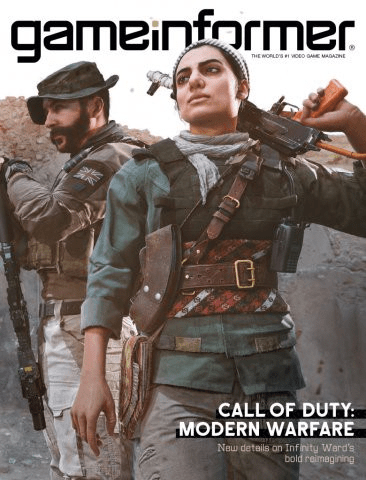
Leftists today wishing to continue the legacy of those who fought for the Spanish Republic should have thrown their support behind the Syrian patriots bravely defending their country from terrorism and imperialism, not left opportunism. Thankfully, this time the good guys have prevailed while the Kurds have paid the price for betraying their fellow countrymen. Liberals shedding crocodile tears about Rojava should take comfort in the fact that they can always play the latest Call of Duty: Modern Warfare video game featuring the YPG fighting alongside the U.S. military if they need to fulfill their imperial fantasies.
Yes, that’s right, the latest installment of the popular first-person shooter franchise features a storyline inspired by the SDF. It’s too bad for them that in real life all of Syria will be returned to where it rightfully belongs under the Syrian Arab Republic.
Max Parry is an independent journalist and geopolitical analyst. His writing has appeared widely in alternative media. Max may be reached at maxrparry@live.com
US Middle East Policy in a Future Democratic Administration
By As`ad AbuKhalil – Consortium News – December 18, 2019
It is too early to speculate on the prospects of a Democratic administration for next year’s election. If a switch in the party occupying the White House occurs, it would be significant for the direction of domestic policy. But less change should be expected in foreign affairs. In fact, a Democratic president could easily produce more wars and military intervention than Donald Trump. Democratic voters should expect that as they shop among the candidates.
Trump wanted to withdraw troops from Afghanistan, Iraq and Syria and those positions have been rejected not only by the military establishment but also by the overwhelming majority of Democrats and Republicans in Congress. Mainstream media have become a central element in the war lobby: They only cheered Trump when he bombed Syria, and called for more bombing.
With both parties now serving as the lobby for unending wars in the Middle East, a Democratic president is likely to expand U.S. military involvement and intervention. In Syria, it will be in the name of helping the Kurds or fighting terrorism or whatever other excuse they will produce.
None of this is to say that Trump has presided over an era of peace in the Middle East region; far from it. Trump inherited a full legacy of war and conflict from his predecessors and while he tried to disengage from some of those conflicts he was unable to do so due to heavy pressure from the military establishment (which seems to have unofficial control over editorial pages of mainstream newspapers); the foreign policy elite in Congress, and from think tank world in Washington, D.C. Trump also continued the long-standing U.S. policy of subsidizing Israeli aggression and occupation.
Trump’s policies toward the Middle East are most likely to have greatest impact on occupied Palestine, but such is the record of every U.S. president: every president wants to prove he is more pro-Israel than his predecessor.
Not Always Eye to Eye
The Democratic candidates do not necessarily see eye-to-eye on U.S. foreign policy priorities. Pete Buttigieg, for example, represents the traditional “muscular” (how is that for patriarchal terminology in U.S. foreign policy?) viewpoint of American foreign-policy — and domestic policy as well. Buttigieg is the Democrat that Wall Street and the military industrial complex appear most to support. He’s also become mainstream media’s favorite Democrat because he embraces U.S. foreign policy dogma and veers away from a progressive domestic agenda.
For many decades Israel has had a wish list of what it wants the U.S. to accomplish on its behalf, not only for the Arab-Israeli conflict, but for the region as a whole. In all those years, Israeli wishes have been largely fulfilled, under Democratic and Republican administrations alike.
Israel no longer has to spy on the U.S. military. Instead it has succeeded in getting the U.S. to share raw satellite intelligence data. Over the years, Israel has obtained the loan guarantees it sought to build settlements and spend more on its military aggression.
Israel has persuaded the U.S. to share more of its military technology and intelligence on Arab countries (including key U.S. allies.) Under former President Barack Obama, the steady supply of U.S. funding of the Israeli military war machine hit an unprecedented level. Obama committed the U.S. to basically subsidizing Israel occupation and aggression for the next 10 years. Israel today remains the only country with the per capita income of a developed country that continues to rely on U.S. foreign aid.
Absent From Debates
Foreign policy does not figure prominently in the Democratic debates or in candidates’ stump speeches. But there has been a significant shift this year compared to previous years, especially since 1983, when I first arrived in the United States.
It was customary then for Democratic presidential candidates to outdo each other in shows of fanatical loyalty to Israeli interests. I remember how every presidential candidate — during the 1980s and 90s and even after — was eager to prove his intent on relocating the U.S. Embassy from Tel Aviv (occupied Jaffa) to occupied Jerusalem. The competition was over who would be the fastest.
So, when Democratic pundits today express outrage over Trump’s relocation of the embassy they should remember that the seeds of this step began with Democrats such as President Bill Clinton and a party then of strident Zionism.
Not that the Republican Party was less loyal to Israel. But it had at least some leaders who were were willing to criticize Israel. By contrast, the Democrats had no equivalent to Charles Percy or Charles Mathias — two highly influential Republican senators who were willing to violate the conventional wisdom on Israel. [The Jewish vote was overwhelmingly Democrat in those days.]
Shift in Democratic Base
In recent years, however, the base of the Democratic Party has caused that to change. Hillary Clinton’s endorsement of the Iraq war; the Democrats’ enabling of the George W. Bush administration’s war on Iraq and the debacles brought by the war on terrorism all spread disillusionment with the party’s foreign policy dogma. While the Democratic Party’s foreign policy may not have shifted much in Congress, the changing tide was evident in the party’s liberal base in 2016, when Senator Bernie Sanders’ less blindly pro-Israel position (only measured by the criterion of conventional Democratic Zionism) opened a gap with his establishment rival, former Secretary of State Hillary Clinton.
It would be a stretch to say Trump radically altered the contours of U.S. foreign-policy towards the Middle East, specifically towards Israel. His policies are merely the culmination of a decades’ old, whole-hearted U.S. endorsement of Israeli aggression and occupation.
A Democratic administration is unlikely to even alter Trump’s course on Israeli settlements or the location of the U.S. embassy.
U.S. opposition to Israeli settlements has been softening for many years. With the exception of George Herbert Walker Bush, successive presidents since Ronald Reagan have largely allowed Israel to continue to expand settlements with very little rebuke. This paved the way for the Trump administration, in November, to change the U.S. position on those settlements. Declared illegal under international law since the end of the 1967, the Trump team declared them legal.
Given a staunchly pro-Israel Congress, a Democratic president is unlikely to do anything about that.
It would let Israel keep building new settlements and refrain from moving the U.S. embassy back to Tel Aviv (occupied Jaffa). The new embassy location, after all, has been sought by the U.S. Congress, by both Republicans and Democrats, since at least the 1990s.
A possible exception is Sanders (who nevertheless prefaces every remark he makes on Israel by asserting that he is “100 percent pro-Israel.”) A Sanders administration might go back to registering U.S. disapproval of settlements. Sanders has even expressed willingness to levy economic sanctions against Israel in reprisal for the settlements. But these promises could be hard to keep if he became president and had to face the entrenched vigilance in Congress against any measures it deems harmful to the interests of Israel.
As’ad AbuKhalil is a Lebanese-American professor of political science at California State University, Stanislaus.
Genocide, Sanctions and Incirlik: Erdoğan Will Not Kick Out NATO From Its Bases Despite Threats
By Paul Antonopoulos | December 18, 2019
Turkish President Recep Tayyip Erdoğan has dropped a bombshell by announcing that he could shut down the NATO-controlled Incirlik airbase that hosts U.S. nuclear bombs and the U.S. missile warning radar at Kurecik military base, in response to Washington’s threats of sanctions against Turkey. These nuclear bombs are of course placed purposefully close to Russia. The Incirlik air base in the southern Turkish province of Adana is used by the U.S. Air Force while the U.S. military also maintains a missile warning radar in the Kurecik district in Turkey’s southeastern Malatya province, which is part of NATO’s missile defense system in Europe.
“If it is necessary for us to take such a step, of course, we have the authority… We will close down Incirlik if necessary,” Erdoğan said on A Haber TV on Sunday.
Last week, the Committee on Foreign Affairs of the Senate of the United States Congress approved the “Promoting American National Security and Preventing the Resurgence of ISIS Act” bill that directly targets Turkey’s military and economic apparatus. According to the draft bill, the Turkish acquisition of the powerful Russian S-400 missile defense system gives grounds to impose sanctions against this country, under the Countering America’s Adversaries Through Sanctions Act (CAATSA), including against the Minister of National Defense of Turkey, the Chief of the General Staff of the Turkish Armed Forces, the Commander of the 2nd Army of the Turkish Armed Forces, the Minister of Treasury and Finance of Turkey, the Halkbank and a whole host of other senior officials.
This action could further isolate Turkey from NATO, especially after the latest blow against the Eurasian country came last Thursday when the U.S. Senate finally passed S.Res.150 that recognizes the Turkish perpetrated genocide(1915-1923) against Turkey’s Christian minority that saw millions of Greeks, Armenians, and Assyrians exterminated. There is no doubt the long-awaited U.S. recognition of the genocide is politically motivated, and Erdoğan understands this, threatening to recognize the U.S. genocide against Native Americans.
However, there are key differences between a potential Turkish recognition of the U.S. genocide against the Native Americans and the Turkish genocide against the Christians of Anatolia. There are hundreds of thousands, if not over a million, Greeks, Armenians and Assyrians living in the U.S. who have direct ancestry to genocide survivors who lost their entire lives including houses, farms, shops and other associated wealth. These descendants could pressure Washington to seek compensation from Ankara and could intensify sanctions against Turkey if they refuse too. Although the likelihood of compensation is extremely low, it could be used as a justification to strengthen sanctions against Turkey, which in turn will only push Turkey further away from the U.S./NATO and potentially closer to Russia.
On the other side, although Turkey may acknowledge the genocide against Native Americans, I would imagine there are no Native Americans, or maybe just a few, living in Turkey. Ankara could reciprocate sanctions against the U.S., but they would be virtually ineffectual as the world’s monetary system is still overwhelmingly dominated by the U.S. Dollar, despite efforts by Russia and China to de-Dollarize the international economy.
Turkey’s potential closure of the Incirlik and Kurecik bases from the U.S. military would effectively mean freezing relations with NATO. Even a Turkish reclamation of its military bases poses problems however – the obvious being political, but also the military and budgetary costs. However, discussions of Turkey closing the bases are not new. Ankara believes the Incirlik base was a staging point for the 2016 coup attempt against Erdoğan and has already contemplated kicking NATO out of there.
Despite the threat from Erdoğan, Washington will likely not be fazed by the threat for a number of reasons:
1) Washington has already turned Greece into its Plan B option in case Turkey leaves NATO.
2) Turkey leaving NATO could mean the U.S. backing a number of issues that have been frozen because of Washington’s policy of appeasing Turkey for geostrategic reasons, such as the unresolved status of Cyprus.
3) The Incirlik base is also used by other NATO states at times such as the United Kingdom, Germany, France and Italy, and a Turkish reclamation of the base could see Turkey further souring its relations with the European Union.
Although removing the U.S. military from the Incirlik Airbase would be a huge blow to NATO, Erdoğan is unlikely to do this despite Ankara’s strengthening relations with Moscow. Even if this were the case, the most important question still remains, would U.S. President Donald Trump accept this? It is highly unlikely that Trump will want to surrender the base that is critical for U.S. interests and aggression in the Middle East. Although Greece is a Plan B, it is a Plan B for a reason – it is not as strategically placed as Turkey towards the Middle East, and therefore the U.S. will not surrender such a great advantage it has so easily.
Paul Antonopoulos is a Research Fellow at the Center for Syncretic Studies.
US & Russia won’t go to war over Syria
By Mikhail Khodarenok | RT | December 15, 2019
To avoid any potential incidents, Americans should simply withdraw and end the unlawful presence of their forces in Syria. And abstain from alarmist headlines foreshadowing a shooting war.
American commanders in Syria are scrambling to protect their forces from an expected surge in activity by military units from Turkey, Russia, Iran and the Syrian government. They believe these countries pose a greater danger than Islamic State (IS, formerly ISIS) forces, the New York Times reports.
Anonymous sources, questionable statements
According to anonymous Department of Defense officials, “commanders have requested guidance outlining how American forces might deal with an attack from the assortment of armed groups, including Russian-backed Syrian government forces that have, in the past, tried to seize territory held by the United States.”
This statement seems fairly questionable, since any commander of a unit deployed to a war zone has clear-cut instructions from their superiors on what to do in a particular situation. Claiming otherwise, especially about an army as organized and efficient as the one the US has, would probably be unjustified from any possible point of view. Naturally, the directives coming from the HQ are top secret. If we assume their content was revealed to the NYT by a military source, the US should first focus on finding who in the DoD is leaking top secret information.
Also according to the NYT, “For now, the American command heavily relies on the instincts of junior commanders on the ground, cautionary phone calls to officials from Russia and Turkey and overhead surveillance — susceptible to failure in poor weather — to help avoid close encounters with other forces in the Euphrates River Valley, where most American troops are based.”
Firstly, it is not only the American command that are taking measures to prevent any incidents. The commanders of the Russian armed forces deployed in Syria are doing the same just as diligently (perhaps even more so). Starting from 2015, both the American and the Russian military command have been doing their best to prevent any clashes on the ground or in the air. To ensure this, special communication channels have been established to facilitate exchange of information regarding combat operations and other activities of the troops.
Secondly, you can never rely on the instincts of junior commanders in matters of such grave importance. If you do, an error of judgment by one of the lieutenants could have disastrous consequences – including an accidental nuclear strike.
Thirdly, all the means and methods of reconnaissance available are usually employed in the combat area: human-gathered intelligence, special reconnaissance, signals intelligence, aerial and space reconnaissance, reconnaissance by special forces. The term “overhead surveillance,” employed by the NYT, is therefore not entirely correct.
No positive agenda
The NYT quotes Jennifer Cafarella, Research Director at the Institute for the Study of War in Washington, as saying that “These forces are at risk without a clear understanding of what they are expected to achieve, and without the political support of their nation, if or more likely when, one of these American adversaries decided to attack them. These guys are deployed in one of the most risky, complex and rapidly evolving environments on the planet.”
I definitely agree with this assessment – combat and operational goals of the American forces in Syria are extremely ambiguous. Even high ranking US officials have a hard time explaining what sort of military and political objectives they are pursuing. The US military presence in Syria has no positive agenda. And the few American units that are stationed in the Syrian Arab Republic right now, are there illegally.
Interestingly enough, the NYT quotes a source in the Defense Department who said that “the Russian military is far more reliable in navigating the difficulties of such a contested battlefield,” whereas Turkish-backed fighters are often poorly managed by the Turkish military.
We have to keep in mind that Turkey is a NATO country and America’s closest ally in the region. And if there are tensions between allies, Ankara and Washington should settle their differences without dragging Russia into it.
It’s not ‘the regime’, it’s the legitimate government
The New York Times also quotes Gen. Kenneth F. McKenzie, the head of the military’s Central Command, who said that protecting the oil fields might ultimately draw a larger challenge from Syrian Army troops west of the Euphrates. “I’d expect at some point the regime will come forward to that ground,” General McKenzie said.
It’s not “the regime.” It’s the legitimate Syrian government’s army. If they “come forward,” they will be coming forward into their own territories.
And the Americans are not really concerned with protecting Syrian oil – they are openly stealing the country’s natural resources. At this point, the Syrian state doesn’t gain anything from these oilfields, which hampers the government’s efforts to restore the economy.
We might expect an interesting situation when the Syrian army and border patrol forces regain total control over the country’s eastern border. And that will happen soon.
Americans will have to find new ways to smuggle the oil
If the Syrian troops reach the eastern border and manage to gain a foothold there, thus giving the Syrian state full control over the nations’ boundaries, it would lead to a curious situation: in order to continue with their oil smuggling operation and retain their profits, the Americans would have to find a different way to export the oil.
Currently, there are only two viable channels – the official route, through Damascus and then over the Mediterranean Sea, and in Syria’s east, through its border with Iraq. But if both routes are controlled by Assad’s forces, the Americans would have to negotiate a new way out with the government in Damascus. Another potential outcome is that the Americans remain in control of Syria’s oil fields and refineries, but unable to export the final product and sell it on the global market.
So, in order to “protect their forces from an expected surge in actions by military units from Turkey, Russia, Iran and the Syrian government,” the US needs to take a radical yet straightforward approach – withdraw from Syria and put an end to America’s illegal presence in the country.
Also, they should probably abstain from heating up the situation in the region by publishing articles that speak of a potential military face-off between Russia and the United States.
Mikhail Khodarenok is a military commentator for RT.com. He is a retired colonel. He served as an officer at the main operational directorate of the General Staff of the Russian Armed Forces.
US threatens Iran over attacks on military bases in Iraq
Press TV – December 14, 2019
US Secretary of State Mike Pompeo has threatened Iran with “decisive” action over a series of attacks on American military bases in Iraq.
In a statement released on Friday, Pompeo claimed that Iran was providing “lethal aid and support to third parties in Iraq and throughout the region.”
“We must… use this opportunity to remind Iran’s leaders that any attacks by them, or their proxies of any identity, that harm Americans, our allies or our interests will be answered with a decisive US response,” he said.
This came one day after two Katyusha rockets targeted a compound near Baghdad International Airport, which houses US troops. It was the 10th such assault since late October.
Another attack Monday on the same base wounded five members of Iraqi counter-terrorism forces, two of them critically.
Pompeo’s remarks came in the wake of a report by The Wall Street Journal which said Saudi Arabia is quietly seeking to mend ties with Iran amid economic concerns and doubts about Washington’s backing for Riyadh.
The fresh US threat against Iran can be viewed as a signal of support for Saudi Arabia to prevent a thaw in the kingdom’s relations with the Islamic Republic.
Possible friendly ties between Riyadh and Tehran will put America’s interests in danger as it can no longer milk Saudi Arabia to protect it against an alleged threat from Iran.
“Riyadh’s newfound interest in better relations with regional rivals comes as Saudi officials question how much backing it has from the US and other allies,” the WSJ report said.
The US, backed by the UK, invaded Iraq in 2003 under the pretext that the former regime of Saddam Hussein possessed weapons of mass destruction. No such weapons, however, were ever found in the country.
The invasion plunged Iraq into chaos and led to the rise of terrorist groups.
The US and a coalition of its allies further launched a military campaign against purported Daesh targets in Iraq in 2014, but their operations in many instances have led to civilian deaths.
Now, the US is weighing deploying up to 7,000 additional troops to the Middle East in the face of what it calls a renewed Iranian threat.
Netanyahu-Pompeo Meeting Solidifies War Plan on Iran
By Finian Cunningham | Strategic Culture Foundation | December 10, 2019
Ratcheting economic sanctions, military force encirclement, inciting seditious violence and relentless war rhetoric. This all by the US and its allies over the past year towards Iran, yet it is Iran which is portrayed as posing “potential threats” to American interests.
The hastily arranged meeting last week between Israeli leader Benjamin Netanyahu and US Secretary of State Mike Pompeo had the hallmarks of a war-plan summit amid a peak in renewed media provocation against Iran.
In the last weeks there has been a flurry of US media reports claiming that Iran is secretly moving ballistic missiles into Iraq and elsewhere across the region. As usual the media credulously cite anonymous intelligence and Pentagon officials on those claims.
Here’s CNN quoting one administration official: “There has been consistent intelligence in the last several weeks,” the official said, referring to “a potential Iranian threat against US forces and interests in the Middle East.”
Last month, the head of US CentCom made a similar dire forecast of Iranian intentions. General Kenneth McKenzie said: “I would expect that if we look at the past three or four months, it’s possible they [Iran] will do something that is irresponsible.”
Notice how General McKenzie tacitly acknowledges the background of the Trump administration’s “maximum pressure” campaign of economic sanctions and US military force buildup against Iran as if that is somehow normal international conduct. Then he turns all that US aggression on its head by accusing Iran of possibly doing “something that is irresponsible”.
There are worrying signs that the US and Israel are redoubling the pressure of war against Iran. This pressure has to be seen in the context of a formidable deployment of US military forces – troops, warplanes and warships in the region since May this year. The earlier buildup was announced on the basis of unfounded claims that Iran was preparing to launch offensive operations against American interests. Then came a series of mysterious attacks on oil tankers in the Persian Gulf over the summer which Washington blamed on Iran without evidence.
Street protests in Iran since mid-November over fuel-price increases appear to be hijacked by subversive elements. President Trump and other US officials have openly called for the protests to destabilize the Iranian government.
Fresh claims that Iran is sending ballistic missiles to neighboring countries appear to be setting the stage for justifying a pre-emptive US attack on Iran.
No doubt the Iranian government is under severe pressure from the economic hardship that the US has re-imposed unlawfully since Trump dumped the international nuclear accord in May 2018. No doubt too Iran is apprehensive about the relentless military threats against it from Washington and its Israeli ally. Almost certainly, Iran will have mobilized forces in the reasonable calculation that it may come under attack at any moment.
But, perversely, US intelligence and military officials are interpreting Iranian defensive moves as “indications of a potential threat” to American “interests”.
The meeting last week between Israeli Prime Minister Benjamin Netanyahu and US Secretary of State Mike Pompeo signals a foreboding development. Recall that this is in the context of US media reports of Iranian ballistic missiles being deployed and of reports that the Trump administration is considering a doubling of troop levels in the Middle East to 28,000, as well as sending more missiles and warplanes.
Netanyahu met Pompeo in Lisbon, Portugal, on Wednesday, December 04. The meeting was called urgently and was unscheduled. Netanyahu – who is fighting for his political survival over corruption charges – tried to arrange discussions with Pompeo on the sidelines of the NATO summit near London, but according to Israeli media reports there was not enough time for security logistics to be put in place by the British. That indicates the Israeli leader was trying to meet Pompeo in a hurry.
When Netanyahu met with Pompeo in Lisbon, he said at the start of their discussions: “The first subject that I will raise is Iran. The second subject is Iran, and so is the third. And many more.
The Israeli premier added: “We have been fortunate as President Trump has led a consistent policy of exerting pressure on Iran. Iran is increasing its aggression in the region as we speak, even today, in the region. They are trying to have staging grounds against us and the region from Iran itself, Iraq, Syria, Lebanon, Gaza and Yemen and we are actively engaged in countering that aggression.”
Netanyahu also gloated that the “Iranian empire [sic] is tottering… let’s make it totter even more.”
For several months Iran has steadfastly refused to take the bait of war laid down by the Trump administration. But with pressures mounting both within the country and externally, it would be imperative for the Iranian authorities to marshall their defenses.
US intelligence and military officials are using contorted logic to accuse Iran of posing a threat, and the American corporate media are ably assisting in the propagation of this oxymoron.
Netanyahu’s hasty meeting with Pompeo last week suggests that the US and Israel are putting the final touches to their malignant masterpiece for provoking a war with Iran.
Featured Video
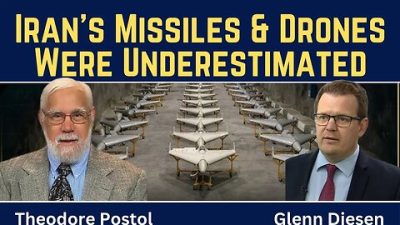
Theodore Postol: Iran’s Missiles & Drones Were Underestimated
or go to
Aletho News Archives – Video-Images
From the Archives
What is the Israeli Lobby in Australia Doing in Interfaith Dialogue?
By Ali Kazak | Dissident Voice | October 11, 2015
For years Israel and its lobby around the world have been trying to normalise their relations with Arabs and Muslims without solving the Palestine Question.
One of the methods they resorted to in the last few years is using human rights and community organizations such as interfaith dialogue and Multiculturalism to achieve this objective and to: isolate the Palestinians, marginalise the Palestine question, end Israel’s isolation, and prevent criticism of Israel, knowing that these organisations will be the first to stand against Israel’s violations, racial and religious discrimination.
The group responsible for this task in Australia is The Australia/Israel & Jewish Affairs Council (AIJAC); its Director of International & Community Affairs, Jeremy Jones is in charge of lobbying religious community organizations, specifically Muslims and Christians. Consequently he convened the Faith Communities for Reconciliation, founding participant in the Australian Partnership of Religious Organisations and the Australian National Dialogue of Christians, Muslims & Jews.
AIJAC is a private political propaganda group. It is recognised as the main Israeli lobby in Australia. It coordinates its activities and works intimately with the Israeli embassy in Canberra and different institutions in Israel. It is privately funded by some Jewish businessmen. It monitors closely Australian politicians, the media, ethnic and religious groups, (especially Arabs and Muslims), unions and academics on their stands towards Israel and the Palestine question. … continue
Blog Roll
 Aletho News
- Iran’s friends are about to make life much more difficult for Israel and the US
- The war of liberation of the Arab and Islamic peoples expands across the Gulf
- Envoy warns UN on Trump’s threat to ‘obliterate’ Iran’s civilian infrastructure
- The Larak Corridor: Iran’s Rial Gate With No US, No Israel, and No Way Around
- ‘Economic terrorism’: Steel facilities hit again in US-Israeli strike
- ‘War Crime’: Iran condemns attacks on Arak, Ardakan nuclear sites
- Two-thirds of Americans want quick end to Iran war even if goals unmet
- Trump to Give “Important Update on Iran” Wednesday in Prime-Time Speech
- Theodore Postol: Iran’s Missiles & Drones Were Underestimated
- Iran To Target Military Industrial-Tech Complex That Facilitated Gaza Genocide
- If Americans Knew
- Israel wants US to bomb more of Iran’s civilian structures (113,000 is not enough) – Not a ceasefire Day 173
- Ann Coulter Rips Into Fox News for Iran War Coverage
- Joe Kent Urges Americans To Call White House and Congress To Object To Sending Troops Into Iran
- DNC Resolution to Reject AIPAC Funding Puts Democratic Leaders in the Hot Seat
- Swedish foundation to build 400 schools as over 650,000 Gaza children remain without education for 2 years
- Israeli army admits photshopping image of slain Lebanese journalist
- This is how Israel is systematically killing health workers under the cover of war in Lebanon
- Carrying life under fire: Israeli invasion of Lebanon leaves pregnant women facing deadly risks
- Champagne all around for the new death penalty (for Palestinians) law – Not a ceasefire Day 172
- Why are Palestinian books struggling to be seen on Amazon?
- No Tricks Zone
- New Study Finds Warming Saves Lives…Cold Temperatures 12 Times More Deadly Than Excess Heat
- German Science Blog Accuses PIK Climate Institute Of Hallucinating Climate Tipping Points
- Devastating Assessment Of Comirnaty Vaccine By Former Senior Pfizer Europe Toxicologist
- New Study: CO2 Is ‘Effectively Negligible’ As An Explanatory Climate Change Factor Since 2000
- Former Pfizer Toxicologist Dr. Helmut Sterz Tells Bundestag Hearing Pfizer Vaccine Should Have Never Been Approved
- Energy Expert: Germany’s Nuclear Phaseout Was A “500 Billion Euro Mistake”
- New Research: South Australia’s Mid-Holocene Sea Surface Temperatures Were 4°C Warmer Than Today
- Storing Green Energy To Last Germany 10 Days Would Require A 60-Million Tonne Battery
- New Studies: UK Sea Levels Were 4 Meters Higher Than Today During The Mid-Holocene
- Destructive Green New Deal: German Energy And Metal Group Warns Of Drastic Crisis
 Aletho News