The United States has been using lies to go to war since 1846, when Americans who believed in manifest destiny sought to expand to the Pacific Ocean at the expense of Mexico, acquiring by force of arms California and what were to become the southwestern states. In 1898 the U.S. picked up the pieces of a dying Spanish Empire in a war that was driven by American imperialists and the yellow dog reporting of the Hearst Newspaper chain. And then came World War 1, World War 2, and Korea, all avoidable and all enabled by deliberate lying coming out of Washington.
More recently, we have seen Vietnam with its Gulf of Tonkin fabrication, Granada and Panama with palpably ridiculous pretexts for war, Iraq with its nonexistent weapons of mass destruction, Afghanistan with its lies about bin Laden, Libya and its false claims about Gaddafi, and most recently Syria and Iran with allegations of an Iranian threat to the United States and lies about Syrian use of barrel bombs and chemical weapons. And if one adds in the warnings to Russia over Ukraine, a conflict generated by Washington when it brought about regime change in Kiev, you have a tissue of lies that span the globe and bring with them never-ending conflict to advance the American imperium.
So lies go with the American Way of War, but the latest twist and turns in the Middle East are bizarre even by Washington’s admittedly low standards of rectitude. On the 5th of June, Saudi Arabia led a gaggle of Arab and Muslim nations that included the United Arab Emirates, Egypt and Bahrain to cut off all diplomatic, commercial and transport links with Qatar, effectively blockading it. Qatar is currently isolated from its neighbors, subject to sanctions, and there have even been Saudi threats of going to war against its tiny neighbor. Salman al-Ansari, the president of the Saudi American Public Relation Affairs Committee, even tweeted: “To the emir of Qatar, regarding your alignment with the extremist government of Iran and your abuse of the Custodian of the two sacred mosques, I would like to remind you that Mohammed Morsi [of Egypt] did exactly the same and was then toppled and imprisoned.”
It is the second time the Saudis have moved against Qatar. Two years ago, there was a break in diplomatic relations, but they were eventually restored. This time, the principal allegation being directed against Qatar by Riyadh is that it supports terrorism. The terrorist groups that it allegedly embraces are Hamas, Hezbollah and the Muslim Brotherhood, Morsi’s affiliation. Hezbollah and Hamas are close to Iran which is perhaps the real reason for their being singled out as many would call them resistance movements or even legitimate political parties rather than terrorists. And the Iran connection is critical as Qatar has been under fire for allegedly saying nice things about trying to respect and get along with Tehran, undoubtedly somewhat motivated by its joint exploitation with Iran of a vast gas field in the Persian Gulf.
Qatar’s ownership of al-Jazeera also has been a sore point with the Saudis and other Gulf states as its reporting has often been critical of developments in the region, criticisms that have often rankled the Saudi monarchy and the Egyptians. It has been accused of spreading propaganda for “militant groups.” One of the Saudi demands to permit Qatar to again become a “normal” Arab Gulf state would be to close down the network.
The terrorism claims by the Saudis are, of course, hypocritical. Both Qatar and Saudi Arabia are well known as sponsors of Salafist terrorism, including the funding and arming of groups like ISIS and the various al-Qaeda franchises, to include al-Nusra. Much of the money admittedly comes from private individuals and is often channeled through Islamic charities, but both Qatar and Saudi Arabia have been extremely lax in their enforcement of anti-terror and money laundering regulations. In a 2009 State Department memo signed off on by Hillary Clinton it was stated that “donors in Saudi Arabia constitute the most significant source of funding to Sunni terrorist groups worldwide.” Qatar, meanwhile, has been described as a “permissive environment for terrorist financing.”
The Saudis also have considerable blood on their hands by way of their genocidal assault on neighboring Yemen. In addition, the Saudi Royal House has served as the principal propagator of Wahhabism, the virulently fundamentalist version of Islam that provides a form of religious legitimacy to terror while also motivating many young Muslims to join radical groups.
The falling out of two Gulf Arab regimes might be a matter of relatively little importance but for the unnecessary intervention of President Donald Trump in the quarrel. He has taken credit for the burgeoning conflict, implying that his recent visit to the region set the stage for the ostracizing of Qatar. His twitter on the affair, posted on June 6th, read “So good to see the Saudi Arabia visit with the King and 50 countries already paying off. They said they would take a hard line on funding extremism, and all reference was pointing to Qatar. Perhaps this will be the beginning of the end to the horror of terrorism!” And he again came down on Qatar on June 9th during a press conference.
Trump’s tweets might well be regarded as simply maladroit, driven by ignorance, but they could also provide a glimpse of a broader agenda. While in the Middle East, Trump was bombarded with anti-Iranian propaganda coming from both Israel and the Saudis. An escalation of hostilities with the intention of starting an actual war involving the United States to take down Iran is not unimaginable, particularly as the Israelis, who have already endorsed the Saudi moves, have been arguing that option and lying about the threat posed by Tehran for a number of years.
A war against Iran would be very popular both with the U.S. congress and the mainstream media, so it would be easy to sell to the American public. The terrorist attack in Tehran on June 6th that killed 17 is being blamed in some Iranian circles on the Saudis, a not unreasonable assumption. ISIS has claimed responsibility for the attack but it must also be observed that both the Saudis and Israelis have good connections with the terrorist group. But if the possibility of a possible Saudi hand is true or even plausibly so, it guarantees a rise in tension and an incident at sea could easily be contrived by either side to escalate into a shooting war. The United States would almost inevitably be drawn in, particularly in light of Trump’s ridiculous comment on the tragedy, tweeting that Iran is“falling victim to the evil they promote.”
There is also other considerable collateral damage to be reckoned with as a consequence of the Trump intervention even if war can be avoided. Qatar hosts the al-Udeid airbase, the largest in the Middle East, which is home to 10,000 U.S. servicemen and serves as the Combined Air and Space Operations Center for Washington and its allies in the region and beyond. Now the United States finds itself squarely in the middle of a fight between two alleged friends that it doesn’t have to involve itself in, an intervention that will produce nothing but bad results. Backing Saudi Arabia in this quarrel serves no conceivable American interest, particularly if the ultimate objective is to strike at a non-threatening Iran. So the fallback position is to lie about what the support for the aggressive Saudi posturing really means – it is alleged to be about terrorism, which is always a popular excuse for government overreach.
And the ultimate irony is that when it comes to terrorism the United States itself does not emerge without fault. As early as 2011, the U.S. was arming Syrian dissidents from the arsenals in Libya, flying in weapons to Turkey to hand over to the rebels. Many of the weapons, as well as those provided to Iraqi forces, have wound up in the hands of ISIS and al-Nusrah. U.S. advisers training rebels have conceded that it is impossible to determine the politics of many of those receiving instruction and weapons, an observation that has also been made by the Obama White House and by his State Department.
So watch the lies if you want to know when the next war is coming. If the House of Saud, the Israelis and Donald Trump are talking trash and seem to agree about something then it is time to head for the bomb shelter. Will it be Iran or an escalating catastrophe in Syria? Anything is possible.
If terrorist incidents are always tied back to shadowy groups linked to Al Qaeda or ISIS, an online, independent media might connect those dots to show how Al Qaeda and ISIS were literally created, fostered, funded, trained and equipped by the UK government, the US government and their allies across the world as a tool in their quest of dominance of the Middle East and control of their domestic population. But such a story can only be told on a free and open internet, where independent voices continue to reach the masses and inform them of the truth about these terror groups.
“The real danger lies in whether the Christian world loses the last early Christians… the last ancient souls of the earth.” Such is the dire prediction by one writer regarding the ongoing exodus of Arab Christians from the Middle East – an exodus triggered by Western neo-colonialism and Zionist expansion that suits the military-industrial complex.
In the United States, religion is a major part of public life – so much so that it often finds its way into politics. At the national level of politics, it has historically been difficult to win an election, particularly at the national or state level, if one follows a faith not shared by the vast majority of religious Americans: Christianity.
This phenomenon became even more pronounced following the rise of the “moral majority” in the 1980s. But despite the importance of Christianity in the public and private lives of American citizens and politicians, American Christians have raised little concern regarding the fate of Christianity in the religion’s birthplace – the Middle East.
The religious landscape of the Middle East has shifted significantly in recent years, as key religious groups, including Christians, have been making mass exoduses elsewhere. According to Todd Johnson, director of the Center for the Study of Global Christianity at the Gordon-Conwell Theological Seminary, Christians are expected to compose 3.6 percent of the region’s population by 2025. A century prior, however, Christians represented 13.6 percent of the Middle East’s population.
Most reports on the subject have cited emigration as the leading cause of Christianity’s sharp decline in the Middle East, while few reports cite other factors that have pushed many Middle Eastern Christians to seek new lives abroad. Many mainstream investigations of the phenomenon have blamed both Sunni-Shiite conflicts and terrorism for pushing Christians and other religious minorities to leave.
But they have also neglected to mention the role of foreign intervention and U.S.-led regime change efforts in creating these very crises. While most of the “Christian” politicians in the U.S. are careful to avoid pointing this out, Middle Eastern Christians are all too aware that foreign intervention by Western governments has made it nearly impossible for them to continue living in the Middle East.
Marwa Osman, a lecturer at Lebanon International University and political commentator, argued as much in an interview with MintPress News :
“The ‘moral’ fights of Christians in the West are mainly over abortion, birth control, transgender and same-sex marriage, where your beliefs rarely subject you to political and physical persecution. When ethnic or religious groups are subjected to organized violence and persecution because of who they are, their plight should be addressed urgently, because this is how genocide starts and this what the West is not doing. Rather, the West keeps investing in more wars that would directly result in a Christian exodus from the Middle East.”
Christianity’s beginnings in the Middle East
The Middle East is much more than just the birthplace of Christianity. It was also the region where the religion first took hold and where the foundation was laid that transformed the teachings of Jesus Christ into one of the world’s dominant faiths. The entire region is dotted with thousand-year-old Christian communities, some of which were founded by early church fathers and, in some cases, disciples of Jesus himself.
For instance, tradition holds that Christianity was first brought to Iraq by St. Thomas and his cousin Addai in the first century, later becoming a stronghold for a patchwork of Christian groups, including the Gnostics. It is also believed that St. Peter and St. Paul brought Christianity to Syria, where – in Antioch – the term “Christians” to denote followers of Jesus was used for the first time.
In the earliest centuries of the last millennium, it was the Middle East that dominated Christian leadership and fellowship. When the Catholic church was officially formed at the Council of Nicea, there were more bishops in the Middle East than in Western Europe.
While the ascension of Islam would soon drastically alter the region’s religious landscape, Christianity has retained an important role in the region in the centuries since – especially in countries where it has maintained prominence, such as Egypt and Lebanon. Even in nations with Muslim majorities, Christians proved to be an economically important minority, gaining political prominence as a result.
But the Arab Christians of the Middle East have by no means had it easy. For much of the last 2,000 years, the region’s Christians have been persecuted by multiple parties, including the Ottoman Empire of the 19th and 20th centuries, whose brutal campaign against Arab Christians claimed the lives of over two million people.
Having suffered so much, the resilience and endurance of the Mideast’s Christians is legendary. But it was Muslims in Syria, Iran, Lebanon and Palestine who provided refuge to the Christians being persecuted by the Ottomans as they established and expanded their empire.
Owing to this troubled history, the presence of Arab Christians throughout the region has been a factor in the proliferation of Arab secularism in select countries, namely Syria, pre-invasion Iraq, Iran and Lebanon. After so many centuries of being targeted and persecuted, Christians in the Middle East have still been some of the most ardent supporters of secularism in the region.
Abdo Haddad, a Syrian Christian writer now living in Europe, made this plain in an interview with MintPress News, stating “[as] the Christians of the East developed a political sense of survival over the years, their first choice was to secure and support a strong state run by laws and, preferably, with a secular administration.”
But if Christians continue to leave the region in large numbers, secularism itself could become a relic of the region’s rich history. As Todd Johnson told the Wall Street Journal, “The disappearance of such minorities sets the stage for more radical groups to dominate in society. Religious minorities, at the very least, have a moderating effect.”
Haddad added that the greatest threat is even more grave. “The real danger lies in whether the Christian world loses the last early Christians, the last guards, the last ancient souls of the earth. If killing such a unique and profound community and civilization passes as easily as it looks, imagine what would become in your own nations once you dare to announce your faith or origin…,” he said.
Christianity and regime change in Iraq, Syria and Iran
Interestingly enough, the very countries that have protected religious minorities in the name of Arab secularism are those that have found themselves the targets of U.S.-led regime change efforts over the years.
Syria is a prime example, having been targeted by the U.S. since the 1980s. The most recent aggression has manifested in a massive war in which foreign-funded extremist “rebels” have sought to depose Syrian President Bashar al-Assad since 2011. Syria’s Christians, protected by the Syrian government’s commitment to secularism, have overwhelmingly supported Assad throughout the affair.
As Haddad observed, those familiar with the Syrian crisis are well-aware that Syrian Christians overwhelmingly support the Syrian government in its fight against extremist militias. “The Syrian People including Christians, like their President and see in him hopes for the future. This doesn’t mean Christians don’t want reforms and change, but they want them in a civilized, gradual and progressive manner (unlike what happened in Libya).”
Osman asserted that Syrian Christians support the government in part because government-controlled regions of Syria are the only regions in which its 2.5 million Christians are safe and treated as equals alongside the nation’s Muslims. “The regime’s downfall would have been followed by massive carnage, by new waves of refugees heading west, and by the imposition of an Islamist dictatorship. Whether it would had been controlled by the al-Qaeda affiliated al-Nusra front or by the vanishing ISIS would be irrelevant to the Christians who would have been murdered, exiled, or enslaved.”
The alternative to Assad offers little to Syria’s Christians, as armed opposition forces are overwhelmingly allied with Wahhabism and extremism, having frequently called for the establishment of an Islamic state that would adhere to a colonialist ideology funded by Western nations like the UK and the United States.
This would ultimately end the nation’s longstanding commitment to secularism and endanger the many religious minority groups that have long inhabited Syria. For instance, the al-Nusra Front, a jihadist group with ties to al-Qaeda, has repeatedly targeted Christians in Syria. Al-Nusra was recently taken off of terror watchlists in both the U.S. and Canada after simply changing its name.
Even “rebels” directly armed by the U.S., such as the Free Syrian Army, have massacred villages of Christians throughout the course of the war. In 2013, the Free Syrian Army raided the Christian-majority al-Duvair village near the Lebanese border, massacring all of its civilian residents, including women and children.
As Osman told MintPress : “In Syria the U.S. government remains committed to supporting the ‘rebels,’ although there are no “moderates” among them: all meaningful forces on the ground are Wahhabi fundamentalists who persecute Christians.”
Iraq is another example of how U.S.- and UK-led regime change has influenced the exodus of Christians from the Middle East. The invasion displaced millions of Iraqis, many of whom have yet to return, and also removed many Iraqis’ ability to feed themselves by essentially annihilating the nation’s once-sizable agricultural industry. During and after the invasion, Christians were considered close to Saddam Hussein’s regime, given that his former foreign minister, Tariq Aziz, is a Chaldean Christian. The Chaldean Christian community, which stood at around 1.4 million before the 2003 invasion, was said to have been treated preferentially under Hussein. Following his ouster and in the chaos since, the Iraqi Christian population has dwindled to less than 300,000.
Dahlia Wasfi, an Iraqi-American activist, told MintPress News that the Iraqi regime supported by the U.S. after the invasion has also played a major role in triggering the Christian exodus. Wasfi asserted that “the greatest threat to specifically Christian (as well as Sunni) families was the conservative Shia government brought to power in Iraq by U.S. administrators in 2005 (elections were run by the occupiers). In the years that followed, government-backed death squads terrorized the population, driving many Christian and Sunni families out.”
“Recent assaults on the Iraqi cities of Fallujah, Ramadi and the ongoing so-called ‘liberation’ of Mosul,” Wasfi argued, “are a continuation of the conservative Shia government’s efforts to change the demographics on the ground and consolidate its rule.”
Interestingly, many of the death squads Wasfi referenced were directly trained by the U.S., suggesting that the U.S. military had a key role in the targeting of Christians within Iraq.
Aside from the clear examples of Syria and Iraq, Iran – whose Christian communities are thriving – is the latest country to be targeted by Western neo-conservatives, as evidenced by rhetoric delivered by President Donald Trump during his first foreign trip.
While Iran has long been characterized as being discriminatory towards Christians in U.S. media, its Chaldean and Armenian Christian communities are protected by its constitution and guaranteed political representation in parliament. Jews and Zoroastrians are also similarly protected. However, evangelical Christians in Iran have been persecuted, particularly for allegedly proselytizing Muslims and members of other non-Christian religions. The total Christian population in Iran is difficult to accurately estimate, with some groups claiming there are 450,000 while others claim that there are as many as 1 million.
While secularism is hardly the driving factor behind U.S.-led regime change in the Middle East, the West’s targeting of Middle Eastern secular nations that protect Christians is an undeniable factor in prompting the exodus of the region’s Christians.
Persecution of Christians rampant in Saudi Arabia, Israel
However, other Middle Eastern nations – especially those supported by the West – are well-known for their persecution of religious minorities. Nowhere is this truer than in the Kingdom of Saudi Arabia and in the apartheid state of Israel.
In Saudi Arabia, the government openly condemns any person who fails to conform to the Wahhabi sect of Islam embraced by the House of Saud and a product of British colonialism to topple of the Ottoman Empire. It is a puritanical religious and political policy that targets not only those of different faiths but other Muslims. As Human Rights Watch noted in its World Report for 2013: “Saudi Arabia does not tolerate public worship by adherents of religions other than Islam and systematically discriminates against its Muslim religious minorities, in particular, Shia and Ismailis. The chief mufti in March called for the destruction of all churches in the Arabian Peninsula.”
In 2014, the Saudi government detained 28 Christians for worshiping in a private home in the city of Khafji. Their whereabouts still remain unknown. At the time, Nina Shea, director of the Washington-based Hudson Institute’s Center for Religious Freedom, told Fox News: “Saudi Arabia is continuing the religious cleansing that has always been its official policy.”
But worse than the Saudis’ treatment of religious minorities within their own borders is their exportation of their intolerant Wahhabi ideology abroad. Many extremist terror groups – including Daesh (ISIS) and al-Qaeda – are followers of Wahhabism, and both are major beneficiaries of Saudi funding, which neither the Saudi government nor those of its allies in the West have sought to end. Saudi Arabia is the world’s largest exporter and fundraiser of radical Wahhabi terrorism. These groups, as has been made clear by their actions in Iraq, Syria and elsewhere, tend to target religious minorities, particularly Christians.
Another chief ally of the West in the Middle East is also known for targeting Christians. Israel, best known for its persecution of the Palestinians,– whom are both Muslim and Christian– targets non-Jews due to its status as an apartheid ethno-religious state. As Wasfi explained to MintPress, “the military occupation by the colonial settler state of Israel, supported by Western governments” has been a major factor in the exodus of Christians from the Middle East.
Israel’s government has a long history of desecrating churches and persecuting the historic Palestinian Christians. For example, following the capture of Jaffa by European Zionist-Jewish forces in May 1948, Catholic Palestinian priest Father Deleque reported: “Jewish soldiers broke down the doors of my church and robbed many precious and sacred objects. Then they threw the statues of Christ down into a nearby garden.” He added that, while Jewish leaders had reassured that religious buildings would be respected, “their deeds do not correspond to their words.”
That same year, the Christian Union of Palestine publicly complained that British backed European Zionist-Jewish forces had used several Christian churches and humanitarian institutions in Jerusalem as military bases and had desecrated them. They added that three priests and more than 100 women and children had been killed by the indiscriminate shelling of their places of worship by European Zionist-Jewish forces.
Israel’s discrimination against Palestinian Christians has continued ever since. For instance, in 1982, the Baptist Church in Jerusalem burned down, a target of arson. No one was ever charged. When the Baptists sought to rebuild the church, groups of Jews demonstrated against the project and the district planning commission refused to grant a building permit. Three years later, the Israeli Supreme Court advised the Baptists to leave the “all-Jewish” area.
Such acts continue today. Pastor Steven Khoury, an Arab-Israeli Christian, said that “There’s no persecution in the Holy Land … unless you share your faith,” in an interview with the Voice of the Martyrs, a Christian non-profit that highlights the persecution of Christians worldwide. Khoury said he had witnessed church members being attacked because of their faith on many occasions.
Watch 60 Minutes’ Investigation into Israel’s Persecution of Christians in Palestine:
Palestinian Christians, due to their ethnicity, have been even more heavily targeted by the Israeli state, fleeing their homeland as a result along with thousands of their non-Christian countrymen. When European Zionist militias invaded Palestine to create the state of Israel in 1948, Palestinian Christians numbered 200,000. By 1995, Christian Palestinians living in the region numbered only 50,0000. Now, of an estimated 400,000 Christian Palestinians, most live abroad, mainly in the Americas.
Zionist plan for Israeli superiority excludes Christians
So why has the West targeted mostly secular nations while simultaneously supporting countries and extremist groups that persecute religious minorities, particularly Christians? While the attack on secularism in the Arab world could be a consequence of Western neo-colonialism in the region, long-held plans for Israel’s regional dominance – a goal strongly supported by the West, particularly the U.S. – shed light on potential reasons for the West’s reluctance to respect religious diversity in the Middle East.
The Yinon Plan, as it is known, is a strategy intended to ensure Israel’s regional superiority in the Middle East that chiefly involves reconfiguring the entire Arab world into smaller and weaker sectarian states.
“Israeli strategists viewed Iraq as their biggest strategic challenge from an Arab state. This is why Iraq was outlined as the centerpiece to the balkanization of the Middle East and the Arab World. In Iraq, on the basis of the concepts of the Yinon Plan, Israeli strategists have called for the division of Iraq into a Kurdish state and two Arab states, one for Shiite Muslims and the other for Sunni Muslims.”
This plan has been widely supported by numerous U.S. politicians – most notably by former Vice President Joe Biden, who pushed a non-binding resolution through the Senate that called for carving Iraq into the same states laid out in the Yinon Plan.
However, the plan to partition Iraq included no territory for Iraq’s Christians or its other religious minorities.
The Yinon Plan seeks to divide more than just Iraq. Syria, Jordan, Lebanon, Saudi Arabia and Egypt would all be partitioned, according to the plan, with parts of these countries being subsequently absorbed into “Greater Israel.” This can already be seen playing out in the Syrian conflict, where Israel’s involvement in the war largely revolves around its desire to claim the occupied Golan Heights as its own.
Thus, it could very well be the West’s commitment to the Yinon Plan that has helped to shape its policy of feigned ignorance regarding the plight of the region’s Christians. Middle Eastern Christians’ commitment to and strong preference for secularism has no place in a neo-colonial Middle East that built into sectarian states intended to be kept in constant war with one another. Israel’s desire to dominate the region – a goal abetted by their Western allies – may hold much of the blame for the continued exodus of Mideast Christians.
But ultimately, the continuing exodus of Christians is endemic of a larger crisis facing the region as years of conflict and modern warfare have taken into toll on the people as well as the environment.
Wasfi pointed to U.S military aggression as the main culprit for this burgeoning crisis. “In the bigger picture, the overall loss of life and devastation of what is historically known as the ‘Fertile Crescent’ by Western invasion, occupation, and continuous war is the great tragedy. […] The sooner U.S. military aggression in the region ends, the sooner the healing can begin.
Four days have passed since the terrorist strikes in Tehran but Iran has not retaliated with any “surgical strike” against Saudi Arabia – and, typically, there isn’t going to be any. The political leadership pointed the accusing finger at Saudi Arabia, US and Israel. Supreme Leader Ali Khamenei said that the terror strikes “will only increase hatred for the governments of the United States and their stooges in the region like the Saudis.” However, Iran will not react in a hurry, given the crisis over the Saudi-Qatar standoff that is fraught with profound consequences for regional politics.
Interestingly, Iran signed another agreement on Saturday with Boeing, the American aircraft manufacturer, to buy 30 passenger planes in a $3 billion deal, with an option to buy another 30 aircraft at a later stage. This is on top of the $16.6 billion deal with Boeing negotiated in December. Tehran is piling pressure on the Trump administration because Boeing needed the approval of the US Treasury for the deal with Iran. Put simply, Tehran hopes to draw the US into an engagement process that incrementally deepens and broadens, which derails the Saudi-Israeli agenda to incite a US-Iran confrontation.
Iran is generating export business for American companies, which holds the potential to create jobs in their thousands in the US economy. This becomes a template, ironically enough, of President Trump’s ‘America First’ doctrine. It is a ‘win-win’ formula, because Iran’s economy also badly needs western investments and capital, especially the oil industry. Over and above, if American companies begin operating in the Iranian market, it will give impetus to European business and industry too.
Having said that, Iran’s regional policies remain on track, no matter the Trump administration’s pressure tactic and rhetoric. Iran scored a signal victory in the weekend with Syrian government forces supported by Iran-backed militia reaching the strategic border crossing with Iraq at Al-Tanf. (See my blog The scramble for control of Syrian-Iraqi border.) In immediate terms, the route for the US-backed fighters in the south to move into the strategically important Deir Ezzur province (which is also rich in oil deposits) now comes under the control of the Syrian government forces.
Meanwhile, Tehran is re-establishing high-level contacts with the leadership of Hamas. On Saturday, Hamas announced that a delegation led by its newly-elected leader Ismail Haniyeh (who recently replaced Khaled Meshaal) will be visiting Tehran. Iran’s ties with Hamas came under strain after Meshaal left Damascus (where he was living in exile for several years) to relocate himself in Doha, by way of displaying his solidarity with Qatar and Turkey in the Syrian conflict.
Hamas’ reunion with Tehran’s ‘axis of resistance’ is significant, since Hamas is an offshoot of the Muslim Brotherhood and Qatar has come under pressure from Saudi Arabia to snap its links with the Brothers. It meshes with Iran’s support for Qatar in its rift with Saudi Arabia as well as promotes Iran’s desire for partnership with Turkey. Turkish President Recep Erdogan continues to patronise Hamas, despite that being the principal discord in Turkish-Israeli relations.
On the other hand, Iran’s warming of ties with Hamas puts pressure on Saudi Arabia and Israel at a time when the mutual comfort level between Riyadh and Tel Aviv has been rising lately, with the Trump administration actively promoting the idea of an Arab-Israeli normalization.
Jared Kushner’s (Trump’s Orthodox Jew son-in-law and top advisor on foreign policy) thesis, which is the current US policy in the Middle East, is that a “from the outside-in” approach to Middle East peace – namely, signing of peace treaties between the Arab states and Israel to generate goodwill and new diplomatic relations, which in turn will help advance Palestine-Israel settlement – as against the traditional “inside-out” approach that gives primacy to peace between the Palestinians and Israelis as the necessary first step that will facilitate an end to the Arab-Israeli conflict.
Trump’s mission to Riyadh last month was at the behest of Israel, which has been pushing the narrative that the existential fear of Iran is bringing the Gulf Arab monarchies and Israel closer together. Of course, Israeli calculation is that peace treaties between the Gulf Arab regimes and Israel (on the pattern of Israel’s peace treaties with Egypt and Jordan) will ultimately render the Palestinian cause obsolete and completely ease the pressure on Israel to accommodate Palestinian aspirations and demand for a fully independent state.
Significantly, while reporting on Hamas leader Haniyeh’s forthcoming visit to Iran, the influential Tehran Times newspaper made the following observation:
While the Syrian crisis has driven a wedge between Tehran and Turkey since 2011, the rift between Arab caliphates have led them into an ad-hoc alliance that some believe represents the best chance to mend fences.
Turkey and Iran back Qatar and have links with the Muslim Brotherhood.
Suffice to say, Iran’s move to bring Hamas into the ‘axis of resistance’ threatens to undermine the game plan that Israel has been working on (via Kushner and Jason Greenblatt, fellow Orthodox Jew, associated with Trump’s organization.) All three countries – Qatar, Turkey and Iran – sense that the current US-Israeli-Saudi offensive against “terrorism” is actually the metaphor for an all-out assault on the Muslim Brotherhood, branding it as a “terrorist” organization, which in turn is ultimately aimed at driving Hamas into the political wilderness and thereby scattering the Palestinian resistance movement once for all.
To be sure, both Turkey and Iran have taken note that at the end of the day, the Muslim Middle East has shown reluctance to join Saudi Arabia’s ant-Qatar front — including Jordan, which is sitting on the fence, merely resorting to the cosmetic move of downgrading the diplomatic ties with Qatar, despite its need for Saudi goodwill. Of course, Turkey, Iraq, Lebanon, Jordan, Kuwait, Oman, Algeria, Morocco, Sudan and Tunisia have ostentatiously dissociated themselves from the Saudi strategy to isolate Qatar. Indeed, Turkey has forcefully rejected the Saudi embargo against Qatar — “We will not abandon our Qatari brothers,” said Erdogan at an Iftar meal in Istanbul on Friday, while addressing his party colleagues.
Several were left dead and many more injured after coordinated terror attacks on Iran’s capital of Tehran. Shootings and bombings targeted Iran’s parliament and the tomb of Ayatollah Khomeini.
According to Reuters, the so-called “Islamic State” claimed responsibility for the attack, which unfolded just days after another terror attack unfolded in London. The Islamic State also reportedly took responsibility for the violence in London, despite evidence emerging that the three suspects involved were long-known to British security and intelligence agencies and were simply allowed to plot and carry out their attacks.
It is much less likely that Tehran’s government coddled terrorists -as it has been engaged for years in fighting terrorism both on its borders and in Syria amid a vicious six-year war fueled by US, European, and Persian Gulf weapons, cash, and fighters.
Armed Violence Targeting Tehran Was the Stated Goal of US Policymakers
The recent terrorist attacks in Tehran are the literal manifestation of US foreign policy. The creation of a proxy force with which to fight Iran and establishing a safe haven for it beyond Iran’s borders have been long-stated US policy. The current chaos consuming Syria and Iraq – and to a lesser extent in southeast Turkey – is a direct result of the US attempting to secure a base of operations to launch a proxy war directly against Iran.
The United states could also attempt to promote external Iranian opposition groups, providing them with the support to turn themselves into full-fledged insurgencies and even helping them militarily defeat the forces of the clerical regime. The United states could work with groups like the Iraq-based National council of resistance of Iran (NCRI) and its military wing, the Mujahedin-e Khalq (MeK), helping the thousands of its members who, under Saddam Husayn’s regime, were armed and had conducted guerrilla and terrorist operations against the clerical regime. although the NCRI is supposedly disarmed today, that could quickly be changed.
Brookings policymakers admitted throughout the report that MEK was responsible for killing both American and Iranian military personnel, politicians, and civilians in what was clear-cut terrorism. Despite this, and admissions that MEK remained indisputably a terrorist organization, recommendations were made to de-list it from the US State Department’s Foreign Terrorist Organization registry so that more overt support could be provided to the group for armed regime change.
Based on such recommendations and intensive lobbying, the US State Department would eventually de-list MEK in 2012 and the group would receive significant backing from the US openly. This included support from many members of current US President Donald Trump’s campaign team – including Rudy Giuliani, Newt Gingrich, and John Bolton.
However, despite these efforts, MEK was not capable then or now of accomplishing the lofty goal of instigating full-fledged insurrection against Tehran, necessitating the use of other armed groups. The 2009 Brookings paper made mention of other candidates under a section titled, “Potential Ethnic Proxies,” identifying Arab and Kurdish groups as well as possible candidates for a US proxy war against Tehran.
Under a section titled, “Finding a Conduit and Safe Haven,” Brookings notes:
Of equal importance (and potential difficulty) will be finding a neighboring country willing to serve as the conduit for U.S. aid to the insurgent group, as well as to provide a safe haven where the group can train, plan, organize, heal, and resupply.
For the US proxy war on Syria, Turkey and Jordan fulfill this role. For Iran, it is clear that US efforts would have to focus on establishing conduits and safe havens from Pakistan’s southwest Balochistan province and from Kurdish-dominated regions in northern Iraq, eastern Syria, and southeastern Turkey – precisely where current upheaval is being fueled by US intervention both overtly and covertly.
Brookings noted in 2009 that:
It would be difficult to find or build an insurgency with a high likelihood of success. The existing candidates are weak and divided, and the Iranian regime is very strong relative to the potential internal and external challengers.
A group not mentioned by Brookings in 2009, but that exists in the very region the US seeks to create a conduit and safe haven for a proxy war with Iran, is the Islamic State. Despite claims that it is an independent terrorist organization propelled by black market oil sales, ransoms, and local taxes, its fighting capacity, logistical networks, and operational reach demonstrates vast state sponsorship.
The Ultimate Proxy, the Perfect Conduit and Safe Haven
The Islamic State reaching into Iran, southern Russia, and even as far as western China was not only possible, it was inevitable and the logical progression of US policy as stated by Brookings in 2009 and verifiably executed since then.
The Islamic State represents the perfect “proxy,” occupying the ideal conduit and safe haven for executing America’s proxy war against Iran and beyond. Surrounding the Islamic State’s holdings are US military bases, including those illegally constructed in eastern Syria. Were the US to wage war against Iran in the near future, it is likely these assets would all “coincidentally” coordinate against Tehran just as they are now being “coincidentally” coordinated against Damascus.
The use of terrorism, extremists, and proxies in executing US foreign policy, and the use of extremists observing the Islamic State and Al Qaeda’s brand of indoctrination was demonstrated definitively during the 1980’s when the US with the assistance of Saudi Arabia and Pakistan – used Al Qaeda to expel Soviet forces from Afghanistan. This example is in fact mentioned explicitly by Brookings policymakers as a template for creating a new proxy war – this time against Iran.
For the US, there is no better stand-in for Al Qaeda than its successor the Islamic State. US policymakers have demonstrated a desire to use known terrorist organizations to wage proxy war against targeted nation-states, has previously done so in Afghanistan, and has clearly organized the geopolitical game board on all sides of Iran to facilitate its agenda laid out in 2009. With terrorists now killing people in Tehran, it is simply verification that this agenda is advancing onward.
Iran’s involvement in the Syrian conflict illustrates that Tehran is well aware of this conspiracy and is actively defending against it both within and beyond its borders. Russia is likewise an ultimate target of the proxy war in Syria and is likewise involved in resolving it in favor of stopping it there before it goes further.
China’s small but expanding role in the conflict is linked directly to the inevitability of this instability spreading to its western Xianjiang province.
While terrorism in Europe, including the recent London attack, is held up as proof that the West is “also” being targeted by the Islamic State, evidence suggests otherwise. The attacks are more likely an exercise in producing plausible deniability.
In reality, the Islamic State – like Al Qaeda before it – depends on vast, multinational state sponsorship – state sponsorship the US, Europe, and its regional allies in the Persian Gulf are providing. It is also sponsorship they can – at anytime of their choosing – expose and end. They simply choose not to in pursuit of regional and global hegemony.
The 2009 Brookings paper is a signed and dated confession of the West’s proclivity toward using terrorism as a geopolitical tool. While Western headlines insist that nations like Iran, Russia, and China jeopardize global stability, it is clear that they themselves do so in pursuit of global hegemony.
DAMASCUS – Late on Friday afternoon, the Syrian Arab Army (SAA), Hezbollah and allied Iraqi paramilitary contingents dashed through southeastern Homs and reached an Iraqi border point, thus slicing adrift the frontline between rebel forces based in the Al-Tanf region and ISIS militants in the neighboring Deir Ezzor governorate.
Unopposed by the US Airforce and its vetted Syrian proxies, the SAA and its allies drove through over 40 kilometers of abandoned desert territory and managed to link up with an Iraqi garrison across the border.
The advance was confirmed by the Russian Ministry of Defense and an Hezbollah-linked outlet moments ago.
Effectively, the SAA is now able to reopen trade between Damascus and Baghdad. Government forces have not controlled any parts of the largely ISIS-controlled border with Iraq since 2014.
In addition, Hezbollah is now able to be supplied with weapons from Tehran via an all-important land route. Previously, the Lebanese group relied on complicated airlifts for new armaments.
So what were we watching in ex-FBI Director James Comey’s testimony on Thursday: an upright public servant punished for resisting a power-mad President or a participant in a political scheme to use the law as a way to overturn a U.S. presidential election?
There was a general consensus in the mainstream media that it was the first, that Comey was the noble victim and President Trump the conniving villain. And, surely, Trump could be criticized for his clumsy firing of National Security Adviser Michael Flynn and ensuing expression of “hope” to then-FBI Director Comey that Flynn would not be punished further.
But – outside the view of the MSM – there are other troubling aspects of what is now unfolding, including the scene of FBI Director Comey informing President-elect Trump on Jan. 6 about a defamatory annex to an intelligence report detailing unproven but salacious allegations and then seeing those details leaked almost immediately to humiliate Trump in the days before his Inauguration.
In his Thursday testimony, Comey defended his role in alerting Trump to the Intelligence Community’s publication of the allegations, which summarized opposition research done to benefit Hillary Clinton’s campaign and alleging that Trump had hired Russian prostitutes to urinate on him as he lay in a bed once used by President and Mrs. Obama at the five-star Ritz-Carlton Hotel in Moscow – while supposedly secretly videotaped by Russian intelligence.
In the testimony, Comey said that after he and other Obama’s intelligence chiefs briefed the President-elect at Trump Towers on Jan. 6 about their report on alleged Russian interference in the 2016 campaign, “I remained alone with the President-elect to brief him on some personally sensitive aspects of the information assembled during the assessment.
“The I.C. leadership thought it important, for a variety of reasons, to alert the incoming President to the existence of this material, even though it was salacious and unverified. Among those reasons were: (1) we knew the media was about to publicly report the material and we believed the I.C. should not keep knowledge of the material and its imminent release from the President-elect; and (2) to the extent there was some effort to compromise an incoming President, we could blunt any such effort with a defensive briefing.
“The Director of National Intelligence asked that I personally do this portion of the briefing because I was staying in my position and because the material implicated the FBI’s counter-intelligence responsibilities. We also agreed I would do it alone to minimize potential embarrassment to the President-elect.”
Like J. Edgar Hoover
Given the mainstream media’s determined promotion of Russia-gate as a legitimate scandal, the extraordinary nature of this briefing incident has passed largely unnoticed.
FBI Director J. Edgar Hoover
If, however, you substituted FBI Director J. Edgar Hoover for FBI Director Comey, the significance of the I.C.’s gratuitous inclusion of such an unsubstantiated smear might take on a different coloring. It was, after all, the decision to tack this classified annex onto the Jan. 6 report that gave the mainstream media the hook to disseminate the “golden shower” accusation across the country and around the world.
Rather than minimizing “potential embarrassment to the President-elect,” as Comey demurred, the classified annex was guaranteed to maximize Trump’s embarrassment, which it did.
In other words, just as Comey said he inferred an improper or illegal order when Trump expressed “hope” that Flynn’s legal ordeal might end, Trump might well have deduced that Comey’s elevation of the urination story amounted to coercion or blackmail from the Intelligence Community.
Trump, who surely knows the shadier corners of the construction trade, might have heard something like, “Gee, we’d hate for your wife and children (not to mention the rest of the world) to hear this story about prostitutes peeing on you” – and read the warning as a threat.
FBI Director Hoover was a master of just this sort of warning, conveyed as a sincere concern about some politician’s well-being. Trump, who has emphatically denied the salacious accusation, could well have seen Comey sending him a message from the leaders of the powerful Intelligence Community that they were determined to remove Trump or at least politically cripple him.
Just three days earlier, Senate Minority Leader Chuck Schumer told MSNBC’s Rachel Maddow that Trump was “being really dumb” by taking on the Intelligence Community because “they have six ways from Sunday at getting back at you.”
In the five months since the Jan. 6 briefing, Trump has gotten a taste of how accurate Schumer’s observation was. Making sure that the public got to read the “dirty dossier” – compiled by ex-British spy Christopher Steele and financed by some still unknown Clinton supporter – was clearly one of those six ways.
On top of that, Obama’s intelligence chiefs, including Comey, have testified repeatedly before Congress while they or their allies have leaked derogatory information about Trump to The New York Times, The Washington Post and other mainstream news outlets.
The ‘Soft Coup’
In other words, what we may have witnessed in Comey’s ballyhooed testimony on Thursday was just the latest chapter in a “soft coup” to remove Trump – either through a forced resignation or impeachment. The thinking is that Trump is so incompetent that “wise men” must step in to “correct a mistake” made by the U.S. electorate and made possible by the Constitution’s Electoral College system, which enabled Trump to win the presidency despite losing the popular vote,
But the American people are not supposed to see it that way. After all, the realization that U.S. intelligence chieftains might be conspiring to overturn a constitutional election of a U.S. president could be most upsetting and unsettling, even if one assumes that they are sincerely doing what they think is “best for the country.”
So, this side of the story remains unspoken, a silence made possible by the fact that most of the nation’s top news executives and much of its political elite share the opinion that Trump’s presidency must be ended and a more traditional chief executive installed.
But no one in authority wants to acknowledge that a “soft coup” is in the works because that would make America look like a banana republic to the world. It also could infuriate Trump’s 63 million voters who might take exception to this sort of “deep state” veto of a duly certified election.
So, what that means is that the planned removal of Trump will be a deliberate process cloaked in high-minded legal principles and much talk about the rule of law.
Of course, Trump would not be the only loser in this process. His sinking presidency would drag down many of those around him – and, in the case of Michael Flynn, might well lead to criminal charges.
Indeed, if civil libertarians were not largely committed to the anti-Trump #Resistance, they might pause for a moment and consider the disturbing picture of what was done to retired Lt. Gen. Flynn.
Trapping Flynn
To engineer the ouster of Flynn as Trump’s first National Security Adviser, President Obama’s Justice Department holdovers used the archaic 1799 Logan Act as a predicate to justify an FBI interrogation of Flynn about the details of a phone conversation with Russian Ambassador Sergey Kislyac on Dec. 29, 2016, while Flynn was vacationing in the Dominican Republic.
Since the FBI agents had a transcript of the intercepted phone call and Flynn was working from memory – possibly a bit hazy from a Pina Colada or two – Flynn was an easy mark for a perjury trap. Leaving out some detail, whether intentionally or not, would open him to an obstruction case – and Comey reportedly has indicated that the ongoing criminal investigation of Flynn indeed relates to whether he withheld information from investigators.
Every American who is concerned about the future political use of the U.S. intelligence agencies’ powerful surveillance tools should have shuddered a bit over what was done to Flynn. But many on the Left so desperately want Trump removed from office that they have joined the Russia-gate stampede as the best way to trample Trump.
So, few tears have been shed for Flynn even as he was ambushed based on transcripts of National Security Agency transcripts, a precedent that could be replicated in many other circumstances against American citizens who get on the Intelligence Community’s “six ways from Sunday” black list.
The use of the Logan Act predicate should have set off other alarm bells. The law, which was enacted during the Alien and Sedition Act period, was meant to stop private citizens from trying to conduct U.S. foreign policy on their own, but its constitutionality was always suspect and it has never led to a prosecution, not one in 218 years.
It was also never intended to apply to incoming foreign policy officials of a new presidential administration after the election, when they are understandably beginning to make contacts with foreign officials. So, for then-acting Attorney General Sally Yates to have dusted it off as a predicate for going after Flynn suggests additional entrapment problems.
True, Flynn may have used poor judgment in how he handled a 2015 paid speaking engagement in Moscow, how he reported on his consulting work for a Dutch company owned by a wealthy Turk with high-level political connections, and what he might have said to Kislyak (although we still don’t know the details of that conversation).
Islamic State Warning
But Flynn also had been an Army lieutenant general who led the Defense Intelligence Agency in 2012 when it produced the U.S. government’s most perceptive critique of President Obama’s proxy war in Syria, even predicting the emergence of an “Islamic state,” a judgment that annoyed other intelligence leaders who were participating in the covert war to overthrow the Syrian government.
The DIA report embarrassed the advocates for an escalation of the war in Syria and the ouster of secular President Bashar al-Assad. Journalist Seymour Hersh reported that Flynn’s DIA “had sent a constant stream of classified warnings … about the dire consequences of toppling Assad.” Flynn told Hersh that these reports “got enormous pushback from the Obama administration.”
After being forced out of his DIA job and retiring from the Army in 2014, Flynn went even further in a 2015 interview when he said the intelligence was “very clear” that the Obama administration made a “willful decision” to back these jihadists in league with Middle East allies, a choice that looked particularly stupid when Islamic State militants started beheading American hostages and capturing cities in Iraq, forcing the reintroduction of U.S. military troops.
However, out of a job, Flynn scrambled around for additional income, including signing up with a speakers’ bureau and forming a consulting company, as many other national security veterans have done.
In perhaps Flynn’s most controversial decision, he accepted a speaking fee of about $45,000 to address the tenth anniversary dinner for Russia’s RT network in Moscow, sitting next to President Vladimir Putin for part of the evening. Given the Obama administration’s heightened hostility toward Russia, Flynn’s appearance drew some high-level criticism.
Flynn further antagonized Obama’s team by signing up with the Trump campaign and then joining the “lock her up” chant at the Republican National Convention directed toward Hillary Clinton.
In the wake of Clinton’s shocking defeat and amid the Intelligence Community’s claims about Russian interference in the election, Flynn’s friendly relations with Russian leaders made him an obvious target.
Still, the notion of Obama holdovers taking Flynn out via dubious legal tactics – and their fueling of a McCarthyistic hysteria over Russia – normally might have raised more objections if not for the widespread disdain for Trump, his narcissistic behavior and his offensive policies, such as the “Muslim travel ban.”
However, amid the mainstream media’s increasingly frenzied talk about Trump’s potential impeachment, this other remarkable story – how the U.S. Intelligence Community is moving to reverse the outcome of a presidential election – is getting ignored in plain sight.
Investigative reporter Robert Parry broke many of the Iran-Contra stories for The Associated Press and Newsweek in the 1980s.
Even by American standards, the White House statement on the terrorist attacks in Tehran on Wednesday will stand out as a new threshold in the US’ doublespeak on terrorism. Tehran has rejected the US statement as “repugnant”. In a thinly veiled reference to Saudi Arabia, Iranian Foreign Minister Mohammad Javed Zarif hit back that the terrorism that Iran has to counter is perpetrated by “US clients”.
The reports from Tehran are saying more explicitly than initially that Saudi Arabia is responsible for the terrorist attacks (for which ISIS has formally claimed responsibility.) The big question is how far the Saudis acted alone or whether there has been some tacit coordination with the US (and Israel.) All three players – US, Saudi Arabia and Israel – have had covert links with the ISIS. It is useful to recall an Israeli army colonel was once taken prisoner by the Iraqi forces during an operation against the ISIS (here).
Interestingly enough, a statement by Iran’s Islamic Revolutionary Guards Corps made it a point to link the terrorist attacks in Tehran with US President Donald Trump’s visit to Riyadh two weeks ago. It said, “The public opinion in the world, specially the Iranian nation sees this terrorist action that happened a week after the joint meeting of the US president with the heads of one of the reactionary regional states that has constantly been supporting Takfiri terrorists as to be very meaningful, and believes that ISIL’s acknowledging the responsibility indicates their complicity in this wild move.”
Indeed, the US carried out a second attack today within a week on the Syrian government forces in Al-Tanf in the south-eastern region. The timing is interesting. It signals that the US is drawing a “red line” for the Syrian government forces from approaching the border crossing with Iraq. In strategic terms, it is further confirmation that the US at the behest of Israel and Saudi Arabia is indirectly challenging the Iranian presence in Syria. (See my earlier blog The scramble for control of Syrian-Iraqi border.)
Iran is unlikely to be cowed down by the terrorist strikes on Wednesday. It has a long history of resilience while facing terror attacks. Israel and the US intelligence have left no stone unturned in the past to destabilize the Iranian regime and to assassinate Iranian leaders. President Hassan Rouhani pointedly recalled this in his message to the nation on Wednesday, while reiterating that “The terrorist incidents in Tehran today will, no doubt, strengthen the will of the Islamic Iran in the campaign against regional terrorism, extremism and violence.” The Supreme Leader Ali Khamenei virtually played down the Tehran attacks (FARS).
The fallouts of Wednesday’s attacks are sure to be felt in the period ahead. The US-Saudi-Israeli game plan will be to get Iran bogged down at home. The Saudi Deputy Crown Prince Mohammad bin Salman had explicitly warned Tehran last month that a war will be forced on it on Iranian soil by Riyadh. The Saudis are of course acting in their over-confidence that Trump has been literally bought over by King Salman. The Saudis have probably got through to Trump’s family members – his Jewish son-in-law in particular – just as they once had the Bush family eating out of their hands. Some reports have disclosed that King Salman gave away lavish gifts to Trump worth $1.2 billion.
When it comes to Iran, Trump can count on the Congress rallying behind him for taking a hard line. The US lawmakers are generously funded by the Jewish lobby and are heavily compromised to Israel. So, a vicious cycle can develop whereby Congress keeps imposing fresh sanctions against Iran while the White House continues to provoke Tehran. To be sure, Israel can heave a sigh of relief that the narrative has once again shifted away from the Israel-Palestine conflict toward terrorism and Iran.
The US-Saudi-Israeli calculation will be that at some point, Tehran may begin retaliating. But it is highly unlikely that Iran will retaliate in the same coin as its adversaries – with terrorism as a key instrument of state policy. It will plan its moves carefully, methodically. An extensive proxy war is far more likely. Its impact will be felt in Yemen, Syria and Iraq – even Afghanistan.
From this point, the American forces deployed in these countries may begin to feel that life is getting to be a lot more dangerous than they ever knew. Do not rule out at some point in a conceivable future a repetition of the Beirut experience of October 23, 1983 when a single Lebanese militant killed 241 American marine, navy, and army personnel. It was the single deadliest attack on American Marines since the Battle of Iwo Jima. By February 1984 Ronald Reagan had ensured that the US marines were completely withdrawn from Lebanon. Those who do not learn history are doomed to repeat it. Trump is pushing the envelope recklessly.
Terrorist acts of brutality and terrorist attacks in the service of traditional war are two different things.
Differences between an act of terrorism and a terrorist act which serves as a declaration of war carry an important distinction.
Attacks throughout the west from 9/11 to the recent Salafist/ISIS attack on London are dictionary definitions of terrorism (false flag or otherwise). This means that they are acts of bestial savagery designed to kill as many as possible, sow fear into a civilian population and force governments into a state of either infighting or panic. The terrorists behind every major attack on the US or Europe over the last decades did not intend to overthrow any one let alone several regimes. They simply wanted to cause as much chaos and carnage as possible given the weapons at their disposal.
In this sense, the terrorists won and no amount of virtue signalling hashtags can refute this. They wanted to kill, sow terror and discord, and they manifestly succeeded.
The wars in Syria and Libya by contrast, are wars spearheaded by terrorist groups who technically do not represent a state but are funded by and serve the foreign policy objectives of states ranging from Saudi Arabia, Qatar, Israel the United States, Britain, France and Turkey. The assaults on Syria and Libya saw terrorists who perhaps are better described as NGO’s with heavy weapons, working with major regional and world powers with the clear objective of conquest and regime change.
In Libya, the result was mission accomplished. In Syria, the move has largely failed as the Syrian government remains in power and its allies Russia, Iran and other non-state groups have helped Syria in this respect.
In Iran, while things are not yet entirely clear, it would appear that today’s attack was an opening salvo in a wider war to destroy the very government and society of the Islamic Republic of Iran.
Although a few terrorists with guns and bombs cannot overthrow any nation, the objectives of regional players ranging from Saudi Arabia to Israel are well known. It is difficult to believe that this attack was not orchestrated at some level by at least one state actor which openly seeks illegal regime change in Iran.
Iran is a vast state with incredibly powerful and well equipped armed forces, so much so that it would still seem unlikely that any state, including the US would actually attempt to wage open war on Iran.
That being said, today’s terrorist atrocity, aimed at two important centres in Tehran has a clear message.
Those who seek war on Iran will not resist stooping to terrorist means in order to attempt to accomplish their goal.
Iran will almost certainly not end up like Syria or Libya, but the attack on Iran, at least at an ideological level, seeks that which was done in Libya and what many are still attempting to do in Syria.
This was not the act of lone loonies and of course unlike the west which funds Salafism, this was not blow-back. It was the opposite. Iran fights Salafism and Iran opposes Saudi Arabia and Israel. This was a terroristic declaration of war, one that Iran may not have necessarily expected but one which it is entirely prepared for.
Qatar is about to fall in one way or another. If others seek to change the government in Iran… get ready for regime change blow-back.
If this piece isn’t automatically censored in Riyadh, it ought to be read with seriousness.
This week has been one of change, uncertainty and violence in the Middle East. While the specific linkage between each of the following events must be analysed on an individual basis of proximate causation, there is a wider pattern which has emerged.
1. Qatar Isolated
On the 5th of June, Saudi Arabia led a charge of Arab and Muslim nations cutting off all diplomatic, commercial and transport links with Qatar. Qatar now stands isolated from its neighbours including and especially Saudi Arabia and the UAE.
Now, Saudi Arabia has threatened war on its small neighbour, something which still seems unlikely due to the heavy American military presence in Qatar and Saudi, but the threatening nature of Saudi’s most recent statement should not be taken lightly.
Qatar and Saudi are both well known sponsors of Salafist terrorism, including of groups like ISIS and al-Qaeda but in this diplomatic spat Saudi may be going rogue. Alternatively, Saudi may be acting in private concert with the United States which has its largest base in the Middle East inside Qatar.
It is looking increasing likely that Qatar may be the subject of some sort of regime change, in spite of being a long time US ally.
While many point to the falling price of oil as the real reason that tensions between Saudi and Qatar have been renewed, Saudi cites Qatar extending channels of communications with the Islamic Republic of Iran as well as the more amorphous and hypocritical (though true) charge of ‘sponsoring terrorism’ as the primary justification for the new cold war in the Gulf which may became a hot war if Saudi threats are to be believed.
While America has remained formally neutral, Donald Trump has Tweeted his support to Saudi while condemning Qatar.
2. US and Kurds advance on Raqqa
Just weeks after Kurdish dominated SDF forces in Syria allowed a number of ISIS fighters and commanders to escape the besieged city and escape towards Deir ez-Zor, America began hitting Raqqa with missile strikes from the George H.W. Bush carrier group in the eastern Mediterranean. Simultanious to this, Kurdish forces are now rapidly advancing towards the centre of Raqqa.
If America and the Kurds take the self-procalimed ISIS capital, it could be not only a deeply symbolic victory but it could help tilt the balance of a peace settlement in favour of Kurdish and American geo-political designs on Syria.
This is all happening as the Syrian Arab Army makes considerable advances on remaining terrorist strongholds in Homs, Hama, Aleppo and most importantly Deir ez-Zor.
3. US Airstrike on Syrian Forces in Southern Syria
On the 6th of June, the same day that America started launching missile attacks at alleged ISIS targets in Raqqa, American fighter jets struck a large convoy of the Syrian Arab Army and its allies near the Jordanian and Iraqi borders in southern Syria.
While the United States said that it did not want to target the convoy, the convoy of Syrians (in its own country) refused to stop. Russia tried to get both sides to stand down but neither listened.
This event should be understood not as a part of America’s strategic master plan for Syria which is more focused on Syria’s northern and eastern regions, but instead should be viewed as a further malicious attempt for America to assert authority in Syria, where it currently operations in contravention to international law.
4. Terror In Iran
On the morning of June the 7th, the Iranian Parliament and the Mausoleum of Imam Khomeini were attacked by multiple terrorists carrying automatic weapons and suicide bombs.
The attack was a clear attempt to strike at the heart of Iranian government and a memorial to the founder of the Islamic Republic of Iran whose death on 3 June 1989, Iran has been recently commemorating.
ISIS has claimed responsibility for the attack but this claim must be examined thoroughly. It remains unlikley though not impossible, that crazed ISIS fighters could so easily sneak into Iran which is a very secure and stable state.
This is why groups which have been able to pull off attacks in Iran, the Albanian based terrorist group Mojahedin-e Khalq along with Israel’s secret intelligence service are key suspects.
By contrast, ISIS have never yet been able to strike inside Iran,
What does it all mean?
America has been desperate to build an alliance of mainly Sunni Arab nations against Iran, at the same time, Saudi Arabia has considered the possibility of having to rely on Pakistani mercenaries in the event of a war with Iran that many in Saudi seem foolish enough to want to start.
Qatar has thrown this plan off while Pakistan’s refusal to go along with the Saudi scheme against Qatar has made Saudi Arabia worry.
The inability of Sunni Arab states and the wider Sunni Muslim world to unite against Iran may have some in the west worried.
There is every possibility that the attack on Iran was coordinated by western and or Israeli actors frustrated at the lack of Arab unity against Iran and took matters into their own hands using a terrorist proxy. This of course is speculation, but it follows on from an existing and deeply worrying pattern.
A Saudi expert has for the first time been interviewed on Israeli television. Abdel Hamid Hakim, who heads the Jeddah-based Institute for Middle East Studies, told Israel’s Channel 2 via Skype that the decision by three Gulf countries to sever relations to Qatar “comes in the framework of a new policy in which there is no room for terrorism.”
Asked what the aim of the Saudi, Egyptian, Bahraini, Emirati step regarding Qatar was, Hakim replied:
“There is a political stance which Saudi, Egypt and the Emirates agreed to, especially after the Riyadh Summit which was the first visit by the new American administration to the Kingdom of Saudi Arabia, that there is no place in the political arena of these countries for terrorism or for groups who use religion for political gains like Hamas and [Islamic] Jihad.”
“I believe these countries took a decision in a step towards peace, and achieving piece in the Middle East.”
He added:
“The first for this is to weed out terrorism. There is no place for any religious group, be it the [Muslim] Brotherhood or any other, which uses religion for political gain or commits terrorism in the name of religion, in the name of resistance or in the name of jihad.”
There has been a lot of media coverage mostly written by Israelis or American Jews regarding Israel’s “victory” fifty years ago during the so-called Six Days War directed against its Arab neighbors but I have yet to see an account that mentions the fate of the U.S.S. Liberty. Nevertheless, the Liberty is not forgotten. This Thursday at noon at Arlington National Cemetery there will be a small gathering for the annual coming together with the survivors and friends of the most decorated ship in the history of the U.S. Navy, a victim of a particularly brutal and unprovoked attack by Israel that has been covered up for half a century by the powers that be in Washington. The moving service will include reminiscences by surviving crew members plus the ringing of a ship’s bell for each one of the thirty-four American sailors, Marines and civilians that were killed in the deliberate Israeli air and sea onslaught that sought to sink the intelligence gathering ship and kill all its crew. Present will be a number of veterans like myself and other Americans who are committed to ensuring that the story of the Liberty will not die in hopes that someday the United States government will have the courage to acknowledge what actually happened on that fateful day.
The Liberty survivors who will be present in Arlington on Thursday will be fewer than usual because the crew is having its own 50th anniversary commemoration in Norfolk, Virginia, home of the U.S. Atlantic fleet. In truth the attack on the U.S.S. Liberty by Israeli warplanes and torpedo boats on June 8, 1967, has almost faded from memory, with a younger generation completely unaware that a United States naval vessel was once deliberately targeted and nearly sunk by America’s “greatest friend and ally” Israel. The attack was followed by a cover-up that demonstrated clearly that at least one president of the United States even back nearly fifty years ago valued his relationship with the state of Israel above his loyalty to his own country.
It was in truth the worst attack ever carried out on a U.S. Naval vessel in peace time. In addition to the death toll, 171 more of the crew were wounded in the two-hour assault, which was clearly intended to destroy the intelligence gathering vessel operating in international waters collecting information on the ongoing fighting between Israel and its Arab neighbors. The Israelis, whose planes had their Star of David markings covered up so Egypt could be blamed, attacked the ship repeatedly from the air and with gunboats from the sea. When one Israeli pilot hesitated, refusing to attack what was clearly an American ship, he was instructed to proceed anyway.
The most disgusting part of the tale relates to how U.S. warplanes sent to the Liberty’s aid from an aircraft carrier in the Mediterranean were called back by Defense Secretary Robert McNamara acting under orders from President Lyndon Baines Johnson, who declared that he would rather see the ship go to the bottom of the sea than embarrass his good friend Israel. Ironically, the first ship to reach the Liberty and offer assistance was from the Soviet Union, an offer that was declined.
Johnson was reportedly feared Jewish influence over Congress and in the media, which might work together to block his “Great Society” legislative initiatives, not to mention his expected reelection bid in 1968. It was an early manifestation of the power of the Jewish lobby in American politics and foreign relations. One has to hope that both LBJ and McNamara are currently burning in hell.
The incredible courage and determination of the surviving crew was the only thing that kept the Liberty from sinking. The ship’s commanding officer Captain William McGonagle was awarded a Congressional Medal of Honor for his heroic role in keeping the ship afloat, though President Lyndon Baines Johnson broke with tradition and refused to hold the medal ceremony in the White House, also declining to award it personally, delegating that task to the Secretary of the Navy in a closed to the public presentation made at the Washington Navy Yard. The additional medals given to other crew members in the aftermath of the attack made the U.S.S. Liberty the most decorated ship based on a single engagement with hostile forces in the history of the United States Navy.
The cover-up of the attack began immediately. The Liberty crew was sworn to secrecy over the incident, as were the Naval dockyard workers in Malta, and even the men of the U.S.S. Davis, which had assisted the badly damaged Liberty to port were ordered to be silent. A hastily convened and conducted court of inquiry headed by Admiral John McCain acted under orders from Washington to declare the attack a case of mistaken identity. The inquiry’s senior legal counsel Captain Ward Boston, who subsequently declared the attack to be a “deliberate effort to sink an American ship and murder its entire crew,” also described how “President Lyndon Johnson and Secretary of Defense Robert McNamara ordered him to conclude that the attack was a case of ‘mistaken identity’ despite overwhelming evidence to the contrary.” The court’s findings were rewritten and sections relating to Israeli war crimes, to include the machine gunning of life rafts, were excised. Following in his father’s footsteps, Senator John McCain of Arizona has used his position on the Senate Armed Services Committee to effectively block any reconvening of a board of inquiry to reexamine the evidence. Most of the documents relating to the Liberty incident have never been released to the public in spite of the 50 years that have passed since the attack took place.
The faux court of inquiry and the medals awarded in secret were only the first steps in the cover-up, which has persisted to this day, orchestrated by politicians and a media that seem to place Israel’s interests ahead of those of the United States. Liberty survivors have been finding it difficult even to make their case in public. In April 2016 a billboard that read “Help the USS Liberty Survivors – Attacked by Israel” was taken down in New Bedford Massachusetts. The billboard had been placed by the Honor Liberty Vets Organization and, as is normal practice, was paid for through a contractual arrangement that would require the billboard company to post the image for a fixed length of time. It was one of a number of billboards placed in different states. Inevitably, Israel’s well connected friends began to complain. One Jewish businessman threatened to take his business elsewhere, so the advertising company obligingly removed the billboard two weeks early.
After fifty years, the dwindling number of survivors of the Liberty are not looking for punishment or revenge. When asked, they will tell you that they only ask for accountability, that an impartial inquiry into the attack be convened and that the true story of what took place finally be revealed to the public.
That Congress is deaf to the pleas of the Liberty crew should surprise no one as the nation’s legislative body has been for years, as Pat Buchanan once put it, “Israeli occupied territory.” The Lobby’s ability to force Congress and even the presidency to submit to its will has been spelled out in some detail by critics, first by Paul Findley in They Dare to Speak Out, later by John Mearsheimer and Stephen Walt in The Israel Lobby, in Alison Weir’s Against Our Better Judgment, and most recently in Kirk Beattie’s excellent Congress and the Shaping of the Middle East.
Government willingness at all levels to protect Israel even when it is killing Americans is remarkable, but it is symptom of the deep corruption that has generated a tendency to go to bat for Israel reflexively, even when it is damaging to U.S. interests and to the rights that American citizens are supposed to enjoy. I note particularly legislation currently working its way through Congress and numerous statehouses make it illegal for any federal or state funding to go to any entity that supports the Boycott, Divest and Sanction movement, better known as BDS. BDS is a way to put pressure on the Israeli government over its human rights abuses that is both non-violent and potentially effective. Israel’s supporters have labeled BDS as anti-Semitic and have had some success in making any criticism of Israel labeled a “hate crime.”
So the treatment of the U.S.S. Liberty should surprise no one in a country whose governing class has been for decades doing the bidding of the powerful lobby of a tiny client state that has been nothing but trouble and expense for the United States of America. Will it ever end? As the Israel Lobby currently controls the relevant parts of the federal government and much of the media, change is not likely to happen overnight, but there are some positive signs. The BDS movement is growing in spite of the pressure it is experiencing and will not go away. And opinion polls suggest that the American people are finally waking up to realize that they are sick and tired of the entire farce playing out in the Middle East under Israeli direction. Israel, which aggressively spies on us, kills our citizens and takes billions of dollars of our tax money which could be better spent here, is no friend of the United States and never has been. Just ask anyone who served on the U.S.S. Liberty.
By GARETH PORTER | CounterPunch | February 27, 2013
“Going to Tehran” arguably represents the most important work on the subject of U.S.-Iran relations to be published thus far.
Flynt Leverett and Hillary Mann Leverett tackle not only U.S. policy toward Iran but the broader context of Middle East policy with a systematic analytical perspective informed by personal experience, as well as very extensive documentation.
More importantly, however, their exposé required a degree of courage that may be unparalleled in the writing of former U.S. national security officials about issues on which they worked. They have chosen not just to criticise U.S. policy toward Iran but to analyse that policy as a problem of U.S. hegemony. … continue
This site is provided as a research and reference tool. Although we make every reasonable effort to ensure that the information and data provided at this site are useful, accurate, and current, we cannot guarantee that the information and data provided here will be error-free. By using this site, you assume all responsibility for and risk arising from your use of and reliance upon the contents of this site.
This site and the information available through it do not, and are not intended to constitute legal advice. Should you require legal advice, you should consult your own attorney.
Nothing within this site or linked to by this site constitutes investment advice or medical advice.
Materials accessible from or added to this site by third parties, such as comments posted, are strictly the responsibility of the third party who added such materials or made them accessible and we neither endorse nor undertake to control, monitor, edit or assume responsibility for any such third-party material.
The posting of stories, commentaries, reports, documents and links (embedded or otherwise) on this site does not in any way, shape or form, implied or otherwise, necessarily express or suggest endorsement or support of any of such posted material or parts therein.
The word “alleged” is deemed to occur before the word “fraud.” Since the rule of law still applies. To peasants, at least.
Fair Use
This site contains copyrighted material the use of which has not always been specifically authorized by the copyright owner. We are making such material available in our efforts to advance understanding of environmental, political, human rights, economic, democracy, scientific, and social justice issues, etc. We believe this constitutes a ‘fair use’ of any such copyrighted material as provided for in section 107 of the US Copyright Law. In accordance with Title 17 U.S.C. Section 107, the material on this site is distributed without profit to those who have expressed a prior interest in receiving the included information for research and educational purposes. For more info go to: http://www.law.cornell.edu/uscode/17/107.shtml. If you wish to use copyrighted material from this site for purposes of your own that go beyond ‘fair use’, you must obtain permission from the copyright owner.
DMCA Contact
This is information for anyone that wishes to challenge our “fair use” of copyrighted material.
If you are a legal copyright holder or a designated agent for such and you believe that content residing on or accessible through our website infringes a copyright and falls outside the boundaries of “Fair Use”, please send a notice of infringement by contacting atheonews@gmail.com.
We will respond and take necessary action immediately.
If notice is given of an alleged copyright violation we will act expeditiously to remove or disable access to the material(s) in question.
All 3rd party material posted on this website is copyright the respective owners / authors. Aletho News makes no claim of copyright on such material.
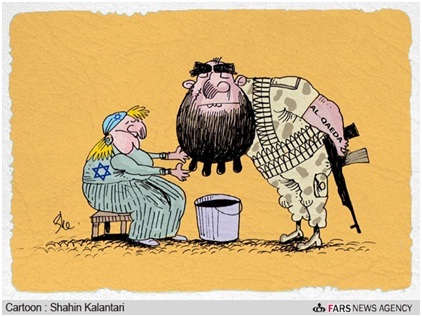

 Aletho News
 Aletho News