The Corporate Takeover of Ukrainian Agriculture
By Frédéric Mousseau | IPS | January 27, 2015
OAKLAND, CA – At the same time as the United States, Canada and the European Union announced a set of new sanctions against Russia in mid-December last year, Ukraine received 350 million dollars in U.S. military aid, coming on top of a one billion dollar aid package approved by the U.S. Congress in March 2014.
Western governments’ further involvement in the Ukraine conflict signals their confidence in the cabinet appointed by the new government earlier in December 2014. This new government is unique given that three of its most important ministries were granted to foreign-born individuals who received Ukrainian citizenship just hours before their appointment.
The Ministry of Finance went to Natalie Jaresko, a U.S.-born and educated businesswoman who has been working in Ukraine since the mid-1990s, overseeing a private equity fund established by the U.S. government to invest in the country. Jaresko is also the CEO of Horizon Capital, an investment firm that administers various Western investments in the country.
As unusual as it may seem, this appointment is consistent with what looks more like a takeover of the Ukrainian economy by Western interests. In two reports – The Corporate Takeover of Ukrainian Agriculture and Walking on the West Side: The World Bank and the IMF in the Ukraine Conflict – the Oakland Institute has documented this takeover, particularly in the agricultural sector.
A major factor in the crisis that led to deadly protests and eventually to president Viktor Yanukovych’s removal from office in February 2014 was his rejection of a European Union (EU) Association agreement aimed at expanding trade and integrating Ukraine with the EU – an agreement that was tied to a 17 billion dollar loan from the International Monetary Fund (IMF).
After the president’s departure and the installation of a pro-Western government, the IMF initiated a reform programme that was a condition of its loan with the goal of increasing private investment in the country.
The package of measures includes reforming the public provision of water and energy, and, more important, attempts to address what the World Bank identified as the “structural roots” of the current economic crisis in Ukraine, notably the high cost of doing business in the country.
The Ukrainian agricultural sector has been a prime target for foreign private investment and is logically seen by the IMF and World Bank as a priority sector for reform. Both institutions praise the new government’s readiness to follow their advice.
For example, the foreign-driven agricultural reform roadmap provided to Ukraine includes facilitating the acquisition of agricultural land, cutting food and plant regulations and controls, and reducing corporate taxes and custom duties.
The stakes around Ukraine’s vast agricultural sector – the world’s third largest exporter of corn and fifth largest exporter of wheat – could not be higher. Ukraine is known for its ample fields of rich black soil, and the country boasts more than 32 million hectares of fertile, arable land – the equivalent of one-third of the entire arable land in the European Union.
The manoeuvring for control over the country’s agricultural system is a pivotal factor in the struggle that has been taking place over the last year in the greatest East-West confrontation since the Cold War.
The presence of foreign corporations in Ukrainian agriculture is growing quickly, with more than 1.6 million hectares signed over to foreign companies for agricultural purposes in recent years. While Monsanto, Cargill, and DuPont have been in Ukraine for quite some time, their investments in the country have grown significantly over the past few years.
Cargill is involved in the sale of pesticides, seeds and fertilisers and has recently expanded its agricultural investments to include grain storage, animal nutrition and a stake in UkrLandFarming, the largest agribusiness in the country.
Similarly, Monsanto has been in Ukraine for years but has doubled the size of its team over the last three years. In March 2014, just weeks after Yanukovych was deposed, the company invested 140 million dollars in building a new seed plant in Ukraine.
DuPont has also expanded its investments and announced in June 2013 that it too would be investing in a new seed plant in the country.
Western corporations have not just taken control of certain profitable agribusinesses and agricultural activities, they have now initiated a vertical integration of the agricultural sector and extended their grip on infrastructure and shipping.
For instance, Cargill now owns at least four grain elevators and two sunflower seed processing plants used for the production of sunflower oil. In December 2013, the company bought a “25% +1 share” in a grain terminal at the Black Sea port of Novorossiysk with a capacity of 3.5 million tons of grain per year.
All aspects of Ukraine’s agricultural supply chain – from the production of seeds and other agricultural inputs to the actual shipment of commodities out of the country – are thus increasingly controlled by Western firms.
European institutions and the U.S. government have actively promoted this expansion. It started with the push for a change of government at a time when president Yanukovych was seen as pro-Russian interests. This was further pushed, starting in February 2014, through the promotion of a “pro-business” reform agenda, as described by the U.S. Secretary of Commerce Penny Pritzker when she met with Prime Minister Arsenly Yatsenyuk in October 2014.
The European Union and the United States are working hand in hand in the takeover of Ukrainian agriculture. Although Ukraine does not allow the production of genetically modified (GM) crops, the Association Agreement between Ukraine and the European Union, which ignited the conflict that ousted Yanukovych, includes a clause (Article 404) that commits both parties to cooperate to “extend the use of biotechnologies” within the country.
This clause is surprising given that most European consumers reject GM crops. However, it creates an opening to bring GM products into Europe, an opportunity sought after by large agro-seed companies such as Monsanto.
Opening up Ukraine to the cultivation of GM crops would go against the will of European citizens, and it is unclear how the change would benefit Ukrainians.
It is similarly unclear how Ukrainians will benefit from this wave of foreign investment in their agriculture, and what impact these investments will have on the seven million local farmers.
Once they eventually look away from the conflict in the Eastern “pro-Russian” part of the country, Ukrainians may wonder what remains of their country’s ability to control its food supply and manage the economy to their own benefit.
As for U.S. and European citizens, will they eventually awaken from the headlines and grand rhetoric about Russian aggression and human rights abuses and question their governments’ involvement in the Ukraine conflict?
Frédéric Mousseau is the Policy Director at the Oakland Institute.
Monsanto agrochemicals causing genetic damage in soybean workers – study
RT | January 22, 2015
Soybean workers exposed to the agrochemicals like glyphosate, the main component in Monsanto’s ‘Roundup’ herbicide and other biocides, suffer from elevated DNA and cell damage, according to a new study.
The study, published in the journal Mutation Research/Genetic Toxicology and Environmental Mutagenesis, involved 127 people, including 81 exposed to biocides while working in the Brazilian soybean industry and 46 non-exposed individuals in a control group.
The exposed group exhibited an elevated level of cellular apoptosis, as well as DNA damage, according to researcher Danieli Benedetti and his team, which concluded that the now-common use of genetically-modified soybeans in the State of Rio Grande do Sul, especially in the city of Espumoso, has toxic ramifications for workers.
“Our findings indicate the advisability of monitoring genetic toxicity in soybean farm workers exposed to pesticides,” the researchers said.
Genetically-engineered seeds, proliferated across the globe by multinational agribusiness conglomerates like Monsanto, are designed to withstand dousing by glyphosate and other biocides in order to terminate insect, fungus, and weed nuisances.
Benedetti’s team focused specifically on Glyphosate and 2,4-D, the two top biocide components in American-biotechnology farming culture. Glyphosate is the prime ingredient in Monsanto’s Roundup products, while Dow Chemical’s 2,4-D is a potent herbicide that was also used in making Agent Orange, the chemical used by the US to devastate resistance during the Vietnam War.
Last spring, Brazil’s public prosecutor sought to suspend use of glyphosate based on its toxic effects. Studies have linked glyphosate to a fatal kidney disease that has affected poor farming regions worldwide.
Just last week, Monsanto won final approval from the US for its new genetically-modified soybeans and cotton, designed to withstand a dominant biocide that fights weed resistance built up as a result of the company’s glyphosate-based Roundup herbicide already in use.
Monsanto reported an earnings drop of 34 percent in its first fiscal quarter. The company reportedly lost $156 million in the fourth quarter of last year due to a one-time payment made to settle an environmental legal case.
As multinationals such as Monsanto and Dow Chemical have sought strict standardization in agriculture markets the world over, the corporate leviathans, especially the former, have become the target of considerable protests and demonstrations.
Companies like Monsanto market their own patented seeds that, given their genetic modification, can be doused with biocides to kill pests and weeds, and which can jeopardize long-term health of the soil and the necessary biodiversity of a local environment that allows for natural pollination and, thus, food security.
In May of last year, activists on five continents around the globe, comprising of 52 nations organized resistance under the ‘March against Monsanto’ umbrella. Protests positioned against Monsanto and involving other corporate-food issues occurred in around 400 cities worldwide, according to reports.
Just this past weekend, more than 120 organizations joined the fifth annual ‘We are Fed Up!’ demonstration in Berlin to focus on the increased importation of American farming practices – such as genetic modification, frequent antibiotic injections for animals, and chemical meat treatments – following the implementation of the controversial Transatlantic Trade and Investment Partnership (TTIP).
Protests have raged most furiously in Europe, where the EU recently approved a law that would let its nations ban genetically-modified organisms even if the EU had deemed them safe. Monsanto said last year it would not try to get any more GM crops approved in Europe given the consistent pushback.
Anger and unrest against Monsanto’s stranglehold has also spread to South America. In Argentina, protests have occurred in resistance to the company’s potent biocides used in tandem with their genetically-engineered seeds. In Brazil, farmers have called on Monsanto and other producers of pest-resistant corn seeds to reimburse them for money spent on additional biocides when the bugs killed the crops instead of dying themselves, speaking to the biocide arms race involved in using GM seeds. Brazilian soy exporters are also tangling with Monsanto over seed royalties.
In Central America, Guatemala’s highest court suspended in September a controversial ‘Monsanto Law,’ a provision of a US-Central American trade agreement, that would insulate transnational seed corporations considered to have “discovered” new plant varieties.
On its home turf in the United States, Monsanto has worked diligently with other multinational biotech, agribusiness, and food production companies to beat down state-level proposals to simply label whether food is comprised of GM ingredients.
The most recent example came in the state of Oregon, where a November ballot initiative to require GMO labeling was narrowly defeated in what became the most expensive ballot measure in the state’s history. The likes of Monsanto and Dupont flushed more than $21 million into the anti-labeling campaign, dwarfing the $9 million raised by proponents.
The company has sued Hawaii’s Maui County for passing last year that bans the cultivation of genetically modified organisms.
Monsanto’s St. Louis headquarters have been the target of mild protests, especially during shareholder meetings.
Meanwhile, agribusiness allies on Capitol Hill are pushing new federal legislation, the Safe and Accurate Food Labeling Act, that would standardize food labeling, effectively killing popular state-based efforts to pass labeling laws.
READ MORE:
Monsanto gets approval for new GMO corn, soybeans designed for potent new biocide
Rising suicide rate for Indian farmers blamed on GMO seeds
In facts & numbers: Absolute majority of Americans want GMO food to be labeled
Monsanto gets approval for new GMO corn, soybeans designed for potent new biocide
RT | January 16, 2015
Monsanto has won final approval from the US for its new genetically-modified soybeans and cotton, designed to withstand a dominant biocide that fights weed resistance built up as a result of the company’s glyphosate-based Roundup herbicide already in use.
The US Department of Agriculture’s Animal and Plant Health Inspection Service (APHIS) announced Thursday that the powerful biotechnology corporation’s GMO cotton and soybean plants have been given “non-regulated” status.
Monsanto now awaits approval from the US Environmental Protection Agency for the new herbicide – a mix of the formidable chemical dicamba and glyphosate, which the company has developed for use on the newly-approved GMO crops.
The new GMO crops – coupled with the dicamba/glyphosate cocktail – make up what Monsanto has dubbed the ‘Roundup Ready Xtend crop system,’ designed to trump super weeds that have evolved along with the company’s glyphosate-based Roundup biocide.
Dicamba was first approved in 1967 and has been linked to high rates of cancer and birth defects in the families of food growers, according to government and other scientific studies.
Consumer, health, environmental, and farmer advocates have fiercely opposed the new Xtend system, as it portends an overall “10-fold increase in dicamba use in American agriculture, from under 4 million lbs. at present to more than 40 million lbs. per year,” according to Center for Food Safety.
“Monsanto’s genetically-engineered dicamba-resistant crops are yet another example of how pesticide firms are taking agriculture back to the dark days of heavy, indiscriminate use of hazardous pesticides, seriously endangering human health and the environment,” said Andrew Kimbrell, executive director of Center for Food Safety, in a statement.
“If EPA also reneges on its responsibility to protect human and environmental health, Center for Food Safety will pursue all available legal options to halt the introduction of these dangerous crops.”
The USDA and Monsanto have said that Xtend will increase dicamba use in cotton by 14 times current levels, according to Reuters, and, in soybeans, 500 times current levels, the Pesticide Action Network said in a statement.
“I am convinced that in all of my years serving the agriculture industry, the widespread use of dicamba herbicide [poses] the single most serious threat to the future of the specialty crop industry in the Midwest,” said Steve Smith, Director of Agriculture for Red Gold, a tomato-processing company.
Opposition — and even the USDA — says more dicamba will only mean additional weed resistance in the future, translating to more profits for the likes of Monsanto and Dow Chemical, which received US approval for its genetically-engineered 2,4-D-resistant corn and soybeans in September 2014.
“The pesticide treadmill spins on, and that’s great news for Monsanto,” said Gary Ruskin, executive director of U.S. Right to Know, a consumer advocacy group, Reuters reported. “This is just the latest in a endless string of favors from our federal government to Monsanto.”
Crops most at risk from increased dicamba exposure include fruits, nuts, and vegetables, growers of which say they fear the chemical will drift onto and damage their fields.
Monsanto, according to Reuters, said it will educate food growers over the proper way to avoid dicamba drift. But biocide opponents are skeptical of these promises and say the burden will rest with the growers — not Monsanto.
“Monsanto’s response to farmers’ concerns about crop damage has been to develop exceedingly complex and demanding protocols for applying and disposing of the herbicide cocktail, including a ten-step triple rinse of sprayers that is likely to take more than an hour and then entails proper disposal of the contaminated rinse water,” said the Pesticide Action Network. “This ‘solution’ puts all responsibility on farmers, and sets up the company to escape liability for crop damage.”
Biocide drift will also adversely impact flowering plants and their pollinators and other species, which depend on them for nectar and habitat.
Meanwhile, Monsanto is awaiting approval from China to allow imports of its new soybeans. China has been reticent about approving more GMO crops, as exemplified in farmer lawsuits aimed at American agribusiness companies following the nation’s rejection of US genetically-engineered-corn imports.
Monsanto Chief Technology Officer Robb Fraley said last week that Chinese approval is expected in time for Xtend’s commercial launch in 2016.
READ MORE:
EU to pick which GMO it grows after new bill passed overwhelmingly
Oregon GMO-labeling initiative defeated by Monsanto-sponsored groups
Monarch butterfly may be listed as endangered species after 90% population drop
New Seeds, Old Pesticides: A Farmer on 2,4-D and Next Gen GMOs
By Jim Goodman | Civil Eats | October 15, 2014
I doubt very many people have ever heard or seen a “tank mix.” Simply put, it is a mix of several crop chemicals used together to control a variety of weeds. I have not looked into a swirling mix of chemicals in a crop spray rig for probably 20 years–that’s about how long it has been since we have used any herbicides on our farm.
It may look different now, new chemicals, perhaps new colors and new toxic smells. I remember it as a sulfurous yellow mix of rising spreading plumes of chemicals, circulating and mixing together in the tank. The smell was literally breathtaking and the toxicity likewise. (That’s why it’s recommended that the applicator wear breathing protection and a Hazmat suit.)
When people ask me why we switched to organic farming, that swirling yellow tank mix always reappears in my mind. How did I ever rationalize putting that stuff on my fields?
When genetically modified (GM) crops were introduced commercially in 1996, farmers were told that Monsanto’s “Roundup Ready”(RR) technology would make crop production easier, safer, and “one spray was all they’d ever need.”
Roundup would be a safer, more effective replacement for all those chemicals farmers were currently using their tank mixes, they told us. With Roundup as the cornerstone of GM crop technology, the promise was safety. We’d have no more worries about weeds, and it would be eternally effective, so there would be no more need for tank mixes.
While I really don’t consider any pesticide safe (after all–they are poisons), Roundup was probably less toxic, perhaps less carcinogenic, and perhaps less of an endocrine disruptor than some of the chemicals it replaced. Perhaps.
I specifically remember 2,4-D (one of the components of the Vietnam-era defoliant Agent Orange) being singled out as a “more dangerous” herbicide that would no longer be needed. Who wouldn’t like that–a dangerous herbicide replaced by an easier to use, safer, permanently more effective one? There was sliced bread and then there was RR.
Of course, it didn’t work out that way. In 1996, Monsanto was fined by the State of New York for false advertising in its promotion of Roundup as “safe.” According to a 2013 Associated Press article, Monsanto acknowledged that U.S. Environmental Protection Agency (EPA) approval “is not an assurance or finding of safety” because U.S. regulations are based on a cost-benefit analysis, which balances the potential of “any unreasonable risk to man or the environment” against the “the economic, social, and environmental costs and benefits of the use of any pesticide.”
Isn’t that something? EPA approval is not an assurance of safety.
Consider the fact that EPA-approval was based on specific recommended quantities, and then, as these products became less effective, the tendency would be to “add a just little more.” But, even with “just a little more,” nature found a way to survive, and weeds developed resistance to Roundup to the point that even a thorough sousing would no longer kill them. Once again the tank mix became the only hope in killing these new, pesticide-resistant “superweeds.”
To help fight resistant weeds, farmers have also been encouraged to develop integrated weed management strategies. Mark Jeschke, Agronomy Research Manager at DuPont Pioneer, notes that “mechanical weed control and crop rotation are examples of two such tactics available to growers.” (These are tactics organic farmers have always used). But for heaven’s sake, the industry says, don’t stop spraying.
The “new generation” of GM crops are on the way and the first out of the pipeline are corn and soybeans that Dow AgroSciences developed to be used in conjunction with 2,4-D. In September, The U.S. Department of Agriculture approved the new seeds, as part of a branded “Enlist Weed Control System” that could be going into the ground as early as spring 2015.
Now remember that in 1996 Roundup was touted as the safe alternative to 2,4-D, a dangerous pesticide. Has 2,4-D become safer than it used to be? No.
My guess is that Dow decided it would be cheaper and easier to engineer seeds to resist the old herbicides rather than develop new herbicides that might be less toxic. And, as Tom Philpott at Mother Jones notes, Dow and Monsanto know that planting seeds that withstand both 2,4-D and Roundup would lead to an increase in herbicide use.
In fact, Dow and Monsanto stand to cash in on 2,4-D and Roundup cross-licensing. We are talking big profit potential. Never mind the fact that an Ohio study pointed out that 2,4-D is potentially potent enough to cause a “17 to 77 percent reduction of the marketable fruit and vegetables” on farms close to those where it is sprayed.
The University of Maryland recommends leaving a 350-foot buffer zone (PDF) between fields sprayed with 2,4-D and grapevines, which–along with tomatoes, potatoes, eggplants, peppers, melons, sweet potatoes, beans, and other vegetables–are highly susceptible to 2,4-D drift.
It would be one thing if the farmer doing the spraying was responsible for leaving a buffer strip between their crops and the neighbors’ vegetables. But the guy with the chemicals can spray right up to the property line. Over the last 20 years I have had to leave many acres of my land in buffer strips. Most farmers try to be good neighbors, but they can’t control the wind.
Weeds resistant to 2,4-D were documented as early as 1957, and still, farmers are hoping that 2,4-D resistant corn and soybeans, especially a 2,4-D/Roundup resistant combination, will be “the one” solution to their problems. And if weed resistance shows up they can “just add a little more”–at least until this system fails and the next GM crop is introduced.
Civil Eats editor’s note: The U.S. Environmental Protection Agency (EPA) today approved Dow Chemical’s Enlist Duo herbicide, a new blend of 2,4-D and Roundup (glyphosate) developed for use on new varieties of genetically engineered (GE) corn, soybeans, and cotton.
Guatemala defies ‘Monsanto Law’ pushed by US as part of trade agreement
RT | September 3, 2014
The highest court in Guatemala has suspended the controversial ‘Monsanto Law,’ a provision of a US-Central American trade agreement, that would insulate transnational seed corporations considered to have “discovered” new plant varieties.
The Constitutional Court suspended on Friday the law – passed in June and due to go into effect on Sept. 26 – after a writ of amparo was filed by the Guatemalan Union, Indigenous and Peasant Movement, which argued the law would harm the nation, LaVoz reported.
The Court’s decision came after several Guatemalan parliamentarians from both the governing Patriotic Party and the opposition party Renewed Democratic Freedom said they would consider repealing the law after outcry from a diverse cross-section of Guatemalans.
The decision also offers interested parties 15 days to present their arguments pertaining to the law in front of the Constitutional Court. Members of both political parties said they would present motions to resist the law.
The ‘Law for the Protection of New Plant Varieties,’ dubbed the ‘Monsanto Law’ by critics for its formidable seed-privatization provisions, is an obligation for all nations that signed the 2005 CAFTA-DR free trade agreement between Costa Rica, El Salvador, Guatemala, Honduras, Nicaragua, the Dominican Republic, and the United States. The agreement requires signatories to adhere to the International Convention for the Protection of New Plant Varieties.
The law offers producers of transgenic seeds, often corporate behemoths like Monsanto, strict property rights in the event of possession or exchange of original or harvested seeds of protected varieties without the breeder’s authorization. A breeder’s right extends to “varieties essentially derived from the protected variety,” thus, a hybrid of a protected and unprotected seed belongs to the protected seed’s producer.
The Rural Studies Collective (Cer-Ixim) warned that the law would monopolize agriculture processes, severely threaten food sovereignty – especially those of indigenous peoples – and would sacrifice national biodiversity “under the control of domestic and foreign companies.”
The National Alliance for Biodiversity Protection said in July that the law is unconstitutional “because it violates the rights of peoples. It will benefit transnational seed companies such as Monsanto, Duwest, Dupont, Syngenta, etc.”
“According to this law, the rights of plant breeders are superior to the rights of peoples to freely use seeds,” the Alliance said in a statement.
“It’s a direct attack on the traditional knowledge, biodiversity, life, culture, rural economy and worldview of Peoples, and food sovereignty,” the Alliance added.
Anyone who violates the law, wittingly or not, could face a prison term of one to four years, and fines of US$130 to $1,300.
It is unclear what options the Guatemalan government has given the obligations under CAFTA-DR. The US would likely put pressure on the nation to pass the law, part of a global effort using trade agreements to push further corporate control over trade sectors like agriculture in the name of modernization. Upon further refusal, the US could drop Guatemala from the trade agreement.
Brazil looks to ban Monsanto’s Roundup, other toxicity risks
RT | March 27, 2014
Brazil’s public prosecutor wants to suspend use of glyphosate, the active ingredient in Monsanto’s pervasive herbicide Roundup. A recent study suggested glyphosate may be linked to a fatal kidney disease that has affected poor farming regions worldwide.
The Prosecutor General’s office is also pursuing bans on the herbicide 2,4-D and seven other active herbicide ingredients in addition to glyphosate: methyl parathion, lactofem, phorate, carbofuran, abamectin, tiram, and paraquat, GMWatch reported.
The Prosecutor General of Brazil “seeks to compel the National Health Surveillance Agency (ANVISA) to reevaluate the toxicity of eight active ingredients suspected of causing damage to human health and the environment,” according to the prosecutor’s website. “On another front, the agency questions the registration of pesticides containing 2,4-D herbicide, applied to combat broadleaf weeds.”
The two actions have already been filed with Brazil’s justice department.
The prosecutor is also seeking a preliminary injunction that would allow the Ministry of Agriculture, Livestock and Supply to suspend further registration of the eight ingredients until ANVISA can come to a conclusion.
The country’s National Biosafety Technical Commission has been asked to prohibit large-scale sale of genetically modified seeds resistant to the 2,4-D as ANVISA deliberates.
Last week, Brazil’s Federal Appeals Court ruled to cancel use of Bayer’s Liberty Link genetically-modified maize. Earlier this month, France banned the sale, use, and cultivation of Monsanto’s genetically-modified maize MON 810. New research found insects in the United States are developing a resistance to the genetically-engineered maize.
As for glyphosate, new research suggests it becomes highly toxic to the human kidney once mixed with “hard” water or metals like arsenic and cadmium that often exist naturally in the soil or are added via fertilizer. Hard water contains metals like calcium, magnesium, strontium, and iron, among others. On its own, glyphosate is toxic, but not detrimental enough to eradicate kidney tissue.
The glyphosate molecule was patented as a herbicide by Monsanto in the early 1970s. The company soon brought glyphosate to market under the name “Roundup,” which is now the most commonly used herbicide in the world.
Two weeks ago, Sri Lanka banned glyphosate given the links to an inexplicable kidney disease, Chronic Kidney Disease of Unknown etiology, known as CKDu, according to the Center for Public Integrity. CKDu has killed thousands of agricultural workers, many in Sri Lanka and El Salvador.
El Salvador’s legislature approved in September a ban on glyphosate and many other agrochemicals, yet the measure is not yet law.
Related article


How “Extreme Levels” of Roundup in Food Became the Industry Norm
By Thomas Bøhn and Marek Cuhra | Independent Science News | March 24, 2014
Food and feed quality are crucial to human and animal health. Quality can be defined as sufficiency of appropriate minerals, vitamins and fats, etc. but it also includes the absence of toxins, whether man-made or from other sources. Surprisingly, almost no data exist in the scientific literature on herbicide residues in herbicide tolerant genetically modified (GM) plants, even after nearly 20 years on the market.
In research recently published by our laboratory (Bøhn et al. 2014) we collected soybean samples grown under three typical agricultural conditions: organic, GM, and conventional (but non-GM). The GM soybeans were resistant to the herbicide Roundup, whose active ingredient is glyphosate.
We tested these samples for nutrients and other compounds as well as relevant pesticides, including glyphosate and its principal breakdown product, Aminomethylphosponic acid (AMPA). All of the individual samples of GM-soy contained residues of both glyphosate and AMPA, on average 9.0 mg/kg. This amount is greater than is typical for many vitamins. In contrast, no sample from the conventional or the organic soybeans showed residues of these chemicals (Fig. 1).
This demonstrates that Roundup Ready GM-soybeans sprayed during the growing season take up and accumulate glyphosate and AMPA. Further, what has been considered a working hypothesis for herbicide tolerant crops, i.e. that, as resistant weeds have spread:
“there is a theoretical possibility that also the level of residues of the herbicide and its metabolites may have increased” (Kleter et al. 2011) is now shown to be actually happening.
Monsanto (manufacturer of glyphosate) has claimed that residues of glyphosate in GM soy are lower than in conventional soybeans, where glyphosate residues have been measured up to 16-17 mg/kg (Monsanto 1999). These residues, found in non-GM plants, likely must have been due to the practice of spraying before harvest (for desiccation). Another claim of Monsanto’s has been that residue levels of up to 5.6 mg/kg in GM-soy represent “… extreme levels, and far higher than those typically found” (Monsanto 1999).

Figure 1. Residues of glyphosate and AMPA in individual soybean samples (n=31).
For organic and conventional soybeans, glyphosate residues were below the detection limit.
Seven out of the 10 GM-soy samples we tested, however, surpassed this “extreme level” (of glyphosate + AMPA), indicating a trend towards higher residue levels. The increasing use of glyphosate on US Roundup Ready soybeans has been documented (Benbrook 2012). The explanation for this increase is the appearance of glyphosate-tolerant weeds (Shaner et al. 2012) to which farmers are responding with increased doses and more applications.
Maximum residue levels (MRLs) of glyphosate in food and feed
Globally, glyphosate-tolerant GM soy is the number one GM crop plant and glyphosate is the most widely used herbicide, with a global production of 620 000 tons in 2008 (Pollak 2011). The world soybean production in 2011 was 251.5 million metric tons, with the United States (33%), Brazil (29%), Argentina (19%), China (5%) and India (4%) as the main producing countries (American Soybean Association 2013).
In 2011-2012, soybeans were planted on about 30 million hectares in the USA, with Roundup Ready GM soy contributing 93-94 % of the production (USDA 2013). Globally, Roundup Ready GM soybeans contributed to 75 % of the production in 2011 (James 2012).
The legally acceptable level of glyphosate contamination in food and feed, i.e. the maximum residue level (MRL) has been increased by authorities in countries where Roundup-Ready GM crops are produced, or where such commodities are imported. In Brazil, the MRL in soybean was increased from 0.2 mg/kg to 10 mg/kg in 2004: a 50-fold increase, but only for GM-soy. The MRL for glyphosate in soybeans has been increased also in the US and Europe. In Europe, it was raised from 0.1 mg/kg to 20 mg/kg (a 200-fold increase) in 1999, and the same MRL of 20 mg/kg was adopted by the US. In all of these cases, MRL values appear to have been adjusted, not based on new scientific evidence, but pragmatically in response to actual observed increases in the content of residues in glyphosate-tolerant GM soybeans.
Has the toxicity of Roundup been greatly underestimated?
When regulatory agencies assess pesticides for safety they invariably test only the claimed active ingredient.
Nevertheless, these do not necessarily represent realistic conditions since in practice it is the full, formulated herbicide (there are many Roundup formulations) that is used in the field. Thus, it is relevant to consider, not only the active ingredient, in this case glyphosate and its breakdown product AMPA, but also the other compounds present in the herbicide formulation since these enhance toxicity. For example, formulations of glyphosate commonly contain adjuvants and surfactants to stabilize and facilitate penetration into the plant tissue. Polyoxyethylene amine (POEA) and polyethoxylated tallowamine (POE-15) are common ingredients in Roundup formulations and have been shown to contribute significantly to toxicity (Moore et al. 2012).
Our own recent study in the model organism Daphnia magna demonstrated that chronic exposure to glyphosate and a commercial formulation of Roundup resulted in negative effects on several life-history traits, in particular reproductive aberrations like reduced fecundity and increased abortion rate, at environmental concentrations of 0.45-1.35 mg/liter (active ingredient), i.e. below accepted environmental tolerance limits set in the US (0.7 mg/liter) (Cuhra et al. 2013). A reduced body size of juveniles was even observed at an exposure to Roundup at 0.05 mg/liter.
This is in sharp contrast to world-wide regulatory assumptions in general, which we have found to be strongly influenced by early industry studies and in the case of aquatic ecotoxicity assessment, to be based on 1978 and 1981 studies presented by Monsanto claiming that glyphosate is virtually non-toxic in D. magna (McAllister & Forbis, 1978; Forbis & Boudreau, 1981).
Thus a worrisome outlook for health and the environment can be found in the combination of i) the vast increase in use of glyphosate-based herbicides, in particular due to glyphosate-tolerant GM plants, and ii) new findings of higher toxicity of both glyphosate as an active ingredient (Cuhra et al., 2013) and increased toxicity due to contributions from chemical adjuvants in commercial formulations (Annett et al. 2014).
A similar situation can be found for other pesticides. Mesnage et al. (2014) found that 8 out of 9 tested pesticides were more toxic than their declared active principles.
This means that the Accepted Daily Intake (ADI) for humans, i.e. what society finds “admissible” regarding pesticide residues may have been set too high, even before potential combinatorial effects of different chemical exposures are taken into account.
For glyphosate formulations (Roundup), realistic exposure scenarios in the aquatic environment may harm non-target biodiversity from microorganisms, invertebrates, amphibians and fish, (reviewed in Annett et al. 2014) indicating that the environmental consequences of these agrochemicals need to be re-assessed.
Other compositional differences between GM, non-GM, and organic

Figure 2. Discriminant analysis for GM, conventional and organic soy samples based on 35 variables. Data was standardized (mean = 0 and SD = 1).
Our research also demonstrated that different agricultural practices lead to markedly different end products. Data on other measured compositional characteristics could be used to discriminate statistically all individual soy samples (without exception) into their respective agricultural practice background (Fig. 2).
Organic soybeans showed the healthiest nutritional profile with more glucose, fructose, sucrose and maltose, significantly more total protein, zinc and less fiber, compared with both conventional and GM-soy. Organic soybeans contained less total saturated fat and total omega-6 fatty acids than both conventional and GM-soy.
Conclusion
Roundup Ready GM-soy accumulates residues of glyphosate and AMPA, and also differs markedly in nutritional composition compared to soybeans from other agricultural practices. Organic soybean samples also showed a more healthy nutritional profile (e.g. higher in protein and lower in saturated fatty acids) than both industrial conventional and GM soybeans.
Lack of data on pesticide residues in major crop plants is a serious gap of knowledge with potential consequences for human and animal health. How is the public to trust a risk assessment system that has overlooked the most obvious risk factor for herbicide tolerant GM crops, i.e. high residue levels of herbicides, for nearly 20 years? If it has been due to lack of understanding, it would be bad. If it is the result of the producer’s power to influence the risk assessment system, it would be worse.
References
American Soy Association, Soystats. 2013. 16-5-2013.
Annett, R., Habibi, H. R. and Hontela, A. 2014. Impact of glyphosate and glyphosate-based herbicides on the freshwater environment. – Journal of Applied Toxicology DOI 10.1002/jat.2997.
Aumaitre, L. A. 2002. New feeds from genetically modified plants: substantial equivalence, nutritional equivalence and safety for animals and animal products. – Productions Animales 15: 97-108.
Benbrook, C. M. 2012. Impacts of genetically engineered crops on pesticide use in the U.S. – the first sixteen years. – Environmental Science Europe 24:24.
Binimelis, R., Pengue, W. and Monterroso, I. 2009. “Transgenic treadmill”: Responses to the emergence and spread of glyphosate-resistant johnsongrass in Argentina. – Geoforum 40: 623-633.
Bøhn, T., Cuhra, M., Traavik, T., Sanden, M., Fagan, J. and Primicerio, R. 2014. Compositional differences in soybeans on the market: Glyphosate accumulates in Roundup Ready GM soybeans. – Food Chemistry 153: 207-215.
Cuhra, M., Traavik, T. and Bøhn, T. 2013. Clone- and age-dependent toxicity of a glyphosate commercial formulation and its active ingredient in Daphnia magna. – Ecotoxicology 22: 251-262 (open access). DOI 10.1007/s10646-012-1021-1.
Duke, S. O., Rimando, A. M., Pace, P. F., Reddy, K. N. and Smeda, R. J. 2003. Isoflavone, glyphosate, and aminomethylphosphonic acid levels in seeds of glyphosate-treated, glyphosate-resistant soybean. – Journal of Agricultural and Food Chemistry 51: 340-344.
EC . Review report for the active substance glyphosate. 6511/VI/99-final, 1-56. 2002. European Commission. Health and Consumer Protection Directorate-General.
Forbis, A.D., Boudreau, P. 1981. Acute toxicity of MON0139 (Lot LURT 12011)(AB-81-074) To Daphnia magna: Static acute bio- assay report no. 27203. Unpublished study document from US EPA library
Harrigan, G. G., Ridley, G., Riordan, S. G., Nemeth, M. A., Sorbet, R., Trujillo, W. A., Breeze, M. L. and Schneider, R. W. 2007. Chemical composition of glyphosate-tolerant soybean 40–3-2 grown in Europe remains equivalent with that of conventional soybean (Glycine max L.). – Journal of Agricultural and Food Chemistry 55: 6160-6168.
James, C. Global Status of Commercialized Biotech/GM Crops: 2012. ISAAA Brief No. 44. 2012. ISAAA: Ithaca, NY.
Kleter, G. A., Unsworth, J. B. and Harris, C. A. 2011. The impact of altered herbicide residues in transgenic herbicide-resistant crops on standard setting for herbicide residues. – Pest Management Science 67: 1193-1210.
McAllister, W., Forbis A. 1978. Acute toxicity of technical glyphosate (AB–78–201) to Daphnia magna. Study reviewed and approved 8–30–85 by EEB/HED
Mesnage, R., Defarge, N., Vendômois, J. S. and Seralini, G. E. 2014. Major pesticides are more toxic to human cells than their declared active principles. – BioMed Research International http://dx.doi.org/10.1155/2014/179691.
Monsanto . Residues in Roundup Ready soya lower than conventional soy. http://www.monsanto.co.uk/news/99/june99/220699_residue.html . 1999.
Moore, L. J., Fuentes, L., Rodgers, J. H., Bowerman, W. W., Yarrow, G. K., Chao, W. Y. and Bridges, W. C. 2012. Relative toxicity of the components of the original formulation of Roundup (R) to five North American anurans. – Ecotoxicology and Environmental Safety 78: 128-133.
Pollak, P. 2011. Fine chemicals: the industry and the business. – Wiley.
Shaner, D. L., Lindenmeyer, R. B. and Ostlie, M. H. 2012. What have the mechanisms of resistance to glyphosate taught us? – Pest Management Science 68: 3-9.
USDA . National Agricultural Statistics Service. 2013. 16-5-2013.
The Authors:
Thomas Bøhn
GenØk – Centre for Biosafety, Tromsø, Norway
Professor of Gene Ecology, Faculty of Health Sciences, UiT The Arctic University of Norway
Marek Cuhra
GenØk – Centre for Biosafety, Tromsø, Norway
PhD student, Faculty of Health Sciences, UiT The Arctic University of Norway
Love Me, I’m a Liberal!
By Kevin Carson | Center for a Stateless Society | November 18, 2013
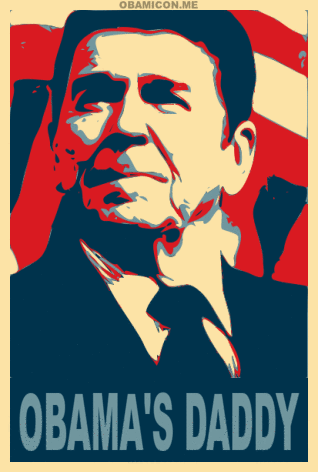 Nothing like starting out your day with a laugh — and today I have Matthew Lynch (“12 Reasons Why Obama is One of the Greatest Presidents Ever,” Huffington Post, November 15) to thank for it.
About half of Lynch’s points boil down to, “Obama is for x, because he makes speeches talking about x all the time.” He starts out with the best one of all:
“Unlike the many presidents who preceded him, he cares about what is best for the greater good. He truly does represent The People. His actions have always been motivated by a sincere desire to do what is best for the majority, even if it meant losing ground with the wealthy, influential or powerful minority.”
Um, yeah. That’s why he adopted a Republican “universal healthcare” proposal to require everybody to buy private health insurance — and give taxpayer money to the ones who can’t afford it. That should be popular with “The People,” all right — at least those who own stock in insurance companies. That’s why he quietly promised the drug companies he wouldn’t use Medicare’s bargaining power to negotiate lower drug prices. That’s why Joe Biden conducts copyright enforcement policy out of Disney’s corporate headquarters and the administration backs draconian copyright legislation dictated in secret by proprietary content industries.
Among my favorite other howlers:
“2. He is for civil rights. He has consistently spoken on behalf of the disenfranchised, the underdog and the most controversial members of society …”
Yeah, I know he said a lot of stuff about gay marriage and ending Don’t Ask Don’t Tell. But he refused to actually stop prosecuting gays in the military before the law was repealed, or to put enforcement on the back burner, even when he was fully capable of using his executive authority to do so.
And notice Lynch doesn’t say “civil liberties.” Obama said a lot of stuff about them, too — back in 2008. Since then he’s expanded unconstitutional wiretapping, run interference for the telecoms that help out with it and given amnesty to people who systematically ordered and engaged in torture. Holding war criminals accountable would be “divisive,” you see. He owes the late Nuremberg defendants an apology — they were only following orders, too.
4. Healthcare. I think we already covered that.
“5. He is for the middle class. Here are just a few of the comments made by President Barack Obama in recent months …”
A lot of presidents were for a lot of stuff, if you stick to reading their collected speeches. In practice, Obama’s farm policies are written by ADM and Monsanto, and the office of Secretary of the Treasury is permanently reserved for Goldman-Sachs alumni, just as under his predecessors.
Obama’s actual economic policy is classic Hamiltonianism: Responding to technologies of abundance that reduce the need for capital and labor by using Rube Goldberg mechanisms to artificially prop up the demand for those inputs — even if it means giving people tax breaks for throwing stuff away and replacing it. The stomach-churning irony is that most of the same greenwashed Whole Foods liberals who applaud this also condemn planned obsolescence and the Military-Industrial Complex, which were designed to accomplish exactly the same result. The proper approach to technologies of abundance is to make sure their benefits are fully internalized by workers and consumers, by ceasing to enforce monopolies, artificial scarcities and rents of all kind. If it takes only fifteen hours of labor a week to produce our standard of living, it should only take fifteen hours of labor to enjoy that standard of living. But that would annoy Obama’s Big Business friends.
My favorite, though, is this:
“10. He is for peace. Let us never forget that Barack Obama was awarded the Nobel Peace Prize in 2009 …”
Yeah, he uses that Peace Prize as a paperweight to hold down his drone kill list. Obama didn’t end the war in Afghanistan — he transformed it into a remote-control video game war in which wedding parties can be massacred at the push of a button. And of course, Lynch can’t resist throwing in a mention of the Zero Dark Thirty crap about killing Bin Laden.
I can’t help picturing someone fifty years ago breathlessly gushing “I love JFK because he’s the Peace President” — while ignoring the Bay of Pigs, the Diem assassination and Green Berets in Vietnam.
Lynch’s points, edited for substance, are basically on the same level as a guy in a bar decked out in Full Cleveland thirty years ago saying “I feel comfortable with Reagan.” Obama’s the Reagan of moderate center-left NPR liberals who shop at Whole Foods. If you’re satisfied with the image of peace and social justice, while government in substance continues to serve the same powerful interests, keep right on voting — that’s what it’ll get you.
Related articles
- Obama, Starving Africans and the Israel Lobby
- 12 Reasons Why Obama Is Not The Greatest President Ever – A Rebuttal
Related videos
Bono … again
Kenny’s Sideshow | May 18, 2012
For being a good little spokesman for the globalist thieves, Bono gets another payoff that maybe could make him the richest musician on the planet.
Not much new here. Just another example of social engineering to get us to support the rape of Africa…..all for the children of course. Bono is now shilling for Monsanto and friends and partners with Hillary and Obama. He works the crowd and shows us how selling out is profitable.
Related articles
Featured Video

Michael von der Schulenburg: Europe’s Self-Defeating Iran War Policy
or go to
Aletho News Archives – Video-Images
Frlom the Archives
Who Rules America?
The Power Elite in the Time of Trump
By James Petras | Axis of Logic | September 6, 2017
Introduction
In the last few months, several competing political, economic and military sectors – linked to distinct ideological and ethnic groups – have clearly emerged at the centers of power.
We can identify some of the key competing and interlocking directorates of the power elite:
- Free marketers, with the ubiquitous presence of the ‘Israel First’ crowd.
- National capitalists, linked to rightwing ideologues.
- Generals, linked to the national security and the Pentagon apparatus, as well as defense industry.
- Business elites, linked to global capital.
This essay attempts to define the power wielders and evaluate their range of power and its impact. … continue
Blog Roll
 Aletho News
- Michael von der Schulenburg: Europe’s Self-Defeating Iran War Policy
- Sorry, The New Republic, Climate Change Isn’t Causing Somali Migration. Blame Civil Strife and Poverty.
- Expert Guts Claims That HPV Vaccine Reduces Cancer Risk
- No evidence Russia sabotaged Baltic cables – Finnish intel
- The Strategic Folly of a (Serious) US Ground Invasion of Iran
- US-Israeli war of aggression on Iran meant to reshape region: Omani FM
- Iran Does Not Consider Israel Party to Talks to Need Mediators With It – Ambassador
- Macron’s aircraft carrier and warplanes to the Persian Gulf is a dangerous vanity project
- Meet The Ellisons: Zionists, Technocrats, Moguls
- US failures in Iran reveal Russia is key to South Korea’s strategic security
- If Americans Knew
- Are we on the precipice of World War III?
- ‘Catastrophic,’ Says UNICEF: 1,100+ Children Killed or Wounded in Mideast Since US-Israel Launched Iran War
- The Unbelievable Madness of Our War With Iran
- World Council of Churches calls on govts to hold Israel accountable for violations of intl law
- How to end the war on Iran that costs US taxpayers $1M per minute – Not a ceasefire Day 153
- Israeli strategic plans to “remake the Middle East” from the 1950s and since
- Honoring Gaza’s women who refused to let the world look away
- 97% of victims of war on Iran are Iranian, 98% of victims in war on Gaza are Gazans – Not a ceasefire Day 152
- Early Iran strikes cost $5.6 billion in munitions, Pentagon estimates
- Israel Decided the War, But Trump’s America Fights and Pays the Bill
- No Tricks Zone
- New Studies: UK Sea Levels Were 4 Meters Higher Than Today During The Mid-Holocene
- Destructive Green New Deal: German Energy And Metal Group Warns Of Drastic Crisis
- New Study Documents A 20-Year Pause In Arctic Sea Ice Decline – Driven By Internal Variability
- Wake-up Call: Survey Shows Majority Of Germans Now Favor Postponing Climate Targets!
- Televised! Leading German Political Candidate Tells Schoolchildren CO2 Makes Sun Hotter!
- New Study: A Century Warming Of 1.1°C Is ‘Commonplace’ And ‘Not Unusual’ During This Interglacial
- New Study: ‘Internal Noise’ And Volcanic Forcing Can Trigger 10-15°C Warming Within Decades
- Glaciers Worldwide Are Suddendly Surging, Experts Blame Warming!
- Surprising Discovery: Sahara Is Greening…Billions Of Trees Where Once Thought To Be Barren
- New Research Reaffirms Clouds, Aerosols, And Surface Solar Radiation Are ‘Driving The Climate System’
 Aletho News