NSA Spying on Latin American Countries Included Targeting of Trade Secrets
By Noel Brinkerhoff | AllGov | July 11, 2013
The United States has been accused of spying on numerous countries in Latin America in an effort to collect intelligence on trade secrets and military capabilities.
Using information provided by former National Security Agency (NSA) contractor Edward Snowden, a Brazilian newspaper, O Globo, published a story that said the U.S. spy agency has gathered data on telephone calls and emails from Brazil, Colombia, Mexico, Venezuela and others.
The account indicated that the NSA had collected military and security data on countries including Venezuela, while also carrying out surveillance operations to acquire trade secrets from within the oil industry in Venezuela and the energy sector in Mexico.
O Globo also published a story over the weekend saying Brazil was a major target of the NSA’s global spying on telecommunications, which involved the cooperation of American and Brazilian companies (which were not named).
It was additionally reported that the CIA and NSA jointly operated monitoring stations to gain foreign satellite data in 65 countries, including five in Latin America.
In response to the accusations, the U.S. ambassador to Brazil, Thomas Shannon, reportedly denied that Washington has been conducting surveillance operations on Brazilian communications.
News of the alleged spying upset many in Brazil and other Latin countries, which have a history of military governments—often supported by the United States—that spied on their own people.
Brazilian President Dilma Rousseff, who was jailed and tortured in the 1970s under the ruling junta, said her government would raise concerns with the U.N. Commission on Human Rights.
“Brazil’s position on this issue is very clear and very firm,” Rousseff told the media. “We do not agree at all with interference of this kind, not just in Brazil but in any other country.”
To Learn More:
U.S. Spy Spread Through Latin America (by Glenn Greenwald, and Kaz and Roberto Jose’ Casado; O Globo)
Capitals 4 Countries Also Housed the Office of the NSA and CIA (by Kaz and Roberto Jose’ Casado; O Globo)
U.S. and Britain Eavesdropped on World Leaders at 2009 Summits (by Noel Brinkerhoff, AllGov)
US NSA Spied on Venezuela When President Chavez Died, Documents Reveal (alethonews.wordpress.com)
Merkel justifies NSA eavesdropping surveillance
RT | July 11, 2013
Despite “justified questions” to the American intelligence community regarding eavesdropping on German networks, the US remains Berlin’s “most loyal ally”, announced Chancellor Angela Merkel in interview to Die Zeit weekly.
Merkel has made her first detailed comment into the unraveling diplomatic scandal with the America’s National Security Agency (NSA) global telecommunication eavesdropping, including those of its European allies, Germany foremost among them.
It emerged recently that Germany happens to be the most-snooped-on EU country by the American National Security Agency (NSA). The NSA’s real-time online surveillance PRISM program allows US intelligence agencies to intercept virtually any communications over the internet, phone calls and makes possible direct access to files stored on the servers of major internet companies.
Merkel declared that she herself has learnt about the US surveillance programs, such as the NSA’s PRISM spy program, “through the current reporting” in the media.
In early July spokesman Steffen Seibert announced on the behalf of Chancellor Merkel that “The monitoring of friends – this is unacceptable. It can’t be tolerated,” adding that Merkel had already delivered her concerns to the US. “We are no longer in the Cold War,” Seibert added.
The German government subsequently summoned US Ambassador Philip Murphy to Berlin to explain the incendiary reports.
At the same time according to new revelations made by former NSA contractor Edward Snowden to Germany’s Spiegel magazine, the American NSA and Germany’s intelligence agencies are “in bed together.”
Seibert told Reuters this week that German’s Federal Intelligence Agency’s (BND) cooperation with the NSA “took place within strict legal and judicial guidelines and is controlled by the competent parliamentary committee.”
‘Intelligence is essential for democracies’
Merkel stressed that intelligence “has always been and will in future be essential for the security of citizens” of democratic countries. “A country without intelligence work would be too vulnerable,” Merkel said.
At the same time, she observed that there must be a “balance between maximum freedom and what the state needs to give its citizens the greatest possible security.”
Merkel emphasized that German-American special relationship should not be endangered by the incident.
“America has been, and is, our most loyal ally over all the decades,” Merkel said, but pointed out that Washington should clear up the situation with the US allegedly bugging the embassies of the European countries and the EU facilities, noting that “the Cold War is over.”
Stasi and NSA are not comparable
In acknowledgment of the Germany’s contemporary history, Merkel, who grew up in East Germany, refused to make any parallels between the methods of work of DDR’s secret police Stasi and America’s NSA.
“For me, there is absolutely no comparison between the Stasi and the work of intelligence agencies in democratic states,” she was quoted as saying. “They are two completely different things and such comparisons only lead to a trivialization of what the Stasi did to [East Germany’s] people,” said Merkel.
Rhetoric shift
In the face of the national elections in September, Angela Merkel has come under fierce criticism in connection with the NSA spying scandal for not protesting unequivocally enough, while various German politicians demanded to stop spying immediately.
Germany’s center-left opposition insists on questioning country’s officials with a view to find out what exactly they knew about the American surveillance of German communications before the eavesdropping scandal emerged.
Earlier Germany’s Interior Minister Hans-Peter Friedrich and Justice Minister Sabine Leutheusser-Schnarrenberger both declined any knowledge of the eavesdropping performed by the American US in German networks.
In the interview to Die Zeit Chancellor Merkel revealed that reports from German intelligence agencies are being delivered to her chief of staff, Ronald Pofalla who coordinates their work from the chancellery.
The head of the center-left opposition Social Democratic Party (SPD) Sigmar Gabriel told Spiegel Online that “Ms. Merkel is now trying to shift political responsibility to her chief of staff.”
“That’s an old game: [pretending] not knowing anything at first, trying to play down the problem and then finally pointing the finger at a staff member. But it’s not going to work because it’s clear that the dimensions of this scandal are so great that no person other than the chancellor can ensure that basic rights are defended in Germany,” the SPD leader claimed.
Today battling terrorism is impossible “without the possibility of telecommunications monitoring,” Merkel told the weekly. “The work of intelligence agencies in democratic states was always vital to the safety of citizens and will remain so in the future.”
In the meantime, Friedrich is meeting US Attorney General Eric Holder and White House counterterrorism adviser Lisa Monaco in Washington on Friday for talks dedicated to the NSA scandal. Though Merkel’s government is not likely to pedal the spying issue, Berlin surely expects explanation from Washington in regards of the ‘Snowdengate’ “for all the more-than-justified questions”, Merkel was quoted as telling Die Zeit.
NSA Blackmailing Obama? | Interview with Whistleblower Russ Tice
breakingtheset · July 9, 2013
Abby Martin talks to Russell Tice, former intelligence analyst and original NSA whistleblower, about how the recent NSA scandal is only scratches the surface of a massive surveillance apparatus, citing specific targets the he saw spying orders for including former senators Hilary Clinton and Barack Obama.
Supreme Court asked to end NSA spying program
RTAmerica · July 9, 2013
The National Security Agency continues to experience fallout for the surveillance programs which spy on millions of American’s phone records and online activities, and this time the Electronic Privacy Information Center is filing an emergency petition to end the spy program. Alan Butler, Appellate Advocacy Counsel for EPIC, joins us with the details on the demand.
Find RT America in your area: http://rt.com/where-to-watch/
Or watch us online: http://rt.com/on-air/rt-america-air/
Follow us on Twitter http://twitter.com/RT_America
US NSA Spied on Venezuela When President Chavez Died, Documents Reveal
By Tamara Pearson | Venezuelanalysis | July 9, 2013
Mérida – Brazilian daily O Globo, reporting jointly with Guardian journalist Glenn Greenwald informed today that according to the leaked National Security Agency (NSA) documents, the United States has also been spying on Venezuela’s petroleum industry. The information comes as governments confirm that whistleblower Edward Snowden has applied for asylum in Venezuela.
According to the leaked documents, the NSA also spied on other Latin American countries such as Mexico, Argentina, Colombia, and Ecuador.
O Globo reports that, “The United States doesn’t seem to be only interested in military affairs, but also in commercial secrets, such as Venezuela’s petroleum”.
According to the documents, NSA spied on Latin America through at least two programs, the Prism program from 2-8 of February this year, and the “Informant Without Limits” program from January to March.
One document describes Operation Silverzephyr, which accessed information through partnerships with private satellite and phone operators, focusing on Latin American countries. The document shows that the NSA agency collected information through telephone calls, faxes and emails, possibly using the program Fairview.
According to O Globo and the leaked NSA documents, Venezuela was also observed in 2008 through the X-Keyscore program, which identifies the presence of foreigners according to the language they use in emails. Further, in March this year it appears that Venezuela was a priority for the NSA’s spying. President Hugo Chavez died on 5 March, and presidential elections were called for 14 April.
U.S. reacts to Venezuela’s asylum offer
On Sunday U.S. legislators suggested sanctioning countries which grant asylum to Edward Snowden, who leaked the NSA documents to The Guardian. The chair of the U.S. House of Representative’s intelligence committee, Mike Rogers, said Latin American countries are “using Snowden as a public relations tool… we shouldn’t allow this… it’s a serious issue… some Latin American companies enjoy trade benefits from the United States and we’re going to have to revise that”.
Legislator Robert Menendez also said that any “acceptance of Snowden” would put that country “directly against the United States”. The Venezuelan government formally offered Snowden asylum on 5 July. Nicaragua and Bolivia have also done so.
“We’ve made very clear that he [Snowden] has been charged with felonies and as such, he should not be allowed to proceed in any further international travel other than travel that would result in him returning to the United States,” White House Press Secretary Jay Carney told reporters yesterday at his daily news conference.
Yesterday Maduro said that Venezuela has also formally received an asylum request from Snowden, who agencies report to have been in the Moscow airport since 23 June.
Russian legislator Alexei Pushkov also confirmed yesterday (via a Tweet that he later deleted) that Snowden had accepted Venezuela’s offer of political asylum. “It seems that that is the option he feels is safest,” Pushkov wrote. However, later today Wikileaks also tweeted that Snowden had not formally accepted asylum in Venezuela, but also deleted the tweets a few minutes later.
Five unanswered questions about the NSA’s surveillance programs
By Brendan Sasso | The Hill | 07/07/13
Leaks by former National Security Agency contractor Edward Snowden have provided new insight into how the government monitors domestic and foreign communications for threats to national security.
Although the government has disclosed some additional details about the programs in response to the leaks, important questions remain about the nature and scope of the surveillance programs.
Without that additional information, it is impossible to know the extent to which the government is peering into the lives of Americans in the name of national security, according to privacy advocates.
1. What other data is being collected under the Patriot Act?
The first leak from Snowden was a secret court order demanding that Verizon turn over vast batches of “metadata” on its U.S. customers. The data included the time and duration of calls, as well as the phone numbers involved, but not the contents of the conversations. The data collection was authorized under Section 215 of the Patriot Act.
The Director of National Intelligence (DNI) clarified that while the government does obtain data on millions of U.S. phone calls (and from more companies than just Verizon), it only “queries” the database a limited number of times for specific national security reasons.
Michelle Richardson, a legislative counsel for the American Civil Liberties Union (ACLU), questioned whether the NSA is using Section 215 to collect more than just phone records.
“Is it also financial data or Internet records or other things?” she asked. “Knowing now that the court has been so broad in its interpretation, it’s even more important to figure out what else they’re getting.”
Greg Nojeim, a senior counsel for the Center for Democracy and Technology, said the NSA is likely using the Patriot Act to collect the credit card records and IP addresses of millions of people within and outside of the United States.
2. How broad are the programs?
How many people have been spied on through the NSA programs remains unclear. According to the NSA, it queried its massive database of phone records fewer than 300 times in 2012. But the agency did not disclose figures on other years or how many phone numbers were accessed in those queries.
Richardson explained that a single query could be an algorithm that scans the database and returns information on many people.
The other major program revealed by Snowden is the NSA’s Internet surveillance program, called PRISM. Unlike the phone record collection program under the Patriot Act, the NSA uses PRISM to access the contents of communications, such as emails, video chats, photographs and other information.
According to the DNI, the NSA only accesses those online records if there is a “foreign intelligence purpose” and the target is “reasonably believed” to be outside of the U.S. The program is authorized by Section 702 of the Foreign Intelligence Surveillance Act, and the searches require approval by a secret FISA court.
The NSA has not disclosed how many people it has targeted under Section 702 or how many people were spied on incidentally as part of the program.
“We have no idea how many U.S. persons have had their communications swept up,” said Sharon Bradford Franklin, senior counsel for the Constitution Project.
3. What’s the legal rationale?
The NSA has insisted the surveillance programs comply with the law and are overseen by independent FISA courts. But the opinions of those courts are secret, so little is known about how the courts are enforcing privacy protections or why they signed off on certain surveillance methods.
Section 215 of the Patriot Act allows the government to collect business records if they are “relevant” to a terrorism investigation. The FISA courts have determined that that provision allows the NSA to collect records on virtually all phone calls within and outside of the U.S. Why the court determined that so much data is “relevant” to a terrorism investigation remains unclear.
“Generally we don’t know the legal rationale being offered by the administration and being accepted by the FISA court to justify these particular types of surveillance programs,” Bradford Franklin said. “We should not have secret law in a democracy.”
4. Is the NSA still collecting email records?
One of the latest leaks revealed that beginning in 2001, the NSA collected vast amounts of email records. The NSA was able to identify the email accounts that sent and received messages, as well as IP addresses. The data collection did not include the contents of the emails.
The Obama administration confirmed the existence of the program, but said it ended in 2011 for “operational and resource reasons.”
One major question, according to privacy advocates, is whether the government is still able to obtain similar email records through a separate program.
5. Are there other programs that we don’t know about?
Although the NSA has provided some details about the programs leaked by Snowden, it is unclear what other programs exist and how they work together as part of a broad surveillance strategy.
“There’s this giant surveillance superstructure out there that we’re finally getting glimpses of, but there’s still a lot of questions of how does the whole thing work,” Richardson said.
Related articles
New Snowden leak: Australia’s place in US spying web
RT | July 8, 2013
Ex-NSA contractor and whistleblower Edward Snowden has disclosed his first set of documents outlining Australia’s role in NSA surveillance programs, picking out four facilities in the country that contribute heavily to US spying.
The locations of dozens of the US’s and associated countries signal collection sites have been revealed by Snowden, who leaked classified National Security Agency maps to US journalist Glenn Greenwald, which were then published in the Brazilian newspaper O Globo.
The sites all play a role in the collection of data and interception of internet traffic and telecommunications on a global level.
Australian centers involved in the NSA’s data collection program, codenamed X-Keyscore, include Joint Defence Facility Pine Gap in central Australia and three Australian Signals Directorate facilities: the Shoal Bay Receiving Station in the country’s north, the Australian Defence Satellite Communications Facility on the west coast, and the naval communications station HMAS Harman outside the capital, Canberra.
New Zealand also plays a role, with the Government Security Communications Bureau facility at Waihopai, on the northern point of South Island, also contributing to the program.
X-Keyscore is described as a “national Intelligence collection mission system” by US intelligence expert William Arkin, according to Australian newspaper The Age. It processes all signals prior to being delivered to various “production lines” that deal with more specific issues including the exploration of different types of data for close scrutiny.
The different subdivisions are entitled Nucleon (voice), Pinwale (video), Mainway (call records) and Marina (internet records).
A spokesman for Australian Prime Minister Kevin Rudd declined to comment on the revelatory map, saying that it was not government practice to comment on intelligence matters, according to national broadsheet The Australian.
Australia is one of the “Five Eyes” – an alliance of intelligence-sharing countries which include of the US, United Kingdom, Canada, Australia and New Zealand.
When documents were published pertaining to the British signal intelligence agency, GCHQ’s “Tempora” program, Snowden reportedly commented that the other partners in the “Five Eyes” intelligence “sometimes go even further than the [National Security Agency] people themselves.”
“If you send a data packet and if it makes its way through the UK, we will get it. If you download anything, and the server is in the UK, then we get it,” he said.
In an interview published online last weekend in advance of its printing in German magazine Der Speigel this week, Snowden argued that the NSA was ‘in bed with the Germans’ commenting that the organization of intelligence gathering in countries involved with the organization is such that political leaders are insulated from the backlash, going on to denounce “how grievously they’re violating global privacy.”
Germany reacted to the report on Monday, with German chancellor Angela Merkel’s spokesman, Steffen Seibert, telling Reuters that the Federal Intelligence Agency’s (BND) cooperation with the NSA “took place within strict legal and judicial guidelines and is controlled by the competent parliamentary committee.”
The US and its affiliates have intelligence facilities distributed worldwide in a variety of US embassies, consulates and military facilities. In an earlier report by Der Spiegel, also based on revelations by Snowden, it was revealed that the NSA bugged EU diplomatic offices and gained access to EU internal computer networks.
Related articles
- Snowden links NZ to US spy programme (stuff.co.nz)
- Snowden reveals Australia’s links to US spy web (smh.com.au)
- Snowden releases information about Australian Intelligence gathering programs. (theage.com.au)
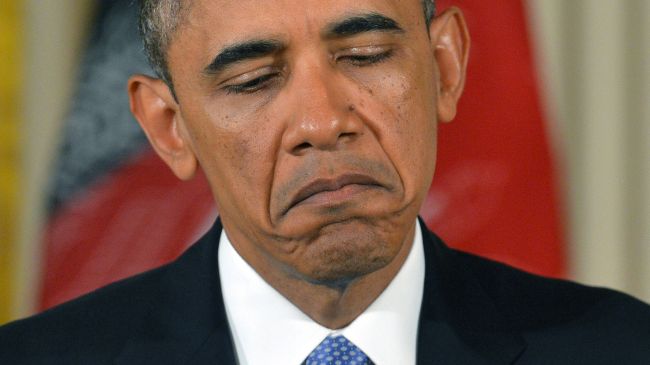
How Do You Know When President Obama is Lying?
By JEFF COHEN | CounterPunch | July 8, 2013
I was a young person when I first heard the quip: “How do you know when the President is lying? His lips are moving.” At the time, President Nixon was expanding the war in Vietnam to other countries and deploying the White House “plumbers” to commit crimes against antiwar leakers.
Forty years have passed. Sadly, these days, often when I see President Obama moving his lips, I assume he’s lying.
Like Nixon, our current president is prolonging an endless, borderless and counter-productive war (“on terror”) and waging a parallel war against “national security” leakers that makes the plumbers’ burglary of Daniel Ellsberg’s psychiatrist’s office look almost quaint.
The World War I vintage Espionage Act, originally used to imprison socialists for making antiwar speeches, has been used by the administration against whistleblowers with a vengeance unprecedented in history: eight leakers have been charged with Espionage under Obama, compared to three under all previous presidents. The Obama administration has prosecuted not a single CIA torturer, but has imprisoned a CIA officer who talked about torture with a journalist. National Security Agency official Thomas Drake, who was unable to get abuses fixed internally, now has a criminal record for communicating with a reporter years ago about sweeping domestic surveillance.
So there I was watching Obama’s lips move about NSA whistleblower Edward Snowden at a June 27 press conference. Saying he wouldn’t be “scrambling military jets to go after a 29-year-old hacker,” Obama added that he would not “start wheeling and dealing and trading on a whole host of other issues, simply to get a guy extradited.”
I didn’t believe a word of it.
Given Obama’s war on whistleblowers and journalists who utilize them, and given the Army’s abusive treatment of military whistleblower Bradley Manning (apparently aimed at getting him to implicate WikiLeaks), it’s inconceivable that Obama was truly blasé about Snowden. To deter future whistleblowers, Snowden would have to be caught and made an example of – and probably mistreated (like Manning, in hopes of getting him to turn against WikiLeaks and even journalist Glenn Greenwald).
As his lips were moving, Obama knew well that he would go to extreme lengths to prevent this articulate young man from securing asylum in some Latin American country, where he could continue to inform the world’s media about the Surveillance State that has blossomed alongside the Warfare State under the Bush and Obama administrations.
That Obama wasn’t truthful became clear when the U.S. campaign of “wheeling and dealing” led to possible asylum countries retreating in fear one after another (Vice President Biden was deployed to pressure Ecuador’s president by phone). And even clearer with last week’s outrageous, international law-breaking that effectively forced down the presidential plane of Bolivian President Evo Morales.
And if Obama eventually does scramble jets to force down a plane with Snowden on board, the commander-in-chief will be applauded for taking bold and decisive action by mainstream TV talking heads, “national security” experts and the opposition he seems most intent on pleasing: conservatives. Criticism from civil libertarian and peace voices (or unions and environmentalists, for that matter) has rarely daunted Obama.
The bipartisan consensus in support of our bloated Military/Surveillance State – which so undermines our society as a whole – is reflected in Congress and both the Bush and Obama administrations, as well as mainstream media.
When it comes to issues of U.S. militarism and spying, the allegedly “progressive” MSNBC often seems closer to the “official network of the Obama White House” than anything resembling an independent channel. With a few exceptions (especially Chris Hayes), MSNBC has usually reacted to expanded militarism and surveillance by downplaying the abuses or defending them.
Had McCain or Romney defeated Obama and implemented the exact same policies, treating whistleblowers like Manning and Snowden as foreign espionage agents, one would expect MSNBC hosts to be loudly denouncing the Republican abuses of authority.
But with Obama in power, a number of MSNBC talking heads have reacted to the Snowden disclosures like Fox News hosts did when they were in hysterical damage control mode for Bush – complete with ridiculously fact-free claims and national chauvinism that we’ve long come to expect from the “fair & balanced” channel.
As Snowden arrived in Russia from Hong Kong, MSNBC host Ed Schultz blustered on about Snowden as a “punk” and “coward.” Railing about the “security of the country” in tones Hannity would approve of, Schultz questioned Snowden’s patriotism and credibility, asking: “If the United States of America is doing something so egregiously wrong in its surveillance program, how come he’s the only one speaking up?
In O’Reilly-like blissful ignorance, Schultz seemed unaware of the three NSA whistleblowers who’d loudly spoken up way earlier than Snowden – and gathered for an illuminating USA Today interview a week before his tirade.
I watched one MSNBC host function as an auxiliary prosecutor in Obama’s Justice Department, going after Snowden – while trying to link WikiLeaks and journalist Glenn Greenwald to criminal flight.
MSNBC’s Melissa Harris-Perry has been condemning Snowden by contrasting him with civil disobedients who “love their country” and submit to arrest – while Snowden just wants to “save his own skin.” She proclaimed: “This is different. This is dangerous to our nation.” Should we similarly dismiss Dan Ellsberg, who leaked the top secret Pentagon Papers to a dozen newspapers in 1971 by going on the lam from the FBI. Or Watergate’s “Deep Throat,” who saved his own skin by hiding his identity for 30 years after leaking secrets that helped crash the Nixon presidency?
In a bizarre monologue attacking Snowden (who’s risked plenty, in my view), Harris-Perry hailed those who engage in civil disobedience for being willing “to risk your own freedom, your own body in order to bring attention to something that needs to be known. Martin Luther King Jr. was arrested, attacked, smeared. Nelson Mandela went to prison for 27 years.” (My emphasis.)
Nelson Mandela? He wasn’t a civil disobedient who gave himself up. He was a fugitive, fleeing the apartheid police. He was on the lam domestically, like Snowden is now internationally. And some reports indicate that South African authorities were able to nab Mandela thanks to the U.S. CIA (one of the agencies now working to apprehend Snowden).
MSNBC’s Rachel Maddow has also disappointed. After doing a typically thorough presentation on the force-down of President’s Morales’ plane, she ended her report by expressing displeasure only that Washington had apparently gotten allies to go out on the limb “for nothing.” Her objection to the harassment seemed to be: it hadn’t succeeded. I didn’t hear opposition to the action had Snowden actually been on board and apprehended.
The Snowden/NSA story proves once again that – especially on so-called “national security” issues – we need strong, independent media not enmeshed with the corporate/political power structure and not allied with one of the two corporate parties.
We can’t count on MSNBC to heed the lesson taught by legendary independent journalist I.F. “Izzy” Stone, after years reporting from Washington: “All governments lie and nothing they say should be believed.”
Jeff Cohen was an MSNBC pundit and senior producer in 2002-3 until being terminated for political reasons, along with Phil Donahue, on the eve of the Iraq invasion. He is director of the Park Center for Independent Media at Ithaca College, founder of the media watch group FAIR, and author of Cable News Confidential: My Misadventures in Corporate Media. He cofounded the online action group RootsAction.org, which has petitioned for Snowden.
Brazil expresses deep concerns over US spying activities
Press TV – July 7, 2013
Brazil has expressed serious concerns over a report which says the United States has been spying on Brazilian companies and individuals for a decade.
Brazil’s O Globo newspaper reported on Sunday that the US National Security Agency (NSA) has collected data on billions of telephone and email conversations in the South American country.
The Globo report said that information released by US surveillance whistleblower Edward Snowden reveals that the number of telephone and email messages logged by the NSA in the 10-year period was near to the 2.3 billion captured in the US.
Brazilian Foreign Minister Antonio Patriota expressed “deep concern at the report that electronic and telephone communications of Brazilian citizens are being the object of espionage by organs of American intelligence.”
“The Brazilian government has asked for clarifications” through the US Embassy in Brasilia and the Brazilian Embassy in Washington, he said.
Patriota also said Brazil will ask the United Nations for measures “to impede abuses and protect the privacy” of Internet users, laying down rules for governments “to guarantee cybernetic security that protects the rights of citizens and preserves the sovereignty of all countries.”
The US Embassy in Brazil refused to comment over the issue.
But the Office of the Director of National Intelligence in the United States issued a statement saying, “The US government will respond through diplomatic channels to our partners and allies in the Americas … While we are not going to comment publicly on specific alleged intelligence activities, as a matter of policy we have made clear that the United States gathers foreign intelligence of the type gathered by all nations.”
The chairman of the US Joint Chiefs of Staff, Gen. Martin Dempsey, admitted on Sunday that Snowden’s exposés have seriously damaged US ties with other countries. “There has been damage. I don’t think we actually have been able to determine the depth of that damage.”
Snowden, a former CIA employee, leaked two top secret US government spying programs under which the NSA and the Federal Bureau of Investigation (FBI) are eavesdropping on millions of American and European phone records and the Internet data from major Internet companies such as Facebook, Yahoo, Google, Apple, and Microsoft.
On June 9, Snowden admitted his role in the leaks in a 12-minute video recorded interview published by The Guardian.
In the interview, he denounced what he described as systematic surveillance of innocent US citizens, saying his “sole motive is to inform the public as to that which is done in their name and that which is done against them.”
The NSA scandal took even broader dimensions when Snowden revealed information about its espionage activities targeting friendly countries.
Snowden has been holed up at Moscow’s Sheremetyevo Airport since June 23 when he travelled from Hong Kong to avoid US extradition.
He has already sought asylum in more than two dozen countries. Washington has asked these countries not to provide asylum to Snowden.
Three Latin American countries — Nicaragua, Bolivia, and Venezuela — have offered to grant asylum to Snowden.
Related article
AT&T joins Verizon, Facebook in selling customer data
RT | July 6, 2013
AT&T has announced that it will begin selling customers’ smart phone data to the highest bidder, putting the telecommunications giant in line with Verizon, Facebook and other competitors that quietly use a consumer’s history for marketing purposes.
The company claims its new privacy policy, to be updated within “the next few weeks,” exists to “deliver more relevant advertising” to users based on which apps they use and their location, which is provided by GPS-tracking. Apparently recognizing the natural privacy concerns a customer might have, AT&T assured the public that all data would be aggregated and made anonymous to prevent individual identification.
A letter to customers, for instance, described how someone identified as a movie fan will be sent personalized ads for a nearby cinema.
“People who live in a particular geographic area might appear to be very interested in movies, thanks to collective information that shows wireless devices from that area are often located in the vicinity of movie theaters,” the letter states. “We might create a ‘movie’ characteristic for that area, and deliver movie ads to the people who live there.”
A June 28 blog post from AT&T’s chief privacy officer Bob Quinn said the new policy will focus on “Providing You Service and Improving Our Network and Services,” but the online reaction has been overwhelmingly negative, with many customers looking for a way to avoid the new conditions.
“You require that we allow you to store a persistent cookie of your choosing in our web browsers to opt out,” one person wrote. “No mention of how other HTTP clients, such as email clients, can opt out. If you really did care about your customers, you would provide a way for us to opt out all traffic to/from our connection and mobile devices in one easy setting.”
One problem for any customer hoping for a new service is the lack of options, smartphone or otherwise. Facebook, Google, Twitter and Verizon each store consumer data for purposes that have not yet been made clear. And because of the profit potential that exists when a customer blindly trusts a company with their data, small Internet start-ups, including AirSage and many others, have developed a way to streamline information into dollars.
The nefarious aspect of AT&T’s announcement is underscored by the recent headlines around the National Security Agency, which has spent years has compelling wireless corporations to hand over data collected on millions of Americans. Unfortunately for the privacy of those concerned, AT&T’s new policy may only be a sign of things to come.
“Instead of merely offering customers a trusted conduit for communication, carriers are coming to see subscribers as sources of data that can be mined for profit, a practice more common among providers of free online services like Google and Facebook,” the Wall Street Journal wrote about the matter in May.
NSA spies in bed with Germany, other Western states: Snowden
Press TV – July 7, 2013
U.S. intelligence leaker Edward Snowden said the National Security Agency (NSA) has massive spying partnerships with other Western states that are now grumbling about the agency’s surveillance programs.
He made the comments in an interview with U.S. cryptography expert Jacob Appelbaum and documentary filmmaker Laura Poitras before revealing the NSA’s internal and global surveillance programs last month.
NSA spies are “in bed together with the Germans and most other Western states,” Snowden said in remarks published by the German news weekly Der Spiegel on Sunday.
The fugitive leaker added that the NSA has a department called the Foreign Affairs Directorate which coordinates work with Western spying agencies.
Snowden said the NSA, for example, provides Germany’s BND foreign intelligence agency with “analysis tools” for data passing from regions like the Middle East through Germany.
The former NSA contractor has also revealed that the American agency spies on European Union offices in New York, Washington and Brussels, drawing ire from European leaders, especially Germany.
The NSA, according to top secret documents disclosed by Snowden, also collected around half a billion telephone calls, emails or mobile phone text messages and Internet chat entries in Germany per month.
Germany demanded an immediate explanation from the U.S. over the surveillance programs.
Justice minister, Sabine Leutheusser-Schnarrenberger, strongly condemned the U.S. spying, saying it was reminiscent of “the methods used by enemies during the Cold War.”
Snowden, 30, has reportedly holed up in the transit area of Moscow’s Sheremetyevo International Airport since arriving on a flight from Hong Kong on June 23. He is wanted in the US on espionage charges.
Related articles
Featured Video

Chinese jet fuel and the myth of energy independence
or go to
Aletho News Archives – Video-Images
Book Review
Former Insiders Criticize Iran Policy as U.S. Hegemony
By GARETH PORTER | CounterPunch | February 27, 2013
“Going to Tehran” arguably represents the most important work on the subject of U.S.-Iran relations to be published thus far.
Flynt Leverett and Hillary Mann Leverett tackle not only U.S. policy toward Iran but the broader context of Middle East policy with a systematic analytical perspective informed by personal experience, as well as very extensive documentation.
More importantly, however, their exposé required a degree of courage that may be unparalleled in the writing of former U.S. national security officials about issues on which they worked. They have chosen not just to criticise U.S. policy toward Iran but to analyse that policy as a problem of U.S. hegemony. … continue
Blog Roll
 Aletho News
- Chinese jet fuel and the myth of energy independence
- Ukraine Sea Drone Fired From Libya Hit Russian Tanker in Mediterranean
- IRGC: Iranian forces launched no attacks during ceasefire hours
- Trump Administration Moves To Automate U.S. Military Draft Registration
- Spain orders reopening of Tehran embassy, condemns Israel’s carpet bombing of Lebanon
- Israel faces ‘unsustainable’ strategic crisis following 40-day war against Iran: Analyst
- Iran restricts Hormuz access to 15 vessels per day under ceasefire terms: Report
- The ‘Opposition Party’ Has Done Nothing to Stop the Iran War and Much to Goad Trump Into Continuing It
- Moscow backs Tehran on status of Lebanon in US-Iran deal
- How UK Regulator Ofcom Quietly Bypassed International Law to Police American Speech
- If Americans Knew
- Amnesty: Urgent – Protect Lebanese civilians from brutal escalation in Israeli attacks
- Is The War Against Iran Over?
- Inside the Israeli army’s propaganda wing
- Hundreds of Gaza Amputees Stranded in Legal Limbo
- The gallows law: Israel moves toward executing Palestinian children
- Tucker Carlson: The Path to Peace requires ending ‘special alliance’ with Israel
- This is ceasefire? Israel’s biggest massacre yet in Lebanon, another journalist killed in Gaza – Daily Update
- Tucker Carlson on Israel: This Is the Behavior of an Ally? Really?
- Gazans face a triple crisis: severe shortages of water and bread, healthcare in tatters
- NY Times reports how Netanyahu took the US into Iran War
- No Tricks Zone
- An Inconvenient Tree: Uncovered In Alps… Europe Much Warmer Than Today 6000 Years Ago
- New Study Reports A 60% Slowdown In Greenland’s Ice Loss Rate In The Last Decade
- Low Intensity Tornado Wrecks Major Solar Farm, Creating A Potential Toxic Dump
- New Study Finds Warming Saves Lives…Cold Temperatures 12 Times More Deadly Than Excess Heat
- German Science Blog Accuses PIK Climate Institute Of Hallucinating Climate Tipping Points
- Devastating Assessment Of Comirnaty Vaccine By Former Senior Pfizer Europe Toxicologist
- New Study: CO2 Is ‘Effectively Negligible’ As An Explanatory Climate Change Factor Since 2000
- Former Pfizer Toxicologist Dr. Helmut Sterz Tells Bundestag Hearing Pfizer Vaccine Should Have Never Been Approved
- Energy Expert: Germany’s Nuclear Phaseout Was A “500 Billion Euro Mistake”
- New Research: South Australia’s Mid-Holocene Sea Surface Temperatures Were 4°C Warmer Than Today
 Aletho News