Goodbye, First Amendment: ‘Trespass Bill’ will make protest illegal
RT | February 29, 2012
Just when you thought the government couldn’t ruin the First Amendment any further: The House of Representatives approved a bill on Monday that outlaws protests in instances where some government officials are nearby, whether or not you even know it.
The US House of Representatives voted 388-to-3 in favor of H.R. 347 late Monday, a bill which is being dubbed the Federal Restricted Buildings and Grounds Improvement Act of 2011. In the bill, Congress officially makes it illegal to trespass on the grounds of the White House, which, on the surface, seems not just harmless and necessary, but somewhat shocking that such a rule isn’t already on the books. The wording in the bill, however, extends to allow the government to go after much more than tourists that transverse the wrought iron White House fence.
Under the act, the government is also given the power to bring charges against Americans engaged in political protest anywhere in the country.
Under current law, White House trespassers are prosecuted under a local ordinance, a Washington, DC legislation that can bring misdemeanor charges for anyone trying too get close to the president without authorization. Under H.R. 347, a federal law will formally be applied to such instances, but will also allow the government to bring charges to protesters, demonstrators and activists at political events and other outings across America.
The new legislation allows prosecutors to charge anyone who enters a building without permission or with the intent to disrupt a government function with a federal offense if Secret Service is on the scene, but the law stretches to include not just the president’s palatial Pennsylvania Avenue home. Under the law, any building or grounds where the president is visiting — even temporarily — is covered, as is any building or grounds “restricted in conjunction with an event designated as a special event of national significance.”
It’s not just the president who would be spared from protesters, either.
Covered under the bill is any person protected by the Secret Service. Although such protection isn’t extended to just everybody, making it a federal offense to even accidentally disrupt an event attended by a person with such status essentially crushes whatever currently remains of the right to assemble and peacefully protest.
Hours after the act passed, presidential candidate Rick Santorum was granted Secret Service protection. For the American protester, this indeed means that glitter-bombing the former Pennsylvania senator is officially a very big no-no, but it doesn’t stop with just him. Santorum’s coverage under the Secret Service began on Tuesday, but fellow GOP hopeful Mitt Romney has already been receiving such security. A campaign aide who asked not to be identified confirmed last week to CBS News that former House Speaker Newt Gingrich has sought Secret Service protection as well. Even former contender Herman Cain received the armed protection treatment when he was still in the running for the Republican Party nod.
In the text of the act, the law is allowed to be used against anyone who knowingly enters or remains in a restricted building or grounds without lawful authority to do so, but those grounds are considered any area where someone — rather it’s President Obama, Senator Santorum or Governor Romney — will be temporarily visiting, whether or not the public is even made aware. Entering such a facility is thus outlawed, as is disrupting the orderly conduct of “official functions,” engaging in disorderly conduct “within such proximity to” the event or acting violent to anyone, anywhere near the premises. Under that verbiage, that means a peaceful protest outside a candidate’s concession speech would be a federal offense, but those occurrences covered as “special events of national significance” don’t just stop there, either. And neither does the list of covered persons that receive protection.
Outside of the current presidential race, the Secret Service is responsible for guarding an array of politicians, even those from outside America. George W Bush is granted protection until ten years after his administration ended, or 2019, and every living president before him is eligible for life-time, federally funded coverage. Visiting heads of state are extended an offer too, and the events sanctioned as those of national significance — a decision that is left up to the US Department of Homeland Security — extends to more than the obvious. While presidential inaugurations and meeting of foreign dignitaries are awarded the title, nearly three dozen events in all have been considered a National Special Security Event (NSSE) since the term was created under President Clinton. Among past events on the DHS-sanctioned NSSE list are Super Bowl XXXVI, the funerals of Ronald Reagan and Gerald Ford, most State of the Union addresses and the 2008 Democratic and Republican National Conventions.
With Secret Service protection awarded to visiting dignitaries, this also means, for instance, that the federal government could consider a demonstration against any foreign president on American soil as a violation of federal law, as long as it could be considered disruptive to whatever function is occurring.
When thousands of protesters are expected to descend on Chicago this spring for the 2012 G8 and NATO summits, they will also be approaching the grounds of a National Special Security Event. That means disruptive activity, to whichever court has to consider it, will be a federal offense under the act.
And don’t forget if you intend on fighting such charges, you might not be able to rely on evidence of your own. In the state of Illinois, videotaping the police, under current law, brings criminal charges. Don’t fret. It’s not like the country will really try to enforce it — right?
On the bright side, does this mean that the law could apply to law enforcement officers reprimanded for using excessive force on protesters at political events? Probably. Of course, some fear that the act is being created just to keep those demonstrations from ever occurring, and given the vague language on par with the loose definition of a “terrorist” under the NDAA, if passed this act is expected to do a lot more harm to the First Amendment than good.
United States Representative Justin Amash (MI-03) was one of only three lawmakers to vote against the act when it appeared in the House late Monday. Explaining his take on the act through his official Facebook account on Tuesday, Rep. Amash writes, “The bill expands current law to make it a crime to enter or remain in an area where an official is visiting even if the person does not know it’s illegal to be in that area and has no reason to suspect it’s illegal.”
“Some government officials may need extraordinary protection to ensure their safety. But criminalizing legitimate First Amendment activity — even if that activity is annoying to those government officials — violates our rights,” adds the representative.
Now that the act has overwhelmingly made it through the House, the next set of hands to sift through its pages could very well be President Barack Obama’s; the US Senate had already passed the bill back on February 6. Less than two months ago, the president approved the National Defense Authorization Act for Fiscal Year 2012, essentially suspending habeas corpus for American citizens. Could the next order out of the Executive Branch be revoking some of the Bill of Rights? Only if you consider the part about being able to assemble a staple of the First Amendment, really. Don’t worry, though. Obama was, after all, a constitutional law professor. When he signed the NDAA on December 31, he accompanied his signature with a signing statement that let Americans know that, just because he authorized the indefinite detention of Americans didn’t mean he thought it was right.
Should President Obama suspend the right to assemble, Americans might expect another apology to accompany it in which the commander-in-chief condemns the very act he authorizes. If you disagree with such a decision, however, don’t take it to the White House. Sixteen-hundred Pennsylvania Avenue and the vicinity is, of course, covered under this act.
Featured Video
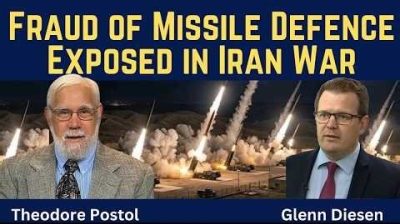
Ted Postol: Fraud of Missile Defence Exposed in Iran War
or go to
Aletho News Archives – Video-Images
Frlom the Archives
Containing the United States
By Edward S. Herman | Z Magazine | September 2016
“Containing the United States” is, of course, a ridiculous and self-contradictory idea in the U.S. and Western ideological and propaganda system. We all know that the United States had to “contain” the Soviet Union from 1945 to 1991, and since then has had the task of containing Russia and China. Only they threaten, bully, aggress and worry countries like Poland and Vietnam. Obama has had to reassure them both of our steadfast stand against Russian and Chinese military attacks. NATO has, of course, expanded greatly over the past several decades, despite the deaths of the Soviet Union and Warsaw Pact, but only to contain the renewed Russian — and Iranian, Libyan, Syrian and other — military threats; and we have “pivoted” to Asia, supported Japanese rearmament, bolstered our own forces in that area and jousted with the Chinese in their coastal waters solely to contain China. Earlier we had been obliged to contain North Vietnam, or was it the Soviet Union in Vietnam? Or China? Or “communism”? Or maybe all of them? Or none of them, but just needing an excuse to enlarge power?
The parallel propaganda has taken many forms. One is accepting as a premise that the United States only acts defensively and has no internal forces and interests that drive it to enlarge its sphere of control. I noted in an earlier article how Paul Krugman claims that internal Russian problems may well be the explanation of Russian “aggression,” but how at the same time it never occurs to him that the huge U.S. transnational corporate interests and “defense” establishment, and the pro-Israel lobby’s activities, might possibly make for an expansionist dynamic here.2 This reflects the standard establishment perspective that we are good and only react to evil. This was the view sustaining and justifying the invasion and occupation of Iraq from 2003. That attack was taken here as not evil but a response to evil, even if involving lies and mistakes, hence not describable as “aggression.” … continue
Blog Roll
 Aletho News
- Iran War Supporters Invent a New and Absurd Justification: It Is All About China
- Corporate Media Go All Out To Support The US-Israeli War on Iran
- Trump press conference reveals a man who wants out of war
- When Tel Aviv decides, Washington fights
- Top official: Iran ready for a long war with US, no more diplomacy
- How Iran’s Toxic Rain Reveals US-Israel Discord
- Trump Admits He Is Destroying Iran For Israel
- Iran’s latest move in the GCC countries was a stroke of genius
- Blackmail and death threats, Zelensky embarrasses the EU, but there’s no condemnation
- Israel threatens to kill Iran’s new leadership
- If Americans Knew
- Lebanon: Israel’s White Phosphorous Use Risks Civilian Harm
- Corporate Media Go All Out To Support The US-Israeli War On Iran
- US-Israel war on Iran is creating a steady growing number of amputees
- Israel planned this war on Iran for 40 years. Everything else is a smoke screen
- The wrong question about the war in Iran
- ‘Your Tax Dollars Being Used to Raise Your Gas Prices’: US-Israel Bomb Major Iranian Oil Depots
- ‘Bogus Evidence’: Former Nuclear Watchdog Head Debunks US Justification for Iran War
- EXPLAINER – Dimona: What to know about Israel’s nuclear site
- Fires and toxic air in Iran (thanks, Israel) – Not a ceasefire Day 150
- At Israel’s hands, Iran is burning, Lebanon and Gaza are crumbling – Not a ceasefire Day 149
- No Tricks Zone
- Wake-up Call: Survey Shows Majority Of Germans Now Favor Postponing Climate Targets!
- Televised! Leading German Political Candidate Tells Schoolchildren CO2 Makes Sun Hotter!
- New Study: A Century Warming Of 1.1°C Is ‘Commonplace’ And ‘Not Unusual’ During This Interglacial
- New Study: ‘Internal Noise’ And Volcanic Forcing Can Trigger 10-15°C Warming Within Decades
- Glaciers Worldwide Are Suddendly Surging, Experts Blame Warming!
- Surprising Discovery: Sahara Is Greening…Billions Of Trees Where Once Thought To Be Barren
- New Research Reaffirms Clouds, Aerosols, And Surface Solar Radiation Are ‘Driving The Climate System’
- Germany: Electric Car Catches Fire At Charging Station, Sets Off Local “Inferno”, Widespread Damage
- New Study: Canada’s New Brunswick Was 1°C Warmer Than Today During The Medieval Warm Period
- Coal Power Back In Trend As Globe Tries To Keep Pace With Growing Demand For Power
 Aletho News