A Message to Georgians: America Will Not Protect You
No offense, but Georgia’s interests are just none of my affair. It’s such a long way from here.
I know my government has been messing around there since the 1990s, picking winners and losers, making big promises and causing lots of trouble.
Keeping Russia out of their former sphere of influence was thought by Washington to be its most important goal.
Under the Bill Clinton administration, it was decided that building the BTC Pipeline across Georgia was the highest priority – to prevent Azeri gas from flowing north through Russia or south through Iran.
Under George W. Bush, it was decided that the government of Edward Shevardnadze was too close to Russia, compromising with them over Abkhazia, making deals with Gazprom, and joining the CIS, and had to go.
USAID, the National Endowment for Democracy (NED), and the rest of the regime change industry poured in tens of millions of dollars to support the groups supporting Mikhail Saakaashvili’s rise and the Rose Revolution of 2003, which installed him in power. This included a Soros front called the Liberty Institute – not to be confused with the Libertarian Institute, I assure you.
As I’m sure you all know, former President Salome Zourabichvili was born in France, not Georgia, and was just parachuted in by the new regime to take over as Finance Minister after the overthrow of 2003. She later explained that:
“These institutions were the cradle of democratization, notably the Soros Foundation. … The NGOs which gravitate around the Soros Foundation undeniably carried the revolution. However, one cannot end one’s analysis with the revolution and one clearly sees that, afterwards, the Soros Foundation and the NGOs were integrated into power.”
Soros’s business partner Kaka Bendukidze became the new economy minister. Alexander Lomaia, the director of Open Society Georgia, was made education minister. At the same time, Giga Bokeria, co-founder of the Liberty Institute, became the leader of the National Movement party in the parliament. In the name of fighting against corruption, they stayed on Soros’s payroll. Saakashvili too.
“I’m delighted by what happened in Georgia, and I take great pride in having contributed to it,” Soros told the Commission on Security and Cooperation in Europe.
How y’all let her become the president of the country is a mystery. Oh yeah. All the foreign money.
I sure hope that Mr. Saakashvili’s trial was more fair than his opponents received while he was in power. And that Saakashvili is not being tortured in prison the way his regime tortured people. No human deserves to be treated in such a barbarian fashion.
Do I believe Georgia country is better off under the domination of Russia or any other significant power?
Of course not. But I do mean that American intervention is not in the interest of either country.
I’ve read that current Georgian leaders have expressed frustration that they have not been able to reach the new Trump administration to see if they can get a reset in America’s Georgia policy. Be careful what you wish for. Georgians are more likely to be better off when America does not have a Georgia policy at all than even a favorable one, with strings attached.
As far as the difficulties Georgia may face in maintaining full independence as a small country in a world of major competing powers and Georgia’s advantageous or disadvantageous geographic position relative to important resources, I could not say what your best solution must be.
I could say that at the end of the day, America will not guarantee Georgia’s independence, which is why there is no major U.S. troop presence there, and why NATO membership has not moved forward since W. Bush’s foolish declaration at Bucharest in April 2008.
Perhaps maintaining Tbilisi’s neutrality in these major contests could be the path to maintaining independence from outright control.
Even after Russia intervened to reverse Saakashvili’s attempt to forcefully reintegrate South Ossetia in 2008, Moscow did not sever the BTC, nor roll its tanks into Tblisi, thank goodness. Though Putin and Medvedev had plenty of counter-incentives, they certainly had the pretext to go that far if they had chosen to do so.
President Bush, in his lame-duck year, had already chosen not to intervene, despite the protests of then-Vice President Cheney, who insisted on strikes against Russian forces coming through the Roki tunnel, risking World War III.
Thank goodness the cool, patient wisdom of George W. Bush, relative to Cheney anyway, prevailed that day.
Surely Russia would have escalated in kind, and Tbilisi would have lost its independence to the Federation after Bush had inevitably backed down. Thank goodness it did not come to that.
Making sure the Russians continue to feel like such a move would be unnecessary and unreasonably costly would probably be the best course of action.
Of course, USAID, NED, IRI, NDI, and all the usual suspected Soros-backed groups have spent a ton to keep the current ruling party out of power. I’m sure the permanent professional protestors — analyst Brad Pearce calls their rallies an “organized labor protest by the foreign influence industry” — have some real concerns, just as I’m sure that any protestor receiving the backing of a foreign regime can only be taken so seriously by anyone else.
Again, ultimately, America is too far away and has too little to lose if Tbilisi’s status were to truly change to truly be motivated to do anything about it. When Russia came across the mountains in 2008, many Americans were terrified – they thought that our Georgia was under attack, the state between South Carolina and Florida. They either had never heard of your country, or they could not fathom why it being invaded should be top news in Colorado or Illinois. That Russia would attack America out of the blue seemed to them more plausible, at first glance, at least.
That being the case, Georgians are almost certainly better off choosing the proper course forward for their country with that in mind. Because chances are that if worse comes to worst, no one over here is coming to intervene over there.
Long live Georgia and its independence, good luck.
And may liberty always remain your highest political goal.
Thank you.
Is It Foreign Aid or Covert Action?

By Philip Giraldi • Unz Review • February 21, 2025
There has been considerable controversy surrounding the Trump administration decision to cutback on government agencies that are ostensibly committed to charitable, educational and other nation building activities both overseas and in the United States. This spending, amounting to scores of billions of dollars, has helped produce budget deficits that ballooned in the twenty-first century, largely due to the surge in overseas activity that occurred after the trauma of 9/11 when the United States decided that it had to serve as policeman for the rest of the world to make itself safe. As the US is now verging on bankruptcy due to its unsustainable debts, the second incarnation of the Trump Administration has focused on cutting budgets in areas that it considers to be enemy occupied, often meaning “woke” or institutionally allied to the Democrats. Social programs as well as the bloated defense department spending were considered to be suitable targets so starting during the first week in February, the White House brought down the hammer when it went after a number of government agencies, inter alia calling for huge cuts in Pentagon spending and the complete elimination of the Education Department.
The White House also shut down the United States Agency for International Development (USAID), firing nearly all of its 10,000 employees, reportedly leaving only little more than 600 employees in place to assist in the shutting down or downsizing of facilities in the US and in foreign countries. Also, about 800 awards and contracts that are administered through USAID were reportedly being canceled. There have reportedly been some judicial delays in the firings due to the complexity of removing thousands of employees and families from overseas offices and housing, though the pause is likely to be only temporary.
Tax dollars are traditionally used corruptly to fund projects and policies dear to the hearts of politicians, which is why Ron Paul and others have called for sweeping audits, including of the Federal Reserve system and the Pentagon in particular. This hidden spending is particularly difficult to identify if the program is somehow linked to foreign policy and/or national security, which have traditionally been protected from scrutiny by denying nearly all public access to sensitive information based on the “need to know” principle to safeguard sources and vulnerable activities.
USAID was founded in 1961 during the John F. Kennedy administration to unite several foreign assistance organizations and programs under one agency. At first it was seriously intended to be a mechanism for the US to aid in health, disaster relief, socioeconomic development, environmental protection, democratic governance and education. Its focus, however, eventually became to guide development in parts of the world that suffered from what were considered to be dysfunctional governments and institutions in terms of American interests. USAID has always been funded by the federal government and its upper management has worked closely with the Department of State, to which it is technically accountable, and the intelligence agencies in particular. Its budget in 2023 was $43 billion. Trump’s reduction in force (RIF) of USAID has been accompanied by a shake-up in its management, its remaining responsibilities now being in the hands of the Secretary of State Marco Rubio, who has considerable experience in special agency management after having served on the Board of the National Endowment for Democracy’s (NED) Republican subsidiary component, the International Republican Institute (IRI). NED, which operates extensively overseas, has also been stripped of funding by Trump.
The dismantling of USAID does not necessarily mean the organization will completely go away, it will just be much reduced and under new management. It will likely have a new mission, though no one is at this point sure what that will mean. And USAID and NED are not alone as the presidential memo has called for a halt to the funding of all the government components that are dependent on taxpayer generated funds to provide what is perhaps euphemistically referred to as “foreign aid.” USAID and NED do have humanitarian projects, i.e. feeding the hungry, but they are primarily politically driven. The NED component IRI puts it this way on its website “Our mission at IRI—advancing democracy worldwide—is a battle with many fronts. I am proud to say that IRI is supportive of every endeavor that will bring freedom to more people. We have made progress in our mission by giving hope to those who wish to protest on a city street, run for office, or cast a ballot.”
So the aid organizations overtly have a political role, but how does it translate in practice and does it extend to playing favorites with the US media and political parties? Trump has put it another way, declaring that USAID leaders were “radical left lunatics.” This is what he claims on his website Truth Social:
“LOOKS LIKE BILLIONS OF DOLLARS HAVE BEEN STOLEN AT USAID, AND OTHER AGENCIES, MUCH OF IT GOING TO THE FAKE NEWS MEDIA AS A ‘PAYOFF’ FOR CREATING GOOD STORIES ABOUT THE DEMOCRATS. THE LEFT WING ‘RAG,’ KNOWN AS ‘POLITICO,’ SEEMS TO HAVE RECEIVED $8,000,000. Did the New York Times receive money??? Who else did??? THIS COULD BE THE BIGGEST SCANDAL OF THEM ALL, PERHAPS THE BIGGEST IN HISTORY! THE DEMOCRATS CAN’T HIDE FROM THIS ONE. TOO BIG, TOO DIRTY!”
There are, in fact, credible reports that the 2019 impeachment of Trump was driven by the actions and disinformation coming from CIA, FBI and USAID operatives, so it is plausible to assume that Trump is now settling scores. Beyond that, USAID and NED are both notorious for their roles in the business of covertly supporting opposition political parties worldwide and assisting in regime change. Billionaire philanthropist George Soros, through his network of organizations, received $260 milllion from USAID for funneling funds to non-governmental-organizations (NGOs) connected with Soros’ Open Society Foundations, which are known for advocating for radical policies and regime changes globally. Soros is also a Democratic Party favorite and major fund raiser, having recently received at a White House ceremony the honor of the Presidential Medal of Freedom presented in absentia to his son Alex from outgoing President Joe Biden.
As a result, both USAID and NED have been banned from foreign countries, including Russia, due to their meddling in local politics. Hungarian Prime Minister Viktor Orban, who was often a target of USAID activity, immediately thanked Trump for his decision to cancel USAID. Both USAID and NED were deeply involved in Eastern Europe. Former Acting Deputy Secretary of State Victoria Nuland has revealed that the aid agencies were deeply engaged in the multiple source $5 billion dollar multiyear US “investment” in Ukraine that culminated in regime change in 2013 and led to the current war with Russia. In government circles it has frequently been asserted that USAID and NED and other such organizations now do what the CIA used to do routinely in terms of regime change between its founding and the 1990s.
One might suggest that recent US governments, operating through their various subsidiaries like USAID and NED have been funding just about everything to control a world community in line with American interests. Mainstream media worldwide that is directly or indirectly funded reportedly includes journalists, news outlets, and activist NGOs and sites – and that’s just through USAID. That would appear to include Reuters, Associated Press, BBC, The Guardian, NBC, CNN, NPR, NYT, Politico, PBS, The Financial Times, The Atlantic, The Daily Telegraph, as well as much more media in the developing world. The anti-China hysteria media “ecosystem” currently depends on US government funding, and is already complaining about the impending shutdown of USAID support. To cite only one example of how it is packaged, Reuters news service has received millions in funding from the US government specifically for “active social engineering.”
Labor unions are also funded by USAID which is also behind the recent political unrest in Slovakia. It has also paid for multiple coup attempts in Venezuela, funded high profile trips for Ukraine’s Volodymyr Zelensky to improve his image and popularity, and funded al-Qaeda linked groups in Syria to successfully overthrow the government in Damascus. Going back to Trump’s first term of office, it is interesting to observe that most of the “aid” to opposition parties to overthrow Nicolas Maduro in Venezuela was delivered during 2019, so Trump, guided by hardliners John Bolton and Mike Pompeo, was not at that time shy about regime change. In fact, Voice Of America (VOA), which often served as a CIA mouthpiece, even reported that Trump had tripled aid to opposition figure Juan Guaido to $56 million. Those asking themselves why Trump has now decided to “oppose” the very semi-covert agency that he’s also been using for regime change have a point, but it might be appropriate to see the shakeup as a warning against government information, law enforcement and intelligence agencies again becoming tools of the Democratic Party politicians.
Defenders of USAID are arguing that the agency is being maligned, that in addition to its political profile it is heavily engaged in promoting health and wellness worldwide. The head of USAID under Joe Biden was the highly controversial and very much “woke” Samantha Power, who claims somewhat disingenuously that the agency budget of $38 billion in 2023 included something like $20 billion in spending that should appropriately be described as humanitarian. Those who are the recipients of the programs, mostly in the third world, will consequently suffer from the defunding of aid. If that is actually so, it perhaps would make sense to roll such programs into a mechanism that would not be tied to regime change and corruption of local governments and media.
There is some question even in Congress concerning whether there will be a new centralized aid agency and what it will be called or do now that it has been reduced in size and will likely have a tiny budget relative to what it once enjoyed. It is early days and the answer to that question will likely emerge before too long, but it should be pointed out that at no point has Rubio or anyone else in the Trump administration actually condemned aggressive US engagement abroad or claimed they will bring it to an end. The State Department has even officially said the only goal is to ensure the good things that USAID did will continue by “advancing American interests abroad.” Given some of the recent aggressive positions taken by the Trump Administration over Gaza, Panama, Canada, Mexico, Iran and Greenland as well as the tendency on the part of its top officials to increase pressure on perceived adversaries, it may be that the US isn’t changing course at all. It quite plausibly might be doubling down, and organizations like USAID and NED, even if their names, roles and leadership change, will likely be integral to that process.
Philip M. Giraldi, Ph.D., is Executive Director of the Council for the National Interest, a 501(c)3 tax deductible educational foundation (Federal ID Number #52-1739023) that seeks a more interests-based U.S. foreign policy in the Middle East. Website is councilforthenationalinterest.org, address is P.O. Box 2157, Purcellville VA 20134 and its email is inform@cnionline.org.
Serbian president slams USAID for inciting regime change, demands journalist say how much money his outlet received
By Liz Heflin | Remix News | February 21, 2025
Serbian President Aleksandar Vučić told “Epilogue” viewers on TV Insider that U.S. President Donald Trump directly mentioned Serbia as a place where USAID wanted a regime change, reports Blic.
“Someone was only waiting for additional tragedies, meanwhile preparing different types of scenarios for some new riots and for some new attacks on the state. And that is nothing new, and it can be seen through the words of President Donald Trump. Donald Trump directly mentioned Serbia yesterday, the president of the United States of America directly mentioned Serbia as a place where they wanted a political change of government. Those who received American money to overthrow the government,” said Vučić in the Epilogue show on TV Insider.
In July of last year, the government of Serbia issued a joint statement with USAID regarding $18 million of new funds for a “development partnership,” and outlets have pointed out that the government has thanked the U.S. for such money in the past.
The July statement noted that the new “funds will be used, among other things, to improve public procurement procedures in Serbia, improve access to justice for citizens, improve environmental protection and energy security, promote a stronger media environment, improvement of economic opportunities for vulnerable groups, as well as for greater competitiveness of the Serbian economy.”
Vučić admitted during his TV interview that money has been received and used, but primarily for “senseless projects that were supposed to cover the eyes,” while the real intent of most funding was to overthrow the government. Asked about the “many videos” of himself and other officials thanking USAID for funding projects, Vučić said that “when someone gives you 1,000 euros, it is up to you to still politely say ‘thank you.’”
He then indicated that money was spent on equipping Serbian courts with various recording devices, microphones and many other things. But far larger amounts were being handed to NGOs such as Trag and CRTA.
“In the last four years, there were 400 million (dinar), of which not even 10 million went to the state. Everything went your way for the non-governmental sector,” said Vučić.
Oddly, in April of 2024, a few months before USAID’s additional $18 million was announced, Trag and CRTA jointly announced a USAID competition for grants under what they called a “Mobilization Fund program.”
“Trag Foundation and CRTA, with the financial support of the American Agency for International Development (USAID), invite you to apply for the competition for the Mobilization Fund program.”
Listed activities that could receive grants included: “local community development, human rights, anti-discrimination, women’s rights and women’s empowerment, youth empowerment, inclusion, solidarity economy, environmental protection, socio-economic development, rule of law, accountability of public institutions, fight against corruption, urbanism and public spaces and all others in which activists recognize challenges.”
Former prime minister and president of the National Assembly of Serbia Ana Brnabic has been called out as well for her gratitude in the past for USAID funds that had presumably “improved” the country. Now, with Trump in office, she is changing her tune, saying the “investigative media outlets” financed by USAID had systematically harmed Serbia, according to Tanjug.
“In the past 10-11 years, they have been implying that anyone who engages in politics is, in a way, corrupt or wants to be corrupt. That has made it impossible for the many quality people who wanted to help, or were perhaps helping from the background all the time, to get involved as state secretaries or ministers because they would, in fact, immediately be targeted by various media such as Krik,” Brnabic said on Pink TV.
Brnabic further let the cat out of the bag, noting there is no such thing as independent media, which merely implies reliance on U.S. money from special interest groups.
“You can see that those media outlets and the people working there were quite dependent. It is just that they were dependent on the American administration and, to make things worse, not on a U.S. administration elected by American citizens, but on what is referred to as the deep state,” Brnabic said.
According to Tanjug, Serbia will further investigate the spending of USAID funds if the U.S. asks.
Regarding the media portal Kric, mentioned above. President Vučić had a recent spat with one of its journalists who tried, again, to corner Vučić with supposed information on his brother at the opening of the International Tourism Fair in Belgrade.
The journalist said that Andrej Vučić’s name was brought up in recorded messages, indicating he held power over state contracts in Novi Sad and also regarding police appointments.
Vučić called the allegations “a notorious lie,” reiterated his brother holds no political office, and then turned on the journalist, asking, “I am interested in you answering the question of how much money you received from USAID, how much from NED? How much money did these two criminal organizations, both one and the other, transfer to you? How much, as the American president and one of the most famous secular, one might say, businessmen, Elon Musk, who calls these criminal organizations? How much money did they give you for this?
Making fun of the allegations from third parties, Vučić said, “Many people also write that I told them I would jump from the Smilovica lookout, but I haven’t jumped yet.” He then pointed out that, on the other hand, the funding Kric has received from the U.S. is a fact.
The journalist then accused the president of targeting journalists, again, to which Vučić replied: “How can I target you? I’m just asking how much money you received.”
The United States has reportedly given $937 million to Serbia since 2001. Although the USAID site is no longer online, a Google search still shows entries, with one for Serbia saying this money was meant for “economic and democratic development.”
USA Is Defunding Regime-Change NGOs
Prof. Glenn Diesen on Neutrality Studies
Glenn Diesen | February 19, 2025
For the longest time, USAID and the National Endowment for Democracy (NED) have been funding foreign NGOs to influence local populations through media propaganda and the presence of a civil society consensus. Donald Trump just pulled the plug by defunding USAID and even going after the NED. This is unprecedented in modern history that a state dismantles its own cognitive warfare apparatus. What happened?
America’s ‘Democratic’ Allies Are Becoming More Authoritarian
By Ted Galen Carpenter | The Libertarian Institute | February 17, 2025
U.S. officials have a long history of portraying Washington’s allies and clients as democratic, even when their behavior is blatantly authoritarian. Such cynical hypocrisy was at its zenith during the Cold War, but it is surging again.
A similar trend is evident with respect to U.S. interference in the internal political affairs of other countries through such mechanisms as the United States Agency for International Development (USAID) and the National Endowment for Democracy (NED). Such agencies fund regimes and political movements that are deemed obedient to Washington’s wishes and supportive of American foreign policy objectives. Conversely, U.S. administrations actively undermine governments or movements that they consider hostile or even just insufficiently cooperative. The actual nature of U.S. clients often is a far cry from the carefully crafted democratic image of them that Washington circulates.
A recent example of American meddling in the internal affairs of another democratic country appears to have taken place in the Republic of Georgia. According to Parliament Speaker Shalva Papuashvili, USAID spent $41.7 million to support its preferred candidates in the country’s recent parliamentary elections. Adjusted for the size of Georgia’s population, such an expenditure in the United States would amount to $3.78 billion,
The U.S. track record in Georgia since the dissolution of the Soviet Union lends credibility to the speaker’s accusation that Washington is meddling in his country’s internal political affairs. President George W. Bush fawned with praise for Mikheil Saakashvili, the leader of Georgia’s “rose revolution” in 2003. Under Saakashvili, Georgia had become a “beacon of liberty,” Bush crowed. Generous flows of aid from Washington ensued. However, massive corruption soon characterized Saakashvili’s rule, as did his growing repression of political opponents. Ultimately, Saakashvili’s adversaries ousted Washington’s beloved “democratic” client from power.
The contrast between the laudatory American portrayal of Saakashvili as a paragon of democratic reform and the reality of his conduct was stark. However, Washington’s role in Ukraine over the years has been even more pervasive and dishonest. Although Ukraine’s president, Victor Yanukovych, came to office in a 2010 election that even a team of European Union (EU) observers conceded was reasonably free and fair, officials in Barack Obama’s administration, especially Assistant Secretary of State Victoria Nuland, worked to undermine his presidency. Yanukovych’s preference for closer economic ties with Russia instead of the EU and the United States apparently was intolerable to Western policymakers.
In 2014, the United States and key NATO partners helped Ukrainian demonstrators (primarily in Kiev’s Maidan Square) force Yanukovych to flee. An intercepted telephone call between Nuland and the U.S. ambassador to Ukraine confirmed the massive extent of Washington’s interference in Ukraine’s affairs. Nuland herself later admitted that the United States had poured more than $5 billion to Ukrainian groups in the years before the Maidan uprising. Supposedly, the purpose was to “promote democracy,” but as usual, the funds went almost entirely to groups Washington considered supportive of U.S. policies. It would be hard to identify a more flagrant case of outside interference in the affairs of another country.
Even if U.S. leaders sincerely intended their largesse to bring a stronger, healthier democracy to Ukraine—which is extremely doubtful—Washington did not achieve that goal. Corruption and blatant repression have become increasingly bad under the post-Maidan governments. Even though U.S. leaders invariably portray Ukraine’s current president, Volodymyr Zelensky, as a democratic champion, his record proves the opposite. Under his rule, Ukraine has outlawed opposition parties, muzzled the press, harassed uncooperative churches, and amassed a record of arbitrary imprisonment and torture. Much of that abuse was evident before the outbreak of war between Ukraine and Russia. Confirming that any attempt to portray Zelensky’s rule as democratic is a hypocritical farce, Ukraine has now postponed elections indefinitely.
The rot of hypocrisy and covert authoritarianism has infected even governments in NATO and the European Union. A grotesque example occurred earlier this month in Romania when an election commission dominated by the two governing parties, the Social Democratic Party (PSD and the National Liberal Party (PNL), annulled the first round of the presidential election held on November 24. Instead of the candidates of those two parties advancing to the second round runoff as expected, neither one did so. Instead, Caliin Georgescu, the candidate of a right-wing populist party led the field. Elena Lasconi, a reformer representing another “minor” party took the other runoff spot.
That outcome apparently was intolerable to Romania’s political establishment or its supporters in the EU and the United States. They viewed Georgescu as especially unacceptable, since he openly criticized NATO and opposed continuing to aid Ukraine. The country’s election commission nullified the voting results and rescheduled the first round balloting for May 4, 2025. Commissioners charged that, wait for it… Russia had illegally tampered with the election! Moscow’s horrid offense was its alleged support of a Tik Tok campaign that seemed to benefit Georgescu. Tangible evidence regarding Russian involvement was noticeably absent. Despite the lack of evidence, U.S. and EU officials denounced Russia and praised the Romanian government for trashing the election.
Eugene Doyle, a reporter for New Zealand’s Solidarity.com, noted the menacing significance of this episode. “To save democracy, the US and the European elites appear to have found it necessary to destroy democracy. For the first time ever an election was overturned in an EU/NATO country. Ever,” he wrote. Doyle also cites evidence that Russia was not even the likely culprit. The Tik Tok effort apparently originated with a botched PNL scheme to siphon off votes to Georgescu from other mainstream competitors.
Moreover, as Doyle points out, “Even if the Russians did it, in what crazy world would you wipe an election for a Tik Tok campaign, particularly one that was at best a few hundred thousands of dollars’ worth of advertising/messaging/ chatting—in contrast to the millions of dollars the U.S. State Department and various branches of the U.S. government spent on the same campaign?”
The answer is that it would happen in a world where political elites in the United States and its principal allies have never really been committed to democracy. Not as a domestic governing principle and definitely not as a foreign policy objective. Instead, the alleged commitment is a propaganda tool that is discarded whenever it becomes inconvenient. We live in such a world, and have done so for many years.
Trump freezes all National Endowment for Democracy funding
RT | February 13, 2025
US President Donald Trump’s administration has frozen all funding to the National Endowment for Democracy (NED), several media outlets reported on Wednesday. The move is said to have caused a “bloodbath” within the organization, leaving it unable to pay staff or fulfill financial commitments.
The NED, established in 1983, is officially a nonprofit organization that provides grants to support democratic initiatives worldwide. However, over the years, it has faced allegations of covertly influencing political outcomes, with critics arguing that it has taken over covert functions previously handled by the CIA, particularly those aimed at overthrowing foreign governments.
Earlier this month, Elon Musk, who heads Trump’s new Department of Government Efficiency (DOGE) and has been in charge of finding ways to cut federal spending, singled out NED, calling it a ”scam” and an “evil organization” that needs to be dissolved. Since then, the organization has reportedly been “under siege” from Musk’s DOGE, according to Free Press.
“It’s been a bloodbath,” one NED worker told the outlet, explaining that the organization has been unable to meet payroll and pay basic overhead expenses.
The NED has faced longstanding criticism over its role in supporting political movements to undermine sovereign governments. The Center for Renewing America, a think tank founded by Russell Vought, Trump’s director of the Office of Management and Budget, released a policy paper on February 7, accusing the NED of acting as the “tip of the proverbial spear for heightened CIA and State Department efforts to foster political revolution in Ukraine.”
The report claimed that the NED had funneled tens of millions of dollars to a myriad of Ukrainian political entities and anti-Russian interests and “advanced both the ‘Orange Revolution’ and ‘Maidan Revolution’ that paved the way for the current Ukraine-Russia war.”
The NED has also faced accusations of sponsoring “color revolutions” in Georgia and Kyrgyzstan and of funding opposition groups in Belarus, Serbia, and Egypt.
“The reasons for defunding NED are as numerous as they are imperative,” Vought’s think tank wrote, listing things like “Ukraine warmongering” and “Middle East meddling” as the most clear and pressing rationales for dismantling the agency.
The NED funding freeze comes as part of broader measures by the Trump administration to cut foreign spending. This has already included a crackdown on the US Agency for International Development (USAID), Washington’s primary vehicle for funding political projects abroad. Trump earlier called for the agency to be shut down, claiming it is run by “radical lunatics.”
Leaked documents expose US interference projects in Iran
By Kit Klarenberg | The Cradle | February 11, 2025
A bombshell leak reviewed by The Cradle exposes the depths of Washington’s long-running campaign to destabilize the Islamic Republic.
For years, the US State Department’s Near East Regional Democracy fund (NERD) has funneled hundreds of millions of dollars into covert operations aimed at toppling Tehran’s government – without success. Details on where this money goes and who benefits are typically concealed. However, this leak provides a rare glimpse into NERD’s latest regime-change blueprint.
Covert funding for Iran’s opposition
The document in question is a classified US State Department invitation for bids from private contractors and intelligence-linked entities such as the National Endowment for Democracy (NED) and USAID.
Circulated discreetly in August 2023, it solicited proposals to “support Iranian civil society, civic advocates, and all Iranian people in exercising their civil and political rights during and beyond” the next year’s electoral period, “in order to increase viable avenues for democratic participation.”
NERD summoned applicants to “propose activities” that would “strengthen civil society’s efforts to organize around issues of importance to the Iranian people during the election period and hold elected and unelected leaders accountable to citizen demands.”
The State Department also wished to educate citizens on purported “flaws of Iranian electoral processes.” Submissions were to “pay special attention to developing strategies and activities that increase women’s participation in civil society, advocacy, rule of law, and good governance efforts.”
The document is filled with lofty, euphemistic language. NERD claims to champion “participatory governance, economic reform, and educational advancement,” aiming to cultivate “a more responsive and responsible Iranian government that is internally stable and externally a peaceful and productive member of the community of nations.” In other words, another compliant western client state that serves imperial interests in West Asia rather than challenging them.
NERD envisaged successful applicants coordinating with “governments, civil society organizations, community leaders, youth and women activists, and private sector groups” in these grand plans.
State Department financing would produce “increased diversity of uncensored media” in Iran, while expanding “access to digital media through the use of secure communications infrastructure, tools, and techniques.” This would, it was forecast, improve the “ability of civil society to organize and advocate for citizens’ interests.”
‘Human subjects’
NERD viewed Iran’s 2024 election cycle and the campaigning period as “opportunities” for civil society infiltration. The plan envisioned a network of “civic actors” engaged in electoral strategies ranging from “electoral participation” to “electoral non-participation” – in other words, either mobilizing voters or undermining turnout.
Meanwhile, “technical support and training” would be offered to aspiring female, youth, and ethnic minority leaders at all levels of governance – though no “currently serving” Iranian government official was eligible for assistance.
Once in place, this network of Iranian regime change operatives would, it was hoped, organize “mock national referendums” and other “unofficial” political action outside the Islamic Republic’s formal structures to highlight the alleged disparity between government action and public will.
Iranians would also be assisted in drafting “manifestos” on the local population’s “unmet needs and priorities.” Reference to how crippling US and EU imposed sanctions contribute significantly to public discontent in Tehran was predictably absent. Instead, it stated:
“Activities should be nonpartisan and open to participation from a broad range of groups in order to encourage diverse actors to organize around common interests … All proposed activities must clearly demonstrate an impact upon citizens and civil society groups inside Iran. Support may be provided in-country, through third-country activities with Iranian participants, or virtually through online channels, but the applicant must demonstrate a direct link to civil society actors inside Iran and the ability to engage with these individuals safely and effectively.”
Curiously, certain expenditures were explicitly prohibited, including support for “individual political parties or attempts to advance a particular political agenda in Iran,” US-based activities, academic research, social welfare programs, commercial ventures, cultural festivals, and even “entertainment costs,” such as “receptions, social activities, ceremonies, alcoholic beverages [and] guided tours.”
Most strikingly, the embargo extended to “medical and psychological research or clinical studies using human subjects.” This raises unsettling questions about past NERD-funded projects: Have there been proposals involving human experimentation on Iranian or other foreign citizens? Were efforts to use alcohol as a destabilization tool previously entertained?
‘Rising protests’
It remains unknown which groups ultimately secured NERD funding for these regime-change efforts. The mainstream media maintains that such information is classified ostensibly due to “the risk activists face from Iran.” However, Washington’s secrecy may have less to do with security concerns and more with obscuring the questionable nature of these covert operations.
Tehran long ago wisely banned the meddlesome, subversive activities of US government agencies and intelligence fronts on its soil. However, Washington continued to support multiple western-based Iranian “exile” and diaspora groups, and associated NGOs, civil society groups, and propaganda platforms abroad.
While US officials have publicly acknowledged these efforts, the details – including the identities of sponsored groups and individuals – are systematically concealed.
For example, since-deleted public records show NED alone invested at least $4.6 million in 51 separate counter-revolutionary efforts in Iran between 2016 and 2021. This included financing labor unions, “strengthening independent journalism,” creating a legal publication to encourage “lawyers, law students, and clerics” to agitate for “democratic” reforms, and multiple initiatives concerned with “empowering Iranian women” in business, politics, and society.
The organization charged with delivering a specific initiative was named in just seven cases – that being the DC-based Abdorrahman Boroumand Center.
The identities of the remaining 44 recipients remain unknown. Another erased NED entry reveals that in the year leading up to the September 2022 protests in Iran, the agency spent nearly $1 million on undisclosed projects focused on “human rights” advocacy.
Not a single participating organization was named. For instance, tens of thousands of US dollars were pumped into an anonymous entity to “monitor, document, and report on human rights violations.” The organization would, moreover:
“Work closely with its network of human rights activists [in Iran] to build their capacity in reporting, advocacy, and digital security.”
Foreign influence and the hijacking of Iran’s protests
It’s unclear whether this windfall in any way influenced the September 2022 mass unrest in Iran, but NED was markedly keeping an extremely close eye on events locally from an early stage. One week after demonstrations commenced, the Endowment encouraged anyone interested in “coverage of the rising protests” to follow its aforementioned repeat grant recipient, the Abdorrahman Boroumand Center. While Iranian protests initially generated blanket western media coverage, they fizzled out as rapidly and abruptly as they began.
In a bitter irony, protesters’ energies were significantly dampened due to the brazen exploitation of the upheaval by western actors. Embittered activists openly complained their cause had been “hijacked” by foreign elements.
The most prominent of these US-based agitators is Masih Alinejad, an Iranian exile who has reaped hundreds of thousands of dollars from US government agencies for anti-Tehran propaganda operations. Falsely proclaiming herself to be “leading” the protest movement in the Islamic Republic was, it seems, sufficient to deter further action by locals on the ground.
This reveals the core reason why Washington conceals the recipients of its regime-change funding: Iran’s history of resisting western meddling makes its citizens deeply suspicious of foreign influence. Covert US backing erodes the legitimacy of opposition movements and fuels nationalist pushback.
Ironically, the Washington Post recently reported that many Iranians, across ideological lines, viewed US President Donald Trump’s administration’s freeze on regime-change funding as an opportunity for meaningful political evolution.
In former US president Joe Biden’s final year in office, the White House requested an additional $65 million for NERD’s operations, as outlined in the leaked tender. However, with this funding now in limbo, Iran’s western-backed opposition – largely dependent on foreign subsidies – finds itself in a state of paralysis.
As a result, a significant impediment to genuine diplomatic engagement between Washington and Tehran may have been removed. The coming months could reveal whether this shift opens new avenues for dialogue – or simply marks a temporary pause in America’s longstanding quest for regime change in Iran.
USAID and NGOs for Narrative Control and War
By Professor Glenn Diesen | February 10, 2025
President Trump’s decision to cut funding to USAID revealed the extent to which the US government has been financing media, protests and other means to hijack the civil society around the world. In Ukraine, USAID had a key role in toppling President Yanukovych in 2014 and has since financed between 85-90% of Ukrainian media to ensure narrative control. The Georgian Prime Minister has also been warning that Western NGOs have been activated to topple the government and convert Georgia into a second front against Russia. There is also overwhelming evidence that the US government established “non-governmental organisations” (NGOs) since the 1980s that are financed by the US government, staffed with people linked to the US intelligence community, and pursue US geopolitical interests under the guise of promoting democracy and human rights. One of these “NGOs” is the National Endowment for Democracy (NED) established by Reagan to take over some of the tasks of the CIA. These organisations are instruments for the US to govern the societies of other nations and pursue regime change when necessary.
Subverting Democracy and Pursuing War
When Zelensky won a landslide victory in the 2019 presidential election on a peace platform, the US activated its NGOs to ensure that Zelensky would reverse and abandon his peace mandate. Zelensky had won 73% of the votes by promising to engage in talks with Donbas, make peace with Russia, and implement the Minsk peace agreement. Furthermore, Zelensky argued in favour of preserving language rights and religious rights to prevent divisions in society. Immediately, protests emerged with NGOs presenting Zelensky’s peace platform as “capitulation”.
One of the US-financed “NGOs” was the Ukraine Crisis Media Centre which had been established allegedly to “promote the development of a self-sufficient Ukrainian state and society”, something I would certainly support. However, this is yet another NGO created by the US to subvert society and prevent peace from breaking out.
The Ukraine Crisis Media Centre threatened Zelensky, and warned him against delivering on his election promises: “As civil society activists, we present a list of ‘red lines not to be crossed’. Should the President cross these red lines, such actions will inevitably lead to political instability in our country and the deterioration of international relations”.[1]
These red lines included “holding a referendum on the negotiations format to be used with the Russian Federation and on the principles for a peaceful settlement”; conducting negotiations without the Western states; “making concessions to the detriment of national interests”; failing to implement the security and defence policies of the former government; “delaying, sabotaging, or rejecting the strategic course for EU and NATO membership”; “initiating any actions that might contribute to the reduction or lifting of sanctions against the aggressor state by Ukraine’s international partners”; attempting to review the language law or supporting the Russian Orthodox Church in Ukraine; “ignoring dialogue with civil society” etc. Simply put, the peace platform supported by the overwhelming majority of the population or the NGOs would make sure Zelensky was also ousted from power.
This threat from the US-financed NGO was countered with death threats from US-financed far-right groups. Zelensky eventually abandoned the peace mandate, ignored the Minsk peace agreement and fell in line with US policy.
The donors to the Ukraine Crisis Media Centre that financed the cancellation of Zelensky’s peace mandate include USAID, the National Endowment for Democracy, the US embassy, and various Nordic governments. On the list of donors is also The Institute for Statecraft, the discredited organisation behind the Integrity Initiative, which was caught in the covert operations of creating “clusters” of loyal politicians, journalists and academics to manufacture the impression of an established consensus to control the narrative. The integrity initiative was also working with UK intelligence agencies to target dissent in politics and the media.
My Encounter with these “NGOs”
USAID, NED and other NGOs also operate in countries allied with the US to prevent dissent and preserve bloc discipline. The Ukraine Crisis Media Centre wrote an entire article smearing me in its project of “shady horses of Russian propaganda”, which listed false accusations such as being a “defender of Russia’s aggression”. The evidence for the absurd accusations included conversations with Professor John Mearsheimer and former US Senator Ron Paul, which are labelled Kremlin “mouthpieces”.[2] The Norwegian government (my own government) is also listed as a donor to this project of intimidation and smears.
The US foreign ministry, the National Endowment for Democracy, and my own government also finance the Norwegian Helsinki Committee, another “human rights NGO”, which has pursued a project of systematic intimidation against me for the past 4 years. Their tactics against me include regular smear pieces in the media, almost weekly tweets labelling me a propagandist for Russia, letters and phone calls to the head of my university to end my position as a professor, calls on other academics to go against me, efforts to cancel me from events where I have been invited to speak, etc. After successfully whipping up hatred in the public, the police advised me to hide my address and phone number. At this point, an employee at the Norwegian Helsinki Committee published a picture of my house on social media. These are the activities that my own government finances under the guise of supporting an “NGO” that promotes democracy and human rights. In response to the purge of academic freedom, I am now in the process of acquiring another citizenship to relocate to a country where civil society is not outsourced to fake NGOs pushing war propaganda and censorship.
What was my great crime? I have been deeply critical of NATO’s policies towards Ukraine since the NGO-backed “Orange Revolution” in 2004. For years I criticised the efforts to pull Ukraine into NATO’s orbit when only a small minority of Ukrainians wanted to join the military alliance, and NATO was aware it would likely trigger a war. I criticised the EU’s rejection of Ukraine’s proposal for a trilateral EU-Ukraine-Russia agreement in 2013 that would have made Ukraine a bridge rather than a frontline. I warned that the NGO-backed toppling of Yanukovych in 2014 would result in Russia’s seizing Crimea and war. For 7 years, I insisted that sabotaging the Minsk peace agreement would result in a military solution to the conflict. Since 2022, I have argued that the sabotage of the Istanbul peace agreement and the boycott of all diplomacy and negotiations would result in Russia destroying Ukraine in a war of attrition. From my perspective, these are pro-Ukrainian arguments that would have preserved Ukrainian sovereignty, territory and lives.
The people who advocated for the policies that created this disaster have a monopoly on the media, and all dissent is crushed with smears, censorship and cancellation. We have more newspapers than I can count, yet they all write the same thing and cite the same “NGOs”. Even now, it is still considered controversial and suspicious to argue for peace negotiations, even as the majority of Ukrainians want negotiations, the war has been lost, and Ukraine suffers greatly with the loss of men and territory every day. Criticism of the NATO war narratives is not met with counterarguments, rather it is met only with accusations of having evil intentions, being “controversial” and “pro-Russian”, legitimising the invasion, not caring about Ukrainians, spreading propaganda etc. These crude and pathetic attacks do not have to be substantiated as the assault on free speech and academic freedom are always wrapped in moralistic language and claims about defending democracy.
Everything I have argued played out as predicted, including why the sanctions were destined to fail. I can confidently argue why my analyses have been correct and why my policy recommendations would have prevented this disaster. However, I do not live in an open society with the free exchange of ideas. I live in a society where government-sponsored smears, censorship and cancellation are permitted as long as an NGO is used as a middleman.
[1] Joint statement by civil society representatives on the first political steps of the President of Ukraine Volodymyr Zelensky | UACRISIS.ORG
[2] Kremlin Shady Horse’s: Glenn Diesen – Russian propaganda aligned rhetoric, defender of Russia’s aggression, blames NATO for expansionism | UACRISIS.ORG
Why did Republicans fund ‘transgender dance’ in Bangladesh?
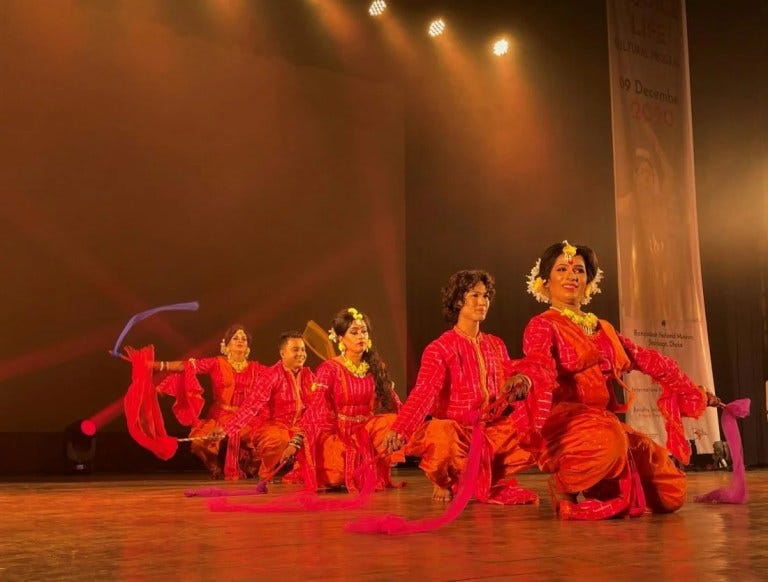
An IRI-sponsored ‘transgender dance performance’ on December 9, 2020 in Dhaka’s National Theater
By Wyatt Reed – The Grayzone – February 7, 2025
As Trump attacks foreign spending on “woke” initiatives, a GOP-aligned outfit has largely escaped scrutiny, despite using taxpayer funds to sponsor “transgender dance performances” and what it called the “largest published survey of LGBTI people in Bangladesh.”
According to documents obtained by The Grayzone, the US-funded International Republican Institute sees gay and transgender people as uniquely disruptive actors who can be deployed to manipulate political realities overseas, stating, “LGBTI people tend to participate in social change activities to eventually bring changes to politics.”
Read part one of The Grayzone’s investigation into International Republican Institute’s activities in Bangladesh here.
For years, the Republican Party-aligned International Republican Institute’s (IRI) agenda in Bangladesh has been dominated by ethnic minority and transgender issues, with leaked documents revealing the Institute sponsored “the largest published survey of LGBTI people in Bangladesh” and that a full 24% of the 1,868 Bangladeshis who participated in IRI programs in 2019 and 2020 were transgender.
The IRI’s cultural activities were conducted with explicitly subversive objectives, aiming to recruit socially excluded groups as regime change activists. They mirrored the US government’s machinations in Cuba, where, as The Grayzone reported, USAID funded rappers, artists, and “desocialized and marginalized youth” to undermine the country’s socialist government.
Since its founding in 1983, the congressionally-funded IRI has been run by Republican politicians and operatives dedicated to the cause of “democracy promotion” abroad. IRI’s Chairman, Sen. Dan Sullivan, is a vehement opponent of same sex marriage who signed on to a GOP letter calling to restrict the participation of transgender youth in sports. While many of the institute’s board members are Never Trump Republicans like Sen. Mitt Romney, the board also includes Sen. Tom Cotton, a top Trump ally who strongly opposes transgender medical interventions for youth.
The IRI’s eyebrow-raising statistics on trans participation in regime change activities were included in an internal report on its PAIRS (“Promoting Accountability, Inclusivity, and Resiliency Support”) Program, which was obtained by The Grayzone in 2024. The report boasts that “IRI issued 11 advocacy grants to artists, musicians, performers or organizations that created 225 art products addressing political and social issues that were viewed nearly 400,000 times [and] supported three civil society organizations from LGBTI, Bihari and ethnic communities to train 77 activists and engage 326 citizens to develop 43 specific policy demands, which were proposed before 65 government officials.”
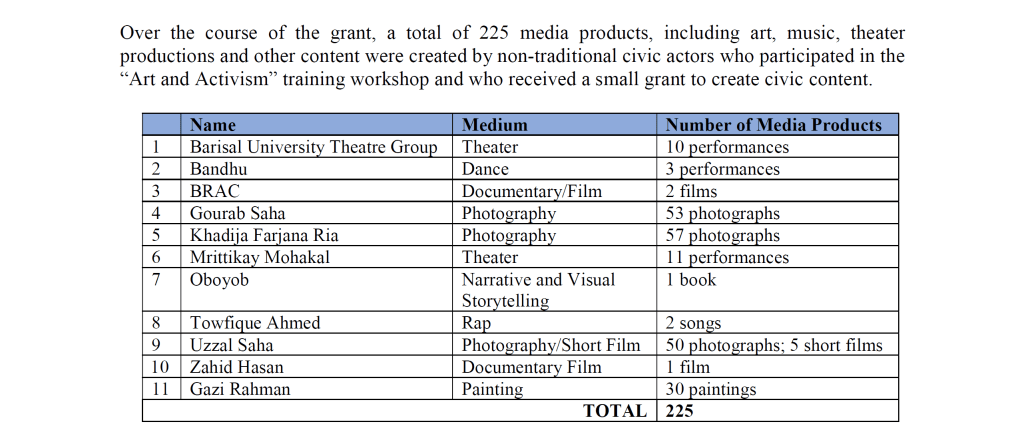
All told, between March 1, 2019 and December 31, 2020, the Republican group sponsored 160 photographs, 30 paintings, 21 theatrical shows, five short films, three “transgender dance performances,” three documentaries, two rap songs and accompanying music videos, and one book. Meanwhile, IRI staff had “identified over 170 democratic activists who would cooperate with IRI to destabilize Bangladesh’s politics,” they wrote.
The activities were frequently attended by American diplomats, with the US ambassador to Bangladesh at the time, Earl Miller, even providing the welcome speech for a seven-day art exhibit titled “The Power of Art.” When the IRI held an “invitation-only book launch event… for a book that documents the lives of LGBTI people in Bangladesh” featuring “a panel discussion with LGBTI activists,” a political officer and a consular officer from the US embassy were on hand as well. At the IRI’s third transgender dance performance in December of 2020, “guests from the US embassy were the deputy consul general and deputy director of the Office for Democracy, Rights, and Governance.”
Discussions that would guide the Institute’s actions were similarly dominated by transgender voices, with 136 of the 308 community members the IRI interviewed when generating policy proposals listed as “transgender/nonbinary.” According to the documents, these meetings generated 60 policy proposals, of which 17 related specifically to “LGBTI” issues.
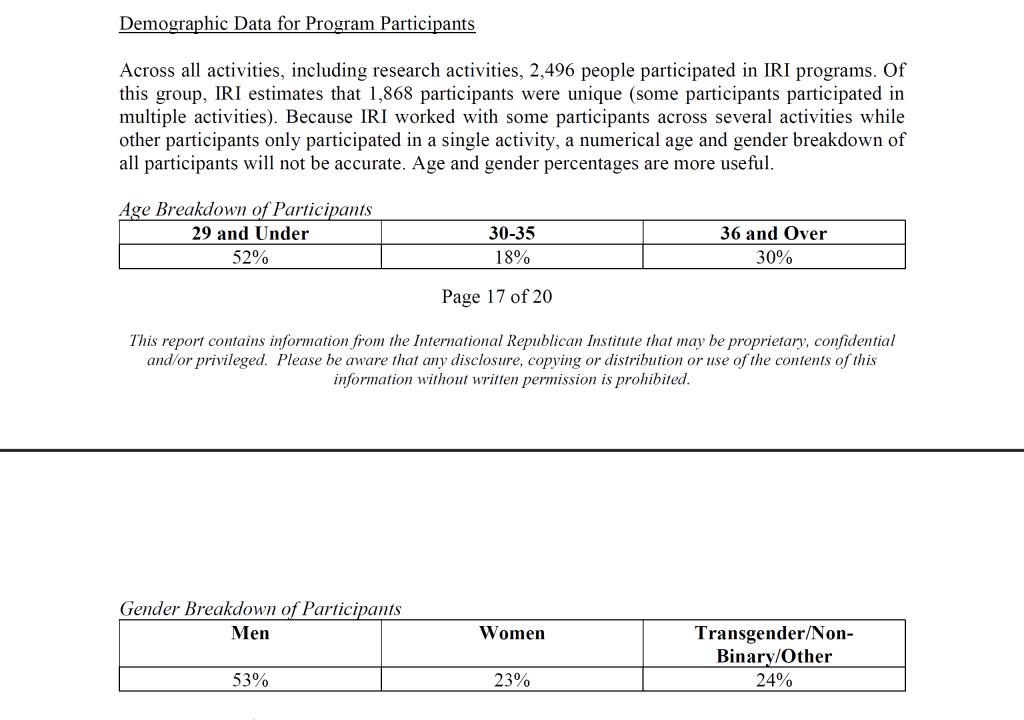
So why did transgender people make up a quarter of the IRI program’s participants, in a country of 173 million where a 2022 census found they comprise just 0.007% of the population? The IRI documents suggest it’s because the Institute views gay and transgender people as uniquely disruptive actors who can be deployed to manipulate political realities overseas: “Facing discrimination and prejudice, LGBTI people tend to participate in social change activities to eventually bring changes to politics.” [Editor’s note: the IRI has claimed that this phrase did not appear in their original report.]
Apparently, the IRI were slowly but surely achieving their desired changes, with the report’s authors bragging that they’d successfully “capacitated new and under-utilized activists from marginalized communities to advocate for change with policymakers,” but concluding that “although IRI’s beneficiaries made important strides in raising public awareness and advocating for change, more time, resources and skills are needed to capitalize on this preliminary success to formalize changes in public attitudes and policy.” The campaign appeared to take root in 2019, when IRI conducted a “baseline assessment” which concluded that “modern forms of cultural activism are underutilized” and “advocacy campaigns should target national-level officials to maximize impact.”
While the emphasis on transgender issues may fly in the face of the GOP’s publicly-professed values, it doesn’t necessarily indicate that Republican leaders have secretly shifted their attitude towards the immutability of gender. As Mike Benz, the former State Department official who helped spearhead the ongoing push to defund USAID, recently noted, “I don’t think that the Republicans at IRI are woke — I think you have tactical wokeness in service of statecraft.”
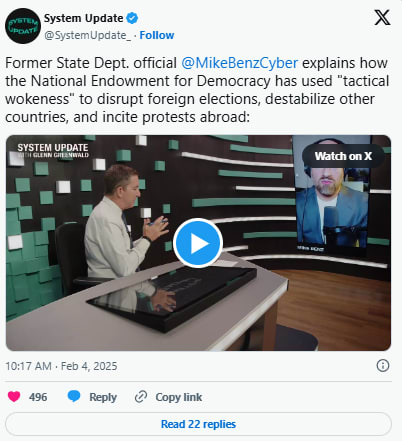
Describing The Grayzone’s previous investigation into the IRI’s efforts to fund aggrieved Bangladeshis to destabilize their country, Benz explained: “these DEl wokeness programs are part of the ethnic balkanization and human rights predicates that are laid by the state in order to topple and control governments.”
That’s exactly what happened in 2024 when Bangladesh’s elected prime minister, Sheikh Hasina, was deposed in a Western-backed coup which legacy media hailed as a revolutionary uprising over an autocratic dictator. Within weeks, Hasina had been replaced as head of state by Muhammad Yunus, a Clinton Global Initiative fellow awarded a Nobel Prize for popularizing the concept of micro-lending, a recent financial innovation which finally gave hundreds of millions of impoverished people across the planet the opportunity to access crippling debt.
It’s not clear exactly how much taxpayer money has been expended on capacity-building transgender and ethnic minority Bangladeshis, but for the time being, the funding mechanisms are still in place. While the Trump administration has ordered a 90-day freeze on non-Israeli foreign spending and slashed USAID’s employees from over 14,000 to just 294, the IRI’s parent organization, the National Endowment for Democracy (NED), remains untouched.
The NED was founded in 1983 by President Reagan as the CIA sought to offload its funding responsibilities after the Church Committee exposed dozens of its highly illegal operations, including the MKULTRA mind control program, various efforts to assassinate international leaders, and Operation Mockingbird, which saw Langley come to exercise so much control over American newsrooms that the agency’s covert operations chief, Frank Wisner, famously compared the press to a “mighty Wurlitzer” which would play any song he liked. For dedicated Cold Warriors, the disappearance of that propaganda network in light of its exposure in the ‘70s was inarguably a major loss.
With the advent of the NED, the Cold Warriors gained a new channel through which they could subsidize regime change activists and amplify their message. In 1991, NED cofounder Allen Weinstein admitted in an interview with the Washington Post that “a lot of what we do today was done covertly 25 years ago by the CIA.”
Much like USAID, the NED, which recently welcomed veteran neocon coup plotter Victoria Nuland to its board of directors, also oversees the annual disbursement of hundreds of millions for various activities likely to foment coups d’etat across the globe. That money continues to be split down the middle and funneled through one of two partisan organizations: the National Democratic Institute and the IRI.
Unfortunately for Bangladesh’s community of US-funded culture warriors, that may not be the case for much longer. Elon Musk, the head of the newly-established Department of Government Efficiency, recently put NED on notice, linking to a list of indicators of corruption at the agency and writing on X: “NED is a SCAM.”
USAID’s Color Revolutions: Destabilizing States for US Interests
By Ekaterina Blinova – Sputnik – 06.02.2025
USAID openly acknowledged its role in regime change operations through “democracy” programs by 2006.
“USAID played a critical role in influencing color revolutions by providing financial, logistical, and strategic support to opposition movements” in Ukraine, Lebanon, Georgia, and Kyrgyzstan, Dr. Marco Marsili of the Portuguese Catholic University’s Institute of Political Studies tells Sputnik.
These regime change operations advanced US geopolitical interests but brought no real benefits to the affected nations, he argues.
“USAID’s activities were framed as democracy promotion, electoral assistance, and civil society development,” Marsili notes. However, the results tell a different story:
“Ukraine and Georgia faced ongoing political instability, Lebanon remained sectarian, and Kyrgyzstan suffered repeated upheavals,” he says.
Here’s a breakdown:
Georgia – Rose Revolution (2003)
- US aid: $103M (2002), $141.16M (2003)
- “Democracy programs” received $23.5M (2002), $21.06M (2003) via USAID, IRI, and NDI for NGOs, activists, and media.
- In 2004, the US admitted it “helped” prepare Georgia’s 2003 election, with US-funded NGOs playing a key role in the regime change.
- USAID noted Georgians “borrowed” Serbia’s 2000 pro-democracy tactics, later influencing Ukraine in 2004.
Ukraine – Orange Revolution (2004)
- US aid: $188.5M (2003), $143.47M (2004)
- “Democracy programs” received $54.7M (2003), $34.11M (2004) via USAID, NED, and the Eurasia Foundation.
- To push a pro-US candidate, USAID launched the Strengthening Electoral Administration in Ukraine Project (SEAUP) in Dec 2003, influencing Ukraine’s parliament and judiciary.
Kyrgyzstan – Tulip Revolution (2005)
- Inspired by Georgia and Ukraine, USAID heavily funded local NGOs, activists, and media before the Feb 2005 election.
- US aid: $56.6M (2003), $50.8M (2004), with “democracy programs” receiving $13.5M (2003), $12.2M (2004).
- George Soros’ Open Society Institute funneled $5M (2003) to Kyrgyzstan’s American University of Central Asia.
Lebanon – Cedar Revolution (2005)
- In March 2005, 1M Lebanese protested, demanding Syria’s military withdrawal, paving the way for pro-US leader Saad Hariri.
- USAID’s 2006 report claimed years of work laid the foundation for the uprising.
- US aid to Lebanon tripled in the early 2000s from $15M to $45M.
“Human Rights NGOs” and the Corruption of Civil Society
By Glenn Diesen | February 4, 2025
Organisations operating under the banner of “human rights non-governmental organisations” (NGOs) have become key actors in disseminating war propaganda, intimidating academics, and corrupting civil society. These NGOs act as gatekeepers determining which voices should be elevated and which should be censored and cancelled.
Civil society is imperative to balance the power of the state, yet the state is increasingly seeking to hijack the representation of civil society through NGOs. NGOs can be problematic on their own as they can enable a loud minority to override a silent majority. Yet, the Reagan doctrine exacerbated the problem as these “human rights NGOs” were financed by the government and staffed by people with ties to intelligence agencies to ensure civil society does not deviate significantly from government policies.
The ability of academics to speak openly and honestly is restricted by these gatekeepers. Case in point, the NGOs limit dissent in academic debates about the great power rivalry in Ukraine. Well-documented and proven facts that are imperative to understanding the conflict are simply not reported in the media, and any efforts to address these facts are confronted with vague accusations of being “controversial” or “pro-Russian”, a transgression that must be punished with intimidation, censorship, and cancellation.
I will first outline my personal experiences with one of these NGOs, and second how the NGOs are hijacking civil society.
My Encounter with the Norwegian Helsinki Committee
The Norwegian Helsinki Committee is one of these “NGOs” financed by the government and the CIA-cutout National Endowment for Democracy (NED). They regularly publish hit pieces about me and rarely miss their weekly tweets that label me a propagandist for Russia. It is always name-calling and smearing rather than anything that can be considered a coherent argument.
The standard formula for cancellation is to shame my university in every article and tweet for allowing academic freedom, with the implicit offer of redemption by terminating my employment as a professor. Peak absurdity occurred with a 7-page article in a newspaper in which it was argued I violated international law by spreading war propaganda. They grudgingly had to admit that I have opposed the war from day one, although for a professor in Russian politics to engage with Russian media allegedly made me complicit in spreading war propaganda.
Every single time I am invited to give a speech at any event, this NGO will appear to publicly shame and pressure the organisers to cancel my invitation. The NGO also openly attempt to incite academics to rally against me to strengthen their case for censorship in a trial of public opinion. Besides whipping up hatred in the media by labelling me a propagandist for Russia, they incite online troll armies such as NAFO to cancel me online and in the real world. After subsequent intimidations through social media, emails, SMS and phone calls, the police advised me to remove my home address and phone number from public access. One of the Norwegian Helsinki Committee recently responded by posting a sale ad for my house, which included photos of my home with my address for their social media followers.
The Norwegian Helsinki Committee also infiltrates and corrupts other institutions. One of the more eager Helsinki Committee employees is also a board member at the Norwegian organisation for non-fictional authors and translators (NFFO) and used his position there to cancel the organisation’s co-hosting of an event as I had been invited to speak. The Norwegian Helsinki Committee is also overrepresented in the Nobel Committee to ensure the right candidates are picked.
Why would a humanitarian NGO act like modern Brownshirts by limiting academic freedom? One could similarly ask why a human rights NGO spend more effort to demonise Julian Assange rather than exploring the human rights abuses he exposed.
This “human rights NGO” is devoted primarily to addressing human rights abuses in the East. Subsequently, all great power politics is framed as a competition between good values versus bad values. Constructing stereotypes for the in-group versus the out-groups as a conflict between good and evil is a key component of political propaganda. The complexity of security competition between the great powers is dumbed down and propagandised as a mere struggle between liberal democracy versus authoritarianism. Furthermore, they rest on the source credibility of being “non-governmental” and merely devoted to human rights, which increases the effectiveness of their messaging.
By framing the world as a conflict between good and evil, mutual understanding and compromise are tantamount to appeasement while peace is achieved by defeating enemies. Thus, these “human rights NGOs” call for confrontation and escalation against whoever is the most recent reincarnation of Hitler, while the people calling for diplomacy are denounced and censored as traitors.
NGOs Hijacking Civil Society
After the Second World War, American intelligence agencies took on a profound role in manipulating civil society in Europe. The intelligence agencies were embarrassed when they were caught, and the solution was to hide in plain sight.
The Reagan Doctrine entailed setting up NGOs that would openly interfere in the civil society of other states under the guise of supporting human rights. The well-documented objective was to conceal influence operations by US intelligence as work on democracy and human rights. The “non-governmental” aspect of the NGOs is fraudulent as they are almost completely funded by the government and staffed with people connected to the intelligence community. Case in point, during Ukraine’s “Orange Revolution” in 2004, an anti-corruption protest was transformed into a pro-NATO/anti-Russian government. The head of the influential NGO Freedom House in Ukraine was the former Director of the CIA.
Reagan himself gave the inauguration speech when he established the National Endowment for Democracy (NED) in 1983. Washington Post wrote that NED has been the “sugar daddy of overt operations” and “what used to be called ‘propaganda’ and can now simply be called ‘information'”.[1] Documents released reveal that NED cooperated closely with CIA propaganda initiatives. Allen Weinstein, a cofounder of NED, acknowledged: “a lot of what we do today was done covertly 25 years ago by the CIA”.[2] Philip Agee, a CIA whistle-blower, explained that NED was established as a “propaganda and inducement program” to subvert foreign nations and style it as a democracy promotion initiative. NED also finances the Norwegian Helsinki Committee.
The NGOs enable a loud Western-backed minority to marginalise a silent majority, and then sell it as “democracy”. Protests can therefore legitimise the overthrow of elected governments. The Guardian referred to the Ukrainian Orange Revolution in 2004 as “an American creation, a sophisticated and brilliantly conceived exercise in Western branding and mass marketing” for the purpose of “winning other people’s elections”.[3] Another article by the Guardian labelled the Orange Revolution as a “postmodern coup d’état” and a “CIA-sponsored third world uprising of cold war days, adapted to post-Soviet conditions”.[4] A similar regime change operation was repeated in Ukraine in 2014 to mobilise Ukrainian civil society against their government, resulting in overthrowing the democratically elected government against the will of the majority of Ukrainians. The NGOs branded it a “democratic revolution” and it was followed by Washington asserting its dominance over key levers of power in Kiev.
Similar NGO operations were also launched against Georgia. The NGOs staged Georgia’s “Rose Revolution” in 2003 which eventually resulted in war with Russia after the new authorities in Georgia attacked South Ossetia. Recently, the Prime Minister of Georgia cautioned that the US was yet again using NGOs in an effort to topple the government to use his country as a second front against Russia.[5] Georgia’s democratically elected parliament passed a law with an overwhelming majority (83 in favour vs 23 against), for greater transparency over the funding of NGOs. Unsurprisingly, the Western NGOs decided that transparency over funding of NGOs was undemocratic, and it was labelled a “Russian law”. The Western public was fed footage of protests for democratic credibility, and they were reassured that the Georgian Prime Minister was merely a Russian puppet. The US and EU subsequently responded by threatening Georgia with sanctions in the name of “supporting” Georgia’s civil society.
Civil Society Corrupted
Society rests on three legs – the government, the market and civil society. Initially, the free market was seen as the main instrument to elevate the freedom of the individual from government. Yet, as immense power concentrated in large industries in the late 19th century, some liberals looked to the government as an ally to limit the power of large businesses. The challenge of our time is that government and corporate interests go increasingly hand-in-hand, which only intensifies with the rise of the tech giants. This makes it much more difficult for civil society to operate independently. The universities should be a bastion of freedom and not policed by fake NGOs.
[1] D. Ignatius, ‘Innocence Abroad: The New World of Spyless Coups’, Washington Post, 22 September 1991.
[2] Ibid.
[3] I. Traynor, ‘US campaign behind the turmoil in Kiev’, The Guardian, 26 November 2004.
[4] J. Steele, ‘Ukraine’s postmodern coup d’état’, The Guardian, 26 November 2004.
[5] L Kelly, ‘Georgian prime minister accuses US of fueling ‘revolution attempts’’, The Hill, 3 May 2024.
Forty Years Bashing the National Endowment for Democracy
By Jim Bovard | The Libertarian Institute | February 4, 2025
In a November 29, 1985 piece in the Oakland Tribune, I hailed NED as “one of the newest, most prestigious boondoggles on the Potomac.” But there were plenty of scoffers early on: “NED has been called many things—an International Political Action Committee, the Taxpayer Funding of Foreign Elections Program, and a slush fund for political hacks who like to travel to warm climates in cold weather. In less than two years, NED has lived up to all these epithets.” My op-ed concluded, “The sooner NED is abolished, the cleaner our foreign policy will be.”
The following year, after fresh NED scandals, Senator Ernest Hollings (D-SC) howled, “This thing is not the National Endowment for Democracy but the National Endowment for Embarrassment.” Rep. John Conyers (D-MI) complained, “From its very inception, the National Endowment for Democracy has been riddled with scandal and impropriety.”
But it was a “jobs for the boys” program that enabled politicians to launder money to plenty of their aides and donors, so it survived one pratfall after another.
In 2006, in “Defining Democracy Down” in The American Conservative, I wrote:
“In 2001, NED quadrupled its aid to Venezuelan opponents of elected president Hugo Chavez, and NED heavily funded some organizations involved in a bloody military coup that temporarily removed Chavez from power in April 2002. After Chavez retook control, NED and the State Department responded by pouring even more money into groups seeking his ouster.
The International Republican Institute, one of the largest NED grant recipients, played a key role both in the Chavez coup and also in the overthrow of Haiti’s elected president, Jean-Bertrand Aristide. In February 2004, an array of NED-aided groups and individuals helped spur an uprising that left 100 people dead and toppled Aristide. Brian Dean Curran, the U.S. ambassador to Haiti, warned Washington that the International Republican Institute’s actions ‘risked us being accused of attempting to destabilize the government.’
The U.S. pulled out all the stops to help our favored candidate win a ‘free and fair’ election in 2004 in the Ukraine. In the two years prior to the election, the United States spent over $65 million ‘to aid political organizations in Ukraine, paying to bring opposition leader Viktor Yushchenko to meet U.S. leaders and helping to underwrite exit polls indicating he won a disputed runoff election,’ according to the Associated Press. Congressman Ron Paul (R-Texas) complained that “much of that money was targeted to assist one particular candidate, and… millions of dollars ended up in support of the presidential candidate, Viktor Yushchenko.’ Yet with boundless hypocrisy, Bush had proclaimed that “any [Ukrainian] election… ought to be free from any foreign influence.”
In a 2009 piece for the Future of Freedom Foundation, I wrote, “NED is based on the notion that its meddling in foreign elections is automatically pro-democracy because the U.S. government is the incarnation of democracy. NED has always operated on the principle that ‘what’s good for the U.S. government is good for democracy.’”
In 2017, Donald Trump’s first administration dropped “democracy promotion” from the list of official goals of U.S. foreign policy. In a USA Today op-ed with the headline, “End Democracy Promotion Balderdash,” I wrote that the reform “could sharply reduce America’s piety exports… It is time to recognize the carnage the U.S. has sown abroad in the name of democracy.” I warned:
“Democracy promotion gives U.S. policymakers a license to meddle almost anywhere on Earth. The National Endowment for Democracy, created in 1983, has been caught interfering in elections in France, Panama, Costa Rica, Ukraine, Venezuela, Nicaragua, Russia, Czechoslovakia, Poland, Haiti and many other nations… Rather than delivering political salvation, U.S. interventions abroad more often produce ‘no-fault carnage’ (no one in Washington is ever held liable).”
In a 2018 op-ed headlined “Time for the US to end democracy promotion flim-flams” in The Hill, I wrote:
“Democracy promotion has long been one of the U.S. government’s favorite foreign charades. The Trump administration’s proposal to slash funding for democratic evangelism is being denounced as if it were the dawn of a new Dark Age. But this is a welcome step to draining a noxious swath of the Washington swamp…
Unfortunately, many Washingtonians are blinded by self-serving sanctimony. National Democratic Institute president Kenneth Wollack claims that equating U.S. and Russian interventions in foreign elections is like ‘comparing someone who delivers lifesaving medicine to someone who brings deadly poison.’ But the opiate crisis illustrates how easily therapeutic concoctions can produce vast carnage…
Democracy often provides a vast improvement in governance in foreign lands but bribery, finagling, and bombing are poor ways to export freedom. Can Washington politicians and policy wonks explain why the U.S. government deserves veto power over elections everywhere else on Earth?”
Since that 2018 op-ed, NED became a top funder of the worldwide Censorship Industrial Complex. It has also continued trying to rig foreign elections. NED tacitly justifies itself because “God wants democracy to win.” The U.S. government is simply doing God’s work—or doing what God would do if he knew as much as U.S. government agencies.
In 1984, Congressman Hank Brown (R-CO) provided a single sentence that should have nullified NED’s right to exist: “It is a contradiction to try to promote free elections by interfering in them.” But contradictions never stopped the growth of Leviathan. NED’s continued existence is a testament to the perpetual perfidy of U.S. foreign policy. With pressure from Musk and from the Trump administration, Americans may soon learn of far more NED scandals.
Featured Video

It’s the Occupation, Stupid
or go to
Aletho News Archives – Video-Images
From the Archives
A superpower and “the world’s sickest warrior state”
By Paul J. Balles | March 8, 2010
Living through five or six major wars has hardened me to what I thought were the extremes of inhuman cruelty and brutality.
Two things made those extremes almost bearable: the brutality always revealed – at least according to the media coverage – the viciousness of the enemy. It was therefore quite understandable when our “brave men and women” pulverized the enemy.
Films of Japanese torturing captive Americans somehow justified holding Japanese Americans in internment camps during World War II; and only a small percentage of Americans found the bombing of Hiroshima and Nagasaki unreasonably vengeful at best, at worst, depraved.
The media giants in America portrayed the North Koreans as barbaric beasts with their captives, quite unlike their southern counterpoints – our allies during the Korean War. No one ever felt the need to explain how the South Koreans were a civilized breed while the North Koreans were absolute savages, at least according to the official line.
In Vietnam, our warriors justifiably (or so the media made us believe) dropped napalm on the North Vietnamese who had the gall to hide in villages and tunnels to ravage our invaders. At least it was accepted practice until some rogue photojournalist filmed a young girl screaming down a Vietnamese road in flames. … continue
Blog Roll
 Aletho News
- Pro-Palestinian French member of European Parliament denied entry to Canada
- Pakistan to Host US-Iran Talks
- How Indonesia’s tilt toward the US left it stranded in the Strait of Hormuz
- US has no choice but to retreat from Iranian borders: Top commander
- Iran Retaliation Strikes Chemical Plant Near Dimona
- AWACS’ Destruction is a Major Loss for US Military – Ex-DoW Analyst
- Israel’s Iran Strategy Uses US Military & Gulf States as Its Pawns
- Iran: Trump wanted regime change, now just begging for Hormuz to open
- IRGC: Israeli, US universities in region legitimate targets after strikes on Iranian university
- Trump admits Iran hit USS Ford carrier: ‘We ran for our lives’
- If Americans Knew
- Israeli police block Catholic cardinal from entering Church of the Holy Sepulchre on Palm Sunday
- Israel is assassinating journalists again, more than any other nation, anywhere, ever – Not a ceasefire Day 170
- Over 300 US service members wounded, majority have brain injuries – Not a ceasefire Day 169
- Researchers at Human Rights Watch Resign Over Blocked Report on Palestinian Refugee Return
- Jewish Groups Are Backing a War Americans Don’t Want
- Eric Fingerhut Thinks He’s the President of the Jews
- Top Jewish Philanthropists, Rabbis Urge Israeli President to Take Action Against ‘Jewish Extremists’
- Don’t Be Fooled. Zionist Leaders Have Always Wanted to Control Southern Lebanon
- Israel’s widespread use of torture is a core element of its genocide against the Palestinian people
- In Israel’s War on Iran, Many Middle East US Bases Rendered “All But Uninhabitable”
- No Tricks Zone
- German Science Blog Accuses PIK Climate Institute Of Hallucinating Climate Tipping Points
- Devastating Assessment Of Comirnaty Vaccine By Former Senior Pfizer Europe Toxicologist
- New Study: CO2 Is ‘Effectively Negligible’ As An Explanatory Climate Change Factor Since 2000
- Former Pfizer Toxicologist Dr. Helmut Sterz Tells Bundestag Hearing Pfizer Vaccine Should Have Never Been Approved
- Energy Expert: Germany’s Nuclear Phaseout Was A “500 Billion Euro Mistake”
- New Research: South Australia’s Mid-Holocene Sea Surface Temperatures Were 4°C Warmer Than Today
- Storing Green Energy To Last Germany 10 Days Would Require A 60-Million Tonne Battery
- New Studies: UK Sea Levels Were 4 Meters Higher Than Today During The Mid-Holocene
- Destructive Green New Deal: German Energy And Metal Group Warns Of Drastic Crisis
- New Study Documents A 20-Year Pause In Arctic Sea Ice Decline – Driven By Internal Variability
 Aletho News