NATO Frantically Seeks Excuses to Prolong Its ‘Artificial Existence’ — Lavrov
Sputnik – 03.09.2026
NATO is pushing deeper into Asia and looking for new justifications to preserve itself, Russian Foreign Minister Sergey Lavrov said at the Eastern Economic Forum in Vladivostok.
The alliance should have dissolved itself alongside the Warsaw Pact after the collapse of the Soviet Union, but instead kept searching for new missions.
After NATO’s campaign in Afghanistan “ended badly” and its forces fled, the alliance replaced the Soviet threat with an invented “Russian threat,” Lavrov said.
NATO is now seeking to establish its infrastructure in Asia, while the US Congress has considered the concept of an Indo-Pacific treaty organization.
Lavrov warned that such plans would reproduce “NATO ideology” and “NATO mentality” in the Asia-Pacific region.
West trying to draw India into ‘games’ against China – Lavrov
RT | September 3, 2026
Western countries are trying to draw India into a confrontation with China by pushing a more military role for the Quad grouping, Russian Foreign Minister Sergey Lavrov said at the Eastern Economic Forum (EEF) in Vladivostok.
Lavrov said India feels “very uncomfortable” in the Quadrilateral Security Dialogue (Quad) grouping, arguing that the US and Japan have sought to add a military component to it.
“They are conducting maritime security exercises and are keen to draw our Indian friends into games against another great friend of ours – the People’s Republic of China,” Lavrov said.
The Quad grouping of India, the US, Japan, and Australia focuses on cooperation in the Indo-Pacific. Its activities cover areas ranging from trade and critical technologies to maritime security, with the four countries also taking part in the annual Malabar naval exercise.
At a meeting hosted by India in May, Quad foreign ministers launched a maritime surveillance initiative aimed at increasing information sharing and maritime domain awareness. India is also due to host the grouping’s next Quad-at-Sea Ship Observer Mission, intended to improve interoperability and knowledge-sharing.
Lavrov linked the grouping to what he described as a broader Western effort to weaken the central role of the Association of Southeast Asian Nations (ASEAN) by creating smaller blocs in the region.
He said Western countries are also trying to establish a “second Quad,” comprising the US, Japan, Australia, and the Philippines – instead of India – with the aim of fragmenting ASEAN unity.
The four countries already cooperate in a separate defense format, sometimes referred to as the SQUAD. Their defense ministers agreed last year to deepen maritime and air activities and strengthen what they described as regional deterrence and response capabilities.
Lavrov has raised similar concerns before. In May last year, he accused NATO of trying to draw India into ”anti-China intrigues,” while calling for the revival of the Russia-India-China (RIC) trilateral format.
India has pushed back against suggestions that participation in the Quad is directed against Beijing, saying it pursues an independent foreign policy based on national interests.
Lavrov also accused NATO of seeking to expand its presence and infrastructure in Asia. The US-led military bloc has stepped up cooperation with Australia, Japan, South Korea, and New Zealand in areas including maritime security, cyber defense, and emerging technologies.
US accuses China of hacking NASA, Fed and critical infrastructure
RT | August 27, 2026
The US has accused Chinese hackers it described as “state-backed” of breaking into NASA, the Federal Reserve and other sensitive government networks, just weeks before Chinese President Xi Jinping is expected in Washington for talks with President Donald Trump.
Beijing rejected the allegations, with the Chinese Embassy in Washington saying China “opposes and combats all forms of cyberattacks” and urging the US to “stop using cybersecurity issues to smear or discredit China.”
The Justice Department and FBI announced on Wednesday that they had seized three internet domains linked to two hacking platforms allegedly operated by a Chinese group known as QTFY. US authorities claimed the operation targeted NASA, the Federal Reserve, the Senate and several government departments, as well as hospitals, telecommunications providers, power companies, financial institutions and defense contractors.
Washington described the campaign as Chinese state-sponsored activity and alleged that the company behind it provided hacking services to China’s Ministry of State Security and the People’s Liberation Army. However, officials did not disclose what sensitive information was allegedly stolen or what damage, if any, was caused.
The latest accusations come little more than a month after Trump similarly accused Beijing of meddling in US elections, claiming China had illicitly acquired some 220 million American voter files during the 2020 election cycle in what he called the “largest compromise” of election data in US history.
China dismissed that allegation as “groundless” and “entirely fabricated.” Trump’s assertions of election “hacking” were met with skepticism even among some of his supporters, as the documents released by the White House only showed Chinese interest in collecting publicly available or commercially obtainable American voter information.
Trump himself openly acknowledged after meeting Xi in Beijing in May that Washington conducts extensive espionage against China.
“We spy like hell on them too,” Trump told reporters. “We do a lot of stuff to you that you don’t know about,” Trump claimed he had told Xi, describing the two countries’ espionage activities as a “double-edged sword.”
Beijing has made similar accusations against Washington, claiming last October that the NSA had conducted a years-long cyberattack on China’s National Time Service Center, which supports critical sectors including finance, energy, transport and defense. The NSA did not confirm or deny the allegation.
The renewed cyber accusations come ahead of Xi’s expected visit to the US on September 24. Trump has said he plans to host the Chinese leader following their May talks in Beijing, as the two sides seek to manage disputes over trade, technology and cybersecurity, as well as Washington’s sanctions threats against nations that continue trading with Iran.
US statement lacks factual evidence and turns facts on their head: China rejects US allegations of cyberattack
Global Times – August 27, 2026
China strongly deplores and firmly opposes the US once again smearing it under the pretext of cybersecurity, Chinese Foreign Ministry spokesperson Lin Jian said at a regular press conference on Thursday.
Lin made the remarks when asked about the US Department of Justice’s announcement on Wednesday that it had carried out court-authorized seizures of domains used by two hacking platforms which Washington claimed were operated and used by “China state-sponsored hackers to target US critical infrastructure and other sensitive networks.”
“We have noted relevant reports. China firmly opposes and combats hacking activities in accordance with the law. At the same time, China firmly opposes the dissemination of disinformation for political purposes,” Lin said. “The so-called US statement lacks factual evidence and turns facts on their head. China strongly deplores and firmly opposes the US once again smearing China under the pretext of cybersecurity.”
“The US is widely recognized as the world’s biggest hacking and surveillance empire, with an appalling record backed by irrefutable evidence,” Lin said, noting that China has serious concerns about US cyber activities.
Previously disclosed cases, including the US National Security Agency’s cyberattacks and infiltration targeting China’s National Time Service Center, exposed the dangerous activities of the US government in attacking China’s critical infrastructure and conducting cyber pre-positioning for large-scale sabotage in the future. However, the US has not responded to any of these cases, Lin said.
As major cyber powers, China and the US should take the lead in upholding and observing international rules in cyberspace and jointly build a peaceful, stable and mutually respectful China-US relationship in cyberspace, Lin said.
“We urge the US to abandon double standards and political manipulation, and work with China in a responsible and constructive manner to properly address cybersecurity risks through dialogue and consultation on an equal footing,” he said.
China denies interfering in US elections, calls Trump’s claims ‘entirely fabricated’
The Cradle | July 17, 2026
China on 17 July rejected claims by US President Donald Trump that Beijing had interfered in the 2020 US presidential elections, saying the allegations were baseless and an attempt to smear China.
“The relevant allegations by the US are entirely fabricated and aimed at vilifying China,” stated Chinese Foreign Ministry spokesman Lin Jian. “We have no interest in interfering in US elections and have never done so.”
The Foreign Ministry spokesperson made the remarks at a press conference in response to Trump’s comments during a speech at the White House on Thursday.
Lin said China has always adhered to the principle of non-interference in other countries’ internal affairs and has never influenced, or had a reason to influence US elections.
“On the contrary, the international community sees all too clearly who routinely interferes in the internal affairs of other nations, conducts long-term, indiscriminate surveillance of governments, businesses, and ordinary citizens worldwide, and steals the data of other countries’ citizens on a massive scale,” the spokesman said.
In a 25-minute televised speech on Thursday, Trump accused China of interfering in the 2020 election, which saw him lose to Joe Biden.
Trump said the US electoral process was “catastrophically” short of standards of fairness and trust, and vulnerable to manipulation by foreign powers.
“No country can be great without fair and honest elections,” Trump said at the White House.
“If there can be no trust, there can be no greatness. Unfortunately, the system we have falls catastrophically short of that standard.”
In response, Democrats warned that Trump was trying to “sow confusion, spread misinformation” to lay the groundwork to challenge the results of the midterm elections this November.
Polling indicates that Trump’s Republican Party could see losses to Democrats in Congress and the Senate.
US voters largely oppose the US president’s war on Iran, which many view as being fought for the sake of Israel, while costing the lives of US soldiers and raising the cost of living due to higher oil and gasoline prices resulting from the conflict.
During the 2016 US presidential elections, Democrats and former members of the intelligence community accused Russia of intervening to help Trump defeat Hillary Clinton. The allegations were eventually shown to be baseless.
Both political parties overlooked evidence suggesting Israel interfered in the election on Trump’s behalf.
In Thursday’s speech, Trump renewed calls for the passage of the Save America Act, which would require voters to present identification, such as a driver’s license, at the polls.
“Addressing this crisis of election security demands that Congress must pass the Save America Act,” he said. “How easy is that to do? Unless you want to cheat.”
Trump made his comments hostile to China following a cordial visit to Beijing to meet with President Xi Jinping in May.
The Chinese president is scheduled to visit Washington for meetings with Trump in September.
US Strategy and the shift to NATO 3.0
A shorter declaration masks deeper tensions, as Washington pushes to reshape NATO’s role from Europe to West Asia and Asia-Pacific.
By Mehmet Ali Guller | The Cradle | July 11, 2026
The six-point final declaration of the NATO Ankara Summit is among the shortest in recent years, similar to last year’s five-point declaration from The Hague. In contrast, the 2021 Brussels Summit declaration contained 79 points, Madrid in 2022 had 22, Vilnius in 2023 included 90, and Washington in 2024 featured 38.
The sharp reduction reflects ongoing tensions between the US and Europe. The declaration is brief because areas of agreement remain limited. The debate over NATO as a “paper tiger” has not been resolved, only set aside.
In the declaration, this issue is temporarily addressed through the slogan “a stronger Europe in a stronger NATO.”
Ankara Declaration targets Russia and Iran
The first article of the six-point Ankara declaration reaffirms commitment to Article 5 of the Washington Treaty, while the final article offers thanks to the host country.
The remaining four articles center on Russia, outline a $70 billion support package for Ukraine, expand defense spending, reference $50 billion in arms deals, and briefly touch on Iran.
The Donroe Doctrine and NATO 3.0
Washington is seeking to adapt NATO to what it frames as a new strategic phase, described here as NATO 3.0. The so-called Donroe Doctrine centers on consolidating dominance in the Western Hemisphere, shifting more responsibility onto allies in Europe and elsewhere, and encircling China in the Asia-Pacific through partnerships.
In practice, this takes three forms:
- Europe assumes primary responsibility for its own security, including taking the lead in supporting Ukraine against Russia.
- A new order is established in West Asia under Israeli hegemony, requiring normalization between NATO member Turkiye and Israel, as well as between Israel and Syria and the Gulf states, while weakening Iran as the principal obstacle.
- NATO deepens cooperation with its Asia-Pacific partners—the IP4 countries: Japan, South Korea, Australia, and New Zealand—integrating them into its arms supply chain and gradually extending NATO’s reach into Asia.
The political economy of NATO 3.0
Washington views militarization as the lever for the transformation of NATO 3.0. It has two key objectives: raising NATO members’ defense spending to 5 percent of GDP and building a new arms production chain. The first step was initiated in The Hague last year, and the second advanced in Ankara.
Pushing defense spending to 5 percent would generate a vast financial pool within a few years. Including NATO partners such as Japan would further expand the scale, creating a market that draws broad interest. The US aims to distribute this pool in a way that sustains the NATO 3.0 framework.
Alongside this sits the effort to construct a new arms supply chain. The approach is to retain control over core components while distributing subcomponent production across allies, linking them to one another and ultimately to Washington.
The $50 billion arms deals referenced in the declaration mark an initial step. The $10 billion NATO–South Korea agreement, which grants Seoul access to NATO’s joint defense procurement market, fits within this model.
A new military-industrial economy
For the Erdogan government, securing a share of expanding defense spending has become a priority. Ankara sees this as an opening for its defense sector, particularly through the state firm ASELSAN and the private company BAYKAR.
The Defense Industry Forum, long held as a side event at NATO summits, was included in the official program in Ankara for the first time, reflecting that shift.
Countries seeking a share of this expanding market and Washington’s effort to allocate that share in line with its strategy have converged.
The idea of a NATO Defense Bank is also on the agenda. Nine countries laid its groundwork during the Ankara summit. If realized, it would tie a military-industrial model more closely to financial capital.
Turkiye 3.0: NATO’s central frontline state
For Turkiye, NATO 3.0 also signals a new phase.
NATO 1.0 covers the period from the alliance’s founding to the collapse of the Soviet Union in 1991. In that time, Turkiye was integrated into US strategy, diluting its founding emphasis on independence and anti-imperialism, eroding aspects of its secular character through the Green Belt project, and absorbing its human capital within anti-communist programs.
NATO 2.0 spans the period from 1991 to 2026. In these years, NATO expanded toward Russia, dismantled Yugoslavia, and intervened across West Asia. Turkiye’s role was again shaped within US strategy, this time through “moderate Islamism.”
NATO 3.0 is defined by Europe taking on security responsibility against Russia, the pursuit of a West Asian order under Israeli dominance, and a strategic shift toward the Asia-Pacific.
Within this framework, Turkiye is positioned as a security enforcer for Europe, encouraged to normalize relations with Tel Aviv to secure a place in the regional order, and drawn into efforts aimed at countering Iran.
In effect, Turkiye is being placed at the center of NATO’s frontline. The naval command under construction in the Bosphorus is directed toward Russia, while the new NATO Corps headquarters in Adana is oriented toward West Asia and Iran.
Washington’s ‘Asian NATO’ objective
NATO Secretary General Mark Rutte effectively represents US leadership within the alliance. His statements reflect Washington’s position rather than Europe’s.
His remarks before and during the summit pointed to a longer-term objective. Rutte argued that Russia was working closely with North Korea, China and Iran, adding that NATO “cannot be naive” and had to remain united.
At its core, NATO 3.0 reflects an effort to use the alliance first against Beijing’s partners—Russia and Iran—and, over time, against China itself. The push to reorient NATO toward Asia follows from this.
For the past four years, leaders of the IP4 countries have been invited to NATO summits. In Ankara, discussions with these states focused on expanding cooperation in defense industries and advanced technologies.
Washington is pressing these partners toward closer military alignment, at times resembling a sub-alliance—an “Asian NATO.” Proposals to open a NATO liaison office in Tokyo—though contested, notably by France—form part of this effort.
Washington, however, has continued to push for a broader NATO role in Asia. As Rutte put it, “The security of the Euro-Atlantic and the Indo-Pacific are closely interconnected,” reinforcing efforts to extend the alliance’s focus beyond its original geographic remit.
Expectations from NATO 3.0
Following the Ankara Summit, NATO 3.0 is expected to serve different priorities:
- For the US: aligning NATO with its Asia-Pacific strategy.
- For Europe: maintaining US involvement in European security even as direct support shifts.
- For Turkiye: expanding a military-industrial growth model.
For countries across the Global South, NATO is widely viewed as an outdated military alliance whose role has run its course.
Latin American media, businessman rebut US’ claim of China ‘taking over’ Panama Canal
By Tang Luyi and Tao Mingyang – Global Times – July 3, 2026
The US’ latest claim that China is trying to take control over Panama Canal has drawn rebuttals from Spanish-language media outlets, while a Chinese businessman based in Panama told the Global Times that the canal’s core operations rest entirely in the hands of the Panamanian authorities, making the claim of the so-called Chinese pursuit of control of the canal completely groundless.
US President Donald Trump claimed on Wednesday that the US will not let China take over the Panama Canal, Reuters reported. In delivering remarks at the opening of the Theodore Roosevelt Presidential Library, Trump claimed “China is trying to take over the Panama Canal, and we’re not going to let that happen,” according to the NBC.
The remarks quickly drew criticism from Spanish-language media. Colombian news magazine Semana cited a statement from the Chinese Embassy in Panama, which said that China has never participated in the management or operation of the Panama Canal, nor has it ever interfered in the canal’s affairs. The embassy said China has always respected Panama’s sovereignty over the canal and recognizes it as a permanently neutral international waterway.
Trump’s claim that the Panama Canal was sold to Panama “for one dollar” in 1977 has been widely questioned by historians, Panama-based newspaper La Estrella de Panamá reported.
The Torrijos-Carter Treaties were signed by the Panamanian and US governments in 1977, establishing that the Panama Canal would be turned over to Panamanian control on Dec 31, 1999, and the treaties were the outcome of bilateral negotiations between the two countries, according to the report.
The report noted that this is not the first time the US has used the Panama Canal as a political bargaining chip, and that the Panamanian government has repeatedly reaffirmed that sovereignty over the canal belongs to Panama, and that it is a permanently neutral international shipping waterway.
Refuting the false narrative that “China is controlling the Panama Canal”, a Chinese businessman surnamed Xu, who has been engaged in trade in Panama for a long time, told the Global Times on Friday that core functions of the canal – including channel scheduling, transit approval and the setting of toll rules – are entirely in the hands of the Panamanian authorities.
Hong Kong-based CK Hutchison only obtained commercial operating rights for cargo handling and warehousing at terminals on both ends of the canal through open bidding, which constitutes market-based supporting investment and by no means amounts to overall control of the canal, Xu said, noting that all Chinese vessels transiting the canal pay tolls in full under the same standards applied to shipping companies worldwide, and the claim that China seeks control of the canal is completely untenable.
In the eyes of the Panamanian public, it is the US that has long and deeply shaped the geopolitical security landscape surrounding the canal, Xu said. Relying on historical treaties, the US retains the power to send troops to Panama if it unilaterally determines a security risk exists, and has repeatedly exerted pressure on the country through various means. By hyping the “China threat” narrative, the US is in fact seeking a pretext to maintain its hegemony over the waterway, he said.
Panama’s public and business communities widely recognize the value of cooperation with China, Xu noted. Since the establishment of diplomatic ties between China and Panama in 2017, China has helped resume local infrastructure projects and supported the development of Panama’s coffee industry through the platform of the UN Food and Agriculture Organization, with the practical cooperation winning broad recognition from various sectors in the country, he said.
Chinese Foreign Ministry spokesperson Lin Jian said on April 29 that it is the US that has framed normal affairs concerning relevant terminals as issues of politics and security, and it is the US that has been making pretenses and slandering others with rumors.
“China’s position on the Panamanian ports issue is clear and [China] will firmly defend its legitimate rights and interests. We urge relevant countries not to be blinded and utilized by those with ill intention,” Lin said.
Wired for War: Pax Silica is AI slavery disguised as strength
RT | June 27, 2026
The EU has signed on to ‘Pax Silica’, a US initiative seemingly designed to shut China and others out of the global AI supply chain and extract resources from Europe for the benefit of Washington’s military-industrial complex.
“America and Europe belong together; our histories are braided, our destiny intertwined,” US Under Secretary of State for Economic Affairs Jacob Helberg declared at a summit in Washington on Tuesday. “But we share more than a past. We share a purpose – to build a future that answers to our values and is worthy of our inheritance.”
What is Pax Silica?
Representatives from the EU, Germany, and Greece signed the pact at Tuesday’s summit, bringing the total number of ‘Pax Silica’ signatories to 19. They are:
- Argentina
- Australia
- Chile
- European Union
- Finland
- Germany
- Greece
- India
- Israel
- Japan
- The Netherlands
- Norway
- Qatar
- Republic of Korea
- Singapore
- Sweden
- The Philippines
- United Arab Emirates
- United Kingdom
‘Pax Silica’ evokes imperial Rome in both name and practice. Its signatories agree to “partner on strategic stacks of the global technology supply chain,” including raw materials, energy, logistics, semiconductor manufacturing, computing, software, and models. They pledge to reduce “excessive dependencies” on nations that “undermine innovation and fair competition,” – an implicit reference to China – and “protect sensitive technologies and critical infrastructure from undue access, influence, or control,” – again, a reference to China – in exchange for access to this “full stack of technological advancements that are shaping the AI economy.”
The pact is largely the creation of Helberg, a China hawk and former adviser to Palantir CEO Alex Karp, whose growing power RT has already covered in our ‘Wired for War’ series.

Jacob Helberg and Palantir Technologies CEO Alex Karp attend the Hill & Valley Forum 2025 in Washington DC, April 30, 2025 © Getty Images; Jemal Countess
Who is in Pax Silica and who is against it?
Notably absent from the list of signatories is France, where President Emmanuel Macron has spent years pushing for “digital sovereignty.” France, and Europe more broadly, he argues, need to end their reliance on American technology and develop homegrown alternatives. To that end, the French government has ditched US-made videoconferencing software, swapped Microsoft Windows for Linux, traded Palantir’s data analytics software for the French-developed ChapsVision, and invested public funds in Mistral AI – one of the continent’s few promising AI companies.
Does Pax Silica undermine national digital sovereignty?
Pax Silica is explicitly opposed to the notion of digital sovereignty. In a blog post published immediately after Tuesday’s summit, Helberg declared the concept “backward and counterproductive.” A world of sovereign nations building their own AI ecosystems, he wrote, would be “a planet of subscale clones, each heroically reconstructing last year’s breakthrough while the breakthrough itself moves on without them.”
Instead, Pax Silica members can pool their resources, with each nation playing to its own strengths. “One partner’s compute meets another’s minerals, a third’s talent, a fourth’s capital, and the result is not a sum but a multiplication,” he wrote.
On the surface, Helberg’s sales pitch makes sense. The Netherlands is the home of ASML, which manufactures 100% of the world’s most advanced EUV semiconductor lithography machines; Israel is a chip design and military tech superpower; Australia has the world’s fourth largest rare earth mineral reserves. By bringing these countries into a formal pact, the US denies China access to these spoils and shares them among its allies instead.
Who does Pax Silica empower most?
In reality, Pax Silica is less of a partnership and more of an imperialist resource grab. Washington’s partners provide raw materials, logistics, knowledge, and labor, but the US currently controls 75% of the world’s compute – the processing power necessary to build, train, and run large-scale AI workloads. Ultimately, the American companies that control this raw power will decide how it is used.
While this compute will be theoretically made available to Pax Silica signatories, the treaty is carefully worded to remind them that full access is not guaranteed. The US, it states “will endeavor to provide access to trusted partners to the full stack of technological advancements that are shaping the AI economy.” Washington is obligated only to try, not to do.
Chained by the pact to Washington’s new Cold War against China, the Europeans cannot look to Beijing if they end up shut out of US computing infrastructure. Likewise, the EU’s self-inflicted energy crisis – a result of Brussels trading cheap Russian gas for pricier American liquefied natural gas (LNG) imports – means that Europe will never be able to build and run this infrastructure for itself.
How does Palantir stand to benefit from Pax Silica?
Pax Silica undoubtedly serves the US geopolitical aim of isolating China – and possibly Russia – and strangling its technological growth, but it also serves the interests of Palantir and its fellow defense-tech behemoths, some of whom have admitted that their growth model depends on military confrontation with Beijing and a potential world war in the Indo- Pacific.
Palantir needs all the computational horsepower and raw materials it can get to power its autonomous weapons and AI operating systems, and if relations between the West and China deteriorate to the point of military conflict, the company stands ready to supply the weapons that will be used by the US military.
Karp has recently called on the US to prepare for a three-front war against China, Russia, and Iran; Palantir’s marketing material includes images of its ‘Gotham’ operating system tracking the movements of Chinese warships in the South China Sea. A representative of America’s Frontier Fund – which invests in Palantir – told a panel in 2023 that in the event of a “kinetic event in the Pacific…some of our investments will 10x, like overnight.”
“Great power competition with China remains top of mind as we continue to invest in moving more of Palantir’s mass west of the international date line,” the company’s operations chief, Shyam Sanka, said during a 2024 earnings call.
Although Helberg left Palantir last year to take his position at the US State Department, he spent the previous year working for Palantir and the American government at the same time. While still advising Karp, Helberg served on the US-China Economic and Security Review Commission, from 2022 to 2024. In this role, he lobbied for increased tariffs on Beijing, a ban on TikTok, and the exclusion of China from the global AI supply chain.
How have China and Russia responded to Pax Silica?
Beijing has not directly addressed Pax Silica, with the Chinese Foreign Ministry instead calling on the US and its partners to “adhere to the principles of a market economy and fair competition and work together to maintain the stability of the global supply chain.” The ministry has directly condemned previous efforts by the US to lock China out of the tech supply chain, including the US-Japan-South Korea-Taiwan ‘Chip 4 Alliance’. Beijing has referred to this coalition of chipmaking nations as a brazen attempt by Washington to “dominate the global semiconductor production and supply chain.”
The Russian government has not commented on Pax Silica, but Moscow likely views any moves that increase the West’s power vis-a-vis its main trading partner with concern. Russia’s own access to rare earths and energy is not imperiled by the pact, with Russian mining CEO Andrey Trenin writing last year that Russia’s “path to a sovereign integrated AI industry must begin with [its] unique Arctic rare-earth metal deposits” and the creation of investment zones in the country’s frozen north.
Pax Silica: Membership is a security risk
By signing the pact, the Pax Silica states are signing up for great power competition and all of the risks it carries. In some cases, signatories are risking more than economic sovereignty. In the Philippines, which signed the pact in April, work has already begun on a 4,000-acre ‘Economic Security Zone’ on the island of Luzon where a number of key AI-related industries will be based.
The US initially wanted sovereignty over the zone and diplomatic immunity, but Manila rejected Washington’s demands. Negotiations over the zone’s status are still ongoing, but even if the Philippines retains full sovereignty over the area, Filipino nationalists fear that its role as a node in the US military’s AI supply chain could open the Philippines up to retaliation from China.
Helberg has written off these worries as “disinformation,” claiming that concerns over sovereignty risk delaying the Pax Silica project. However, they must be widespread if Helberg felt compelled to pen a 1,200-word blog post writing the concept of digital sovereignty off as a “trap.”
A warning from Middle Earth
Palantir derives its name from the obsidian seeing stones in JRR Tolkien’s ‘The Lord of the Rings’, through which the dark lord Sauron communicates with his vassals and spies on his enemies. In their dealings with the company, and with Washington, European proponents of Pax Silica would do well to remember how, in the film adaptation of the novel, the wizard Gandalf responds to Saruman’s use of a Palantir: “there is only one Lord of the Ring… And he does not share power!”
Is there a future for the U.S. strategy in the Arctic?
By Lucas Leiroz | Strategic Culture Foundation | June 23, 2026
The Arctic has been one of the main critical points of Donald Trump’s strategy since his rise to power. The increase in American presence (military and civilian) in the region is part of Trump’s broader strategy to “control the Western Hemisphere.” The main challenge for the U.S. is to try to overcome Russia’s long-standing presence in the region – as well as China’s growing presence. Many analysts doubt the American capacity to neutralize the advance of its geopolitical rivals in Arctic technology.
Recently, the U.S. has made Arctic affairs a strategic priority in its foreign and defense policy. Several of Trump’s supposedly “irrational” actions (such as his obsessive pursuit of annexing Greenland) are based on a relentless effort to expand American influence in the Arctic region. This is consistent with Trump’s hemispheric strategy, which can be summarized as reducing U.S. global presence (tacitly accepting a multipolar reality), while compensating for this retreat by strengthening positions in the western half of the world.
Obviously, several recent events have undermined Trump’s original hemispheric strategy. His illegitimate and anti-strategic decision to go to war in the Middle East, for example, was one of the greatest violations of MAGA principles in foreign and defense policy. On the other hand, a substantial part of the original strategy persists, as can be seen, for example, in interventions in Latin America (Venezuela, Cuba) and in the Arctic. Trump seeks to consolidate an exclusive American sphere of influence in the western half of the planet, and a large Arctic portion clearly “belongs” to that half.
Among the main U.S. measures to expand its presence in the Arctic is the increase in military activity. Washington sees deterrence capability as a central element in its containment strategy of the “Russian-Chinese presence” in the region, which is why there has been a gradual escalation of NATO military activity in the Arctic. In recent times, specialized joint military exercises have been carried out by NATO countries in Arctic zones, making this one of the most important topics on the alliance’s strategic agenda.
In this context, the Pentagon has sought to align its initiatives with NATO’s operational axis in the High North, prioritizing a logic of joint exercises at high latitudes that emphasize full interoperability between land, naval, and air forces. This approach is not limited to climate training, but reflects an attempt to establish a permanent standard of joint readiness in polar environments, where the degradation of sensors, communications, and logistics requires continuous multinational coordination. In practical terms, this translates into more frequent cycles of combined Arctic and sub-Arctic exercises, integrating U.S. and allied commands under unified planning and response structures.
At the same time, there is a projected increase in the U.S. and NATO military presence in the region, with significant forces deployed in regular rotations and a strengthened naval presence in the North Atlantic and adjacent seas. This includes recurring transits of allied naval groups, the maintenance of a continuous presence of nuclear submarines in strategic patrol areas, and the intensification of strategic bomber operations along routes crossing the High North as a form of deterrence signaling. Together, these measures aim to create a permanent layer of military pressure and surveillance, raising the cost of any alleged attempt by Russia or China to challenge the region.
However, there is a clear problem in this entire scenario that the U.S. seems not yet to have realized: Russia’s status quo in the Arctic is quite secure. The country has, over decades, developed all kinds of appropriate technologies specifically designed for the polar environment. For obvious reasons of survival in the northern part of its own territory, Russia has historically been forced to become a major Arctic power, with a vast fleet of icebreakers and an entire specialized industrial sector dedicated to science and technology specifically for the Arctic. For Russia, this has never been a matter of extravagance or expansionism, but of survival in its own strategic environment.
More recently, China, which is not an Arctic country, has begun expanding its presence in the region through cooperation with Russia. As Russian-Chinese integration advances within the framework of the unlimited strategic partnership, with both countries engaging in various forms of political and economic cooperation, it is natural that their converging interests in Arctic affairs facilitate Beijing’s participation in the region. The Chinese do not have a military strategy for the Arctic, focusing instead on logistics, economics, and science, but even this concerns the West.
Indeed, Western countries, especially the U.S., are in an endless race. They aim to surpass decades of Russian presence in the Arctic in just a few years. The West does not even possess a specialized Arctic technical-industrial sector like Russia, and is far behind in capabilities such as navigation (especially icebreakers), geolocation, infrastructure construction, and overall operational capacity in the Arctic. It is worth questioning how long it will take for the West to even approach Russia’s level of Arctic technology – let alone surpass it -, especially at a time of deep Russian-Chinese integration, in which Moscow can rely on China’s industrial heartland as a partner to further strengthen its Arctic sector.
In the end, the American strategy seems destined to fail. The U.S. inherited much of its geopolitical thinking from the British, and this appears to have come at a high cost. Classical geopolitical theorists historically ignored the Arctic, since the region was seen as inhospitable and impossible to explore, focusing instead on well-known strategies of containing Eurasia – which became an American specialty. Now, however, the Arctic is accessible to humans thanks to modern technology, but the U.S. does not have a geopolitical strategy for this new reality.
Perhaps the best path for Trump would be to reduce his hemispheric ambitions, acknowledging that control of the Arctic is no longer among the achievable goals for the United States. It is important to remember that this obsession with Arctic conquest was inherited and deepened, but not created by Trump. Even before he took office, Democrats had already launched an expansionist military strategy in the region during the Biden administration, under the 2024 Arctic Strategy. So, if Trump truly wants to reverse the harmful legacy of his predecessor, revising Arctic policy could be a good initial step.
Military aid to Ukraine vital for ‘US hegemony’ – Republican senator
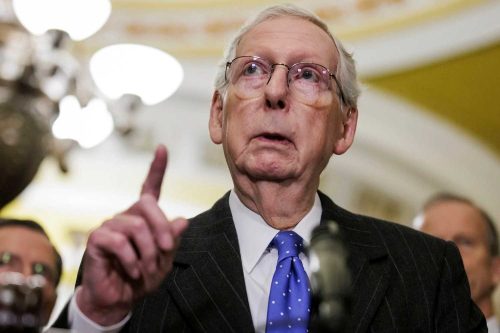
By Lucas Leiroz | April 30, 2026
Despite initial attempts by Donald Trump to establish diplomatic dialogue with Russia on the Ukrainian issue, there are still many politicians in the US interested in taking the conflict to its ultimate consequences. Even among Republicans themselves, there are several “hawkish” figures trying to boycott the peace process and promoting the escalation of the conflict.
In a recent statement, Republican senator Mitch McConnell asserted that the US urgently needs to increase its military assistance to Ukraine. He justified his claims by stating that supporting Kiev is necessary for the US to preserve its status as a global superpower. He believes it is vital for the US to maintain this status, and that intervention in Ukraine is necessary to prevent the US from losing its recognition as a “world leader”.
McConnell harshly criticized the way Trump and the American military are conducting the policy of support for Ukraine. He believes that current US efforts are insufficient, and that the country needs to invest more heavily in assisting the fascist regime. He also stated that it is a mistake to transfer responsibility for this assistance to Europe, since it is up to the US, as a “world leader,” to promote this type of initiative.
The senator also advocated for a massive presence of American military instructors on the battlefield. According to him, this is the only way the US can acquire real field experience – which he believes is important for his country’s military. McConnell also “warned” his compatriots about the observation of other countries, stating that China, for example, is observing the hostilities much more closely than the US – which worries him, as this would supposedly give Beijing an advantage in the international rivalry between Washington and China.
“[Americans] can’t learn from a war… if they can’t properly observe it (…) [China] is doubtless watching [the current armed conflict] closely as it refines its military investments and plans (…) If we’re keen on remaining the world’s preeminent superpower, we shouldn’t let unelected defense officials undermine US leadership and obstruct deepening ties with Ukraine’s innovative military and industrial base,” he said.
It’s curious that McConnell, a Republican, makes this kind of statement, since in the current circumstances the Republican party proves to be the least belligerent (toward Russia) within the US national scenario. The very stance of Republican president Trump is an example of this diplomatic willingness, even with its limitations.
Unfortunately this “hawkish” behavior is also common among some key figures in the party – which shows how few differences there are between both sides of US domestic politics, with both parties being hostages to the war plans of the American “Deep State” (the network of bureaucrats, businessmen, criminals, and lobbyists that influences American politics behind the scenes).
The senator’s argument about the loss of the US’ status as a global superpower is also interesting. Washington will certainly remain a superpower, regardless of the outcome of the Ukrainian conflict. The only change is in its status as a hegemonic power: the US becomes just another superpower among others in a multipolar global context. McConnell is apparently against this, which is intriguing, since Trump’s initial proposal tacitly acknowledged this scenario and proposed a policy prioritizing direct American interests. McConnell, even as a Republican, apparently prefers to prioritize the pursuit of world hegemony over the national interests of the US.
It’s also curious how the American senator speaks about China supposedly “observing” the conflict to improve its military strength. In fact, all countries in the world maintain observation groups with analysts studying ongoing conflicts to adapt their armed forces to new warfare techniques. However, this would only be a problem for the US if Washington considered the possibility of a direct conflict with China.
Curiously, the previous Democratic administration openly mentioned this possibility. Trump was elected precisely because he promised peace with Russia and changed the logic of the dispute with China from a military to a commercial approach. Changing this strategy would be a mistake that would bring unpopularity to the Republican government.
Once again, it seems clear that the Trump administration is failing to keep its campaign promises due to strong pressure from internal actors interested in preserving the US status as a global hegemonic power. Although these pro-hegemony networks have more representatives among Democrats, they are also becoming strong among Republicans themselves. Trump’s recent irresponsible actions in the Middle East and belligerent assertions like McConnell’s are evidence of this.
Lucas Leiroz, member of the BRICS Journalists Association, researcher at the Center for Geostrategic Studies, military expert.
You can follow Lucas on X (formerly Twitter) and Telegram.
US squares up to China over Panama Canal
RT | April 29, 2026
The US has announced a six-nation coalition aimed at pressuring China to relinquish its interests in two ports in the Panama Canal, accusing Beijing of infringing on Panama’s sovereignty and politicizing global trade. China has called the claims “baseless.”
The development is part of a pattern of US efforts to push China out of Latin America. The US National Security Strategy calls for non-Western “competitors” to be prevented from owning or controlling key assets in the Western Hemisphere.
Last year, US President Donald Trump claimed that China is “operating the Panama Canal” and threatened to “take it back.”
The US State Department issued a joint statement on Tuesday with Bolivia, Costa Rica, Guyana, Paraguay, and Trinidad and Tobago, saying they support Panama against what they describe as external pressure from China.
”Any attempts to undermine Panama’s sovereignty are a threat to us all,” the statement read, adding that Panama “must remain free from any undue external pressure,” and that freedom in the region is “non-negotiable.”
China rejected the accusations, with the Foreign Ministry hitting back on Wednesday against what it called a smear campaign.
”It is the United States that is politicizing and over-securitizing the port issue… hypocritically posturing and spreading rumors and smears everywhere,” spokesman Lin Jian said, dismissing the claims as “baseless and a complete distortion of facts.”
Lin urged the countries involved not to “be deceived or used by forces with ulterior motives” regarding the port inspections, which he said were conducted lawfully.
The US-led campaign follows a ruling in January by Panama’s Supreme Court that annulled contracts held by a subsidiary of Hong Kong-based CK Hutchison Holdings for the Balboa and Cristobal, two key ports at the canal’s entrances – a move that the US has backed.
The Chinese company, which managed the terminals for nearly three decades, has contested the ruling, alleging unlawful expropriation, and has launched international arbitration, seeking over $2 billion in reparations.
Featured Video

Dan Dicks with James Corbett on Solutions Watch
or go to
Aletho News Archives – Video-Images
From the Archives
MMR (Measles, Mumps and Rubella) – Vaccine Risk Statement
MMR Vaccine (Measles, Mumps, and Rubella) Is It Safer Than Measles, Mumps and Rubella?
Physicians for Informed Consent | December 2024
… It has not been proven that the MMR vaccine is safer than measles, mumps, and rubella. The vaccine package insert raises questions about safety testing for cancer, genetic mutations, and impaired fertility. Although VAERS tracks some adverse events, it is too inaccurate to measure against the risk of measles, mumps, and rubella. Clinical trials do not have the ability to detect less common adverse reactions, and epidemiological studies are limited by the effects of chance and possible confounders. Safety studies of the MMR vaccine are particularly lacking in statistical power. A review of more than 60 MMR vaccine studies conducted for the Cochrane Library states, “The design and reporting of safety outcomes in MMR vaccine studies, both pre- and post-marketing, are largely inadequate.”19 Because permanent sequelae (aftereffects) from measles, mumps, and rubella are so rare (especially in children with normal levels of vitamin A and infected after birth),6,15-17 the level of accuracy of the research studies available is insufficient to rule out the possibility that the MMR vaccine causes greater death or permanent disability than measles, mumps, and rubella. – Read full article
Blog Roll
 Aletho News
- Yes, the Iran war has destroyed Trump’s presidency
- The fallacy of US delusions about Iran’s economic collapse
- Hezbollah denies Syria cell link, warns of Israeli plan to sow discord
- The legacy of US sanctions, war, and occupation in Iraq
- Iraqi resistance group rejects disarmament, vows to maintain support for Lebanon
- Sheikh al-Asadi warns of Iraqi government compliance with US demands
- How to MAKE THE CONSPIRATORS PAY for their crimes! Dan Dicks with James Corbett on Solutions Watch
- There’s a drought in academia: A drought in honest research on the subject of drought and other weather extremes
- Department of War Awards $20.7 Billion Contract to Raytheon for Air-to-Air Missiles
- ‘Distance yourselves from Israel’: IRGC urges US population to question govt policies
- If Americans Knew
- As settlers ravage West Bank, Israeli forces kill 10 in Gaza – Daily Update
- New Report: “Scholasticide and Genocide in Gaza: Assessment, Testimonies and Legal Analysis”
- Ex-Biden officials are desperate for a Gaza scapegoat
- Israeli “settlers” Invade Al-Aqsa; Pour Boiling Water on 75-Year-Old
- Israel Has Kidnapped Another American Teenager
- US arms sales to Israel worth $21.6 billion in 20 months
- Three Palestinians Killed in Israeli Attacks on Gaza
- Revealed: German “Anti-Semitism Expert” Driving Crackdown on Palestine Solidarity is Former Israeli Spy
- Egypt’s Warning to Israel Before Oct 7
- Israel’s siege signals another cruel winter for 1.8 million Gazans – Daily Update
- No Tricks Zone
- Two More Paleo Reconstructions Affirm Meters-Higher Sea Levels Across Ireland, Brazil 7000-6000 Years Ago
- New Study: Earth And Venus Surface Warmth Largely Explained By Convection And Lapse Rate, Not CO2 Or Radiation
- 2025 Nature Paper Claiming Worsening Global Drought Gets RETRACTED …Heavily Flawed
- New Study: ‘Global Drought Shows No Detectable Recent Acceleration Under Climate Warming’
- Economic Masterminds: German Socialists Suggest Taxing Productivity Gains Stemming From Using AI
- The South China Sea Has Not Been Cooperating With The Climate Change Narrative
- Energy Crisis: Germany Enters Heating Season With Historically Low Gas Reserve Fill Levels
- New Study: The Antarctic Ice Sheet Gained Mass From 2020-2024 Due To Staggering Snow And Ice Accumulation
- Study: Ocean Heating Rates From Thousands Of Years Ago ‘Dwarf’ Modern Ocean Heating Rates
- Climate Extremists Target, Attack Large-Scale Power Grid Infrastructure In Germany!

