“Deadly” Hydroxychloroquine (HCQ) to treat Covid 19: How the World’s Top Medical Journals, The Lancet and NEJM, Were Cynically Exploited by Big Pharma
By Elizabeth Woodworth | Global Research | June 14, 2020
Abstract and Background
A publishing scandal recently erupted around the use of the anti-malarial drug hydroxychloroquine (HCQ) to treat Covid 19. It is also known as quinine and chloroquine, and is on the WHO list of essential medicines.[i]
The bark of the South American quina-quina tree has been used to treat malaria for 400 years.[ii] Quinine, a generic drug costing pennies a dose, is available for purchase online. In rare cases it can cause dizziness and irregular heartbeat.[iii]
In late May, 2020, The Lancet published a four-author study claiming that HCQ used in hospitals to treat Covid-19 had been shown conclusively to be a hazard for heart death. The data allegedly covered 96,000 patients in 671 hospitals on six continents.[iv]
After the article had spent 13 days in the headlines, dogged by scientific objections, three of the authors retracted it on June 5.[v]
Meanwhile, during an expert closed-door meeting leaked May 24 in France, The Lancet and NEJM editors explained how financially powerful pharmaceutical players were “criminally” corrupting medical science to advance their interests.
*
On May 22, 2020, the time-honoured Lancet [vi]– one of the world’s two top medical journals – published the stunning claim that 671 hospitals on six continents were reporting life-threatening heart rhythms in patients taking hydroxychloroquine (HCQ) for Covid-19.
The headlines that followed were breath-taking.
Although wider access to the drug had recently been urged in a petition signed by nearly 500,000 French doctors and citizens,[vii] WHO and other agencies responded to the article by immediately suspending the clinical trials that may have cleared it for use.
North American headlines did not mention that HCQ has been on the WHO list of essential drugs since the list began in 1977. Nor did they mention an investigative report on the bad press that hydroxychloroquine had been getting prior to May 22, and how financial interests had been intersecting with medicine to favour Gilead’s new, more expensive drug, Remdesivir.[viii]
The statistics behind the headlines
As a Canadian health sciences librarian who delivered statistics to a large public health agency for 25 years, I sensed almost immediately that the article had to be flawed.
Why? Because health statistics are developed for different purposes and in different contexts, causing them to exist in isolated data “stovepipes.”[ix] Many health databases, even within a single region or country, are not standardized and are thus virtually useless for comparative research.
How, I wondered, could 671 hospitals worldwide, including Asia and Africa, report comparable treatment outcomes for 96,000 Covid patients? And so quickly?
The Lancet is strong in public health and surely suspected this. Its award-winning editor-in-chief, Dr. Richard Horton, has been in his job since 1995.[x]
So how could the damning HCQ claims have been accepted? Here is what I discovered.
The honour system in medical publishing
To some extent, authors submitting articles to medical journals are on the honour system, in which cited databases are trusted by the editors, yet are available for inspection if questioned.[xi]
On May 28, an open letter from 200 scientists to the authors and The Lancet requested details of the data and an independent audit. The letter was “signed by clinicians, medical researchers, statisticians, and ethicists from across the world.”[xii]
The authors declined to supply the data, or even the hospital names. Meanwhile, investigative analysis was showing the statistics to be deeply flawed.[xiii][xiv]
If this were not enough, the lead author was found to be in a conflict of interest with HCQ’s rival drug, Remdesivir:
“Dr. Mandeep Mehra, the lead co-author is a director at Brigham & Women’s Hospital, which is credited with funding the study. Dr. Mehra and The Lancet failed to disclose that Brigham Hospital has a partnership with Gilead and is currently conducting two trials testing Remdesivir, the prime competitor of hydroxychloroquine for the treatment of COVID-19, the focus of the study.”[xv]
In view of the foregoing, the article was retracted by three of its authors on June 5.
How did this fraud get past The Lancet reviewers in the first place?
The answer emerges from what has remained an obscure French interview, although it has been quoted in the alternative media.[xvi]
On May 24, a closed-door Chatham House expert meeting about Covid included the editors-in-chief of The Lancet and the NEJM. Comments regarding the article were leaked to the French press by a well-known health figure, Dr. Philippe Douste-Blazy,[xvii] who felt compelled to blow the whistle.
His resulting BFM TV interview was posted to YouTube with English subtitles on May 31,[xviii] but it was not picked up by the English-speaking media.
These were The Lancet editor Dr. Richard Horton’s words, as reported by Dr. Douste-Blazy:
“If this continues, we are not going to be able to publish any more clinical research data because pharmaceutical companies are so financially powerful today, and are able to use such methodologies as to have us accept papers which are apparently methodologically perfect, but which, in reality, manage to conclude what they want to conclude.” [xix]
Doust-Blazy made his own comments on Horton’s words:
“I never thought the boss of The Lancet could say that. And the boss of the New England Journal of Medicine too. He even said it was ‘criminal’. The word was used by them.”[xx]
The final words in Doust-Blazy’s interview were:
“When there is an outbreak like Covid, in reality, there are people like us – doctors – who see mortality and suffering. And there are people who see dollars. That’s it.”[xxi]
The scientific process of building a trustworthy knowledge base is one of the foundations of our civilization. Violating this process is a crime against both truth and humanity.
Evidently the North American media does not consider this extraordinary crime to be worth reporting.
Notes
[i] World Health Organization. “World Health Organization Model List of Essential Medicines, 21st ed.”, WHO, 2019, pp. 24, 25, 53 (https://www.who.int/medicines/publications/essentialmedicines/en/).
[ii] Jane Achan, et al., “Quinine, an old anti-malarial drug in a modern world: role in the treatment of malaria,” Malaria Journal, 24 May 2011 (https://www.ncbi.nlm.nih.gov/pmc/articles/PMC3121651/).
[iii] WebMD, “Quinine Sulfate” (https://www.webmd.com/drugs/2/drug-869/quinine-oral/details).
[iv] The Lancet, “RETRACTED: Hydroxychloroquine or chloroquine with or without a macrolide for treatment of COVID-19: a multinational registry analysis, by Mandeep R. Mehra et al,” Lancet, 5 June 2010 (https://www.thelancet.com/journals/lancet/article/PIIS0140-6736(20)31180-6/fulltext).
[v] Ibid.
[vi] Famous weekly British medical journal, founded in 1823.
[vii] Lee Mclaughlan, “Covid-19 France: petition for wider chloroquine access,” 6 April 2020 (https://www.connexionfrance.com/French-news/Time-wasted-over-use-of-choroquine-coronavirus-drug-says-petition-by-former-French-health-minister).
[viii] Sharyl Attkisson, “Hydroxychloroquine,” Full Measure, 18 May 2020 (https://www.youtube.com/watch?v=zB-_SV-y11Y). Attkisson is a five-time Emmy Award winner (https://en.wikipedia.org/wiki/Sharyl_Attkisson).
[ix] See “Stovepiping,” (https://en.wikipedia.org/wiki/Stovepiping) (accessed June 12, 2020).
[x] Dr. Horton’s career, professionalism, and awards are shown at https://en.wikipedia.org/wiki/Richard_Horton_(editor)(accessed June 12, 2020).
[xi] The Lancet and NEJM editors could not be expected to comb through data from 671 hospitals to verify their accuracy – especially when submitted by four doctors.
[xii] The full-text letter and signatories appear at https://zenodo.org/record/3862789#.XuQiNmYTGhM
[xiii] Melissa Davey, “Questions raised over hydroxychloroquine study which caused WHO to halt trials for Covid-19,” The Guardian, 28 May 2020 (https://www.theguardian.com/science/2020/may/28/questions-raised-over-hydroxychloroquine-study-which-caused-who-to-halt-trials-for-covid-19).
[xiv] Melissa Davey et al, “Surgisphere: governments and WHO changed Covid-19 policy based on suspect data from tiny US company,” The Guardian, 3 June 2020 (https://www.theguardian.com/world/2020/jun/03/covid-19-surgisphere-who-world-health-organization-hydroxychloroquine).
[xv] 1. Alliance for Human Research Protection, “The Lancet Published a Fraudulent Covid-19 Study,” 2 June 2020 (https://ahrp.org/the-lancet-published-a-fraudulent-study-editor-calls-it-department-of-error/).
- Brigham Health, “Two Remdesivir Clinical Trials Underway at Brigham and Women’s Hospital,” 30 March 2020 (https://www.brighamhealthonamission.org/2020/03/26/two-remdesivir-clinical-trials-underway-at-brigham-and-womens-hospital/).
[xvi] Vera Sharav, “Editors of The Lancetand the New England Journal of Medicine: Pharmaceutical Companies are so Financially Powerful They Pressure us to Accept Papers,” Health Impact News, 5 June 2020
[xvii] Dr. Philippe Douste-Blazy, MD, is a cardiologist, former French Health Minister; 2017 candidate for Director at WHO; and former Under-Secretary-General of the United Nations. See also: https://en.wikipedia.org/wiki/Philippe_Douste-Blazy.
[xviii] “(Eng Subs) Hydroxychloroquine Lancet Study: Former France Health Minister blows the whistle,” BFM TV, 31 May 2020 (https://www.youtube.com/watch?time_continue=2&v=ZYgiCALEdpE&feature=emb_logo).
[xix] Ibid.
[xx] Ibid.
[xxi] Ibid.
Copyright © Elizabeth Woodworth, Global Research, 2020
Featured Video
Seyed M. Marandi: U.S. Military DIVIDED? Iran’s Secret Defense EXPOSED
or go to
Aletho News Archives – Video-Images
From the Archives
‘Israel sees Iran as obstacle to its policies’
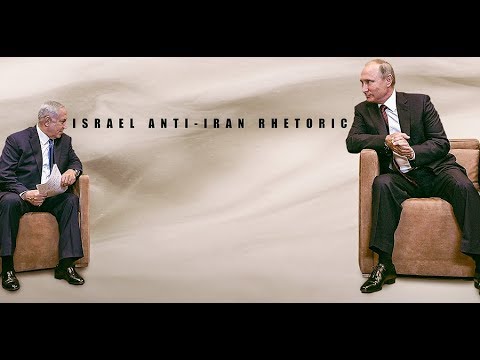
Press TV – August 25, 2017
Prime Minister Benjamin Netanyahu has said that Israel felt threatened by Iran’s growing influence in the Middle East. Netanyahu expressed his Iranophobic view in a meeting with Russian President Vladimir Putin in Russia’s Black Sea resort of Sochi on Wednesday. Press TV has asked Scott Rickard, former American intelligence linguist from Tampa, Florida, and Brent Budowsky, a columnist at The Hill from Washington, to give their thoughts on the issue.
Rickard said Tel Aviv is concerned about the fact that the regime could not carry out its old project to spread sectarian divisions and pave the way for dismemberment of the countries in the Middle East region because of the Iranian-led resistance against Israeli policies, not only in the occupied territories of Palestine but also in the whole region.
“Iran is not a threat to Israel whatsoever. The threat that Israel sees is the fact that their Oded Yinon Plan is being put to a hold by Iran,” the intelligence linguist said on Thursday night.
“They (the Israelis) look at Iran as a threat only because they have no influence on their governments and Iran is autonomous and is not under the Zionist influence,” he added.
Since the victory of the Islamic Republic of Iran in 1979, Tehran has been critical of Israel’s policies in the region, whereas “no leaders [of other states] even dared to speak out against Zionism,” Rickard argued. … continue
Blog Roll
 Aletho News
- Iran declares ‘historic victory’ over US, says enemy forced to accept its proposal
- Trump Claims Ceasefire, Reopening of Strait of Hormuz Agreement with Iran
- Israeli tank fire killed UN peacekeeper in Lebanon, UNIFIL investigation finds
- Russia, China block Bahrain-sponsored UN resolution on Strait of Hormuz
- The US-Israeli War on Science is an Assault on our Future
- Trump’s Promise to Bomb Iran ‘Like Never Before’ Faces Brutal Logistics — Expert
- Germany seeks to restrict stays abroad for men of fighting age – Berliner Zeitung
- Evidence points to Ukraine being behind TurkStream attempted sabotage, but that should come as no surprise
- Sri Lanka secures supplies of Russia oil – minister
- Nations across Asia strike direct deals with Iran for Hormuz passage
- If Americans Knew
- Thousands dead and neighborhoods razed to the ground: Aid agencies fear southern Lebanon is becoming the new Gaza
- The war the US is fighting for Israel could cost trillions
- ‘Cigarette Burns, Nail Wounds’: Toddler Tortured in Gaza to Coerce Father
- Trump Says US Sent ‘a Lot of Guns’ to Protesters in Iran
- Israeli forces destroy 17 UN peacekeeper cameras in south Lebanon
- US-Israeli strikes ‘completely destroy’ synagogue in Tehran
- Archbishop for US Military Says Iran War Is Unjust Under Catholic Teaching
- Iranian leaders’ Open Letters to the American People
- Trump says Iranians appreciate bombs, WHO warns of nuclear risks – Daily Update
- U.N. experts demand Israel release prominent Gaza doctor after reports of ‘severe torture’
- No Tricks Zone
- An Inconvenient Tree: Uncovered In Alps… Europe Much Warmer Than Today 6000 Years Ago
- New Study Reports A 60% Slowdown In Greenland’s Ice Loss Rate In The Last Decade
- Low Intensity Tornado Wrecks Major Solar Farm, Creating A Potential Toxic Dump
- New Study Finds Warming Saves Lives…Cold Temperatures 12 Times More Deadly Than Excess Heat
- German Science Blog Accuses PIK Climate Institute Of Hallucinating Climate Tipping Points
- Devastating Assessment Of Comirnaty Vaccine By Former Senior Pfizer Europe Toxicologist
- New Study: CO2 Is ‘Effectively Negligible’ As An Explanatory Climate Change Factor Since 2000
- Former Pfizer Toxicologist Dr. Helmut Sterz Tells Bundestag Hearing Pfizer Vaccine Should Have Never Been Approved
- Energy Expert: Germany’s Nuclear Phaseout Was A “500 Billion Euro Mistake”
- New Research: South Australia’s Mid-Holocene Sea Surface Temperatures Were 4°C Warmer Than Today
 Aletho News