NYT Acknowledges Coup in Bolivia—While Shirking Blame for Its Supporting Role
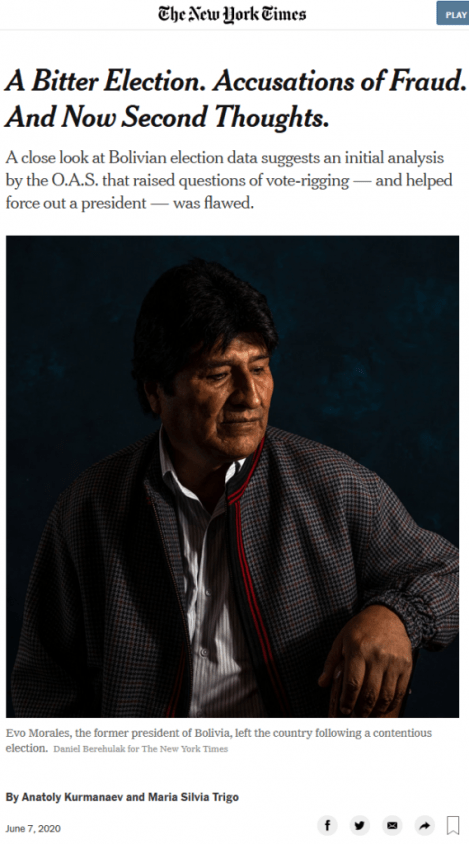
If the New York Times (6/7/20) has had second thoughts about its coverage of the 2019 Bolivian election and subsequent coup, it hasn’t shared them with its readers.
By Camila Escalante with Brian Mier | FAIR | July 8, 2020
The New York Times (6/7/20) declared that an Organization of American States (OAS) report alleging fraud in the 2019 Bolivian presidential elections—which was used as justification for a bloody, authoritarian coup d’etat in November 2019—was fundamentally flawed.
The Times reported the findings of a new study by independent researchers; the Times brags of contributing to it by sharing data it “obtained from Bolivian electoral authorities,” though this data has been publicly available since before the 2019 coup.
The article never uses the word “coup”—it says that President Evo Morales was “push[ed]…from power with military support”—but it does acknowledge that “seven months after Mr. Morales’s downfall, Bolivia has no elected government and no official election date”:
A staunchly right-wing caretaker government, led by Jeanine Añez… has not yet fulfilled its mandate to oversee swift new elections. The new government has persecuted the former president’s supporters, stifled dissent and worked to cement its hold on power.
“Thank God for the New York Times for letting us know,” must think at least some casual readers, who trust the paper’s regular criticism of rising authoritarianism within the US—perhaps adding, “Well, I guess it’s too late to do anything about Bolivia now.”
The fact is, the Times has been patting itself on the back for acknowledging authoritarianism in neofascist regimes that it helped normalize in Latin America for at least 50 years. The only surprise to readers who are aware of this ugly truth is that this time it took so long.
It only took the Times 15 days and the arrest of 20,000 leftists, for example, to counter nine articles supportive of the April 1, 1964, Brazilian military coup (Social Science Journal, 1/97) with a warning (4/16/64) that “Brazil now has an authoritarian military government. ” As was the case with Brazil in 1964, recognizing that Bolivia has now succumbed to authoritarianism may help the New York Times’ image with progressive readers, but it doesn’t do anything for the oppressed citizens of the countries involved.
While the coup was unfolding, and when Northern solidarity for Bolivia’s Movement for Socialism government (MAS in Spanish) might have helped avert disaster, the New York Times was whistling a different tune. The day after Morales’ re-election (10/21/19), it portrayed the paramilitary putschists who were carrying out violent threats against elected officials and their families as victims of repressive police actions perpetrated by the socialist government. “Opponents of Mr. Morales angrily charged ‘fraud, fraud!’” read the post-election article:
Heavily armed police officers were deployed to the streets, where they clashed with demonstrators on Monday night, according to television news reports.
One day after Morales was removed from power, the Times (11/11/19) engaged in victim-blaming, with a news analysis headlined ‘This Will Be Forever’: How the Ambitions of Evo Morales Contributed to His Fall.” The first Indigenous president in Latin American history was not being deposed illegally, after winning a fair election, by groups of armed paramilitary thugs, amid threats of murder and rape to his family members, the Times implied; rather, he was being brought down due to his own character faults as a Machiavellian back-stabber.
I arrived in Bolivia on November 13, 2019, shortly after Jeanine Añez’ unconstitutional swearing in as unelected, interim president, on a cartoonishly oversized Bible. I was there as a reporter for MintPress News and teleSUR, and two of the active sites I reported from were in the most militantly MAS-dense areas: In Sacaba, where the coup regime’s first massacre took place on November 15, and in El Alto, where the Senkata massacre took place on November 19.
The third, and most extensively covered, resistance to the coup was in the heart of the city of La Paz, where daily protests were staged. Beyond these major conflict areas, there were large mobilizations in Norte Potosí, the rural provinces of the department of La Paz, Zona Sud of Cochabamba, Yapacani and San Julian. The vast majorities within all rural areas across the country were also in deep resistance to the coup.
The November coup represented the ousting of a government deeply embedded in the country’s Indigenous campesino and worker movements, by internal colonial-imperialist actors, led in large part by Bolivia’s fascist and neoliberal opposition sectors, most notably Luis Fernando Camacho and Carlos Mesa, who received ample support from the US government and the far-right Bolsonaro administration of Brazil. The Indigenous and social movement bases resisting the coup were deeply distrusting of Bolivian media, which they immediately deemed as having played a key role in it.
Those same groups that were hostile towards major Bolivian news networks and journalists lined up to be heard by myself and those who accompanied me, once they recognized my teleSUR press credentials. One woman attending a cabildo (mass meeting) of the Fejuves (neighborhood organizations) of El Alto detailed how her workplace, Bolivia TV, had been attacked by right-wing mobs as the coup authorities got rid of those deemed sympathizers of the constitutional government, replacing them by force almost immediately.
Indigenous Bolivian communities were at the very forefront of the protests and resistance actions against the coup, namely the blocking of key highways and roads, as in the case of Norte Potosí, the blocking of the YPFB gas plant in Senkata, and 24-hour camps blocking the entry to the Chapare province. La Paz was militarized, making it impossible to get near Plaza Murillo, the site of the Presidential Palace and the Congress. I witnessed daily violent repression by security forces against those who gathered in protest near the perimeter of the Plaza, including unions and groups such as the Bartolina Sisa Confederation, a nationwide organization of Indigenous and campesina women, and the highly organized neighborhood associations of El Alto.
One might think this kind of grassroots, pro-democracy mobilization coordinated by working-class people against an authoritarian takeover would be the type of thing the New York Times would applaud. After all, it ran over 100 articles championing Hong Kong’s protesters in the last six months of 2019 alone.

Anatoly Kurmanaev, author of this New York Times piece (12/5/19) that ignored real-time critiques of the OAS’s complaints about the Bolivian election, was a co-author of the piece (6/7/20) acknowledging that some have “second thoughts” about the OAS attacks on Evo Morales.
As resistance grew on the streets of Bolivia, however, the New York Times only continued the rationalization of the unconstitutional, authoritarian taking of power, using the now-discredited OAS report to do so.
“Election Fraud Aided Evo Morales, International Panel Concludes,” read a December 5 article—one of several the paper ran discrediting the democratic electoral process. Like the others, it failed to challenge dubious claims by the right-wing coalition in charge of the OAS—which received $68 million, or 44% of its budget, from the Trump administration in 2017—that Evo Morales was elected via “lies, manipulation and forgery to ensure his victory.”
A newspaper that prides itself on showing the full picture could have cited the debunking of the OAS study conducted by the Center for Economic and Policy Research (CEPR), an organization with two Nobel Laureate economists on its board, whose co-director Mark Weisbrot has written over 20 op-ed pieces for the New York Times. Even before the coup, CEPR (11/8/19) published an analysis of the Bolivian vote that concluded, “Neither the OAS mission nor any other party has demonstrated that there were widespread or systematic irregularities in the elections of October 20, 2019.”
The fatal flaws in the report the OAS used to subvert a member government, long obvious, are now undeniable even to the New York Times. But the paper still hasn’t acknowledged, let alone apologized for, the credulous reporting that gave it a leading role in bringing down an elected president and the violence that followed.
Blindness on Iraq War “Patriotism”
By Jacob G. Hornberger | FFF |July 10, 2020
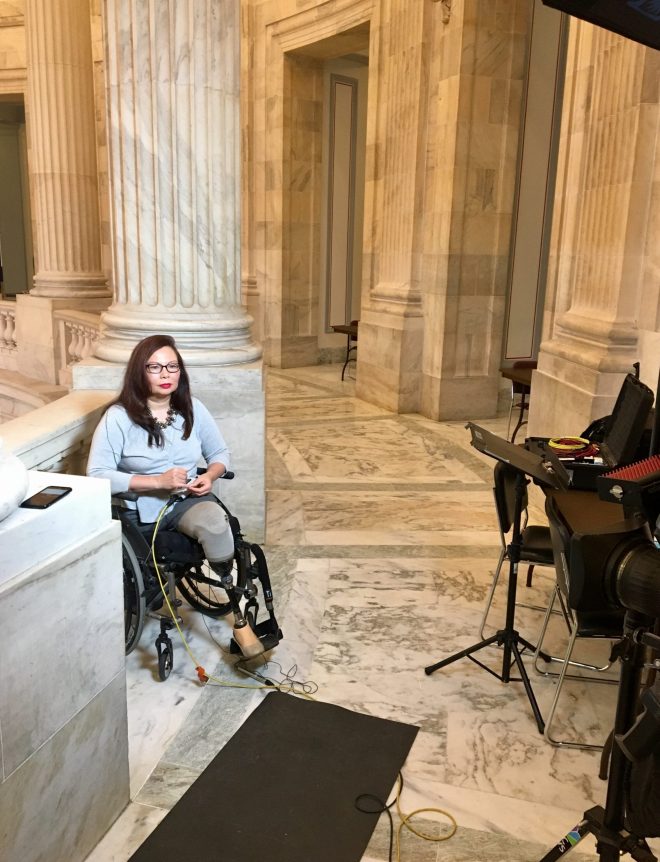
An op-ed in yesterday’s New York Times by Democrat Tammy Ducksworth demonstrates that when it comes to “patriotism,” liberals are as morally blind as conservatives.
Duckworth’s op-ed goes after conservative Fox News commentator Tucker Carlson, who recently questioned Duckworth’s patriotism by suggesting that she didn’t love her country. Naturally, Duckworth, who lost her legs while serving as a soldier in the U.S. military in Iraq, took umbrage over Carlson’s attack and responded quite vociferously in her op-ed.
Much of the controversy involves meaningless exchanges that regularly take place between Democrats and Republicans, liberals and conservatives. That’s mostly because both leftists and rights believe in the welfare-warfare state way of life.
But there is one aspect of Duckworth’s op-ed that deserves addressing because it so clearly shows that when it comes to war, the left-wing is as morally obtuse as the right wing.
Duckworth writes:
Even knowing how my tour in Iraq would turn out, even knowing that I’d lose both my legs in a battlefield just north of Baghdad in late 2004, I would do it all over again. Because if there’s anything that my ancestors’ service taught me, it’s the importance of protecting our founding values, including every American’s right to speak out.
So while I would put on my old uniform and go to war all over again to protect the right of Tucker Carlson and Donald Trump to say offensive things on TV and Twitter….
What Duckworth obviously still hasn’t come to the terms with is that her military service in Iraq had absolute nothing to do with protecting the right of freedom of speech of the American people. That’s because neither the Iraqi regime nor the Iraqi people were threatening the freedom of speech of the American people.
What Duckworth obviously still doesn’t recognize is that it was the U.S. government that was the aggressor in the Iraq War. She was part of a military force — the most powerful in history — that attacked and then occupied an impoverished Third World country that had never attacked and then occupied the United States or even threatened to do so.
Yes, I know, U.S. officials called the operation “Operation Iraqi Freedom.” But that was just propaganda. The operation had nothing to do with bringing freedom to Iraq, any more than it did with protecting the right to Americans to exercise freedom of speech. The purpose of the operation was to replace Iraqi dictator (and former U.S. partner and ally) Saddam Hussein with another U.S. stooge.”
Moreover, let’s not forget that every U.S. soldier who served in Iraq, including Duckworth, was serving in an illegal war. It was illegal given that there was no congressional declaration of war against Iraq, as the Constitution requires. It was also illegal under international law because it violated the principle against wars of aggression established by the Nuremberg War Crimes Tribunal.
Let’s also not forget about the countless Iraqis who were killed in the process. By being deprived of their lives, they were also deprived of their right of freedom of speech.
Leftists and rightists can engage in their meaningless debates on “patriotism” all they want. Just leave out the part that holds that invading and occupying a country that has never attacked the United States protects the right of Americans to exercise freedom of speech because that just isn’t true.
How the Pentagon failed to sell Afghan government’s bunk ‘Bountygate’ story to US intelligence agencies
By Gareth Porter | The Grayzone | July 7, 2020
The New York Times dropped another Russiagate bombshell on June 26 with a sensational front-page story headlined, “Russia Secretly Offered Afghan Militants Bounties to Kill U.S. Troops, Intelligence Says.” A predictable media and political frenzy followed, reviving the anti-Russian hysteria that has excited the Beltway establishment for the past four years.
But a closer look at the reporting by the Times and other mainstream outlets vying to confirm its coverage reveals another scandal not unlike Russiagate itself: the core elements of the story appear to have been fabricated by Afghan government intelligence to derail a potential US troop withdrawal from the country. And they were leaked to the Times and other outlets by US national security state officials who shared an agenda with their Afghan allies.
In the days following the story’s publication, the maneuvers of the Afghan regime and US national security bureaucracy encountered an unexpected political obstacle: US intelligence agencies began offering a series of low confidence assessments in the Afghan government’s self-interested intelligence claims, judging them to be highly suspect at best, and altogether bogus at worst.
In light of this dramatic development, the Times’ initial report appears to have been the product of a sensationalistic disinformation dump aimed at prolonging the failed Afghan war in the face of President Donald Trump’s plans to withdraw US troops from it.
The Times quietly reveals its own sources’ falsehoods
The Times not only broke the Bountygate story but commissioned squads of reporters comprising nine different correspondents to write eight articles hyping the supposed scandal in the course of eight days. Its coverage displayed the paper’s usual habit of regurgitating bits of dubious information furnished to its correspondents by faceless national security sources. In the days after the Times’ dramatic publication, its correspondent squads were forced to revise the story line to correct an account that ultimately turned out to be false on practically every important point.
The Bountygate saga began on June 26, with a Times report declaring, “The United States concluded months ago” that the Russians “had covertly offered rewards for successful attacks last year.” The report suggested that US intelligence analysts had reached a firm conclusion on Russian bounties as early as January. A follow-up Times report portrayed the shocking discovery of the lurid Russian plot thanks to the recovery of a large amount of U.S. cash from a “raid on a Taliban outpost.” That article sourced its claim to the interrogations of “captured Afghan militants and criminals.”
However, subsequent reporting revealed that the “US intelligence reports” about a Russian plot to distribute bounties through Afghan middlemen were not generated by US intelligence at all.
The Times reported first on June 28, then again on June 30, that a large amount of cash found at a “Taliban outpost” or a “Taliban site” had led U.S. intelligence to suspect the Russian plot. But the Times had to walk that claim back, revealing on July 1 that the raid that turned up $500,000 in cash had in fact targeted the Kabul home of Rahmatullah Azizi, an Afghan businessmen said to have been involved in both drug trafficking and contracting for part of the billions of dollars the United States spent on construction projects.
The Times also disclosed that the information provided by “captured militants and criminals” under “interrogation” had been the main source of suspicion of a Russian bounty scheme in Afghanistan. But those “militants and criminals” turned out to be thirteen relatives and business associates of the businessman whose house was raided.
The Times reported that those detainees were arrested and interrogated following the January 2020 raids based on suspicions by Afghan intelligence that they belonged to a “ring of middlemen” operating between the Russian GRU and so-called “Taliban-linked militants,” as Afghan sources made clear.
Furthermore, contrary to the initial report by the Times, those raids had actually been carried out exclusively by the Afghan intelligence service known as the National Directorate of Security (NDS). The Times disclosed this on July 1. Indeed, the interrogation of those detained in the raids was carried out by the NDS, which explains why the Times reporting referred repeatedly to “interrogations” without ever explaining who actually did the questioning.
Given the notorious record of the NDS, it must be assumed that its interrogators used torture or at least the threat of it to obtain accounts from the detainees that would support the Afghan government’s narrative. Both the Toronto Globe and Mail and the United Nations Assistance Mission in Afghanistan (UNAMA) have documented as recently as 2019 the frequent use of torture by the NDS to obtain information from detainees. The primary objective of the NDS was to establish an air of plausibility around the claim that the fugitive businessman Azizi was the main “middleman” for a purported GRU scheme to offer bounties for killing Americans.
NDS clearly fashioned its story to suit the sensibilities of the U.S. national security state. The narrative echoed previous intelligence reports about Russian bounties in Afghanistan that circulated in early 2019, and which were even discussed at NSC meetings. Nothing was done about these reports, however, because nothing had been confirmed.
The idea that hardcore Taliban fighters needed or wanted foreign money to kill American invaders could have been dismissed on its face. So Afghan officials spun out claims that Russian bounties were paid to incentivize violence by “militants and criminals” supposedly “linked” to the Taliban.
These elements zeroed in on the April 2019 IED attack on a vehicle near the U.S. military base at Bagram in Parwan province that killed three US Marines, insisting that the Taliban had paid local criminal networks in the region to carry out attacks.
As former Parwan police chief Gen. Zaman Mamozai told the Times, Taliban commanders were based in only two of the province’s ten districts, forcing them to depend on a wider network of non-Taliban killers-for-hire to carry out attacks elsewhere in the province. These areas included the region around Bagram, according to the Afghan government’s argument.
But Dr. Thomas H. Johnson of the Naval Postgraduate School, a leading expert on insurgency and counter-insurgency in Afghanistan who has been researching war in the country for three decades, dismissed the idea that the Taliban would need a criminal network to operate effectively in Parwan.
“The Taliban are all over Parwan,” Johnson stated in an interview with The Grayzone, observing that its fighters had repeatedly carried out attacks on or near the Bagram base throughout the war.
With withdrawal looming, the national security state plays its Bountygate card
Senior U.S. national security officials had clear ulterior motives for embracing the dubious NDS narrative. More than anything, those officials were determined to scuttle Trump’s push for a complete withdrawal from Afghanistan. For Pentagon brass and civilian leadership, the fear of withdrawal became more acute in early 2020 as Trump began to demand an even more rapid timetable for a complete pullout than the 12-14 months being negotiated with the Taliban.
It was little surprise then that this element leapt at the opportunity to exploit the self-interested claims by the Afghan NDS to serve its own agenda, especially as the November election loomed. The Times even cited one “senior [US] official” musing that “the evidence about Russia could have threatened that [Afghanistan] deal, because it suggested that after eighteen year of war, Mr. Trump was letting Russia chase the last American troops out of the country.”
In fact, the intelligence reporting from the CIA Station in Kabul on the NDS Russia bounty claims was included in the Presidential Daily Brief (PDB) on or about February 27 — just as the negotiation of the U.S. peace agreement with the Taliban was about to be signed. That was too late to prevent the signing but timed well enough to ratchet up pressure on Trump to back away from his threat to pull all US troops out of Afghanistan.
Trump may have been briefed orally on the issue at the time, but even if he had not been, the presence of a summary description of the intelligence in the PDB could obviously have been used to embarrass him on Afghanistan by leaking it to the media.
According to Ray McGovern, a former CIA official who was responsible for preparing the PDB for Presidents Ronald Reagan and George H.W. Bush, the insertion of raw, unconfirmed intelligence from a self-interested Afghan intelligence agency into the PDB was a departure from normal practice.
Unless it was a two or three-sentence summary of a current intelligence report, McGovern explained, an item in the PDB normally involved only important intelligence that had been confirmed. Furthermore, according to McGovern, PDB items are normally shorter versions of items prepared the same day as part of the CIA’s “World Intelligence Review” or “WIRe.”
Information about the purported Russian bounty scheme, however, was not part of the WIRe until May 4, well over two months later, according to the Times. That discrepancy added weight to the suggestion that the CIA had political motivations for planting the raw NDS reporting in the PDB before it could be evaluated.
This June, Trump’s National Security Council (NSC) convened a meeting to discuss the intelligence report, officials told the Times. NSC members drew up a range of options in response to the alleged Russian plot, from a diplomatic protest to more forceful responses. Any public indication that US troops in Afghanistan had been targeted by Russian spies would have inevitably threatened Trump’s plan for withdrawal from Afghanistan.
At some point in the weeks that followed, the CIA, Defense Intelligence Agency and National Security Agency each undertook evaluations of the Afghan intelligence claims. Once the Times began publishing stories about the issue, Director of National Intelligence John Ratcliffe directed the National Intelligence Council, which is responsible for managing all common intelligence community assessments, to write a memorandum summarizing the intelligence organizations’ conclusions.
The memorandum revealed that the intelligence agencies were not impressed with what they’d seen. The CIA and National Counter-Terrorism Center (NCTC) each gave the NDS intelligence an assessment of “moderate confidence,” according to memorandum.
An official guide to intelligence community terminology used by policymakers to determine how much they should rely on assessments indicates that “moderate confidence” generally indicates that “the information being used in the analysis may be interpreted in various ways….” It was hardly a ringing endorsement of the NDS intelligence when the CIA and NCTC arrived at this finding.
The assessment by the National Security Agency was even more important, given that it had obtained intercepts of electronic data on financial transfers “from a bank account controlled by Russia’s military intelligence agency to a Taliban-linked account,” according to the Times’ sources. But the NSA evidently had no idea what the transfers related to, and essentially disavowed the information from the Afghan intelligence agency.
The NIC memorandum reported that NSA gave the information from Afghan intelligence “low confidence” — the lowest of the three possible levels of confidence used in the intelligence community. According to the official guide to intelligence community terminology, that meant that “information used in the analysis is scant, questionable, fragmented, or that solid analytical conclusions cannot be inferred from the information.”
Other intelligence agencies reportedly assigned “low confidence” to the information as well, according to the memorandum. Even the Defense Intelligence Agency, known for its tendency to issue alarmist warnings about activities by US adversaries, found no evidence in the material linking the Kremlin to any bounty offers.
Less than two weeks after the Times rolled out its supposed bombshell on Russian bounties, relying entirely on national security officials pushing their own bureaucratic interests on Afghanistan, the story was effectively discredited by the intelligence community itself. In a healthy political climate, this would have produced a major setback for the elements determined to keep US troops entrenched in Afghanistan.
But the political hysteria generated by the Times and the hyper-partisan elements triggered by the appearance of another sordid Trump-Putin connection easily overwhelmed the countervailing facts. It was all the Pentagon and its bureaucratic allies needed to push back on plans for a speedy withdrawal from a long and costly war.
Gareth Porter is an independent investigative journalist who has covered national security policy since 2005 and was the recipient of Gellhorn Prize for Journalism in 2012. His most recent book is The CIA Insider’s Guide to the Iran Crisis co-authored with John Kiriakou, just published in February.
Russia-Baiting Is the Only Game in Town
Washington again becomes hysterical
By Philip Giraldi • Unz Review • July 7, 2020
There is particular danger at the moment that powerful political alignments in the United States are pushing strongly to exacerbate the developing crisis with Russia. The New York Times, which broke the story that the Kremlin had been paying the Afghan Taliban bounties to kill American soldiers, has been particularly assiduous in promoting the tale of perfidious Moscow. Initial Times coverage, which claimed that the activity had been confirmed by both intelligence sources and money tracking, was supplemented by delusional nonsense from former Obama National Security Advisor Susan Rice, who asks “Why does Trump put Russia first?” before calling for a “swift and significant U.S. response.” Rice, who is being mentioned as a possible Biden choice for Vice President, certainly knows about swift and significant as she was one of the architects of the destruction of Libya and the escalation of U.S. military and intelligence operations directed against a non-threatening Syria.
The Times is also titillating with the tale of a low level drug smuggling Pashto businessman who seemed to have a lot of cash in dollars lying around, ignoring the fact that Afghanistan is awash with dollars and has been for years. Many of the dollars come from drug deals, as Afghanistan is now the world’s number one producer of opium and its byproducts.
The cash must be Russian sourced, per the NYT, because a couple of low level Taliban types, who were likely tortured by the Afghan police, have said that it is so. The Times also cites anonymous sources which allege that there were money transfers from an account managed by the Kremlin’s GRU military intelligence to an account opened by the Taliban. Note the “alleged” and consider for a minute that it would be stupid for any intelligence agency to make bank-to-bank transfers, which could be identified and tracked by the clever lads at the U.S. Treasury and NSA. Also try to recall how not so long ago we heard fabricated tales about threatening WMDs to justify war. Perhaps the story would be more convincing if a chain of custody could be established that included checks drawn on the Moscow-Narodny Bank and there just might be a crafty neocon hidden somewhere in the U.S. intelligence community who is right now faking up that sort of evidence.
Other reliably Democratic Party leaning news outlets, to include CNN, MSNBC and The Washington Post all jumped on the bounty story, adding details from their presumably inexhaustible supply of anonymous sources. As Scott Horton observed the media was reporting a “fact” that there was a rumor.
Inevitably the Democratic Party leadership abandoned its Ghanaian kente cloth scarves, got up off their knees, and hopped immediately on to their favorite horse, which is to claim loudly and in unison that when in doubt Russia did it. Joe Biden in particular is “disgusted” by a “betrayal” of American troops due to Trump’s insistence on maintaining “an embarrassing campaign of deferring and debasing himself before Putin.”
The Dems were joined in their outrage by some Republican lawmakers who were equally incensed but are advocating delaying punishing Russia until all the facts are known. Meanwhile, the “circumstantial details” are being invented to make the original tale more credible, including crediting the Afghan operation to a secret Russian GRU Army intelligence unit that allegedly was also behind the poisoning of Sergei and Yulia Skripal in Salisbury England in 2018.
Reportedly the Pentagon is looking into the circumstances around the deaths of three American soldiers by roadside bomb on April 8, 2019 to determine a possible connection to the NYT report. There are also concerns relating to several deaths in training where Afghan Army recruits turned on their instructors. As the Taliban would hardly need an incentive to kill Americans and as only seventeen U.S. soldiers died in Afghanistan in 2019 as a result of hostile action, the year that the intelligence allegedly relates to, one might well describe any joint Taliban-Russian initiative as a bit of a failure since nearly all of those deaths have been attributed to kinetic activity initiated by U.S. forces.
The actual game that is in play is, of course, all about Donald Trump and the November election. It is being claimed that the president was briefed on the intelligence but did nothing. Trump denied being verbally briefed due to the fact that the information had not been verified. For once America’s Chief Executive spoke the truth, confirmed by the “intelligence community,” but that did not stop the media from implying that the disconnect had been caused by Trump himself. He reportedly does not read the Presidential Daily Brief (PDB), where such a speculative piece might indeed appear on a back page, and is uninterested in intelligence assessments that contradict what he chooses to believe. The Democrats are suggesting that Trump is too stupid and even too disinterested to be president of the United States so they are seeking to replace him with a corrupt 78-year-old man who may be suffering from dementia.
The Democratic Party cannot let Russia go because they see it as their key to future success and also as an explanation for their dramatic failure in 2016 which in no way holds them responsible for their ineptness. One does not expect the House Intelligence Committee, currently headed by the wily Adam Schiff, to actually know anything about intelligence and how it is collected and analyzed, but the politicization of the product is certainly something that Schiff and his colleagues know full well how to manipulate. One only has to recall the Russiagate Mueller Commission investigation and Schiff’s later role in cooking the witnesses that were produced in the subsequent Trump impeachment hearings.
Schiff predictably opened up on Trump in the wake of the NYT report, saying “I find it inexplicable in light of these very public allegations that the president hasn’t come before the country and assured the American people that he will get to the bottom of whether Russia is putting bounties on American troops and that he will do everything in his power to make sure that we protect American troops.”
Schiff and company should know, but clearly do not, that at the ground floor level there is a lot of lying, cheating and stealing around intelligence collection. Most foreign agents do it for the money and quickly learn that embroidering the information that is being provided to their case officer might ultimately produce more cash. Every day the U.S. intelligence community produces thousands of intelligence reports from those presumed “sources with access,” which then have to be assessed by analysts. Much of the information reported is either completely false or cleverly fabricated to mix actual verified intelligence with speculation and out and out lies to make the package more attractive. The tale of the Russian payment of bribes to the Taliban for killing Americans is precisely the kind of information that stinks to high heaven because it doesn’t even make any political or tactical sense, except to Nancy Pelosi, Chuck Schumer, Adam Schiff and the New York Times. For what it’s worth, a number of former genuine intelligence officers including Paul Pillar, John Kiriakou, Scott Ritter, and Ray McGovern have looked at the evidence so far presented and have walked away unimpressed. The National Security Agency (NSA) has also declined to confirm the story, meaning that there is no electronic trail to validate it.
Finally, there is more than a bit of the old hypocrisy at work in the damnation of the Russians even if they have actually been involved in an improbable operation with the Taliban. One recalls that in the 1970s and 1980s the United States supported the mujahideen rebels fighting against the Soviet presence in Afghanistan. The assistance consisted of weapons, training, political support and intelligence used to locate, target and kill Soviet soldiers. Stinger missiles were provided to bring down helicopters carrying the Russian troops. The support was pretty much provided openly and was even boasted about, unlike what is currently being alleged about the Russian assistance. The Soviets were fighting to maintain a secular regime that was closely allied to Moscow while the mujahideen later morphed into al-Qaeda and the Islamist militant Taliban subsequently took over the country, meaning that the U.S. effort was delusional from the start.
So, what is a leaked almost certainly faux story about the Russian bounties on American soldiers intended to accomplish? It is probably intended to keep a “defensive” U.S. presence in Afghanistan, much desired by the neocons, a majority in Congress and the Military Industrial Complex (MIC), and it will further be played and replayed to emphasize the demonstrated incompetence of Donald Trump. The end result could be to secure the election of a pliable Establishment flunky Joe Biden as president of the United States. How that will turn out is unpredictable, but America’s experience of its presidents since 9/11 has not been very encouraging.
Philip M. Giraldi, Ph.D., is Executive Director of the Council for the National Interest, a 501(c)3 tax deductible educational foundation (Federal ID Number #52-1739023) that seeks a more interests-based U.S. foreign policy in the Middle East. Website is https://councilforthenationalinterest.org, address is P.O. Box 2157, Purcellville VA 20134 and its email is inform@cnionline.org.
US ‘Made-Up’ Claims of Russia-Taliban Collusion Aim to Derail Peace Process, Group Says
Sputnik – 06.07.2020
Late last month, The New York Times, citing anonymous US intelligence sources, published an article claiming that Russian military intelligence offered bounties to Taliban-linked militants for attacks on American soldiers in Afghanistan and that US President Donald Trump had been informed about this.
The Taliban believes that claims of its collusion with Russia were made up by intelligence services in Kabul and are aimed at derailing the Afghan peace process, Suhail Shaheen, an official representative of the movement’s political bureau in Qatar, said on Monday.
“We continue our own investigation based on the information in the media. these accusations are false, they are groundless and were launched by an intelligence agency in Kabul to derail and postpone the peace process as well as the formation of a new government,” Shaheen said.
The New York Times reported in June that some units of Russian military intelligence allegedly incentivised the Taliban to attack international coalition troops in Afghanistan.
Russian presidential Spokesman Dmitry Peskov and the Foreign Ministry said the reports were a lie. The White House and the Pentagon said that there did not appear to be any proof for the claims made in the article .
BOUNTYGATE: Scapegoating Systemic Military Failure in Afghanistan
By Scott Ritter | Consortium News | July 5, 2020
On the morning of Feb. 27, Beth Sanner, the deputy director of national intelligence for mission integration, arrived at the White House carrying a copy of the Presidential Daily Brief (PDB), a document which, in one form or another, has been made available to every president of the United States since Harry Truman first received what was then known as the “Daily Summary” in February 1946.
The sensitivity of the PDB is without dispute; former White House Press Secretary Ari Fleischer once called the PBD “the most highly sensitized classified document in the government,”while former Vice President Dick Cheney referred to it as “the family jewels.”
The contents of the PDB are rarely shared with the public, not only because of the highly classified nature of the information it contains, but also because of the intimacy it reveals about the relationship between the nation’s chief executive and the intelligence community.
“It’s important for the writers of the presidential daily brief to feel comfortable that the documents will never be politicized and/or unnecessarily exposed for public purview,” former President George W. Bush observed after he left office, giving voice to a more blunt assessment put forward by his vice president who warned that any public release of a PDB would make its authors “spend more time worried about how the report’s going to look on the front page of The Washington Post.”
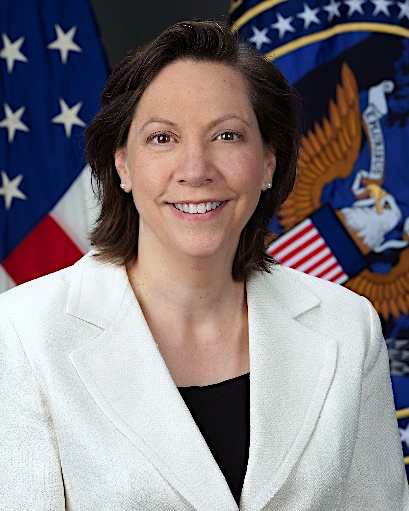
Beth Sanner
Sanner’s job was the same for those who had carried out this task under previous presidents: find a way to engage a politician whose natural instincts might not incline toward the tedious, and often contradictory details contained in many intelligence products. This was especially true for Donald J. Trump, who reportedly disdains detailed written reports, preferring instead oral briefings backed up by graphics.
The end result was a two-phased briefing process, where Sanner would seek to distill critical material to the president orally, leaving the task of picking through the details spelled out in the written product to his senior advisors. This approach was approved beforehand by the director of national intelligence, the director of the CIA and the president’s national security advisor.
Sanner, a veteran CIA analyst who previously headed up the office responsible for preparing the PDB, served as the DNI’s principal advisor “on all aspects of intelligence,” responsible for creating “a consistent and holistic view of intelligence from collection to analysis” and ensures “the delivery of timely, objective, accurate, and relevant intelligence.”
If there was anyone in the intelligence community capable of sorting out the wheat from the chaff when it came to what information was suited for verbal presentation to the president, it was Sanner.
No copy of the PDB for Feb. 27 has been made available to the public to scrutinize, nor will one likely ever be.
However, based upon information gleaned from media reporting derived from anonymous leaks, a picture emerges of at least one of the items contained in the briefing document, the proverbial “ground zero” for the current crisis surrounding allegations that Russia has paid cash bounties to persons affiliated with the Taliban for the purpose of killing American and coalition military personnel in Afghanistan.
Links Between Accounts
Sometime in early January 2020 a combined force of U.S. special operators and Afghan National Intelligence Service (NDS) commandos raided the offices of several businessmen in the northern Afghan city of Konduz and the capital city of Kabul, according to a report in The New York Times. The businessmen were involved in the ancient practice of “Hawala.” It is a traditional system for transferring money in Islamic cultures, involving money paid to an agent who then instructs a remote associate to pay the final recipient.
Afghan security officials claim that the raid had nothing to do with “Russians smuggling money,” but rather was a response to pressure from the Financial Action Task Force (FATF), an international body established in 1989 whose mission is, among other things, to set standards and promote effective implementation of legal, regulatory and operational measures for combating money laundering and terrorist financing.
This explanation, however, seems more of a cover story than fact, if for no other reason than that the FATF, in June 2017, formally recognized that Afghanistan had established “the legal and regulatory framework to meet its commitments in its action plan,” noting that Afghanistan was “therefore no longer subject to the FATF’s monitoring process.”
The joint U.S.-Afghan raid, according to the Times, was not a takedown of the Halawa system in Afghanistan—a virtually impossible task—but rather a particular Halawa network run by Rahmatullah Azizi, a one-time low-level Afghan drug smuggler-turned-high profile businessman, along with a colleague named Habib Muradi.
Azizi’s portfolio is alleged by the Times, quoting a “friend,” to include serving as a contractor for U.S. reconstruction programs, managing undefined business dealings in Russia, which supposedly, according to unnamed U.S. intelligence sources quoted by the Times, included face-to-face meetings with officers from Russian Military Intelligence (GRU), and serving as a bagman for a covert money laundering scheme between the Taliban and Russia.
Some thirteen persons, including members of Azizi’s extended family and close associates, were rounded up in the raids. Both Azizi and Muradi, however, eluded capture, believed by Afghan security officials to have fled to Russia.
Based in large part on information derived from the interrogation of the detainees that followed, U.S. intelligence analysts pieced together a picture of Azizi’s Halawa enterprise—described as “layered and complex”, with money transfers “often sliced into smaller amounts that routed through several regional countries before arriving in Afghanistan.”
What made these transactions even more interesting from an intelligence perspective, were the links made by U.S. analysts between Azizi’s Halawa system, an electronic wire transfer, a Taliban-linked account, and a Russian account that some believed was tied to Unit 29155 (a covert GRU activity believed to be involved with, among other activities, assassinations). The transactions had been picked up by the National Security Agency (NSA), the U.S. intelligence agency responsible for monitoring communications and electronic data worldwide.
The discovery of some $500,000 in cash by U.S. special operators at Azizi’s luxury villa in Kabul was the icing on the cake—the final “dot” in a complex and convoluted game of “connect the dots” that comprised the U.S. intelligence community’s assessment of the alleged Russian (GRU)-Taliban-Azizi connection.
The next task for U.S. intelligence analysts was to see where the Russian (GRU)-Taliban-Azizi connection took them. Using information gathered through detainee debriefings, the analysts broke down money Azizi received through his Halawa pipeline into “packets,” some comprising hundreds of thousands of dollars, which were doled out to entities affiliated with, or sympathetic to, the Taliban.
According to Afghan security officials quoted by the Times, at least some of these payments were specifically for the purpose of killing American troops, amounting to a price tag of around $100,000 per dead American.
The game of “connect the dots” continued as the U.S. intelligence analysts linked this “bounty” money to criminal networks in Parwan Province, where Bagram Air Base—the largest U.S. military installation in Afghanistan—is located. According to Afghan security officials, local criminal networks had carried out attacks on behalf of the Taliban in the past in exchange for money. This linkage prompted U.S. intelligence analysts to take a new look at an April 9, 2019 car bomb attack outside of Bagram Air Base which killed three U.S. Marines.
This information was contained in the PDB that was given to Trump on Feb. 27. According to standard procedure, it would have been vetted by at least three intelligence agencies—the CIA, the National Counterterrorism Center (NCC), and the NSA. Both the CIA and NCC had assessed the finding that the GRU had offered bounties to the Taliban with “moderate confidence,” which in the lexicon used by the intelligence community means that the information is interpreted in various ways, that there are alternative views, or that the information is credible and plausible but not corroborated sufficiently to warrant a higher level of confidence.
The NSA, however, assessed the information with “low confidence,” meaning that they viewed the information as scant, questionable, or very fragmented, that it was difficult to make solid analytic inferences, and that there were significant concerns or problems with the sources of information used.
Floating in the Bowl
All of this information was contained in the PDB carried into the White House by Sanner. The problem for Sanner was the context and relevance of the information she carried. Just five days prior, on Feb. 22, the U.S. and the Taliban had agreed to a seven-day partial ceasefire as prelude to the conclusion of a peace agreement scheduled to be signed in two days’ time, on Feb. 29.
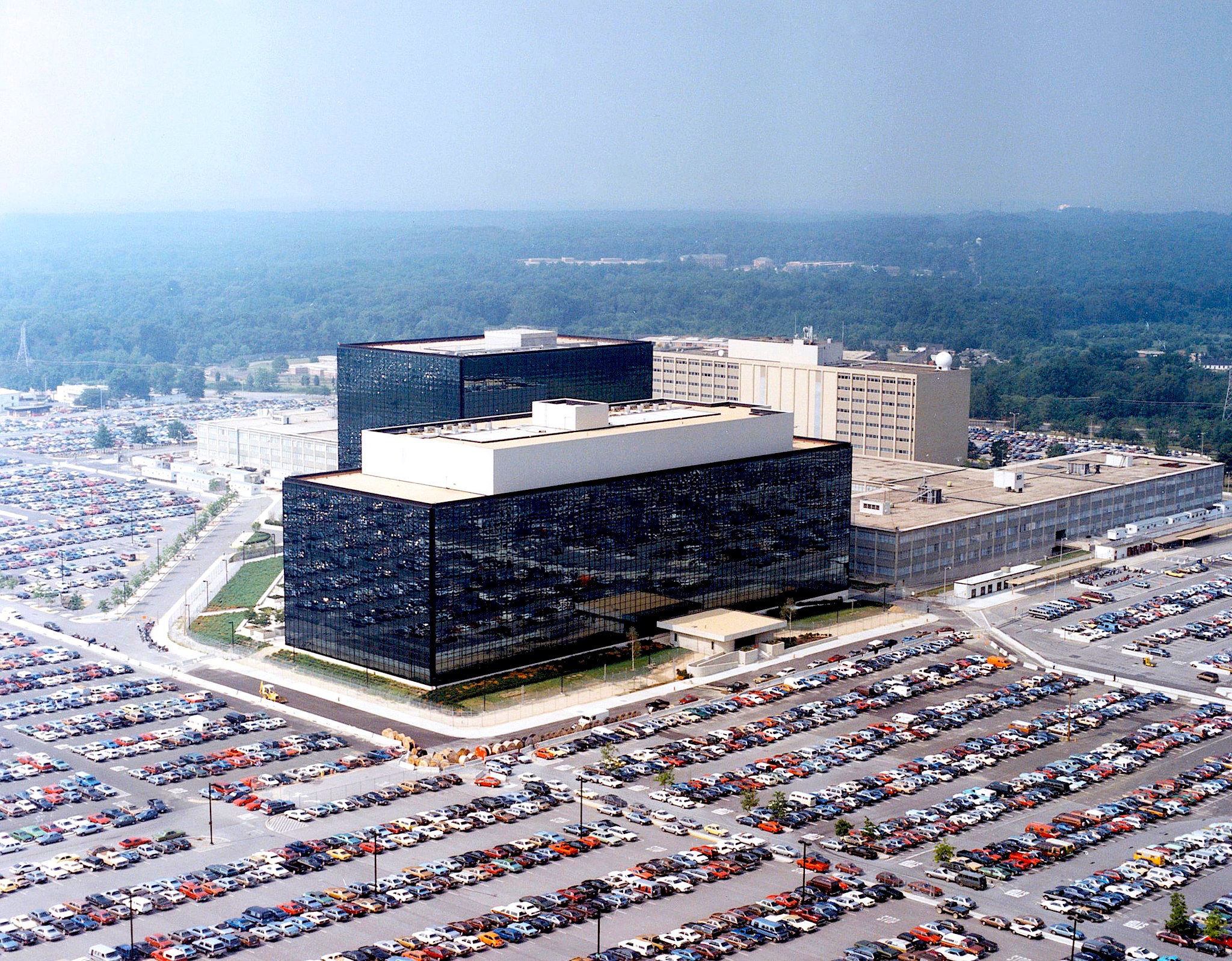
NSA HQ, Fort Meade, Maryland. (Wikimedia Commons)
The U.S. Representative for Afghanistan Zalmay Khalilzad, was in Doha, Qatar, where he was hammering out the final touches to the agreement with his Taliban counterparts. Secretary of State Mike Pompeo was preparing to depart the U.S. for Doha, where he would witness the signing ceremony. The information Sanner carried in the PDB was the proverbial turd in the punchbowl.
The problem was that the intelligence assessment on alleged Russian GRU “bounties” contained zero corroborated information. It was all raw intelligence (characterized by one informed official as an “intelligence collection report”), and there were serious disagreements among the differing analytical communities—in particular the NSA—which took umbrage over what it deemed a misreading of its intercepts and an over reliance on uncorroborated information derived from detainee debriefs.
Moreover, none of the intelligence linking the GRU to the Taliban provided any indication of how far up the Russian chain of command knowledge of the “bounties” went, and whether or not anyone at the Kremlin-let alone President Vladimir Putin-were aware of it.
None of the information contained in the PDB was “actionable.” The president couldn’t very well pick up the phone to complain to Putin based on a case drawn solely from unverified, and in some cases unverifiable, information.
To brief the president about an assessment which, if taken at face value, could unravel a peace agreement that represented a core commitment of the president to his domestic political base—to bring U.S. troops home from endless overseas wars—was the epitome of the politicization of intelligence, especially when there was no consensus among the U.S. intelligence community that the assessment was even correct to begin with.
This was a matter which could, and would, be handled by the president’s national security advisors. Sanner would not be briefing the president in person on this report, a decision that Trump National Security Adviser Robert O’Brien agreed with.
Blaming Russia
Ending America’s nearly 19-year misadventure in Afghanistan had always been an objective of President Trump. Like both presidents before him whose tenure witnessed the deaths of American service members in that hard, distant and inhospitable land, Trump found himself confronting a military and national security establishment convinced that “victory” could be achieved, if only sufficient resources, backed by decisive leadership, were thrown at the problem.
His choice for secretary of defense, James “Mad Dog” Mattis, a retired Marine general who commanded Central Command (the geographical combatant command responsible for, among other regions, Afghanistan) pushed Trump for more troops, more equipment, and a freer hand in taking on the enemy.
By the Fall of 2017, Trump eventually agreed to the dispatch of some 3,000 additional troops to Afghanistan, along with new rules of engagement, which would allow greater flexibility and quicker response times for the employment of U.S. air strikes against hostile forces in Afghanistan.
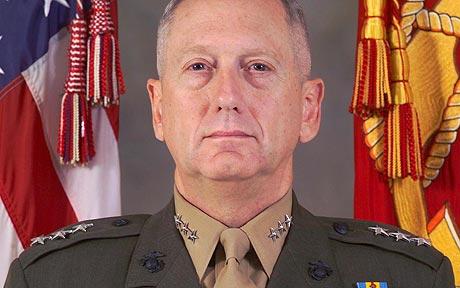
Mattis: Got what he wanted
It took little more than a year for the president to come to grips with a reality that would be reflected in the findings of Special Inspector General for Afghanistan Reconstruction John Sopko, that there had been “explicit and sustained efforts by the U.S. government to deliberately mislead the public…to distort statistics to make it appear the United States was winning the war when that was not the case.”
In November 2018, Trump turned on “Mad Dog”, telling the former Marine General “I gave you what you asked for. Unlimited authority, no holds barred. You’re losing. You’re getting your ass kicked. You failed.”
It was probably the most honest assessment of the War in Afghanistan any American president delivered to his serving secretary of defense. By December 2018 Mattis was out, having resigned in the face of Trump’s decision to cut American losses not only in Afghanistan, but also Syria and Iraq.
That same month, U.S. diplomat Khalilizad began the process of direct peace talks with the Taliban that led to the Feb. 29 peace agreement. It was a dispute over Afghan peace talks that led to the firing of National Security Advisor John Bolton. In September 2019—Trump wanted to invite the Taliban leadership to Camp David for a signing ceremony, something Bolton helped quash. Trump cancelled the “summit”, citing a Taliban attack that took the life of an American service member, but Bolton was gone.
Taking on Failure
One doesn’t take on two decades of systemic investment in military failure that had become ingrained in both the psyche and structure of the U.S. military establishment, fire a popular secretary of defense, and then follow that act up with the dismissal of one of the most vindictive bureaucratic infighters in the business without accumulating enemies.
Washington DC has always been a political Peyton Place where no deed goes unpunished. All president’s are confronted by this reality, but Trump’s was a far different case—at no time in America’s history had such a divisive figure won the White House. Trump’s anti-establishment agenda alienated people across all political spectrums, often for cause. But he also came into office bearing a Scarlet Letter which none of his predecessors had to confront—the stigma of a “stolen election” won only through the help of Russian intelligence.
The “Russian interference” mantra was all-pervasive, cited by legions of anti-Trumpers suddenly imbued with a Cold War-era appreciation of global geopolitics, seeing the Russian Bear behind every roadblock encountered, never once pausing to consider that the problem might actually reside closer to home, in the very military establishment Trump sought to challenge.
Afghanistan was no different. Prior to stepping down as the commander of U.S. forces in Afghanistan in September 2018, Army General John Nicholson sought to deflect responsibility for the reality that, despite receiving the reinforcements and freedom of action requested, his forces were losing the fight for Afghanistan.
Unable or unwilling to shoulder responsibility, Nicholson instead took the safe way out—he blamed Russia.
Scapegoating
“We know that Russia is attempting to undercut our military gains and years of military progress in Afghanistan, and make partners question Afghanistan’s stability,” Nicholson wrote in an email to reporters, seemingly oblivious to the history of failure and lies being documented at that moment by Sopko.
In March 2018 Nicholson had accused the Russians of “acting to undermine” U.S. interests in Afghanistan, accusing the Russians of arming the Taliban. But the most telling example of Russian-baiting on the part of the general occurred in February 2017, shortly after President Trump was inaugurated. In an appearance before the Senate Armed Services Committee, Nicholson was confronted by Sen. Bill Nelson, a Florida Democrat and ardent supporter of the U.S. intervention in Afghanistan.
“If Russia is cozying up to the Taliban—and that’s a kind word—if they are giving equipment that we have some evidence that the Taliban is getting…and other things that we can’t mention in this unclassified setting? And the Taliban is also associated with al-Qaida? Therefore Russia is indirectly helping al-Qaeda in Afghanistan?” Nelson asked.
“Your logic is absolutely sound, sir,” was Nicholson’s response.
Except it wasn’t.
Russia has a long and complicated history with Afghanistan. The Soviet Union invaded Afghanistan in 1979, and over the course of the next decade fought a long and costly war with Afghan tribes, backed by American money and arms and a legion of Arab jihadis who would later morph into the very al-Qaeda Sen. Nelson alluded to in his question to General Nicholson.
By 1989 the Soviet Empire was winding down, and with it its disastrous Afghan War. In the decade that followed, Russia was at odds with the Taliban government that arose from the ashes of the Afghan civil war that followed in the wake of the withdrawal of Soviet forces.
Moscow threw its support behind the more moderate forces of the so-called Northern Alliance and, after the al-Qaeda terror attacks on the U.S. on Sept. 11, 2001, was supportive of the U.S.-led intervention to defeat the Taliban and bring stability to a nation that bordered the Central Asian Republics of the former Soviet Union, which Russia viewed as especially sensitive to its own national security.
Realized US Was Losing the War
Fourteen years later, in September 2015, Russia was confronted by the reality that the U.S. had no strategy for victory in Afghanistan and, left to its own devices, Afghanistan was doomed to collapse into an ungovernable morass of tribal, ethnic and religious interests that would spawn extremism capable of migrating over the border, into the former Soviet Central Asian Republics, and into Russia itself.
Russia’s concerns were shared by regional countries such as Pakistan and China, both of which faced serious threats in the form of domestic Islamist extremism.
The capture of the northern Afghan city of Konduz, followed by the rise of an even more militant Islamist group in Afghanistan known as the Islamic State-Khorassan (IS-K), both of which occurred in September 2015, led the Russians to conclude that the U.S. was losing its war in Afghanistan, and Russia’s best hope was to work with the prevailing side—the Taliban—in order to defeat the threat from IS-K, and create the conditions for a negotiated peace settlement in Afghanistan.
None of this history was mentioned by either Gen. Nicholson or Sen. Nelson. Instead, Nicholson sought to cast Russia’s involvement in Afghanistan as “malign”, declaring in a Dec. 16, 2016 briefing that:
“Russia has overtly lent legitimacy to the Taliban. And their narrative goes something like this: that the Taliban are the ones fighting Islamic State, not the Afghan government. And of course … the Afghan government and the U.S. counterterrorism effort are the ones achieving the greatest effect against Islamic State. So, this public legitimacy that Russia lends to the Taliban is not based on fact, but it is used as a way to essentially undermine the Afghan government and the NATO effort and bolster the belligerents.”
Absent from Nicholson’s comments is any appreciation surrounding the creation of IS-K, and the impact it had on the Taliban as a whole.
The formation of IS-K can be causally linked to the disarray that occurred within the internal ranks of the Taliban in the aftermath of the death of Mullah Omar, the founder and moral inspiration of the organization. The struggle to pick a successor to Omar exposed a Taliban fractured into three factions.
One, representing the mainstream faction of the Taliban most closely linked to Mullah Omar, wanted to continue and expand upon the existing struggle against the Government of Afghanistan and the U.S.-led coalition, which supported and sustained it in an effort to re-establish the Emirate that ruled prior to being evicted from power in the months after the terror attacks of 9/11.
Another, grounded in the ranks of Pakistani Taliban, wanted a more radical approach which sought a regional Emirate beyond the borders of Afghanistan.
A third faction had grown tired of years of fighting and viewed the passing of Mullah Omar as an opportunity for a negotiated peace settlement with the Afghan government. IS-K emerged from the ranks of the second group, and posed a real threat to the viability of the Taliban if it could motivate large numbers of the Taliban’s most fanatic fighters to defect from the ranks of the mainstream Taliban.

Mujahideen who fought Soviets, Aug. 1985 (Wikimedia Commons)
For the Russians, who witnessed the growing potency of the Taliban as manifested in its short-lived capture of Konduz, the biggest danger it faced wasn’t a Taliban victory over the U.S.-dominated Afghan government, but rather the emergence of a regionally-minded Islamist extremist movement that could serve as a model and inspiration for Muslim men of combat age to rally around, allowing the violent instability to fester locally and spread regionally for decades to come. The mainstream Taliban were no longer viewed as a force to be confronted, but rather contained through co-option.
In a statement before U.S. troops in December 2016, then-President Barack Obama openly admitted that “the U.S. cannot eliminate the Taliban or end violence in that country [Afghanistan].” Russia had reached that conclusion more than a year prior, following the Taliban capture of Konduz.
A year before Obama made this announcement, Zamir Kabulov, Russia’s special representative to Afghanistan, noted that “Taliban interests objectively coincide with ours” when it came to limiting the spread of the Islamic State in Afghanistan, and he acknowledged that Russia had “opened communication channels with the Taliban to exchange information.”
For its part, the Taliban was at first cold to the thought of cooperating with the Russians. A spokesperson declared that they “do not see a need for receiving aid from anyone concerning so-called Daesh [Islamic State] and neither have we contacted nor talked with anyone about this issue.”
Many of the Taliban leadership had a history of fighting against the Soviets in the 1980s and were loath to be seen as working with their old enemies. The rise of IS-K in Afghanistan, however, created a common threat that helped salve old wounds, and while the Taliban balked at any overt relationship, the Russians began a backchannel process of discreet diplomatic engagement. (Kabulov had a history of negotiations with the Taliban dating back to the mid-1990’s).
By November 2018 this effort had matured into what was called the “Moscow Format”, a process of diplomatic engagement between Russia and Afghanistan’s neighbors which resulted in the first-ever dispatch of a Taliban delegation to Moscow for the purpose of discussing the conditions necessary for peace talks to be held about ending the conflict in Afghanistan.
When President Trump terminated the U.S.-Taliban peace negotiations in September 2019, it was the “Moscow Format” that kept the peace process alive, with Russia hosting a delegation from the Taliban to discuss the future of the peace process.
The Russian involvement helped keep the window of negotiations with the Taliban open, helping to facilitate the eventual return of the U.S. to the negotiating table this February, and played no small part in the eventual successful conclusion of the Feb. 27, 2020 peace agreement—a fact which no one in the U.S. was willing to publicly acknowledge.
Bad Intelligence
The Intelligence Collection Report that found its way into the Feb. 27 PDB did not appear in a vacuum. The singling out of the Hawala network operated by Rahmatullah Azizi was the manifestation of a larger anti-Russian animus that had existed in the intelligence collection priorities of the U.S. military, the CIA and the Afghan NDS since 2015.
This animus can be traced to internal bias that existed in both U.S. Central Command and the CIA against anything Russian, and the impact this bias had on the intelligence cycle as it applied to Afghanistan.
The existence of this kind of bias is the death knell of any professional intelligence effort, as it destroys the objectivity needed to produce effective analysis.
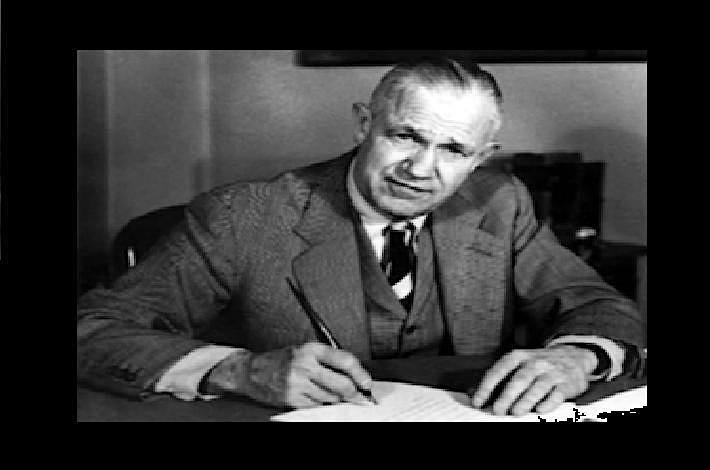
Sherman Kent
Sherman Kent, the dean of U.S. intelligence analysis (the CIA’s Center for Intelligence Analysis is named after him), warned of this danger, noting that while there was no excuse for policy or political bias, the existence of analytic or cognitive bias was ingrained in human condition, requiring a continuous effort by those responsible for overseeing analytical tasks to minimize.
Kent urged analysts “to resist the tendency to see what they expect to see in the information,” and “urged special caution when a whole team of analysts immediately agrees on an interpretation of yesterday’s development or a prediction about tomorrow’s.”
Part of a Litany of Intel Failures
The nexus of theory and reality was rarely, if ever, achieved within the U.S. intelligence community. From exaggerated Cold War estimates of Soviet military capability (the “bomber” and “missile” gaps), the underestimation of Viet Cong and North Vietnamese military capability, a failure to accurately predict the need for, and impact of, Gorbachev’s policies of reform in the Soviet Union, the debacle that was Iraqi WMD, a similar misreading of Iran’s nuclear capability and intent, and the two decade failure that was (and is) the Afghanistan experience, the U.S. intelligence community has a track record of imbuing its analysis with both political and cognitive bias—and getting it very, very wrong about so many things.
The Russian bounty story is no exception. It represents the nexus of two separate analytical streams, both of which were amply imbued with policy bias; one, representing America’s anger at not being able to control the fate of Russia in the aftermath of the collapse of the Soviet Union, and the second, America’s total misread of the reality of Afghanistan (and the Taliban) as it related to the Global War on Terror (GWOT).
For the first decade or so, these streams lived separate but equal lives, populated by analytical teams whose work rarely intersected (indeed, if truth be told, the Russian/Eurasian “house” was frequently robbed of its best talent to feed the insatiable appetite for more and better “analysis” driven by the GWOT enterprise.)
The election of Barack Obama, however, changed the intelligence landscape and, in doing so, initiated processes which allow these two heretofore disparate intelligence streams to drift together.
Under President Obama, the U.S. “surged” some 17,000 additional combat troops into Afghanistan in an effort to turn the tide of battle. By September 2012, these troops had been withdrawn; the “surge” was over, with little to show for it besides an additional 1,300 U.S. troops killed and tens of thousands more wounded. The “surge” had failed, but like any failure rooted in Presidential policy, it was instead sold as a success.
That same year the Obama administration suffered another policy failure of similar magnitude. In 2008, Russian President Vladimir Putin swapped places with Prime Minister Dmitri Medvedev, and when Obama took office, his team of Russian experts, led by a Stanford professor named Michael McFaul, sold him on the concept of a “reset” of U.S.-Russian relations, which had soured under eight years of the Bush Presidency.
But the “reset” was decidedly one-sided—it placed all of the blame for the bad blood between the two nations on Putin, and none on two successive eight-year presidential administrations, led by Bill Clinton and George W. Bush, which saw the U.S. expand the NATO alliance up to Russia’s borders, abandon foundational arms control agreements, and basically behave like Russia was a defeated foe whose only acceptable posture was one of acquiescence and subservience.
This was a game Russia’s first President, Boris Yeltsin, only seemed too happy to play. His hand-picked successor, Vladimir Putin, however, would not.
With Medvedev installed as president, McFaul sought to empower Medvedev politically—in effect, to give him the “Yeltsin” treatment—in hopes that an empowered Medvedev might be able to muscle Putin out of the picture.
For any number of reasons (perhaps most important being Putin had no intention of allowing himself to be so squeezed, and Medvedev was never inclined to do any squeezing), the Russian “reset” failed. Putin was reelected as president in March 2012. McFaul’s gambit had failed, and from that moment forward, U.S.-Russian relations became a “zero sum game” for the U.S.—any Russian success was seen as a U.S. failure, and vice versa.
In 2014, after watching a duly elected, pro-Russian Ukrainian president, Viktor Yanukovych, removed from office by a popular uprising which, if not U.S. sponsored, was U.S. supported, Putin responded by annexing the Russian-majority Crimean peninsula and supporting pro-Russian secessionists in the breakaway Donbas region of Ukraine.
This action created a schism between Russia and the U.S. and Europe, resulting in the implementation of economic sanctions against Russia by both entities, and the emergence of a new Cold War-like relationship between Russia and NATO.
In 2015 Russia followed up its Ukraine action by dispatching its military into Syria where, at the invitation of the Syria government, it helped turn the tide on the battlefield in favor of Syria’s embattled president, Bashar al-Assad, against an assortment of jihadist groups.
Overnight, the intelligence backwater that had been Russian/European affairs was suddenly thrust front and center on the world stage and, with it, into the heart of American politics. The McFaul school of Putin-phobia suddenly became dogma, and any academic who had published a book or article critical of the Russian president was elevated in status and stature, up to and including a seat at the table in the senior-most decision-making circles of the U.S. intelligence community.
The Russians were suddenly imbued with near super-human capability, up to and including the ability to steal an American presidential election.
After the failure of the Obama surge in Afghanistan, and the withdrawal from Iraq at the end of 2011 of all U.S. combat troops, the mindset throughout the Central Command area of operations was “stability.” This was the command guidance and pity the intelligence analyst who tried to raise a red flag or inject a modicum of reality into the intelligence enterprise whose mission it was to sustain this sense of stability.
Indeed, when the Islamic State roared out of the western deserts of Iraq to establish itself in eastern Syria, dozens of CENTCOM intelligence analysts officially complained that their senior management was purposefully manipulating the analytical product produced by CENTCOM to paint a deliberately misleading “rosy” picture of truth on the ground out of fear of angering the Commanding General and his senior staff.
For anyone who has spent any time in the military, the importance of command guidance, whether written or verbal, when it comes to establishing both priorities and approach, cannot be overstated. In short, what the general wants, the general gets; woe be the junior officer or analyst who didn’t get the memo.
By 2016, the commander of U.S. forces in Afghanistan, Gen. Nicholson, wanted to see Russians undermining U.S. policy objectives in Afghanistan. The poisonous culture that existed inside CENTCOM’s intelligence enterprise was only too happy to comply.
The corruption of intelligence at “ground zero” ended up corrupting the entire U.S. intelligence community, especially when there was a systemic desire to transfer blame for the failure of U.S. policy in Afghanistan anywhere other than where it belonged—squarely on the shoulders of U.S. policy makers and the military that did their bidding.
And there was a beefed-up Russia/Eurasia intelligence apparatus looking for opportunities to foist blame on Russia. Blaming Russia for U.S. policy failure in Afghanistan became the law of the land.
The consequences of this political and cognitive bias is subtle, but apparent to those who know what to look for, and are willing to take the time to look.
Following the leak to The New York Times about the Russian “bounty” intelligence, members of Congress demanded answers about the White House’s claim that the information published by the Times (and mimicked by other mainstream media outlets) was “unverified.”
Rep. Jim Banks, who sits on the Armed Services Committee as one of eight Republican lawmakers briefed by the White House on the substance of the intelligence regarding the alleged Russian “bounties”, tweeted shortly after the meeting ended that, “Having served in Afghanistan during the time the alleged bounties were placed, no one is angrier about this than me.”
Bank’s biography notes that, “In 2014 and 2015, he took a leave of absence from the Indiana State Senate to deploy to Afghanistan during Operations Enduring Freedom and Freedom’s Sentinel.”
Banks’ timeline mirrors that offered by a former senior Taliban leader, Mullah Manan Niazi, who told U.S. reporters who interviewed him after the Russian “bounty” story broke that “the Taliban have been paid by Russian intelligence for attacks on U.S. forces—and on ISIS forces—in Afghanistan from 2014 up to the present.”
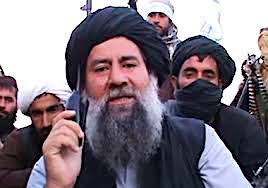
Niazi: shady character (ToloNews/YouTube)
Niazi has emerged a key figure behind the crafting of the “bounty” narrative, and yet his voice is absent from The New York Times reporting, for good reason—Niazi is a shady character whose acknowledged ties to both the Afghan Intelligence Service (NDS) and the CIA undermine his credibility as a viable source of information.
Officials, speaking anonymously to the media, have stated that “the bounty hunting story was ‘well-known’ among the intelligence community in Afghanistan, including the CIA’s chief of station and other top officials there, like the military commandos hunting the Taliban. The information was distributed in intelligence reports and highlighted in some of them.”
If this is true, and some of this information found its way into the intelligence report referred to by Rep. Banks, then the U.S. intelligence community has been selling the notion of a Russian bounty on U.S. troops since at least 2015—coincidentally, the same time Russia started siding with the Taliban against IS-K.
Seen in this light, claims that Bolton briefed President Trump on the “bounty” story in March of 2019–nearly a full year before the PDB on it was delivered to the White House—don’t seem too far-fetched, except for one small detail: what was the basis of Bolton’s briefing? What intelligence product had been generated at that time which rose to a level sufficient enough to warrant being briefed to the president of the United States by his national security advisor?
The answer is, of cours–none. There was nothing; if there was, we would be reading about it with enough corroboration to warrant a White House denial. All we have is a story, a rumor, speculation, a “legend” promoted by CIA-funded Taliban turncoats that had seeped itself into the folklore of Afghanistan enough to be assimilated by other Afghans who, once detained and interrogated by the NDS and CIA, repeated the “legend” with sufficient ardor to be included, without question, in the intelligence collection report that actually did make into a PD–on Feb. 27, 2020.
There is another aspect of this narrative that fails completely, namely the basic comprehension of what exactly constitutes a “bounty.”
“Afghan officials said prizes of as much as $100,000 per killed soldier were offered for American and coalition targets,” the Times reported. And yet, when Rukmini Callimachi, a member of the reporting team breaking the story, appeared on MSNBC to elaborate further, she noted that “the funds were being sent from Russia regardless of whether the Taliban followed through with killing soldiers or not. There was no report back to the GRU about casualties. The money continued to flow.”
There is just one problem—that’s not how bounties work. Bounties are the quintessential quid pro quo arrangement—a reward for a service tendered. Do the job, collect the reward. Fail to deliver—there is no reward. The idea that the Russian GRU set up a cash pipeline to the Taliban that was not, in fact, contingent on the killing of U.S. and coalition troops, is the antithesis of a bounty system. It sounds more like financial aid, which it was—and is. Any assessment that lacked this observation is simply a product of bad intelligence.
The Timing
Whoever leaked the Russian “bounty” story to The New York Times knew that, over time, the basics of the story would not be able to stand up under close scrutiny—there were simply too many holes in the underlying logic, and once the totality of the intelligence leaked out (which, by Friday seemed to be the case), the White House would take control of the narrative.
The timing of the leak hints at its true objective. The main thrust of the story was that the president had been briefed on a threat to U.S. forces in the form of a Russian “bounty,” payable to the Taliban, and yet opted to do nothing. On its own, this story would eventually die out of its own volition.
On June 18, the U.S. fulfilled its obligation under the peace agreement to reduce the number of troops in Afghanistan to 8,600 by July 2020. By June 26, the Trump administration was close to finalizing a decision to withdraw more than 4,000 troops from Afghanistan by the fall, a move which would reduce the number of troops from 8,600 to 4,500 and thus pave the way for the complete withdrawal from U.S. forces from Afghanistan by mid-2021.
Both of these measures were unpopular with a military establishment that had been deluding itself for two decades that it could prevail in the Afghan conflict. Moreover, once the troop level had dropped to 4,500, there was no turning back—the total withdrawal of all forces was inevitable, because at that level the U.S. would be unable to defend itself, let alone conduct any sort of meaningful combat operations in support of the Afghan government.
It was at this time that the leaker chose to release his or her information to The New York Times, perfectly timed to create a political furor intended not only to embarrass the president, but more critically, to mobilize Congressional pushback against the Afghan withdrawal.
On Thursday, the House Armed Services Committee voted on an amendment to the National Defense Authorization Act which required the Trump administration to issue several certifications before U.S. forces could be further reduced in Afghanistan, including an assessment of whether any “state actors have provided any incentives to the Taliban, their affiliates, or other foreign terrorist organizations for attacks against United States, coalition, or Afghan security forces or civilians in Afghanistan in the last two years, including the details of any attacks believed to have been connected with such incentives”—a direct reference to the Russian “bounty” leak.
The amendment passed 45-11.
This, more than anything else, seems to have been the objective of the leak. The irony of Congress passing legislation designed to prolong the American war in Afghanistan in the name of protecting American troops deployed to Afghanistan should be apparent to all.
The fact that it is not speaks volumes to just how far down the road of political insanity this country has travelled. On a weekend where America is collectively celebrating the birth of the nation, that celebration will be marred by the knowledge that elected representatives voted to sustain a war everyone knows has already been lost. That they did so on the backs of bad intelligence leaked for the purpose of triggering such a vote only makes matters worse.
Scott Ritter is a former Marine Corps intelligence officer who served in the former Soviet Union implementing arms control treaties, in the Persian Gulf during Operation Desert Storm, and in Iraq overseeing the disarmament of WMD.
Bounty-Hunter Hoax to Kill U.S.-Russia Relations
Strategic Culture Foundation | July 3, 2020
Relations between the United States and Russia have already been badly wounded during recent years, largely as a result of baseless allegations such as Moscow interfering in American elections, colluding with President Donald Trump, or regarding other international developments, from the downing of a Malaysian airliner over Ukraine, to purported war crimes in Syria, to the alleged poisoning of British double-agent Sergei Skripal in England.
But the latest U.S. media effort claiming Russian military intelligence involvement in sponsoring Taliban assassins or “bounty hunters” to target American troops in Afghanistan appears to be aimed at killing off any remaining possibility for restoring relations between Washington and Moscow.
Even the concept of “bounty hunters” sounds like an outlandish reliance on Wild West folklore which in itself betrays the origins of the story as a figment of imagination rooted in the authors’ American parochialism.
Quite appropriately, however, we can extend the analogy further by referring to the U.S. media reporting on the Russian “bounty hunter” claims as “cowboy journalism”.
America’s supposed finest media outlets jumped on this yarn like a posse in bandwagon fashion. The New York Times “broke” the story on June 26 and was followed by others of presumed journalistic stature: The Washington Post, CNN, The Wall Street Journal, Associated Press, and others.
No evidence has been presented to back up the explosive claims made against Russia and against President Trump that he was briefed about the intelligence allegedly implicating Russia in Afghanistan but did nothing about it.
The whole media frenzy has relied on unnamed sources and vague claims about money being found or transferred from bank accounts.
In less than a week since the story “broke” there is a palpable sense that the initial media frenzy has fizzled out, leaving a bitter aftertaste of nothingness and embarrassment for the journalists who pushed the fable with gung-ho grit.
The story has been roundly dismissed as a hoax by the Trump White House, the Kremlin and the Taliban. More politely, the heads of U.S. intelligence and the Pentagon stated there was “no corroborating evidence” for the media claims.
So, what was it all about?
Evidently, it was another shot in the Last Chance Saloon by the anti-Russia Washington political establishment, or deep state, to further undermine bilateral relations. The obsequious way in which supposed bastions of U.S. journalism parroted the disinformation is illustrative of the low standard of American media. As several critical commentators have noted, what we saw from the New York Times et al was not journalism, but rather stenographic dissemination of deep state disinformation.
The Russian Foreign Ministry has remarked that the timing of the “provocative hoax” comes at a critical juncture in efforts to bring a peace settlement in Afghanistan after nearly 20 years of U.S.-led war in that country. Trump is committed to withdrawing U.S. troops and, according to the Russian Foreign Ministry, the Kremlin has been quietly cooperating with the American State Department to mediate a peace deal. The implication is that there are elements within the U.S. intelligence-military apparatus which have a vested interest in continuing the quagmire war in Afghanistan. The “bombshell” claims of a Russian clandestine assassination program against U.S. troops would thus jeopardize a political settlement in Afghanistan.
Secondly, while the U.S. reporting on the bounty-hunter scheme has been a self-inflicted disgrace to journalism, it has nevertheless succeeded, to a degree, in riling up anti-Russia sentiment in Washington. Lawmakers from Trump’s own Republican party have joined with the usual Democrat chorus to call for increased sanctions against Moscow.
Trump has been accused (again) of “treachery” and “treason” by being “infatuated” with Russian President Vladimir Putin. One Republican political action committee released a spoof advert this week in which Moscow thanks “Comrade Trump” for his “loyalty”.
This pathetic poisoning of relations is ludicrous and dangerous.
Another glaring factor is the forthcoming U.S. presidential elections which are only four months away. The media ruse, we can hardly say “reporting”, is evidently designed to aid Joe Biden, the Democrat rival to Trump. Biden reacted to the media claims against Russia with “shock, horror” and he denounced Trump for (allegedly) not being concerned about security of U.S. troops. Biden said if he is elected to the White House he will “stand up to Putin”.
The transparent manipulation attempt of public emotions and votes is almost laughable. It is gas-lighting as in the Cold War days of McCarthyism.
Like him or loath him, Donald Trump has been a thorn in the side of powerful domestic enemies since he won the 2016 election. We can describe those enemies as the deep state and their apparatus in the Democrat party working in conjunction with servile media surrogates. (No doubt the Republican party would be just as obliging if the shoe was on other other foot.) Trump has certainly been no friend to Russia. Bilateral relations remain as blighted as they were under the previous Obama Democrat administrations.
For various reasons, Trump’s domestic enemies are mobilizing in a desperate effort to block his re-election. That is what the whole Russia “bounty-hunter blockbuster” is all about. But in doing so, the relations between the U.S. and Russia are being kicked to the ground and lynched. That is an appallingly reckless consequence.
The grotesque irony is that Russia is accused of “interference”. American deep political forces are interfering in the nation’s democracy to control the elections, as they have previously done. A price will be paid in worse U.S.-Russia relations and greater international tensions.
Afghan Bounty Scandal Comes at Suspiciously Important Time for US Military Industrial Complex
By Alan MacLeod | MintPress News | July 1, 2020
Based on anonymous intelligence sources, The New York Times, Washington Post, and Wall Street Journal released bombshell reports alleging that Russia is paying the Taliban bounties for every U.S. soldier they can kill. The story caused an uproar in the United States, dominating the news cycle and leading presumptive Democratic presidential candidate Joe Biden to accuse Trump of “dereliction of duty” and “continuing his embarrassing campaign of deference and debasing himself before Vladimir Putin.” “This is beyond the pale,” the former vice-president concluded.
However, there are a number of reasons to be suspicious of the new reports. Firstly, they appear all to be based entirely on the same intelligence officials who insisted on anonymity. The official could not provide any concrete evidence, nor establish that any Americans had actually died as a result, offering only vague assertions and admitting that the information came from “interrogated” (i.e. tortured) Afghan militants. All three reports stressed the uncertainty of the claims, with the only sources who went on record — the White House, the Kremlin, and the Taliban — all vociferously denying it all.
The national security state also has a history of using anonymous officials to plant stories that lead to war. In 2003, the country was awash with stories that Saddam Hussein possessed weapons of mass destruction, in 2011 anonymous officials warned of an impending genocide in Libya, while in 2018 officials accused Bashar al-Assad of attacking Douma with chemical weapons, setting the stage for a bombing campaign. All turned out to be untrue.
“After all we’ve been through, we’re supposed to give anonymous ‘intelligence officials’ in The New York Times the benefit of the doubt on something like this? I don’t think so,” Scott Horton, Editorial Director of Antiwar.com and author of “Fool’s Errand: Time to End the War in Afghanistan,” told MintPress News. “All three stories were written in language conceding they did not know if the story was true,” he said, “They are reporting the ‘fact’ that there was a rumor.”
Horton continued: “There were claims in 2017 that Russia was arming and paying the Taliban, but then the generals admitted to Congress they had no evidence of either. In a humiliating debacle, also in 2017, CNN claimed a big scoop about Putin’s support for the Taliban when furnished with some photos of Taliban fighters with old Russian weapons. The military veteran journalists at Task and Purpose quickly debunked every claim in their piece.”
Others were equally skeptical of the new scandal. “The bottom line for me is that after countless (Russiagate related) anonymous intelligence leaks, many of which were later proven false or never substantiated with real evidence, I can’t take this story seriously. The intelligence ‘community’ itself can’t agree on the credibility of this information, which is similar to the situation with a foundational Russiagate document, the January, 2017 intelligence ‘assessment,’” said Joanne Leon, host of the Around the Empire Podcast, a show which covers U.S. military actions abroad.
Suspicious timing
The timing of the leak also raised eyebrows. Peace negotiations between the U.S. and the Taliban are ongoing, with President Trump committing to pulling all American troops out of the country. A number of key anti-weapons of mass destruction treaties between the U.S. and Russia are currently expiring, and a scandal such as this one would scupper any chance at peace, escalating a potential arms race that would endanger the world but enrich weapons manufacturers. Special Presidential Envoy in the Department of the Treasury, Marshall Billingslea, recently announced that the United States is willing to spend Russia and China “into oblivion” in a new arms race, mimicking the strategy it used in the 1980s against the Soviet Union. As a result, even during the pandemic, business is booming for American weapons contractors.
“The national security state has done everything they can to keep the U.S. involved in that war,” remarked Horton, “If Trump had listened to his former Secretary of Defense James Mattis and National Security Advisor H.R. McMaster, we’d be on year three of an escalation with plans to begin talks with the Taliban next year. Instead Trump talked to them for the last year-and-a-half and has already signed a deal to have us out by the end of next May.”
“The same factions and profiteers who always oppose withdrawal of troops are enthusiastic about the ‘Bountygate’ story at a time when President Trump is trying to advance negotiations with the Taliban and when he desperately needs to deliver on 2016 campaign promises and improve his sinking electoral prospects,” said Leon.
If Russia is paying the Taliban to kill Americans they are not doing a very good job of it. From a high of 496 in 2010, U.S. losses in Afghanistan have slowed to a trickle, with only 22 total fatalities in 2019, casting further doubt on the scale of their supposed plan.
Ironically, the United States is accusing the Kremlin of precisely its own policy towards Russia in Syria. In 2016, former Acting Director of the C.I.A. Michael Morell appeared on the Charlie Rose show and said his job was to “make the Russians pay a price” for its involvement in the Middle East. When asked if he meant killing Russians by that, he replied, “Yes. Covertly. You don’t tell the world about it. You don’t stand up at the Pentagon and say, ‘We did this.’ But you make sure they know it in Moscow.”
Like RussiaGate, the new scandal has had the effect of pushing liberal opinion on foreign policy to become far more hawkish, with Biden now campaigning on being “tougher” on China and Russia than Trump would be. Considering that the Bulletin of Atomic Scientists recently set their famous Doomsday Clock — an estimation of how close they believe the world is to nuclear armageddon — to just 100 seconds to midnight, the latest it has ever been, the Democrats could be playing with fire. The organization specifically singled out U.S.-Russia conflict as threatening the continued existence of the planet. While time will tell if Russia did indeed offer bounties to kill American troops, the efficacy of the media leak is not in question.
Alan MacLeod is a Staff Writer for MintPress News. After completing his PhD in 2017 he published two books: Bad News From Venezuela: Twenty Years of Fake News and Misreporting and Propaganda in the Information Age: Still Manufacturing Consent.
Russia Bounty-Hunter Story Another Pulp Fiction Release
By Finian Cunningham | Strategic Culture Foundation | July 1, 2020
The main peddlers of the alleged Russian-sponsored bounty-hunter scheme in Afghanistan against US troops are the New York Times, Washington Post and CNN. All three have excelled in publishing a series of pulp fiction-style stories over the past four years to discredit President Trump and demonize Russia.
From allegations of Russian meddling in elections to Putin having blackmail on “agent Trump” thanks to hookers in a Moscow hotel. And much more besides.
That dubious record of propaganda-as-journalism serves as a foghorn alert about the latest yarn without even delving into the supposed details.
The story “broke” last Friday with the Times claiming that anonymous “US officials” informed the outlet that Russian military intelligence were paying militants in Afghanistan to assassinate American troops, and that President Trump had been briefed on the matter as far back as February or even last year but didn’t do anything about it.
In “follow-up” reports, the Washington Post and CNN, among others, are reporting that the alleged Russian bounty-hunter scheme did result in American casualties. Trump is being accused of treachery for allegedly ignoring warnings on security, and that – conveniently – piles the pressure on the White House and the Congress to get tough on Moscow.
Democrat presidential rival Joe Biden has fulminated that it is a “truly shocking” dereliction of duty by Trump whose presidency, says Biden, is “a gift” to Russian leader Vladimir Putin. The Democrat vows to confront Moscow if he is elected to the White House in November.
Some Republican lawmakers have also jumped on the bandwagon assailing Trump for treacherous neglect over allegedly not acting on the alleged intelligence. (Apologies to readers for the repetition of “alleged”, but it is necessary for clarity and factualness.)
As the story gathers some legs, it soon runs at breakneck speed. British media reports are quoting anonymous British security officials who “confirm” that the US intelligence claims about Russia bounty-hunting in Afghanistan. What’s more, the British “sources” are saying that the alleged Russian operation is being run by the same military intelligence team that allegedly organized the alleged poisoning of double agent Sergei Skripal in Salisbury in March 2018.
Pulp fiction stories are thus being referenced supposedly as confirming precedents for the latest episode in Afghanistan. That’s like building an edifice from straws.
Denials and declined comments can be revealing. Kremlin spokesman Dmitry Peskov has called the bounty-hunter reports “lies”. The Russia foreign ministry said it was an “unsophisticated fabrication”.
A spokesman for the Taliban militants in Afghanistan derided the US claims, saying the militants did not need any foreign help to defeat the Americans.
President Trump in his usual fashion slammed the media reports as another “Russia hoax”. He says he was never briefed on the alleged intelligence and neither was Vice President Mike Pence of White House chief of staff Mark Meadows.
John Ratcliffe, the US Director of National Intelligence, has poured cold water on the reports, saying that Trump was not briefed. So too has Trump’s National Security Advisor Robert O’Brien.
The CIA has declined to comment, while the Pentagon has stated it has seen no evidence to substantiate the reported claims.
It seems significant that the New York Times described its sources as “US officials who were briefed on the matter” and not as “US intelligence” sources. That way, the newspaper avoids any potentially embarrassing rebuttal from intelligence agencies. The choice of words “US officials” is suitably vague and uncompromising.
A second dodgy detail is the claim that the alleged “recovery of large amounts of American cash” in a raid by US special forces on some Taliban base provided the basis for the concept that Russian military intelligence was organizing the scheme for paying militants to assassinate American troops. It is also claimed that US intelligence gained information on the pay-for-kill plot from “interrogation of captured militants”.
That’s an incredible admission of how weak is the basis for the reporting and its “bombshell” claims.
Seriously, finding a suitcase of US dollars in a Taliban hideout is cited as implicating the involvement of Russian hit squads.
It is speculated that the Kremlin is waging a “shadow war” against the US in Afghanistan as “revenge” for Washington’s sponsoring of the mujahideen forerunners of the Taliban who dealt defeat to Soviet troops during the 1980s.
A propaganda wheeze always has tell-tale gas-lighting effects whereby thoughts and speculation appear to easily (too easily) flow from one to the other as desired by the orchestrator.
What Joe Biden and others should find “truly shocking” is the flimsy detail that supposedly holds up a “blockbuster” story.
It all has the hallmark of an electioneering ploy to undermine Trump’s support among rank-and-file members of the US armed forces. They are seen as a bedrock for Trump votes in the November elections. What better way to alienate the military ranks than accuse Trump of turning a blind eye to intelligence reports of Russian-assisted murder of troops in Afghanistan?
On top of that, to boot, there is also the desired bipartisan outrage among Democrats and Republican lawmakers demanding more sanctions to “punish” Russia and “hold Putin to account”. More irrelevant melodrama on the Hill of Beans.
It’s another pulp fiction release, but the signs are the sick and tired American public are not buying it. Which means even more dwindling credibility for US mainstream media propaganda outlets, and diminishing power of the Deep State to orchestrate election outcome. Neither Democrats nor Republicans can galvanize voters, which means US politics is increasingly seen to be in a profoundly futile mess.
Moscow hits back at Pompeo’s ‘Russia arming Taliban’ jibe, saying Afghan govt is only recipient of Russian weapons
RT | July 2, 2020
The sitting government in Kabul was the sole entity on Afghan soil to have received Russian arms, Moscow stated, a day after Mike Pompeo bluntly accused it of funneling weapons to the Taliban militants.
“Russia has only supplied arms to the legitimate government of Afghanistan – something that is well known”, Foreign Ministry spokeswoman Maria Zakharova told reporters on Thursday.
The diplomat was taking aim at Secretary of State Mike Pompeo, who pulled no punches when talking about Russia this Wednesday.
“The Russians have been providing weapons to the Taliban for an awful lot of years, so this is an ongoing challenge,” he told Fox News.
In a media briefing earlier in the day, he insisted Moscow was behaving in Afghanistan “in a way that’s adverse to the United States.” “We have objected to that … when I meet with my Russian counterpart [Sergey Lavrov], I talk with him about this each time, [saying] ‘Stop this’,” he recalled.
Zakharova ruled out any discussion of such an issue ever having cropped up during Pompeo’s one-on-ones with the Russian foreign minister, however.
“Mr Pompeo has never raised this question during his meetings with Mr Lavrov,” she stated.
The verbal ping-pong comes after the New York Times alleged Russia may have paid bounties to Afghan militants for killing US troops. Subsequently spread by a host of other US media, the allegations – based on anonymous sources – suggested the Trump administration knew but did nothing.
US intelligence services said there was insufficient evidence in support of the allegations, and they were also immediately rebuffed by President Trump.
In a previous response, Moscow brushed the report aside as a poorly conceived piece of disinformation meant to distract from the US problems in Afghanistan.
US Media Date ‘Russian Bounties’ 5 Years Back, Name ‘Key Middleman’ in ‘Money Transfers’
Sputnik – 02.07.2020
The explosive reports on “Russian bounties” offered to Taliban-linked militants to kill US soldiers are slowly turning into some kind of a saga, as now US media has offered new “details” on the claims.
As reported by NYT claims described as “intelligence” on Russia offering money to the Taliban for killing US soldiers circulate through the media headlines, the story continues to develop particulars – nevermind that the very beginning of it has not been confirmed by a single official entity.
Ignoring the avalanche of scepticism and denial of the initial allegations from all sides, the US media sticks to the storytelling, moving on to reveal that the “Russian-Taliban bounties” appear to date back several years.
The Daily Beast, citing alleged ex-spokesman for Taliban leader Mullah Omar, Manan Niazi, who spoke via encrypted phone call, claimed that the Taliban “have been paid by Russian intelligence for attacks on US forces in Afghanistan from 2014 up to the present”.
“The Taliban have been paid by Russian intelligence for attacks on US forces—and on ISIS forces—in Afghanistan from 2014 up to the present”, said Niazi, described as a person who used to be a “very senior figure in the Taliban”, but now a dissident, claimed to The Beast.
The story could as well be turned into an exciting movie, as it offers a wide range of dramatic parts from Russia “paying US dollars to Taliban” for several years to spy-like intrigues of undercover Taliban people who pretended to be businessmen in order to “convert Russian funds to cash” in Afghanistan.
Sometimes, however, it also has narrative flaws, for example, the two people that Niazi claimed to be “undercover businessmen who went to Tajikistan and Kyrgyzstan”, denied their involvement when asked by the DB.
“I don’t want to comment—I don’t even want to talk about Niazi,” said one, contacted by The Beast. “Niazi is our enemy and playing into the hands of the NDS.”
The report refers to the so-called Hawala system – an “informal way to transfer money” – based on “family relationships or regional affiliations”.
This system is brought up in another thrilling story, this time again from The New York Times, which names another Russian bounty-related “businessman” – Rahmatullah Azizi – to be a middleman “between the GRU and militants linked to the Taliban who carried out the attacks”.
Apparently striving for another Pulitzer for the story based on unconfirmed information, just like in the case of this prize-winning series of anti-Russia articles that were later debunked, the outlet conducted research impossible even for the National Intelligence and Defence Department of the US.
In a fresh “ground-breaking” article, Azizi is described as a “central piece of a puzzle rocking Washington”, who “was among those who collected the cash in Russia”. According to “Afghan officials” – who are, as usual, unnamed – “$100,000 per killed soldier were offered for American and coalition targets”. The controversial enterprise apparently made Azizi extremely wealthy, as the report describes his luxurious possessions, from cars to four-story houses.
Every story has a villain, and the Nytimes.com piece connects the dots in a way that leads, once again, to the devious Unit 29155 – a mysterious GRU intelligence branch that is traditionally held responsible by the US for “assassinations and other operations overseas” – including the famous Sergei Skripal poisoning that was “highly likely” carried out by the ominous Russian assets.
Official Positions on the Matter
The stories suggested by The Daily Beast and The New York Times ignore a recent Pentagon report which followed the initial NYT Friday report on Russian “bounties” to the Taliban for killing US troops, and found no evidence. The document only pointed at Russian “efforts in the hope that reconciliation will prevent a long-term US military presence”.
US President Donald Trump, echoed by his Director of National Intelligence and his National Security Adviser, denied that he knew anything about the matter, repeating that the unverified “intelligence” did not rise to the level where it would be reasonable to brief the president.
The Kremlin refuted the allegations as “nonsense” while not understanding why unconfirmed media reports would raise the possibility of sanctions, a move voiced by Democrats.
The Taliban itself has denied the claims, insisting that its activities are not connected with foreign countries or intelligence agencies.
‘Russian bounty’ story shifts: NYT now claims Afghan CRIMINALS & not Taliban were paid, cites anonymous sources again
RT | June 30, 2020
The New York Times is doubling down on claims that Russia offered bounties for the killing of US troops in Afghanistan, but now says local criminals and not the Taliban were the recipients, again offering no actual evidence.
The new article, published Tuesday, says that “electronic data showing large financial transfers from a bank account controlled by Russia’s military intelligence agency to a Taliban-linked account” was intercepted by US spies and “bolsters suspicions” that Russia offered bounties to militants – as claimed by the Times last week.
Once again, the Times quotes anonymous sources – “three officials familiar with the intelligence” – so the claim is impossible to verify. No evidence of the alleged electronic transfer is provided, only a third-hand hearsay that “analysts concluded from other intelligence that the transfers were most likely part of a bounty program.”
The article eventually gets around to quoting several local officials from Afghanistan, who say that several people who transfer money through an Islamic banking system are “suspected of being part of a ring of middlemen” between Russia and “Taliban-linked militants.”
The ‘hawala’ banking system does not actually use electronic transfers. Moreover, the article says the Afghan security forces found “a half-million dollars” – presumably in cash – in one Kabul home about six months ago. Safiullah Amiry, described as “the deputy provincial council chief” in Kunduz, “said the Afghan intelligence agency had told him the raids were related to Russian money being dispersed [sic] to militants.”
In the original article, the Times claimed President Donald Trump had been briefed on this alleged plot sometime in March. The White House, the CIA and the Office of the Director of National Intelligence have since denied this.
So the narrative has now shifted, with the Times citing “two officials” who say the information was included in Trump’s written presidential daily brief (PDB) “in late February,” accompanied by the – likewise unverified – claim that Trump typically doesn’t read those. The article also claims the CIA mentioned the intelligence in its World Intelligence Review newsletter, also known as The Wire, dated May 4.
The identity of the suspected recipients of the “Russian bounties” has shifted as well, from the Taliban to “criminals closely associated with the Taliban” – according to yet another anonymous US official.
Most mainstream US media outlets and the Democrats have taken the original New York Times reporting at face value, denouncing Trump as “Putin’s puppet” and a traitor for allegedly not doing anything to “punish Russia” based on the purported intelligence assessments, rather than demanding to see evidence there was anything to it.
Featured Video
Laith Marouf: Hezbollah’s position on US-Iran ceasefire
or go to
Aletho News Archives – Video-Images
From the Archives
The Dirty Little Secret behind the “Global Terrorism Index”
The Omission of Israeli Terrorism in the Occupied Palestinian Territories
By Karin Brothers | Global Research | December 6, 2014
… The Israeli settlements — all of which are illegal – have been identified as a major impediment to peace. The refusal of a major “global” terrorism report to name the Israeli settlers as one of the groups most responsible for terrorism not only misrepresents a major source of regional violence but exposes the Global Terrorism Index as a propaganda tool that supports a U.S. agenda.
In recent years, governments have been attempting to thwart terrorism by blocking supportive fund-raising. When it comes to Israeli settlements, however, the US and Canada actually encourage fund-raising by giving organizations (such as Christian Friends of Israeli Communities (CFOIC) and the Jewish National Fund) financial support in the form of donor tax-deductions.
Charities which provide funds for the Israeli settlements should be regarded as terror-financing organizations. They should not only lose their tax-deductible status, but they should be banned because they support the violation of international humanitarian law. The terror-financing laws that are being strictly enforced for Muslim charities should be applied to Christian and Jewish charities as well. … Read full article
Blog Roll
 Aletho News
- Trump Administration Moves To Automate U.S. Military Draft Registration
- Spain orders reopening of Tehran embassy, condemns Israel’s carpet bombing of Lebanon
- Israel faces ‘unsustainable’ strategic crisis following 40-day war against Iran: Analyst
- Iran restricts Hormuz access to 15 vessels per day under ceasefire terms: Report
- The ‘Opposition Party’ Has Done Nothing to Stop the Iran War and Much to Goad Trump Into Continuing It
- Moscow backs Tehran on status of Lebanon in US-Iran deal
- How UK Regulator Ofcom Quietly Bypassed International Law to Police American Speech
- The Black Cube Files: How Former Mossad Operatives Flipped a Nation
- Laith Marouf: Hezbollah’s position on US-Iran ceasefire: What you’re not being told
- Israel’s priority lies in destroying chances of peace between Iran, US: Ex-UN nuclear chief
- If Americans Knew
- The gallows law: Israel moves toward executing Palestinian children
- Tucker Carlson: The Path to Peace requires ending ‘special alliance’ with Israel
- This is ceasefire? Israel’s biggest massacre yet in Lebanon, another journalist killed in Gaza – Daily Update
- Tucker Carlson on Israel: This Is the Behavior of an Ally? Really?
- Gazans face a triple crisis: severe shortages of water and bread, healthcare in tatters
- NY Times reports how Netanyahu took the US into Iran War
- A sigh of relief over Iran, but Gaza and Lebanon in dire straits – Daily Update
- Thousands dead and neighborhoods razed to the ground: Aid agencies fear southern Lebanon is becoming the new Gaza
- The war the US is fighting for Israel could cost trillions
- ‘Cigarette Burns, Nail Wounds’: Toddler Tortured in Gaza to Coerce Father
- No Tricks Zone
- An Inconvenient Tree: Uncovered In Alps… Europe Much Warmer Than Today 6000 Years Ago
- New Study Reports A 60% Slowdown In Greenland’s Ice Loss Rate In The Last Decade
- Low Intensity Tornado Wrecks Major Solar Farm, Creating A Potential Toxic Dump
- New Study Finds Warming Saves Lives…Cold Temperatures 12 Times More Deadly Than Excess Heat
- German Science Blog Accuses PIK Climate Institute Of Hallucinating Climate Tipping Points
- Devastating Assessment Of Comirnaty Vaccine By Former Senior Pfizer Europe Toxicologist
- New Study: CO2 Is ‘Effectively Negligible’ As An Explanatory Climate Change Factor Since 2000
- Former Pfizer Toxicologist Dr. Helmut Sterz Tells Bundestag Hearing Pfizer Vaccine Should Have Never Been Approved
- Energy Expert: Germany’s Nuclear Phaseout Was A “500 Billion Euro Mistake”
- New Research: South Australia’s Mid-Holocene Sea Surface Temperatures Were 4°C Warmer Than Today
 Aletho News