Art of drills: 10 NATO war games that almost started armed conflicts
RT | February 28, 2014
The world’s largest military alliance seems annoyed about Russia’s “lack of transparency” over military drills at a very “delicate time.” NATO, however, has its own long history of war games all over the globe.
Western politicians have leveled criticism at Russia for planned drills on its own territory, seemingly glossing over the many joint military exercises Western powers, namely the US and NATO forces, have conducted on foreign soil over the years.
South Korea
This week, US and South Korean forces began their annual joint military drills, which will last until mid-April. The Foal Eagle exercise is conducted near Iksan and Damyan, South Korea.
The drills prompted a stern reaction from North Korea, which slammed the exercises as “a serious provocation” that could plunge the region into “a deadlock and unimaginable holocaust.”
Israel
The US joined Greece, Italy, and Israeli forces at Ovda air base in southern Israel for the ‘Blue Flag’ air-training drills in November 2013. The drills were called the “largest international aerial exercise in history,” by Israeli news outlet Haaretz.
According to Israel National News reports the exercises are geared towards “simulating realistic engagements in a variety of scenarios, based on Israel’s experience with air forces of Arab armies in previous engagements.”
Poland and Latvia
NATO’s ‘Steadfast Jazz’ training exercise was held in November 2013, in Latvia and Poland. The drills included air, land, naval, and special forces.
Over 6,000 military personnel from around 20 NATO countries and allies took part in the largest NATO-led drills of their kind since 2006.
Bulgaria
In October, NATO also held anti-aircraft drills in Bulgaria, along with the Greek and Norwegian air forces. The exercises were held to test responses in conditions of radio interference, according to the Bulgarian Ministry of Defense.
Persian Gulf
In May 2013, the US joined 40 other countries in the Persian Gulf for maritime war games. The US Navy said the mass exercises are aimed at “enhancing capability to preserve freedom of navigation in international waterways.”
The drills provoked a sharp response from the Iranian government who voiced concerns at how the maneuvers came in the run-up to the Iranian elections.
Japan
In August 2012, US Marines joined Japanese troops for military drills in the western Pacific. The drills were held in part in Guam, a US holding, just as an old territory dispute reemerged between Japan and China over islands in the East China Sea.
“China will not ignore hostile gestures from other nations and give up on its core interests or change its course of development,” the Chinese Communist Party stated in response to the drills, warning the US and Japan not to “underestimate China’s resolve to defend its sovereignty.”
Jordan
The US joined 16 other nations in May 2012 for military exercises in Jordan near the Syria border. The ‘Eager Lion’ drills included 12,000 soldiers from the participating countries, Turkey, France, and Saudi Arabia among them.
Denying accusations that the violence in Syria had nothing to do with the drills, the US claimed it was “designed to strengthen military-to-military relationships through a joint, entire-government, multinational approach, integrating all instruments of national power to meet current and future complex national security challenges.
Vietnam
In August 2010, the US Navy joined Vietnamese forces for drills in the South China Sea, to the dismay of China. Sovereignty claims in the South China Sea have long been a subject of debate and animosity among Taiwan, the Philippines, Brunei, Vietnam, and Malaysia, though China’s territorial declarations have been the most aggressive.
Ukraine
Ukraine welcomed a fleet of NATO warships for a two-week period of military drills in July 2010. Operation ‘Sea Breeze-2010’ focused on joint anti-terror exercises, despite Kiev’s decision not to enter the NATO alliance. Some 3,000 international military personnel were said to be a part of the drills.
Ukraine began hosting the Sea Breeze exercises in 1997, as part of its commitment to join the alliance. In 2009, the Ukrainian parliament voted against the drills, curtailing then-President Viktor Yuschenko’s efforts to seek NATO membership.
Georgia
In May 2009, 15 NATO countries held a series of controversial military exercises in Georgia less than a year after it launched an offense against its breakaway region of South Ossetia. Russia called the maneuvers “dubious provocation” saying it may encourage the country’s regime to carry out new attacks.

As Rest Of The World Considers Cutting Back Aggressive Surveillance, New Zealand Legalizes Massive Spying
By Mike Masnick | Techdirt | November 6, 2013
The ongoing release of various leaks from Ed Snowden have drawn lots of attention and criticism of the activities of various parties in the intelligence community — especially those who partner closely with the NSA, the so-called “Five Eyes” countries: US, UK, Canada, Australia and New Zealand. And while there appears to be real momentum in the US behind limiting this surveillance, apparently New Zealand has decided to go in the other direction, and has passed a very broad new snooping law that will force telcos to basically hand over everything to various intelligence agencies.
The technical Telecommunications Interception Capability and Security Bill will compel telecommunication firms to assist intelligence agencies in intercepting and decrypting phone calls, texts and emails.
Critics say the bill is authoritarian, limits internet freedom and impinges on privacy and civil rights. The Government says it is necessary to replace a decade-old law to keep pace with technology.
We had mentioned this bill back when it was proposed earlier this year (before all the Snowden stuff went down). Given just how much outrage there is around the world about this kind of activity, it’s fairly incredible that the New Zealand government just pushed ahead with it, as if there wasn’t a giant public discussion going on. Oh, and the new legislation also lets New Zealand’s GCSB spy on New Zealanders as well. Until now, its surveillance had been technically limited to foreigners, though they did spy on New Zealanders many times. Rather than push back on the GCSB for this illegal spying, it appears that the New Zealand Parliament just decided to legalize the practice. Shameful stuff.
NZ journalist spied on after ‘inconvenient, embarrassing’ Afghanistan report
RT :: July 29, 2013
New Zealand faces allegations of spying on a journalist in Afghanistan with the help of US agencies over his coverage of NZ’s treatment of prisoners. Defense denies the allegations, while the PM says reporters can get caught in surveillance nets.
The New Zealand Defense Force (NZDF) has reportedly put freelance journalist Jon Stephenson under surveillance and collected phone metadata while he was working for US news organization McClatchy in Afghanistan last year, Nicky Hager with the Sunday Star-Times newspaper revealed.
Metadata can reveal information such as the location of the caller and the length of the call.
New Zealand opened a probe into the allegations.
Allegedly NZDF was able to track who Stephenson had called and who the people he talked to subsequently called, which created what is known as a ‘tree’ of the journalist’s associates. The goal was to identify Stephenson’s contacts and sources within the Afghan government and military.
The surveillance was reportedly put in place after the government became unhappy with his reporting about New Zealand’s treatment of Afghan prisoners.
Hager revealed that it was most likely the NZ’s Government Communications Security Bureau (GCSB) that monitored Stephenson, as it had posted staff to the US’ main intelligence center north of Kabul at Bagram and was capable of such monitoring.
Stephenson told Sunday Star-Times that there is “a world of difference between investigating a genuine security threat and monitoring a journalist because his reporting is inconvenient or embarrassing to politicians and defense officials.”
NZ Prime Minister John Key denied allegations on Monday stating that his country does not spy on journalists, but said there is a chance reporters could get caught in surveillance nets when the US spies on enemy combatants.
Key said that it is theoretically possible that if a journalist called a member of the Taliban who was being watched by the US, he or she could end up in surveillance records.
NZDF added that there is no evidence that its military or the US had spied on Stephenson.
“We have identified no information at this time that supports [these] claims,” acting Defense Force Chief Maj. Gen. Tim Keating said in a statement.
This is not the first run-in the journalist has had with the NZ’s government. NZDF earlier implied that one of the interviews Stephenson published with Afghanistan’s unit commander about mishandling of prisoners was fabricated.
Stephenson sued for defamation. During this month’s trial, the NZDF confirmed that the interview may have taken place. The trial ended with the hung jury.
Advocate groups were outraged by what has unfolded. The Human Rights Foundation told Sunday Star-Times it was an abuse of fundamental human rights.
“Don’t they understand the vital importance of freedom of the press?” spokesman Tim McBride stated. “Independent journalism is especially important in a controversial war zone where the public has a right to know what really happens and not just get military public relations.”
In the meantime, the NZ government admitted to the existence of a secret order that lists investigative journalists as potential threats to security and puts them alongside other spies and terrorists.
The confidential order, which was leaked to Hager, stated that investigative journalists “may try to acquire classified information, not necessarily to give to a potential enemy, but because its use may bring the government into disrepute.”
The order was first issued a decade ago and reissued in 2005.
The US National Security Agency (NSA) sometime shares information with NZ, as part of the Five Eyes intelligence-sharing alliance, which also includes the UK, Australia and Canada.
The news comes as thousands of people marched to protest a new bill on Sunday that would grant the New Zealand government sweeping spy powers, giving the GCSB free rein to listen in on citizens’ phone conversations.
John Key has been playing down the nationwide protests, arguing that those involved in the mass demonstrations are ill-informed or have a political agenda.
The US involvement with global spying has grabbed the world’s attention after the whistleblower Edward Snowden leaked information the extent of US spy programs.
The Sarafand Massacre, and Cover-up
By Vacy Vlazna | Palestine Chronicle | December 7, 2012
 Sarafand. (Photo: Courtesy of Uri Zackhem, Palestine Remembered)
In the early winter of 1918, the wheat, barley and sesame fields of Sarafand al-Kharab lay fallow. Oranges, figs, almonds and olives had been harvested, the summer honey stored. At night the goats and sheep were brought into the warmth of the adobe brick houses.
On the moonless night of 9th December, as in typical Palestinian villages, smells of the sparse dinner were fading in the air, bellies barely full, the villagers, subsistence farmers and shepherds and their families, slept soundly except perhaps for a restless child here and there, a mother breastfeeding her baby, a few coughs tapping the night’s stillness.
Suddenly the village, roused by angry foreign voices, was cordoned off by lamps held by wrathful soldiers from the nearby army camp.
The next morning, 10th December, officers from the ANZAC Mounted Division questioned the village sheikh and demanded he hand over the murderer of one of their soldiers; a young New Zealand Trooper Leslie Lowry had been sleeping with his kit bag for a pillow woke when he felt the bag was tugged from under his head. He chased the thief who allegedly turned and shot Lowry in the chest. The alarm was raised and Lowry died before the doctor arrived. Confused, and still in the grip of the cordon, the chief and fearful villagers were unable to comply.
That night, hundreds of enraged New Zealander, Australian and Scottish soldiers set upon the village separating the women and children then viciously attacked the men folk with bayonets, clubs, chains and sticks and set alight the village and the nearby Bedouin camp. Situated on a rise overlooking the coastal plain, the flames, vying with screams of rage of agony of horror, were seen from IMD HQ a half mile away.
After an orgy of blood, 137 (or more) innocent village men (innocent fathers, innocent brothers, innocent husbands, innocent uncles, innocent cousins, innocent friends) lay dead among the smoke and glowing ashes or thrown in the village well; the distraught and grief-ravaged women were newly widowed, children fatherless, all homeless….and the soldiers had vanished into the darkness of a military cover-up.
No one from the ANZAC Mounted Division was prosecuted for the atrocity as the soldiers, standing as one, didn’t cooperate with the bland inquiry, denying participation and later some, from the 3rd Light Horse Regiment’s C Squadron, were ordered never to talk about it. (Daley p 277)
Cover-ups are a reprehensible part and parcel of military history and testimonies collected on Australian Military History of the Early 20th Century: Desert Column site are tainted with fundamental lies and racist justifications that have become the prototype for subsequent historical and newspaper accounts of the Sarafand Massacre:
The killer’s footsteps that led to the collective punishment of Sarafand villagers. Despite there being no witnesses to the shooting of Lowry and that no one saw the killer run to Sarafand, all accounts report that the footsteps of the killer were followed and led directly to the village.
In fact, no footsteps could have been followed from the camp as Palestinian terrain is too rocky. This is substantiated by the Uri Zackhem film, “Tracing all that remains of the destroyed village of Sarafand al Kharab, Palestine” made for Palestine Remembered.
Also, Private AS Mulhall, who was on active duty in the camp, stated “There [were] no sand hills within three miles of the spot where Lowry was shot.”
Furthermore, on checking the NASA, Phases of the Moon, 1901- 2000, the night of 9 December, 1918 fell in the new moon to the beginning of the first quarter Dec 3-Dec 11, which means that it was a moonless night. In rural areas and in a world sans electricity, a moonless night is literally pitch black to the point one cannot see a foot ahead.
Nevertheless, the Deputy Assistant Provost Marshal who was called to the camp that night ordered a plaster impression of a fantasy footprint, “Later in the afternoon I sent Lieutenant Fyfe to obtain footprint impressions made of plaster of Paris, which he has done. The specimens taken are those of the man’s left foot.”(Did the killer hop away?)
The Discrepant Number of Sarafand Victims
The casualty figures of the Sarafand massacre range from 5 to 137 but, as there was a cover-up, the number of dead will likely be higher.
Typically a cover-up provides the minimum number of victims: Deputy Assistant Provost Marshal reported he saw only 5 dead and 5 wounded and “saw no soldier committing an offence to warrant his arrest”; Briscoe Moore offered “38 natives”; Terry Kinlock stated “30 and 40 Arab men had been beaten to death or badly injured.”
However, Tasmanian Ted O’Brien confessed to 120 dead and ex-NSW Mounted policeman, AS Mulhall testified, “I counted 137 dead within the village. It was a most gruesome sight the manner in which their heads were bashed and battered.”
The severe dressing down of the division by Commander-in-chief, General Allenby, provides insight into the gravity and extent of the atrocity:
Allenby’s biographer, Lawrence James, writes that a ‘furious’ Allenby said the men were ‘murderers and cowards and by killing the Bedouin had taken away the good name of Anzac- in fact it was a worse atrocity than any the Turks had committed.‘ (Daley p265)
Allenby then immediately removed the division to Rafah and withdrew recommendations for all gallantry awards.
The Cover up
The cover-up was intensified over the decades with a flurry of denials and cross accusations by the different ANZAC Division units. The Australians denied participation putting the blame squarely on the New Zealanders and British artillerymen from the Ayrshire Battery while the New Zealanders parried with counter accusations.
In accounts, the number participating in the mass murder varies from 50 to 200.
Regardless, on 16 December, the entire division was paraded before General Allenby who addressed the members as “cowards and murderers” concluding with, “Officers, Non Commissioned Officers, and men of the Anzac Mounted Division I was proud of you once. I am proud of you no longer!”
The participation of all three national groups is confirmed by the compensation payments. In late 1920-1 the British War Office pressured Australia and NZ to pay compensation as the British government had rebuilt the village at a cost of 2060.11.3 pounds. Australia contributed 515 pound and NZ, 858 pounds.
TV NZ’s ‘Sunday: Day of Shame’ documentary reveals that the cover-up extended to the family of murdered Leslie Lowry. His nephew, Noel Woods, believed his uncle was ‘mown down in a hail of Turkish bullets’ and was deeply shocked by news of the massacre.
Blaming the Victims
HS Gullett, the official war correspondent in Palestine, puts the ‘unfortunate incident’ that demanded ‘instant justice’ in the context of the exasperation of the AIF heroes with the unpunished thefts by ‘these debased people’ – ‘The natives of Surafend were notorious for their petty thieving’ coupled with the murder of a comrade ‘at the hands of a race they despised’. Regarding the Bedouin, Ted O’Brien remarked, “wicked… You’d shoot them on sight.”
Gullett’s overt racist superiority, like that of the majority of WW I Australian soldiers hailing from the land of White Australia, dismisses outright the plight of Palestinians struggling to survive the dire economic impact on their land and livelihoods of the mounted armies of the Imperial and Ottoman forces. The Turks had demolished orchards and all the cavalries ‘drank out wells and grazed their horses on standing crops’. Palestinians were driven to steal because foodstuffs, livestock and even unwilling Palestinian staff were requisitioned by the British military and consequently there was a shortage of basic food and commodities and awful disruptions to daily life.
Gullett makes a reference to instances of theft by the Anzacs, ‘if the Arabs missed a sheep from their flocks, they were emphatic that a soldier in a big hat had been seen prowling in the neighbourhood.’ Stealing sheep may have been a lark for the soldiers, but it was devastating for impoverished Palestinian farmers.
The Arabs were also accused of desecrating and stealing from the dead, yet Ted O’ Brien ‘talks in detail how he and his mates stole coins from the dead. They also used the Turkish dead for target practice” (Daley p275). The Australian Imperial Forces (AIF) regularly conducted punitive patrols against villages and troops were known to leave behind booby traps of bully beef tins when they moved bivouac.
Al Nakba
Sarafand al Kharab suffered a second calamity on April 20, 1948 when Israeli Givati Forces demolished the village and ethnically cleansed its Palestinian inhabitants.
The Sarafand Massacre wasn’t a one-off aberration, for the Anzacs were notorious for inflicting harassment and collective punishment on Egyptian and Palestinian civilians. In her searingly honest book, ‘Australians and Egypt, 1914-1919’, Dr. Suzanne Brugger chronicles 4 incidents at Azizia, Bedrashein, Abu Akdar and Saft El-Malouk in which the AIF in 1919 were involved in destroying Egyptian villages by fire and the incurring of casualties through excessive force.
A letter in the Egyptian Gazette in 1918 complained, ‘Insobriety and misconduct by the troops threatened to undermine the prestige of the white races and of the Allied forces and dominant British regime in particular.’ (Brugger p61)
Misconduct ranged from misdemeanors to brutal violence: “Men of the Eight Brigade on a route march near Tel el Kebir sniped at passing “gypos’ until their targets fled over the skyline, Egyptian conductors were thrown from moving trains, and Egyptian stationmasters and minor officials were assaulted. The British soldiers are a sedate lot in comparison with ours, boasted a Victorian private, “they don’t knock the baskets of oranges off the heads of the natives, or pull boys off donkeys..” (Gammage p138) other misconduct included- leaving without paying at brothels, not paying fares on trams, looting and burning trading booths,‘drunkedness, harassment of women, riotous behavior and brothel-trawling’, foul language, cruel and crude jokes, ‘crumbling discipline’.
The accumulative offences were so grave that Brugger declares ‘the actions of the Australian troops in the past 5 years [1914-19] had contributed in part to this raising of the temper of the populace’ for emerging nationalism and the 1919 rebellion.(p9)
Ted O’Brien described the Sarafand Massacre as ‘ungodly’ and avowed “war is a shocking thing…It’s shocking just what men’ll do”. Perhaps PTSD arises not just from the horror of war and its stressful proximity to death, but also from the horror at the potential for inhuman barbarity.
Sometimes, a cover-up wreaks greater violence than the original crime. The glorification and sanitization of war is a form of cover-up that leads to further wars as WWI combatant and poet, Siegfried Sassoon warned;
At the Cenotaph
I saw the Prince of Darkness, with his Staff,
Standing bare-headed by the Cenotaph:
Unostentatious and respectful, there
He stood, and offered up the following prayer.
“Make them forget, O Lord, what this Memorial
Means; their discredited ideas revive;
Breed new belief that War is purgatorial
Proof of the pride and power of being alive;
Men’s biologic urge to readjust
The Map of Europe, Lord of Hosts, increase;
Lift up their hearts in large destructive lust;
And crown their heads with blind vindictive Peace.”
The Prince of Darkness to the Cenotaph
Bowed. As he walked away I heard him laugh.
– Dr. Vacy Vlazna is Coordinator of Justice for Palestine Matters. She was Human Rights Advisor to the GAM team in the second round of the Acheh peace talks, Helsinki, February 2005 then withdrew on principle. Vacy was coordinator of the East Timor Justice Lobby as well as serving in East Timor with UNAMET and UNTAET from 1999-2001.
Sources:
– Daley, Paul, Beersheba: A journey through Australia’s forgotten war, Australian Military History of the Early 20th Century: Desert Column site.
– Tracing all That remains of the destroyed village of Sarafand al Kharab, Palestine, Youtube.
– NASA, Phases of the Moon, 1901- 2000
– Gammage, Bill; The Broken Years
– Brugger, Suzanne; Australians and Egypt, 1914-1919
Related articles
Pathetic and desperate Zionist press release
By Leslie Bravery | Deliberation | September 5th, 2012
On 28 August 2012 the New Zealand-based Scoop Independent News published the following Apology For Fake Press Release Published In Error:
“Earlier today Scoop received a fake press release purporting to be from a number of groups and people regarding a boycott of certain goods from the Middle East. The hoax press release was completely untrue, the events did not take place, and the statements attributed to the people named were never made by them. It was published in error in the politics wire and removed immediately the fake was spotted. Those named in the deleted press release had no knowledge or involvement in the fake press release and we apologise for any offence or embarrassment The mistake is regretted and Scoop apologises for the error.”
The fake press release was entitled New Zealanders for Boycotting Arab and Iranian Goods and identified itself further as News Release No. NR – 5,671 For Immediate distribution. The article libelled Scoop Independent News, Scoop’s journalist/activist, Julie Webb-Pullman as well as Leslie Bravery, compiler of the daily newsletter, In Occupied Palestine. Also defamed were Global Peace and Justice Auckland and the Palestine Human Rights Campaign.
The badly written, semi-literate so-called press release mentioned other organisations which do not exist. The Zionist fantasy claimed that there is an organisation called New Zealanders for Boycotting Arab and Iranian Goods (NEZBAIG), which was also a lie.
We, the defamed people and organisations named above appeal to all who value truth and justice to publicise the truth and expose the lies.
Featured Video
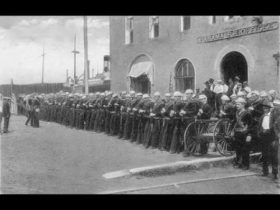
US Marines Seized Panama in 1903
or go to
Aletho News Archives – Video-Images
From the Archives
Precedents for Pizzagate
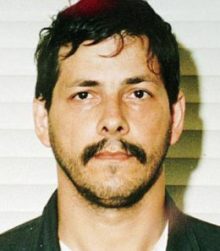
Marc Dutroux, Belgian pedophile, sadist, and serial killer with friends in high places
By Aedon Cassiel | Counter – Currents | December 23, 2016
To reiterate a point that should be clear to the more astute reader, my goal in this series (part 1, part 2) has not been to defend “Pizzagate” as such. My goal has been to defend the people who want to investigate it against specific accusations levied against them by people who think Pizzagate has revealed no intriguing information at all—for a specific reason, which I will be honing in and focusing on much more directly in this closing entry.
Whereas the mainstream critics of Pizzagate would have you believe that the dividing line is between paranoid conspiracy theorist followers of “fake news” and level-headed people who follow trustworthy news sources and rely on cold, hard reason to determine the truth, my goal has been to show that—whatever is or is not happening with Pizzagate itself—this framing of the issue is arrogant, insulting, and the product of extremely narrow tunnel vision. … continue
Blog Roll
 Aletho News
- The U.S. Sanctions Cuban Journalist For Reporting On The U.S. Blockade
- Israeli firms transform cars into intelligence devices: Reports
- Zionist-controlled companies to surveil British citizens
- THE CHILDREN GAMBIT
- A note on comment posting at Alethonews
- Trump stalls over Iran strike plan, Iran holds all the aces
- Zelensky’s Ceasefire for Elections is Strategic Gambit, Not Democratic Move
- US and Dutch pilots flying F-16s for Ukraine – Western media
- West’s Claims of Non-Involvement in Ukraine Conflict ‘Epitome of Hypocrisy’ – Expert
- Putin aide urges retaliation to ‘Western piracy’
- If Americans Knew
- Help end the injustice against Shadi
- Israel’s Favorite American President
- Israel’s “Yellow Line” Is a Death Trap for Palestinians. We Drove Into It.
- Why Israel’s expanding occupation in Syria presents a critical legal test
- Gaza is not a natural disaster. It is the victim of genocide enabled by global inaction
- Netanyahu’s plan to “end” US aid to Israel is to give even more money under a different name
- Israel ceased firing on Gaza for just 15 days of the “ceasefire” – Not a ceasefire Day 130
- In Gaza, “rats run over our faces” – Not a ceasefire Day 129
- Israel-backed border guards, GHF-linked aid – Not a ceasefire Day 128
- Israel battles Palestinian right of return, one Palestinian at a time – Not a ceasefire Day 127
- No Tricks Zone
- New Study: A 4°C Warmer Beaufort Sea Had ‘No Sea Ice’ 11,700 – 8200 Years Ago
- Unfudging The Data: Dutch Meteorological Institute Reinstates Early 20th Centruy Heat Waves It Had Erased Earlier
- German Gas Crisis…Chancellor Merz Allegedly Bans Gas Debate Ahead of Elections!
- Pollen Reconstructions Show The Last Glacial’s Warming Events Were Global, 10x Greater Than Modern
- Germany’s Natural Gas Storage Level Dwindles To Just 28%… Increasingly Critical
- New Study Rebuts The Assumption That Anthropogenic CO2 Molecules Have ‘Special’ Properties
- Climate Scientist Who Predicted End Of “Heavy Frost And Snow” Now Refuses Media Inquiries
- Polar Bear Numbers Rising And Health Improving In Areas With The Most Rapid Sea Ice Decline
- One Reason Only For Germany’s Heating Gas Crisis: Its Hardcore-Dumbass Energy Policy
- 130 Years Later: The CO2 Greenhouse Effect Is Still Only An Imaginary-World Thought Experiment
 Aletho News