The Real Motive Behind the FBI Plan to Investigate Trump as a Russian Agent
By Gareth Porter | Consortium News | February 13, 2019
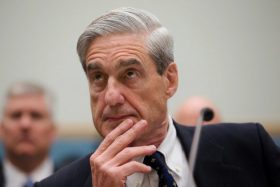 The New York Times and CNN led media coverage last month of discussions among senior FBI officials in May 2017 of a possible national security investigation of President Donald Trump himself, on the premise that he may have acted as an agent of Russia.
The episode has potentially profound political fallout, because the Times and CNN stories suggested that Trump may indeed have acted like a Russian agent. The New York Times story on Jan. 11 was headlined, “F.B.I. Opened Inquiry into Whether Trump Was Secretly Working on Behalf of Russia.” CNN followed three days later with: “Transcripts detail how FBI debated whether Trump was ‘following directions’ of Russia.”
By reporting that Russia may have been able to suborn the president of the United States, these stories have added an even more extreme layer to the dominant national political narrative of a serious Russian threat to destroy U.S. democracy. An analysis of the FBI’s idea of Trump as possible Russian agent reveals, moreover, that it is based on a devious concept of “unwitting” service to Russian interests that can be traced back to former CIA director John O. Brennan.
The Proposal That Fell Apart
The FBI discussions that drove these stories could have led to the first known investigation of a U.S. president as a suspected national security risk. It ended only a few days after the deliberations among the senior FBI officials when on May 19, 2017, the Justice Department chose Robert Mueller, a former FBI director, to be special counsel. That put control over the Trump-Russia investigation into the hands of Mueller rather than the FBI.
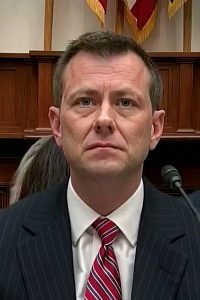
Peter Strzok, who led the bureau’s counter-espionage section, was, along with former FBI General Counsel James A. Baker, one of those involved in the May 2017 discussions about investigating Trump. Strzok initially joined Mueller’s team but was fired after a couple of months when text messages that he had written came to light exposing a deep animosity towards Trump that cast doubt over his impartiality.
The other FBI officials behind the proposed investigation of Trump have also since left the FBI; either fired or retired.
The entirety of what was said at the meetings of five or six senior FBI officials in the immediate aftermath of Trump’s firing of James Comey as FBI director on May 9, 2017, remains a mystery.
Closed-door Testimony
The CNN and Times stories were based on transcripts either obtained or, in the case of the Times, on portions read to it, of private testimony given to the House Judiciary and Government Oversight and Reform committees last October by Baker, one of the participants in the discussions of Trump as a possible Russian agent.
Excerpts of Baker’s testimony published by CNN make it clear that the group spoke about Trump’s policy toward Russia as a basis for a counter-intelligence investigation. Baker said they “discussed as [a] theoretical possibility” that Trump was “acting at the behest of [Russia] and somehow following directions, somehow executing their will.”
Baker went on to explain that this theoretical possibility was only “one extreme” in a range of possibilities discussed and that “the other extreme” was that “the President is completely innocent.”
He thus made it clear that there was no actual evidence for the idea that he was acting on behalf of Russia.
Baker also offered a simpler rationale for such an investigation of Trump: the president’s firing of FBI Director Comey. “Not only would [firing Comey] be an issue of obstructing an investigation,” he said, “but the obstruction itself would hurt our ability to figure what the Russians had done, and that is what would be the threat to national security.”
But the idea that Comey’s firing had triggered the FBI’s discussions had already been refuted by a text message that Strzok, who had been leading the FBI’s probe into the Trump campaign’s contacts with Russians, sent immediately after the firing to Lisa Page, then legal counsel to Andrew McCabe, formerly the bureau’s deputy director who was then acting director.
“We need to open the case we’ve been waiting on now while Andy is acting,” Strzok wrote, referring to McCabe.
As Page later confirmed to congressional investigators, according to the CNN story, Strzok’s message referred to their desire to launch an investigation into possible collusion between Trump and the Russians. Strzok’s message also makes clear he, and others intent on the investigation, were anxious to get McCabe to approve the proposed probe before Trump named someone less sympathetic to the project as the new FBI director.
Why the FBI Wanted to Investigate
The New York Times story argued that the senior FBI officials’ interest in a counter-intelligence investigation of Trump and the Russians sprang from their knowledge of the sensational charges in the opposition research dossier assembled by British ex-spy Christopher Steele (paid for by the DNC and the Clinton campaign) that the Putin government had “tried to obtain influence over Mr. Trump by preparing to blackmail and bribe him.”
But the Times writers must have known that Bruce Ohr, former associate deputy attorney general, had already given McCabe, Page and Strzok information about Steele and his dossier that raised fundamental questions about its reliability.
Ohr’s first contacts at FBI headquarters regarding Steele and his dossier came Aug. 3, 2016, with Page and her boss McCabe. Ohr later met with Strzok.
Ohr said he told them that Steele’s work on the dossier had been financed by the Clinton campaign through the Perkins-Cole law firm. He also told them that Steele, in a July 30, 2016 meeting, told him he was “desperate that Donald Trump not get elected and was passionate about him not being president,” according to Ohr’s contemporaneous notes of the meeting.
 So, key figures in the discussion of Trump and Russia in May 2017 knew that Steele was acting out of both political and business motives to come up with sensational material.
Strzok and Page may have started out as true believers in the idea that the Russians were using Trump campaign officials to manipulate Trump administration policy. However, by May 2017, Strzok had evidently concluded that there was no real evidence.
In a text message to Page on May 19, 2017, Strzok said he was reluctant to join the Mueller investigation, because of his “gut sense and concern” that “there’s no big there there.”
Why, then, were Strzok, Page, McCabe and others so determined to launch an investigation of Trump at about the same time in May 2017?
A CNN article about the immediate aftermath of the Comey firing reported that Deputy Attorney General Rod Rosenstein and senior FBI officials “viewed Trump as a leader who needed to be reined in, according to two sources describing the sentiment of the time.”
That description by anti-Trump law enforcement officials suggests that the proposed counter-intelligence investigation of Trump served as a means to maintain some leverage over his treatment of the FBI in regard to the Russia issue.
That motivation would be consistent with the decision by McCabe on May 15, 2017 – a few days after the discussions in question among the senior FBI officials – to resume the bureau’s relationship with Steele.
The FBI had hired Steele as a paid source when it had earlier launched its investigation of Trump campaign official’s contacts with Russians in July 2016. But it had suspended and then terminated the relationship over Steele’s unauthorized disclosure of the investigation to David Corn of Mother Jones magazine in October 2016. So, the decision to resume the relationship with Steele suggests that the group behind the new investigation were thinking of seizing an opportunity to take off the gloves against Trump.
The ‘Unwitting Collaboration’ Ploy
The discussion by senior FBI officials of a counter-intelligence investigation of Trump has become part of the political struggle over Trump mainly because of the stories in the Times and CNN.
The role of the authors of those stories illustrates how corporate journalists casually embraced the ultimate conspiracy theory – that the president of the United States was acting as a Russian stooge.
The reporters of the CNN story — Jeremy Herb, Pamela Brown and Laura Jarrett — wrote that the FBI officials were “trying to understand why [Trump] was acting in ways that seemed to benefit Russia.”
The New York Times story was more explicit. Co-authors Adam Goldman, Michael S. Schmidt and Nicholas Fandos wrote that the FBI officials “sought to determine whether Mr. Trump was knowingly working for Russia or had unwittingly fallen under Moscow’s influence.”
The same day the Times story was published, the lead author on the piece, Adam Goldman, was interviewed by CNN. Goldman referred to Trump’s interview with NBC’sLester Holt in the days after the Comey firing as something that supposedly pushed the FBI officials over the edge. Goldman declared, “The FBI is watching him say this, and they say he’s telling us why he did this. He did it on behalf of Russia.”
But Trump said nothing of kind. What he actually said — as the Times itself quoted Trump, from the NBCinterview —was: “[W]hen I decided just to do it, I said to myself – I said, you know this Russia thing with Trump and Russia is a made-up story.” The Times article continued: “Mr. Trump’s aides have said that a fuller examination of his comments demonstrates that he did not fire Mr. Comey to end the Russia inquiry. ‘I might even lengthen out the investigation, but I have to do the right thing for the American people,” Mr. Trump added. ‘He’s the wrong man for that position.’”
Goldman was evidently trying to sell the idea of Trump as a suspected agent of Russia.
Goldman also gave an interview to The New Yorker’s Isaac Chotiner, in which the interviewer pressed him on the weakest point of the Trump-as-Russian-agent theory. “What would that look like if the President was an unwitting agent of a foreign power?” asked Chotiner.
The Times correspondent, who won a Pulitzer Prize for his coverage of the alleged Russian efforts to influence the 2016 election, responded: “It is hard to say what that would look like.” Goldman then reiterated the concept. “People were very careful to tell me that: ‘It is wittingly or unwittingly.’” And in answer to a follow-up question, Goldman referred to evidence he suggested might be held by the FBI that “perhaps suggests that the President himself may be acting as a foreign agent, either wittingly or unwittingly….”
The idea that American citizens were somehow at risk of being led by an agent of the Russian government “wittingly or unwittingly” did not appear spontaneously. It had been pushed aggressively by former CIA Director John O. Brennan both during and after his role in pressing for the original investigation.
When Brennan testified before the House Intelligence Committee in May 2017, he was asked whether he had intelligence indicating that anyone in the Trump campaign was “colluding with Moscow.” Instead of answering the question directly, Brennan said he knew from past experience that “the Russians try to suborn individuals, and they try get them to act on their behalf either wittingly or unwittingly.” And he recalled that he had left the government with “unresolved questions” about whether the Russians had been successful in doing so in regard to unidentified individuals in the case of the 2016 elections.
Brennan’s notion of “unwitting collaboration” with Russian subversion is illogical. Although a political actor might accidentally reveal information to a foreign government that is valuable, real “collaboration” must be mutually agreeable. A policy position or action that may benefit a foreign government, but is also in the interest of one’s own government, does not constitute “unwitting collaboration.”
The real purpose of that concept is to confer on national security officials and their media allies the power to cast suspicion on individuals on the basis of undesirable policy views of Russia rather than on any evidence of actual collaboration with the Russian government.
The “witting or unwitting” ploy has its origins in the unsavory history of extreme right-wing anti-communism during the Cold War. For example, when the House Un-American Activities Committee was at its height in 1956, Chairman Francis E. Walter declared that “people who are not actually Communist Party members are witting or unwitting servants of the Communist cause.”
The same logic – without explicit reference to the phrase — has been used to impugn the independence and loyalty of people who have contacts with Russia.
It has also been used to portray some independent media as part of a supposedly all-powerful Russian media system.
The revelation that it was turned against a sitting president, however briefly, is a warning signal that national security bureaucrats and their media allies are now moving more aggressively to delegitimize any opposition to the new Cold War.
Gareth Porter is an independent investigative journalist and historian writing on U.S. national security policy. His latest book, “Manufactured Crisis: The Untold Story of the Iran Nuclear Scare,” was published in 2014. Follow him on Twitter: @GarethPorter.
The Tangled Threads of Russia-gate
By Robert Parry | Consortium News | December 5, 2017
A curious feature about the Russia-gate “scandal” is that its proponents ignore the growing number of moments when their evidence undercuts their narrative. Instead, they press ahead toward a predetermined destination in much the way that true-believing conspiracy theorists are known to do.
For instance, The New York Times ran a story on Monday, entitled “Operative Offered Trump Campaign Access to Putin,” detailing how a conservative operative “told a Trump adviser that he could arrange a back-channel meeting between Donald J. Trump and Vladimir V. Putin, the Russian president, according to an email sent to the Trump campaign” — and apparently described to the Times by a helpful source on Capitol Hill.
The Times quoted the email from National Rifle Association member Paul Erickson to Trump campaign adviser Rick Dearborn as saying, “Putin is deadly serious about building a good relationship with Mr. Trump. … [Putin] wants to extend an invitation to Mr. Trump to visit him in the Kremlin before the election.”
An NRA conference in Louisville, Kentucky, was supposed to be the location for the “first contact” between the Russians and the Trump campaign, according to the email.
The Times treated its new information as further confirmation of nefarious connections between the Trump campaign and the Russian government. Immediately after introducing this May 2016 email, which had the subject line, ”Kremlin Connection,” the Times reprised the background of former FBI Director Robert Mueller conducting a special-prosecutor investigation into “Russian interference in the election and possible collusion with the Trump campaign.”
Note how the Times’ reference to “Russian interference” was treated as flat fact although the Times still hedges on “possible collusion” between the Kremlin and the Trump campaign. Like much of the U.S. mainstream media, the Times no longer bothers to use “alleged” in front of “Russian interference” even though no solid evidence of a coordinated Kremlin effort has been presented.
But there is a bigger problem with this “scoop”: If the Russia-gate narrative were correct – that the Kremlin had identified Trump years earlier as a likely U.S. president and undertook a multi-year campaign to bribe and blackmail him to be Moscow’s Manchurian candidate or Putin’s “puppet” as Hillary Clinton charged – the Russians wouldn’t need some little-known “conservative operative” to serve as an intermediary in May 2016 to set up a back-channel meeting.
The Contradiction
In other words, assuming that the Times’ story is correct, the email suggests the opposite of the impression that the Times wants its readers to get. The email is either meaningless in that it led to no actual meeting or it contradicts the storyline about a longstanding Russian operation to plant a patsy in the White House.
Times reporter Nicholas Fandos noted that it was unclear what Dearborn did in response to this overture, although the Times reported that Dearborn had forwarded a similar proposal by Christian conservative activist Rick Clay to Trump’s son-in-law Jared Kushner, who rebuffed the offer.
On Monday, I read the rest of the Times email story looking for some acknowledgement of the problems with its implied scenario, but found none. Fandos made references to other low-level efforts by Russians to make contact with Trump’s advisers (without noticeable success, I might add), but again these examples actually run counter to the image of Trump as the Kremlin’s prized chump.
If Putin had several years ago foreseen what no one else did – that Trump would become the U.S. president – then these ad hoc contacts with members of Trump’s entourage in 2016 would not have been needed.
The Times’ scoop parallels the story of the plea deal that Russia-gate prosecutors struck with low-level Trump foreign policy adviser George Papadopoulos who admitted lying about his contacts with an obscure academic in Stirling, Scotland, who supposedly offered to be another intermediary between Trump’s team and the Kremlin.
According to court documents, Papadopoulos, a 30-year-old campaign aide, got to know a professor of international relations who claimed to have “substantial connections with Russian government officials,” with the professor identified in press reports as Joseph Mifsud, who is associated with the University of Stirling.
The first contact between Mifsud and Papadopoulos supposedly occurred in mid-March 2016 in Italy, with a second meeting in London on March 24 when the professor purportedly introduced Papadopoulos to a Russian woman whom the young campaign aide believed to be Putin’s niece, an assertion that Mueller’s investigators determined wasn’t true.
Trump, who then was under pressure for not having a foreign policy team, included Papadopoulos as part of a list drawn up to fill that gap, and Papadopoulos participated in a campaign meeting on March 31 in Washington at which he suggested a meeting between Trump and Putin, a prospect that other senior aides reportedly slapped down.
In other words, at least based on the reporting about the Dearborn email and the Papadopoulos overture, there is no reason to believe that Trump was colluding with Moscow or had any significant relationship at all.
If these developments point to anything, it is to the opposite; that Russia was fishing for some contacts with what – however implausibly – was starting to look like a possible future U.S. president, but with whom they were not well-connected.
Gotcha Moments
There have been similar problems with other Russia-gate “gotcha” moments, such as disclosures of a possible Trump hotel deal in Moscow with Mikhail Fridman of Russia’s Alfa Bank. Though Trump’s presumed financial tie-ins to Russian oligarchs close to Putin were supposed to be fundamental to the Russia-gate narrative, the outcome of the hotel deal turned out to be a big nothing.
One source knowledgeable about the proposed deal told me it fell apart because Trump was willing to put little on the table beyond the branding value of the Trump name. However, if Putin were actually trying to buy Trump’s loyalty, money presumably would have been no obstacle. Indeed, you would think that the more money used to line Trump’s pockets the better. But the hotel deal collapsed; there is no Trump hotel in Moscow.
Other Russia-gate cases are equally disconnected from what had been the original narrative about senior Russians spending years cultivating Trump as their Manchurian candidate.
The accusations against Trump’s onetime campaign chief Paul Manafort focus on his alleged failure to report income from — and pay taxes on — work that he did for the elected government of Ukraine before any involvement in the Trump campaign.
Last week’s guilty plea from former National Security Adviser Michael Flynn related to purportedly false statements and omissions that he made when questioned by FBI agents about calls to Russian Ambassador Sergey Kislyak during the transition, i.e., after Trump had been elected.
Despite the breathless coverage on MSNBC and the Times’ excited headlines about how the “inquiry grows,” there remain other core problems for the narrative. No matter how often the U.S. mainstream media asserts the suspicion of Russian “hacking” of Democratic emails as flat fact, no solid proof has yet been presented – and the claim has been denied by both the Russian government and WikiLeaks, which published the key emails.
Sleight of Hand
The Times and other mainstream media outlets play their sleight of hand on this key point by asserting that “U.S. intelligence agencies” have “concluded” that Russian intelligence services “hacked” the emails from the Democratic National Committee and Clinton’s campaign chief John Podesta, but that summary ignores the specifics.
First of all, by using this summary of the facts, the Times and other outlets continue to give the false impression that all 17 U.S. intelligence agencies concurred in the conclusion, a false claim that Hillary Clinton and the mainstream press have asserted over and over, although it is now clear that no such consensus ever existed.
Former Director of National Intelligence James Clapper testified that the Jan. 6 report on alleged Russian interference was produced by “hand-picked” analysts from only three organizations: the FBI, CIA and National Security Agency.
And, even those “hand-picked” analysts stipulated that they were not asserting Russian guilt as fact but only as their best guess. They included the disclaimer: “Judgments are not intended to imply that we have proof that shows something to be a fact. Assessments are based on collected information, which is often incomplete or fragmentary, as well as logic, argumentation, and precedents.”
Even New York Times reporter Scott Shane initially noted the absence of evidence, writing: “What is missing from the public report is what many Americans most eagerly anticipated: hard evidence to back up the agencies’ claims that the Russian government engineered the election attack. … Instead, the message from the agencies essentially amounts to ‘trust us.’”
Former senior U.S. intelligence officials, including the NSA’s ex-technical director William Binney, have raised further doubts about whether a “hack” occurred. Binney conducted tests on download speeds and determined that the extraction of one known batch of Democratic emails was not possible over the Internet, but did match the speed of a USB download onto a thumb drive, suggesting a leak from a Democratic insider.
So, rather than the many disparate strings of Russia-gate coming neatly together more than a year after last year’s election, the various threads either are becoming hopelessly tangled or flying off in different directions.
Investigative reporter Robert Parry broke many of the Iran-Contra stories for The Associated Press and Newsweek in the 1980s.
Featured Video

Bombing Hitler’s Hometown
or go to
Aletho News Archives – Video-Images
From the Archives
‘Conspiracy Theory’ Now Fact: Greater Israel Has Arrived
By Kit Klarenberg | Mint Press News | January 28, 2025
Ever since Tel Aviv’s 1948 creation, much has been said and written about ‘Greater Israel’ – the notion Zionism’s ultimate end goal is the forcible annexation and ethnic cleansing of vast swaths of Arab and Muslim lands for Jewish settlement, based on Biblical claims this territory was promised to Jews by God. The mainstream media typically dismisses this concept as antisemitic conspiracy theory, or at most the fringe fantasy of a minuscule handful of extremist Israelis.
In reality … continue
Blog Roll
 Aletho News
- Yemen joins fight against US, Israel by firing missiles at occupied territories
- Seizing the Kharg: Washington’s path to defeat in the Persian Gulf
- Iran reports 500 US casualties in strikes on covert US military sites
- Pro-Israel terrorist arrested before assassination of pro-Palestinian activist
- Bombing Hitler’s Hometown
- German journalist threatened with homelessness as German court upholds EU sanctions in landmark free speech case
- US Tells Allies That Ukraine-Bound Arms Could be Sent to Middle East
- Organized terrorism: Iran condemns killing of its diplomats in Lebanon
- Why could Gaza enter the regional war?
- Hamas official rejects Mladenov Plan linking disarmament to Gaza reconstruction
- If Americans Knew
- Researchers at Human Rights Watch Resign Over Blocked Report on Palestinian Refugee Return
- Jewish Groups Are Backing a War Americans Don’t Want
- Eric Fingerhut Thinks He’s the President of the Jews
- Top Jewish Philanthropists, Rabbis Urge Israeli President to Take Action Against ‘Jewish Extremists’
- Don’t Be Fooled. Zionist Leaders Have Always Wanted to Control Southern Lebanon
- Israel’s widespread use of torture is a core element of its genocide against the Palestinian people
- In Israel’s War on Iran, Many Middle East US Bases Rendered “All But Uninhabitable”
- ‘Burn the lawn’: Israel pursues ‘Rafah model’ in southern Lebanon
- A genocide here, an amputation there
- Reports: Iran mobilizing 1M fighters, Israel-US run low on ammo, Israeli army faces shortage – Not a ceasefire Day 168
- No Tricks Zone
- Devastating Assessment Of Comirnaty Vaccine By Former Senior Pfizer Europe Toxicologist
- New Study: CO2 Is ‘Effectively Negligible’ As An Explanatory Climate Change Factor Since 2000
- Former Pfizer Toxicologist Dr. Helmut Sterz Tells Bundestag Hearing Pfizer Vaccine Should Have Never Been Approved
- Energy Expert: Germany’s Nuclear Phaseout Was A “500 Billion Euro Mistake”
- New Research: South Australia’s Mid-Holocene Sea Surface Temperatures Were 4°C Warmer Than Today
- Storing Green Energy To Last Germany 10 Days Would Require A 60-Million Tonne Battery
- New Studies: UK Sea Levels Were 4 Meters Higher Than Today During The Mid-Holocene
- Destructive Green New Deal: German Energy And Metal Group Warns Of Drastic Crisis
- New Study Documents A 20-Year Pause In Arctic Sea Ice Decline – Driven By Internal Variability
- Wake-up Call: Survey Shows Majority Of Germans Now Favor Postponing Climate Targets!
 Aletho News