Collapsing Empire: US Bows To African Revolutionaries
By Kit Klarenberg | Al Mayadeen | February 6, 2026
On February 2nd, the BBC published an extraordinary report on how the Trump administration “has declared a stark policy shift” towards Burkina Faso, Mali, and Niger, the governments of which have sought to eradicate all ties to Western imperial powers, and forged the Alliance of Sahel States (AES). The independent bloc is a revolutionary enterprise, with the prospect that further countries will follow its members’ lead. And Washington is under no illusions about the new geopolitical realities unfolding in Africa.
The British state broadcaster records how Nick Checker, State Department African Affairs chief, is due to visit Mali to convey US “respect” for the country’s “sovereignty”, and chart a “new course” in relations, moving “past policy missteps.” Checker will also express optimism about future cooperation with AES “on shared security and economic interests.” This is an absolutely unprecedented development. After military coups deposed the elected presidents of all three countries 2020 – 2023, the trio became Western pariahs.
France and the US sought to isolate and undermine the military governments, halting “cooperation” projects in numerous fields. Meanwhile, the Economic Community of West African States, a neocolonial union of which all three were members, first imposed severe sanctions on Burkina Faso, Mali, and Niger, before its combined armed forces prepared to outright invade the latter in summer 2023. The three countries didn’t budge, and in fact welcomed Western isolation, forging new international partnerships and strengthening their ties. ECOWAS military action never came to pass.
In January 2025, the trio seceded from the union and created AES. Western-funded, London-based Amani Africa branded the move “the most significant crisis in West Africa’s regional integration since the founding of ECOWAS in 1975,” claiming it dealt “a significant blow to African… cooperation architecture.” Meanwhile, Burkina Faso’s leader Capt Ibrahim Traoré has become a media hate figure. A disparaging May 2025 Financial Times profile slammed him as a cynical opportunist leading a “Russia-backed junta”, and his supporters a “cult”.
As the BBC unwittingly explains, such antipathy towards Traoré stems from establishing himself “as a standard-bearer in resisting ‘imperialism’ and ‘neocolonialism’.” Via “vigorous social media promotion, he has gained huge support for this stance and personal popularity among young people across the continent and beyond,” ever since seizing power in September 2022. Far from just talk, Traoré and his fellow AES “junta” leaders have systematically sought to neutralise malign Western influence locally, while pursuing left-wing economic policies for the good of their populations.
France and the US have proven markedly powerless to hamper, let alone reverse, this seismic progress. While officials in Paris and Washington hitherto relentlessly hammered AES’ members over “democracy and human rights” concerns, the BBC reports such considerations will be wholly “absent from the agenda” when State Department officials now visit Mali. In other words, the Empire recognises it no longer has the ability to dictate the composition or policies of regional governments and must engage administrations on their own terms.
‘Despotic Governments’
While generating only occasional mainstream interest, the push by Burkina Faso, Mali, and Niger to rid themselves of Western imperialism has been remarkable in its scope and efficacy. French and US media programmes and channels have been blocked throughout AES. In August 2022, Paris’ forces were sent packing from Mali after a nine-year-long occupation. Two years later, Russian soldiers took over an airbase in Niger housing American forces at the government’s invitation, after authorities demanded Washington withdraw from the country.
These purges have had a knock-on effect in the wider region. For example, in November 2024, Chad abruptly terminated a military agreement, ending France’s long-running occupation of the country. Around the same time, Senegal demanded that the French close their military base in Dakar. The last troops departed in July 2025, leaving Paris with no permanent installations in Central or West Africa. Meanwhile, efforts by AES members to drive Britain, France, and the US out of every major sector of their economies are ongoing.
Right when Chad and Senegal were bidding bon voyage to French forces, Niger seized control of local mining firm Somaïr, a component of state-owned French nuclear company Orano. Somaïr provided a quarter of the uranium supply to European nuclear power plants. Resultantly, EU imports of uranium from Russia rose by over 70%, despite the supposedly crippling sanctions imposed over the Ukraine proxy war. In another bitter irony, Moscow has concurrently cemented itself as a close partner of AES member states in economic and military fields.
This burgeoning relationship has triggered a predictable chorus of condemnation and fearmongering from Western journalists, politicians, and pundits. Yet, a March 2024 poll published by the German Friedrich Ebert Stiftung Foundation found 98% of Malians approve of their country’s bond with Russia, with 83% being “very satisfied” and 15% “rather satisfied”. More generally, the same survey highlighted how Mali’s “junta” enjoys overwhelming public support, about which Western governments can only fantasise.
In all, 81% of respondents believed life in Mali had improved since the military administration took power. A staggering 99% expressed satisfaction with the work of security forces, 95% were optimistic about the country’s future prospects, and 87% rejected calls for an election. Similar results were found in a poll of Burkina Faso’s population in August. A stunning 66% of citizens said it was legitimate for the military to seize power, if “elected leaders abuse their power for their own interests.”
As a fascinating paper by Senegalese academic Ndongo Samba Sylla forensically details, ever since supposed independence was granted to Africa in the 1960s, France and other imperial powers have worked concertedly to ensure its constituent countries are ruled by pliant puppets. Along the way, the West has “shown no scruples in backing odious civilian or military regimes” favourable to their interests. This produces “choiceless democracies” across Africa, with “despotic governments” that come to power “through fraudulent elections and… do not create any welfare for their people.”
‘Lasting Solutions’
Sylla cites the example of Chad, where France sustained a corrupt, brutal dictator, Idriss Deby Itno, in office 1990 – 2021. Following his death, Emmanuel Macron diplomatically backed his son’s “unconstitutional succession”. The French President’s unabashed advocacy for an illiberal, nepotistic power grab is to be contrasted with Macron’s furious censure of the military coups in Burkina Faso, Mali, and Niger, demands they hold elections, and calls for “financial sanctions from African countries, the West and its financial institutions.”
France could impose sanctions directly on the trio due to Paris’ control of the Central Bank of West African States, the financial arm of ECOWAS. Membership ties states to the CFA Franc, a currency created after World War II that allowed Paris to maintain grossly iniquitous trading relationships with its African colonies, when its economy was ravaged and its overseas empire rapidly unravelling. The CFA Franc makes it cheap for members to import from France and vice versa, but prohibitively expensive for them to export elsewhere.
Such forced dependency creates a captive market for the French, and by extension, Europe, decisively blunting local development. Member states are impotent to enact meaningful policy changes, as they lack control over their own economies, forced to take orders from the IMF, World Bank, and Western investors. As Sylla remarks: “No matter who you elect, they will have to stick with the basic economic policy blueprint.” Creating a replacement currency is AES’ next major challenge – although its members have already started constructing a central bank.
AES’ continued existence and successes are anathema to Paris. Since “decolonisation” in Africa in the early 1960s, the French have launched 50 overt interventions in Africa, which doesn’t account for assassinations of anti-imperialist leaders, palace coups, rigged elections, and other skullduggery employed to maintain France’s mephitic, exploitative grip over its former holdings. Delusions of keeping the continent wedged under their heels have not faded, despite the dramatic collapse of French power locally. In April 2024, General Francois Lecointre, former French Army Chief of Staff, declared:
“What we Europeans have in common is the Mediterranean and Africa, where our destiny is at stake… Europe will have an obligation to return to Africa to help restore the state and bring back administration and development. It’s not China, Russia, or Wagner [Group] who are going to provide lasting solutions to the very great difficulties facing these African countries and their people.”
Residents of AES evidently beg to differ, and stand ready to defend their leaders from foreign destabilisation. US officials aren’t unwise to the region’s new power dynamic. In an October 2025 interview with Le Monde, Trump confidante and State Department senior advisor for Africa, Massad Boulos, rejected any suggestion Washington would criticise the Sahel’s military governments, as while “democracy is always appreciated… people are free to choose whatever system is appropriate for them.” The anti-imperialist struggle continues apace in Africa – and for now, revolutionaries are winning.
Niger, Burkina Faso, Mali sign treaty to become confederation
Al Mayadeen | July 7, 2024
“This summit marks a decisive step for the future of our common space,” Capt. Ibrahim Traore, the leader of Burkina Faso, wrote on X.
The military-led governments of Mali, Burkina Faso, and Niger convened their first joint summit on Saturday in Niamey, the capital of Niger. During this historic meeting, they announced the formation of a confederation of the three Sahel states.
In their inaugural summit since coming to power, the leaders adopted a joint statement outlining a treaty to establish the confederation.
“This summit marks a decisive step for the future of our common space. Together, we will consolidate the foundations of our true independence, a guarantee of true peace and sustainable development through the creation of the ‘Alliance of Sahel States’ Confederation,’” Capt. Ibrahim Traore, the leader of Burkina Faso, wrote on X.
Tensions with ECOWAS persist
The summit appears to signal a departure from the Economic Community of West African States (ECOWAS). Tensions between the Sahel nations and ECOWAS escalated after Gen. Abdourahamane Tiani seized power from the elected President Mohamed Bazoum in a coup in Niger last July. In response, ECOWAS imposed sanctions on Niger and threatened intervention, further straining relations.
“The AES (Alliance of Sahel States) is full of enormous natural potential which, if properly exploited, will guarantee a better future for the people of Niger, Mali and Burkina Faso,” said Traore.
“Our people have irrevocably turned their backs on ECOWAS,” stated Tiani to his fellow Sahel leaders.
The three AES countries accuse ECOWAS of being manipulated by former colonial ruler France, with Tiani calling for the new bloc to become a “community far removed from the stranglehold of foreign powers.”
Niger, Mali, and Burkina Faso’s military leaders have all rejected French influence, expelling French troops from their countries and turning instead toward what they call their “sincere partners” – Russia, Turkey, and Iran. They emphasize sovereignty as a guiding principle of their governance and aim to establish a common currency.
Germany to Close Airbase in Niger After Negotiations on Soldiers Immunity Fail – Reports
Sputnik – 07.07.2024
The German armed forces will give up its airbase in Niger, which was used as a military transport hub, by August 31, as the sides failed to extend the agreement concerning the base, German media reported on Saturday, citing the German Defense Ministry.
The talks broke down after the new Nigerien authorities had refused to grant German soldiers with immunity from prosecution, the NTV news outlet reported, citing a document the ministry had presented before the parliament.
Germany expects to withdraw its troops from the country by the end of August as well.
The German military has used the base in Niger’s capital, Niamey since 2013 as a supply center for its armed forces in neighboring Mali, which were stationed there as part of a UN peacekeeping mission.
Nigerien authorities, which took power in a military takeover in July 2023, have since then also terminated military agreements with France and the United States, which led to the French and US forces’ withdrawal from the country.
Pentagon orders withdrawal of all US combat troops from Niger
Press TV – May 11, 2024
The US military has ordered its troops to pull out from Niger following the cancellation of a military agreement by the African country’s new leaders.
Niger’s new leaders demanded the withdrawal of American and French troops after they ousted Western-backed president Mohamed Bazoum on July 26, 2023.
They announced on March 17 that Niger had canceled a 2012 military cooperation agreement with the US, calling for an end to the US military’s “illegal” presence in the country.
The Pentagon this week formally ordered all 1,000 US combat troops to withdraw from Niger, Politico reported on Friday.
The order comes as newly-arrived Russian forces have been living at the same airbase as American troops in the capital of Niamey, Base 101, for weeks.
According to a US official, troops will be relocated to another base within the region from which they can still carry out their military operations.
Until the country’s military overthrew the pro-Western government in a coup last summer, a US-built drone base near Agadez in central Niger had been a linchpin for Washington’s military operations in the Sahel region.
Bazoum, and the previous Nigerien governments before him, had given the US military the green light to operate in the country, train Nigerien forces, and take part in what the Americans described as counter-terrorism activities.
However, the new leaders reject the “illegal” presence of US troops on Niger’s territory, saying “it was not democratically approved and imposes unfavorable conditions on Niger, particularly in terms of lack of transparency on military activities.”
Niger also called for the exit of French troops from the country and canceled two security and defense partnerships with the EU last year.
Instead, the West African country signed a memorandum of understanding to strengthen defense cooperation with Russia last December.
Niger has also signed a trilateral defense agreement with neighboring Burkina Faso, and Mali, binding the three Sahel countries to assist one another in the event of a military attack on any one of them.
Niger broke military pact with US after being ‘warned’ about Iran, Russia ties
Press TV – March 19, 2024
Niger’s junta decided to suspend a military agreement with the United States after a delegation of senior US military officials visited the Western African country and “expressed concerns” about its growing relations with Russia and Iran.
The Pentagon said on Monday that the officials traveled to the Nigerien capital Niamey last week to discuss the matter with the country’s military leadership, seeking clarification about the way ahead.
Pentagon spokesperson Sabrina Singh asserted that the US government had “direct and frank” conversations in Niger, and was continuing to communicate with the country’s ruling military council – known as the National Council for the Safeguard of the Homeland (CNSP).
“The US delegation was there to raise a number of concerns. … We were troubled (about) the path that Niger is on. And so these were direct and frank conversations, to have those in person, to talk about our concerns and to also hear theirs.
“US officials expressed concern over Niger’s potential relationships with Russia and Iran,” Singh said.
Niger’s junta announced on Saturday that it had canceled a 2012 defense cooperation agreement with the US.
“The government of Niger, considering the aspirations and interests of its people, responsibly decides to denounce with immediate effect the agreement that permitted US military personnel and civilian employees from the American Department of Defense on Niger’s territory,” Nigerien government spokesman Amadou Abdramane said in a statement on national television.
The move followed a visit to Niamey by a delegation of senior US military officials led by Under Secretary of State for African Affairs Molly Phee.
Abdramane accused US officials of not following diplomatic protocol and not informing Niger about the composition of the delegation.
He added that Niger regretted the “intention of the American delegation to deny the sovereign Nigerien people the right of choosing their partners and partnerships capable of truly helping them fight against terrorism.”
High-level Russian military officials, including Deputy Defense Minister Yunus-bek Yevkurov, have visited Niger and met with the country’s military leadership.
The prime minister of the ruling junta, Ali Mahamane Lamine Zeine, visited Iran in January.
Foreign Minister of Niger, Bakary Yaou Sangare, visited Tehran in October 2023 to explore opportunities for strengthening political and economic ties, as well as boosting cooperation in scientific and technological sectors between the two countries.
Commending Iran’s skills in various economic, scientific, and technological sectors, the Nigerien diplomat underscored that Iran’s capabilities are well-matched to cater to Niger’s requirements in the energy and industrial domains.
Canceled US Joint Exercises in Africa Shows Washington’s Influence Abroad Slipping
Sputnik – 28.01.2024
Retired CIA intelligence officer and State Department official Larry Johnson told Sputnik the move may be related to internal pressure not to work alongside “troops associated with coup governments.”
The United States military leadership has scrapped plans to hold joint exercises with several African states such as Sudan, Mali, Niger, Ethiopia, Eritrea and Burkina Faso.
According to the Washington Post, the Pentagon’s change of plans was, “at least in part,” the result of US Democrats pressuring the Biden administration to bar “troops associated with coup governments” from participating in US-led military exercises.
Exercises such as these are usually planned many months in advance, so the decision to scrap these plans means “there’s an issue with the governments that were supposed to participate,” said retired CIA intelligence officer and State Department official Larry Johnson.
Describing the military exercises’ cancellation as a “significant” development, Johnson told Sputnik that this move by the Pentagon may have also been prompted by the decision of the host African governments not to participate.
“In any event, I think what it does signify is that US influence over other countries, its ability to basically tell countries what to do and compel countries to follow US policy, is slipping, that the US influence in areas like Africa is growing weaker, not stronger,” he remarked.
Johnson also suggested that the decision by Niger, Mali and Burkina Faso to withdraw from the Economic Community of West African States (ECOWAS) may be related to this development, considering that ECOWAS is primarily regarded as an entity “under Western influence.”
According to him, the fact that these countries chose to part ways with ECOWAS and pursue “bilateral agreements among themselves” does seem like signs of them “distancing themselves from US control.”
Macron Recalling Ambassador to Niger, French Embassy’s Staff, Troops
Sputnik – 24.09.2023
France is recalling French Ambassador to Niger Sylvain Itte, all staff of the French Embassy, and all French troops in the West African country, President Emmanuel Macron said on Sunday.
“The Ambassador in Niamey, as well as all staff of the embassy, will return to France in the coming weeks or months,” Macron told a French broadcaster.
He added that the military cooperation with Niger is “over” and French troops will leave the country by the end of the year.
“I spoke with President Mohamed Bazoum today and informed him that France has decided to recall its ambassador … We will also put an end to our military cooperation with the current Nigerien authorities because they are no longer aiming to fight terrorism. This is the end of this cooperation, it [the troops withdrawal] will be organized in the coming weeks or months. The troops will return in an organized manner before the end of the year,” Macron said.
Bazoum was deposed as president by his guard during a military takeover in July. France has refused to recognize the new government in Niger, initially ignoring their demands for French troops and the ambassador to leave the country.
Roughly 1,500 French troops are currently deployed in Niger. Despite the move, Macron said he still views Bazoum as the true leader of Niger.
Bazoum has called for his reinstatement, calling for help from the Economic Community of West African States, but two members of the block, Burkina Faso and Mali, signed a defensive pact with the military leadership of Niger and threatened to leave ECOWAS if it took military action against Niger.
The French embassy in Niamey and French military bases have been the focus of mass protests in the capital city.
Mali, Burkina Faso, Niger Sign Charter to Create Defense Alliance
Sputnik – 17.09.2023
The leaders of Mali, Burkina Faso and Niger have signed a charter establishing an alliance of Sahel states to create a collective defense architecture, Mali’s interim president for the transitional period, Assimi Goita, said on Saturday.
“I have signed today with the leaders of Burkina Faso and Niger the Liptako Gourma Charter, establishing the Alliance of Sahel States to create an architecture of collective defense and mutual assistance for the benefit of our people,” Goita said on X.
An attack on the sovereignty or territorial integrity of one or more parties to the charter will be regarded as aggression against the other parties and will require their assistance, including the use of military force, the document read.
The parties also commit to fighting terrorism and organized crime on the territory of Sahel states, the charter added.
Why Are We in Niger?
By Ron Paul | September 11, 2023
The July military coup in the west African country of Niger has once again brought attention to the fact that the US government runs a global military empire that serves Washington’s special interests, and not the national interest.
Before the coup made news headlines, most Americans – including many serving in Congress – had no idea the US government maintains more than 1,000 troops stationed on several US bases in Niger. But it’s even worse than that. A recent report in The Intercept suggests the Pentagon repeatedly misled Congress about the extent and the cost of the US presence in Niger.
According to The Intercept, “in testimony before the House and Senate Armed Services Committees in March, the chief of US Africa Command described Air Base 201 (in Niger) as ‘minimal’ and ‘low cost.’” In fact the US government has spent a quarter of a billion dollars on the base since construction began in 2016.
So when did Congress declare war so as to legalize US military operations in Niger? They didn’t. But as Kelley Vlahos writes in Responsible Statecraft, US troops have been “training” the military in Niger since 2013 and the US government has constructed a number of military bases to “fight terrorism” in the country and region.
Does that mean that the Pentagon is operating in Niger under the 2001 authorization for the use of military force (AUMF) meant to track down those who attacked the US on 9/11? It’s a good question and thankfully one being asked by Sen. Rand Paul in a recent letter sent to Secretary of Defense Lloyd Austin.
Senator Paul first pointed out in the letter, “the Administration’s limitless interpretation of the 9/11 AUMF and frequent use of Title 10 authorities results in military operations abroad conducted with little Congressional oversight and even less public scrutiny.” Such actions “undermine our Constitution,” he writes as he asks, “in how many countries are US forces conducting operations authorized by the 2001 AUMF.”
Ironically – or maybe not – one of the coup leaders in NIger had been trained by the Pentagon at Ft. Benning, Georgia, and at the National Defense University in Washington, DC. What is the US government training foreign military officers to do, exactly? Overthrow their own governments?
Whatever the case, it appears the coup government in Niger may be seeking a withdrawal of foreign military on its soil. Mass protests against French military presence has led the French government to begin talks with the coup government on withdrawal. There are rumors that the coup government may next request US troops to leave the country.
We should pre-empt their possible request by withdrawing all US troops immediately from Niger (and the rest of Africa) and closing all military bases. The claim that the US government is fighting terrorism in the area is doubtful. After all, in both Libya and in Syria the US government backed terrorist groups against governments it sought to overthrow. President Biden’s national security advisor Jake Sullivan famously wrote to his then-boss Secretary of State Hillary Clinton in 2012 that, “in Syria, al-Qaeda is on our side.”
Congress must step up and exercise its oversight authority to end the counter-productive US military presence in Africa. Our military empire is bankrupting us and turning the rest of the world against us.
Copyright © 2023 by RonPaul Institute
Pentagon Misleads Congress About Number of Bases in Africa
By James Tweedie – Sputnik – 12.09.2023
The US military maintains a string of bases spanning the Sahel region of Africa. Tunde Osazua, coordinator of the US Out of Africa Network — part of the Black Alliance for Peace — said they amounted to a military occupation of the continent.
The US Department of Defense has lied to Congress about its shady activities in Africa — funded by taxpayers. Peace campaigner Tunde Osazua told Sputnik that the US Department of Defense was not coming clean to legislators about its network of bases across the continent.
Osazua explained that General Michael Langley, commander of the US Africa Command (AFRICOM), had briefed Congress on the military’s facilities in Africa, including the ‘enduring forward operating sites’ at Camp Lemonnier in Djibouti and the Cat Hill air base on Ascension Island, the tiny British South Atlantic colony, along with 12 other “posture locations”.
“He claimed that those locations have minimal permanent US presence and low cost facilities and limited supplies for the US forces The soldiers and their personnel are there to perform critical missions and quickly respond to emergencies,” he noted.
“Experts say that he misled Congress, that AFRICOM’s chief basically lied about the size and the scope of the US presence on the African continent,” Osazua said. “Instead of 12 posture locations there are no less than 18 outposts in addition to Camp Lemonnier.”
“This is according to what AFRICOM itself released in its own secret 2022 Theater Posture Plan, which I think might even understate the current footprint of AFRICOM on the continent.” In fact, peace group World Beyond War has listed around 55 US military installations in Africa, he pointed out.
The anti-imperialist campaigner said the Pentagon was “essentially lying to Congress about this.”
“They’re trying to say that they’re doing a lot with very few resources when there’s a lot of funding for… what is military occupation,” Osazua said. “it’s clear that the US military activity on the continent is extensive. A few years ago a report came out that said that there are close to 3,500 missions per year that the AFRICOM takes part in on the continent. That’s close to ten missions a day.”
The commentator noted that the west African state of Niger had become “a particular point of focus” since the recent military takeover, with former colonial power France refusing to evacuate its troops and embassy and some of its compliant governments in the region threatening military intervention.
AFRICOM’s Airbase 201 is also in Niger, featuring a 6,200-foot runway taxiways, hangars, living quarters, roads, utilities, munitions, storage, an aircraft rescue and firefighting station — all within a 25-kilometer security zone.
But Osazua stressed “how the people and the government have responded to US and French military presence on their soil, which again amounts to a basically military occupation.”
French Troops Reportedly Given Until September 3 to Withdraw From Niger
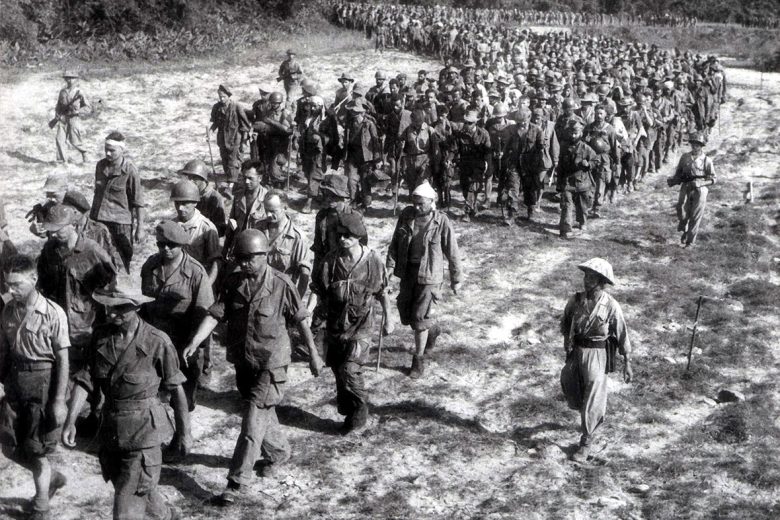
Removal of French forces from Dien Bien Phu, Vietnam, in 1954.
Sputnik – 30.08.2023
Niger’s National Council for the Safeguard of the Homeland (CNSP) has reportedly demanded the complete withdrawal of French troops from the West African country by September 3.
Earlier in the day, Saudi media reported the CNSP had announced the annulment of all security and military agreements with France.
By the end of the week, supporters of the pullout are going to stage an indefinite protest against the presence of the French military in Niger. Some residents have reportedly demanded that the authorities cut water and power supply to the French base, as well as halt food deliveries.
Last week, the Nigerien Foreign Ministry called on French Ambassador Sylvain Itte to leave the country within 48 hours. Paris said it took note of Niger’s request to the ambassador, but noted Niger’s military leadership has no authority to make such decisions.
Nigerien soldiers stand guard as supporters of Niger’s National Council for the Safeguard of the Homeland (CNSP) gather for a demonstration in Niamey on
On July 26, Niger’s presidential guard ousted and detained President Mohamed Bazoum. The guard’s commander, Gen. Abdourahmane Tchiani, proclaimed himself the president of the caretaker CNSP-led government. Most Western countries as well as ECOWAS condemned it. In early August, ECOWAS adopted a plan for a potential military intervention in Niger.
The Nigerien Coup Prompted A Long-Overdue Discussion About Sovereignty In West Africa
BY ANDREW KORYBKO | AUGUST 27, 2023
It was earlier assessed that “The AU-ECOWAS Rift Over Niger Was Predictable” due to their differing approaches towards the continent’s latest regime change. The AU believes that its ousted leader should be returned to power via peaceful means while ECOWAS’ active members are in favor of forcefully reimposing his rule. Neither of them support the interim authorities’ three-year transitional plan, however, with ECOWAS rejecting it outright and the AU suspending Niger right afterwards.
The AU also “called upon all Member States of the AU and the international community including bilateral and multilateral partners, at large to reject this unconstitutional change of government and to refrain from any action likely to grant legitimacy to the illegal regime in Niger.” This came shortly after reports began circulating that neighboring Burkina Faso and Mali, which are also run by interim military-led governments, stationed warplanes in Niger to deter a French-backed Nigerian-led ECOWAS invasion.
Late last week, those three countries’ Foreign Ministers met in Niamey, where they issued a joint statement that importantly declared the following:
“The three countries have agreed to grant each other facilities for mutual assistance in matters of defense and security in the event of aggression or terrorist attacks. They have decided to set up a consultation framework that allows them to coordinate their actions in order to deal with the multiple situations and challenges to which they are exposed. This consultation framework remains open to countries wishing to participate in this dynamic in order to respond to the concerns and needs of their populations in terms of peace, security and economic and monetary development. To this end, they agreed to set up a Joint Secretariat.”
Simply put, they’ve established a regional mutual defense alliance (“Sahelian Alliance”) that’ll also aim to accelerate political and economic-financial integration between them.
Before delving into a discussion about which of the three organizations involved in the West African Crisis – the AU, ECOWAS, and the Sahelian Alliance – truly represent the Nigerien people’s sovereign will, Russian Foreign Minister Lavrov’s detailed reaction to that country’s regime change is worth mentioning. It can be read in full here, but he basically concluded that the region’s interim military-led governments sought to rebalance their prior leaderships’ relations with the West for the betterment of their people.
That observation segues into the subject of this analysis since it lends credence to the views shared by Burkinabe leader Ibrahim Traore during late July’s Second Russia-Africa Summit in St. Petersburg. While speaking among those of his fellow African leaders who were brave enough to resist Western pressure to attend, he still lambasted many of them for being imperialist puppets due to their opposition to his interim military-led government after it was suspended from the AU and ECOWAS.
His country’s people and those of similarly military-ruled Guinea, Mali, and now Niger all rallied behind their armed forces after they overthrew their French puppet leaderships, yet each were still punished by those two organizations to different extents, with Niger now facing the threat of invasion. It stands to reason that all of these interim military-led governments genuinely enjoy grassroots support otherwise there’d be Color Revolution attempts and even anti-state rebellions/insurgencies/terrorist campaigns.
To be sure, Burkina Faso, Mali, and Niger – which have now joined forces to become the Sahelian Alliance – are indeed facing terrorist threats, but they’re derived from a radical ideological virus that predates their respective military coups and aren’t a result of those regime changes. The AU represents the African Establishment, however, whose members fear being overthrown by their own armed forces. For that reason, it always opposes coups even if they’re popular among the people.
The same can be said about ECOWAS’ stance since it’s pretty much just a regionally focused version of the AU that represents the West African Establishment more so than the West African people. Since the Nigerien coup is the fourth one to take place in the ambit of its influence, the non-suspended members of the group are more worried than the distant AU is about the possibility of a so-called “domino effect”, ergo why they’re threatening the use of force to reverse the situation while the AU remains against it.
Both organizations prioritize the interests of their elite members, the African Establishment as a whole in the AU’s case and the West African one in ECOWAS’, over those of the people that they claim to represent. This explains why they’re not only against the Nigerien coup, but why the AU told others not to legitimize it while ECOWAS is threatening an invasion. Although Russia is formally opposed to it and any anti-constitutional regime change too, Moscow’s stance is much more pragmatic than theirs.
Post-coup Mali became one of Russia’s closest military partners on the continent behind the Central African Republic, while Burkina Faso is considering following in its neighbor’s footsteps after Interim President Traore declared earlier this spring that he considers Russia his country’s strategic ally. These two Sahelian security relationships are flourishing in spite of Moscow having opposed their anti-constitutional regime changes since it believes in cooperating with them during their transitions.
By contrast, the AU and ECOWAS are against third parties legitimizing the post-coup leaderships of those countries who they’ve suspended even though the aforesaid could advance everyone’s objective interests like in the Russian example of helping Mali and Burkina Faso fight transnational terrorists. Once again, it’s important to remind the reader that neither those two, Guinea, or Niger experienced any Color Revolution attempts or serious anti-state violence, thus confirming popular support for their rulers.
All factors considered, the AU and ECOWAS are arguably against the sovereign will of the Nigerien people whereas that country’s interim military-led authorities, the newly formed Sahelian Alliance, and Russia all embody it on the national, regional, and international levels. The first of those three carried out their coup for patriotic reasons aimed at realizing their people’s desire for true sovereignty after languishing under France’s neo-colonial occupation for decades as de facto slaves.
The second’s allies experienced their own patriotic military coups for the same reason and then sought to pool their forces to deter imperialist puppets like ECOWAS’ remaining members. As for Russia’s interests, it pragmatically decided to help these post-coup countries’ leaderships fight transnational terrorism since it’s in their own people’s, the region’s, and all of Africa’s interests. These three – Niger’s new authorities, the Sahelian Alliance, and Russia – are the true vanguards of sovereignty in West Africa.
Featured Video

The 1964 Coup in Brazil
or go to
Aletho News Archives – Video-Images
Frlom the Archives
70 Neocons Petition Congress To Effectively Allow Israel To Say When The US Should Attack Iran
By Damian Lataan | January 10, 2014
Seventy senior Israeli-centric neoconservatives have written an open letter to Congress imploring them to do more to ensure Iran complies with the conditions of any agreement finally reached with the P5+1 over Iran’s nuclear program.
While the neocons are ostensibly asking Congress to ensure compliance, it is clear that their real aim is to convince members of Congress to support the bill currently passing through the Senate which calls for tighter sanctions against Iran in the event of any waywardness on Iran’s part.
The neocons are eager to see the bill currently passing through the Senate with enough support to make it veto-proof, not so much because they are concerned about Iran’s so-called nuclear weapons program – there’s still not a skerrick of hard evidence that Iran has a nuclear weapons program – but, rather, because embedded within the bill is this clause:
… if the Government of Israel is compelled to take military action in legitimate self-defense against Iran’s nuclear weapon program, the United States Government should stand with Israel and provide, in accordance with the law of the United States and the constitutional responsibility of Congress to authorize the use of military force, diplomatic, military, and economic support to the Government of Israel in its defense of its territory, people, and existence…
Essentially, the clause is an automatic trigger for the US to attack Iran at any time the Israelis choose to launch a first strike – regardless of whether President Obama is in favour or not.
Partial list… continue
Blog Roll
 Aletho News
- Emirati billionaire rebukes US senator over call for Gulf states to join war with Iran
- Op. True Promise 4: Iran’s missile blitzkrieg dismantles US war machine in West Asia
- Aramco CEO warns ‘catastrophe’ imminent if Strait of Hormuz remains shut
- What If Iran Says No?
- Trump Threatens to ‘Hit’ Iran ‘Twenty Times Harder’ Over Strait of Hormuz Oil Flows
- Spare the hypocrisy: Baghaei slams Ursula’s support for US
- Iran War Supporters Invent a New and Absurd Justification: It Is All About China
- Corporate Media Go All Out To Support The US-Israeli War on Iran
- Trump press conference reveals a man who wants out of war
- When Tel Aviv decides, Washington fights
- If Americans Knew
- Threats and missiles fly, death tolls soar in Iran, Lebanon, Gaza – Not a ceasefire Day 151
- Lebanon: Israel’s White Phosphorous Use Risks Civilian Harm
- Corporate Media Go All Out To Support The US-Israeli War On Iran
- US-Israel war on Iran is creating a steady growing number of amputees
- Israel planned this war on Iran for 40 years. Everything else is a smoke screen
- The wrong question about the war in Iran
- ‘Your Tax Dollars Being Used to Raise Your Gas Prices’: US-Israel Bomb Major Iranian Oil Depots
- ‘Bogus Evidence’: Former Nuclear Watchdog Head Debunks US Justification for Iran War
- EXPLAINER – Dimona: What to know about Israel’s nuclear site
- Fires and toxic air in Iran (thanks, Israel) – Not a ceasefire Day 150
- No Tricks Zone
- Wake-up Call: Survey Shows Majority Of Germans Now Favor Postponing Climate Targets!
- Televised! Leading German Political Candidate Tells Schoolchildren CO2 Makes Sun Hotter!
- New Study: A Century Warming Of 1.1°C Is ‘Commonplace’ And ‘Not Unusual’ During This Interglacial
- New Study: ‘Internal Noise’ And Volcanic Forcing Can Trigger 10-15°C Warming Within Decades
- Glaciers Worldwide Are Suddendly Surging, Experts Blame Warming!
- Surprising Discovery: Sahara Is Greening…Billions Of Trees Where Once Thought To Be Barren
- New Research Reaffirms Clouds, Aerosols, And Surface Solar Radiation Are ‘Driving The Climate System’
- Germany: Electric Car Catches Fire At Charging Station, Sets Off Local “Inferno”, Widespread Damage
- New Study: Canada’s New Brunswick Was 1°C Warmer Than Today During The Medieval Warm Period
- Coal Power Back In Trend As Globe Tries To Keep Pace With Growing Demand For Power
 Aletho News