Buck Dancing for Zion: Kenya’s and Nigeria’s Growing Love Affair With Israel
Israel has found new golems to exploit on the Dark Continent
José Niño Unfiltered | February 18, 2026
In October 2025, hundreds of Kenyans marched through Nairobi’s Central Business District carrying banners reading “Israel Belongs to God”. Bishop Paul Karanja declared to the crowd, “We are here to declare that Israel is not alone. We will continue to stand with them.” The demonstration commemorated the second anniversary of the October 7, 2023 Hamas attacks, but it represented something far more significant than a single day of solidarity. It revealed a geopolitical quirk that has left analysts scrambling for explanations.
According to a June 2025 Pew Research Center survey covering 24 countries, Kenya showed 50% favorable views toward Israel with 42% unfavorable. Nigeria registered 59% favorable and 32% unfavorable. These were the only two nations with majority positive sentiment toward Israel. In 20 of the 24 countries surveyed, majorities held negative views. Kenya and Nigeria, in addition to India, stand virtually alone in their enthusiasm for the Jewish state at precisely the moment when global opinion has turned sharply against it.
This pro-Israel shift among the populations in Kenya and Nigeria is not a sudden development born from the Gaza war. It represents years of cultivation, theological indoctrination, security partnerships, and strategic maneuvering that transformed two African nations into some of Israel’s most promising partners in the post-October 7 age.
The most fundamental explanation behind this rise in pro-Zionist sentiment lies in the explosive growth of evangelical and Pentecostal Christianity across both countries.
Nigeria houses one of the world’s largest evangelical populations, with Operation World estimating the country ranks either third or fourth globally in total evangelical numbers, trailing only the United States and potentially Brazil or China depending on methodology. Pew Research Center puts Nigeria’s total Christian population at 93 million as of 2020, a 25% increase from 2010, making it the sixth-largest Christian nation in the world and the largest on the African continent.
Pentecostalism has become deeply embedded in Nigerian Christianity, though its precise share remains debated. The U.S. State Department’s International Religious Freedom Report, citing the Christian Association of Nigeria, places Pentecostals at approximately 30% of the Christian population, with an additional 10% identifying as evangelical Christians in non-Pentecostal traditions and African-instituted charismatic churches accounting for another 5 to 10%. When Pentecostal and charismatic Christians across all denominations are counted together, researchers at the Center for the Study of Global Christianity at Gordon-Conwell Theological Seminary place the combined Pentecostal and charismatic share of Nigerian Christianity significantly higher, reflecting the deep penetration of charismatic practice even within mainline churches. That figure has exploded in recent decades, driven by aggressive evangelization, media expansion and the global reach of Nigerian-founded movements like the Redeemed Christian Church of God and Deeper Life Bible Church.
Kenya presents a different evangelical landscape but one equally conducive to pro-Israel theology. According to the 2019 national census, evangelicals comprise 20.4% of Kenya’s total population out of 47.6 million residents — roughly 9.6 million by the census’s strict denominational count. Broader estimates that apply a wider evangelical definition, including researcher Sebastian Fath’s figures cited by Lifeway Research, place Kenya’s evangelical population closer to 20 million. An estimated 30 to 35% of Kenya’s population identifies as Pentecostal, indicating significant overlap between evangelical and Pentecostal identities.
Together, Nigeria and Kenya account for approximately 78 million evangelicals under the broader definitional framework, representing over 42% of Africa’s estimated 185 million evangelical population. This concentration reflects broader patterns of African Christianity’s expansion and the global southward shift of Christian demographics.
The theological framework binding these believers to Israel rests on Christian Zionism, a dispensationalist interpretation that views the modern state of Israel as fulfillment of biblical prophecy. Genesis 12:3 serves as the foundational text. “I will bless those who bless you, and whoever curses you I will curse.”
The International Christian Embassy Jerusalem, a global evangelical organization, has actively cultivated ties with Nigerian churches, organizing pilgrimages and promoting pro-Israel narratives. Pastor Rex Ajenifuja of I Stand With Israel has mobilized grassroots campaigns emphasizing that “Nigeria loves Israel” and framing solidarity as a spiritual obligation. Prominent Nigerian pastors have explicitly connected pro-Israel theology to national prosperity. During visits to Israeli settlements in the Occupied Palestinian Territories, Adeboye explained, “The problems that we are seeing between the Jews and the rest of the world, is because they are the favorites of God. When you are special to God, then automatically the devil wouldn’t like you either.”
In Kenya, the theological stance intersects directly with political power. Current President William Ruto’s administration has deepened ties with evangelical leaders who have publicly endorsed Israel as part of their eschatological worldview. During prayer services, Ruto and First Lady Rachel Ruto — a devout evangelical known for her faith diplomacy program that enlists clergy in matters of state — have woven Israel into Kenya’s spiritual identity. Ruto himself prayed at Jerusalem’s Western Wall during a 2023 state visit, with the site’s rabbi noting it was the longest prayer by any world leader he had witnessed there. At a faith rally convened by Rachel Ruto, crowds waved Kenyan and Israeli flags together while praying for both nations. Influential evangelical figures have openly equated support for Israel with national blessing.
Bishop Dennis Nthumbi, Africa Director of the Israel Allies Foundation, has described Kenya’s bond with Israel as a “covenantal, long-standing relationship” that no politician can sever. Bishop Mark Kariuki, the presiding bishop of Deliverance Church Kenya and former chairman of the Evangelical Alliance of Kenya, has aligned himself with the broader conservative evangelical political theology that underpins pro-Israel sentiment across the continent. The Kenyan government provided active support for the October 2025 pro-Israel march. Speaking in a televised interview on Kenya’s Elevate TV ahead of the march, Africa-Israel Initiative president Bishop Joshua Mulinge confirmed that the government had granted permits and provided police escorts throughout the route. “The Kenyan government has been very supportive,” he said. “We thank God for our head of state and for the entire government.”
The Times of Israel reported that the October 2025 march aimed to call Kenyan Christians “out of the prayer closet and into the streets” to publicly express solidarity with Israel beyond private prayer. Speakers emphasized that “Christianity originated in Jerusalem and that the Church remains spiritually rooted in Israel.” A Norwegian representative of the Africa Israel Initiative stated, “I believe that anybody who blesses Israel, as the Bible says, is blessed. I think it should be in every Christian’s heart to support Israel.”
The political dimensions of evangelicalism in both countries reveal important patterns of religious influence on governance. In Nigeria, evangelical and Pentecostal movements have shaped political discourse around moral conservatism, prosperity theology, and spiritual warfare against corruption, even as the country’s Christian-Muslim demographic balance remains contested. Pew Research places Muslims at 56.1% and Christians at 43.4% as of 2020, though Afrobarometer surveys of adults have found Christians in the majority. Kenya’s evangelical community has achieved more direct political influence, particularly through President Ruto’s administration, which explicitly appeals to evangelical constituencies and employs religious rhetoric in governance.
A 2024 study by the French Institute for Research in Africa described Ruto as the first born-again president in what it called “the making of a born-again republic,” documenting how key evangelical leaders including Bishop Mark Kariuki of Deliverance Church Kenya, Bishop David Oginde of CITAM, and evangelist Teresia Wairimu of Faith Evangelism Ministries described Ruto as God’s appointed ruler during his 2022 campaign. This theological stance embraced by Ruto has been used to justify the suppression of pro-Palestinian activism, as evidenced by Kenyan police’s arrest of Kenyans displaying Palestinian flags in 2023.
Theology alone does not explain the depth of Kenya and Nigeria’s alignment with Israel. Strategic security cooperation provides pragmatic reinforcement for religious sentiment.
Nigeria’s fight against Boko Haram and Kenya’s struggles with al-Shabaab have led to intelligence sharing agreements and military training programs facilitated by Israel. These partnerships, while pragmatic, are often justified through evangelical rhetoric that conflates Islamist extremism with broader anti-Israel sentiment. Nigerian evangelicals have long portrayed Boko Haram’s insurgency as evidence of jihadist violence targeting Christians, reinforcing theological solidarity with Israel as a fellow victim of Islamist terrorism. That narrative, however, is contested by researchers including Brookings and conflict-monitoring group ACLED, which has found that the majority of Boko Haram’s victims have been Muslim, with religion-targeted attacks against Christians accounting for only 5% of civilian-targeting events recorded in its data.
In November 2011, Israeli Prime Minister Benjamin Netanyahu met with Kenyan Prime Minister Raila Odinga in Jerusalem and declared that “Kenya’s enemies are Israel’s enemies so we should be able to help,” pledging to build a coalition against fundamentalism that would bring together Kenya, Ethiopia, South Sudan and Tanzania. The meeting produced a memorandum of understanding on homeland security cooperation, with both Netanyahu and Israeli President Shimon Peres committing to help Kenya secure its borders against militant threats.
Similarly, Israeli ambassador Gil Haskel stated, “Israel is willing to send consultants to Kenya to help Kenya secure its cities from terrorist threats and share experience with Kenya because the operation in Somalia is very similar to Israel’s operations in the past, first in Lebanon and then in Gaza Strip.”
In February 2016, President Uhuru Kenyatta traveled to Jerusalem to strengthen counterterrorism cooperation, with discussions focused on combating al-Shabaab following the 2013 Westgate Mall attack and the 2015 Garissa University massacre. Nadav Peldman, Israeli deputy ambassador to Kenya, stated that Israel was “ready and willing to assist Kenya” in fighting terrorism, calling it “a heinous crime that should be confronted with the same force it projects.”
That defense relationship has since deepened under President William Ruto, who negotiated a $26 million Israeli government-backed loan in July 2025 to acquire the SPYDER surface-to-air missile system manufactured by Rafael Advanced Defense Systems. The system, delivered in December 2025, accounted for roughly 70% of Kenya’s Ministry of Defence development budget for FY2025/26. The partnership spans counterterrorism operations, cybersecurity infrastructure, intelligence sharing, and joint military training.
Israeli-Kenyan relations have an economic dimension to them as well. In Kenya, Israeli drip irrigation technology — including low-pressure systems distributed through MASHAV — has been deployed to boost food security, alongside a 2016 Jerusalem Declaration in which Kenya and Israel committed to a 10-point water and irrigation cooperation framework. On the digital side, Kenya and Israel launched the Cyber-Dome Initiative between Israel’s National Cyber Directorate and Kenya’s Communications Authority, and have held Cyberweek Africa in Nairobi annually since 2023 to expand cybersecurity capacity-building across the continent.
The Israel-Nigeria partnership followed a parallel trajectory, with Nigeria’s Ministry of Defence reaffirming in April 2025 its commitment to “enhancing military cooperation with the State of Israel” following a meeting between Permanent Secretary Ambassador Gabriel Aduda and Israeli Ambassador Michael Freeman. The two sides discussed joint operations, knowledge exchange, defense industry development, and plans to finalize a new bilateral defence agreement, with Aduda pledging that Nigeria would “engage in strategic initiatives to replicate successful Israeli military cooperation frameworks.”
Nigeria, meanwhile, hosts over 50 Israeli companies operating across construction, infrastructure, hi-tech, communications and IT, and agriculture and water management. Cultural ties have also deepened: in 2021 the Israeli ambassador to Nigeria and the country’s vice president initiated a collaborative film co-production between Israeli and Nollywood filmmakers to mark 60 years of diplomatic relations. Israel’s MASHAV agency, established in 1958, provides agricultural training, water management, and health programs across East Africa, with Kenya, Uganda, Tanzania, Malawi, and Seychelles identified as its primary African partners for capacity-building.
None of the growing pro-Zionist sentiment in Kenya and Nigeria is a coincidence. Well-funded pro-Israel organizations have systematically cultivated African Christian support through parliamentary lobbying, church mobilization, and faith-based diplomacy.
The Washington, D.C.-based Israel Allies Foundation maintains a global parliamentary network of more than 1,500 pro-Israel lawmakers, coordinating faith-based caucuses in Kenya, Nigeria, and across Africa. Bishop Scott Mwanza of Zambia served as the foundation’s inaugural Africa Director, coordinating existing caucuses across the continent. He was succeeded by Rev. Dennis Nthumbi, who currently oversees 16 Israel Allies Caucuses as Africa Director and has been a leading voice in mobilizing Christian parliamentary support for Israel across the region.
In September 2024, 25 African lawmakers from 19 countries gathered in Addis Ababa for the first Pan-Africa Israel Parliamentary Summit, where they signed the “Addis Ababa Declaration of Africa-Israel Cooperation and Partnership.” The declaration, which included lawmakers from Kenya and Nigeria among others, affirmed Jerusalem as “the legitimate, undivided, and eternal capital of the Jewish State of Israel,” condemned anti-Zionism as antisemitism, and called for strengthening bilateral ties and supporting Israel’s observer status at the African Union.
Key Kenyan organizations include the Africa-Israel Initiative, launched in Zambia in April 2012 by a coalition of African church leaders including Bishop Joshua Mulinge of Kenya, who now serves as its president and leads the movement across more than 20 African nations. The Israel Allies Foundation Africa Division is led by Rev. Dennis Nthumbi. King Jesus Celebration Church Worldwide, chaired by Bishop Paul Karanja, co-convened the 2025 “March for Israel” through Nairobi’s Central Business District alongside the Africa-Israel Initiative and the Israel Allies Foundation. The Evangelical Alliance of Kenya serves as the national umbrella body for evangelical churches.
Nigerian organizations include the Lagos-based I Stand with Israel International Friendship Organization, led by Pastor Rex Ajenifuja; Christians United for Israel Nigeria Chapter, part of the global CUFI network founded by American pastor John Hagee; and the Africa for Israel Christian Coalition, founded by South African Israel lobbyist Luba Mayekiso, whose Nigerian affiliates have mobilized over 3,000 pastors across 22 states.
Prominent Nigerian evangelical leaders include Pastor Chris Oyakhilome, founder of Christ Embassy; Pastor Enoch Adeboye, General Overseer of the Redeemed Christian Church of God, who has visited Israel multiple times and donated two ambulances to Magen David Adom, Israel’s emergency blood services organization; and the late Prophet TB Joshua, founder of Synagogue Church of All Nations, who was named “Tourism Goodwill Ambassador for Israel” by Minister of Tourism Yariv Levin following a 2019 evangelical crusade in Nazareth.
Nigerian Christian pilgrimages to Israel have become a significant phenomenon. According to the Nigerian Christian Pilgrim Commission, approximately 18,000 Christian pilgrims from Nigeria travel to holy sites in Israel and Jordan each year on average, with the NCPC targeting around 10,000 pilgrims annually for its organized exercises. The NCPC organizes multiple pilgrimage cycles throughout the year — including Easter, Women’s, Youth, and General pilgrimages — with participants praying for Nigeria’s leaders and offering intercessory prayers at holy sites. The 84,000 figure in the original text is not supported by Israeli tourism data; Israel Central Bureau of Statistics figures show Nigerian tourist arrivals peaked at 12,700 in 2019, while a 2025 analysis of the decade from 2015 to 2025 estimated over 80,000 total Nigerian Christian pilgrimages over that entire ten-year span.
Former President Goodluck Jonathan — a practicing Pentecostal Christian who, as sociologist Ebenezer Obadare documented in Pentecostal Republic, cultivated strong ties with Nigeria’s Pentecostal constituency — played a pivotal role in what might be called “pilgrimage diplomacy.” In October 2013, he became the first sitting Nigerian president to undertake a pilgrimage to Israel, leading a delegation that included six state governors — including Governors Elechi of Ebonyi, Obi of Anambra, Akpabio of Akwa Ibom, Suswam of Benue, Jang of Plateau, and Orji of Abia — along with ministers and church leaders including CAN President Pastor Ayo Oritsejafor.
Initial pre-trip reports of 19 governors and 30,000 pilgrims proved to be overblown. Jonathan visited holy sites, met with President Shimon Peres and Defense Minister Bogi Ya’alon, and signed bilateral agreements on aviation. He made a second private pilgrimage in 2014, meeting Prime Minister Netanyahu with an entourage of about 20 political and religious leaders.
Jonathan expressed security solidarity when he wrote to Prime Minister Netanyahu during the search for three Israeli teens abducted by Hamas in 2014, stating, “I assure you that we are in solidarity with you, as we believe that any act of terrorism against any nation or group is an act against our common humanity.”
These visits had diplomatic consequences. In December 2014, when the UN Security Council voted on a Jordanian-tabled resolution calling for Israeli withdrawal from occupied territories and Palestinian statehood within three years, Nigeria abstained — a last-minute reversal that left the resolution one vote short of the nine needed to pass. The Guardian reported that both Israeli Prime Minister Netanyahu and U.S. Secretary of State John Kerry had phoned President Jonathan to ask him not to support the resolution. Nigeria’s abstention, alongside those of the UK, Lithuania, South Korea, and Rwanda, meant the US and Australia’s opposing votes were sufficient to defeat the measure without Washington needing to invoke its veto — a significant diplomatic victory for Israel given Nigeria’s historical support for the Palestinian cause.
Kenyatta played a particularly instrumental role in the diplomatic warming between Kenya and Israel. In February 2016, he visited Jerusalem for counterterrorism talks with Netanyahu. Netanyahu then reciprocated with a historic visit to Kenya in July 2016 — the first visit by an Israeli prime minister to sub-Saharan Africa in nearly 30 years. It was during that Nairobi press conference, not during Kenyatta’s Jerusalem visit, that Netanyahu declared: “Israel is coming back to Africa, and Africa is coming back to Israel.” Kenyatta in turn pledged to help Israel regain observer status at the African Union.
Following the October 7, 2023 Hamas attacks, President William Ruto posted on X that “Kenya joins the rest of the world in solidarity with the State of Israel and unequivocally condemns terrorism and attacks on innocent civilians in the country. The people of Kenya and their government hereby express their deepest sympathy and send condolences to the families of all victims… Kenya strongly maintains that there exists no justification whatsoever for terrorism, which constitutes a serious threat to international peace and security. All acts of terrorism and violent extremism are abhorrent, criminal and unjustifiable, regardless of the perpetrator, or their motivations.”
The statement also called for de-escalation and a ceasefire — context omitted from early reporting — and drew sharp criticism from Kenya’s Muslim leaders and some opposition figures. Ruto subsequently softened his position at a November 2023 Arab-African summit in Riyadh, where he stated that “terrorism cannot be an answer to any conflict; neither is occupation” and reaffirmed Kenya’s support for a two-state solution.
Based on post-October 7 trends, the trajectory of support for Israel augurs a distinctly melanin-enhanced future, as centuries-old European animus toward organized Jewry—now reactivated by the industrial-scale genocide in Gaza—diminishes traditional alliances on the Old Continent. Under these circumstances, Israel must pivot toward emergent partners in the Global South, where nations like Kenya and Nigeria, buoyed by decades-long philosemitic trends, can provide millions of new golems for world Jewry to tap into.
Concomitant with Israel’s burgeoning alliance with India—itself a bastion of Hindu nationalist affinity for the Jewish state—this reconfiguration signals that pro-Zionism will inexorably become brown-coded within mere decades, as the Global South’s burgeoning populations eclipse fading Euro-American sympathies.
Nigeria rebuffs Trump’s persecution narrative despite US coordination
Press TV – December 26, 2025
The United States has launched airstrikes in northwest Nigeria, with President Donald Trump casting the attack as a response to alleged anti-Christian violence—an assertion Nigerian authorities and analysts have long rejected as a misleading pretext for military action.
The strikes, which Trump announced late Thursday, were presented as a blow against an African branch of Daesh, which he said had carried out large-scale violence against Christians in Nigeria.
“Tonight, at my direction as Commander in Chief, the United States launched a powerful and deadly strike against ISIS terrorist scum in Northwest Nigeria, who have been targeting and viciously killing, primarily, innocent Christians, at levels not seen for many years, and even centuries!” Trump said on social media.
Nigeria’s Ministry of Foreign Affairs confirmed that the attacks targeted Sokoto State and were carried out in coordination with Nigerian authorities.
“This has led to precision hits on terrorist targets in Nigeria by airstrikes in the North West,” the ministry said in a post on X, while not confirming Washington’s claim of persecution of Christians.
Last month, Trump had spoken about his country’s intention to attack Nigeria, saying the US “may very well go into that now-disgraced country, ‘guns-a-blazing,’ to completely wipe out the Islamic terrorists who are committing these horrible atrocities” against his “cherished Christians!”
The cooperation comes despite repeated objections from Nigerian officials to framing the country’s security crisis as religious persecution.
Authorities have said armed groups target both Muslims and Christians and that US claims of systematic anti-Christian violence oversimplify a complex conflict driven by criminality, local grievances and long-standing instability.
Last month, Nigeria’s president, Bola Ahmed Tinubu, said the characterization of Nigeria as a religiously intolerant country did not reflect reality.
“The characterization of Nigeria as religiously intolerant does not reflect our national reality, nor does it take into consideration the consistent and sincere efforts of the government to safeguard freedom of religion and beliefs for all Nigerians,” he said.
Nigeria is roughly divided between a mostly Muslim north and a mostly Christian south. Analysts say Nigeria’s situation has long roots in the region’s history. In some parts of the country, Muslim herders and Christian farmers compete over land and water.
Another pretext for the US conducting strikes against Nigeria is the increasing kidnappings of priests and pastors for ransom. However, experts suggest this trend is motivated more by criminal gain than religious discrimination, as these religious leaders are seen as influential figures whose followers or organizations can quickly raise funds.
While human rights groups have urged the Nigerian government to do more to address unrest in the country, which has experienced deadly attacks by Boko Haram and other armed groups, experts say that claims of a “Christian genocide” are false and simplistic.
Trump, who positioned himself as the “candidate of peace” in 2024, campaigned on the promise of extraditing the US from decades of “endless wars”. However his first year back in the White House has been notable for the number of military interventions overseas, with strikes on Yemen, Iran, Syria and others, as well as a huge military buildup in the Caribbean targeting Venezuela.
ECOWAS’ Sanctions Starve Average Nigeriens But The US Only Cares About Bazoum’s Health
BY ANDREW KORYBKO | AUGUST 14, 2023
Spokesman of the military-led interim Nigerien Government Colonel Major Amadou Abdramane said on Sunday that his compatriots “have been hard hit by the illegal, inhumane and humiliating sanctions imposed by ECOWAS”, adding that “people are being deprived of medicines, food and electricity.” Amidst Niger’s humanitarian crisis, Secretary of State Antony Blinken “expressed grave concern” at what he described as the “deteriorating conditions of President Bazoum and his family.”
The US’ top diplomat didn’t spare a single word for the approximately 25 million Nigerien people who are tremendously suffering right now, instead focusing solely on the health of America’s detained ally. The Mainstream Media has followed suit by obsessing over recent reports that Bazoum has been “forced to eat dry rice and pasta” while ignoring the plight of the people in whose name he previously served. This approach is arguably driven by ulterior motives that’ll be explained throughout this analysis.
The collective punishment that the West ordered its ECOWAS proxies to inflict on average Nigeriens is intended to provoke them into rebelling against their new military-led interim government out of desperation for sanctions relief in order to stave off impending starvation. Simply put, 25 million people are being held hostage for purely political purposes, but this wouldn’t have happened had regional heavyweight Nigeria not gone along with it.
“None Of Nigeria’s Objective National Interests Are Served By Invading Niger”, nor are any served by sanctioning it either. In fact, Nigeria has recklessly endangered its own objective national interests by cutting off trade and financial ties with its northern neighbor. In one fell swoop, it destroyed decades’ worth of goodwill, which risks turning this country’s friendly people into an enemy. Regardless of however this crisis is resolved, bilateral relations will likely never be the same again.
Furthermore, these sanctions could also breed resentment within Nigeria among those northern border communities that have family and friends in Niger who are now suffering. Just like the sanctions are meant to provoke Nigeriens into rebelling out of desperation, so too might they backfire by provoking Nigerians into violating them by smuggling medicine and food to their loved ones. If the military resorts to forcible and possibly even lethal means to stop them, then it could provoke unrest or worse.
Nigeria has been broadly divided between the majority-Muslim North and majority-Christian South since the merging of two hitherto separate British colonies in the decades before independence. These differences resulted in the forging of very distinct regional identities that have occasionally posed threats to the country’s unity. In the present context, the actual or perceived oppression of northern cross-border communities by the military during anti-smuggling operations could rekindle these tensions.
Likewise, if the humanitarian situation continues deteriorating in Niger, the resultant influx of refugees into Northern Nigeria could also lead to similar problems if these people aren’t allowed to cross into that country or if the federal government doesn’t properly provide for those who do. The first sub-scenario could provoke unrest among those Nigerians who want to host their family and friends from Niger, while the second could provoke unrest if some desperate refugees resort to crime and/or take locals’ jobs.
Nigeria is already struggling to ensure security in the Northeast against Boko Haram and in the Southeast against Southern separatists like the “Indigenous People of Biafra” (IPOB) that Abuja considers to be terrorists. If the Nigerien borderland slips into crisis per any of the scenarios that were described, then it could further divide the armed forces and prove disastrous for national unity. It’s therefore in Nigeria’s objective national interests for the situation in Niger to stabilize as soon as possible.
Awareness of this imperative accounts for why the Northern Senators Caucus was so strongly against Nigeria leading a NATO-backed and possibly French-supported ECOWAS invasion of Niger when they were asked to vote on this earlier in the month. Their spokesman Senator Suleiman Kawu warned that “We also take exception to use of military force until other avenues as mentioned above are exhausted as the consequences will be casualties among the innocent citizens who go about their daily business.”
He added that “about seven northern states who shared border with Niger Republic namely Sokoto, Kebbi, Katsina, Zamfara, Jigawa, Yobe and Borno will be negatively affected.” Building upon this second observation, it’s just as relevant in the event that the sanctions persist as it is if Nigeria invades Niger. If they remain in place and the humanitarian situation in Niger continues deteriorating, then it’s inevitable that Northern Nigeria “will be negatively affected” exactly as the Caucus’ spokesman predicted.
With this in mind, one naturally wonders whether the US has ulterior motives in encouraging Nigeria to stay the course in keeping its sanctions against Niger, not to mention potentially invading it. Neither serves the interests of Africa’s most populous country and both actually go against them as was explained in this analysis. For these reasons, it can’t be ruled out that the US is manipulating Nigeria into sowing the seeds of another domestic security crisis in order to more effectively divide-and-rule it.
Blinken’s sole focus on Bazoum’s health as opposed to the health of his 25 million compatriots, whose interests the US could otherwise have been expected to at least pay superficial attention to for soft power’s sake, suggests that these suspicions are sound. Niger was already the world’s third poorest country before the sanctions, which could quickly plunge it all the way to bottom, thus leading to a large-scale outflow into Northern Nigeria that risks catalyzing the security crises that were warned about.
America never misses a chance to exploit the optics of a humanitarian crisis, yet this time it’s conspicuously silent about the latest one that it just created, as is the Mainstream Media. They’re both obsessing over reports about Bazoum’s deteriorating conditions while not saying anything about the much worse ones that his countrymen are facing due to ECOWAS’ sanctions. This approach is inconsistent with precedent, thus extending credence to speculation that they have ulterior motives.
None Of Nigeria’s Objective National Interests Are Served By Invading Niger
BY ANDREW KORYBKO | AUGUST 3, 2023
West African military chiefs met in the Nigerian capital of Abuja on Wednesday to discuss ECOWAS’ potential NATO-backed invasion of Niger, but they stressed that this scenario is supposedly only a “last resort”. Their rhetoric aside, the reality is that “West Africa Is Gearing Up For A Regional War” between NATO-backed ECOWAS and the informally Russian-backed de facto Burkinabe-Malian federation, which recently said that an invasion of Niger would be regarded as an act of war against them both.
None of Nigeria’s objective national interests are served by invading Niger. Rather, only NATO’s subjective interests would be advanced in that scenario, and particularly France’s. This Western European Great Power is struggling to retain its neocolonial influence in the countries that it used to rule. Niger’s patriotic military coup risks leading to France’s expulsion from its last regional bastion after Mali and Burkina Faso kicked its troops out of their countries.
Moreover, France is largely dependent on Nigerien uranium for fueling its nuclear power plants that generate the majority of its electricity. Taken together, this major NATO member has self-interested military, economic, and strategic reasons for tasking Nigeria with leading an ECOWAS invasion of that country aimed at reinstalling its ousted leader on the pretext of defending democracy. In pursuit of that goal, the Mainstream Media (MSM) is spinning the narrative that Nigeria would gain from this as well.
Voice of America, The Economist, and the Associated Press all recently claimed that Niger is now a global epicenter of terrorism, which isn’t true but is intended to mislead the public into thinking that Nigeria’s potentially impending invasion of that country is supposedly in the world’s interests. This information warfare narrative asks those who fall for it to assume that everyone has hitherto ignored this allegedly imminent threat to them all, which isn’t rational to imagine.
Additionally, some of those MSM outlets are also implying that peaceful pro-democracy protesters will suddenly become so radicalized by only a week of military rule that they’ll transform en masse into violent extremists, but this also doesn’t make any sense. Even so, these false claims are being repeated ad nauseum in an attempt to convince average people that there’s some degree of credence to them by dint of so many “experts” and officials warning about these dangers, though it’s all just a psy-op.
The public isn’t being properly informed of the Nigerien junta’s justification for seizing power. They declared that the prior regime was removed due to its failure to improve their country’s economic and security conditions. Additionally, not enough attention is being given to White House Press Secretary Karine Jean-Pierre words that “We have not seen indications of Russian or Wagner involvement” nor to National Security Council spokesman John Kirby’s confirmation of her assessment a few days later.
Instead, people are being made to think that some power-hungry military officials overthrew one of the Global South’s democratic icons with Russian support in order to spread terrorism across the world. This artificially manufactured impression misleads folks into thinking that Nigeria’s potentially impending invasion would be a service to the international community, but Al Jazeera and Politico suggested that newly inaugurated President Bola Tinubu has ulterior motives that have nothing to do with terrorism.
Reading between the lines of their skeptical pieces on this subject, it becomes apparent that he might do the West’s geopolitical bidding in his region in a desperate attempt to distract his compatriots from growing economic and political problems at home. As leading American officials have publicly confirmed, there’s no reason to suspect that Russia or Wagner were behind the Nigerien coup, plus its interim military government declared that it wants to ramp up its antiterrorist operations.
Although it’s everyone’s right to think whatever they want about the merits of this latest regime change, there are no plausible grounds for considering it a threat to Nigeria’s objective national interests. To the contrary, the aforesaid would arguably be advanced if the junta succeeds in improving the economic and security situation. That’s regrettably going to be very difficult, however, after Nigeria just cut off electricity to Niger in compliance with ECOWAS’ sanctions against its northern neighbor.
Only one in seven people there had access to this amenity before that happened, but now even fewer will enjoy its benefits since Nigeria used to provide a whopping 70% of Niger’s electricity. Making matters even worse for its people is Benin’s closure of the border. Niger used to depend on imports from the Atlantic port of Cotonou so now it’s basically cut off from most of the world. Reopening its borders with friendly neighbors won’t help much since those trade routes are threatened by terrorists.
Niger is already the world’s third poorest country but its people’s plight is expected to worsen even further due to that bloc’s sanctions, which could soon create a major socio-economic crisis with very serious humanitarian implications for the region. That cynically seems to be the point, however, since Nigeria might exploit large-scale refugee flows as the national security pretext for invading Niger even though ECOWAS’ crippling sanctions that Abuja itself is leading would be entirely responsible for this.
If Nigeria would have given the Nigerien junta a chance to make good on its promise to improve their country’s economic and security conditions, then it wouldn’t have anything to worry about, which reveals that Tinubu’s policies actually threaten his country’s objective national interests. He likely won’t relent on them though since his country’s Western-aligned military-political elite are intoxicated with the praise that the MSM is heaping on their country for doing that bloc’s bidding in Niger and won’t let him.
A self-fulfilling prophecy is therefore in the process of transpiring whereby Niger is indeed becoming a national security threat to Nigeria but solely due to the latter’s Western-dictated policies catalyzing a humanitarian crisis there that threatens to spill over its borders and prompt an invasion on that basis. Other pretexts will include the discredited anti-Russian and terrorist ones alongside the “rules-based order’s” mantra of defending democracy to complement the core humanitarian intervention claim.
The public should thus expect more fearmongering about all of the above ahead of ECOWAS’ ultimatum for installing the ousted Nigerien leader expiring this Sunday. Although the bloc’s military chiefs stressed that armed force will only be a “last resort”, the humanitarian crisis that their group’s policies are creating could soon lead to this being a fait accompli if a lot of people start flooding into Nigeria. The MSM will then likely spin this to claim that they’re “fleeing their Russian-backed and pro-terrorist junta”.
The narrative stage would therefore be set for justifying the NATO-backed Nigerian-led ECOWAS invasion of Niger on multiple pretexts connected with the “rules-based order’s” worldview, thus enabling the aggressors to reverse the roles of victim and villain to misrepresent themselves as “heroes”. This is nothing but a psy-op though since the only threats that could conceivably emanate from Niger are entirely due to foreign meddling in its internal affairs and would disappear if this interference stopped.
Al Jazeera & Politico Shed Light On The Real Reasons Why Nigeria Might Invade Niger
By ANDREW KORYBKO | AUGUST 1, 2023
The fast-moving developments since last week’s patriotic military coup in Niger strongly suggest that “West Africa Is Gearing Up For A Regional War” between NATO-backed Nigerian-led ECOWAS and the Russian-backed de facto Burkinabe-Malian federation over that country’s future government. Those readers who aren’t aware of what’s been happening should reference the preceding hyperlinked analysis for background before proceeding with the rest of this piece, which assumes familiarity with the subject.
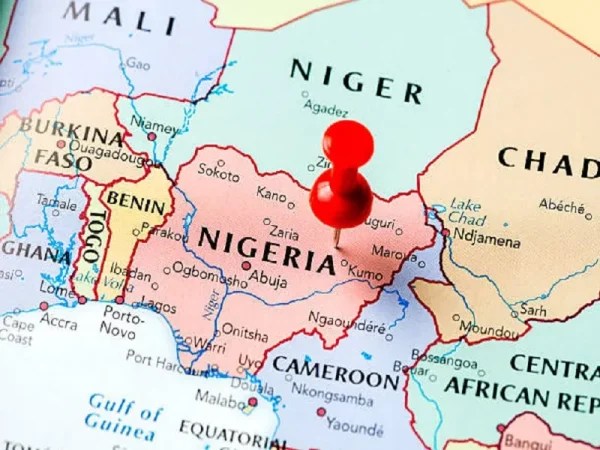
Al Jazeera and Politico likely didn’t intend to, but two of their articles on recent events shed light on the real reasons why Nigeria might invade Niger. Respectively titled “A test of wills: Can ECOWAS reverse Niger coup and establish a new order?” and “What Niger’s coup means for Nigeria”, they both suggest that ulterior motives are at play beyond restoring that country’s ousted leader just for the supposedly principled sake of defending democracy.
Beginning with Al Jazeera’s piece, it starts off by quoting the speech that newly inaugurated Nigerian President Bola Tinubu gave at ECOWAS early last month after he was elected chairman of this regional bloc. He said that “We must stand firm on democracy. There is no governance, freedom and rule of law without democracy.” This outlet noted that his words were soon put to the test two weeks later, hinting that he’s pressured to make good on rhetoric about something that he didn’t expect would happen.
They then cite the opinion of a former director of political affairs at the ECOWAS Commission who declared that “With Tinubu’s posture, we can see that Nigeria is back on stage.” This person’s position makes them biased towards that group and its regional role, but their particular quote inadvertently reveals that Tinubu is talking tough towards Niger for the sake of boosting his country’s prestige. To their credit, Al Jazeera seemed to have picked up on this as well as evidenced by what they later wrote:
“Within Nigeria, Tinubu’s assertiveness is being perceived as an intent to shore up popularity abroad while he is increasingly unpopular at home. His victory in the February presidential election is being contested by the two largest opposition parties who cite widespread electoral malpractice and claim he was ineligible to run. A string of early reforms – including the removal of a popular fuel subsidy – intended to overhaul Africa’s biggest economy has also led to spiralling costs of living.”
This is a damning explanation of the ulterior domestic motives behind the ultimatum that Tinubu gave Niger on behalf of the bloc that he now chairs. It’s basically a risky distraction from problems at home that’s being justified on the pretext of defending democracy, which uncoincidentally aligns with one of the mantras of the West’s so-called ‘rules-based order’. Al Jazeera also cited an Africa expert at Oxford Analytica who alleged that reversing the recent regime change could help thwart terrorist threats.
On the other hand, a Nigeria expert at the International Crisis Group told them that “Military interventions could also be unpopular in Nigeria and possibly lead to protests.” They also warned that this could “reduce pressure on jihadists and bandits in the Lake Chad area and create room for the expansion of their operation.” All things considered, Al Jazeera’s article on this subject was surprisingly critical of Nigeria’s potential invasion of Niger, thus making it a refreshing read.
The same can be said for Politico’s, which is much shorter but still contains some similarly damning explanations of what’s really driving events behind the scenes. They started off by quoting a senior fellow at the influential Council on Foreign Relations (CFR) who fearmongered that “Not only will failure to act send a signal that Tinubu and ECOWAS can only bark, but not bite, it will embolden military adventurers in other West African countries as well as the Russia-backed Wagner Group.”
The reality is corrupt Western puppets’ neglect of their countries’ objective national interests led to deteriorating economic and security situations that prompted the region’s spree of military coups, not anything else. Regarding Wagner, these juntas then tend to turn towards this group (whose post-mutiny ties with the Kremlin are clarified here) since it specializes in “Democratic Security”, or counter-Hybrid Warfare tactics and strategies that readers can learn about in the foregoing hyperlinked analyses.
Russia’s interest in securing their national models of democracy from (mostly Western-emanating) hybrid threats is twofold since it sincerely wants to empower them to become sovereign subjects in the Multipolar World Order but it also benefits by stopping the West from exploiting their resources. If the West treated African states as truly equal partners like Russia does, then it would stamp out terrorism and stop subjugating them as vassals so that they wouldn’t have a reason to consider switching partners.
With this fact-check in mind, it’s clear that Politico’s cited CFR expert explained the reasons why the West wants Nigeria to invade Niger instead of even attempting to put forth a reason why it would allegedly be in that country’s national interests to do so. This New Cold War bloc fears that the region’s newest junta will ally with Russia via Wagner and thus further accelerate the collapse of their influence across the continent, though this might be averted if Nigeria forcibly reinstalls the old regime.
Just like Al Jazeera, Politico also deserves credit for implying that Tinubu has ulterior domestic motives behind doing the West’s bidding when writing that “Nigeria’s influence has been slipping in recent years, as it grapples with economic malaise and security challenges that festered under the prior president, Muhammadu Buhari. Since succeeding Buhari, Tinubu has been trying to placate different religious and ethnic groups at home upset over the February election results, which the opposition has disputed.”
What these two outlets’ pieces on this subject show is that newly inaugurated Nigerian President Tinubu might invade Niger out of desperation to distract from economic and political problems at home despite telling the world that this is to defend democracy in that neighboring nation. The corrupt confluence of his domestic interests and the West’s geopolitical ones greatly raises the odds that this could soon happen, though it remains to be seen whether it’ll succeed and how strong the blowback might be.
Nigerian Army Preformed Over 10,000 Forced Abortions
By Kyle Anzalone | The Libertarian Institute | December 7, 2022
Nigerian soldiers fighting against a jihadist group regularly ordered women to be given abortions without their consent, according to a new Reuters investigation. The US has provided Nigeria with billions in military aid, weapons and training.
Victims and soldiers told Reuters that women and girls in the custody of Nigeria’s 7 Division were given injections to terminate their pregnancies. Some victims were killed by the abortions, and women who resisted were beaten. It is unclear when the program started,” but had existed since at least 2014.
One of the over thirty survivors that spoke with the outlet said victims – while undergoing abortions – were not provided medical treatment. “That woman was more pregnant than the rest of us, almost six or seven months. She was crying, yelling, rolling around, and at long last she stopped rolling and shouting. She became so weak and traumatized, and then she stopped breathing, she said. Adding, “they just dug a hole, and they put sand over it and buried her.”
The 7 Division operates in the country’s northeast, fighting against the Salafist group Boko Haram. According to the Quincy Institute’s Nick Turse, Nigeria’s military is heavily dependent on America. “Since 2000, the U.S. has provided, facilitated, or approved more than $2 billion in security assistance and military weapons and equipment sales to Nigeria and has conducted more than 41,000 training courses for Nigerian military personnel to support counterterrorism efforts aimed at defeating Boko Haram and the Islamic State,” he wrote in May.
While the Reuters report is shocking, Nigerian armed forces have a history of human rights abuses. “Impunity, exacerbated by corruption and a weak judiciary, remained a significant problem in the security forces, especially in police, military, and the Department of State Services,” the State Department wrote in its 2021 human rights report on Nigeria. Adding, “the military arbitrarily arrested and detained – often in unmonitored military detention facilities – persons in the context of the fight against Boko Haram and ISIS-WA in the North East.”
The abuses have not deterred several American presidents from supporting Abuja. Barack Obama authorized millions in funding to support the Sahel nations’ fight against Boko Haram. Under Donald Trump, American troops conducted multiple training courses for Nigerian soldiers fighting Salafists. President Joe Biden has already authorized a nearly $1 billion sale of attack helicopters to Abuja.
Nigeria denied the claims made by Reuters. The outlet said the 7 Division adopted the tactics out of a belief it would help eliminate Boko Haram. “Central to the abortion program is a notion widely held within the military and among some civilians in the northeast: that the children of insurgents are predestined, by the blood in their veins, to one day take up arms against the Nigerian government and society.” The report continued, “four soldiers and one guard said they were told by superiors that the program was needed to destroy insurgent fighters before they could be born.”
Pfizer Says COVID Vaccine ‘Safe’ for Kids — But Pfizer Has Lied About Kids and Drugs Before
In 1996, Pfizer’s drug, Trovan, was still in the clinical stage of development when the drugmaker tested it, without parents’ consent, on about 200 children.
By Chelli Stanley | The Defender | September 30, 2021
Pfizer last week told the public and the U.S. Food and Drug Administration (FDA) its new experimental COVID vaccine is safe for young children.
It’s a familiar story, similar to one the vaccine maker told in the past about another drug it tested on children — a story that had a terrible outcome.
Both stories began with this simple claim: “These drugs are safe for your children.”
In 1996, Pfizer, the transnational multi-billion-dollar pharmaceutical company, was working to bring a new drug — Trovan — to market. The drug was still in the clinical stage of development, when Pfizer made a decision that reportedly cost the lives of many children, and triggered an international firestorm.
Pfizer took its unlicensed Trovan to Kano, Nigeria, during a meningitis outbreak — though Trovan had never been tested in children or against meningitis.
According to Pfizer whistleblower, Dr. Juan Walterspiel, Pfizer sent unskilled doctors to Kano, who were unlicensed to practice medicine in Nigeria, and who had limited experience treating meningitis in children.
Walterspiel also reported the staff were so unskilled they could not place IV lines, and quickly resorted to orally administering the drug to children.
In the short two weeks Pfizer was in Kano, staff worked with 200 children, and gave 99 of the children unlicensed Trovan, despite the children’s desperate state. Pfizer did this even though Doctors Without Borders was operating in the same Kano hospital, treating children for free, with medicine proven to work well against bacterial meningitis.
Doctors Without Borders realized what Pfizer was doing and in a statement said they “were shocked Pfizer continued the so-called scientific work in the middle of hell.” They “communicated their concerns to both Pfizer and the local authorities.”
Pfizer gave the other 101 children ceftriaxone, which is proven effective for meningitis. However, many children were “low-dosed,” with only one-third of the recommended amount. Because Pfizer didn’t have enough skilled medical personnel to administer ceftriaxone by IV, staff injected it directly into the children’s butts or thighs.
But “the shots were severely painful, leading to ‘great fear and sometimes dangerous struggles with children.’” So Pfizer lowered the dose significantly to ease the severe pain caused by the shots.
Pfizer said available data indicated the dose remained more than sufficient, but the drug’s manufacturer, Hoffmann-La Roche, said the reductions could have sapped the drug’s strength.
“A high dose is essential,” Mark Kunkel, Hoffmann-La Roche’s medical director, told the Washington Post. “Clinical failures … and perhaps deaths of children could have resulted from the low dosing.”
According to a lawsuit against Pfizer, “five of the children who received Trovan and six of the children who were ‘low-dosed’ with ceftriaxone died, and others treated by Pfizer suffered very serious injuries, including paralysis, deafness and blindness.”
Of the 200 children treated by Pfizer, 181 were gravely injured, and 11 died.
The Washington Post investigated Pfizer’s ethics, stating, “Some medical experts questioned why the company did not switch to the proven pills when it was clear the young patients were approaching death.”
“It could be considered murder,” said Evariste Lodi, the leading Doctors Without Borders physician in Kano, after reading a report that Pfizer kept a child solely on Trovan until the child died.
In a statement about the child’s death, a Pfizer spokeswoman said “researchers had no reason to suspect the experimental medicine was not working.” Pfizer also said Trovan was “at least as effective as the gold standard treatment,” despite it having never been used in children, or for meningitis.
Pfizer designed the clinical trial in Kano “in six weeks, though the risks and complications of such a trial would typically require a year to adequately assess,” The Atlantic reported.
The parents in Kano have maintained they were not notified of an experiment, and that Pfizer did not have their consent to use their children in a drug trial in the middle of a health crisis. They organized to sue the drugmaker, while caring for children injured during the experiment.
Pfizer maintains the Nigerian parents gave full consent for their critically ill children to be used in an experiment, though even Pfizer admits no parent ever signed a consent form.
The lawsuits dragged on for years, as Pfizer refused to admit to any wrongdoing. “We are fed up with this case,” said a father who lost his daughter. “Our children are dead and some are maimed.”
Pfizer said “the trial was conducted appropriately, ethically and with the best interests of patients in mind; and it helped save lives.”
However, even the approval letter Pfizer submitted to the FDA about the Kano trial was exposed by a Nigerian doctor, who “said that his office backdated an approval letter and this may have been written a year after the study had taken place.”
The community of Kano has been profoundly affected — “the experiment shaped public perception of Western drugs in the region. Parents told their children about it. Teachers lectured about Pfizer in classrooms. Pundits spoke of Western physicians seeking human guinea pigs.”
Pfizer acknowledged the severe nature of the meningitis outbreak to a Nigerian investigative committee, then said, “Pfizer’s intervention was therefore strictly a humanitarian gesture aimed at saving lives. It was totally devoid of any commercial undertones.” The company called it “the humanitarian trial.”
“If I had the power, I would take away their medical licenses,” said Lodi.
Pfizer’s Trovan history gets worse
In the initial development of Trovan, Walterspiel reported that Pfizer tried another study and:
“ … the study failed and several patients developed severe post-operative infections and one woman had her uterus removed. Pfizer dispatched risk managers and asked affected patients and relatives to fill out checks for whatever amount they felt right against their signature to keep the payments confidential.”
Pfizer made no such offer in Kano. The families of Kano had to sue Pfizer repeatedly, and received no compensation until nearly 15 years after the incident occurred.
Pfizer did not let these mere setbacks of death, maiming and international scandals deter the company. Within a few short years, the drugmaker brought Trovan to market in both the United States and Europe.
Expecting to reap financial windfalls, Pfizer aggressively marketed Trovan — until it discovered the public in both the EU and U.S. was reeling from liver damage, liver failure and death as a result of taking Trovan.
Reports of adverse reactions grew until Europe took Trovan off the market completely, and the FDA severely restricted the public’s access in the U.S.
A New York Times article detailed how Trovan’s serious side effects became known only after it was given to the public. “The case showed how a new drug, marketed by an expert like Pfizer, could be swiftly prescribed to thousands of patients before all the side effects were known. Pfizer said its tests of Trovan had not revealed any serious problems.”
In 2000, William C. Steere Jr., then chairman of Pfizer, acknowledged some side effects only become known after a drug is approved, saying, ”You put the drug in the general population, and then everyone is taking it. We just hold our breath and wait to see if there is something unique with the drug.”
‘If I had an enemy, I would not let him take their drugs’
Pfizer was repeatedly sued in Nigeria and the U.S. for its actions in Kano. In 2009, Pfizer agreed to pay $75 million, despite initially being sued for $8.5 billion.
The company got involved in several more scandals that exploded when Wikileaks published several U.S. Embassy cables detailing Pfizer’s communications.
A Pfizer lawyer described in the cables that “Pfizer has worked closely with former Nigerian Head of State Yakubu Gowon. Gowan spoke with Kano State Governor Mallam Ibrahim Shekarau, who directed the Kano AG to reduce the settlement demand from $150 million to $75 million.”
In another cable, a top Pfizer representative in Nigeria said:
“Pfizer had hired investigators to uncover corruption links to Federal Attorney General Michael Aondoakaa to expose him and put pressure on him to drop the federal cases. Pfizer’s investigators were passing this information to local media. A series of damaging articles detailing Aondoakaa’s ‘alleged’ corruption ties were published in February and March.”
A cable showed a Pfizer representative commenting that “Doctors Without Borders administered Trovan to other children during the 1996 meningitis epidemic, and the Nigerian government has taken no action.”
The accusation prompted Doctors Without Borders to publish a strongly worded press release stating that they did not give anyone Trovan, and were in fact the first to speak out about Pfizer’s unethical actions.
Finally, the cables showed that “Pfizer was not happy settling the case, but had come to the conclusion that the $75 million figure was reasonable because the suits had been ongoing for many years, costing Pfizer more than $15 million a year in legal and investigative fees.”
The original lawsuit also sought prison terms for Pfizer officials.
Scandals continued even after the case was settled, when Pfizer demanded that anyone collecting the money give a sample of their DNA. Several people refused, distrusting what Pfizer may do with their DNA. They were not allowed to get compensation as a result.
Pfizer said it “always acted in the best interest of the children involved, using the best medical knowledge available.”
Najib Ibrahim of Kano said of Pfizer, “If I had an enemy, I would not let him take their drugs.” Abdul Murtala said, “Pfizer reminds me of recklessness with human lives.”
The pattern continues, with 12-year-old injured during Pfizer COVID trial
Maddie de Garay was 12 when she voluntarily participated in Pfizer’s COVID-19 vaccine trial for 12- to 15-year-olds in Ohio. After she took the second dose on January 20, 2021, her life changed.
Her mother, Stephanie de Garay, spoke at press conference in June, held by Sen. Ron Johnson (R-Wis.), during which she described the maiming of her child and Pfizer’s disregard towards Maddie and the family — despite Maddie being part of the trial in order to determine whether Pfizer’s covid vaccine is safe for children.
Stephanie said:
“All we want is for Maddie to be seen, heard, and believed, because she hasn’t been. And we want her to get the care that she desperately needs so that she can go back to normal. She was totally fine before this. They’re not helping her.”
Stephanie said within 24 hours of the second dose, Maddie “developed severe abdominal and chest pain. She had painful electrical shocks down her neck and spine that forced her to walk hunched over. She had extreme pain in her fingers and toes.”
Maddie went to the ER immediately, as instructed by Pfizer’s vaccine trial administrator. After doctors ran few tests, she was sent home with a diagnosis: “Adverse effect of vaccine initial encounter.”
In the first five months after getting her second dose, Maddie would return to the ER eight more times.
“Over the next 2.5 months, her abdominal, muscle and nerve pain became unbearable. She developed additional symptoms that included gastroparesis, nausea and vomiting, erratic blood pressure and heart rate, memory loss, brain fog, headaches, dizziness, fainting, and then seizures.
“She developed verbal and motor tics, she had loss of feeling from the waist down and muscle weakness, drastic changes in her vision, urinary retention and loss of bladder control, severely irregular and heavy menstrual cycles, and eventually she had to have an NG tube put in to get nutrition. All of these symptoms are still here today. Some days are worse than others.”
Maddie’s doctors began to suggest she had “functional neurological disorder due to anxiety” and even tried to admit her to a mental hospital. Her family fought it.
It took five months for Maddie to get an MRI of her brain and appropriate blood tests, which she got when her family went elsewhere for medical advice after talking to others who were adversely affected by the COVID vaccines.
Stephanie said:
“What I want to ask is: Maddie volunteered for the Pfizer trial. Why aren’t they researching her to figure out why this happened so other people don’t have to go through this? Instead, they’re just saying it’s ‘mental.’”
The de Garay family has joined with emerging grassroots advocacy groups whose members’ lives suddenly changed after they got a COVID vaccine. They are asking the CDC and FDA to recognize their injuries, the medical community to believe and help them, the media to share their stories, for the public to know about these injuries as part of informed consent, and for their injuries to be studied so that solutions can be found.
Since being injured by new vaccines still in phase 3 trials, they have been subjected to stonewalling, cover-ups, bullying, refusal to collect the data and blanket denials.
Pfizer has not commented publicly on Maddie’s case.
At the September FDA advisory meeting on Pfizer COVID boosters in the U.S., Steve Kirsch, executive director of the COVID-19 Early Treatment Fund, said Pfizer did not record Maddie’s extensive injuries in its clinical trial results. Kirsch also noted Pfizer marked the entirety of Maddie’s injuries as “abdominal pain.”
Kirsch reported Pfizer’s fraud to FDA acting Commissioner Dr. Janet Woodcock, but no investigation has been launched into Pfizer for allegedly erasing Maddie’s extensive injuries from its trial data for children.
© 2021 Children’s Health Defense, Inc. This work is reproduced and distributed with the permission of Children’s Health Defense, Inc. Want to learn more from Children’s Health Defense? Sign up for free news and updates from Robert F. Kennedy, Jr. and the Children’s Health Defense. Your donation will help to support us in our efforts.
Nigeria cleric Zakzaky, wife acquitted of all charges, freed from jail
Press TV – July 28, 2021
A court in Nigeria’s central state of Kaduna has acquitted Sheikh Ibrahim Zakzaky, leader of the Islamic Movement in Nigeria, and his wife of all the charges levelled against the duo.
The trial at the Kaduna State High Court started on May 15, 2018 and dragged on for over three years. The high court issued its final verdict on Wednesday, Ishaq Adam Ishaq, their lawyer, said in a statement.
They were released from detention following the ruling, he added.
“At last, we defeated them. we won,” hailed the legal representative, adding, “They have gained their freedom. They are now freed and with us.”
Zakzaky and his wife, Mallimah Zeenat, were standing trial in the court on an eight-count charge of alleged culpable homicide, disruption of public peace and unlawful assembly among others levelled against them by the Kaduna state government.
They had pleaded not guitly.
In December 2015, Nigeria’s military launched a crackdown as part of a deadly state-ordered escalation targeting the movement that Abuja has branded as illegal.
The campaign saw the troops attacking Zakzaky’s residence in the town of Zaria in Kaduna, afflicting him and his wife with serious injuries that reportedly caused the cleric to lose his left eye.
During the crackdown, the military also attacked the movement’s members as they were holding religious processions, with the government alleging that the Muslims had blocked a convoy of the country’s defense minister.
The movement has categorically rejected the allegation, and said the convoy had intentionally crossed paths with the IMN’s members to whip up an excuse to attack them.
The violence led to the death of three of Zakzaky’s sons and more than 300 of his followers.
The couple were kept in custody despite a 2016 ruling by Nigeria’s federal high court that ordered their release from prison.
Amid the long-drawn-out jail term, the couple were allowed to leave for India for medical purposes. Their stay was, however, reportedly plagued by the state’s interference aimed at preventing them from receiving proper medical treatment.
The couple’s freedom came following tireless activism on the part of Nigeria’s Shia faithful and repeated damning reports about their situation by international human rights bodies.
UN official blasts Nigeria’s use of ‘lethal force’ on Muslims
Press TV – September 3, 2019
A United Nations rapporteur strongly condemns Abuja’s application of deadly violence against the Islamic Movement in Nigeria (IMN).
Agnes Callamard, the UN special rapporteur on extrajudicial, summary or arbitrary executions, made the remarks in a report in the country’s capital on Monday. She was presenting her findings after a 12-day-long investigation.
The official deplored the “arbitrary deprivation of life” and the excessive use of lethal force in the case of processions held by the IMN back in 2015, Reuters reported.
Nigeria’s military attacked the movement’s members that year as they were holding religious processions, with Abuja alleging that the Muslims had blocked a convoy of the country’s defense minister. The movement has categorically rejected the allegation, and said the convoy had intentionally crossed paths with the IMN’s members to whip up an excuse for attacking them.
The military also raided the house of Sheikh Ibrahim al-Zakzaki, the movement’s leader, at the time.
During the escalation, the 66-year-old was beaten and lost his left eye. His wife sustained serious wounds, and three of his sons and more than 300 of his followers were killed.
Callamard said a move by the government to ban the group appeared be based on what the authorities thought the IMN could become rather than its actions. She said she had not been presented with any evidence to suggest the group was weaponized and posed a threat to the country.
On a general note, the official cautioned that Nigeria’s multiple security problems had come to create a crisis that required urgent attention and could lead to instability in other African countries.
Callamard said the police and military had resorted to an excessive use of deadly force across the West African country which, combined with a lack of effective investigations and meaningful prosecution, had caused a lack of accountability.
“The overall situation I have found is one of extreme concern,” she said, and finally warned that the country had turned into a “pressure cooker of internal conflict.”
How Big Water Projects Helped Trigger Africa’s Migrant Crisis
By Paul Homewood | Not A Lot Of People Know That | April 1, 2018
Following up the Lake Chad post, this is a highly relevant contribution by science writer, Fred Pearce, in Yale 360 last October:

The Hadejia-Nguru wetland was once a large green smudge on the edge of the Sahara in northeast Nigeria. More than 1.5 million people lived by fishing its waters, grazing their cattle on its wet pastures, and irrigating their crops from its complex network of natural channels and lakes. Then, in the 1990s, the Nigerian government completed two dams that together captured 80 percent of the water that flowed into the wetland.
The aim was to provide water for Kano, the biggest city in northern Nigeria. But the two dams dried up four-fifths of the wetland, destroying its natural bounty and the way of life that went with it. Today, many of the people who lost their livelihoods have either headed for Kano, joined the Islamic terrorist group Boko Haram that is terrorizing northeast Nigeria – or paid human-smugglers to take them to Europe.
For the past three years, Europe has been convulsed by a crisis of migrants, some from Syria and the war-torn Middle East, but also hundreds of thousands coming from the arid Sahel region of Africa, including Nigeria, Mali, and Senegal. They are fleeing poverty and social breakdown caused by insurgent groups such as Boko Haram. But environmentalists and others in the region say that behind this social chaos lies serious water mismanagement in the drought-prone region.
Big dams intended to bring economic development to the Sahel are having the opposite effect. By blocking rivers, they are drying out lakes, river floodplains, and wetlands on which many of the poorest in the region depend. The end result has been to push more and more young people to risk their lives to leave the region.
The Manantali Dam is estimated to have caused the loss of 90 percent of fisheries and up to 618,000 acres previously covered by water.
Last year, I traveled with Wetlands International, a Dutch-based environmental NGO, along the valley of the River Senegal, which forms the border between Senegal and Mauritania. Farmers, herders, and fishermen told of their battles against the ecological breakdown that has followed the building of the Manantali Dam, which is located upstream in Mali and was completed in 1987. The dam holds back a large part of the river’s seasonal flood flow to generate hydroelectricity for cities and provide irrigation water for some farmers. But there have been more losers than winners.
Seydou Ibrahima Ly, a teacher in the bankside village of Donaye Taredji in Podor district, said that when he was young, “the river had a flood that watered wetlands where fish grew.” But “now there is no flood because of the dam… Compared to the past, there aren’t many fish. Our grandparents did a lot of fishing, but we don’t.” With their livelihoods gone, more than 100 people had left his village, he said. “In some villages, they are almost all gone.”
“The migrants know the boats [traveling to Europe] are dangerous, but they have a determination to go and find a better life,” said Oumar Cire Ly, deputy chief of neighbouring Donaye village, which has also seen an exodus of its young people.
Farmers once planted their crops in the wet soils as the waters receded. Pastoralists grazed their animals where forests and wildlife flourished. But the dam and its related projects are estimated to have resulted in the loss of 90 percent of the fisheries and up to 618,000 acres of fields that were previously covered by water from the rising river during the wet season, a system of natural irrigation known as flood-recession agriculture.
The Senegal River Basin Development Organization – the intergovernmental agency that is responsible for the dam project and is known by its French acronym, OMVS – conceded in 2014 that eliminating the river’s annual flood “has made flood-recession crops and fishing on the floodplain more precarious, which makes the rural production systems of the middle valley less diversified, and therefore more vulnerable.”
This is clearly at odds with the organization’s mandate to “ensure food security for all people within the river basin and region.” But Amadou Lamine Ndiaye, the OMVS’s director of environment and sustainable development, told me his agency regarded wetlands such as river floodplains primarily as a source of revenue for tourists, rather than as a lifeline for rural communities.
As many as a million Nigerians have lost livelihoods because of dams that once fed a wetland that flowed into Lake Chad.
Worse still is the crisis affecting the region around Lake Chad, which until half a century ago was Africa’s fourth largest lake, straddling the border between Nigeria, Niger, Chad, and Cameroon. The lake has lost more than 90 percent of its surface area since then. Initially, this was largely due to persistent droughts in the Sahel that often dried up the rivers supplying it with water. Since 2002, rainfall has improved markedly, but Lake Chad has not recovered.
That is because of dams on the rivers flowing into the lake from the wetter south, mainly in Cameroon and Nigeria. The Maga Dam in Cameroon has diverted 70 percent of the flow of the Logone river to rice farms. This has both dried up part of the floodplain pastures that once supported 130,000 people, and dramatically reduced inflow to Lake Chad.
In northern Nigeria, up to 1 million people have lost livelihoods because of dams on the River Yobe that once fed the Hadejia-Nguru wetland and flowed on into Lake Chad. In both cases, says Edward Barbier, an environmental economist at Colorado State University, the dams have had an overall negative effect on local economies, as losses to fishermen, pastoralists, and others exceeded gains from irrigation agriculture.
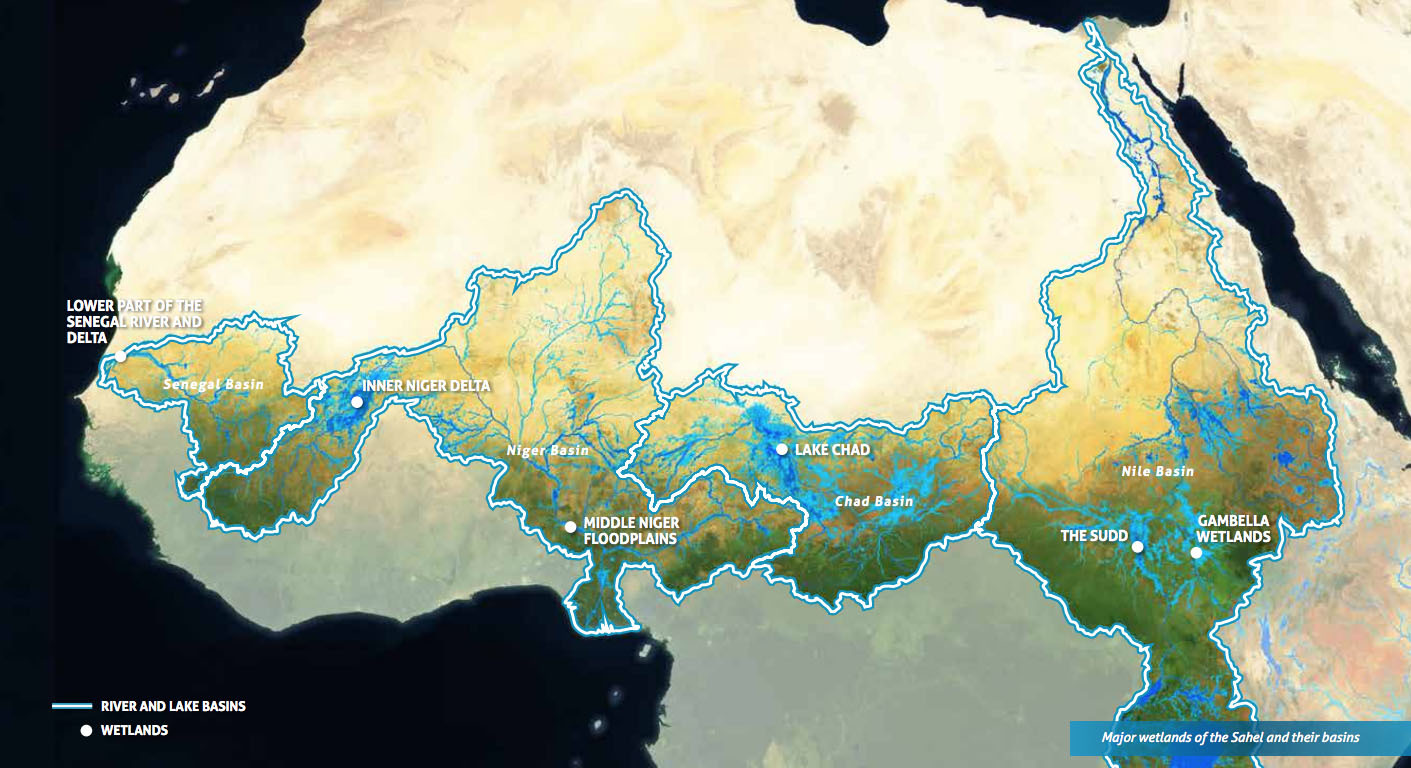
The major wetlands and water basins of the Sahel region in Africa. Wetlands International
https://e360.yale.edu/assets/site/SahelWetlands_WetlandsInternational.jpg
The poverty is driving social breakdown and conflict all around the lake. Mana Boukary, an official of the Lake Chad Basin Commission, an intergovernmental body, told Duetsche Welle two years ago: “Youths in the Lake Chad Basin are joining Boko Haram because of lack of jobs and difficult economic conditions resulting from the drying up of the lake.”
The UN humanitarian coordinator for the Sahel region, Toby Lanzer, told a European Union-Africa summit that it was also fueling migration: “Asylum seeking, the refugee crisis, the environmental crisis, the instability that extremists sow — all of those issues converge in the Lake Chad basin.”
A Nigerian government audit of the lake basin in 2015 agreed. It concluded that “uncoordinated upstream water impounding and withdrawal” were among factors that had “created high competition for scarce water, resulting into [sic] conflicts and forced migration.” More than 2.6 million people have left the Lake Chad region since mid-2013, according to the International Organization for Migration.
At their greatest extent, wetlands cover one-tenth of the Sahel, the arid region stretching for 3,400 miles across northern Africa, immediately south of the Sahara desert. They are wildlife havens, especially notable for their birdlife. The Inner Niger Delta in Mali, for instance, is one of the world’s most important seasonal stops for migrating birds, hosting about 4 million waterbirds from Europe each winter. In addition, these wetlands are a source of sustenance for the region’s poor and the main sources of the region’s economic productivity outside the short wet season from June to September.
Dried-up wetlands are often blamed on climate change when the real cause often is more human interference in river flows.
Yet the decline of the wetlands and the resulting social and economic consequences remains a largely untold story. That is partly because dried-up wetlands are routinely, and often incorrectly, blamed on climate change, when the real cause is often more direct human interference in river flows. It is also partly because many development agencies still mostly think of dams as infrastructure development that furthers economic activity and wealth – and partly because many environmental groups concentrate on the ecological impacts of dried wetlands, while ignoring the human consequences.
In this climate of ignorance, more wetlands are under threat. The next victim is likely to be the Inner Niger Delta, a wetland in northern Mali that covers an area the size of Belgium. The delta forms where West Africa’s largest river, the Niger, spreads out across flat desert near the ancient city of Timbuktu.
The delta is a magnet for migrating European waterbirds. It is also currently one of the most productive areas in one of the world’s poorest countries. It provides 80 percent of Mali’s fish and pasture for 60 percent of the country’s cattle, and it delivers 8 percent of Mali’s GDP and sustains 2 million people, 14 percent of the population, says Dutch hydrologist Leo Zwarts. Its fish are exported across West Africa from Mopti, a market town on the shores of the delta.
In recent years the Mali government has been diverting water from the River Niger at the Markala barrage just upstream of the delta, to irrigate desert fields of thirsty crops such as rice and cotton. These diversions have cut the area of delta flooded annually by up to 7 percent, says Zwarts, causing declines in forests, fisheries, and grazing grasses. Some people have left the delta as a result, though it is unclear whether they have been among the Malians regularly reported to be in migrant boats heading from Libya to Italy.
The Markala Barrage in Mali, which diverts water from the River Niger for irrigating crops such as rice and cotton. Fred Pearce/Yale e360
But this trickle of people from the delta could soon become a flood. In July this year, Mali’s upstream neighbour, Guinea, announced the go-ahead for Chinese firms to build a giant new hydroelectric dam, the Fomi Dam, in the river’s headwaters. Construction could begin as soon as December.
The Fomi Dam’s operation will replace the annual flood pulse that sustains the wetland’s fecundity with a more regular flow that the Mali government intends to tap for a long-planned tripling of its irrigation along the river. Wetlands International estimates that the combined impact of the dam and irrigation schemes could cut fish catches and pastures in the delta by 30 percent.
“Less water flowing into the delta means a lower flood level and a smaller flood extent”, says Karounga Keïta of Wetlands International in Mali. “This will have a direct impact on food production, including fish, livestock, and floating rice.” He fears that the inevitable outcome will be further human migrations from the wetland.
The links in the chain from water management through wetland health to social breakdown and international migration are complex. Wetland loss is certainly not the only reason for the human exodus from the Sahel. And migration is a long-standing coping strategy for people living in a region of extreme climate variability.
But the parlous state of the wetlands of the Sahel is changing the region. In the past, wetlands were refuges in times of drought or conflict. They were safe, and the water persisted even in the worst droughts. But today, with their waters diminished, these wetlands have become sources of outmigration. Now, migrations that were once temporary and local are becoming permanent and intercontinental.
https://e360.yale.edu/features/how-africas-big-water-projects-helped-trigger-the-migrant-crisis
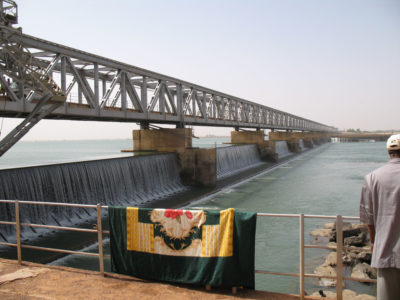
Note his comment that “dried-up wetlands are often blamed on climate change when the real cause often is more human interference in river flows. “.
And that “since 2002, rainfall has improved markedly, but Lake Chad has not recovered.”
I have every sympathy for countries like Nigeria and Cameroon. They are between the proverbial rock and hard place,
They have growing populations, with ever growing expectations. For this they need, among other things, food and water supplies. On the other hand, these very things impact on the environment which ultimately sustains them.
There are no easy answers.
But blaming it all on climate change does nobody any favours.
European companies export highly-polluted fuel to West Africa: Report
Press TV – September 16, 2016
European companies are accused of taking advantage of weak fuel standards in African countries to export highly-polluted fuel to West Africa, a new report says.
The report, from the Swiss watchdog group of Public Eye, said major European oil companies and commodity traders take crude oil from African countries, blend it with highly-polluted additives, and then sell it back to them.
“Many West African countries that export high grade crude oil to Europe receive toxic low quality fuel in return,” it wrote.
Toxic products that the companies add to make the so-called “African Quality” fuels are far higher than those allowed in Europe, according to Public Eye.
“Their business model relies on an illegitimate strategy of deliberately lowering the quality of fuels in order to increase their profits,” the report read.
It said companies, among them the Swiss commodity traders Trafigura and Vito, increased their profits at the expense of Africans’ health.
While the European Union (EU) has allowed ten parts per millions (ppm) of sulfur in diesel in the continent, the legal limit on sulfur petrol in some African countries like Nigeria is 3,000 ppm.
After burning, the sulfur is released into the atmosphere as sulfur dioxide and other particulates that provide a major contributor to respiratory symptoms such as bronchitis and asthma.
According to the report, 20 million people in the Nigerian state of Lagos breathe 13 times more particulate matter than people in London, with dirty fuel being the main reason.
This is while Nigeria and some other West African countries produce petroleum with the world’s lowest sulfur levels. They do not have refining capabilities, however, and have to import fuel from Europe.
“Africa could prevent 25,000 premature deaths in 2030 and almost 100,000 premature deaths in 2050” if the export of low-quality fuel is stopped, Public Eye said.
It called on African governments “to protect the health of their urban population, reduce car maintenance costs, and spend their health budgets on other pressing health issues.”
“If left unchanged, their practices will kill more and more people across the continent,” the report warned.
In response to the allegations, the report said, three of the companies denied any wrongdoing, arguing that they meet the regulatory requirements of the market.
Public Eye, however, said that the companies adjusted their blends with no increased costs when Ghana lowered its sulfur content level in 2014.
Featured Video
America Racing to Strategic Defeat in Iran
or go to
Aletho News Archives – Video-Images
From the Archives
Should Europeans ‘Thank’ the Americans for Destroying Nord Stream?
By Robert Bridge | Strategic Culture Foundation | September 29, 2022
With an investigation continuing into the destruction of the Nord Stream gas pipeline that provided energy supplies to Europe from Russia, there appears to be just one prime suspect, and that should surprise nobody.
Following the sabotage of the Nord Stream 1 and 2 gas pipelines, former Polish Foreign Minister Radoslaw Sikorski already seemed to know the identity of the perpetrator when he tweeted out: “Thank you, USA.”
At first glance, it seemed that Sikorski was speaking sarcastically, berating Washington for carrying out an attack that will have severe repercussions for the people of Europe. After all, how could anyone see any good coming from the termination of Europe’s primary source of gas reserves with winter just around the corner? It was Sikorski’s homeland of Poland, after all, that urged its citizens to collect firewood in the face of dwindling gas reserves.
In fact, the Polish diplomat was speaking one-hundred percent literally… continue
Blog Roll
 Aletho News
- Growing insecurity, soaring prices fuel protests in north as regime bans evacuation: Sources
- Iran denies responsibility for ‘depraved’ attack on Kuwait desalination plant
- Bring The Troops Back. End This War Now!
- Can we please stop calling Israel the ‘only democracy in the Middle East’ now?
- US should start removing its troops for Germany, proposes AfD co-leader Chrupalla
- Iran Red Crescent: 600 educational centers attacked in US-Israeli ‘war crimes’
- Russian Oil Tanker Arrives in Cuba Amid U.S. Blockade
- America Racing to Strategic Defeat in Iran: Lt Col Daniel Davis
- FTC Warns Visa, Mastercard, PayPal, Stripe Over Political Debanking
- Russian tanker approaches Cuba despite US oil blockade
- If Americans Knew
- Israeli police block Catholic cardinal from entering Church of the Holy Sepulchre on Palm Sunday
- Israel is assassinating journalists again, more than any other nation, anywhere, ever – Not a ceasefire Day 170
- Over 300 US service members wounded, majority have brain injuries – Not a ceasefire Day 169
- Researchers at Human Rights Watch Resign Over Blocked Report on Palestinian Refugee Return
- Jewish Groups Are Backing a War Americans Don’t Want
- Eric Fingerhut Thinks He’s the President of the Jews
- Top Jewish Philanthropists, Rabbis Urge Israeli President to Take Action Against ‘Jewish Extremists’
- Don’t Be Fooled. Zionist Leaders Have Always Wanted to Control Southern Lebanon
- Israel’s widespread use of torture is a core element of its genocide against the Palestinian people
- In Israel’s War on Iran, Many Middle East US Bases Rendered “All But Uninhabitable”
- No Tricks Zone
- New Study Finds Warming Saves Lives…Cold Temperatures 12 Times More Deadly Than Excess Heat
- German Science Blog Accuses PIK Climate Institute Of Hallucinating Climate Tipping Points
- Devastating Assessment Of Comirnaty Vaccine By Former Senior Pfizer Europe Toxicologist
- New Study: CO2 Is ‘Effectively Negligible’ As An Explanatory Climate Change Factor Since 2000
- Former Pfizer Toxicologist Dr. Helmut Sterz Tells Bundestag Hearing Pfizer Vaccine Should Have Never Been Approved
- Energy Expert: Germany’s Nuclear Phaseout Was A “500 Billion Euro Mistake”
- New Research: South Australia’s Mid-Holocene Sea Surface Temperatures Were 4°C Warmer Than Today
- Storing Green Energy To Last Germany 10 Days Would Require A 60-Million Tonne Battery
- New Studies: UK Sea Levels Were 4 Meters Higher Than Today During The Mid-Holocene
- Destructive Green New Deal: German Energy And Metal Group Warns Of Drastic Crisis
 Aletho News