Here comes the 21st Century Cures Act: Say Goodbye to Vaccine Safety
Science by Barbara Loe Fisher | July 22, 2015
A 2015 Pharma-driven bill blessed by the FDA seriously compromises the integrity of the vaccine licensing process and is sailing through the U.S. Congress. Act to protect vaccine safety and join http://www.NVICadvocacy.org and learn more at http://www.NVIC.org.
See also :
21st Century Cures Act Gets a Revision
By Randi Hernandez | PharmTech | July 7, 2015
The 21st Century Cures Act will see some revisions before the House votes on the bill later this week. On July 2, 2015, the House Committee on Energy and Commerce released a summary of major changes to the bill that reduce the funding to the National Institutes of Health (NIH) and Cures Innovation Fund to approximately $8.75 billion over the next five years instead of the $10 billion that was originally proposed. The funding amount was amended “to clarify the availability of a $9.3 billion advanced appropriation for FY2016–FY2020. $110 million is made available for FDA regulatory modernization activities annually from FY2016–FY2020.”
Other changes to the proposed bill include not requiring companies that receive NIH funding to report their data, and additional changes to how drugs are reimbursed, specifically, payment amounts for branded drugs and infused specialty drugs. … continue
See also :
Is The 21st Century Cures Act Good Or Bad For The Biopharmaceutical Industry?
Forbes | June 8, 2015
… “An underlying premise of the bill is the need to accelerate approval for new products, but this process is already quite efficient. A third of new drugs are currently approved on the basis of a single pivotal trial; the median size for all pivotal trials is just 760 patients. More than two-thirds of new drugs are approved on the basis of studies lasting 6 months or less – a potential problem for medications designed to be for a lifetime. Once the FDA starts its review, it approves new medications about as quickly as any regulatory agency in the world, evaluating nearly all drug applications within 6 to 10 months, an impressive turnaround for such complex assessments.” … Full article
Obama Administration Gives Priority to Bioweapons Research
By Sherwood Ross | BLACKLISTED NEWS | 05-01-2010
The priorities of the National Institutes of Health (NIH) in the area of bacteriology have been “catastrophically re-ordered” by emphasizing bioweapons research over non-bioweapons research, a prominent authority states.
Giving priority to bioweapons research at NIH, started under the Bush Administration and continuing under President Obama, “diverts resources from critical public-health and scientific objectives,” says Richard Ebright, Professor of Chemistry and Chemical Biology at Rutgers University, New Brunswick, N.J.
“The negative impact has been most severe in bacteriology, in which NIH research priorities have been catastrophically re-ordered—with research on bacterial bioweapons receiving more support than research on the top five bacterial causes of death combined—and in which non-bioweapons research has suffered catastrophic losses in resources and personnel,” Ebright said.
Ebright cited the examples of research into two bacterial pathogens: “Streptococcus pneumoniae and Staphylococcus aureus, which claim 40,000 and 20,000 U.S. lives each year, respectively. Each kills more Americans than HIV-AIDS (15,000 U.S. lives) “but neither of these bacterial pathogens is on the list of NIAID Priority Pathogens,” Ebright pointed out. (NIAID, the National Institute of Allergy and Infectious Diseases, is the subdivision of NIH responsible for infectious-disease research.)
“These two killer bacterial pathogens are not in NIAID’s ‘Category A’, with the anthrax bacterium and the smallpox virus, or even in NIAID’s ‘Category B’ or ‘Category C,’” Ebright says. “Something is wrong—very wrong—when NIAID fails to prioritize the top infectious cause of U.S. death,” he said in an email to this reporter.
Other top bacterial causes of U.S. deaths include Enterococcus faecium/faecalis, Clostridium difficile, Pseudomonas aeruginosa, and Mycobacterium tuberculosis. “Of these, only the last is on the NIAID Priority Pathogens list and this pathogen is only in Category C,” Ebright said.
Asked “What is the mood of the scientific life sciences community at this time toward the Administration?” Ebright responded, “Hopeful expectation” but “growing concern that, thus far, there has been more continuity [from the Bush Administration] than change.”
The scope of the government’s involvement in bioweapons research, may be gauged from its estimated expenditure of $70 billion since 9/11 and the fact that, according to Ebright, more than 400 U.S. institutions are engaged in such work.
Francis Boyle, professor of international law at the University of Illinois, Champaign, said that in constant dollars the $70 billion “is twice what they spent on the Manhattan Project to develop the A-bomb—ergo, this is a weapons program.”
Boyle, who drafted the Biological Weapons Anti-Terrorism Act of 1989 for the U.S., said President Bush “turned the NIH into a front organization for biowarfare work,” and “(President) Obama is simply continuing the Bush policies” and is “now even exporting biowarfare capabilities to Third World Countries.”
Asked about the scope of the nation’s biowarfare activities, Boyle estimated there are “about 13,000 death scientists involved…(so) Dr. (Josef) Mengele has arrived on American campuses all over and the universities’ Institutional Review Boards (to review biowarfare research programs) are a joke and a fraud, too.” (Mengele was a German SS officer and physician who, during WWII, performed diabolical experiments on prisoners at the Auschwitz-Birkenau concentration camp in Poland.)
Boyle said, “There is so much money involved that universities simply are not going to turn down these proposals no matter how reprehensible they might read…”
At his own University of Illinois, Boyle said, previous biowarfare research and development contracts with the Pentagon clearly stated: “We have selected pigs (to gas with biowarfare agents) because they have a circulatory system and a respiratory system similar to human beings.”
Boyle said, “I am sure similar type biowarfare contracts that are clearly anti-human, anti-ethical, illegal and criminal on their face alone have been approved all over (at) American universities by now. Money talks. Ethics walks.”
#
Sherwood Ross formerly worked for the Chicago Daily News and contributed regular columns to Reuters and UPI. His articles on biowarfare have been published in The Humanist and other magazines. Reach him at sherwoodross10@gmail.com
Featured Video
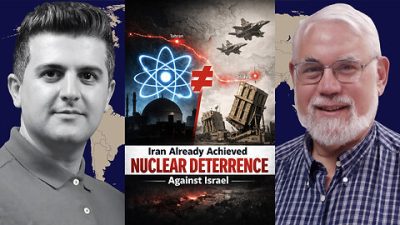
Prof. Ted Postol: Iran Already Achieved Nuclear Deterrence Against Israel
or go to
Aletho News Archives – Video-Images
From the Archives
How the occupied mentality syndrome works
Saudi Arabia on the American chessboard – Part 3
By B. J. Sabri | American Herald Tribune | June 27, 2016
Read part 2: “The occupied mentality Syndrome“
Previously I argued whether Saudi Arabia’s repeated involvements in U.S. interventions and wars stem from free national will or in response to a specific condition. For starters, in Saudi Arabia there is no national will. In Saudi Arabia, the national will is the will of the Al Saud clan. Still, when a major Arab state allies itself with a superpower that committed unspeakable crimes against humanity in almost every Arab country, then something is wrong. This fact alone should compel us to examine the U.S.-Saudi relation for one exceptional reason. As a result of the U.S.-Saudi wars, hundreds of thousands of people in Afghanistan, Iraq, Iran, Libya, Syria, Yemen, and Somalia have lost their lives. Millions became displaced in their own homelands. And millions more rendered refugees.
Attributing the Saudi policies to the bonds of “partnership” with the U.S. is frivolous. There are no bonds between these two thugs except those of business, military deals, secret plots, and wars. Proving this point, bonds such as these have no space for the American and Saudi peoples to share significant cultural or societal exchanges. If partnership is not the reason for the Saudi contribution to the U.S. strategy of empire and imperialism, then another reason must exist.
This leads to three possibilities. … continue
Blog Roll
 Aletho News
- “Davos Can Really Replace the UN”
- NIAID/NIH and USDA Fund Bioengineered Chimeric Influenza Viruses Built Using Pandemic H1N1 Components: Journal ‘Science Advances’
- Hezbollah hits Israeli warship off Lebanon’s coast, sets it aflame
- Iran slams US strikes on B1 bridge, Mahshahr petrochemical plants as ‘blatant acts of state terrorism’
- In letter to UN chief, Araghchi warns of dire consequences of US-Israeli attacks on Iran’s nuclear facilities
- Why the CIA conspiracy to invade Iran with Kurdish militias failed
- Why Are Upbeat US Claims About Mission to Rescue Pilot ‘Highly Questionable’?
- Aircraft destroyed during US ‘rescue’ of downed F-15 pilot cost more than $100 million each
- Washington University removes professor who condemned US-Israeli war on Iran
- Russia Warns of Retaliation as UK Authorizes Seizure of Vessels
- If Americans Knew
- In Iran, Israel-US take aim at “reason, research, and freedom of thought” – Daily Update
- US loses planes over Iran, Israel downgrades Lebanon war goals – Daily Update
- Israel Is Blocking Palestinians from Easter at Church Where Jesus Resurrected
- Plot to assassinate Palestinian activist follows harassment campaign promoted by Zionist groups and elected officials
- Prominent New York synagogue hosts presentation on why U.S. Jews should support the ethnic cleansing of Gaza
- Tapper vs. Piker: Is the CNN Anchor Auditioning for David Ellison?
- Shouldn’t Democrats Be Able to Condemn Genocide?
- Israel-US kill negotiators, destroy civilian structures, but Iran’s military capabilities still largely intact – Daily Update
- ‘War crime’: Global condemnation as Israeli ministers celebrate death penalty law targeting Palestinian prisoners
- 7 Ways Israel Is Turning Lebanon Into Gaza
- No Tricks Zone
- An Inconvenient Tree: Uncovered In Alps… Europe Much Warmer Than Today 6000 Years Ago
- New Study Reports A 60% Slowdown In Greenland’s Ice Loss Rate In The Last Decade
- Low Intensity Tornado Wrecks Major Solar Farm, Creating A Potential Toxic Dump
- New Study Finds Warming Saves Lives…Cold Temperatures 12 Times More Deadly Than Excess Heat
- German Science Blog Accuses PIK Climate Institute Of Hallucinating Climate Tipping Points
- Devastating Assessment Of Comirnaty Vaccine By Former Senior Pfizer Europe Toxicologist
- New Study: CO2 Is ‘Effectively Negligible’ As An Explanatory Climate Change Factor Since 2000
- Former Pfizer Toxicologist Dr. Helmut Sterz Tells Bundestag Hearing Pfizer Vaccine Should Have Never Been Approved
- Energy Expert: Germany’s Nuclear Phaseout Was A “500 Billion Euro Mistake”
- New Research: South Australia’s Mid-Holocene Sea Surface Temperatures Were 4°C Warmer Than Today
 Aletho News