NYPD destroyed evidence in class action lawsuit against department
RT | July 7, 2015
The New York Police Department (NYPD) has destroyed evidence in an ongoing lawsuit against it, which alleges that police use a secret quota system to make arrests, new documents claim.
The class action suit alleges that NYPD Commissioner Raymond Kelly and former Chief of Department Joseph Esposito were secretly applying pressure to officers to issue more arrests after falling short of quotas for traffic offenses and low-level crime, resulting in up to 850,000 wrongful summonses – or written notifications to a party telling them where and when they need to be in court. Some summons cases leave the recipient with a criminal record.
The allegations that a “quota system” for arrests exists at the NYPD are supported by emails, paperwork and text messages. One text message stated:
“We missed seat belt number by 30 last week unacceptable. if need be u guys will go with me 2 traffic stat 2 explain why u missed [sic].”
However, other such records have been destroyed, despite the city agreeing to surrender the information more than a year ago, the New York Post reports, citing a letter filed in the Manhattan federal court by the plaintiffs’ lawyers.
The lawyers claim that they discovered documents by obtaining them from third-party emails, including one of an NYPD captain writing, “This has to stop” when referring to an officer having only one arrest in over 50 hours of overtime.
But when the emails were requested, the city couldn’t produce them, even after searching.
“The production confirms what plaintiffs feared but defendants have repeatedly denied: Defendants have destroyed evidence that is unquestionably relevant to this matter,” plaintiffs’ lawyer Elinor Sutton wrote in a letter, the Post reported.
The letter continues, “It is simply not tenable that Commissioner Kelly and Chief Esposito did not – in the entire period of 2007 through the present – write or receive emails using terms related to the word ‘summons.’”
“The spoliation of this evidence clearly demonstrates Defendants’ bad-faith, grossly negligent, or at least, negligent destruction of relevant documents.”
She added that documents from meetings about crime statistics may have been shredded due to a policy that NYPD officers testified about previously.
The trial is expected to be held early next year.
NYPD Officer Waited 20 Minutes to Call for Help After “Accidentally” Shooting Akai Gurley

By Cassandra Fairbanks | PINAC News | June 25, 2015
The rookie NYPD cop who shot and killed Akai Gurley in a stairwell last year waited almost 20 minutes to report the shooting, refusing to call for or provide medical assistance, as he bickered back and forth with his partner about who should be the one to call their sergeant.
Meanwhile, Gurley lay bleeding on a stairwell with a bullet wound to his chest, still breathing, while his girlfriend ran to a neighbor for help, according to a new document presented this week in the manslaughter trial of New York City police officer Peter Liang.
The statement of facts, presented by the district attorney in rebuttal to a motion from Liang’s defense attorney that the case be dismissed– offers the most detailed account of the shooting to date, describing the rookie officer being more concerned about keeping his job than keeping Gurley alive.
In the minutes after the shooting, Melissa Butler, never having been trained in CPR before, kneeled over her boyfriend, applying pressure to the wound and administrating CPR as her neighbor remained on the phone with the 911 operator relaying instructions.
The cops, despite being trained in CPR and required as police officers to administer it when needed, stepped around them as they made their way down the stairs, still arguing about who should call the sergeant.
“Hurry up and call,” NYPD police officer Shawn Landau told Liang.
“What’s the address?” Liang asked his partner.
Liang finally reported the shooting at 11:19 p.m., almost 20 minutes after the shooting, estimated to have taken place a little after 11 p.m.
And five minutes after the neighbor had already called 911.
During that time, Liang also texted his union representative in a desperate attempt to save his job.
It all started on November 20, 2014 when Gurley, who was unarmed and not breaking any law, was visiting his girlfriend at the Brooklyn housing project she lived in.
NYPD officers Liang and Landau were on-duty patrolling the housing projects when they entered a darkened stairwell from the eighth floor to make their way downstairs.
Liang pulled out his gun before entering, even though he was not being threatened.
Meanwhile, Gurley and his girlfriend entered from the seventh floor after having waited for an elevator that never arrived.
Seconds later, Liang fired his gun, striking Gurley in the chest. Investigators said the bullet ricocheted off a wall before striking Gurley.
Fearing for their safety, Gurley and Butler ran down two flights of stairs but Gurley collapsed on the fifth-floor stairwell. Butler then ran down to the fourth floor where she knocked on the neighbor’s door for help.
“What the fuck happened,” Landau asked his partner.
“It went off by accident,” Liang responded, who then began repeatedly saying he would be fired.
The document states that Liang reported the shooting at exactly 11:19 and 46 seconds, followed by a series of follow-up reports to dispatch of an “accidental discharge.”
But New York City Police Lieutenant Vitaly Zelekov had already received a report at 11:15 p.m. that a man had been shot in the building, thanks to the neighbor’s call.
Minutes later, Zelekov arrived at the building as numerous other cops were arriving. He reached the fourth-floor landing and spotted Liang, asking him what had happened.
“I shot him accidentally,” Liang told him.
Zelekov took Liang’s gun, secured it in his waistband and made his way up to the fifth floor where he saw Butler attempting mouth-to-mouth resuscitation on Gurley.
Zelekov ordered another officer to relieve Butler, then radioed to dispatch to “rush the bus,” meaning to send an ambulance as soon as possible – the first time that night anybody had requested an ambulance.
That request was logged at 11:21 p.m. and seven seconds. Gurley was pronounced dead at a local hospital at 11:55 p.m.
Liang’s lawyer Stephen Worth told the New York Times that Liang was hyperventilating in the moments following the shooting, and was “too distraught” to help Butler attempt to save Gurley’s life, so therefore, charges should be dismissed.
But Justice Danny K. Chun rejected the motion to drop the charges against Liang, who is facing manslaughter in the second degree, criminally negligent homicide, assault in the second degree, reckless endangerment in the second degree, as well as two counts of official misconduct.
Officer Landau has not been charged for his role in Gurley’s death.
Civil Liberty Violations Seen in NYPD Interrogations of Demonstrators
By Noel Brinkerhoff | AllGov | April 30, 2015
The New York City Police Department is back to doing something it was told by the courts decades ago to stop: interrogating demonstrators about their political behavior.
At least a dozen people protesting the decision not to prosecute the police who killed Eric Garner were detained by the NYPD. They later told The New York Times that they were questioned about their political associations and other matters related to their involvement in street protests.
The interrogations could have a chilling effect on Americans lawfully exercising their right to protest and may also put the department in violation of a 1985 consent decree that came out of a federal court case, Handschu v. Special Services Division (pdf), which was supposed to end investigations of political activity.
The recent NYPD actions aren’t the first time it has skirted the legalities of the Handschu settlement. In 2003, the department was rebuked after its Intelligence Division detectives collected information from antiwar protestors such as their school, their membership in organizations and their involvement in past protests.
The Times’ Colin Moynihan wrote that “some civil liberties lawyers say the recent questioning appeared to be substantially similar to the questioning in 2003,” with detectives focusing on political involvement, not criminal behavior.
“When the police investigate political affiliations and political activities, that poses a serious threat to First Amendment rights,” Christopher Dunn, the associate legal director of the New York Civil Liberties Union, told the Times. “The NYPD should stop this immediately.”
To Learn More:
Questioning of Garner Protesters in New York Renews Concerns about Police Practices (by Colin Moynihan, New York Times )
Chicago Police Accused of Running Secret Interrogation Center (by Noel Brinkerhoff, AllGov )
Supreme Court Rules a Suspect’s Silence during Police Interrogation Can be Used against Him (by Noel Brinkerhoff and Danny Biederman, AllGov )
Performance-Activist Preacher Gets Charges Dropped
By Steven Wishnia | Dissent News Wire | April 1, 2015
Members of New York’s Church of Stop Shopping can say “Hallelujah!”—or “Earthalujah!,” as is their wont. This morning, criminal charges stemming from a Black Lives Matter protest last January were dismissed against their preacher, William “Reverend Billy” Talen.
Talen was arrested while “sermonizing” during a 24-hour vigil in Grand Central Station Jan. 6. The vigil, one of almost daily protests in the commuter-rail station’s concourse after a grand jury declined to indict the police officer who killed Eric Garner in August, arrayed placards with the names of people killed by police on the marble floor. Police said Talen pushed an officer after refusing to remove the placards. A video shows officers picking them up while Talen gesticulates in activist-evangelist schtick, and a white-shirted police inspector grabbing his arms. He was charged with disorderly conduct and obstructing governmental administration.
“I was arrested while speaking on behalf of Black Lives Matter,” Talen said in an email to supporters. “Five kinds of police stood there watching: Homeland Security, NY state troopers, National Guard, NYPD, and police from the [Metropolitan Transportation Authority], whose officers did the handcuffing. Later, sitting in the jail cell, I listened to the police try to decide what to charge me with. I was given the usual protest charges of Disorderly Conduct and Obstruction. These charges are a complete fiction and videotapes showed this within hours of the We Will Not Be Silent rally. That evidence was available to the District Attorney’s office eleven weeks ago.”
In February, Talen was offered a conditional discharge, in which charges would be dropped if he didn’t get arrested for six months, but he refused to take it. His lawyer said the charges were “just not true” and that police were harassing him.
“The 1st Amendment is rising again,” Talen wrote. “The five freedoms—worship, speech, press, assembly and petition—suffer when we’re at war. Security trumps freedom. Even Abraham Lincoln suspended habeas corpus. But 9/11 was 15 years ago.”
He is also suing the MTA, the agency that runs New York’s subway, bus, and commuter-rail system, for defamation, because a spokesperson told the New York Post that he had physically attacked police.
NYPD says cops won’t be sanctioned for altering Wikipedia entries
RT | March 17, 2015
Two veteran New York City cops discovered to have altered Wikipedia entries related to high-profile police brutality cases from police headquarters won’t be punished, according to the commissioner.
New York Police Department Commissioner Bill Bratton made the announcement Monday and said the two officers – whose names will not be released – do not currently work in the police headquarters, and are assigned to two different units.
“Two officers, who have been identified, were using department equipment to access Wikipedia and make entries,” NYPD commissioner Bill Bratton told reporters. “I don’t anticipate any punishment, quite frankly.”
The officers might be reprimanded for using their employer’s computers for unrelated work and are expected to be spoken to by Internal Affairs Bureau investigators.
The Wikipedia alterations were made to entries concerning some of the city’s most controversial police brutality cases, including Eric Garner, Sean Bell and Amadou Diallo, all of whom were killed by officers.
Mayor Bill de Blasio said at the same press conference “city computers” are “supposed to be for city business. This was not authorized business.”
Most NYPD computers don’t allow access to the internet, an anonymous source told DNAinfo. Currently, the NYPD doesn’t have a policy specific to Wikipedia, but it is in the process of reviewing its social media rules. Police officials told local news source DNAinfo that they did not direct the changes made to Wikipedia.
Since Wikipedia is publicly accessed and edited by volunteers, it is not appropriate for NYPD officers to edit references they believe are inaccurate. Wikipedia users have removed some of the changes to the entries.
Capital New York reported Friday that as many as 85 IP addresses registered at NYPD headquarters have logged hundreds of edits to Wikipedia entries on victims of police brutality, dating back 10 years.
The NYPD only maintains records that can trace computer use for one year, but they were able to uncover that the two veterans had made alterations on the “Death of Eric Garner” page on Wikipedia shortly after a Staten Island grand jury decided not to indict NYPD Officer Daniel Pantaleo for his death.
Garner, who was placed in a chokehold, was killed by police last year during an arrest that was captured on video by an onlooker. One of the edits altered “Garner raised both his arms in the air” to “Garner flailed his arms about as he spoke.”
NYPD accused of editing Wikipedia pages for Eric Garner death, other scandals
RT | March 13, 2015
The New York Police Department is reviewing reports that computers connected to the NYPD’s own network edited the Wikipedia pages for some of the more infamous recent events to involve the force, including the choking death of Eric Garner.
Wikipedia articles pertaining to at least three individuals who died as a result of altercations with the NYPD, including Garner, were edited out of the department’s 1 Police Plaza headquarters, Capital New York reported Friday.
According to publicly available records of the online encyclopedia’s revision history, computers connected to Internet Protocol (IP) addresses traced back by the paper to NYPD headquarters edited — and sometimes attempted to delete — entries on alleged instances of police brutality and articles critical of the force’s conduct.
Along with a page on Garner — the Staten Island man who died last July after being placed in a chokehold by NYPD officer Daniel Pantaleo — Wikipedia articles detailing no fewer than two others deaths involving the Big Apple’s boys in blue were altered by computers connected to the agency’s complex in downtown Manhattan, Kelly Weill reported for Capital New York this week.
Wikipedia pages for the NYPD’s so-called “stop-and-frisk” tactic, as well as recent scandals that have tarnished the force — such as the 2013 incident in which an undercover cop was caught up in a group beating on the West Side Highway — were edited from headquarters, Capital New York reported, along with the pages for Garner, Sean Bell and Amadou Diallo. Bell died in 2006 after undercover NYPD officers fired 50 times him and two other men, all unarmed, and Diallo was killed in 1999 when a cop mistook his wallet for a gun and opened fire.
Last December, someone connected through the NYPD’s network made multiple edits to the “Death of Eric Garner” page on Wikipedia, Weill reported, within hours of a grand jury’s decision not to charge NYPD Officer Pantaleo in the man’s death. “Garner raised both his arms in the air” was changed to “Garner flailed his arms about as he spoke,” Weill wrote, and “Use of the chokehold has been prohibited” was changed to “Use of the chokehold is legal, but has been prohibited.”
“Instances of the word ‘chokehold’ were replaced twice, once to ‘chokehold or headlock,’ and once to ‘respiratory distress,’” Weill reported, both times from the NYPD network.
With regards to the Bell shooting article, a user connected to the NYPD network initiated an effort to have the entry nixed altogether by filing a complaint on the website’s internal “Articles for deletion” page.
“He [Bell] was in the news for about two months, and now no one except Al Sharpton cares anymore. The police shoot people every day, and times with a lot more than 50 bullets. This incident is more news than notable,” the user wrote.
In 2006, according to Weill, a user of the NYPD network deleted 1,502 characters from the “scandals and corruption” section of Wikipedia’s “New York City Police Department” article. Two years later, another computer connected to the network deleted the entire “Allegations of police misconduct and the Civilian Complaint Review Board (CCRB)” and “Other incidents” sections from the main NYPD page.
Weill, an intern with Capital New York, wrote that there are more than 15,000 IP addresses registered to the NYPD, and information about them can easily be found online for free. A simple computer script programed in Python ran those addresses through Wikipedia, she said, and then flagged instances in which edits were made.
“The matter is under internal review,” NYPD spokeswoman Det. Cheryl Crispin told Capital New York in an email.
Read more – Grand jury doesn’t indict NYPD officer accused in chokehold death
Commissioner Bratton Equates NYC Protests With Paris Terror Attack
By Sue Udry | Dissent News Wire | January 29, 2015
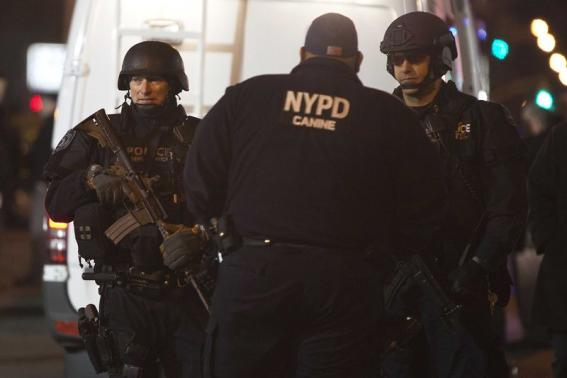
NYPD Commissioner Bill Bratton announced today the formation of a new, elite unit that will be specially trained and equipped to deal with dangerous situations like the hostage situation in Australia, lone wolf attacks and… protests.
According to CBS News New York, Bratten really truly did conflate terrorism and protests.
“It is designed for dealing with events like our recent protests, or incidents like Mumbai or what just happened in Paris,” the commissioner said.
In order to address these situations, all equally perilous apparently, Bratton told a news conference that the 350 member Strategic Response Group will “be equipped and trained in ways that our normal patrol officers are not. They’ll be equipped with all the extra heavy protective gear, with the long rifles and machine guns — unfortunately sometimes necessary in these instances.” In addition, the officers will have smartphones and tablets so they can be kept up to date on what is being said over social media.
Those smart phones and tablets may prove to be more dangerous to communities than the new weapons. Josmar Trujillo provides this analysis at CityLimits.org :
It’s hard to imagine a more Orwellian future for high-poverty, high-crime communities than one in which technology intensifies the criminal justice spotlight on their neighborhoods. Funneling more cops and surveillance into certain neighborhoods all but assures that you’ll find more crime there—especially the low-level type via Broken Windows. Indeed, if by being predictive police are looking to be prophetic, then it may be a self-fulfilling prophecy. Communities of color are most familiar with a cycle in which cops aggressively look for crime, arrest and document crime, then set out to aggressively look for more crime in a city with less and less crime. Technology, though, adds in a new element wherein it normalizes aggressive, racialized policing through a veneer of color-blind efficiency. As people become data plots and probability scores, law enforcement officials and politicians alike can point and say technology is void of the racist, profiling bias of humans.
In case smart phones and machine guns aren’t enough, Bratton wants more surveillance. CBS reports that
Bratton is also calling on the Metropolitan Transportation Authority to outfit all new subway cars with cameras that would be monitored on the train by an officer in the conductor’s booth, as well as at an off-site location.
Bratton pitched the unit as a way to keep from pulling beat cops away from their neighborhoods. The police unions are in support of the new unit, but the Gothamist reports that support is not unanimous. Priscilla Gonzalez, Organizing Director of Communities United for Police Reform, gave this statement.
Initial reports of Commissioner Bratton’s plans suggest the opposite of progress. His demands for less oversight of the NYPD and a more militarized police force that would use counter-terrorism tactics against protestors are deeply misguided and frankly offensive. We need an NYPD that is more accountable to New Yorkers and that stops criminalizing our communities, especially when people are taking to the streets to voice legitimate concerns about discriminatory and abusive policing. Despite growing evidence that discriminatory broken windows is a failed and harmful policing strategy, Commissioner Bratton stubbornly continues to defend and expand it.
Tell Bratton: Protest is NOT Terrorism!
Tell Commissioner Bratton that you are outraged he is equating protests with terror attacks, and wants to treat them with equal force. The streets of NYC don’t need more heavily-armed police on the loose.
Phone
311 or 212-NEW-YORK (639-9675) outside NYC
Webform
Commissioner Bratton
NYPD Switchboard: 1-646-610-5000
Tweet:
@NYPD
New York Police Work Slowdown Backfires, Revealing Time Wasted on Petty Violations
By Steve Straehley | AllGov | January 5, 2015
An alleged work slowdown in a fit of pique by New York City police officers could turn out to have the opposite of its intended effect, causing Big Apple residents to lose respect for “New York’s Finest.”
The work slowdown is the latest NYPD tactic in its battle with New York Mayor Bill de Blasio. Officers turned their backs on the mayor when he spoke at the funeral of Rafael Ramos, an officer killed on December 20 by a gunman, Ismaaiyl Brinsley, who cited police abuses as the reason for his crime. Now police officers, at the behest of the Patrolmen’s Benevolent Association, are not enforcing the law “unless absolutely necessary.” During the week of December 22, arrests were down 66% and traffic and parking tickets and summons for minor offenses were down more than 90% from the same week in 2013.
Instead of concern, many are grateful for the diminished police presence. Tickets and summons have been issued disproportionally to those in the working class, forcing them to bear much of the city’s revenue burden. Now the targeting has stopped and those around the political spectrum wonder if it was ever necessary, according to BBC News.
“Well, we can only hope the NYPD unions and de Blasio settle their differences soon so that the police can go back to arresting people for reasons other than ‘when they have to’,” Scott Shackford of the libertarian Reason magazine wrote. In Rolling Stone, Matt Taibbi’s response to the slowdown was that it “shines a light on the use of police officers to make up for tax shortfalls using ticket and citation revenue.”
And Harry Siegel wrote in the New York Daily News on what might be the effect on attitudes toward police. “It’s tough to run a protection racket when people don’t feel threatened, and New York ended 2014 with new lows in murders, rapes, burglaries, grand larcenies and robberies,” he wrote. “For over 20 years, crime has dropped as the NYPD has doubled and redoubled its enforcement efforts. At some point, the chemo is deadlier than the cancer.”
Police felt slighted by de Blasio when the mayor decried the decision of a grand jury not to indict the police officers responsible for the death of Eric Garner, who was put in a chokehold while being arrested for selling individual cigarettes. De Blasio said the decision was one that “many in our city did not want.”
He went on to speak of his son Dante, who is black. “I couldn’t help but immediately think what it would mean to me to lose Dante. Life would never be the same for me after,” de Blasio said. “Chirlane and I have had to talk to Dante for years about the dangers that he may face,” he added. “No family should have to go through what the Garner family went through.” NYPD officers and their union took that as a sign of disrespect.
Some police officers repeated their back-turning protest at Sunday’s funeral for Wenjian Liu, who was also killed by the man who killed Officer Ramos.
To Learn More:
Is New York Police’s ‘Virtual Work Stoppage’ a Boon For Critics? (by Anthony Zurcher, BBC News)
Arrests Plummet 66% With NYPD in Virtual Work Stoppage (by Larry Celona, Shawn Cohen and Bruce Golding, New York Post )
How Low Income New Yorkers Are Benefiting From the NYPD’s Work Stoppage (by Kira Lerner and Igor Volsky, ThinkProgress )
Respect for NYPD Squandered in Attacks on Bill de Blasio (New York Times )
Bill de Blasio Responds to Eric Garner Grand Jury Decision (by Sam Levine, Huffington Post )
The Overlooked Third Victim of the New York Cop Killer (by Noel Brinkerhoff, AllGov )
Two Most-Sued Cops in New York Cost City $1.9 Million in Payouts (by Noel Brinkerhoff, AllGov )
Bystanders Hit by Police Bullets in New York City Get Little Sympathy and No Compensation (by Noel Brinkerhoff and Danny Biederman, AllGov )
The NYPD is Essentially Refusing to do Its Job and Yet New York Hasn’t Collapsed into Chaos
By Matt Agorist | The Free Thought Project | December 30, 2014
New York, NY — The NYPD has basically stopped doing its job since the murder of officers Rafael Ramos and Wenjian Liu earlier this month, according to reports in the New York Post and New York Daily News, and yet the city hasn’t descended into total chaos.
The Post reported that arrests were down 66% in the week following the deaths of officers Rafael Ramos and Wenjian Liu, compared to the same period in 2013.
For certain offenses, the arrest levels are staggeringly low, according to the numbers put out by the Post.
Citations for traffic violations fell by 94 percent, from 10,069 to 587, during that time frame.
Summonses for low-level offenses like public drinking and urination also plunged 94 percent — from 4,831 to 300.
Even parking violations are way down, dropping by 92 percent, from 14,699 to 1,241.
Drug arrests by cops assigned to the NYPD’s Organized Crime Control Bureau — which are part of the overall number — dropped by 84 percent, from 382 to 63.
It’s not a slowdown — it’s a virtual work stoppage, reported the Post yesterday.
The Post says these numbers were obtained hours after revealing that cops were turning a blind eye to some minor crimes and making arrests only “when they have to” since the execution-style shootings of Ramos and Liu.
Some of the reason for the drop off in police activity is that there are some safety concerns. However, one of the Post‘s sources says that yes it’s partly out of safety concerns and partly a continuation of the childish and embarrassing protest against Mayor de Blasio’s response to the non-indictment of Daniel Pantaleo, the officer who killed Eric Garner last summer.
From the Post:
“The call last week from the PBA is what started it, but this has been simmering for a long time,” one source said.
“This is not a slowdown for slowdown’s sake. Cops are concerned, after the reaction from City Hall on the Garner case, about de Blasio not backing them.”
A recently retired cop who attended the funeral also noted that police from around the country joined in the stunning display of resentment toward de Blasio.
“It’s a national protest against the mayor of New York,” the ex-cop said.
After the police union blamed the mayor for the subsequent murder of two officers, the New York Times made the case that rank-and-file officers deserve better from their union reps.
“Mr. de Blasio isn’t going to say it, but somebody has to: With these acts of passive-aggressive contempt and self-pity, many New York police officers, led by their union, are squandering the department’s credibility, defacing its reputation, shredding its hard-earned respect,” it says in an editorial. “They have taken the most grave and solemn of civic moments—a funeral of a fallen colleague—and hijacked it for their own petty look-at-us gesture.”
“I think it’s probably a rift that is going to go on for a while longer,” Police Commissioner Bill Bratton said as he predicted a long, cold war between Mayor Bill de Blasio and the NYPD’s rank and file Sunday, while admitting that morale among cops was so low, the problem could no longer be denied.
 The time for petty threats and antagonism is over. It is now time we talk solutions.
Mayor de Blasio is to meet face-to-face with the heads of five police unions today. If there is one thing that we can rest assured will not be brought up at this meeting, it is that this sharp drop in the enforcement of certain offenses has not created the Mad Max scenario that so many people predict would happen if police loosen their grip.
Drug offenses, parking violations, traffic citations; these are not so much crimes as they are streams of revenue for the city. They are also the reason for the majority of police harassment within certain communities.
Without the war on drugs and without police shaking down every young person who they suspect is carrying an illegal plant, the quality of life for so many people would instantly increase, as it likely already has.
Ending prohibition would also effectively and drastically reduce the amount of crime in communities derived from the black market sale of drugs and the gang-related monopolies which arise from making certain substances illegal.
These are real solutions to real problems and we have an opportunity now to show how many of these laws are based in irrational fear or simply designed for revenue generation.
Sure, if police start refusing to arrest murderers and rapists, things will probably get really bad, especially since most of the residents in New York City have been disarmed. But this lawlessness would likely be a temporary reality. As we’ve seen with the economic collapse in Detroit and the subsequent lack of government policing, solutions like the Threat Management Center arise, which provide a more efficient and much more peaceful means of societal security.
As Reason Magazine’s Scott Shackford said, presumably, next year, after this all dies down, the NYPD may note a big drop of crime in December entirely because they stopped finding reasons to charge people with crimes.
Police unions could use the experience to decry all the petty, unnecessary reasons they’re ordered to cite and arrest people in the first place, but that’s not going to happen because they love the drug war and the money that comes into the departments from fighting it.
Origins of the police
By David Whitehouse | Worx in Theory | December 7, 2014

The Five Points district of lower Manhattan, painted by George Catlin in 1827. New York’s first free Black settlement, Five Points was also a destination for Irish immigrants and a focal point for the stormy collective life of the new working class. Cops were invented to gain control over neighborhoods and populations like this.
In England and the United States, the police were invented within the space of just a few decades—roughly from 1825 to 1855.
The new institution was not a response to an increase in crime, and it really didn’t lead to new methods for dealing with crime. The most common way for authorities to solve a crime, before and since the invention of police, has been for someone to tell them who did it.
Besides, crime has to do with the acts of individuals, and the ruling elites who invented the police were responding to challenges posed by collective action. To put it in a nutshell: The authorities created the police in response to large, defiant crowds. That’s
— strikes in England,
— riots in the Northern US,
— and the threat of slave insurrections in the South.
So the police are a response to crowds, not to crime.
I will be focusing a lot on who these crowds were, how they became such a challenge. We’ll see that one difficulty for the rulers, besides the growth of social polarization in the cities, was the breakdown of old methods of personal supervision of the working population. In these decades, the state stepped in to fill the social breach.
We’ll see that, in the North, the invention of the police was just one part of a state effort to manage and shape the workforce on a day-to-day basis. Governments also expanded their systems of poor relief in order to regulate the labor market, and they developed the system of public education to regulate workers’ minds. I will connect those points to police work later on, but mostly I’ll be focusing on how the police developed in London, New York, Charleston (South Carolina), and Philadelphia.
* * * * *
To get a sense of what’s special about modern police, it will help to talk about the situation when capitalism was just beginning. Specifically, let’s consider the market towns of the late medieval period, about 1,000 years ago.
The dominant class of the time wasn’t in the towns. The feudal landholders were based in the countryside. They didn’t have cops. They could pull together armed forces to terrorize the serfs—who were semi-slaves—or they could fight against other nobles. But these forces were not professional or full-time.
The population of the towns was mostly serfs who had bought their freedom, or simply escaped from their masters. They were known as bourgeois, which means town-dweller. The bourgeoisie pioneered economic relations that later became known as capitalism.
For the purposes of our discussion, let’s say that a capitalist is somebody who uses money to make more money. At the beginning, the dominant capitalists were merchants. A merchant takes money to buy goods in order to sell them for more money. There are also capitalists who deal only with money—bankers—who lend out a certain amount in order to get more back.
You could also be a craftsman who buys materials and makes something like shoes in order to sell them for more money. In the guild system, a master craftsman would work alongside and supervise journeymen and apprentices. The masters were profiting from their work, so there was exploitation going on, but the journeymen and apprentices had reasonable hopes of becoming masters themselves eventually. So class relations in the towns were quite fluid, especially in comparison to the relation between noble and serf. Besides, the guilds operated in ways that put some limits on exploitation, so it was the merchants who really accumulated capital at that time.
In France, in the 11th and 12th centuries, these towns became known as communes. They incorporated into communes under various conditions, sometimes with the permission of a feudal lord, but in general they were seen as self-governing entities or even city-states.
But they didn’t have cops. They had their own courts—and small armed forces made up of the townsmen themselves. These forces generally had nothing to do with bringing people up on charges. If you got robbed or assaulted, or were cheated in a business deal, then you, the citizen, would press the charges.
One example of this do-it-yourself justice, a method that lasted for centuries, was known as the hue and cry. If you were in a marketplace and you saw somebody stealing, you were supposed to yell and scream, saying “Stop, thief!” and chase after the thief. The rest of the deal was that anybody who saw you do this was supposed to add to the hue and cry and also run after the thief.
The towns didn’t need cops because they had a high degree of social equality, which gave people a sense of mutual obligation. Over the years, class conflicts did intensify within the towns, but even so, the towns held together—through a common antagonism to the power of the nobles and through continued bonds of mutual obligation.
For hundreds of years, the French carried an idealized memory of these early commune towns—as self-governing communities of equals. So it’s no surprise that in 1871, when workers took over Paris, they named it the Commune. But that’s jumping a little farther forward than we should just yet.
* * * * *
Capitalism underwent major changes as it grew up inside feudal society. First of all, the size of capital holdings grew. Remember, that’s the point—to make smaller piles of money into bigger piles of money. The size of holdings began to grow astronomically during the conquest of the Americas, as gold and silver were looted from the New World and Africans were kidnapped to work on plantations.
More and more things were produced for sale on the market. The losers in market competition began to lose their independence as producers and had to take wage jobs. But in places like England, the biggest force driving people to look for wage work was the state-endorsed movement to drive peasants off the land.
The towns grew as peasants became refugees from the countryside, while inequality grew within the cities. The capitalist bourgeoisie became a social layer that was more distinct from workers than it used to be. The market was having a corrosive effect on solidarity of craft guilds—something I’ll take up in more detail when I talk about New York. Workshops got bigger than ever, as a single English boss would be in command of maybe dozens of workers. I’m talking about the mid-1700s here, the period right before real factory industrialization began.
There still weren’t cops, but the richer classes began to resort to more and more violence to suppress the poor population. Sometimes the army was ordered to shoot into rebellious crowds, and sometimes the constables would arrest the leaders and hang them. So class struggle was beginning to heat up, but things really began to change when the Industrial Revolution took off in England.
* * * * *
At the same time, the French were going through a political and social revolution of their own, beginning in 1789. The response of the British ruling class was to panic over the possibility that English workers would follow the French lead. They outlawed trade unions and meetings of more than 50 people.
Nevertheless, English workers put together bigger and bigger demonstrations and strikes from about 1792 to 1820. The ruling class response was to send in the army. But there are really only two things the army could do, and they’re both bad. They could refuse to shoot, and the crowd would get away with whatever it came to do. Or they could shoot into the crowd and produce working-class martyrs.
This is exactly what happened in Manchester in 1819. Soldiers were sent charging into a crowd of 80,000, injuring hundreds of people and killing 11. Instead of subduing the crowd, this action, known as the Peterloo Massacre, provoked a wave of strikes and protests.
Even the time-honored tactic of hanging the movement’s leaders began to backfire. An execution would exert an intimidating effect on a crowd of 100, but crowds now ranged up to 50,000 supporters of the condemned man, and the executions just made them want to fight. The growth of British cities, and the growth of social polarization within them—that is, two quantitative changes—had begun to produce qualitatively new outbreaks of struggle.
The ruling class needed new institutions to get this under control. One of them was the London police, founded in 1829, just 10 years after Peterloo. The new police force was designed specifically to inflict nonlethal violence upon crowds to break them up while deliberately trying to avoid creating martyrs. Now, any force that’s organized to deliver violence on a routine basis is going to kill some people. But for every police murder, there are hundreds or thousands of acts of police violence that are nonlethal—calculated and calibrated to produce intimidation while avoiding an angry collective response.
When the London police were not concentrated into squads for crowd control, they were dispersed out into the city to police the daily life of the poor and working class. That sums up the distinctive dual function of modern police: There is the dispersed form of surveillance and intimidation that’s done in the name of fighting crime; and then there’s the concentrated form of activity to take on strikes, riots, and major demonstrations.
That’s what they were invented for—to deal with crowds—but what we see most of the time is the presence of the cop on the beat. Before I talk about the evolution of police in New York, I want to explore the connection between these two modes of police work.
*****
I’ll begin with the more general topic of class struggle over the use of outdoor space. This is a very consequential issue for workers and the poor. The outdoors is important to workers
— for work
— for leisure and entertainment
— for living space, if you don’t have a home
… and for politics.
First, about work. While successful merchants could control indoor spaces, those without so many means had to set themselves up as vendors on the street. The established merchants saw them as competitors and got the police to remove them.
Street vendors are also effective purveyors of stolen goods because they’re mobile and anonymous. It wasn’t just pickpockets and burglars who made use of street vendors this way. The servants and slaves of the middle class also stole from their masters and passed the goods on to the local vendors. (By the way, New York City had slavery until 1827.) The leakage of wealth out of the city’s comfortable homes is another reason that the middle class demanded action against street vendors.
The street was also simply where workers would spend their free time—because their homes were not comfortable. The street was a place where they could get friendship and free entertainment, and, depending on the place and time, they might engage in dissident religion or politics. British Marxist historian EP Thompson summed all this up when he wrote that 19th century English police were
impartial, attempting to sweep off the streets with an equable hand street traders, beggars, prostitutes, street-entertainers, pickets, children playing football and freethinking and socialist speakers alike. The pretext very often was that a complaint of interruption of trade had been received from a shopkeeper.
On both sides of the Atlantic, most arrests were related to victimless crimes, or crimes against the public order. Another Marxist historian Sidney Harring noted: “The criminologist’s definition of ‘public order crimes’ comes perilously close to the historian’s description of ‘working-class leisure-time activity.’”
Outdoor life was—and is—especially important to working-class politics. Established politicians and corporate managers can meet indoors and make decisions that have big consequences because these people are in command of bureaucracies and workforces. But when working people meet and make decisions about how to change things, it usually doesn’t count for much unless they can gather some supporters out on the street, whether it’s for a strike or a demonstration. The street is the proving ground for much of working-class politics, and the ruling class is fully aware of that. That’s why they put the police on the street as a counter-force whenever the working class shows its strength.
Now we can look at the connections between the two major forms of police activity—routine patrols and crowd control. The day-to-day life of patrolling gets police accustomed to using violence and the threat of violence. This gets them ready to pull off the large-scale acts of repression that are necessary when workers and the oppressed rise up in larger groups. It’s not just a question of getting practice with weapons and tactics. Routine patrol work is crucial to creating a mindset among police that their violence is for the greater good.
The day-to-day work also allows commanders to discover which cops are most comfortable inflicting pain—and then to assign them to the front lines when it comes to a crackdown. At the same time, the “good cop” you may meet on the beat provides crucial public-relations cover for the brutal work that needs to be done by the “bad cops.” Routine work can also become useful in periods of political upheaval because the police have already spent time in the neighborhoods trying to identify the leaders and the radicals.
* * * * *
Now we can jump back into the historical narrative and talk about New York City.
I’ll begin with a couple of points about the traditions of crowds before the revolution. During the colonial period, people got rowdy sometimes, but it was often formalized in ways that the colonial elite would approve or at least tolerate. There were various celebrations that fell in the category of “misrule,” in which social positions were reversed and the lower orders could pretend that they were on the top. This was a way for the subordinate classes to blow off steam by satirizing their masters—a way that acknowledged the right of the elite to be in charge on every other day of the year. This tradition of symbolic misrule was especially prominent around Christmas and New Year’s. Even slaves would be allowed to participate.
There was also a yearly celebration of Pope Day, in which members of the Protestant majority would parade around with effigies, including one of the Pope—until they burned them all at the end. A little sectarian provocation, “all in good fun,” all approved by the city fathers. At that point, Pope Day didn’t usually lead to violence against actual Catholics because there were only a few hundred in New York and not a single Catholic church before the revolution.
These crowd traditions were loud and even riotous, but they tended to reinforce the connection between the lower orders and the elite, not to break that connection.
The lower orders were also bound to the elite by constant personal supervision. This applied to slaves and house servants, of course, but apprentices and journeyman craftsmen also lived in the same house with the master. So there were not a lot of these subordinate people roaming around the streets at all hours. In fact, there was a colonial ordinance for a while that said that working people could be on the streets only when they were going to and from work.
This situation left sailors and day laborers as the city’s rowdiest unsupervised elements. But sailors spent most of their time near the waterfront, and the laborers—that is, the class of regular wage workers—were not yet a large group.
Under these circumstances where most people were already supervised during the day, there was no need for regular police force. There was a night watch, which tried to guard against vandalism and arrested any Black person who couldn’t prove that s/he was free. The watch was not professional in any way. All of them had day jobs and rotated into watch duty temporarily, so they didn’t patrol regular beats—and everybody hated doing it. The rich bought their way out of it by paying for substitutes.
During the day, a small number of constables were on duty, but they didn’t patrol. They were agents of the court who executed writs like summonses and arrest warrants. They did not do detective work. In the 1700s and well into the 1800s, the system relied almost entirely on civilian informants who were promised a portion of any fine that the offender might have to pay.
* * * * *
The revolutionary period changed a few things about the role of crowds and the relation between classes. In the 1760s, beginning with the agitation against the Stamp Act, the elite of merchants and property-holders endorsed new forms of popular mobilization. These were new loud demonstrations and riots that borrowed from existing traditions, obviously in the use of effigies. Instead of burning the Pope, they’d burn the governor, or King George.
I don’t have time to go into detail about what they did, but it’s important to note the class composition of these crowds. Members of the elite might be there themselves, but the body of these crowds was the skilled workers, collectively known as the mechanics. That means that a master would be out in the crowd with his journeymen and apprentices. People of higher social rank tended to view the master craftsmen as their lieutenants for mobilizing the rest of the mechanics.
As the conflict with Britain intensified, the mechanics became more radicalized and organized themselves independently from the colonial elite. There was friction between the mechanics and the elite, but never a complete breach.
And, naturally, when the British were defeated and the elite set up their own government, they had had enough of all this street agitation. There continued to be rebellions and riots in the new independent United States, but they were taking new shapes—partly because economic development was breaking up the unity of the mechanics themselves.
* * * * *
I’ll turn now to those developments that followed the revolution—changes that produced a new working class out of a conflicted hodgepodge of social elements.
Let’s start with the skilled workers. Even before the revolution, the division between masters and journeymen had sharpened. To understand this, we should look more closely at the lingering influence of the guild system; formal guilds did not exist in United States, but some of their traditions lived on among skilled workers.
The old guilds had essentially been cartels, unions of workers who had a monopoly on a particular skill that allowed them to manage the market. They could set customary prices for their goods and even decide beforehand how big the market was going to be.
The managed market allowed for some customary stability of relations among workers of the same trade. A master acquired an apprentice as an indentured servant from his parents in return for a promise of teaching him a skill and giving him room and board for seven years. Apprentices graduated to become journeymen, but often continued to work for the same master as long as there is no slot for them to become masters themselves. Journeymen received customary wages with long-term contracts. This meant that pay would keep coming in despite seasonal variations in the amount of work. Even without the formal structure of guilds, much of this customary set of relations was still in place in the pre-revolutionary period.
From about 1750 to 1850, however, this corporative structure within the skilled trades was falling apart because the external relation—the tradesmen’s control of the market—was also beginning to break down. Trade that came from other cities or from overseas would undermine the masters’ ability to set prices, so workshops were thrown into competition with each other in a way that’s familiar today.
Competition drove the masters to become more like entrepreneurs, seeking out labor-saving innovation and treating their workers more like disposable wage workers. Enterprises became larger and more impersonal—more like factories, with dozens of employees.
In the first decades of the 19th century, employees were not only losing their long-term contracts, but they also were losing their place to live in the masters’ households. The apprentices found this to be a liberating experience, as young men got out from under the authority of their parents and their masters. Free to come and go as they pleased, they could meet young women and create their own social life among their peers. Working women were employed mostly in household service of various types unless they were prostitutes.
Outdoor life became transformed as these young people mingled with the other parts of the population that comprised the developing working class.
The mingling wasn’t always peaceful. Irish Catholic immigration expanded after 1800. By 1829, there were about 25,000 Catholics in the city—one person out of eight. The Irish were segregated by neighborhood, often living alongside Blacks, who themselves were now about 5 percent of the population. In 1799, Protestants burned an effigy of St. Patrick, and the Irish fought back. These battles recurred over the next few years, and it was clear to the Irish that the constables and the watch were taking sides against them.
So, before there were even modern police forces, the lawmen were doing racial profiling. The city’s elite took note of the Irish lack of respect for the watch—their open combativeness—and responded by expanding the watch and making its patrols more targeted. This went along with increasing police attention to Africans, who lived in the same areas and often had the same attitude toward the authorities.
Underlying the sectarian and racial divisions were economic competition, since Irish workers were generally less skilled and drew lower wages than craft workers. At the same time, masters were trying to de-skill the jobs in the workshops. In this way, Anglo apprentices became part of a real labor market as they lost their long-term contracts. When this happened, they found themselves just a rung above Irish immigrants on the wage scale. Black workers, who performed domestic service or worked as general laborers, were a further rung or two down the wage scale from the Irish.
At the same time, the older unskilled part of the wage-working class, centered around the docks and building construction, was expanding because trade and construction both expanded after the Revolution.
Overall, population expanded rapidly. New York was 60,000 in 1800, but it doubled in size by 1820. In 1830, New York had more than 200,000 people—and 312,000 by 1840.
* * * * *
That’s a rough profile of New York’s new working class.
In these decades, all sections of the class went into collective action on their own behalf. It’s quite a complicated story, because of the number of actions and the fragmentation of the class. But we could start with a generalization that the most common form of struggle was also the most elementary—the riot.
Now some specifics. From 1801 to 1832, Black New Yorkers rioted four times to prevent former slaves from being sent back to their out-of-town masters. These efforts generally failed, the watch responded violently, and the participants received unusually harsh sentences. White abolitionists joined in the condemnations of these riots. So these riots illustrate popular self-activity despite elite disapproval—not to mention racial disparity in the application of the law.
There was also white harassment of black churches and theaters, sometimes rising to the level of riots. Poor immigrants were involved, but sometimes rich whites and the constables themselves took part. One anti-Black riot raged for three days in 1826, damaging Black houses and churches—along with houses and churches of white abolitionist ministers.
But there wasn’t just conflict between Black and white workers. In 1802, white and Black sailors struck for higher wages. As with most strikes during this period, the method was something that historian Eric Hobsbawm called “collective bargaining by riot.” In this case, strikers disabled the ships that were hiring at the lower wages. Dockworkers also united across racial and sectarian lines for militant strikes in 1825 and 1828.
Job actions by skilled workers like journeymen didn’t usually need to resort to such physical coercion, because they possessed a monopoly on the relevant skills. Journeymen nevertheless became more militant in these years. Strikes in the skilled trades happened in 3 waves, starting in 1809, 1822 and 1829. Each wave was more militant and coercive than the previous—as they targeted other skilled workers who broke solidarity. In 1829, the journeymen led a movement to limit the workday to 10 hours and created the Workingmen’s Party. The party collapsed in the same year, but it led to the founding the General Trade Union in 1833.
While workers grew more conscious of themselves as a class, they also began to engage in more and more “run-of-the-mill” riots wherever crowds gathered, in taverns or in theaters or in the street. Such riots may have had no clear economic or political objective, but they were still instances of collective self-assertion by the working class—or by ethnic and racial fractions of the class. In the opening decades of the century, there was one of these riots about four times a year, but in the period from 1825 to 1830, New Yorkers rioted at a rate of once per month.
One of these riots in particular alarmed the elite. Known as the Christmas riot of 1828, it actually happened at New Year’s. A noisy crowd of about 4,000 young Anglo workers brought out their drums and noisemakers and headed toward Broadway where the rich lived. On the way, they busted up an African church and beat the church members. The watch arrested several of the rioters, but the crowd rescued them and sent the watch running.
The crowd picked up some more numbers and turned toward the commercial district, where they busted up the stores. At the Battery, they broke windows in some of the city’s richest homes. Then they headed back up Broadway because they knew that the rich were having their own celebration at the City Hotel. There the crowd blocked the coaches from exiting.
A large contingent of the watch showed up, but the leaders of the crowd called a five-minute truce. This allowed the watch to think about the fight that they were about to get into. When the five minutes were up, the watch stepped aside, and the deafening crowd marched past them up Broadway.
This spectacle of working-class defiance took place in full view of the families that ran New York City. Newspapers immediately began calling for a major expansion of the watch, so the Christmas Riot accelerated a set of incremental reforms that finally lead to the creation the New York City Police Department in 1845.
The reforms of 1845 enlarged the police force, professionalized them, and centralized them with a more military chain of command. The watch was expanded to 24 hours, and policemen were forbidden from taking a second job. The pay was increased, and police no longer received a portion of the fines that were extracted from offenders.
This meant the cops were no longer going out on patrol looking for how they were going to make a living, a process that could lead to a strange selection of prosecutions. Eliminating the fee system gave commanders greater freedom to set policy and priorities—and thus made the department more responsive to the shifting needs of the economic elite.
That’s how the New York police got started.
*****
The story of police in the South is a bit different, as you might expect.
One of the first modern-type police forces came in Charleston, South Carolina, in the years before New York force became fully professional. The precursor of the Charleston’s police force was not a set of urban watchmen but slave patrols that operated in the countryside. As one historian put it, “throughout all of the [Southern] states [before the Civil War], roving armed police patrols scoured the countryside day and night, intimidating, terrorizing, and brutalizing slaves into submission and meekness.”
These were generally volunteer forces of white citizens who provided their own weapons. Over time, the system got adapted to city life. Charleston’s population did not explode like New York’s. In 1820, there were still less than 25,000 people—but half of them were Black.
The only way that the South could pull off any real industrialization was to allow slaves to work in wage jobs in the cities. Some slaves were owned directly by factory owners, especially in the South’s most industrial city, Richmond. Most urban slaves, however, were owned by white town-dwellers who used them for personal service and “rented them out” to wage-paying employers.
At first, the masters found the jobs for their slaves and took all of the wages for themselves. But they quickly found it most convenient to let their slaves find their own jobs while collecting a flat fee from the slave for the time spent away from the master.
This new set of arrangements fundamentally altered the relation between slaves and their masters—not to mention among the slaves themselves. For long stretches of time, the slaves got out from under the direct supervision of their masters, and slaves could make cash for themselves above and beyond the fees they paid their masters. Many African Americans could even afford to live outside their masters’ households. Slaves could marry and cohabit independently. By the first decades of the 19th century, Charleston had a Black suburb, populated mostly by slaves alongside some freedmen.
The South’s white population, both in town and country, lived in constant fear of insurrection. In the countryside, however, Blacks were under constant surveillance, and there were few opportunities within the grueling work regime for slaves to develop wide social connections. The dramatically freer circumstances in the cities meant that the state had to step in to do the job of repression that the slavemasters had usually taken care of themselves.
The Charleston Guard and Watch developed by trial and error into a recognizably modern city-run police force by the 1820s, performing both day-to-day harassment of the Black population and staying on call for rapid mobilization to control crowds. It received a big push toward professionalization in 1822 when plans for a coordinated slave insurrection were discovered. They crushed the insurrection, and then they bulked up the force.
The Southern force was more militarized than in the North, even before professionalization. Mounted police were the exception in the North, but they were the rule in the South. And Southern police carried guns, with bayonets.
The specific history of police forces varied in all American cities, but since they were facing similar problems in repressing urban workers and the poor, they all tended to converge on similar institutional solutions. The Southern experience also reinforces the point that was already clear in the North: Anti-Black racism was built into American police work from the very first day.
* * * * *
Toward the end, I’ll say a few words about Philadelphia, but before that, I’m going to draw out some themes that apply to all of these cases.
First of all, we need to put policing in the context of a bigger ruling-class project of managing and shaping the working class. I said at the beginning that the emergence of workers’ revolt coincided with a breakdown of old methods of constant personal supervision of the workforce. The state stepped in to provide supervision. The cops were part of that effort, but in the North, the state also expanded its programs of poor relief and public schooling.
Police work was integrated with the system of poor relief, as constables worked on registration of the poor and their placement in workhouses. That’s even before the police were professionalized—the constables were sorting out the “deserving poor” from the “undeserving poor.” If people were unemployed and unable to work, constables would direct them toward charity from churches or the city itself. But if folks were able to work, they were judged to be “idlers” and sent off to the horrors of the workhouse.
The system for poor relief made a crucial contribution to the creation of the market for wage labor. The key function of the relief system was to make unemployment so unpleasant and humiliating that people were willing to take ordinary jobs at very low wages just to avoid unemployment. By punishing the poorest people, capitalism creates a low baseline for the wage scale and pulls the whole scale downward.
The police no longer play such a direct role in selecting people for relief, but they do deliver a good deal of the punishment. As we know, lots of police work has to do with making life unpleasant for unemployed people on the street.
The rise of modern policing also coincides with the rise of public education. Public schools accustom children to the discipline of the capitalist workplace; children are separated from their families to perform a series of tasks alongside others, under the direction of an authority figure, according to a schedule ruled by a clock. The school reform movement of the 1830s and 40s also aimed to shape the students’ moral character. The effect of this was supposed to be that students would willingly submit to authority, that they would be able to work hard, exercise self-control, and delay gratification.
In fact, the concepts of good citizenship that came out of school reform movement were perfectly aligned with the concepts of criminology that were being invented to categorize people on the street. The police were to focus not just on crime but on criminal types—a method of profiling backed up by supposedly scientific credentials. The “juvenile delinquent,” for example, is a concept that is common to schooling and policing—and has helped to link the two activities in practice.
This ideology of good citizenship was supposed to have a big effect inside the heads of students, encouraging them to think that the problems in society come from the actions of “bad guys.” A key objective of schooling, according to reformer Horace Mann, should be to implant a certain kind of conscience in the students—so that they discipline their own behavior and begin to police themselves. In Mann’s words, the objective was for children to “think of duty rather than of the policeman.”
Needless to say, an analytic scheme for dividing society between good guys and bad guys is perfect for identifying scapegoats, especially racial ones. Such a moralistic scheme was (and is) also a direct competitor to a class-conscious worldview, which identifies society’s basic antagonism as the conflict between exploiters and exploited. Police activity thus goes beyond simple repression—it “teaches” an ideology of good and bad citizenship that dovetails with the lessons of the classroom and the workhouse.
The overall point here is that the invention of the police was part of a broader expansion of state activity to gain control over the day-to-day behavior of the working class. Schooling, poor relief and police work all aimed to shape workers to become useful to—and loyal to—the capitalist class.
* * * * *
The next general point is about something we all know, and that’s this:
There is the law … and then there’s what cops do.
First, a few words about the law: Despite what you may have learned in civics class, the law is not the framework in which society operates. The law is a product of the way society operates, but it doesn’t tell you how things really work. The law is also not a framework for the way that society should operate, even though some people hold out that hope.
The law is really just one tool among others, in the hands of those who are empowered to use it, to affect the course of events. Corporations are empowered to use this tool because they can hire expensive lawyers. Politicians, prosecutors and the police are also empowered to use the law.
Now, specifically about cops and the law. The law has many more provisions than they actually use, so their enforcement is always selective. That means that they are always profiling what part of the population to target and choosing which kinds of behavior they want to change. It also means that cops have a permanent opportunity for corruption. If they have discretion over who gets picked up for a crime, they can demand a reward for not picking somebody up.
Another way to see the gap between the law and what cops do is to examine the common idea that punishment begins after conviction in a court. The thing is, anybody who’s dealt with the cops will tell you that punishment begins the moment they lay hands on you. They can arrest you and put you in jail without ever filing charges. That’s punishment, and they know it. That’s not to mention the physical abuse you might get, or the ways they can mess with you even if they don’t arrest you.
So the cops order people around every day without a court order, and they punish people every day without a court judgment. Obviously, then, some of the key social functions of the police are not written into the law. They’re part of police culture that cops learn from each other with encouragement and direction from their commanders.
This brings us back to a theme that I started with at the very beginning. The law deals with crimes, and individuals are charged with crimes. But the police were really invented to deal with what workers and the poor had become in their collective expressions: Cops deal with crowds, neighborhoods, targeted parts of the population—all collective entities.
They may use the law as they do this, but their broad directives come to them as policy from their commanders or from their own instincts as experienced cops. The policy directives frequently have a collective nature—say, to gain control of an unruly neighborhood. They decide to do that, and then they figure out what laws to use.
That’s the meaning of “zero tolerance” policies, “broken windows” policies—policies that, in the past, might have been frankly termed “uppity nigger” policies. The aim is to intimidate and assert control over a mass of people by acting on a few. Such tactics have been built into police work from the very beginning. The law is a tool to use on individuals, but the real goal is to control the behavior of the larger mass.
* * * * *
I’ll use my last few minutes to talk about some alternatives.
One of them is a justice system that existed in the United States before the rise of the police. It’s well documented for Philadelphia, so that’s the place I’ll discuss. Colonial Philadelphia developed a system called the minor courts in which most criminal prosecutions took place. The mayor and the aldermen served as the judges—the magistrates. Poor people would save up money so they could pay a fee to the magistrate to hear a case.
Then, as now, most crime was committed by poor people against poor people. In these courts, the victim of assault, theft, or defamation would act as prosecutor. A constable might get involved in order to bring in the accused, but that’s not the same thing as a cop making an arrest. The whole action was driven by the victim’s desires, not the state’s objectives. The accused could also counter-sue.
There were no lawyers involved on either side, so the only expense was the fee to the magistrate. The system wasn’t perfect, because the judge might be corrupt, and the life of the poor didn’t stop being miserable when they won a case. But the system was quite popular and continued operating for some time even after a system of modern police and state prosecutors developed in parallel.
The rise of the police, which came along with the rise of the prosecutors, meant that the state was putting its thumb on the scales of justice. In court, you might hope to be treated as innocent until proven guilty. Before you get to court, though, you have to pass through the hands of the cops and prosecutors who certainly don’t treat you like you’re innocent. They have a chance to pressure you or torture you into a confession—or nowadays a confession in the form of a plea bargain—before you ever get to court.
However unfair the system came to be as it was dominated by cops and prosecutors, the minor courts had shown Philadelphians that an alternative was possible that looked a lot more like dispute resolution among equals.
That’s the key—we can make an alternative available again if we abolish the unequal social relations that that police were invented to defend. When the workers of Paris took over the city for two months in 1871, they established a government under the old name of the Commune. The beginnings of social equality in Paris undercut the need for repression and allowed the Communards to experiment with abolishing the police as a separate state force, apart from the citizenry. People would elect their own officers of public safety, accountable to the electors and subject to immediate recall.
This never became a settled routine because the city was under siege from day one, but the Communards had the right idea. In order to overcome a regime of police repression, the crucial work was to live up to the name of the Commune—that is, to build a self-governing community of equals. That’s still pretty much what we need to do.
* * * * *
This is an edited text of a talk I gave in Chicago in late June 2012 at the annual Socialism conference. Audio of the talk is available at wearemany.org, but the text here corrects some mistakes I made back then.
* * * * *
Some sources.
On law and order in the European Middle Ages:
Tigar, Michael. Law and the Rise of Capitalism. New York: Monthly Review Press, 2000.
On the working class and the police in England:
Thompson, E. P. The Making of the English Working Class. Vintage, 1966.
Farrell, Audrey. Crime, Class and Corruption. Bookmarks, 1995.
For some history in the US and insight into the functions of the police:
Williams, Kristian. Our Enemies in Blue: Police and Power in America. Revised Edition. South End Press, 2007.
Silberman, Charles E. Criminal Violence, Criminal Justice. First Edition. New York: Vintage, 1980.
The key source on the evolution of the police in the major cities of the US:
Bacon, Selden Daskam. The Early Development of American Municipal Police: A Study of the Evolution of Formal Controls in a Changing Society. Two volumes. University Microfilms, 1939.
Specific sources on New York, Philadelphia and the South:
Gilje, Paul A. The Road to Mobocracy: Popular Disorder in New York City, 1763-1834. The University of North Carolina Press, 1987.
Steinberg, Allen. The Transformation of Criminal Justice: Philadelphia, 1800-1880. 1st edition. Chapel Hill: The University of North Carolina Press, 1989.
Wade, Richard C. Slavery in the Cities: The South 1820–1860. Oxford University Press, 1964.
On the early years of public schooling in the US:
Bowles, Samuel, and Herbert Gintis. Schooling In Capitalist America: Educational Reform and the Contradictions of Economic Life. Reprint. Haymarket Books, 2011.
Featured Video
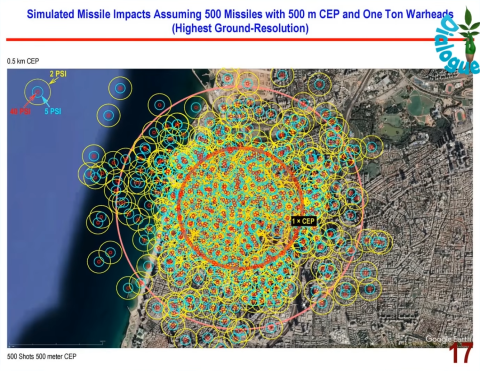
Prof. Ted Postol: US–Iran War? Israel’s Fatal Gamble
or go to
Aletho News Archives – Video-Images
From the Archives
Neocon Max Boot: Legal and illegal aliens need to enlist in the US army and die for Israel
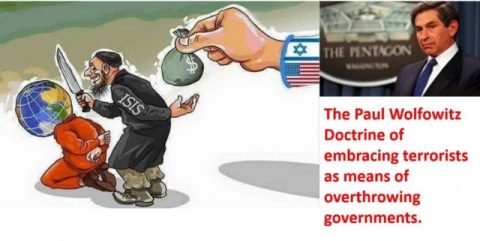
By Jonas E. Alexis | Veterans Today | October 16, 2107
In 1973 Irving Kristol, the godfather of the Neoconservative movement, made a stunning statement which is still relevant to understanding the Israeli influence in US foreign policy. Kristol said:
“Senator McGovern is very sincere when he says that he will try to cut the military budget by 30%. And this is to drive a knife in the heart of Israel… Jews don’t like big military budgets. But it is now an interest of the Jews to have a large and powerful military establishment in the United States…
“American Jews who care about the survival of the state of Israel have to say, no, we don’t want to cut the military budget, it is important to keep that military budget big, so that we can defend Israel.”
Read the statement again very carefully. A big military budget, said Kristol, is only good for Israel, not America or much of the Western World. In other words, precious American soldiers who go to the Middle East to fight so-called terrorism are just working for Israel, not for America.
So, whenever the Neocons use words such as “democracy” or “freedom,” they are essentially conning decent Americans to support Israel’s perpetual wars. … continue
Blog Roll
 Aletho News
- Israel installed, oversaw security system at Barak-Epstein residence in New York: Report
- ‘Britain’s Index of Repression’ documents 964 incidents of anti-Palestinian crackdown
- Prof. Ted Postol: US–Iran War? Israel’s Fatal Gamble
- UK prosecutors drop aggravated burglary charges against 24 Palestine Action activists
- Unidentified drone downed over Lebanon airbase, US forces block authorities from crash site
- Peeling Back the US Information Operation in Iran
- Israel ‘dictating terms’ to US – Turkish professor
- US ramps up nuclear claims against China
- Erdogan wants nukes: What a Turkish bomb would mean for the Middle East
- Ukrainian disruption of Russian oil pipeline triggers emergency in EU state
- If Americans Knew
- Compliant aid: Who are the Israel-approved NGOs scaling up in Gaza?
- Why won’t Trump’s “Board of Peace” bring peace? – Not a ceasefire Day 131
- Help end the injustice against Shadi
- Israel’s Favorite American President
- Israel’s “Yellow Line” Is a Death Trap for Palestinians. We Drove Into It.
- Why Israel’s expanding occupation in Syria presents a critical legal test
- Gaza is not a natural disaster. It is the victim of genocide enabled by global inaction
- Netanyahu’s plan to “end” US aid to Israel is to give even more money under a different name
- Israel ceased firing on Gaza for just 15 days of the “ceasefire” – Not a ceasefire Day 130
- In Gaza, “rats run over our faces” – Not a ceasefire Day 129
- No Tricks Zone
- Coal Power Back In Trend As Globe Tries To Keep Pace With Growing Demand For Power
- New Study: A 4°C Warmer Beaufort Sea Had ‘No Sea Ice’ 11,700 – 8200 Years Ago
- Unfudging The Data: Dutch Meteorological Institute Reinstates Early 20th Centruy Heat Waves It Had Erased Earlier
- German Gas Crisis…Chancellor Merz Allegedly Bans Gas Debate Ahead of Elections!
- Pollen Reconstructions Show The Last Glacial’s Warming Events Were Global, 10x Greater Than Modern
- Germany’s Natural Gas Storage Level Dwindles To Just 28%… Increasingly Critical
- New Study Rebuts The Assumption That Anthropogenic CO2 Molecules Have ‘Special’ Properties
- Climate Scientist Who Predicted End Of “Heavy Frost And Snow” Now Refuses Media Inquiries
- Polar Bear Numbers Rising And Health Improving In Areas With The Most Rapid Sea Ice Decline
- One Reason Only For Germany’s Heating Gas Crisis: Its Hardcore-Dumbass Energy Policy
 Aletho News